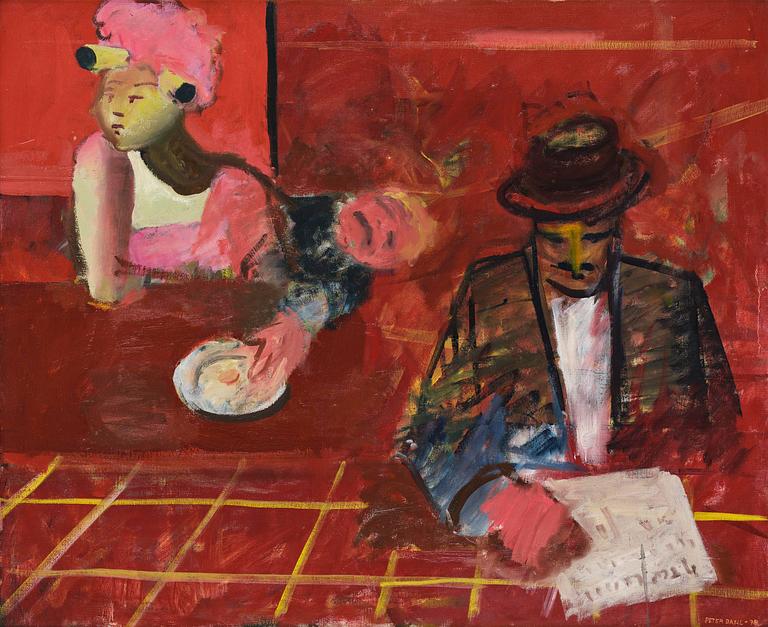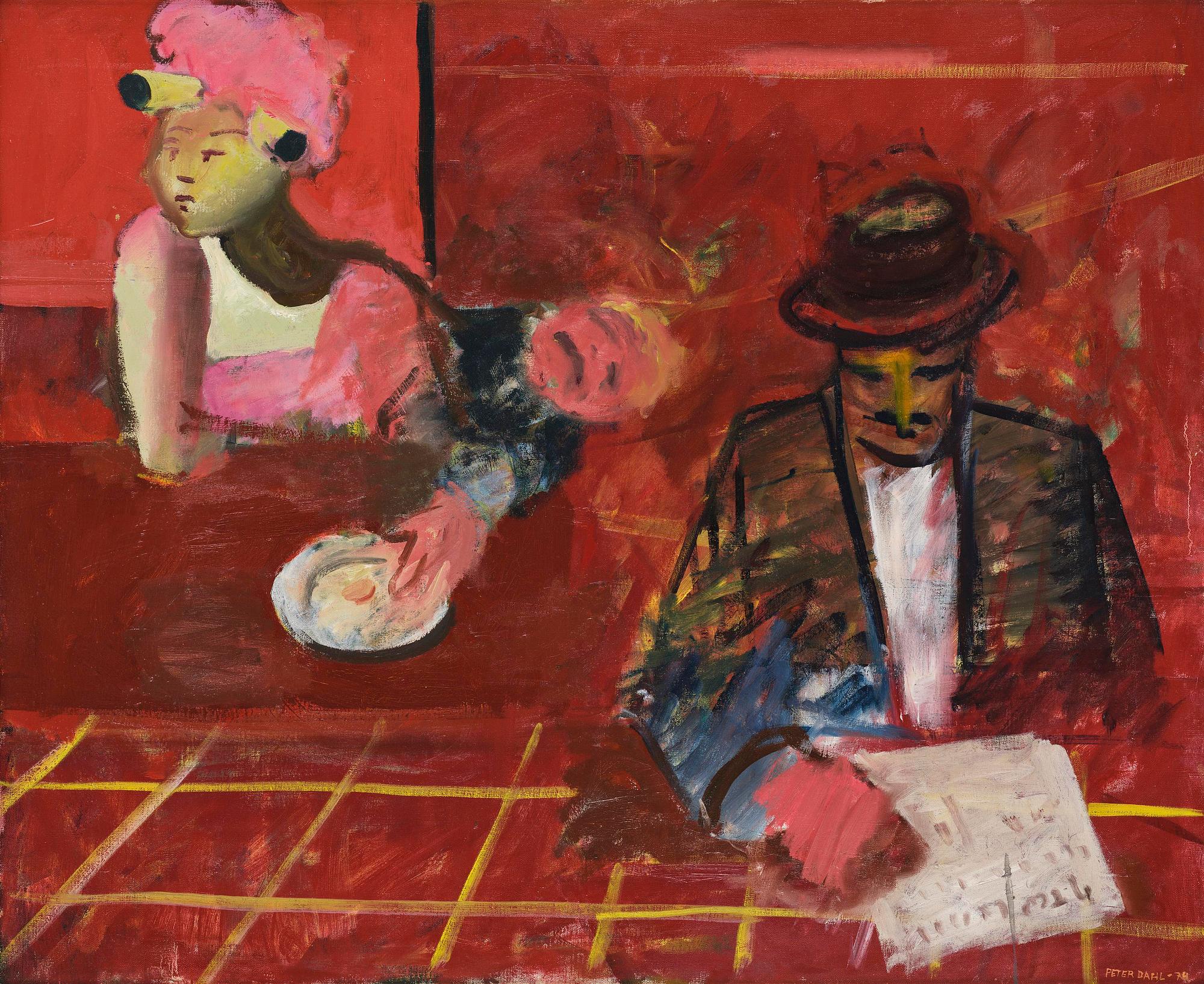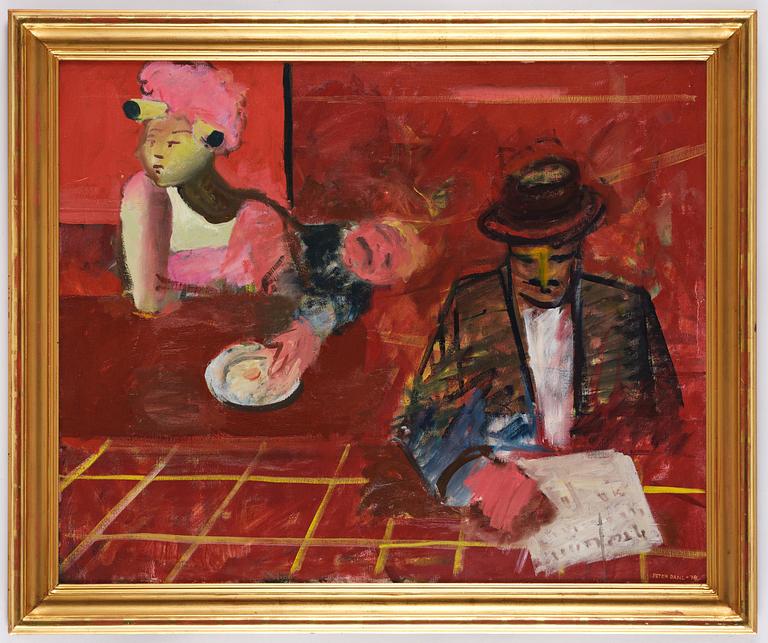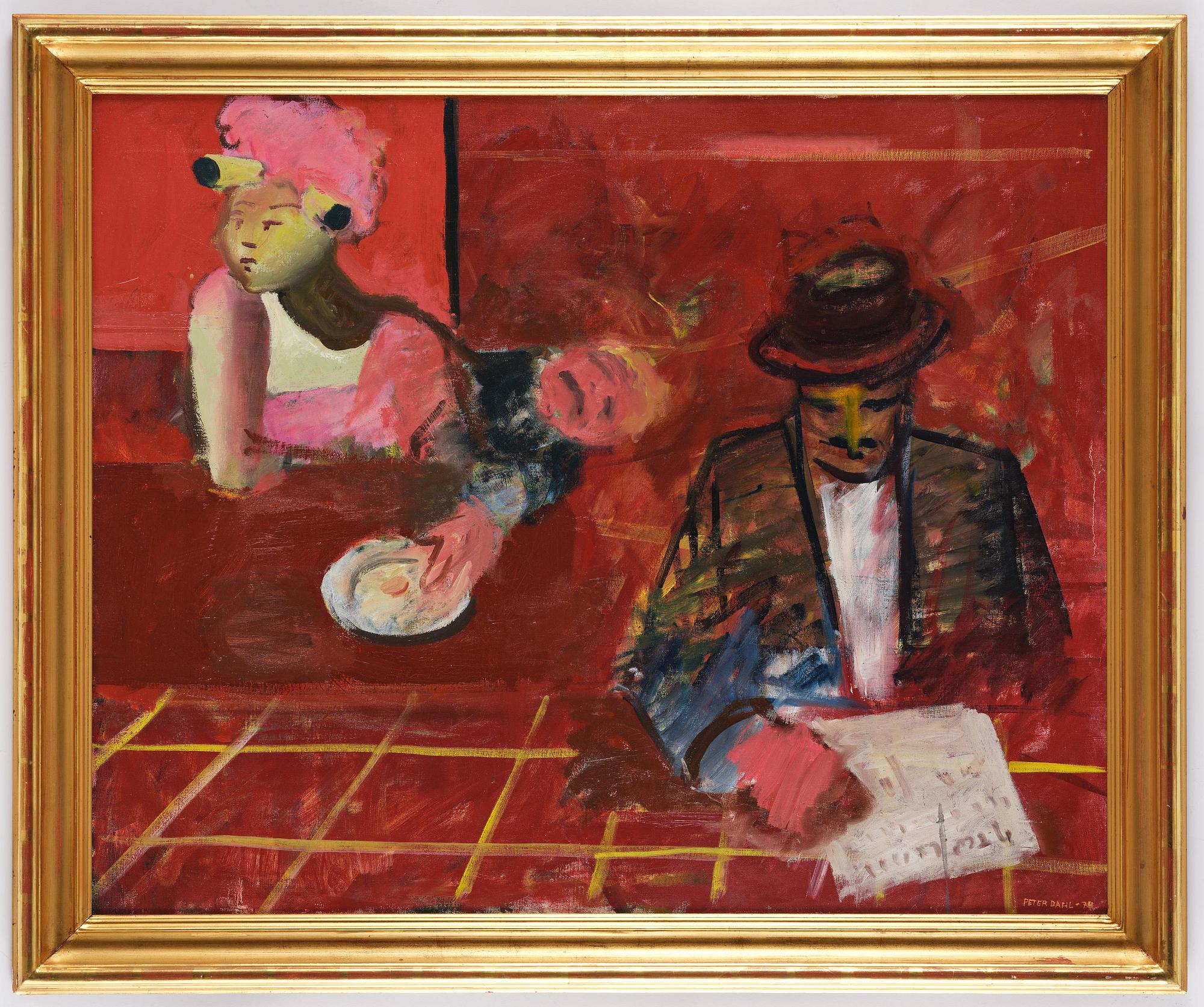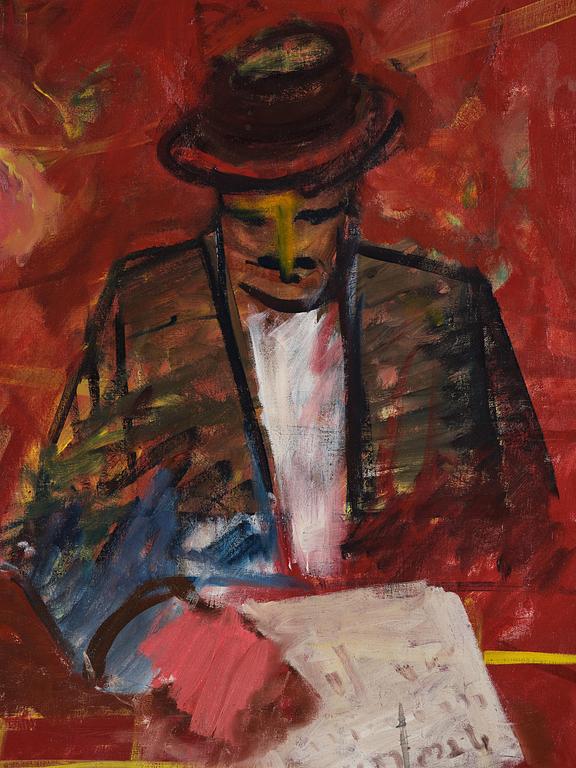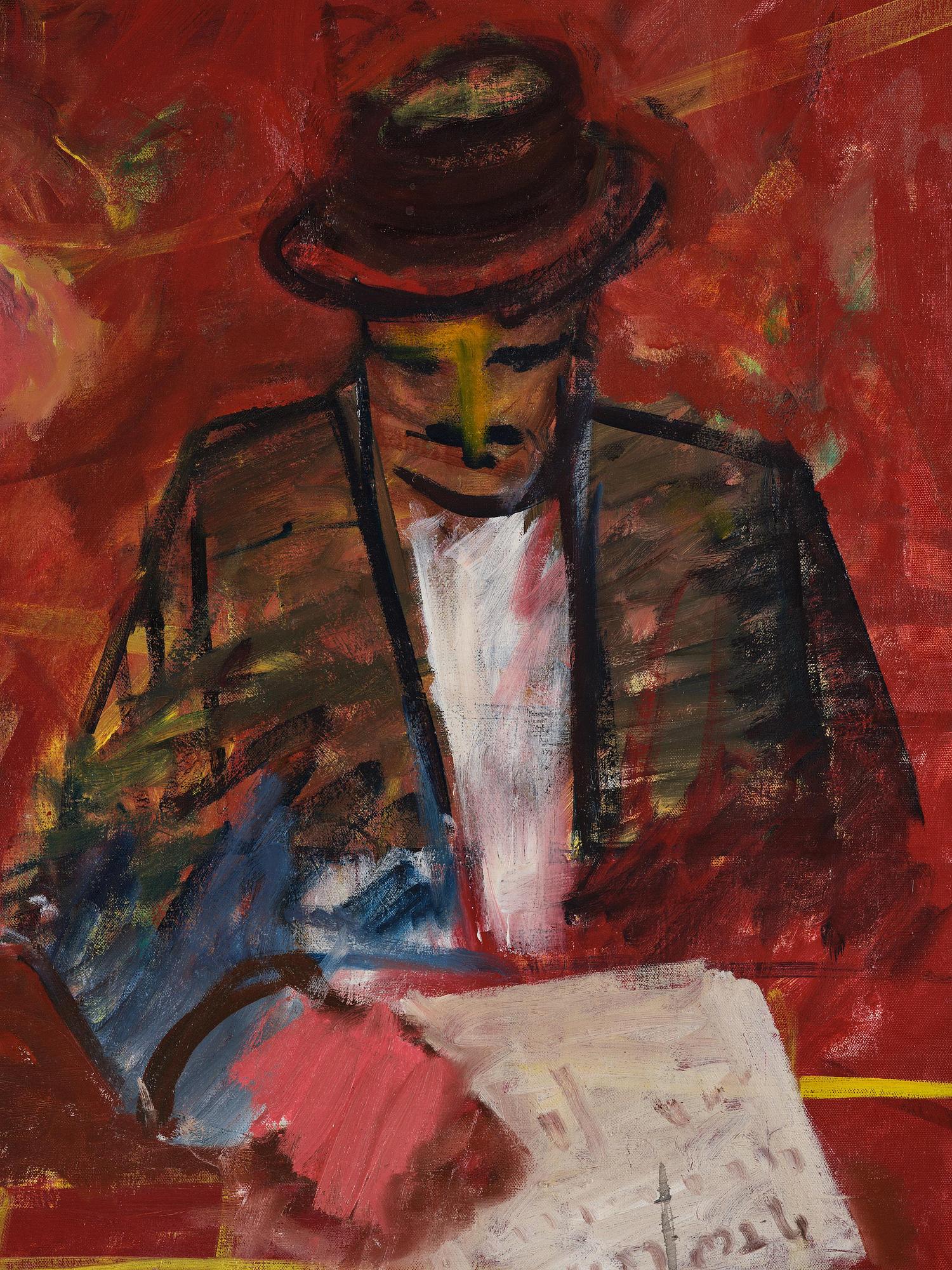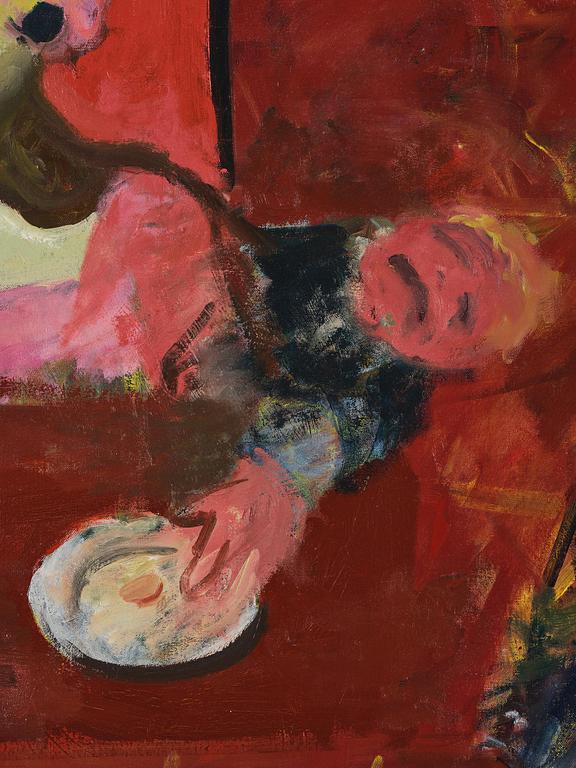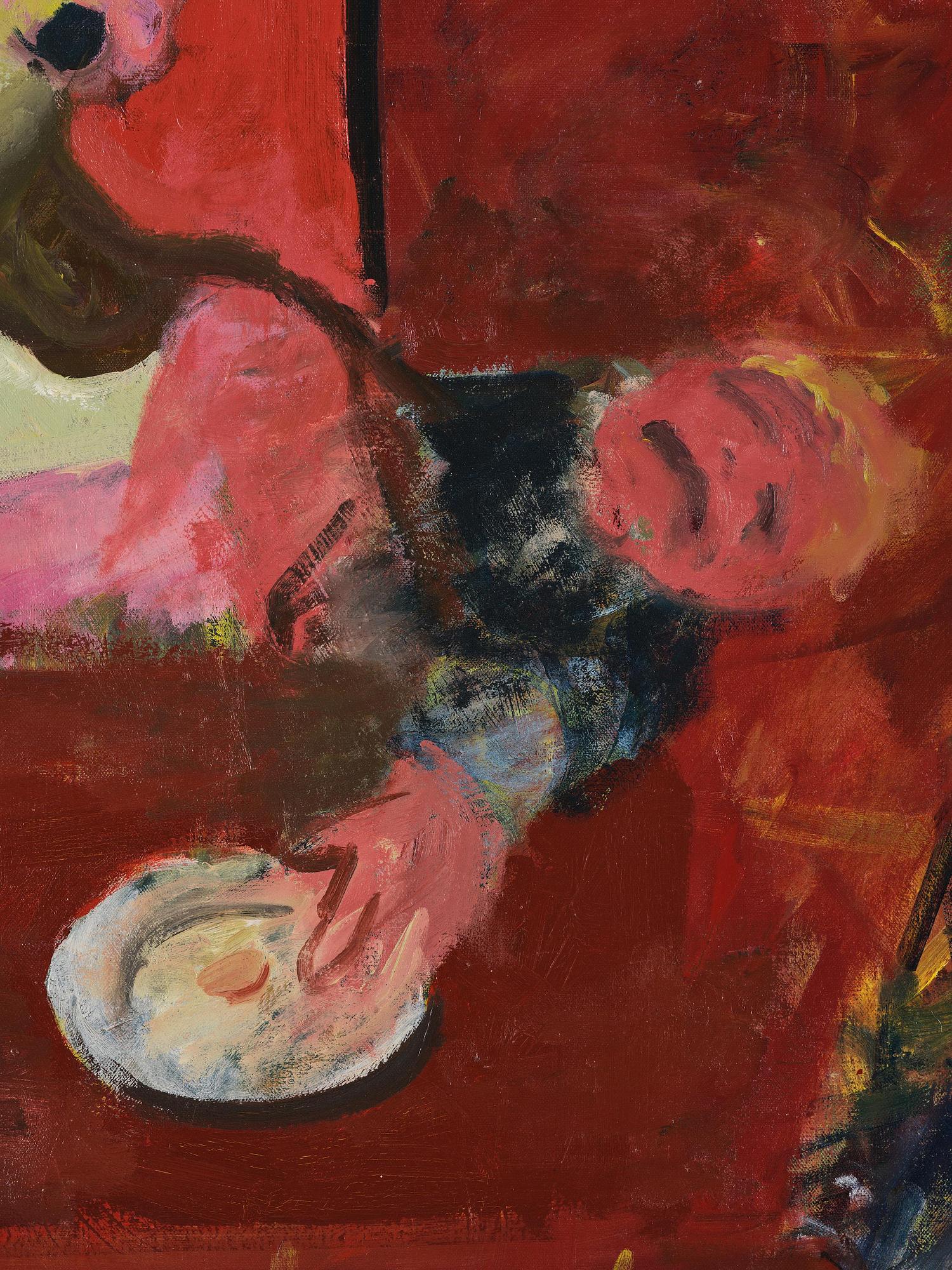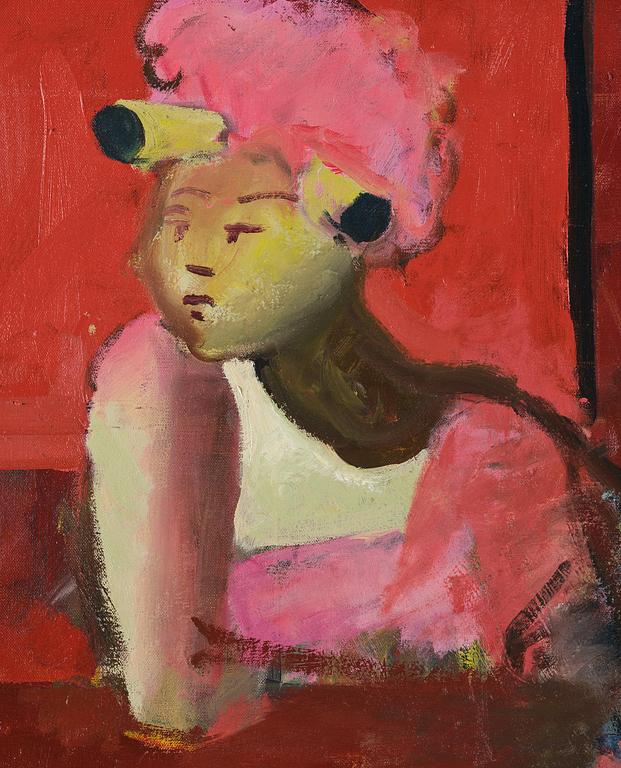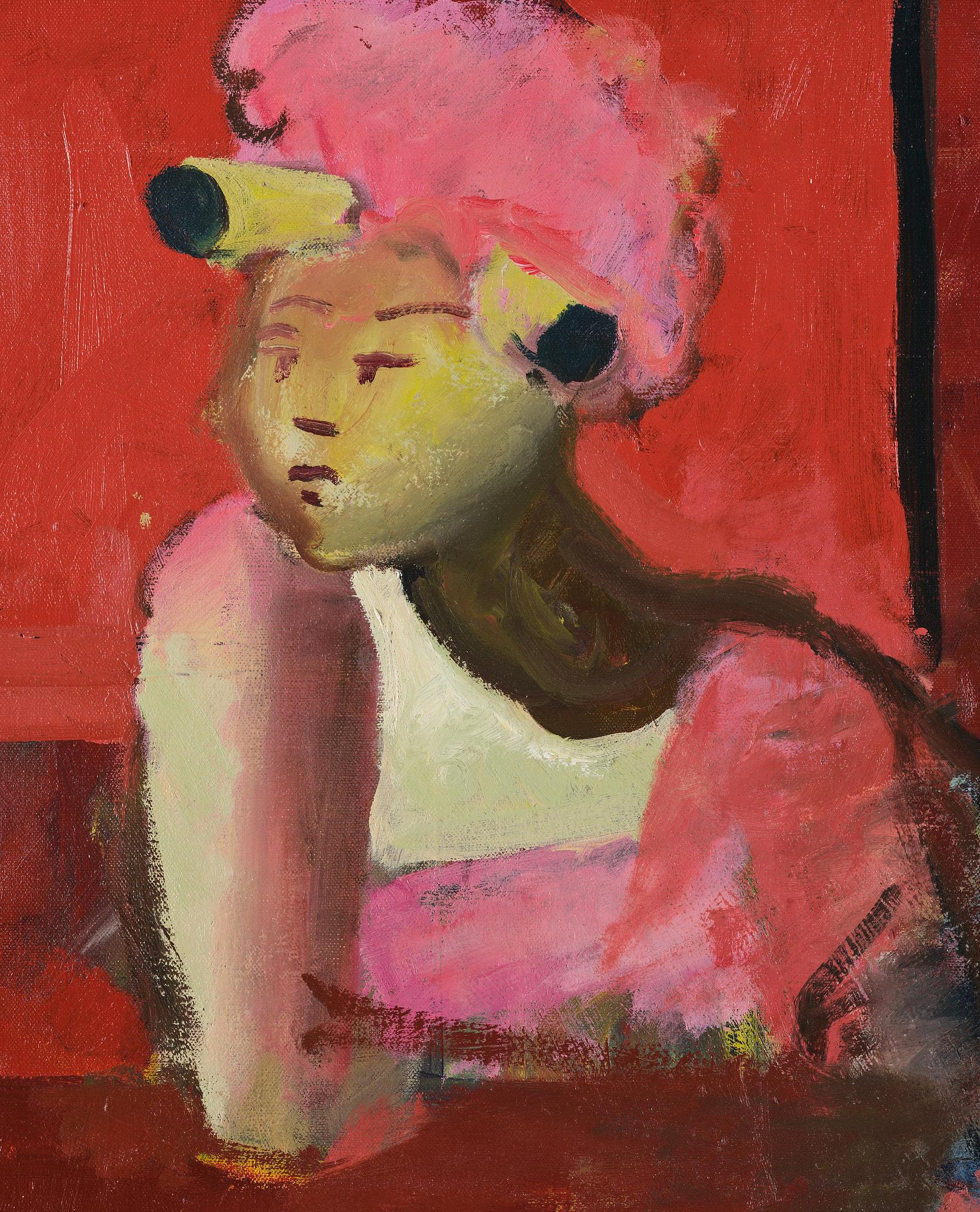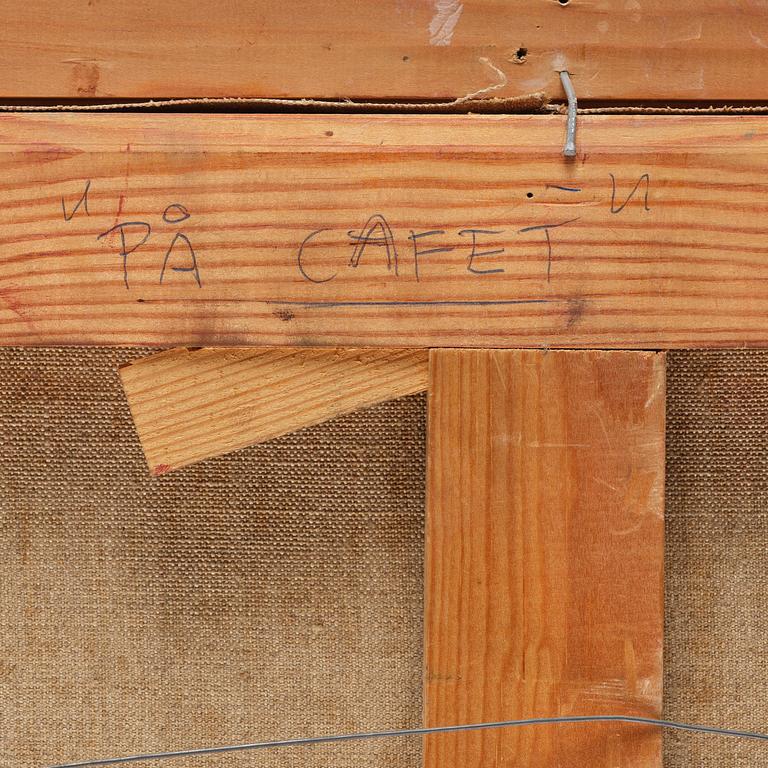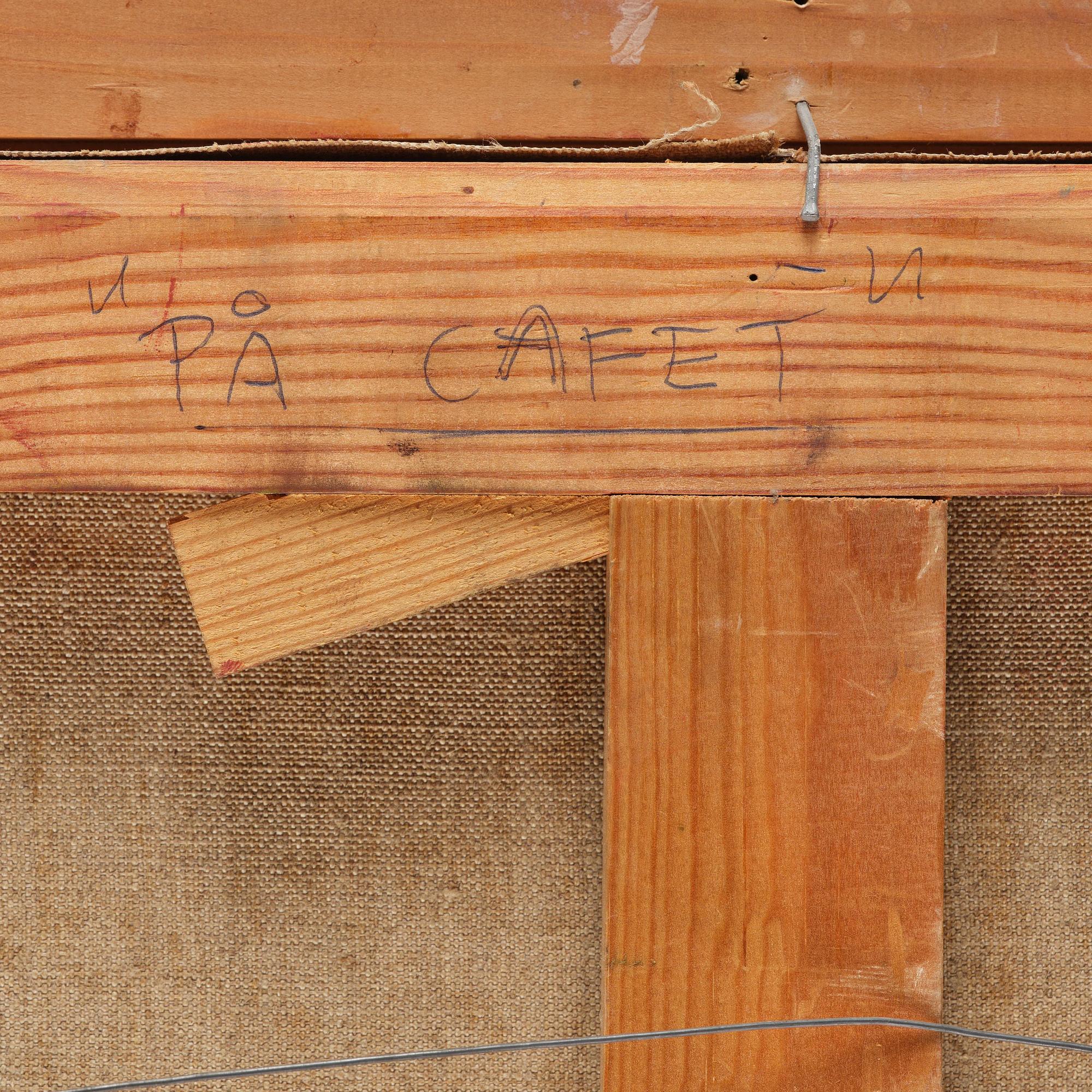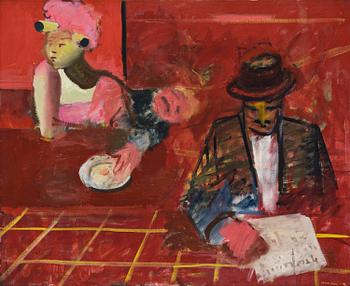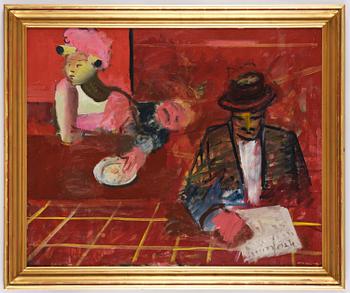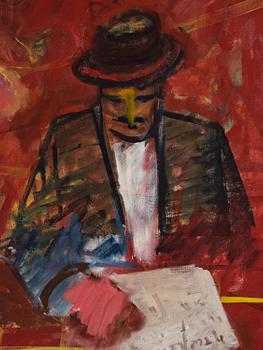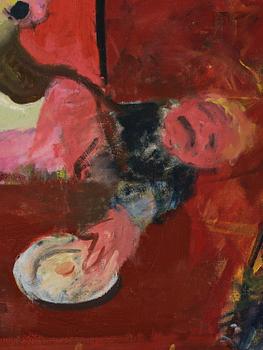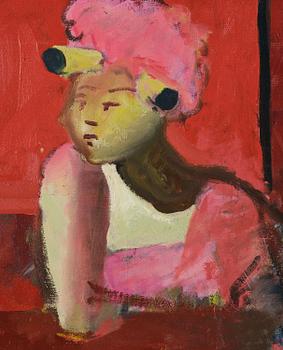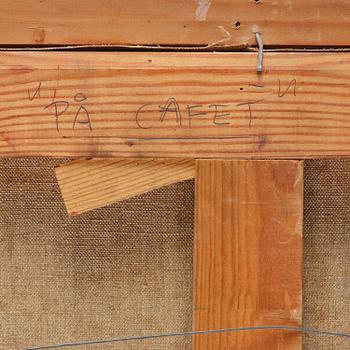
"På caféet"
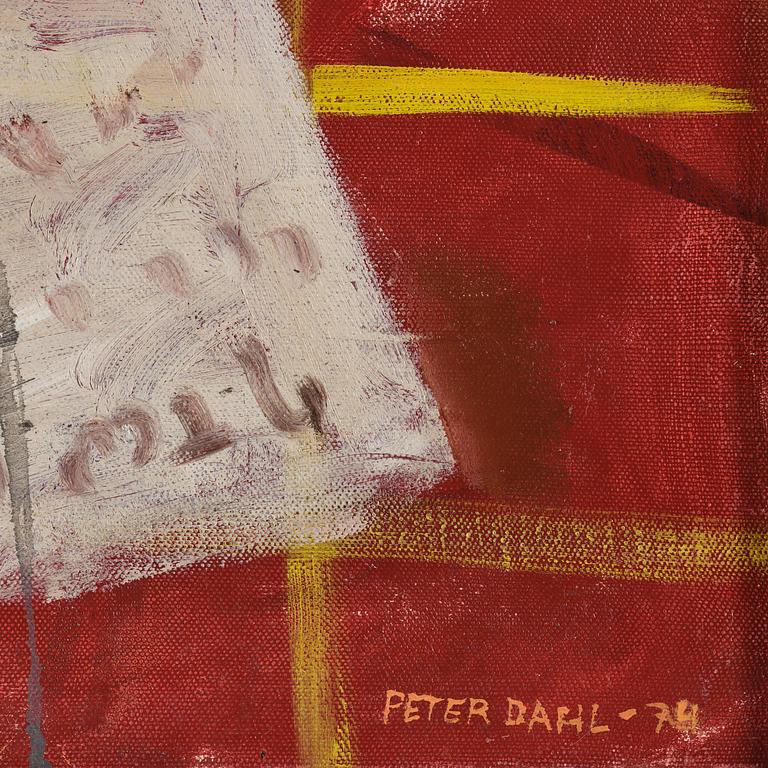
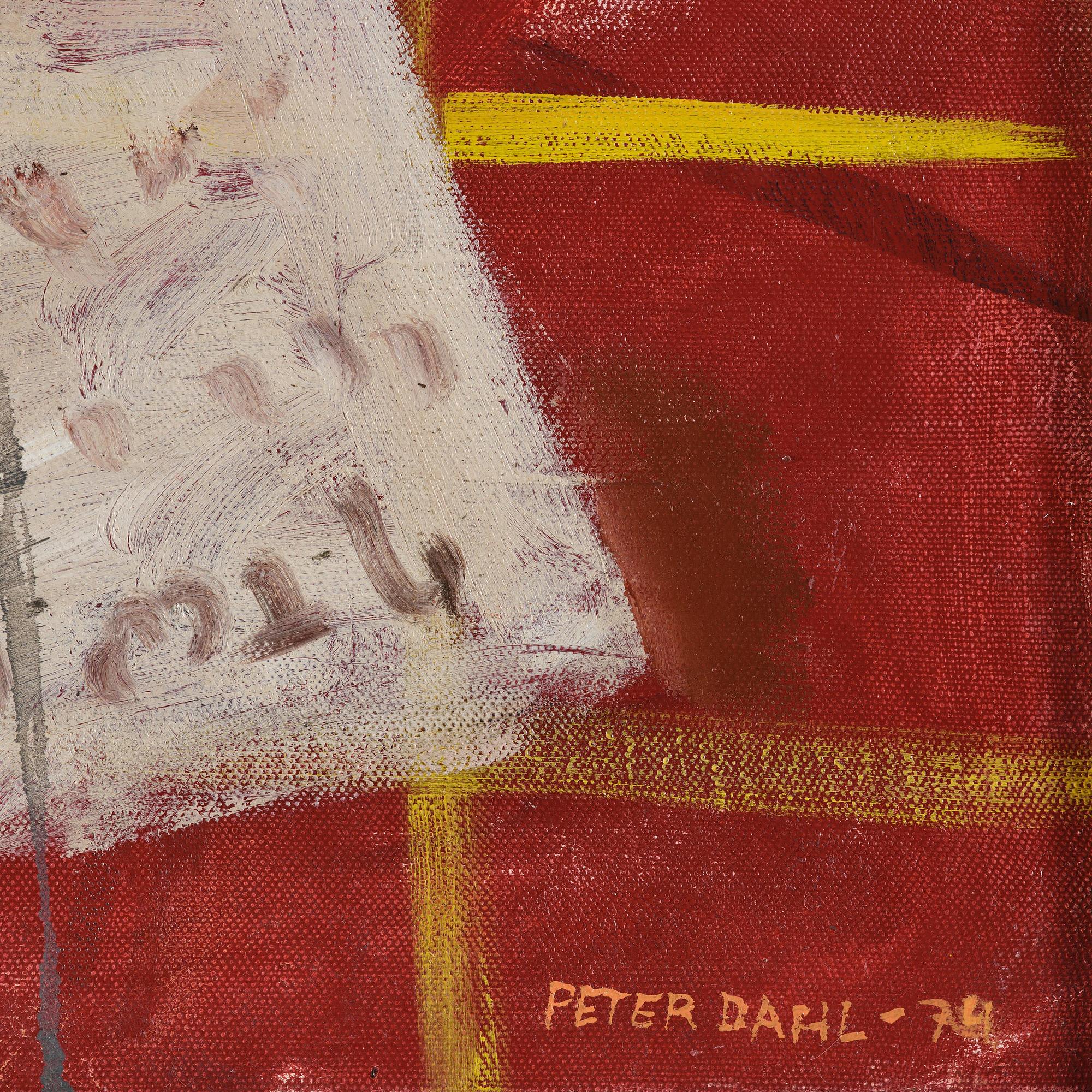
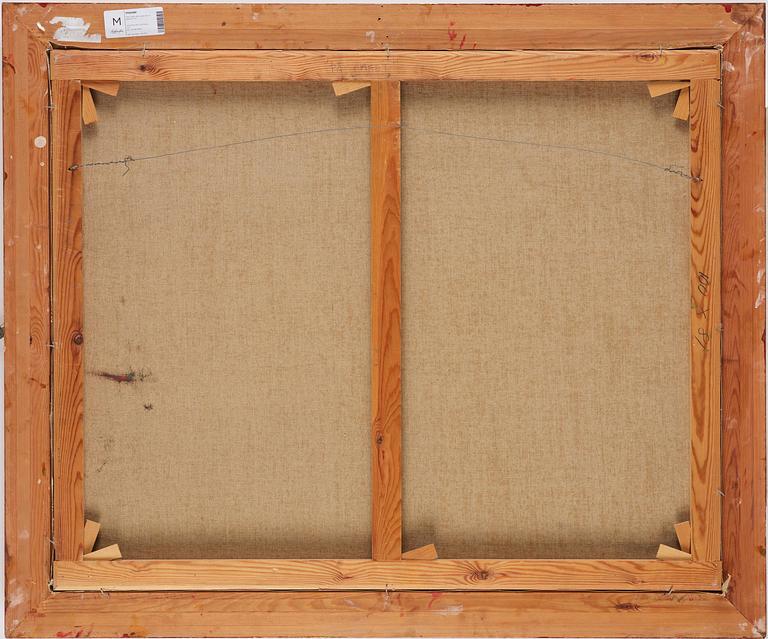
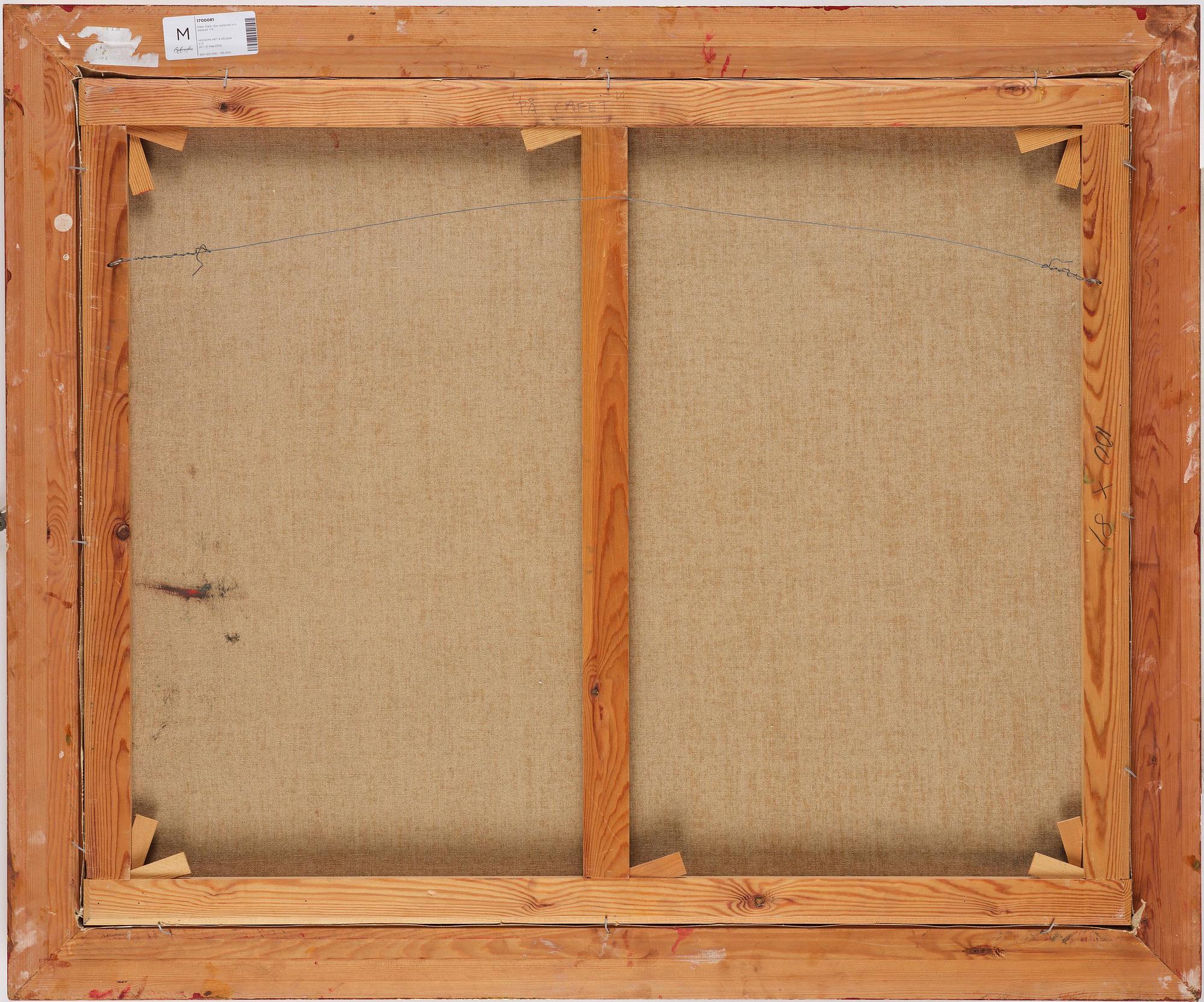
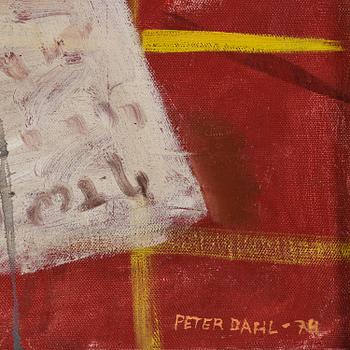
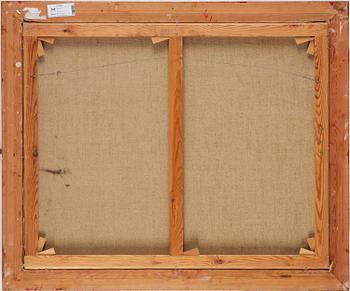
Signed Peter Dahl and dated -74. Oil on canvas 81 x 100 cm.
Muut tiedot
Peter Dahl (1934–2019) was one of the most significant and beloved Swedish figurative artists of the post-war period. With his distinctive use of colour, flowing brushwork and strong narrative ability, he developed a personal mode of painting in which art-historical references meet contemporary social commentary, humour and psychological acuity.
Educated at the Royal University College of Fine Arts in Stockholm under Lennart Rodhe, Dahl early on chose a figurative path in contrast to the abstract art that dominated the period. His art attracted attention as early as the 1970s, not least through the controversial exhibition in Gothenburg in 1970 at which works depicting Princess Sibylla were confiscated by the police. The incident established him as an artist with a pronounced desire to provoke and challenge established norms.
A recurring motif in Dahl’s oeuvre is the restaurant interior – a stage where people, roles and relationships emerge in a concentrated cross-section of urban life. Food and wine, together with conversation and conviviality, were passionate elements of Peter Dahl’s life outside the studio. In his paintings, he depicts not only the physical character of the setting, but also its social dramaturgy: glances that meet, bodies in motion, conversations suggested rather than spoken. In Dahl’s work, the restaurant becomes a place where the public and the private merge, where everyday life and celebration coexist.
With his expressive style and sensuous use of colour, Dahl captures these environments with both warmth and precision. His restaurant scenes bear traces of both art-historical influences and contemporary popular culture, while remaining deeply rooted in a Swedish reality. The result is work that not only documents a time and a place, but also conveys the human experiences unfolding there – with humour, immediacy and a subtle sense of the theatrical.
Peter Dahl is represented in, among other collections, the Nationalmuseum in Stockholm, Malmö Art Museum, the portrait collection at Gripsholm Castle and the Gothenburg Museum of Art. Over the years, he held numerous solo exhibitions in Sweden, and his work received significant attention at both exhibitions and sales. Today, he is regarded as one of the foremost figures in Swedish contemporary art.
Lisätietoja ja kuntoraportit
Mitä kuljetus maksaa?
Kuuluu jälleenmyyntikorvauksen piiriin
Tietoa ostamisesta
Kuvan käyttöoikeudet
Tämän tietokannan taideteokset ovat tekijänoikeudella suojattuja, eikä niitä saa kopioida ilman oikeudenhaltijoiden lupaa. Teokset kopioidaan tässä tietokannassa Bildupphovsrättin lisenssillä.