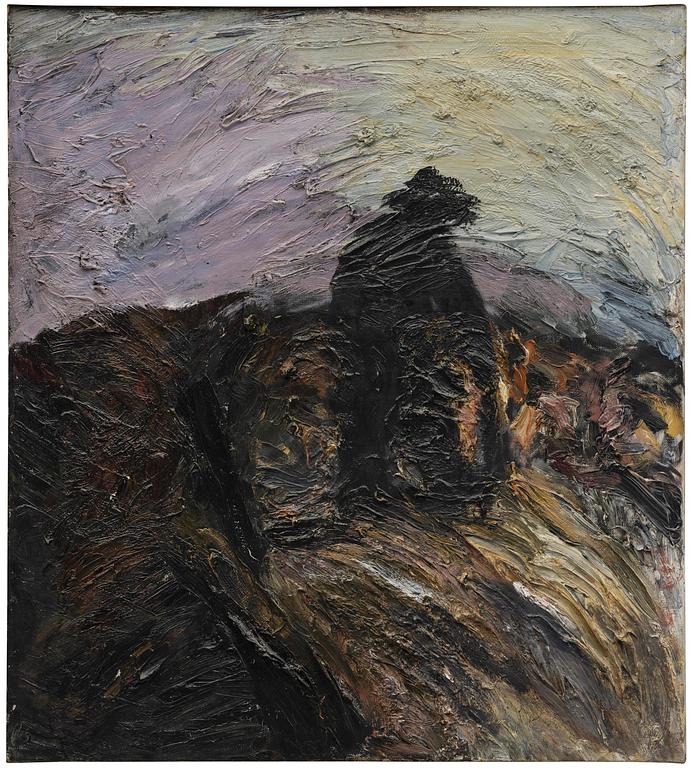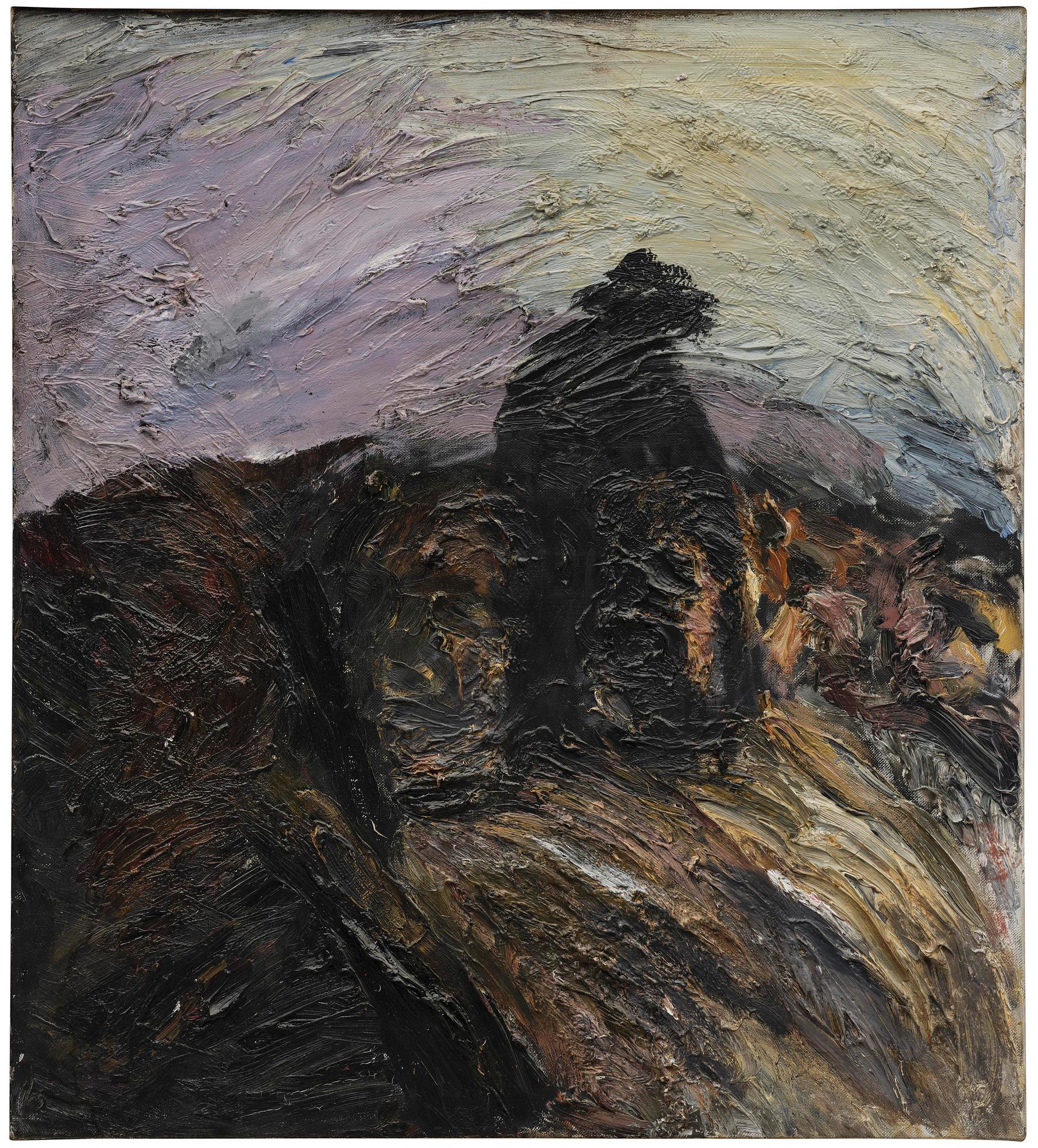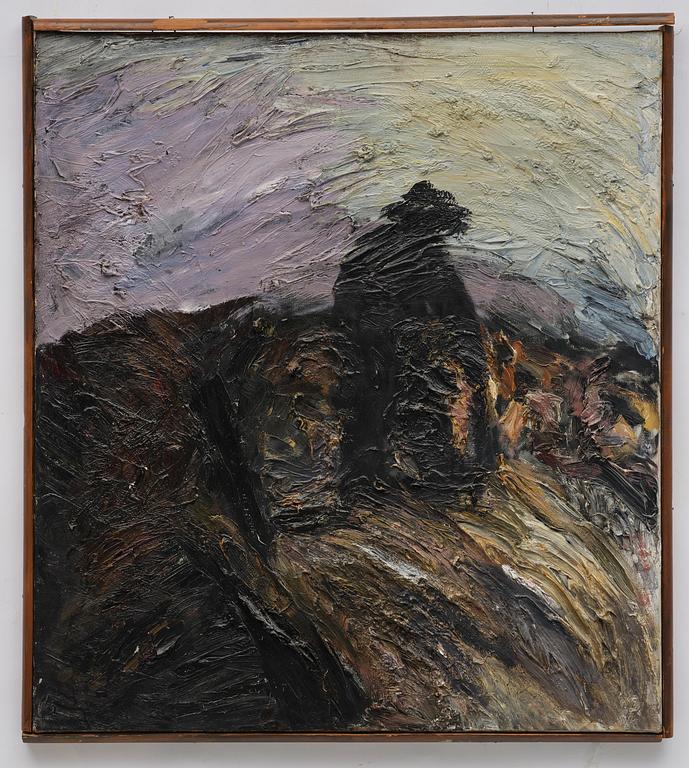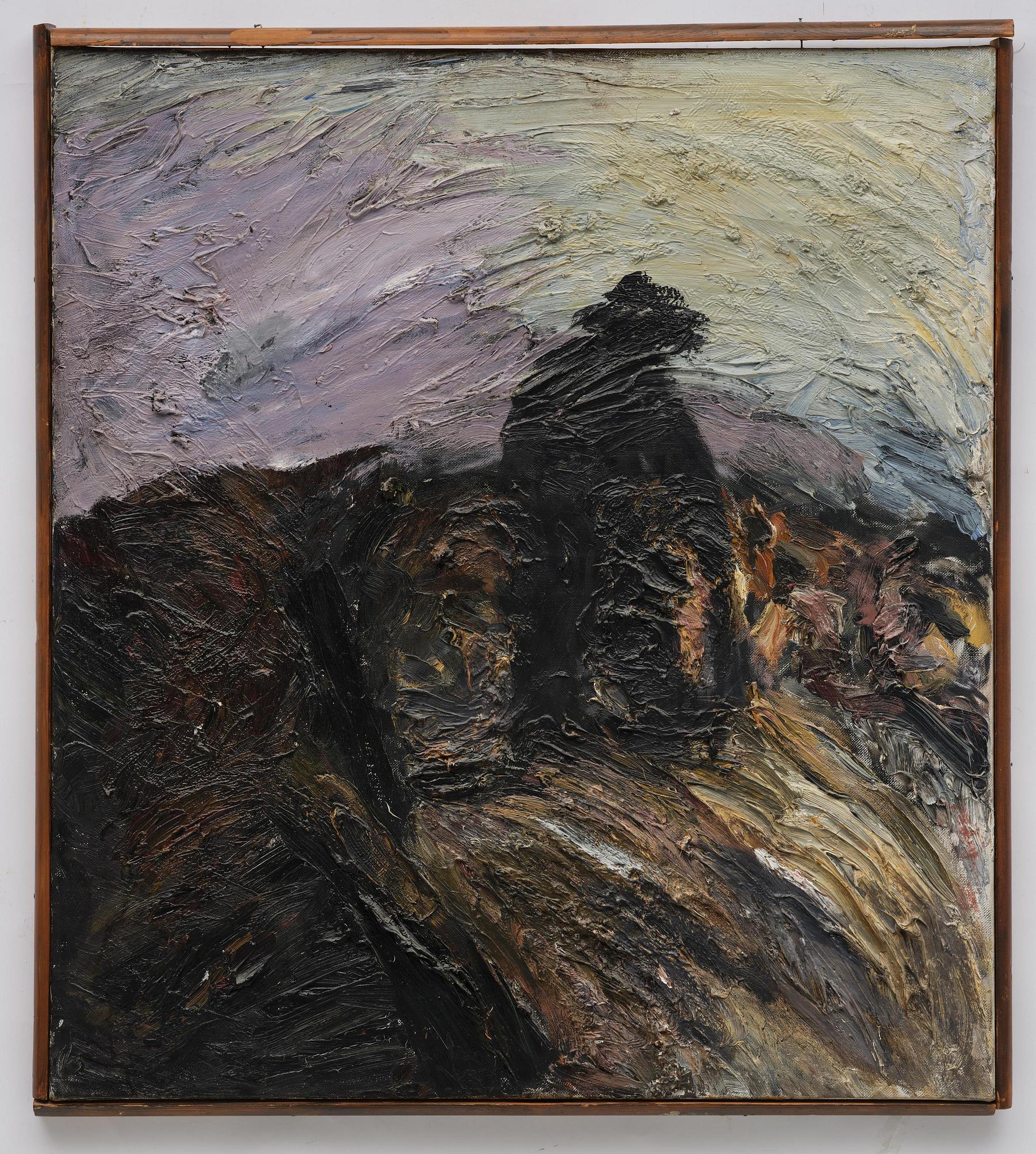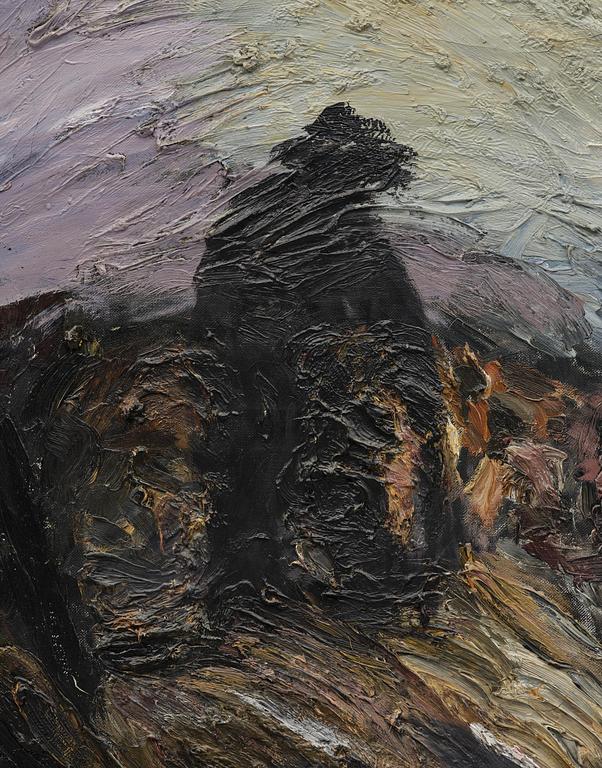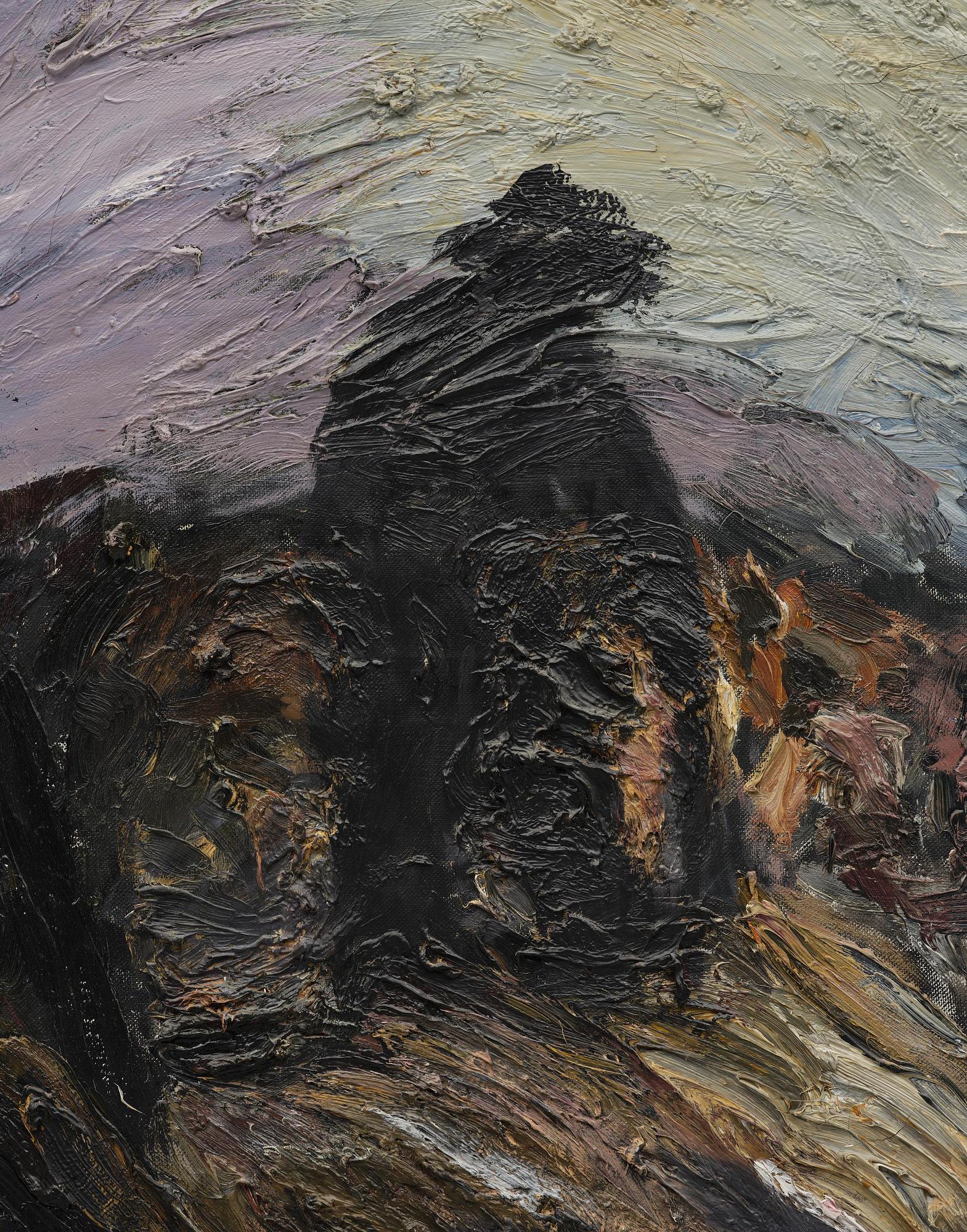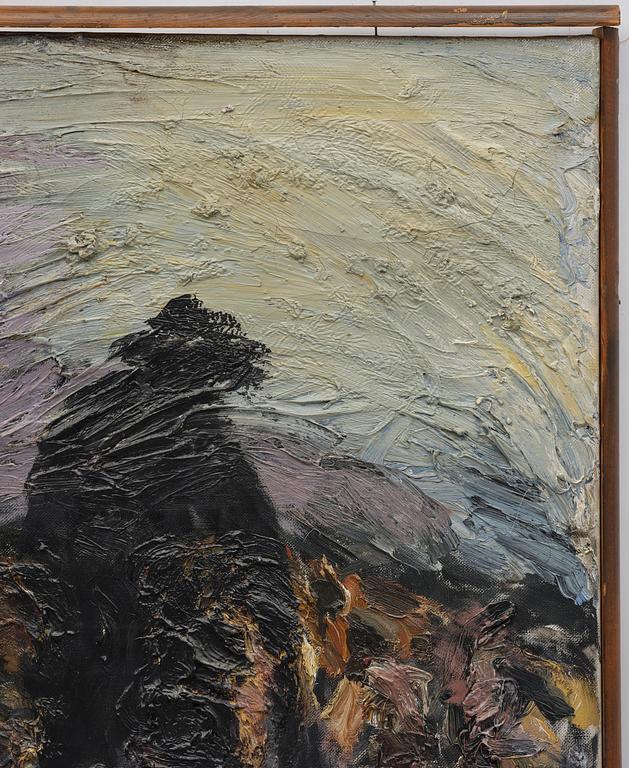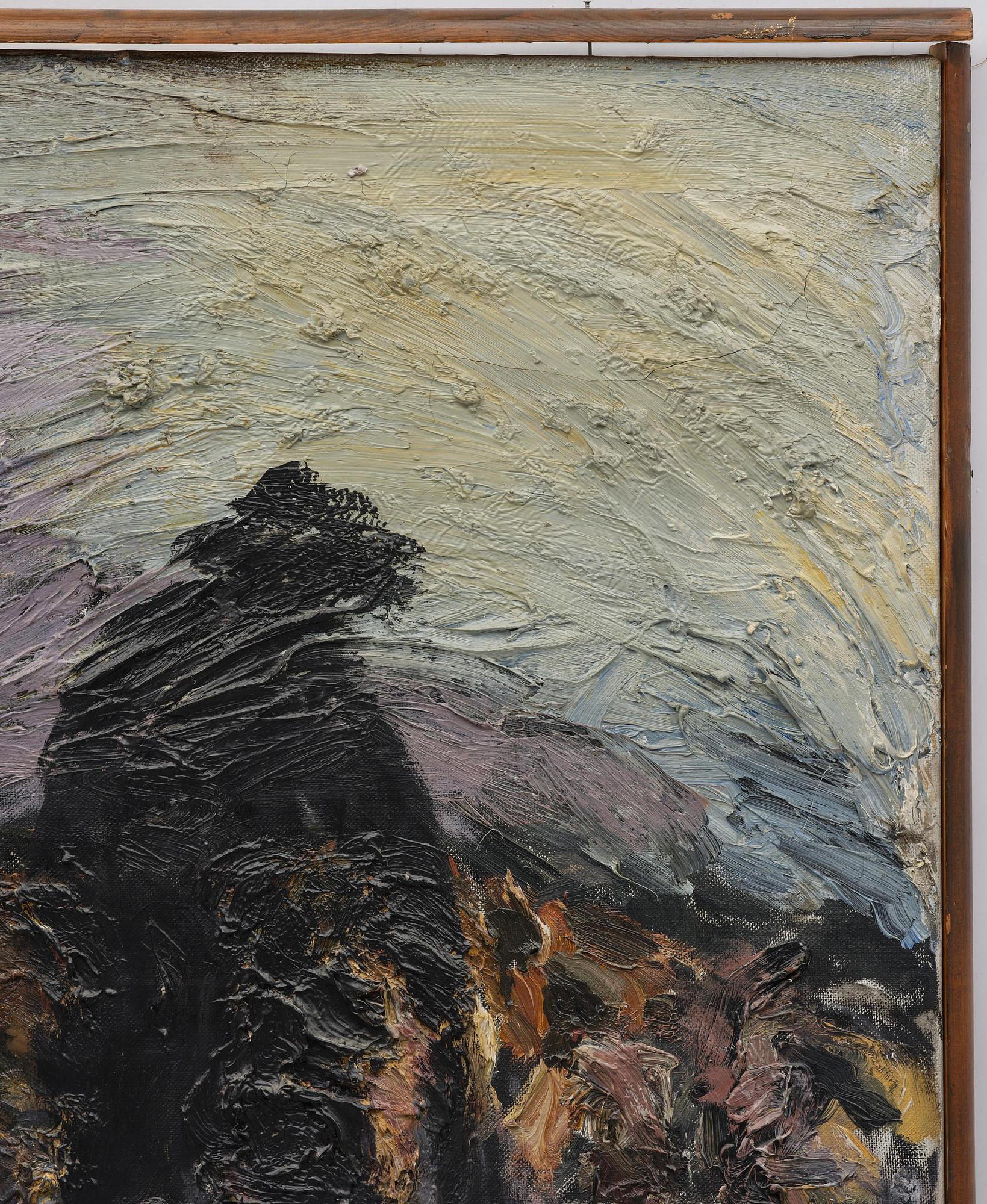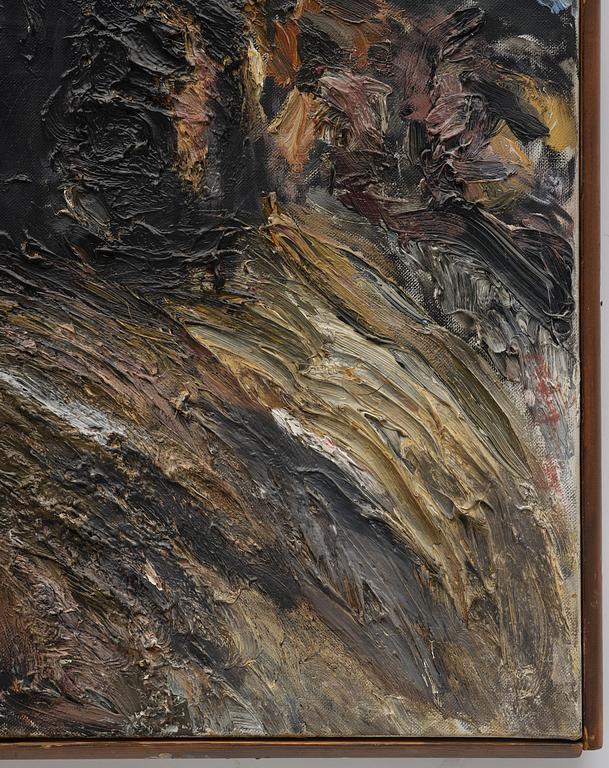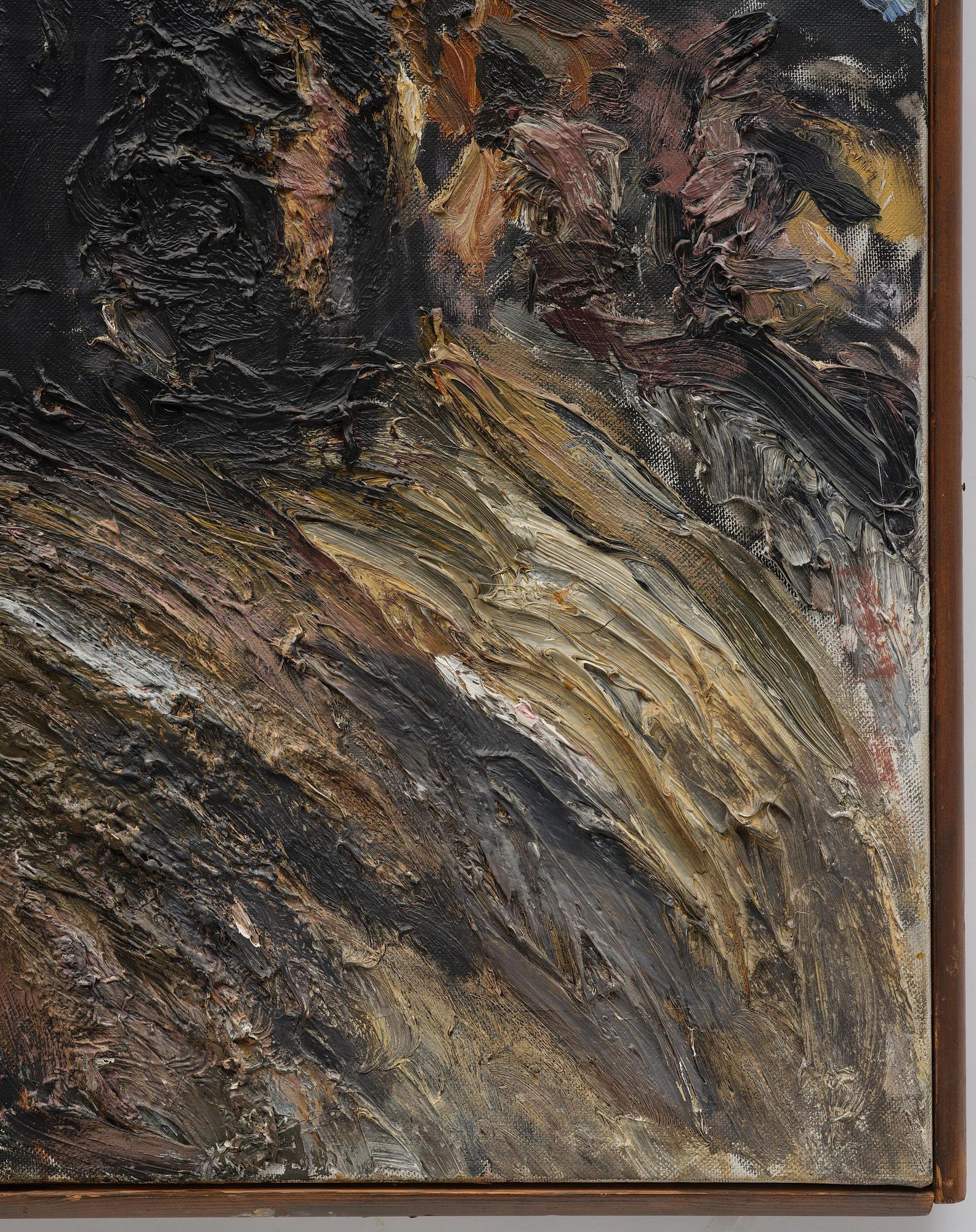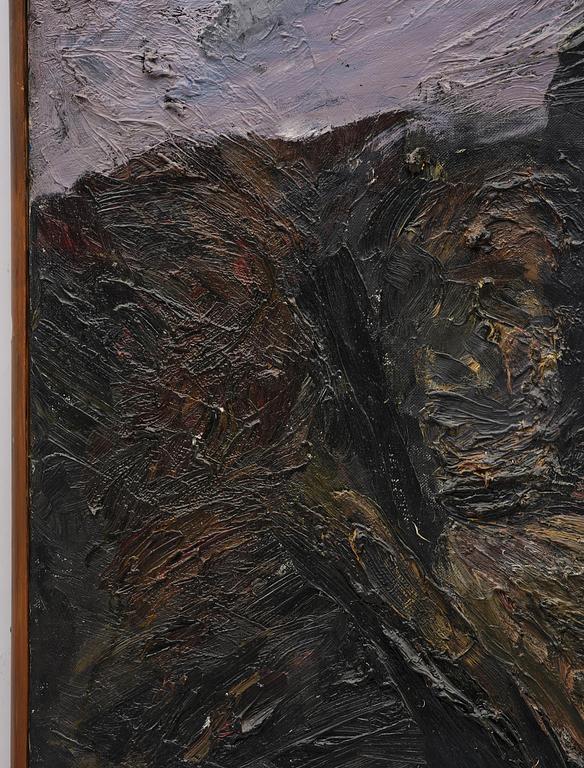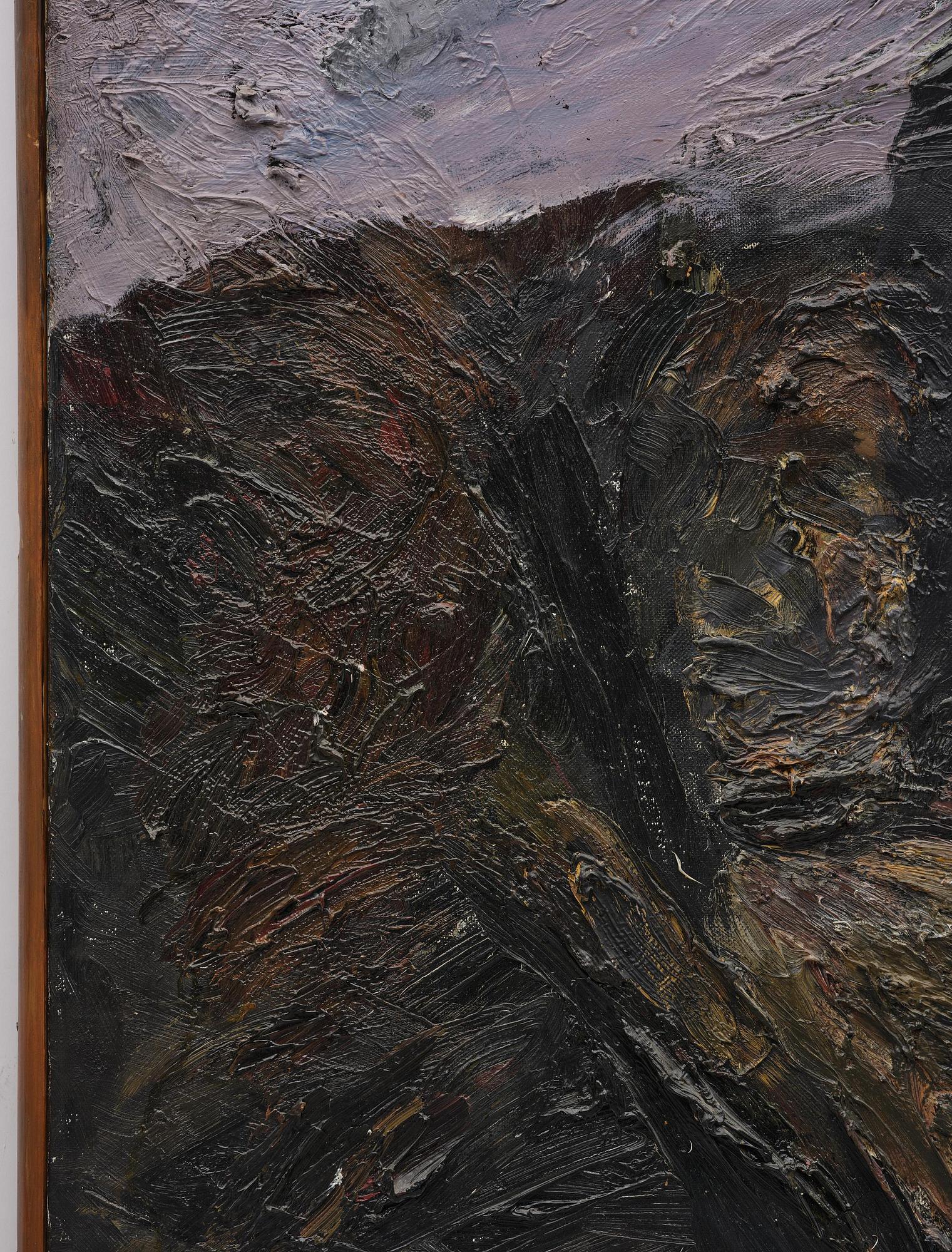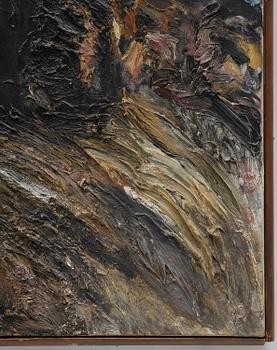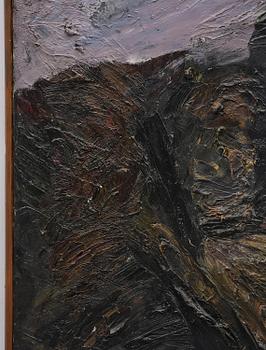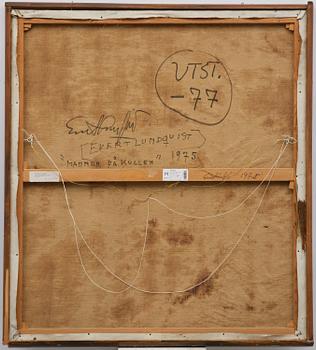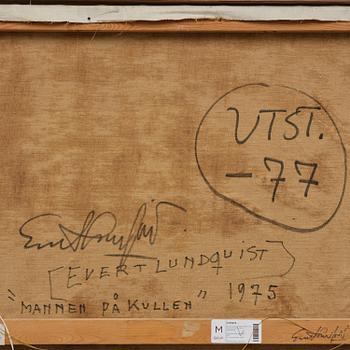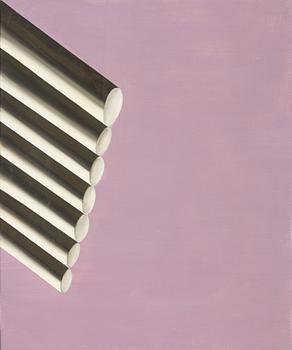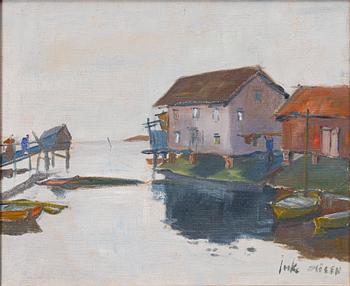
"Mannen på kullen"
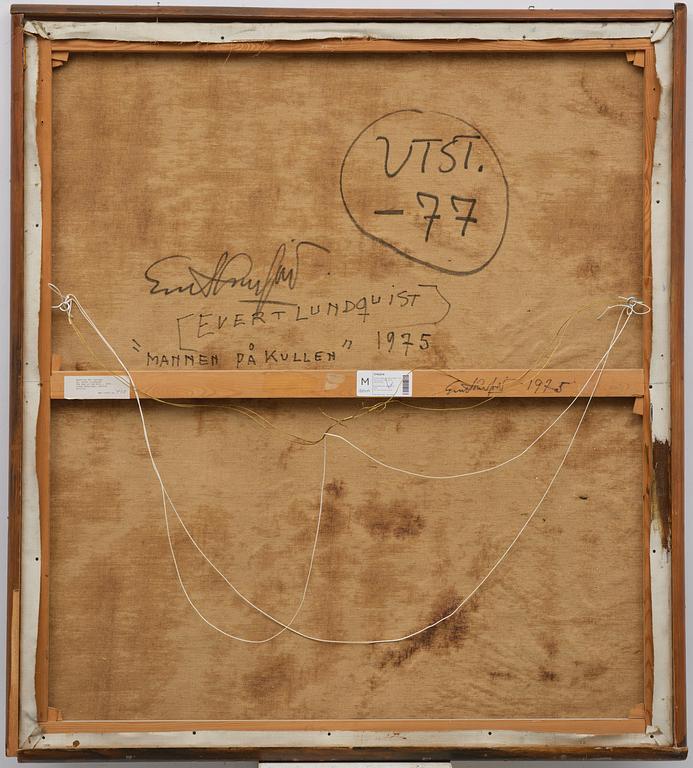
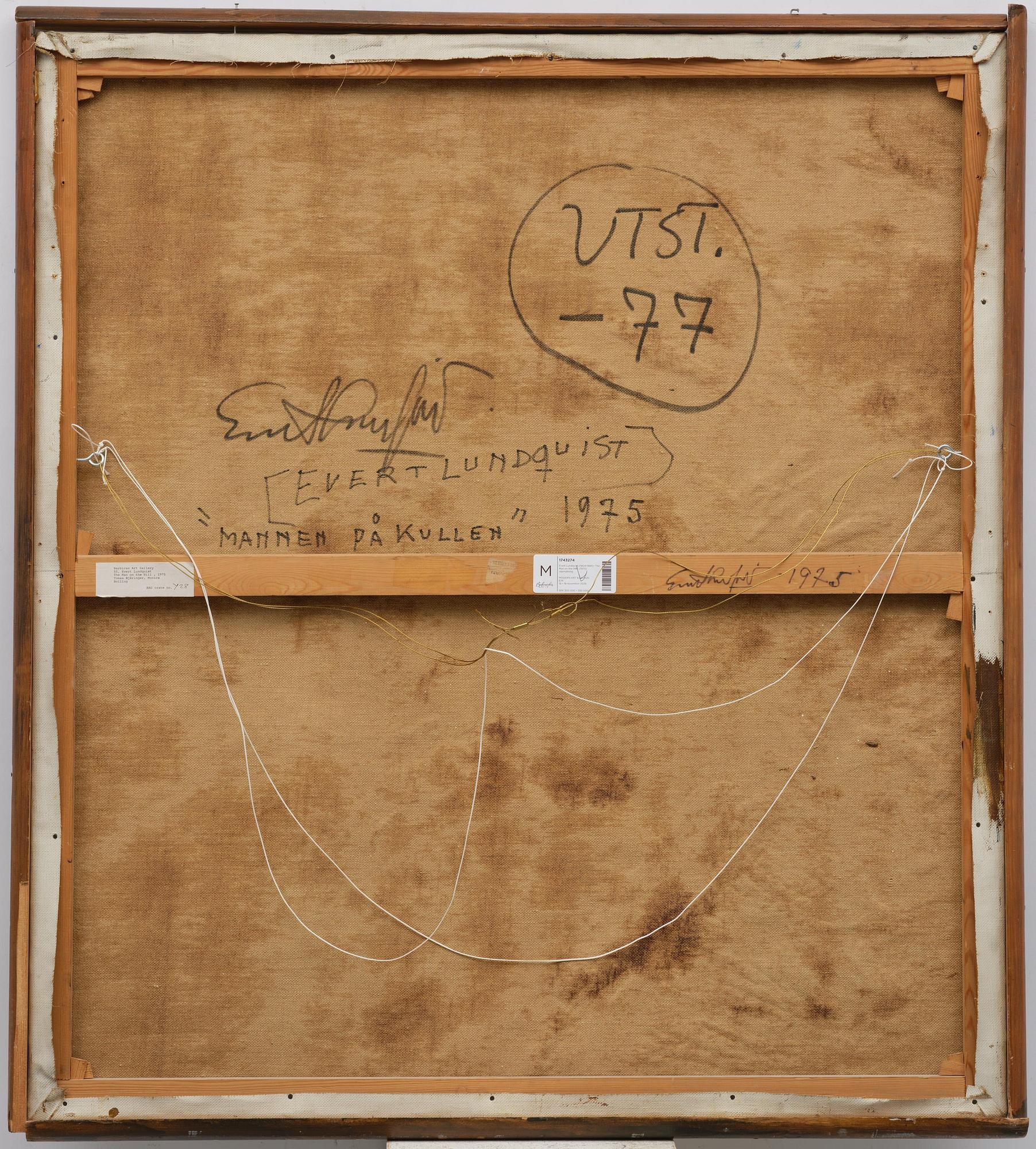
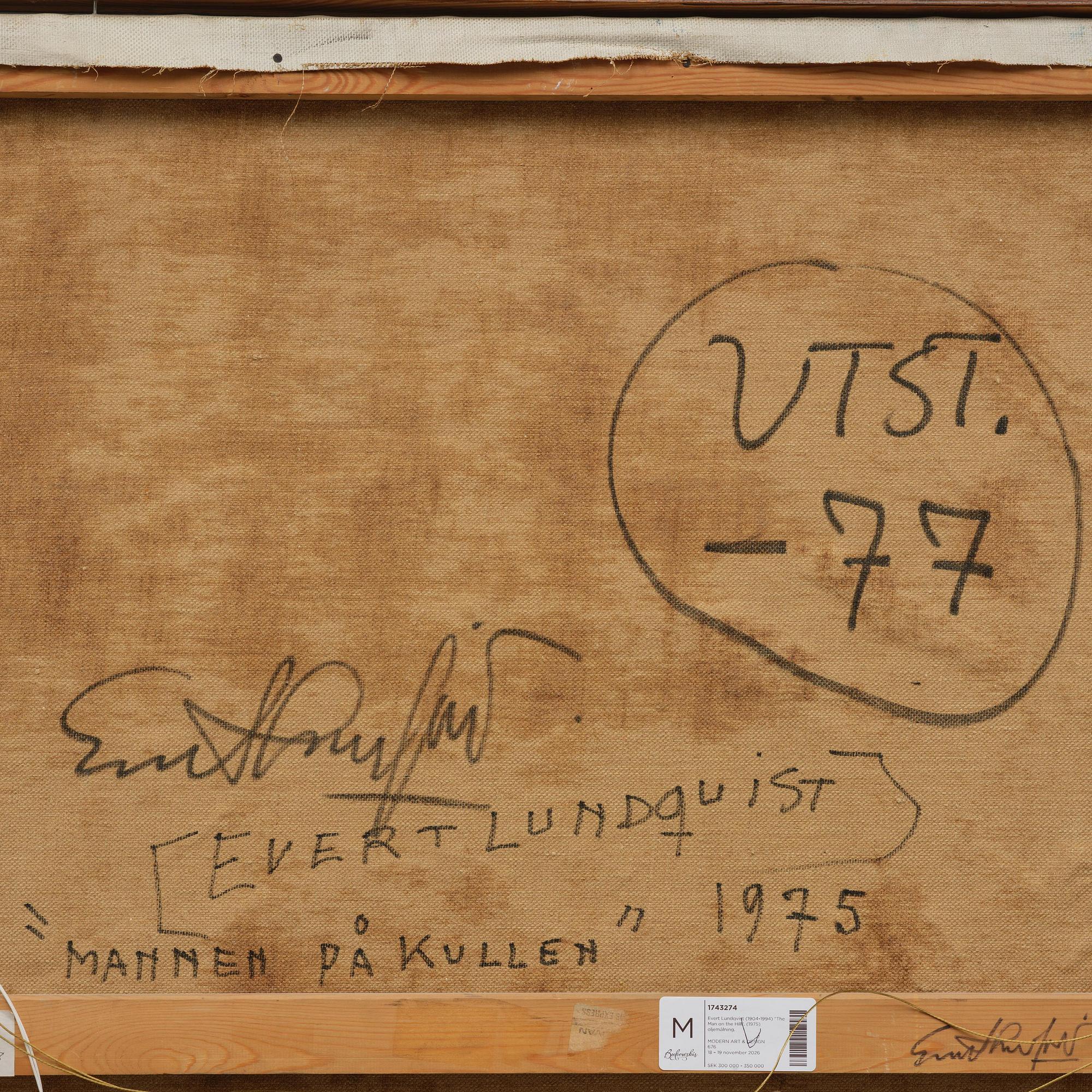
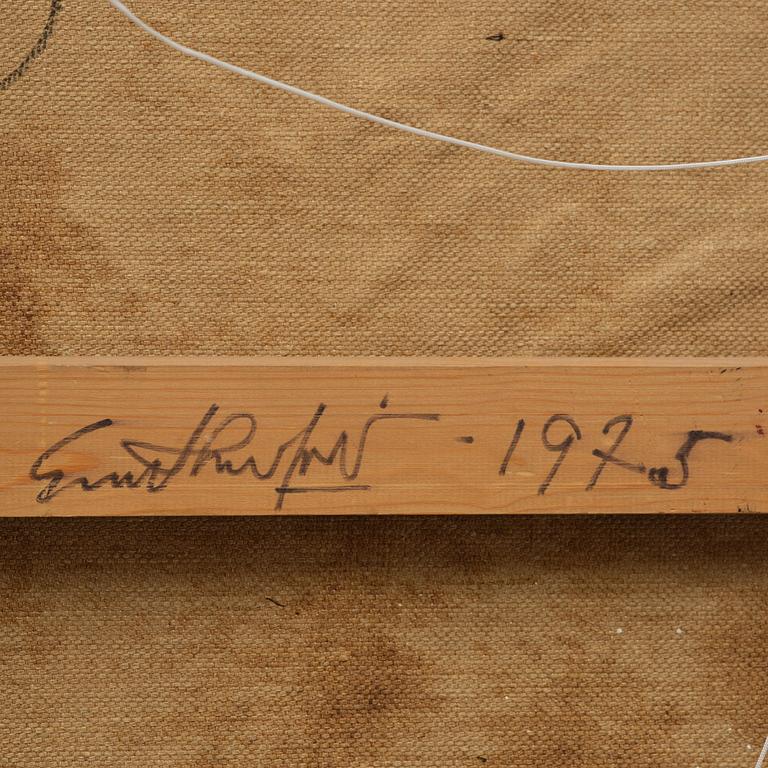
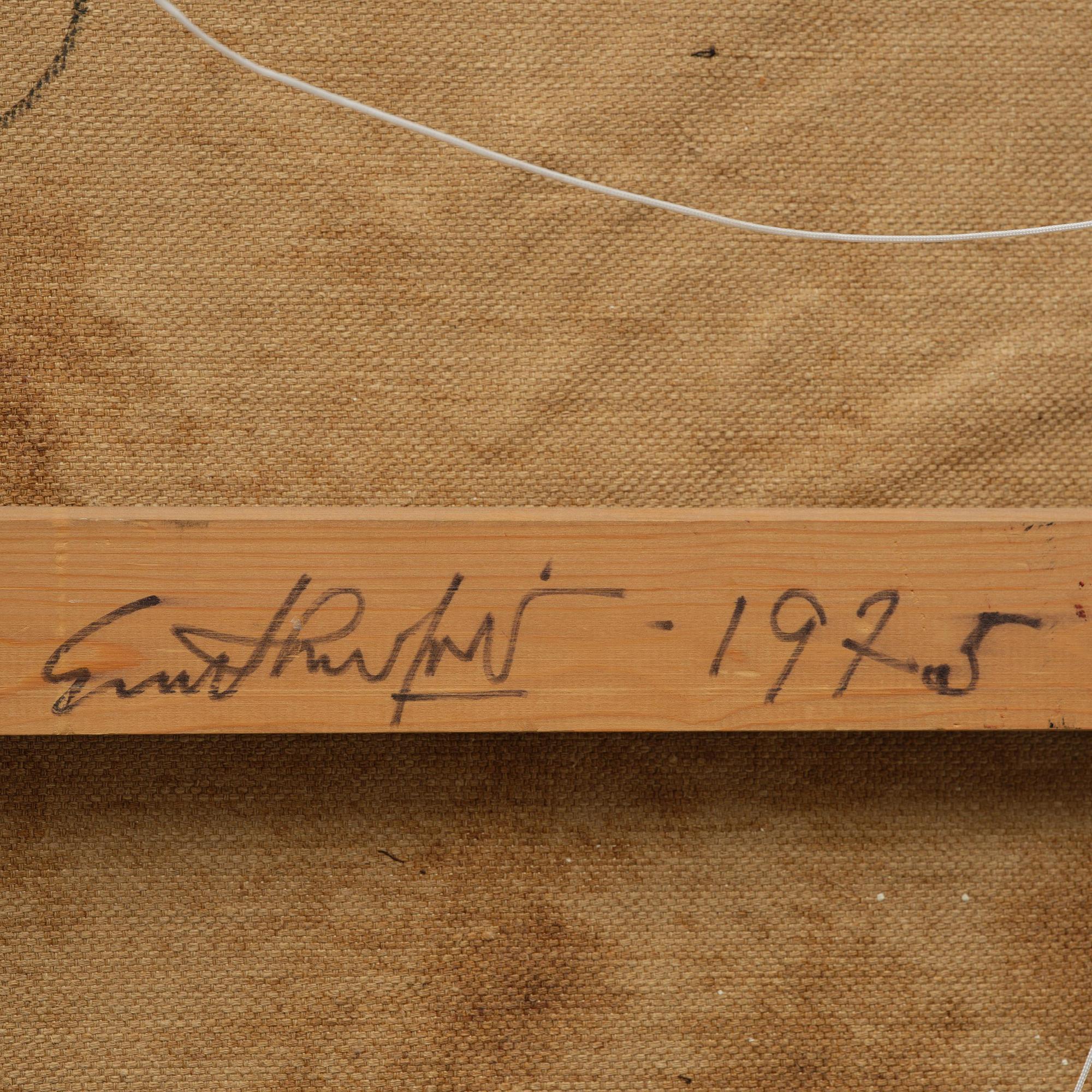
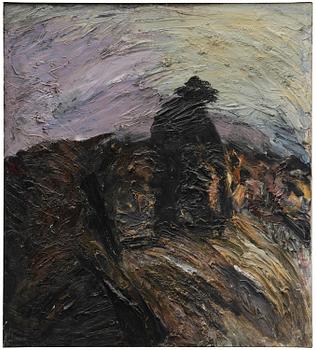
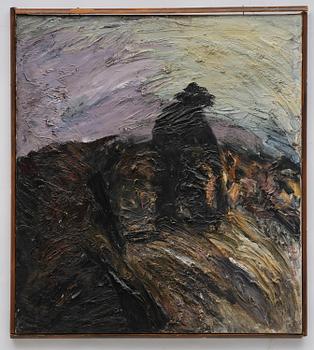
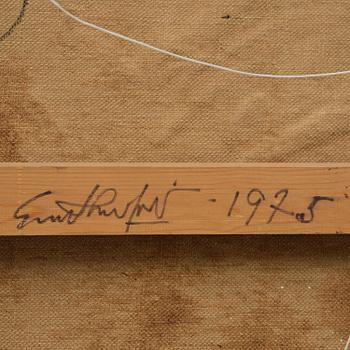
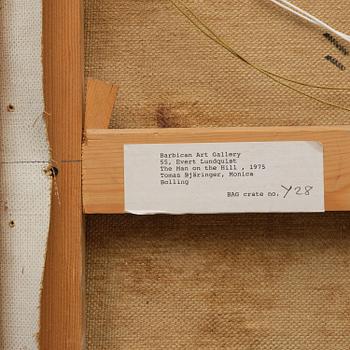
Signed Evert Lundquist and dated 1975 verso. Oil on canvas, 116 x 104 cm, including frame by the artist 120 x 110 cm.
Näyttelyt
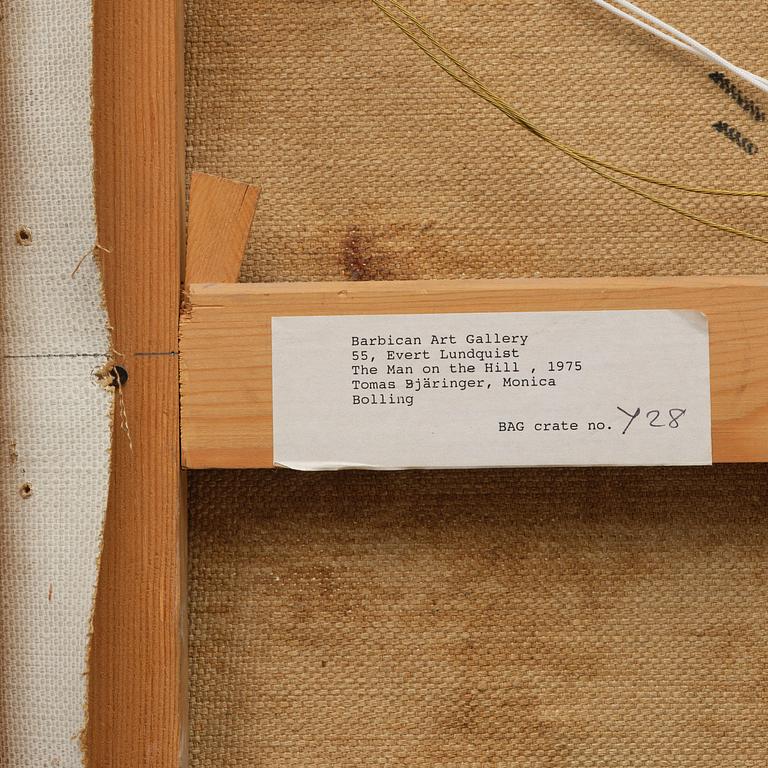
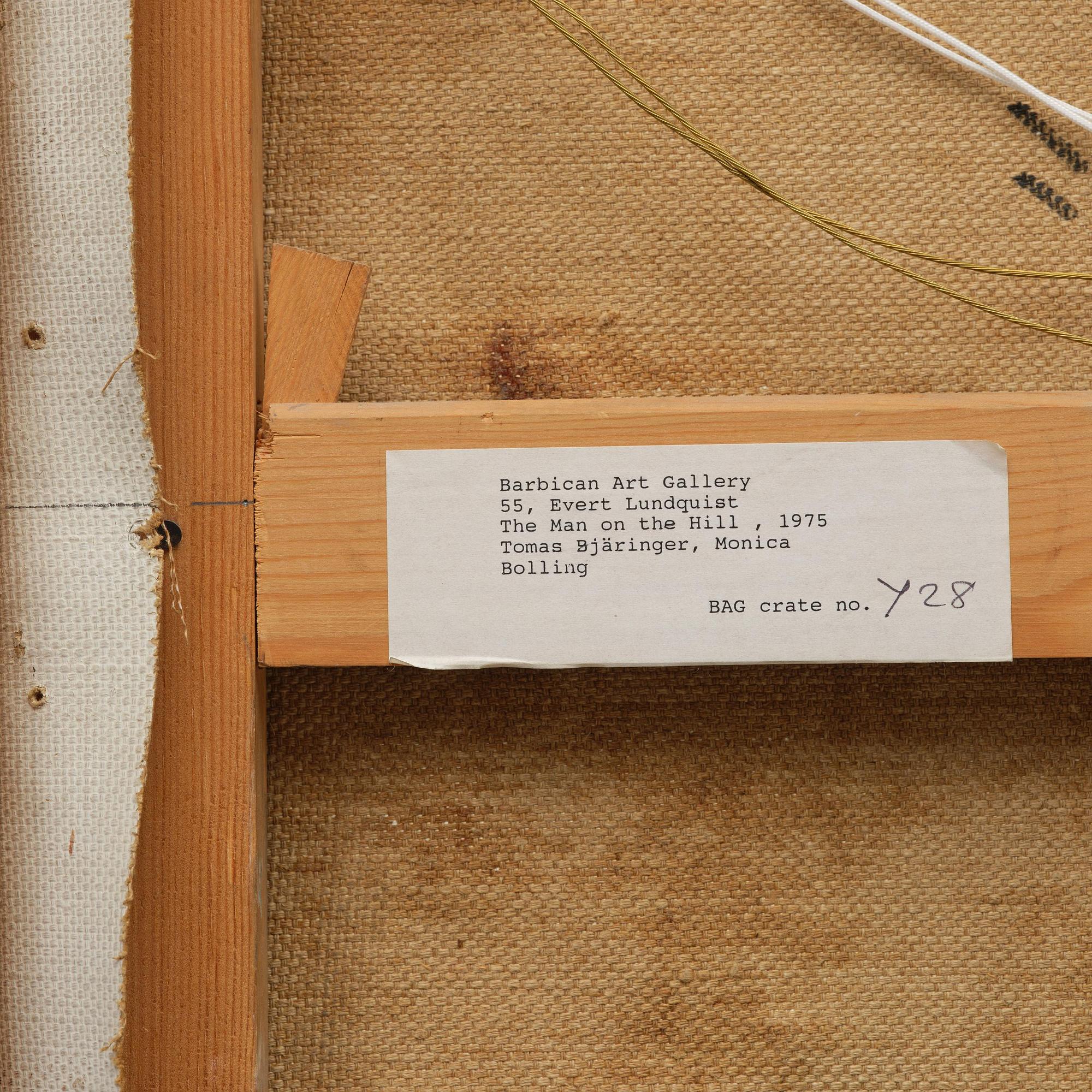
Barbican Art Gallery, London, “Border Crossings: Fourteen Scandinavian Artists”, 11 November 1992 – 7 February 1993.
Kirjallisuus
Barbican Art Gallery, exhibition catalogue, “Border Crossings: Fourteen Scandinavian Artists”, 1992–1993.
Muut tiedot
Evert Lundquist achieved his artistic breakthrough around 1950, after nearly three decades of artistic work. His early paintings were influenced by the New Objectivity movement of the 1920s, but during the 1930s his style evolved towards an increasingly expressive approach, drawing inspiration from artists such as James Ensor. His studies of Old Masters, including Rembrandt, Chardin and van Gogh, played a crucial role in his artistic development and contributed to the emergence of the distinctive, heavily impasto style that would become his hallmark. In these paintings, line, form and colour develop simultaneously as an integrated process. Lundquist described his creative process as a gradual search for the right expression: “I grope my way until I reach the point where things begin to burn.”
His subjects were often drawn from his immediate surroundings. Everyday objects such as spades, candles, ladders and trees appear repeatedly in his work, alongside recurring depictions of women. These motifs are reduced to simplified forms and sometimes almost dissolve entirely into masses of colour. The intensity of the paintings arises from the physical presence of the paint and the interplay of light across the surface.
Lundquist was a prominent member of the so-called Saltsjö-Duvnäs Group, which included artists such as Staffan Hallström, Olle Nyman, Torsten Renqvist, Sixten Lundbohm and Roland Kempe. The group emerged during their studies at the Royal Swedish Academy of Fine Arts, and its members lived and worked together during the 1940s. It came to occupy an important place in Swedish art history, with Lundquist achieving particular success, including considerable recognition internationally.
His artistic education began in 1924 at Carl Wilhelmson’s painting school and continued that same year at the Académie Julian in Paris. From 1925 to 1931, he studied at the Royal Swedish Academy of Fine Arts in Stockholm, where his teachers included Gösta von Hennigs, Carl Wilhelmson and Albert Engström. He later returned to the Academy as a professor, a position he held from 1960 to 1970. Following his studies, he developed an increasingly Expressionist visual language, with affinities to the work of Edvard Munch. Although the thick layers of paint may suggest spontaneity, his working method was characterised by patience and precision. He allowed his paintings to evolve slowly, continuing to work until each element found its place.
A significant milestone in his career was the retrospective exhibition held at the Royal Swedish Academy of Fine Arts in 1944, which helped establish his reputation among a wider audience. Over the following decades, he exhibited regularly in Sweden and abroad. His international appearances included the São Paulo Biennial in 1957, the Guggenheim International Award in New York in 1964, and exhibitions at Tate Gallery in London and the Beaverbrook Art Gallery in Canada. Despite this international recognition, he eventually chose to withdraw from the global art scene and devote himself more fully to his own artistic practice.
In 1953, Lundquist moved to Kanton, near Drottningholm, where he established his studio in a converted electrical substation. This setting became central to his artistic development. The tranquillity and seclusion allowed him to explore everyday objects in greater depth, while the changing light of the surrounding landscape became an increasingly important source of inspiration. Here, he created several significant works, including The Axe (1956), The Potato Jar (1956) and The Bread (1962).
In these paintings, colour takes on an almost sculptural quality. Applied in layers, it creates a richly textured surface across which light moves over raised areas and recesses. The stripped-down motifs leave room for the viewer’s own interpretations and associations, while also conveying the artist’s personal experience of light, colour and form. During this period, his palette became lighter and his approach more free and unrestrained. Colour is applied with both force and precision, each shade carefully balanced within the composition. His sensitivity to colour has been compared to a pianist’s relationship with the keyboard, in which every note plays a distinct role in the overall harmony.
Behind this unwavering artistic commitment lay personal difficulties. Lundquist experienced recurring periods of depression and endured a devastating family tragedy when one of his twin sons disappeared without a trace. In his later years, his eyesight deteriorated severely, and he eventually became blind. Nevertheless, he continued painting until the end of his life. His final painting is dated 1989.
Through his independent and uncompromising visual language, Evert Lundquist established a distinctive position within Swedish modernism. His art combines powerful expressive intensity with radical simplification, transforming ordinary subjects into profound explorations of colour, light and materiality. His influence extended well beyond his own generation.
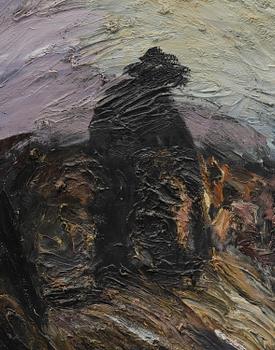
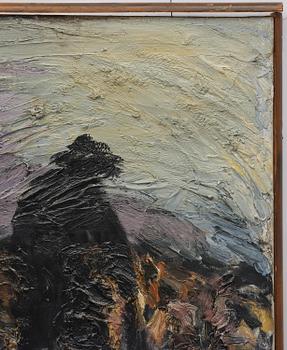
"Mannen på kullen" (1975) exemplifies this mature phase of Lundquist’s artistic career. The painting brings together several of the defining characteristics of his work: a concentrated subject, powerful impasto brushwork and a quiet, almost meditative presence. It demonstrates how he could transform a seemingly simple motif into a work of considerable emotional and visual intensity.
Lisätietoja ja kuntoraportit

Mitä kuljetus maksaa?
Toimituksen voi tilata vain ottamalla yhteyttä osoitteeseen specialdelivery@bukowskis.com.
Kuuluu jälleenmyyntikorvauksen piiriin
Tietoa ostamisesta
Kuvan käyttöoikeudet
Tämän tietokannan taideteokset ovat tekijänoikeudella suojattuja, eikä niitä saa kopioida ilman oikeudenhaltijoiden lupaa. Teokset kopioidaan tässä tietokannassa Bildupphovsrättin lisenssillä.