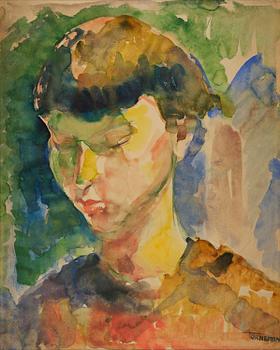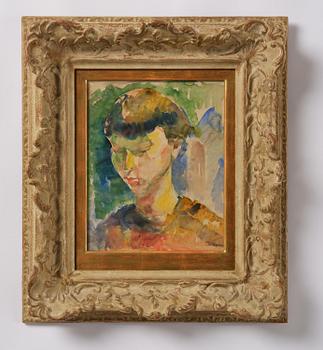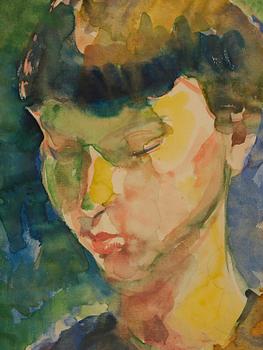
"Algot"
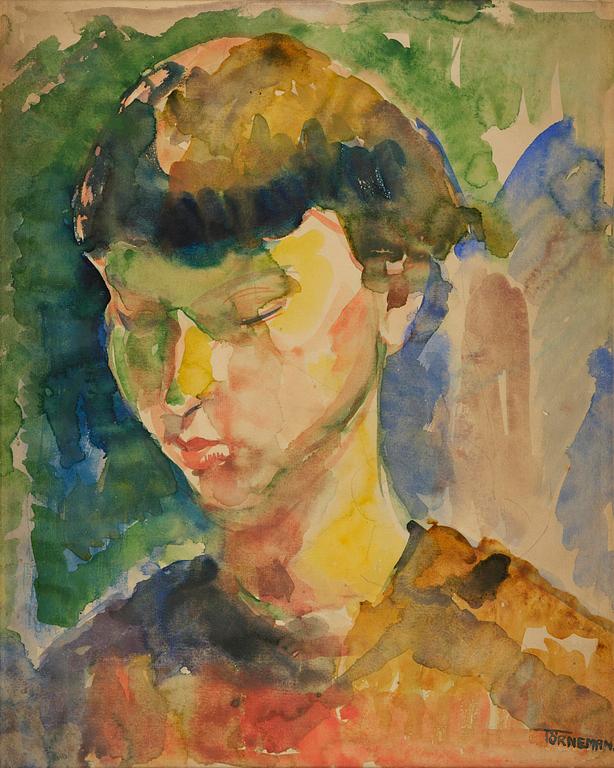
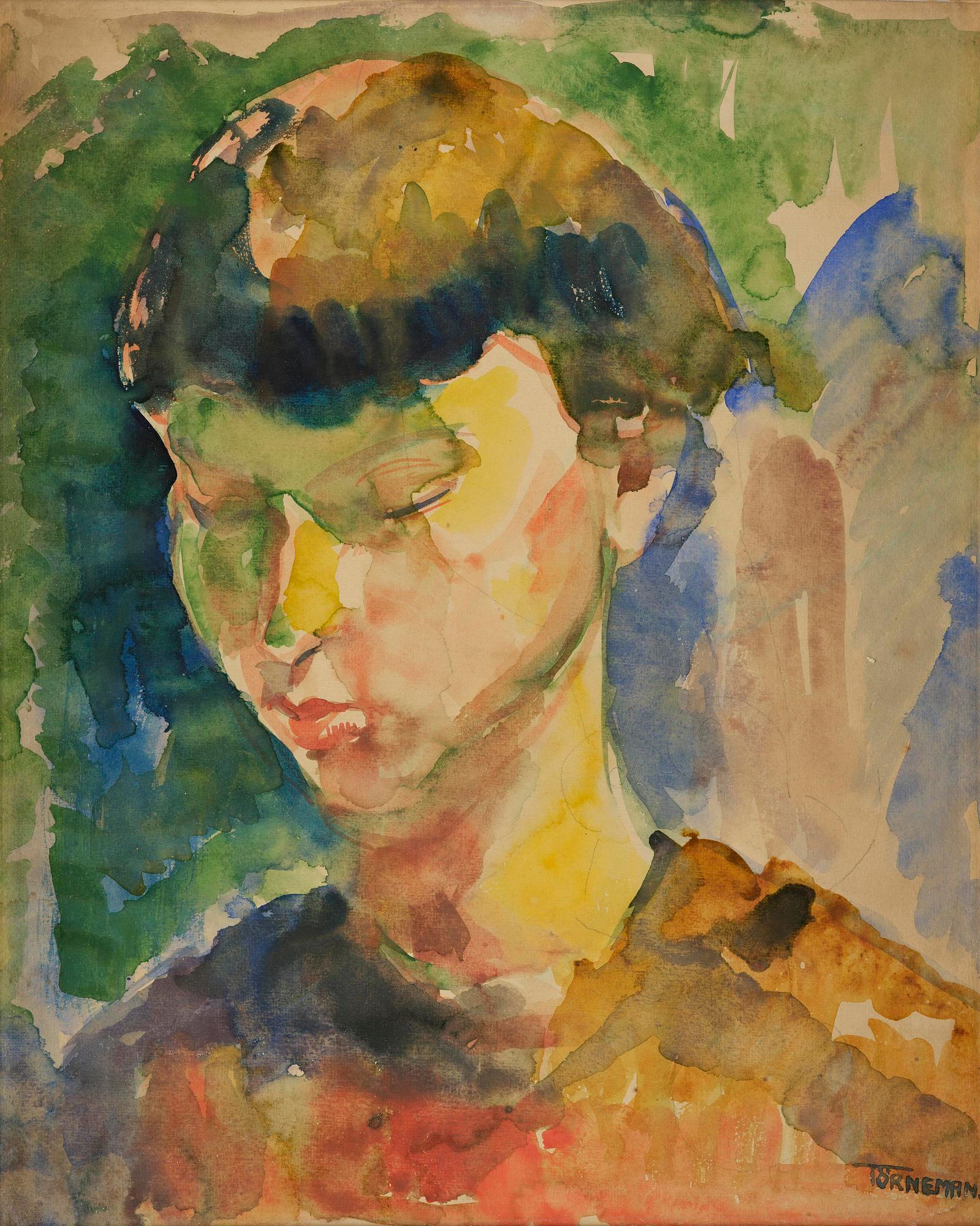
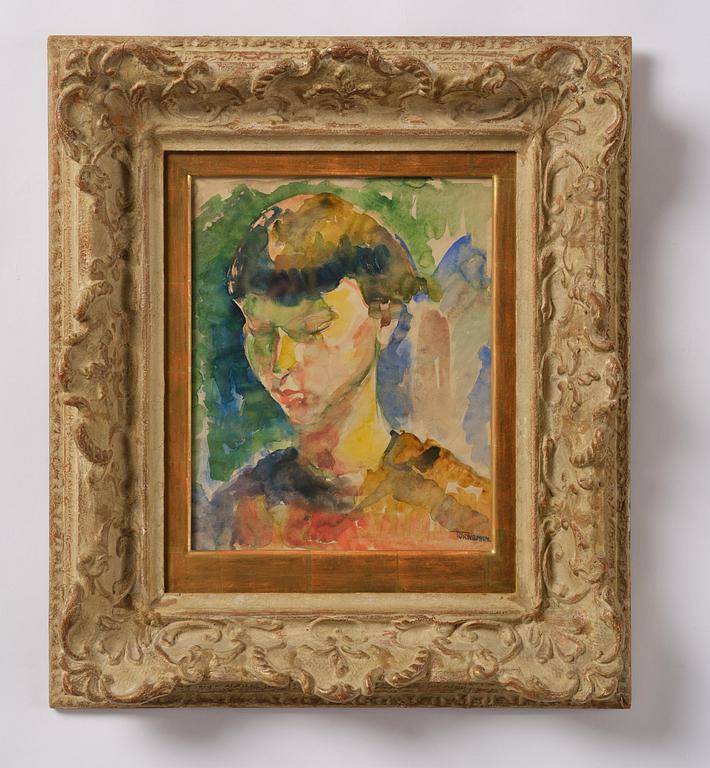
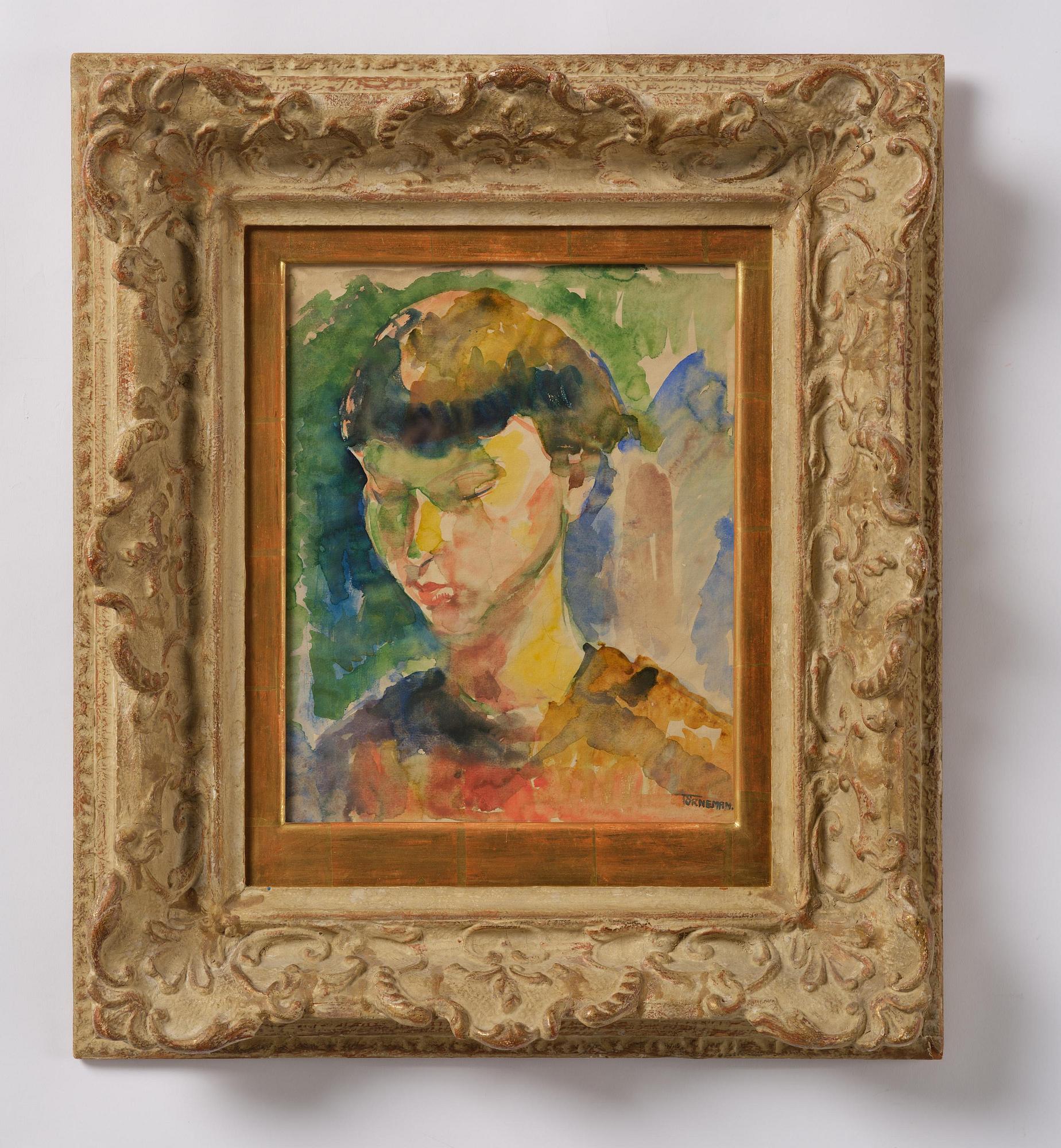
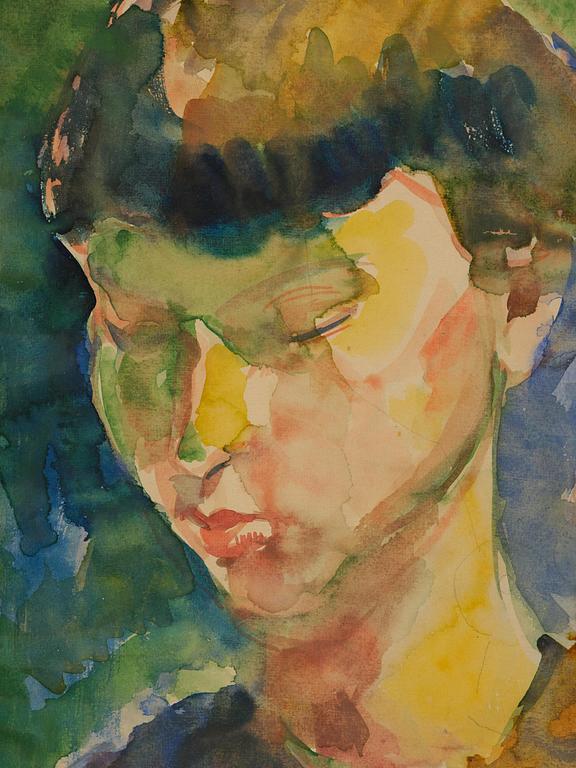
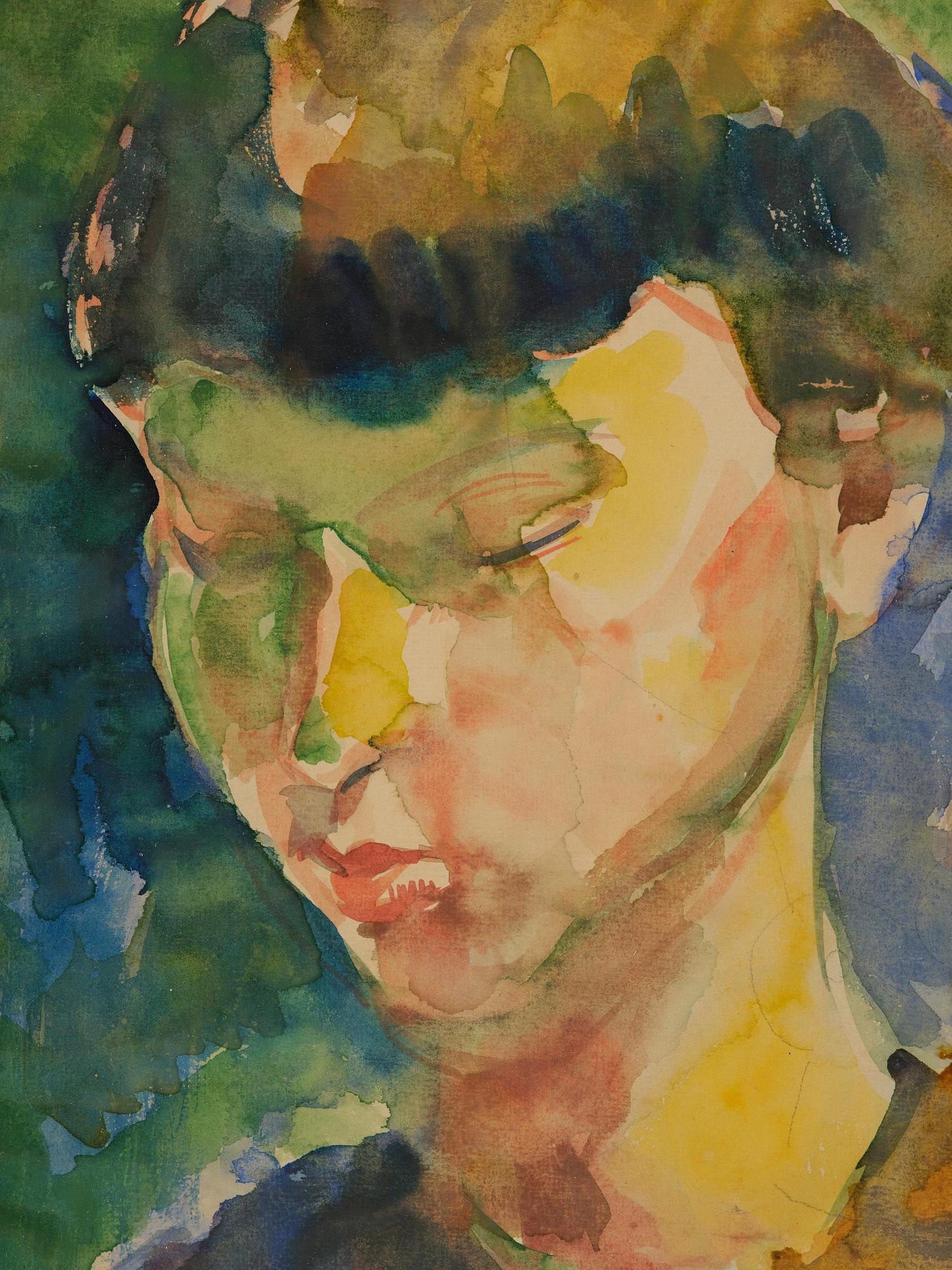
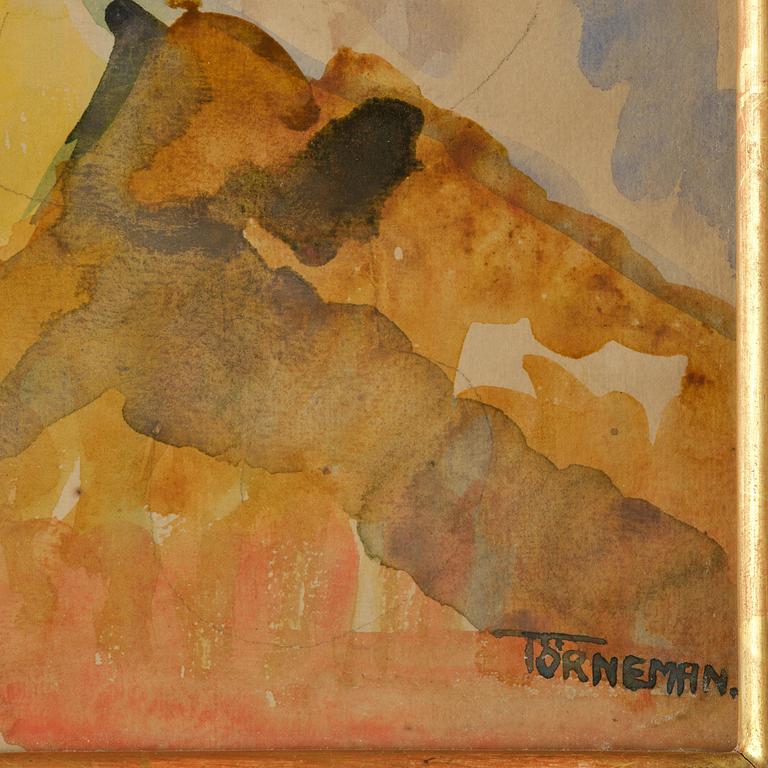
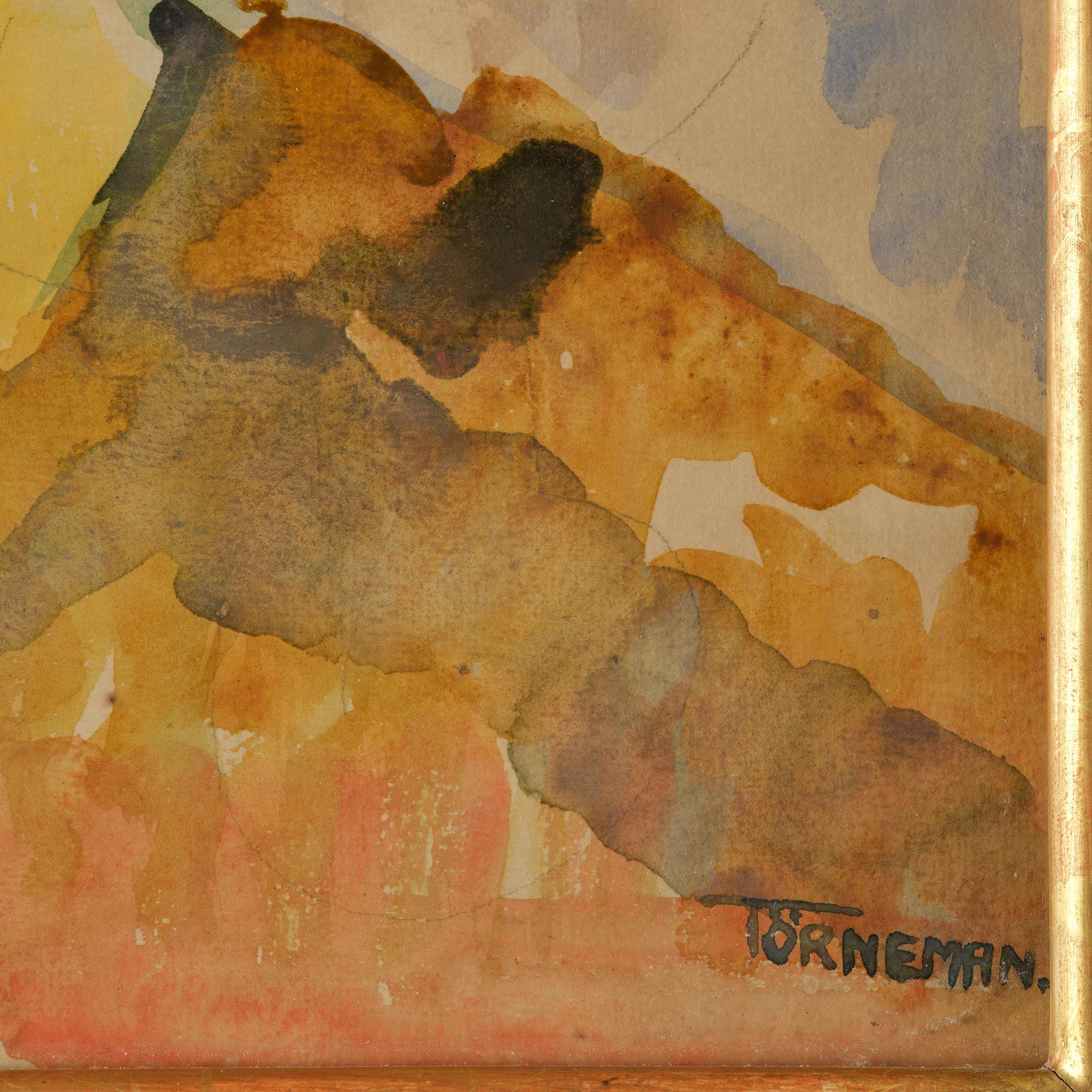
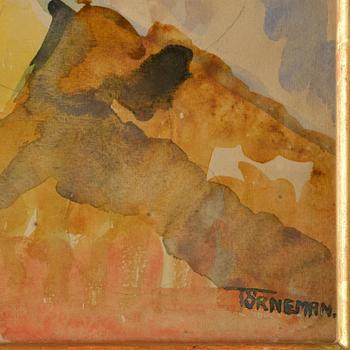
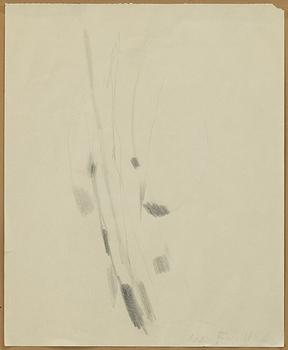
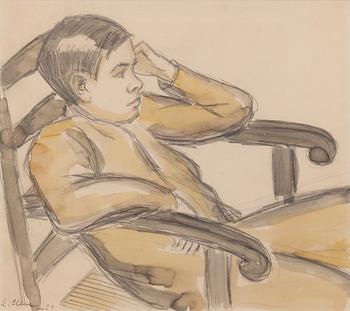
Signed Törneman. Probably executed in 1917–18. Watercolour on paper, 33 x 26 cm.
Alkuperä - Provenienssi
Acquired directly from the artist.
Private Collection, Sweden.
Bukowski Auktioner, Stockholm, Modern Art + Design 612, 21 November 2018, lot 421.
Acquired at the above auction.
Muut tiedot
Axel Törneman has captured his son Algot as a little boy in this tender portrait. Algot was born after Axel’s marriage to Gudrun Høyer-Ellesen, whom he had met in Paris, where she was studying singing. With her temperament and blonde beauty, she became one of the central figures of the Scandinavian artists’ colony in Paris.
Törneman was one of the first Swedish artists to make his way to Paris at the beginning of the twentieth century, and the years he spent in the city, 1902–05, became a period of experimentation with colour, technique and subject matter. Before that, he had studied under Carl Wilhelmson at the Valand School of Painting, as well as in Munich. For a time he also lived in Dachau, working in an international artists’ colony led by Adolf Hölzel. It is often said that Törneman learned to master line in Munich and colour in Paris. In his own words: “Values! Values! It is very useful for me to know this, since in Munich I hardly worked with it at all; there it was the lines that mattered.” Within the art world, Törneman was a solitary sailor whose course ran from Wilhelmson and Jugendstil towards Franco-German Expressionism, towards Munch and Norwegian monumental painting, with certain elements of Italian Futurism.
Törneman’s major breakthrough came with the painting Nattcafé (The Night Café), which he began in Paris and completed after returning home to Persberg in 1906. Depicting the Café du Rat Mort in Paris, the painting can be regarded as one of the most important breakthrough works of Swedish modernism. It was shown at the Independents’ autumn salon in 1906 and subsequently exhibited in Sweden, where it was finally acquired by Ernest Thiel in the spring of 1907.
After their marriage, Axel and Gudrun settled at Vistaholm manor in Västergötland, and around the time of Algot’s birth they moved on to Stockholm, where Törneman received a series of public commissions for monumental paintings, among them at the Royal Institute of Technology (KTH) and Stockholm City Hall.
Their son Algot became a Swedish lawyer, enamel artist and painter. Like his father, he studied in Paris, at Sorbonne, and took his law degree at Lund in 1937. For two decades he worked as a lawyer and industrial executive before becoming director and artistic head of Hantverket in Stockholm from 1960 to 1968. He later sat on the board of Konstfackskolan (University of Arts, Crafts and Design) and served as secretary of the Royal Swedish Academy of Fine Arts from 1967 to 1978, where he was later made professor. Algot belonged to the small group of pioneers who experimented with enamel painting at the Gustavsberg porcelain factory after the Second World War. He worked mainly with enamel panels, produced in series as table tops for Nordiska Kompaniet’s Triva furniture in collaboration with the furniture designer David Rosén.
Lisätietoja ja kuntoraportit

Mitä kuljetus maksaa?
Tietoa ostamisesta