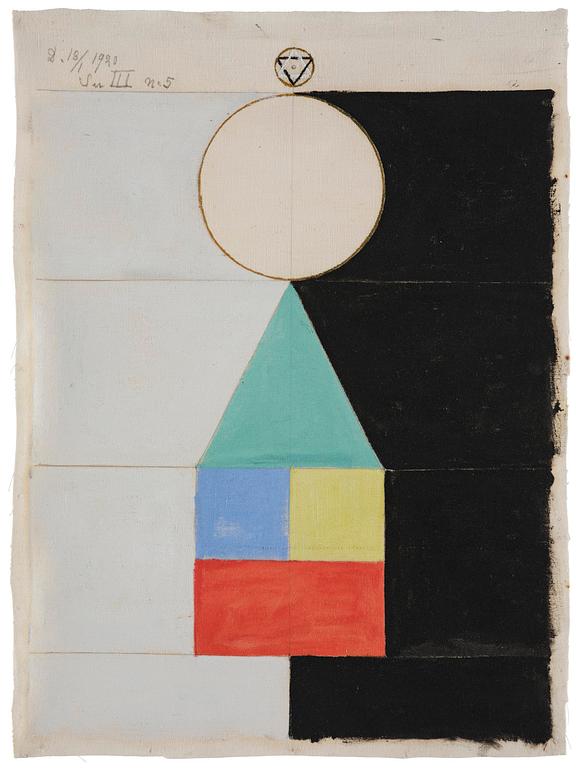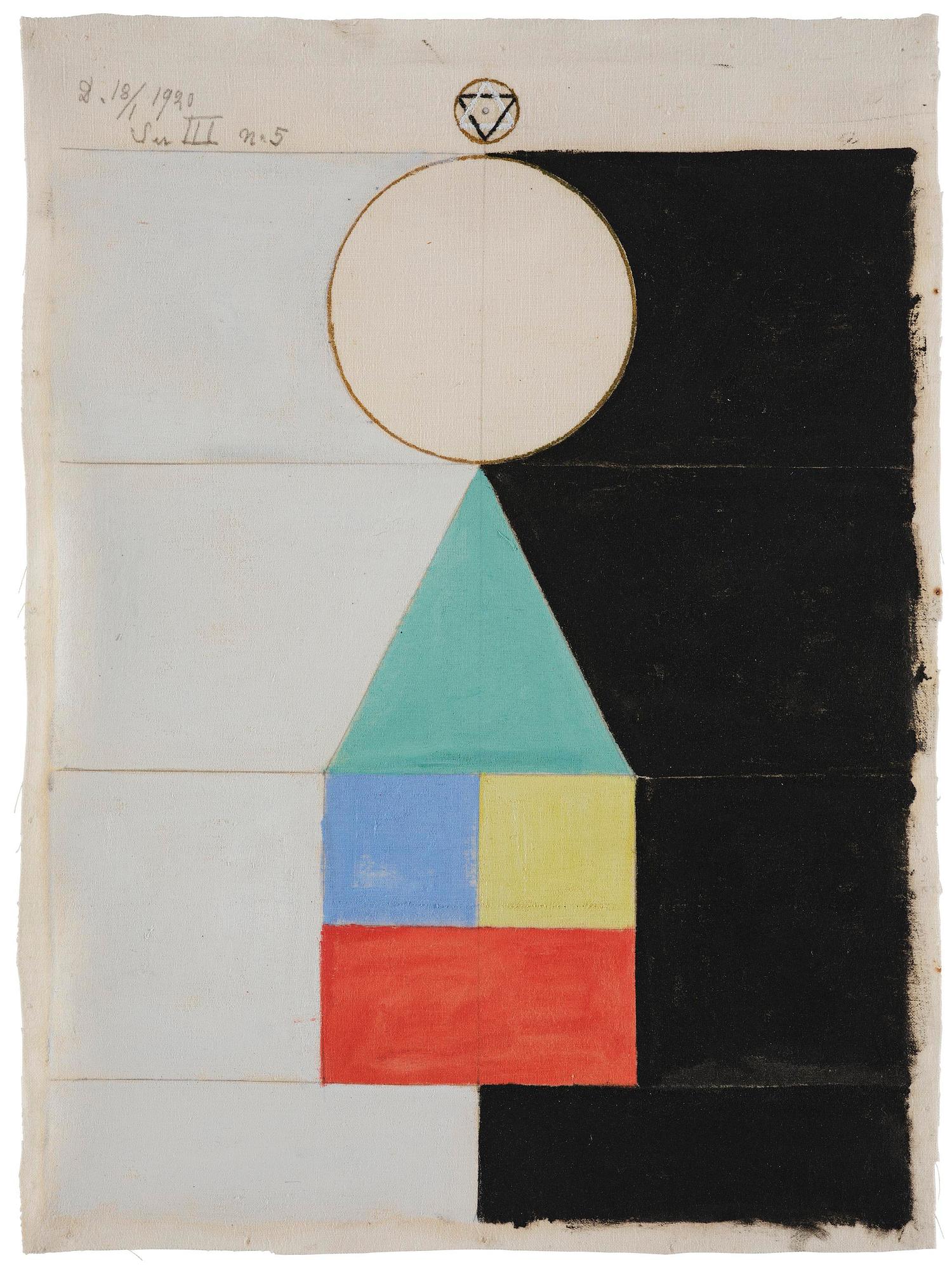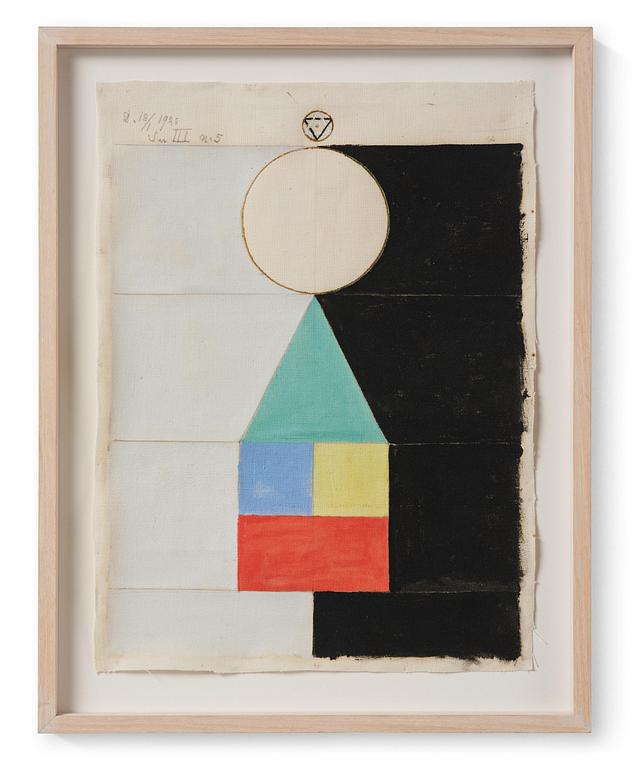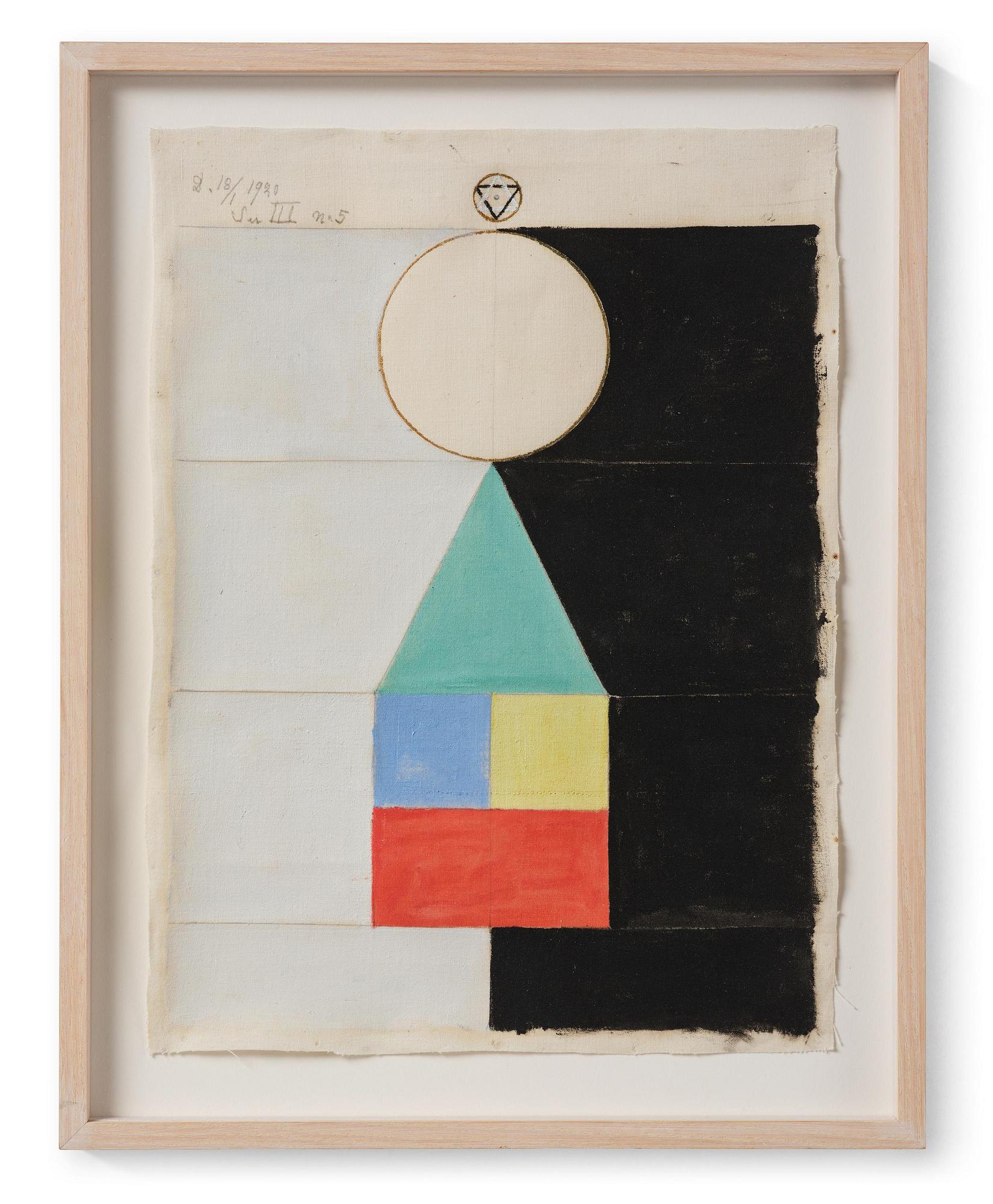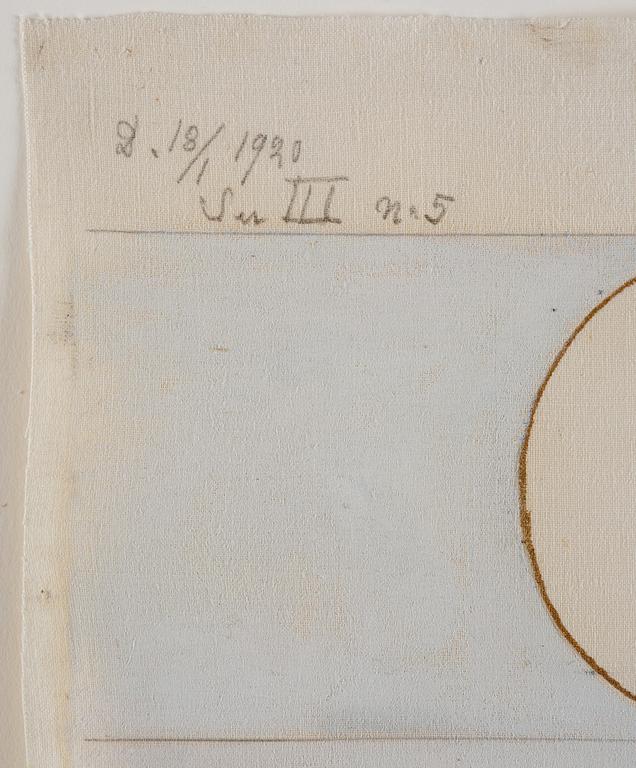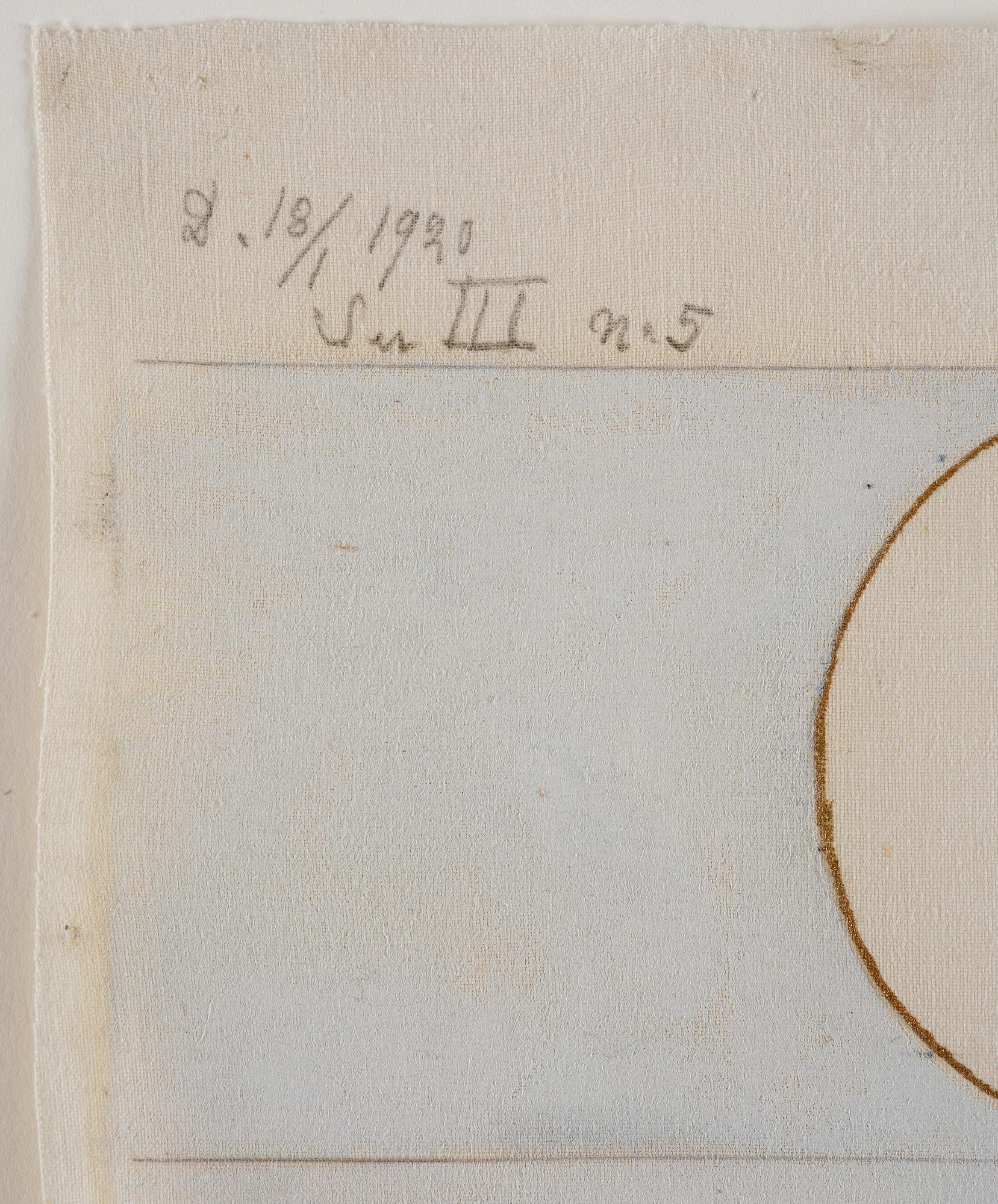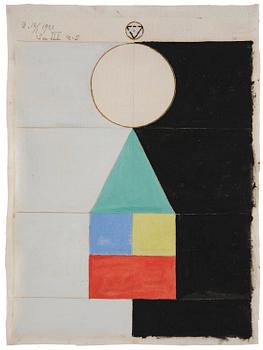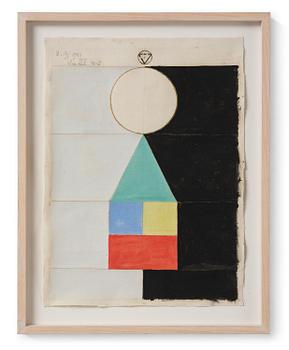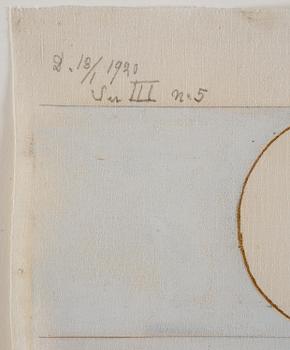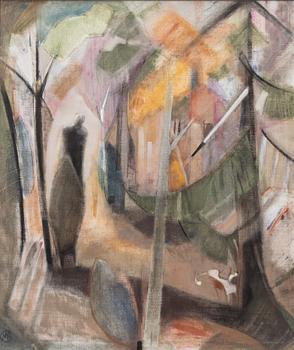
"Ser III No. 5"
Dated D. 18/1 1920. Oil and graphite on canvas 38,5 x 29 cm.
The work is registered with the Hilma af Klint Foundation under archive no HaK480.
Alkuperä - Provenienssi
The Estate of the artist Hilma af Klint.
Vice admiral Erik af Klint (1901–1981).
The Hilma af Klint Foundation, gifted by the above in 1972.
Galleri Söderlund, Stockholm (on behalf of the above).
Private Collection, acquired through the above in 1995.
Thence by descent.
Näyttelyt
Los Angeles County Museum of Art, Los Angeles, “The Spiritual in Art – Abstract Painting 1890–1985”, 23 November 1986 – 8 March 1987.
Museum of Contemporary Art, Chicago, “The Spiritual in Art – Abstract Painting 1890–1985”, 17 April – 19 July 1987. Gemeentemuseum den Haag, The Hague, “The Spiritual in Art – Abstract Painting 1890–1985”, 1 September – 22 November 1987.
Moderna Museet, Stockholm, “Hilma af Klint. Occult Painter and Abstract Pioneer”, 26 December 1989 – 18 February 1990, cat. no 119.
Göteborgs Konsthall, Gothenburg, Sweden, “Hilma af Klint, Retrospective”, 1 September – 7 October 1990.
Lunds Konsthall, Lund, Sweden, “Hilma af Klint – Occult Painter and Abstract Pioneer”, 27 October – 2 December 1990.
Fyns Kunstmuseum, Odense, Denmark, “Hilma af Klint – Occult Painter and Abstract Pioneer”, 19 January – 31 March 1991.
Albertina, Wien, Austria, "Okkultismus und Abstraktion Die Malerin Hilma af Klint" (Occultism and Abstraction of the Painter Hilma af Klint), 28 November, 1991 – 2 February, 1992.
Kulturhaus der Stadt Graz, Austria, 22 February, 1992 – 29 March, 1992.
Museum Moderner Kunst, Passau, Germany, 30 April, 1992 – 19 July, 1992.
Galleri Söderlund, Stockholm Art Fair, 9 - 14 March, 1994.
Kirjallisuus
Maurice Tuchman (ed.), “The Spiritual in Art: Abstract Painting 1890–1985”, 1986, illustrated, full page, p. 155.
Åke Fant (ed.), “Hilma af Klint: ockult målarinna och abstrakt pionjär”, 1989, illustrated full page, p. 184.
Åke Fant, exhibition catalogue, Moderna Museet, Stockholm, “Hilma af Klint. Ockult målarinna och abstrakt pionjär”, 1990, illustrated in colour, full page, cat. no 119.
Åke Fant, exhibition catalogue, "Okkultismus und Abstraktion Die Malerin Hilma af Klint" (Occultism and Abstraction of the Painter Hilma af Klint), Albertina, Vienna, 1991/1992, illustrated in the catalogue pl. 18.
Kurt Almqvist (ed.), “Hilma af Klint – Seeing is Believing”, 2020, illustrated, full page, p. 27.
Kurt Almqvist (ed.), “Hilma af Klint – Catalogue raisonné vol. 5: Geometric Series and Other Works 1917–1920”, 2021, illustrated full page, p. 115.
Muut tiedot
Bukowskis is honoured to present “Ser III No. 5”, a highly important abstract work by Hilma af Klint, the pioneering Swedish artist whose visionary practice has fundamentally reshaped the history of modern art.
The appearance of an abstract work by af Klint at auction is an exceptionally rare event. The artist’s non-figurative legacy is preserved and administered by the Hilma af Klint Foundation, and her abstract paintings have consequently remained almost entirely beyond the reach of the public art market. Only two abstract paintings by af Klint have previously been sold at auction, both more than three decades ago.
The presentation of “Ser III No. 5” at auction offers an extraordinary opportunity to acquire an important example of af Klint’s groundbreaking abstract practice. Created at a pivotal moment in the development of her artistic language, “Ser III No. 5” belongs to a body of work that today occupies a defining place in the story of twentieth-century abstraction.
Introduction
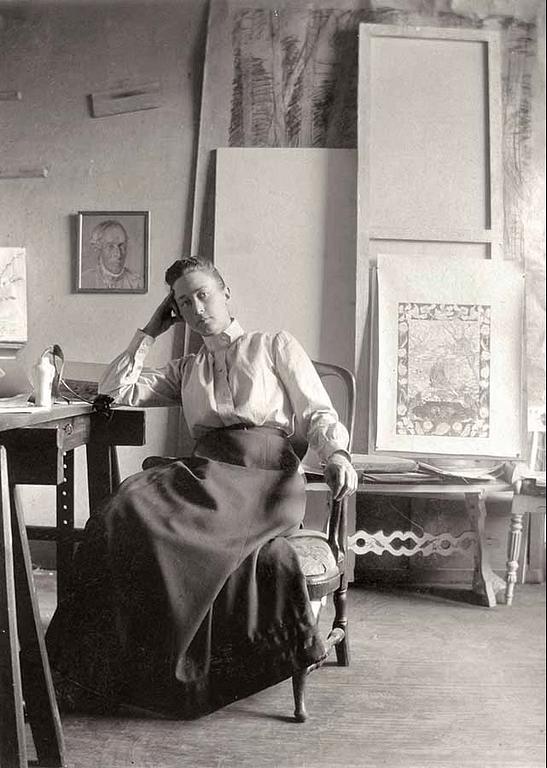
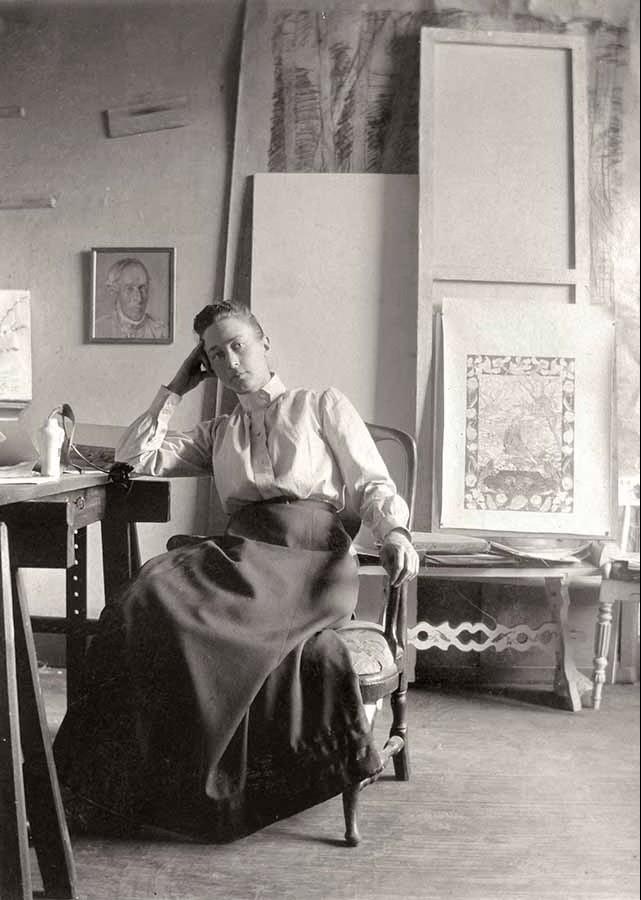
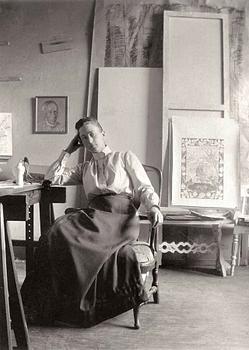
Hilma af Klint (1862–1944) occupies a unique position in international art history. During her lifetime, she remained largely outside the established art scene, while developing a distinctive abstract visual language. Her artistic practice emerged at the intersection of spirituality, natural science, philosophy and artistic form, where geometric shapes, symbols and fields of colour came to convey ideas beyond the figurative.
af Klint’s abstract painting from 1906 onwards places her work at an early point in the history of modern abstraction. At the same time, twentieth-century art history was shaped to a great extent by public exposure: exhibitions, manifestos, international networks, teaching and published theories. Kandinsky, for example, exhibited, published texts and taught. af Klint, by contrast, kept the majority of her abstract work out of the public eye. It would take more than 40 years after her death until her abstract work was presented at the exhibition ”The Spiritual in Art: Abstract Painting 1890 – 1985” at the Los Angeles County Museum of Art in 1986.
The work presented in this auction, “Ser III No. 5”, was one of the works lent by the Hilma af Klint Foundation to this now legendary exhibition. af Klint’s paintings caused a sensation at the exhibition, despite how little was known about her artistic practice. International interest in the artist’s life and work has grown exponentially ever since.
A Seeker
Hilma af Klint belonged to one of the first generations of women to receive an education at the Royal Academy of Fine Arts in Stockholm. Between 1882 and 1887, she studied under, among others, August Malmström and Georg von Rosen. Her early artistic practice was rooted in the traditions of the Academy and focused primarily on portraits, landscapes, botanical studies and commissioned works.
In the late nineteenth century, Western society was characterised by rapid industrialisation and scientific progress, while new forms of spiritual and religious enquiry were emerging. af Klint’s interest in the spirit world developed at an early stage and coincided with a broader European fascination with spiritualism, Theosophy and esoteric currents of thought.
Theosophy is a philosophical and spiritual movement based on the notion of an underlying unity among different religions, intuitive insight into the divine nature, scientific knowledge, and cosmic principles. For af Klint, these ideas became an important part of the conceptual world that permeated her artistic practice.
The Paintings for the Temple
At the Academy of Fine Arts, Hilma af Klint met Anna Cassel. In 1896, together with Sigrid Hedman, Cornelia Cederberg and Mathilda Nilsson, they formed the group "The Five". The group held regular spiritual gatherings and believed themselves to be in contact with spiritual beings whom they called the High Ones. af Klint felt that, through this contact, she had been commissioned to undertake an extensive artistic project: “The Paintings for the Temple”. When this work began in 1906, her art underwent a radical transformation. Moving away from figurative painting, she developed a wholly transformative abstract and symbolic visual language.
During the early part of the project, af Klint assumed a mediating role in the creative process. Between 1906 and 1915, she produced a monumental work of 193 paintings conceived as fragments of an ideal spiritual temple. Abstract forms, vibrant colours, script, and symbols were organised into complex visual systems. She worked methodically and in series divided into thematic and formal groups, exploring different aspects of cosmic and human development. The now world-famous "The Paintings for the Temple" was a body of work kept within a limited circle. The paintings were shown only to a select few.
The Invisible Reality
For Hilma af Klint, abstraction was a means of investigating an invisible reality. In this respect, there are points of contact with other early abstract artists, including Kandinsky, Malevich and Mondrian, who in different ways sought to unite an abstract visual language with spiritual or philosophical ideas.
After “The Paintings for the Temple”, af Klint continued to investigate the meaning of the messages and systems of symbols that she understood to have been conveyed through spiritual contact. She had a purpose-built studio constructed on Munsö in lake Mälaren which gave her the possibility of seeing the different series of "The Paintings for the Temple" together. Through her artistic work, she sought meaning in what she had created. On several occasions, she sought guidance from Rudolf Steiner, the Austrian philosopher and later founder of the Anthroposophical movement. Her relationship with Steiner would become significant to her continued artistic and spiritual development.
A New Phase - The last series on canvas
When Hilma af Klint’s mother died in 1920, a new phase of her life began. Her mother’s nurse, Thomasine Andersson, had become a close friend and partner. Together, they worked on the botanical series “Flowers, Mosses, Lichens”, in which reginal flora was depicted naturalistically alongside a diagram of their essence. The diagrams would assume an increasingly prominent role in af Klint’s abstract production.
During a few intense months at the beginning of 1920, she produced 85 bold geometric-abstract works on a small, more intimate scale, including “Ser III No. 5”, presented in this auction. The works can be understood as meticulous and very personal interpretations of Rudolf Steiner’s Rosicrucian teachings and the Theosophical doctrine of a shared truth underlying the world’s religions, philosophies, and sciences.
The art historian and Hilma af Klint expert Åke Fant has described how af Klint worked with extraordinary intensity over a short period, creating almost one new painting each day. At the same time, she was deeply engaged in studying the atom in transformation and the astral aspect of plants. Through her combined inner experiences of these phenomena, she perceived the forms emerging and transforming on the canvases.
Geometric figures of triangles, circles, and rectangles, interact in shifting constellations with symbols and signs, including the cross and interpretations of the seal of the Theosophical Society. Together, these geometric motifs and the artist’s careful pencil notations constitute a highly personal visual lexicon, continuing her investigations into the unseen structures underlying the visible world.
By 12 March 1920, af Klint had completed the last work in the series numbered “Ser VIII No. 5”. This was to be the last abstract work on canvas that she created. Following a break of just over a year, she left geometric abstraction behind and travelled to Dornach in Switzerland, where Rudolf Steiner had established a centre for the Anthroposophical movement.
During the final years of her life, Hilma af Klint turned to a freer and more fluid form of watercolour painting in the spirit of the Anthroposophists.
Rediscovery and Reassessment
Hilma af Klint’s position in the history of early abstraction has been progressively reassessed. In 1986, the painting presented in this auction, “Ser III No. 5”, was shown at the acclaimed exhibition “The Spiritual in Art – Abstract Painting 1890–1985” at the Los Angeles County Museum of Art. This marked the beginning of the rediscovery of Hilma af Klint’s artistic practice.
The major exhibition “Hilma af Klint: A Pioneer of Abstraction” at Moderna Museet in Stockholm in 2012, initiated by Daniel Birnbaum, the museum’s director at the time, became one of the most successful exhibitions in the museum’s history. In 2018, the Solomon R. Guggenheim Museum in New York presented “Hilma af Klint: Paintings for the Future”. The exhibition attracted a record audience of more than 600,000 visitors.
Today, Hilma af Klint is established as a central reference point in the study of early abstraction. Her groundbreaking artistic practice has moved and fascinated museum audiences around the world, while her oeuvre has become the subject of extensive international exhibition and research activity.
Lisätietoja ja kuntoraportit

Mitä kuljetus maksaa?
Toimituksen voi tilata vain ottamalla yhteyttä osoitteeseen specialdelivery@bukowskis.com.
Tietoa ostamisesta