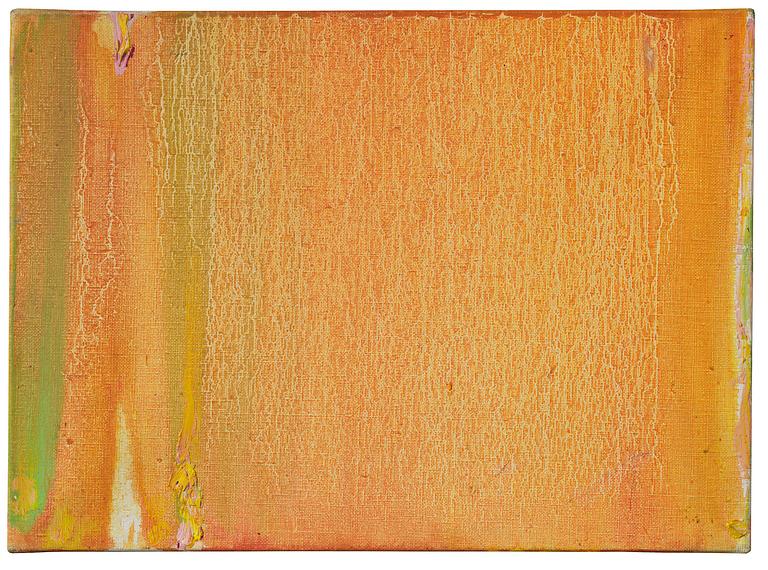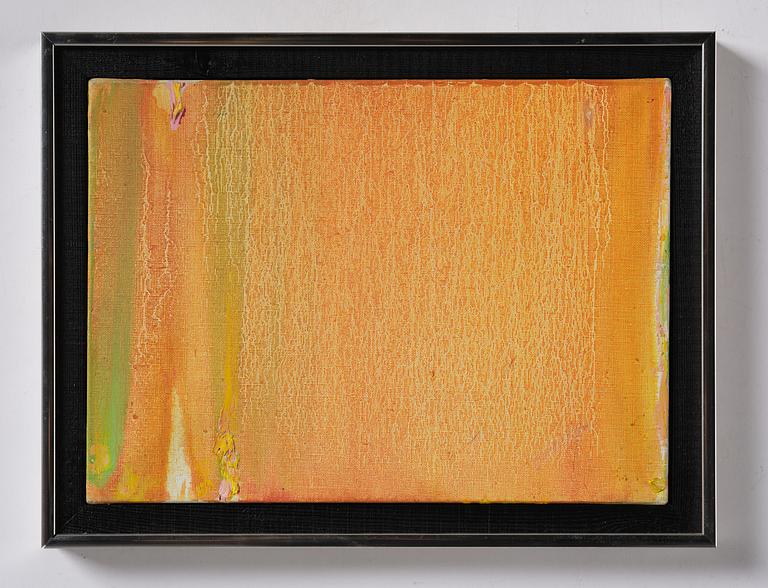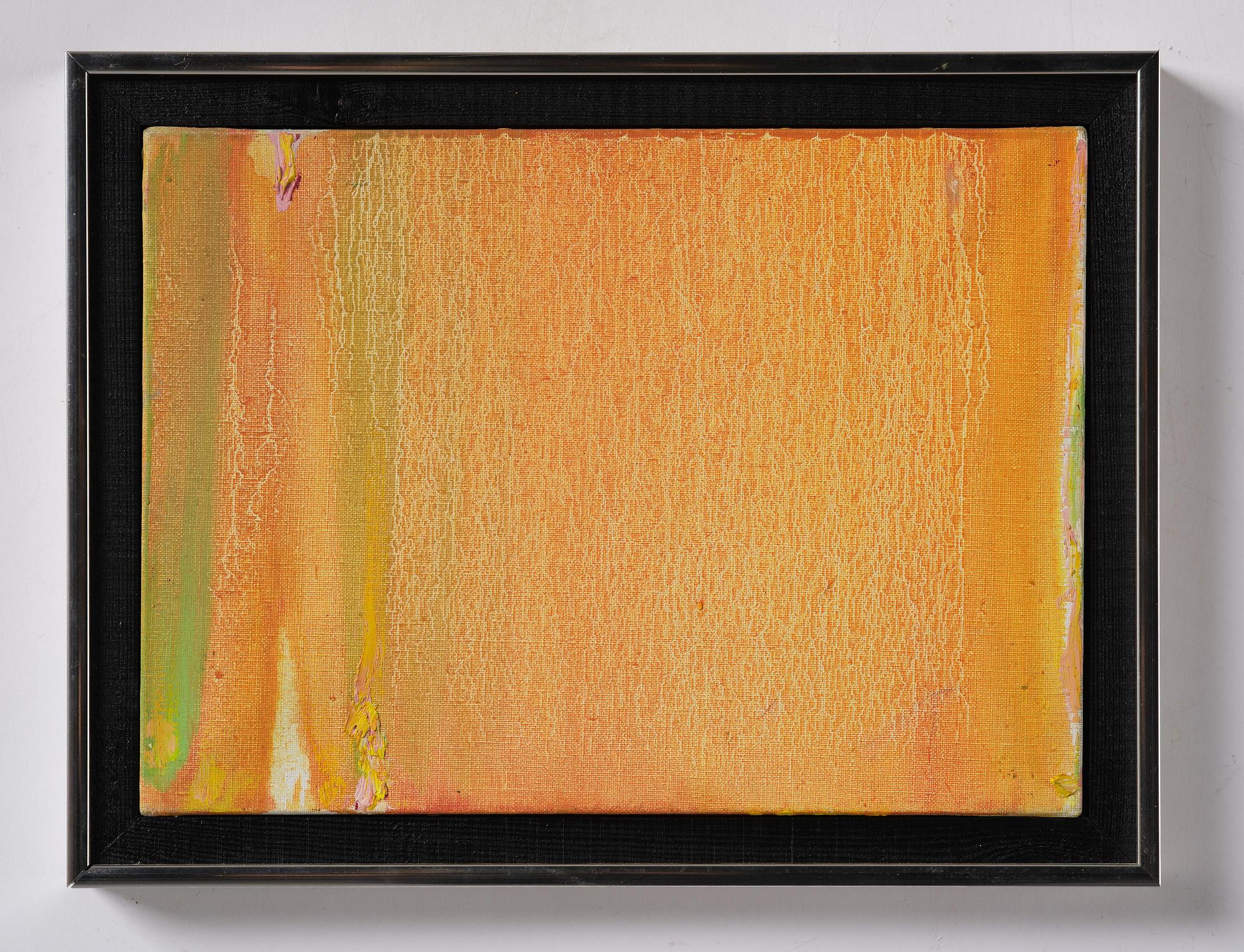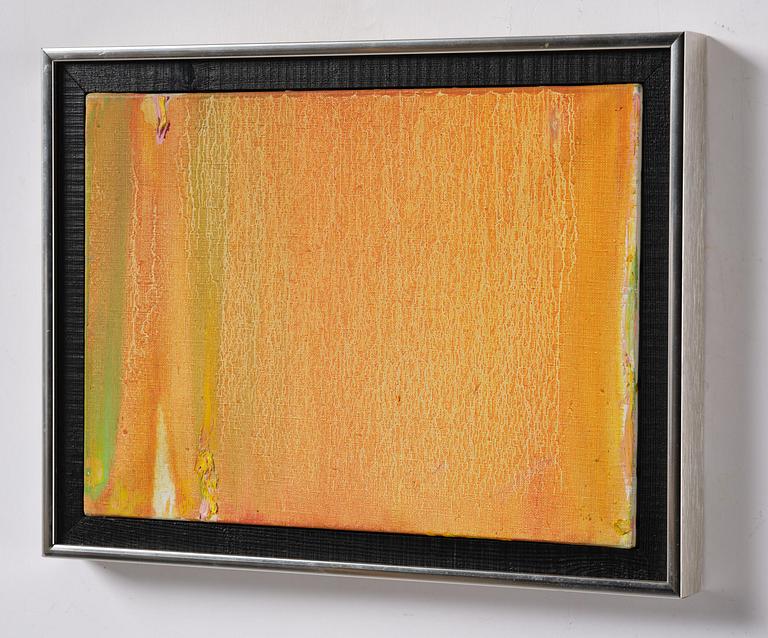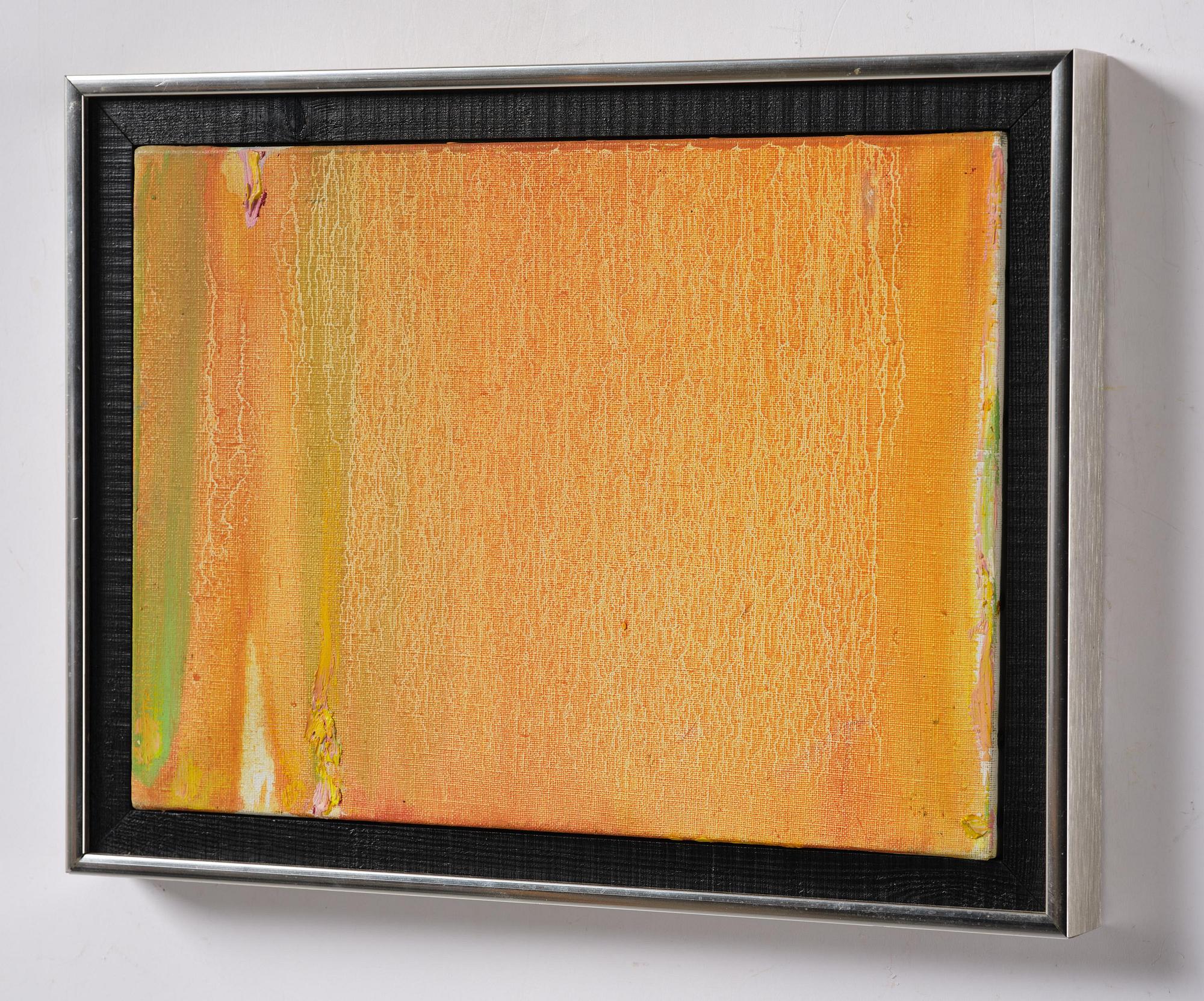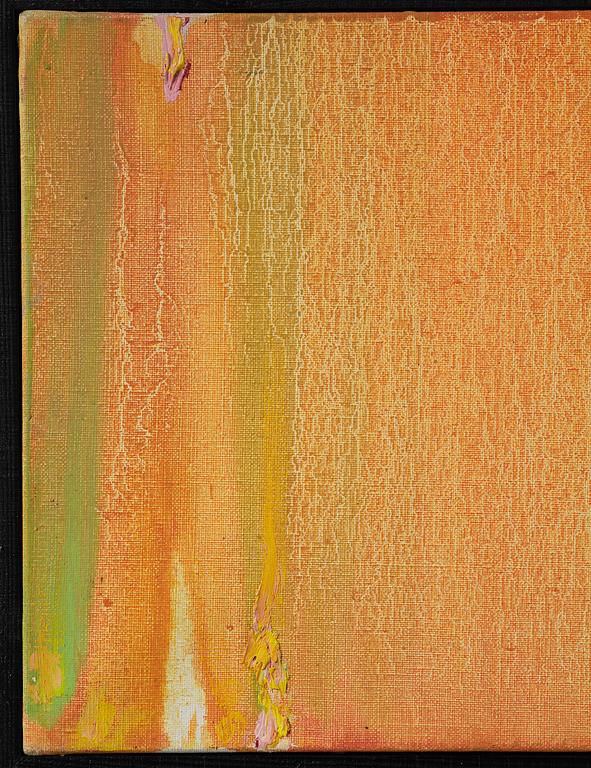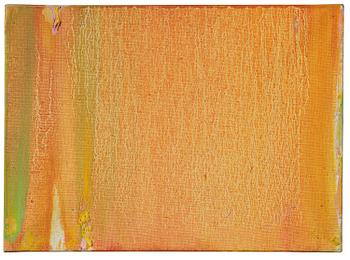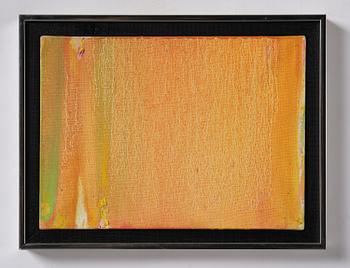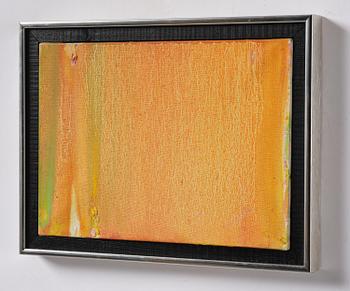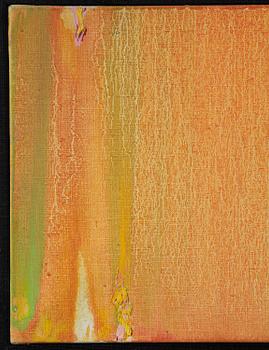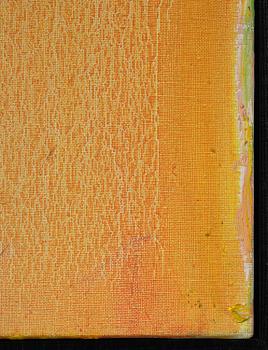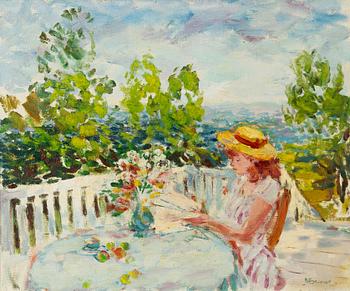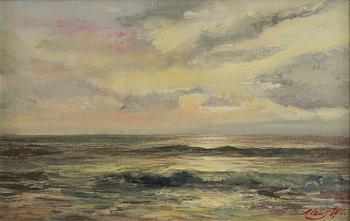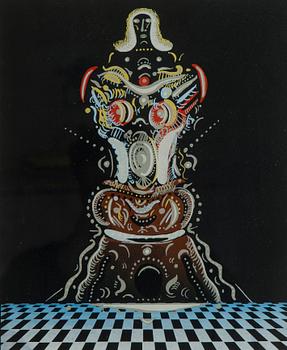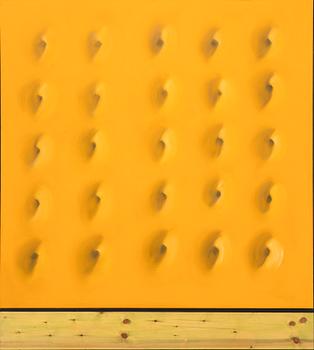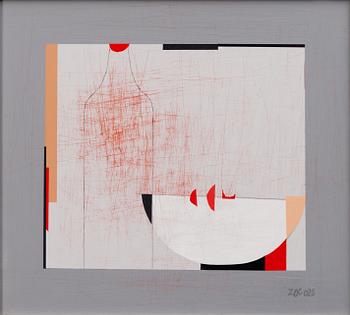
"Jaune Ocre Coulée"
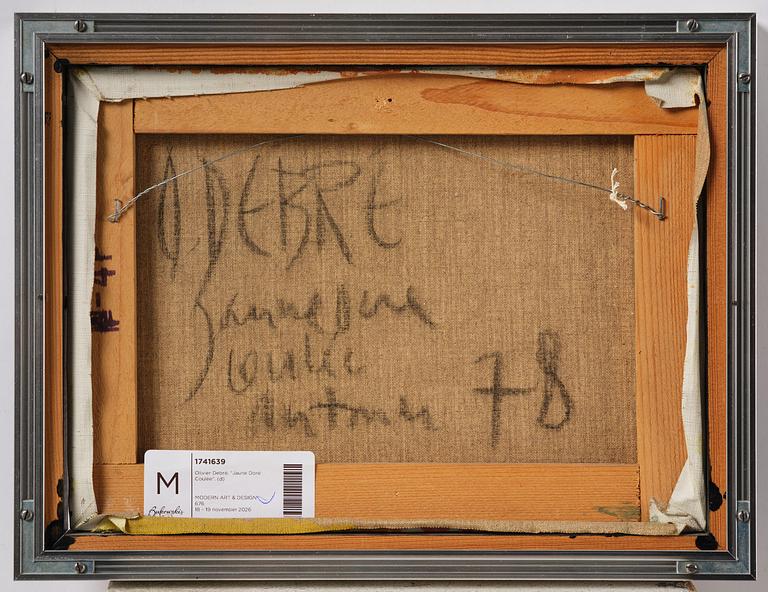
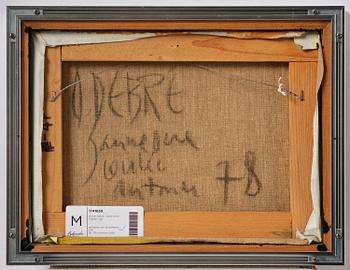
Signed O. Debré and dated Automne -78. Oil on canvas, 24 x 33 cm.
Alkuperä - Provenienssi
Acquired directly from the artist in 1978 in Paris.
Private Collection, Kalmar, Sweden, acquired from the above in 1980.
Bukowski Auktioner, Stockholm, Contemporary Art & Design 615, lot 122.
Private Collection, Sweden.
Muut tiedot
Olivier Debré began his art studies at the École des Beaux-Arts in Paris at the age of 17. In 1940, he met Pablo Picasso and Hans Hartung in Paris for the first time, two influential figures in modern art.
Debré’s first major exhibition took place in 1949 at Galerie Bing in Paris. Picasso visited the exhibition and recognised the freshness and originality of Debré’s painting. Art critics were equally enthusiastic, regarding his work as a new and distinctive direction in abstract art.
In February 1950, Debré held his first exhibition in New York at Perspectives Gallery, presenting paintings, lithographs and engravings. The exhibition was warmly received by both critics and collectors, marking the beginning of his international breakthrough. Throughout the 1950s, he exhibited at venues across Europe. A major exhibition followed at the Phillips Gallery in Washington, D.C., in 1959, and in 1963 his work was shown at Galerie Knoedler in New York, one of the leading galleries for abstract art in the United States. These exhibitions helped establish Debré as a prominent figure on the American art scene.
In February 1970, Debré held his first exhibition in Japan at Gallery Nippon in Tokyo. During his travels throughout the country, he discovered Japanese calligraphy, whose expressive qualities and fluid gestures became an important point of reference in his artistic development. In March of the same year, at Expo ’70 in Osaka, he created a monumental ceramic work measuring 4 × 18 metres for the European Pavilion.
In 1975, Debré’s work was exhibited alongside that of Picasso at the Musée Picasso in Antibes, placing his artistic practice in dialogue with one of the most influential figures in modern art.
Debré’s art also found its way into some of Europe’s and Asia’s most prominent public spaces. In 1985, Jack Lang, France’s Minister of Culture, commissioned Debré to create a stage curtain for the Comédie-Française in Paris. Measuring 10 × 13 metres, the work was inaugurated in September 1987. In 1989, Debré created another monumental curtain, this time for the new opera house in Hong Kong. Measuring 9 × 15 metres, it was inaugurated on 6 November 1989 by Prince Charles of Great Britain. In November of the same year, an exhibition of Debré’s paintings inspired by the Hong Kong Opera House was held in Paris.
In July 1992, Jacques Chirac inaugurated a 17-metre-high sculpture by Debré in Montreal, Canada, entitled Mémorial du Général de Gaulle.
In May 1994, another significant public work was inaugurated: a group of four sculptures installed at the entrance to the Channel Tunnel near Calais in northern France.
Through his paintings and monumental commissions, Olivier Debré developed a distinctive abstract visual language characterised by movement, colour and a strong sense of space. His international exhibitions and public projects testify to an artistic career that reached far beyond galleries and museums, extending into major architectural settings and public spaces.
Lisätietoja ja kuntoraportit

Mitä kuljetus maksaa?
Toimituksen voi tilata vain ottamalla yhteyttä osoitteeseen specialdelivery@bukowskis.com.
Kuuluu jälleenmyyntikorvauksen piiriin
Tietoa ostamisesta
Kuvan käyttöoikeudet
Tämän tietokannan taideteokset ovat tekijänoikeudella suojattuja, eikä niitä saa kopioida ilman oikeudenhaltijoiden lupaa. Teokset kopioidaan tässä tietokannassa Bildupphovsrättin lisenssillä.