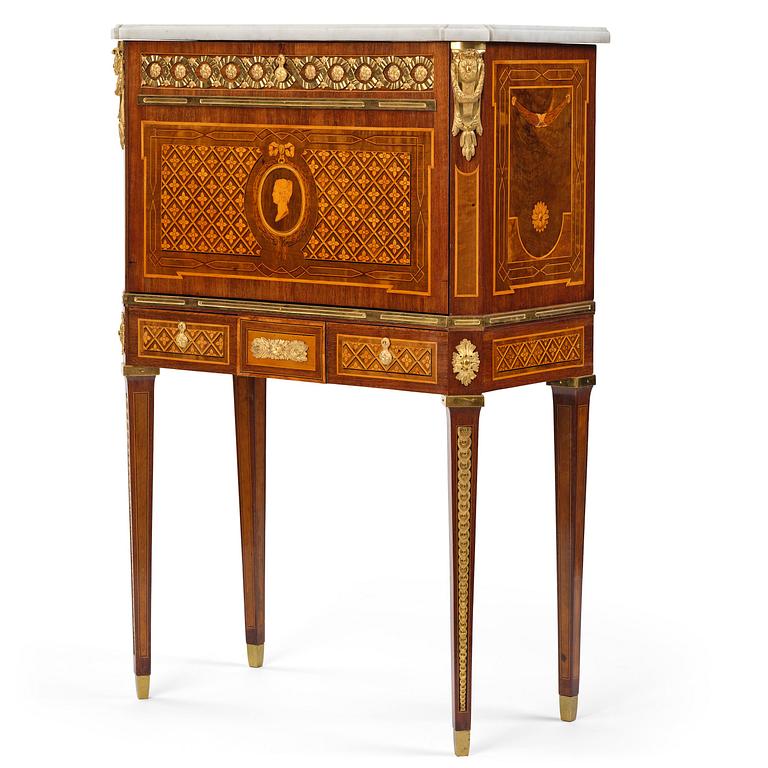
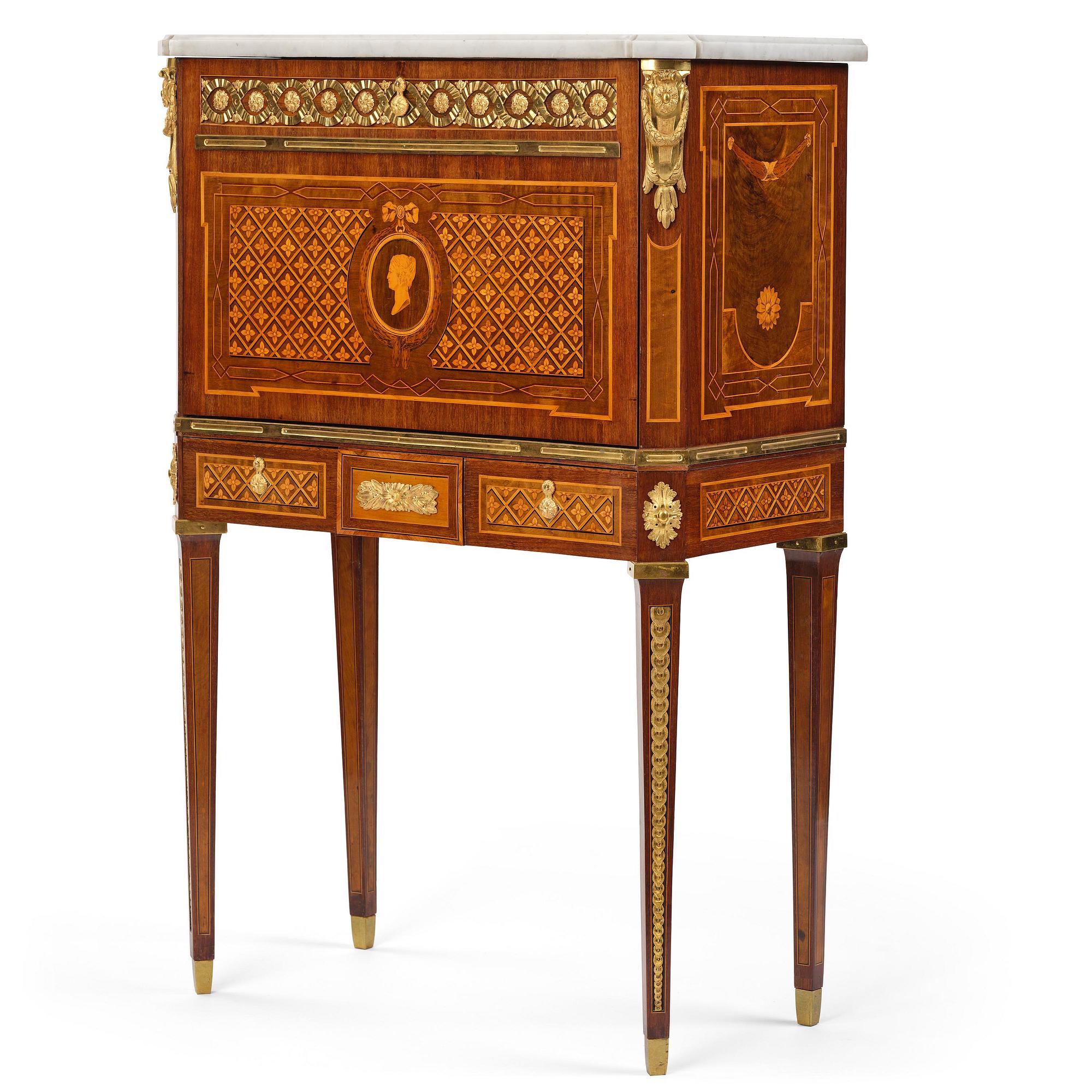
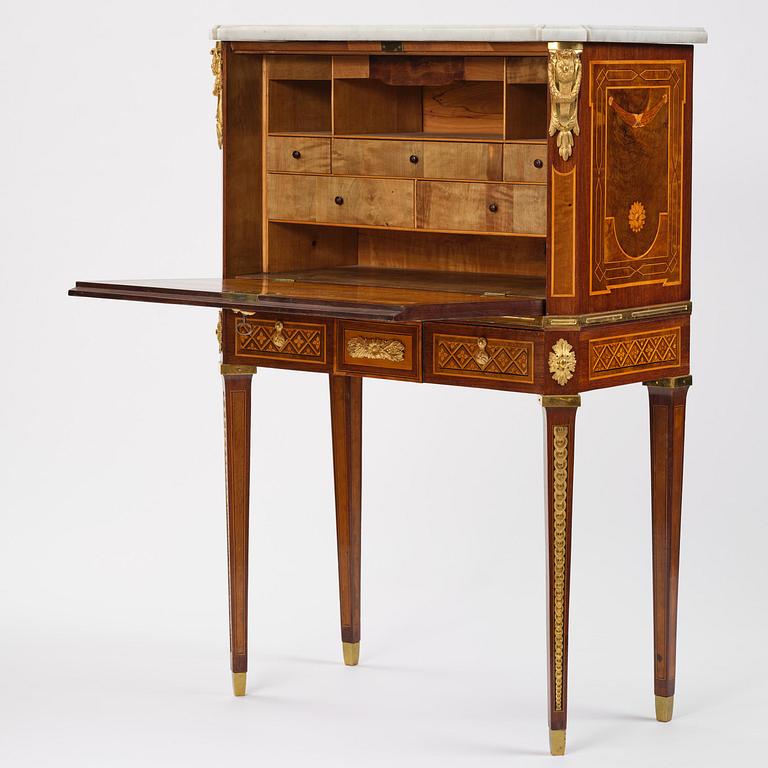
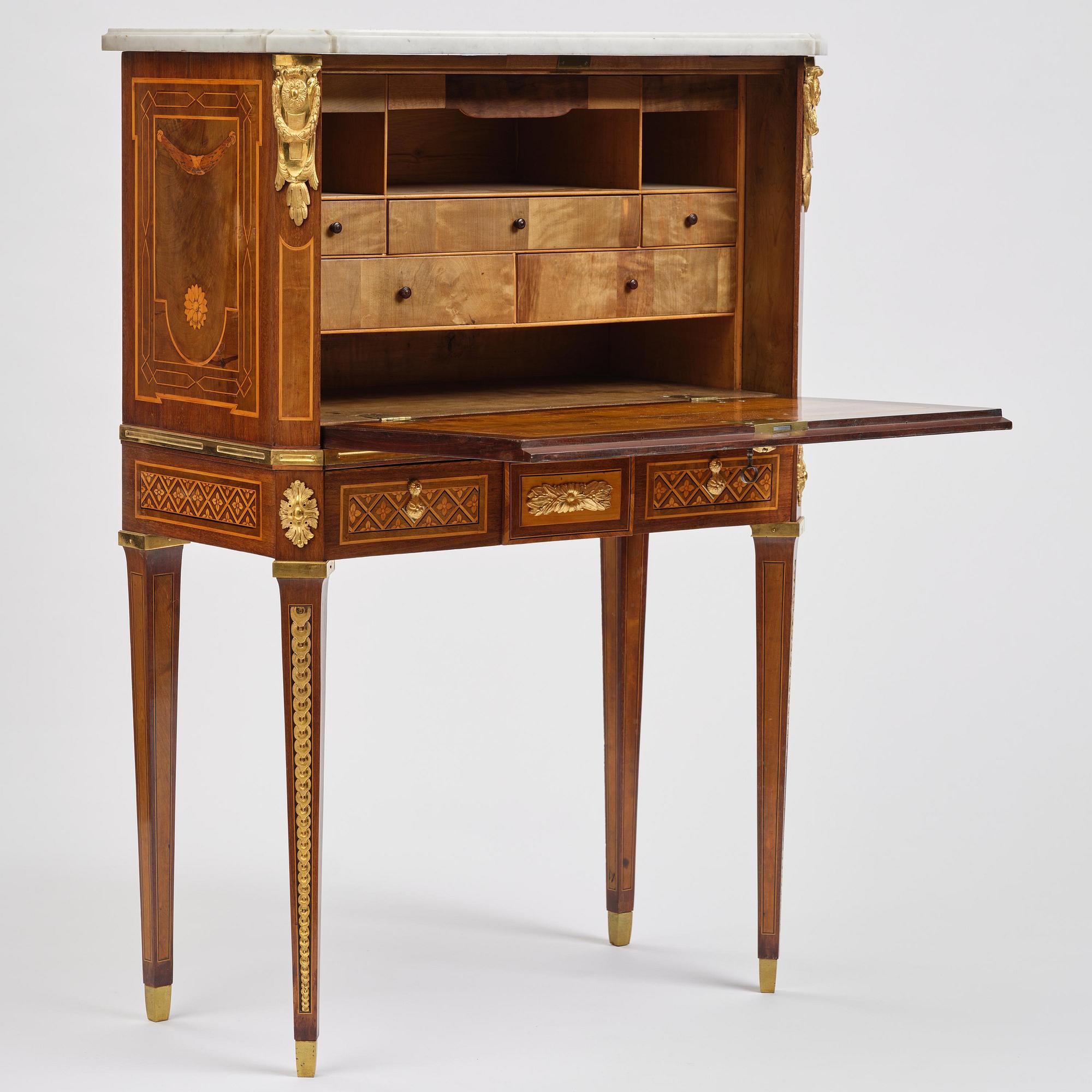
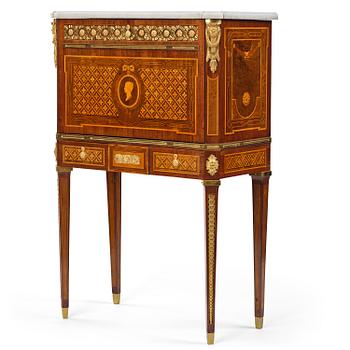
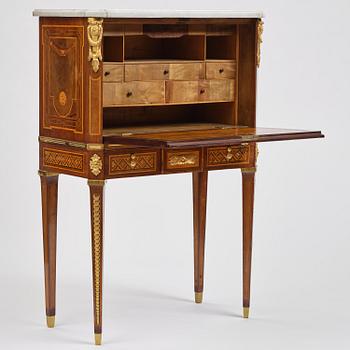
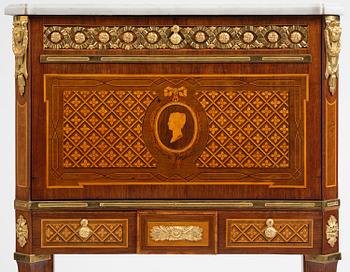
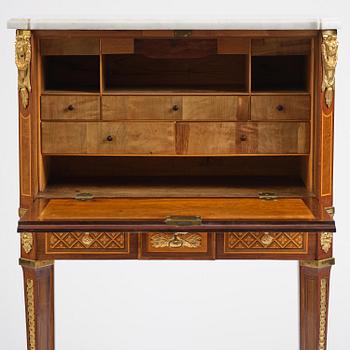
A Gustavian parquetry and ormolu-mounted secretaire en cabinet by Georg Haupt (master in Stockholm 1770-84).
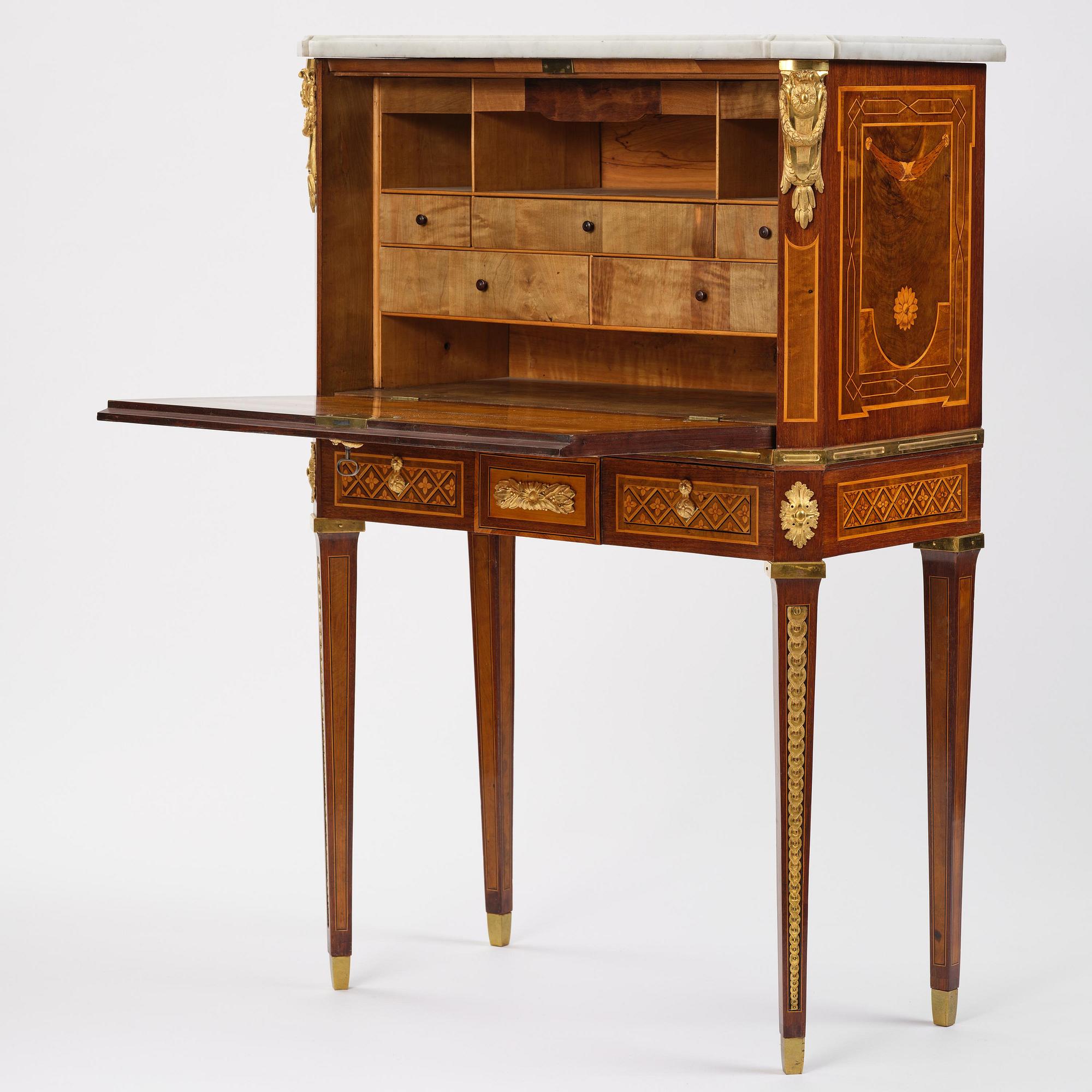
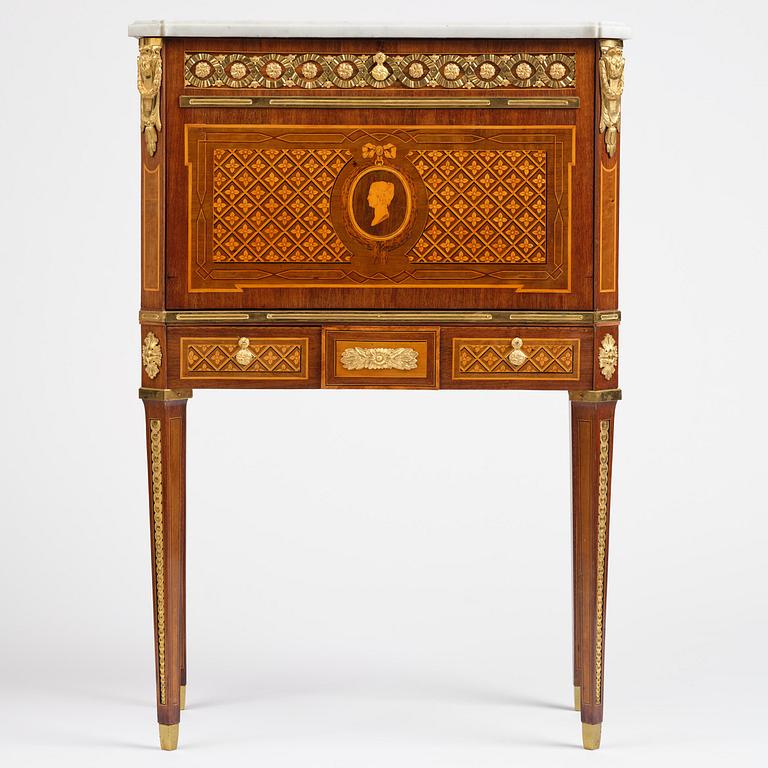
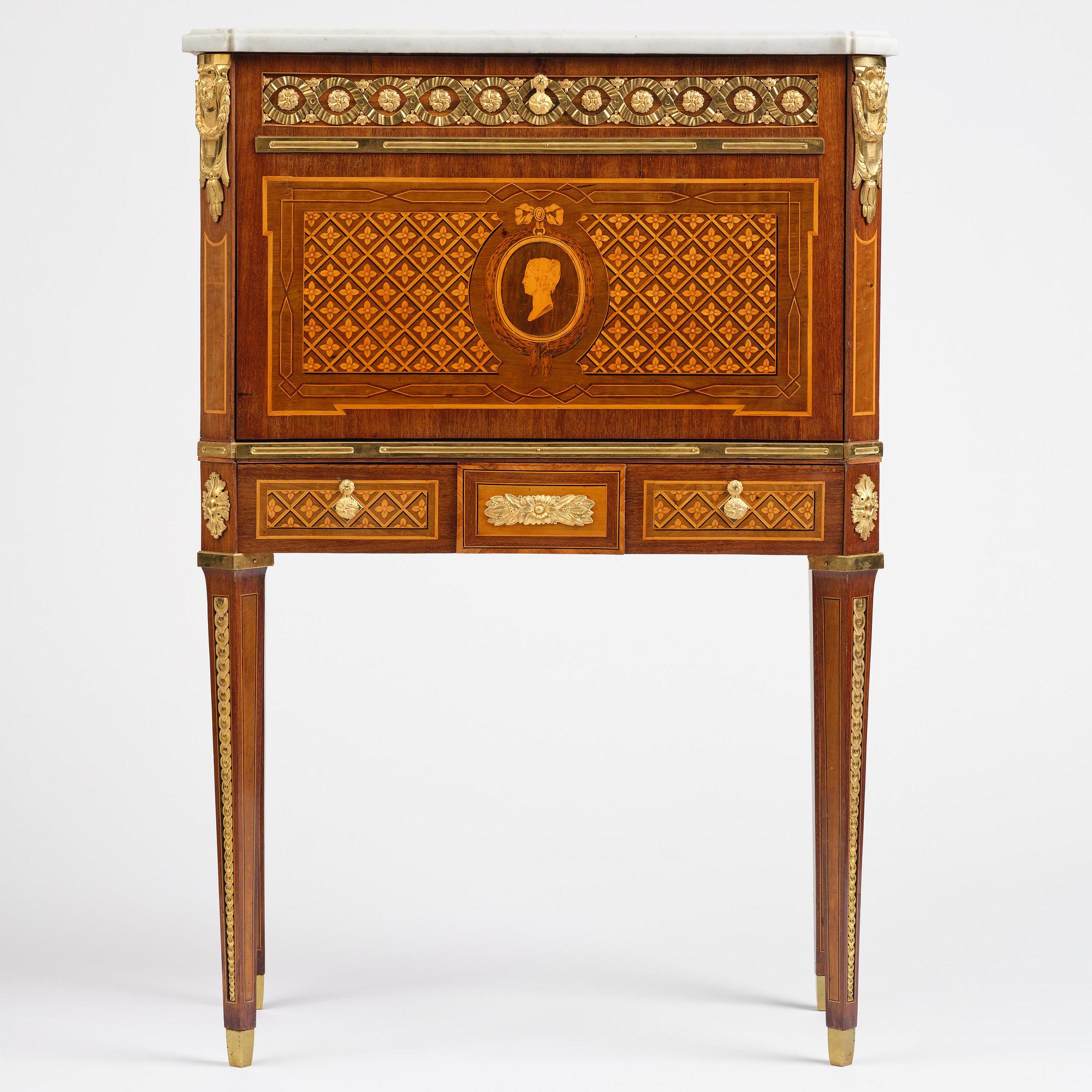
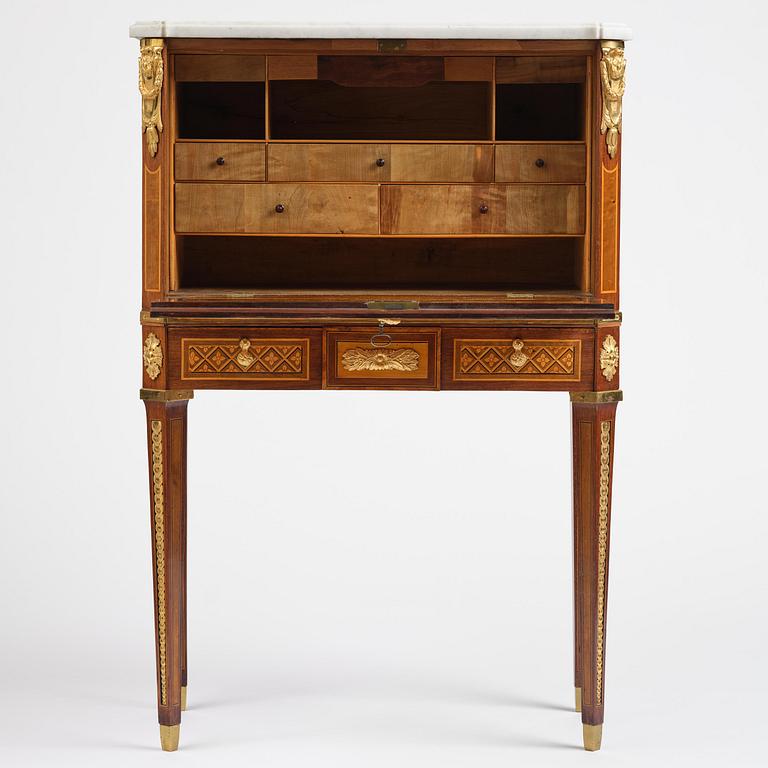
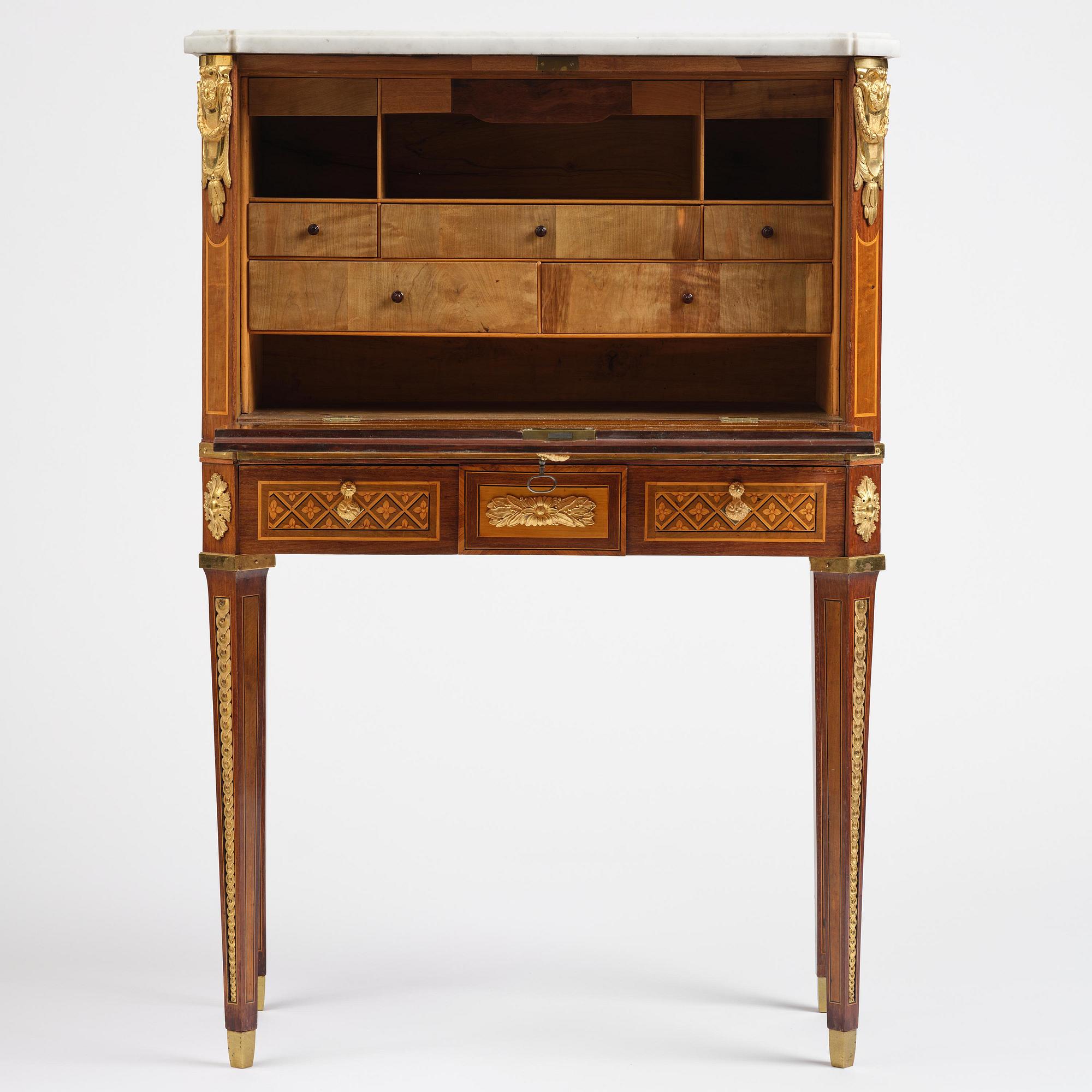
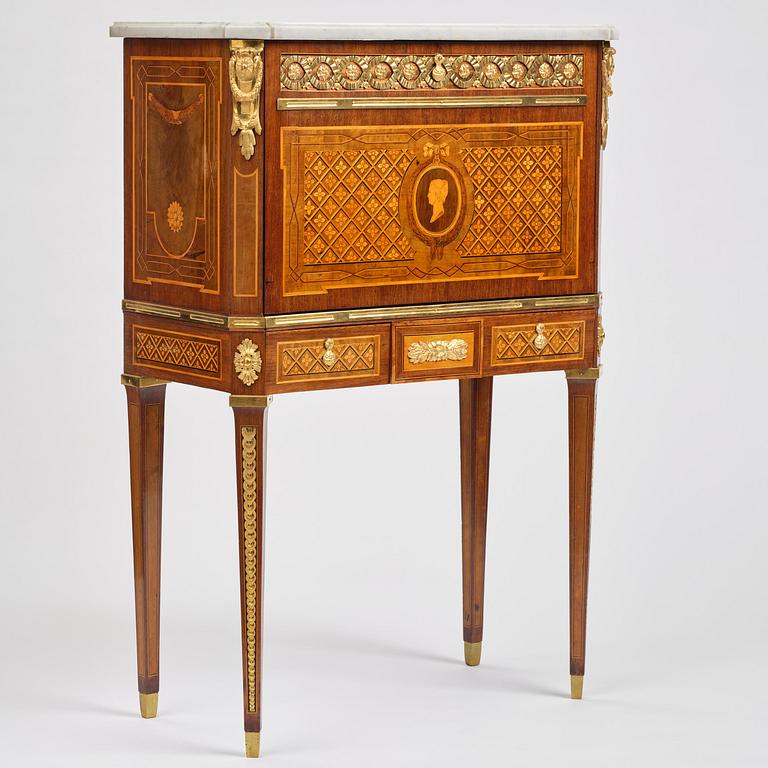
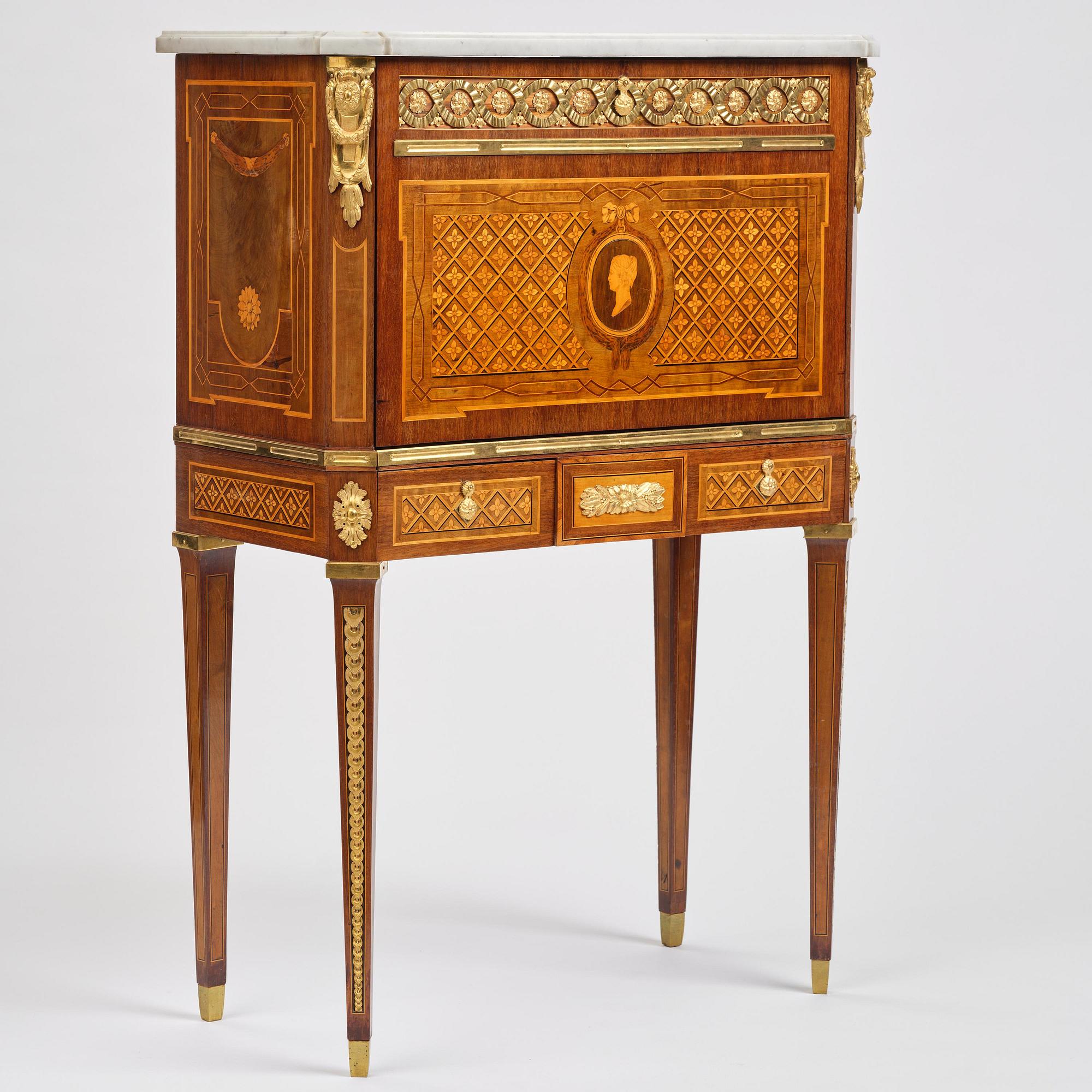
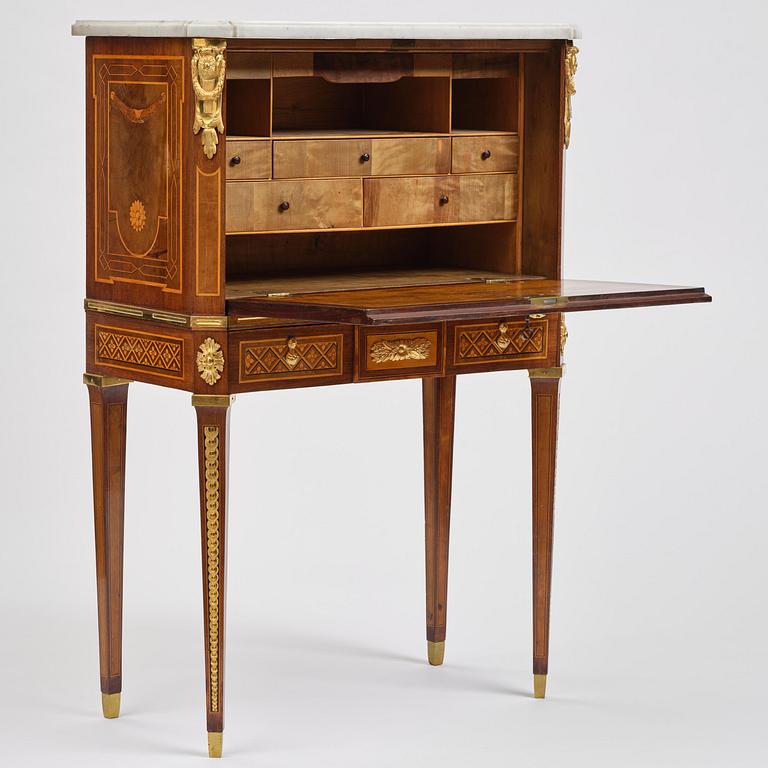
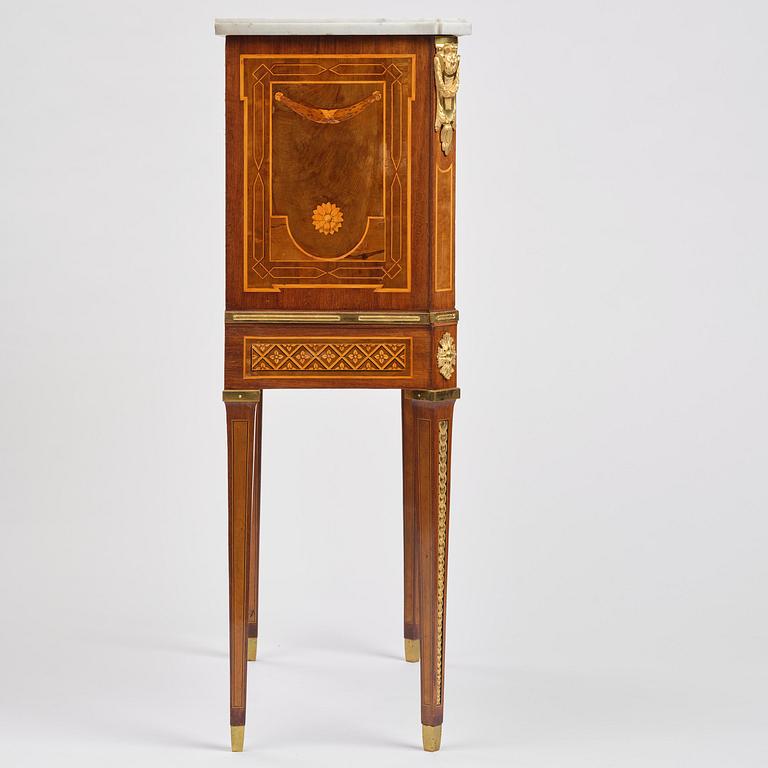
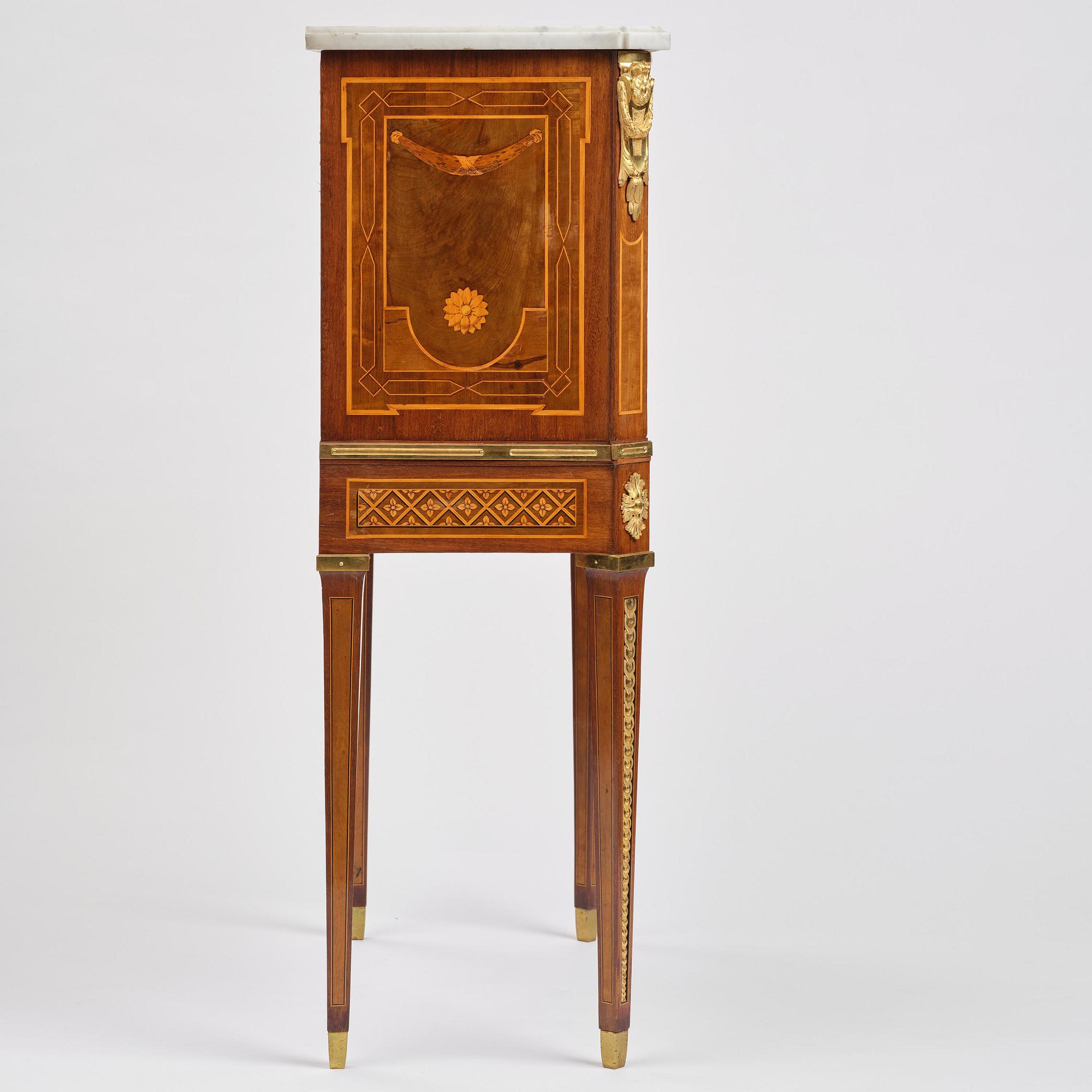
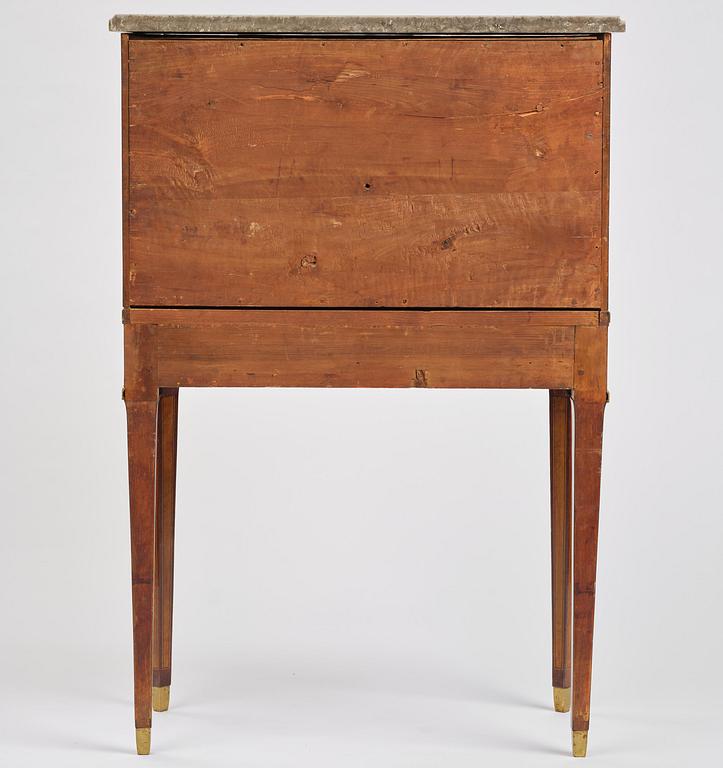
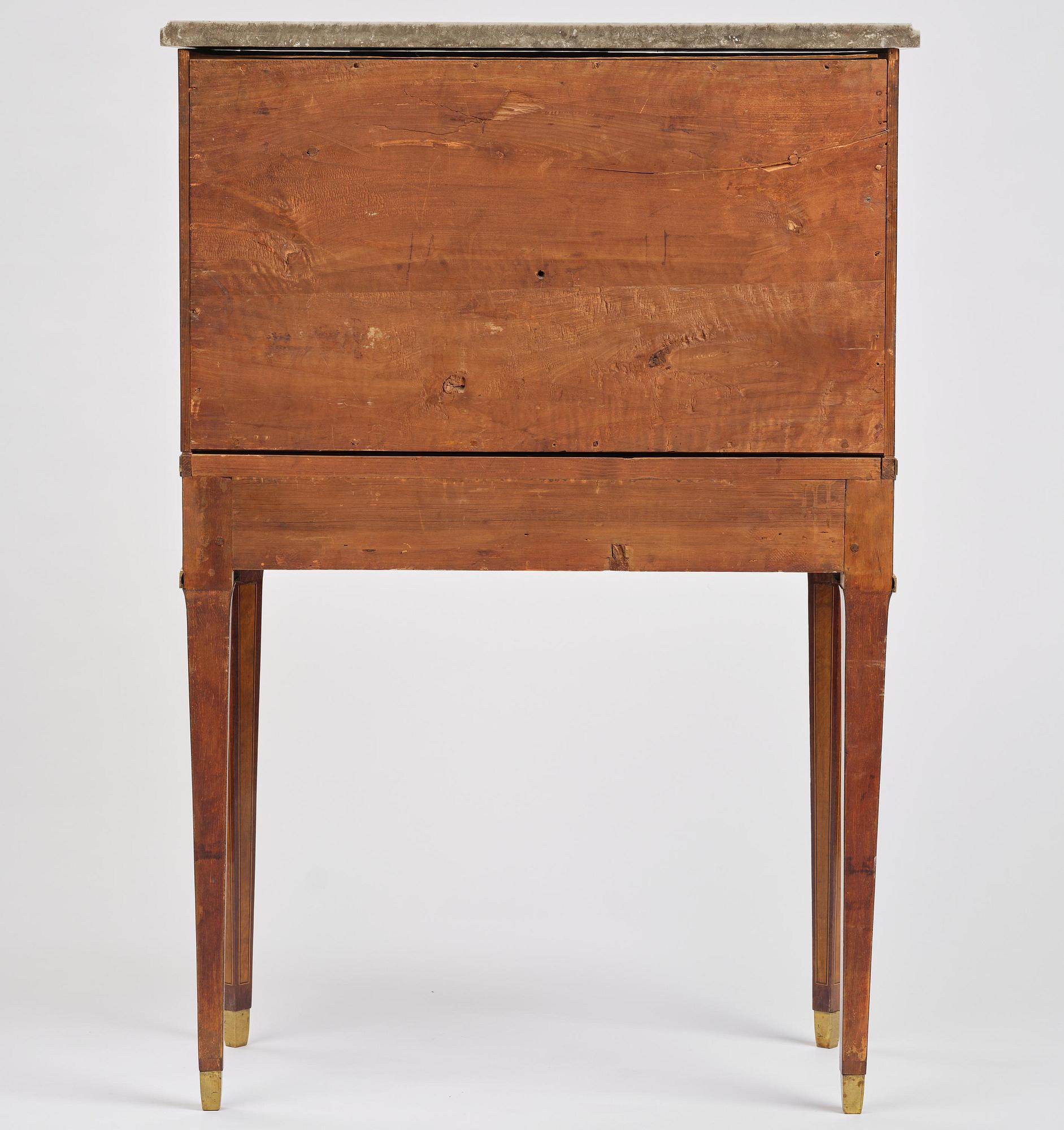
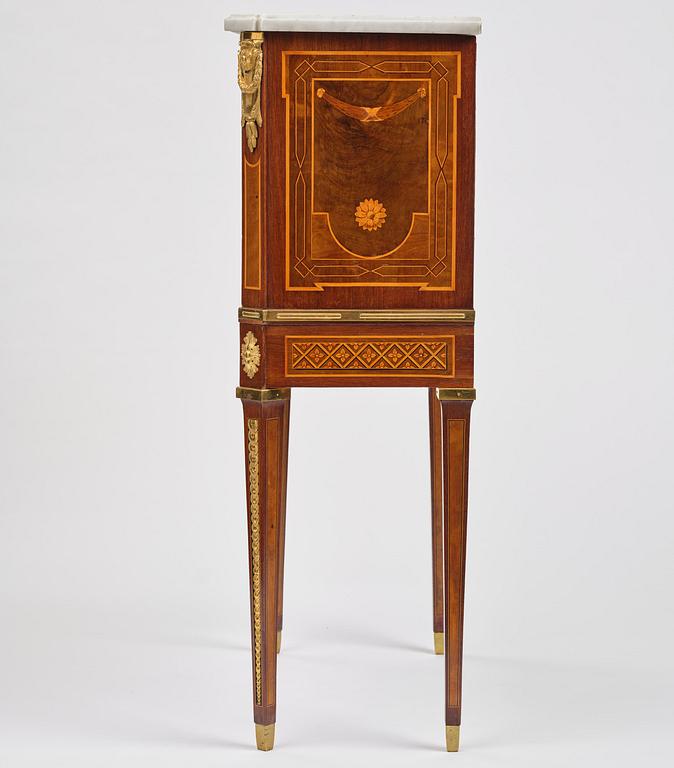
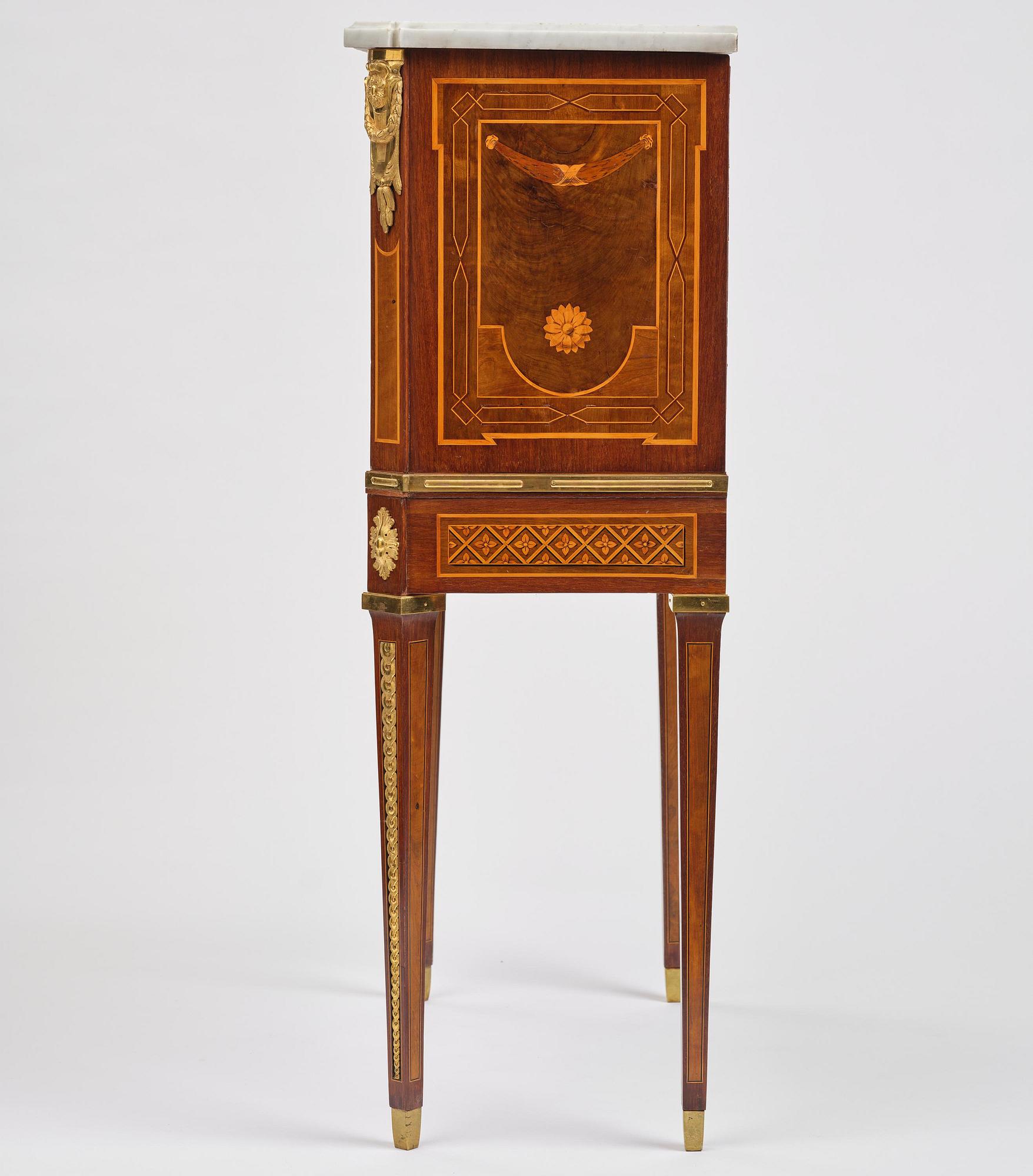
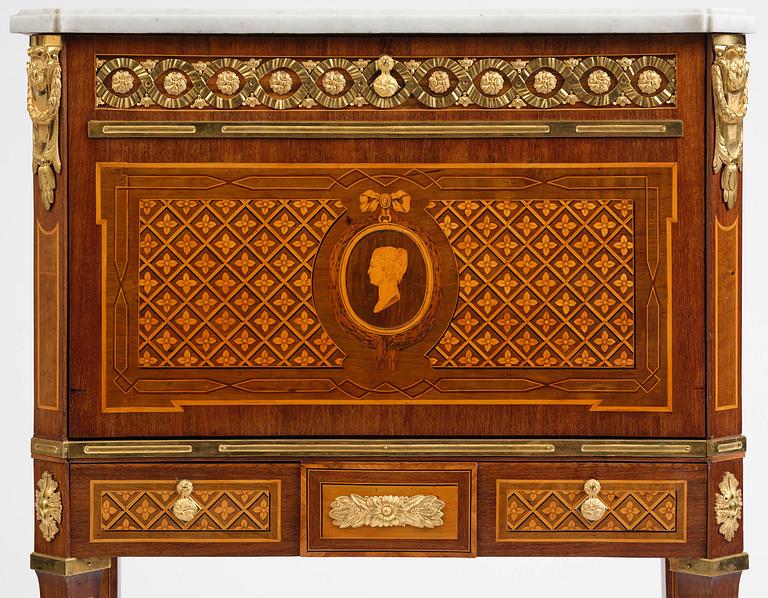
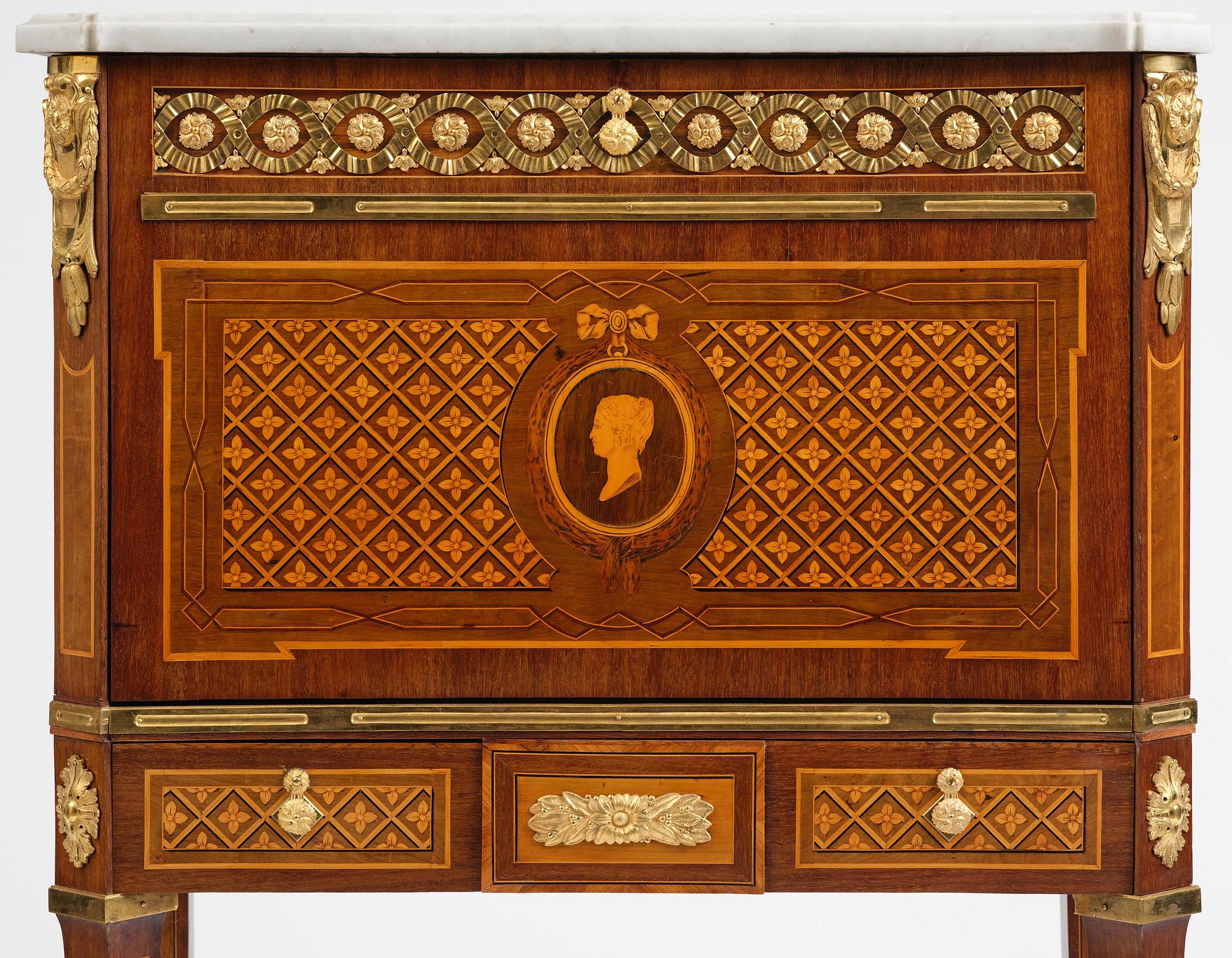
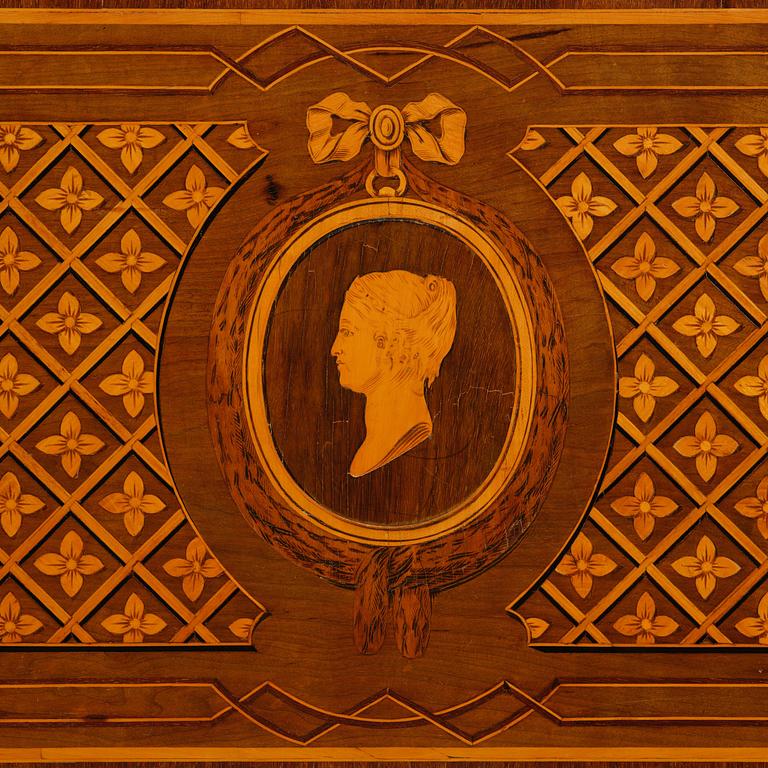
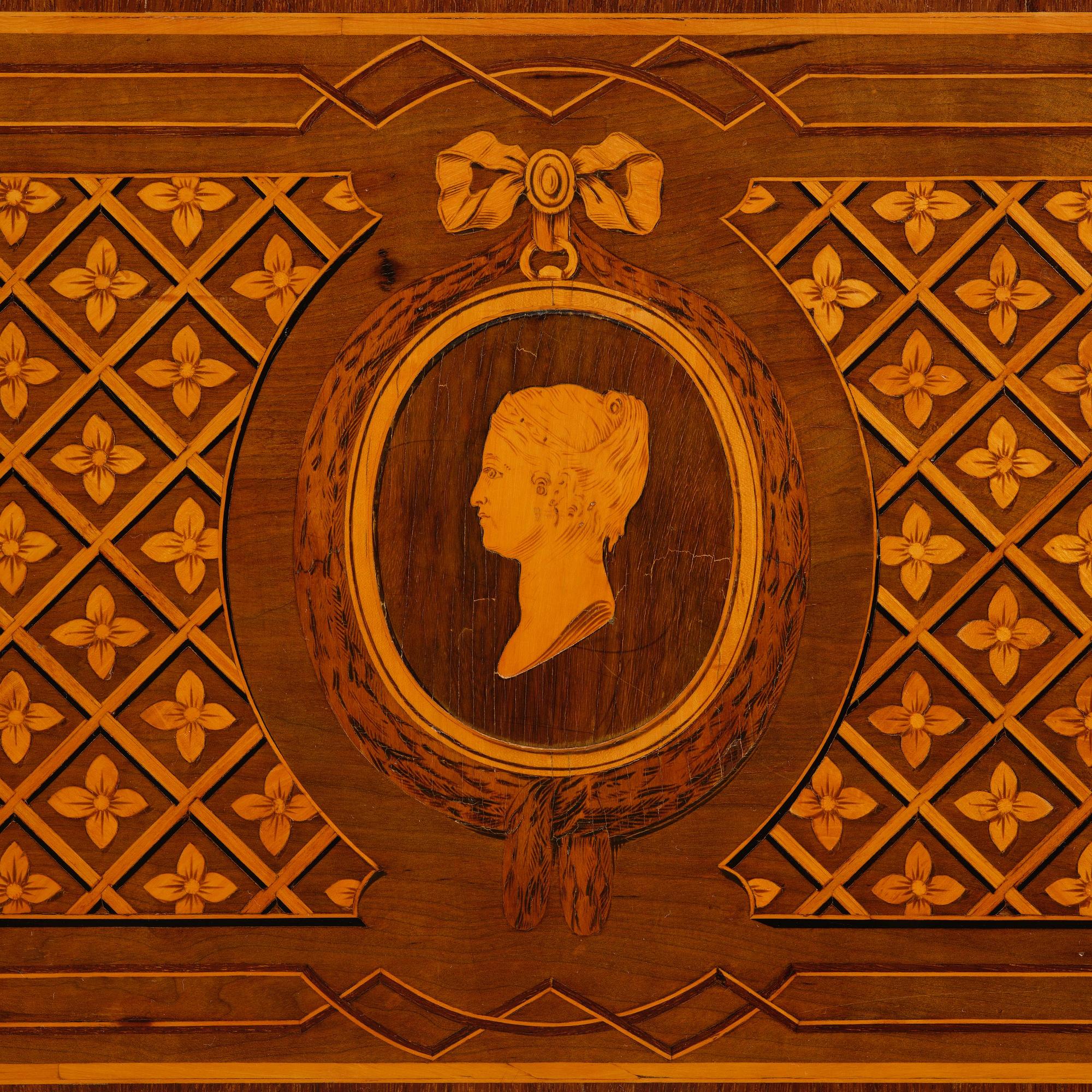
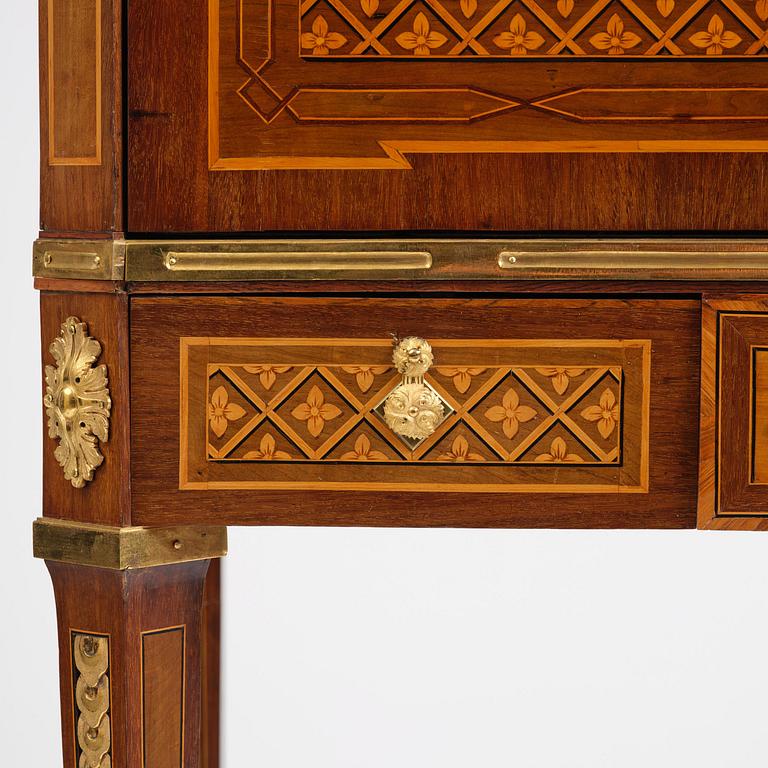
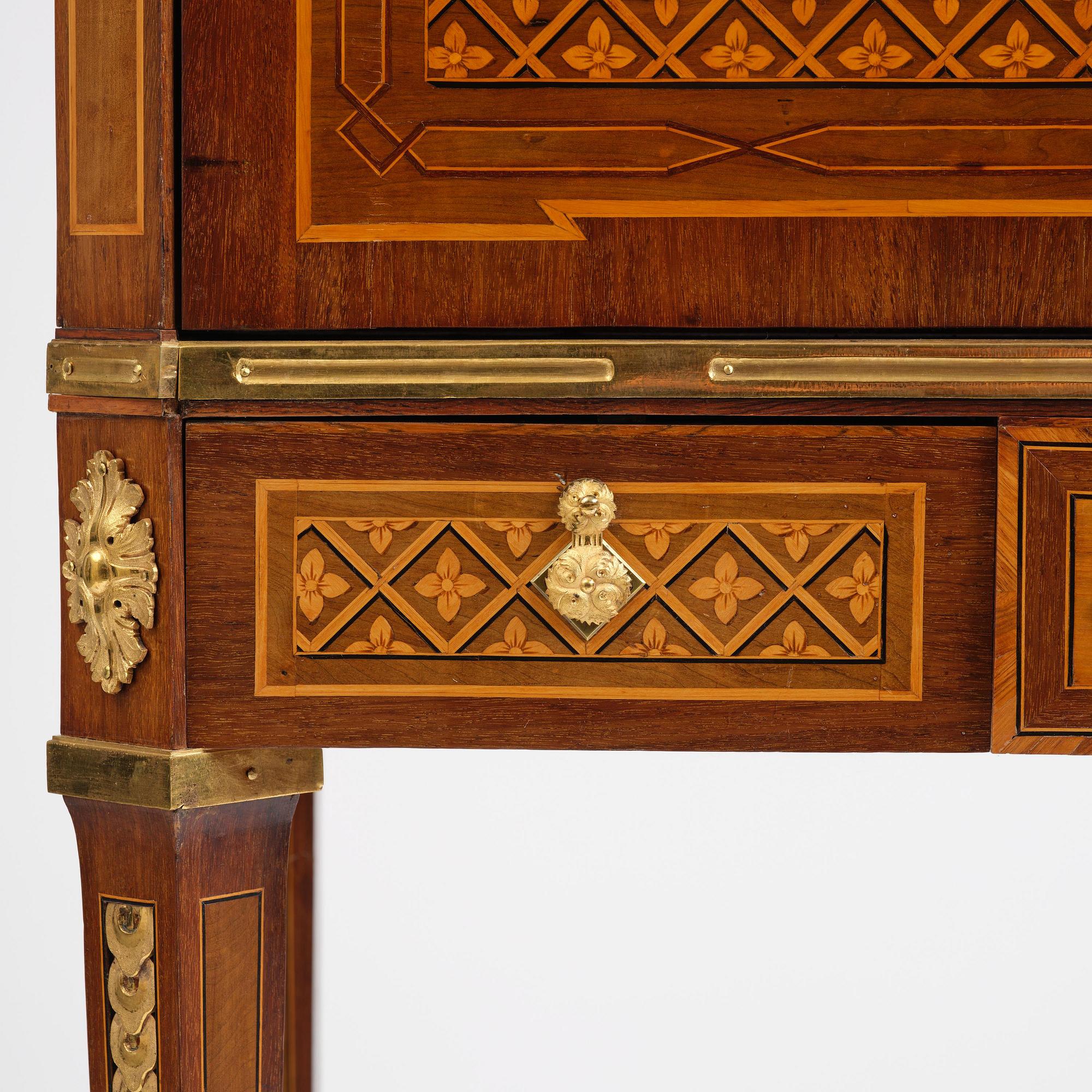
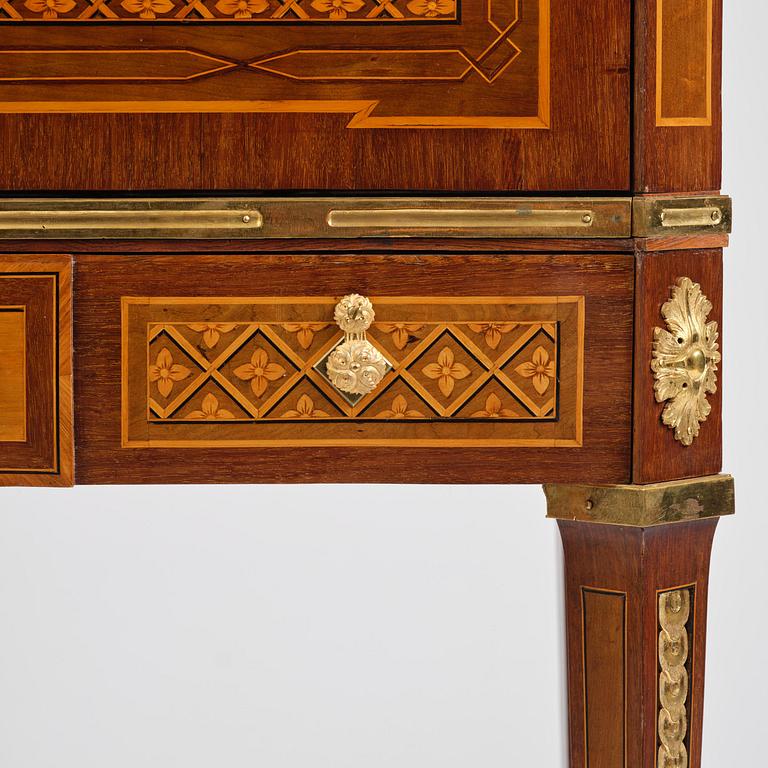
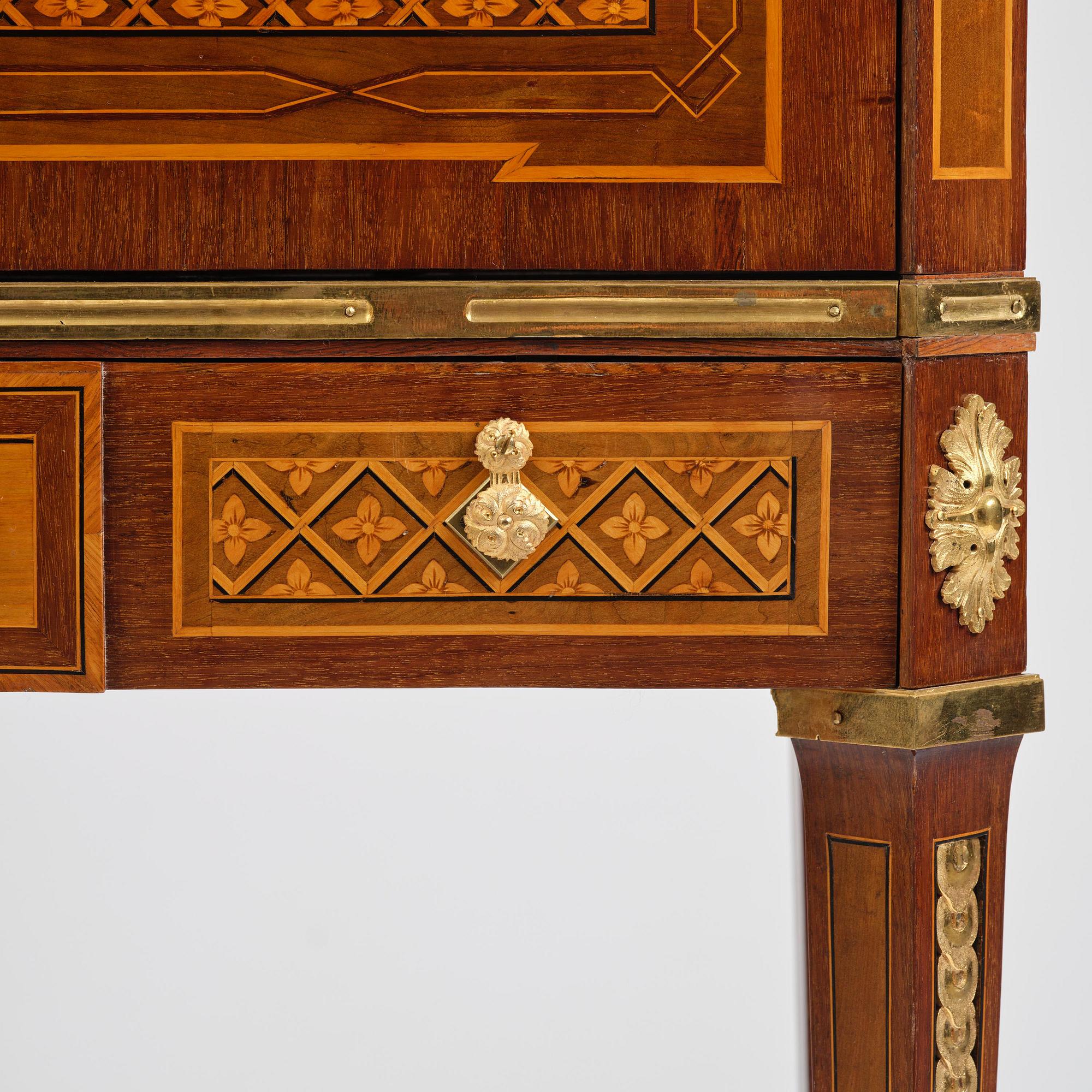
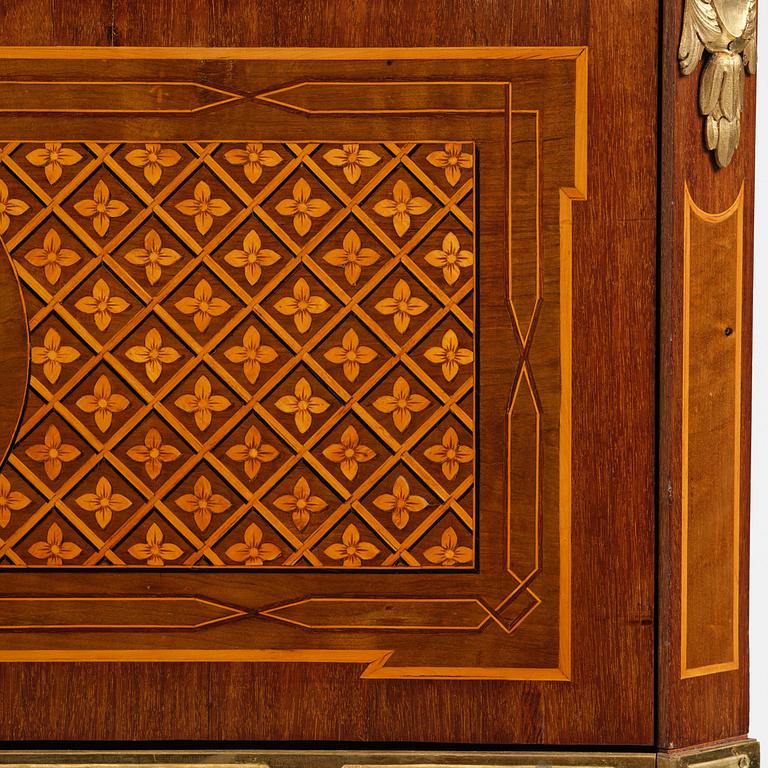
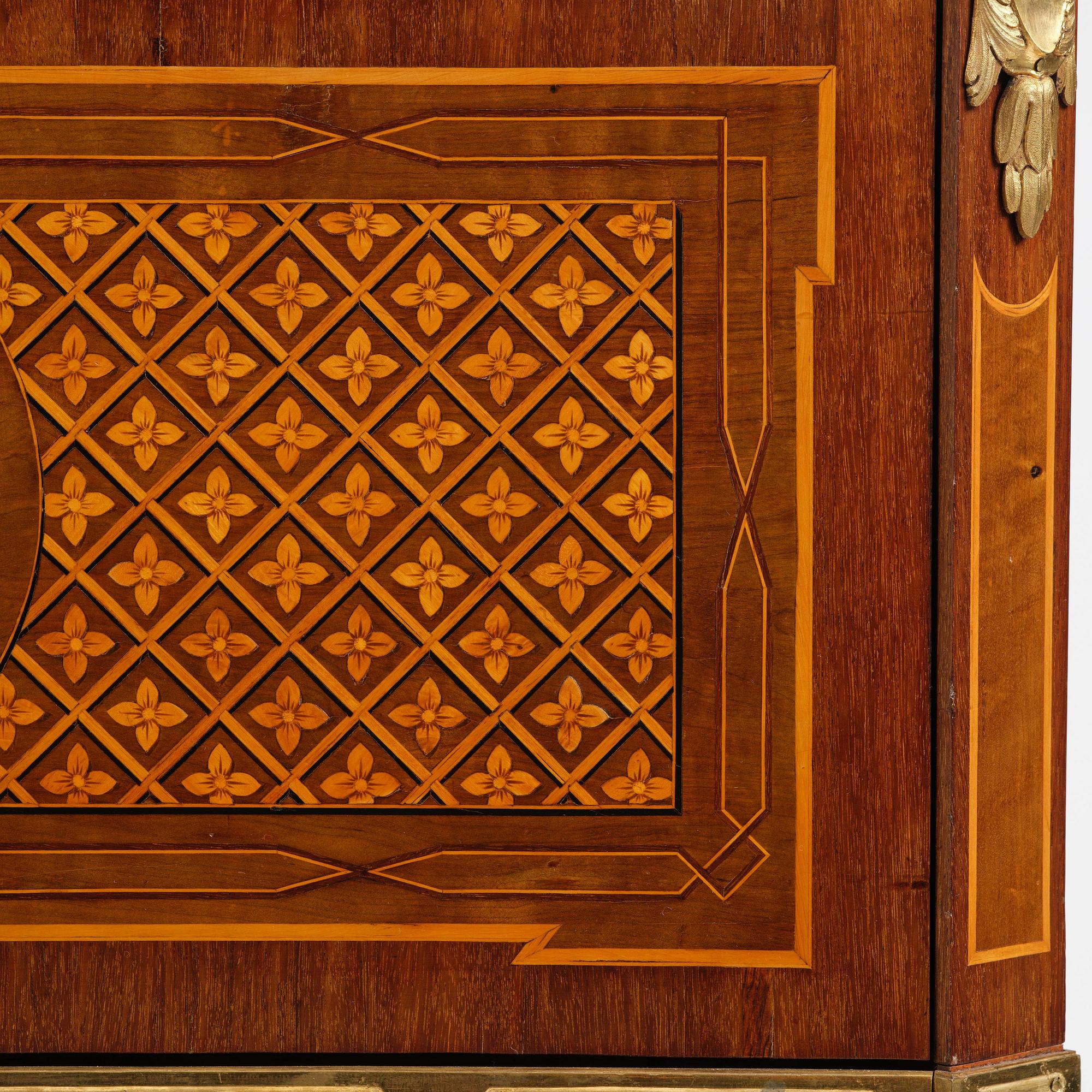
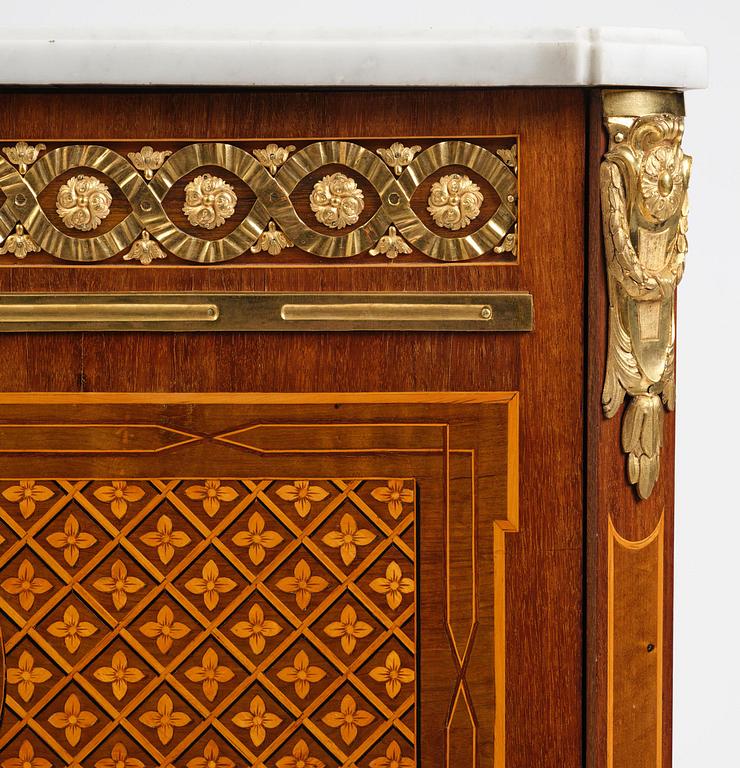
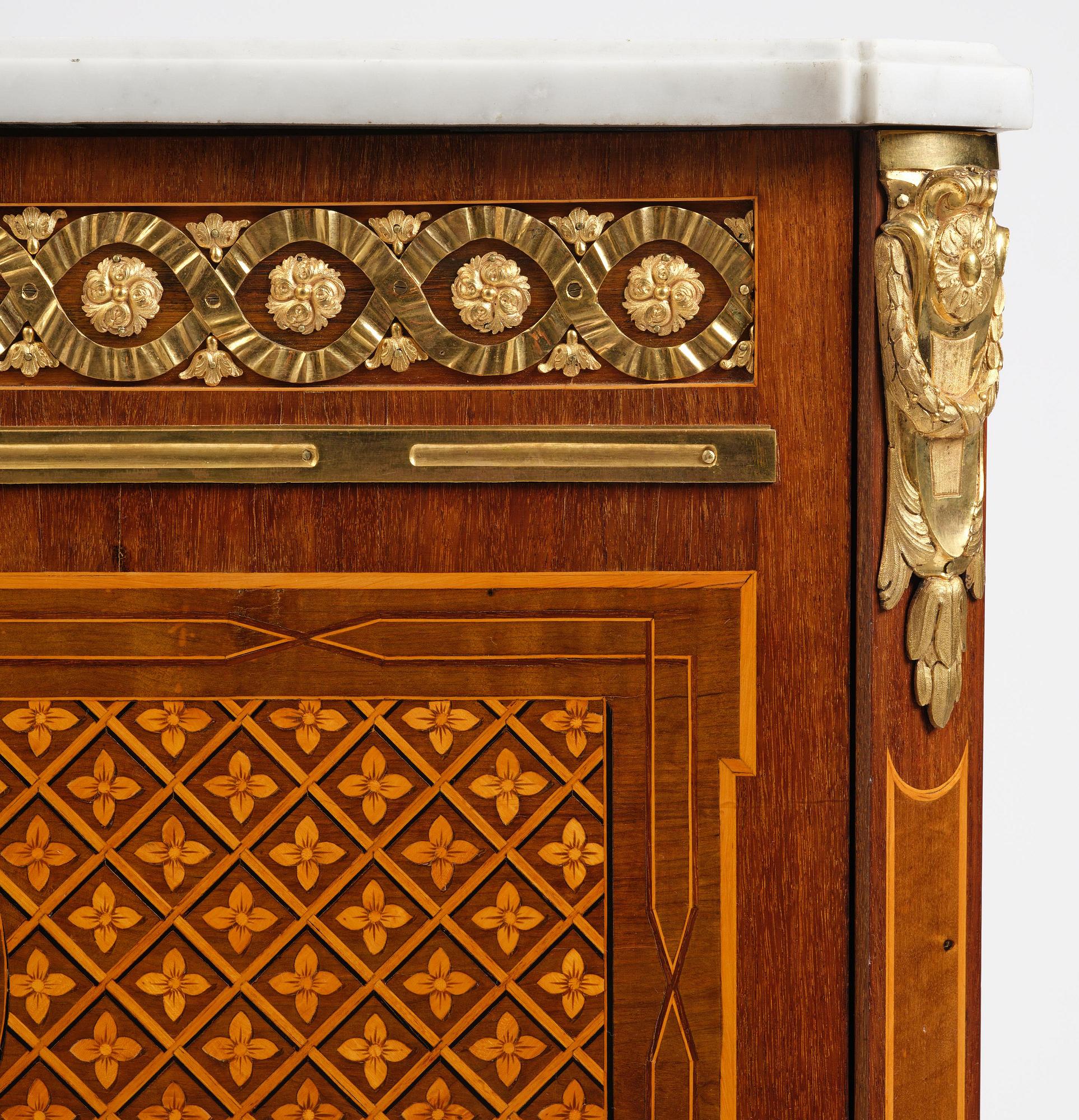
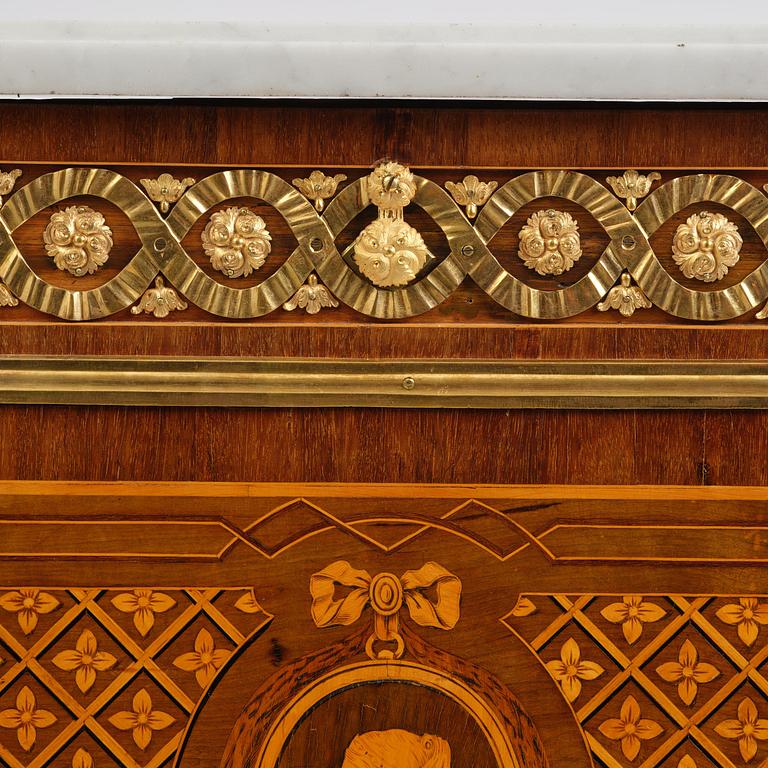
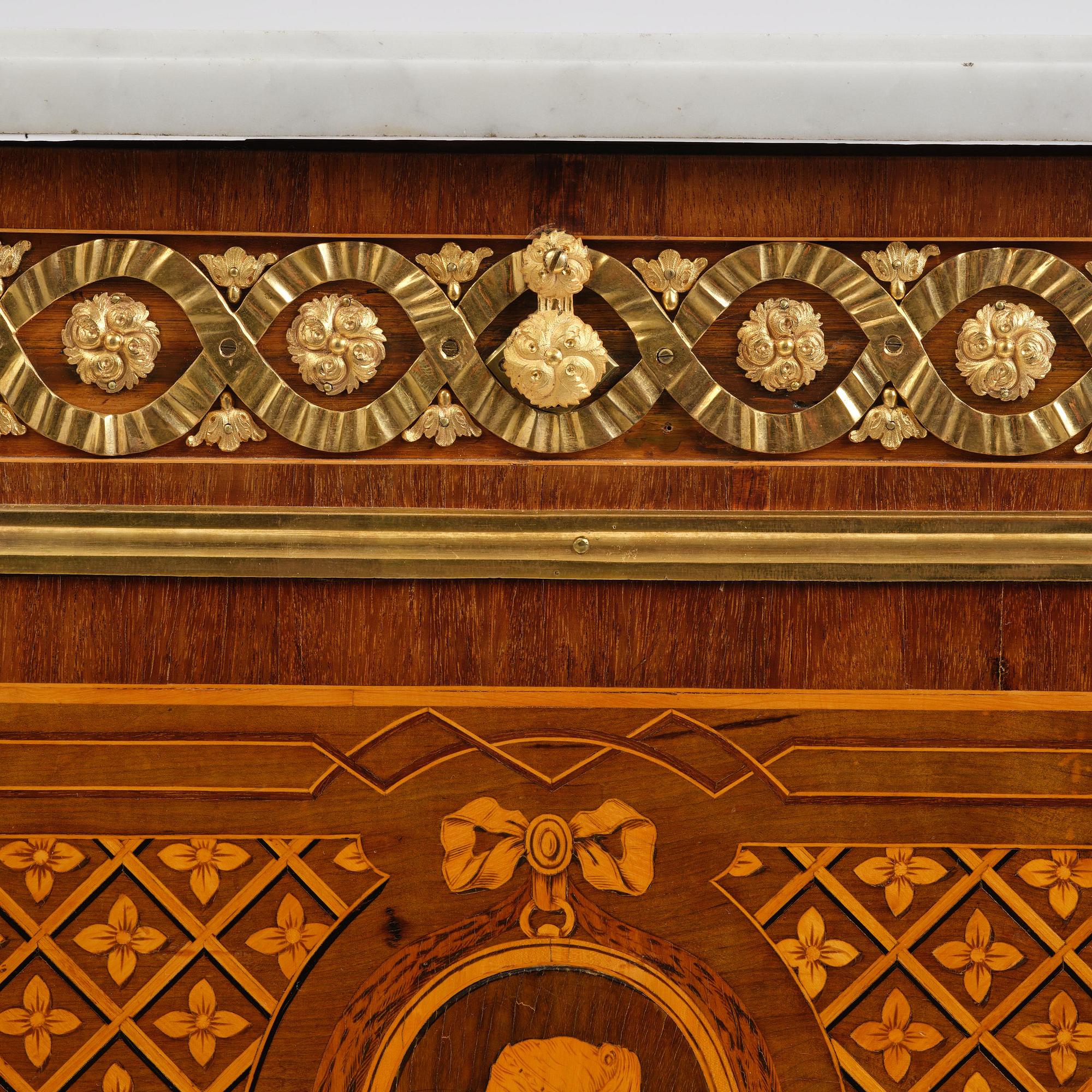
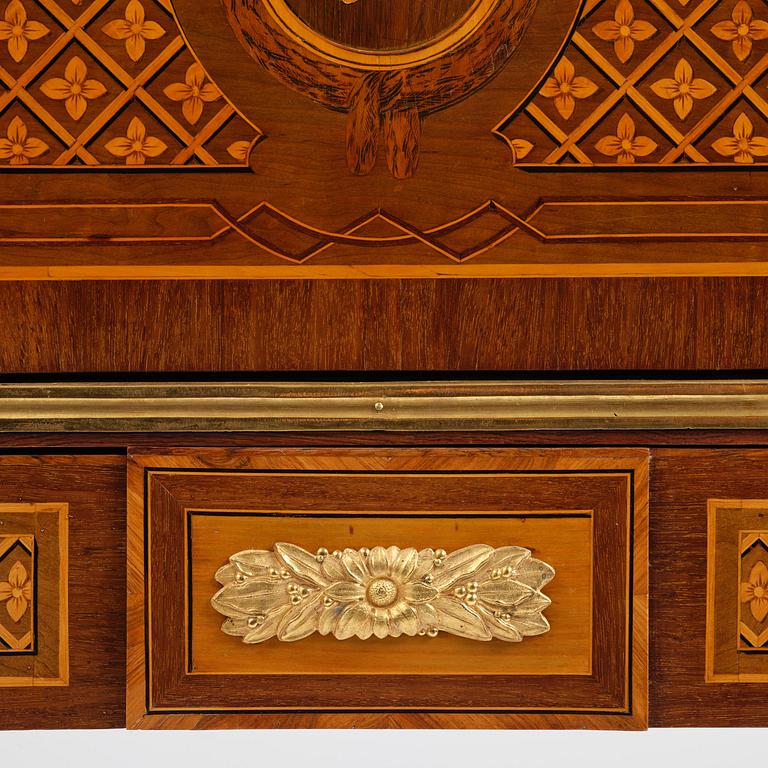
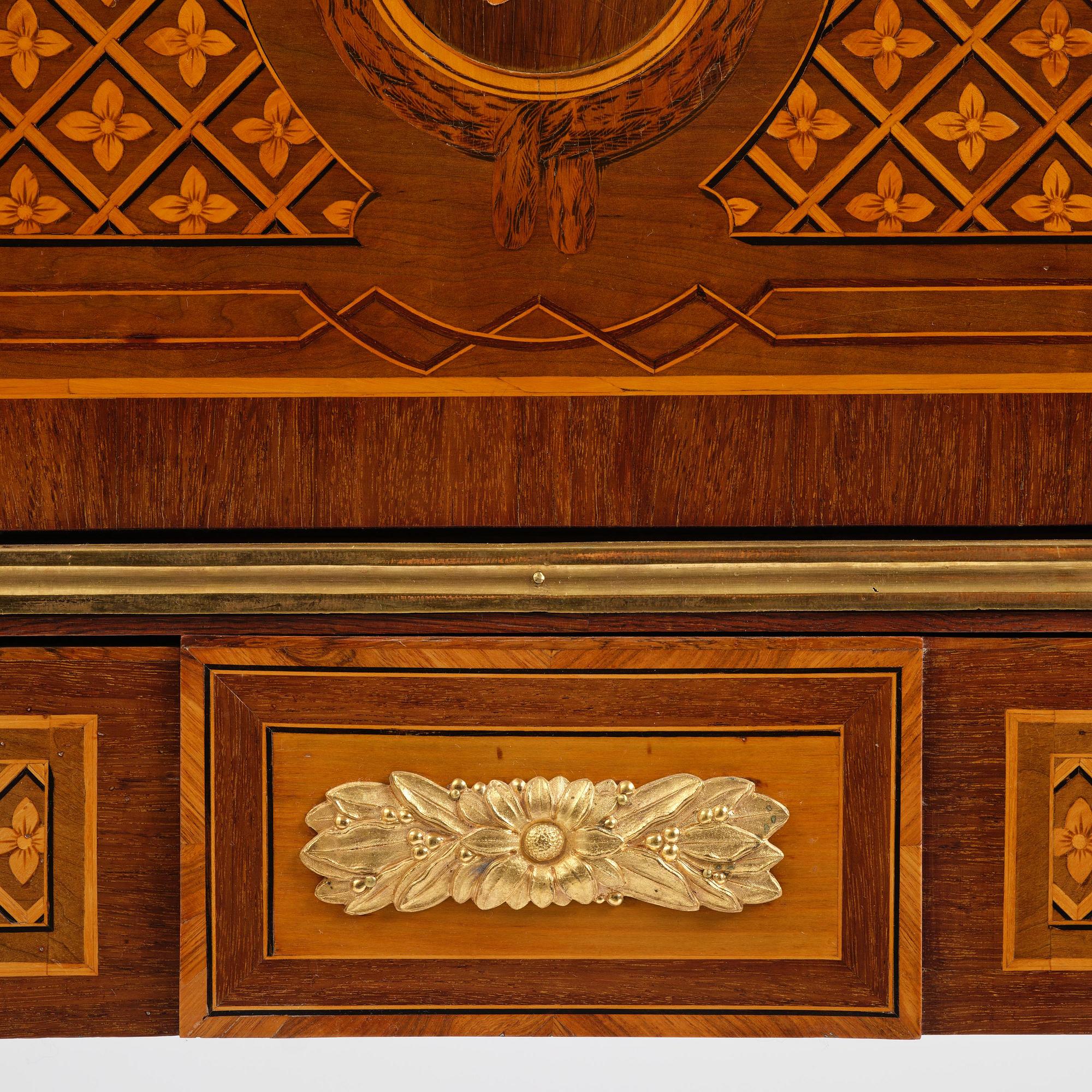
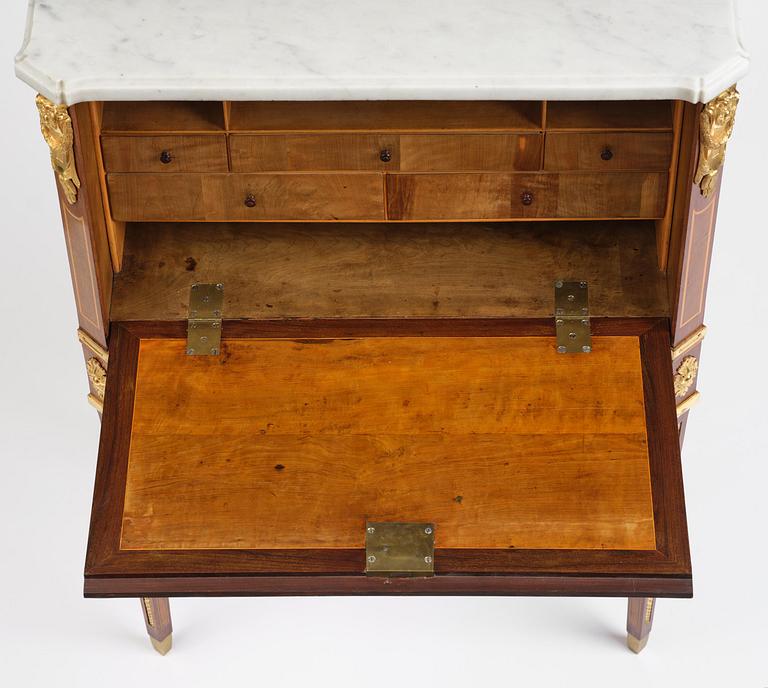
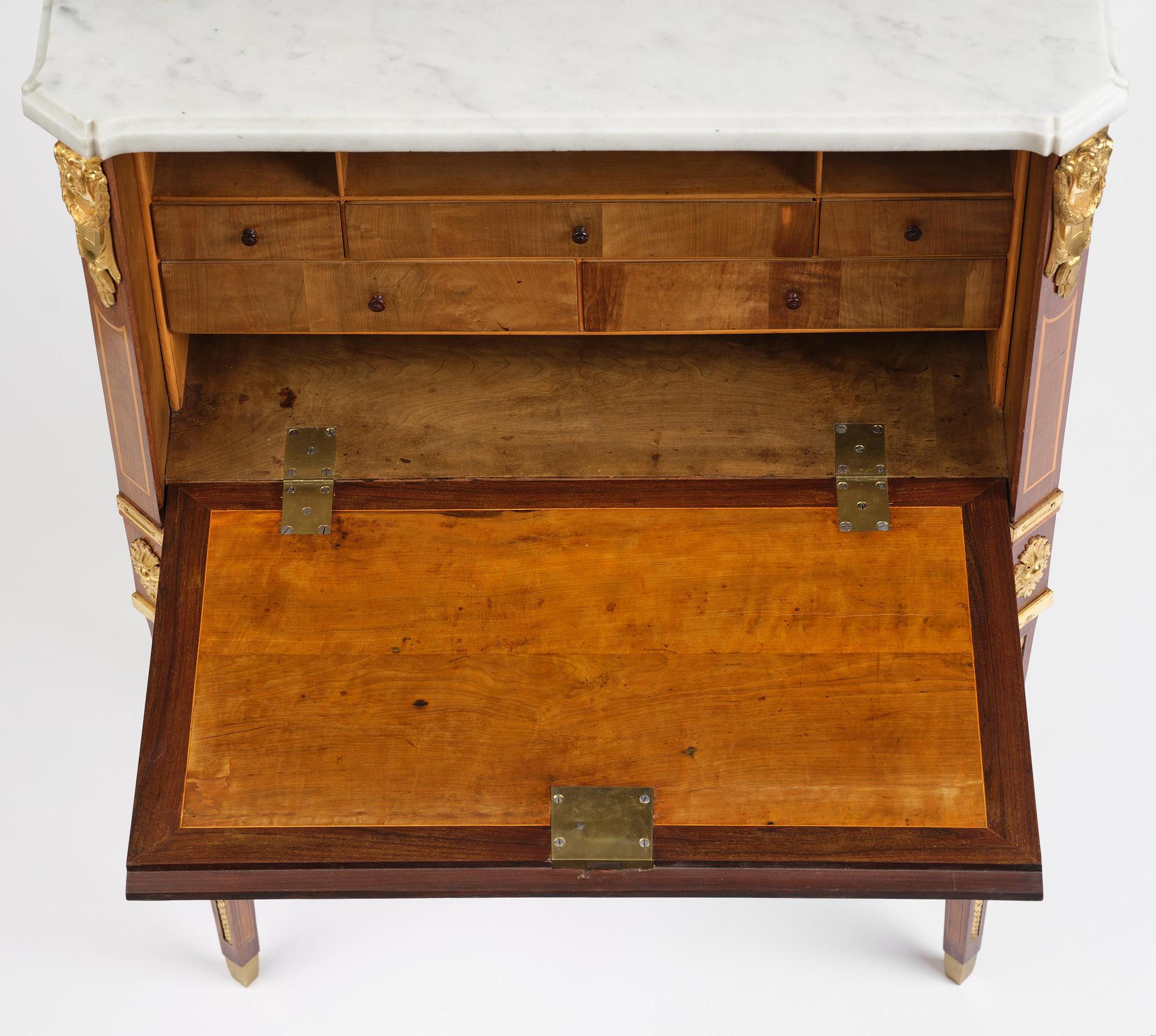
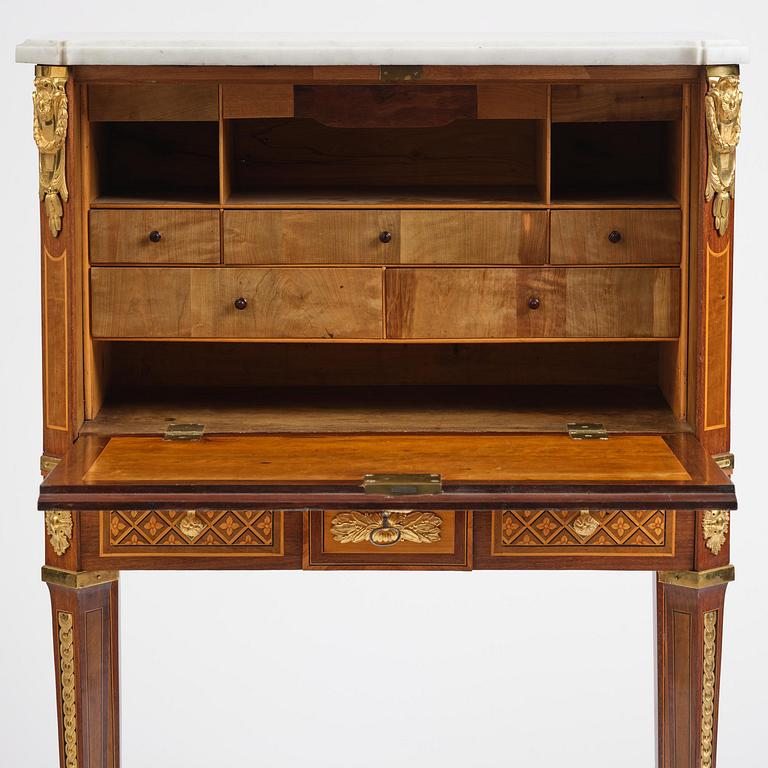
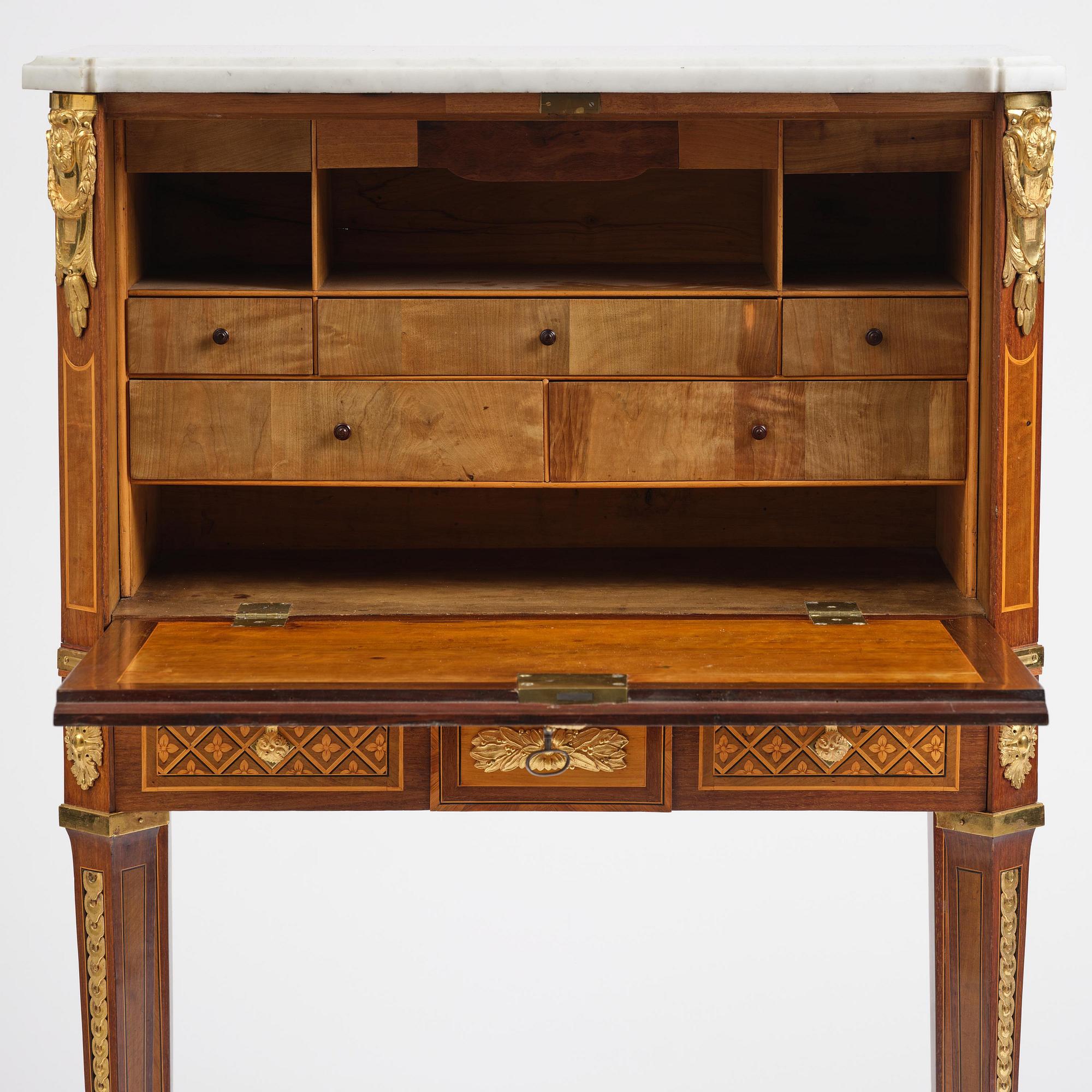
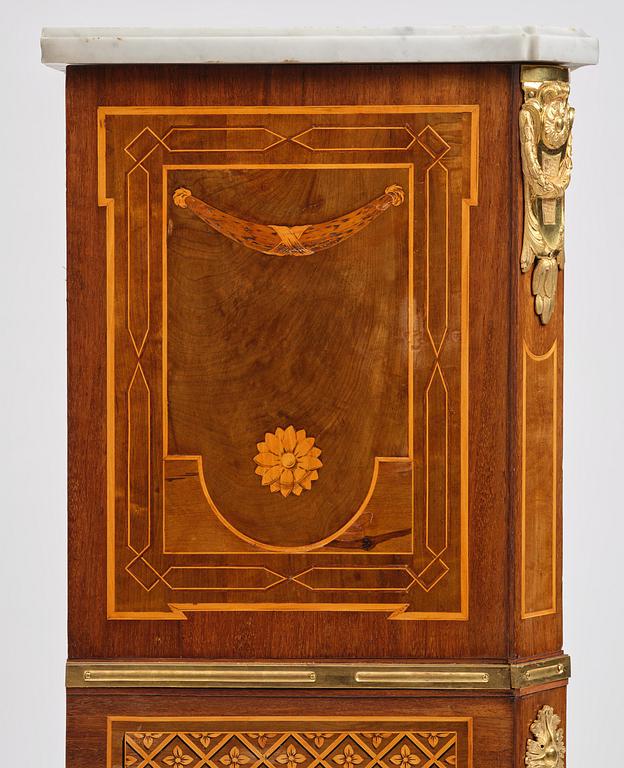
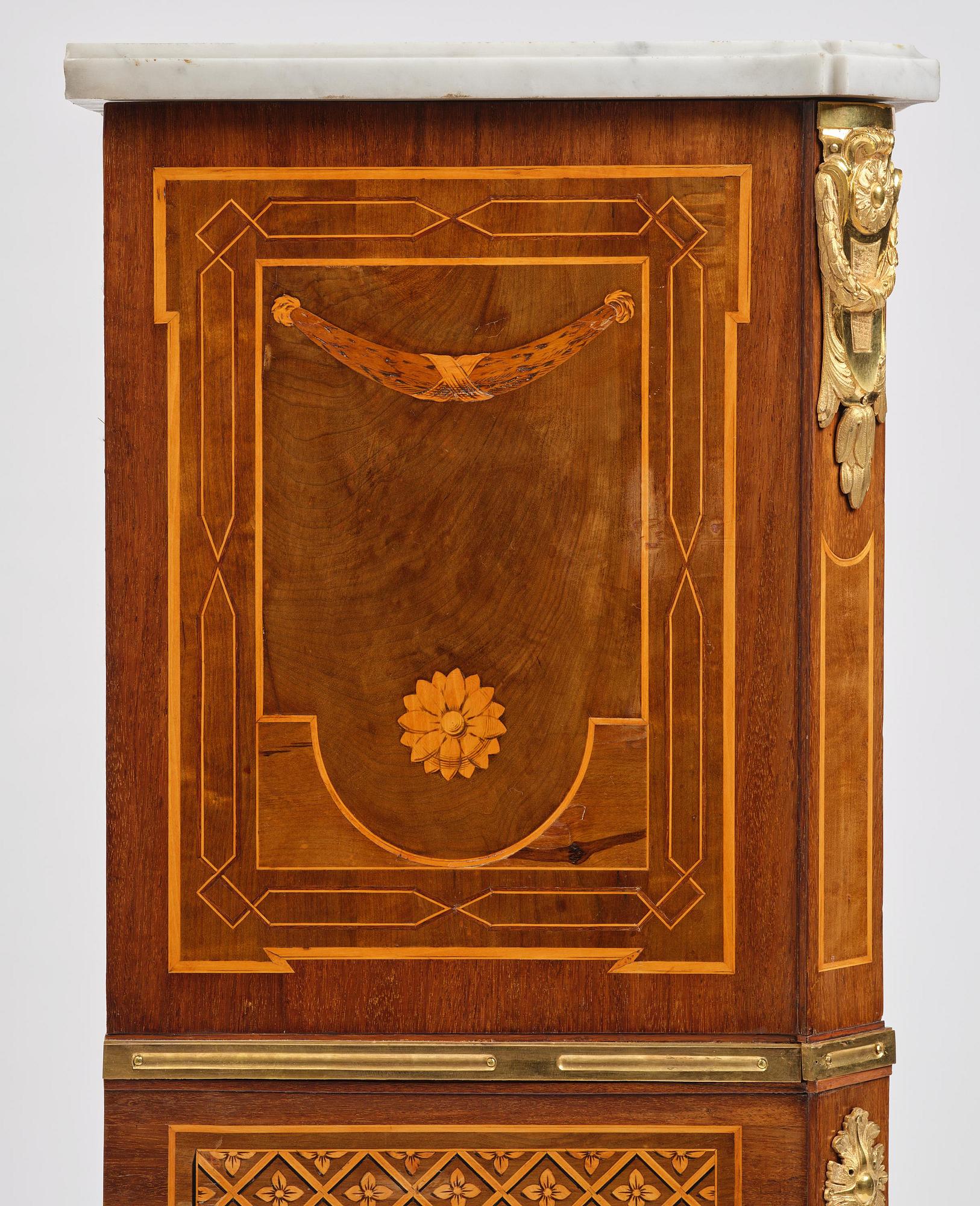
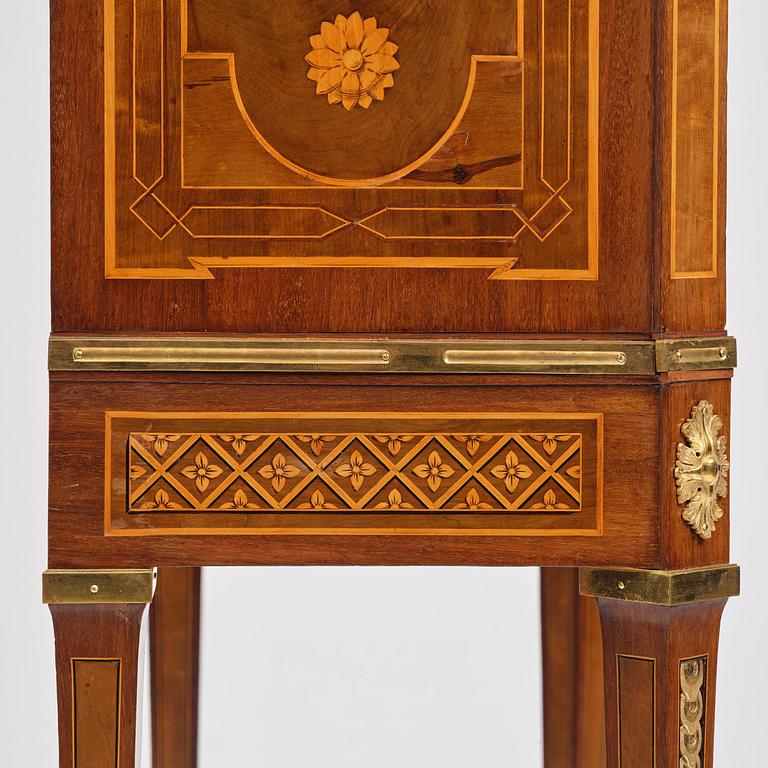
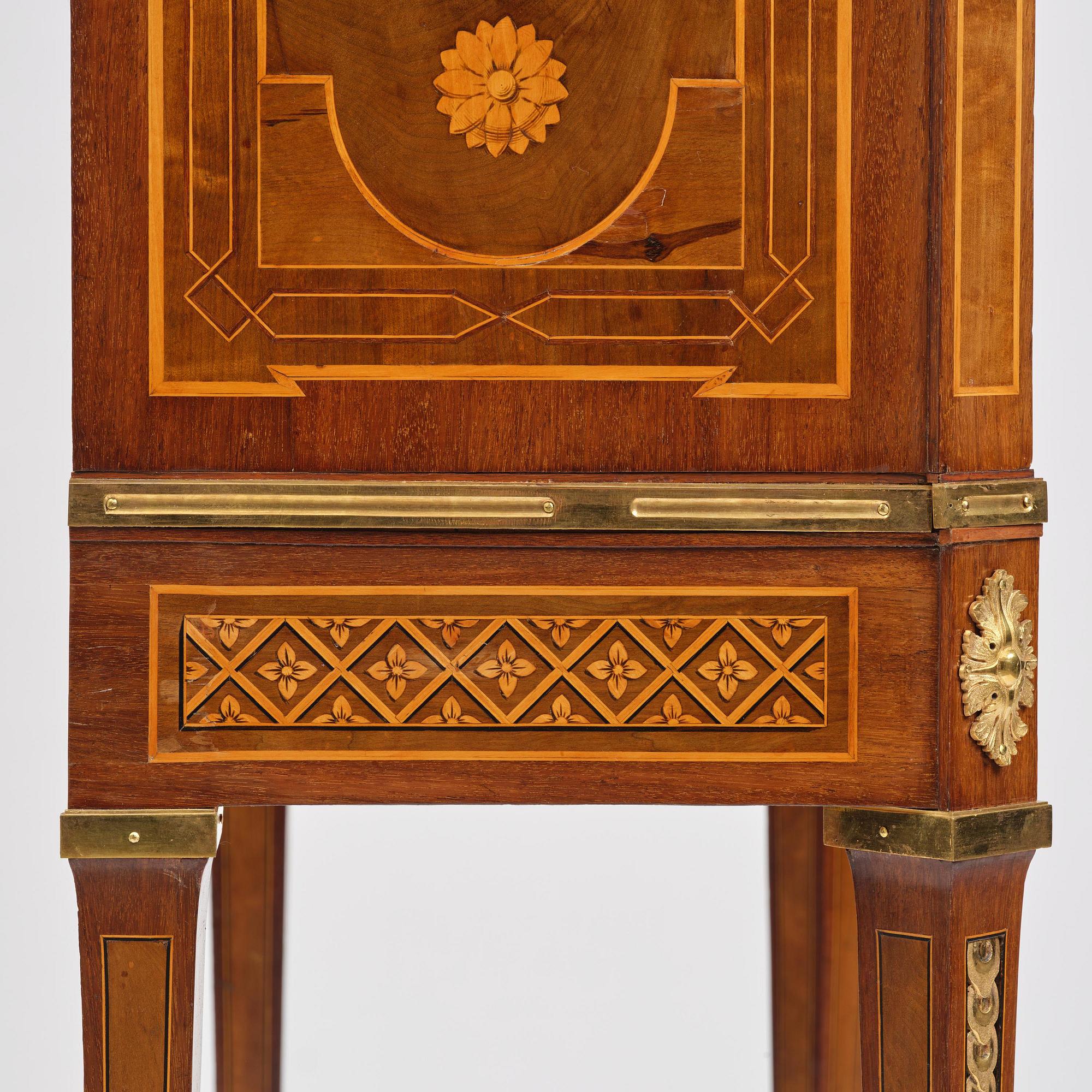
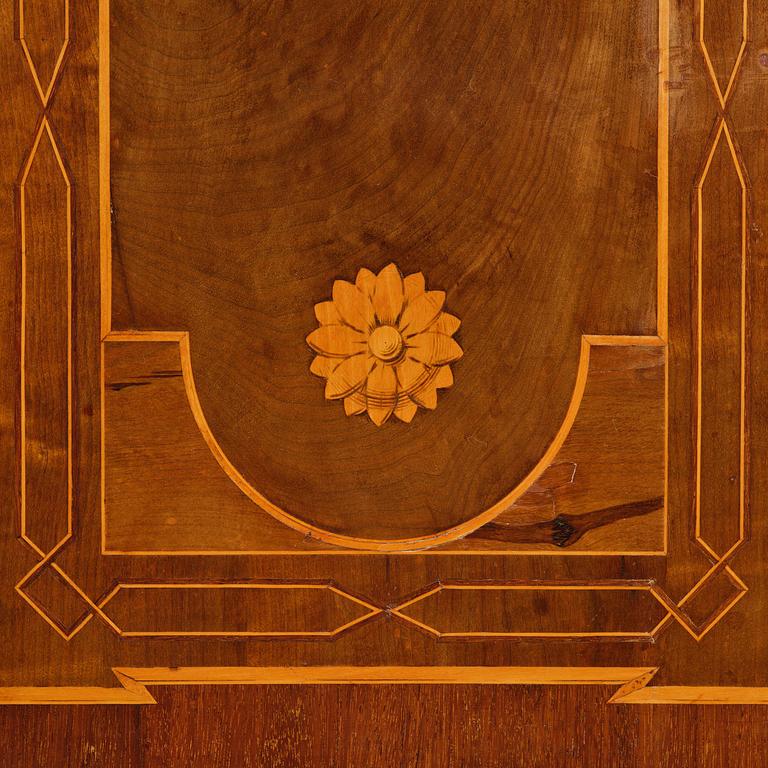
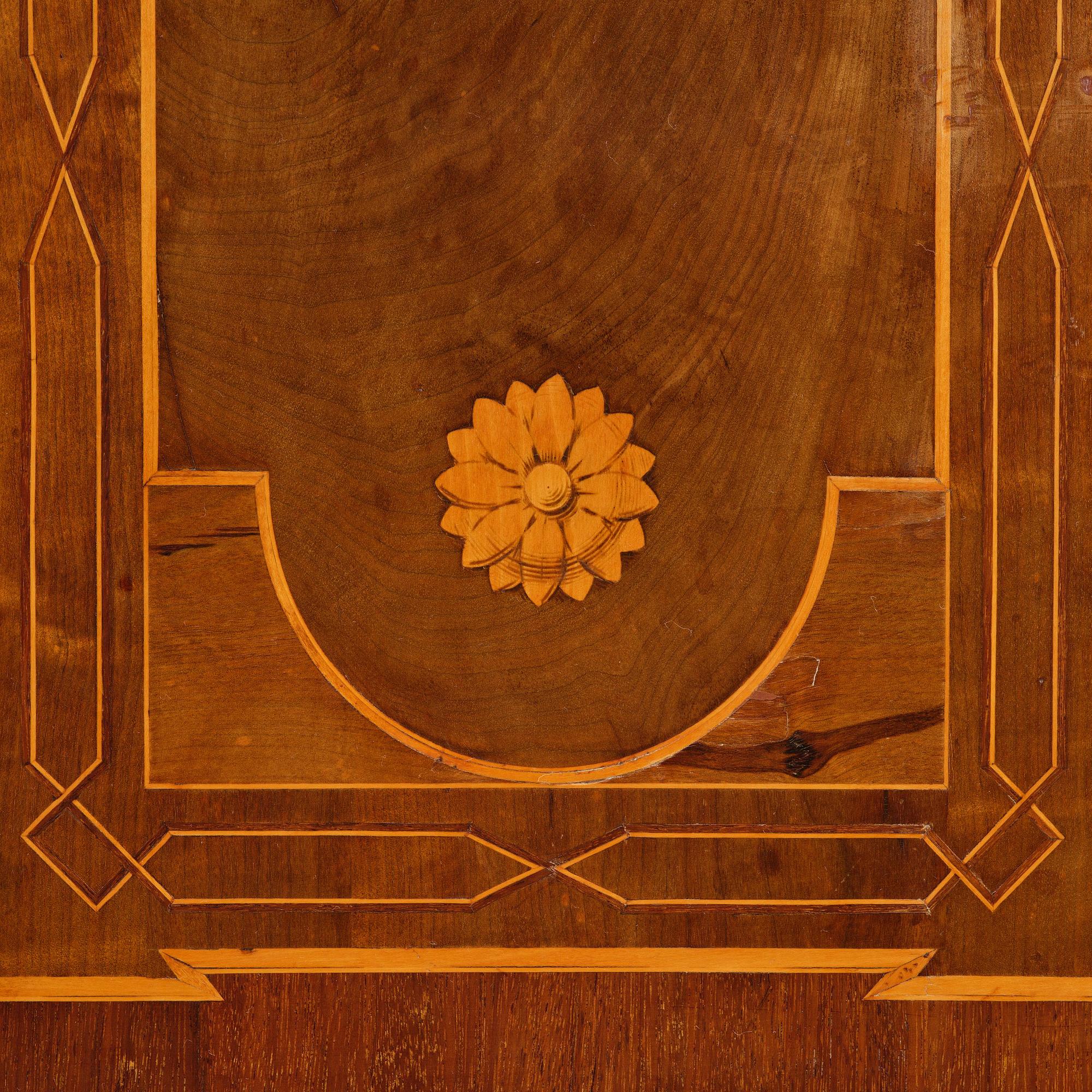
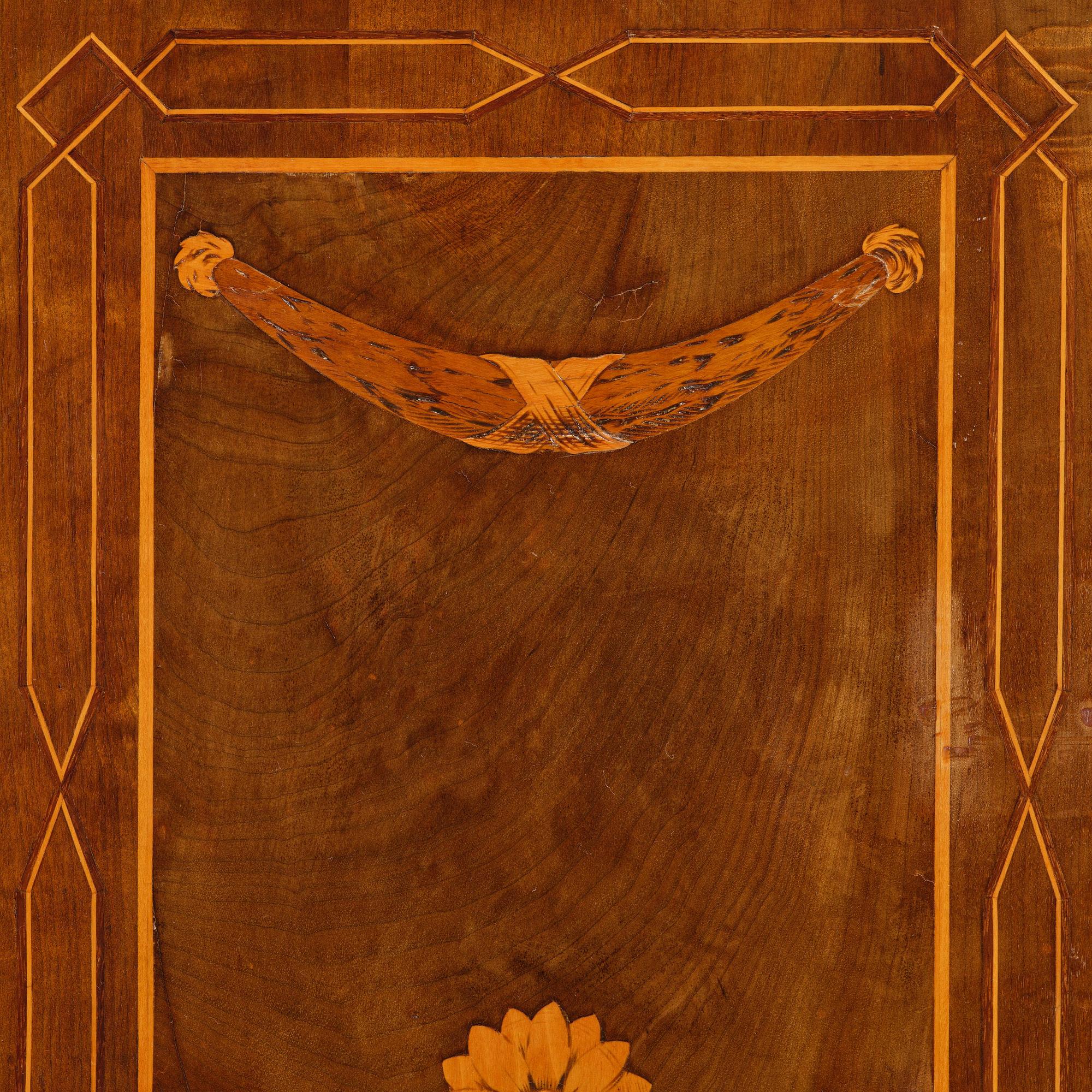
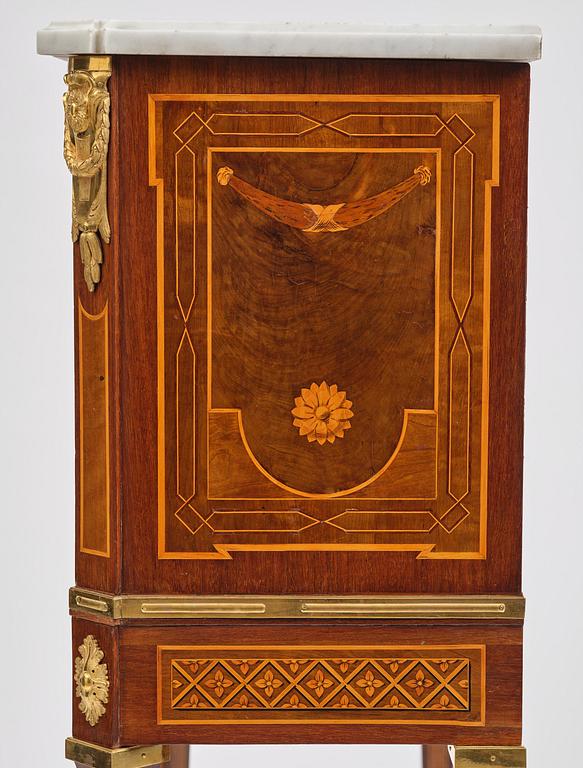
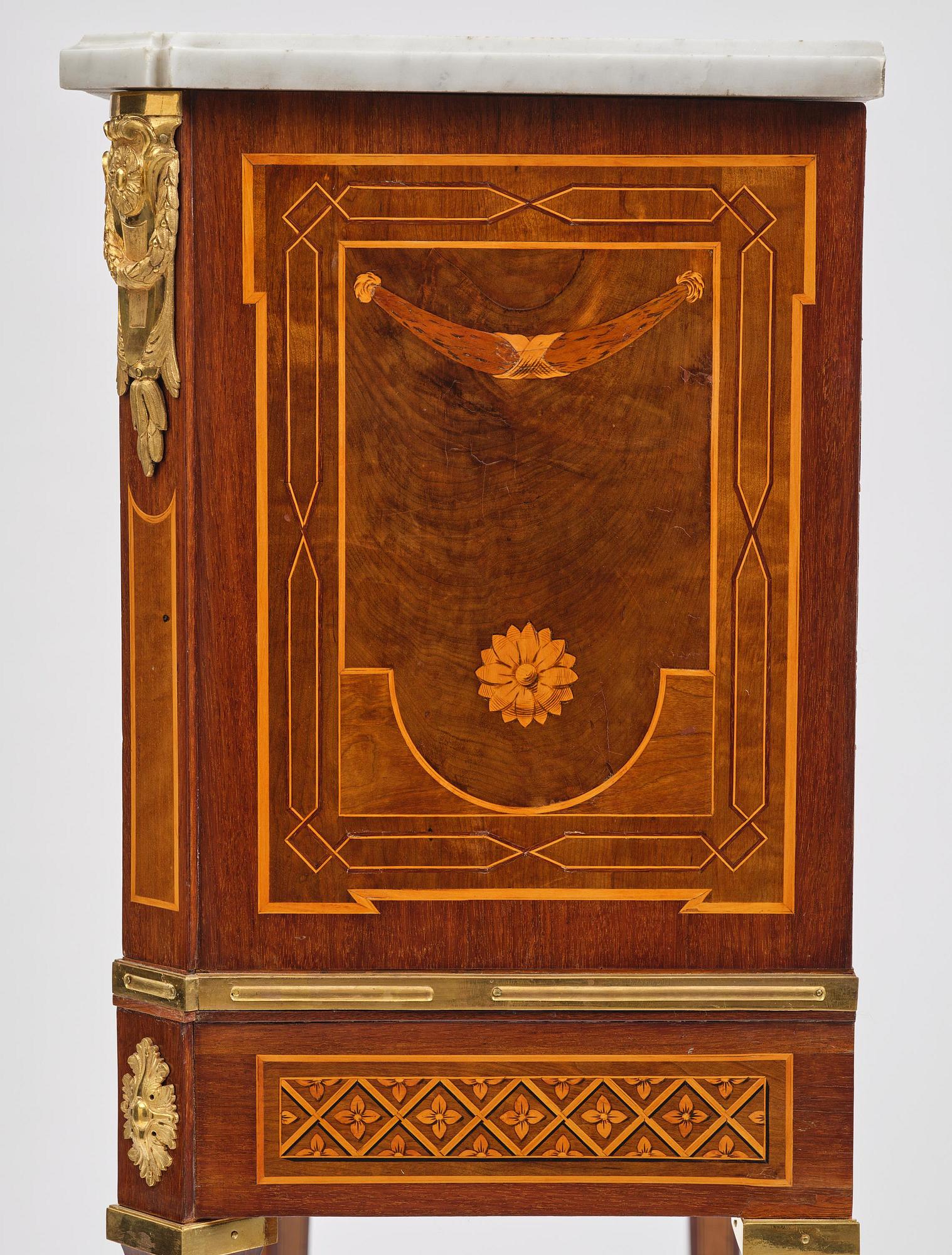
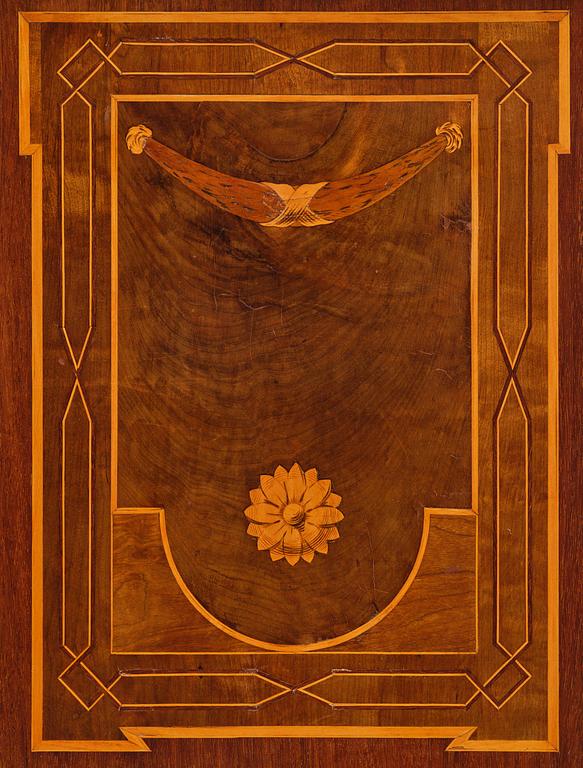
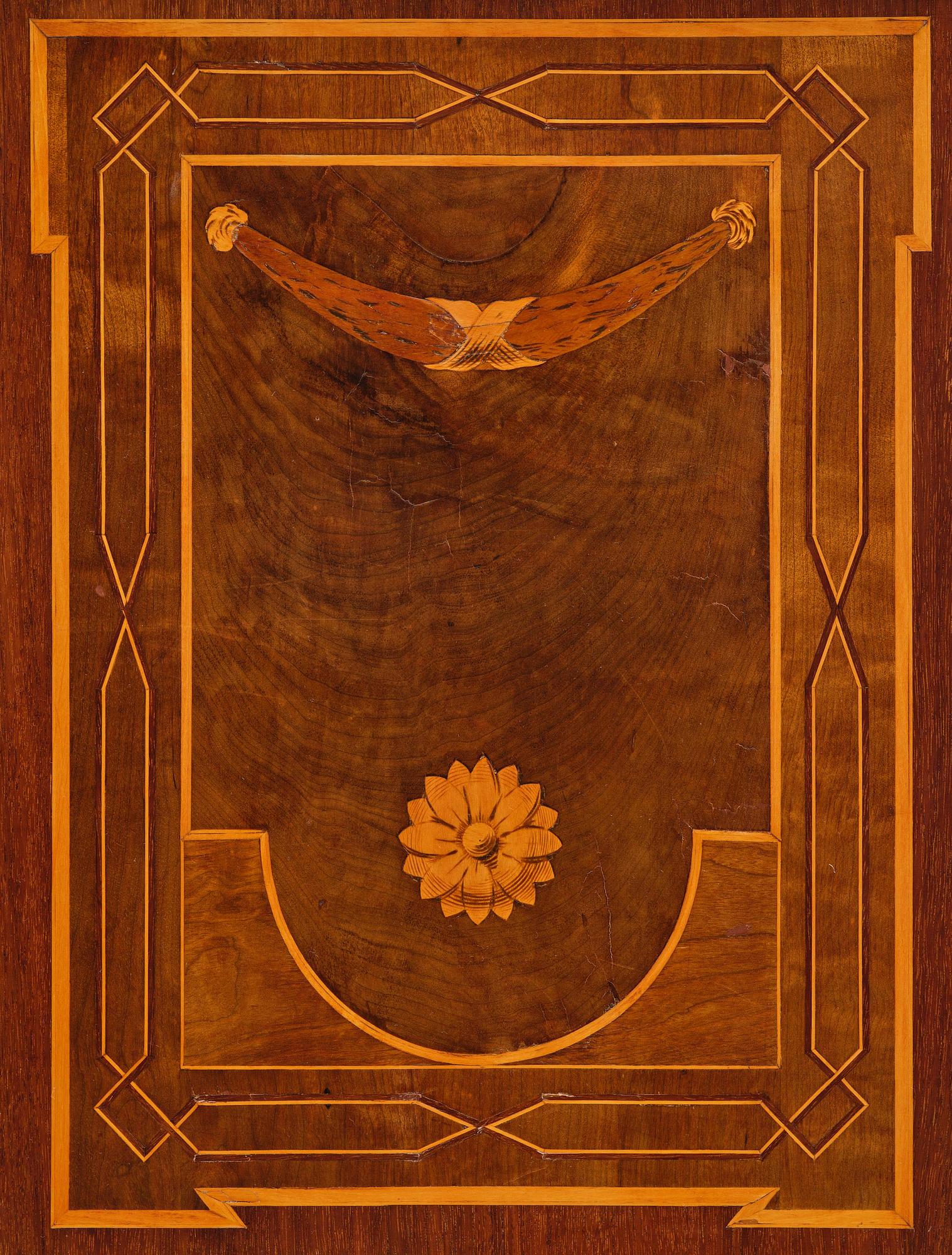
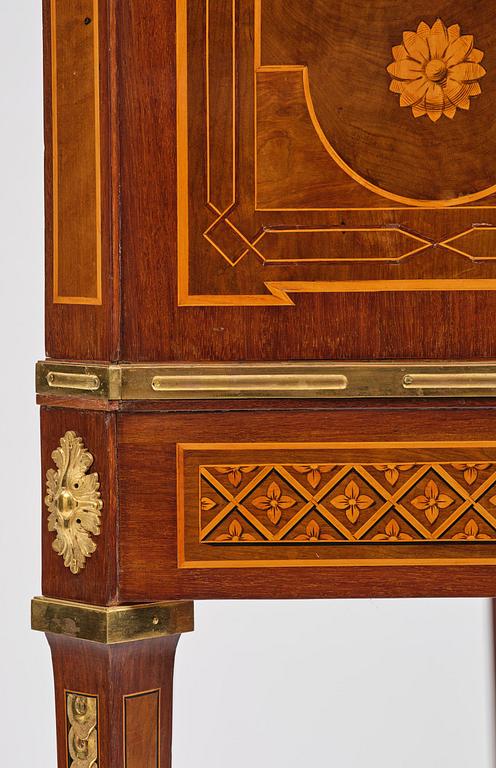
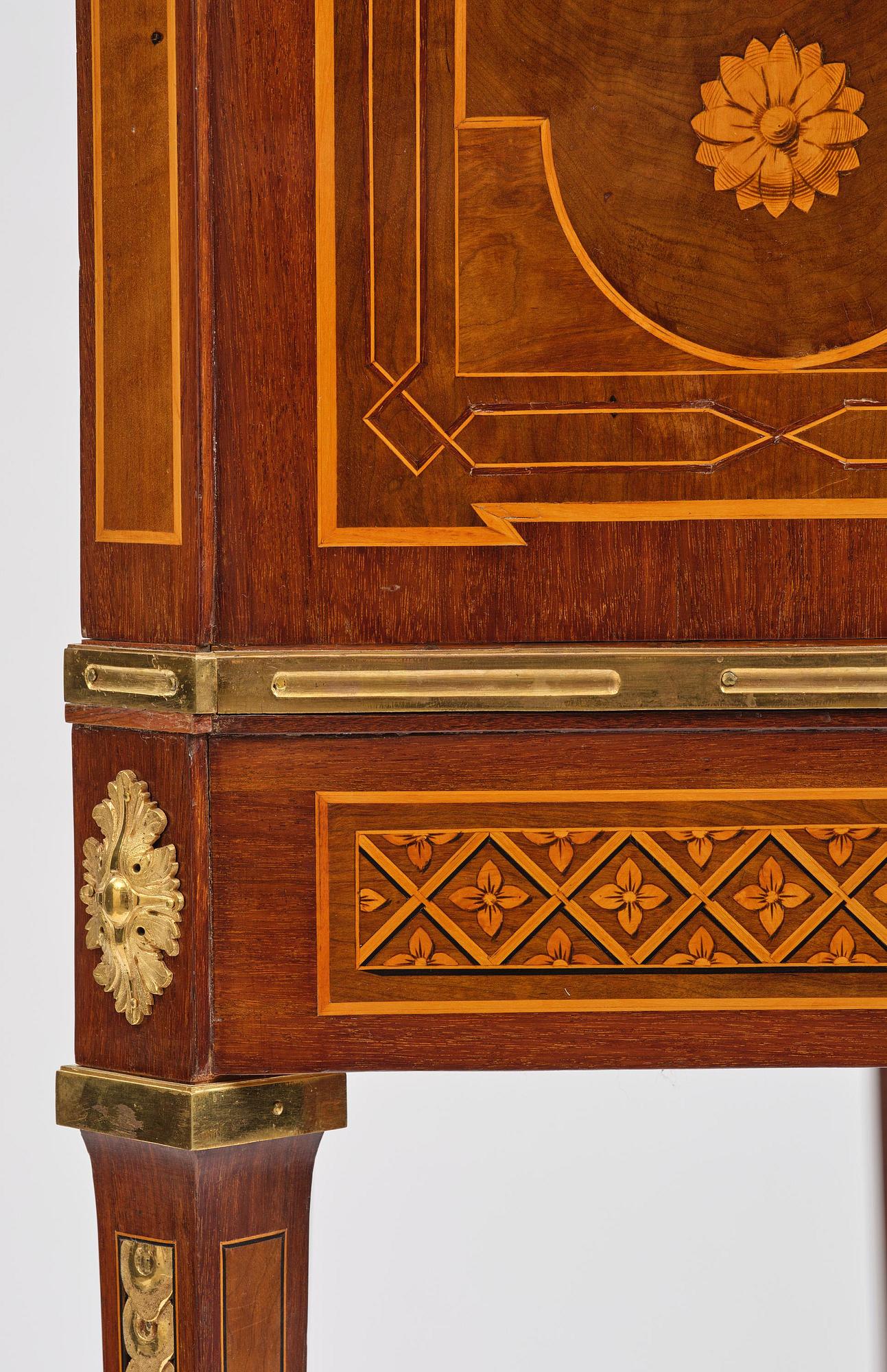
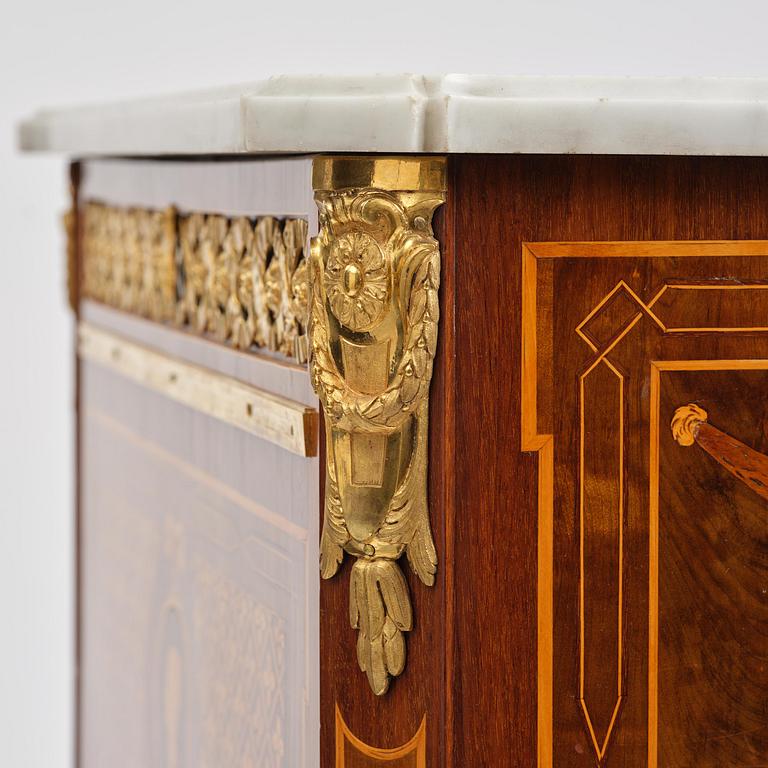
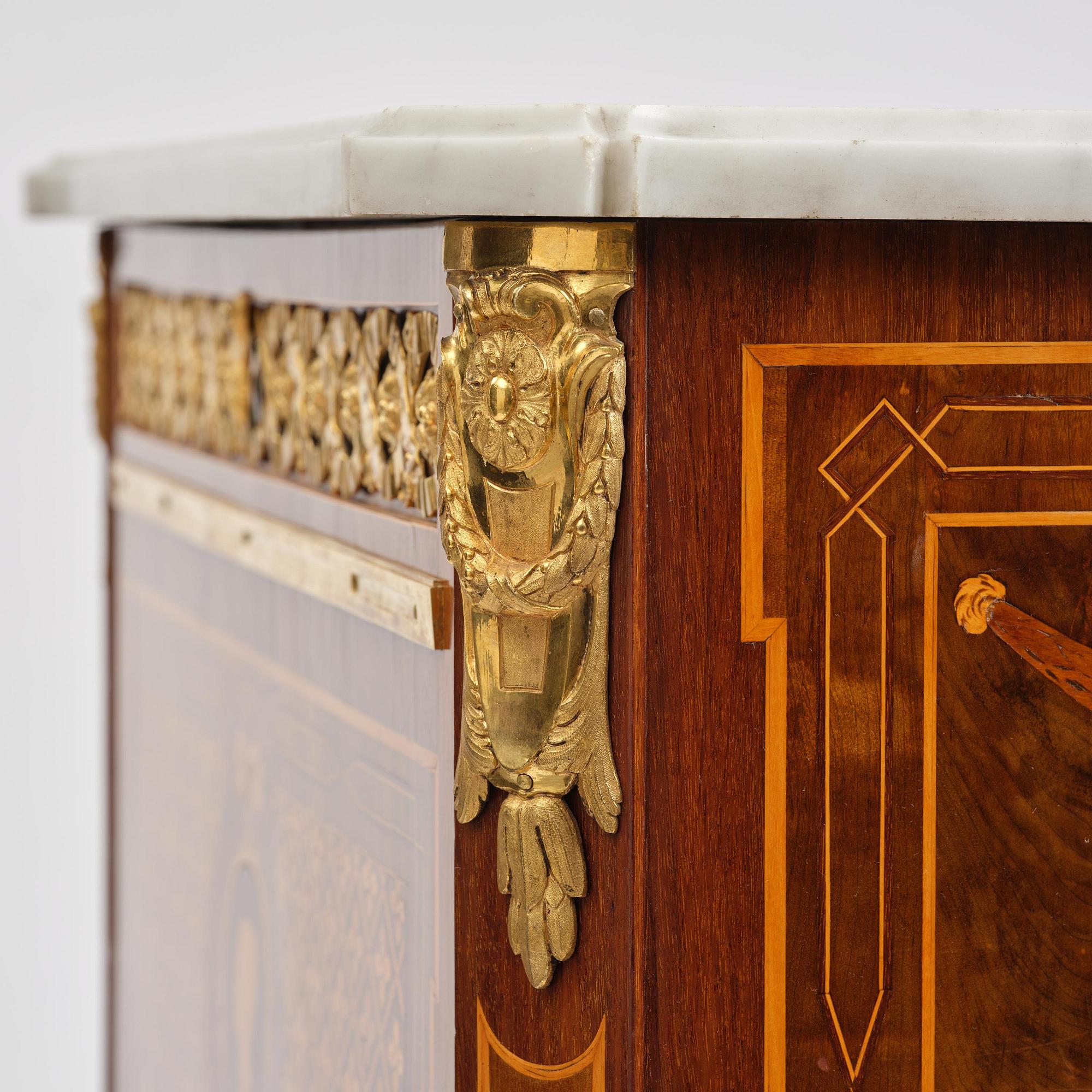
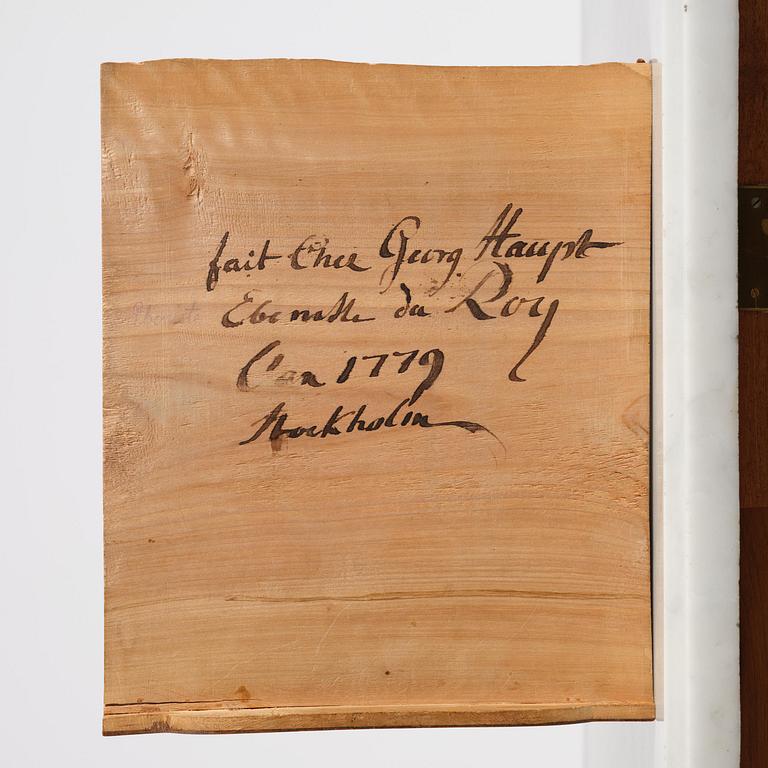
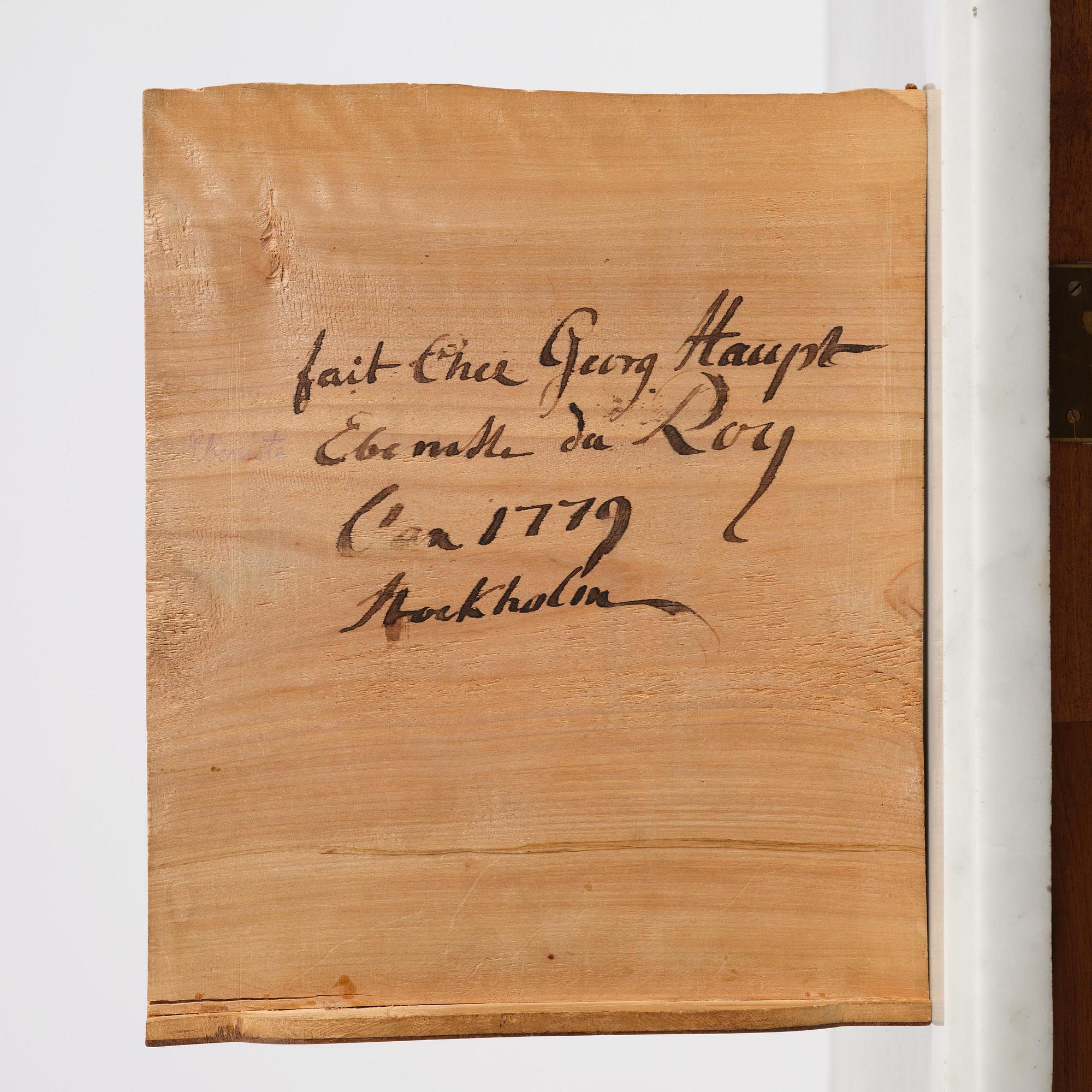
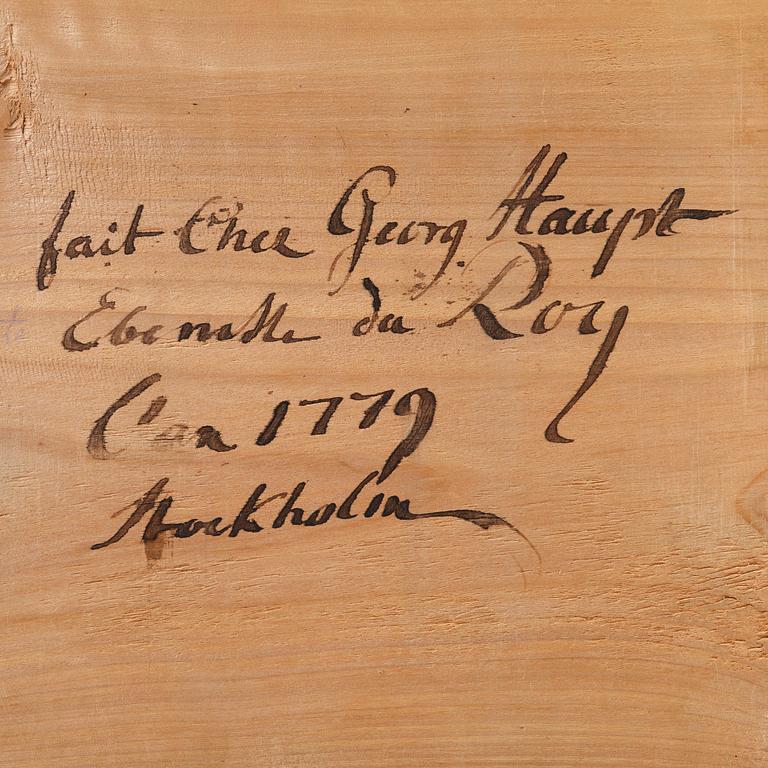
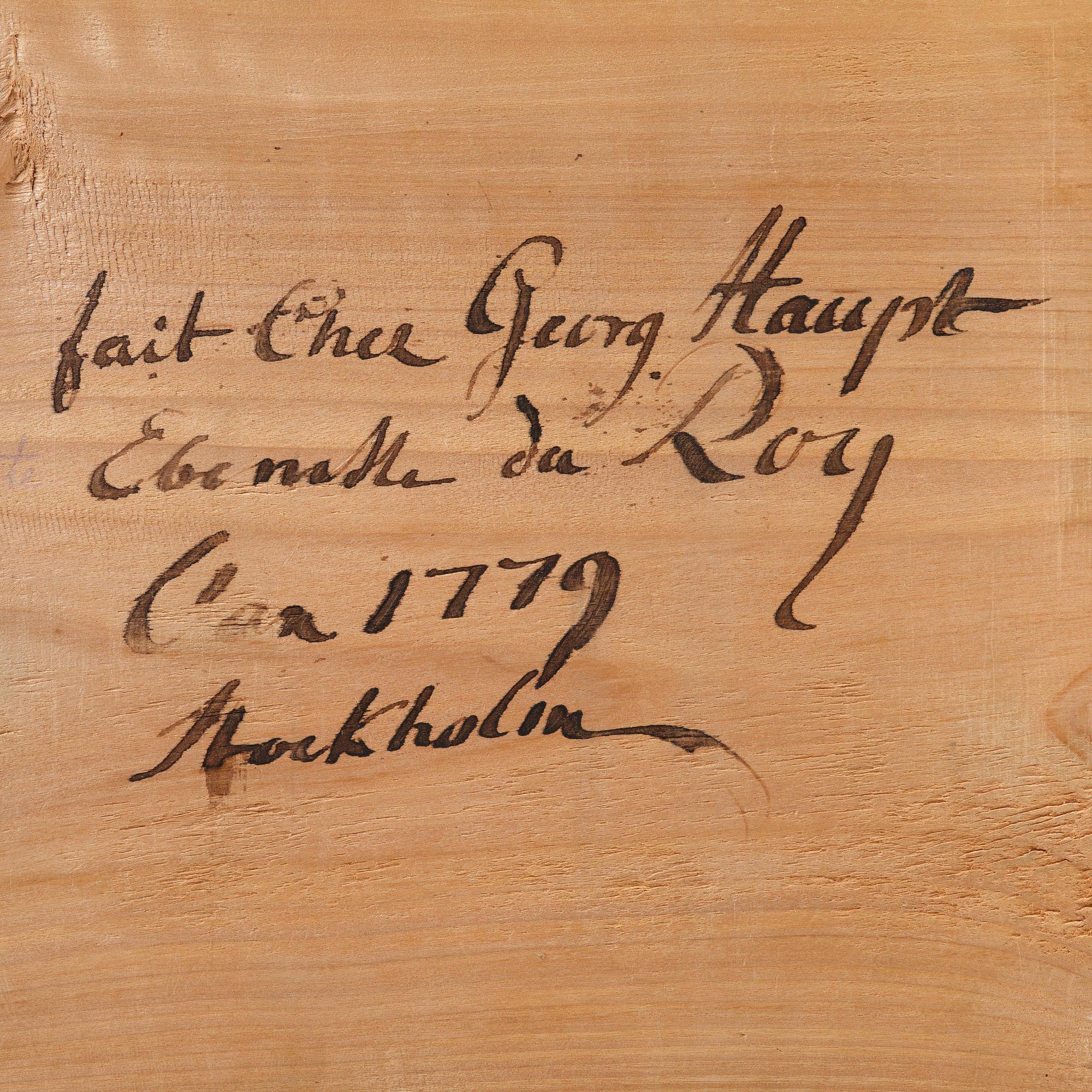
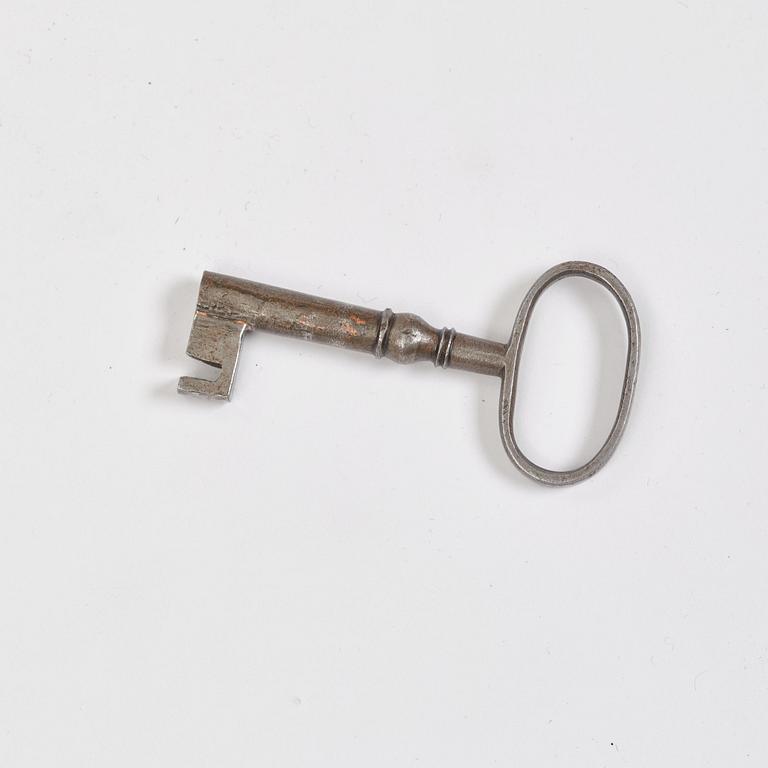
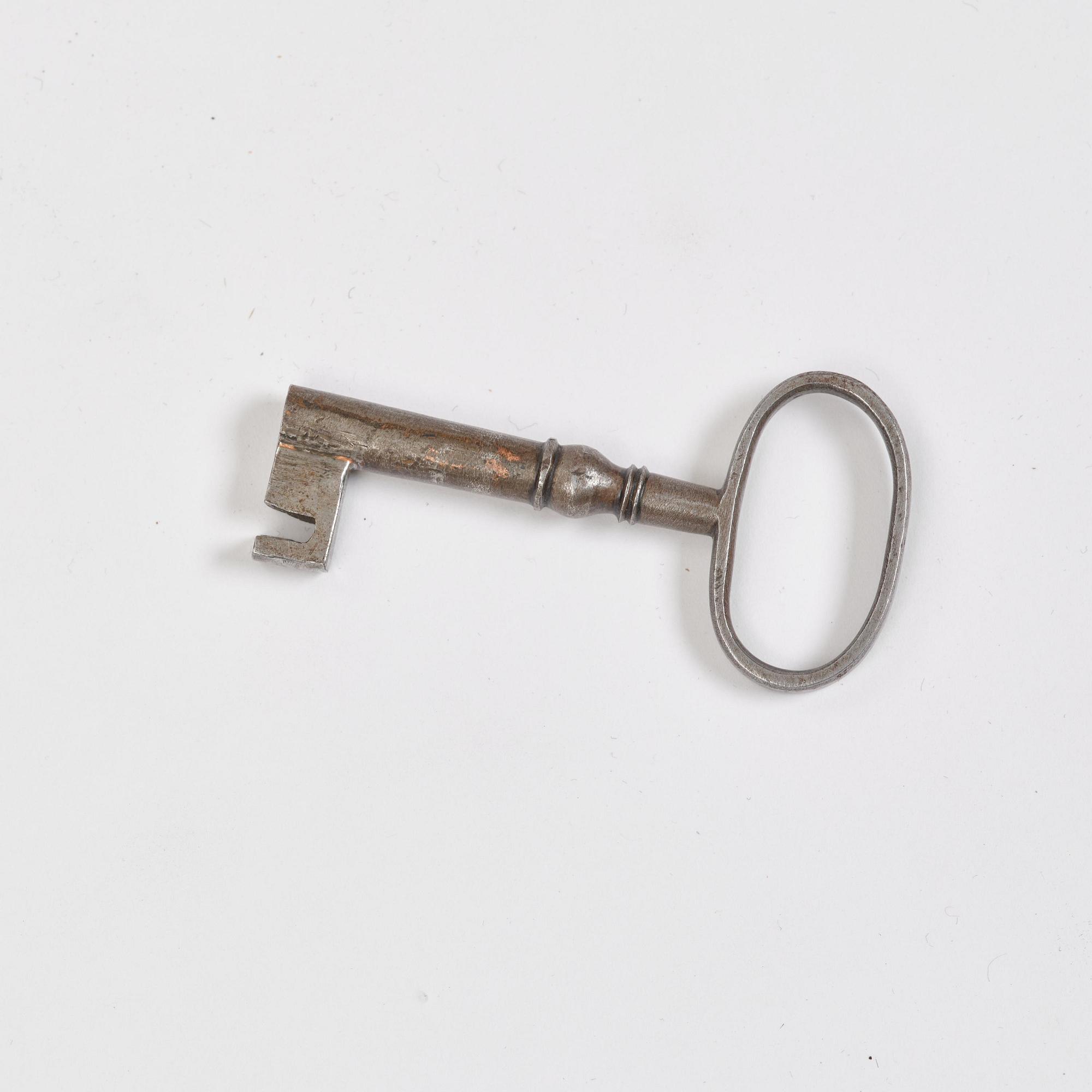
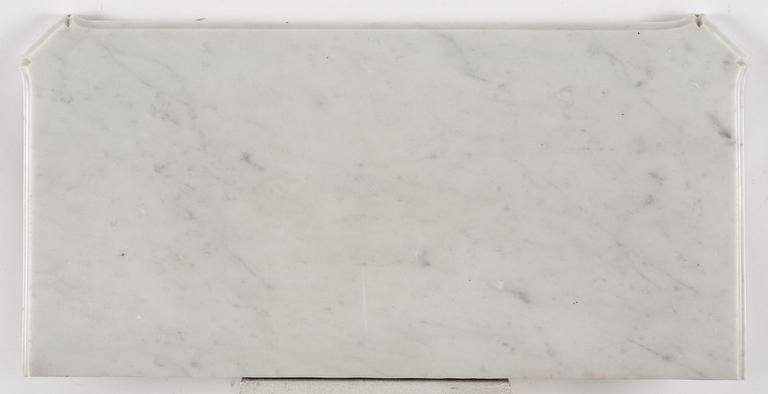
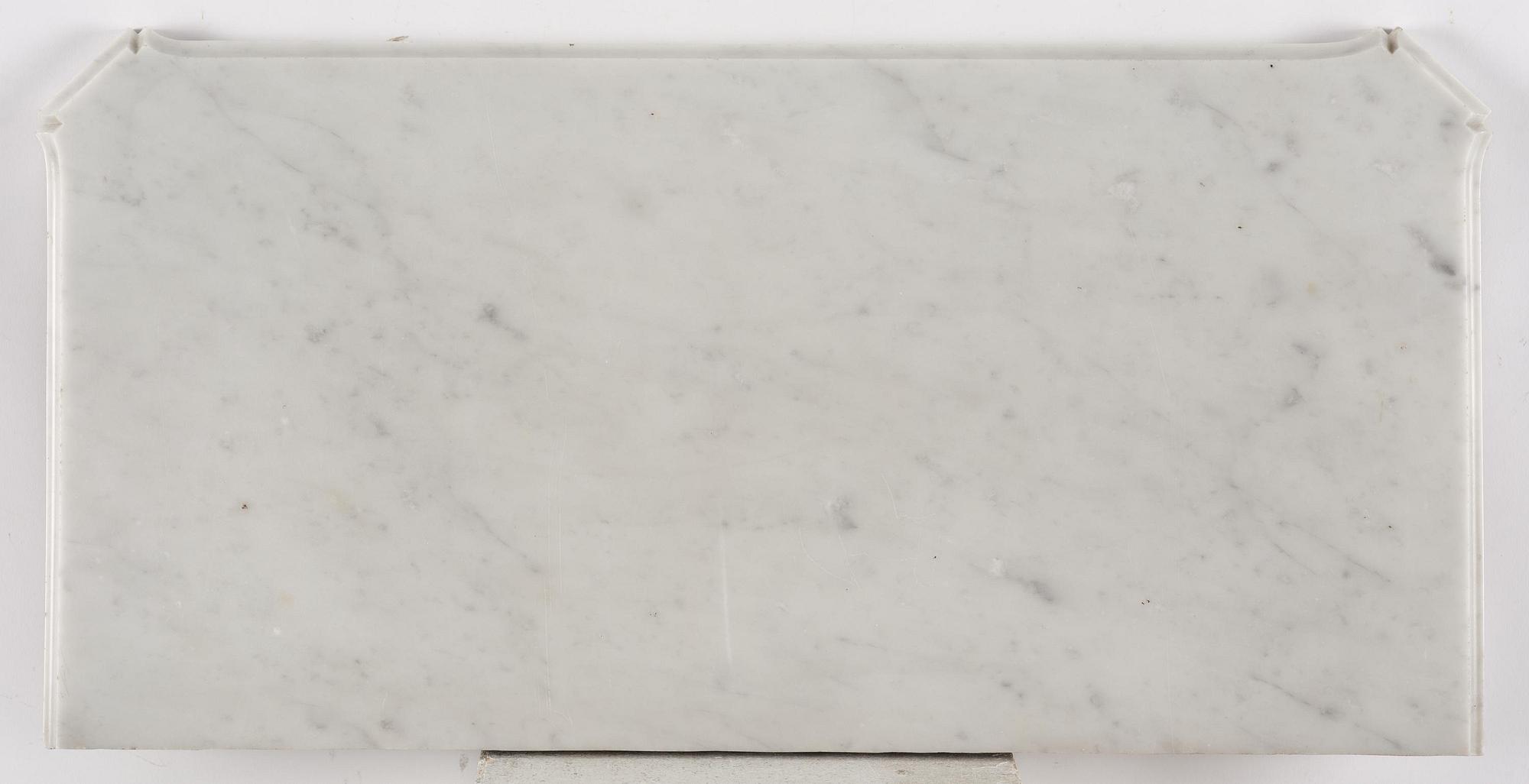
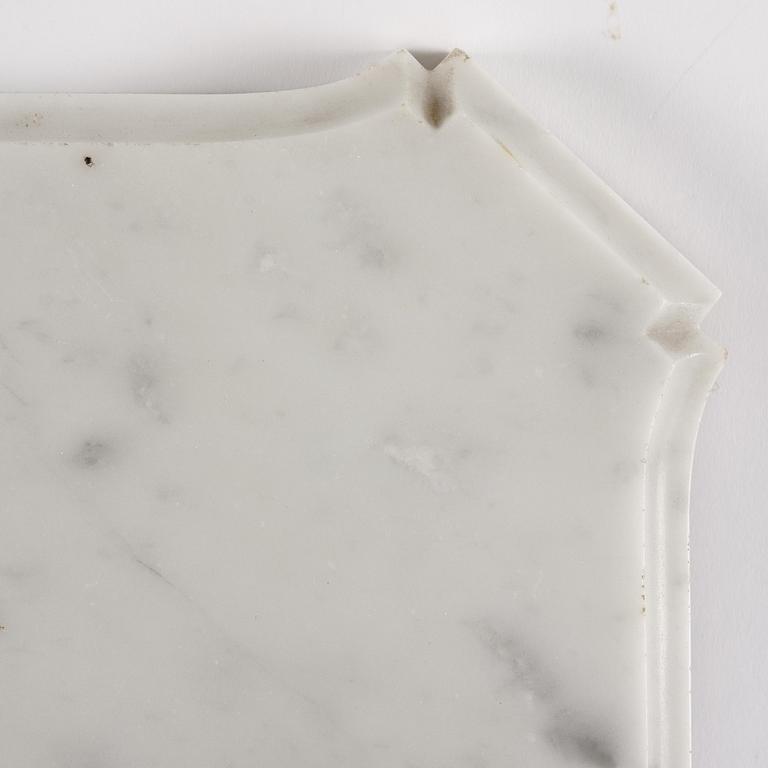
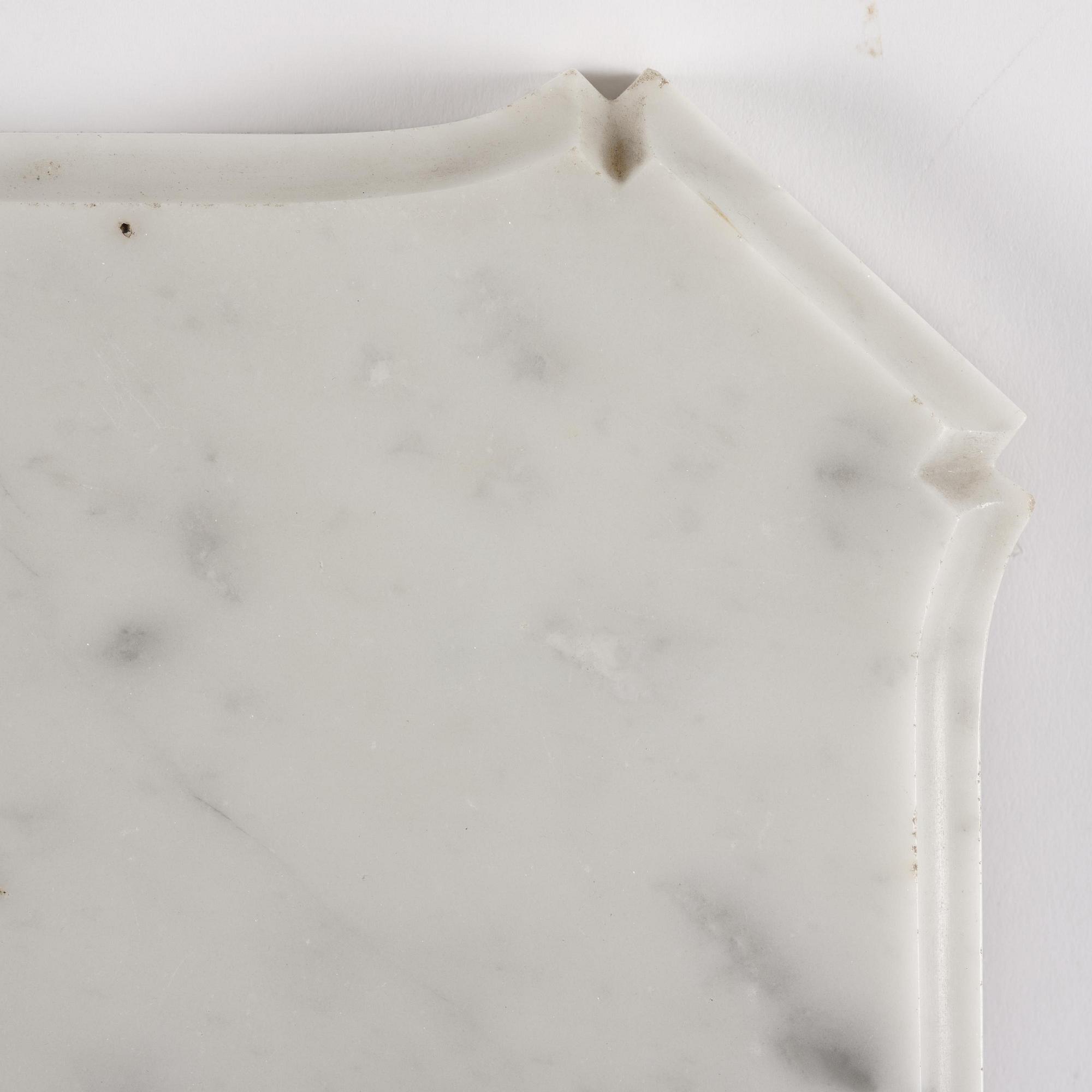
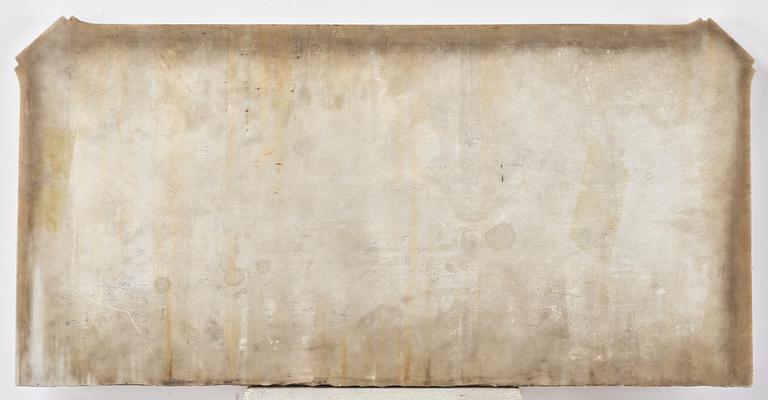
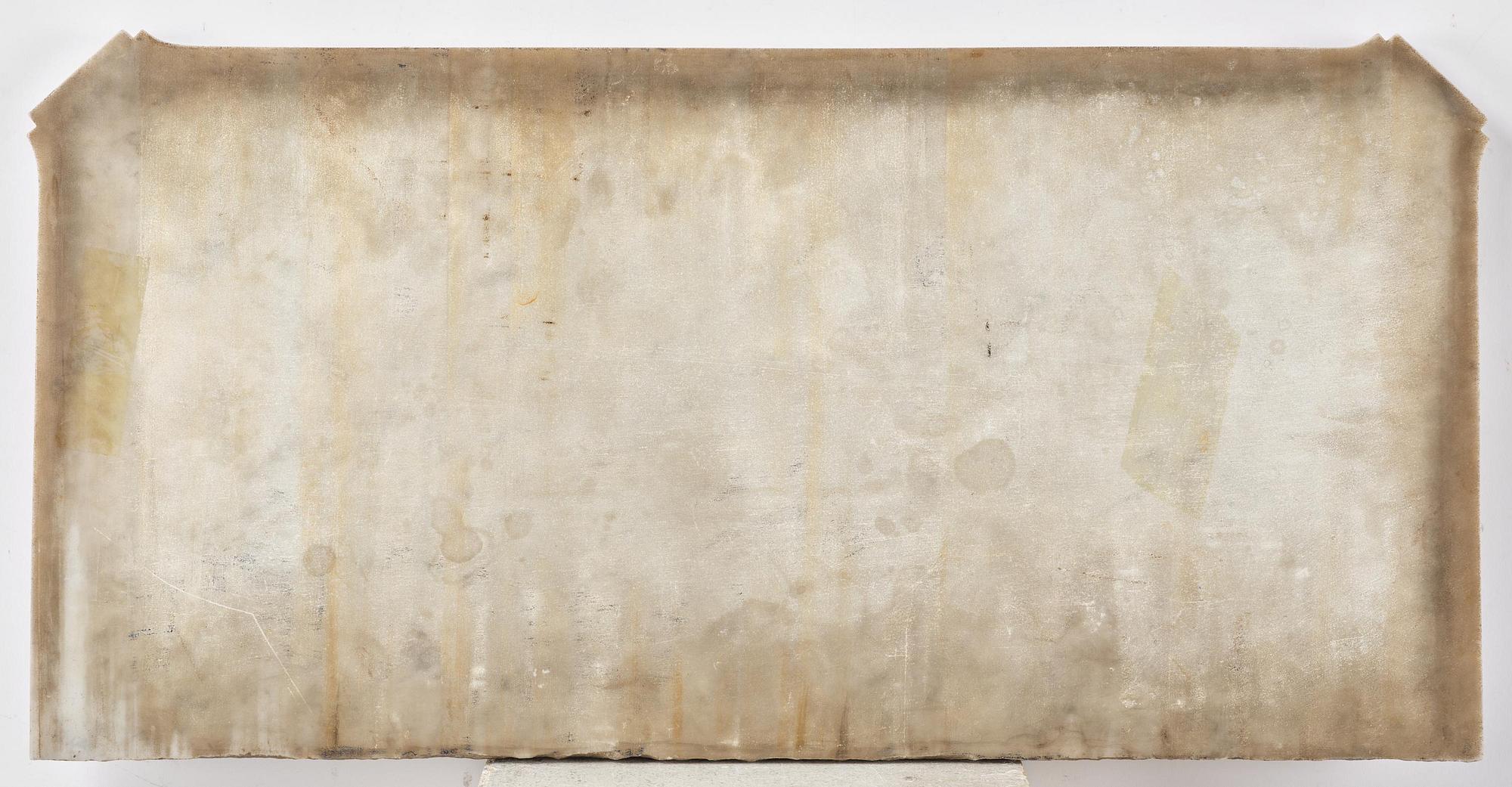
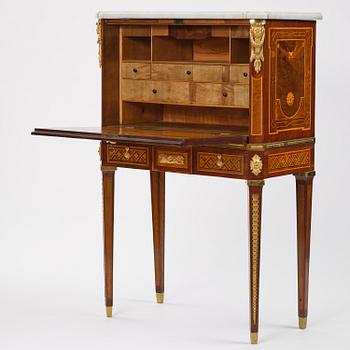
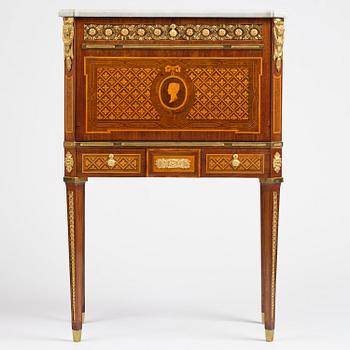
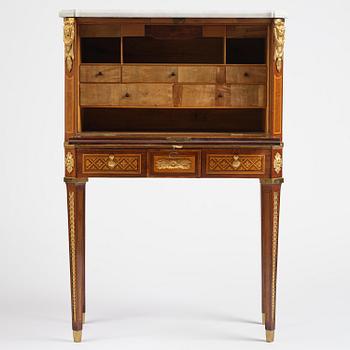
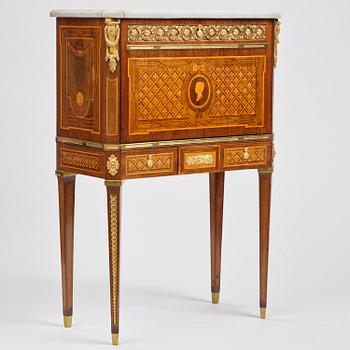
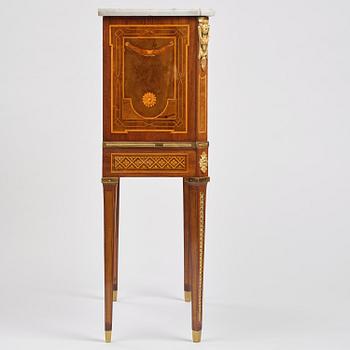
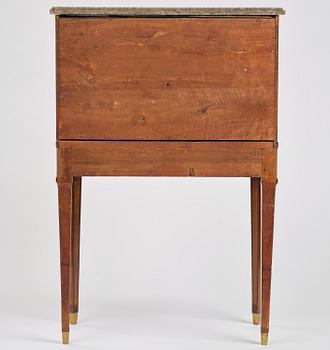
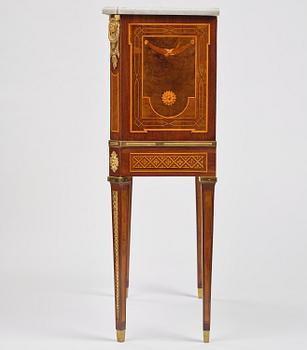
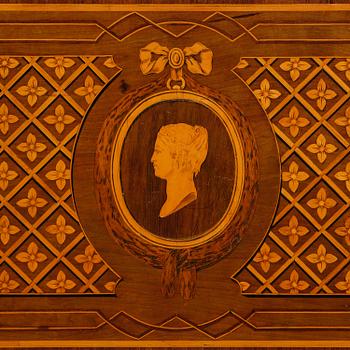
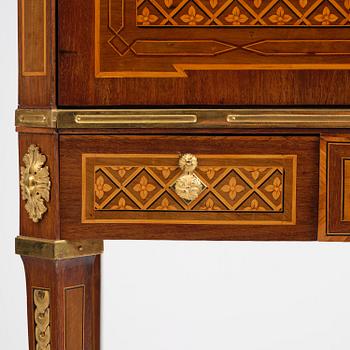
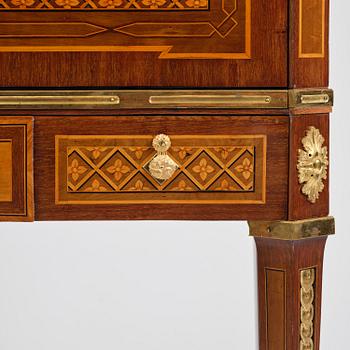
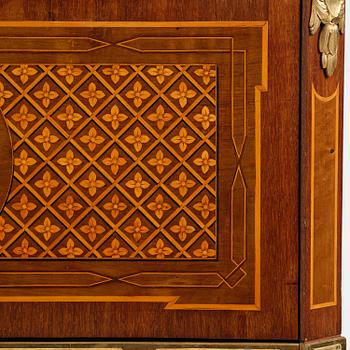
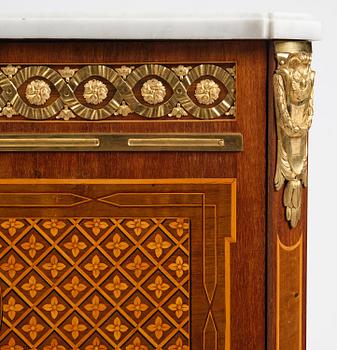
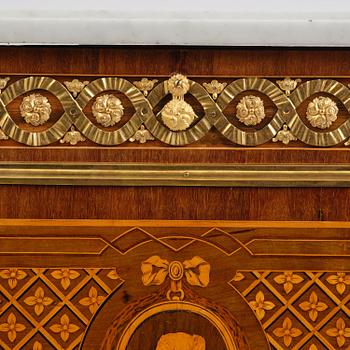
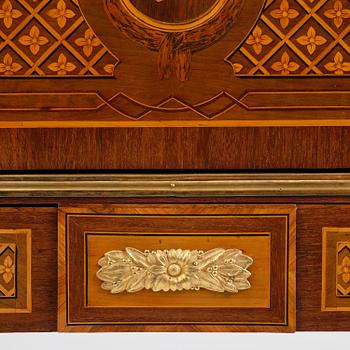
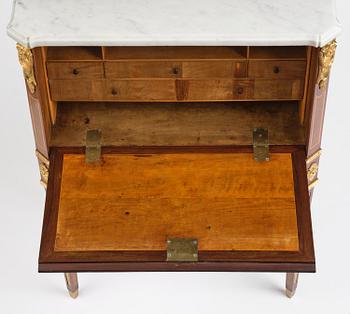
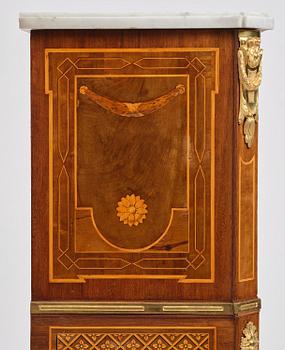
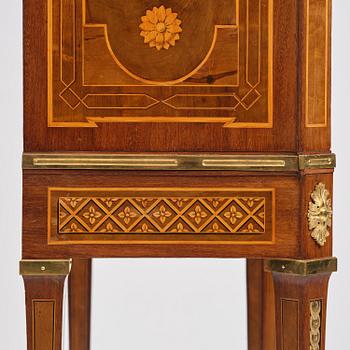
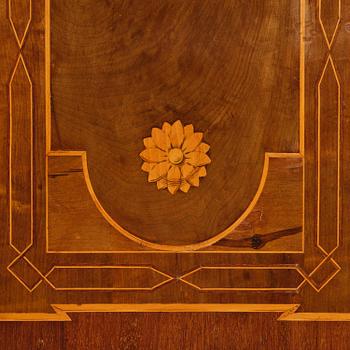
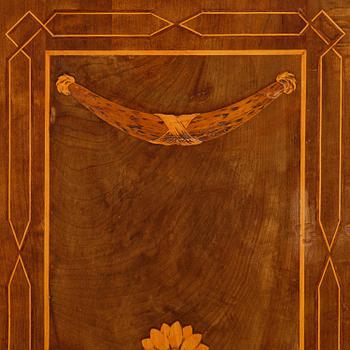
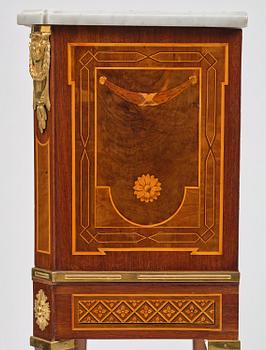
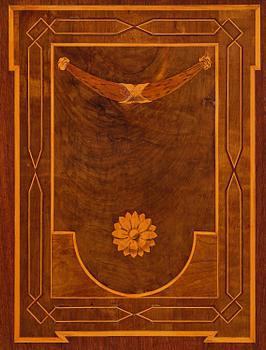
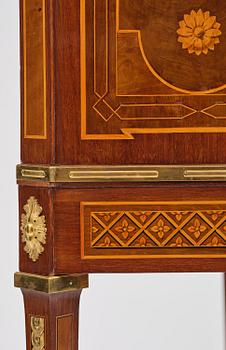
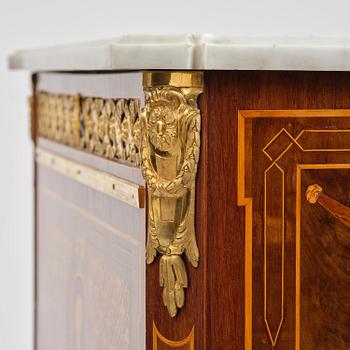
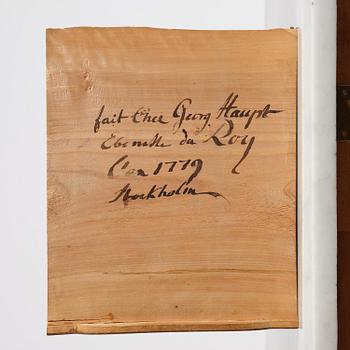
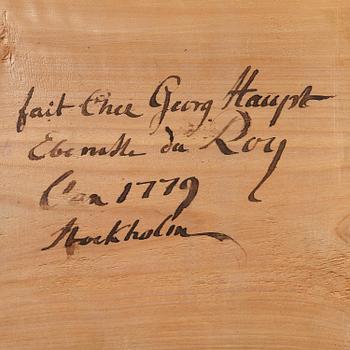
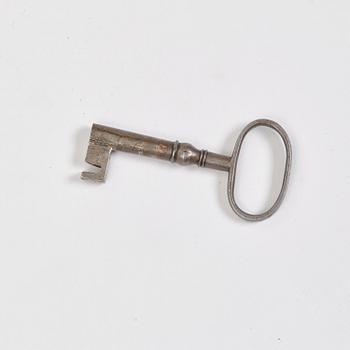
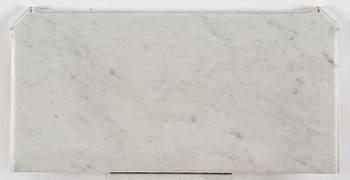
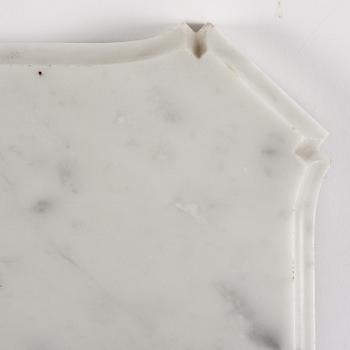
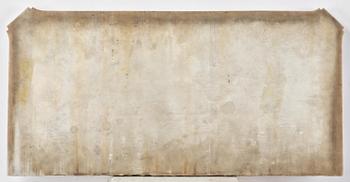
So-called “Secretaire en cabinet”. Veneered with amaranth, boxwood and stained birch with ebony and maple veins. Straight form with canted corners. Rich gilt-brass mounts, including a frieze of interlaced ribbons and fleurons on the front, corner fleurons, and running coin-cut ornament on the legs. Inlaid decoration with trompe-l’œil relief effects, comprising an antique-style figural medallion within trelliswork and geometric borders, the sides with foliate rosettes and draped garlands. Square, tapering legs. Fall-front writing flap with fitted interior containing ten drawers, with two drawers beneath. Signed and dated in one of the interior drawers: “fait Chez Georg Haupt / Ebeniste du Roy / l’an 1779 / Stockholm”. Carrara marble top. Length 83, width 41.5, height 121 cm. Key included.
Alkuperä - Provenienssi
Sekretären möjligen beställd av greve Gustaf Piper (1737-1803), därefter sonen,
Greve Carl Claes Piper (1770-1850), till Christinehov, Högesta, Krageholm m.m. på Sturehof i Botkyrka (inköpt 1829) upptar hans bouppteckning 1852 i ”Fru Grefvinnan [Brahes] 2dra rum” (sängkammaren): 1 Skrifbureau af valnöt med dito (marmorskiva) ______ 20” .
Sturehof går i arv till 3:e sonen Thom Henrik Piper (1813-1859) hans bouppteckning 1860 upptar i Sängkammaren ”1 Skrifbyrå af inlagde träd med marmorskiva_____20”.
Politikern, affärsmannen och samlaren Carl Fabian Edelstam (1832-1897) inköpt 1871 från arvingarna (sannolikt sammanhörande med att Sturehof kom att säljas 1872),
Bukowskis auktion nr 109, 1897, över ovanståendes samlingar, kat nr 334, med angiven proveniens ”Ur Grefve Pipers saml. [Sturehof]”.
Hans änka Anna Edelstam, född Hierta (1848-1922), återköpt på ovanstående auktion.
I arv till sonen Axel Edelstam (1873-1943)
Sten Westerberg sr (1884-1956) samlingar på Beatelund, Ingarö, inköpt 1940 via Bukowskis Konsthandel från ovanstående.
Därefter i arv, såld
Bukowskis Vårauktion 1983, A422, kat. nr. 1175
Privat samling i USA, förvärvad på ovanstående auktion.
Därefter i arv, såld
Christie´s Paris, 28 November, 2017, kat. nr 716
Näyttelyt
Stockholm, Svenska Slöjdföreningens utställning 1904: "Möbler utförda af K. Hofschatullmakaren o. Ebenisten Georg Haupt", kat. nr. 7.
Kirjallisuus
John Böttiger: Georg Haupt. En studie till 1700-talets konstslöjdhistoria, Stockholm 1901, katalogiserad som nr 15, s 134, samt avbildad i svartvitt som plansch 21;
Mary T. Nathhorst: Statsfrun Anna Edelstams hem, Stockholm', artikel i "Svenska hem i ord och bilder", 1922 (red Albin Roosval), omnämnd samt avbildad sid 47.
Marschall Lagerquist: Georg Haupt. Ebeniste du Roi, Nordiska Museets handlingar 92, Stockholm 1979, katalogiserad som nr 27, s 142, samt avbildad i svartvitt, s 142-143.
Lars Ljungström: Georg Haupt. Gustav III:s hovschatullmakare, Stockholm 2006, jämför sekretär en cabinet på Tullgarns slott (HGK 32), beskriven i text och färgbilder, s 114-116.
Muut tiedot
Georg Haupt has been hailed as the greatest Swedish cabinetmaker of all time. In an exceptional manner, he succeeded in translating the impressions of the emerging Neoclassicism he encountered during his journeyman travels in Paris and London into a distinguished production adapted to Swedish taste and style, which came to be known as the Gustavian style. Haupt’s masterpiece, in the form of a writing desk, dating from 1770, has been called the first Gustavian piece of furniture, and the secretaire now offered for sale may be regarded as a consummate exponent of the Gustavian style.
Together with three others, the auction’s secretaire is among the most richly decorated secretaire cabinets made by Georg Haupt, all signed between 1778 and 1779. The most magnificent is the pair Haupt made in 1778 for King Gustaf III’s brother, Duke Fredrik Adolf, today at Tullgarn Palace (HGK 32 & 33). The celebrated so-called ‘Österby secretaire’, formerly in the Tamm collections, was also signed in 1779, the same year as the auction’s secretaire. What unites these pieces of furniture is their unusually rich decoration and profusion of gilt-brass mounts. The individual motifs appear on other pieces by Haupt, but here they have been combined to create an exceptional splendour, placing these secretaire cabinets in a class of their own within Haupt’s oeuvre.
The secretaire displays all Georg Haupt’s characteristic features, including its perfect proportions and elegant marquetry with assured engraving and shading. The latter creates a trompe-l’œil effect of relief which, together with the gilt-brass mounts, produces a richly articulated effect—an area in which Haupt was an unrivalled master.
This type of secretaire, with a straight-sided carcase fitted with a fall-front writing flap and standing on tall legs, is also known as a ‘secretaire en cabinet’; the term ‘secrétaire à abattant’ is also used. This version, albeit with simpler decoration, became one of the most successful of the models Haupt introduced in Sweden. Several signed and unsigned examples are known, and contemporary ébénistes came to copy it.
The person who originally commissioned a secretaire as lavish as the present one must have belonged to the highest echelons of society, a group that included the Counts Piper. The first documented owner was Carl Claes Piper (1770–1859), and much suggests that the secretaire may have been commissioned by his father, Gustaf Piper (1737–1803). His estate inventory, and later that of his wife, Hedvig Catharina Ekeblad, list several pieces of furniture described as having ‘inlaid work’. Terminology at the time was not consistent, and different types of furniture may be concealed behind similar descriptions. Of particular interest in this context are a pair of corner cabinets listed in the inventories. These later passed by inheritance to the Piper family’s Sövdeborg Palace, where they are depicted in Svenska Slott och Herresäten, 1909: Skåne, p. 363. The central motif on the secretaire’s writing flap, featuring an antique-inspired figural medallion suspended from a rosette and trelliswork, corresponds to the decoration on the doors of the corner cabinets. The possibility that they originally formed a suite is therefore not far-fetched.
Following the Piper family, the auction’s secretaire had a long and fascinating provenance and eventually came to be owned by such prominent collectors as Carl Fabian Edelstam, owner of the Edelstam House on Blasieholmen, now Hotel Lydmar, and later formed part of Sten Westerberg Sr.’s celebrated collections at Beatelund.
Lisätietoja ja kuntoraportit
Mitä kuljetus maksaa?
Toimituksen voi tilata vain ottamalla yhteyttä osoitteeseen specialdelivery@bukowskis.com.
Tietoa ostamisesta
Muiden katsomia kohteita