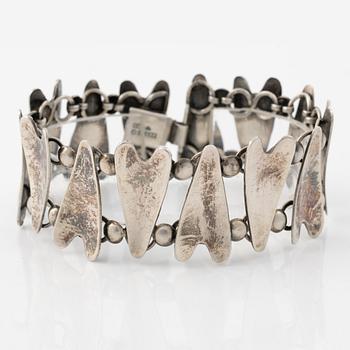
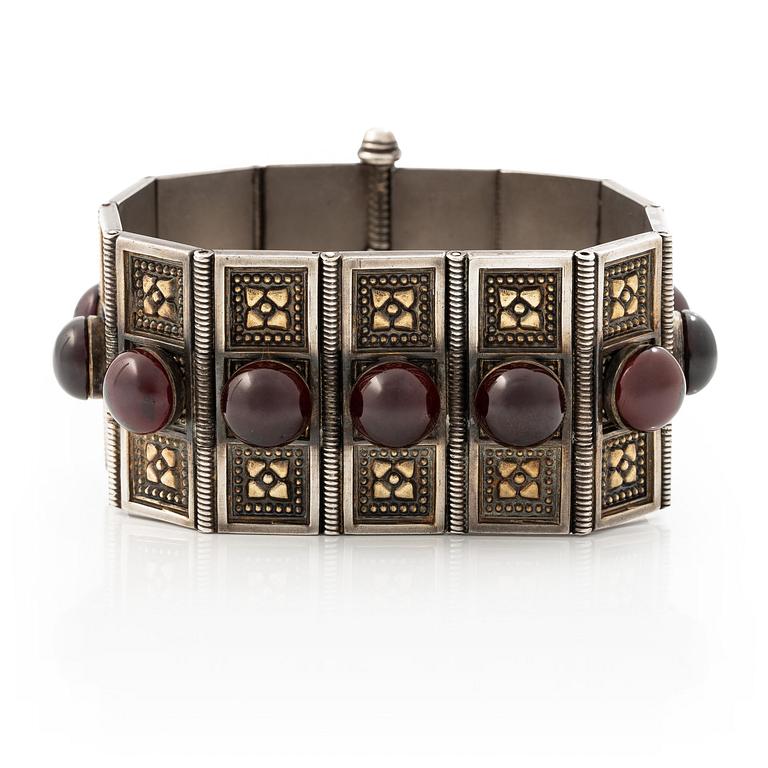
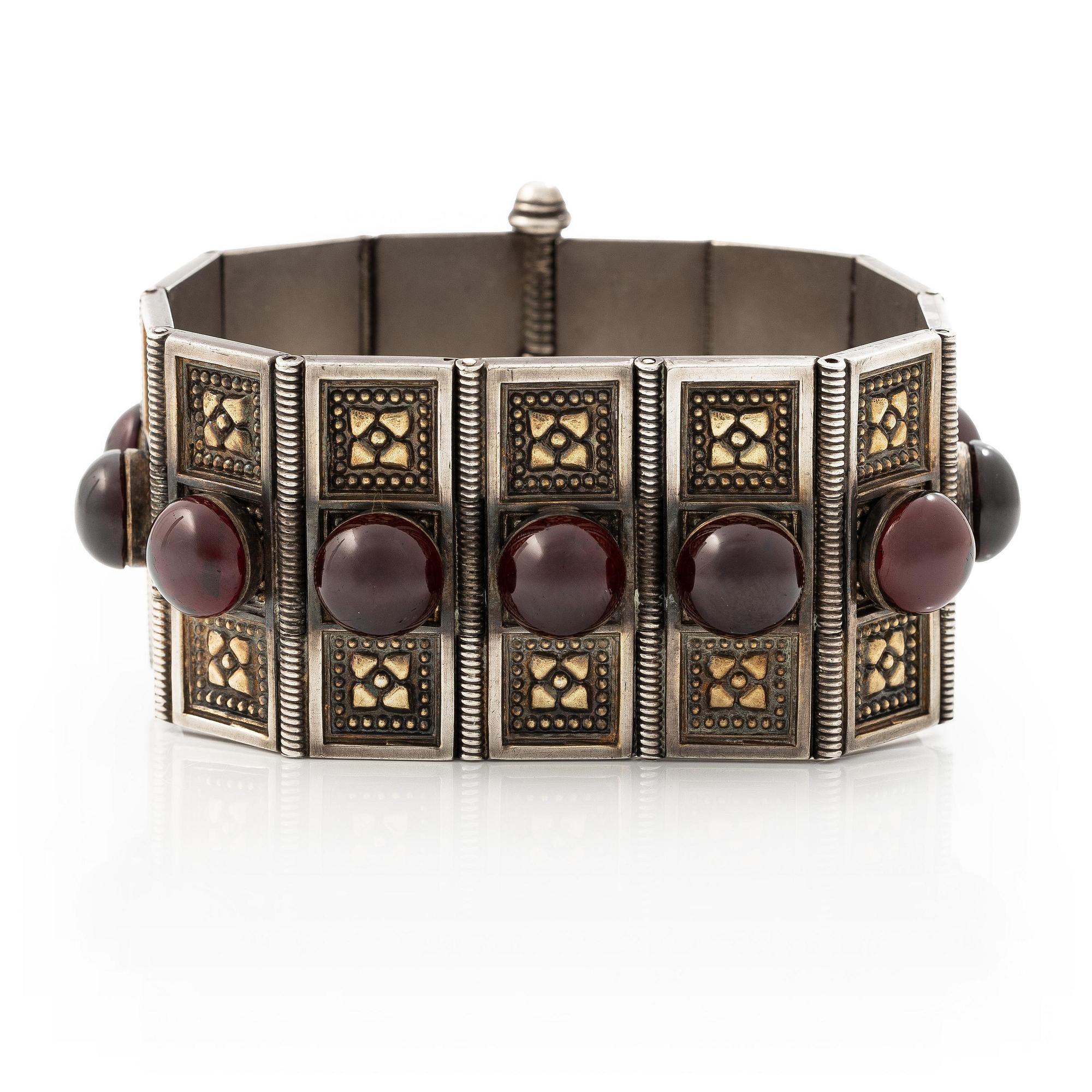
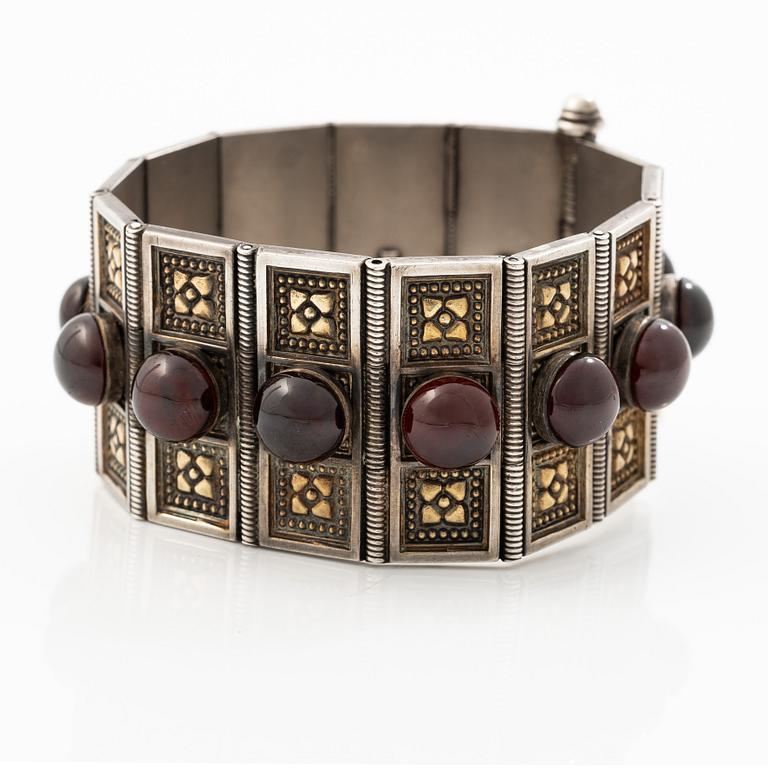
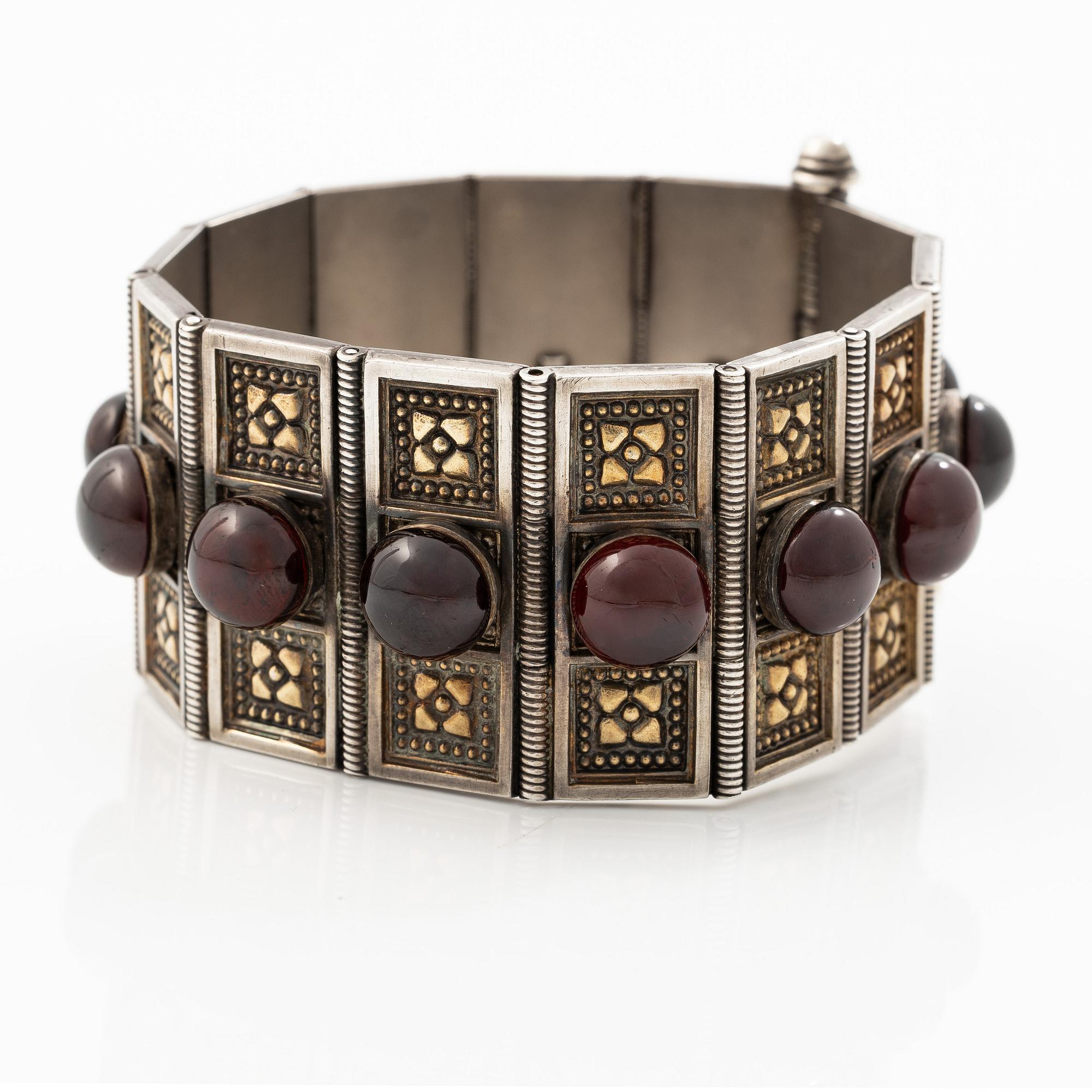
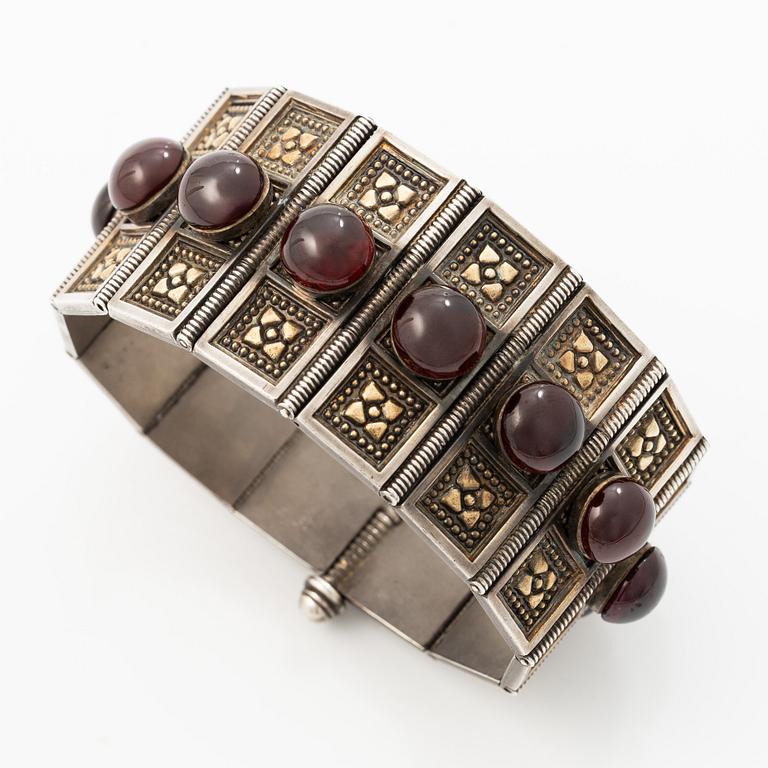
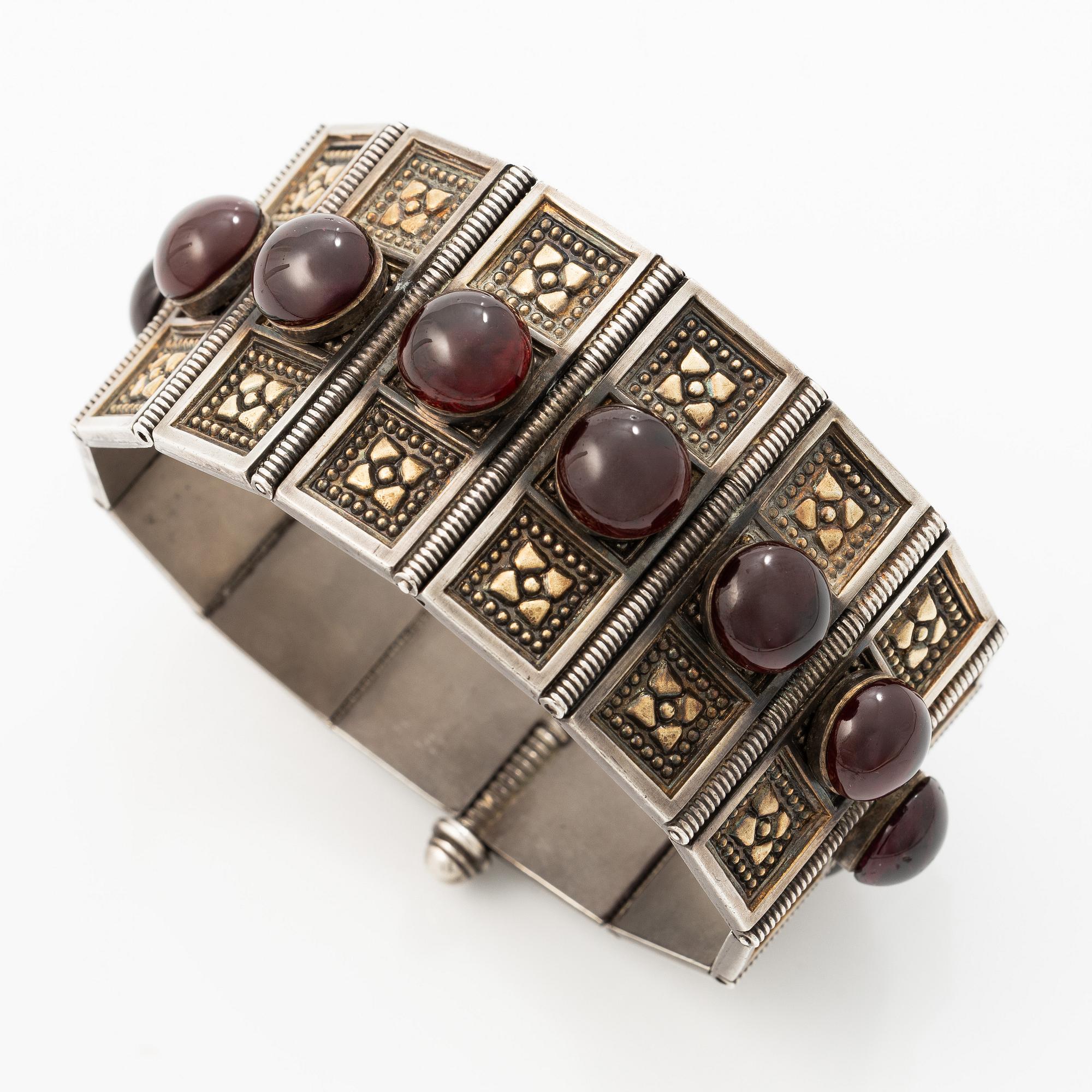
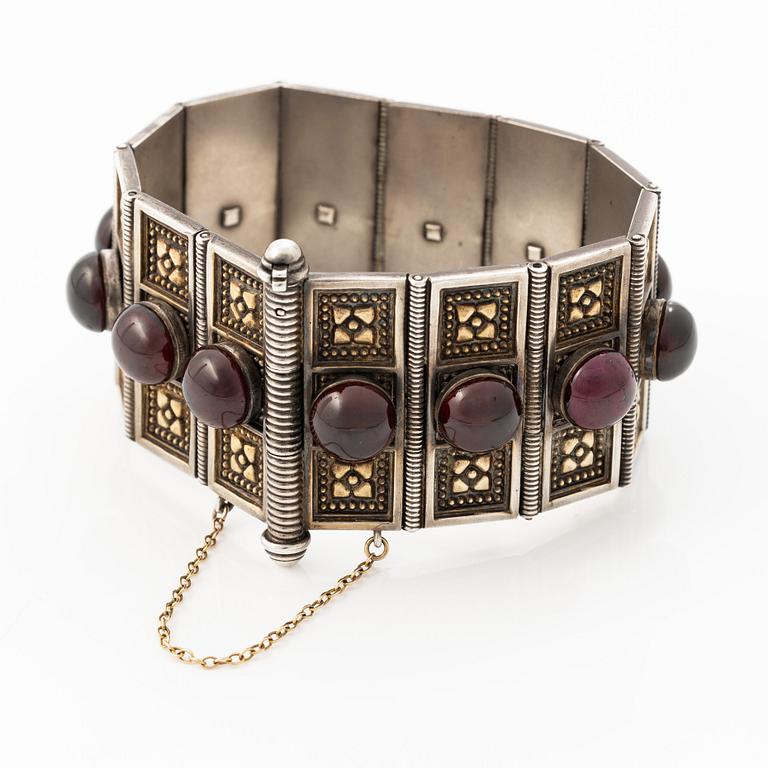
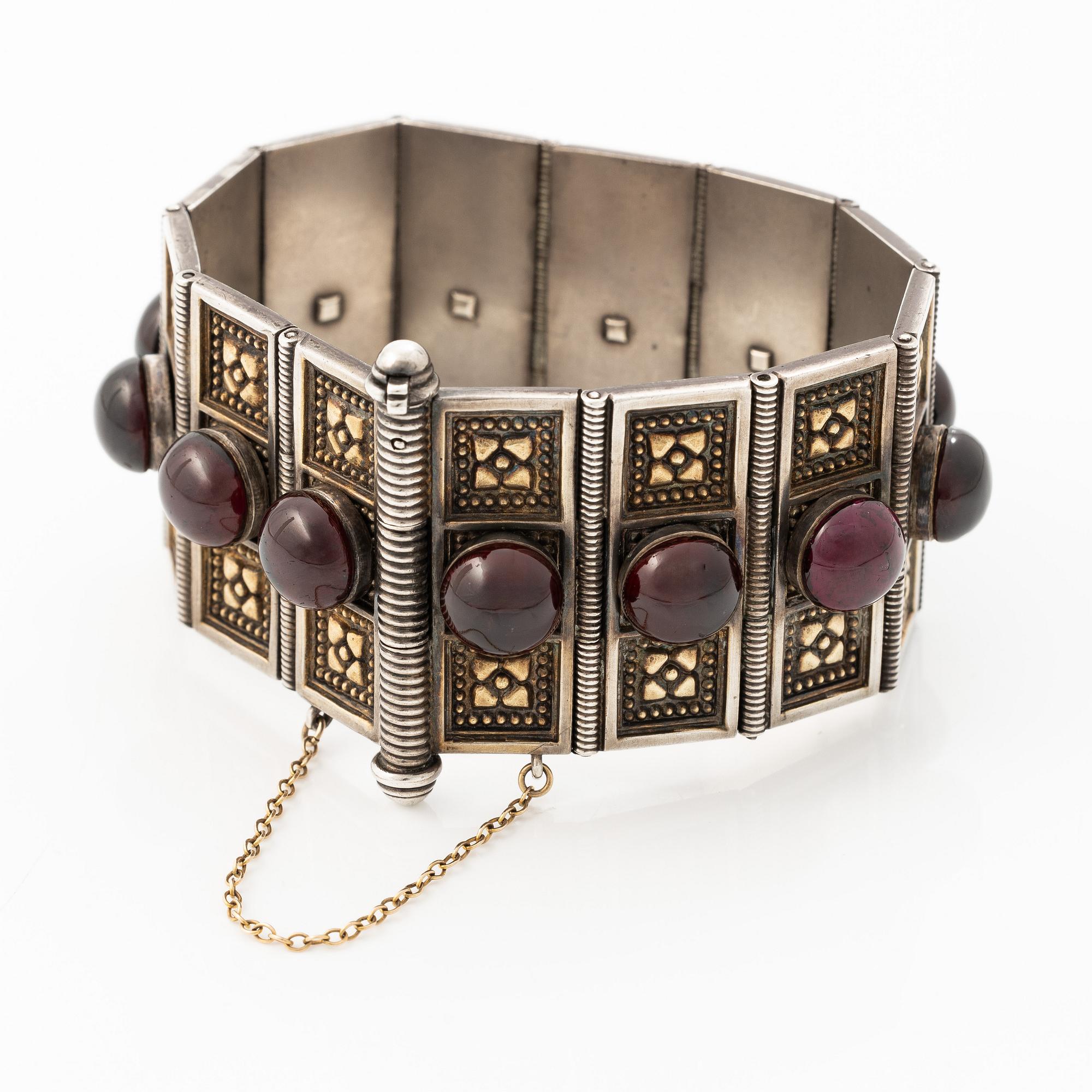
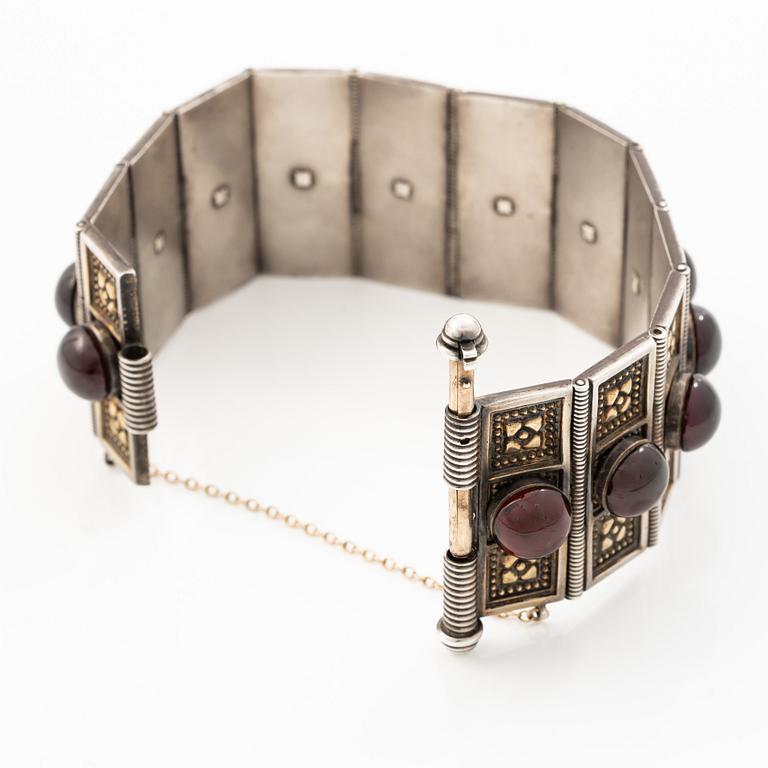
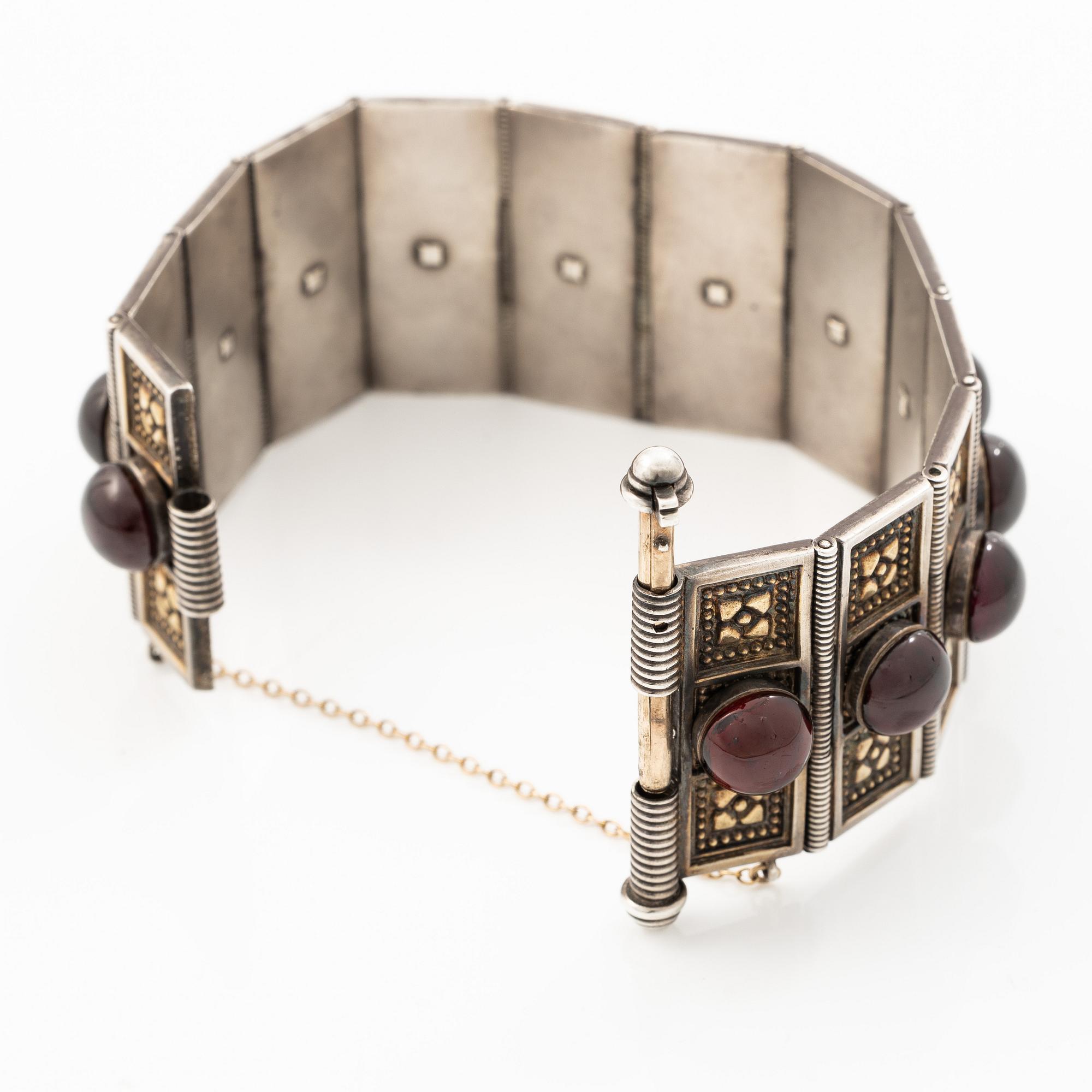
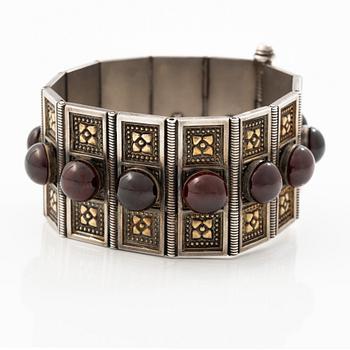
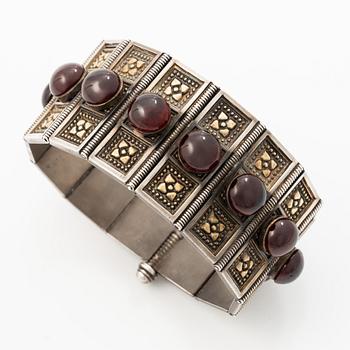
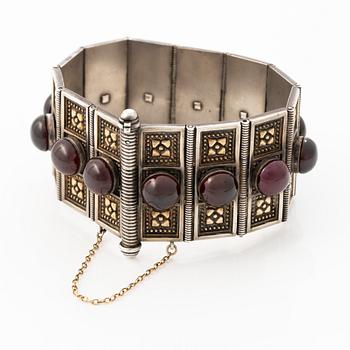
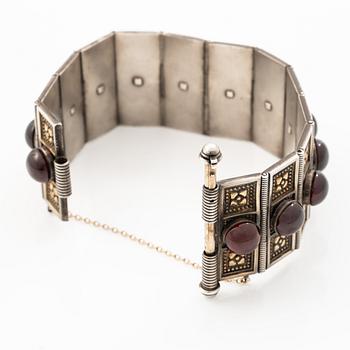
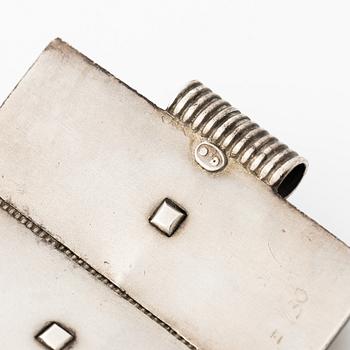
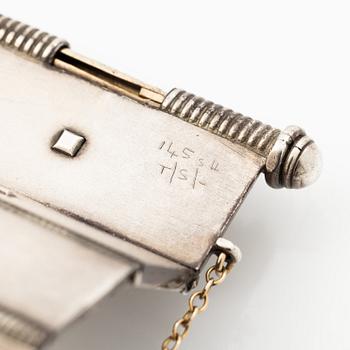
A Giuliano gothic revival silver and garnet bracelet, late 19th century.
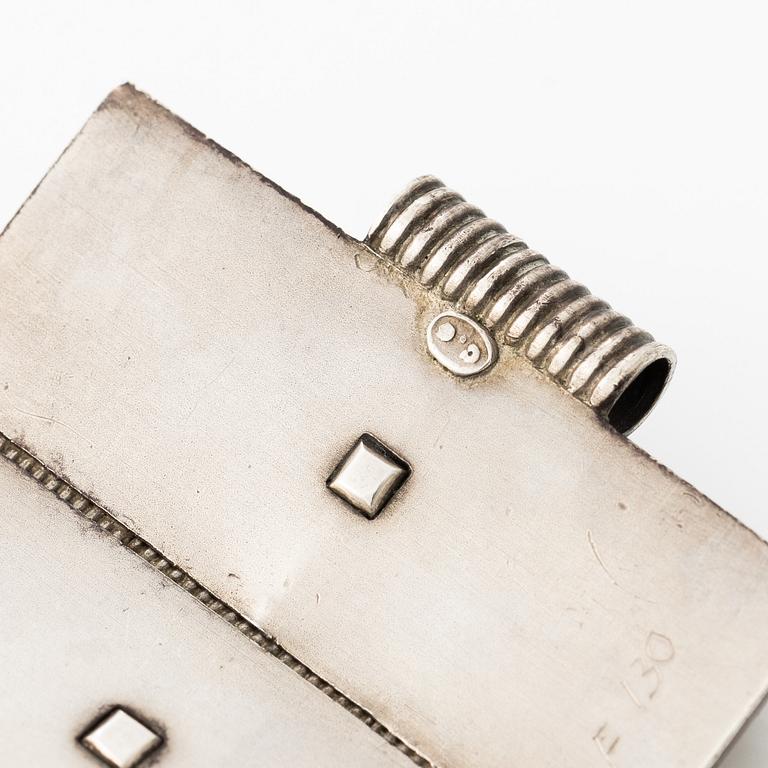
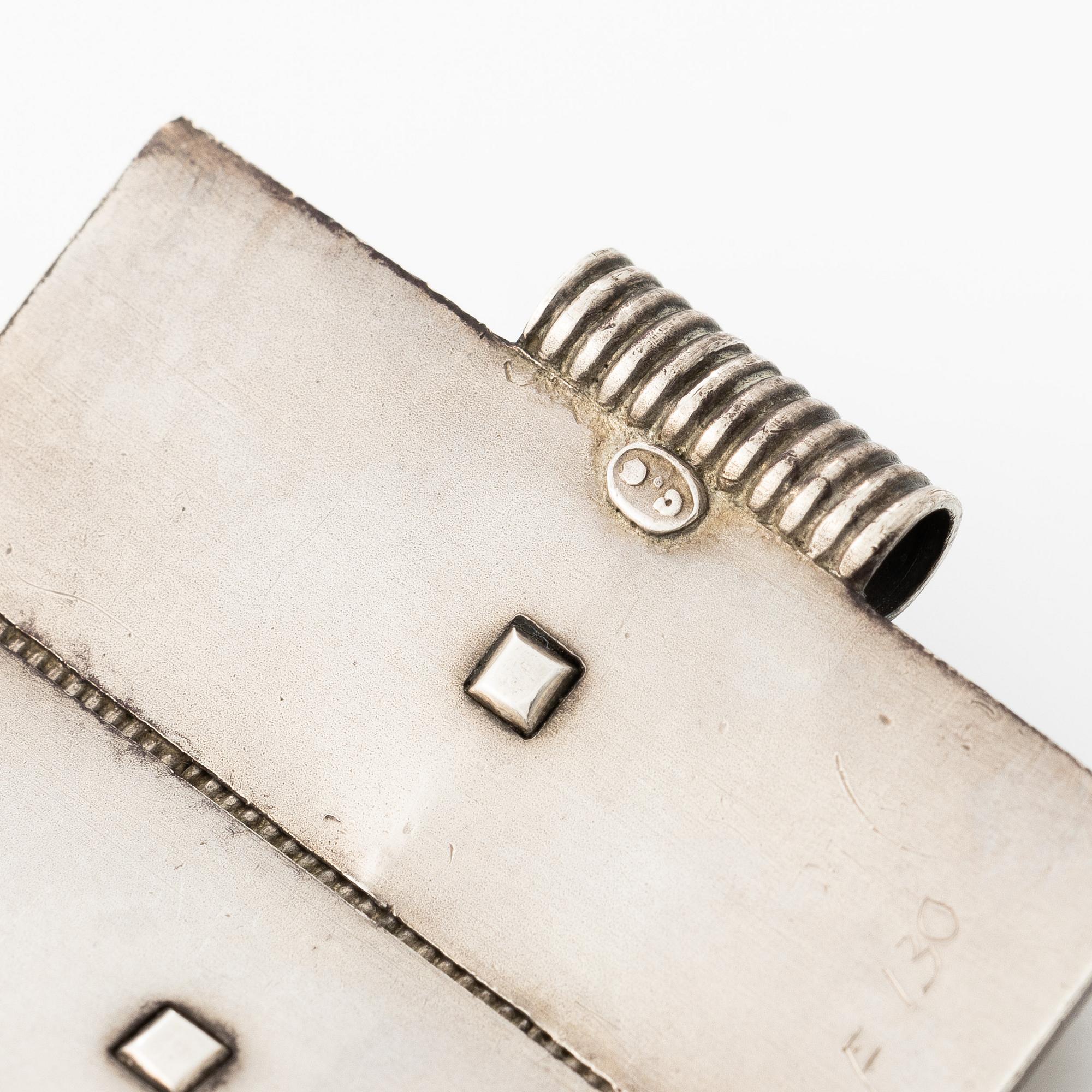
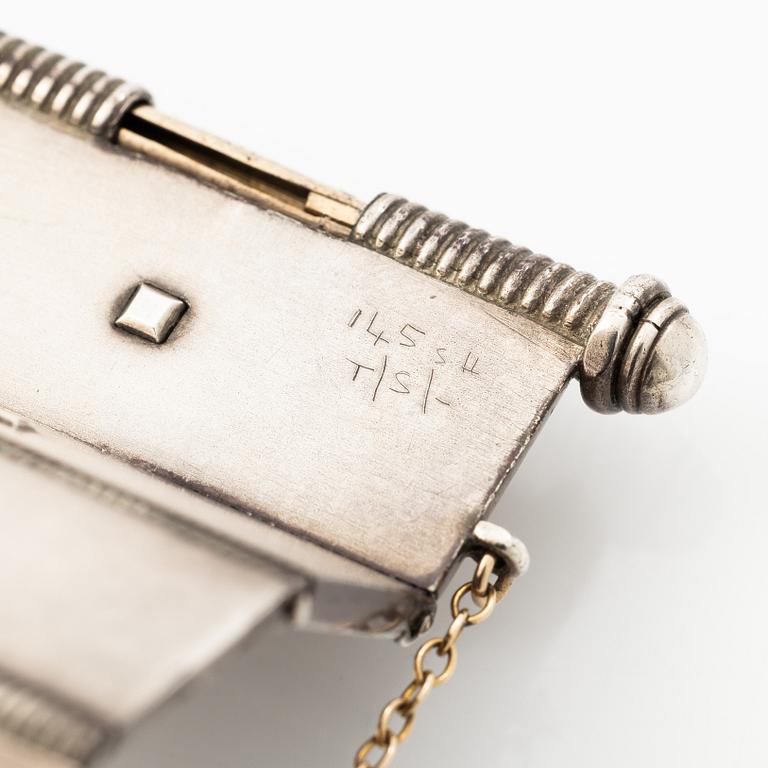
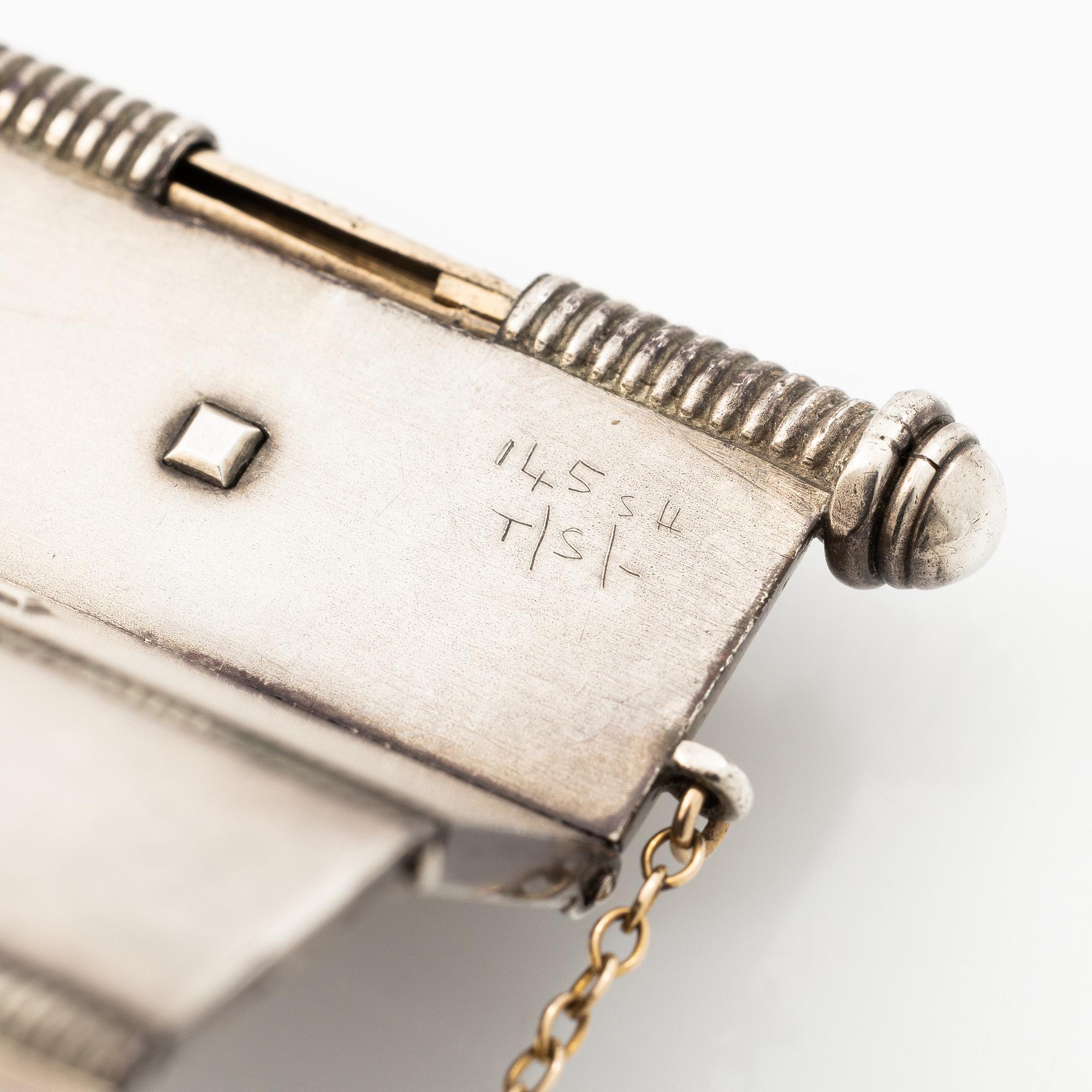
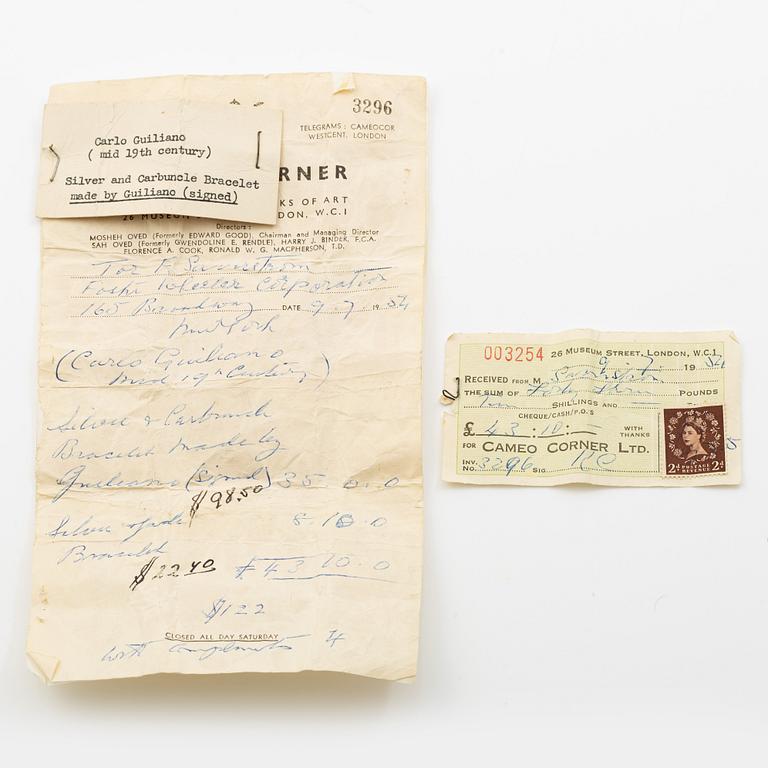
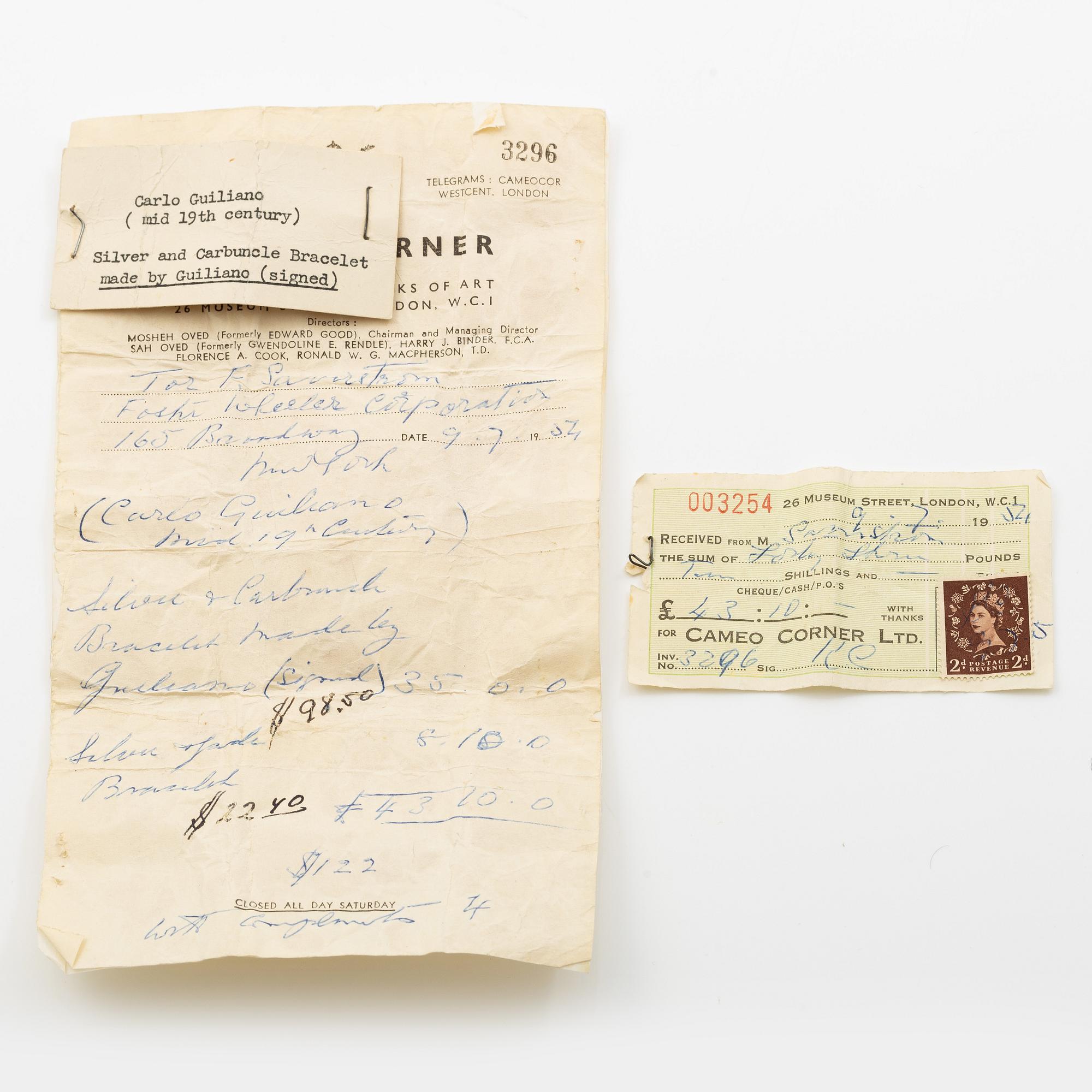
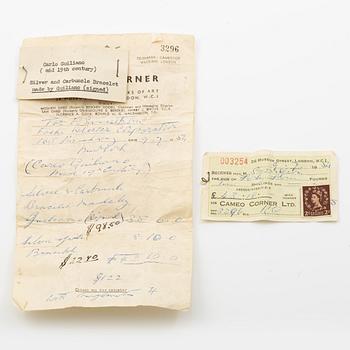
Width ca 35 mm, length ca 17 cm, weight 94 g. Signed CB and engraved with the number F130. Case and two receipts from Cameo Corner included.
Alkuperä - Provenienssi
Purchased at Cameo Corner, probably in 1954. Cameo Corner was a celebrated London jewellery establishment founded by the Polish-born jeweller Mosheh Oved (1885–1958). Renowned for its exceptional selection of antique jewellery, cameos and rare historical jewels, the shop attracted an international clientele of discerning collectors, artists and members of the British Royal Family, including Queen Mary. Situated in Bloomsbury, close to the British Museum, Cameo Corner became an important centre for the appreciation and trade of fine antique jewellery. Its legacy also extended to contemporary jewellery, with exhibitions championing innovative British studio jewellers. Today, Cameo Corner remains a notable name in the history of London's jewellery trade, associated with connoisseurship, artistic individuality and an eclectic approach to collecting.
Muut tiedot
The Italian-born goldsmith and jeweller Carlo Giuliano (1831–1895) was one of the foremost exponents of the Archaeological and Renaissance Revival styles in Victorian jewellery. Having arrived in London in 1860, he initially worked for the celebrated Castellani firm before establishing his own workshop and, in 1874, opening a jewellery boutique at 115 Piccadilly. Giuliano became renowned for his exceptional craftsmanship, intricate goldwork, vibrant enamelling and imaginative combinations of precious and coloured gemstones. Drawing inspiration from ancient jewellery and Renaissance art, he created highly individual jewels that combined historical references with the artistic sensibilities of the Victorian era. Patronised by Queen Victoria and admired by the fashionable elite, Giuliano occupies a distinguished place in the history of nineteenth-century jewellery.
Lisätietoja ja kuntoraportit

Mitä kuljetus maksaa?
Tietoa ostamisesta

Muiden katsomia kohteita