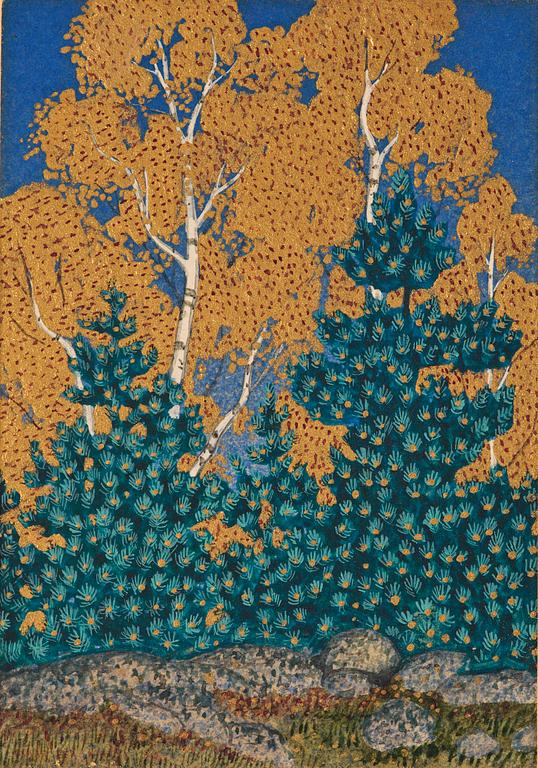
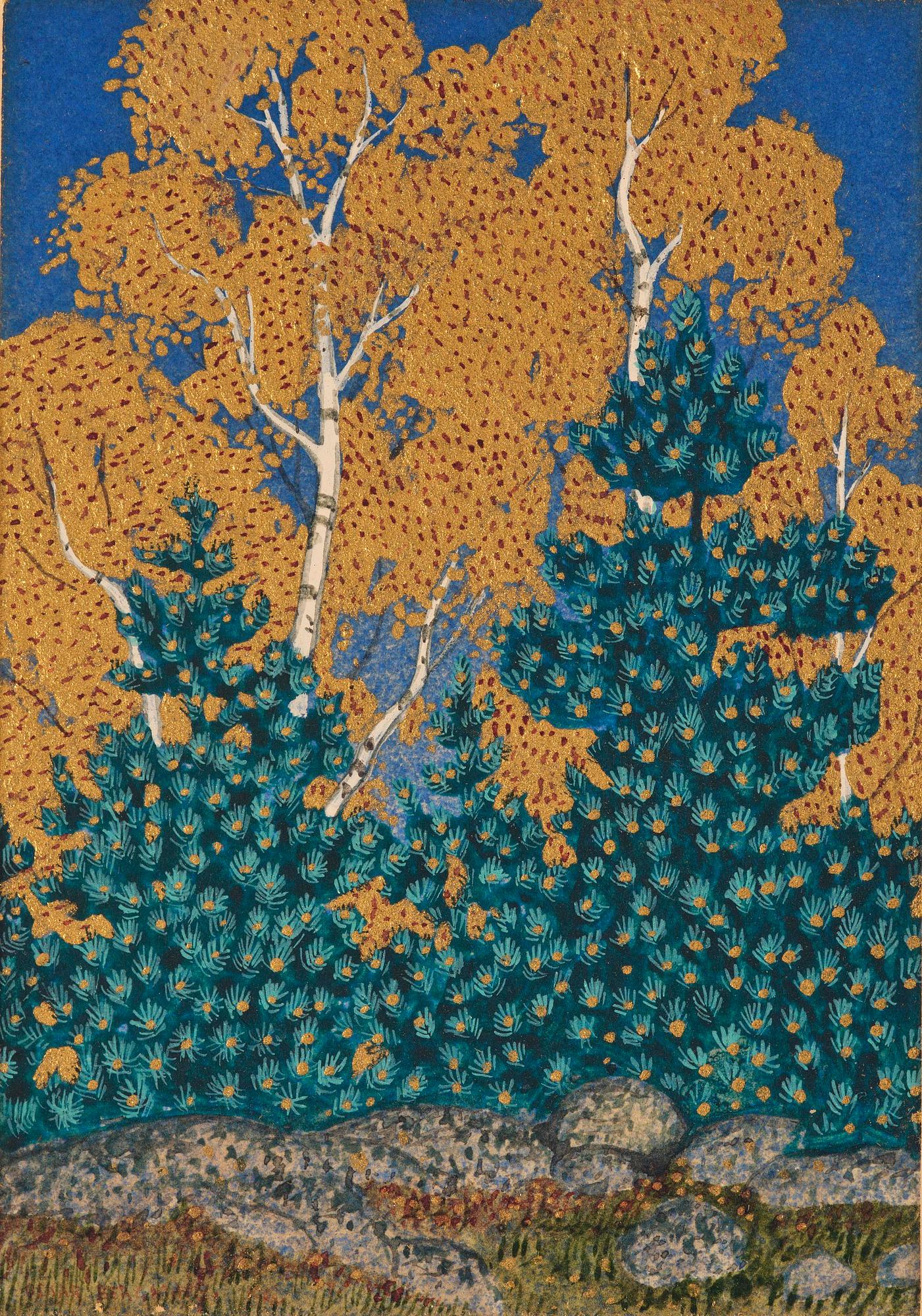
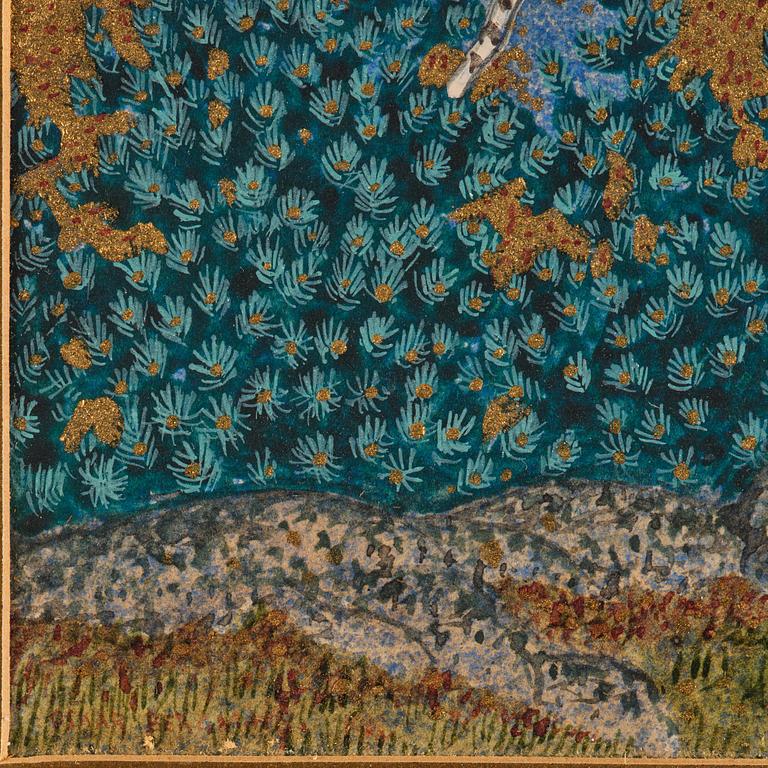
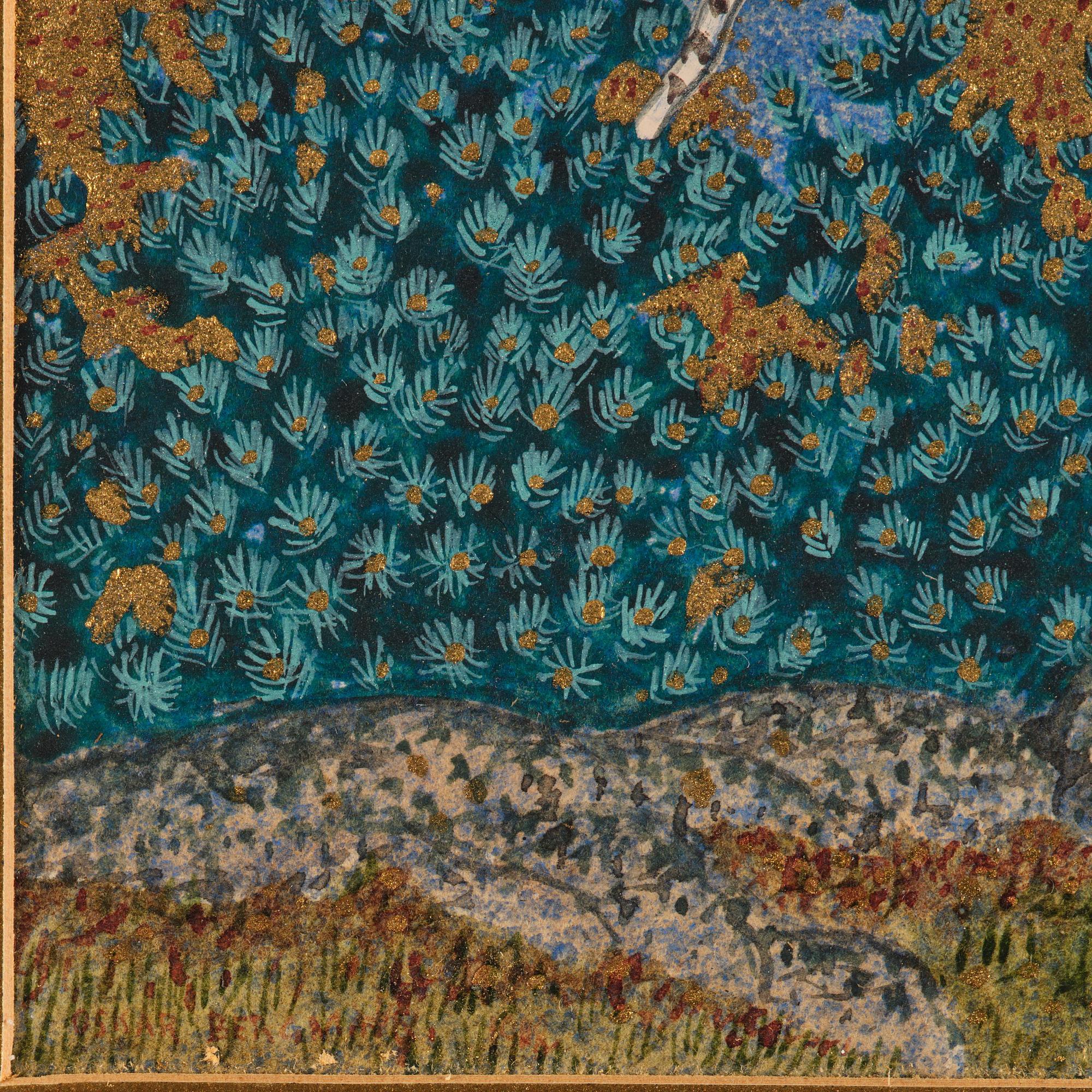
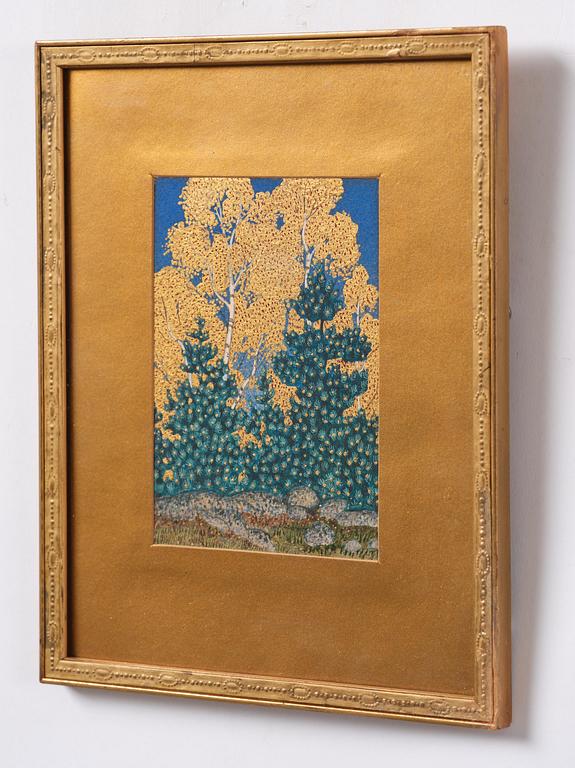
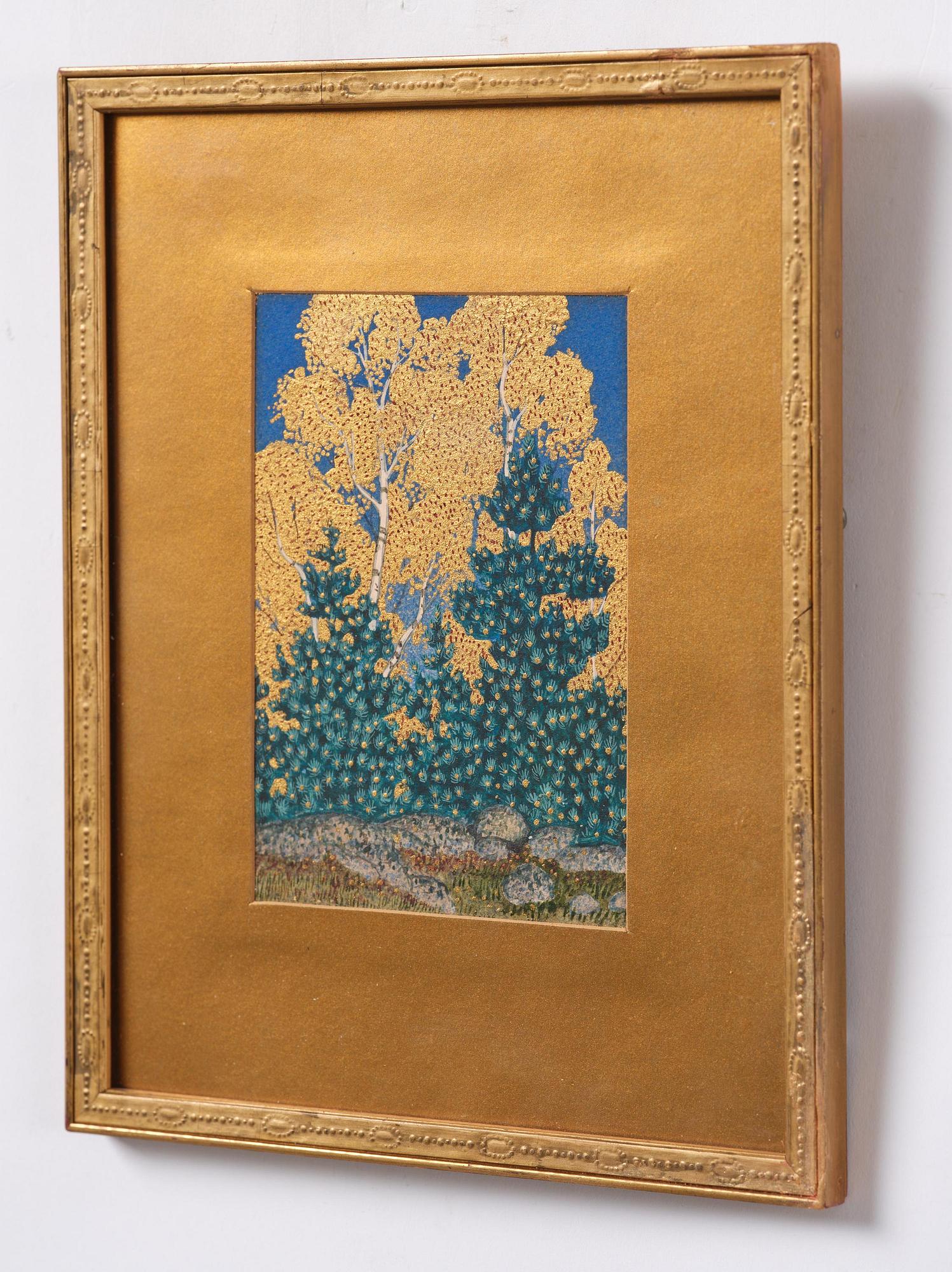
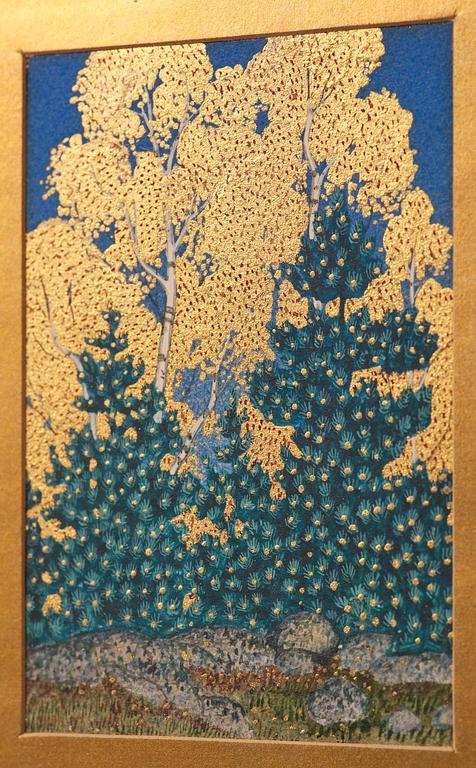
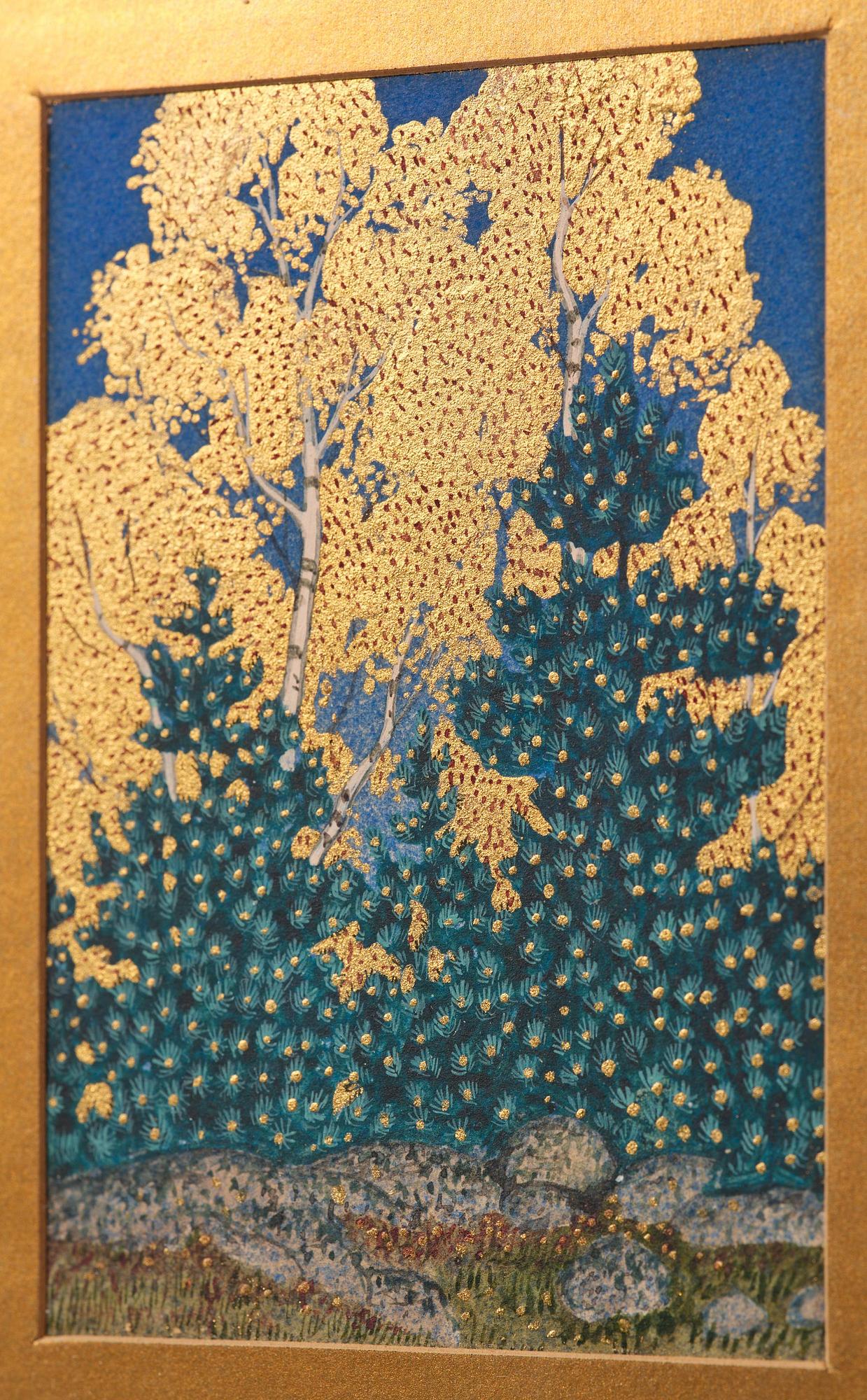
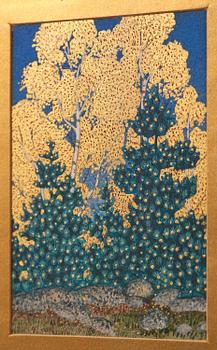
Oskar Bergman (Ruotsi, 1879-1963) Young Pinetrees and golden Birches
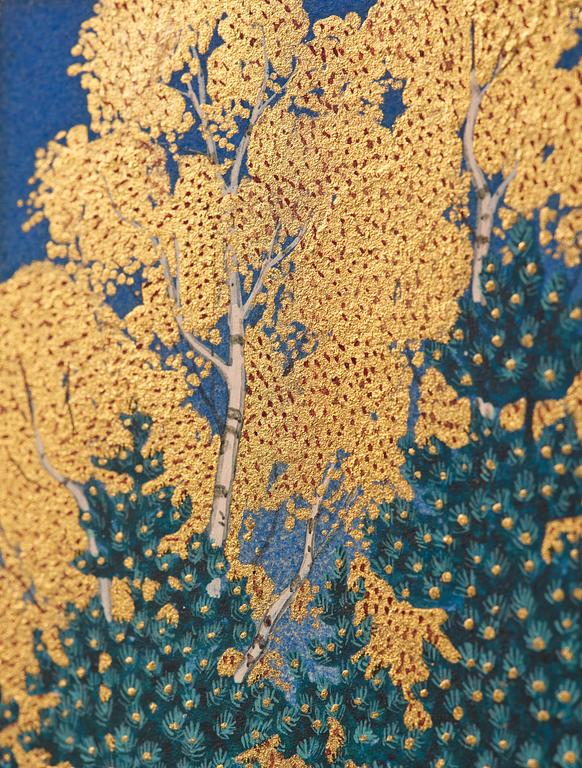
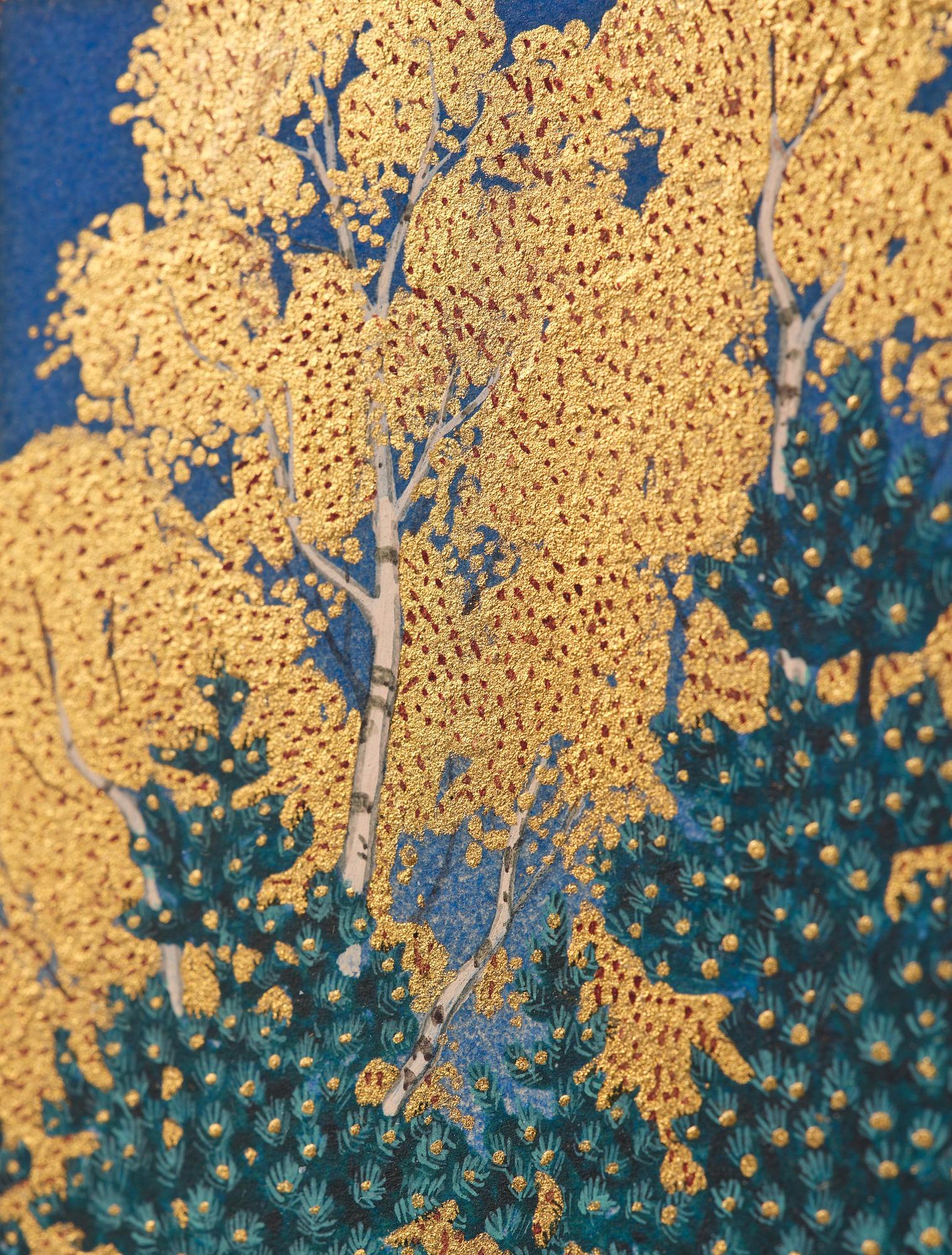
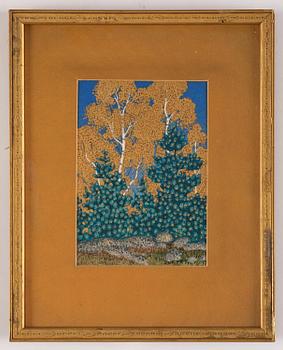
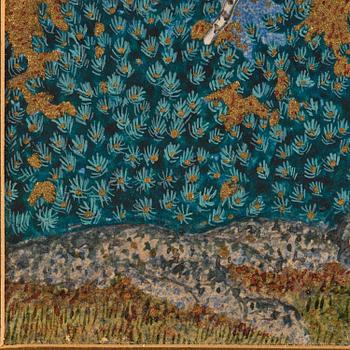
Young Pinetrees and golden Birches
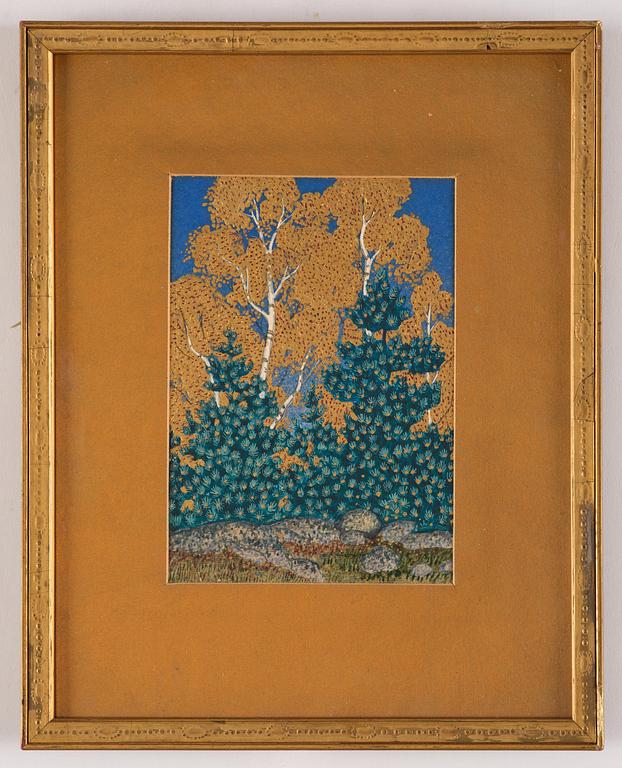
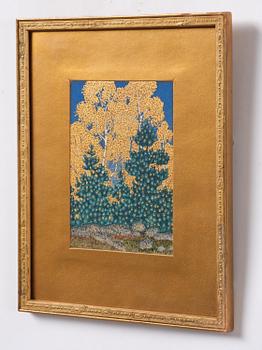
Signed Oskar Bergman and dated 1908. Watercolour, gouache and gold on paper, 14.5 x 11 cm, mount 21 x 16.5 cm..
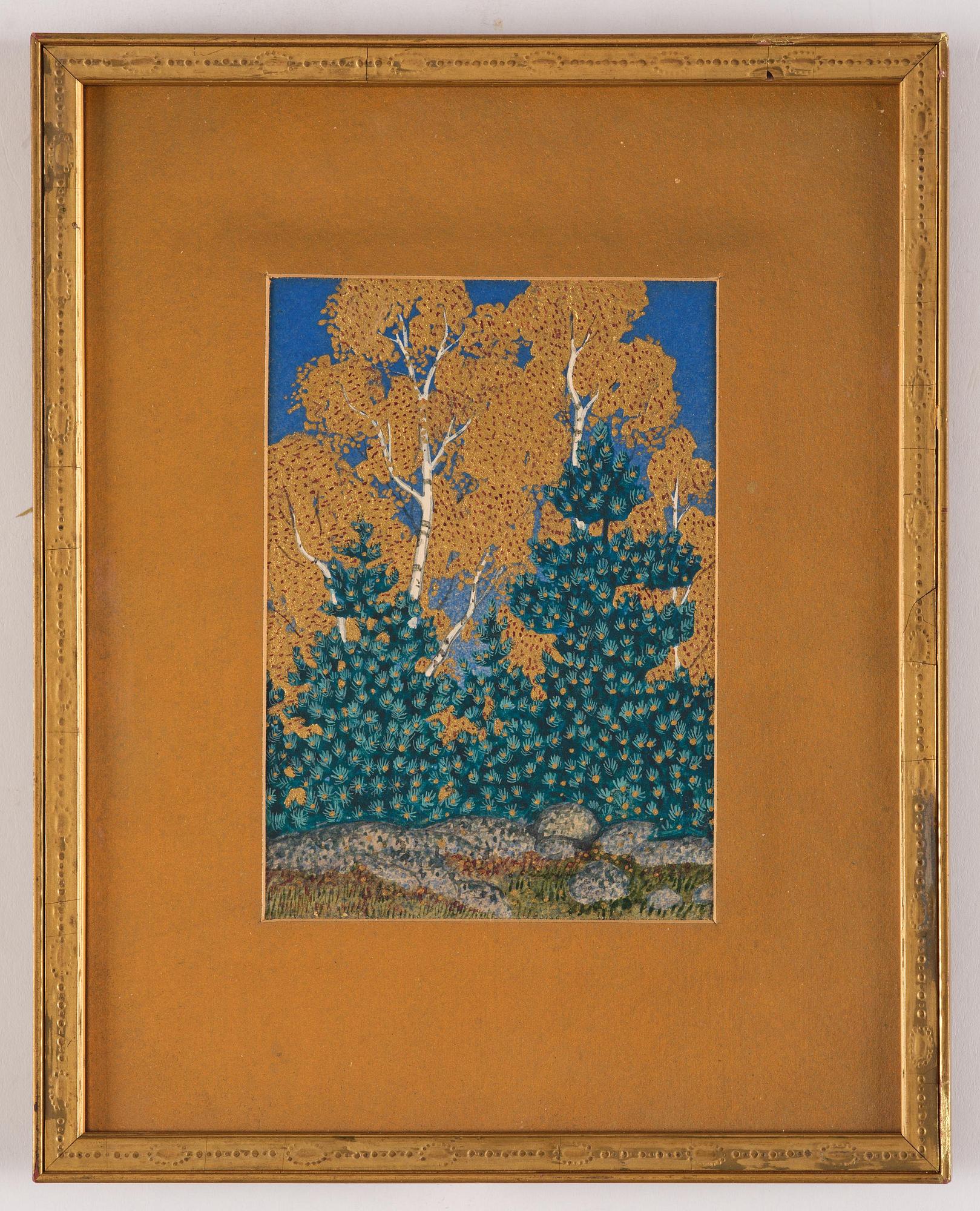
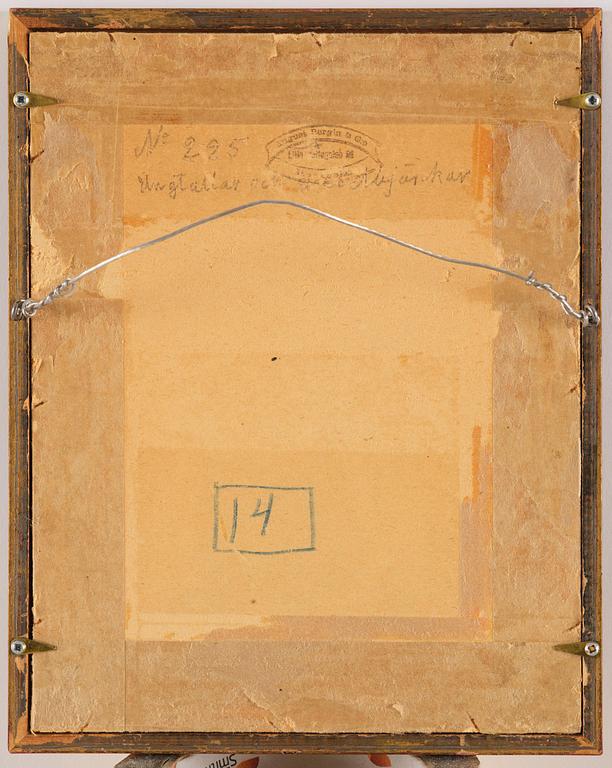
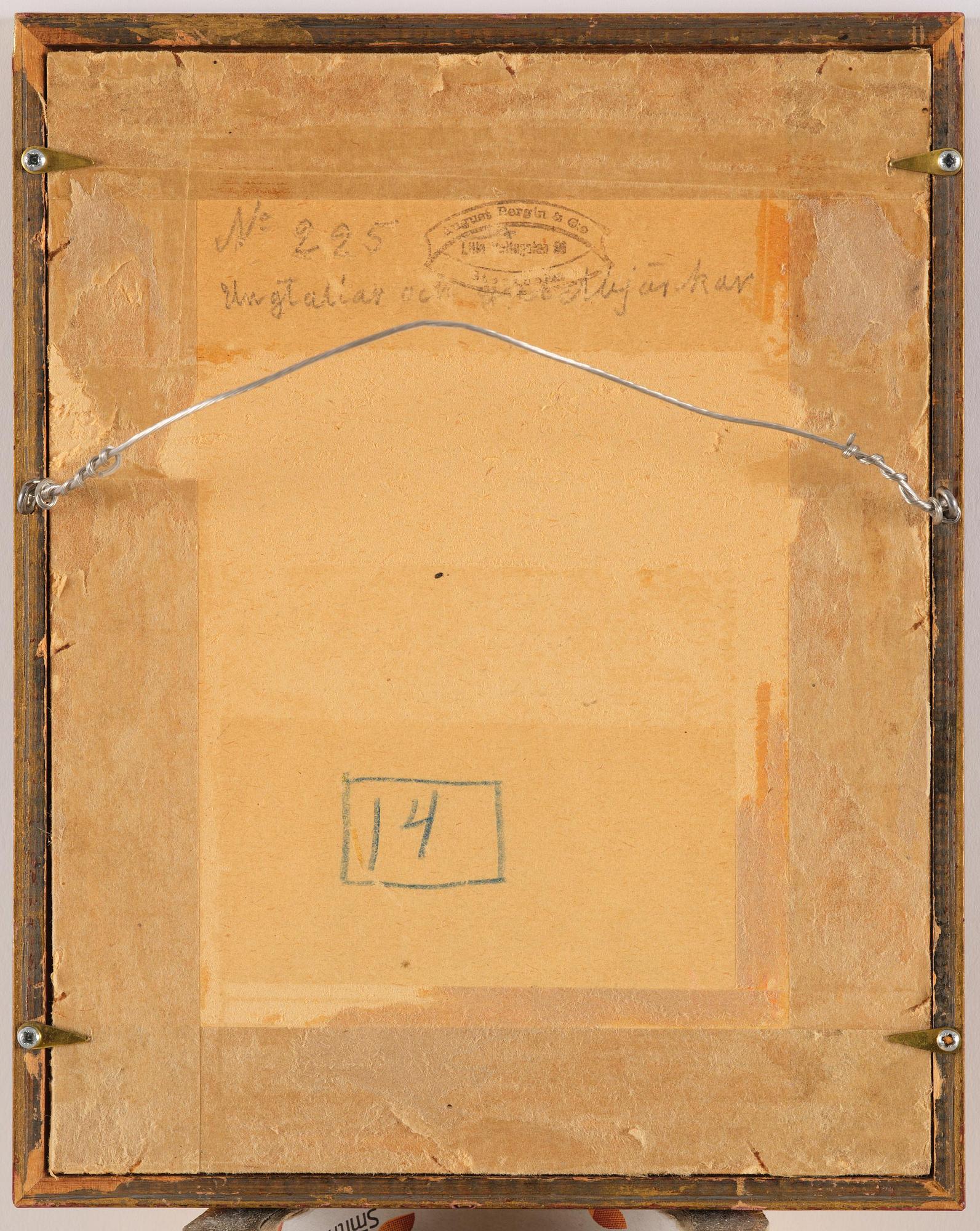
Original gilt ornate frame and gilt mount by Alfred Bergin & Co Stockholm.
Alkuperä - Provenienssi
Miss J. Ullman, sister of Ella Bergman (1885–1979), the artist’s wife; probably a gift from the artist. In her possession until at least 1940.
Näyttelyt
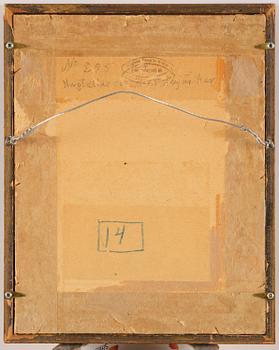
Svensk-Franska Konstgalleriet, Stockholm, "Oskar Bergman - Retrospektiv utställning", November 1940, no. 14.
Muut tiedot
Oskar Bergman was deeply influenced by Emanuel Swedenborg’s theology and mysticism. His ideas about spirituality and nature permeated the way he viewed and depicted reality in his painting. His detailed renderings of nature – such as birch groves and hills carpeted with wood anemones – can be understood through Swedenborg’s doctrine of correspondences, in which the earthly and physical are seen as a reflection or expression of the spiritual and divine. Bergman shared Swedenborg’s spiritualist view of the world as an emanation of divine light. Behind the wit and the bright narrative style lay reflections on the brevity of life, the inevitability of death and heavenly things. Bergman encountered Swedenborg’s writings during his student years. Inspired by his texts, he began studying metaphysics, a field concerned with questions including reincarnation and the mysteries of life and death. Among the theories of Swedenborg that Bergman adopted was the idea of form as the foremost element in art – an idea presented in the fourth chapter of Divine Providence (1764). Swedenborg emphasises that nothing can exist without form; form is a prerequisite for existence. Art in which form is dissolved is not art.
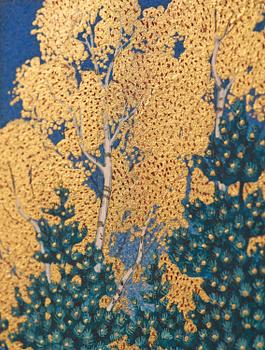
The use of gold in the depiction of the birch trees in the present work – a highly unusual feature in Bergman’s extensive oeuvre – refers to Swedenborg’s Heaven and Hell, 1758 (originally "Arcana Cœlestia", "Heavenly Secrets", published 1749–1756), sections 1620–30:
“In the spirit world and in heaven there are more things to see than can be enumerated. Since the subject here is light, I will describe things that arise directly from light – such as atmospheres, parks, rainbows, palaces and houses. With their external eyes, spirits and angels see these things as so radiant and vivid, and so tangible to all their senses, that they regard them as real – whereas they consider the things in our world unreal by comparison. I shall begin with the atmospheres in which the blessed dwell; they consist of light, since they too have their origin in light. There are innumerable kinds of such atmospheres, and they are so beautiful and delightful that they cannot be described. There are atmospheres resembling diamonds, in which every tiny component sparkles as if they were small diamond grains. There are atmospheres reminiscent of the lustre of every conceivable precious stone. There are atmospheres that seem to consist of translucent pearls shining from within and colouring the air in the most radiant hues. There are atmospheres that appear to burn with gold or silver, or with a kind of gold and silver resembling diamonds. There are atmospheres composed of multicoloured flowers, so small that they cannot be seen.”
The birch trees in the background are silhouetted against a deep blue sky. Combined with the use of gold for the foliage, this means that they have been rendered with red accents. This indicates that the work was created in early autumn, when the leaves turn red and yellow. Birch leaves can, however, sometimes take on a red colour in spring as well, as the tree’s genetic protection against strong sunlight. Scandinavia is also home to a variety of birch, "Betula pubescens ‘Rubra’", with red leaves. This variety is common in Finland but rarer in Sweden.
During his lifetime, Oskar Bergman amassed a significant collection of Swedenborg’s works in their original Latin editions. His collection was surpassed only by that of The Swedenborg Society in London. When the Ethiopian Emperor Haile Selassie (1892–1975) visited Sweden in 1954, Bergman bequeathed the collection to him, believing that Selassie had a connection to Swedenborg’s prophecy of a new Messiah. Bergman was opposed to colonialism and admired Ethiopia because the country had remained an independent kingdom.
Oskar Bergman shared his keen interest in Swedenborg with several other Swedish artists and writers, including August Strindberg. The internationally acclaimed Swedish film director Ingmar Bergman (1918–2007) was also a devoted admirer of Swedenborg. His best-known film, "The Seventh Seal", drew inspiration from Swedenborg’s work "Heaven and Hell", for example.
In connection with the Oskar Bergman exhibition at Thielska Galleriet in Stockholm in 2023, a lecture on Bergman and Swedenborg was given on 4 April by Susanna Åkerman, secretary of Swedenborg Forum, Stockholm.
Lisätietoja ja kuntoraportit

Mitä kuljetus maksaa?
Toimituksen voi tilata vain ottamalla yhteyttä osoitteeseen specialdelivery@bukowskis.com.
Kuuluu jälleenmyyntikorvauksen piiriin
Tietoa ostamisesta
Kuvan käyttöoikeudet
Tämän tietokannan taideteokset ovat tekijänoikeudella suojattuja, eikä niitä saa kopioida ilman oikeudenhaltijoiden lupaa. Teokset kopioidaan tässä tietokannassa Bildupphovsrättin lisenssillä.

Muiden katsomia kohteita