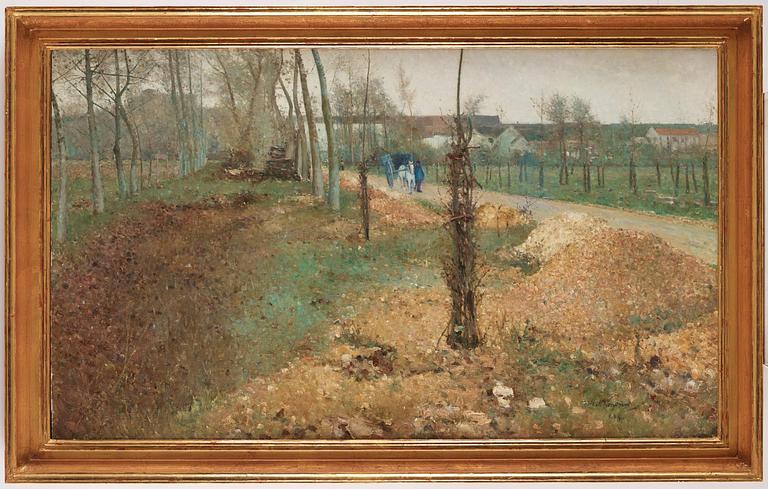
Karl Nordström (Ruotsi, 1855-1923) Horse-drawn carriage in a French landscape
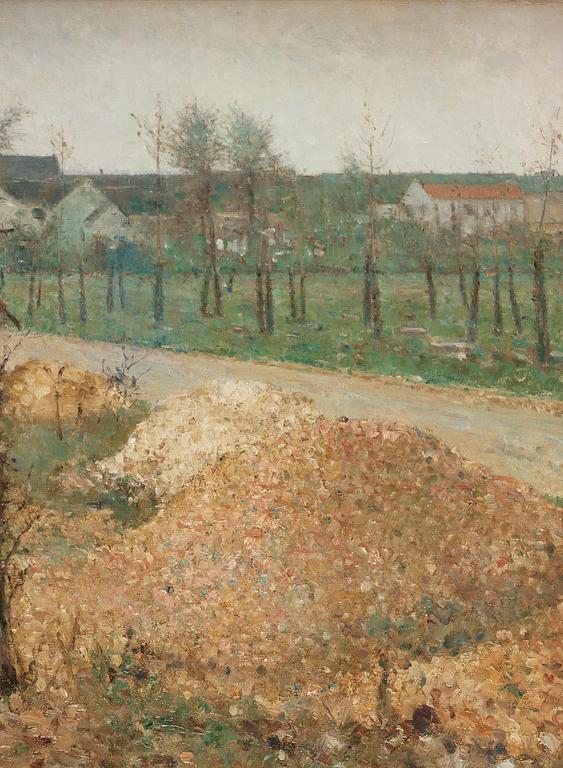
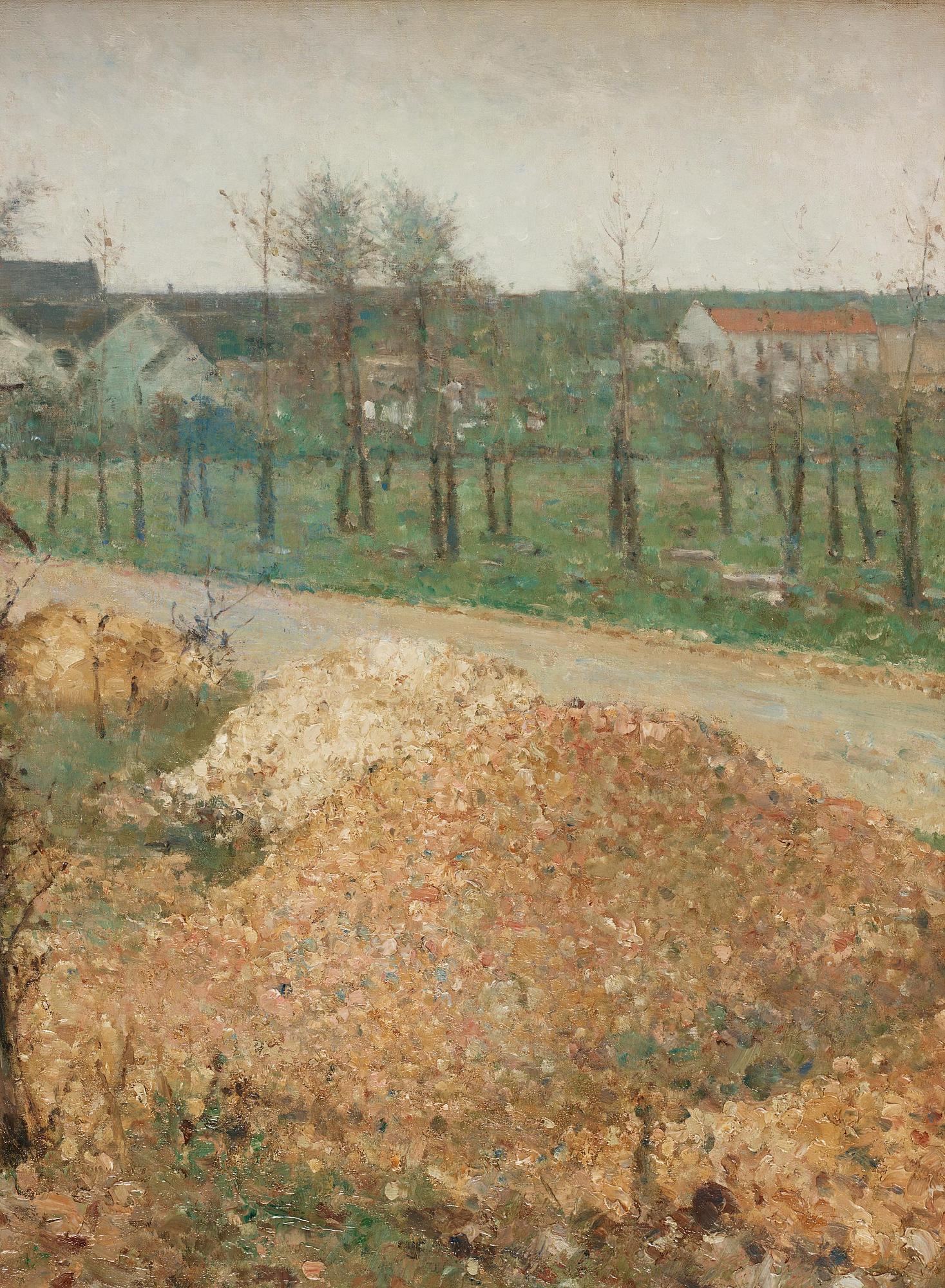
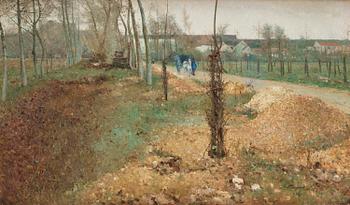
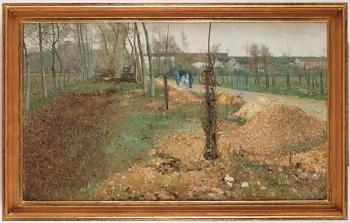
Horse-drawn carriage in a French landscape
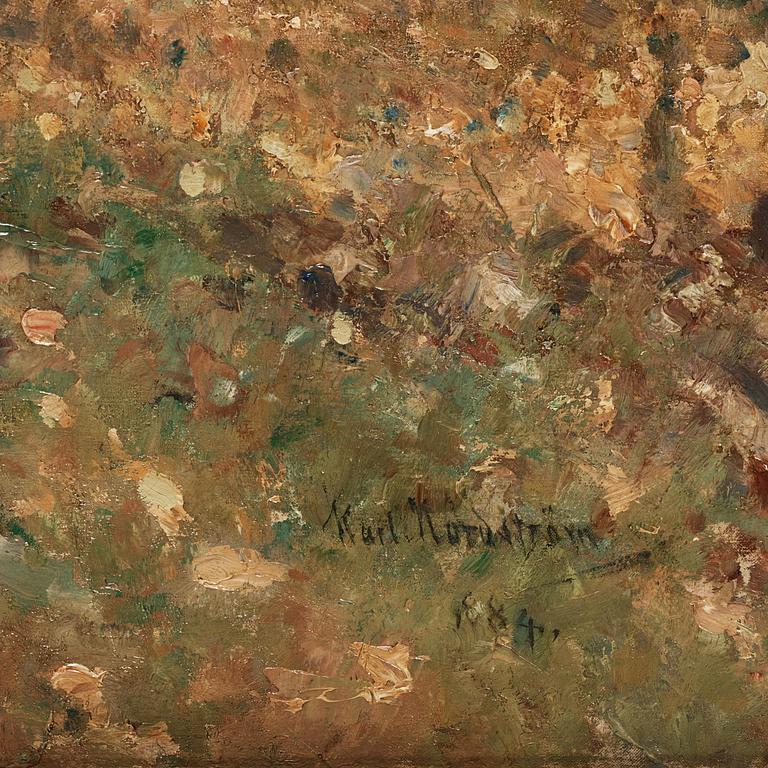
Signed Karl Nordström and dated 1884. Oil on canvas, 88 x 150 cm.
Alkuperä - Provenienssi
Christie's, London, 19th century Continental Pictures, Watercolours and Drawings, 17 March 1995, lot 117.
Muut tiedot
Karl Nordström (1855–1923) was a significant Swedish artist active during the late 19th and early 20th centuries. His artistic practice was characterised by continual development and a profound interest in nature, reflected in many of his works. One of the most decisive periods in his career was his time in Grez-sur-Loing, a French artists’ colony to which he travelled in the early 1880s. Here, among artists such as Carl Larsson, Richard Bergh, Bruno Liljefors and Christian Krogh, Nordström was influenced by French plein air painting and the early tendencies of Impressionism. At the same time, he developed his own distinctive style, combining realism with a new, more personal interpretation of nature.
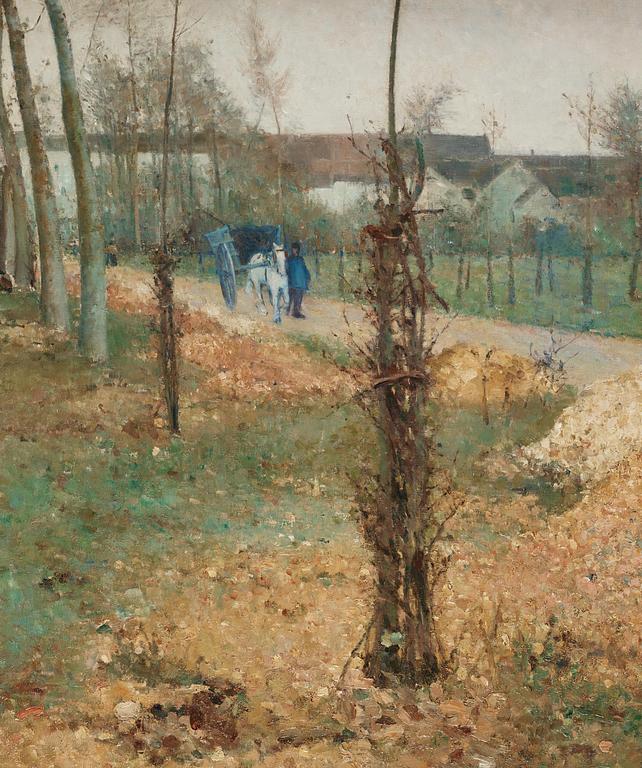
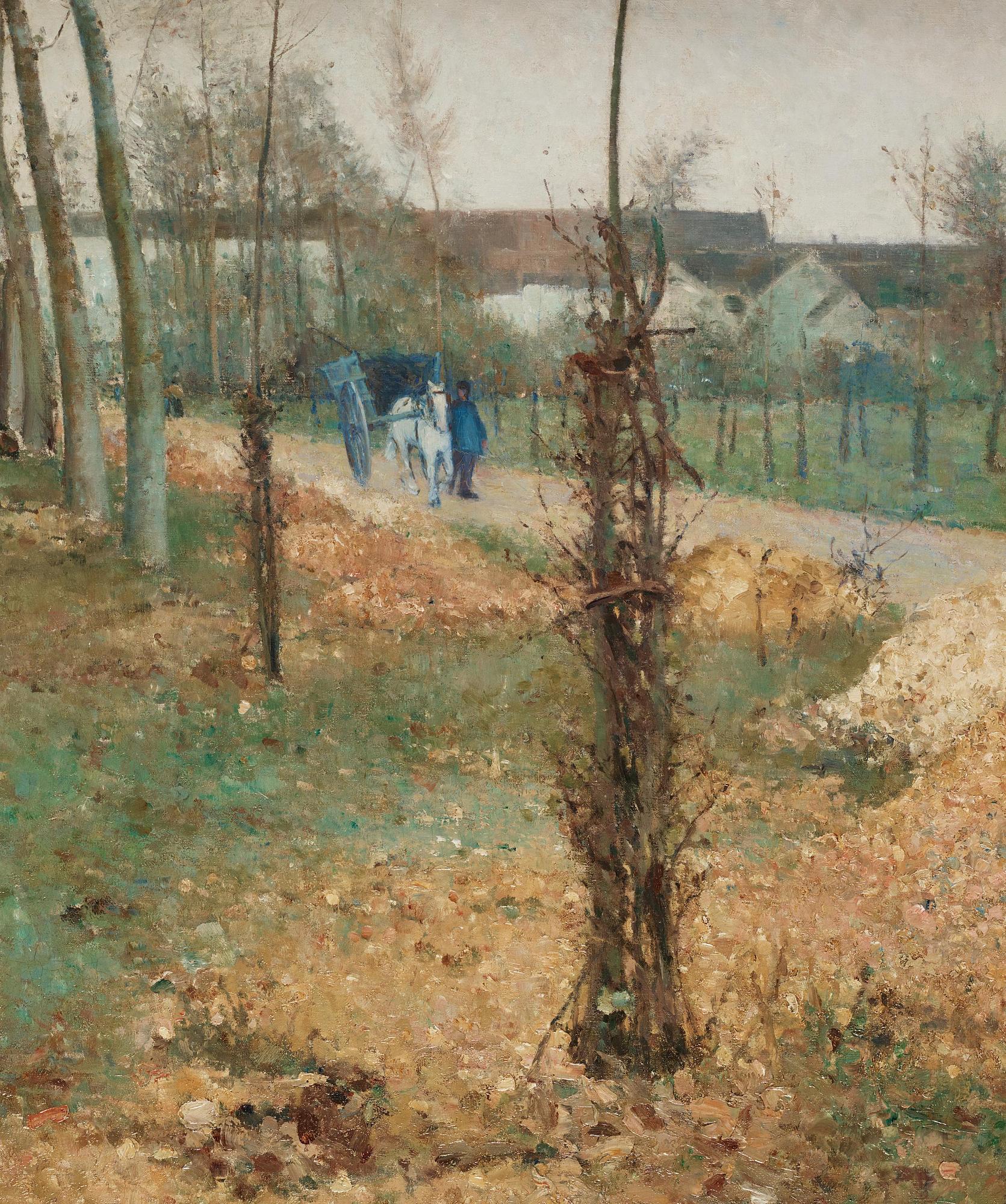
The painting offered at auction, executed in 1884, is an excellent example of Nordström’s work from this period. Here, he captures a tranquil landscape scene, with a horse-drawn carriage visible in the distance, surrounded by a calm and open landscape. The subject is subordinate to the surrounding forces of nature—the light, colours and composition. This allows the landscape itself to assume an active role in the work, which is typical of Nordström’s view of nature. The realistically rendered details, such as the distant houses and horse-drawn carriage, merge with the landscape, giving the work an almost poetic quality. In fact, it is not the horse-drawn carriage that is central; rather, it is the light and its effect on the landscape that dominate.
Nordström spent several periods in Grez, and the painting offered at auction is an example of his work from his second stay in 1884. This period was important to his artistic development, as he increasingly drew inspiration from both French plein air painting and the ongoing Impressionist movement. It was also during this period that Nordström deepened his commitment to Konstnärsförbundet, which he helped to found in 1886. The association became a central part of his artistic life, as he fought for artistic freedom beyond the academic tradition. Through Konstnärsförbundet, Nordström, together with other artists such as Richard Bergh and Nils Kreuger, was given the opportunity to develop and convey his new view of art. In his artistic practice, he combined a strong sense of realism with a personal expression rooted in the Impressionist and Naturalist traditions, but with a distinctly Nordic character.
As one of the most radical figures within Swedish artistic circles, and as chairman of Konstnärsförbundet between 1896 and 1920, Nordström was a central figure in the artistic transformation that shaped Swedish art during this period. The painting offered at auction reflects this striving for renewal and the radical desire to redefine landscape painting in accordance with the new aesthetic ideas of the time.
Lisätietoja ja kuntoraportit
Mitä kuljetus maksaa?
Toimituksen voi tilata vain ottamalla yhteyttä osoitteeseen specialdelivery@bukowskis.com.
Tietoa ostamisesta













Muiden katsomia kohteita