Ernst Josephson (Ruotsi, 1851-1906) "Amor och Psyke" (Amor and Psyche)
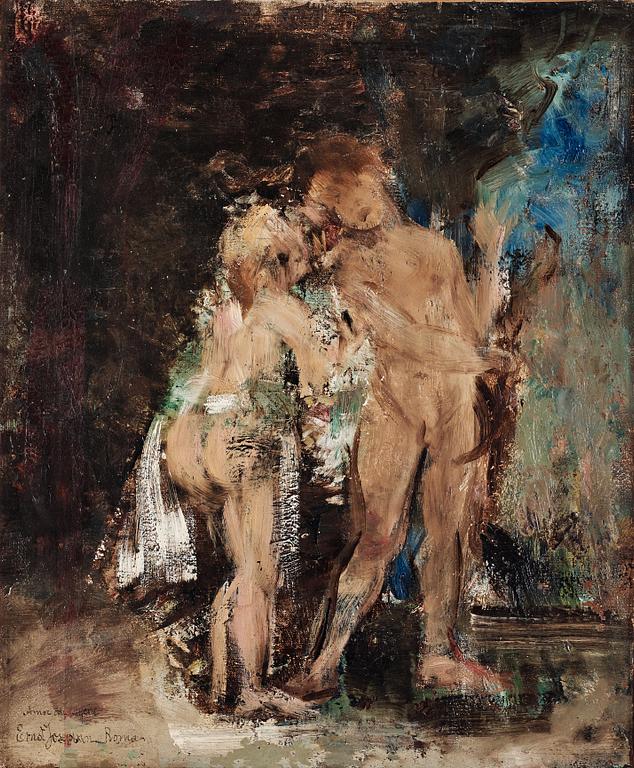
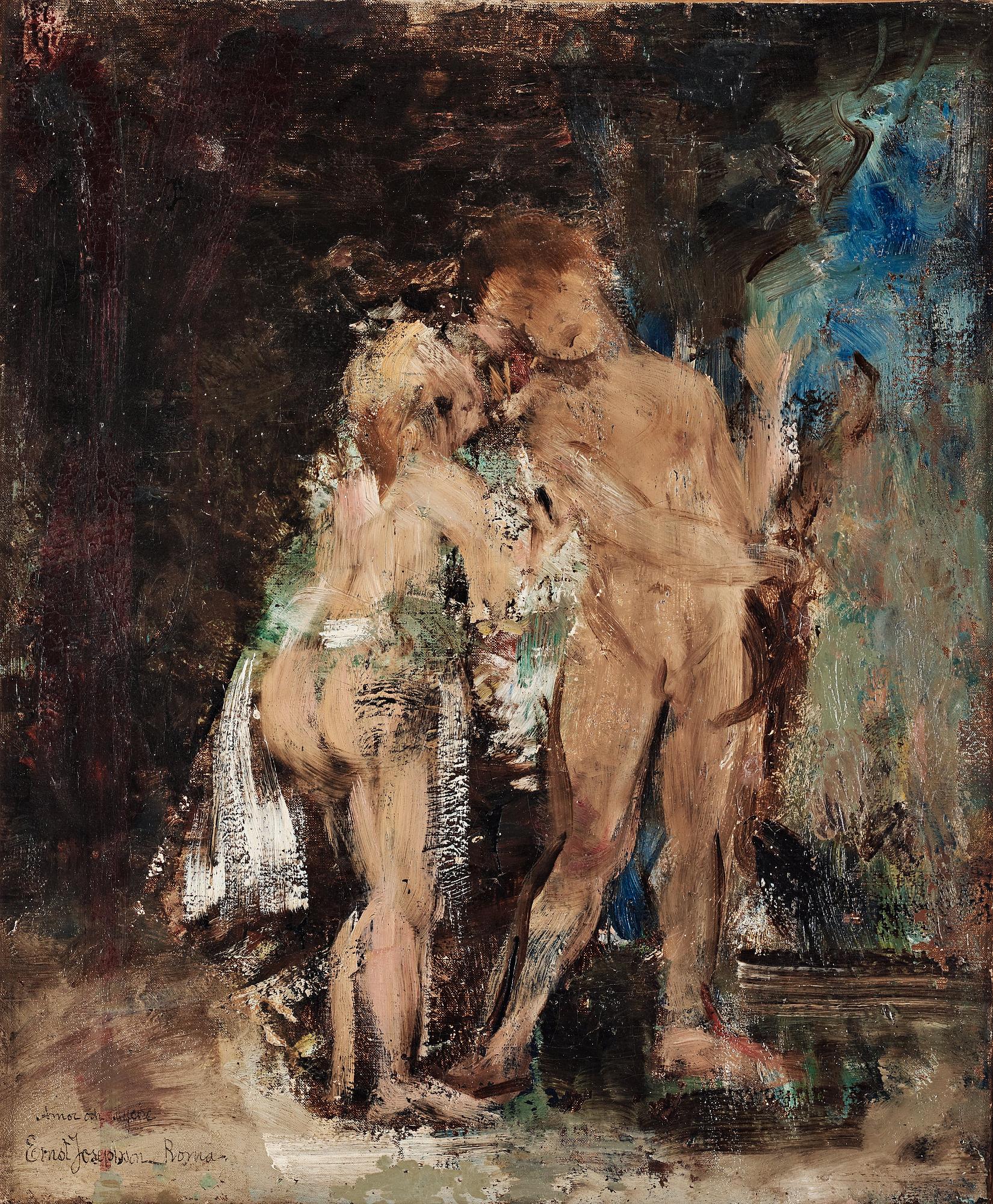
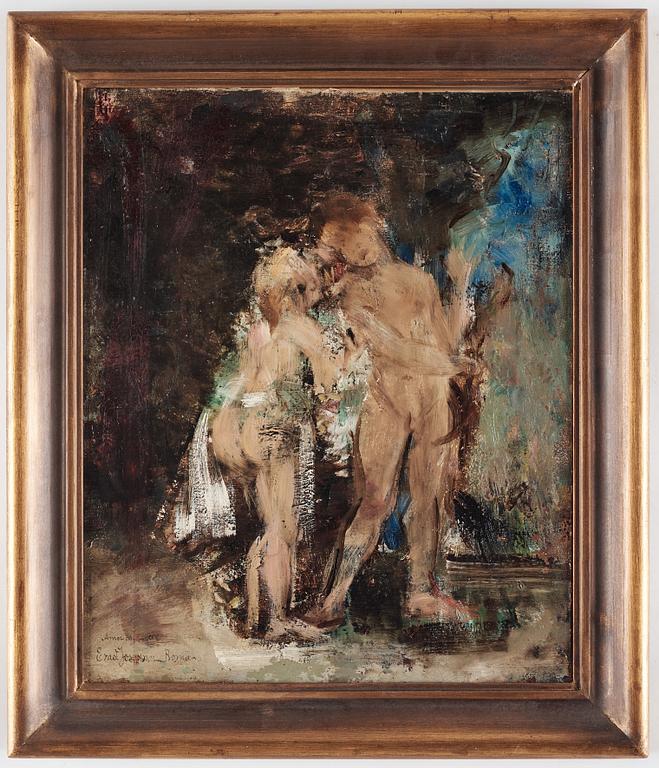
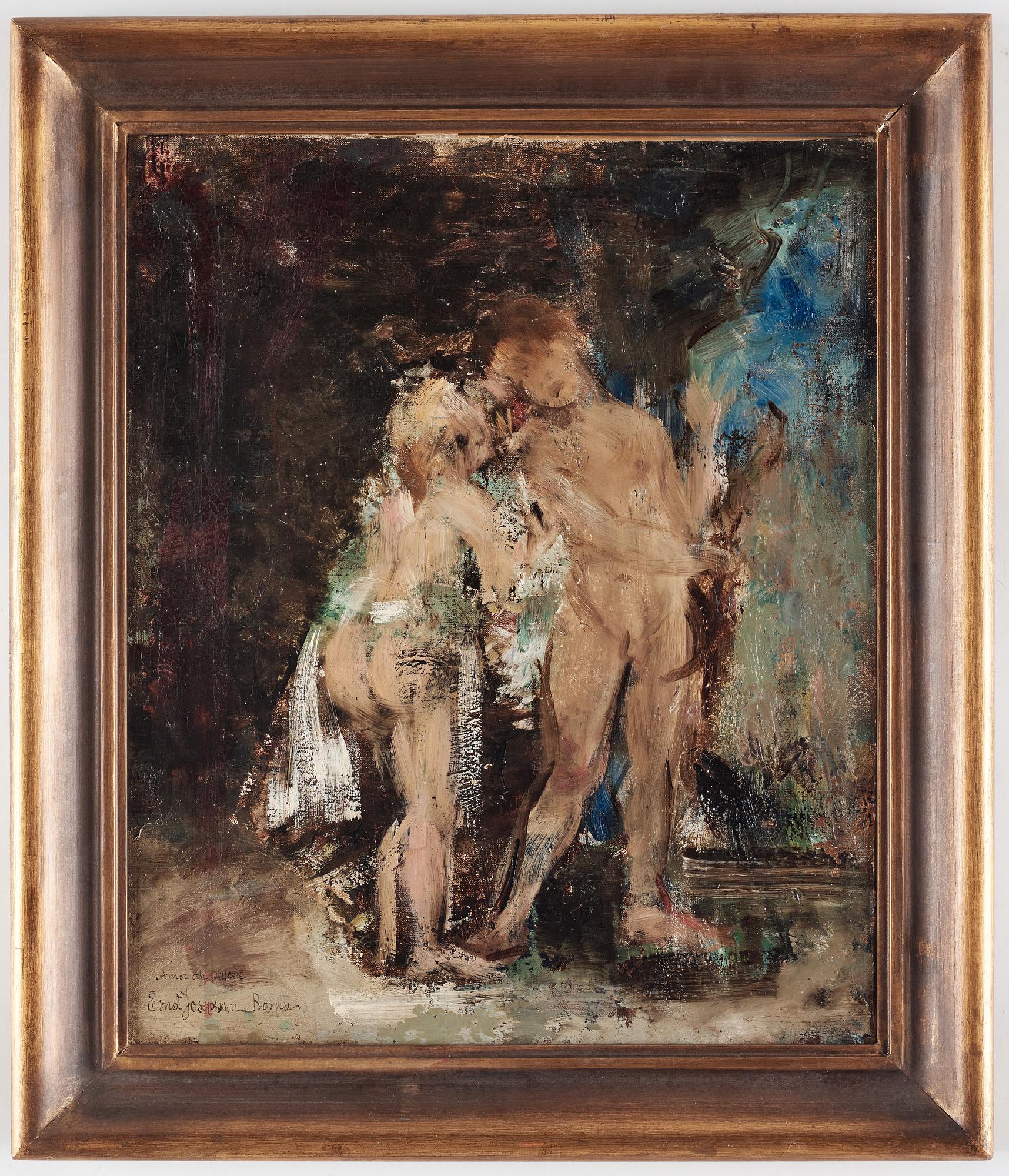
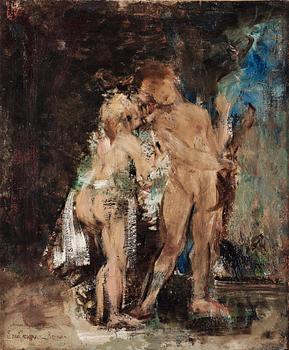
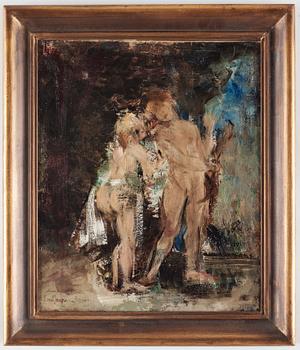
"Amor och Psyke" (Amor and Psyche)
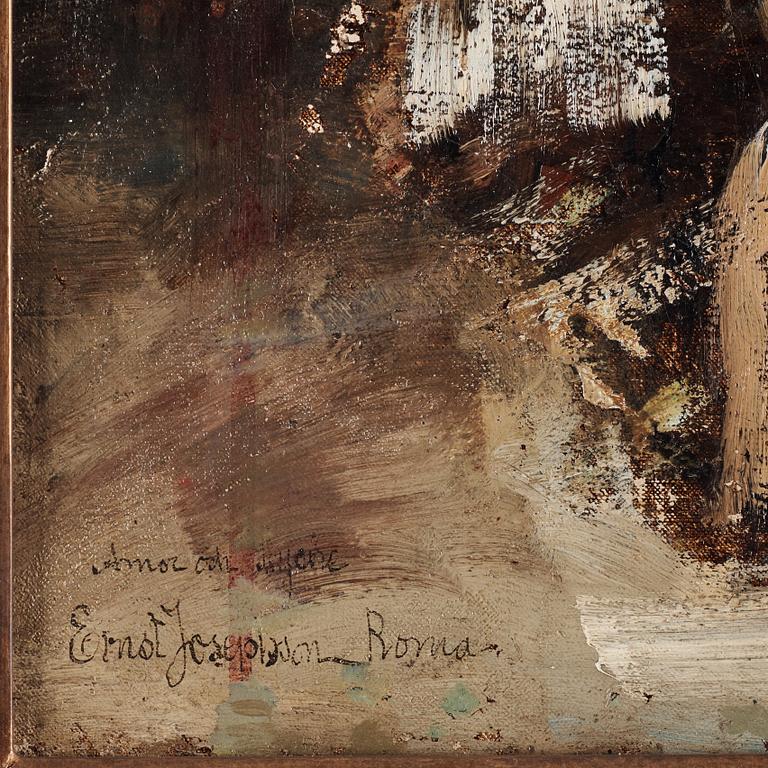
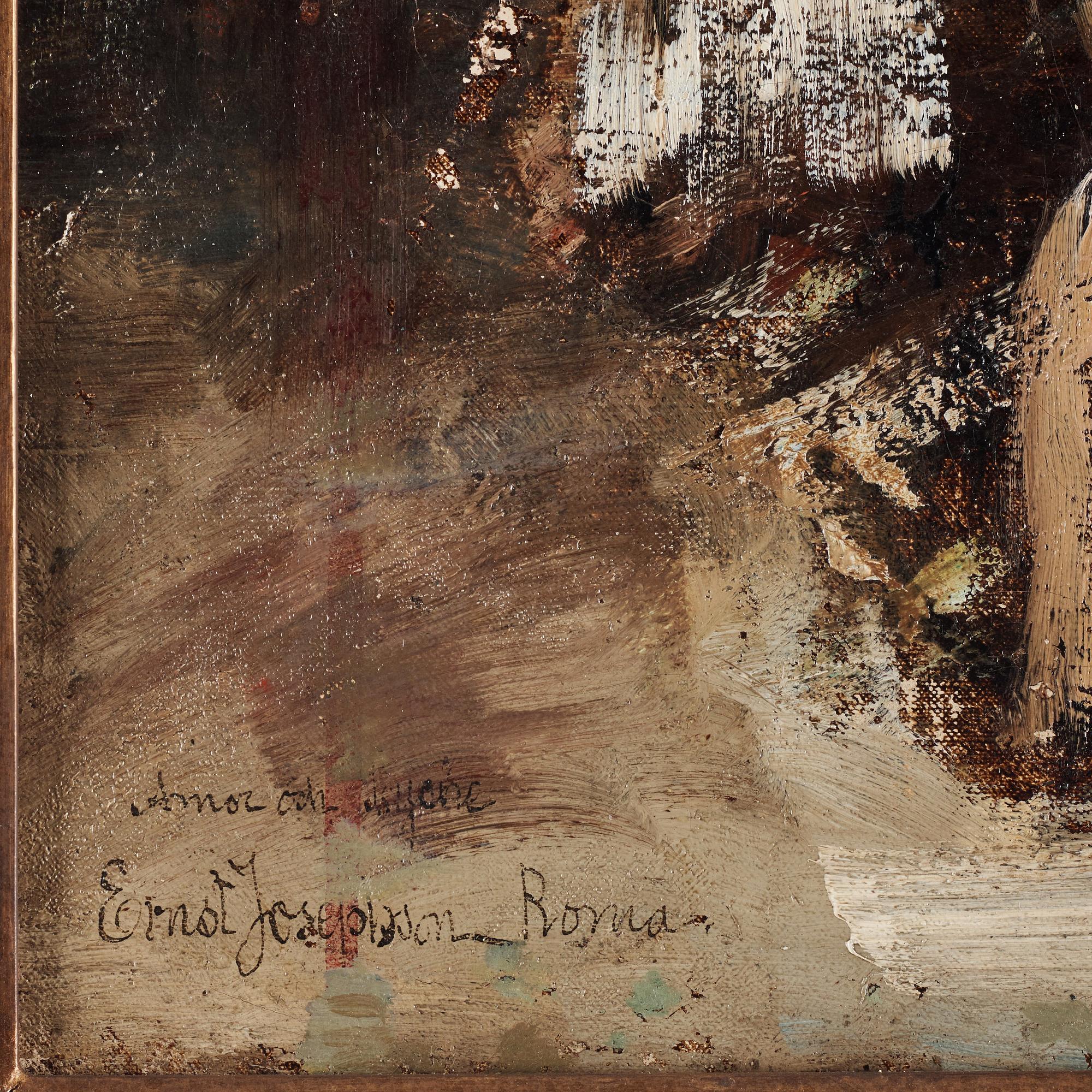
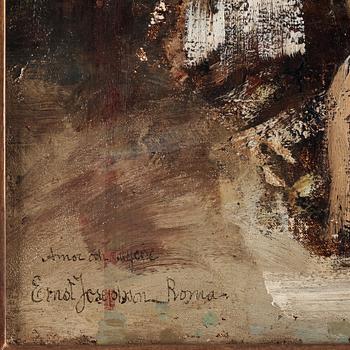
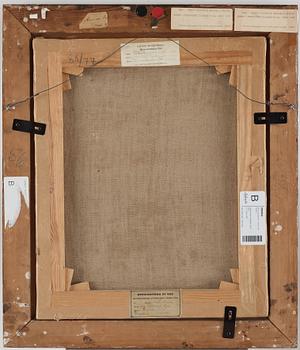
Signed Ernst Josephson Roma. Executed 1878-1879. Oil on relined canvas 46 x 38 cm.
Alkuperä - Provenienssi
Mrs. Anna Thiel (née Josephson, the artist's cousin).
Captain (later lieutenant colonel) Urban Thiel.
Svensk-Franskas Konstauktioner, Stockholm, 5 april 1967, lot 115.
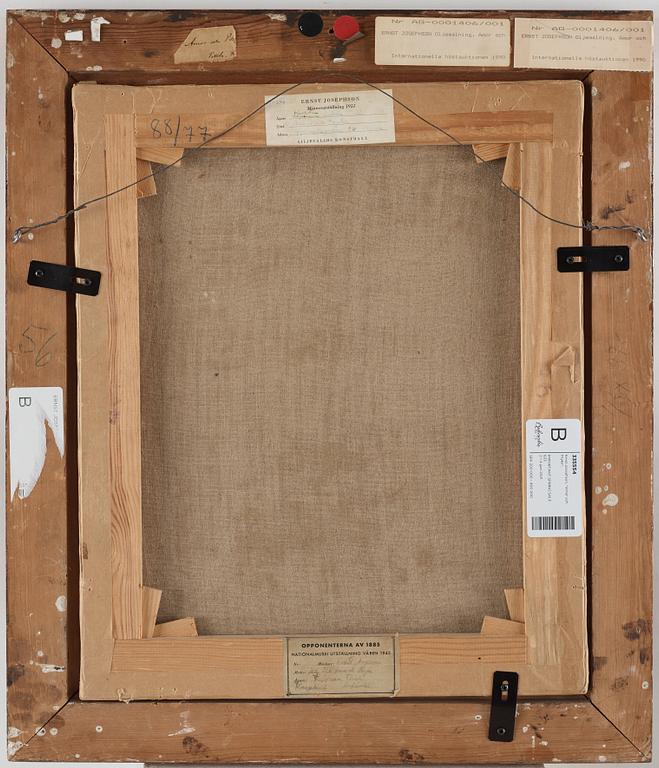
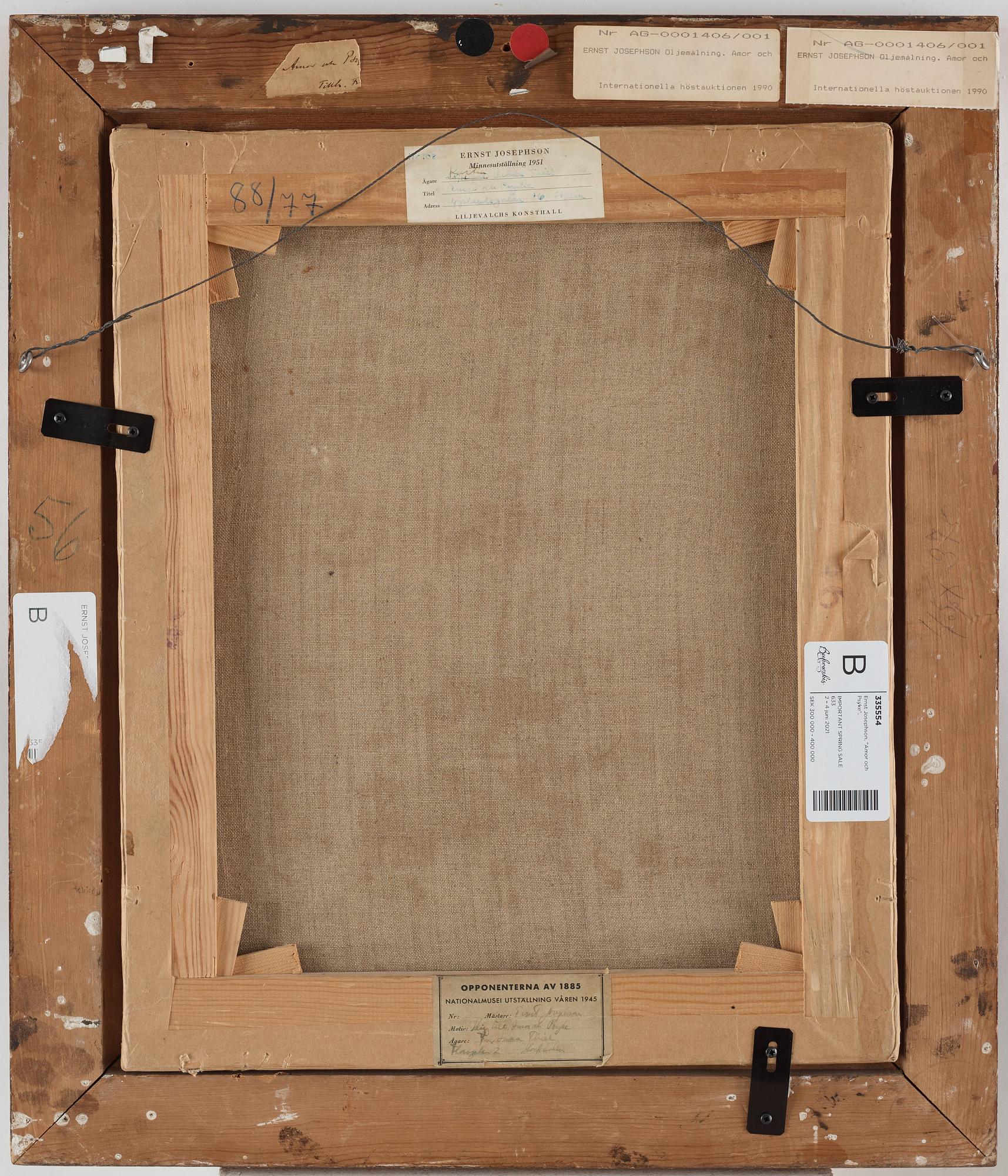
Bukowski Auktioner, Internationella Höstauktionen 475, 30 October - 1 November 1990, lot 48.
Private collection.
Näyttelyt
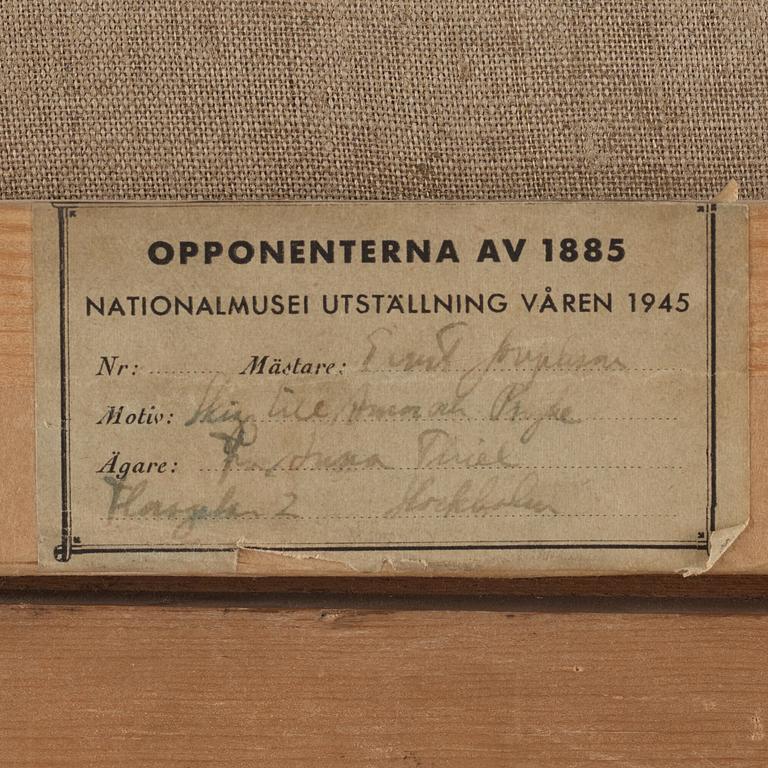
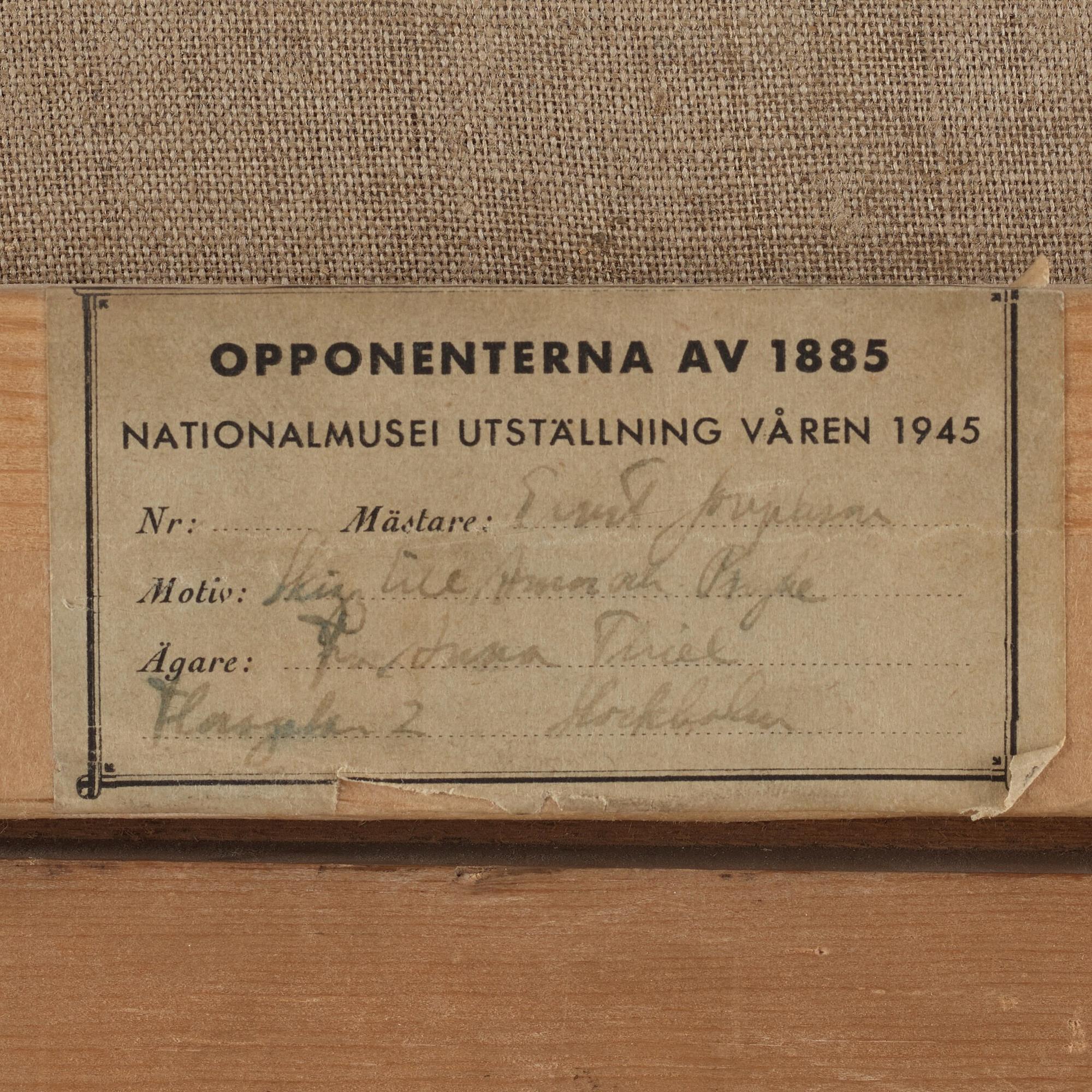
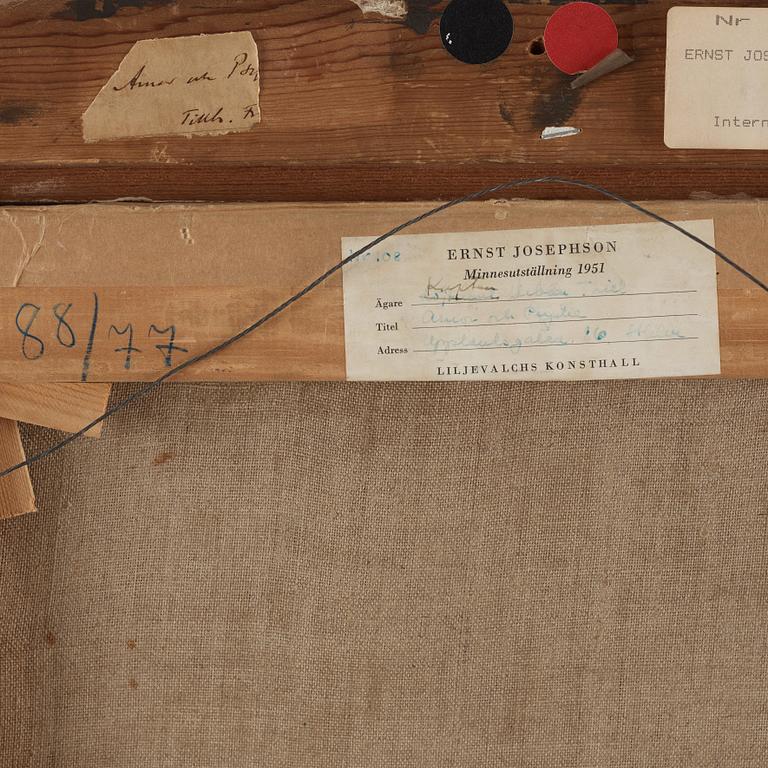
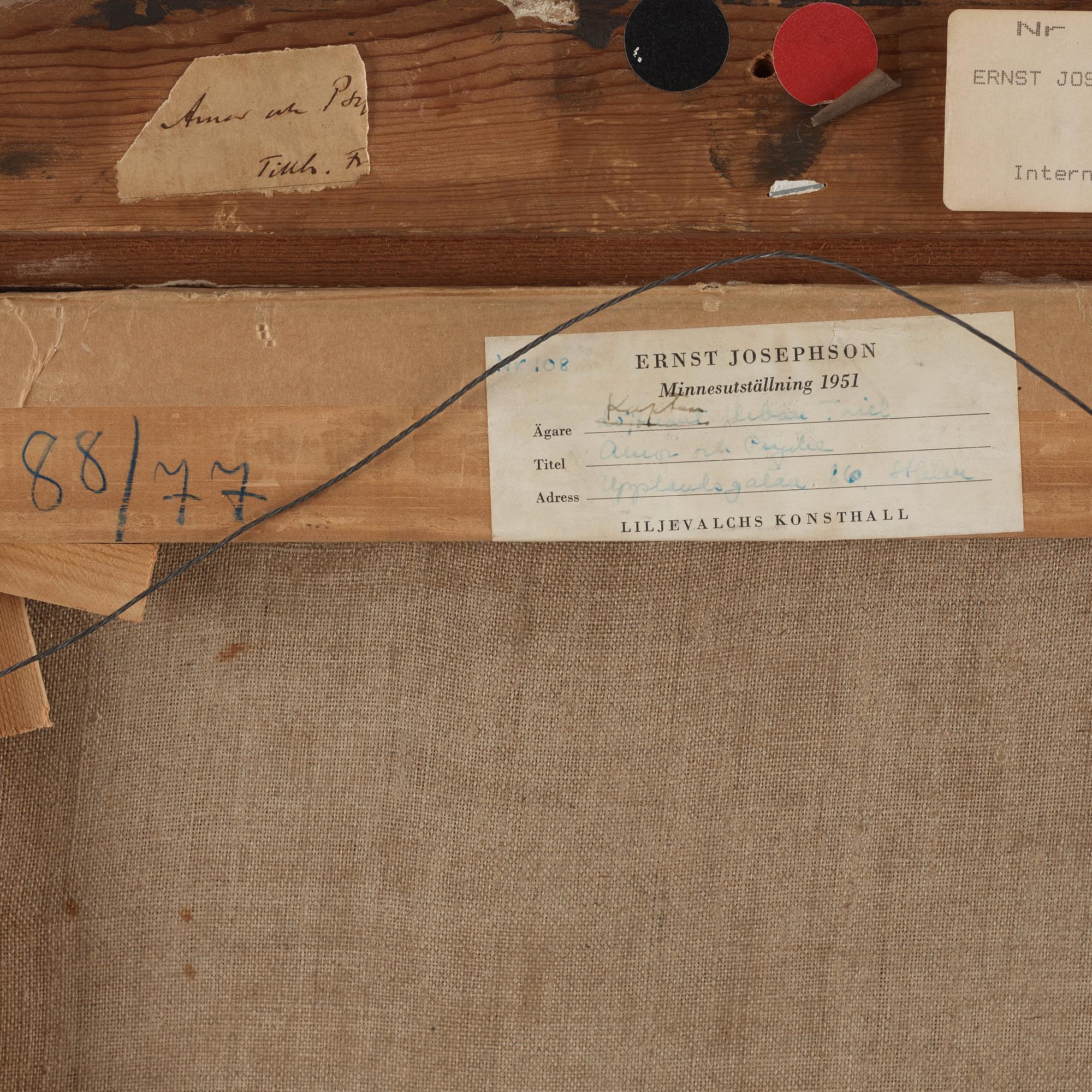
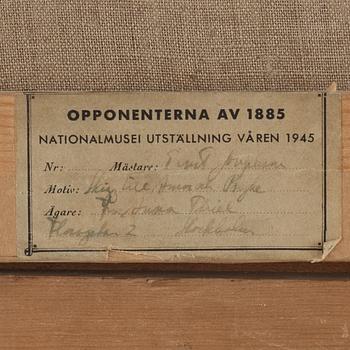
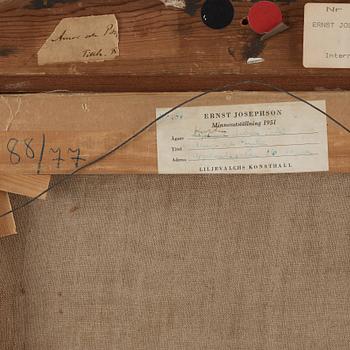
Kungl. Akademien för de fria konsterna (Royal Academy of Arts), Stockholm, "Ernst Josephson. Utställning", 1923, no. 41; Galerie S:t Lucas, Stockholm, "Ernst Josephson. Målningar ur privata samlingar", 1942, no. 47; Nationalmuseum, Stockholm, "Opponenterna av 1885. Utställning till sextioårsminnet av det första moderna genombrottet i svensk konst", 16 March - 16 May 1945, no. 211; Liljevalchs Konsthall (Liljevalchs Public Art Gallery), Stockholm, "Ernst Josephson. Minnesutställning", 1951, no. 108.
Kirjallisuus
Erik Blomberg, "Ernst Josephson. Hans liv", 1951, mentioned p.231 and illustrated p. 230
Erik Blomberg, "Ernst Josephsons konst. Historie-, porträtt- och genremålaren", SAK, 1956, mentioned pp. 98-100 and illustrated p. 99
Erik Blomberg, "Ernst Josephsons konst. Från Näcken till Gåslisa", 1959, mentioned p. 8.
Muut tiedot
."Amor och Psyke" was executed after Ernst Josephson had returned to Rome following his visit to the Exposition Universelle in Paris during the summer of 1878. In Ernst Josephsons konst (1956), Erik Blomberg writes:
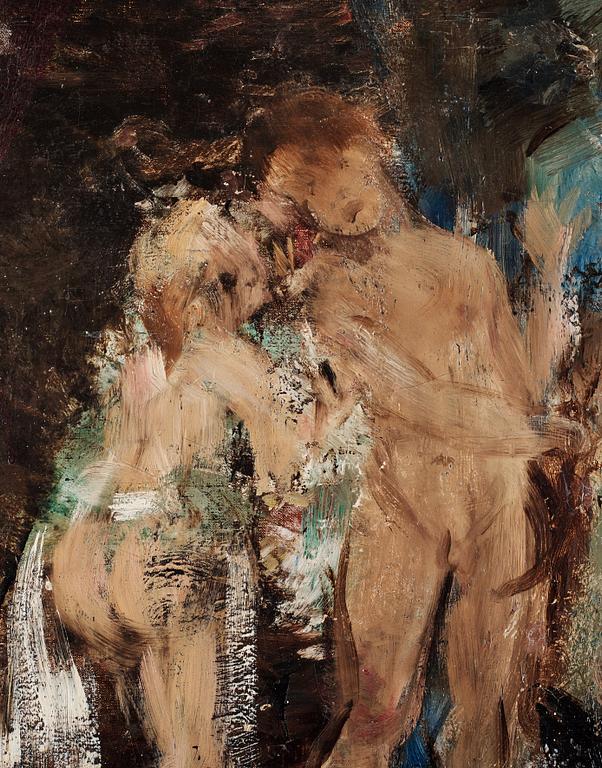
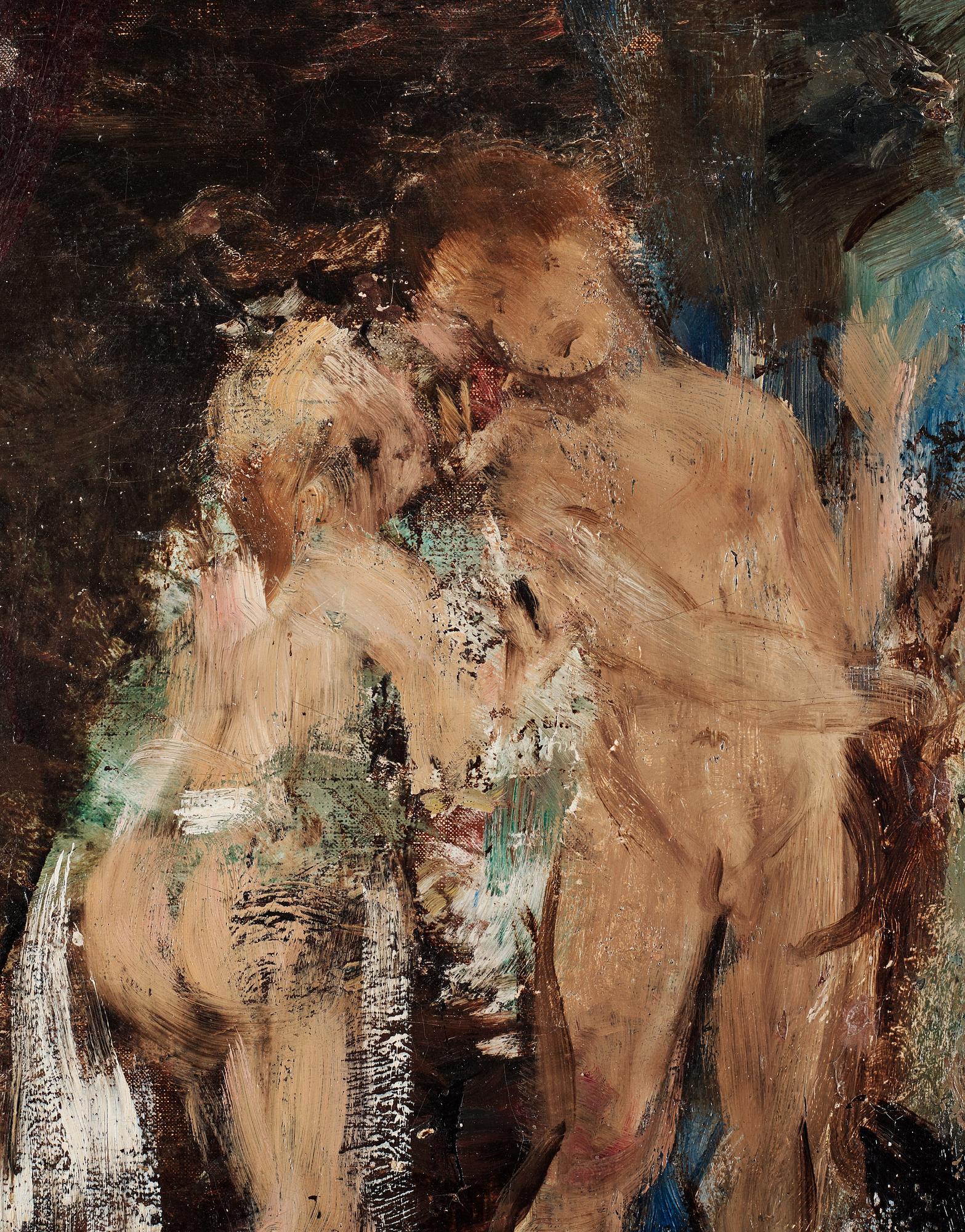
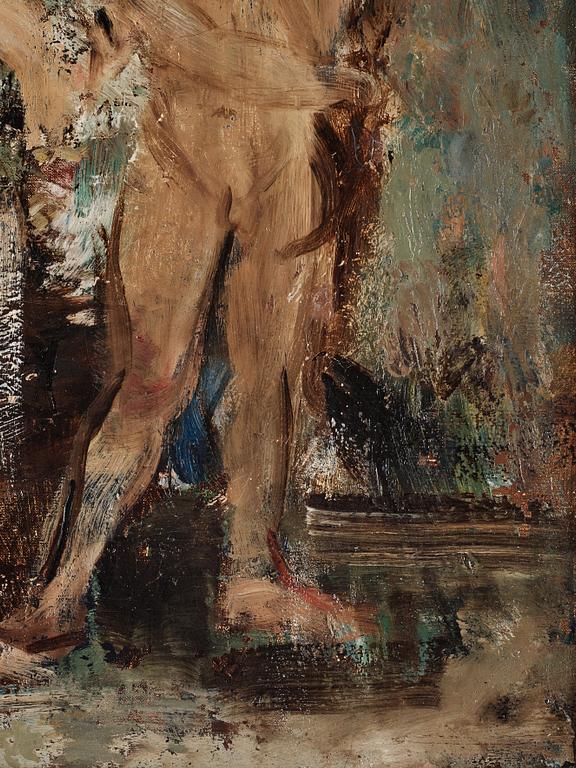
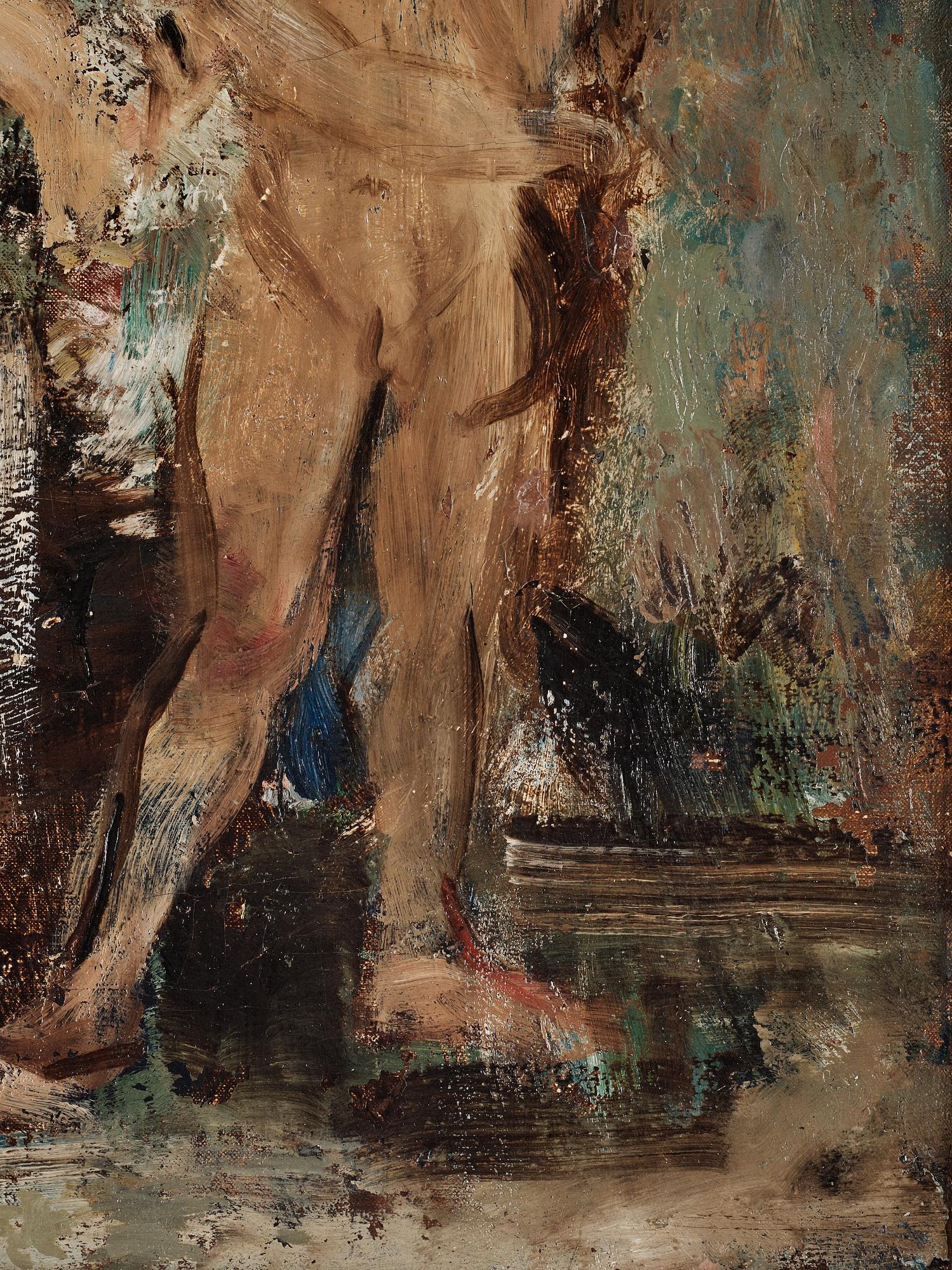
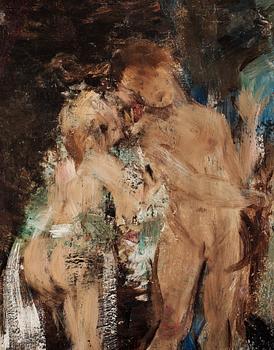
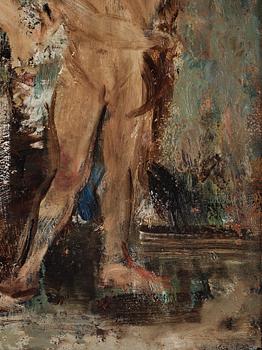
“‘Amor och Psyke’ was the title Josephson gave to a sketch painted after his return to Rome (1879) and following visits to Pompeii and Naples. It continues his preference for romantic and mythological subject matter, while displaying a style that is both freer and more powerful. At the Exposition Universelle he had once again been captivated by his old French favourites, Daubigny, Courbet, and Corot, and in this sketch, just as after his visit to Paris in 1873–74, he unleashed a rich and swiftly summarising brushwork. Against the dark brown terry-cloth ground he sketched the small nude figures: Cupid, outlined in brown tones matching those of his bow, and Psyche, rendered with broad, shimmering strokes of white and creamy yellow. To the left appears a suggestion of crimson drapery, while to the right stretches a sky of Titian blue. The scene seems to unfold at the entrance to a room and perhaps depicts the very moment when Cupid abandons Psyche after she has broken the prohibition against gazing upon his face.”
Blomberg detects an autobiographical dimension in the painting and relates the motif to Josephson’s unhappy love life, in which Ketty Rindskopf played a significant role. It is clear that, in letters to his mother during the autumn of 1878, Josephson had “abandoned all hope of seeing his love fulfilled”.
Blomberg continues:
“Perhaps the sketch is also a scene of circumstance, a bittersweet farewell to the illusion of love. Josephson painted it almost as a fairy tale, with a boyishly self-assured Cupid and a little Psyche, comically curtsying with her bare backside exposed. A statuette of Cupid by Thorvaldsen had already served as a model in ‘Vid pianot’. Naturally, he had seen several antique groups depicting ‘Amor och Psyke’, yet his small, humorously conceived lovers most closely recall Etruscan bronzes with their plump forms. The recently discovered frescoes at Pompeii and the fragments in the museum at Naples must also have stimulated his imagination. It was from such sources that the amorini and putti originated, figures he had already admired on palace walls in Florence and Rome, for example those by Raphael in the Vatican Loggia (‘the grotesques’) and in the Villa Farnesina (the Hall of Psyche). In Italy he had taken a particular interest in the nude, which occupies so prominent a place in Renaissance art. Yet never before had he given the plastic qualities of form such a painterly interpretation as here. This small sketch points toward the future; in its robust realism, through which he reconnects with Rembrandt, it represents a break both with the atmosphere of dream and with the constraints of academic linearity.”
Josephson’s study trip to the Exposition Universelle in Paris in 1878 evidently provided him with fresh artistic impulses. It is therefore entirely possible that, despite his personal disappointments, the artist adopted a somewhat lighter perspective in the present composition, and that the earthbound side of his complex nature prompted him to indulge, if only briefly, in a playful jest at the expense of the gods.
Lisätietoja ja kuntoraportit

Mitä kuljetus maksaa?
Toimituksen voi tilata vain ottamalla yhteyttä osoitteeseen specialdelivery@bukowskis.com.
Tietoa ostamisesta
Muiden katsomia kohteita