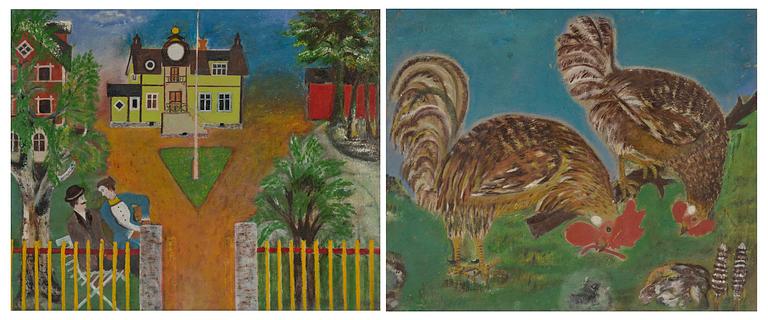
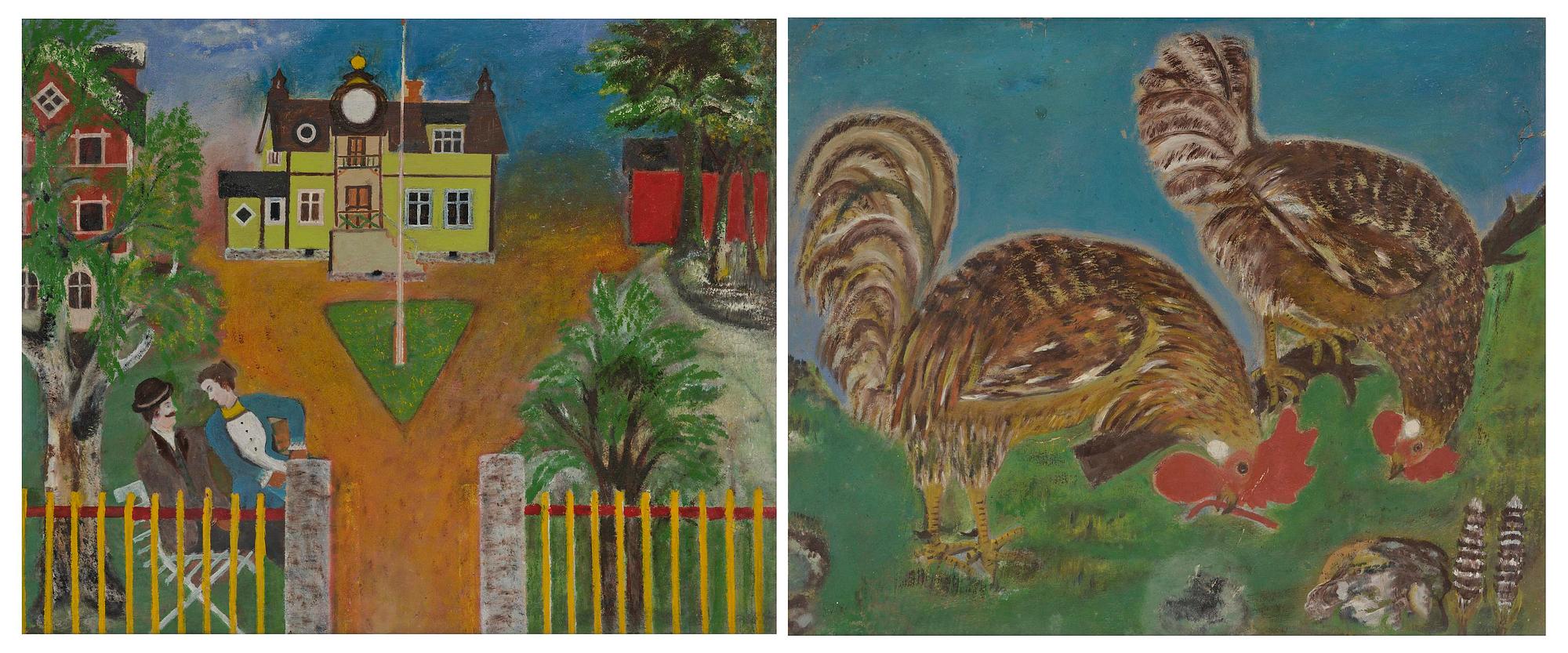
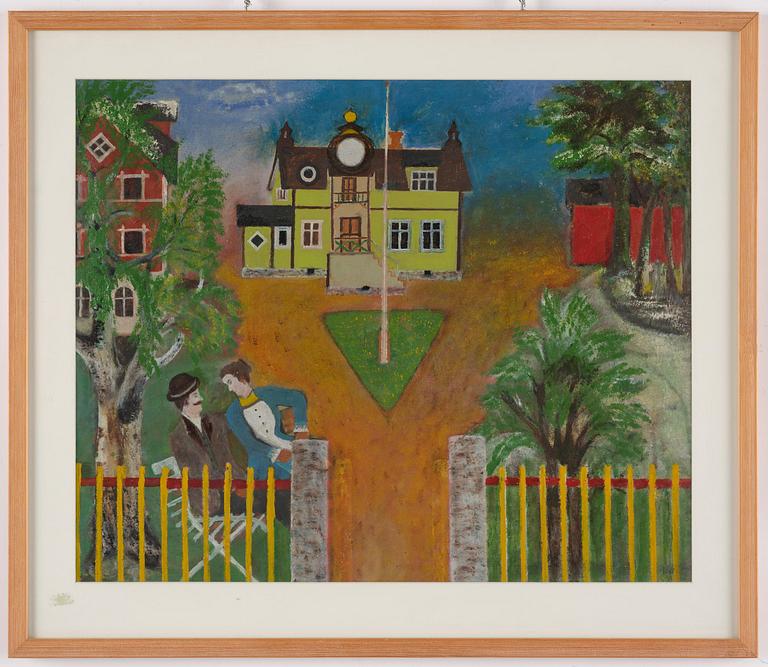
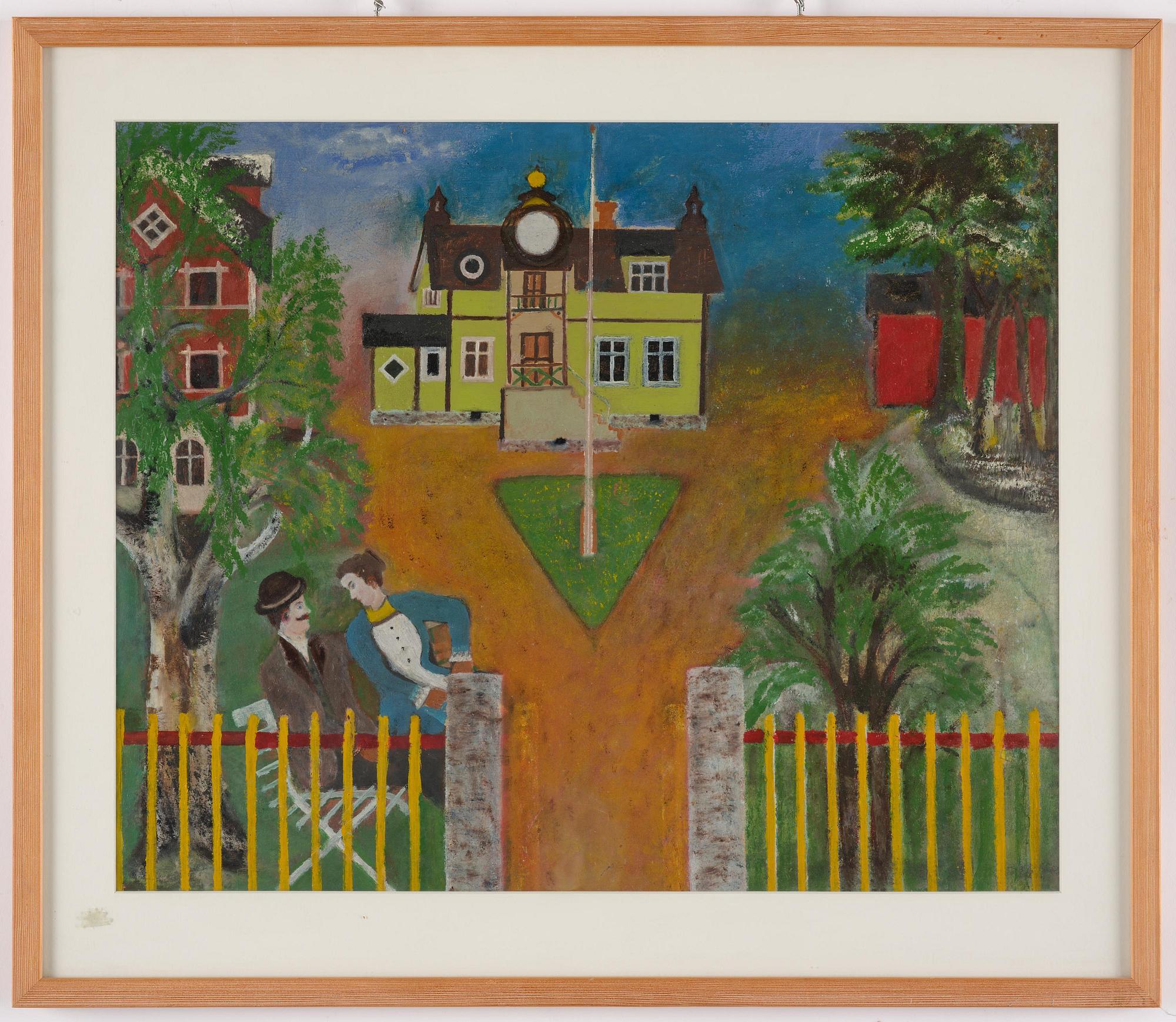
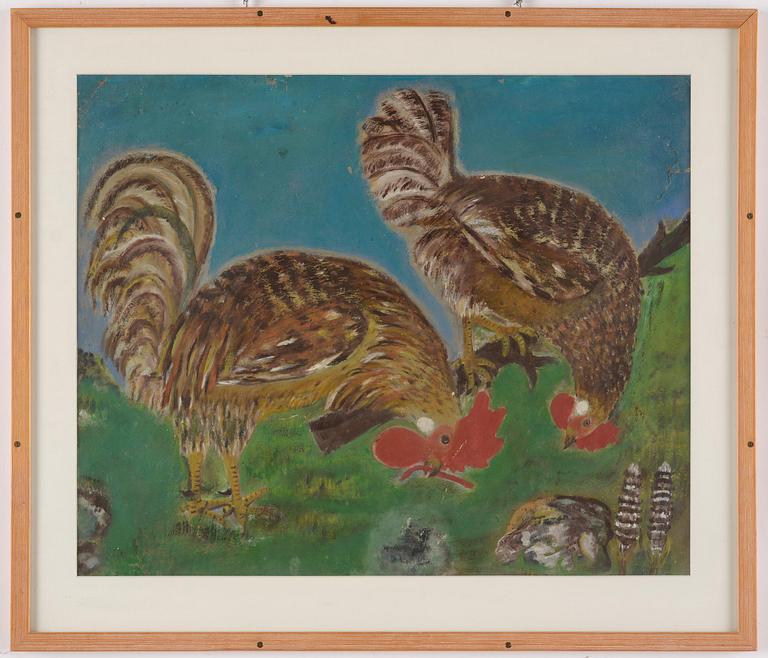
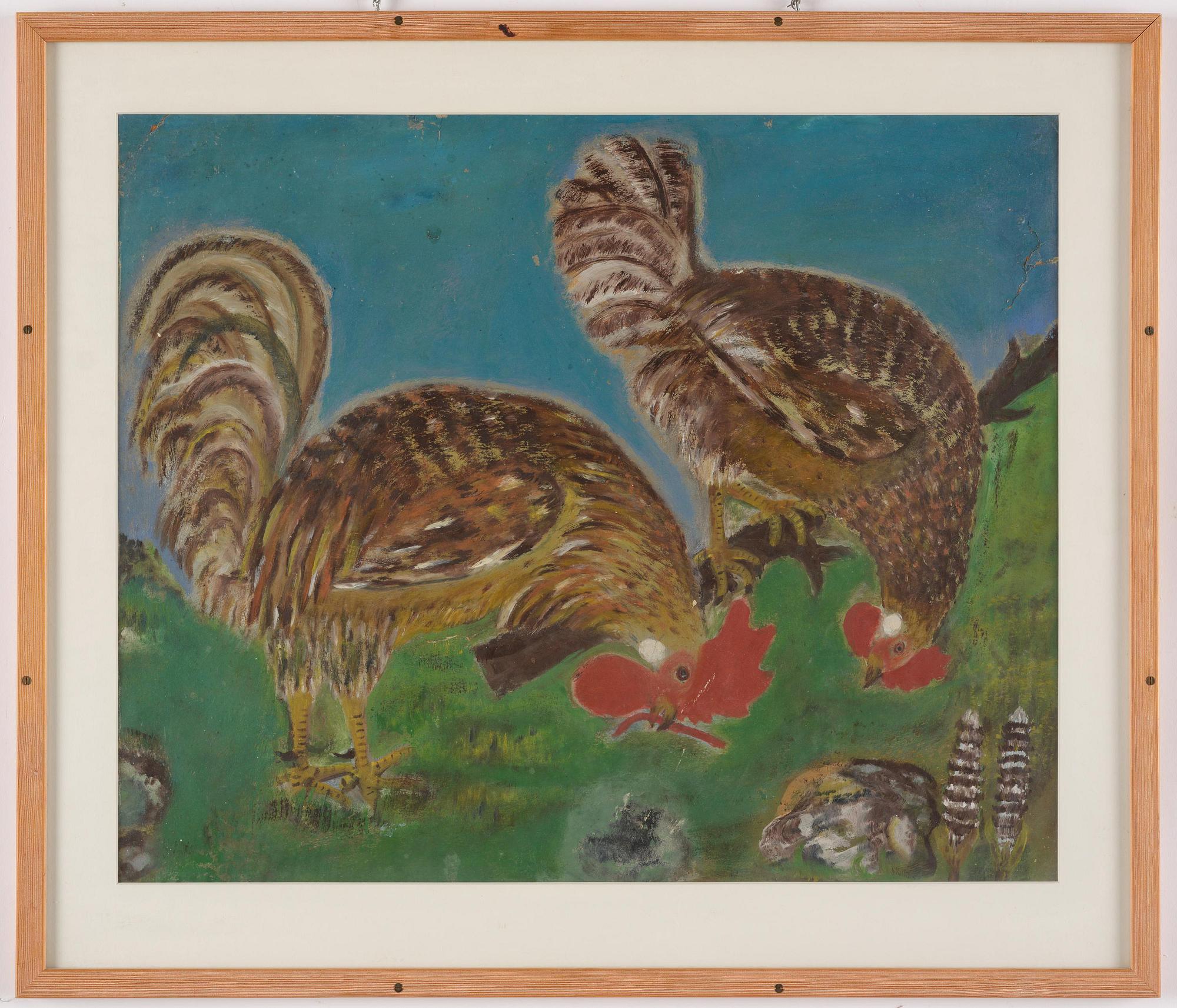
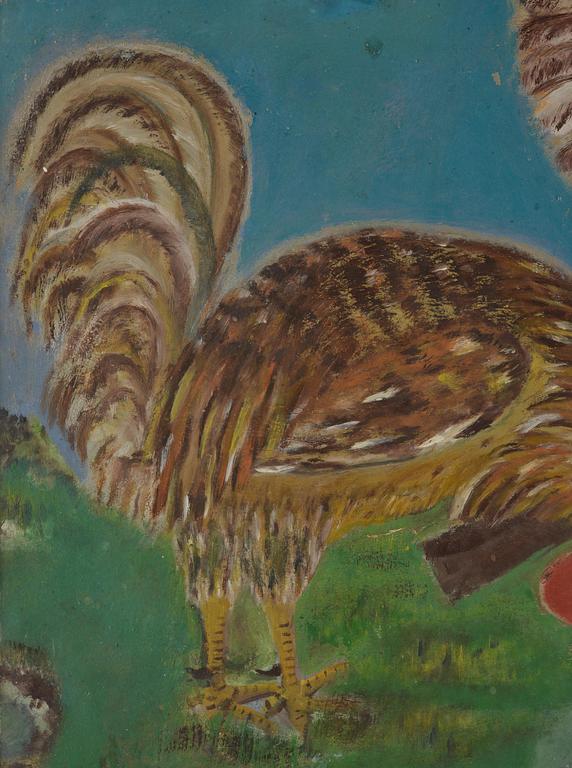
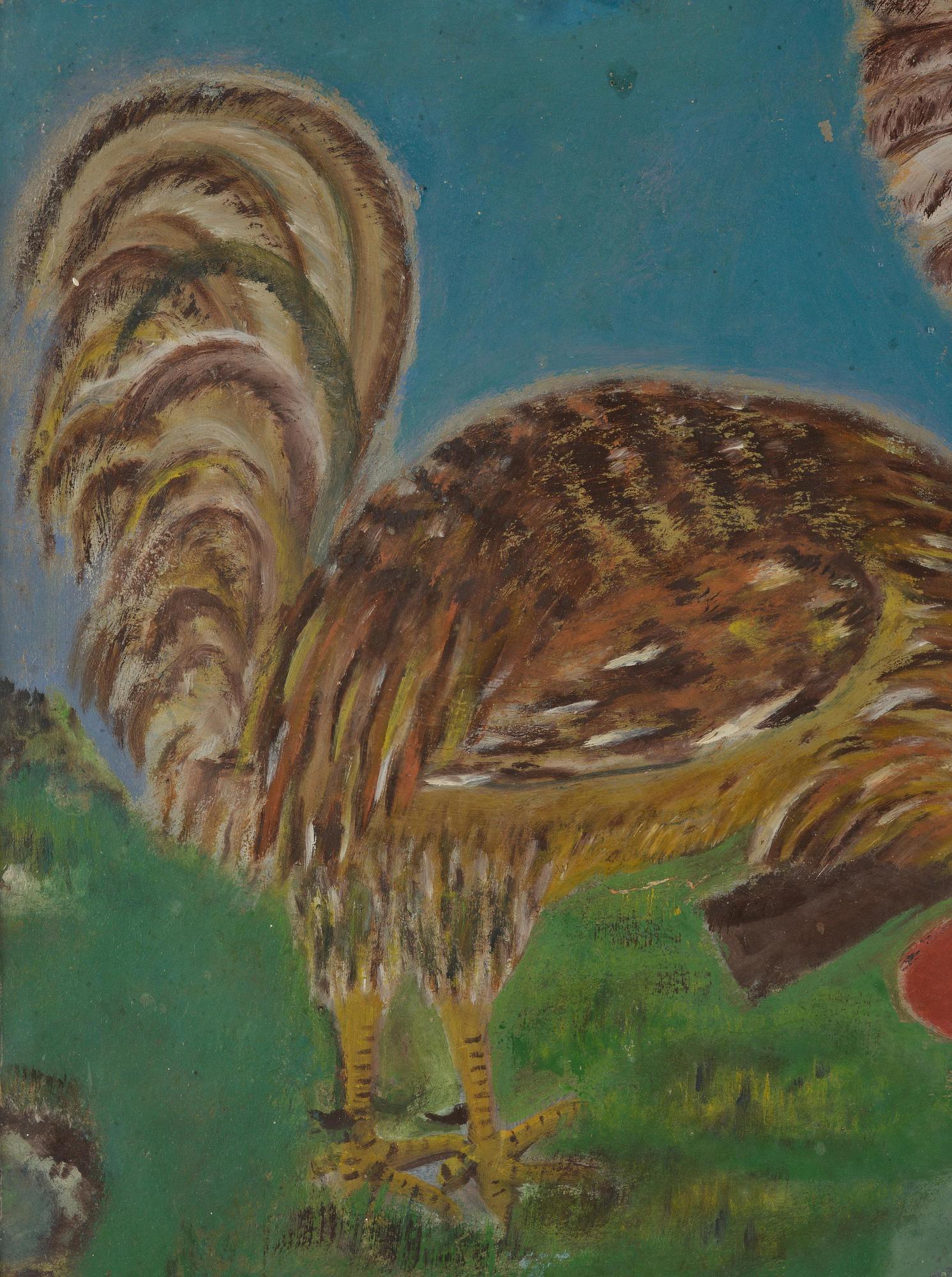
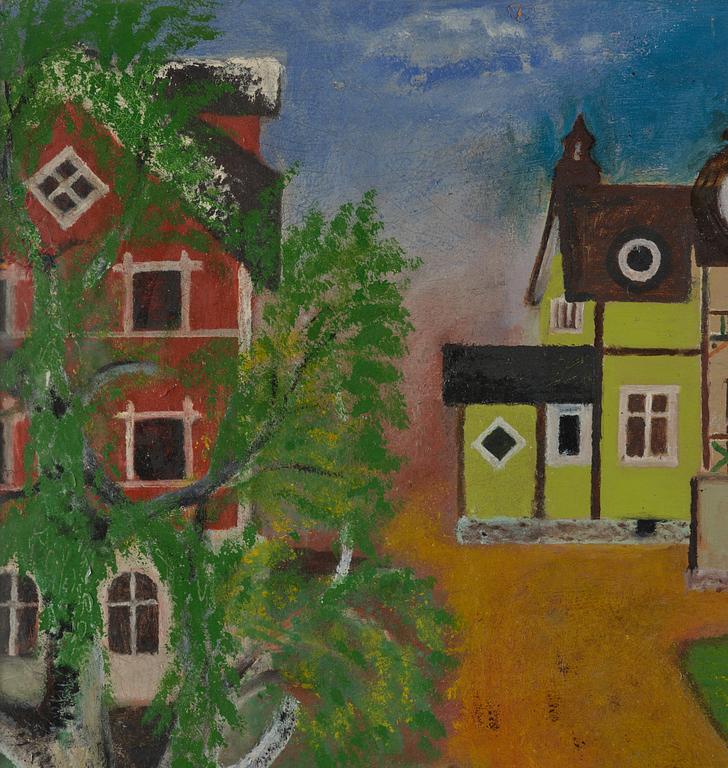
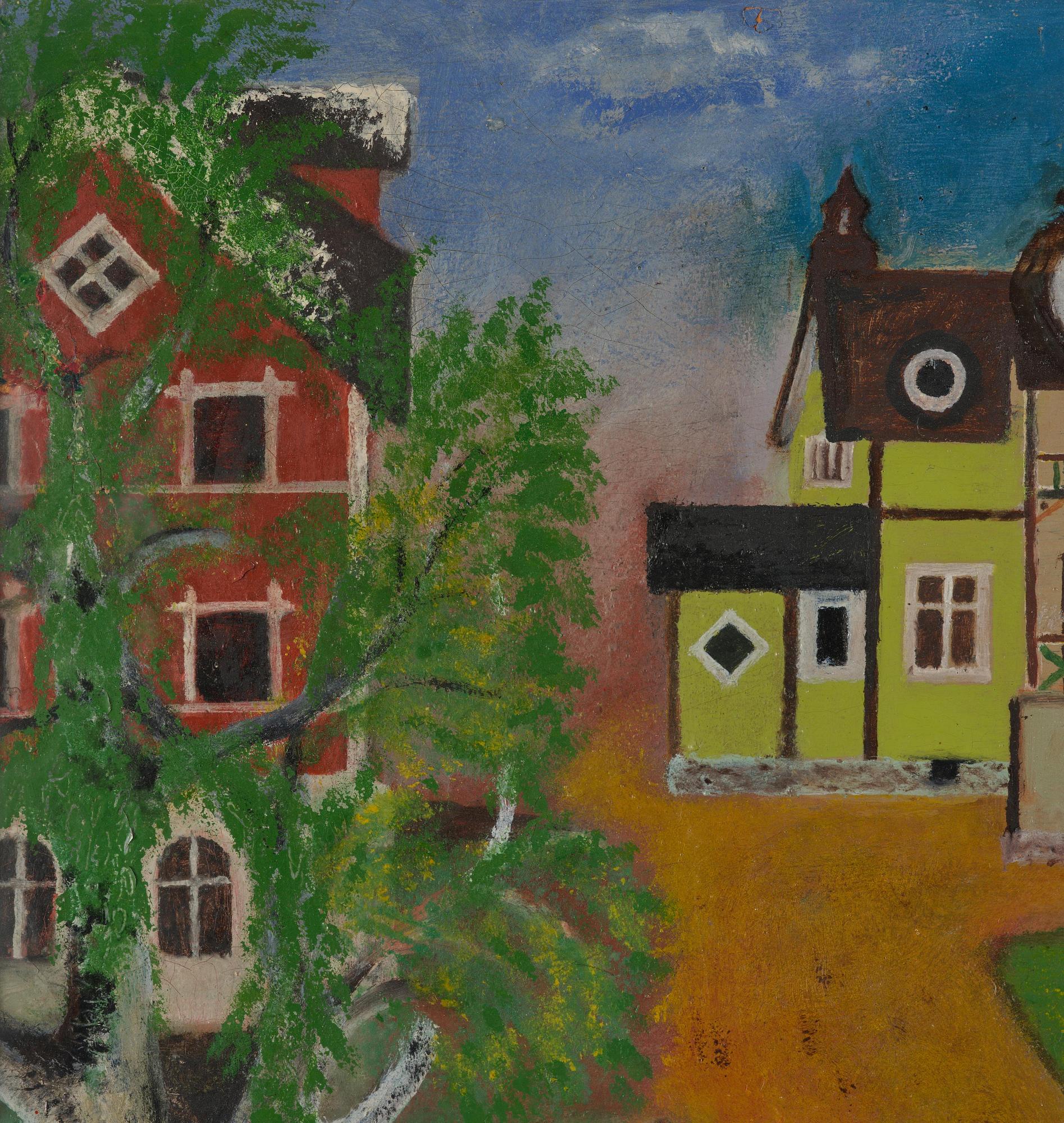
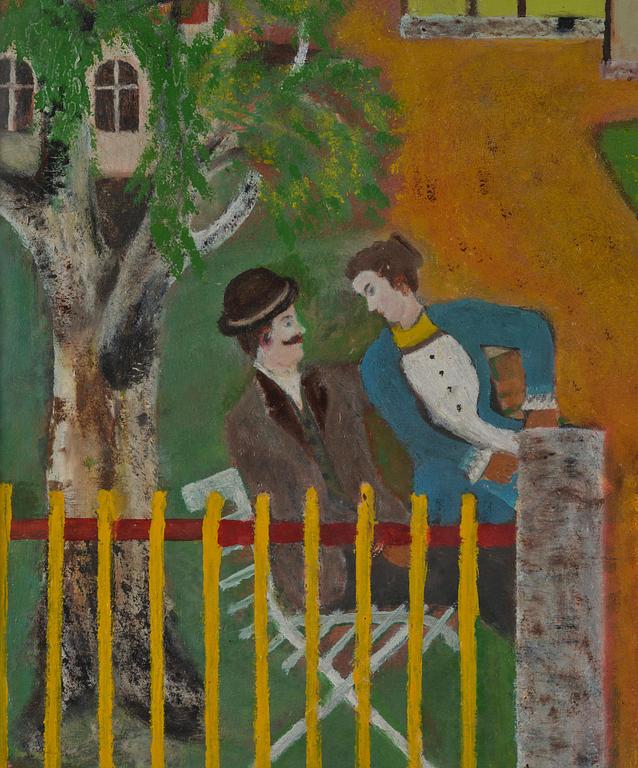
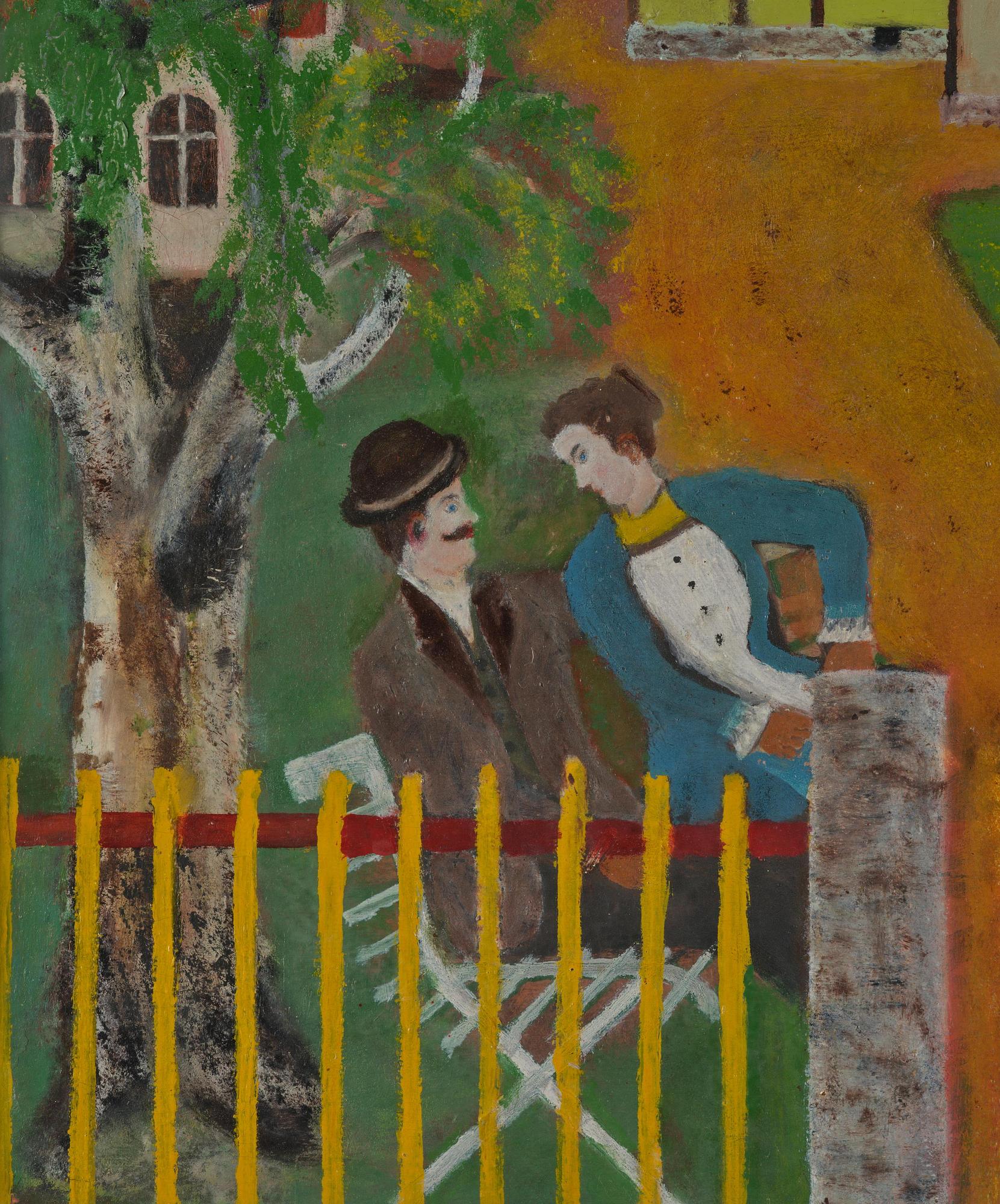
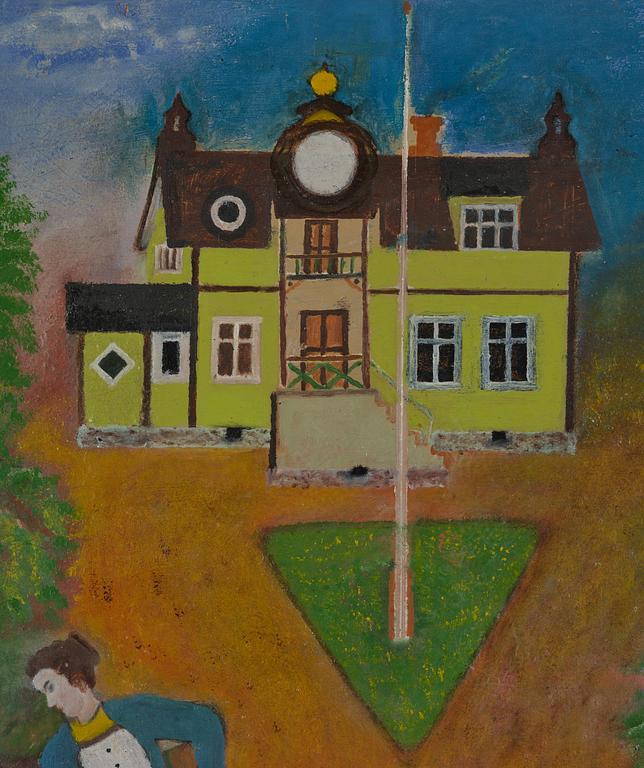
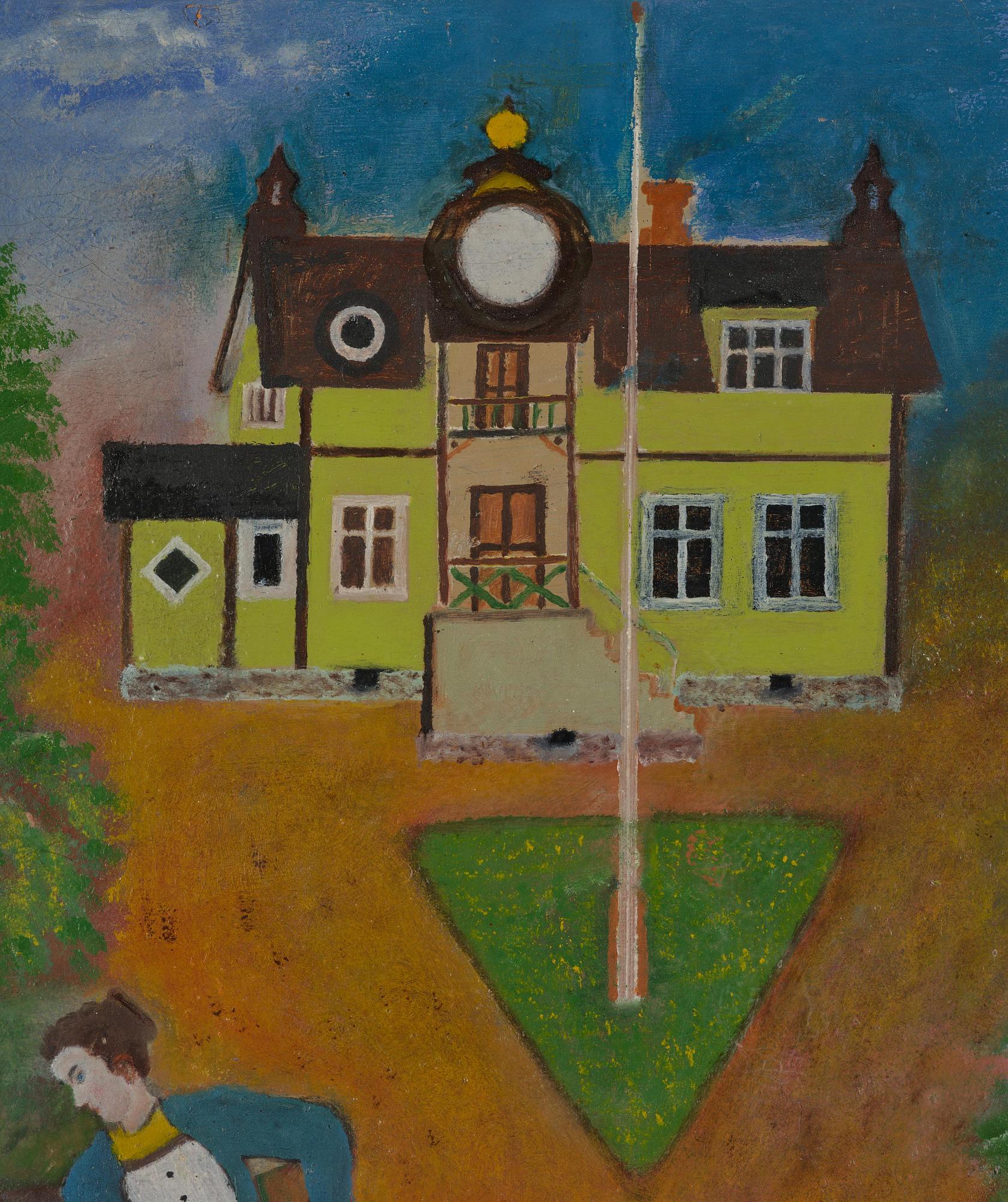
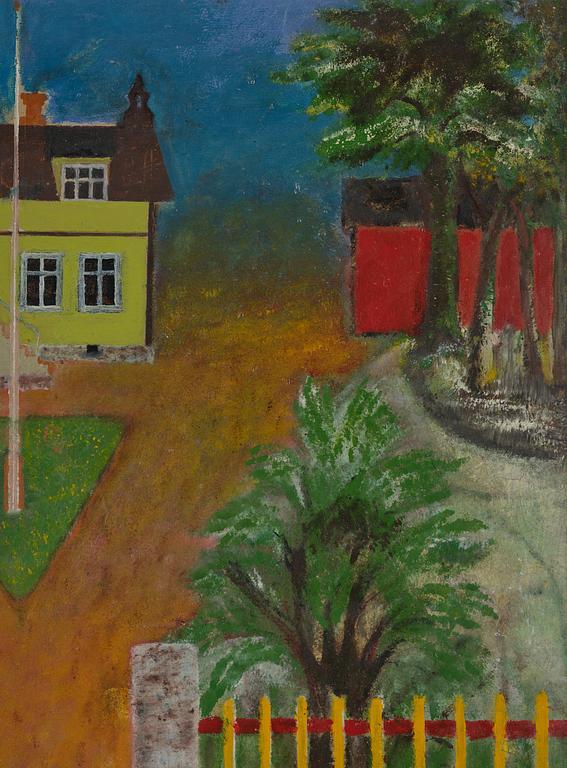
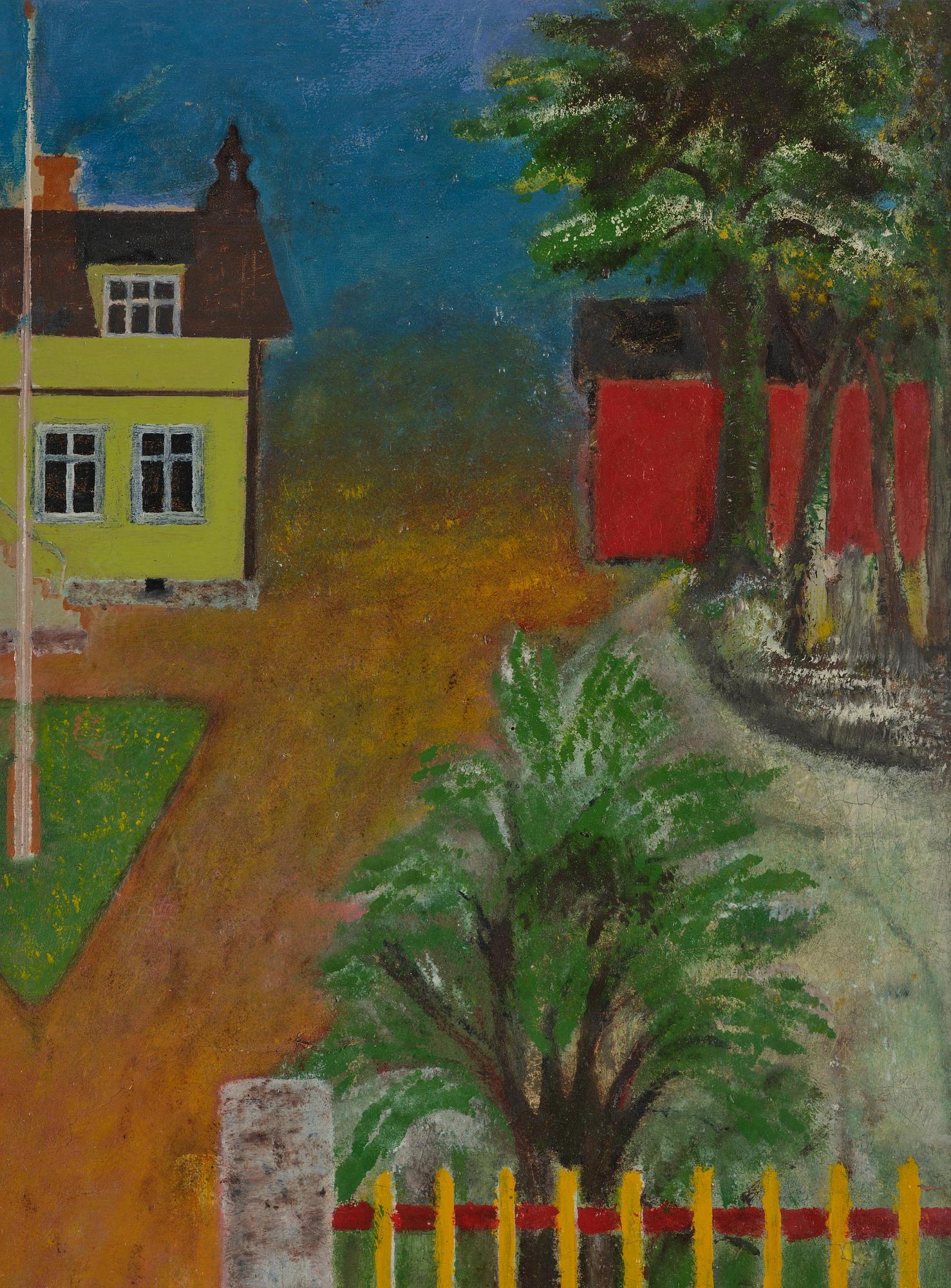
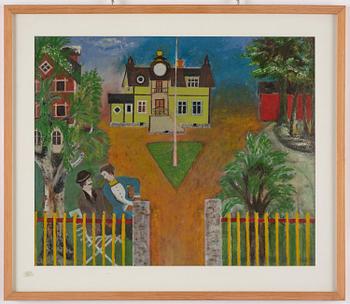
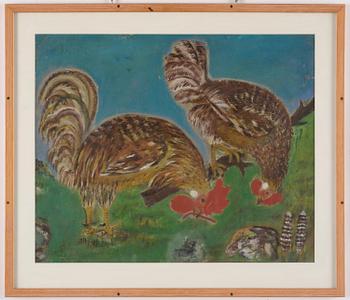
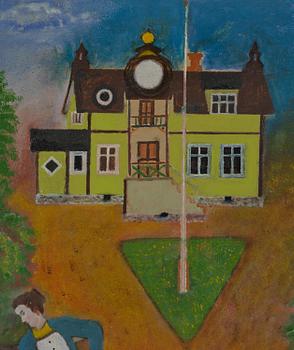
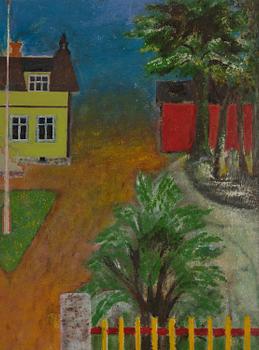
Lim-Johan (Johan Erik Olsson) (Ruotsi, 1865-1944) "Lördagsafton" (Saturday Evening)/"Höns" (Chickens)
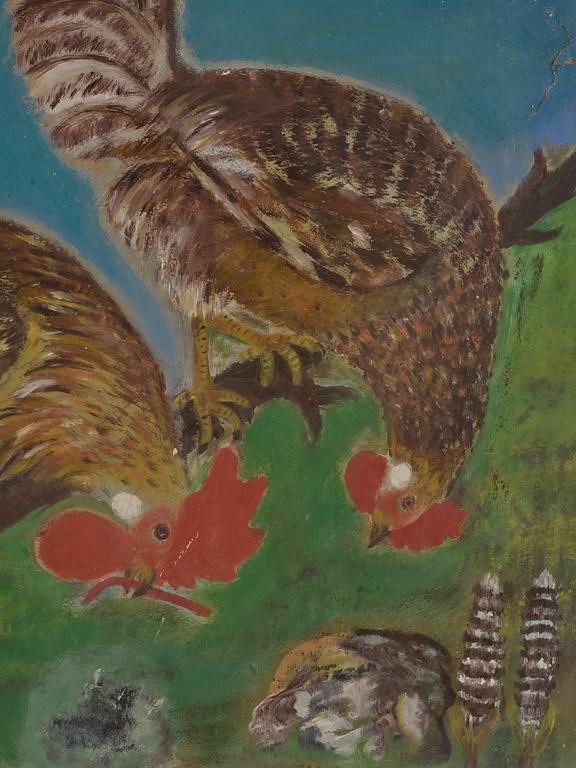
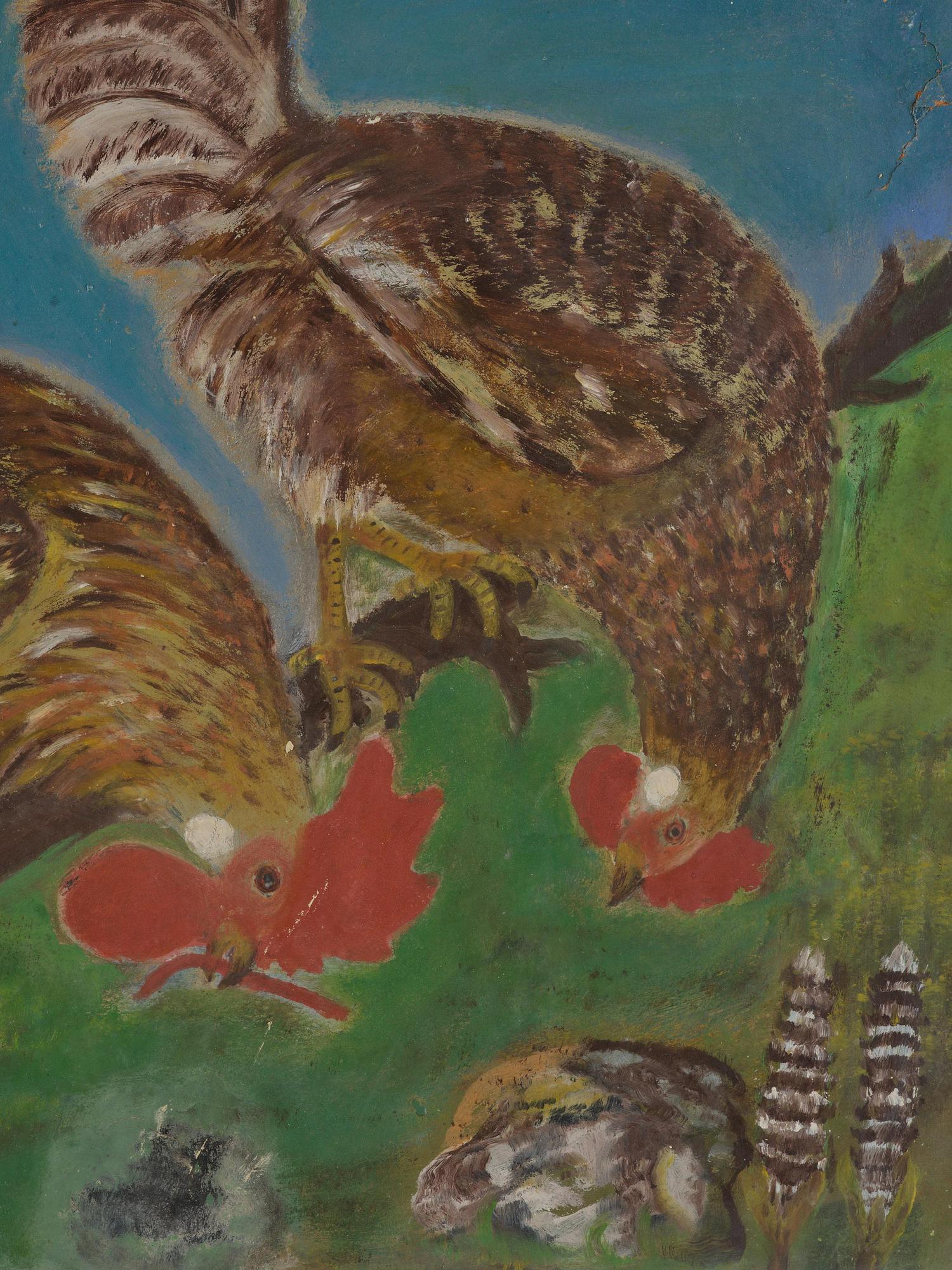
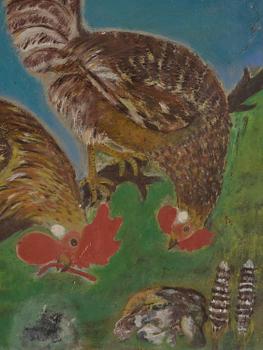
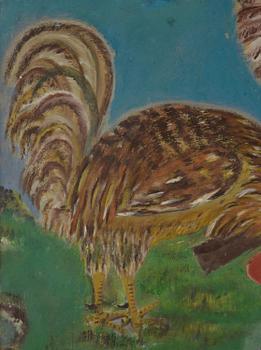
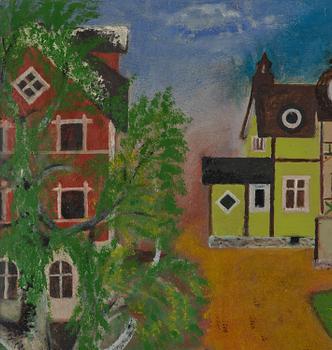
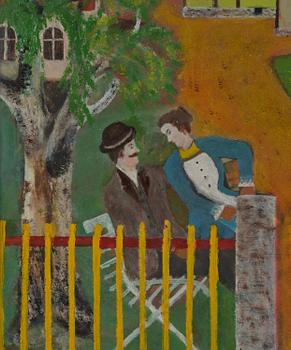
"Lördagsafton" (Saturday Evening)/"Höns" (Chickens)
Executed 1914–28. Oil on paper, 50 x 60 cm.
Alkuperä - Provenienssi
Painter Per Carlsson, Edsbyn.
Merchant Harry Vidner, Edsbyn.
Bukowski Auktioner, Moderna Höstauktionen 541, 31 October–3 November 2006, lot 63.
Näyttelyt
Stockholmstidningen, Stureplan, Stockholm, "Minnesutställning öven den hälsingske allmogemålaren Lim-Johan", January 1949, cat. no. 12 and 22.
Edsbyns museum, "Lim-Johan - målningar och teckningar", 18 September - 17 October 1993.
Kirjallisuus
Dagens Nyheter, 8 January 1949, "Lim-Johans minnesutställning", illustrated.
Hans Lidman, "Lim Johan. Ett levnadsöde", 1971, illustrated p. 109 (mirrored) and p. 116, and in the list as painting no. 12 and no. 27.
Muut tiedot
Johan Erik Olsson spent his entire life within an area with a radius of approximately 50 kilometres in the Voxna Valley in Hälsingland, apart from the eight years he was admitted to Uppsala Hospital. The name Lim-Johan, by which he generally came to be known, was inherited from his grandfather Lim-Olle, who originally came from Lima in Dalarna but settled in the forests of Voxna as a pioneer in the early nineteenth century. When Johan Erik was just over twenty years old, he fell ill with scarlet fever, which most likely developed into typhoid fever or possibly meningitis. What triggered his mental illness remains a mystery, but it is clear that Johan Erik was no longer the same afterwards.
It is not known exactly when Johan Erik began to paint, but it is likely that all the surviving paintings date from the period after his stay in Uppsala, from 1914 until approximately the end of the 1920s. After that, he increasingly turned to using a camera. Of the 29 surviving paintings, only one was executed on canvas; all the others were painted on ordinary grey cardboard. When the cardboard ran out, he painted on both sides, and four such double-sided paintings have been preserved. He bought all his paint in tins, never in tubes, from the master painter Söderlund in Edsbyn, and he never mixed the colours. Johan Erik was known to be a great animal lover, even though he hunted for subsistence. Animals often appear in his paintings, from tame hens in the farmyard to wild bears and wolves, as well as the occasional exotic creature in spotted fur creeping along the edge of the forest. The perspective was always that of a naïf: in one painting, the old woman and the dove are the same length; in another, the bird and the dog are the same size. Houses are a recurring feature—imaginatively ornamented wooden castles with ornate woodwork, glass verandas, battlements and towers. Comparisons have been drawn between the art of Johan Erik, Lim-Johan, and that of the French naïf Henri Rousseau, but it seems highly unlikely that he ever saw a Rousseau painting, not even in reproduction. A possible source of inspiration, however, may have been the stencilled roller blinds of German origin found in well-to-do Hälsingland homes around the turn of the century. Yet his greatest source of inspiration was probably his own imagination. The great variety and complete absence of repetition make it difficult to believe that he worked from models, according to Lim-Johan’s biographer Hans Lidman, who wrote that “in his imagination and creative urge, he was sufficient unto himself.”
Lisätietoja ja kuntoraportit

Mitä kuljetus maksaa?
Toimituksen voi tilata vain ottamalla yhteyttä osoitteeseen specialdelivery@bukowskis.com.
Tietoa ostamisesta

Muiden katsomia kohteita