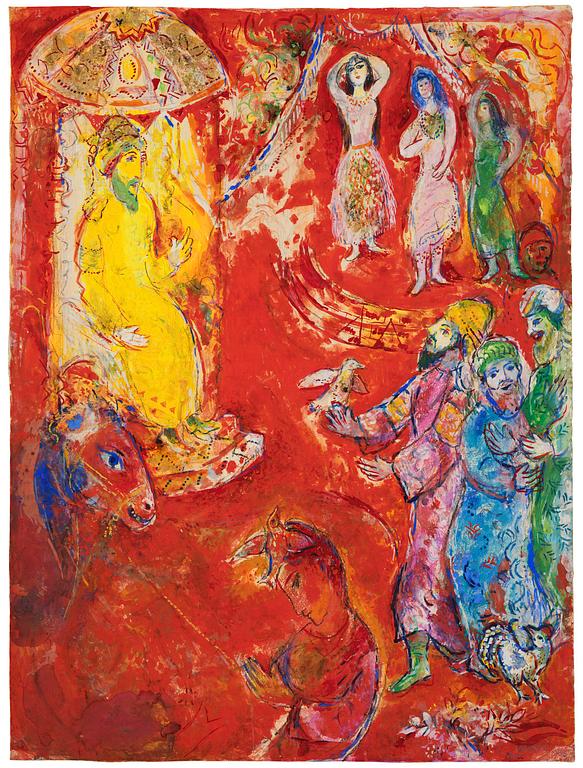
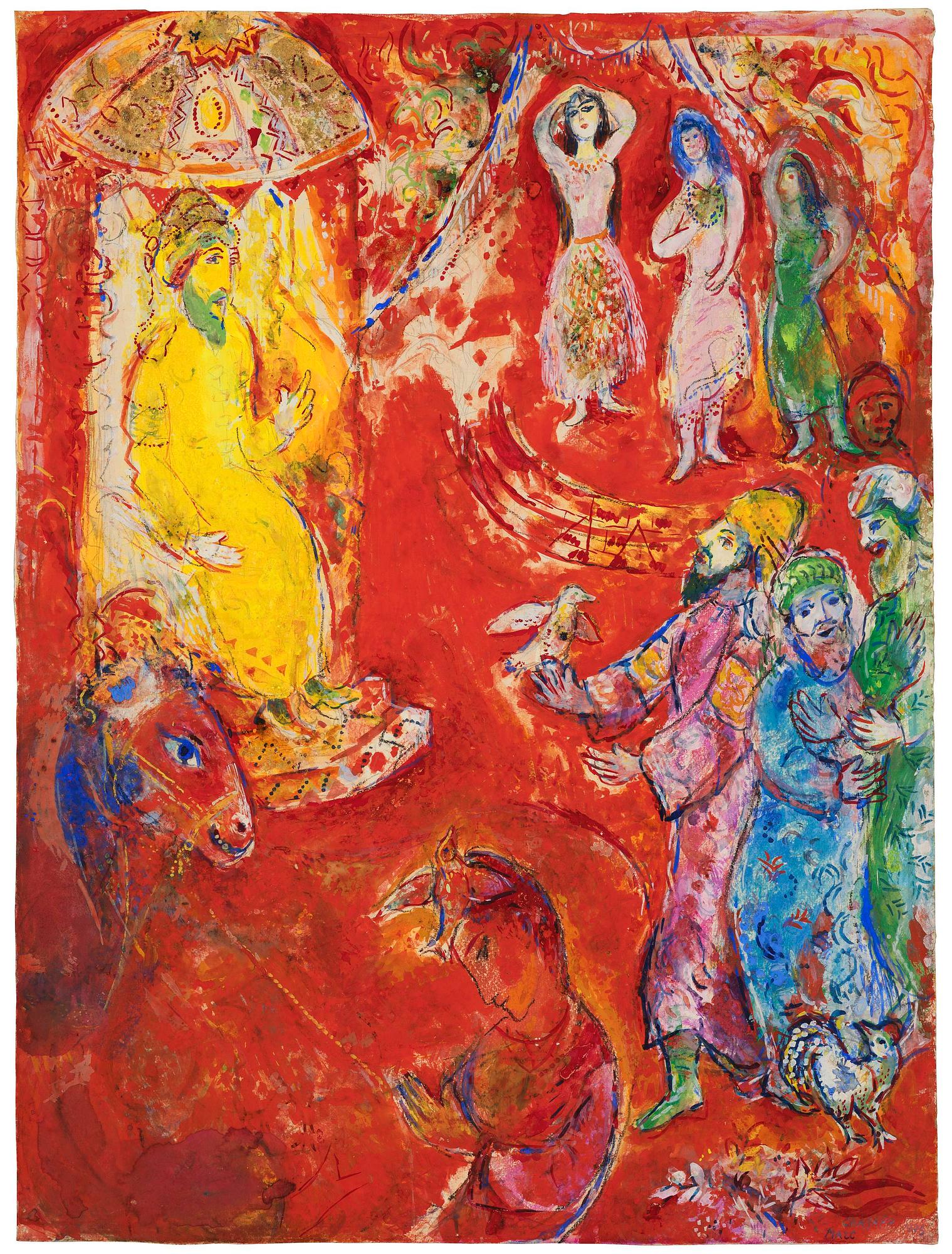
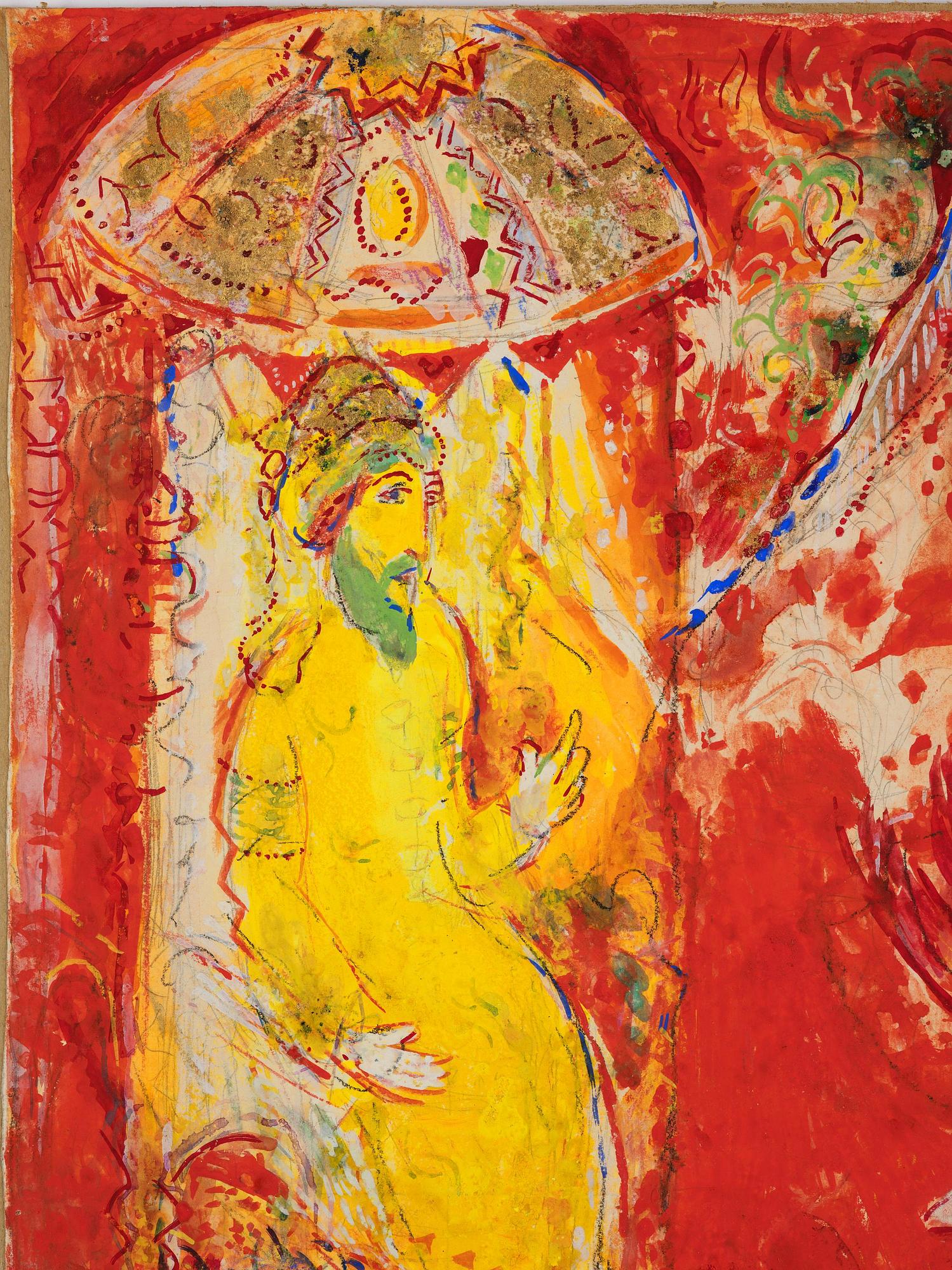
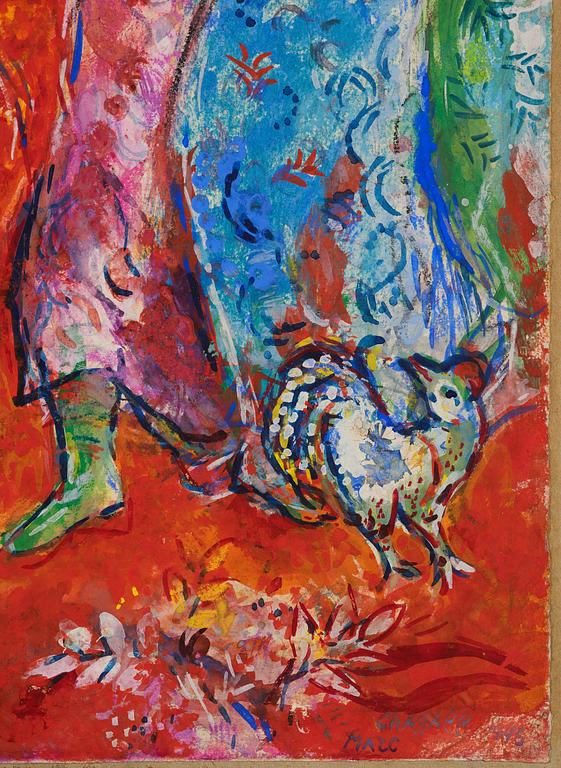
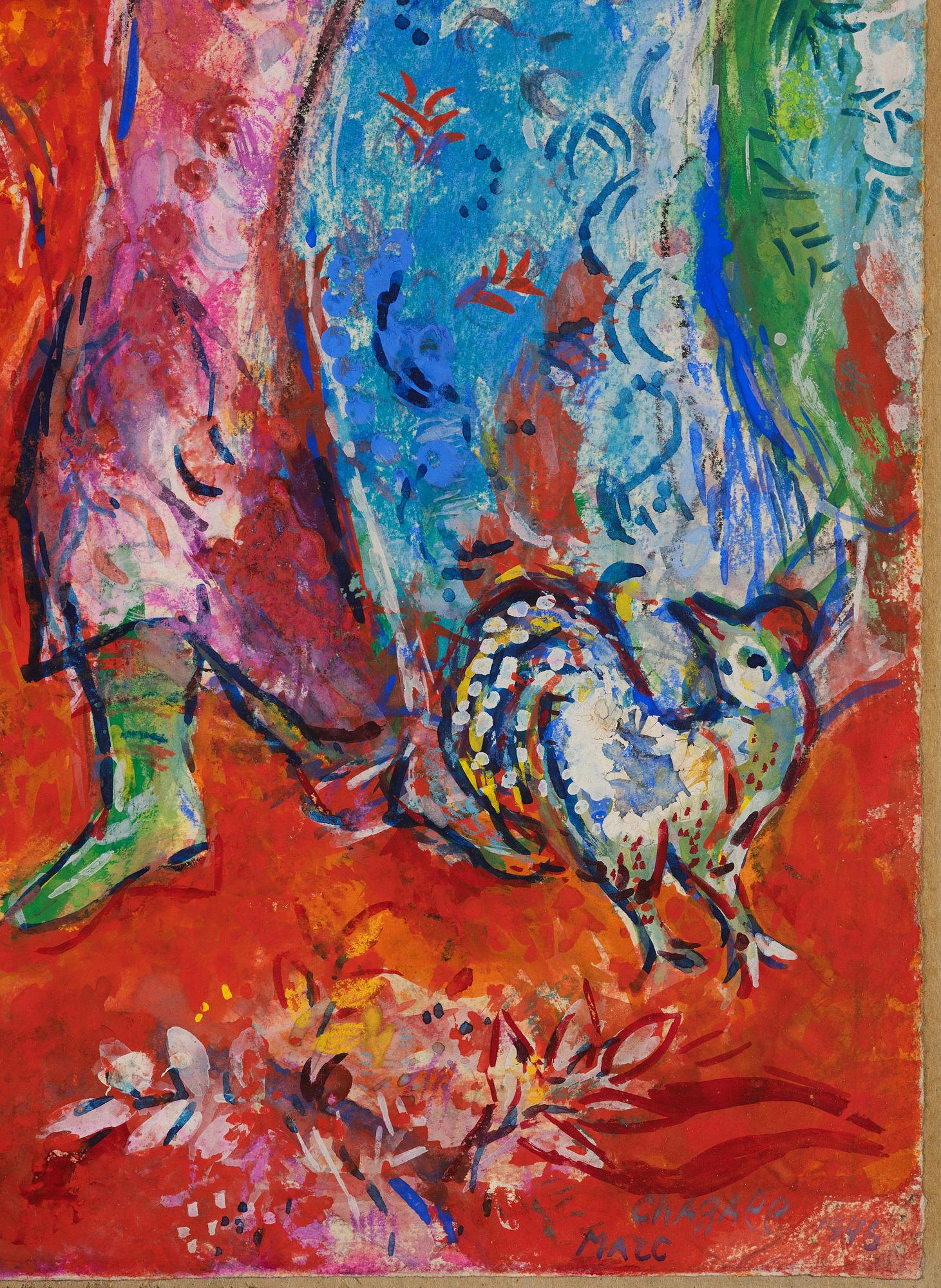
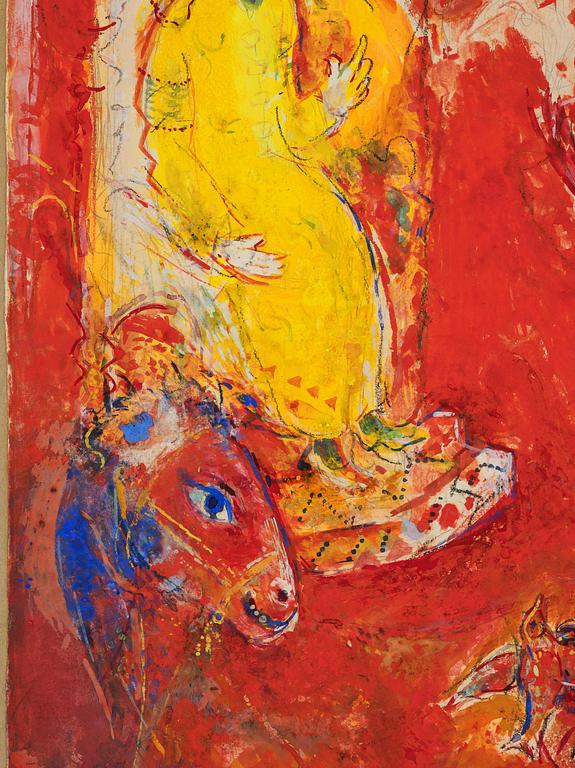
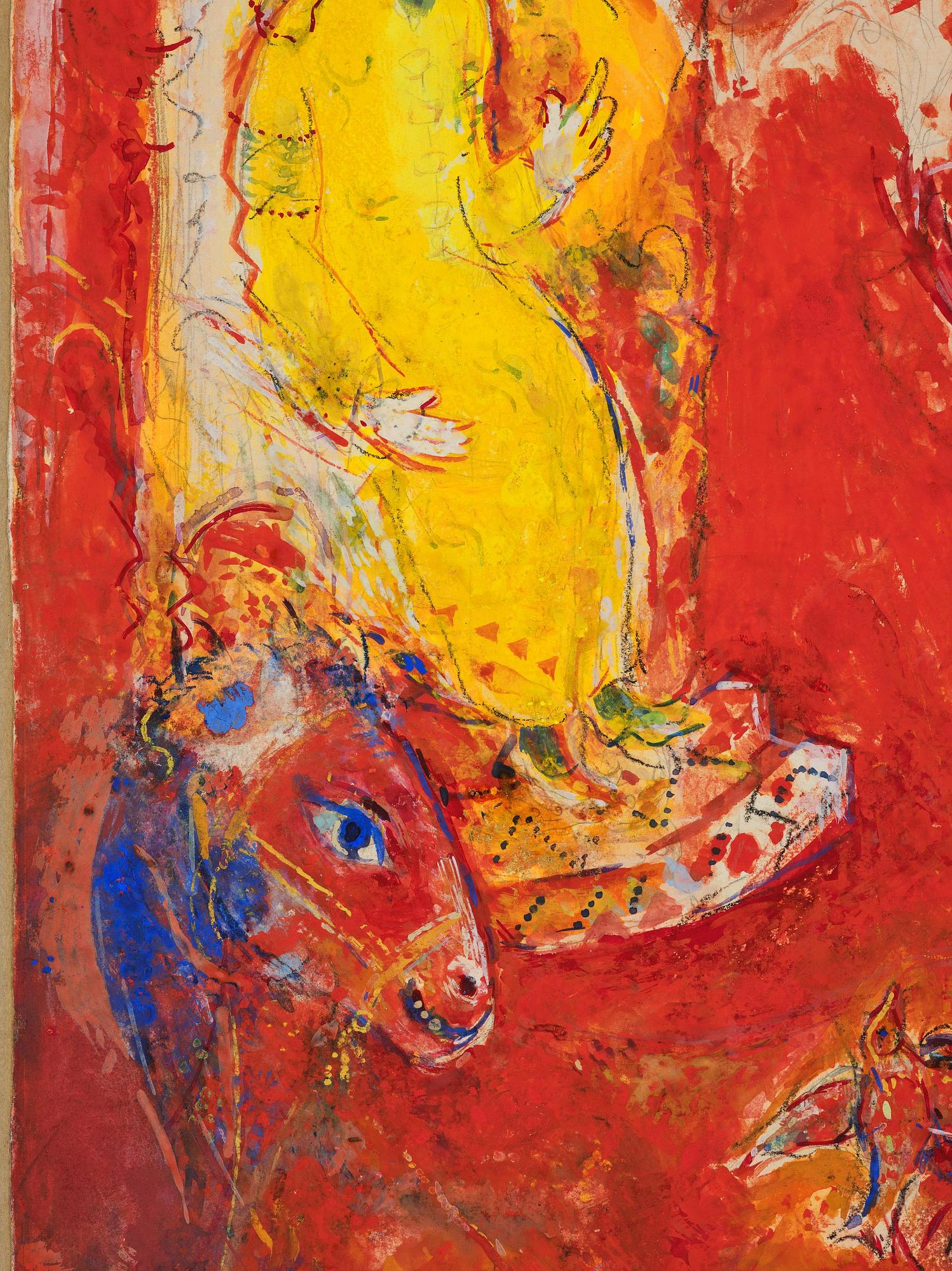
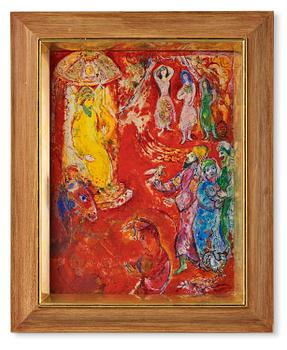
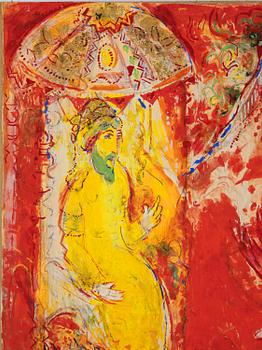
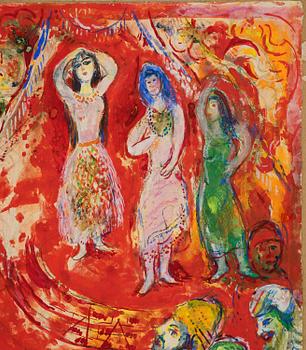
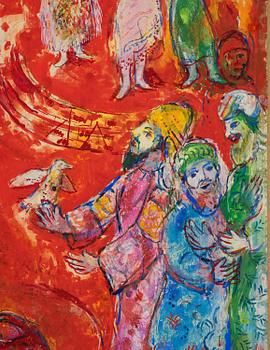
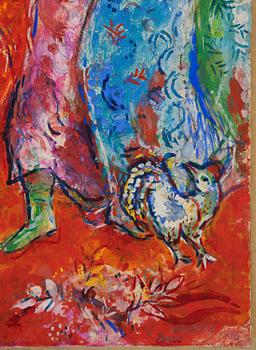
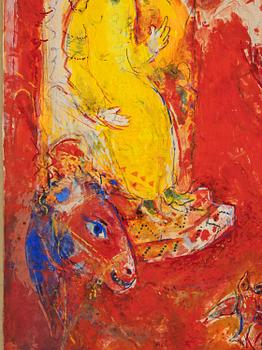
Marc Chagall (Ranska, 1887-1985) “Now the King loved science and geometry...”, from “Four Tales from the Arabian Nights”
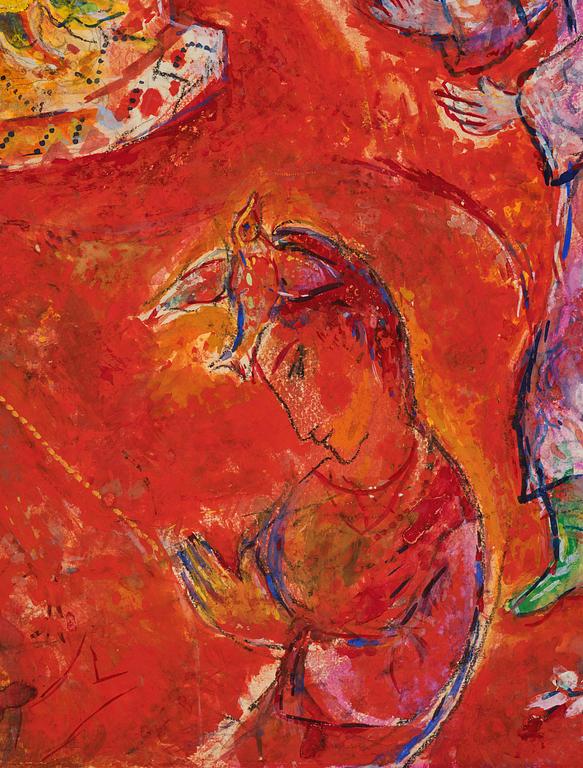
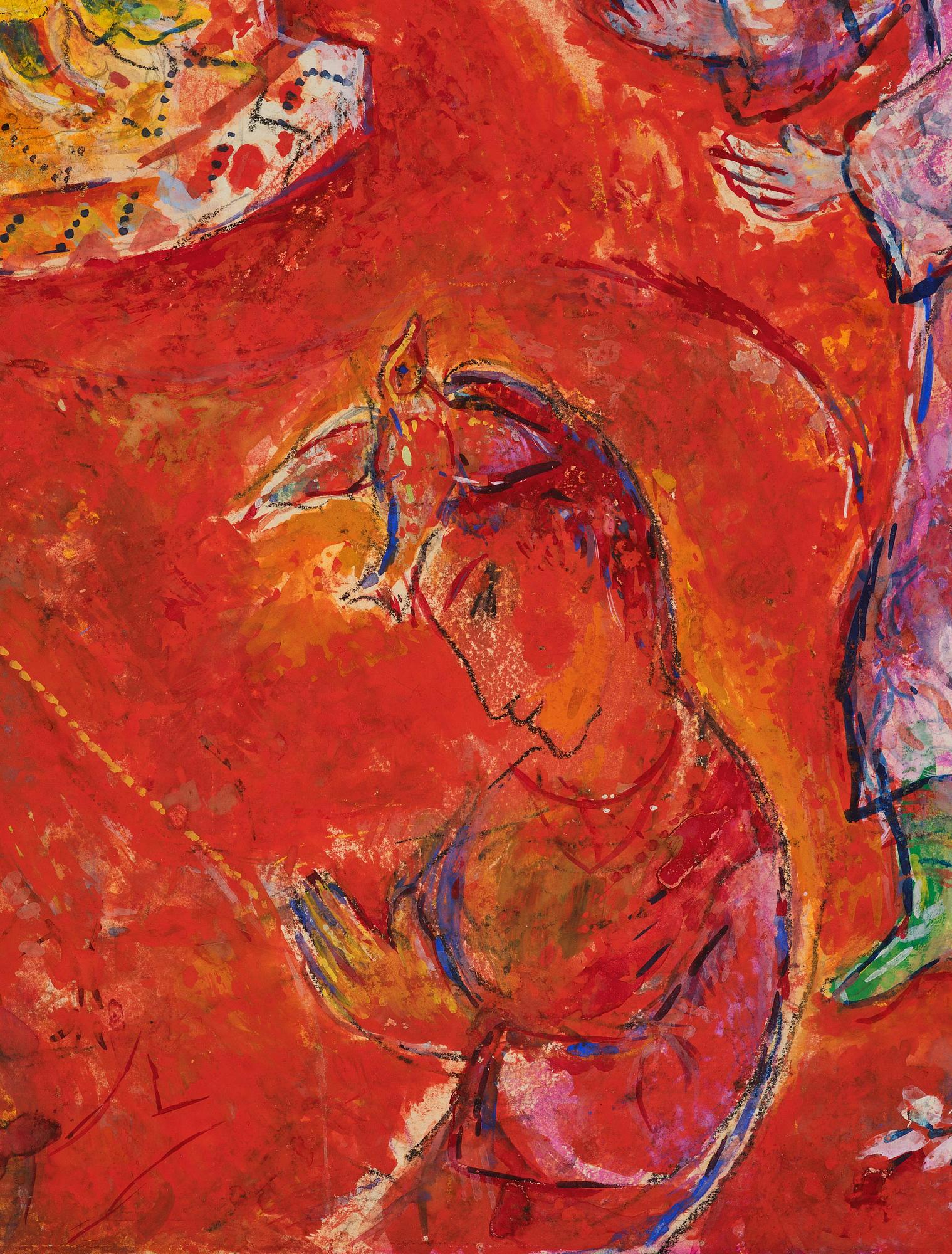
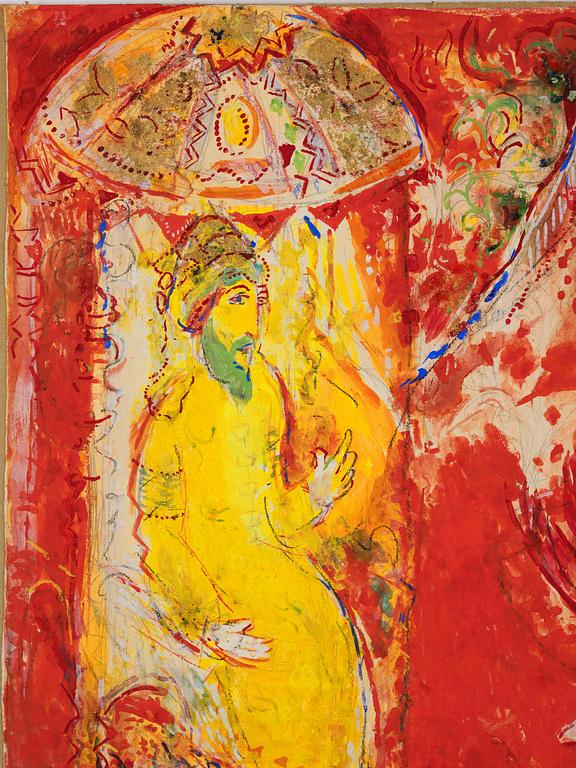
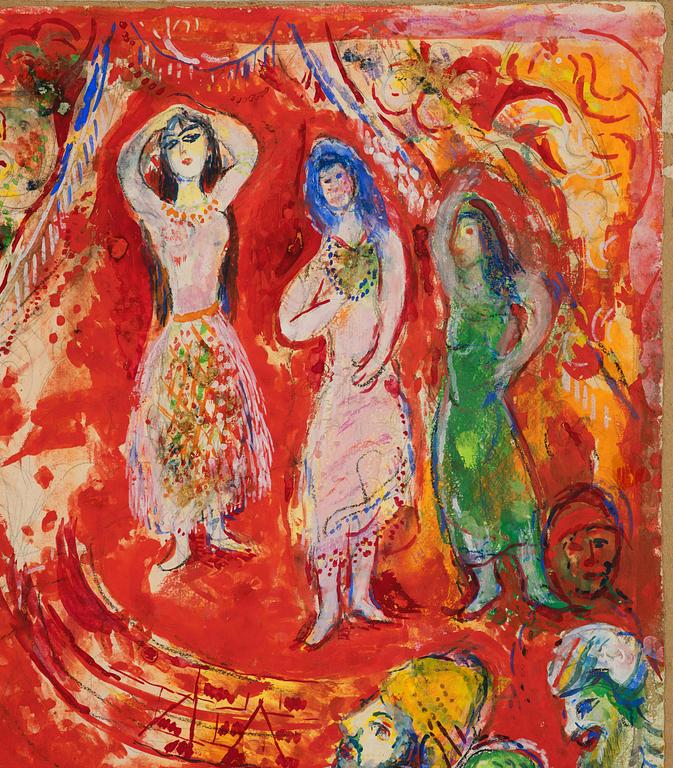
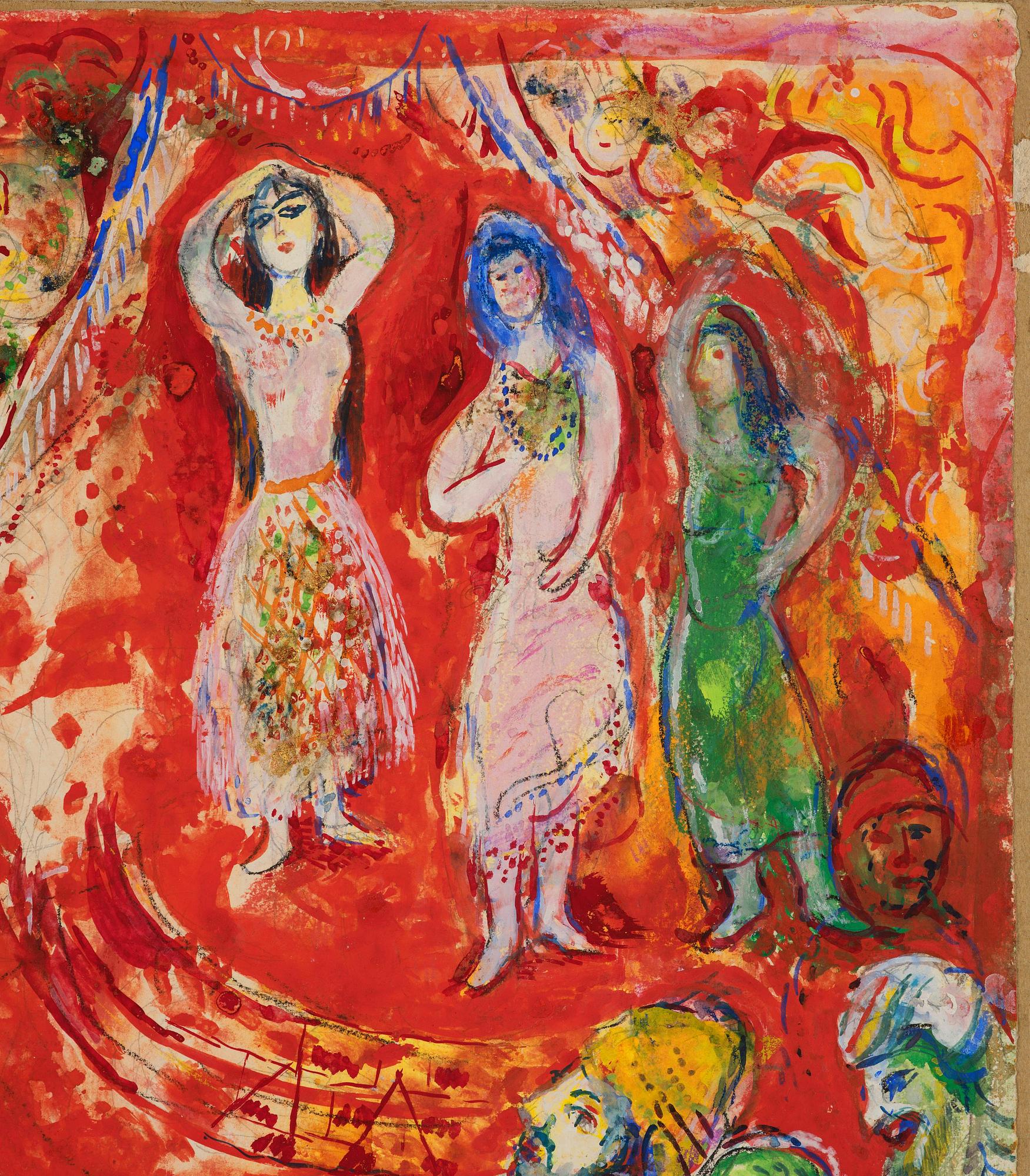
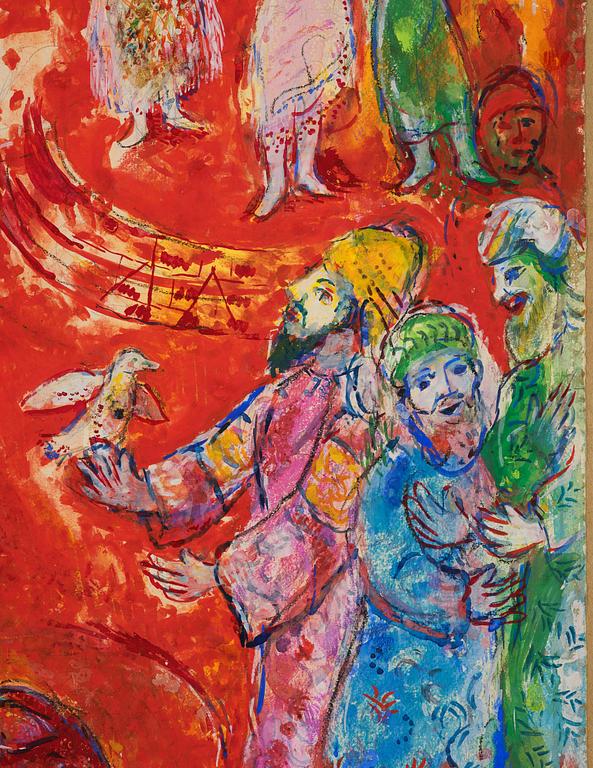
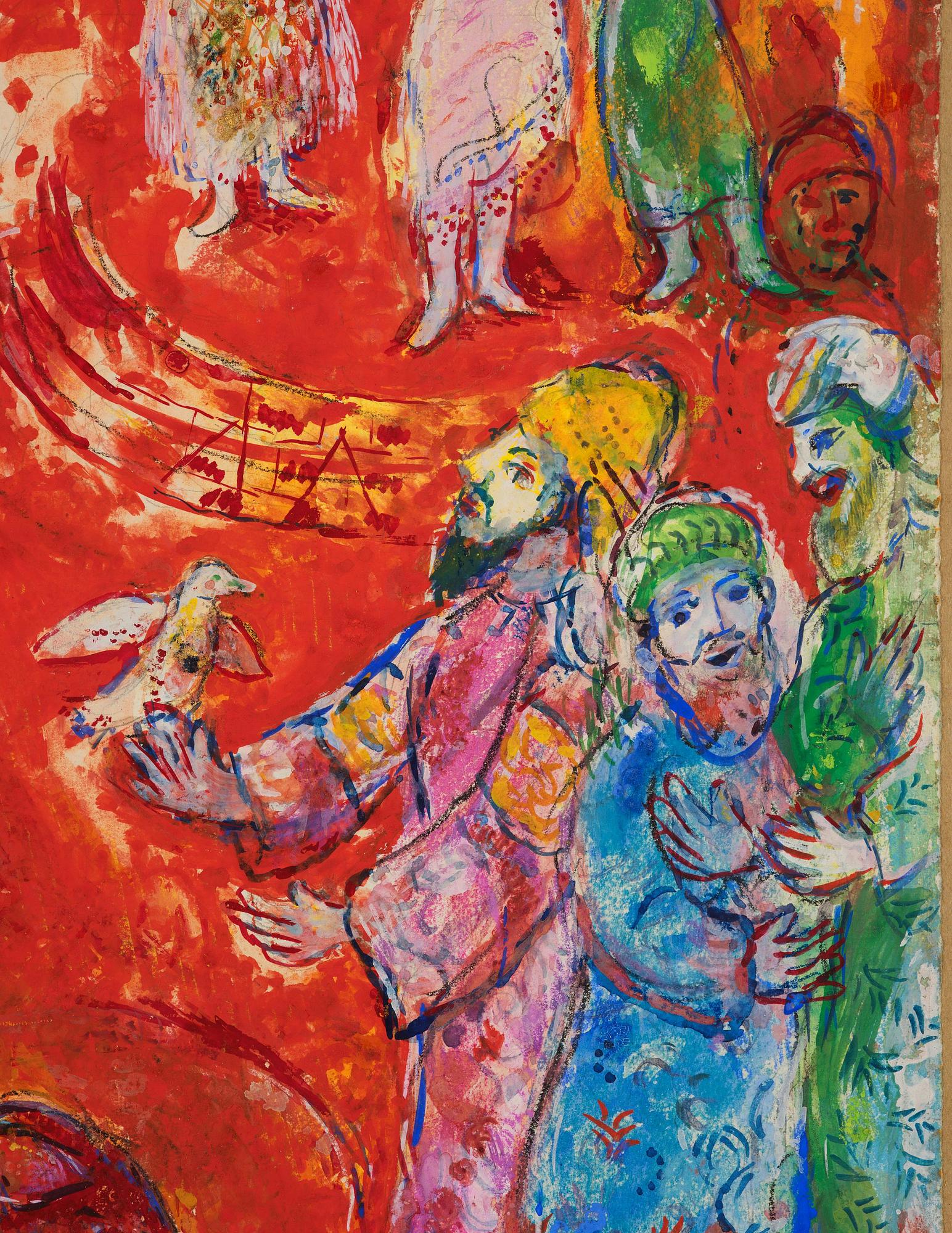
“Now the King loved science and geometry...”, from “Four Tales from the Arabian Nights”
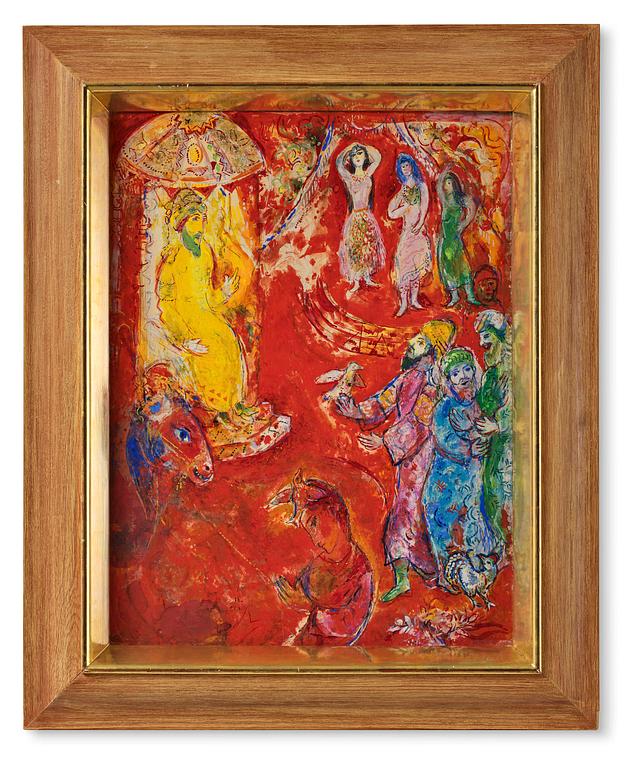
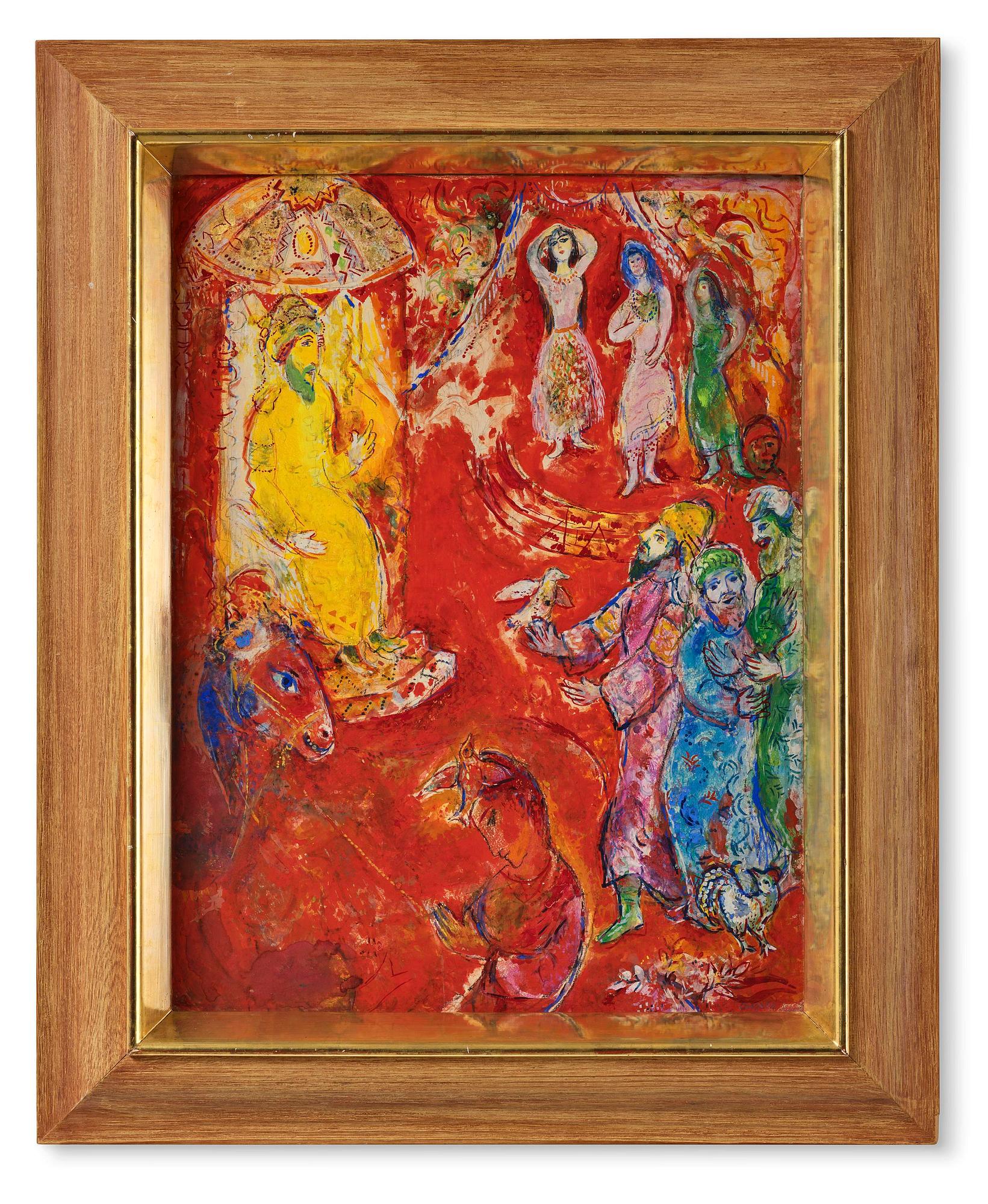
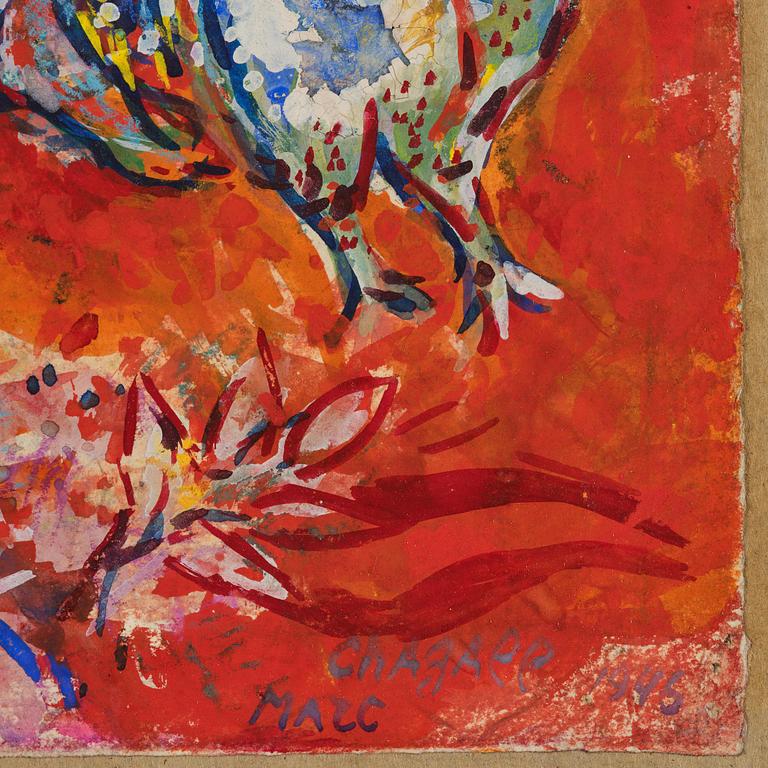
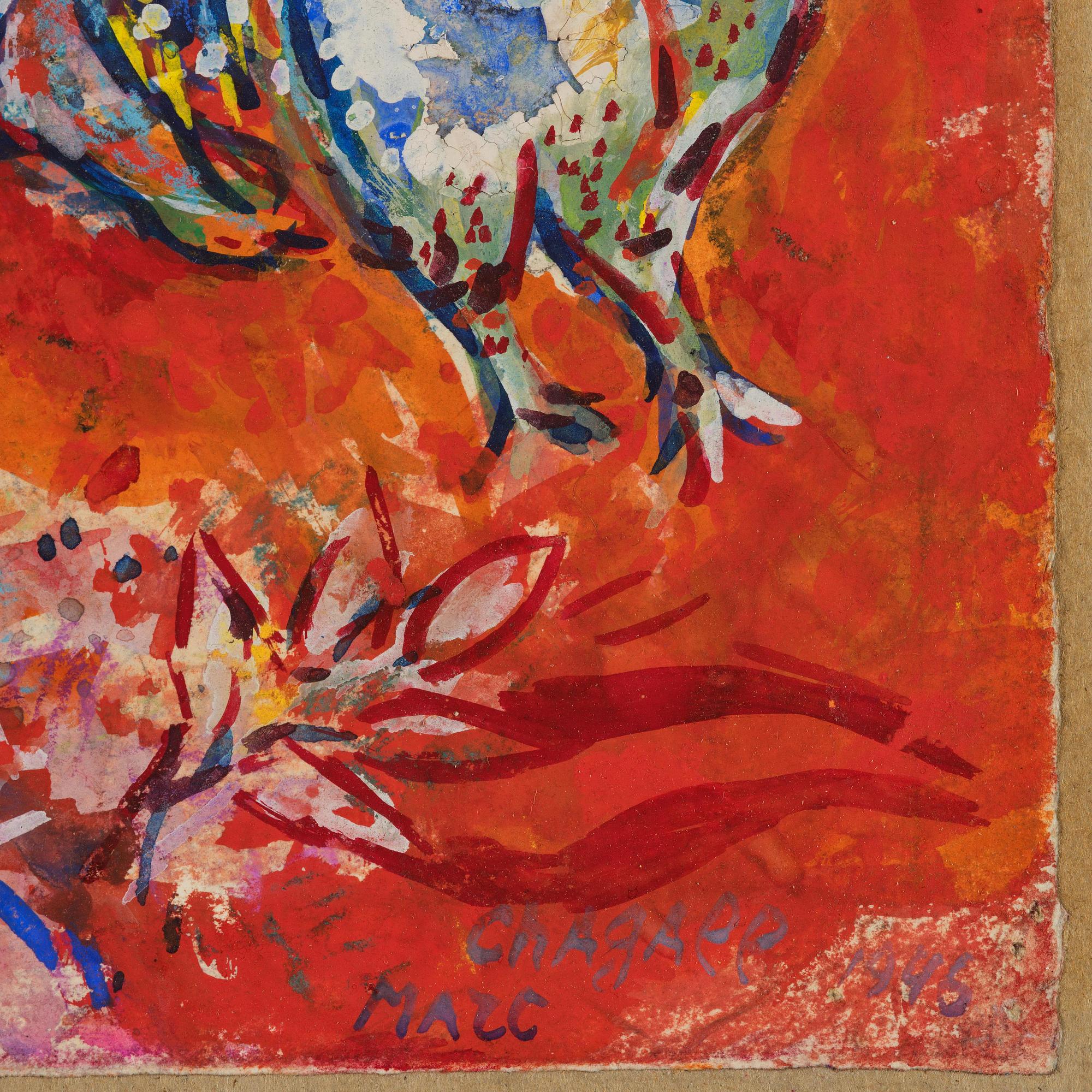
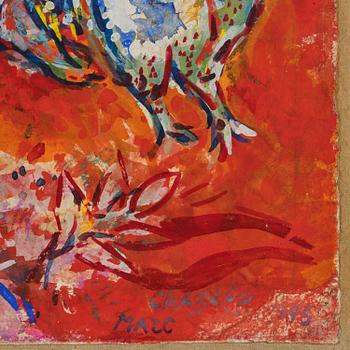
Signed Marc Chagall and dated 1946. Gouache and gold paint on paper laid down on board, 61.5 x 46 cm.
The work will be presented to the Comité Marc Chagall in Paris on 1 December 2026.
Copies of two letters from Marc Chagall to the heirs of director Falk Simons, dated 5 and 12 November 1958 respectively, accompany the work.
Alkuperä - Provenienssi
Börjessons Konsthandel, Gothenburg, Sweden.
The collection of Falk Simon (1874–1957), Gothenburg, acquired from the above around 1953.
Thence by descent to Greta Falk-Simon (1907–2004), married to Stig Munthe Sandberg (1903–1950).
Thence by descent.
Näyttelyt
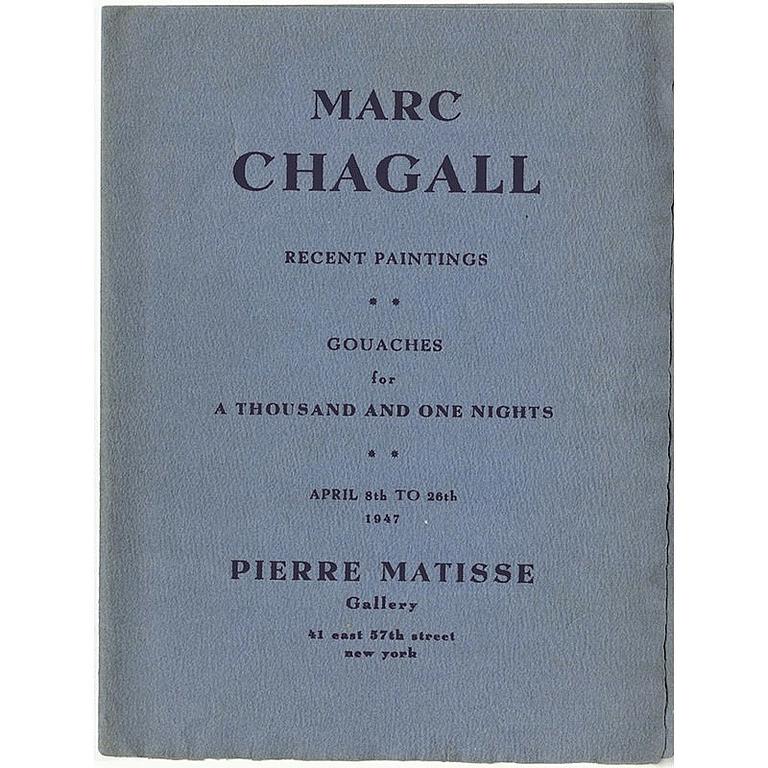
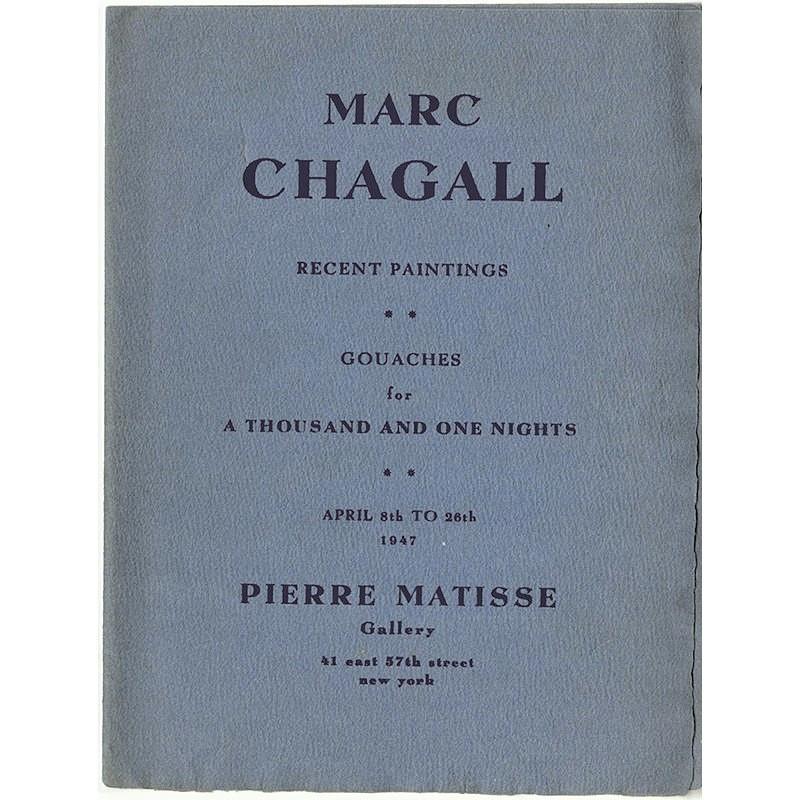
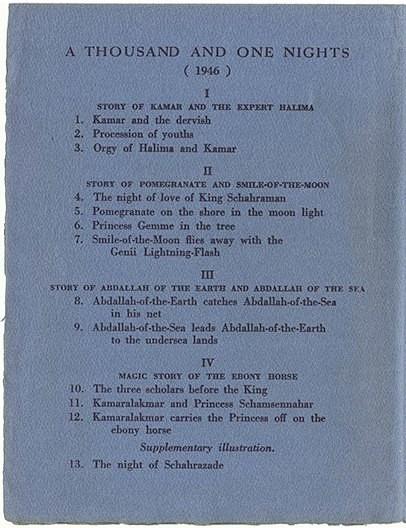
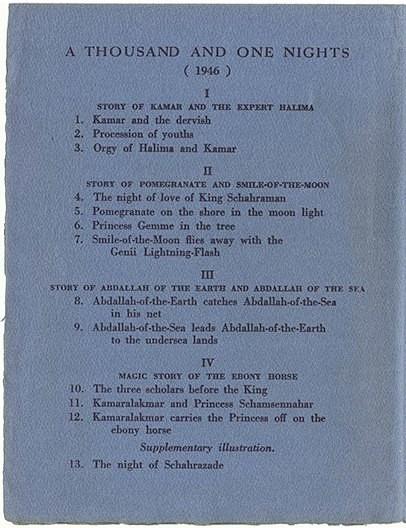
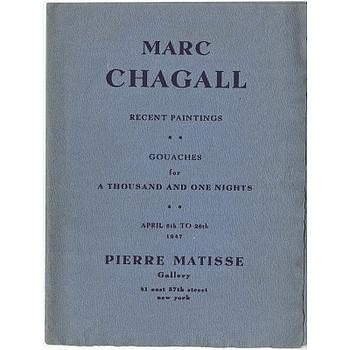
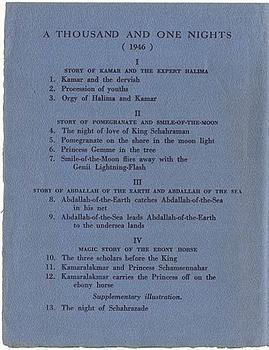
Pierre Matisse Gallery, New York, "Marc Chagall recent paintings, gouaches for A Thousand and One Nights", 1947, cat. no 10 (titled: "The three scholars before the king").
Konstsalongen Samlaren, Stockholm, "Marc Chagall - Peintures - Gouaches - Aquarelles - Lavis - Eaux fortes", 1951, kat. nr 12-25 (= "Arabian Nights").
Gothenburg Museum of Art, Falk Simon’s collection of paintings and drawings, 2–27 March 1955, cat. no 43.
Kirjallisuus
Göteborg Museum of Art, “Falk Simon’s Collection of Paintings and Drawings”, 1955, cat. no. 43, illustrated p. 23.
Muut tiedot
“Now the King loved science and geometry, and one festival day as he sat on his kingly throne there came in to him three wise men...”
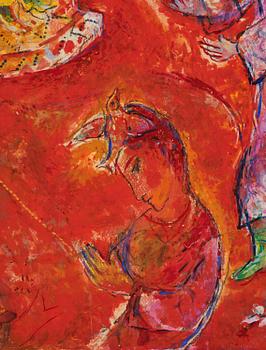
— thus begins The Tale of the Ebony Horse, taken from Sir Richard Burton’s translation of The Arabian Nights. The story opens with three wise men presenting the Persian king with wonderful gifts during a festival, among them a magical ebony horse adorned with precious stones. The horse was said to be able to fly at a dizzying speed, covering the distance of a year in a single day. When the third wise man demanded the princess’s hand in marriage in exchange for the horse, an epic journey filled with magic and adventure unfolded. Chagall depicts the scene in a luminous palette of red, orange and golden hues, in a theatrical and dreamlike composition characteristic of the Arabian Nights series.
In 1946, Marc Chagall produced thirteen gouaches with motifs from The Arabian Nights during his exile in High Falls, New York. The series is considered among the most significant works from the artist’s American period. The art historian and Chagall expert Franz Meyer described the series as “among the most marvelous works he produced in America”.
New York – exile, grief and artistic renewal
On 23 June 1941, Chagall arrived in New York with his wife Bella and their daughter Ida, having left occupied France via Marseille and Lisbon. The family had found refuge in the United States through an invitation from the Museum of Modern Art (MoMA). In New York, he re-established contact with Fernand Léger, André Masson, Piet Mondrian and André Breton, as well as with the art dealer and gallerist Pierre Matisse, son of Henri Matisse.
Following Bella’s sudden death in 1944, Chagall suffered a profound personal crisis and almost completely stopped painting for an extended period. He subsequently moved to High Falls in the north-eastern part of New York State. When he resumed his work in 1945, the motifs were characterised by love, loss, death and reunion. One of his fellow exiles was Jaques Schiffrin, who had first fled the Bolsheviks and later occupied France for New York. Schiffrin was a co-founder of the publishing house Pantheon Books, and now suggested that Chagall create the illustrations for a spectacular edition of Four Tales from the Arabian Nights, which Pantheon was planning to publish in New York.
The Arabian Nights – a world of stories
The Arabian Nights, or One Thousand and One Nights, is a collection of tales and stories originating in the Middle East and South Asia, compiled over several centuries. The overarching story concerns the Persian king Shahriâr and his new bride, Scheherazade. Convinced that all women are untrustworthy, the king has resolved never to be deceived again. Each evening, he marries a new young woman, spends the night with her and has her executed at dawn. To escape death, Scheherazade tells a tale to King Shahriâr. Skillfully weaving one story into another, she ensures that, when dawn arrives, the king is so eager to hear how it will end that he allows Scheherazade to live for another day. The stories vary widely and include historical tales, love stories, tragedies, comedies, poems, burlesques and various forms of eroticism.
Chagall carefully selected four stories to illustrate. Through his distinctive visual world, where dream, fantasy, love and mysticism converge, he created thirteen exquisite paintings that later formed the basis of the graphic series "Four Tales from the Arabian Nights", published by Pantheon Books in New York in 1948. The project marked Chagall’s first significant encounter with colour lithography, a medium that would become highly important to his subsequent artistic practice.
Significance and provenance
The series occupies a prominent place in Chagall’s American oeuvre and brings together several of his central motifs: love, loss, dreams and the supernatural. At the same time, the stories’ Oriental fairy-tale world gave him the opportunity to explore new motifs and visual expressions.
The complete series of thirteen gouaches was acquired around 1953 by the Swedish collector, managing director Falk Simon, through Börjessons Konsthandel in Gothenburg. That Chagall himself regarded the series as being of particular importance is evidenced by two letters from November 1958, in which he personally appealed to one of Falk Simon’s heirs to lend works from the series for the major international exhibition Marc Chagall: Ausstellung 1959, which was shown in Hamburg, Munich and Paris. Copies of both letters, dated 5 and 12 November 1958 respectively, accompany the works.
The two gouaches, catalogue nos. 814 and 815, are therefore not only examples of Chagall’s poetic and imaginative visual world, but also part of a brilliant series that was highly valued by the artist himself.
From Falk Simon's collection
Director Falk Simon (1874–1957) was one of Sweden’s foremost and most distinguished collectors of decorative arts, silver and fine art during the first half of the 20th century. Bukowskis is delighted to present, in this auction, a selection of objects from various periods, drawn from Falk Simon’s highly personal collection. Works of art from the collection are included under catalogue numbers 814–816 and 818–820.
Like shimmering gemstones, the two magnificent gouaches by Marc Chagall, executed in High Falls, New York, in 1946, radiate brilliance. The complete suite comprises thirteen gouaches inspired by the Oriental folk tale One Thousand and One Nights. The art historian and Chagall expert Franz Meyer described the series as “a suite of gouaches ranking among the most outstanding works he created in the United States”. The original gouaches served as models for the celebrated lithographic suite One Thousand and One Nights, published in 1948.
A small oil painting by Albert Edelfelt, executed in Paris in 1886, is a charming preparatory study for the larger painting In the Luxembourg Gardens, now held in the collections of the Ateneum Art Museum. Camille Pissarro’s Débardeurs – Charbonniers à Rouen is characteristic of his depictions of manual labourers in the late 19th century. The dark palette and interplay of light and shadow heighten the sense of the arduous nature of their work.
Falk Simon himself was active in Gothenburg and took a keen interest in the younger, vibrant artists of the Gothenburg Colourists movement, represented here by two works by Ivan Ivarson.
Falk Simon – A Passionate Art Collector
Falk Simon was a distinguished Swedish businessman, art collector and patron of the arts, based in Gothenburg. Initially, his collecting interests centred primarily on high-quality decorative arts, particularly antique silver. Over the years, his passion for collecting evolved to encompass fine art and sculpture by artists of his own time.
Falk Simon was a frequent visitor to exhibitions of contemporary art and made almost all his acquisitions independently. Works were often purchased directly from the artists themselves, or acquired through some of Sweden’s most established art dealers, including Svensk-Franska Konstgalleriet, Bukowskis, Färg och Form, Fritzes and Stenmans in Stockholm, and, in later years, Börjessons Konsthandel in Gothenburg. Falk Simon maintained close ties with the contemporary art scene and was always keen to discover new talent.
His collection soon came to be regarded as one of the most distinguished in Sweden. It brought together Swedish and international artists and spanned several artistic periods. In 1955, a catalogue of the collection was compiled, featuring everything from important works by 19th-century painters to young Swedish Expressionists, represented by several of their most significant works. The collection attracted considerable international attention, notably for Pablo Picasso’s The Blue Stocking, painted in 1903, and Marc Chagall’s thirteen gouaches comprising the suite One Thousand and One Nights.
Falk Simon’s deep interest in art was passed on to his daughter, Greta Falk-Simon (1907–2004), who trained as an artist and married the painter and draughtsman Stig Munthe-Sandberg (1903–1950). A considerable number of paintings by Greta and her husband, Stig Munthe-Sandberg, were included in Falk Simon’s collection.
Lisätietoja ja kuntoraportit

Mitä kuljetus maksaa?
Toimituksen voi tilata vain ottamalla yhteyttä osoitteeseen specialdelivery@bukowskis.com.
Kuuluu jälleenmyyntikorvauksen piiriin
Tietoa ostamisesta
Kuvan käyttöoikeudet
Tämän tietokannan taideteokset ovat tekijänoikeudella suojattuja, eikä niitä saa kopioida ilman oikeudenhaltijoiden lupaa. Teokset kopioidaan tässä tietokannassa Bildupphovsrättin lisenssillä.

Muiden katsomia kohteita