John Bauer (Ruotsi, 1882-1918) Princess and Troll
Princess and Troll
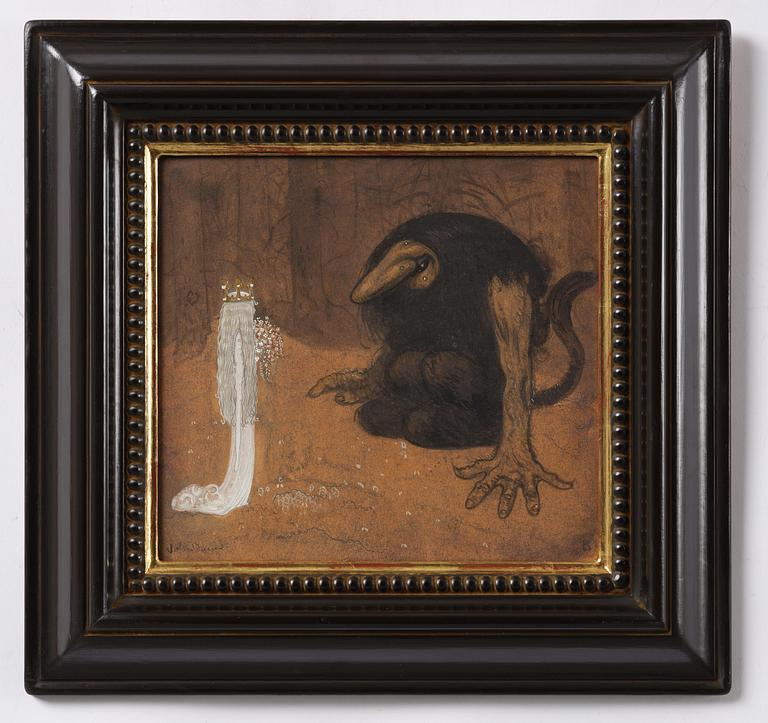
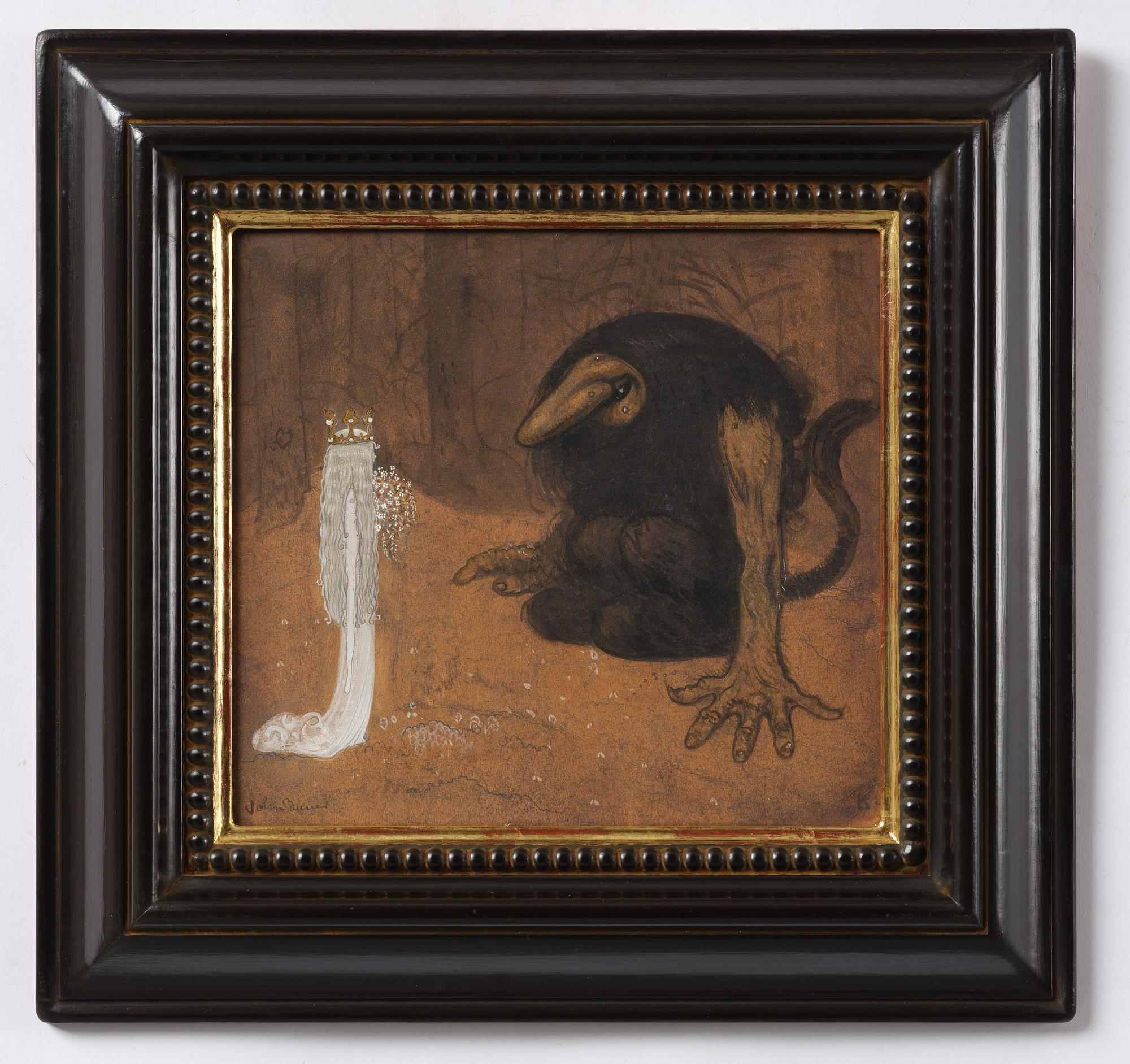
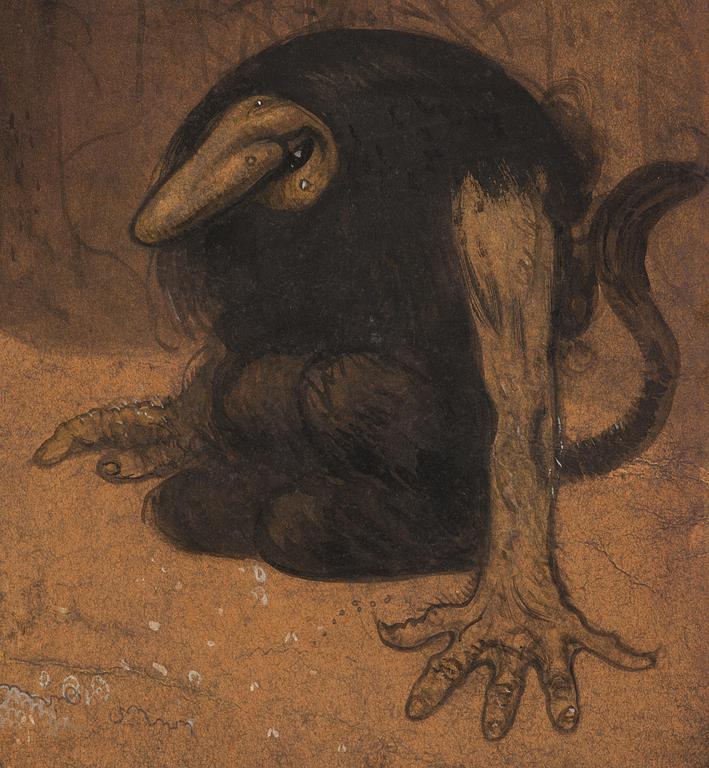
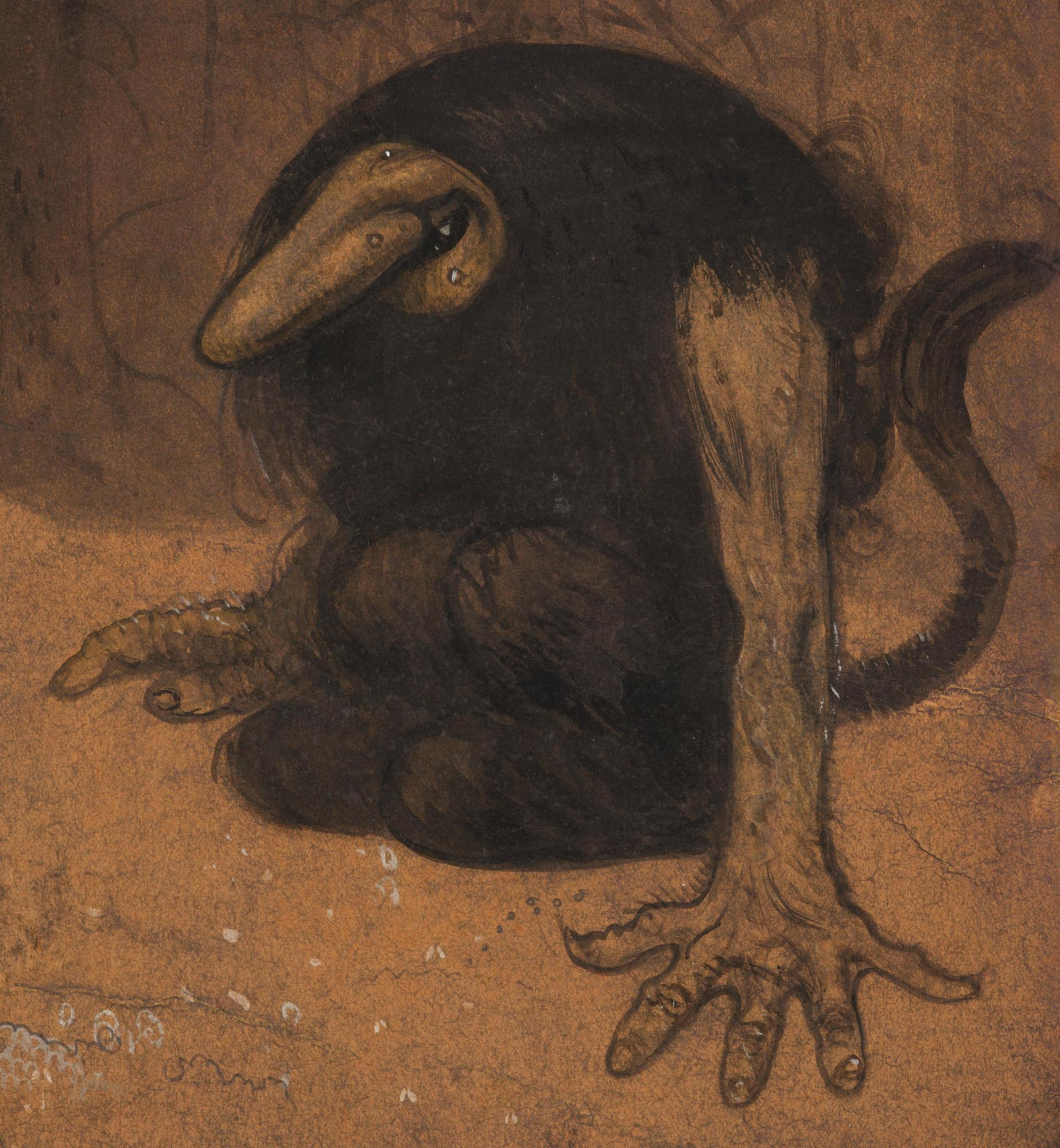
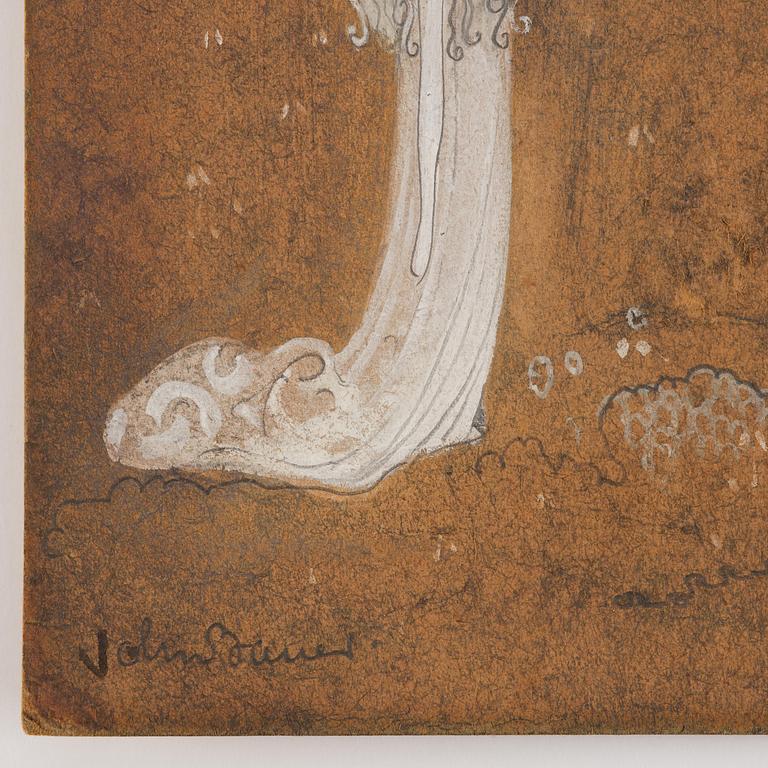
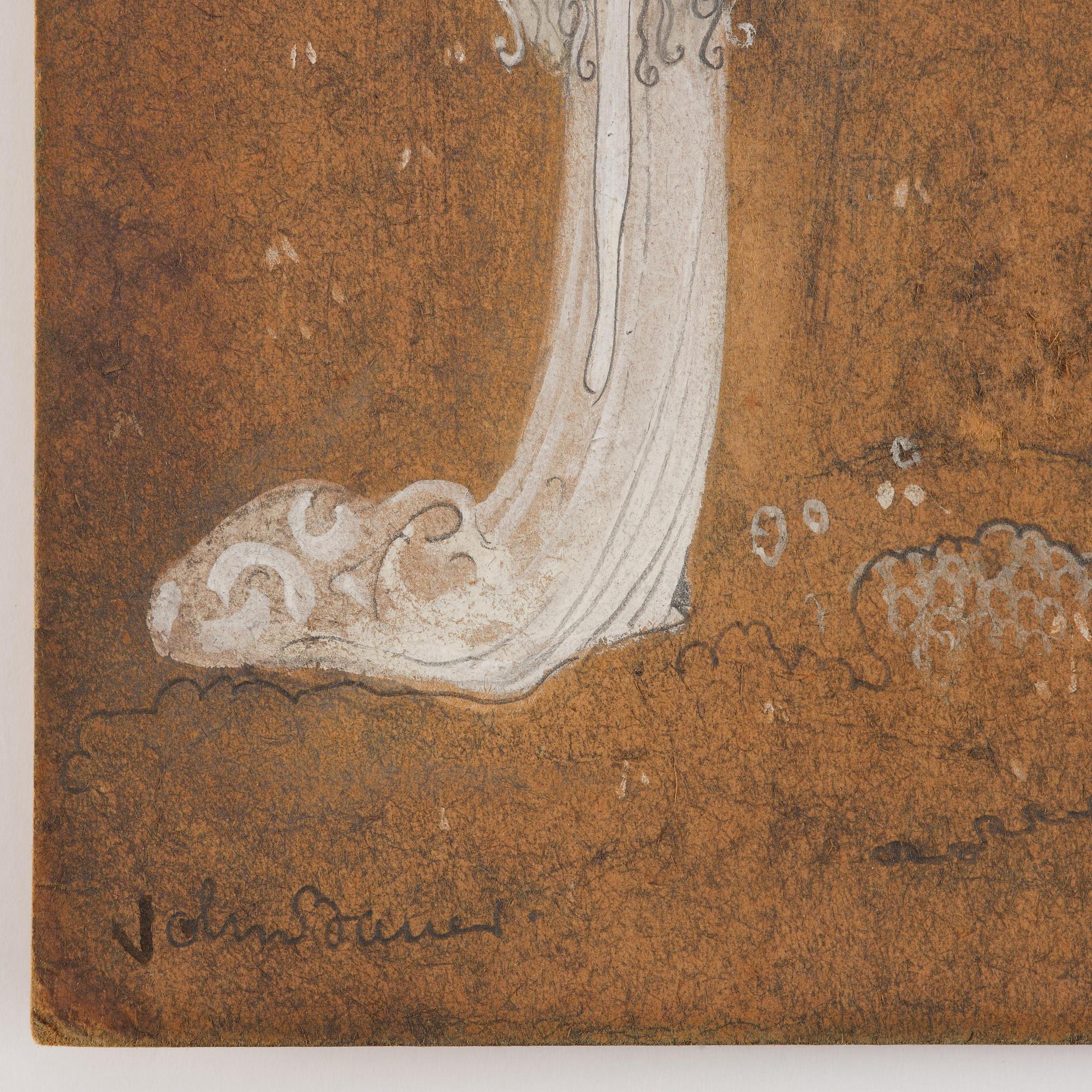
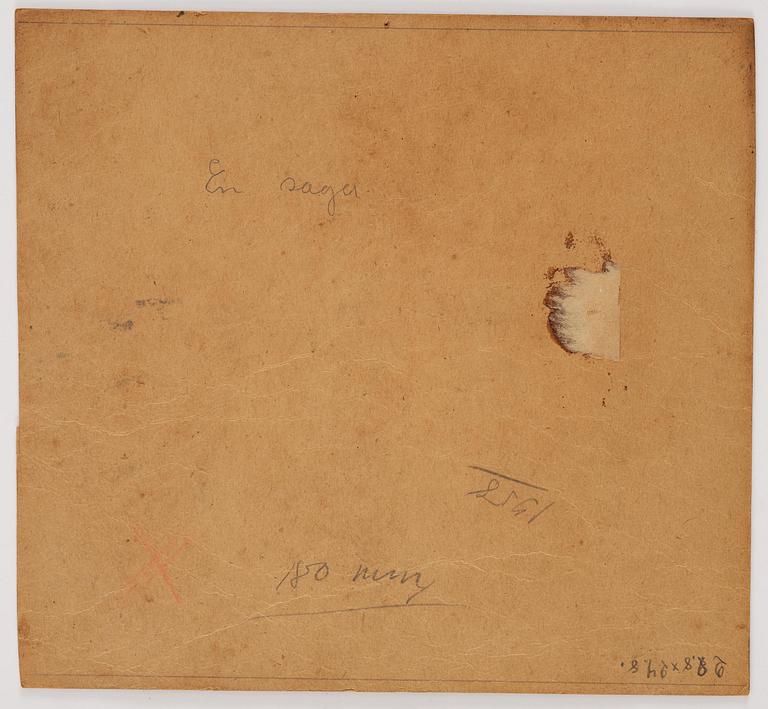
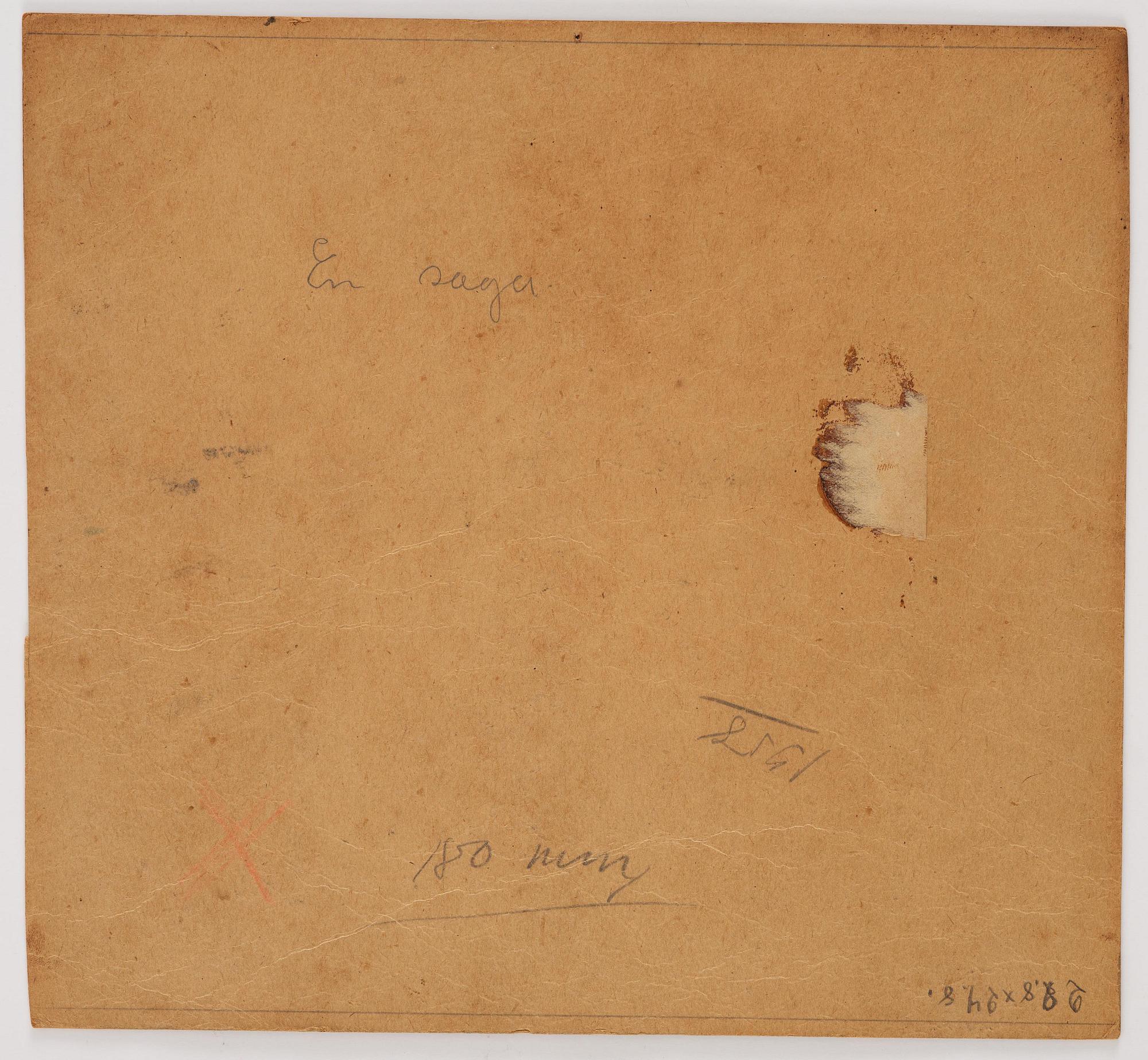
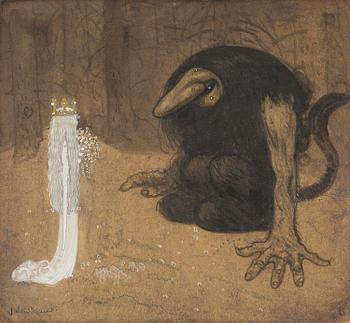
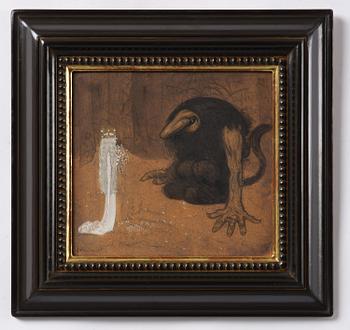
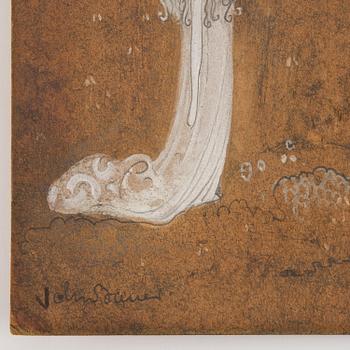
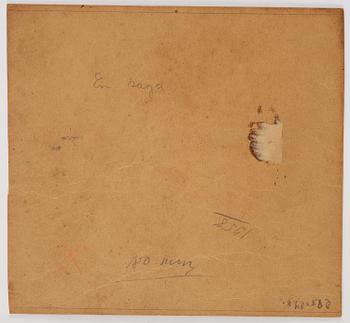
Signed JB and John Bauer in pencil. Ink, watercolour heightened with white and gold paint on paper, 23.5 x 25.4 cm. Inscribed verso: “En saga" (A Fairy Tale).
Alkuperä - Provenienssi
Shipowner Arnold Wilson (1883–1930) and Kerstin Wilson, née Lignell (1887–1969).
Thence by descent to the present owner.
Näyttelyt
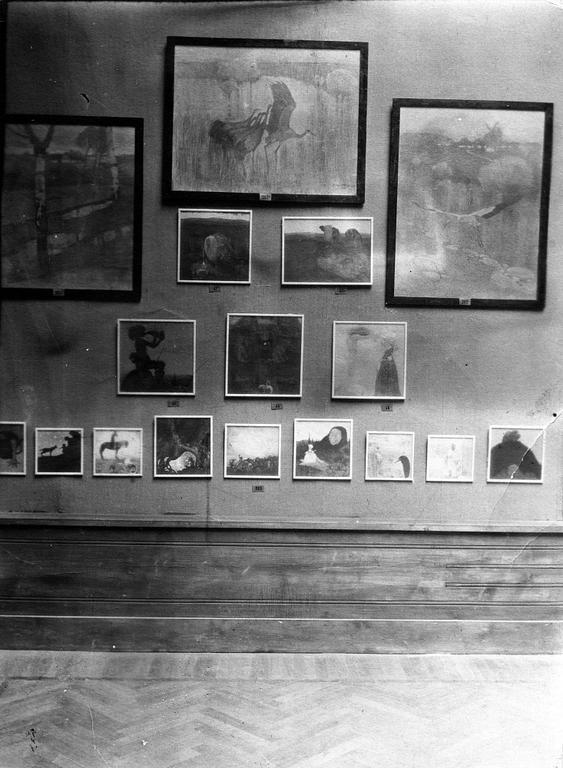
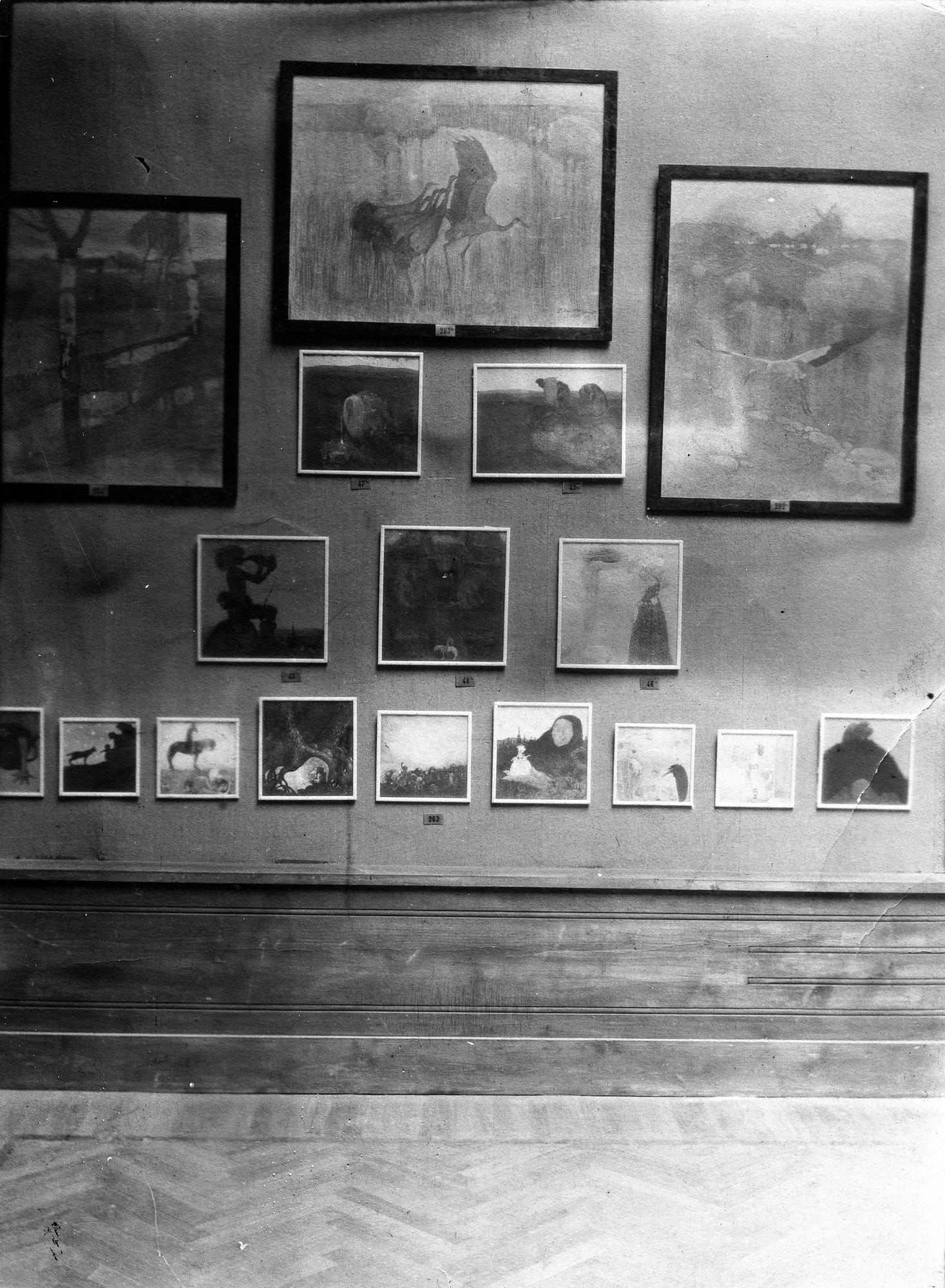
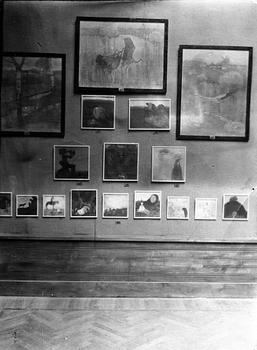
The work in the auction is partly visible in a black-and-white photograph from an early exhibition of works by John Bauer (photograph inv. no. JM.1988‑26-135 at Jönköpings Läns museum).
Muut tiedot
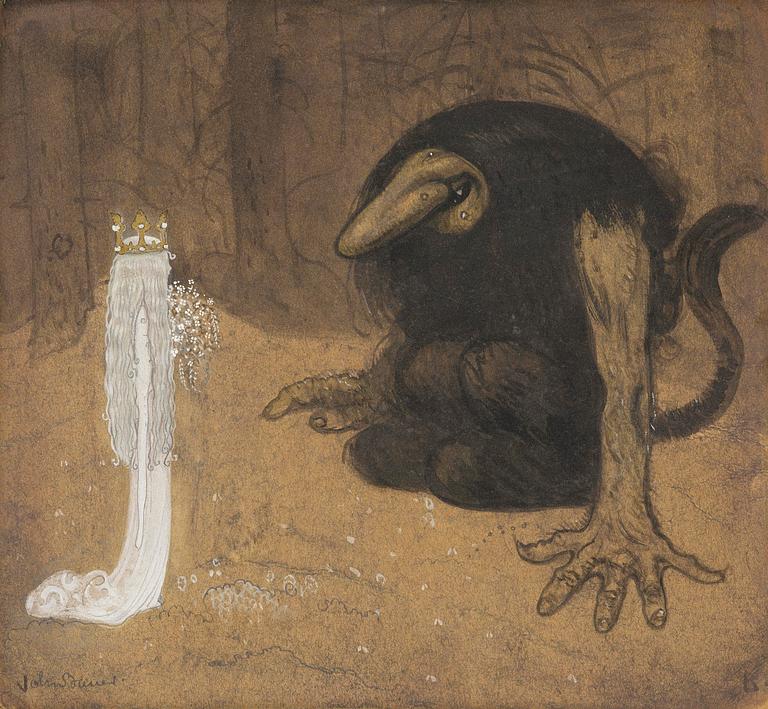
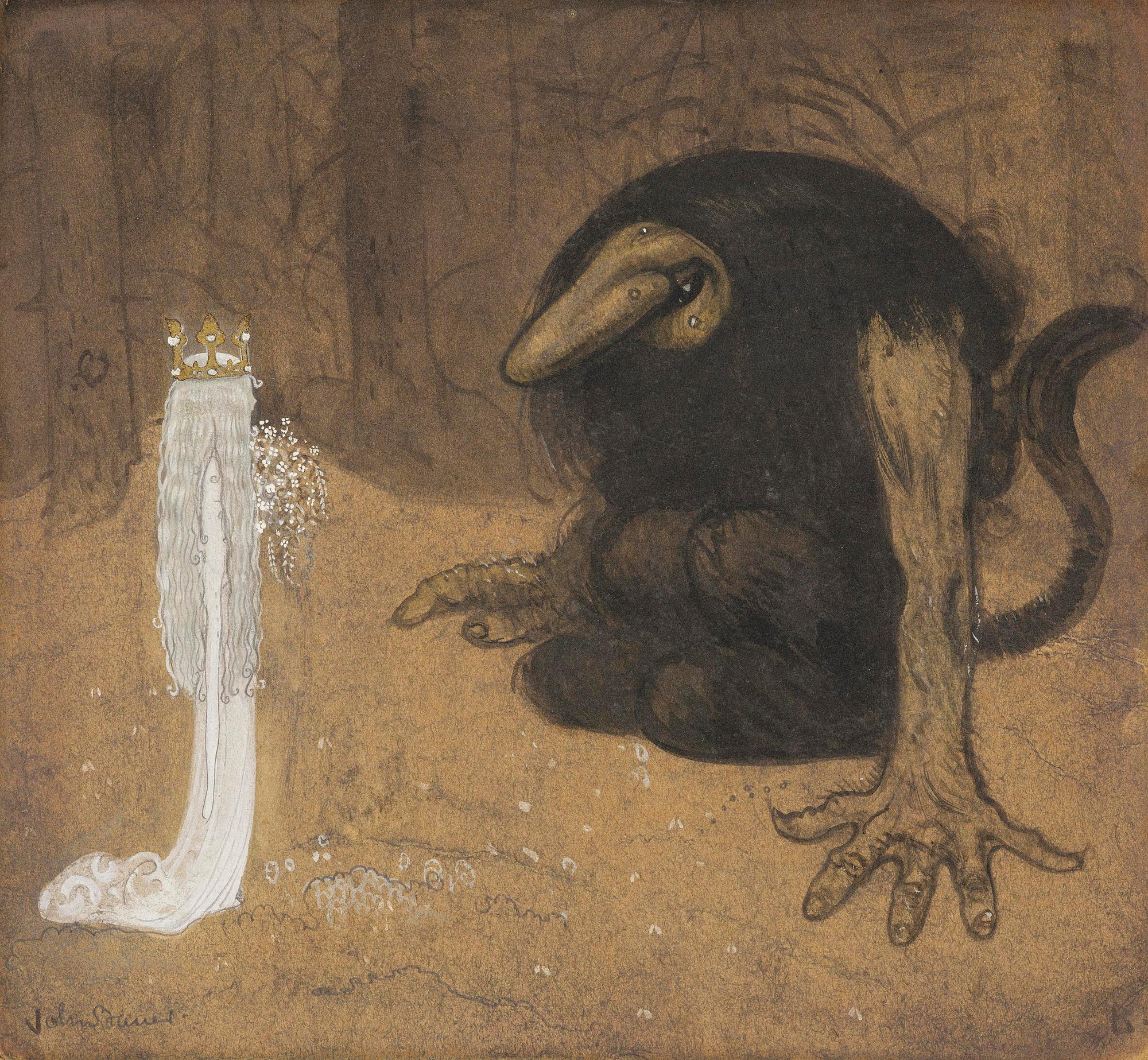
Deep within the Nordic fairy-tale forest, where spruce and pine trees rise among moss-covered rocks, John Bauer’s pictorial world takes shape. Here, both the bright, vulnerable princess and the forest’s otherworldly beings have a place: trolls who may be curious, threatening or almost tender. In ”Prinsessa och troll”, these opposites come together in an unusually evocative scene.
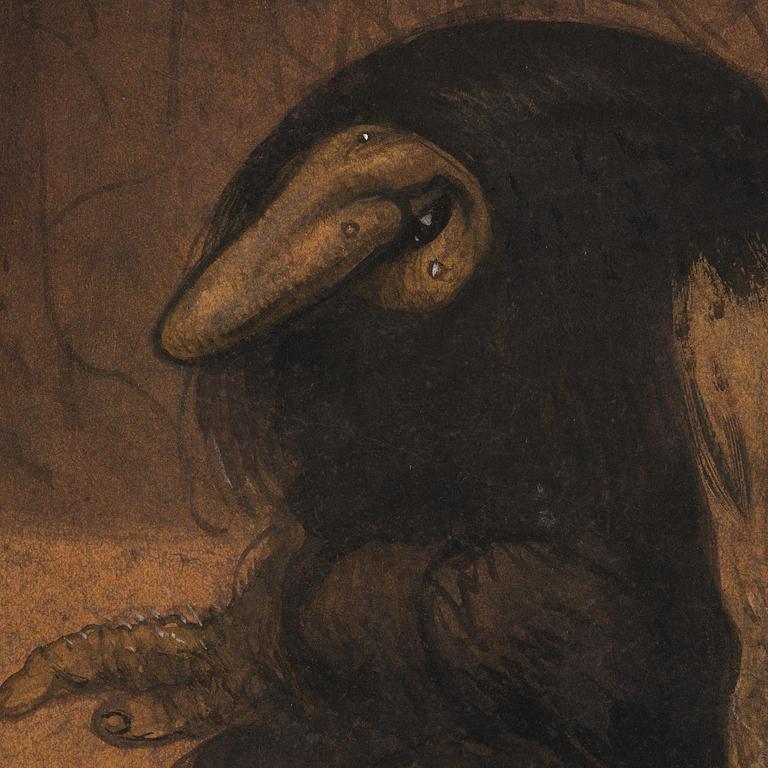
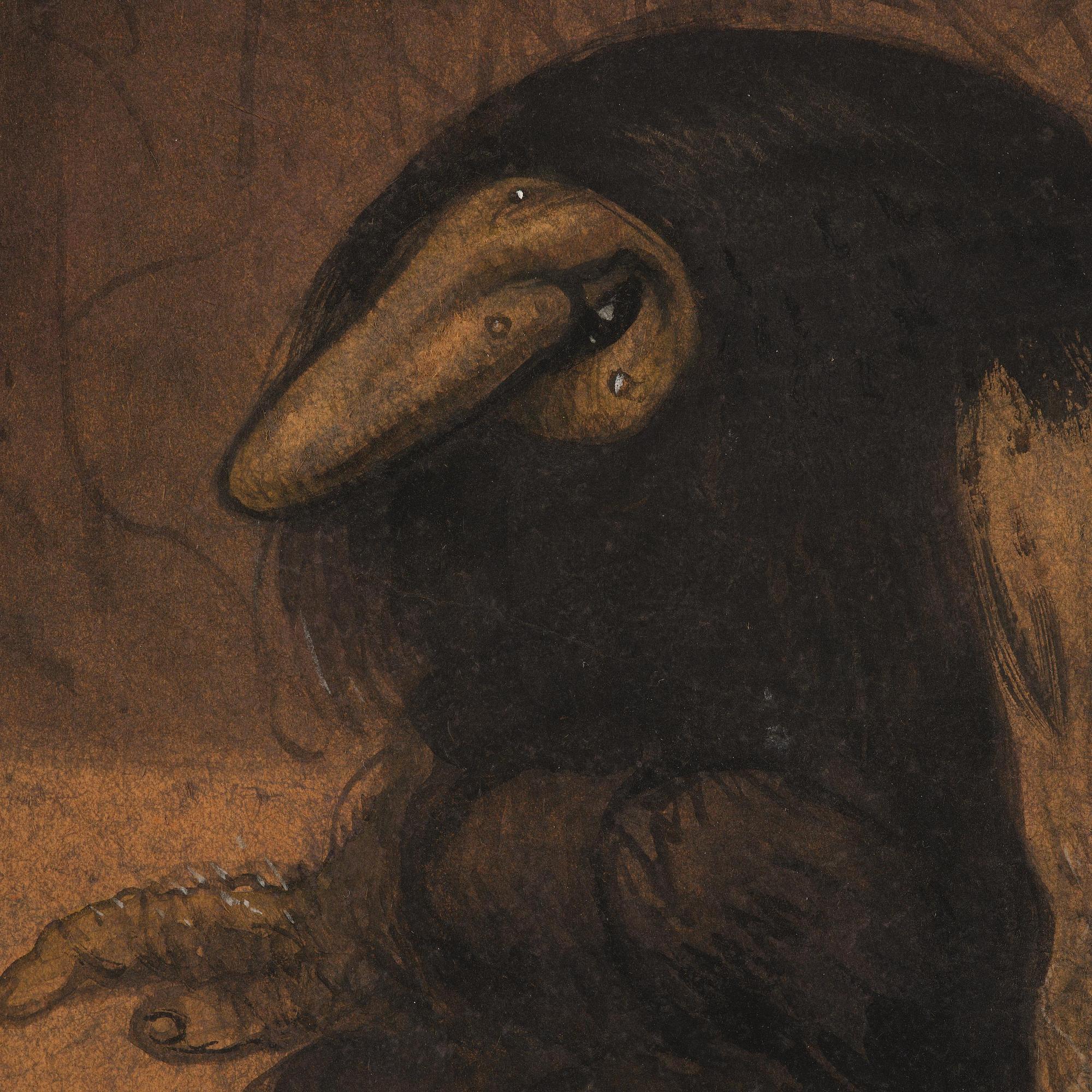
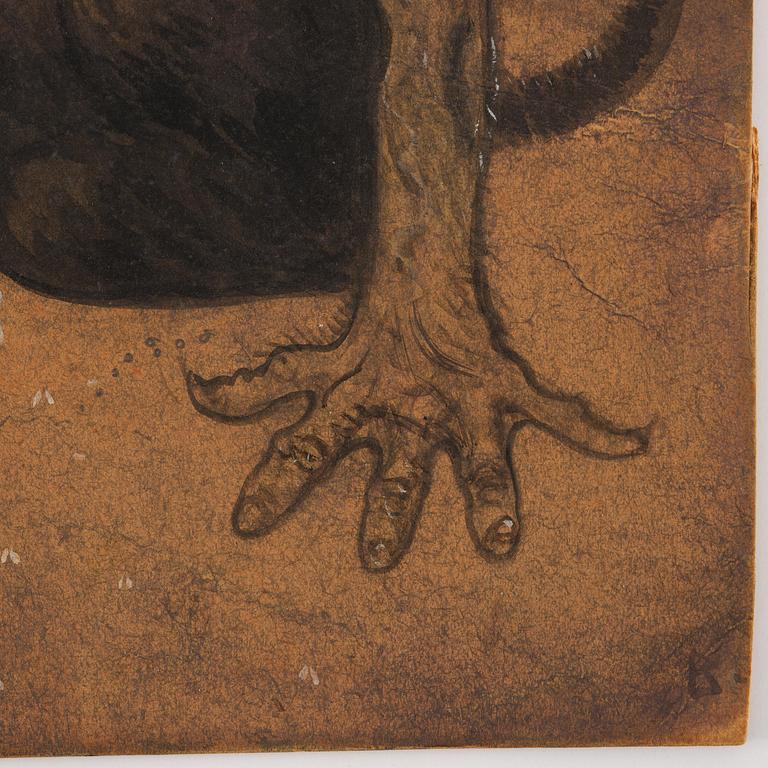
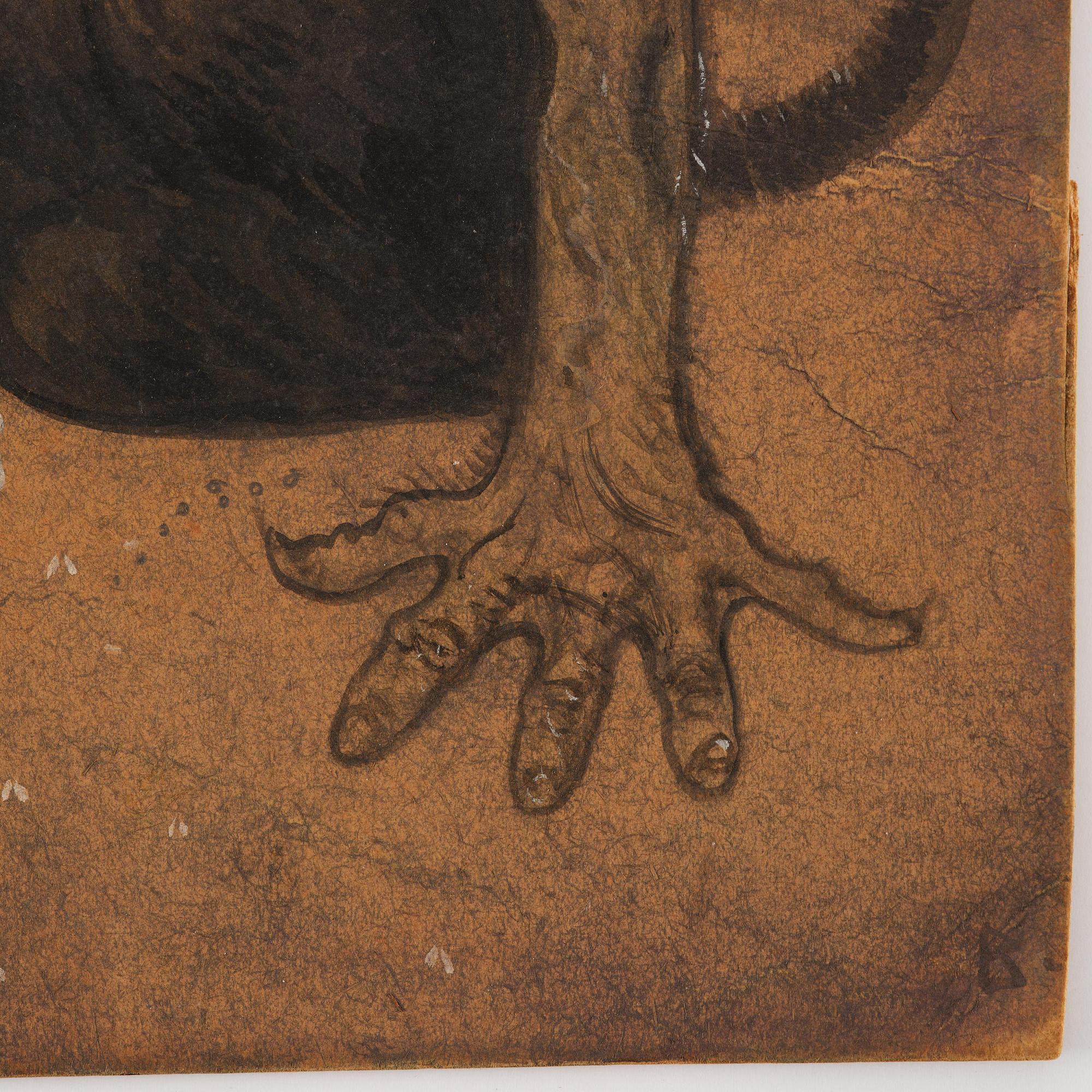
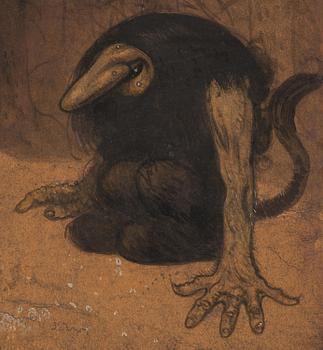
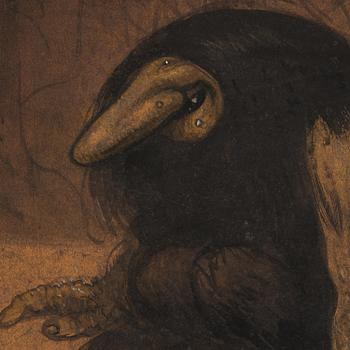
Bauer’s princesses, trolls and fairy-tale creatures are among the motifs that most clearly encapsulate his artistic output. Already around 1900, fantastical figures began to emerge in his studies of nature. The early trolls seem to grow out of the stones and roots of the forest; over time, they became more angular and grotesque, often with exaggerated features. Yet they never appear as isolated figures. They are part of the landscape, as natural a presence as the gnarled trunks and dark moss.
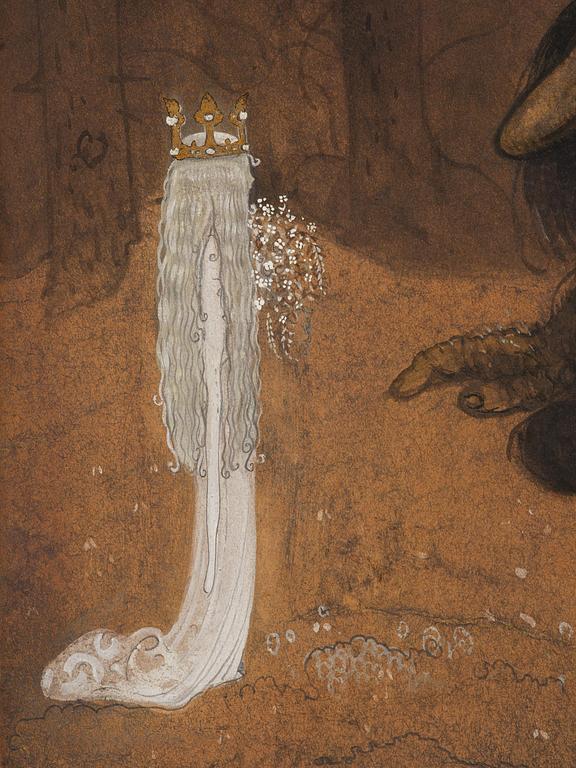
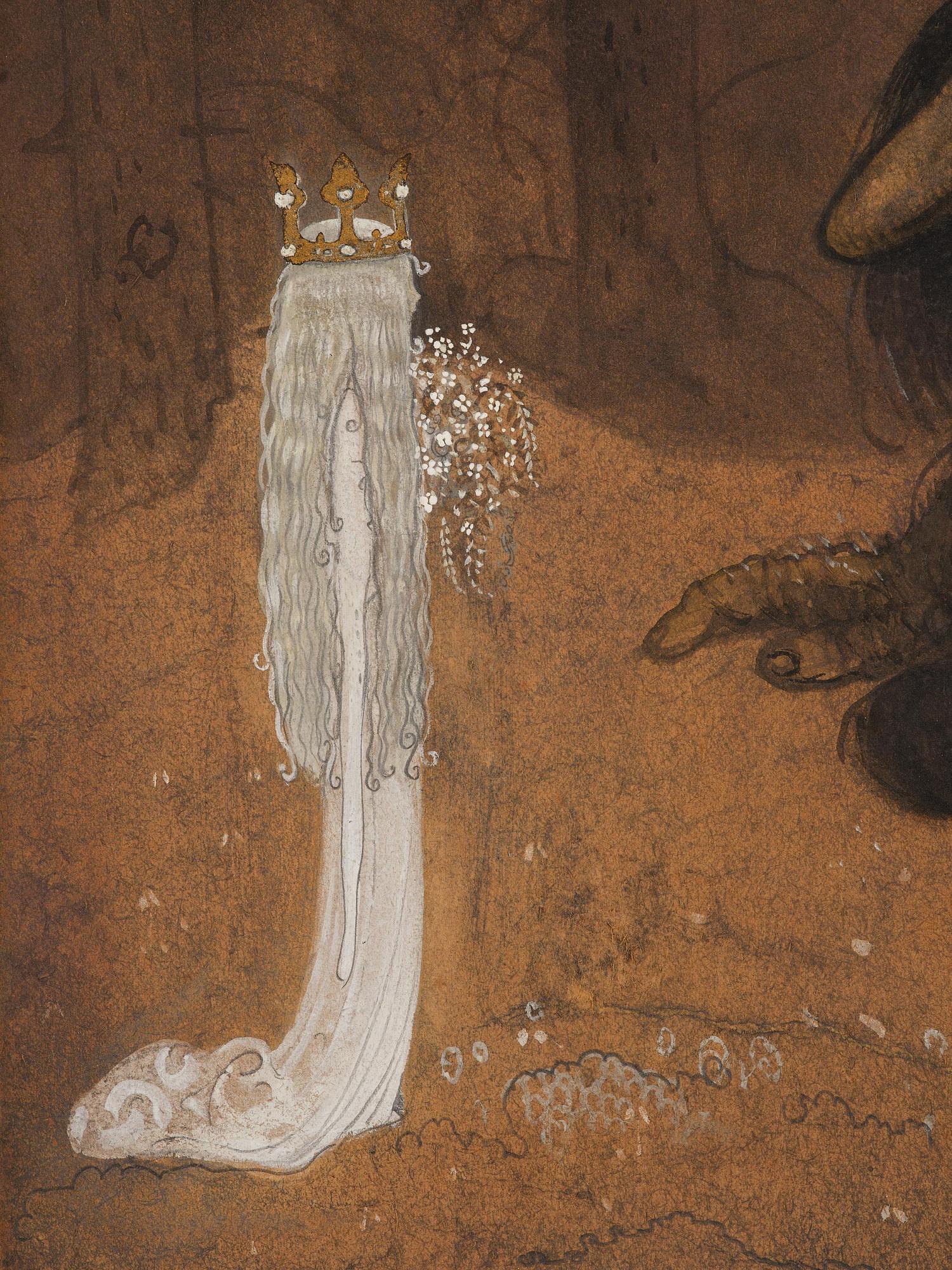
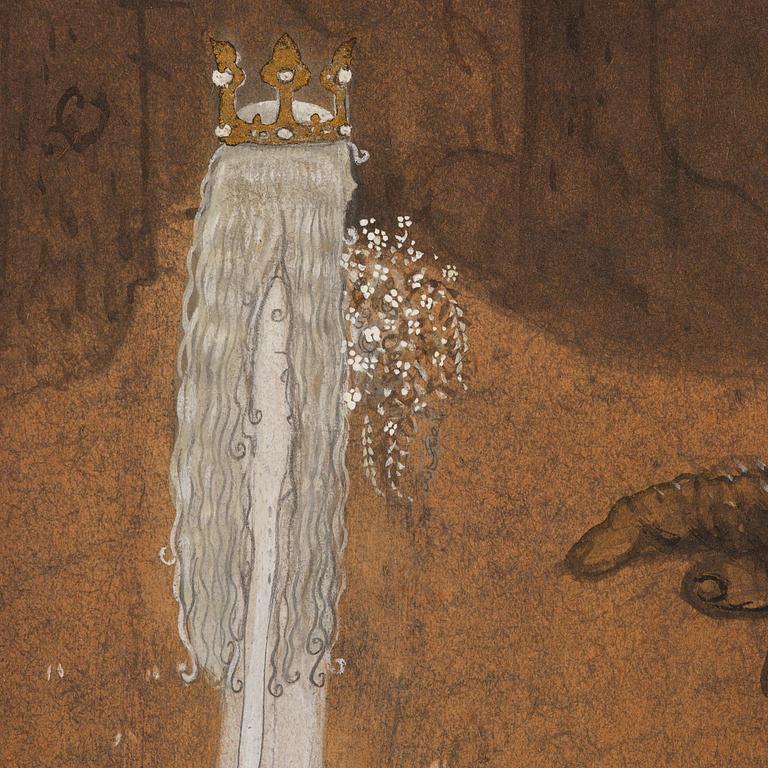
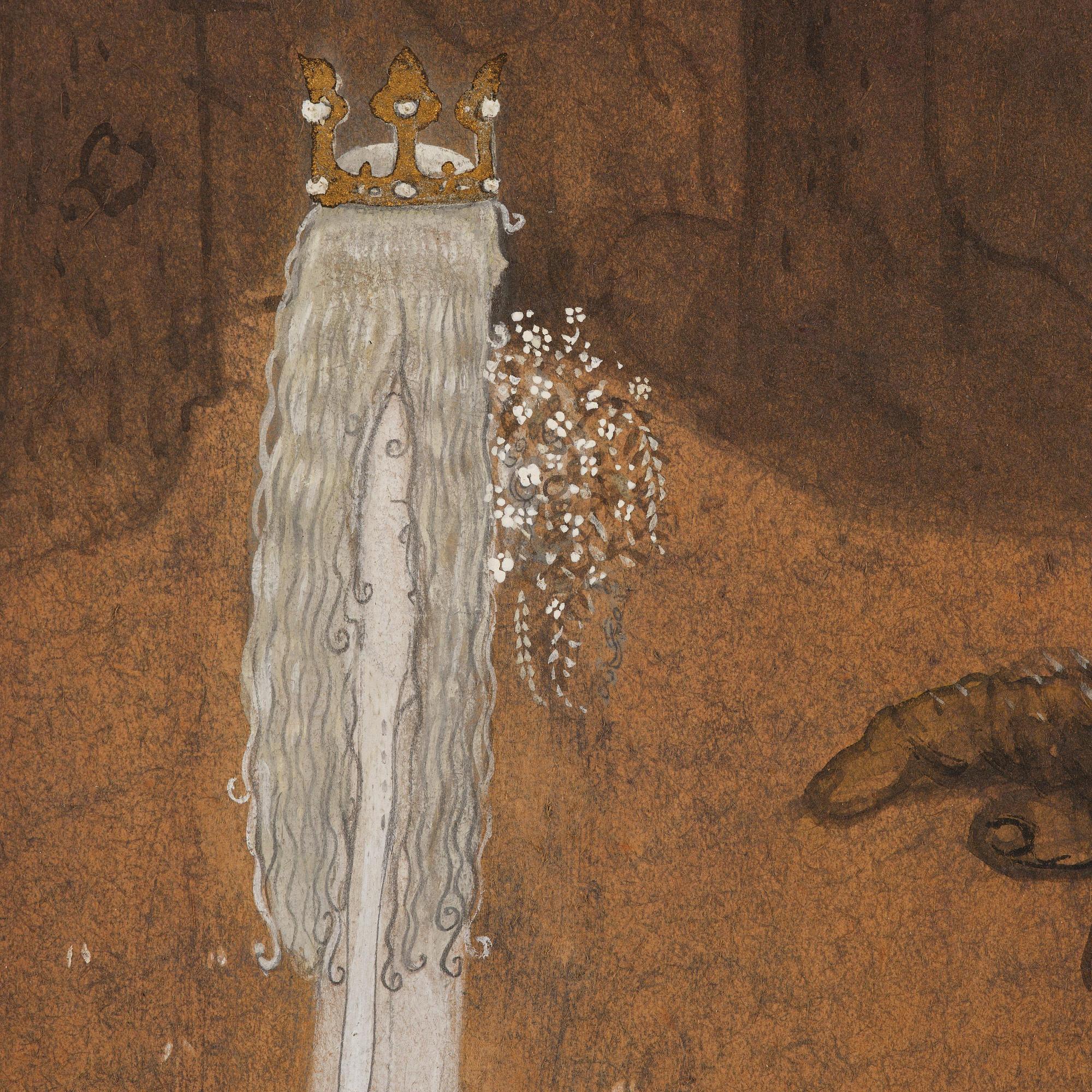
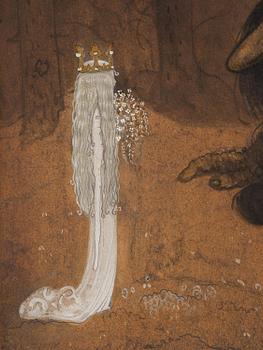
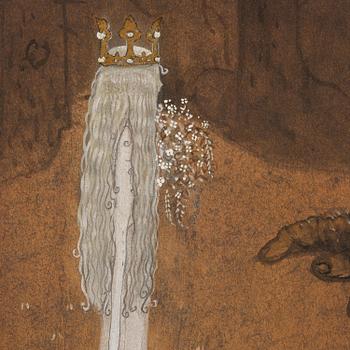
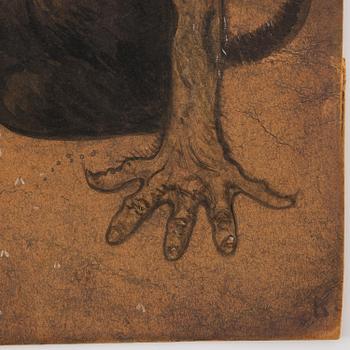
Against the forest backdrop, the princess emerges as a point of light. In the work offered at this auction, she stands before the dark troll. She appears to have stopped to speak with the troll about something. In her hands, she holds a bouquet of flowers. The scene contains several of Bauer’s recurring oppositions: light and darkness, innocence and experience, hope and dispair. The troll approaches not only with menace, but also with astonishment and curiosity towards the unfamiliar serene figure.
Few Swedish artists are as strongly associated with the world of fairy tales as John Bauer. His images became highly significant to the Swedish conception of fairy tale forest creatures during a period when National Romanticism and an interest in older Nordic narratives shaped the cultural landscape. Through his illustrations, the princesses, knights, elves and trolls of the fairy tales were given a visual form that remains instantly recognisable.
When Bauer, as a young artist, was commissioned to work on the fairy-tale collection Bland Tomtar och Troll, the first edition of which was published in 1907 by Åhlén & Åkerlund, he embarked on the work that more than anything else would establish his fame. In these images, he combined a delight in storytelling with a profound sensitivity to the different shades of nature. The forests of Småland were not merely a backdrop, but the very foundation of his artistic universe. Drawing on influences from earlier art and the visual language of his own time, he created an expression that was both personal and rooted in tradition.
Bauer’s meticulousness is evident in his carefully constructed compositions. The work could begin with very small sketches, which were then developed step by step. In the finished images, every detail is carefully considered, combined expressing a fairy-tale lightness. Lines, surfaces and figures work together to create a world that feels both tangible and enchanted.
To our knowledge, ”Prinsessa och troll” has not previously been published, although it is partially visible in a photograph from an early exhibition, hanging alongside several of Bauer’s other beloved images. The work may have been created with a particular fairy tale in mind. The blonde princess with the large golden crown is one of Bauer’s recurring figures and is related to the princess in the fairy tale "Pojken och trollen eller äventyret" by Walter Stenström, published in Bland Tomtar och Troll in 1915, as well as to the princess in the lithograph from the suite Troll entitled ”Prinsessan och småtrollen”, also from 1915.
The composition brings together many of the artist’s defining characteristics: the stark contrast between darkness and light, the distinctive troll and the almost luminous princess. The result is a concentrated expression of the imagination and creative energy that made Bauer’s fairy-tale images so distinctive.
When John Bauer and his family perished on Lake Vättern in 1918, a unique artistic voice was lost. His work nevertheless continued to shape the Swedish fairy-tale tradition. With a profound respect for nature, narrative and the innermost emotions of humanity, he created images that carry the viewer far beyond everyday life. ”Prinsessa och troll” is a compelling example: a work in which Bauer’s familiar figures meet, and where his entire enchanted universe seems to be contained within a single moment.
Lisää taiteilijasta John Bauer
John Bauer was born in 1882 and was a Swedish artist, primarily renowned for his paintings and illustrations in the early editions of the fairy tale collection "Bland tomtar och troll”. Thanks to his magical illustrations of princesses, trolls, and giants, Bauer has significantly influenced our perception of creatures and mythical figures in traditional Swedish stories and Nordic folklore.
Bauer grew up in Jönköping, and a large part of his artistry was inspired by the mystical forests of Småland, where trolls and other beings seemed to emerge from the rocky outcrops. During his years of study, he was fascinated by early German and Italian painting but soon returned to the Swedish fairytale forest. At the Royal Swedish Academy of Fine Arts, he met his future wife, Esther Ellqvist, who often posed as a model and served as inspiration for the princess Tuvstarr in Bauer's works.
Most of Bauer's paintings are created using watercolors, although he has also produced some using oil. By the 1910s, thanks to his fairy tale paintings, Bauer was already an established and beloved artist when he chose to conclude his role as a fairy tale illustrator. In his final years, he explored other imaginative expressions that would shape Bauer's last works, such as "The Dancing Nymphs" and "Blue Eva". John Bauer's final significant painting was created for the auditorium at Karlskrona Girls' School in 1917, an oil painting depicting the goddess Freja, with his wife Esther as a model.
The entire Bauer-Ellqvist family died in a boat accident when the steamer Per Brahe sank during an autumn storm on Vättern on November 20, 1918.
Lisätietoja ja kuntoraportit

Mitä kuljetus maksaa?
Toimituksen voi tilata vain ottamalla yhteyttä osoitteeseen specialdelivery@bukowskis.com.
Tietoa ostamisesta
Muiden katsomia kohteita