Anshelm Schultzberg (Ruotsi, 1862-1945) Autumn Day by the Loing
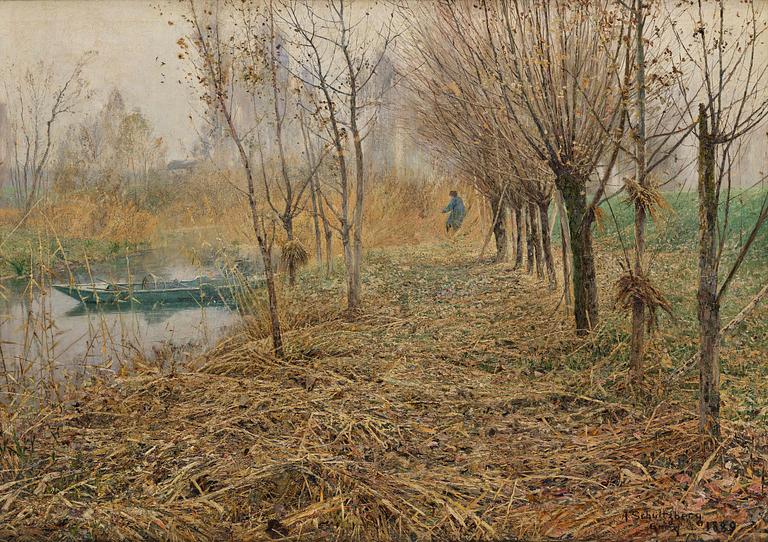
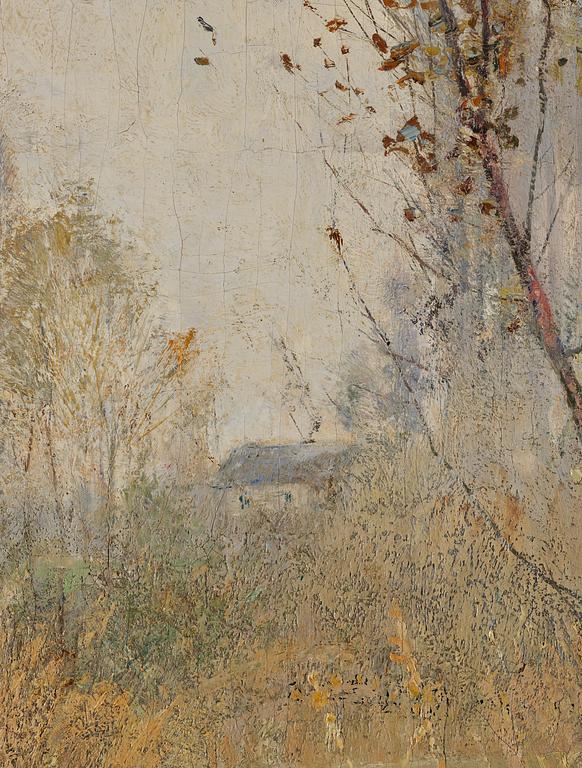
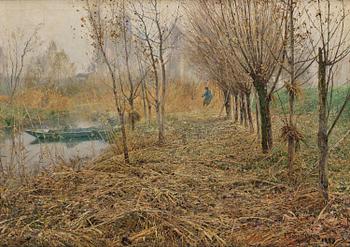
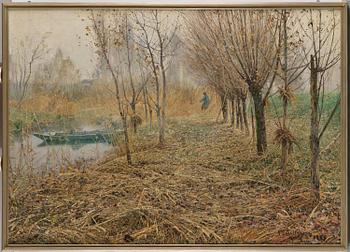
Autumn Day by the Loing
Signed A. Schultzberg and dated Grez 1889. Oil on canvas, 162 x 228 cm.
Alkuperä - Provenienssi
Stockholms Auktionsverk, Stora Kvalitén, 26 November 2009, lot 2012.
Näyttelyt
Le Salon de Paris, Paris, 1890, cat. no. 2175.
Svenska konstnärernas förenings utställning, 1912.
Liljevalchs konsthall, Stockholm, "Måleri från 1880- och 1890-talen", 21 March - 6 April 1931, cat. no. 294.
Liljevalchs konsthall, Stockholm, "Anshelm Schultzberg - målningar 1876-1937", 4-28 November 1937, cat. no. 53.
Kirjallisuus
Johnny Roosval, “Art and Artists – The Swedish Artists’ Association Exhibition”, 1912, p. 103.
Otto G. Carlsund, “Anshelm Schultzberg”, 1937, p. 77, illustrated no. 31, and illustrated on p. 75 in an interior photograph showing the painting in the artist’s studio, Norrtullsgatan 5, Stockholm.
Muut tiedot
Anshelm Schultzberg found his personal expression early on in realistic, fresh plein-air studies and a deeply felt engagement with nature. Thanks to a travel scholarship from the Academy in 1889, Schultzberg was able to travel to France.
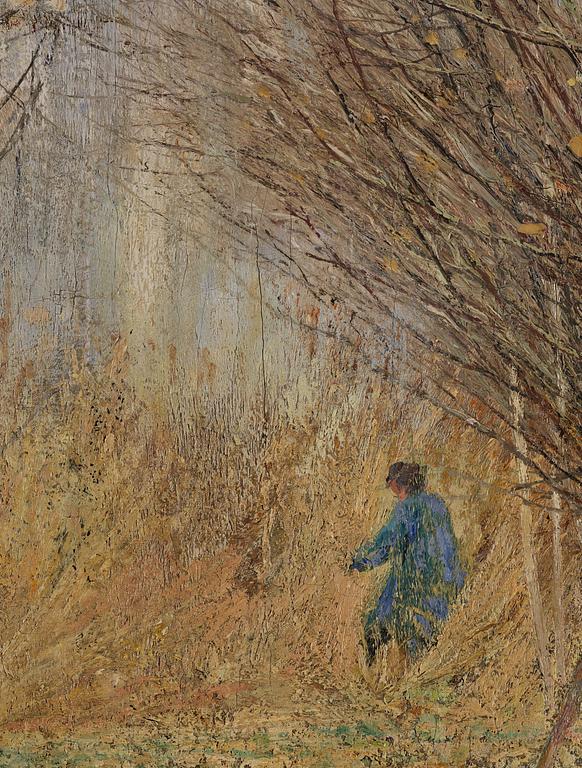
Together with his wife Constance, he arrived in Grez-sur-Loing in the autumn of 1889. Other Swedish artists were also staying there at the time, including Karin Arosenius, Carl Trägårdh, Paul Graaf and Vilhelm Behm. At the end of November, his wife gave birth to a daughter at the Hôtel Chevillon, where they were staying. Initially, he produced a number of smaller oil paintings, some of them featuring impasto layers of paint worked with a palette knife. “It was primarily in order to familiarise himself thoroughly with the new colour scheme and to experiment with different techniques that he confined himself to small formats,” writes Otto G. Carlsund in his monograph. Eventually, he felt ready to take on larger canvases, and produced “Autumn Day by the Loing”, which was exhibited at the Salon in Paris the following year.
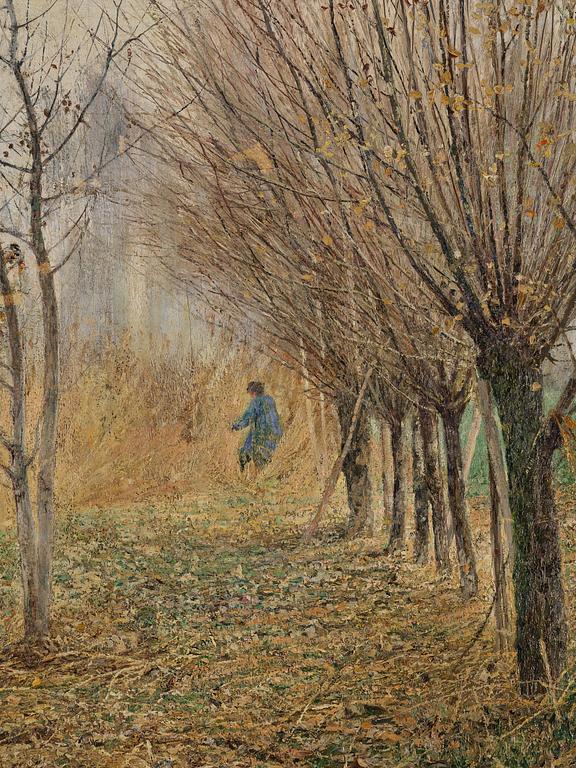
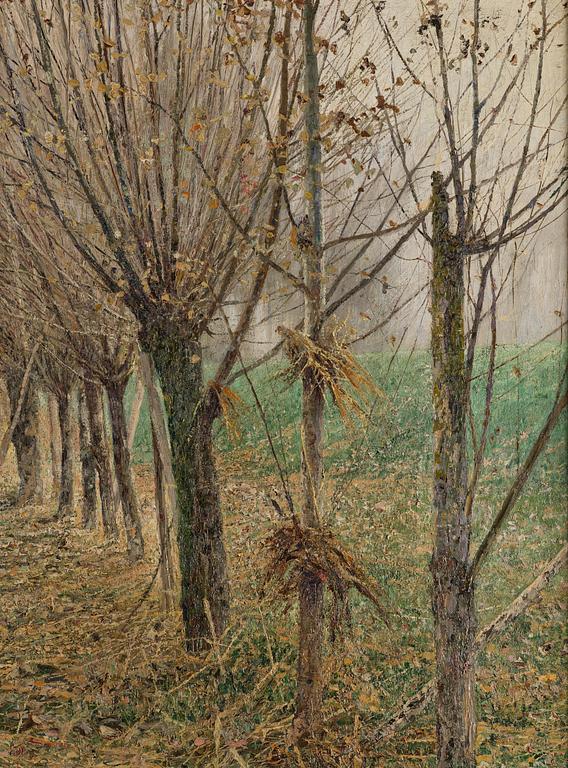
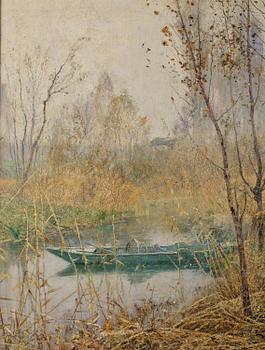
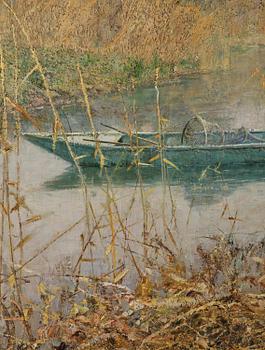
In a letter to the Academy of Fine Arts, the travel scholar Schultzberg wrote of his first impressions of the landscape around Grez: “As soon as I arrived in Grez, I found it difficult to appreciate the beauty of the area, for the lines of the landscape did not appeal to me at all, and the groups of trees and the forest seemed stiff and far too deliberately planted. But after I had been there for some time, I realised that it was precisely this, which had initially appealed to me least, that characterised the area.” In “Autumn Day by the Loing”, Schultzberg presents a fresh French plein-air painting that borders on Impressionism. The dissolved contours of the motif convey the interplay and refractions of light. As a declaration of love for the French landscape, the painting is an excellent representative of the painterly breakthrough that would prove decisive for Swedish painting around the turn of the previous century.
Lisätietoja ja kuntoraportit

Mitä kuljetus maksaa?
Toimituksen voi tilata vain ottamalla yhteyttä osoitteeseen specialdelivery@bukowskis.com.
Tietoa ostamisesta
















Muiden katsomia kohteita