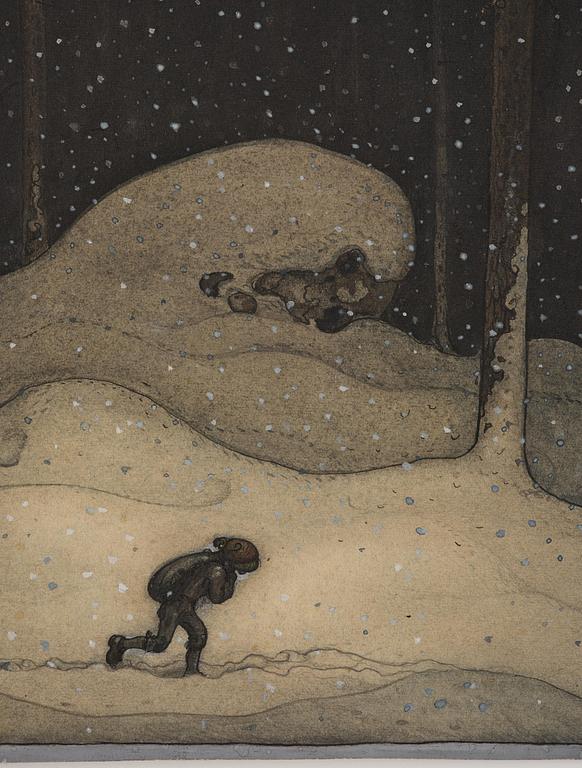
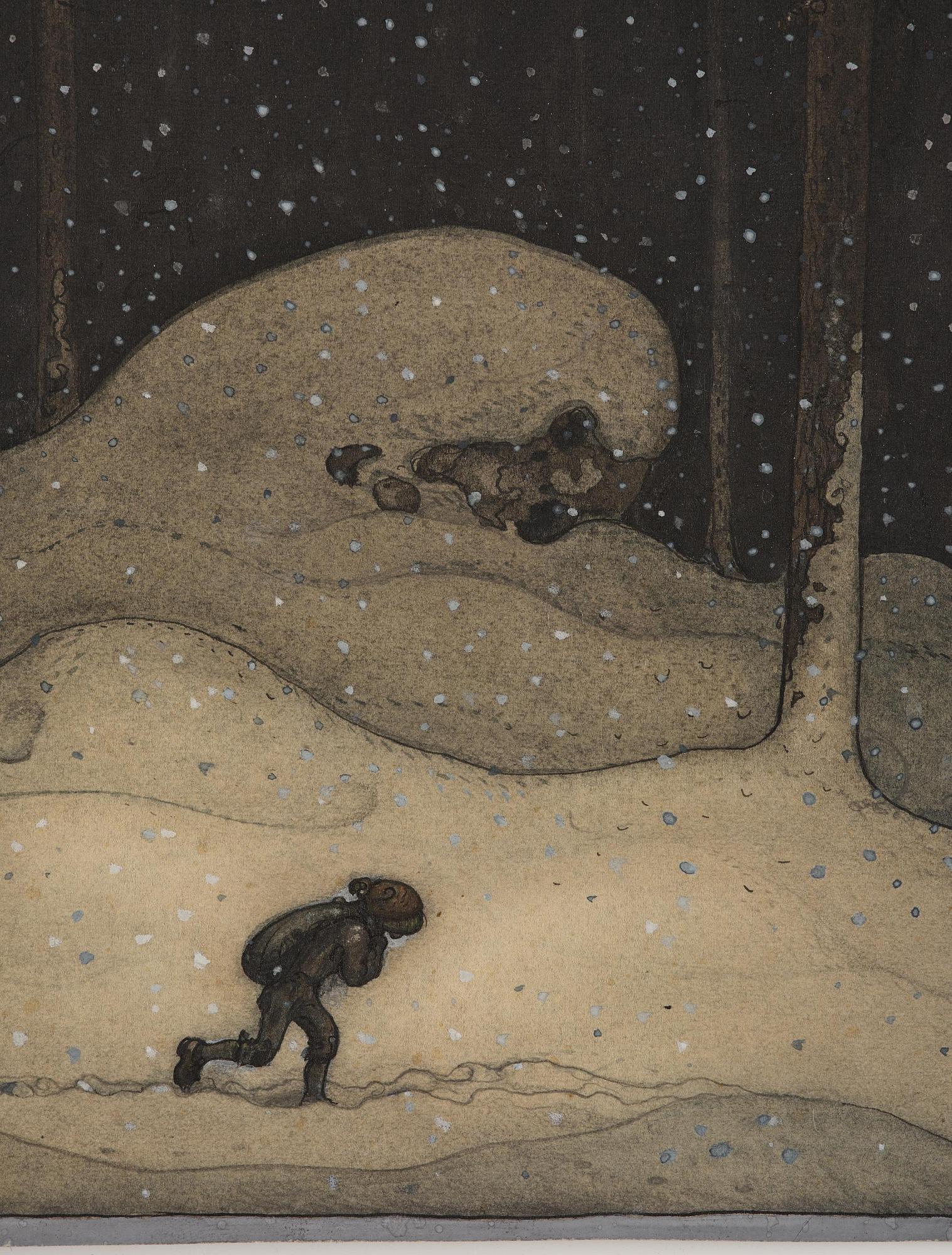
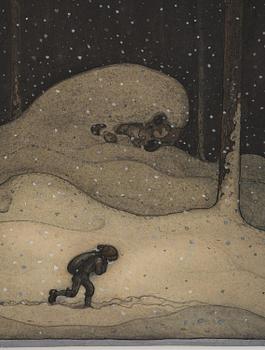
John Bauer (Ruotsi, 1882-1918) "Snön har fallit för länge sedan..." (The snow has already fallen a long time ago...)
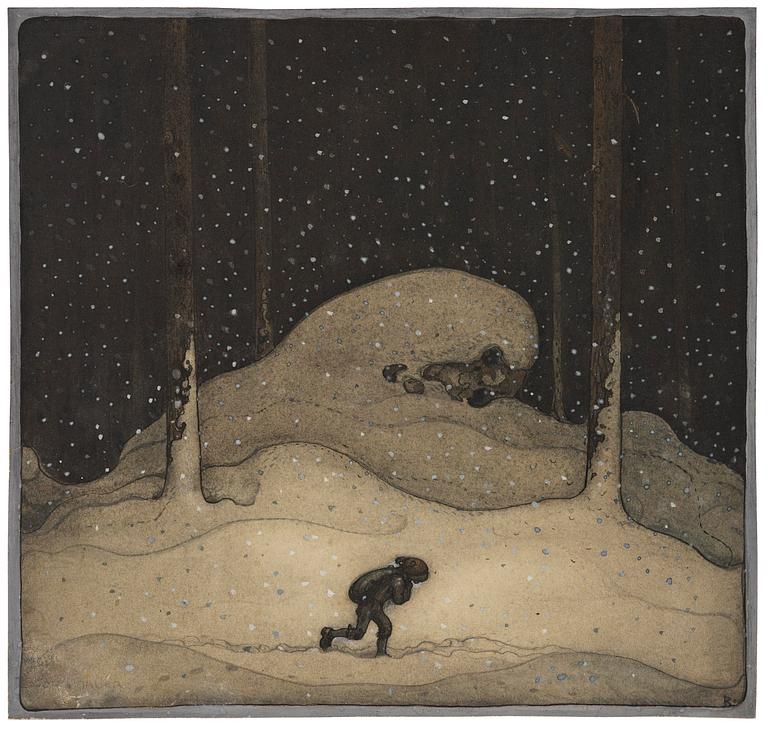
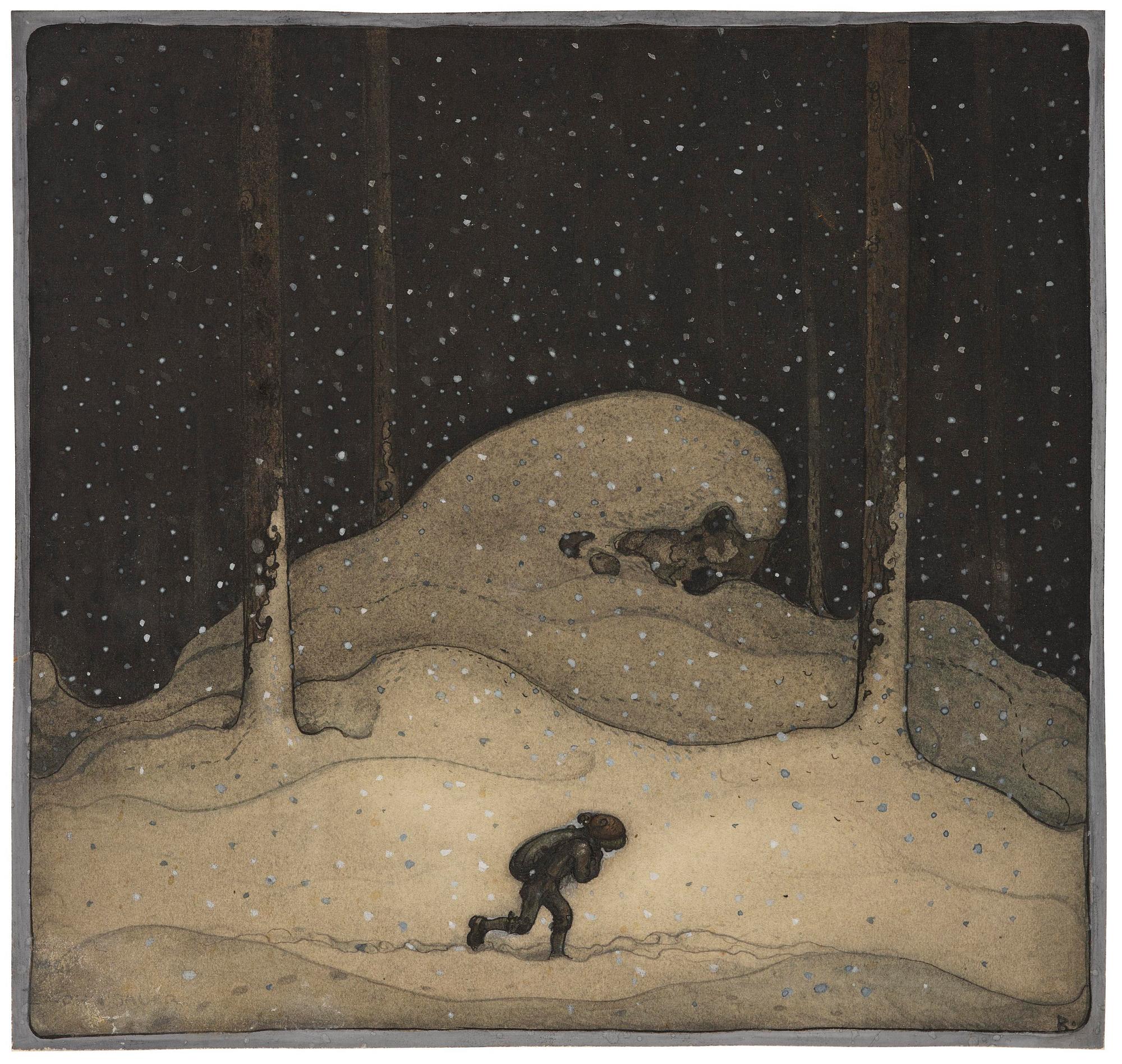
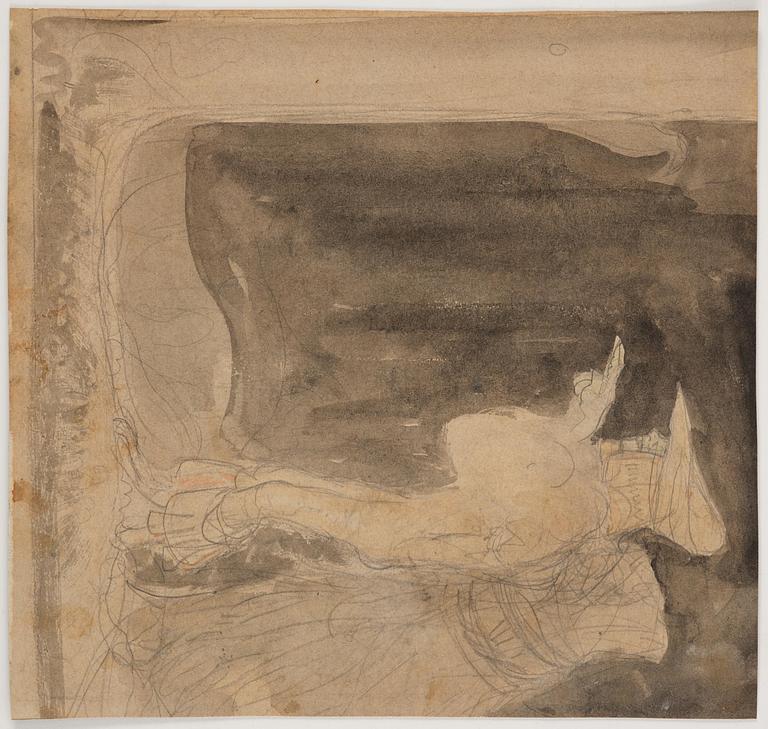
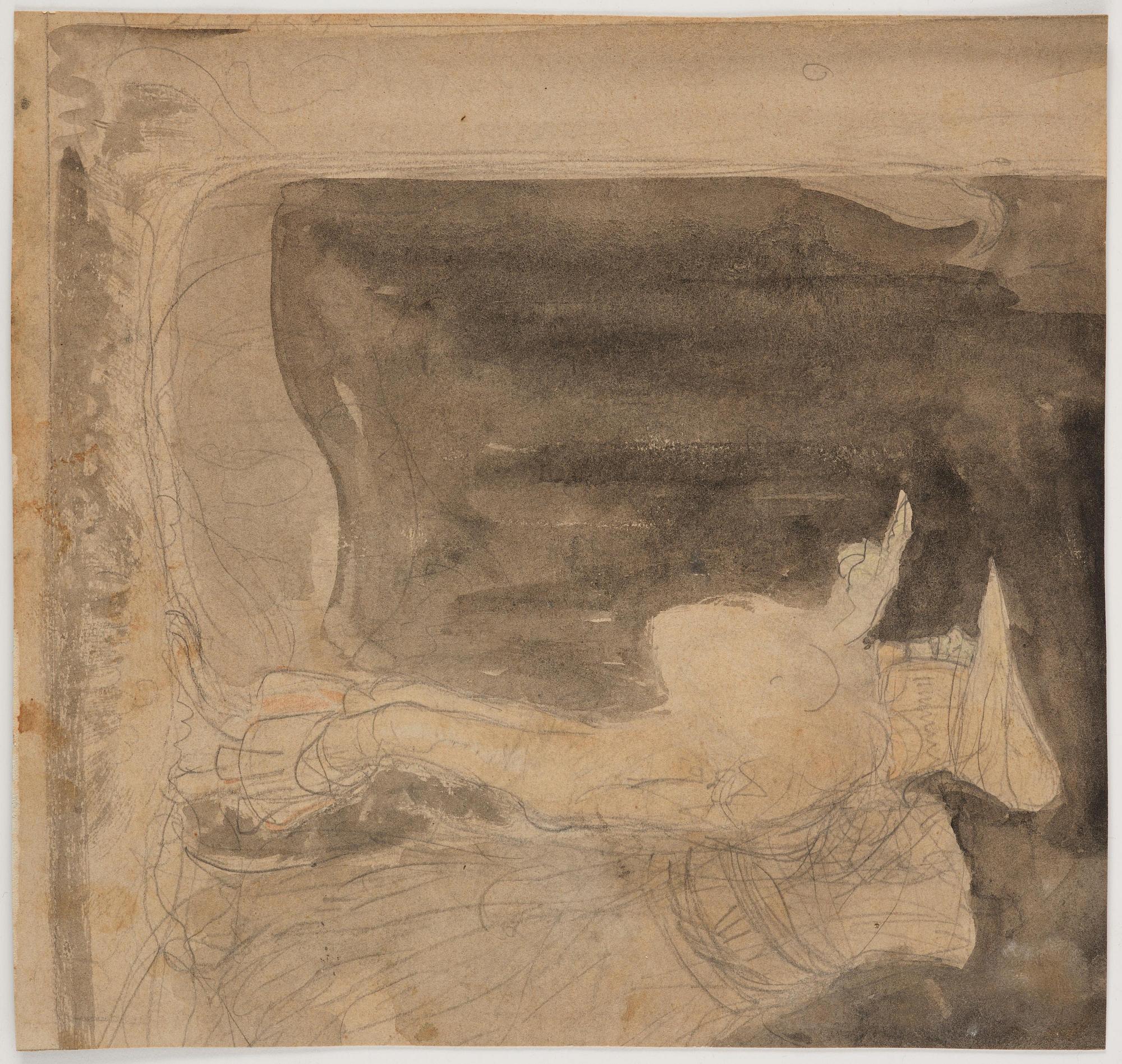
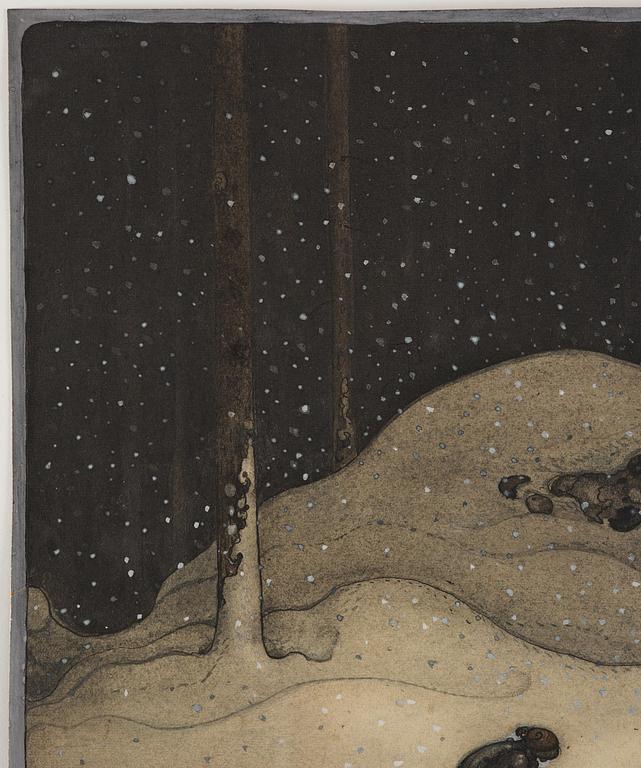
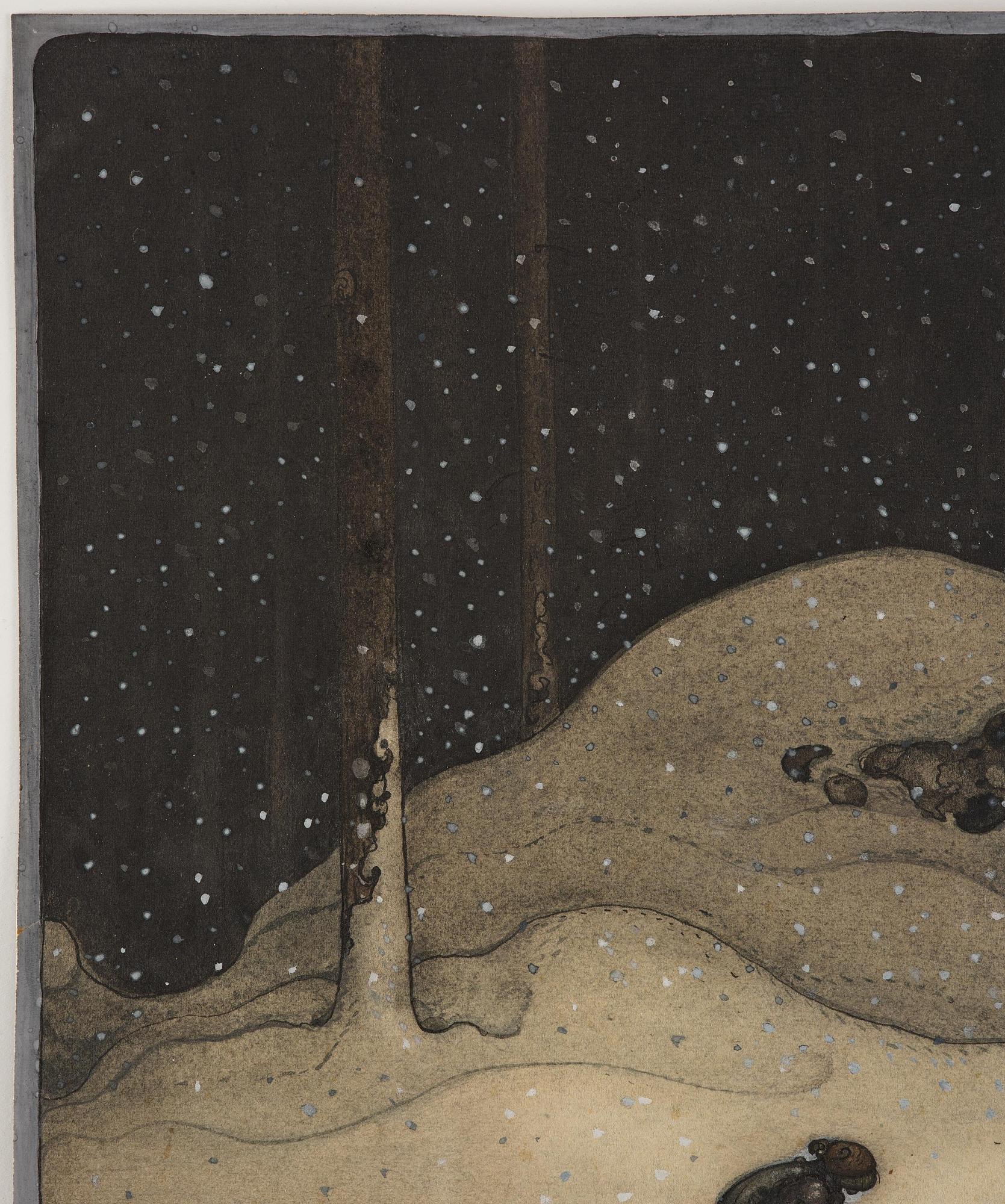
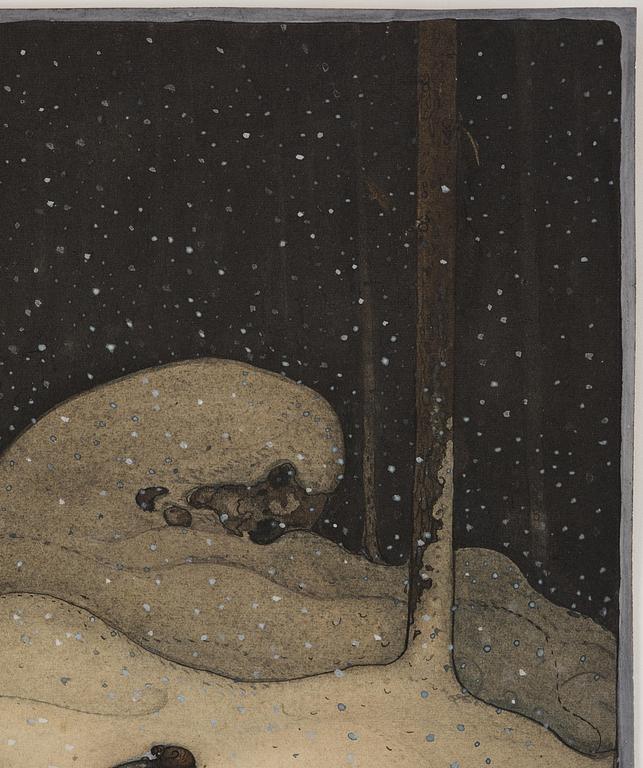
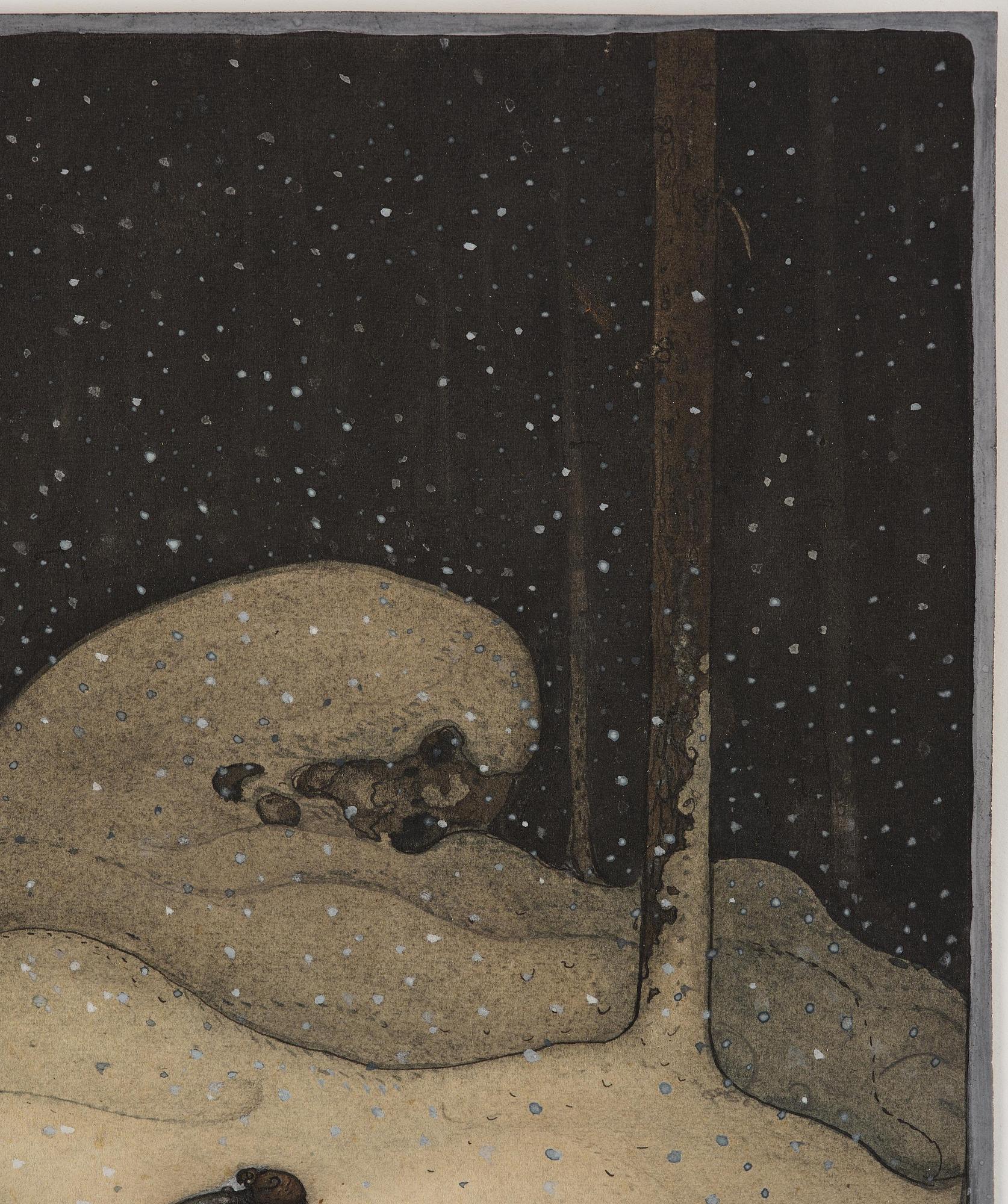
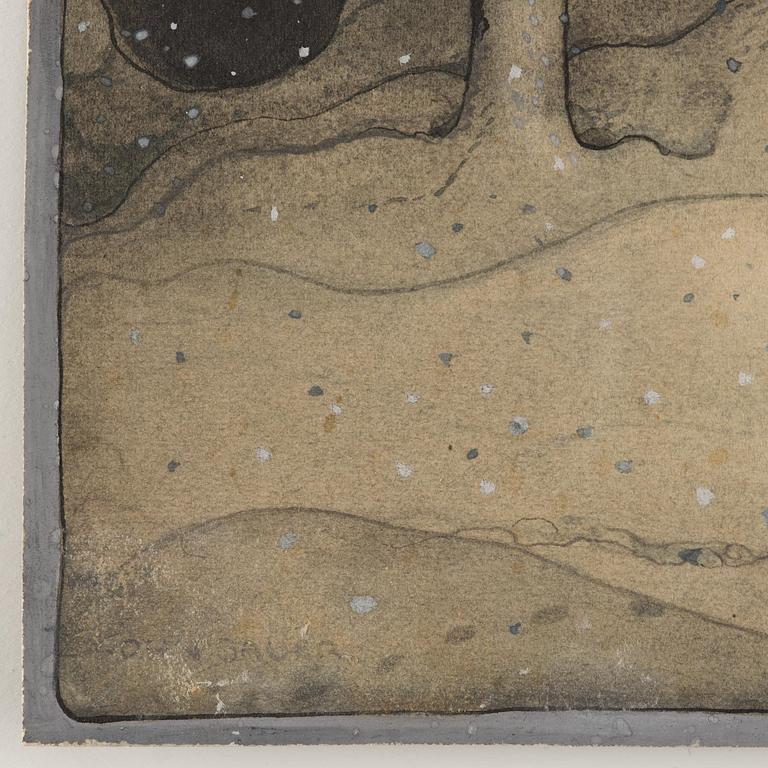
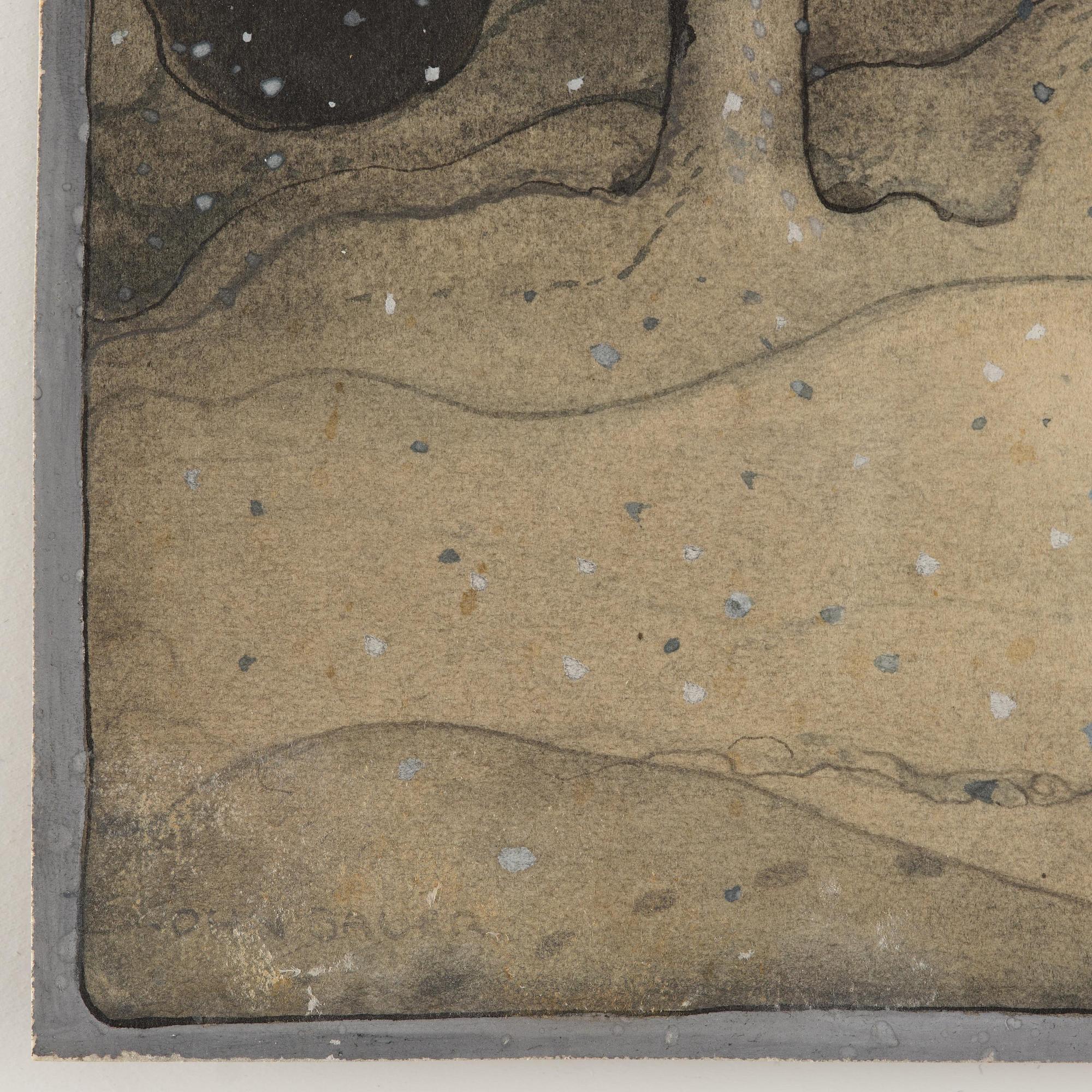
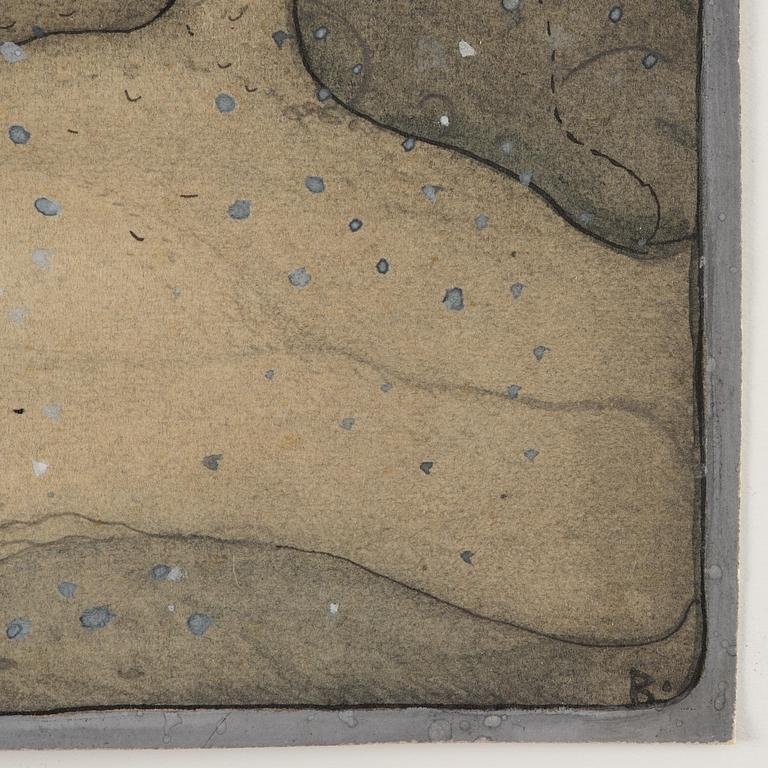
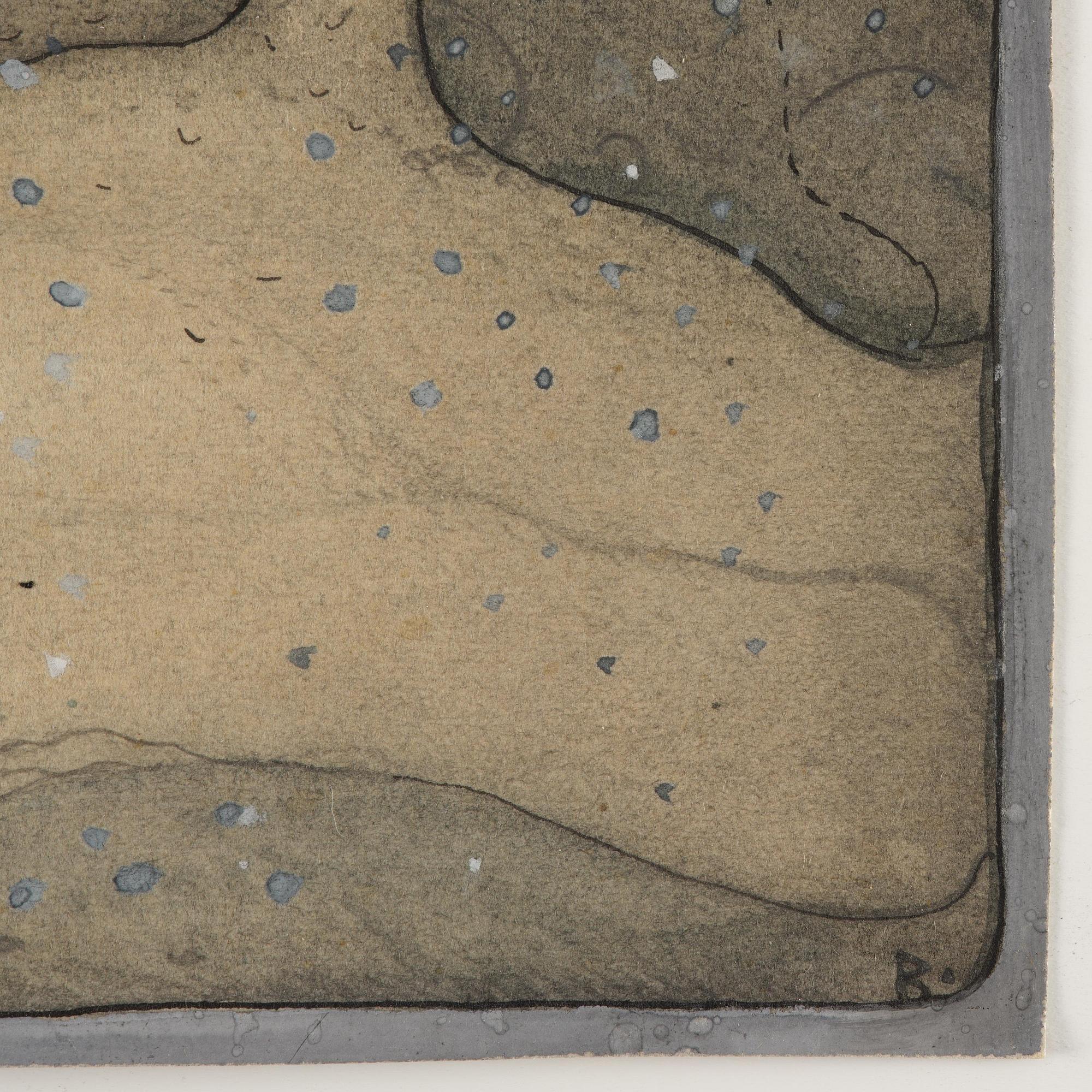
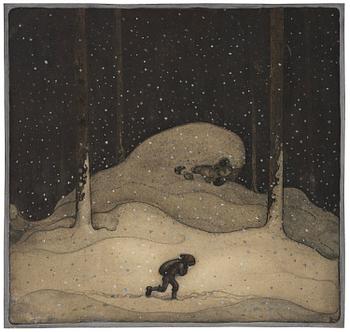
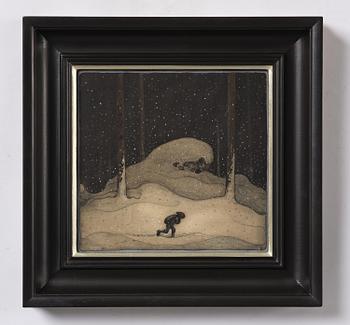
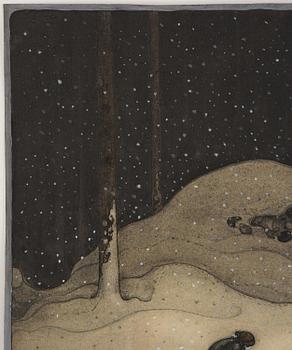
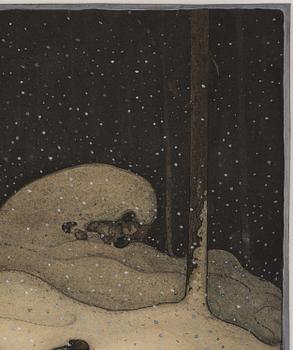
"Snön har fallit för länge sedan..." (The snow has already fallen a long time ago...)
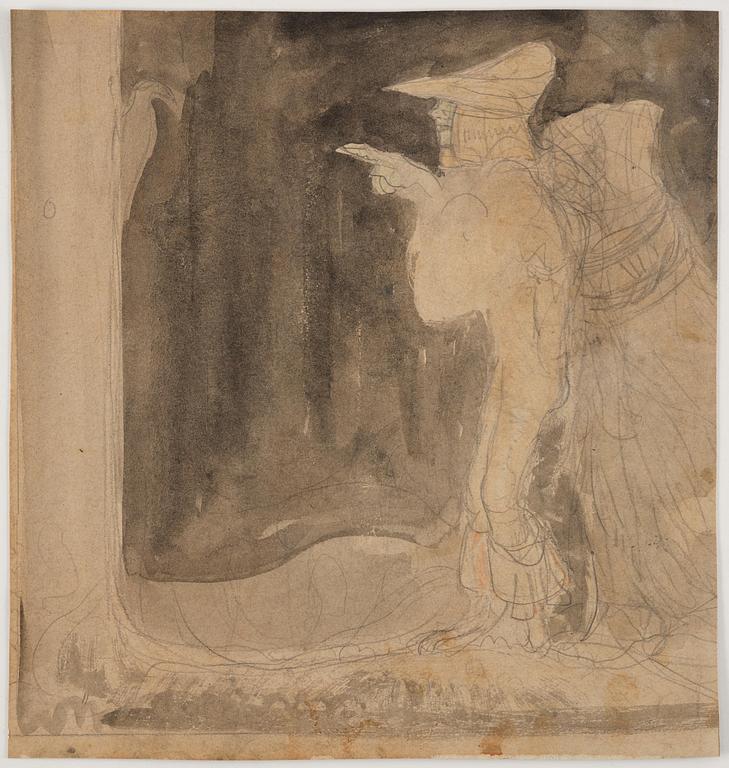
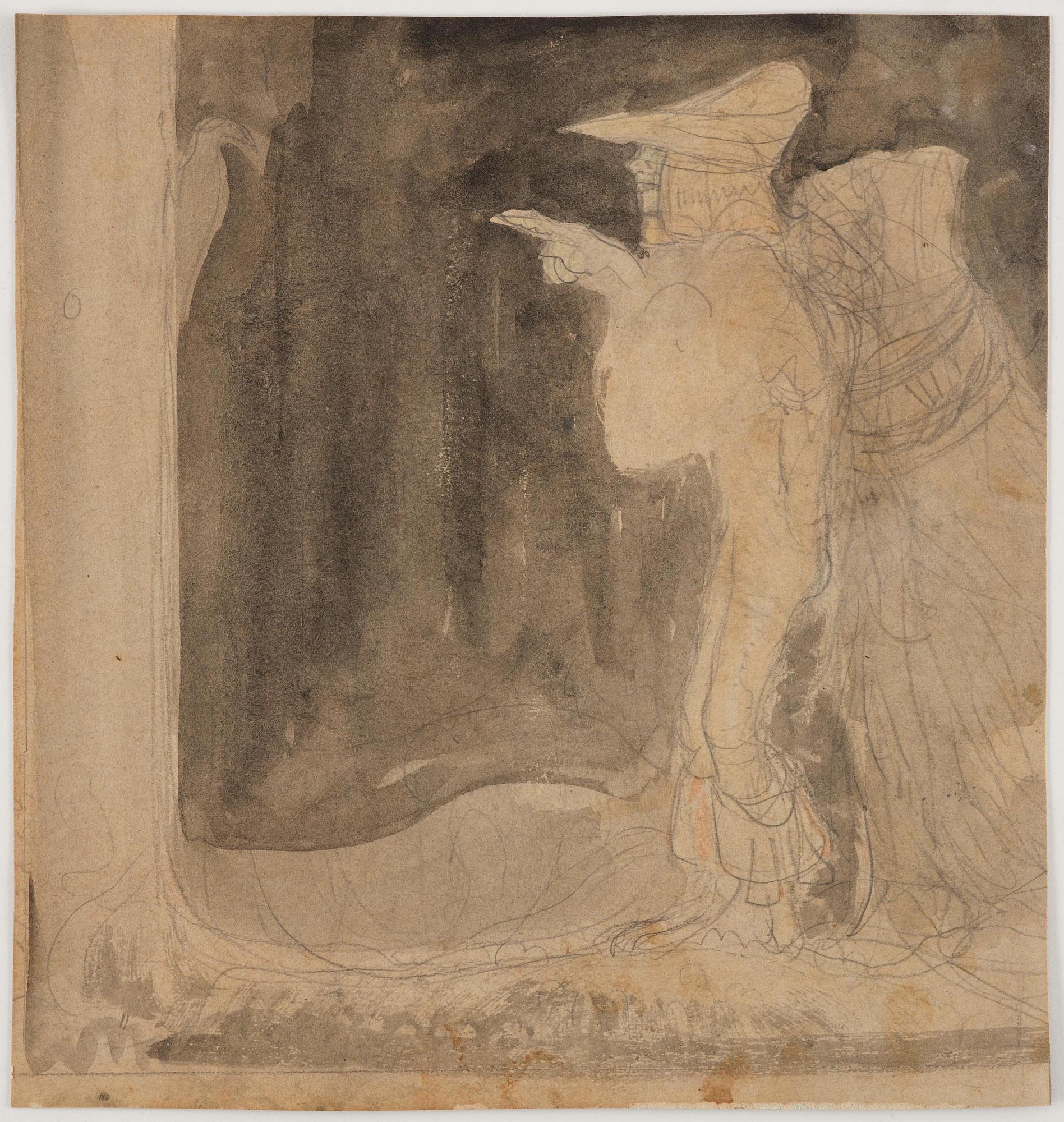
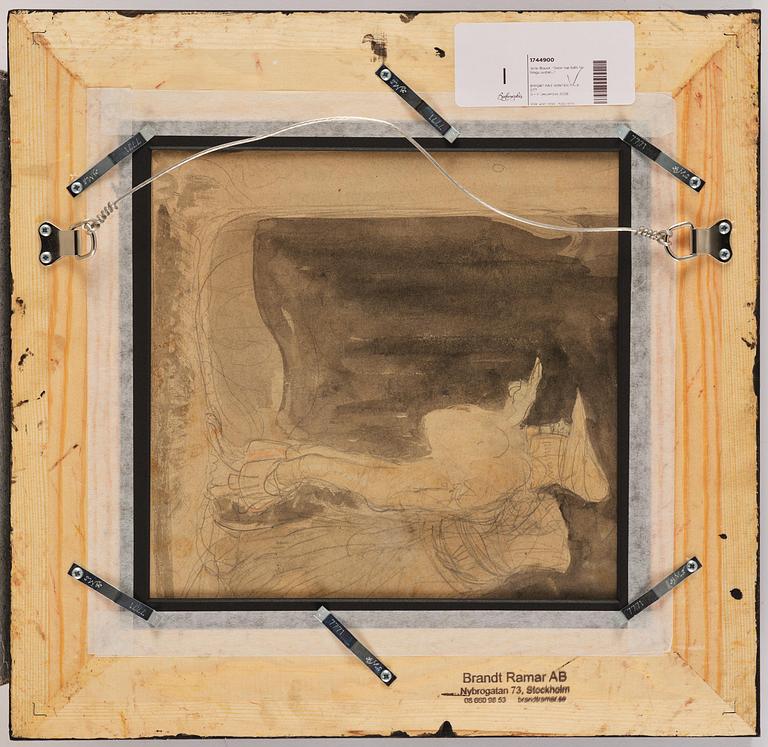
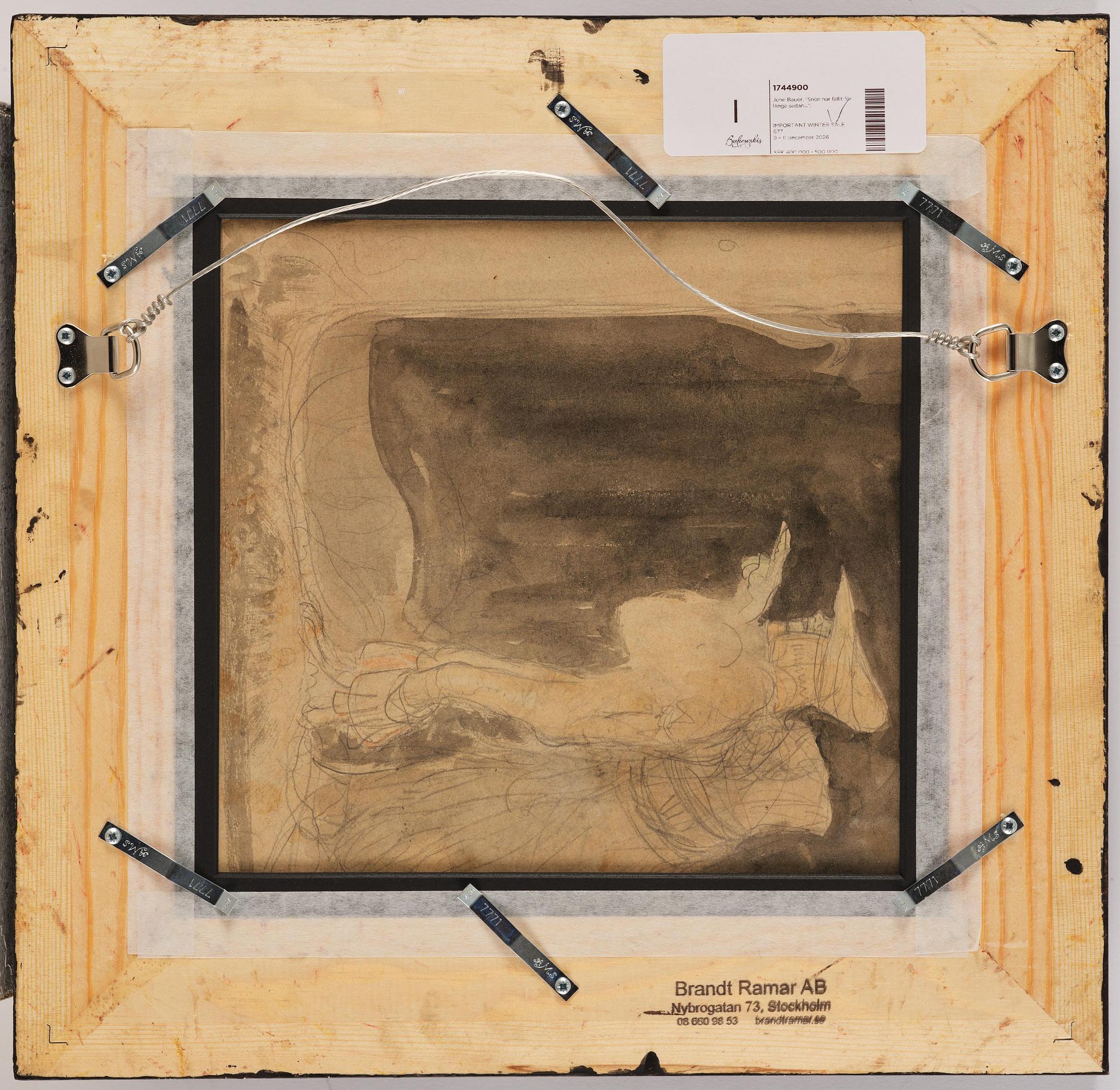
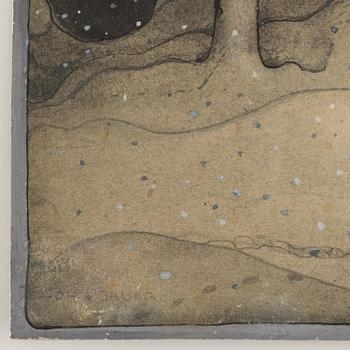
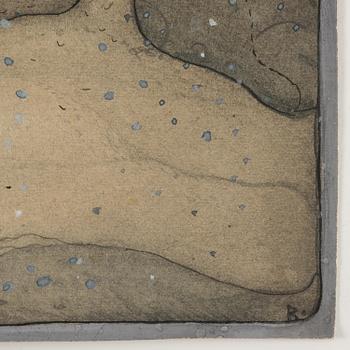
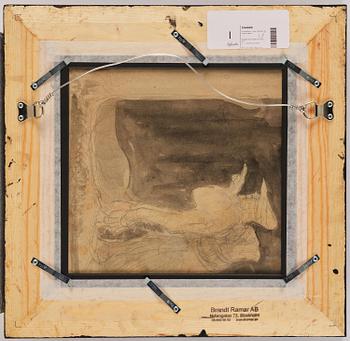
Signed B and John Bauer in pencil. Watercolour, ink and heightened with white on paper 23.2 x 24.5 cm. Sketch in watercolour and pencil verso.
Illustration for Carl Svenson Granér’s “Julbrödet” from “Julstämning”, published in 1916. The motif exists as a lithograph.
Alkuperä - Provenienssi
Shipowner Arnold Wilson (1883–1930) and Kerstin Wilson, née Lignell (1887–1969).
Thence by descent to the present owner.
Kirjallisuus
Carl Svenson Granér, "Julbrödet" ur "Julstämning", 1916, illlustrated.
Muut tiedot
“We can imagine a long, long lonely road. There is snow on the road, deep snow lying in drifts, making it difficult for large people, drivers and travellers to make their way. Then one can imagine what it must be like for a small child.”
In the darkness of a winter night, a boy is slowly walking. Snow falls gently, covering the woodland landscape in a soft white blanket. Christmas is approaching, a time when, in the countryside, people would once bake bread for the poor.
The storyteller continues: “There is something special about him. I really don’t know what it is. Perhaps it is his long, fair hair that I am thinking of. I have never seen such fair hair before. It is almost as though it shines [...] No, it is not the hair I am thinking of, he then says. It is the eyes. I have never seen such blue eyes before. One feels so strange when one looks into them. They shine and radiate warmth. And yet he himself must be freezing.”
The poor boy knocks on the door of a rich, greedy woman who, that year, has chosen to bake cakes for herself instead. She sees an opportunity to enlist the boy’s help in carrying firewood indoors for her. “Where do you come from?” the woman asks. “I come from a croft called Bethlehem,” the boy replies. “Bethlehem. That was an unusual name for a croft,” says the woman. She must look properly at the boy once more, and meets his warm, calm, radiant gaze, which penetrates her greedy heart.
But when the woman is to give him a loaf of bread in exchange for his work, she changes her mind. She is faced with a choice, and when she is unwilling to give him a loaf of bread out of a free heart or as payment for his work, she is punished. She is transformed into a bird that will forever cry out its wish to be free of its debt. She opens her beak, and all that emerges is: “be free, be free”...
The tale “Julbrödet” by Carl Svenson-Granér, from the 1916 edition of “Julstämning”, ends with the old storyteller’s words: “This is merely an old legend, I should like to say. But it urges us always to keep our hearts awake when we encounter the poor. For we never know whether we may be dealing with Our Lord himself in the guise of a ragged little boy, standing shyly at our door and asking for a piece of bread. That is what we should remember when we bake our Christmas bread.”
Lisää taiteilijasta John Bauer
John Bauer was born in 1882 and was a Swedish artist, primarily renowned for his paintings and illustrations in the early editions of the fairy tale collection "Bland tomtar och troll”. Thanks to his magical illustrations of princesses, trolls, and giants, Bauer has significantly influenced our perception of creatures and mythical figures in traditional Swedish stories and Nordic folklore.
Bauer grew up in Jönköping, and a large part of his artistry was inspired by the mystical forests of Småland, where trolls and other beings seemed to emerge from the rocky outcrops. During his years of study, he was fascinated by early German and Italian painting but soon returned to the Swedish fairytale forest. At the Royal Swedish Academy of Fine Arts, he met his future wife, Esther Ellqvist, who often posed as a model and served as inspiration for the princess Tuvstarr in Bauer's works.
Most of Bauer's paintings are created using watercolors, although he has also produced some using oil. By the 1910s, thanks to his fairy tale paintings, Bauer was already an established and beloved artist when he chose to conclude his role as a fairy tale illustrator. In his final years, he explored other imaginative expressions that would shape Bauer's last works, such as "The Dancing Nymphs" and "Blue Eva". John Bauer's final significant painting was created for the auditorium at Karlskrona Girls' School in 1917, an oil painting depicting the goddess Freja, with his wife Esther as a model.
The entire Bauer-Ellqvist family died in a boat accident when the steamer Per Brahe sank during an autumn storm on Vättern on November 20, 1918.
Lisätietoja ja kuntoraportit

Mitä kuljetus maksaa?
Toimituksen voi tilata vain ottamalla yhteyttä osoitteeseen specialdelivery@bukowskis.com.
Tietoa ostamisesta
Muiden katsomia kohteita