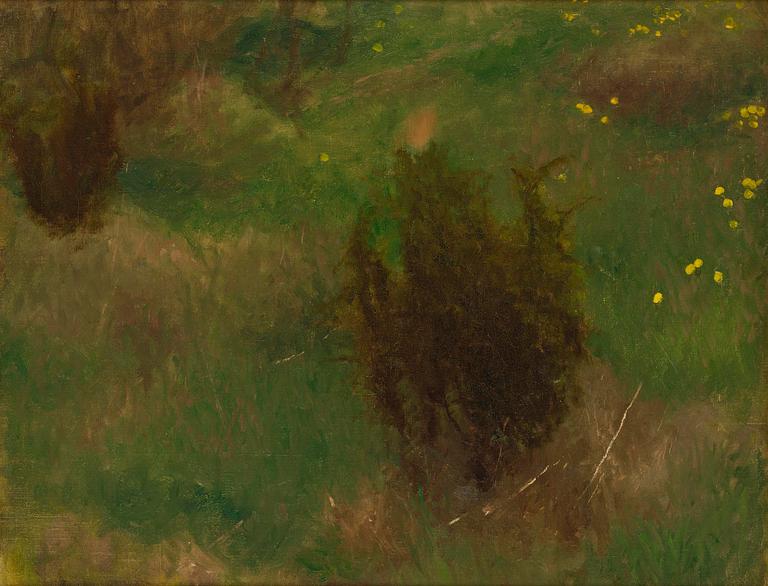
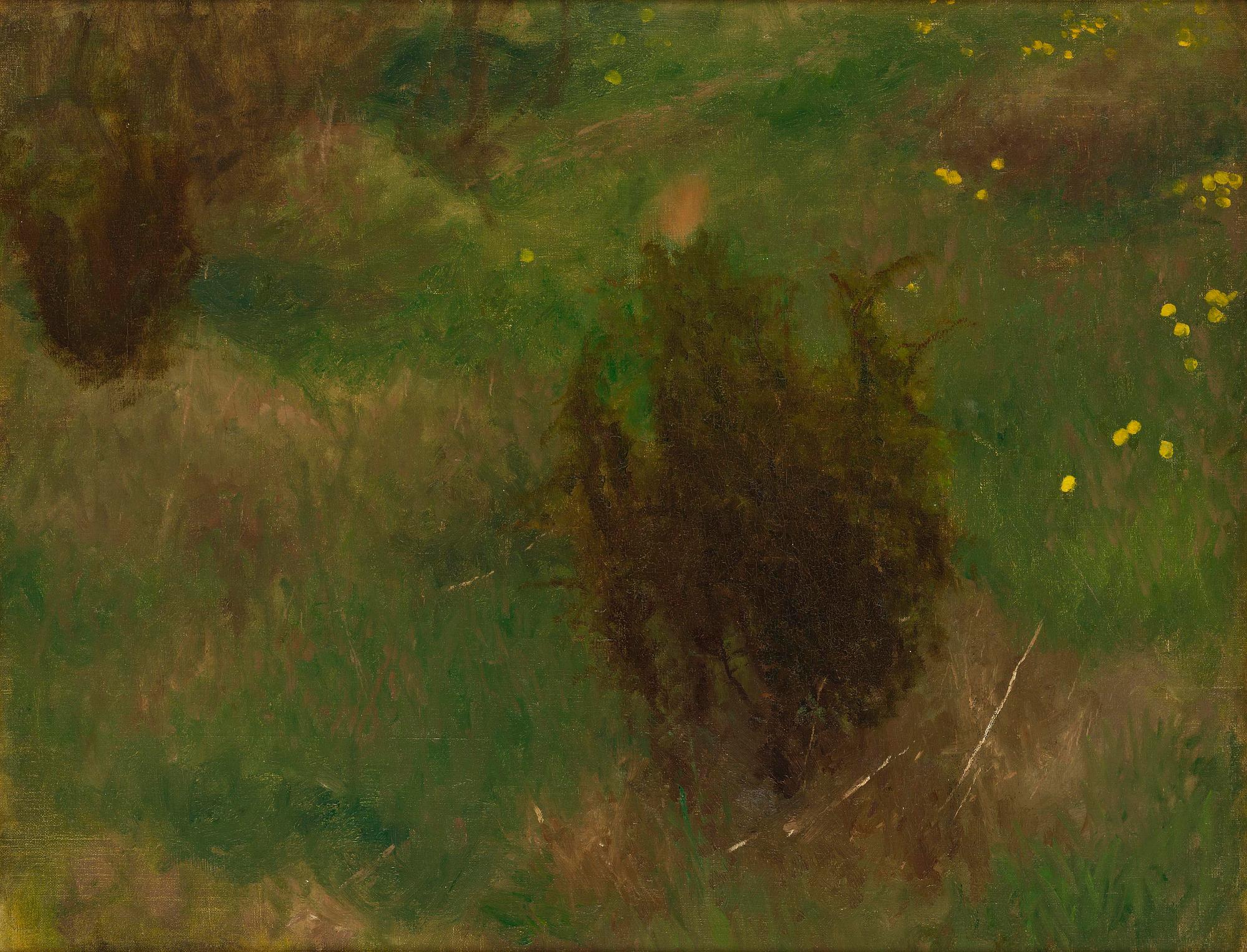
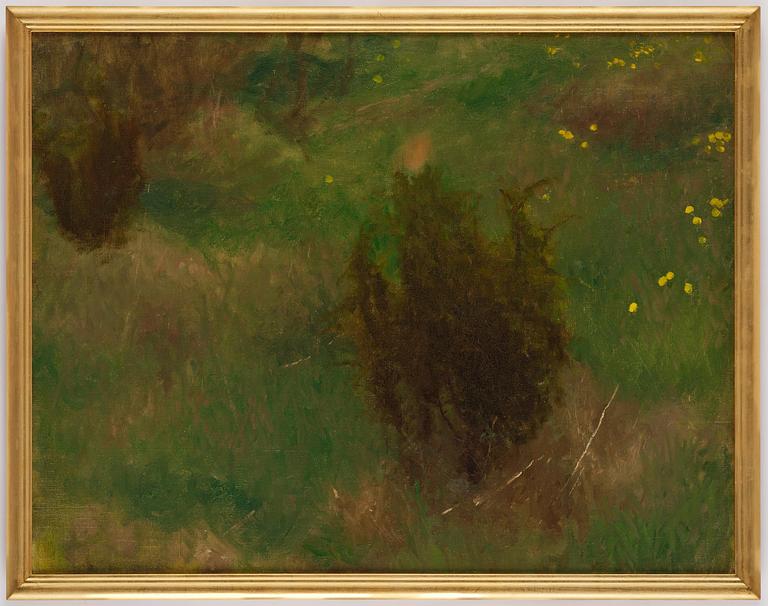
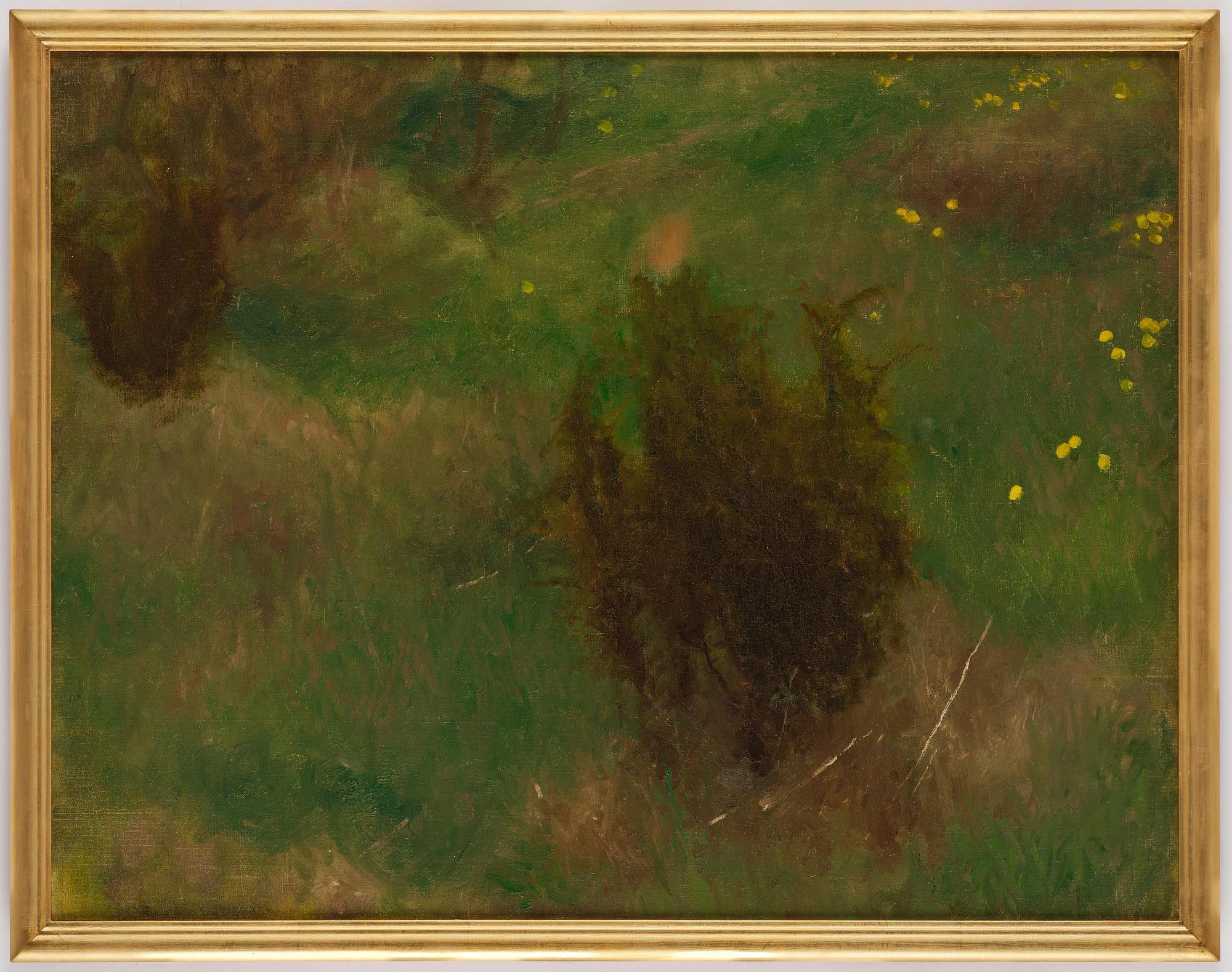
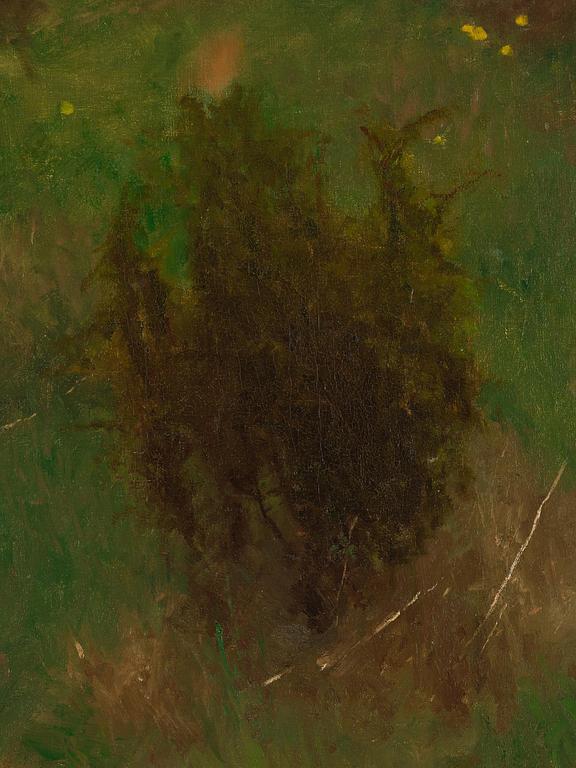
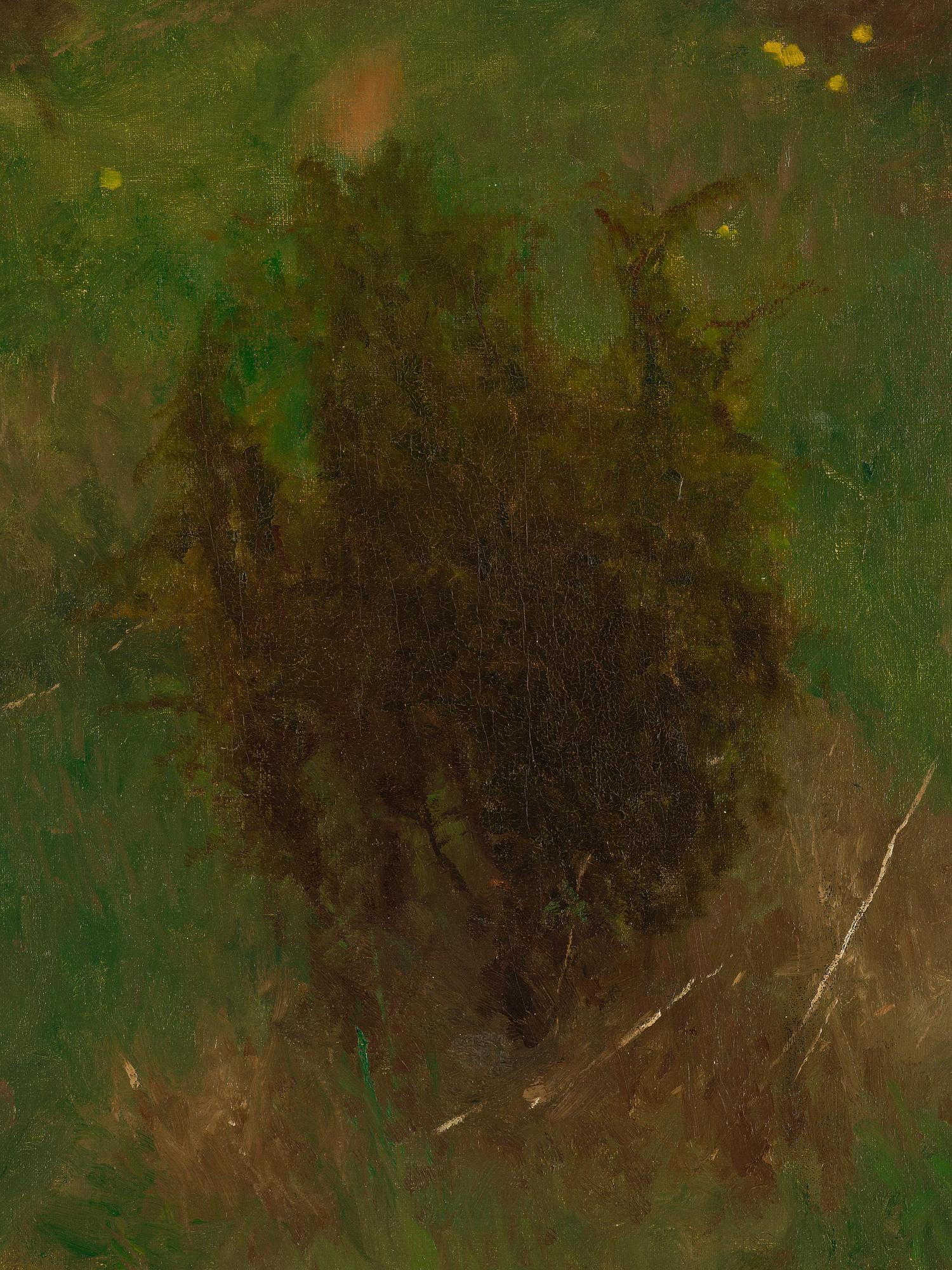
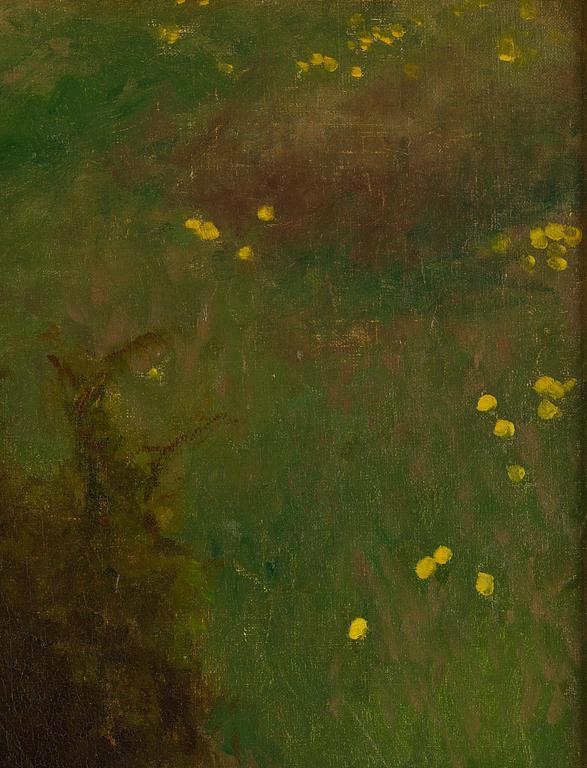
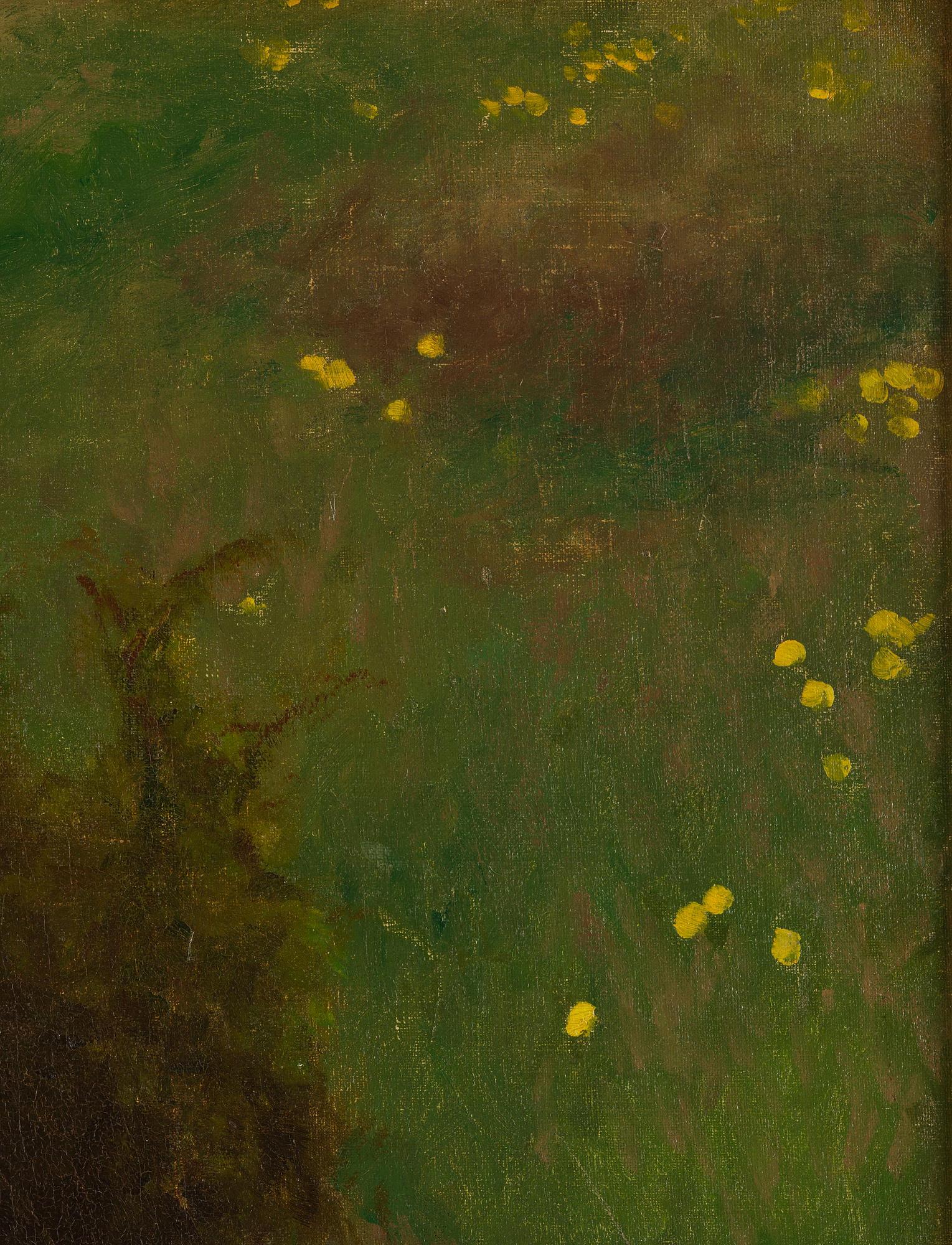
Bruno Liljefors (Ruotsi, 1860-1939) A Summer Landscape, a Study
A Summer Landscape, a Study
Oil on canvas 81.5 x 105.5 cm.
Alkuperä - Provenienssi
Elias Stenius (1879–1961), Uppsala.
Nils Ljung, Stockholm.
Dentist Nils Eriksson, Gävle, acquired from the above in 1956.
Muut tiedot
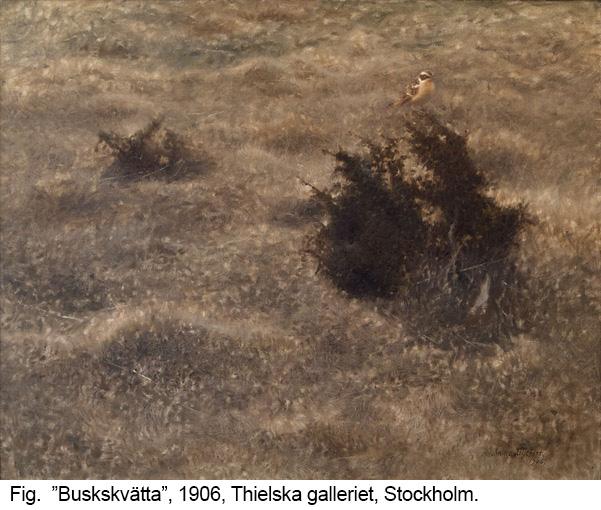
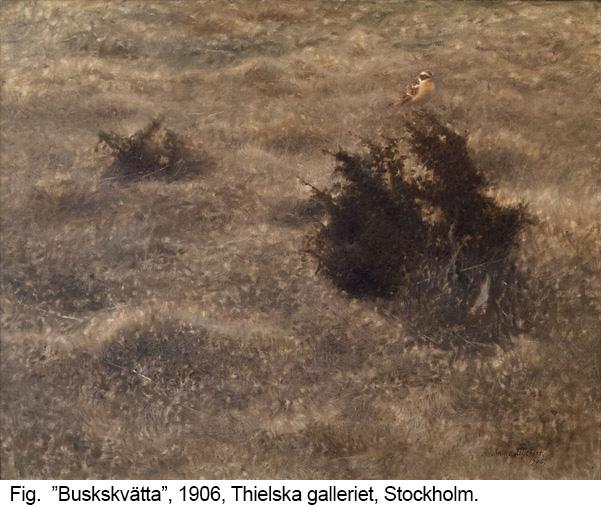
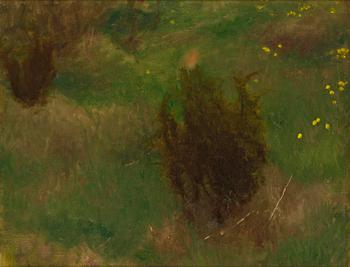
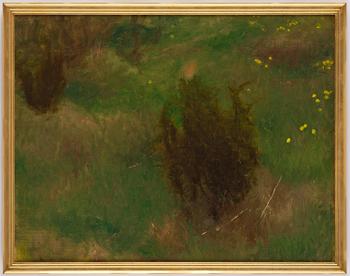
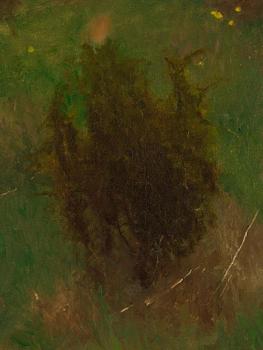
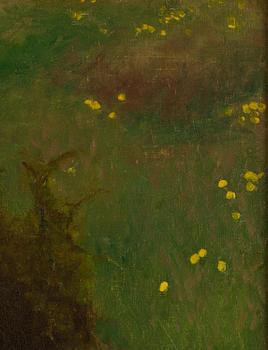
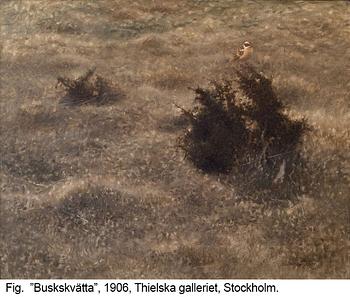
Related to ”Buskskvätta” (Whinchat) (Saxicola rubetra) from 1906 in The Thielska Galleriet, Stockholm (see fig). The picture presents a fascinating insight into Liljefors’s work methods and marks an important watershed in Liljefors’s œuvre. The painting shows that Liljefors initialy had planned to depict a small bird in a summer landscape, perhaps a Whinchat, by indicating a flat area in brownish-red color on top of the Juniper bush in precisely the same position as the Whinchat is positioned in the final work. In the final picture Liljefors replaced the summer landscape for a more subdued monochrome marsh landscape, the Whinchat’s natural habitat. Although a birds plumage in its essence is a reflection of their natural habitat from which it has evolved, their song is also marked by it. In the case of the Whinchat, its monotonous song is a clear reflection of the monotoni of the landscape where it dwells, mires and marshland. Professor Allan Ellenius, "Bruno Liljefors", 1981, p. 162, 164 writes about the picture in the Thielska Galleriet:
"For an ornithologist out in the landscape, sound is often the first thing that reveals a bird. Perhaps he spots a whinchat in the spring terrain, perched atop a juniper bush—like "a bright red flower," to use Liljefors’ own poetic description—just as it is depicted in a remarkable painting. The image is dominated by the ochre tones of the ground, broken only by the two juniper bushes that define the ambiguous depth of the space. It is a landscape of the utmost unpretentiousness. / One ornithological writer concedes that the Whinchat’s song is hardly striking—"its song is in keeping with the monotony of its surroundings." Perhaps this was the effect Liljefors intended."
”Whinchat" is the earliest known example of Liljefors’s emerging interest in animals ability to blend in with their surrounding habitat, ”Den skyddande likheten” (The protective resemblance) and how a bird’s song is a reflection of the surrounding landscape, which was to preoccupy him for the next coming decade. In this perspective, the present work is if great importance since it paved way to this new phase in Liljefors’s artistic and scientific development.
Elias Stenius (1879-1961), the first owner of the present work, was a close friend of Liljefors. Stenius was Deputy County Governor in the district of Uppland. He was also culturally active and was amongst the founders of Värmlands Museum in Karlstad in 1929. He was chairman of Uplands Art Association in Uppsala for a number of years. Following Liljefors’s death he was appointed Probate Manager of Liljefors’s deceased estate which was handled by Uplands Enskilda Bank.
Lisätietoja ja kuntoraportit

Mitä kuljetus maksaa?
Tietoa ostamisesta
Muiden katsomia kohteita