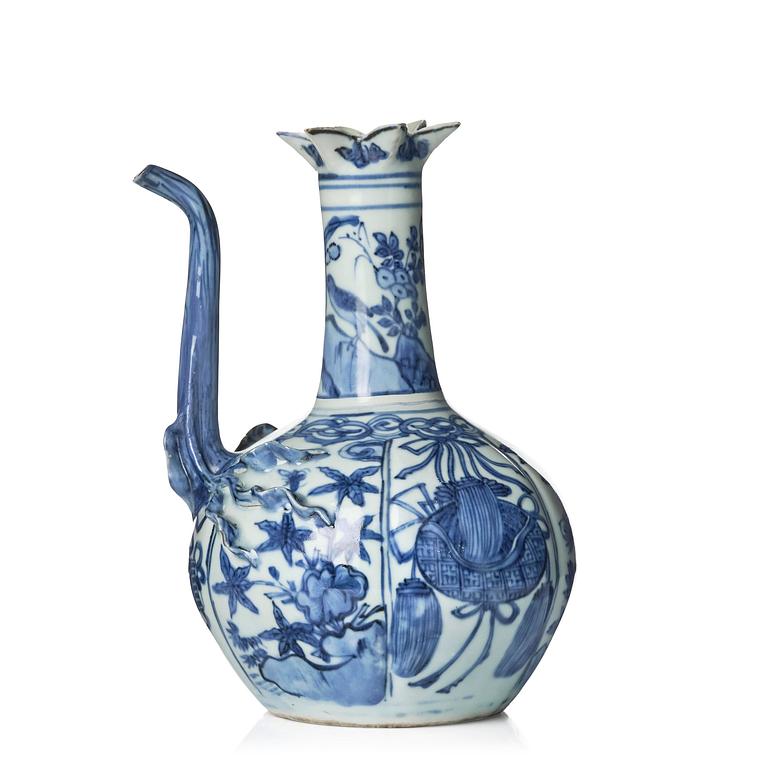
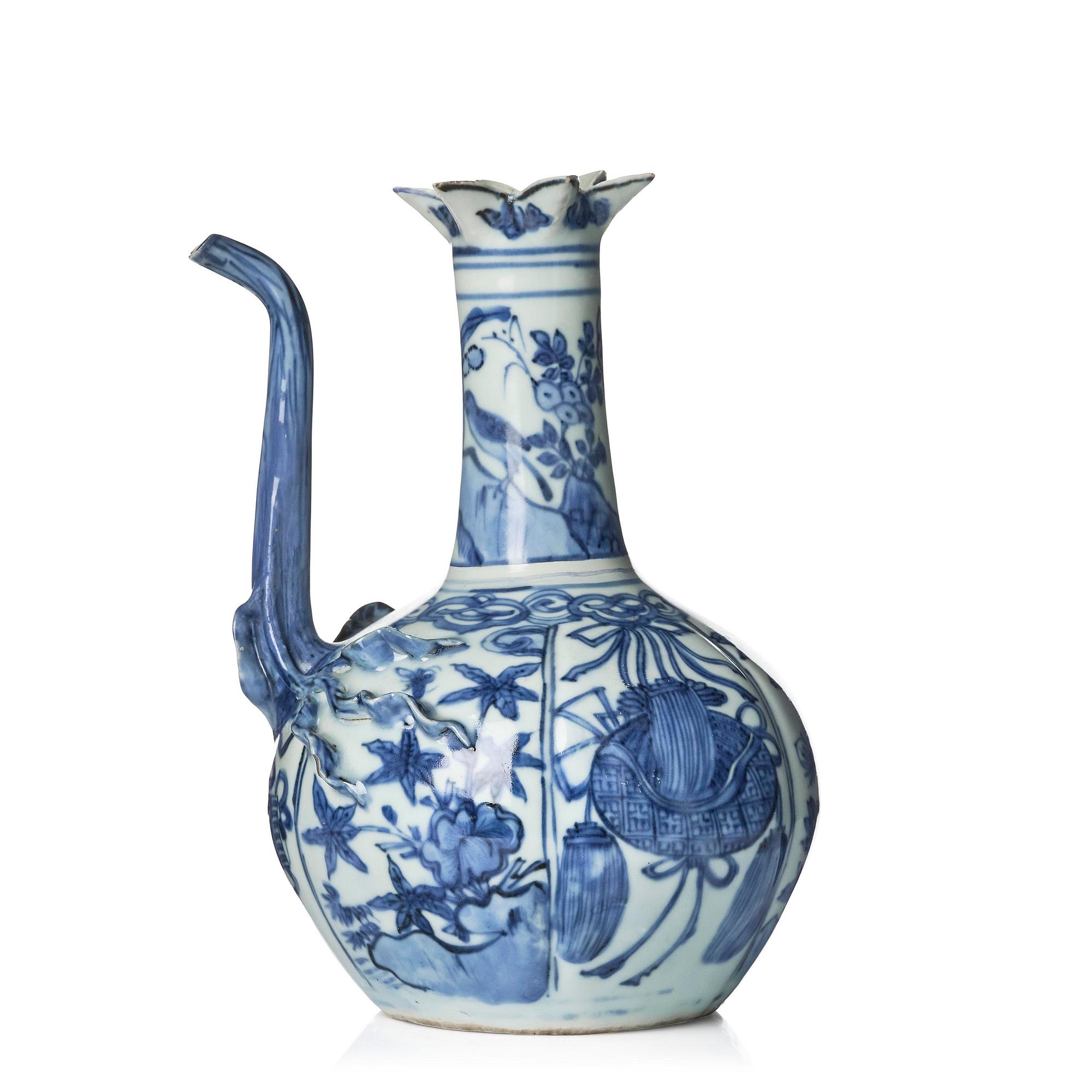
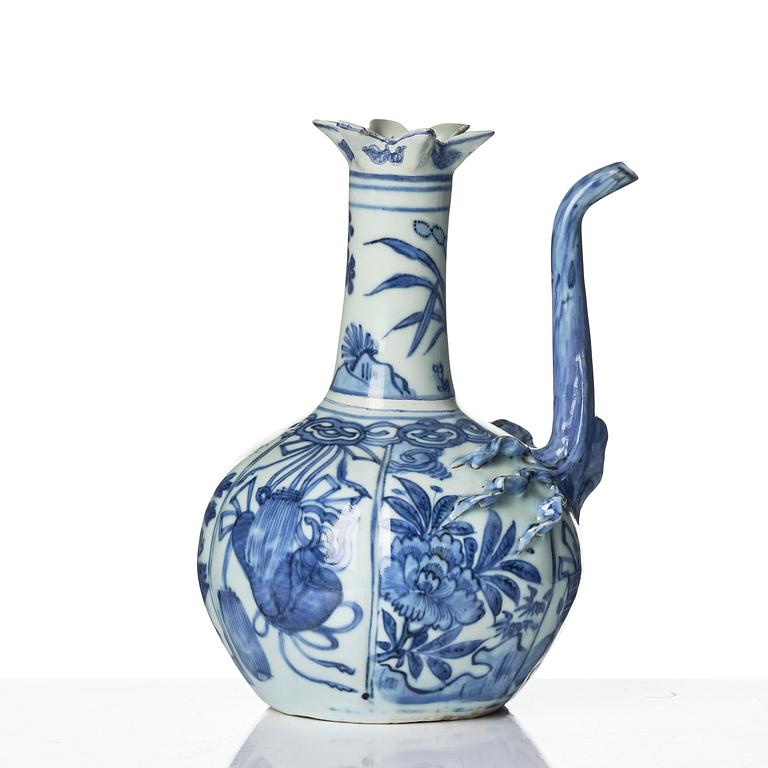
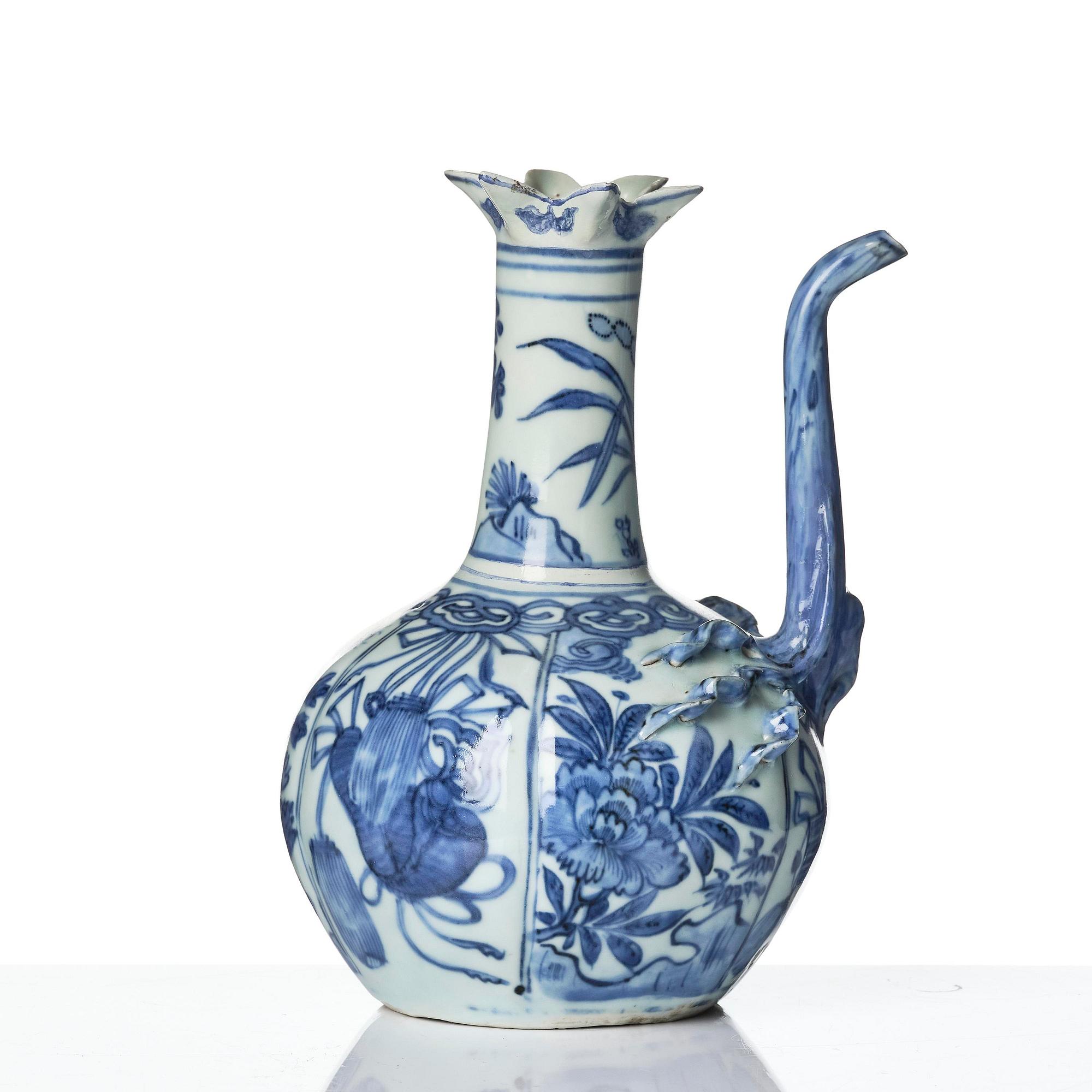
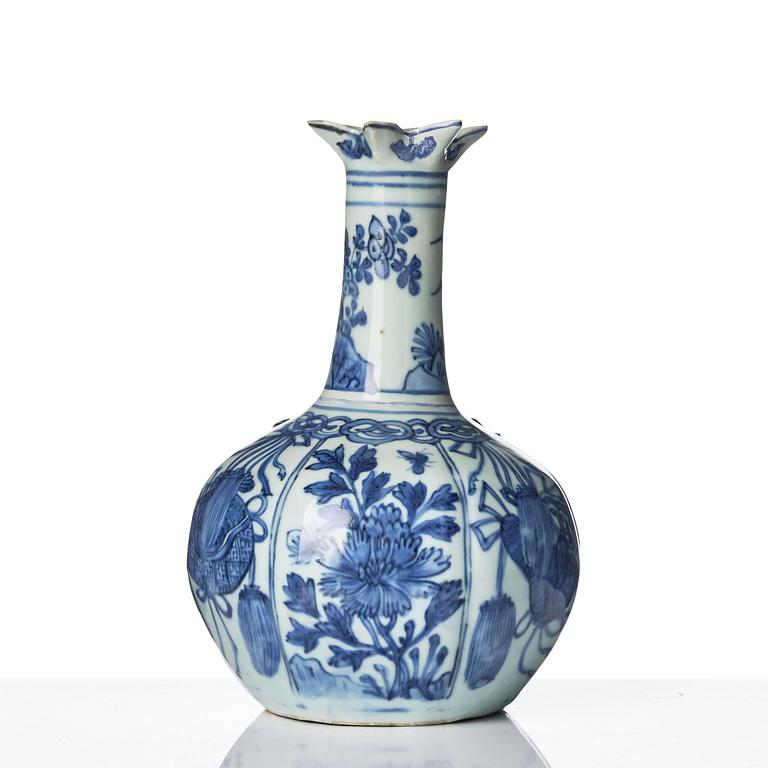
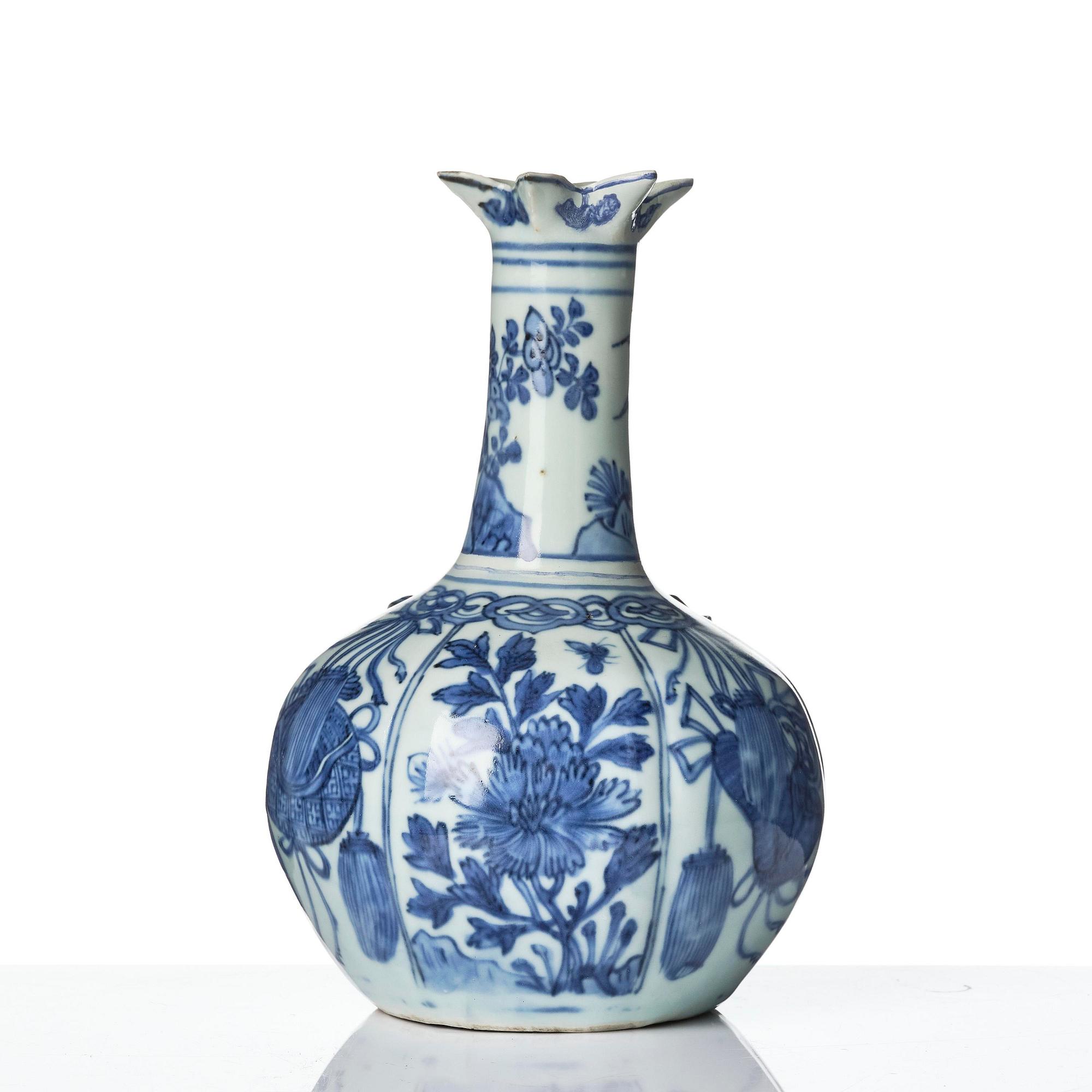
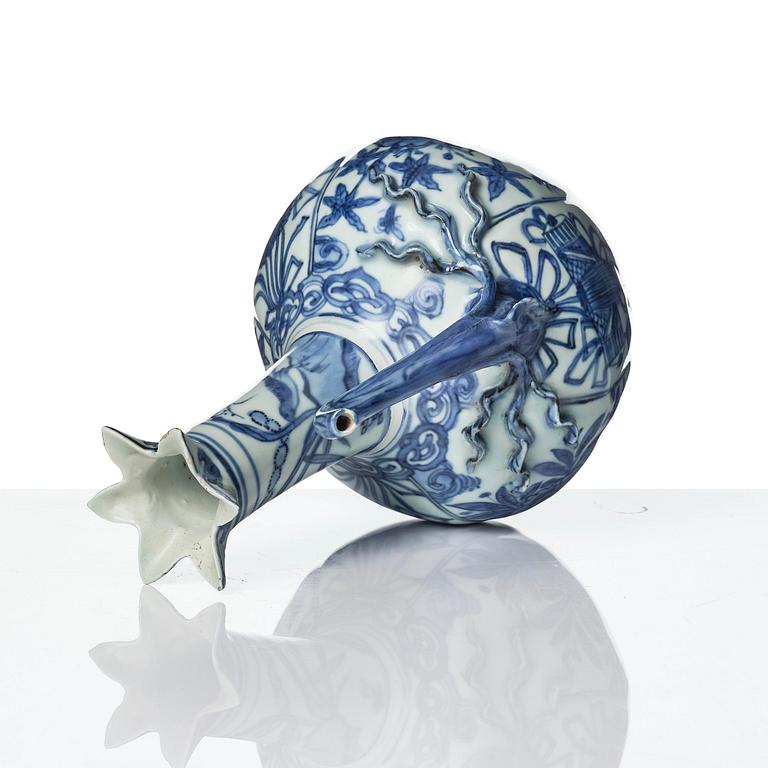
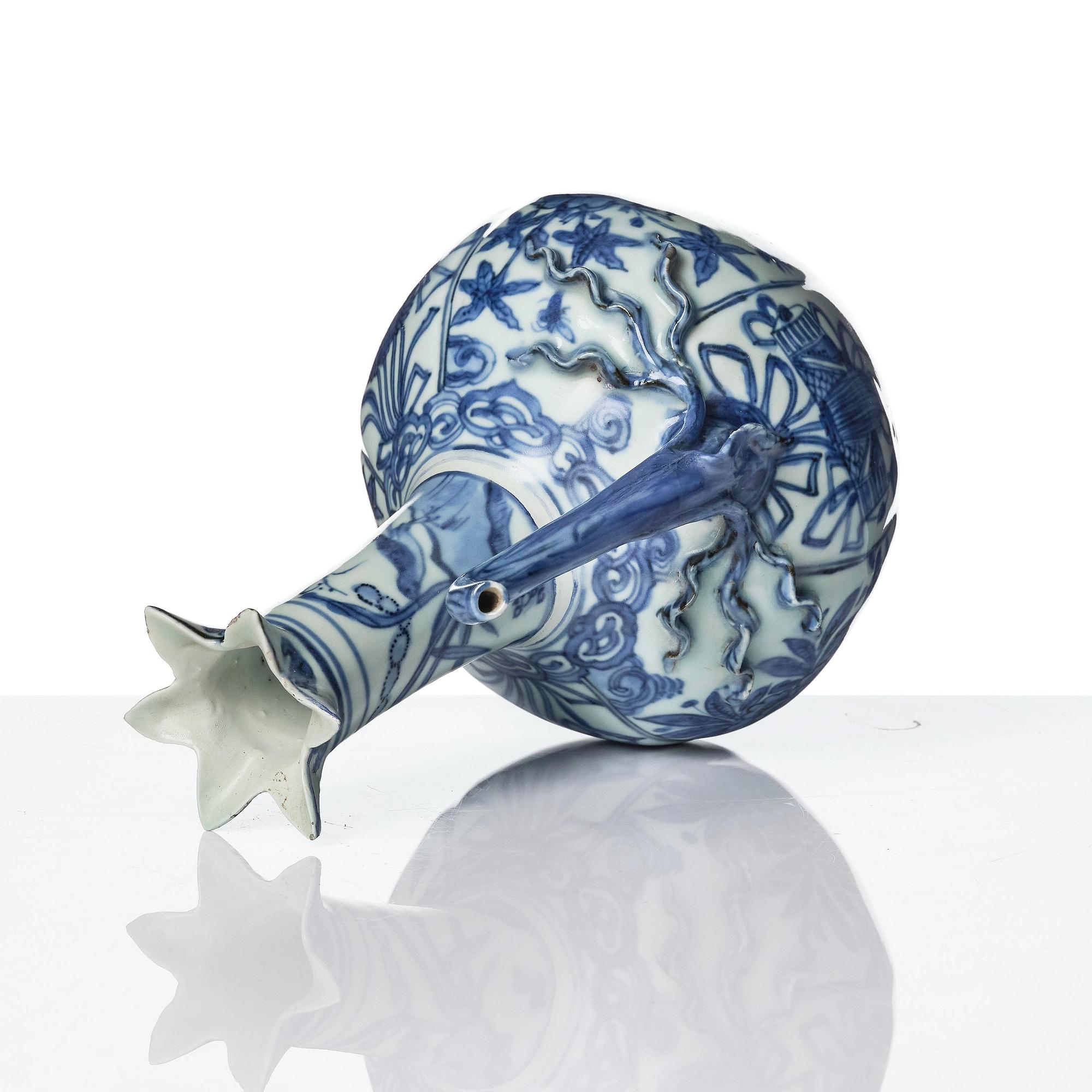
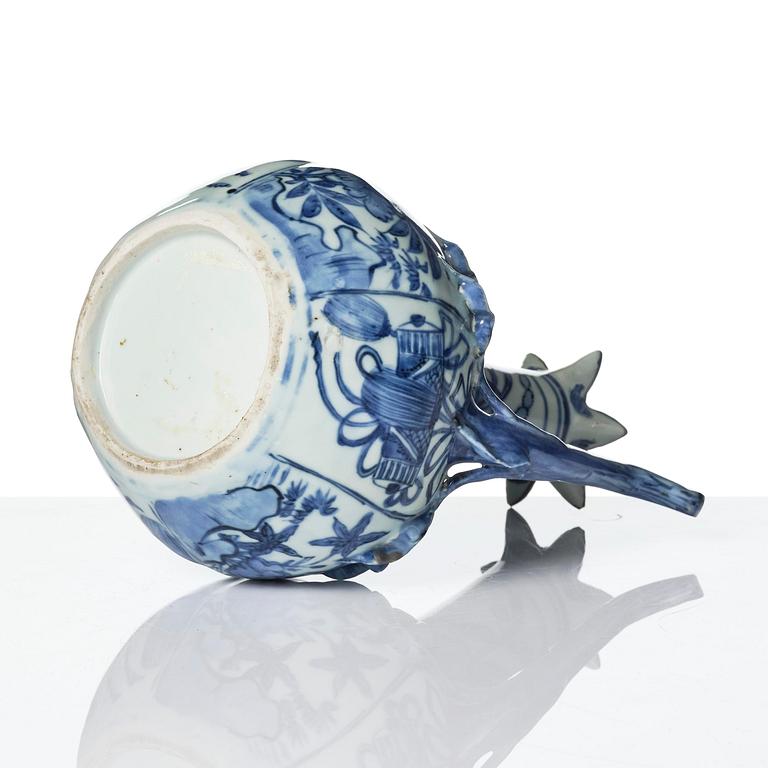
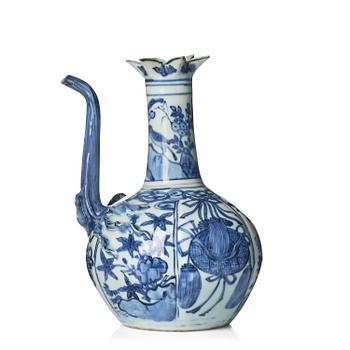
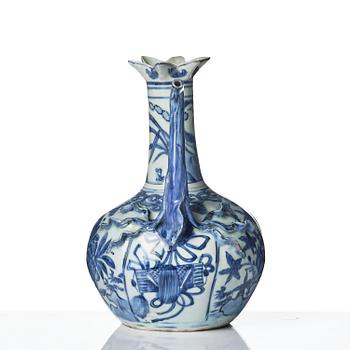
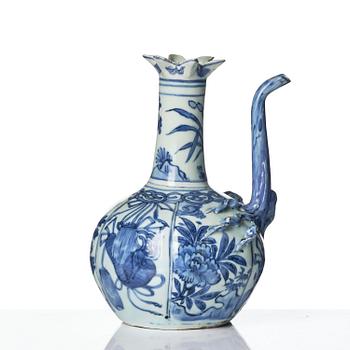
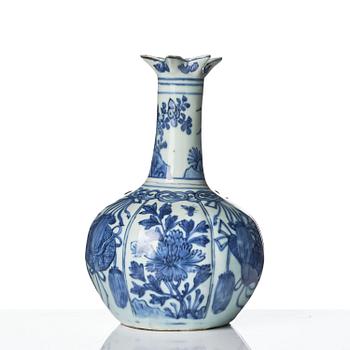
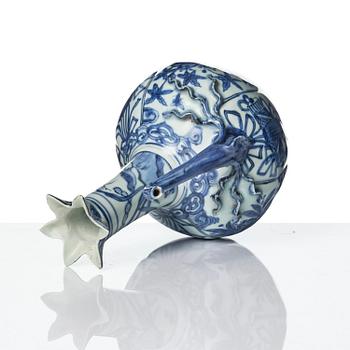
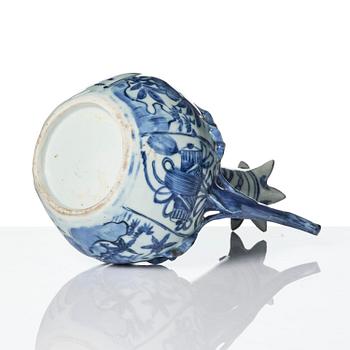
A blue and white pomme granate ewer, Ming dynasty, Wanli (1573-1619).
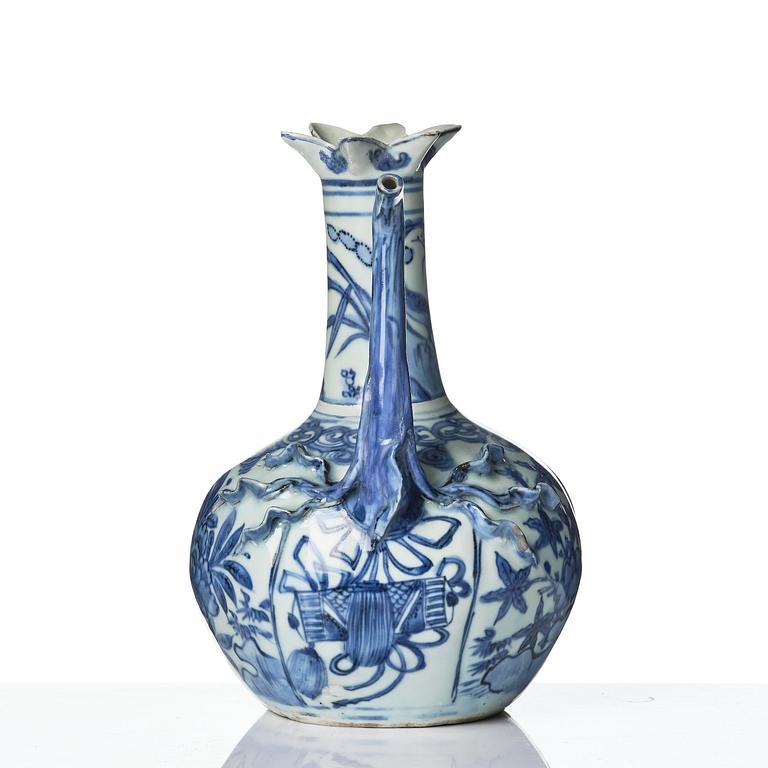
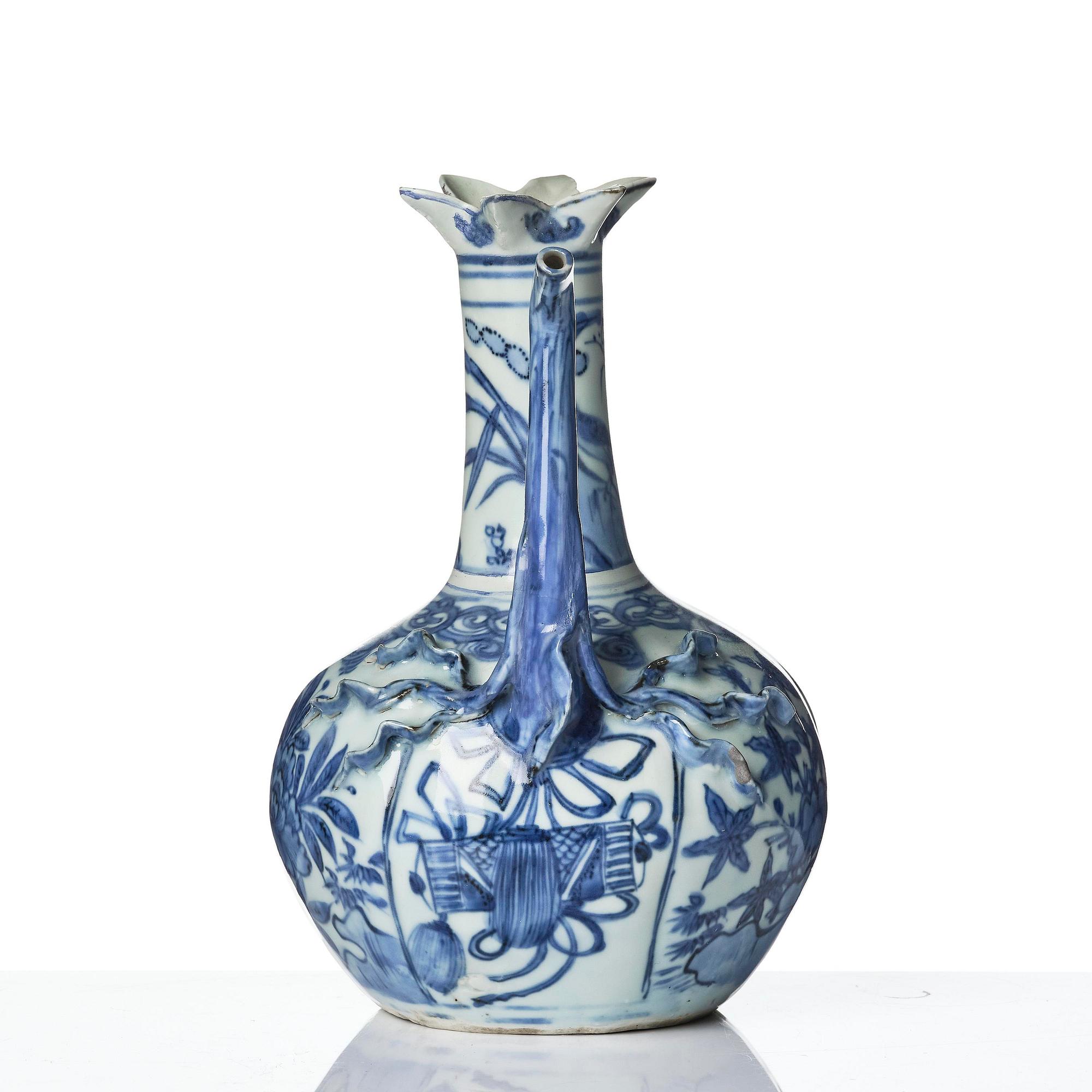
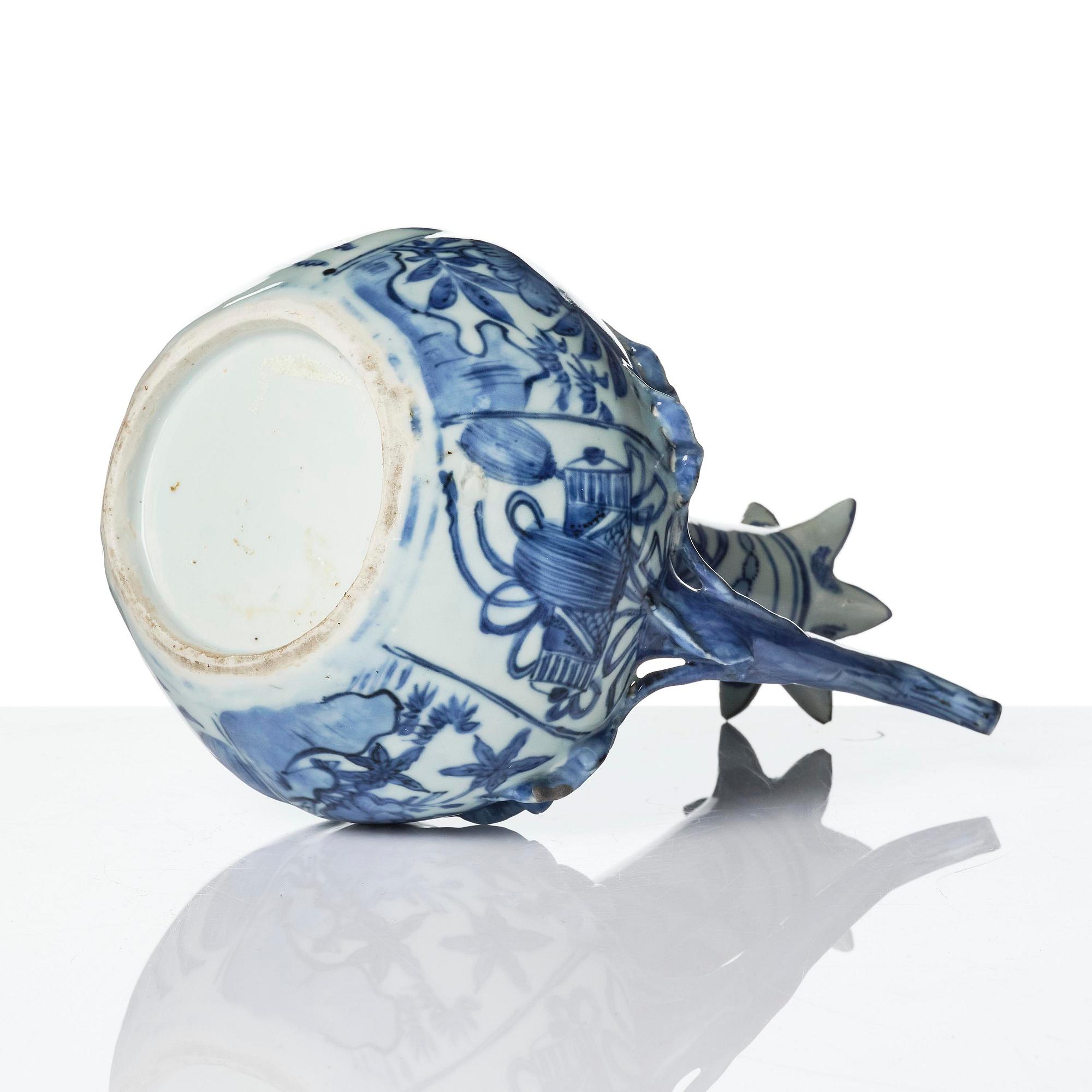
The bulbous lower body is decorated with vertical panels enclosing leafy flower blossoms alternating with tassle decorated precious objects, beneath a ruyi border at the base of the slender neck. The gently curved spout is decorated as a branch with molded leaves, a flaring, star-form mouth. The slightly recessed base is fully glazed, with the rounded foot ring left unglazed. Height 19.5 cm.
Restored.
Alkuperä - Provenienssi
From the Collection of a Swedish Connoisseur of Asian Works of Art. This is part of a collection, a collection that was assembled not only with great care, but also with a deep curiosity and passion for learning - a true academic collection. The collector has been actively buying and studying Chinese porcelain since the early 1970’s.
Näyttelyt
Compare with lot 850, Christie's Live auction 19547, Important Chinese Ceramics and Works of Art, 23–24 September 2021.
Compare with one in the Collection of Musee Guimet, Collection Grandidier, Paris, Museum no G 1005.
The Groninger Museum, The Netherlands, object no. 1960.0057.
Kirjallisuus
For reference in litterature of this type, see Jorge Welsh Books, 'Kraak Porcelain: The Rise of Global Trade in the Late 16th and Early 17th Centuries', pp. 176-179, no. 25 and Maura Rinaldi, 'Kraak Porcelain: A Moment in the History of Trade', pp. 177-179, and pl. 225.
Muut tiedot
This elegant and fragile pouring vessel belongs to a rare group of Kraak porcelain ewers produced during the Wanli period. Commonly referred to as ‘pomegranate ewers’, these vessels derive their modern name from the globular, lobed body and distinctive star-shaped mouth rim. In Chinese culture, the pomegranate (shiliu)—with its abundance of seeds—symbolises fertility, prosperity, and numerous descendants. The form is exceptional within the Kraak repertoire. Unlike the more robust kendis, pear-shaped bottles, and double-gourd vessels of the period, these ewers are remarkably thinly potted and refined in execution. Their elongated spouts ultimately derive from earlier Ming dynasty ewers influenced by Middle Eastern metalwork prototypes, while the relief-moulded leafy branches and star-shaped mouth rim appear unique to this particular group
Lisätietoja ja kuntoraportit

Mitä kuljetus maksaa?
Tietoa ostamisesta
Muiden katsomia kohteita