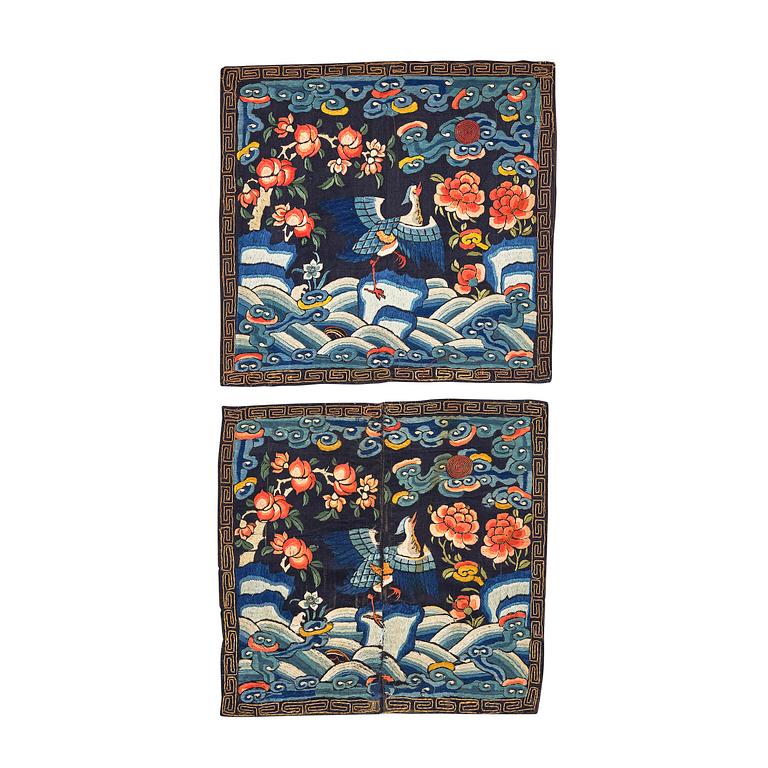
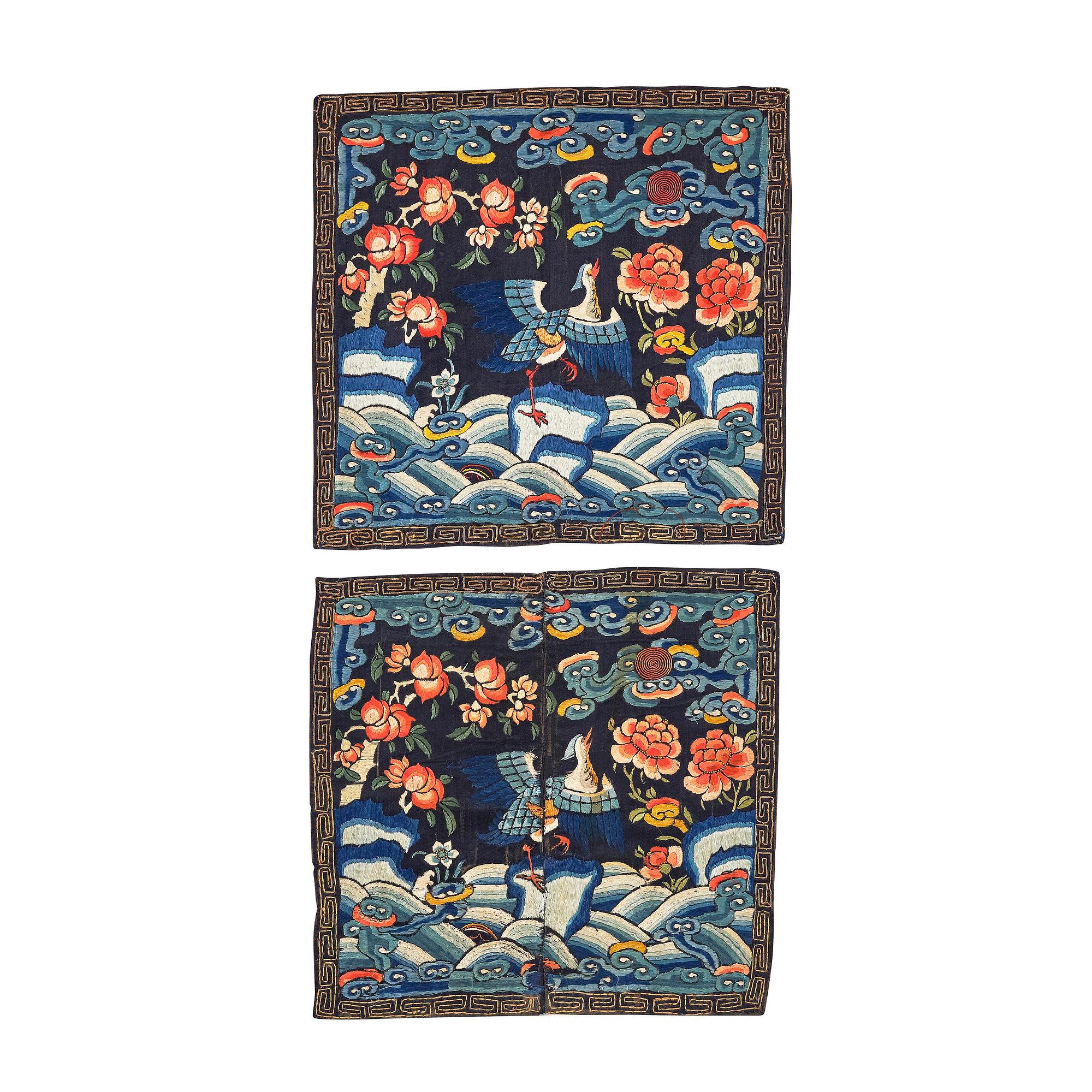
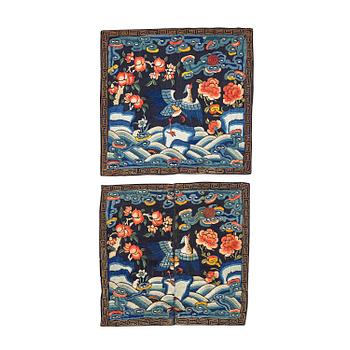
A pair of officials rank badges, 'buzi', Qing dynasty, 19th century.
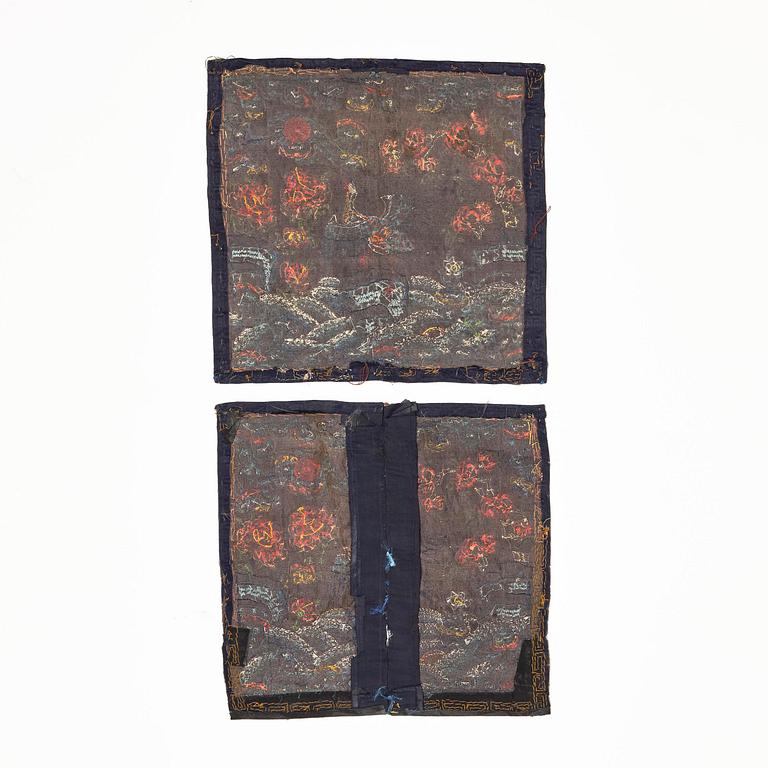
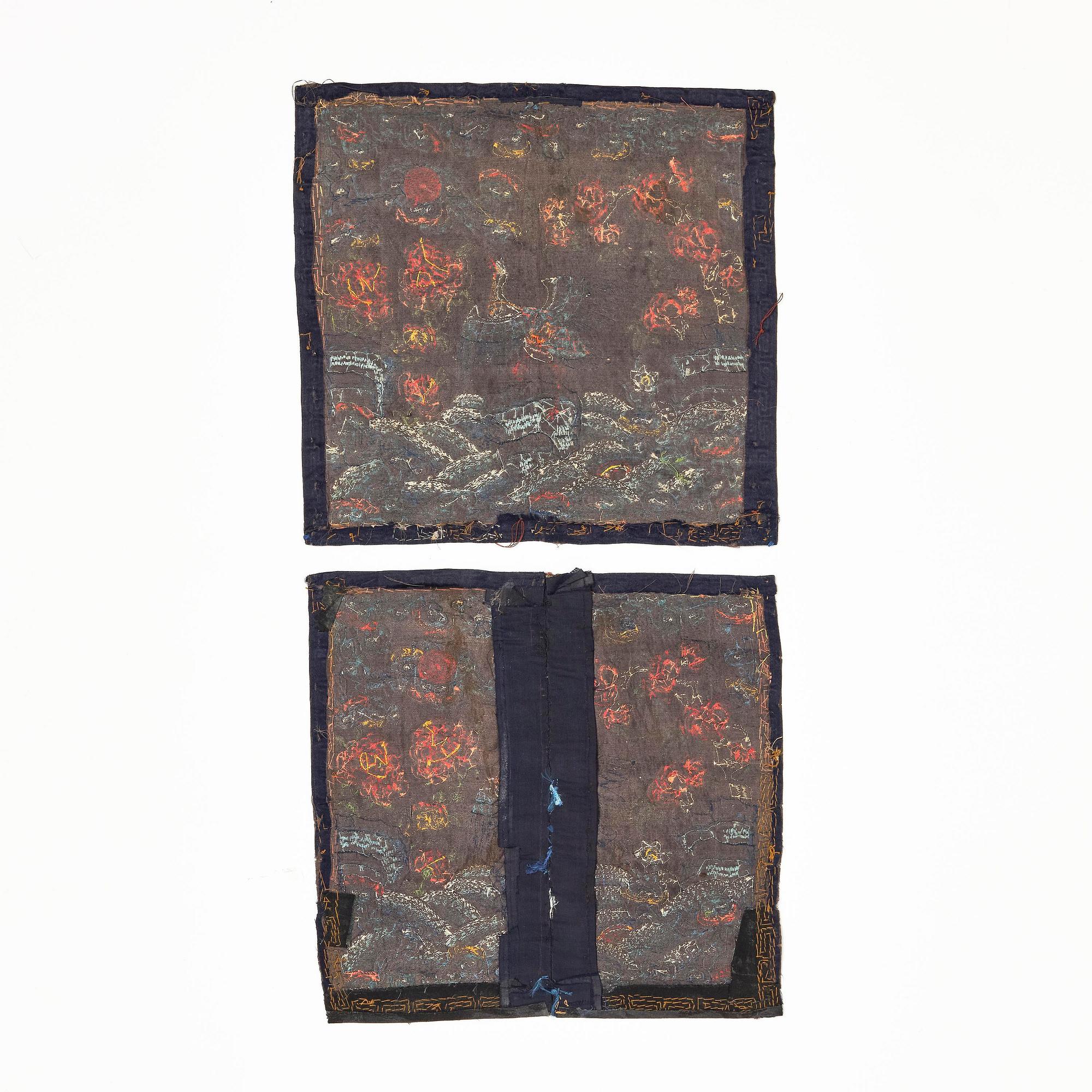
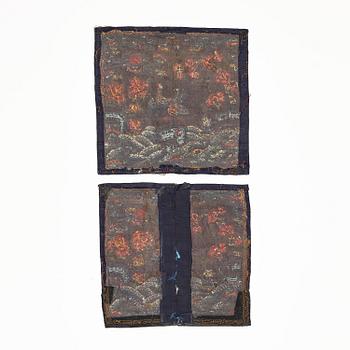
Embroidered with an egret standing atop of a cliff, surrounded by fierce waves, peonies, peaches, and ruyishaped clouds. No lining. Measure 28x27.5 cm.
Wear.
Alkuperä - Provenienssi
Property of a private Finnish Collection.
The collection was formed between 1980-2020, the collector has had an interest in China and Chinese Works of Art since childhood, growing up in Beijing. He returned to China in grownup years for work, he came to live in China altogether more than 40 years. His love of China, and Chinese works of art is mirrored in the collection and being an academic collector, he never got tired of learning more about the subject by studying literature, attending lectures, visiting museums, auction houses and befriending curators from Beijing, Hong Kong, London, Paris, and Stockholm. The collection consists of both Chinese ceramics and textiles. This being part of the textile collection.
Kirjallisuus
Illustrated Precedents for the Ritual Paraphernalia of the Imperial Court, published in 1759, tells us much about how Court attire was regulated by imperial decrees. The Chinese tradition of wearing rank badges (buzi), also known as Mandarin squares, to demonstrate civil, military or imperial rank began in 1391 during the Ming Dynasty (1368-1644), and continued throughout the Qing Dynasty (1644-1911).
These insignia were sewn onto or woven into the wearer’s garments to indicate their rank. Civil officials wore insignia with different bird species corresponding to their rank, while animals denoted military officers.
The fall of the Qing Dynasty in 1911 brought an end to rank insignia.
Lisätietoja ja kuntoraportit

Mitä kuljetus maksaa?
Tietoa ostamisesta
Muiden katsomia kohteita