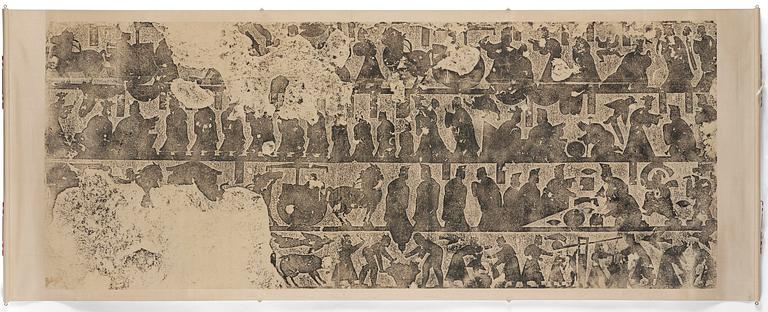
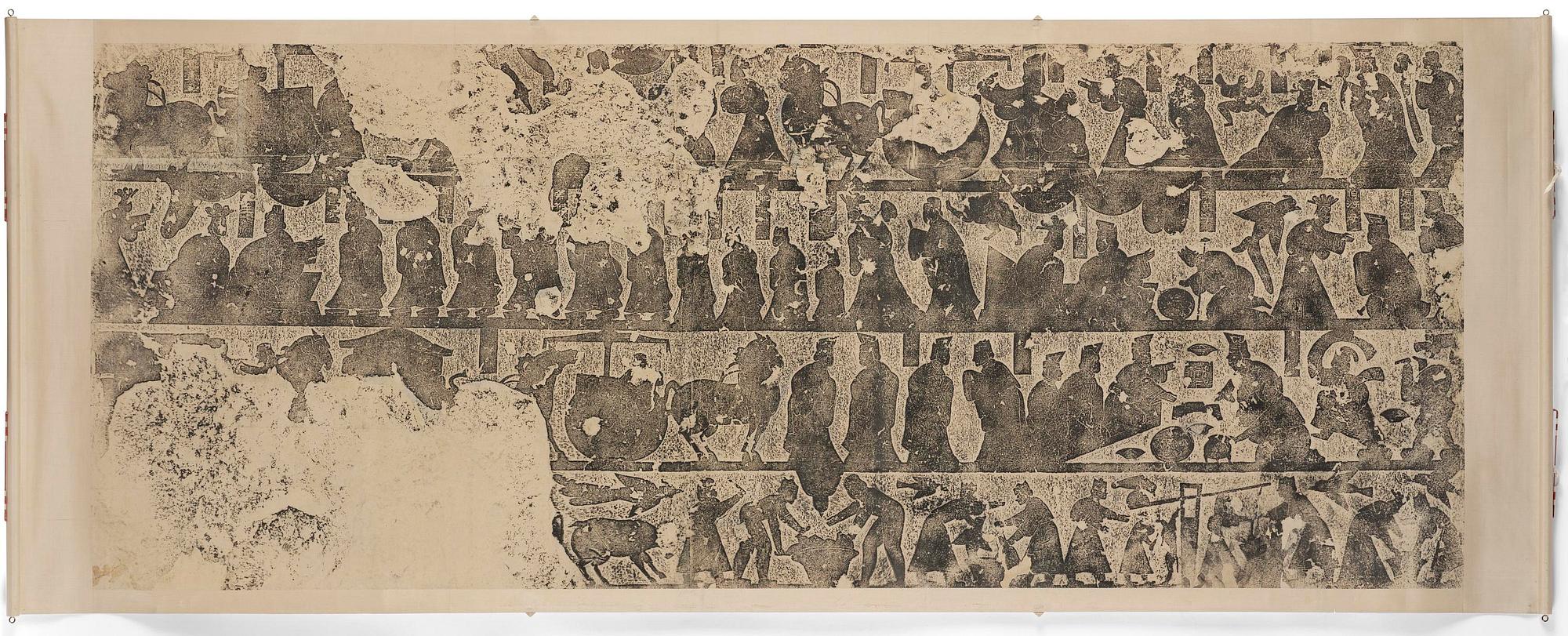
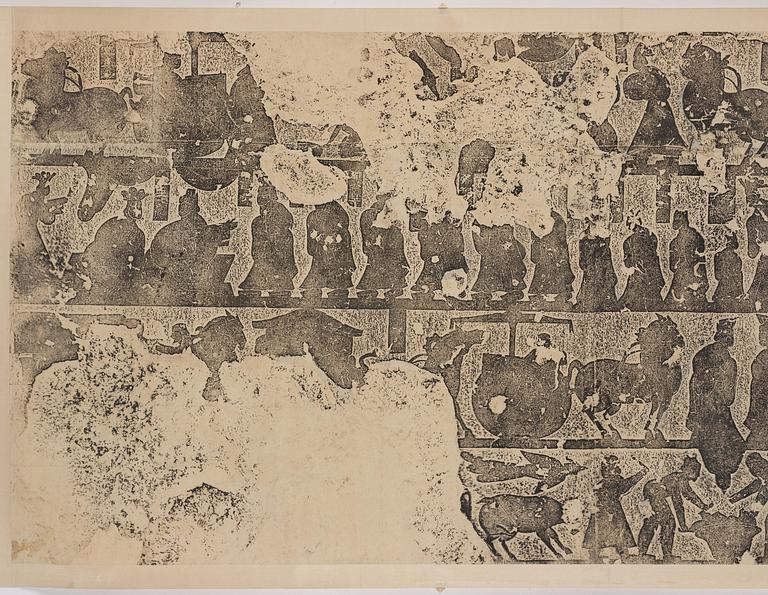
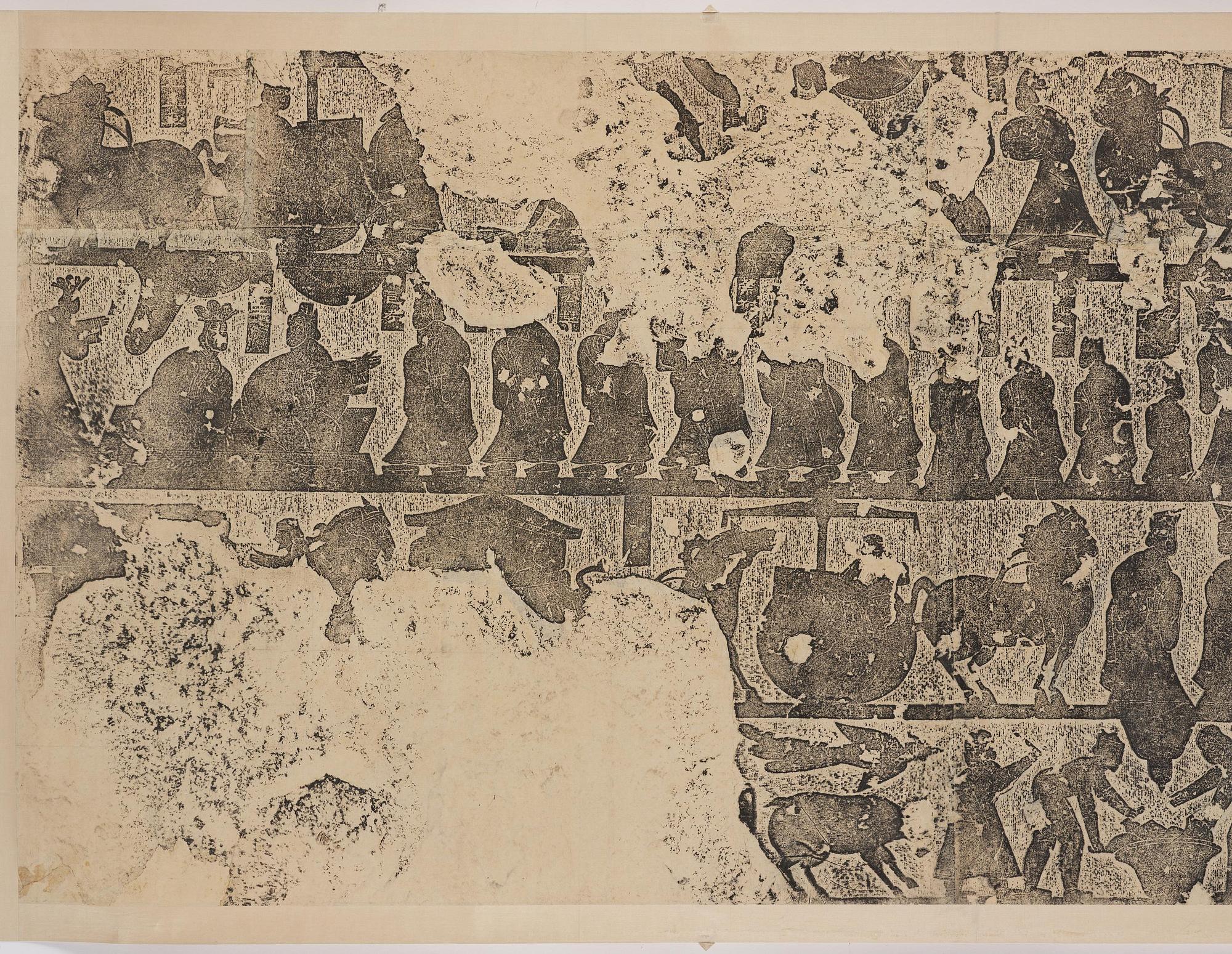
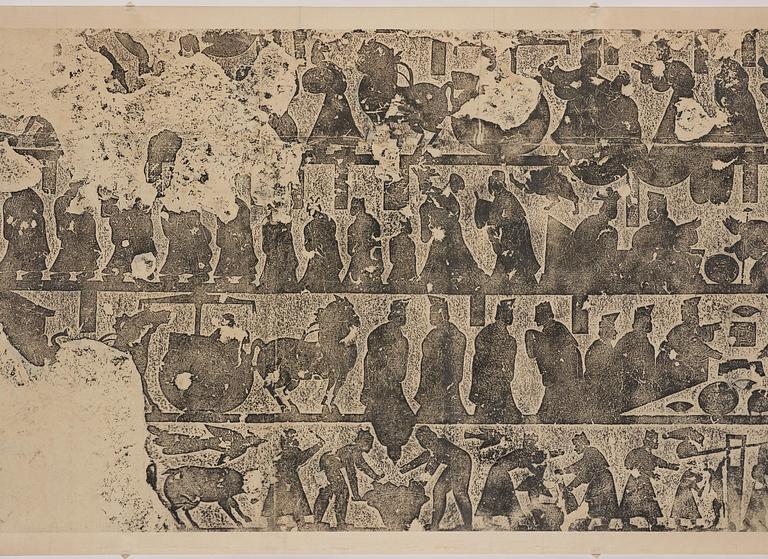
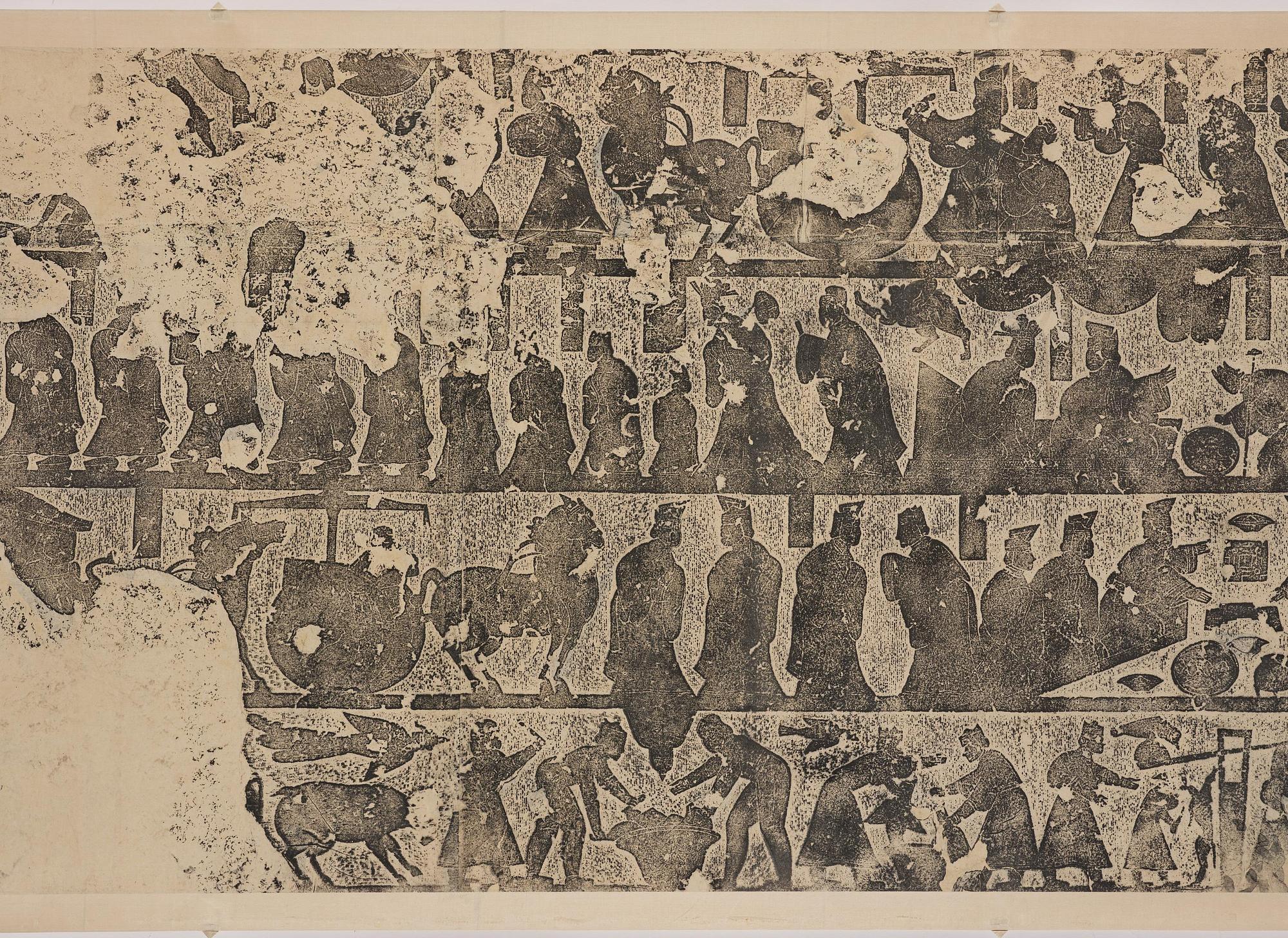
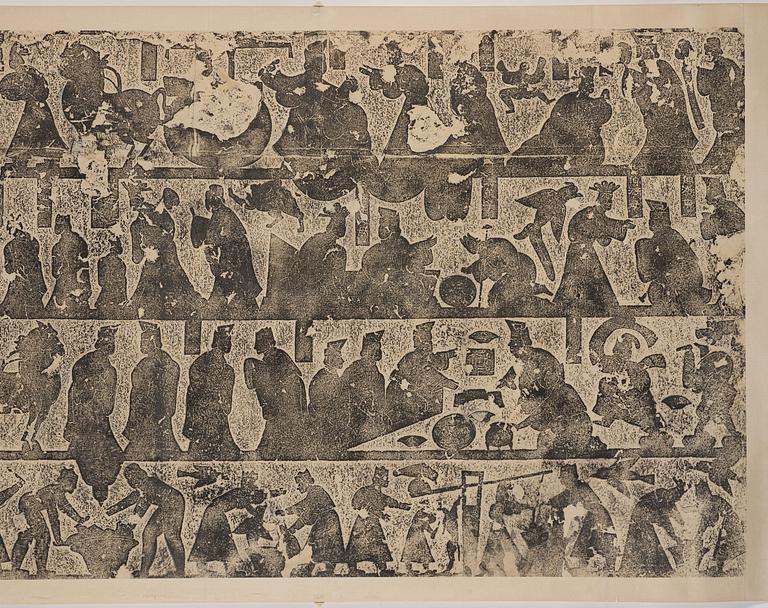
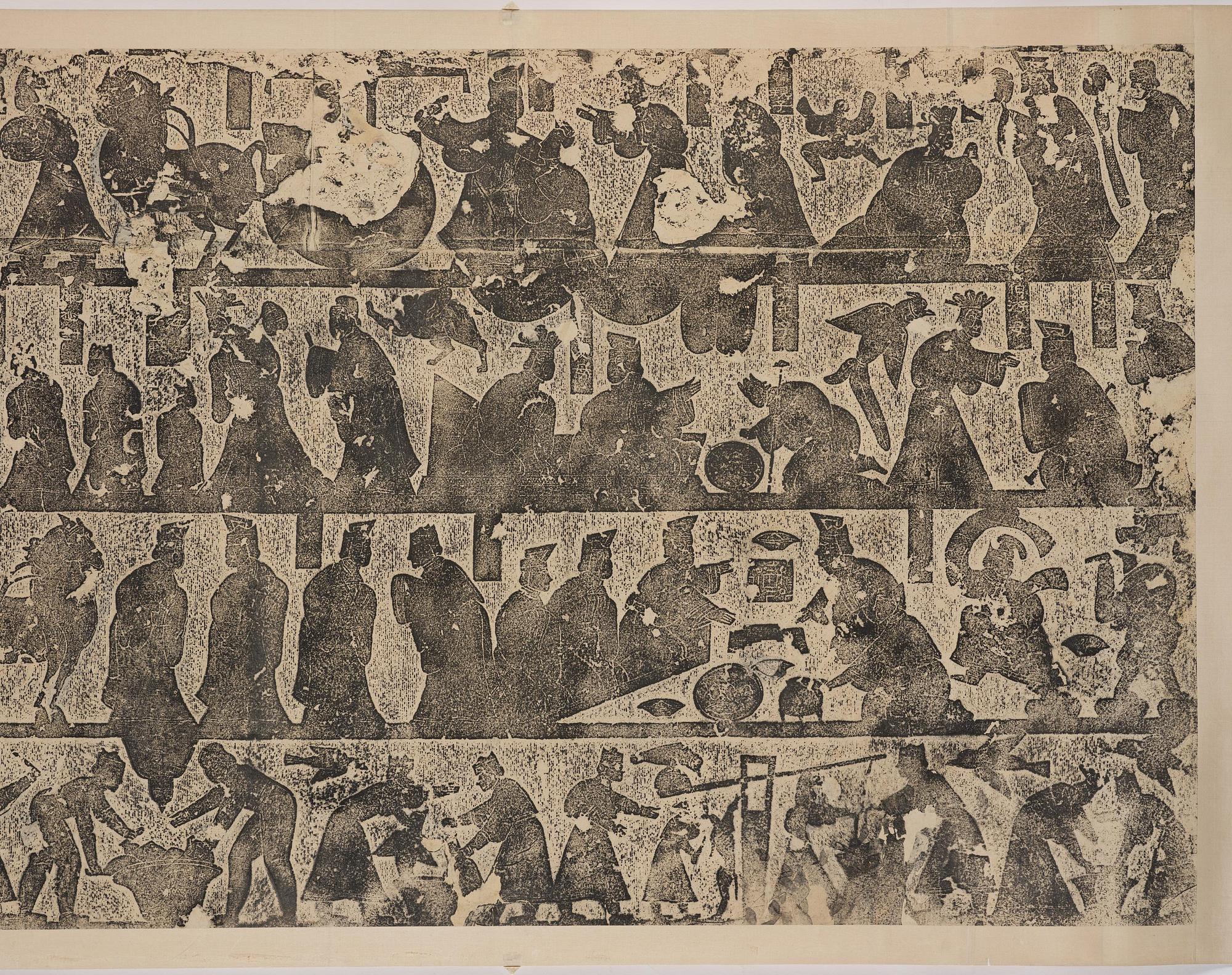
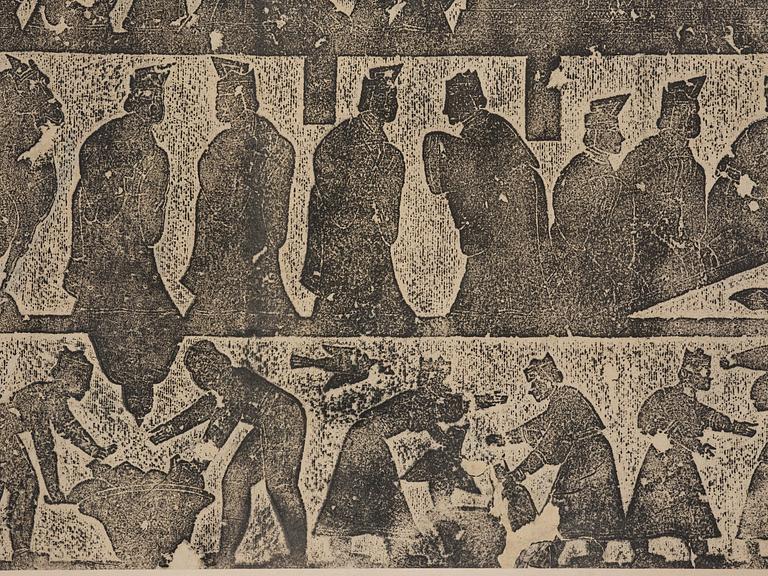
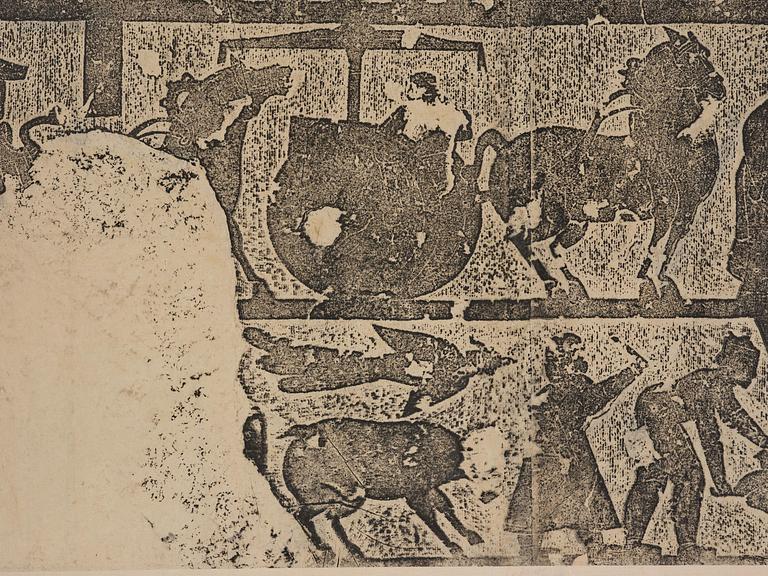
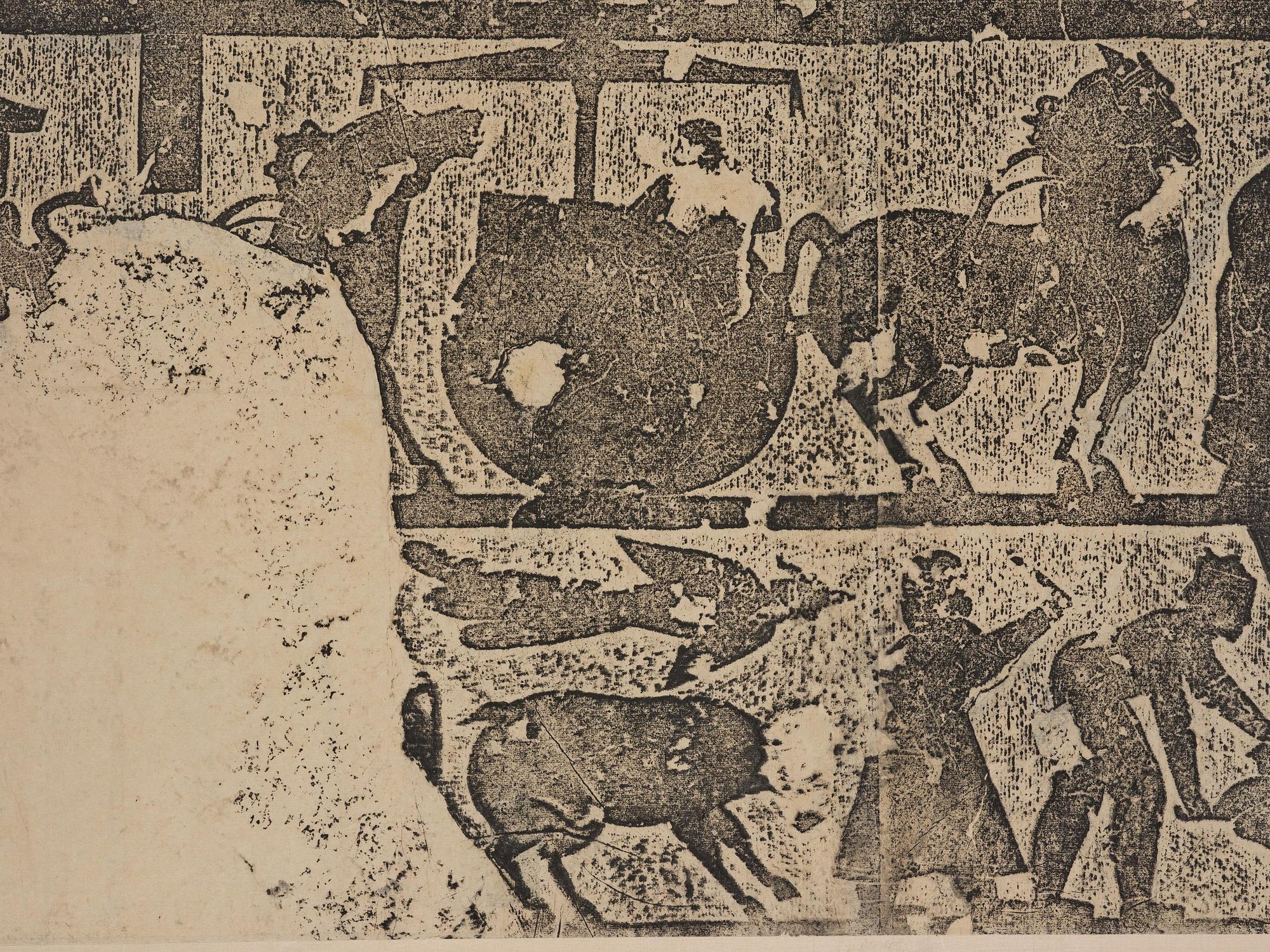
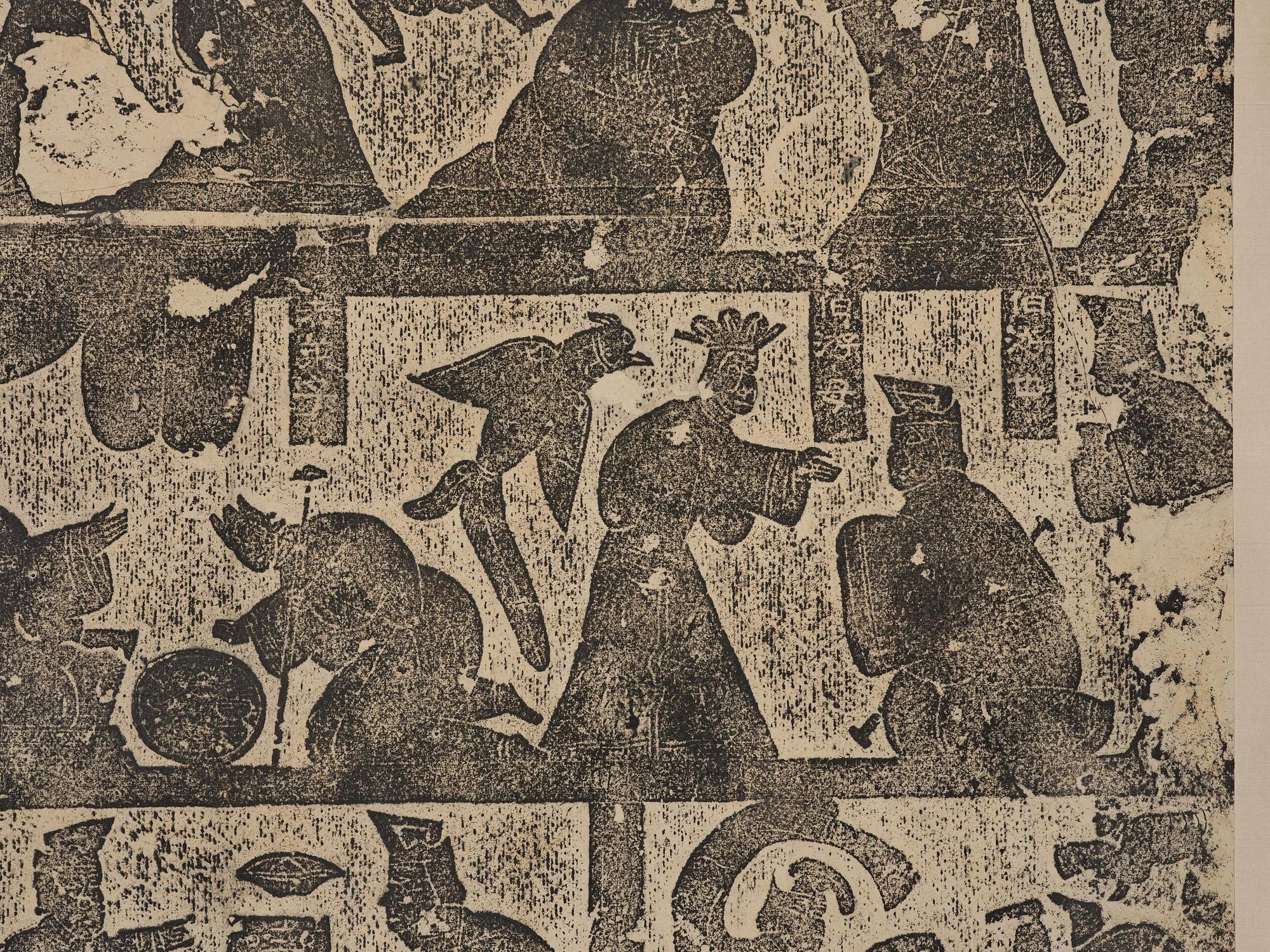
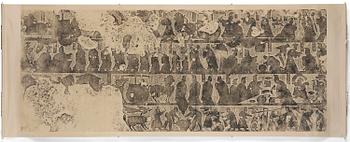
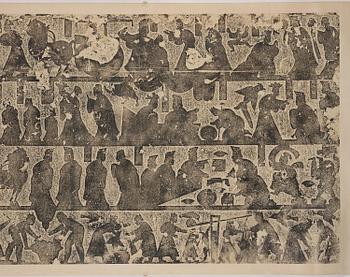
An inkrubbing of the East Wall Chamber of the Wuliang shrine, China, 20th century.
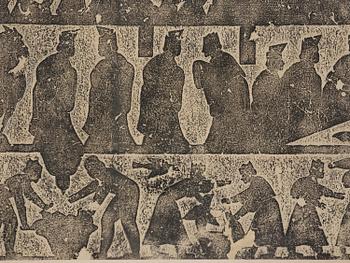
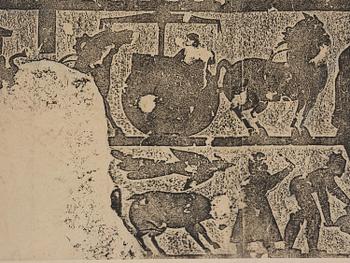
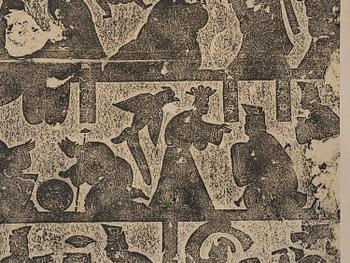
The rubbing shows a procession with a horse carriage and figures carrying out different shores. Measure motif 79x197 cm. Full measure of the scroll 87x223 cm.
Alkuperä - Provenienssi
From the Collection of Klas E Böök (1909-1980), thence by descent. A Swedish diplomat and civil servant. Mr Böök first had a career within banking, that led up to the position of Governor of the Swedish National Bank from 1948 to 1951. His diplomatic career began when he was appointed head of the Commercial Department of the Ministry for Foreign Affairs and envoy from 1947 to 1948. He was minister in Ottawa from 1951 to 1956, ambassador in Beijing from 1956 to 1961, also accredited as envoy to Bangkok from 1956 to 1959. Böök was ambassador in New Delhi, also accredited to Colombo and Kathmandu from 1961 to 1965 and in Bern from 1965 to 1972. He had special assignments for the Foreign Ministry from 1972 to 1975.
Muut tiedot
Wu Liang Shrine is located in Jiaxiang County, Shandong Province, dating to the Eastern Han dynasty, 147–168 CE.
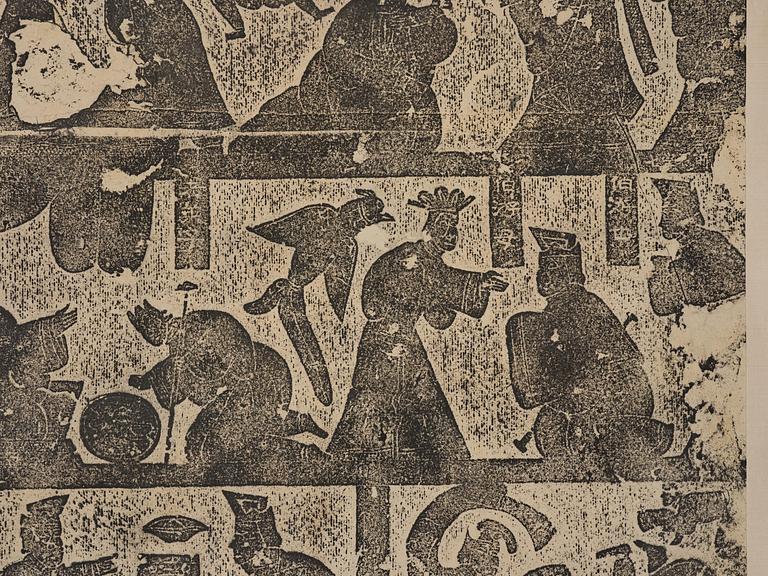
The stone carvings collectively known as the Wu Family shrines are a series of organized pictorial elements and inscriptions forming a tomb discovered in China's Shandong province in 1786. The stone reliefs however have been studied since the Song Dynasty (960 - 1279) through ink rubbings of their surface decoration and inscriptions. These rubbings were created by placing paper over the surface of the stone and rubbing the paper with ink, transferring the stone texture to paper.
Lisätietoja ja kuntoraportit
Mitä kuljetus maksaa?
Tietoa ostamisesta

Muiden katsomia kohteita