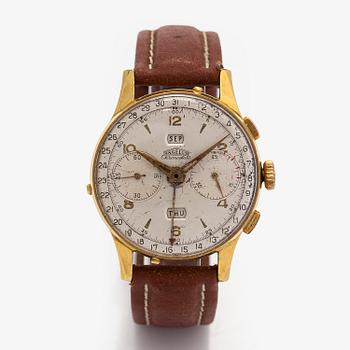
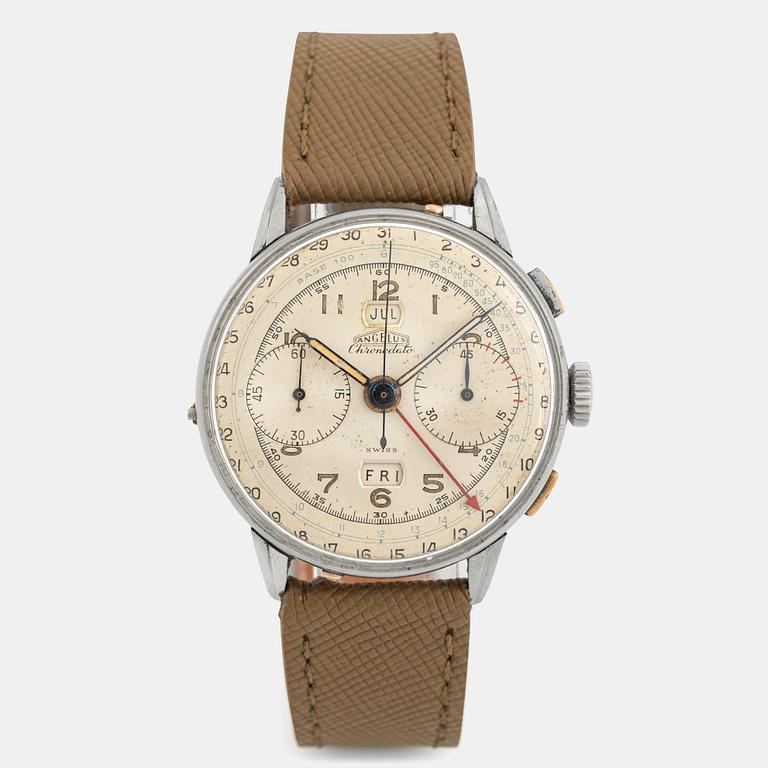
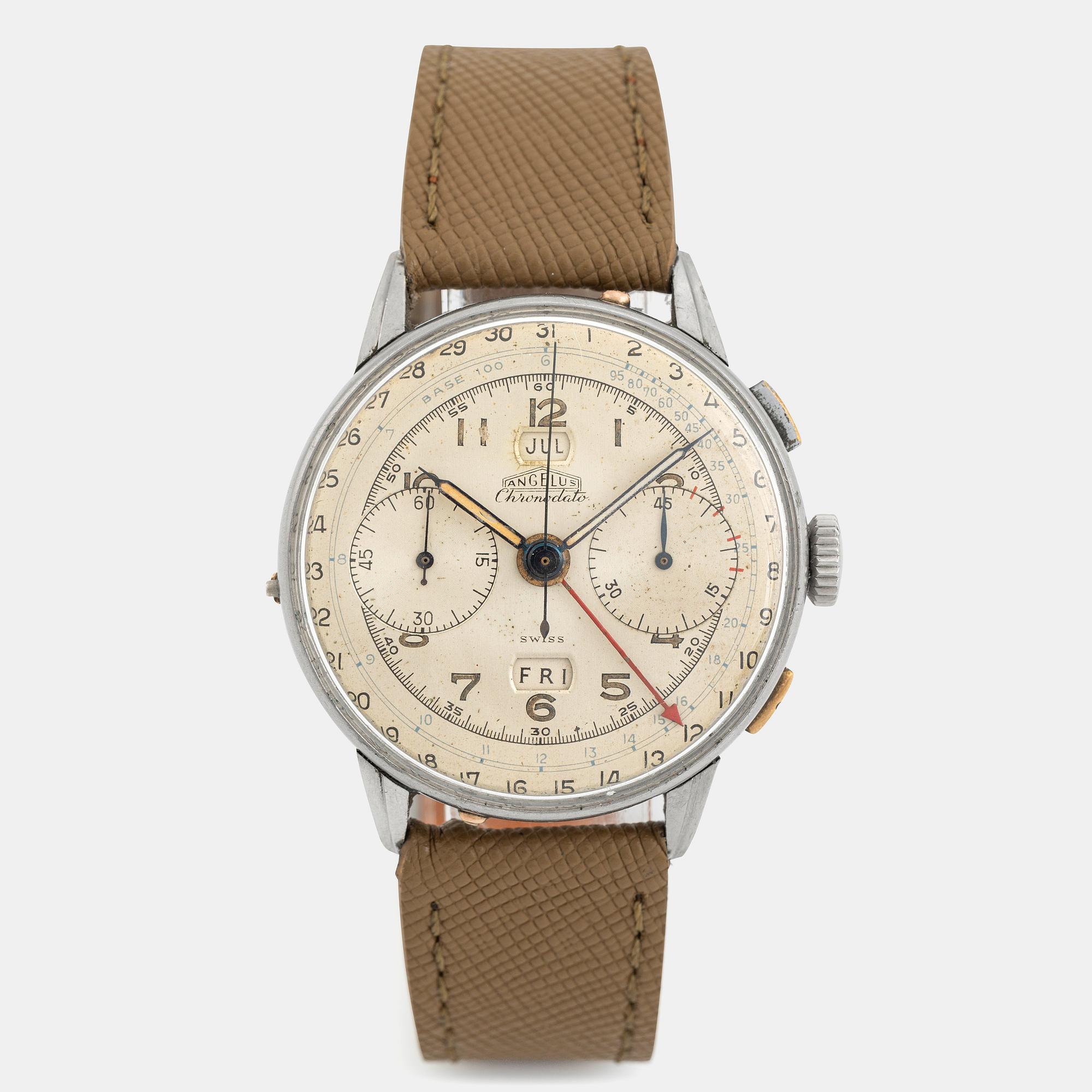
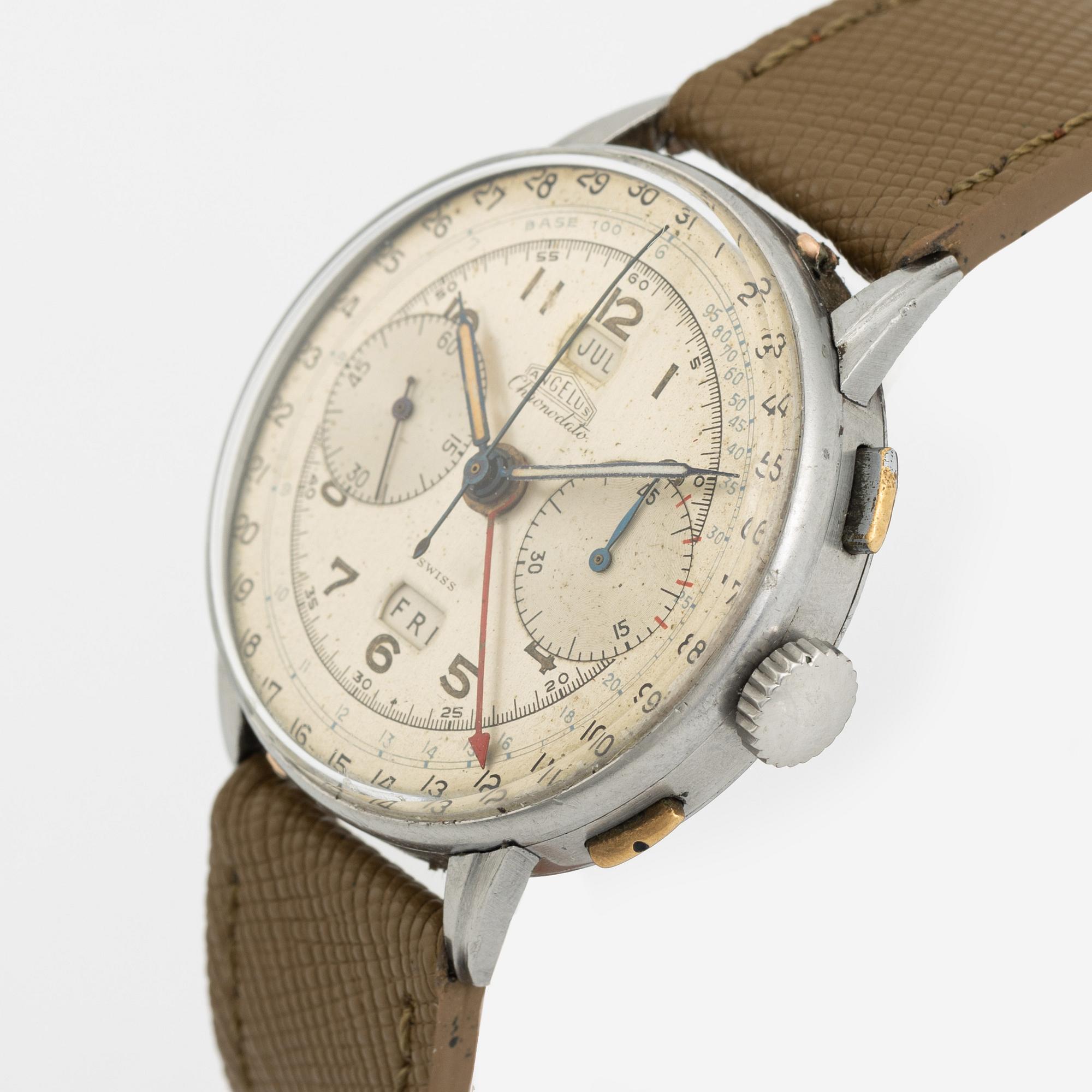
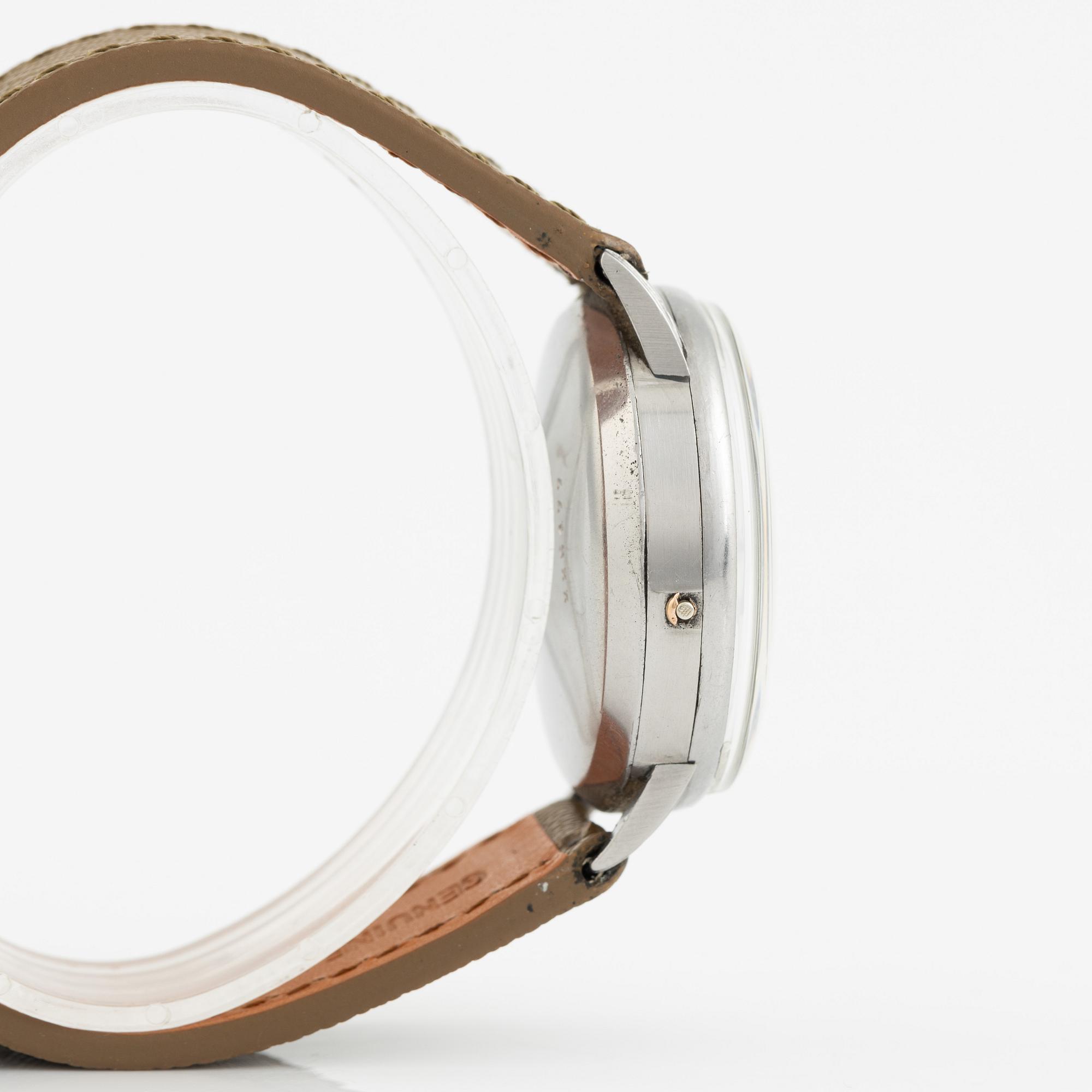
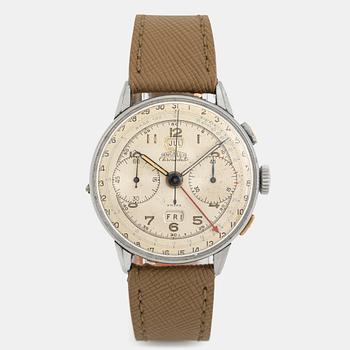
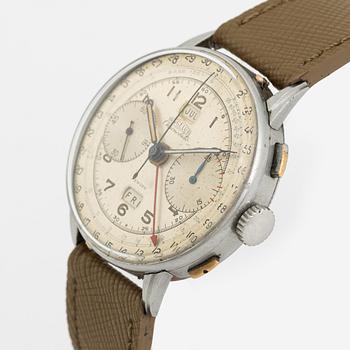
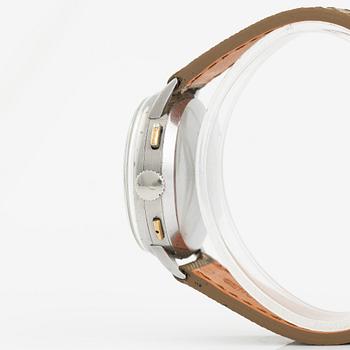
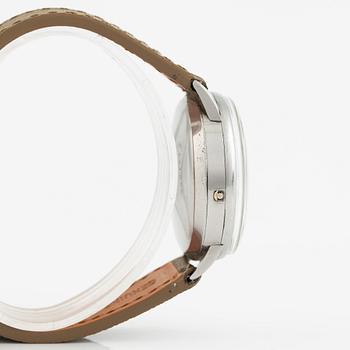
Case size: 38 mm
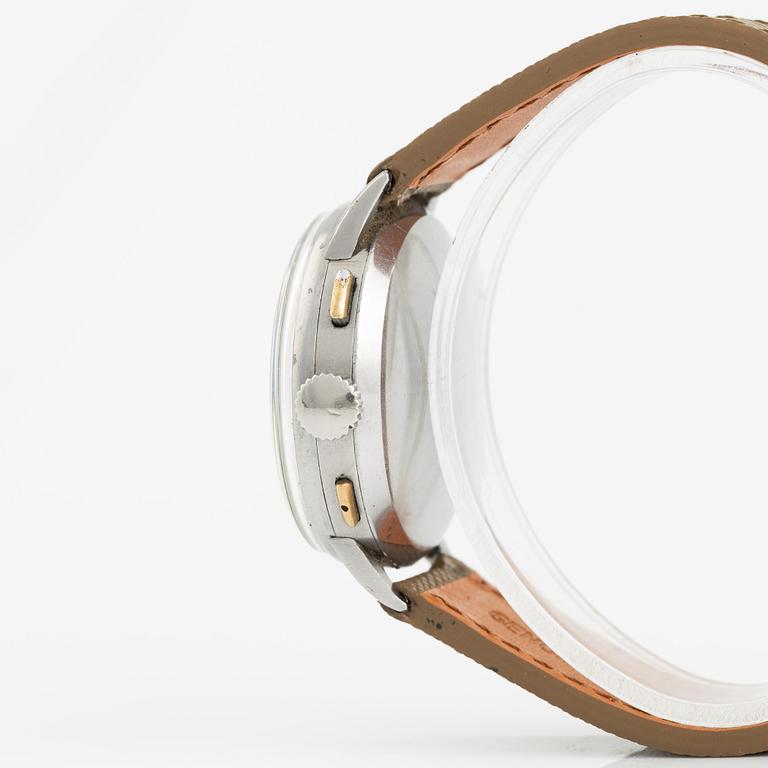
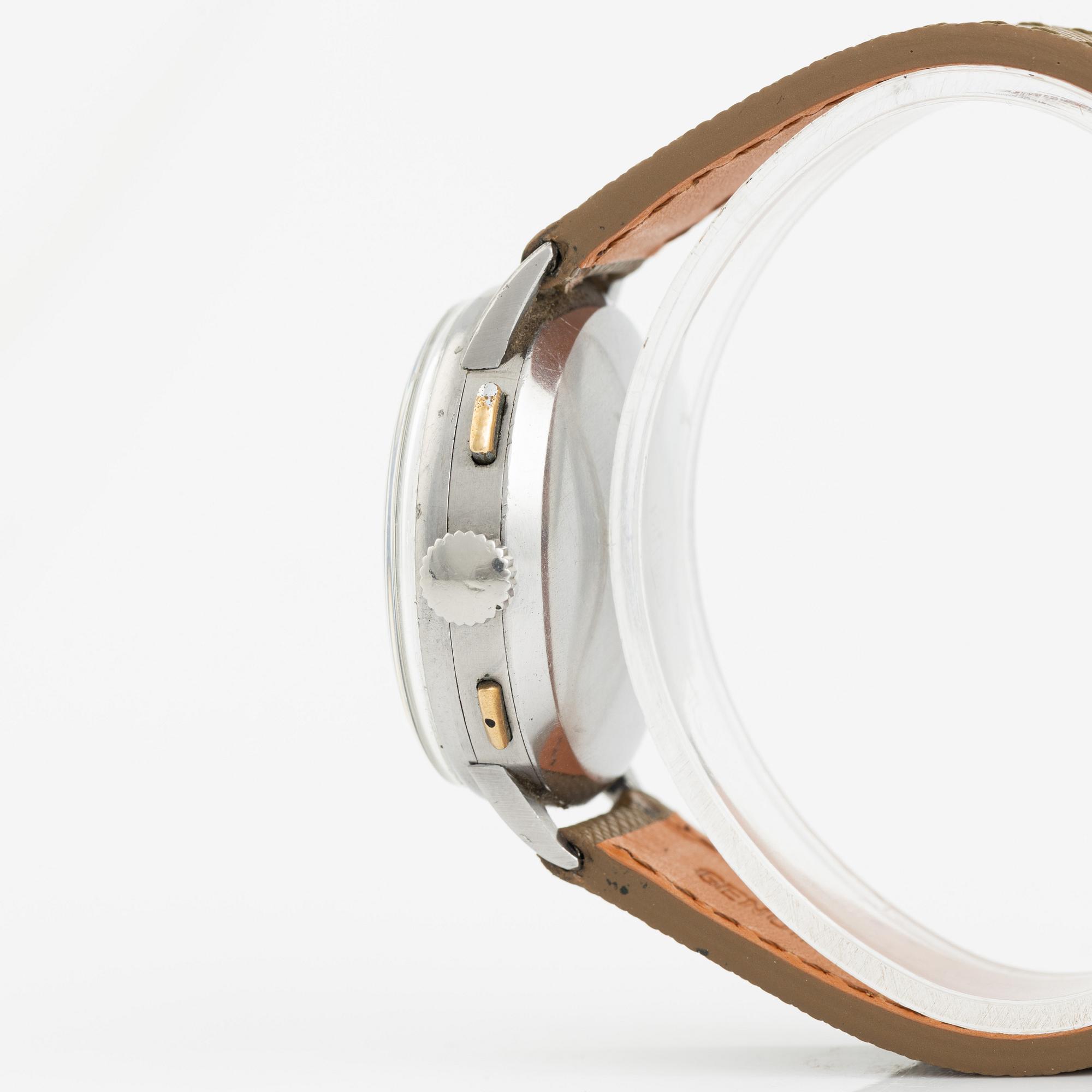
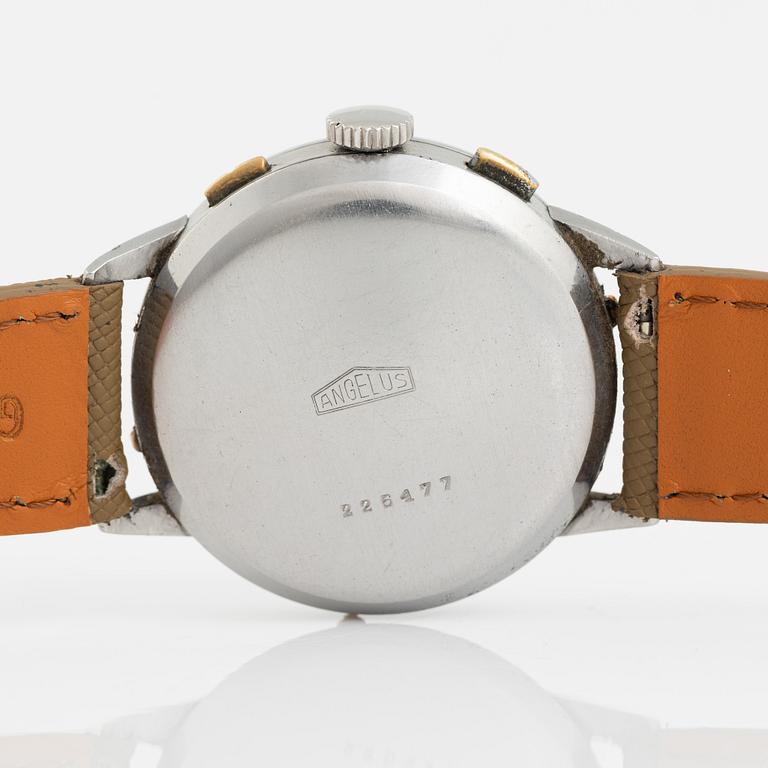
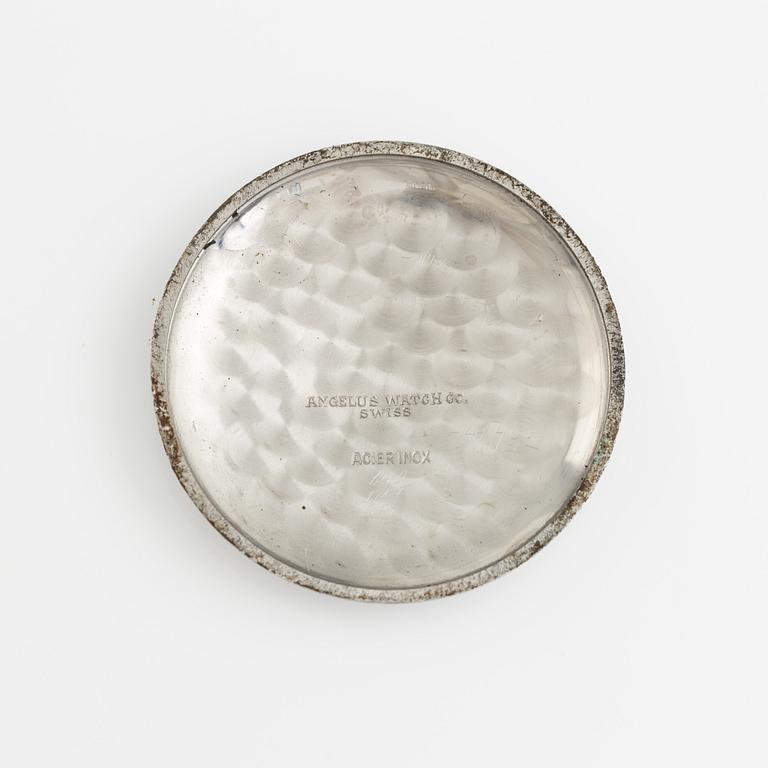
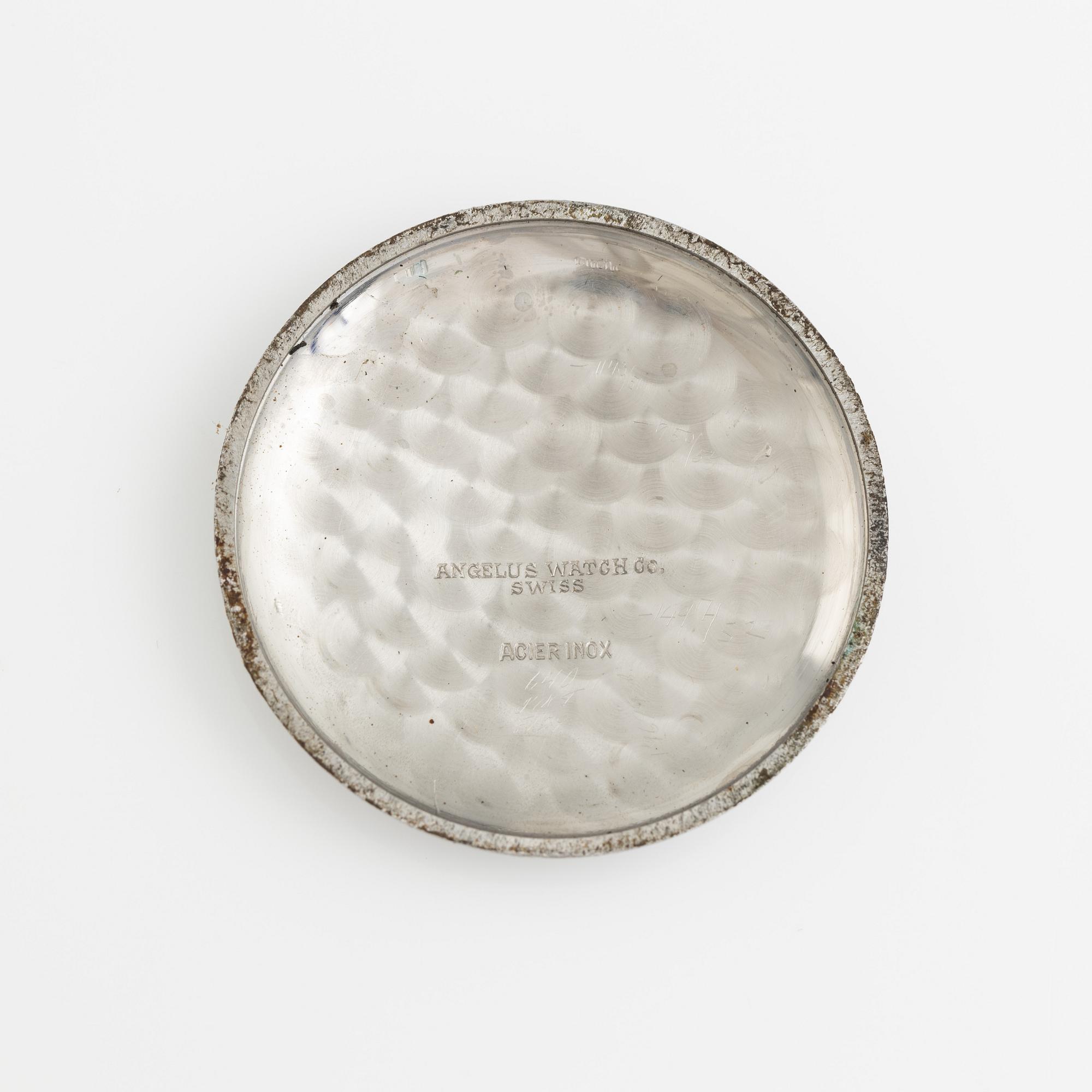
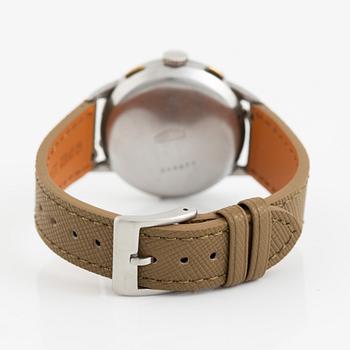
Material: steel
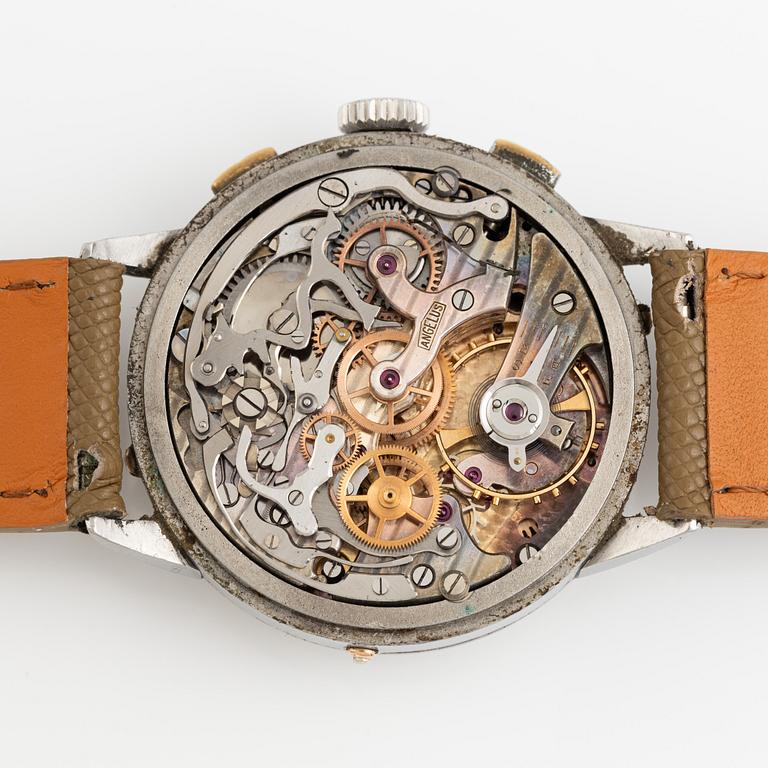
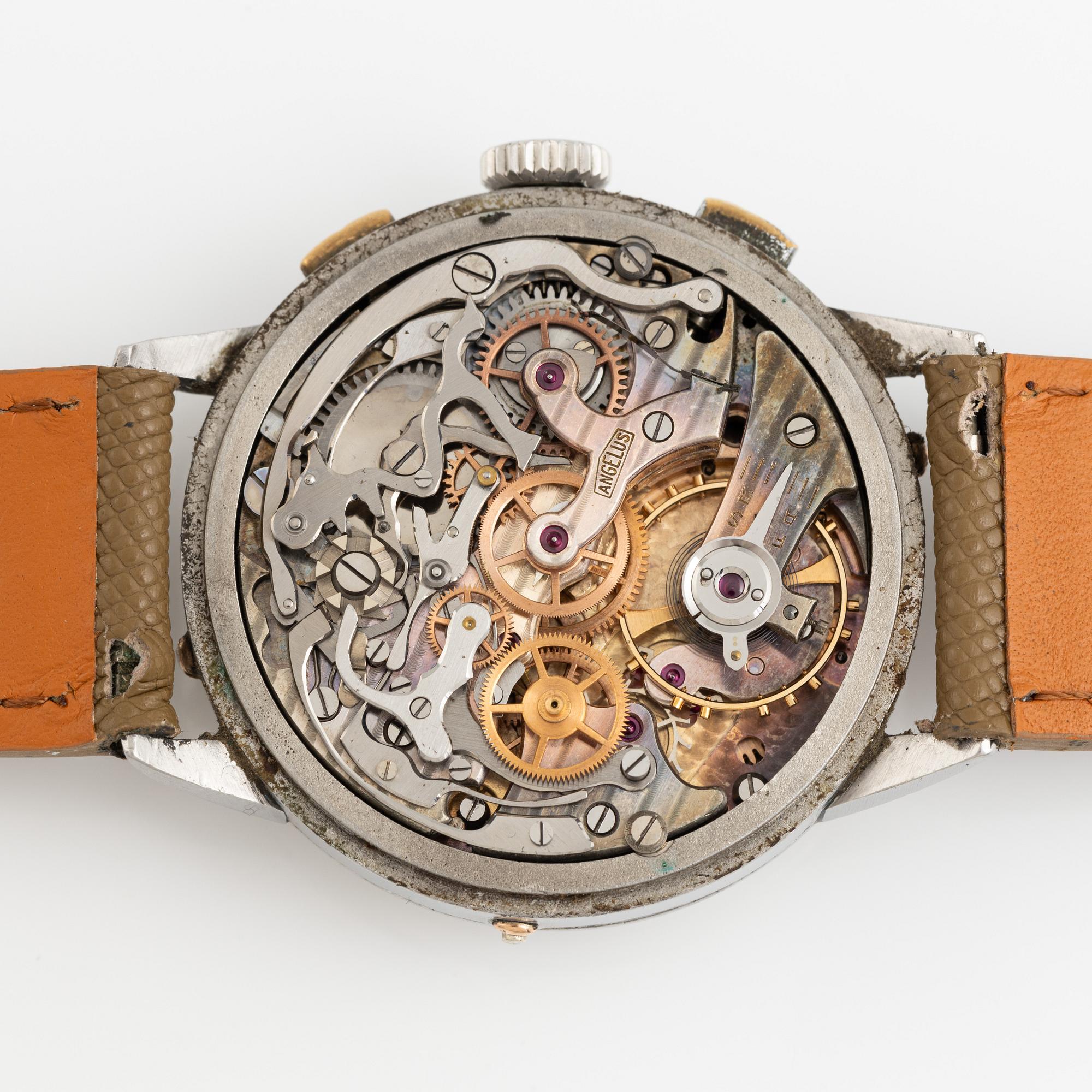
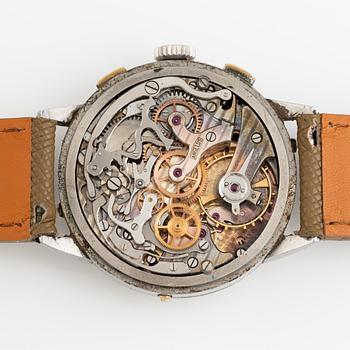
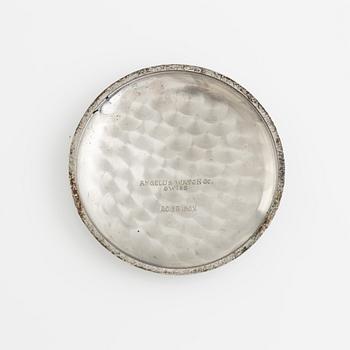
Movement: manual, caliber 217
Year: circa 1945
Crystal: plastic crystal
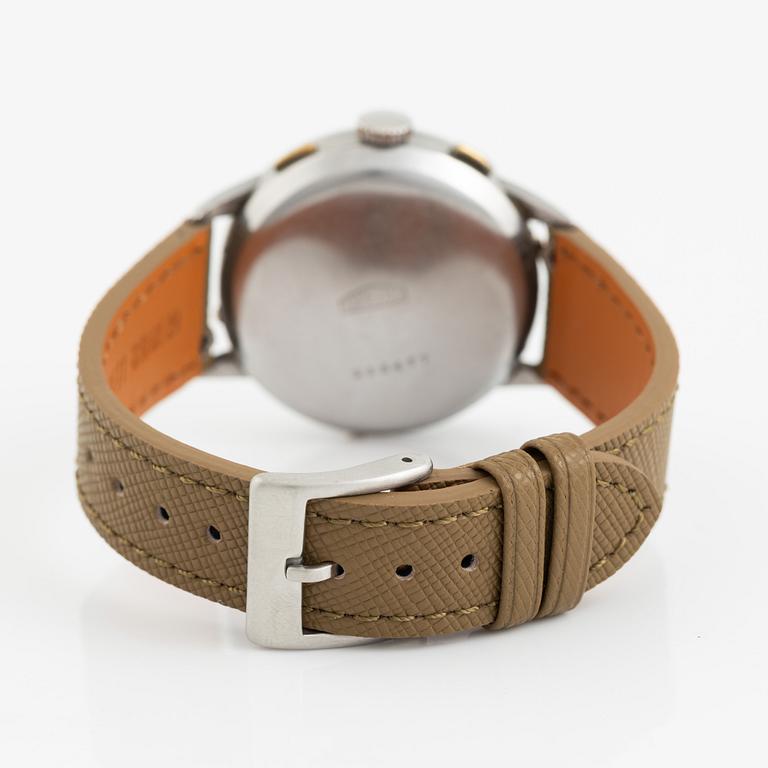
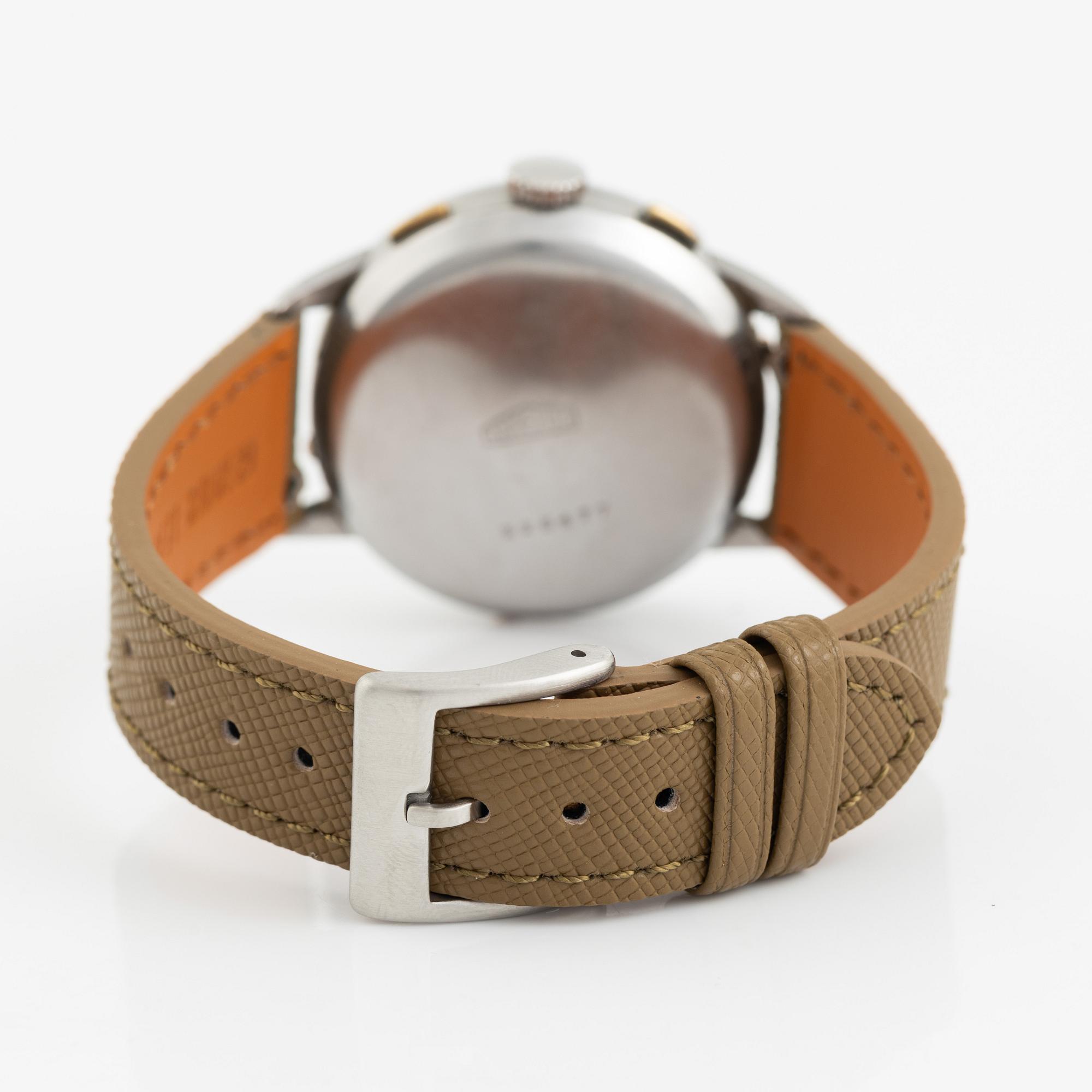
Bracelet: leather strap
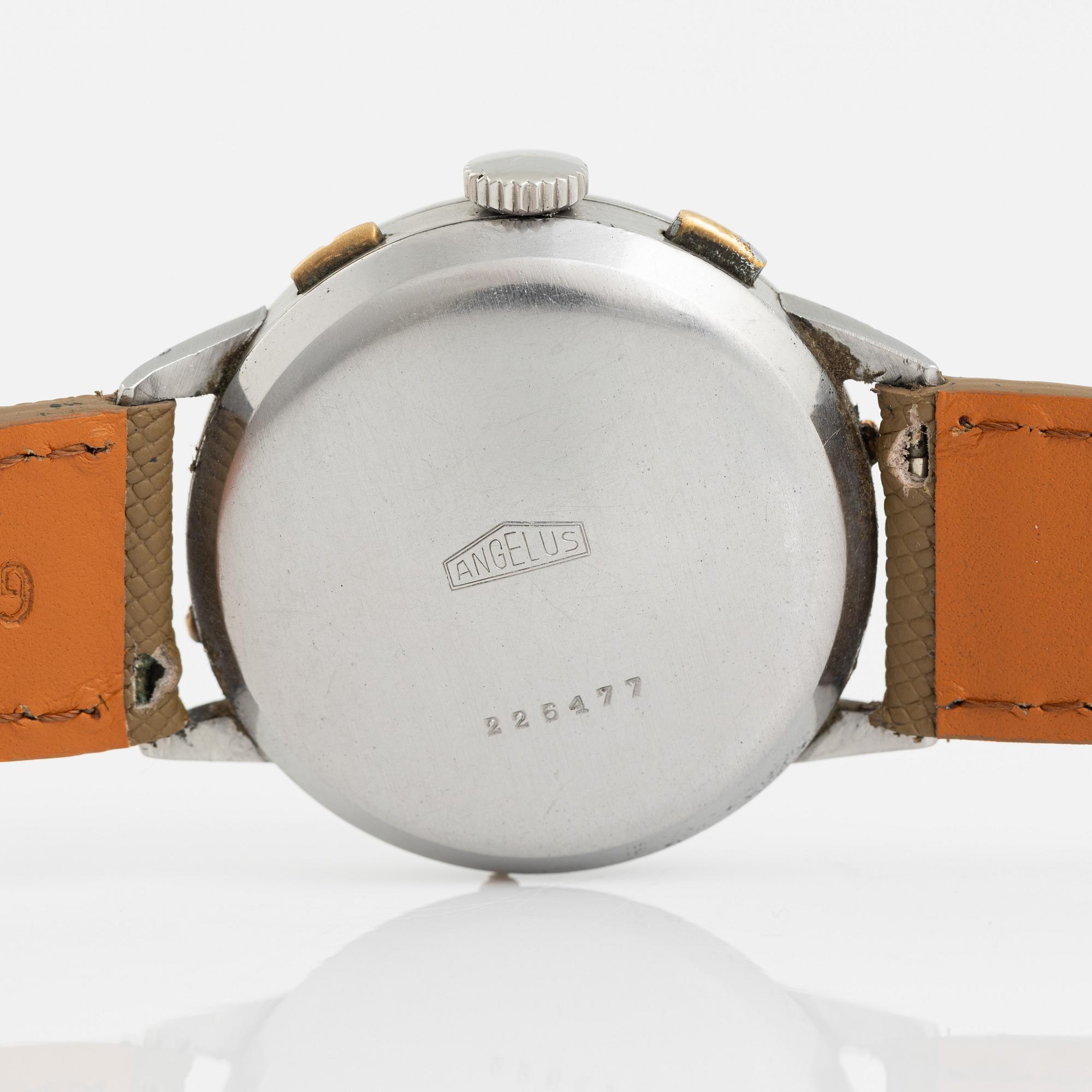
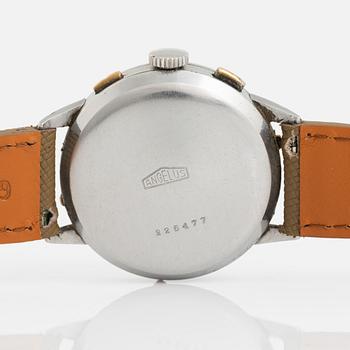
Case number: 226'477
Minute hand with newer luminous material. Wear due to age and use.
The movement is running at the time of cataloguing, Bukowskis does not guarantee the future function of the movement. Please note that the movement has not been tested for timekeeping accuracy and may need a service at the buyer's expense. Watches have been opened to examine movements therefore no warranties are made that the watches are water-resistant. Potential buyers should inspect each watch to satisfy themselves as to condition. For more information, please read our Conditions of Purchase.
Muut tiedot
Angelus became a well-known watch brand in the 1930s and 1940s thanks to its high-quality production of chronographs. The company was founded in 1891 in Le Locle, Switzerland, by two brothers, Albert and Gustav Stolz. During the first decades, Angelus mainly produced pocket watches and wristwatches, but in the 1920s, they began to focus more on chronographs.
During World War II, demand for chronographs was high because they were important for military purposes, such as measuring speed and timing. Angelus became known for its high-quality production of chronographs and won several awards for its technical expertise.
In 1942, Angelus introduced the Chronodate model, which was later renamed the Chronodato the following year. This was the world's first serially produced chronograph with a calendar function.
After World War II, demand for chronographs declined, and Angelus focused on producing simpler wristwatches, and In 1978, the company was shut down.
Lisätietoja ja kuntoraportit

Tietoa ostamisesta
Muiden katsomia kohteita