Swedish Postmodernists
Swedish postmodernism emerged in the 1980s as a reaction against modernism's ideals of purity, function and belief in progress. Instead, postmodernism embraced diversity, irony, historical references and a playful approach to image and form. Artists began to mix high and low, high culture and popular culture, often with a critical or self-referential perspective.
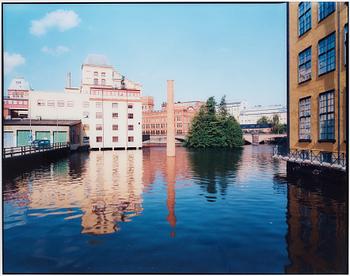
A central part of Swedish postmodern art was to question the role of the artist, the meaning of the work and the power of the art institution. Artists such as Jan Håfström used symbolism and literary references to create enigmatic works about identity and storytelling, while Jan Svenungsson challenged the perception of what art is with his brick chimneys and conceptual approach. Max Book contributed expressive, fragmentary paintings that mixed collage, text and images in a way that reflected the visual abundance of the time.
Swedish postmodernism was thus not a uniform style, but rather an approach – open, self-critical and often with a desire to mix tradition with contemporary commentary. It was characterised by an awareness of art history, while at the same time questioning its authority.