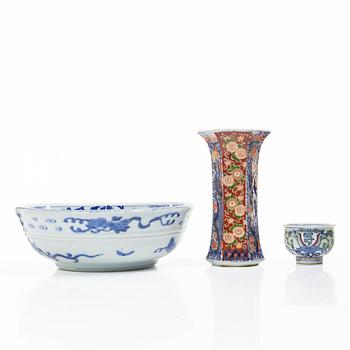
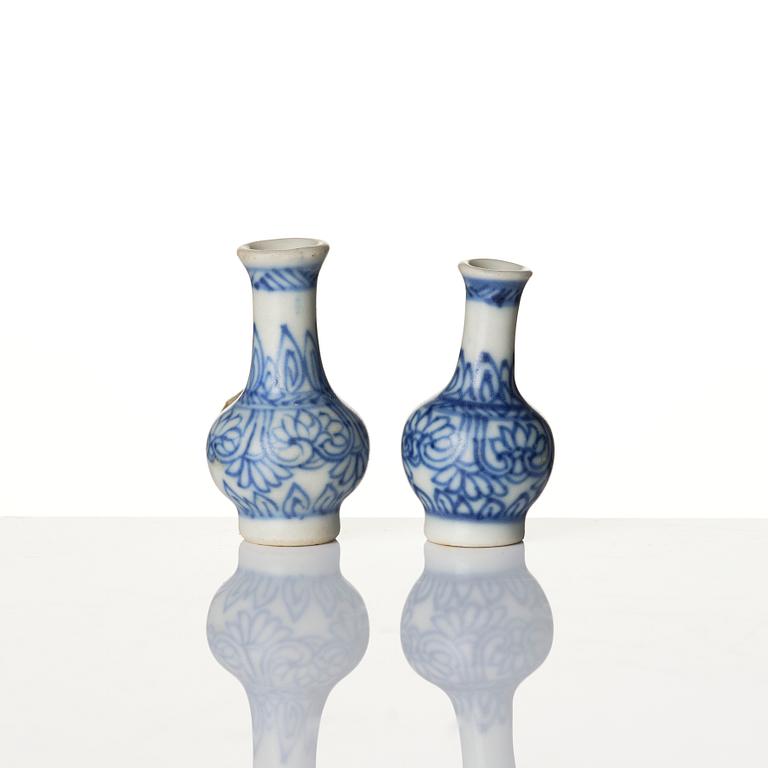
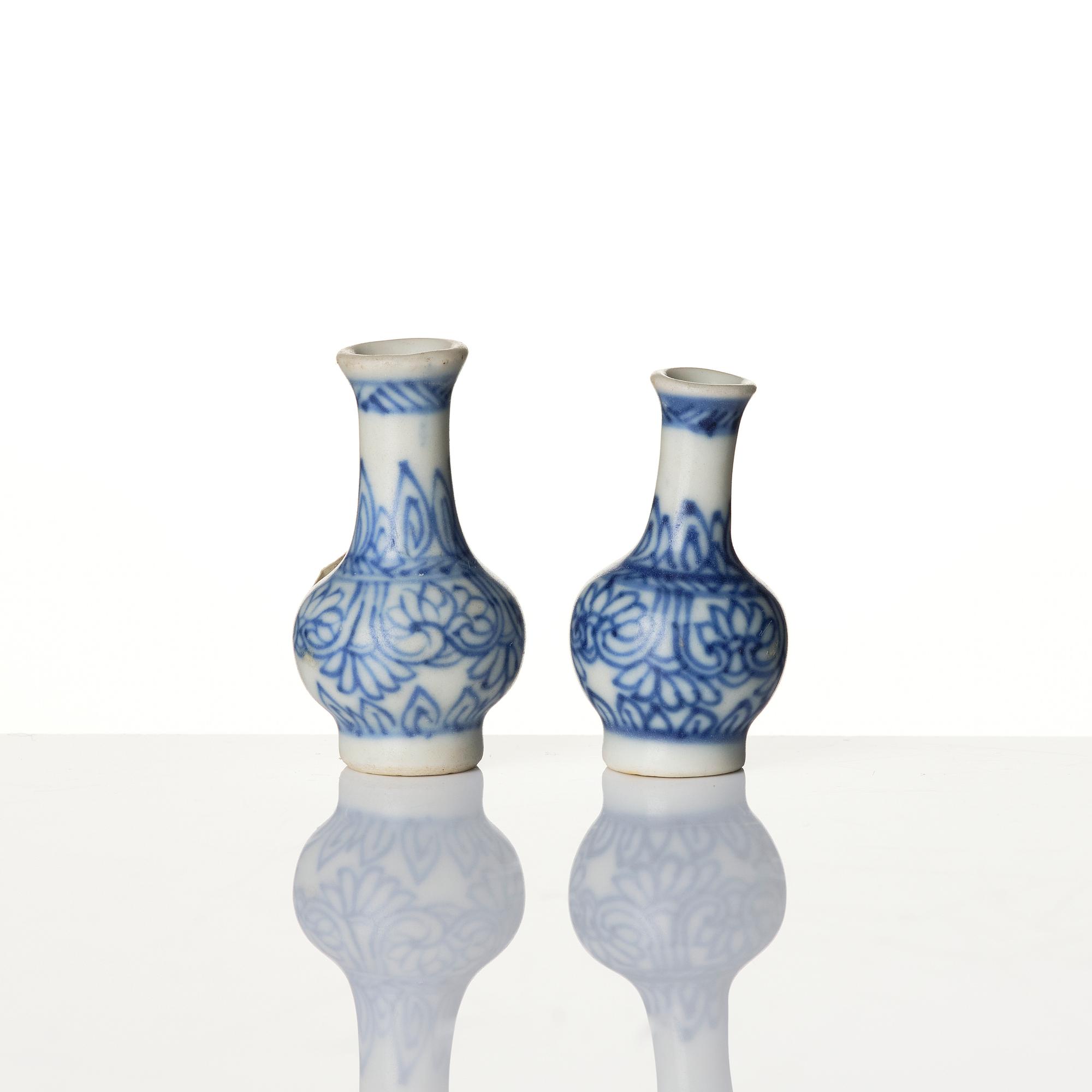
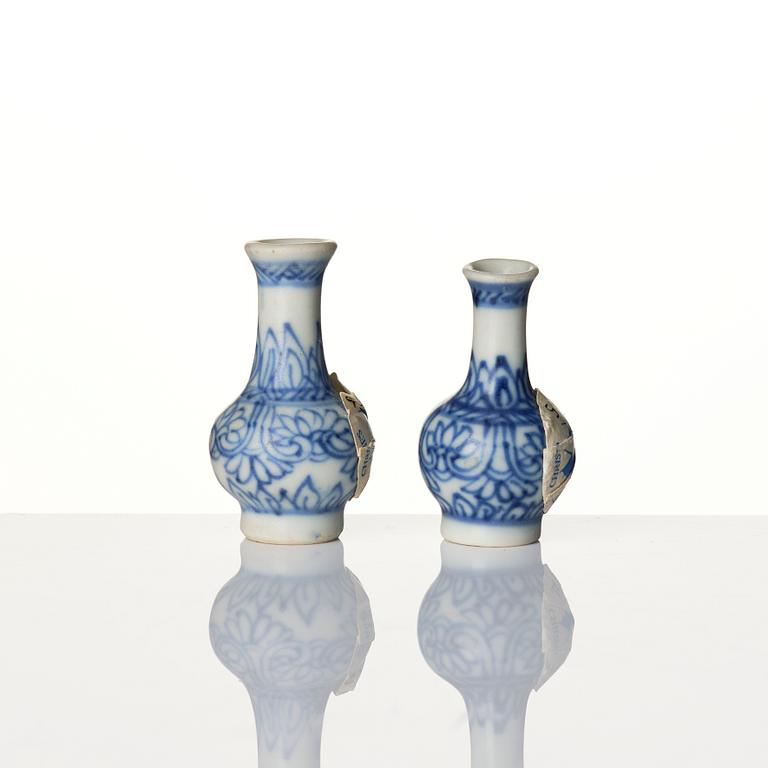
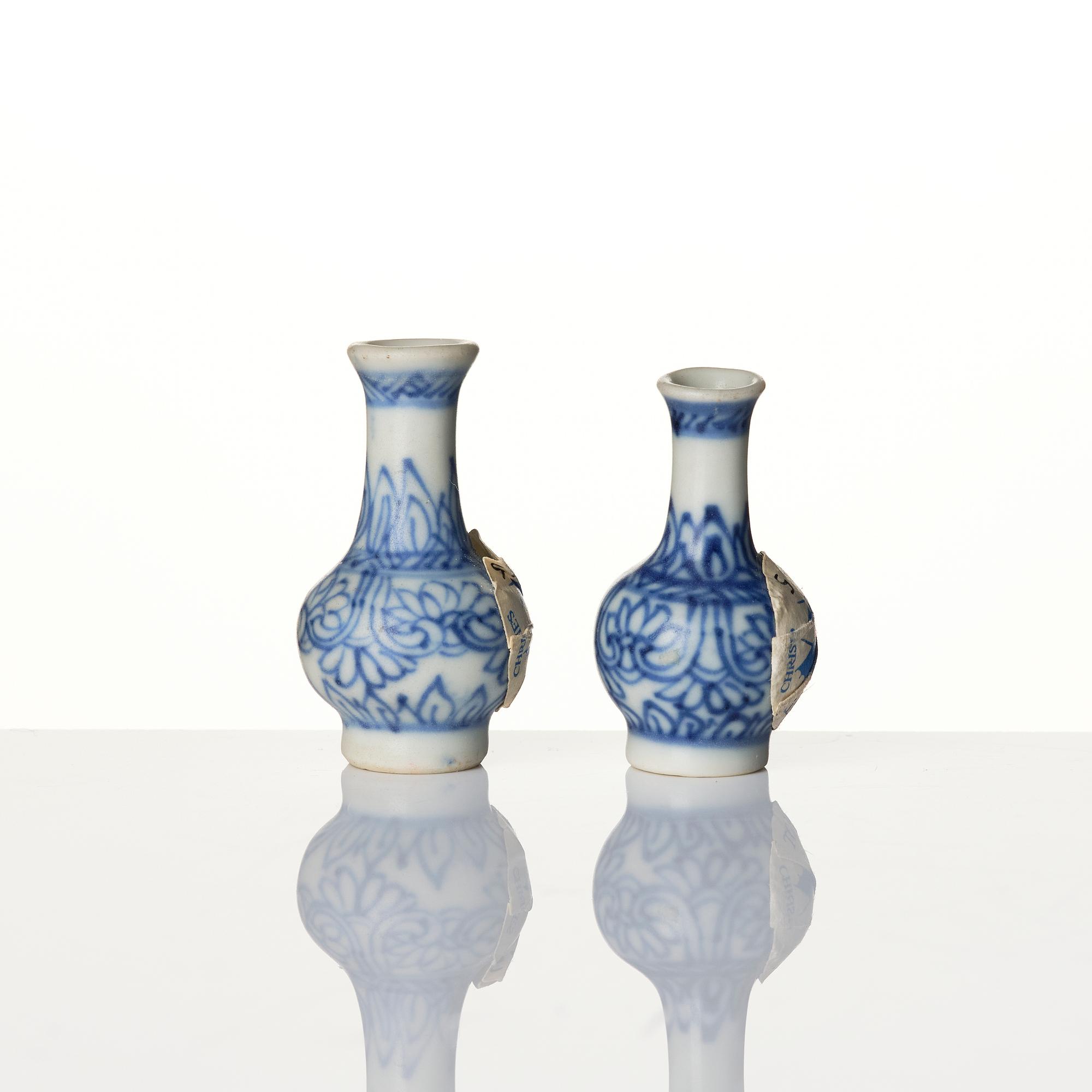
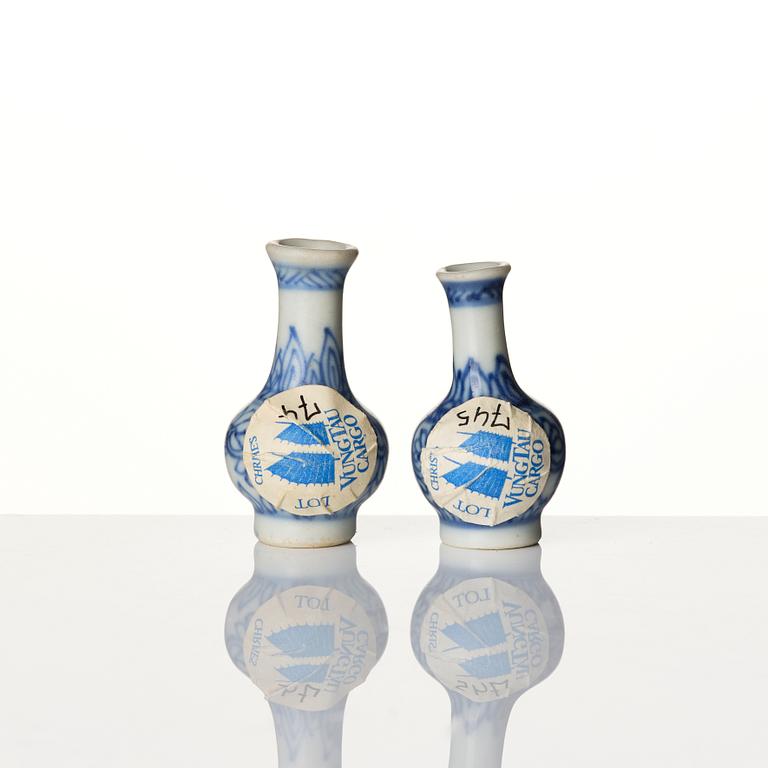
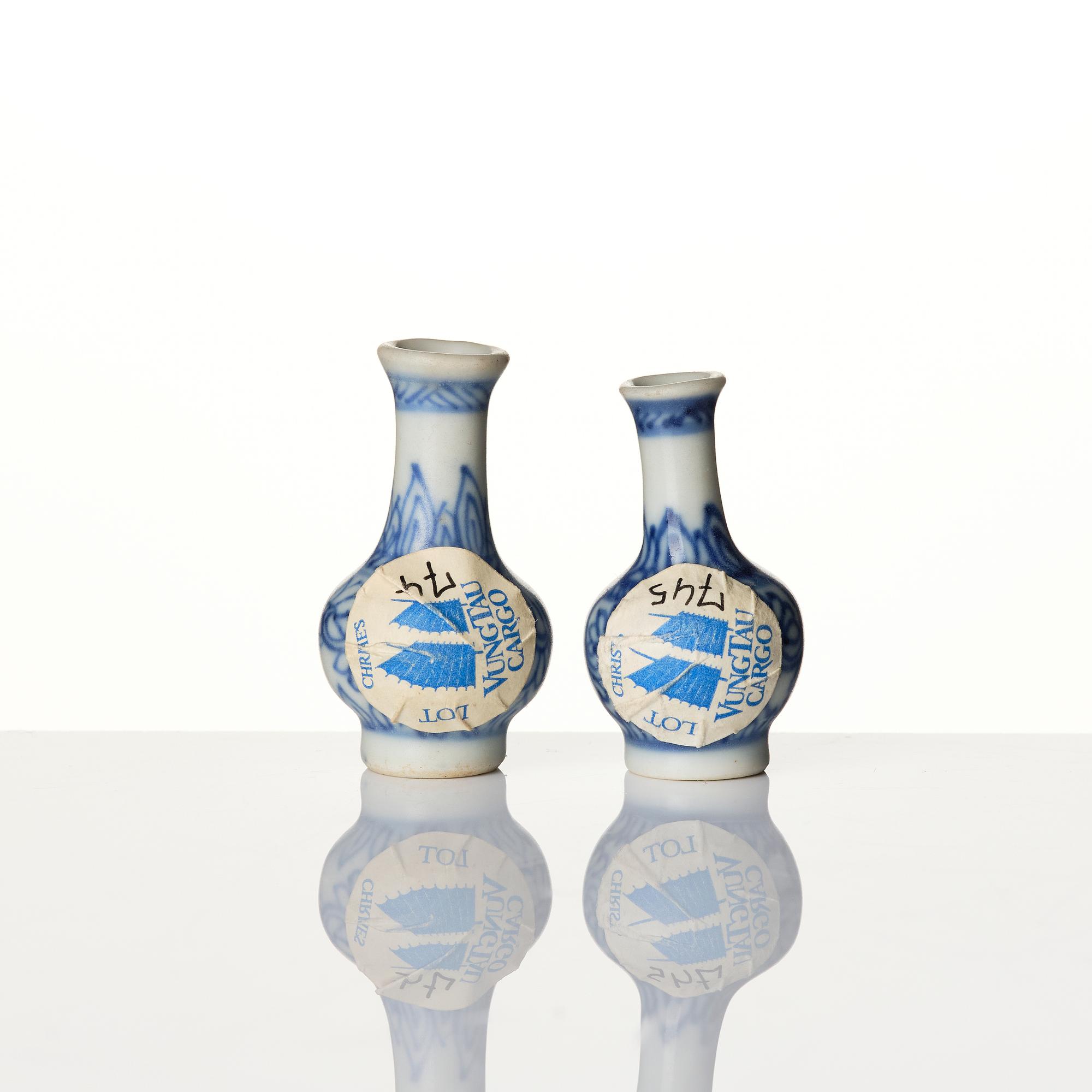
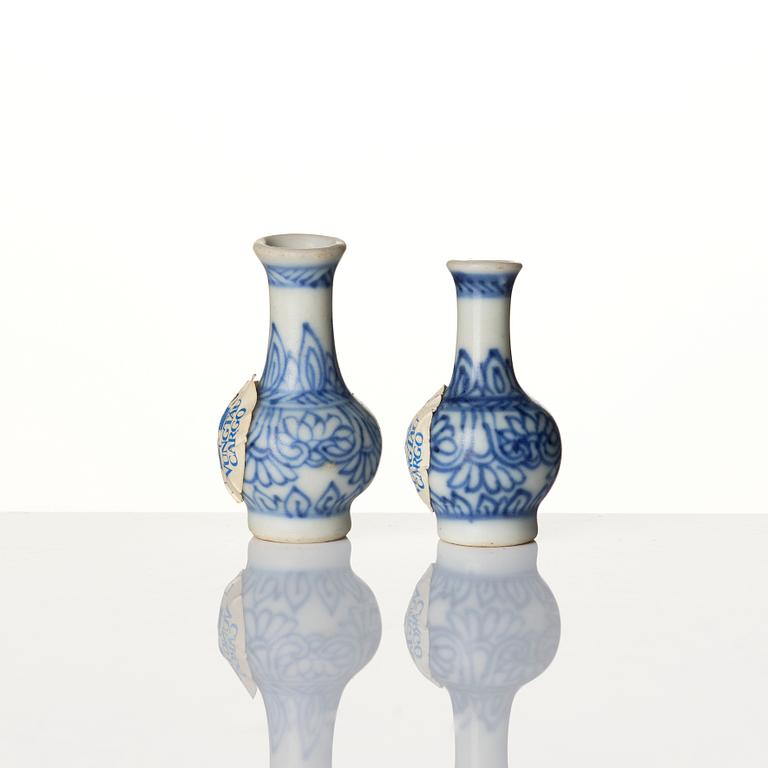
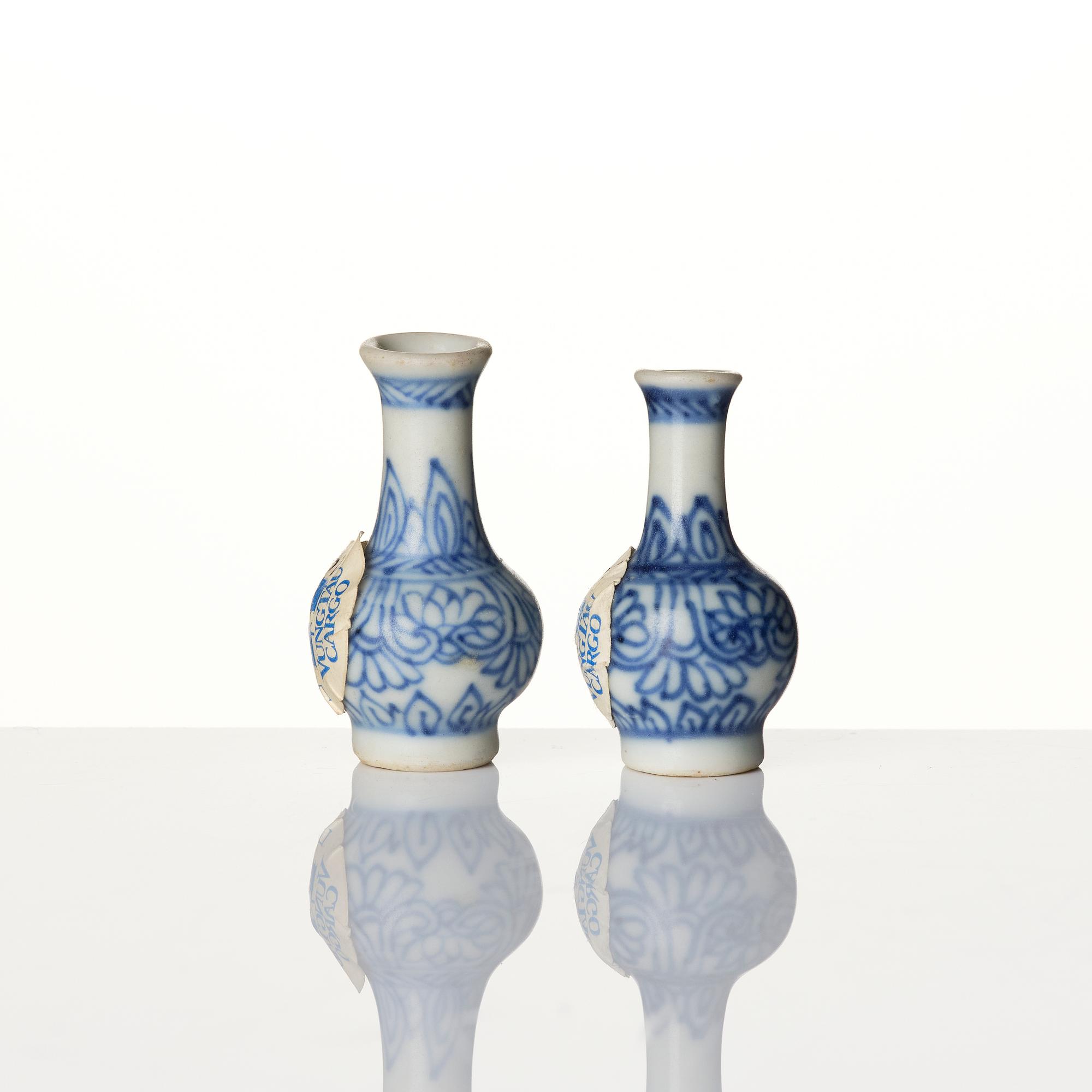
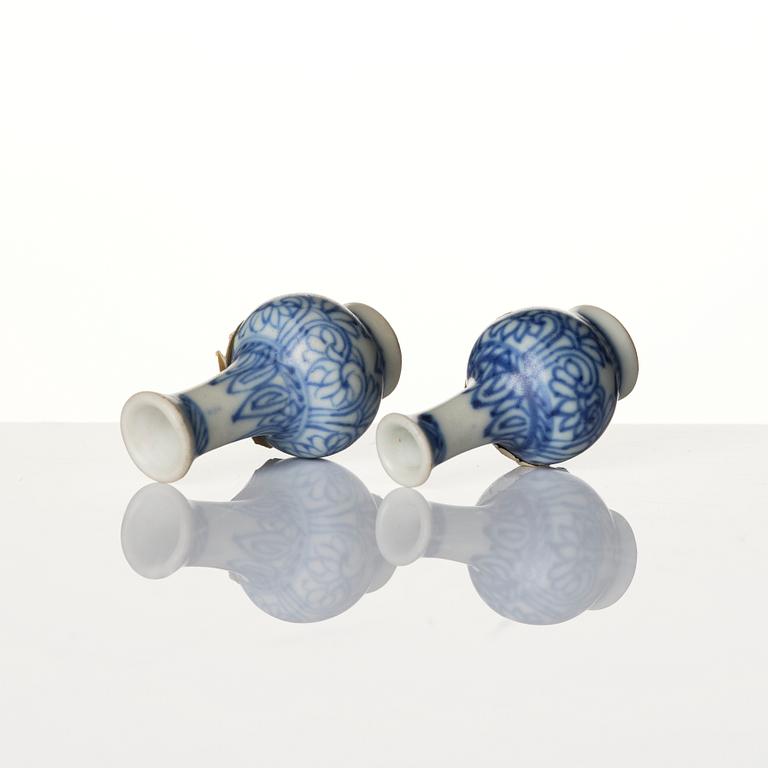
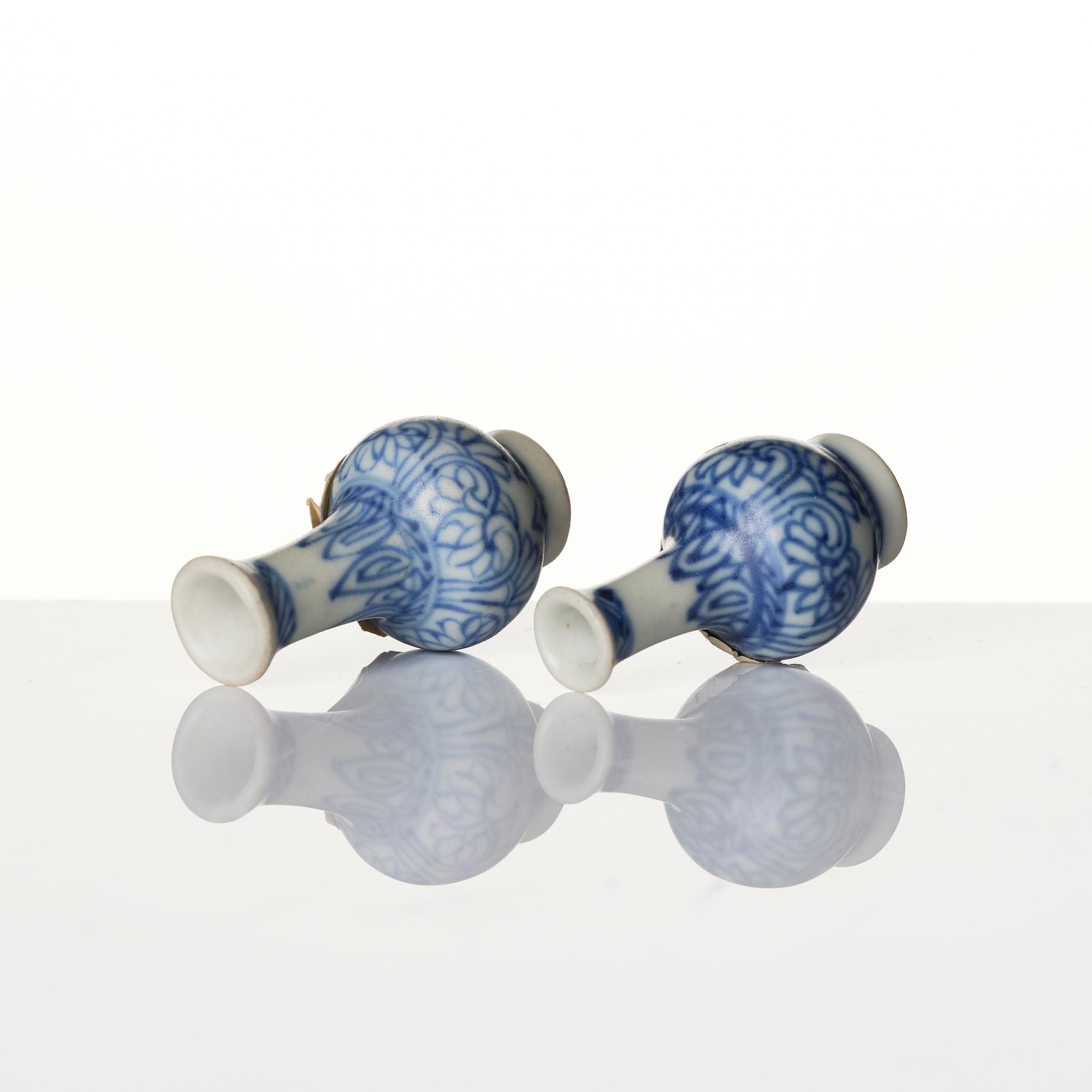
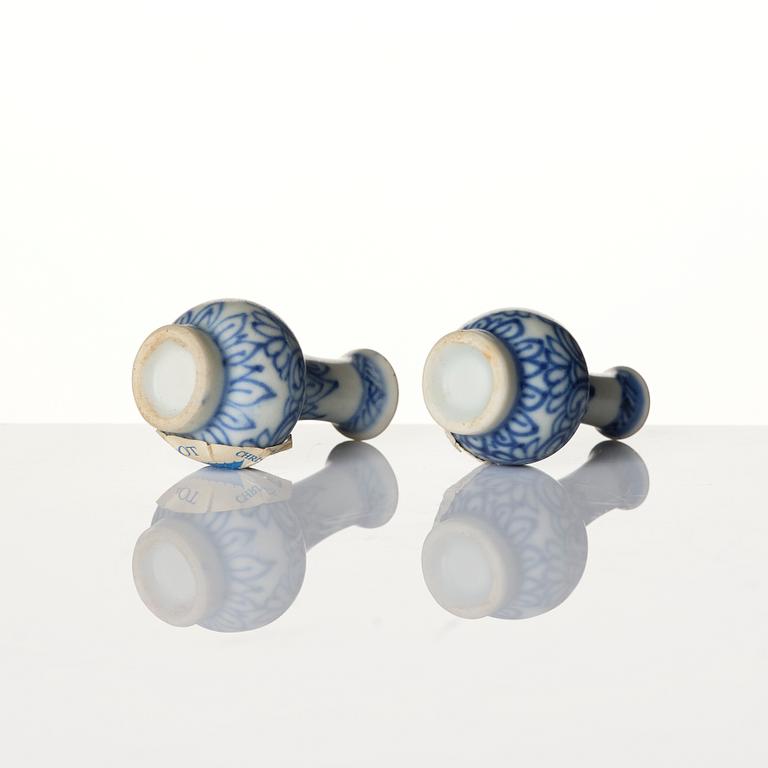
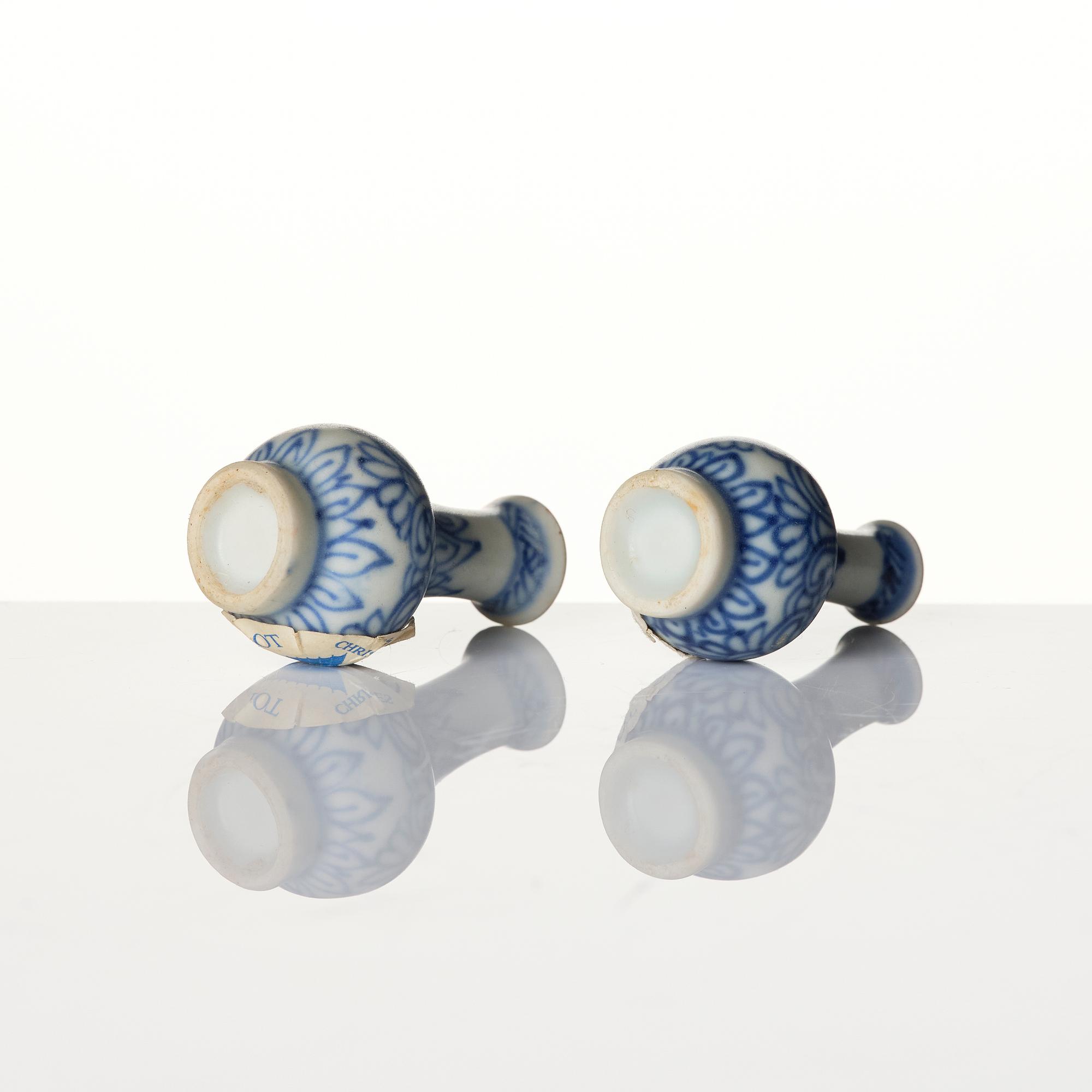
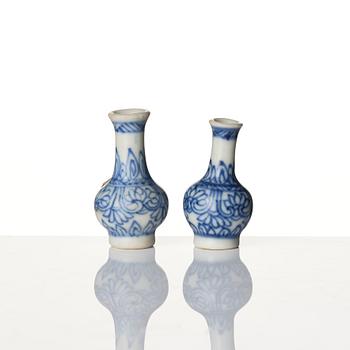
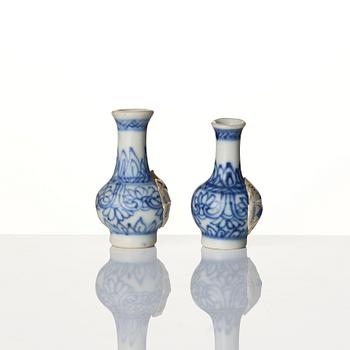
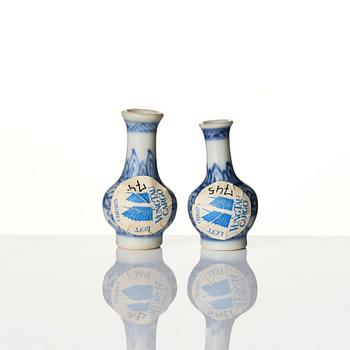
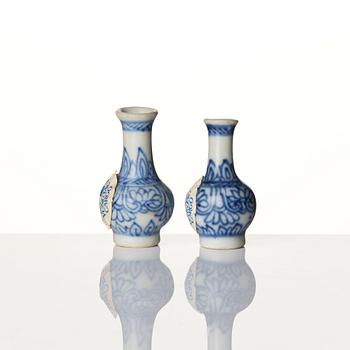
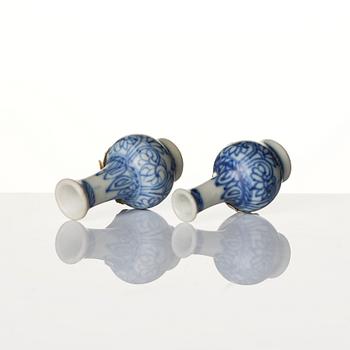
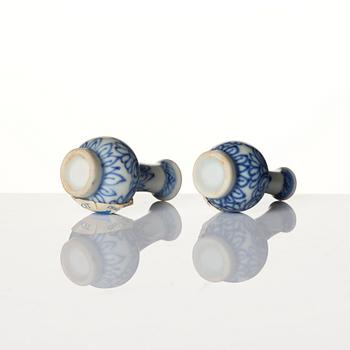
Globular bodies, slender necks and flared rims. Decorated with underglazed blue featuring stylized lotus flowers. Height 4-4.3 cm. Labelled.
Surface wear.
Alkuperä - Provenienssi
"The Vung Tau Cargo Sale", Christie's Amsterdam, 7-8 April 1992, lot 745.
Muut tiedot
In April 1992, Christie's sold a collection of porcelain salvaged from the depths of the sea. It was a chance discovery made by a Vietnamese fisherman in 1989. The 'Vung Tau Cargo' had been an Asian trading vessel that was almost certainly bound for Indonesia from China and would have headed for Holland from there. Although there was little to date the wreck, the porcelain must have been produced around 1683, the year that is regarded as the official date of the re-opening of China's kilns at Jingdezhen after the Civil War had disrupted the industry since the 1630s. The cargo demonstrated the great influence of the Western demand for Chinese ceramics, with designs that often had no precedent in Asian ceramics but were emulating silver or glass Western shapes and designs.
The Tek Sing was a large three-masted Chinese ocean-going junk which sank on 6 February 1822, in an area of the South China Sea known as the Belvidere Shoals. It was laden with a large cargo of porcelain goods, about 350,000 pieces, what is described as the largest sunken cache of Chinese porcelain ever recovered. The bulk of ceramics were Chinese blue-and-white common tableware, consisting of bowls, tea cups and the like, made in the kilns of Dehua, China. The German auctionhouse Nagel Auction sold a large part of the findings during November 2000.
Tietoa ostamisesta
Muiden katsomia kohteita