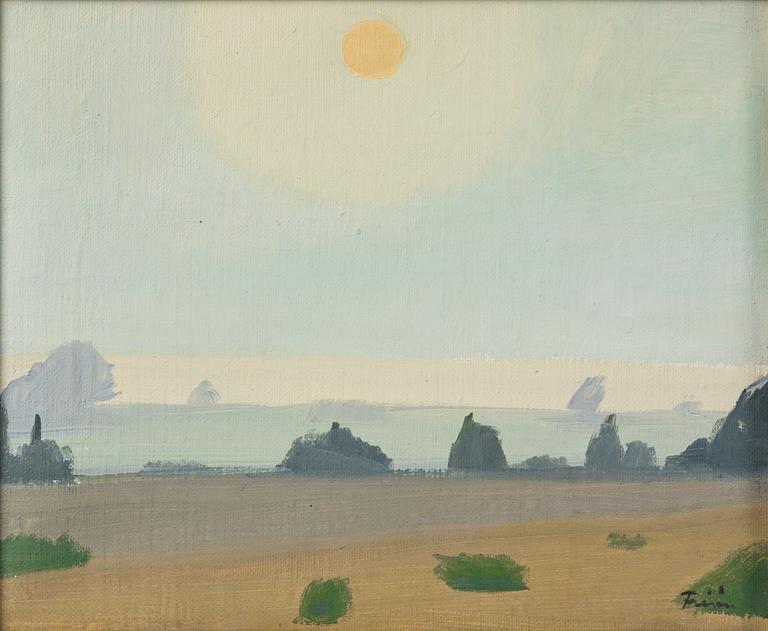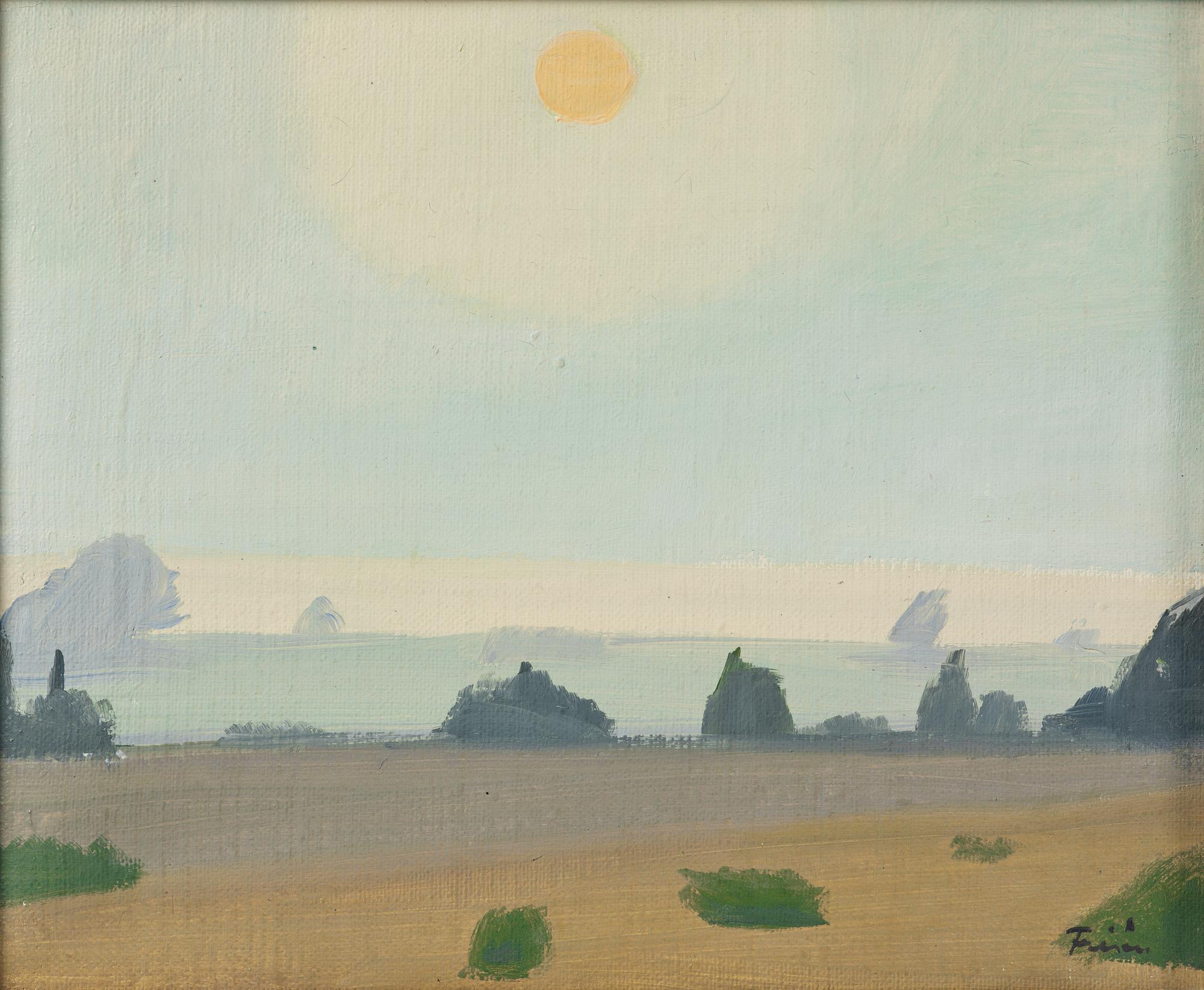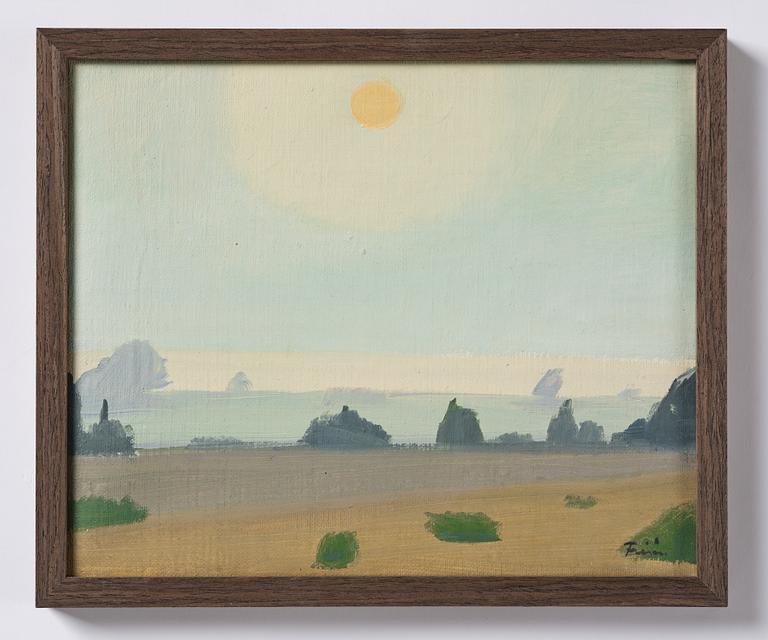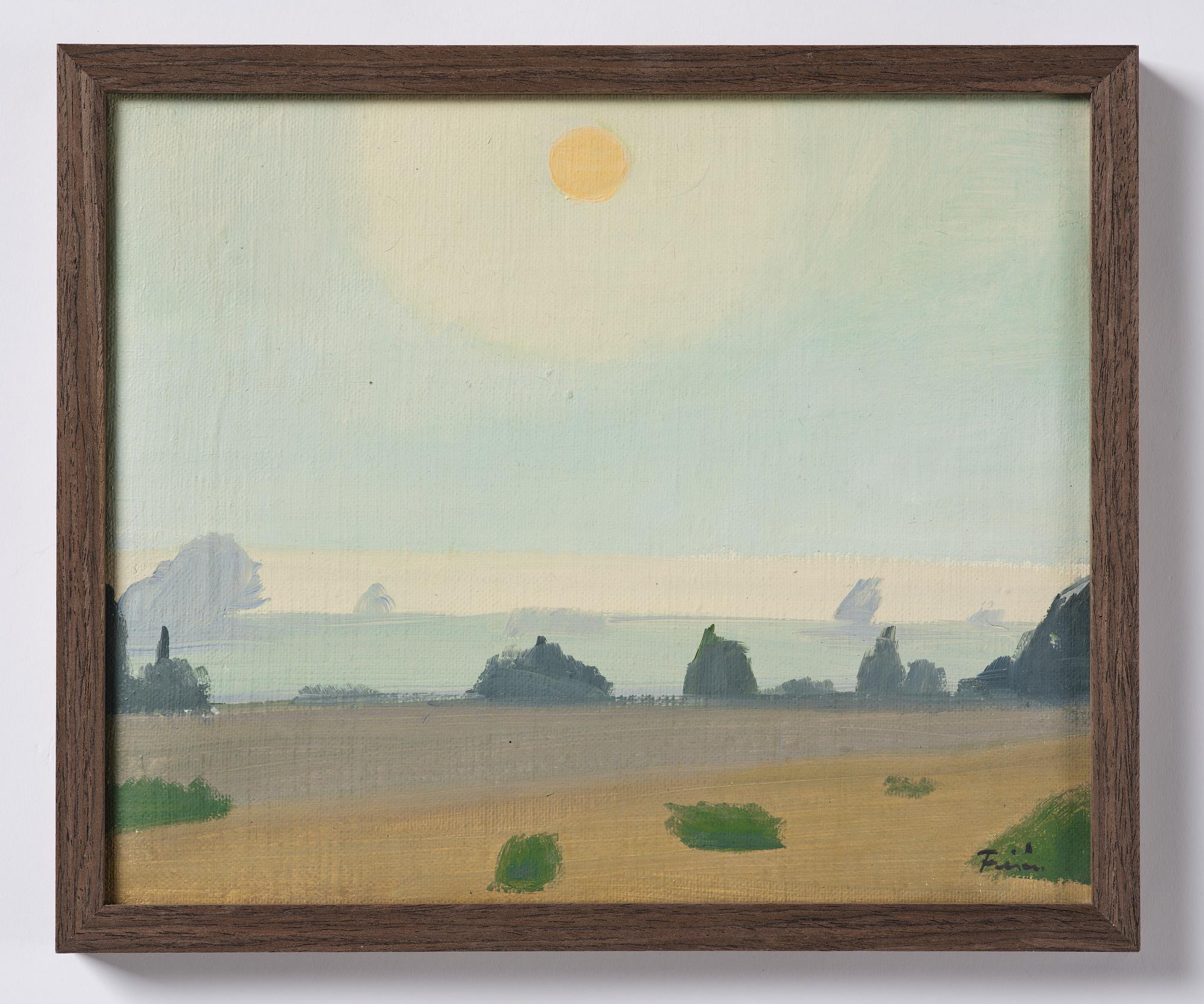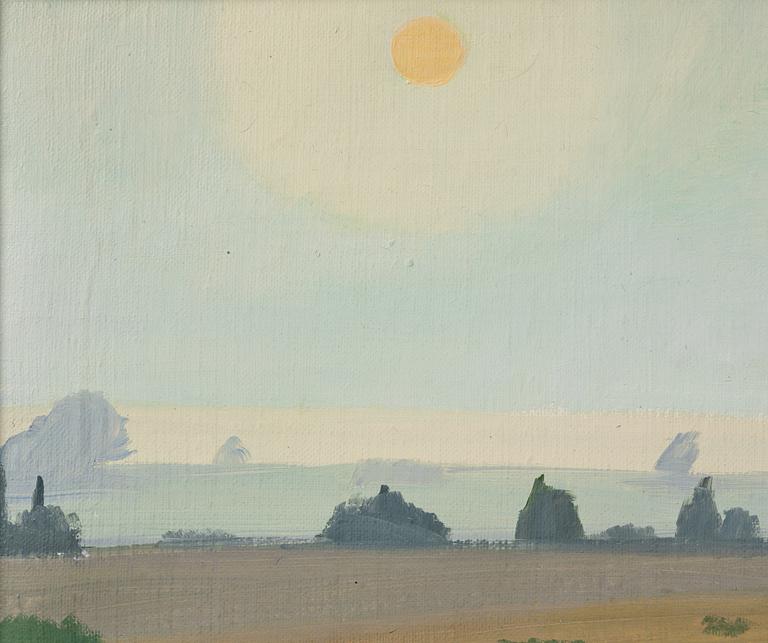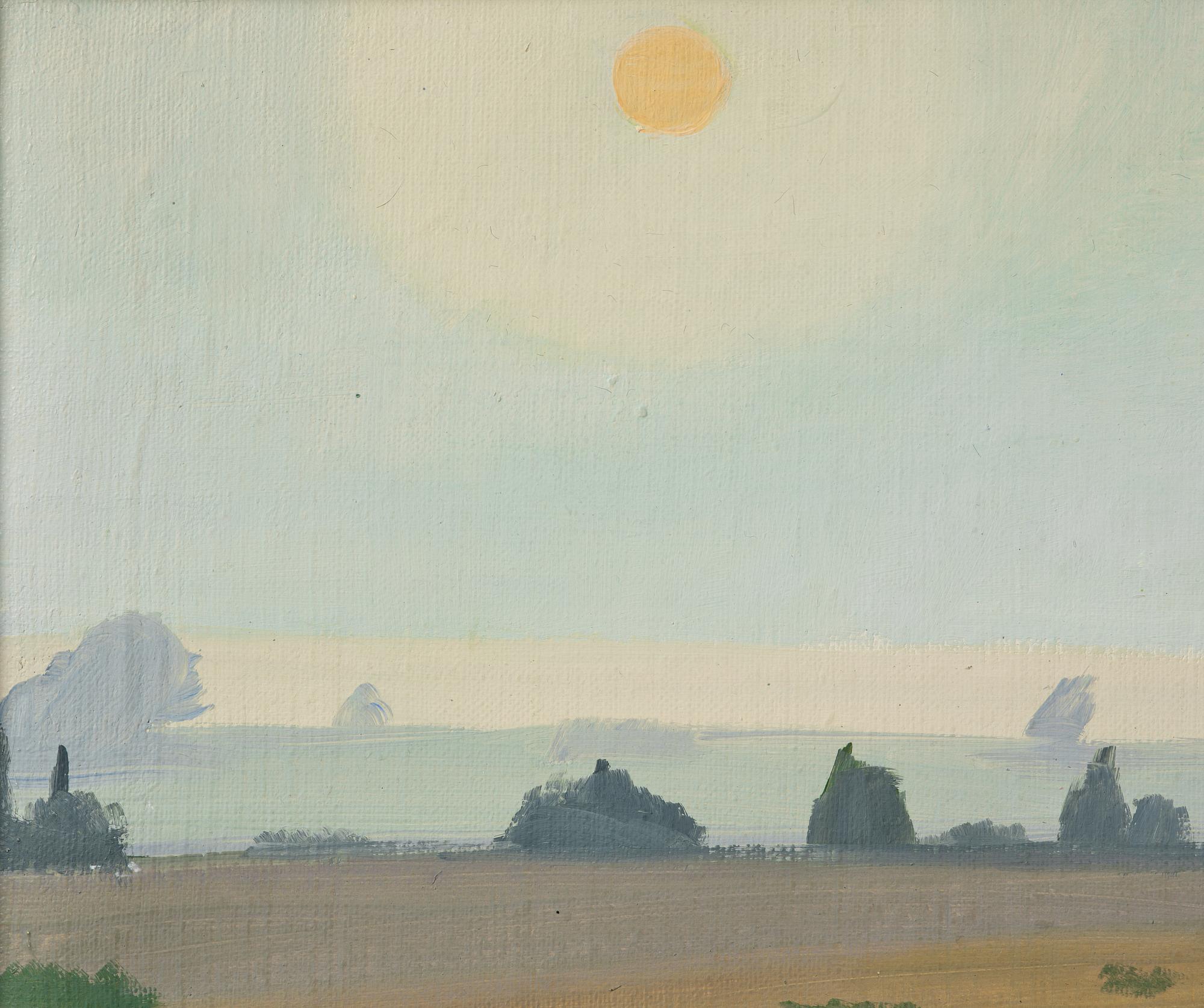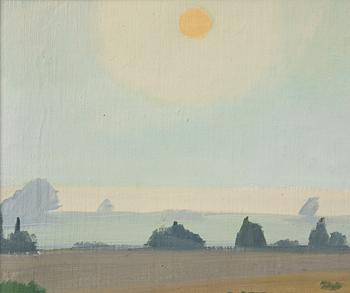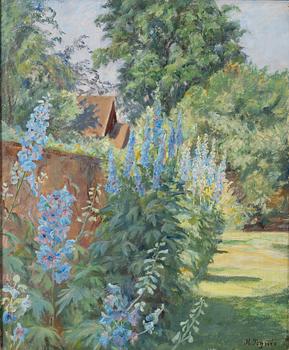
Sunlight
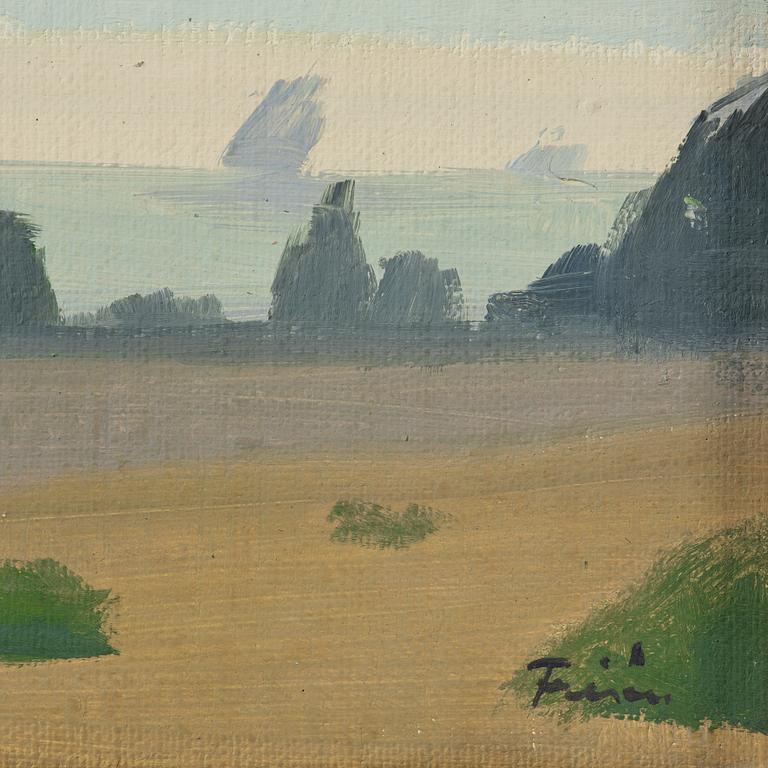
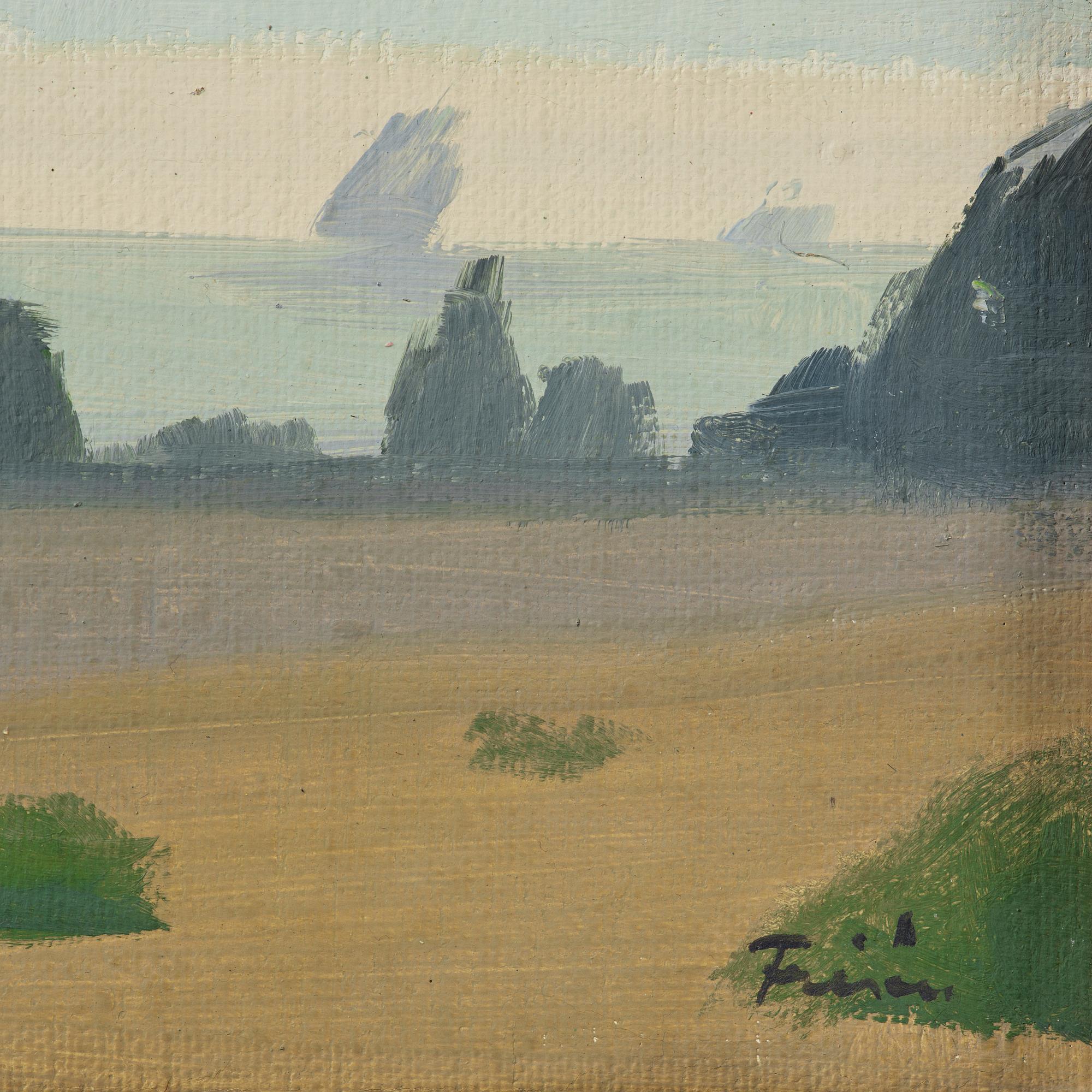
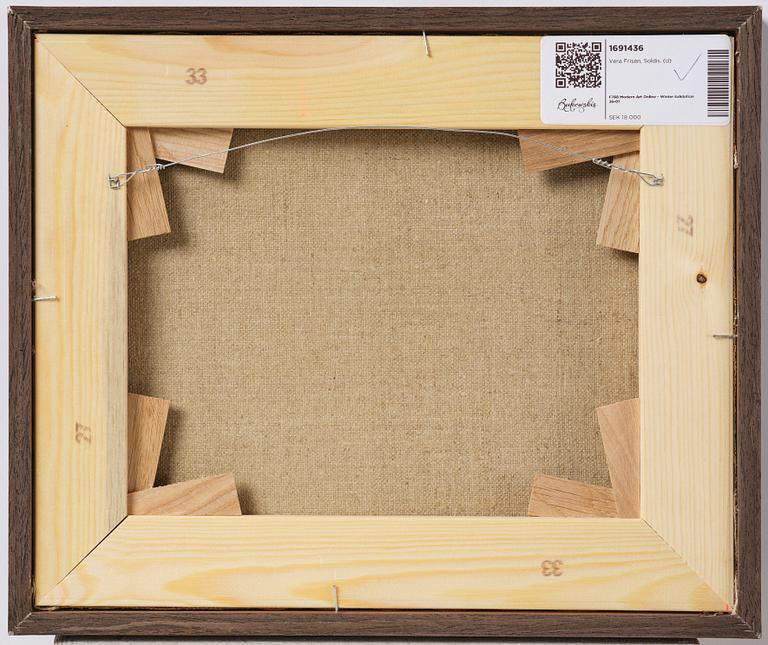
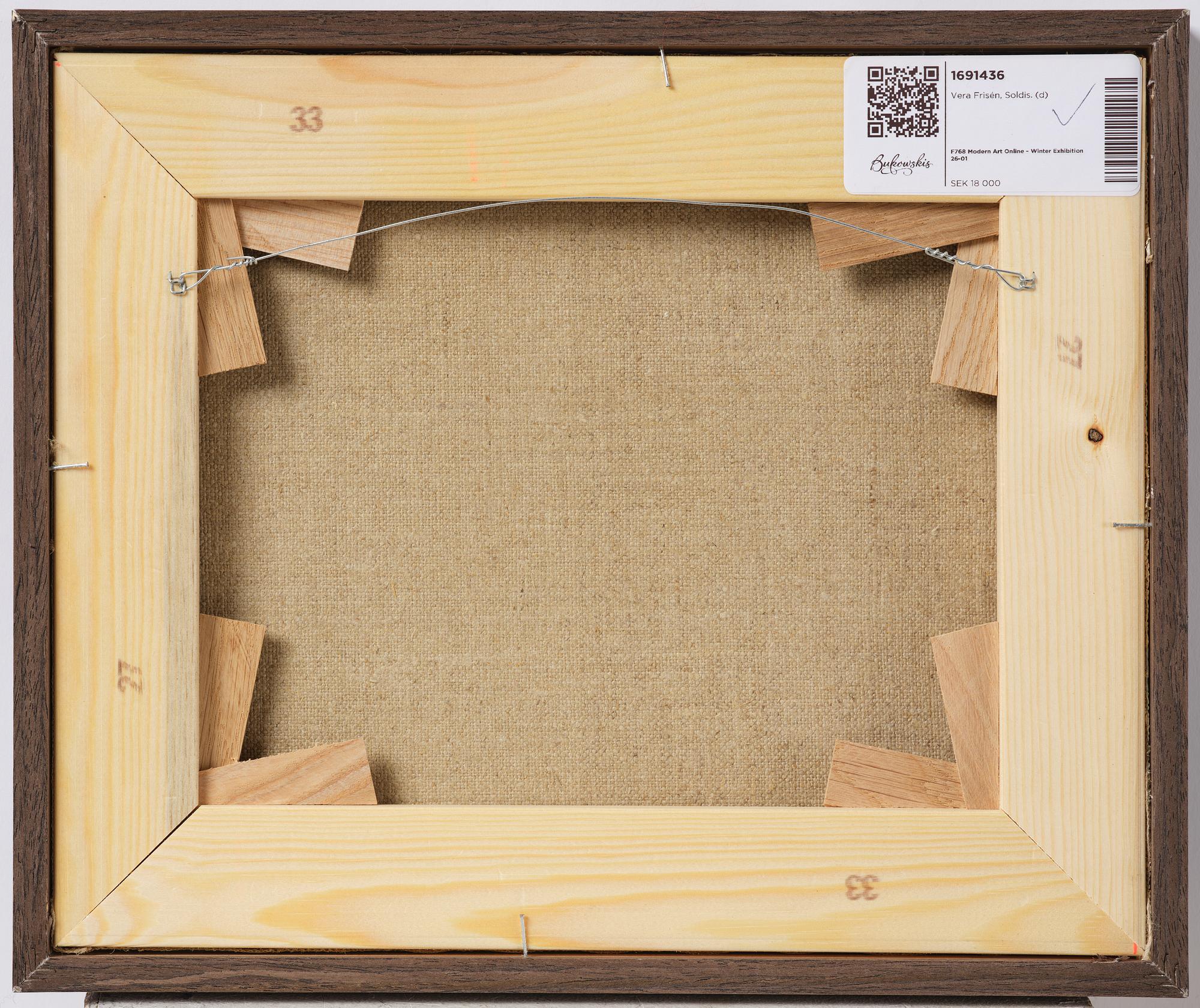
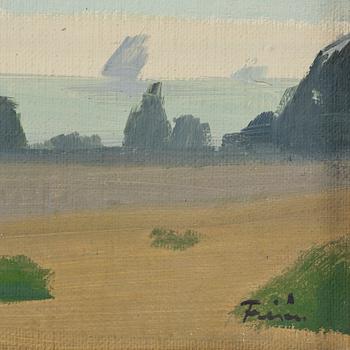
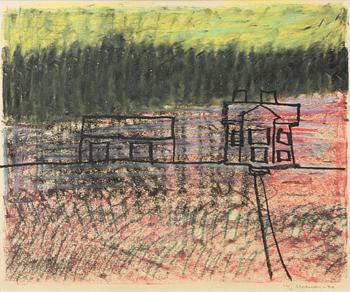
Signed Frisén. Canvas 27 x 33 cm.
Minor surface dirt.
Muut tiedot
Vera Frisén's upbringing in Umeå coincided with a cultural blossoming during the 1920s, a time marked by intense artistic and cultural activity. Exhibitions featuring the plein air painters Helmer Osslund and Leander Engström inspired Frisén to begin her studies at Otte Sköld's painting school in Stockholm in 1928, where her talent developed rapidly with a focus on figure drawing and portrait painting.
Otte Sköld's encouragement to his students to study nature as a foundation for artistic exploration deeply influenced Vera. The Västerbotten landscape became her favourite motif, particularly areas such as Stöcksjö, the Ume River, and Röbäcksslätten. Vera also travelled to the mountain landscape of Norrbotten and found inspiration in places like Överkalix, Borgafjäll, and Abisko. She was fascinated by the Arctic summer night and the unique colours that emerge in the landscape during the midnight sun. Nighttime painting became her signature.
In the spring of 1929, Otte Sköld encouraged her to apply to the Royal Academy of Fine Arts, but her career took a new direction when she contracted tuberculosis. Throughout the 1930s, she struggled with the illness and was repeatedly forced to return to sanatoriums. These experiences shaped both her life and her art, and her earliest oil paintings are characterised by vigorous brushwork and a darker palette.
Vera developed close friendships with the Danish artist Ellen Byström and visited Denmark several times during the 1930s. In 1939, they travelled to Cagnes-sur-Mer on the French Riviera, but the impending Second World War forced them to return home in August. Although much of their work was left behind, Vera managed to bring back some paintings and sketchbooks. When she debuted at the exhibition at Färg och Form in Stockholm in 1941, she was showered with praise from critics. Aftonbladet titled its review "Young Norrland Woman Makes Sensational Debut," and Gustaf Näsström in Stockholms-Tidningen described her as one of the most talented female painters he had encountered, comparing her portraits to the works of Helene Schjerfbeck.
Despite the positive attention, the breakthrough was a difficult experience for Vera Frisén. In interviews, she expressed her discomfort with being in the spotlight, and when photographers crowded around to take pictures of her, she suggested they instead photograph her paintings. Aftonbladet's reviewer noted that Vera was "as shy in private as she is passionate when she paints."
Despite the interrupted breakthrough, Vera continued to paint and draw. During this time, she developed new colour tones and techniques. Her later works, including motifs from Morocco and Geneva, continue to reflect her deep connection with the immaterial experience of the landscape, and in her paintings, she seems to convey air, light, and moisture.
In 1989, shortly before her death, she made a comeback at Färg och Form in Stockholm. The circle was complete. Shortly thereafter, she passed away.
Kuuluu jälleenmyyntikorvauksen piiriin
Tietoa ostamisesta
Kuvan käyttöoikeudet
Tämän tietokannan taideteokset ovat tekijänoikeudella suojattuja, eikä niitä saa kopioida ilman oikeudenhaltijoiden lupaa. Teokset kopioidaan tässä tietokannassa Bildupphovsrättin lisenssillä.