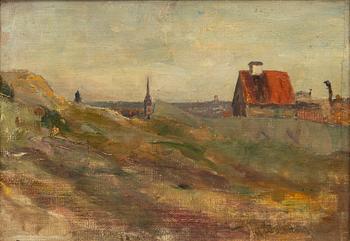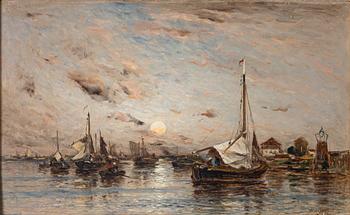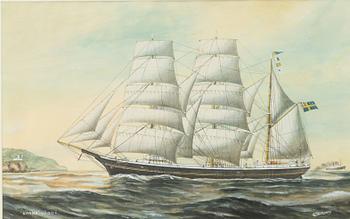
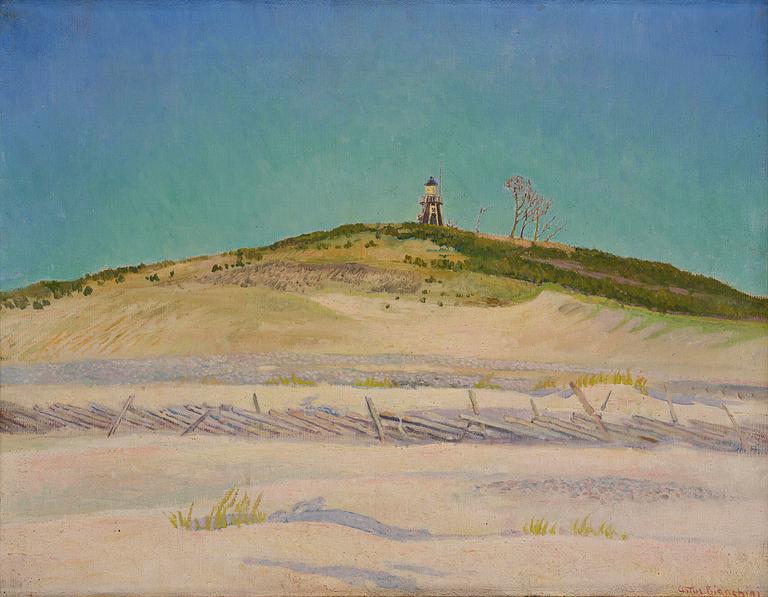
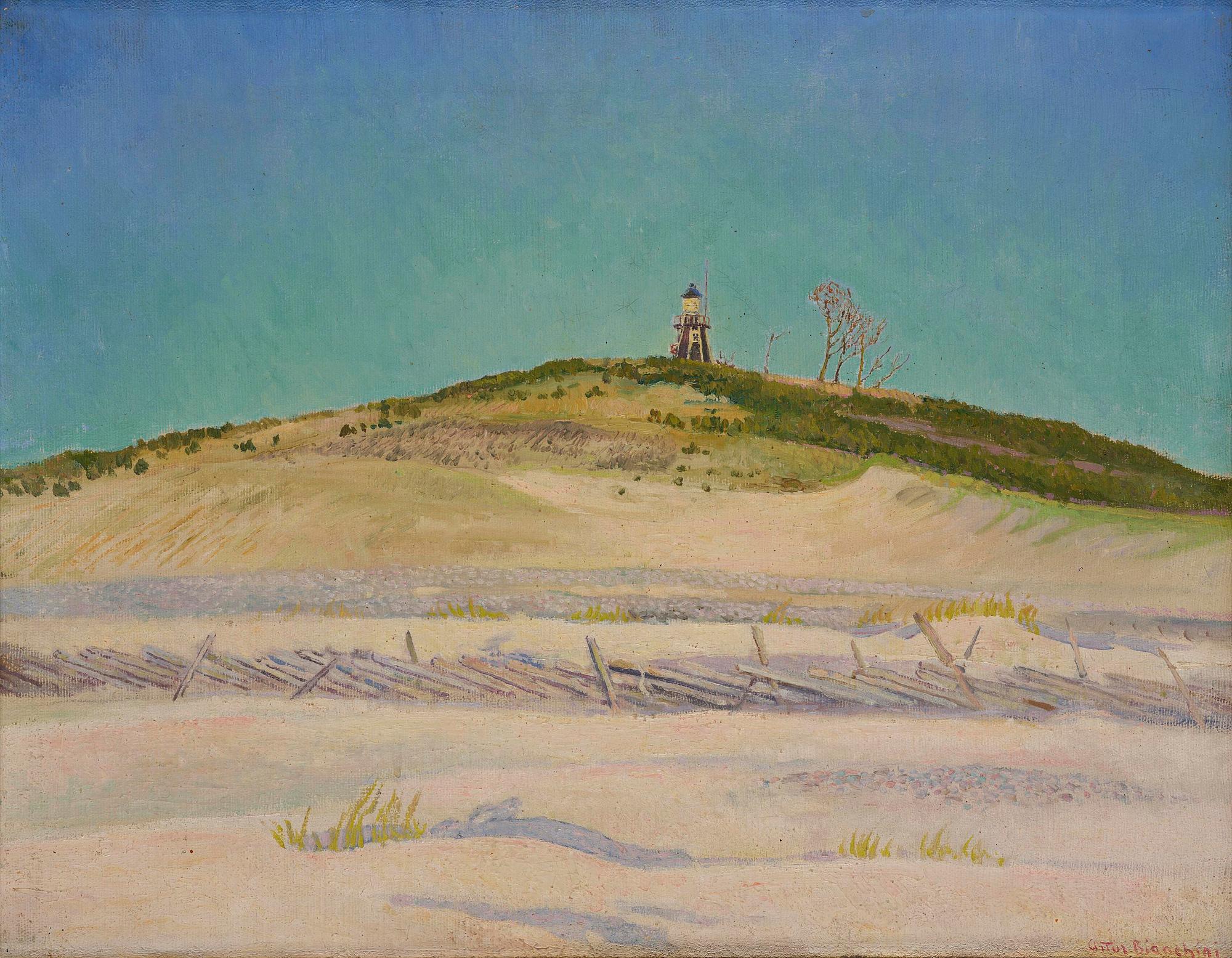
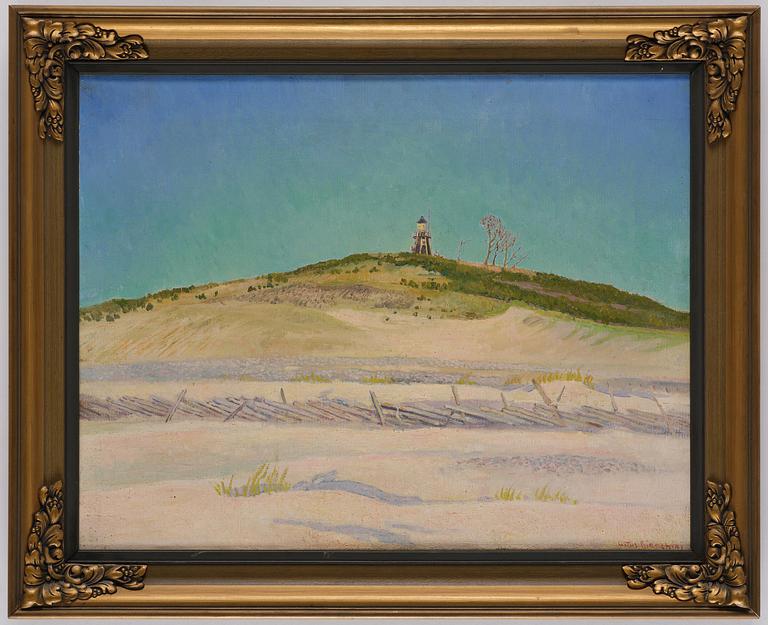
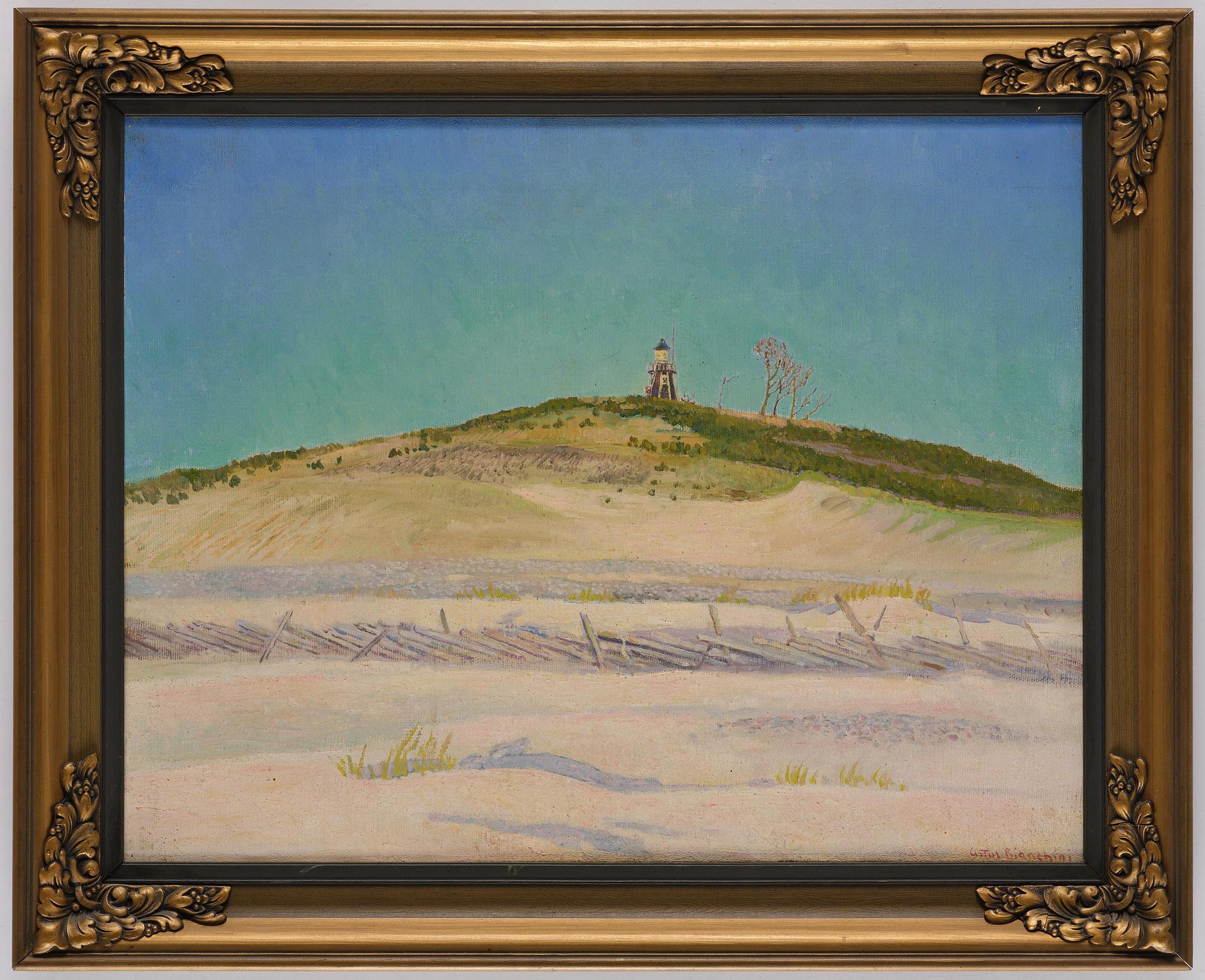
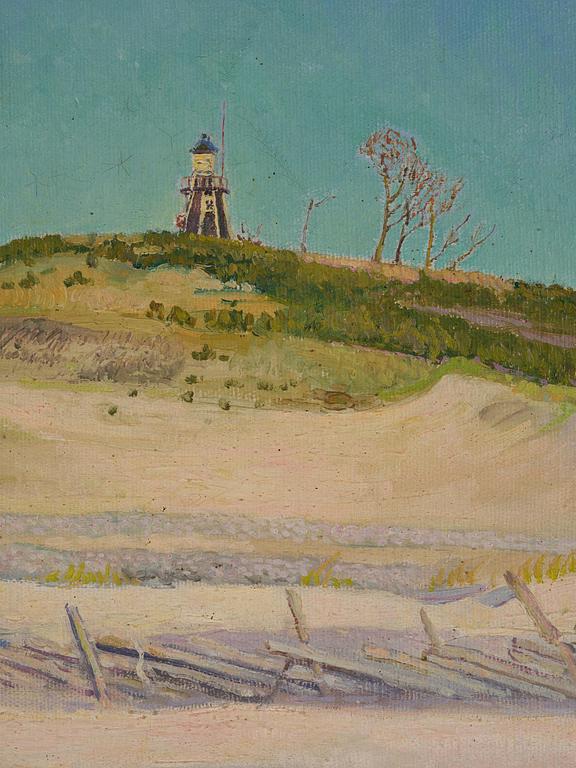
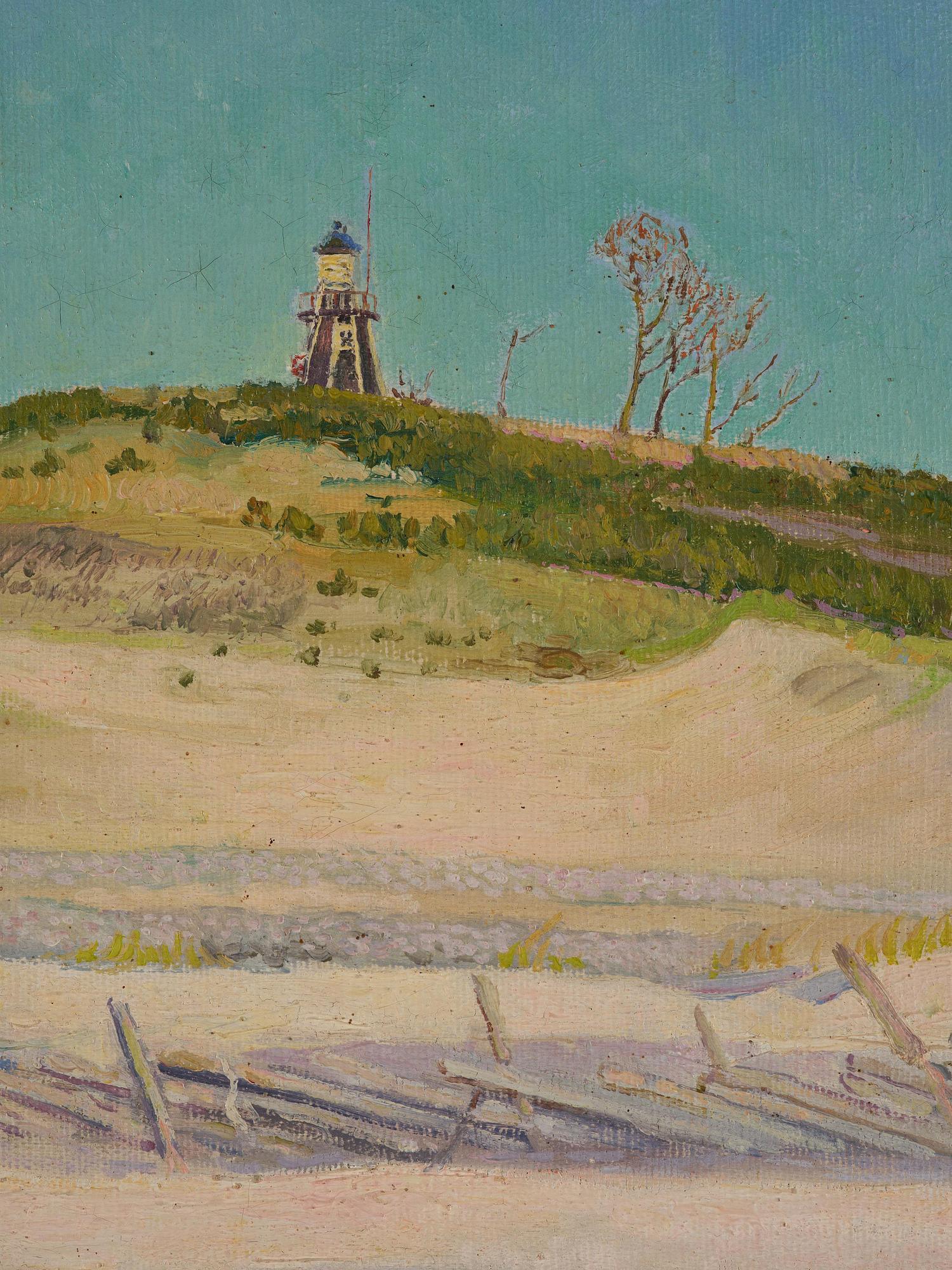
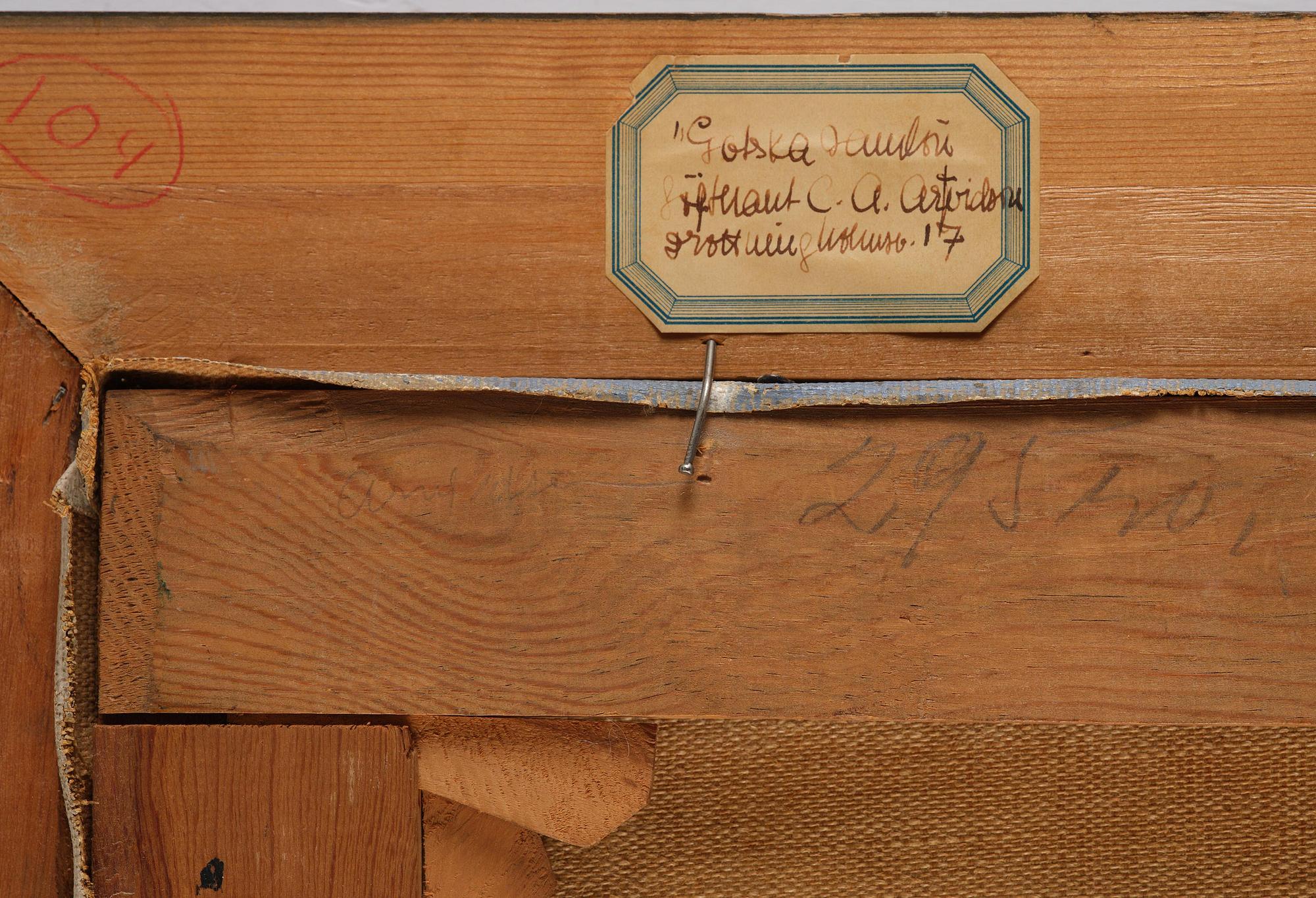
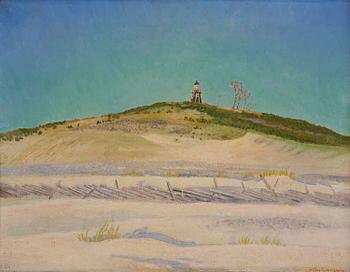
"Gotska Sandön"
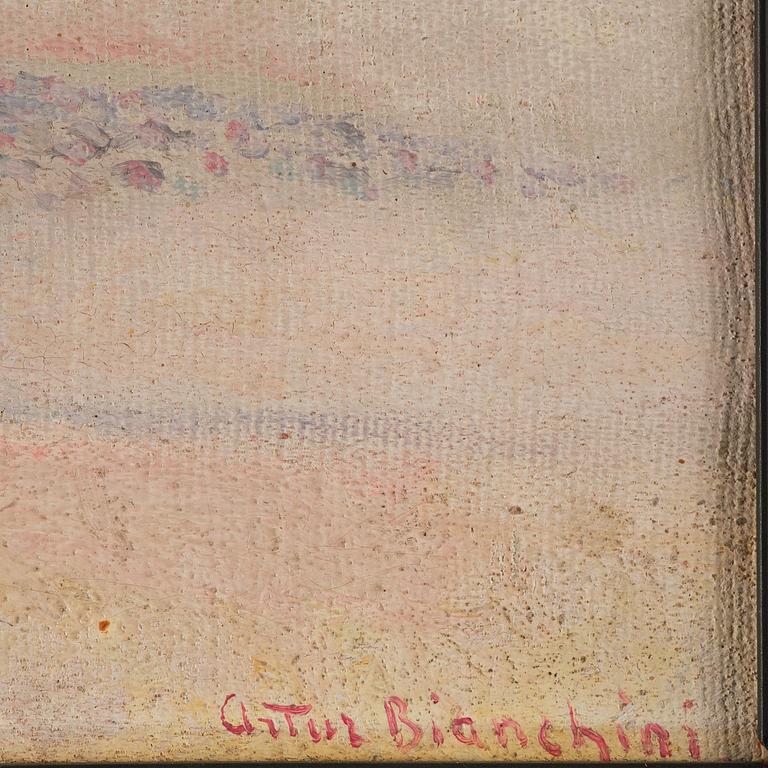
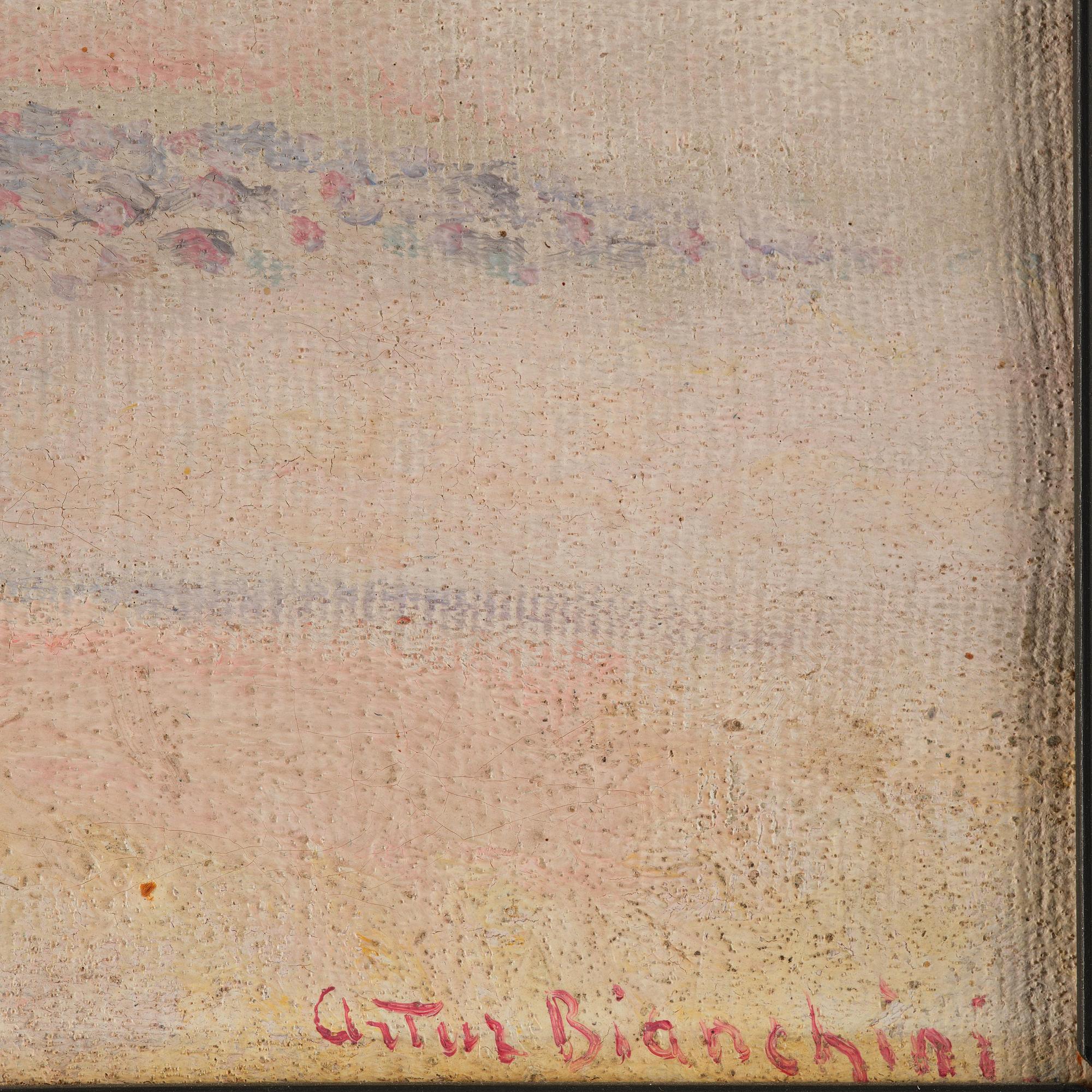
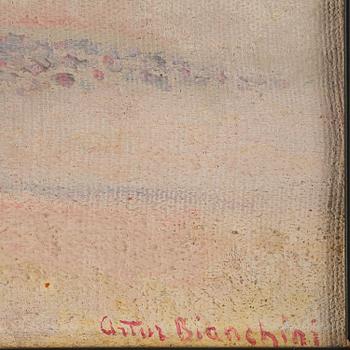
Signed Artur Bianchini. Oil on canvas, 48.5 x 62.5 cm.
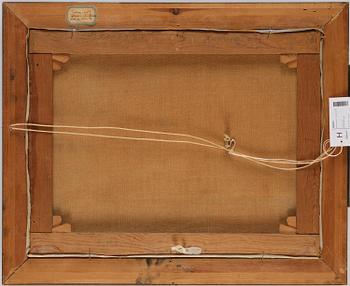
Minor craquelure. Stains.
Muut tiedot
Arthur Bianchini was born in Stockholm in 1869 with a surname he inherited from his Italian grandfather. His art education began at the Académie Julien in Paris in 1889 and was influenced by the tonal painting that characterised the art of the decade. In the 1890s, his art was shaped by his association with the Artists' Association, founded in 1886 by the so-called "opponents" who opposed the increasingly rigid and stagnant view of art held by the Royal Academy. The purpose of the association was, among other things, to "combat all outdated elements that could be harmful, and to promote all reforms that could be deemed beneficial to our domestic art and art industry." Among the members were some of the most important names in Swedish art history, such as Carl Larsson, Anders Zorn, Eugene Jansson, and Richard Bergh. Arthur Bianchini began at the Artists' Association's school in 1891 and would exhibit at their exhibitions throughout the decade. As the younger artists like Bianchini tended to find themselves overshadowed by the giants of the time, a separate exhibition was organised in 1898 for the younger members, which in 1901 resulted in a separate exhibition group that adopted the name "De frie" (The Free). Until 1913, they held annual exhibitions, and Bianchini was perhaps the most driving cohesive force in the group, although artists such as Otto Hesselbom and Axel Törneman were also part of it.
Lisätietoja ja kuntoraportit

Mitä kuljetus maksaa?
Tietoa ostamisesta
Muiden katsomia kohteita