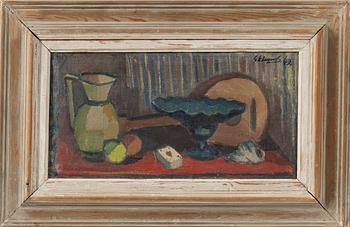
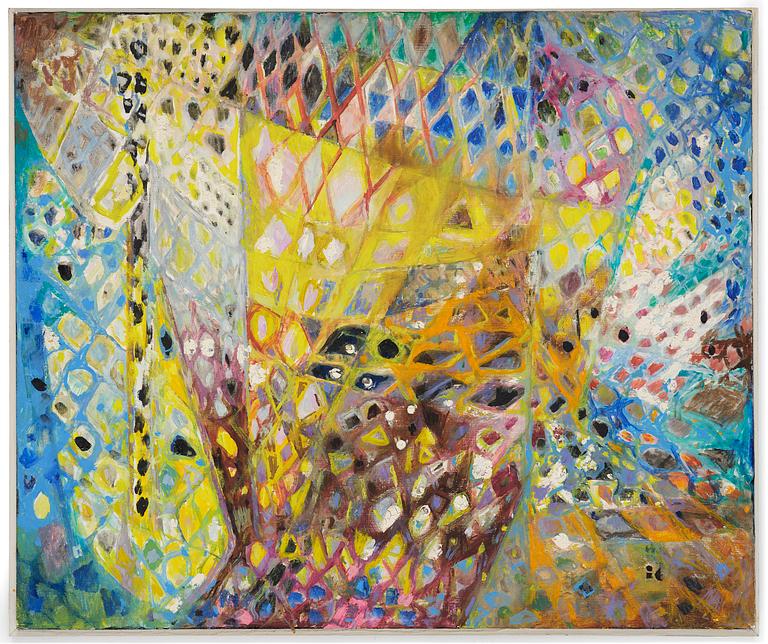
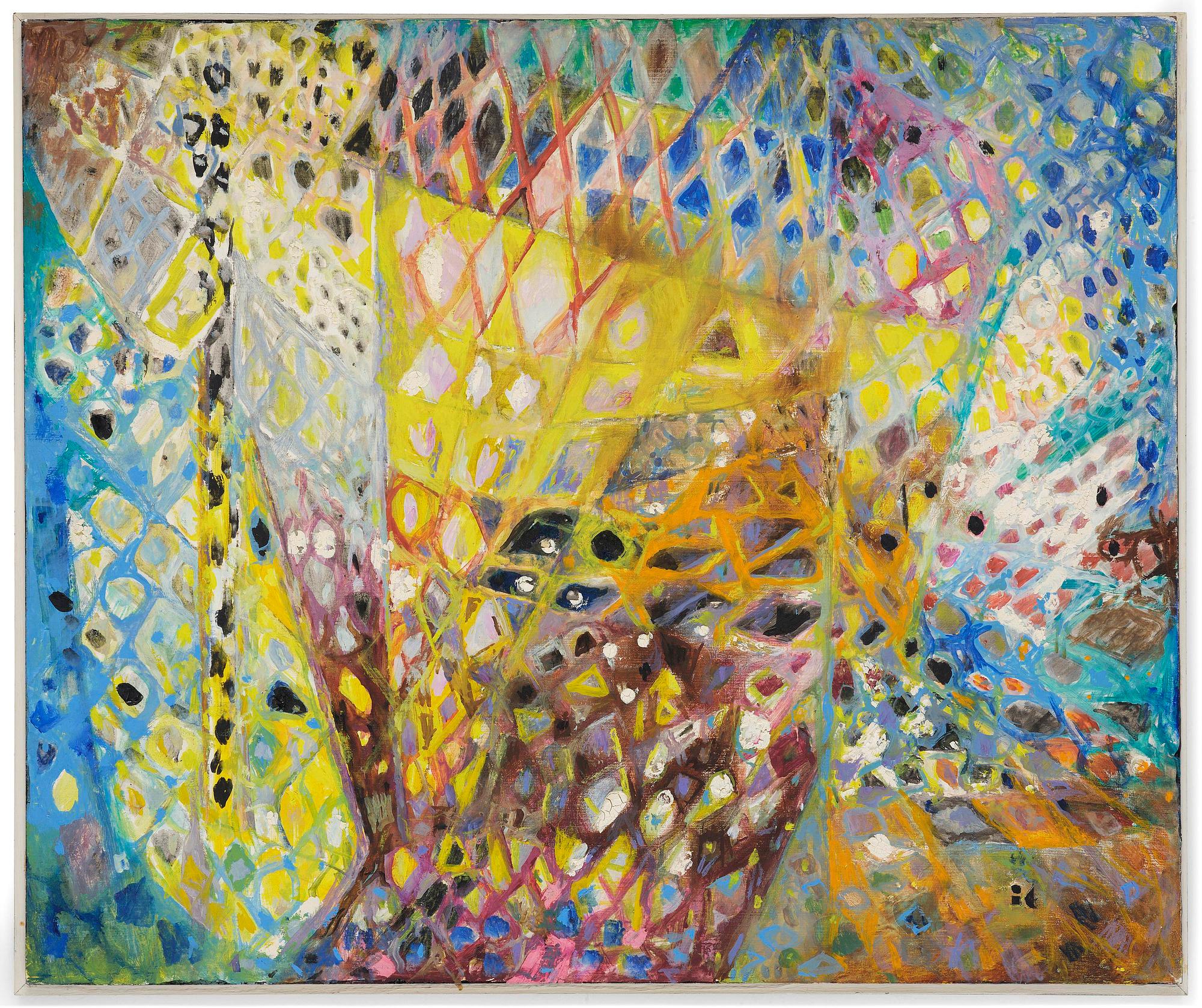
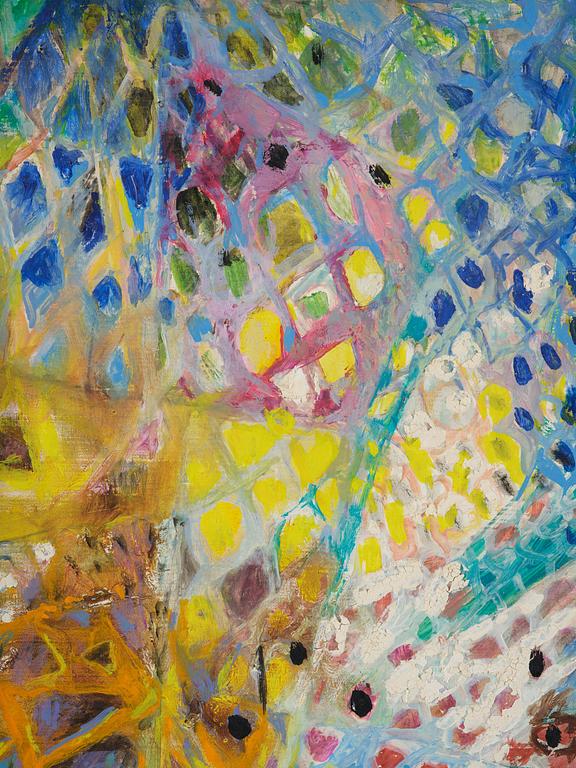
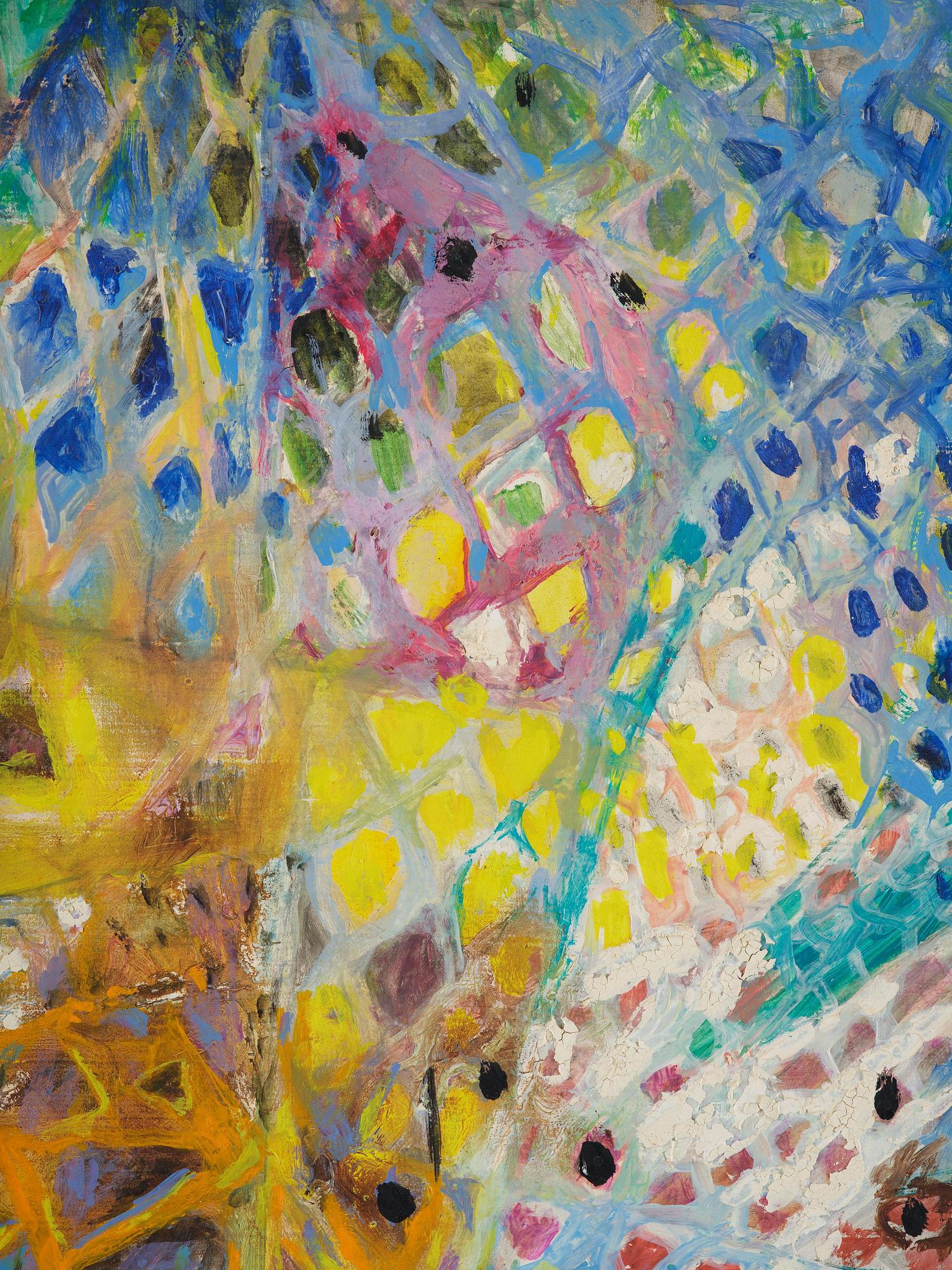
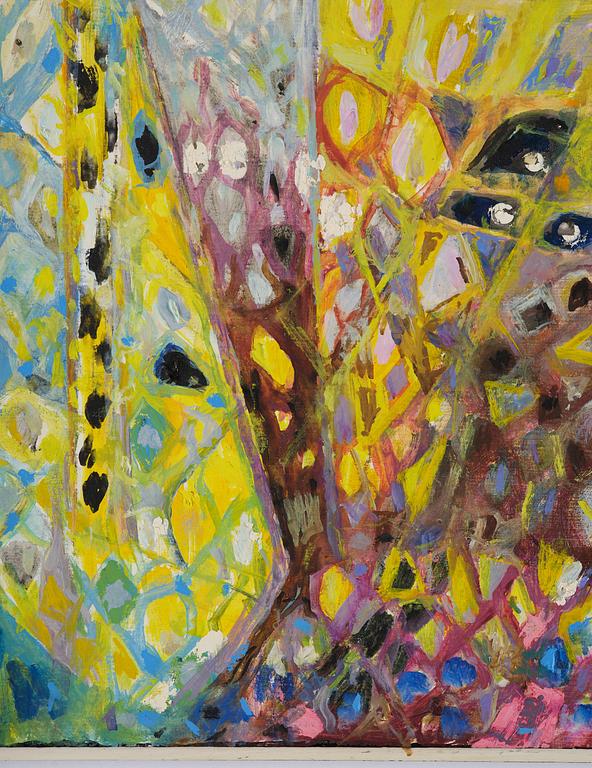
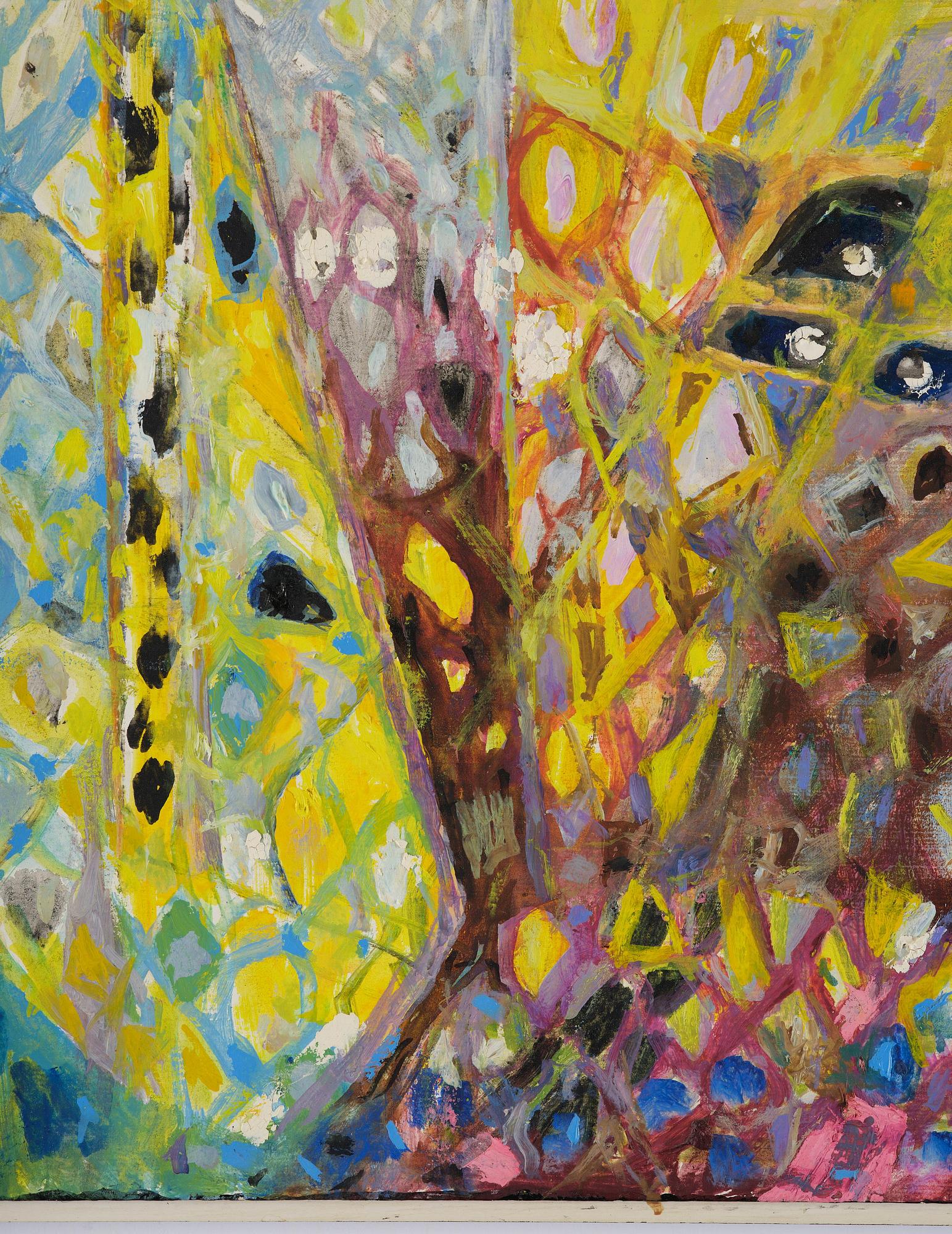
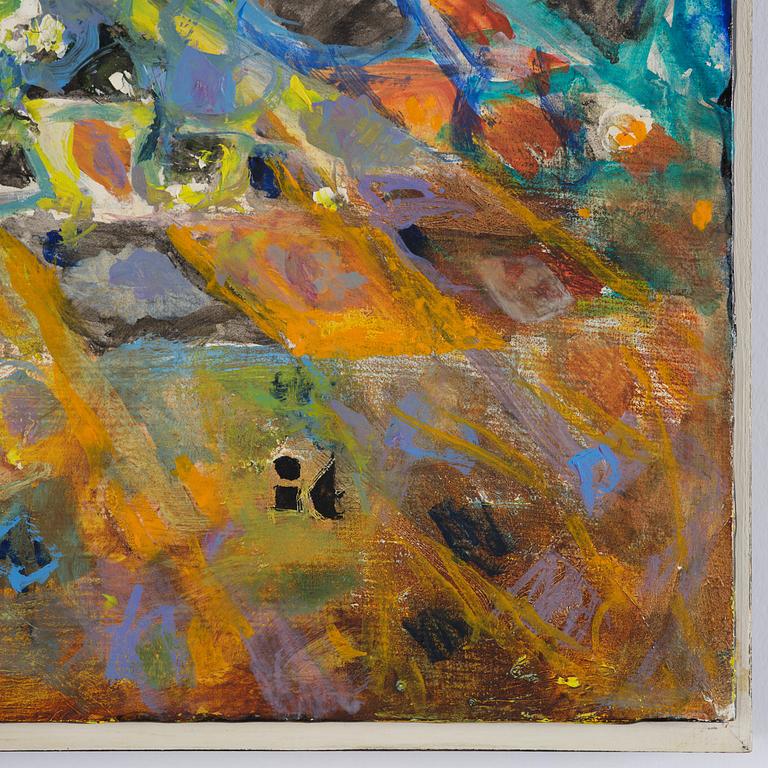
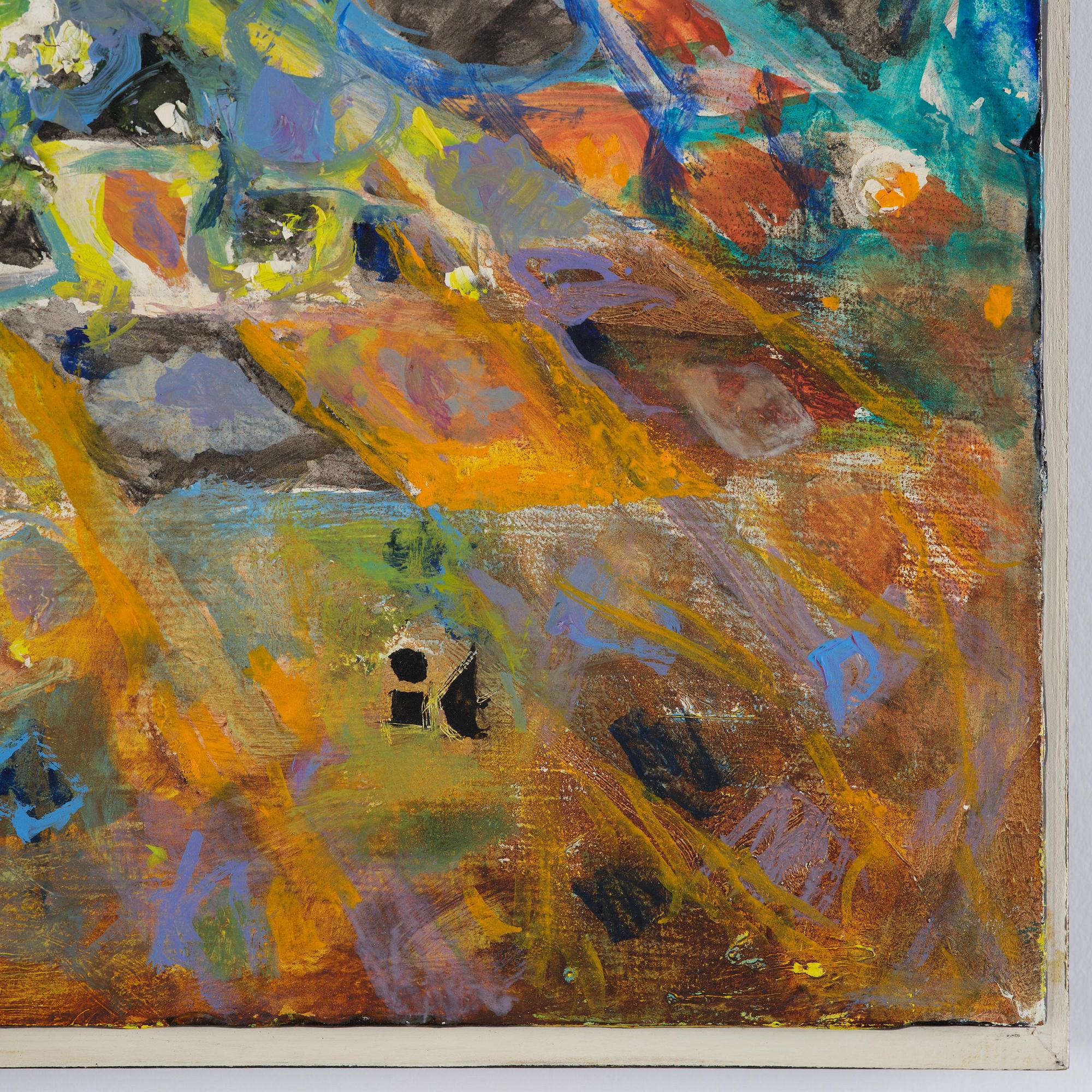
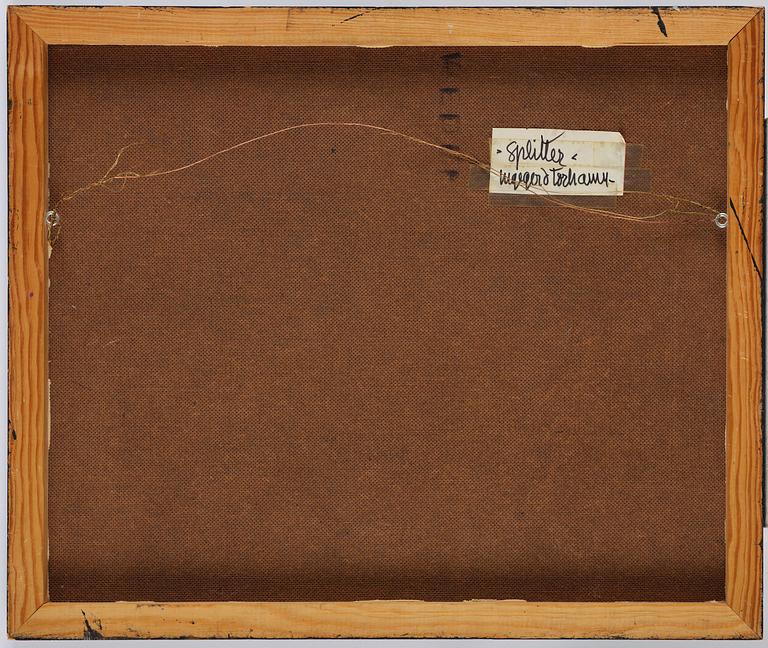
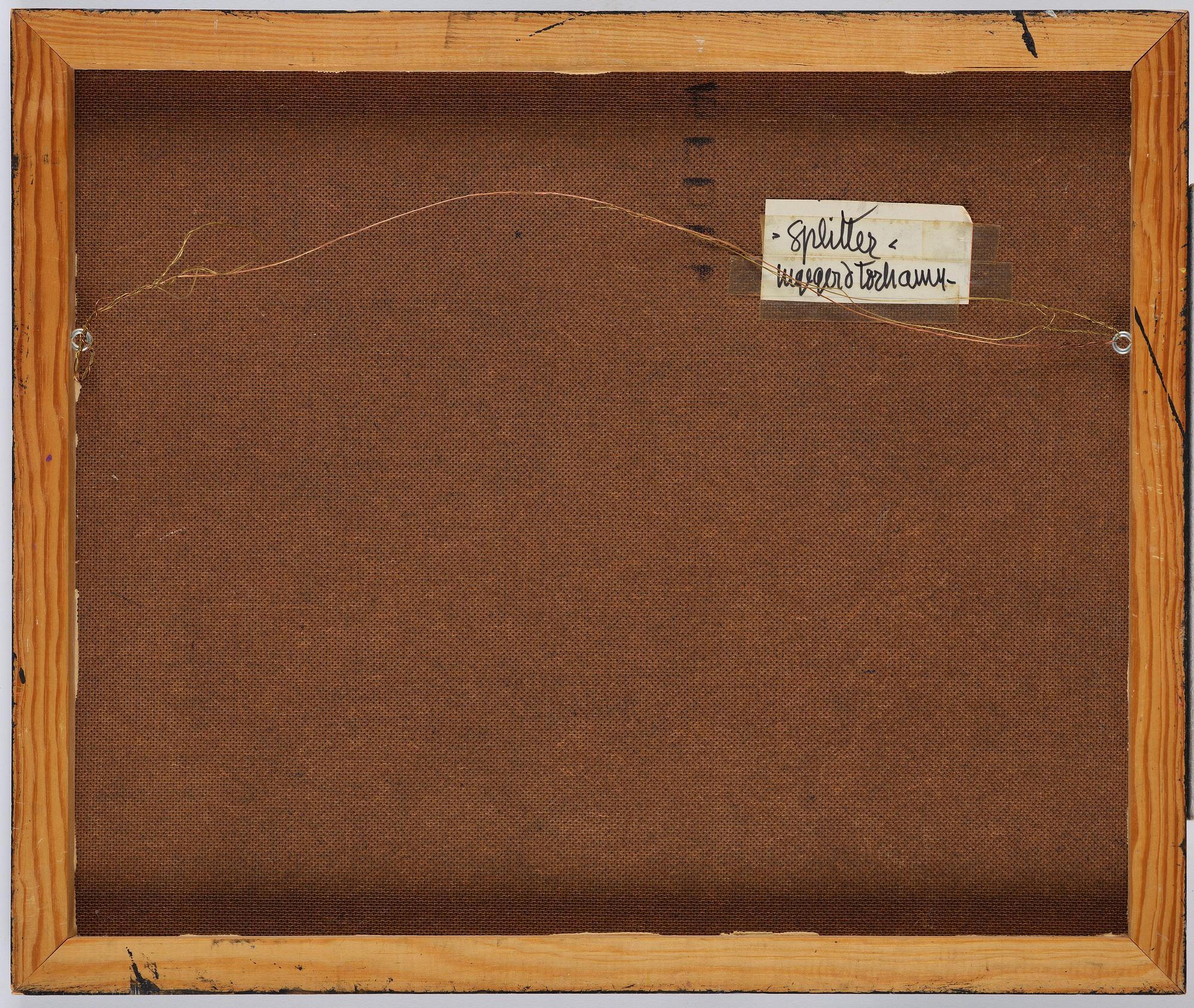
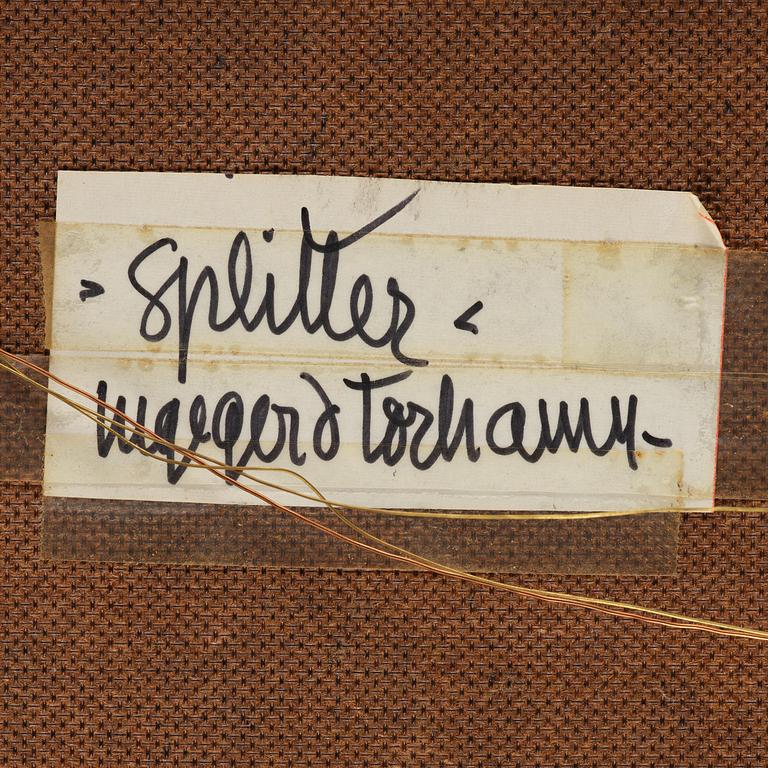
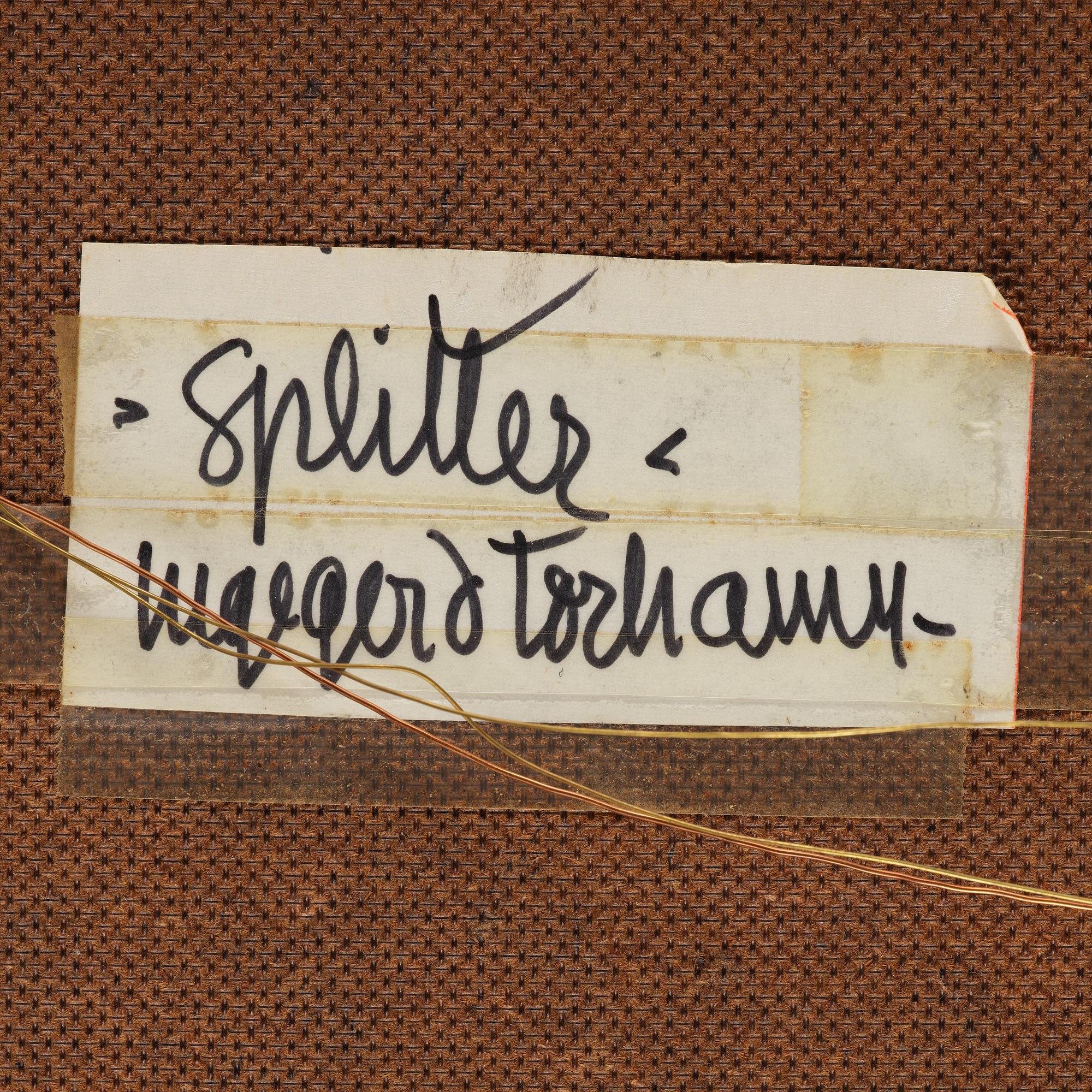
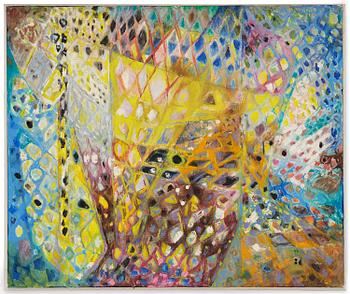
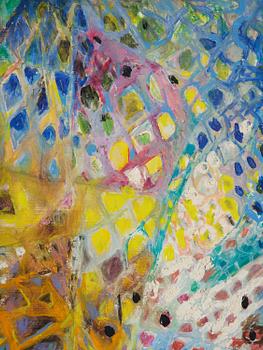
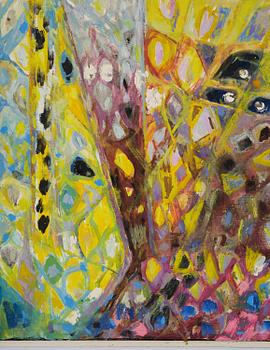
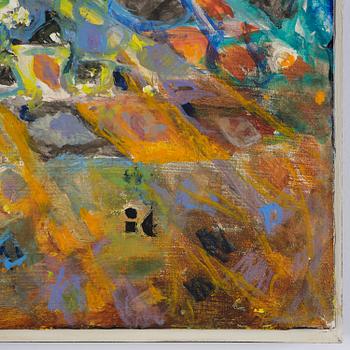
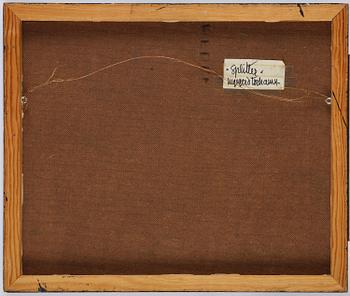
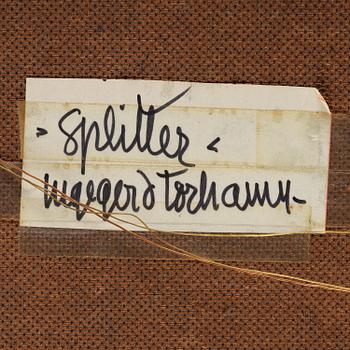
”Splitter”.
Signed lower right. Oil on panel, 46 x 55 cm.
Muut tiedot
Ingegerd Torhamn was a prominent Swedish painter, sculptor and textile artist. She studied at Tekniska skolan in 1916–1917, at the Althin and Carl Wilhelmson painting schools from 1917 to 1919, and at Kungliga konsthögskolan from 1919 to 1922. She also pursued independent studies during travels in Europe and North Africa, as well as during extended stays in Rome and Paris.
Ingegerd Torhamn was one of the first, and also one of the foremost, Swedish Concrete artists, emerging a few years after GAN and Otto G. Carlsund and working contemporaneously with Erik Olson. She took part in the legendary Stockholm Exhibition of 1930, which marked her major breakthrough. She created around ten rugs, and the architect Gunnar Asplund was impressed by her bold and austere formal language.
She met Astri-Bergman-Taube at school, and the two became close friends. They studied together at Konstnärsakademiens sculpture school under Carl Milles. Together with Agnes Cleve, Torhamn exhibited at Konstnärshuset in Stockholm in 1932. Over the following decades, she held numerous highly acclaimed solo exhibitions.
Ingegerd Torhamn was drawn to the straight and geometric lines of Functionalism. Her paintings often feature seemingly simple, non-figurative motifs. In recent years, her Concrete paintings, particularly those from her early period, have attracted increasing interest. Like Olle Baertling and LG Nordström, Ingegerd Torhamn developed a distinctive Concrete style that is immediately recognisable.
Represented in the collections of, among others, Moderna Museet in Stockholm, Kalmar konstmuseum, Röhsska Museet in Gothenburg, Stockholms stadsmuseum, Statens Porträttsamling and Nationalmuseum in Stockholm.
Lisätietoja ja kuntoraportit

Mitä kuljetus maksaa?
Kuuluu jälleenmyyntikorvauksen piiriin
Tietoa ostamisesta
Kuvan käyttöoikeudet
Tämän tietokannan taideteokset ovat tekijänoikeudella suojattuja, eikä niitä saa kopioida ilman oikeudenhaltijoiden lupaa. Teokset kopioidaan tässä tietokannassa Bildupphovsrättin lisenssillä.
Muiden katsomia kohteita