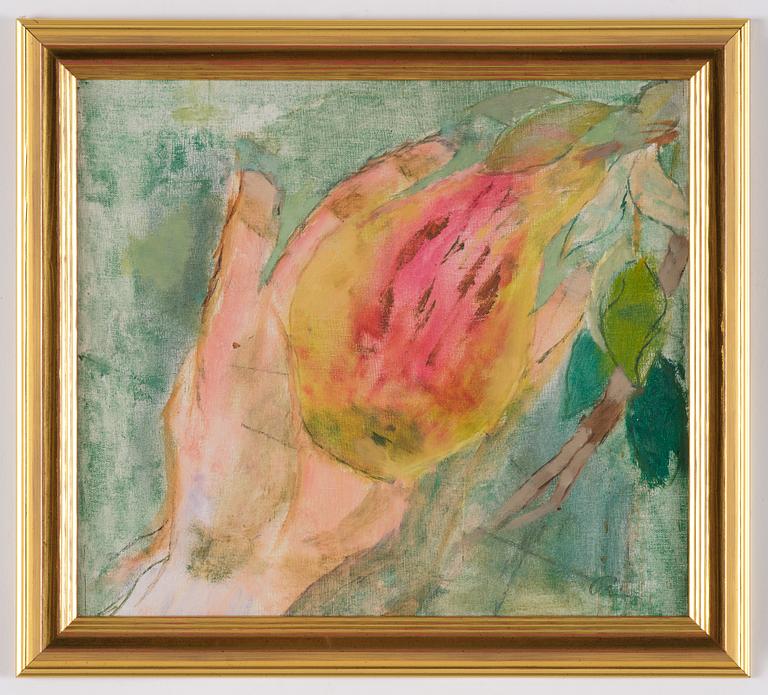
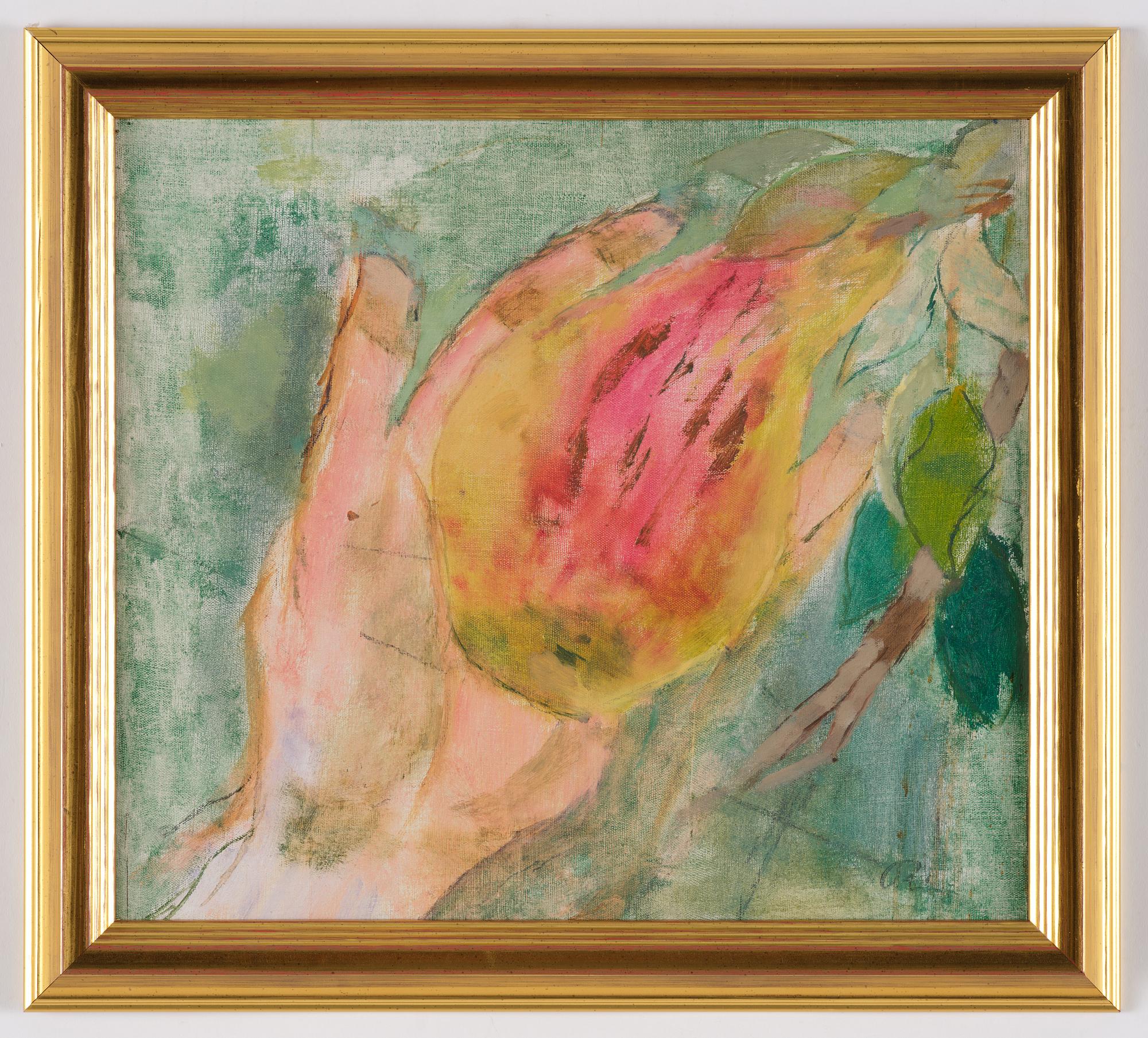
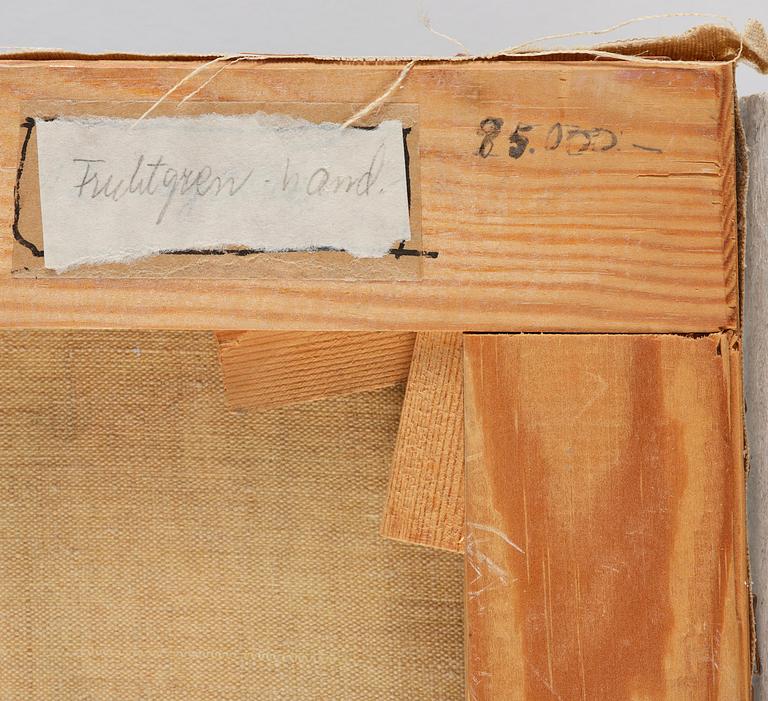
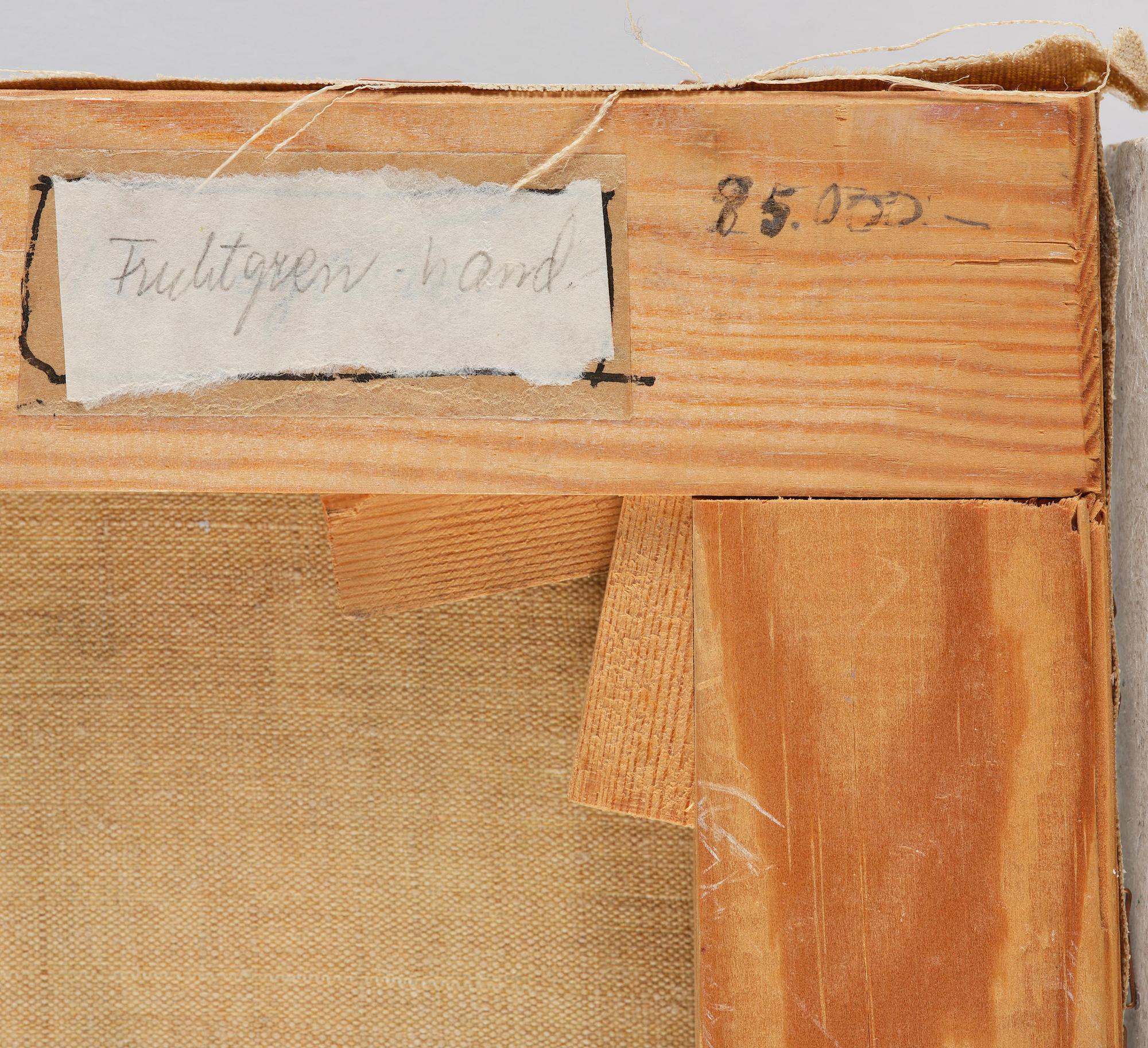
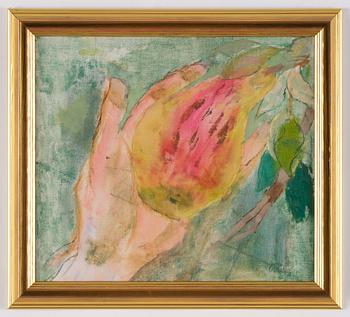
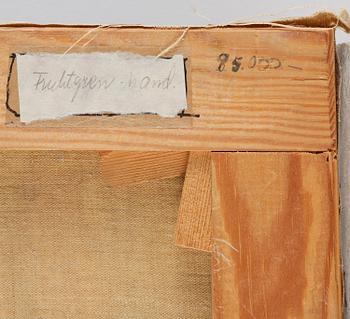
"Fruktgren - hand"
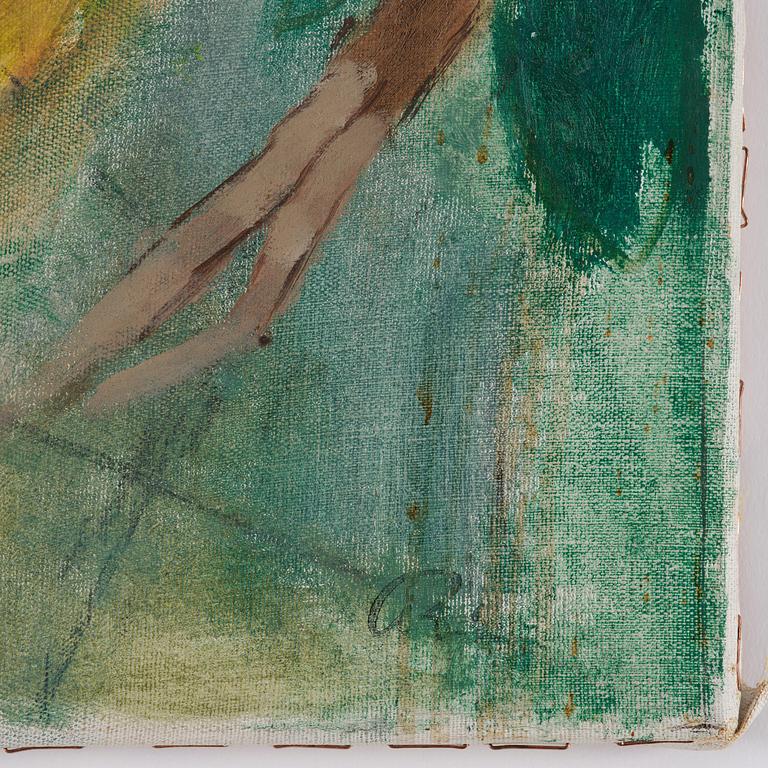
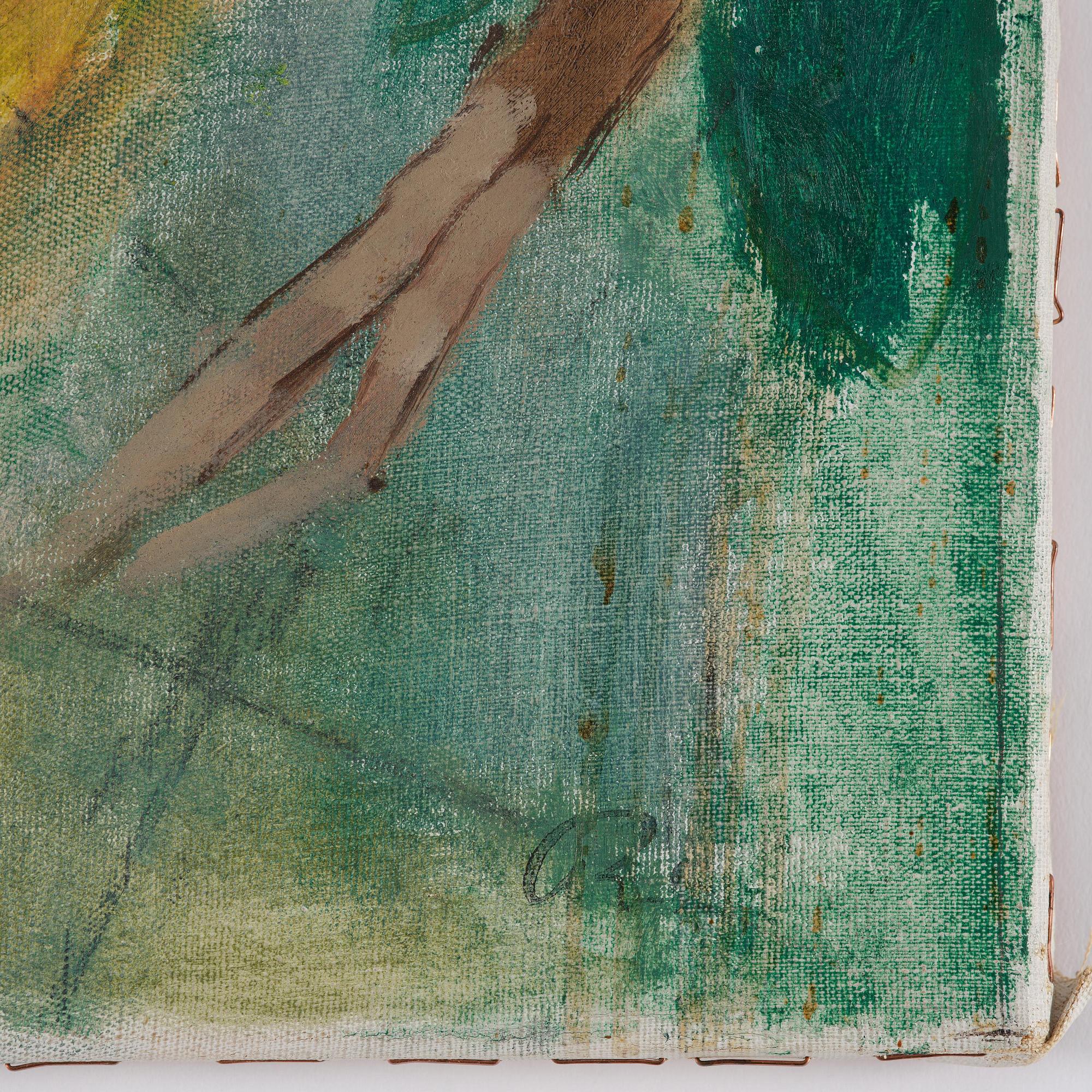
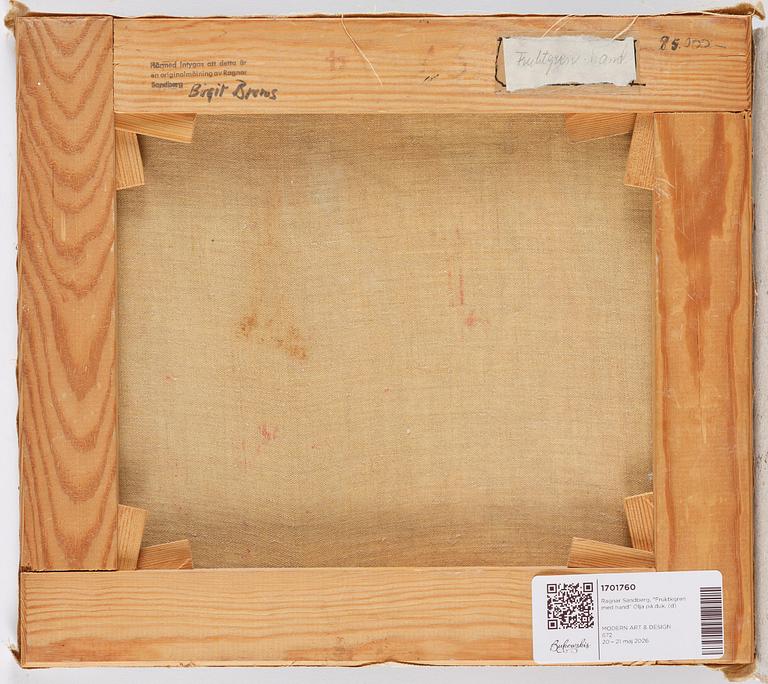
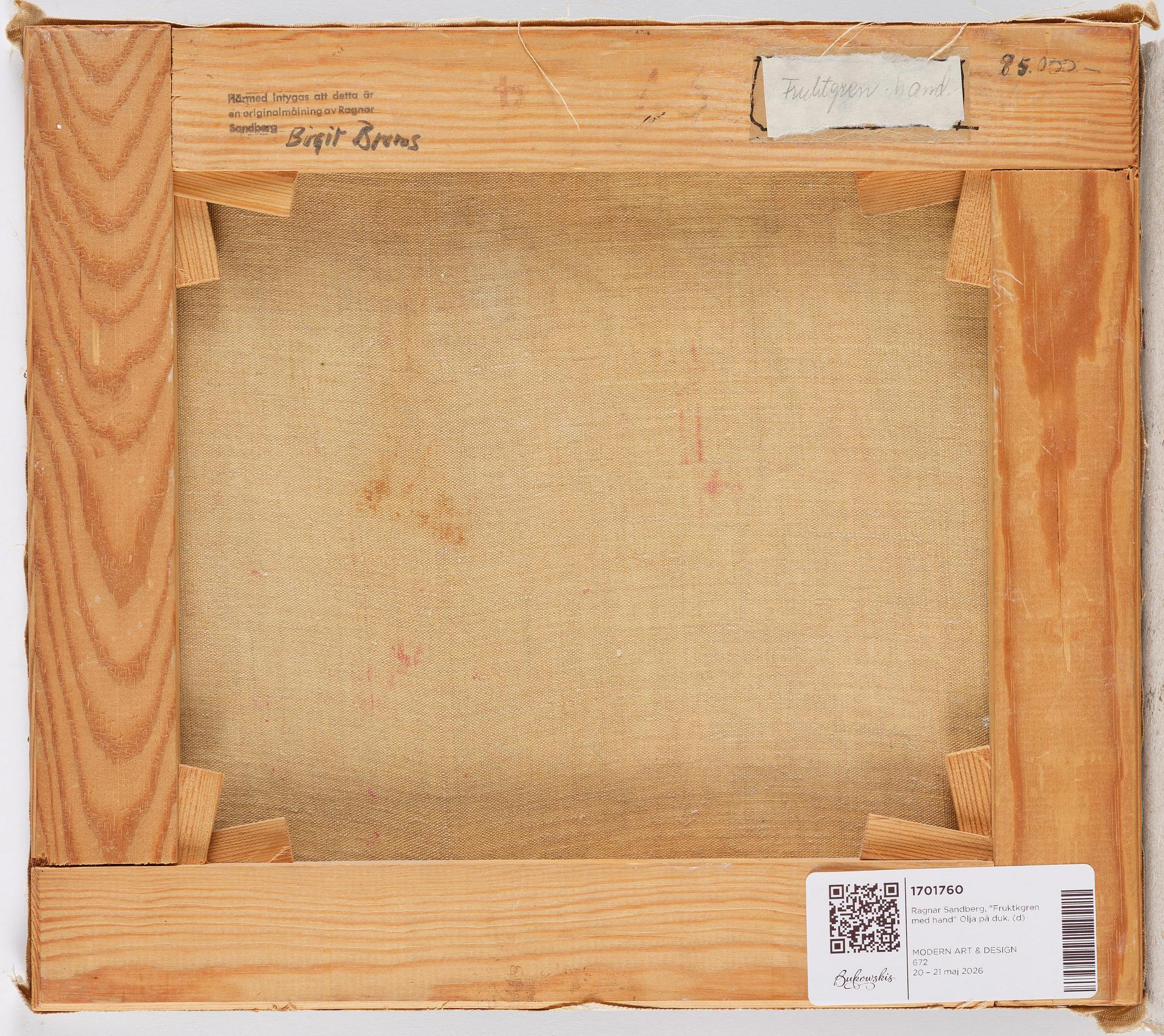
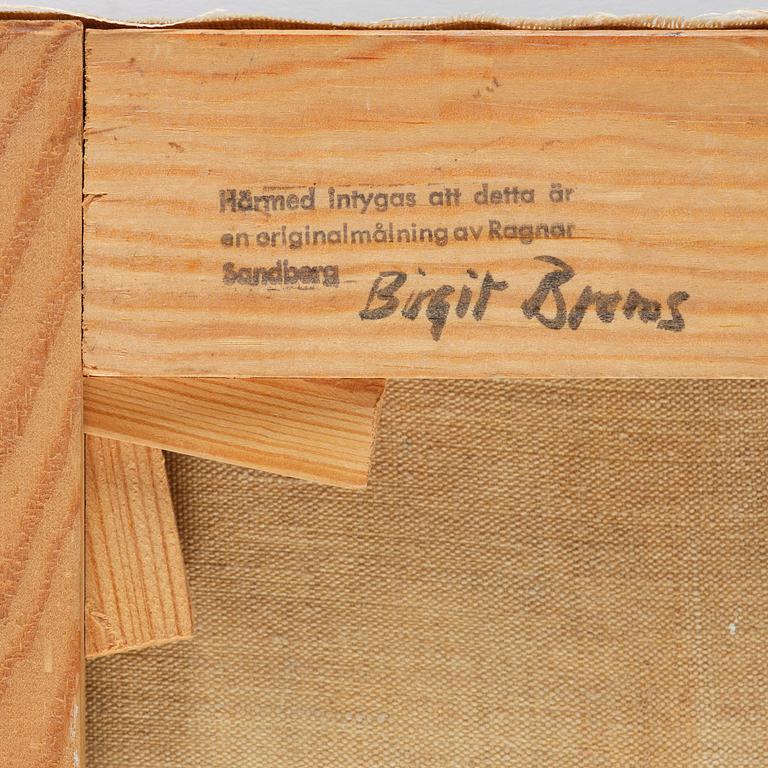
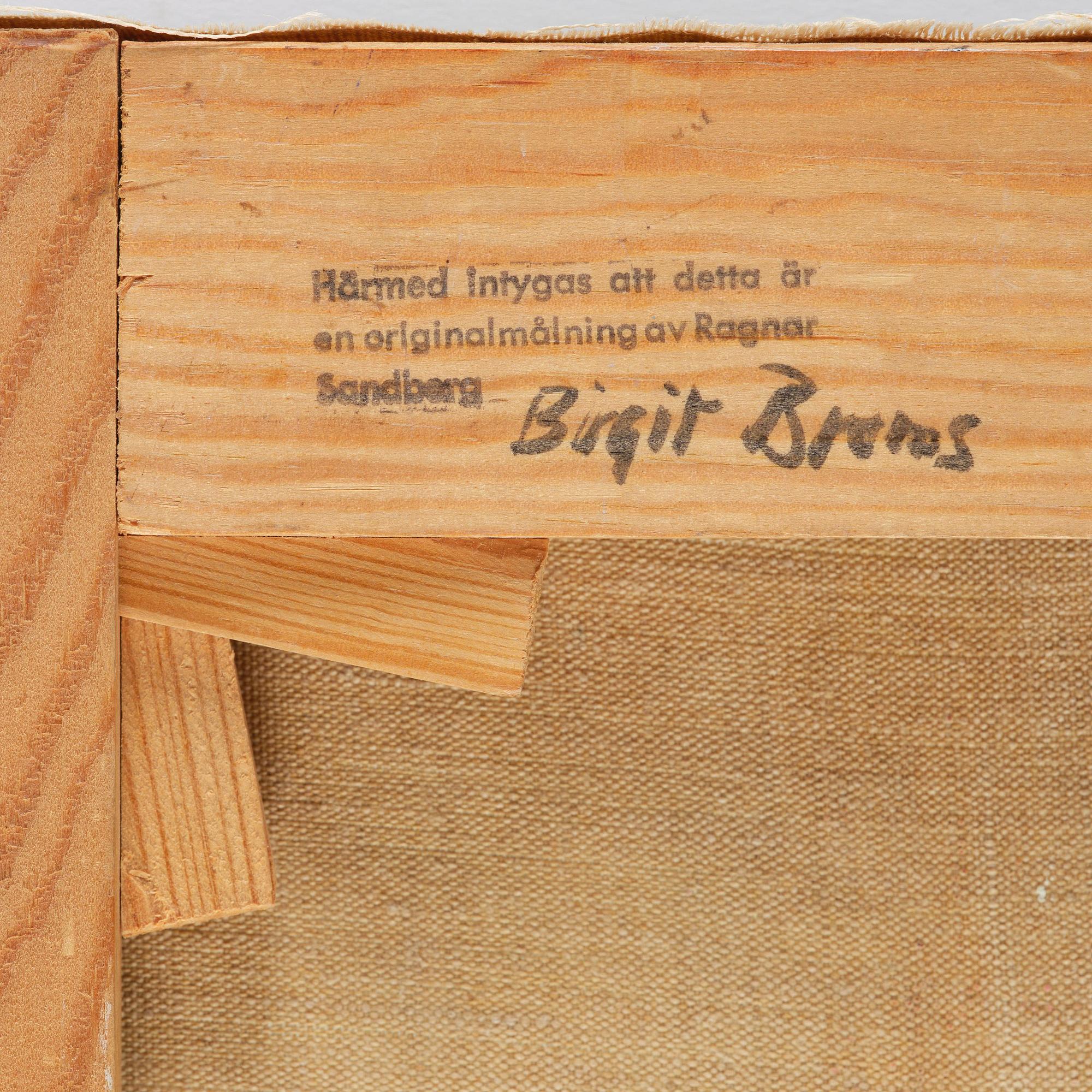
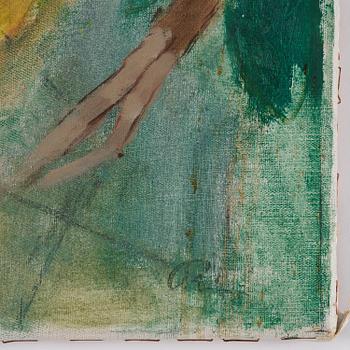
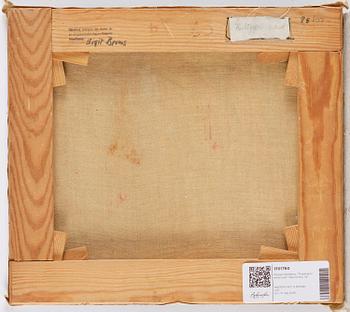
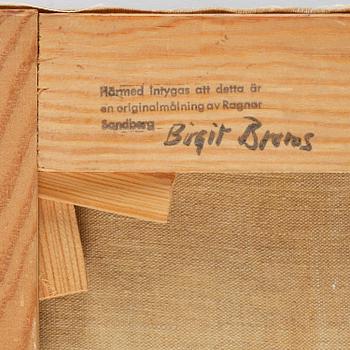
Stampsigned RS. Oil on canvas 30 x 34 cm. Certified by Birgit Broms on the frame.
The overall impression is good.
Alkuperä - Provenienssi
Gift from the artist to architect Sven Bäckström (1903-1992), Stockholm circa 1950.
Muut tiedot
Ragnar Sandberg sought in his painting to make the unexpected possible; he aimed to bring about a disorder of the senses. Colour was his medium—he painted darkness with light colours and turned established colour conventions upside down.
That Sandberg would become an artist was by no means a foregone conclusion. He had attended grammar school and had also spent some time at sea. From a very young age, he was deeply interested in literature and philosophy, and somewhere within him there was also a dream of becoming a writer. Sandberg enrolled at Valand’s School of Art at the beginning of the 1920s and studied there for several years without making a particularly strong impression. At a student exhibition in 1925, however, it was noted that Sandberg was the only one who “dared to paint in light and colour”. According to Tor Bjurström, who taught at the school at the time, Sandberg possessed great talent as a draughtsman, but he also stated that “he did not see Ragnar Sandberg as a future painter”. After completing his art studies, Ragnar Sandberg spent time at home reading and studying literature and philosophy. In the summer of 1929, RS happened to meet his fellow student Ivan Ivarson, who had rented a house on Stenungsön for a few summer months. Sandberg was inspired by his friend’s enthusiasm for work. He was impressed by what he saw Ivan Ivarson had learnt and developed during his extensive travels abroad and his time with the artist couple Kylberg. Ivarson’s absolute conviction that colour could express something unique spurred Sandberg to return to painting.
In 1936–37, Ragnar Sandberg travelled to France, where he became acquainted with Bonnard’s poetic painting, his sensual colours and laborious glazes. During the same journey, he also saw “some damn good things” by the Spaniard Francisco Borès, whose use of black impressed Sandberg. Returning to Gothenburg full of new impressions, he filled his canvases with Gothenburg scenes, still lifes and bathers on the west coast, rendered in a vivid palette.
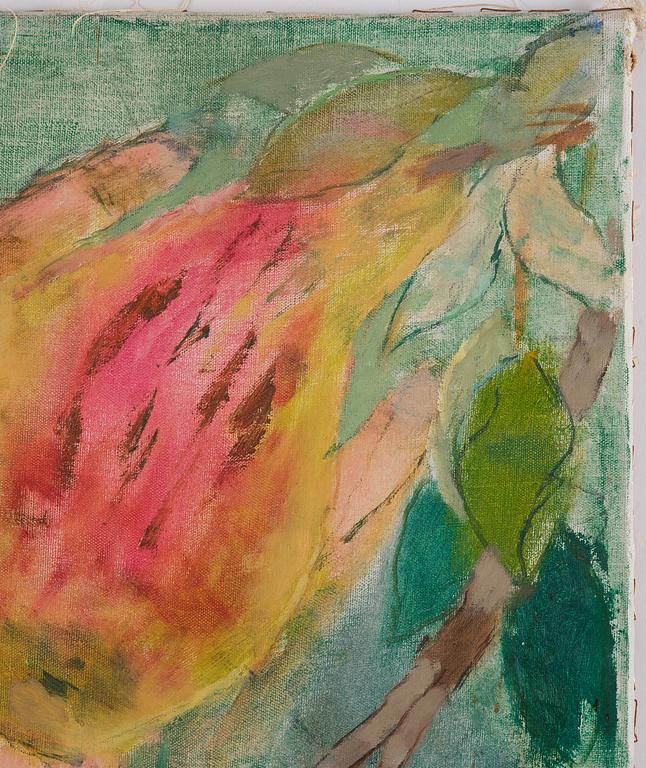
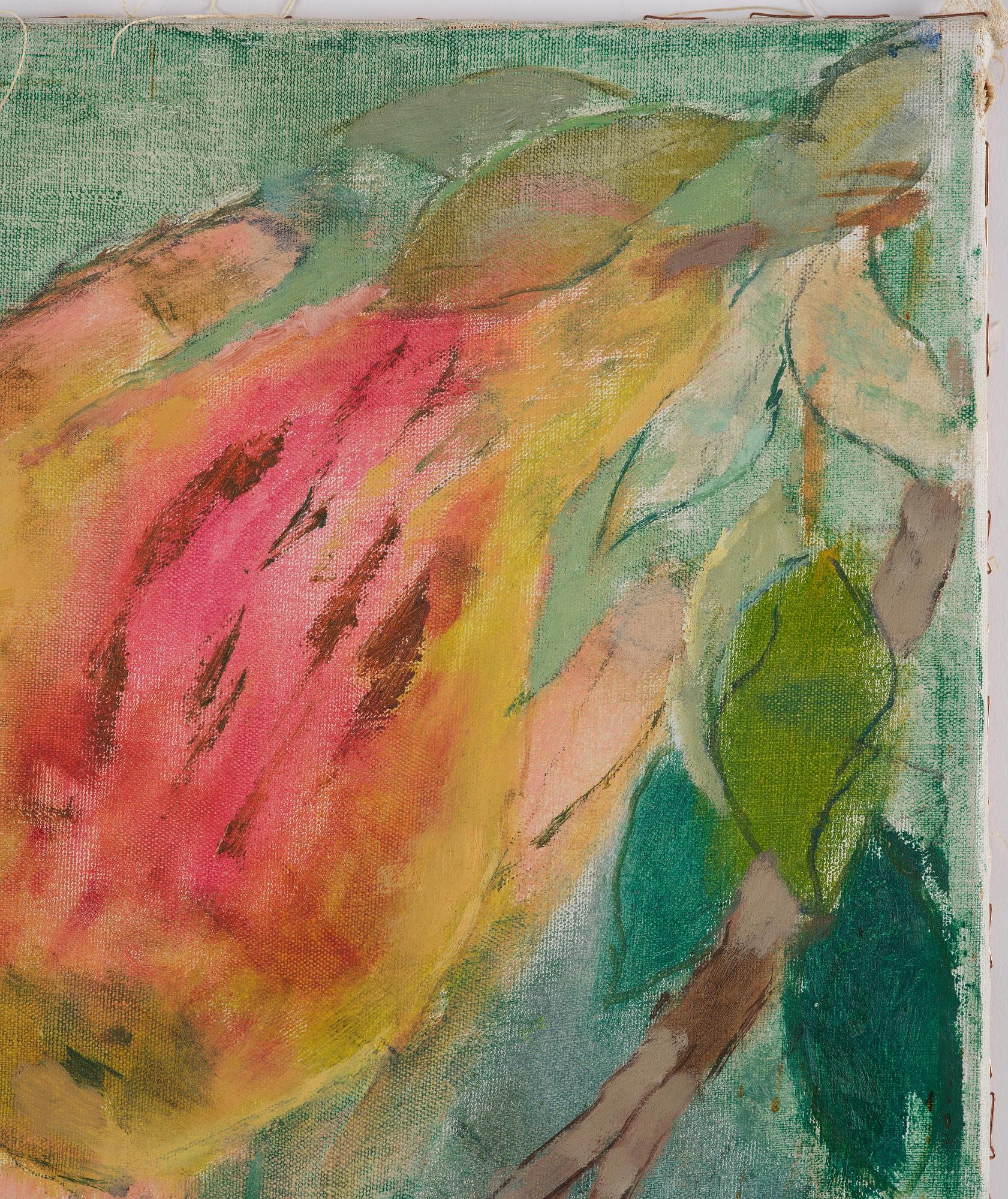
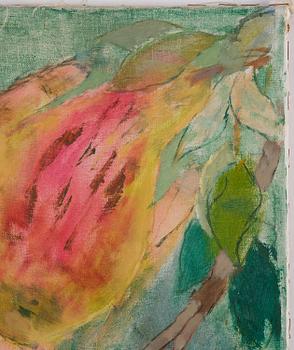
Ragnar Sandberg did not paint only scenes from Gothenburg. In the late 1930s and early 1940s, he produced his wonderful motifs drawn from the orchard. The best known is "Plommonskörden", executed in 1939 (Göteborgs Konstmuseum), along with all the often small, fresh close studies of sun-ripened apples. In the painting "Fruktgren - hand, Ragnar Sandberg chose to study the colour and form of the pear in close detail.
Lisätietoja ja kuntoraportit

Mitä kuljetus maksaa?
Kuuluu jälleenmyyntikorvauksen piiriin
Tietoa ostamisesta
Kuvan käyttöoikeudet
Tämän tietokannan taideteokset ovat tekijänoikeudella suojattuja, eikä niitä saa kopioida ilman oikeudenhaltijoiden lupaa. Teokset kopioidaan tässä tietokannassa Bildupphovsrättin lisenssillä.
Muiden katsomia kohteita