Modern Art & Design presents Eva and Hans Anderssons Collection | May 20–22
Nonconformist Russian Art
Ambassador Hans Andersson (1933–2000) began his career at the Swedish Ministry for Foreign Affairs in 1956 and served until his retirement in 1998. His first posting abroad was in Prague, followed by assignments in Bonn, Tel Aviv, Moscow, The Hague, London and New York. Between 1992 and 1997, Hans Andersson served as ambassador to Iran. During his years in Moscow, 1967–1970, Hans and his wife Eva came into close contact with writers and artists, and built up a collection consisting mainly of Nonconformist or opposition Russian art.
The Nonconformists were active from 1953 to around 1986 (i.e. from the death of Joseph Stalin until Mikhail Gorbachev opened up the Soviet Union). They were artists who worked in opposition to the state and its imposition of Socialist Realism in art. They expressed their critical stance, their pursuit of freedom, and their individualism through painting and sculpture. They often found allies in other cultural fields such as music and literature. The Nonconformists were subjected to surveillance, censorship, and in some cases forced into exile. As they were prevented from exhibiting publicly, they showed their works in private homes or other informal settings.
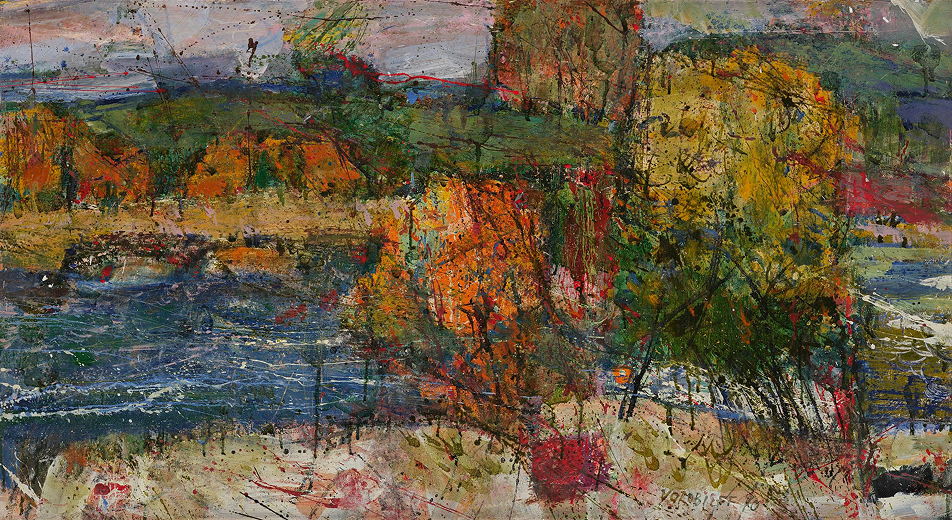
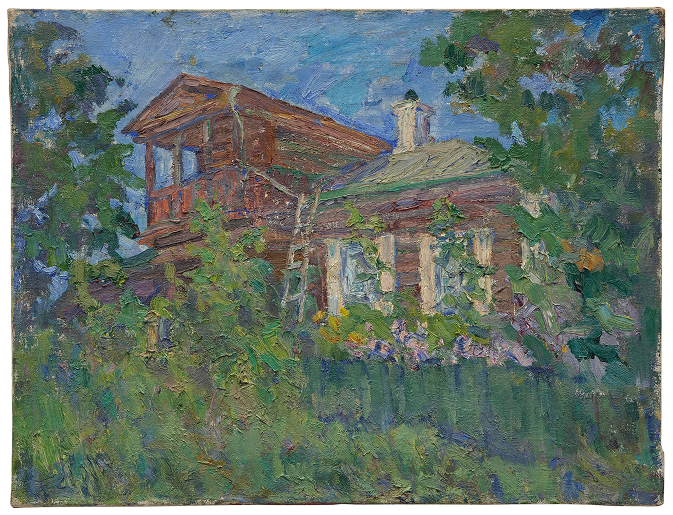
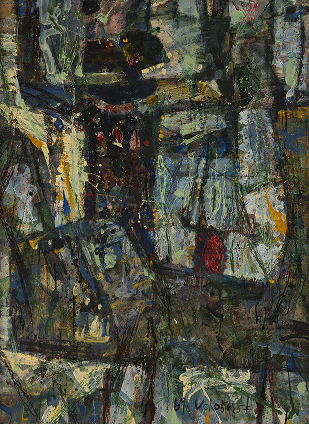
Bukowskis has been entrusted with the sale of ten works from the Eva and Hans Andersson collection. The works were acquired directly from the artists in Moscow between 1967 and 1970. The collection includes works by prominent Russian artists such as Oskar Rabin, his wife Valentina Kropivnitskaya, Vladimir Weisberg, Dimitri Krasnopevtsev and Valentin Vorobiov.
Weekdays 11 AM – 6 PM
Weekends 11 AM – 4 PM
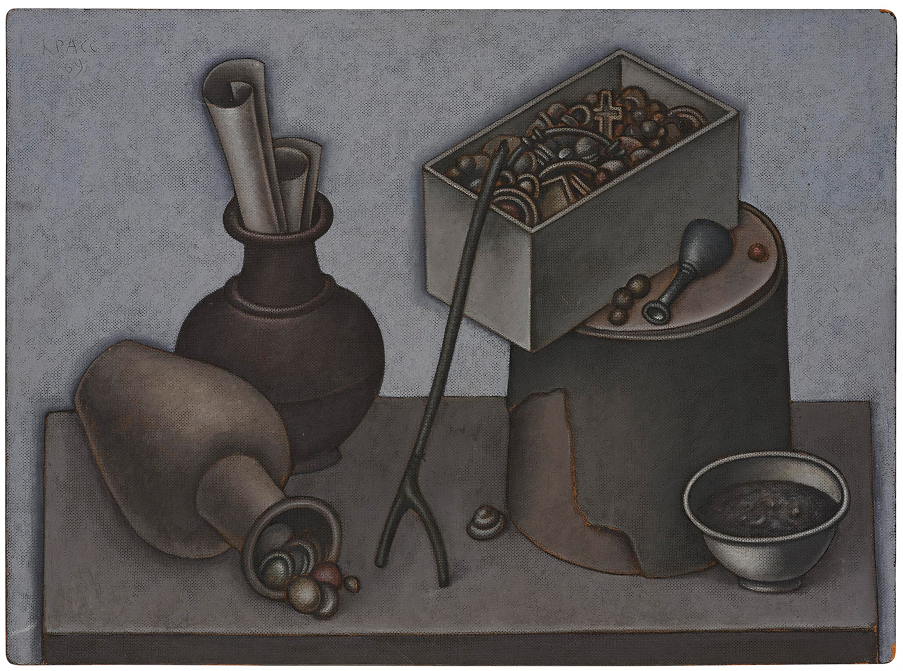
Dimitri Mikhailovich Krasnopevtsev
Dmitry Krasnopevtsev (1925–1995) was one of the most talented metaphysical painters of the Soviet Union. His artistic vision aligned with the Italian artists Giorgio Morandi and Giorgio de Chirico, who pioneered the metaphysical art movement. Working largely in isolation, Krasnopevtsev developed a deeply personal visual language centered on simple objects—vessels, shells, stones, dried plants, discarded pipes—arranged in sparse, often austere compositions. His works evoke a sense of timelessness, as though removed from the ideological pressures and material realities of Soviet life.
Faina Balakhovskaya, art critic and curator writes:
"Unlike most of his fellow citizens, he does not idealize the past. His past is not marked by ideology, it has no sorrow, no pride, no hope—only the persistent affirmation of the irreversible nature of change and the inevitability of the end. In the space of the paintings, deprived of air, light, and weight, time stops, colors fade, flowers contort and dry out. Fear, the constant companion of the era, cools off the Surrealistic dark that flies in from unknown parts. Heir to the metaphysical works of Morandi and de Chirico, Krasnopevtsev is a principled anti-modernist.
Believing himself to be continuing the classic traditions of high art, he rejects all categories of the fashionable and trendy. The only true discovery for him in the works of his Western contemporaries was the interest in unneeded, ordinary things. But pipes, sheets of iron, and vessels are not just cast-off rubbish in his works, nor did they become ordinary protagonists of Pop Art. On the contrary, overcoming their own impoverished nature, they took on symbolic significance, embodying in numerous ways the sense of the irreplaceable loss of eternal beauty."
Fear, the constant companion of the era, cools off the Surrealistic dark that flies in from unknown parts. Heir to the metaphysical works of Morandi and de Chirico, Krasnopevtsev is a principled anti-modernist.
The Entire Collection at Modern Art & Design
Enquiries and Condition Reports