Important Spring Sale presents Bruno Liljefors | June 10–12
Katt och sädesärla
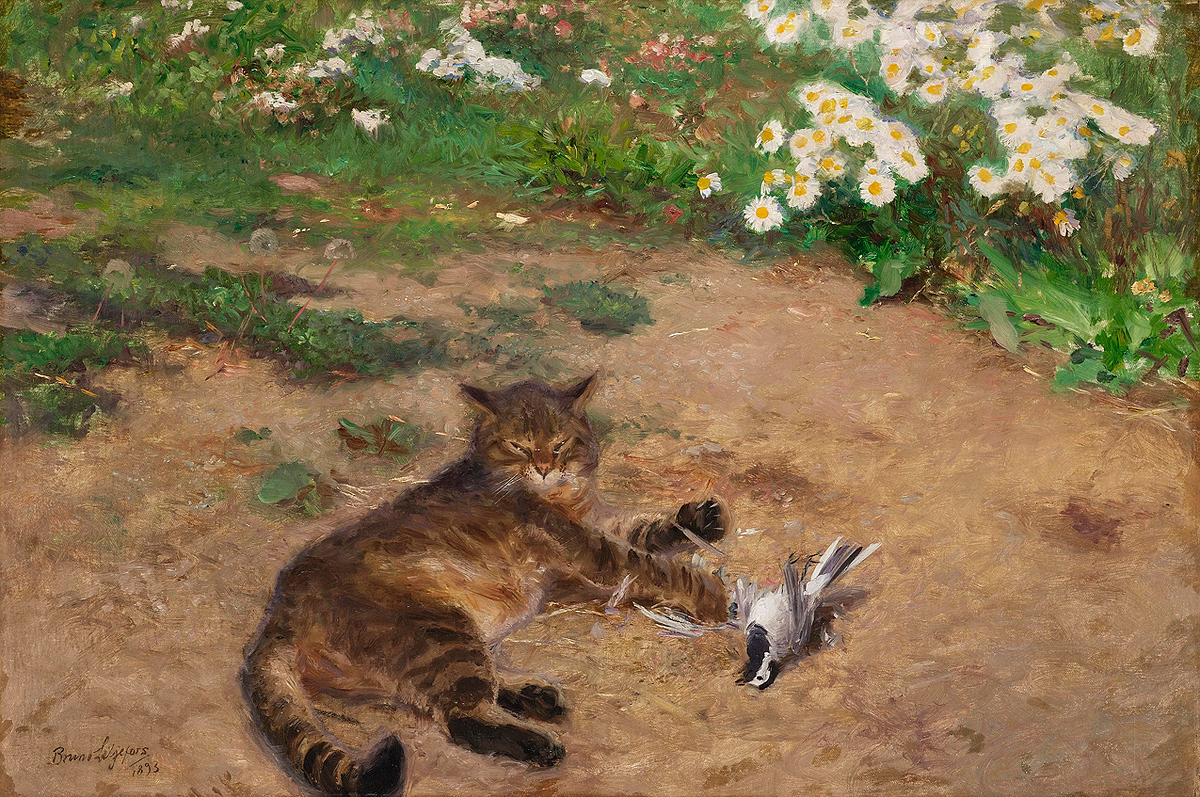
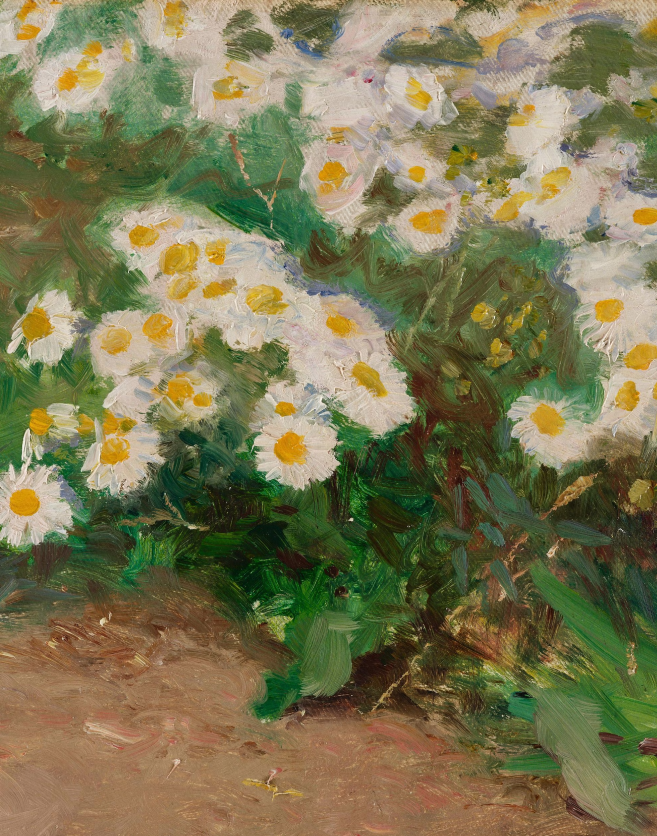
The summer sun spreads its warm light across the Uppland countryside. Amid blooming ox-eye daisies, the cat rests after a successful hunt — a scene that serves as a reminder that life in nature is ultimately about survival.
This perspective became central to Bruno Liljefors’s artistic practice during the 1880s and 1890s, a period when Darwin’s theory of evolution and the notion of the struggle for existence shaped the intellectual climate of the age. For Liljefors, nature was not merely beautiful and harmonious, but also a place where life and death constantly coexisted.
The auction painting Cat and Wagtail was executed in the summer of 1893, during one of Liljefors’ most successful periods. After study trips across Europe, he settled in Kvarnbo outside Uppsala and developed into one of the most promising and innovative Swedish artists of his time. He would become a central figure in open-air painting and devoted his life to depicting Swedish nature and wildlife with unusual immediacy and precision. Through his direct encounters with animal life, he was able to capture movement, light and atmosphere with swift and confident brushwork.
The cat became one of Liljefors’ most significant motifs and an animal with which he felt a particular affinity. As a young man, he spent much time drawing and studying animal anatomy and movement. He was especially fascinated by the cat’s agility, strength and balance — qualities he himself aspired to and which inspired him towards an active life outdoors. One cat that lay especially close to his heart was Jeppe. He became his closest companion, a loyal friend who frequently served as the model for some of the artist’s most remarkable and beloved works. In order to portray animals convincingly, Liljefors sought to approach them on their own terms. He moved through forests and fields from the animals’ perspective and allowed this outlook to shape his compositions, which often feel like spontaneous glimpses taken directly from nature itself. Japanese woodblock prints and the contemporary vogue for Japonisme also influenced his visual language and compositional style.
Estimate: 2 500 000 - 3 000 000 SEK
Weekdays 11 AM – 6 PM
Weekends 11 AM – 4 PM
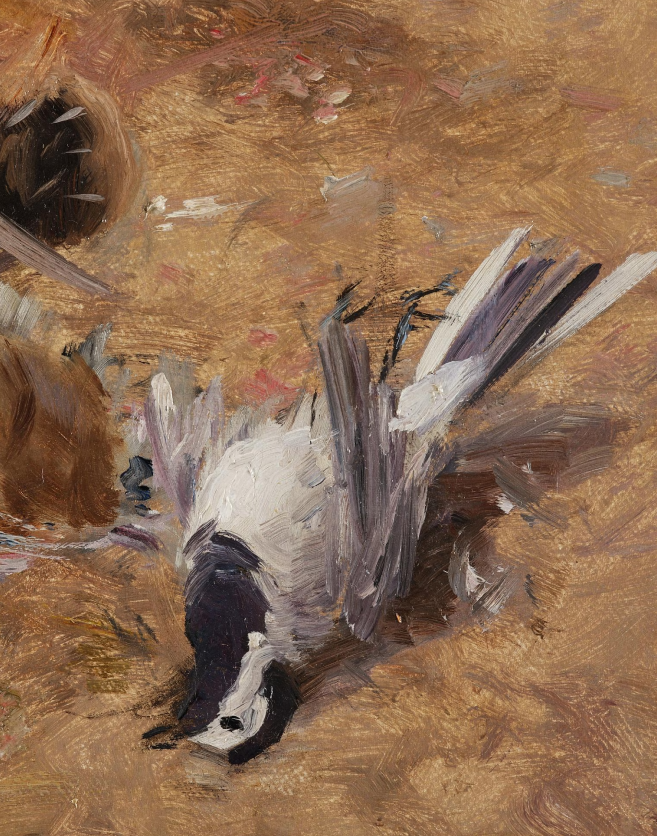
Liljefors never depicted animal life as idyllic or romanticised. For him, hunting and the struggle between animals were natural parts of the order of nature, neither cruel nor morally charged. Unlike many artists of the same period, he did not anthropomorphise his animal subjects. Instead, he allowed the viewer to experience the drama, stillness or tension of the scenes for themselves.
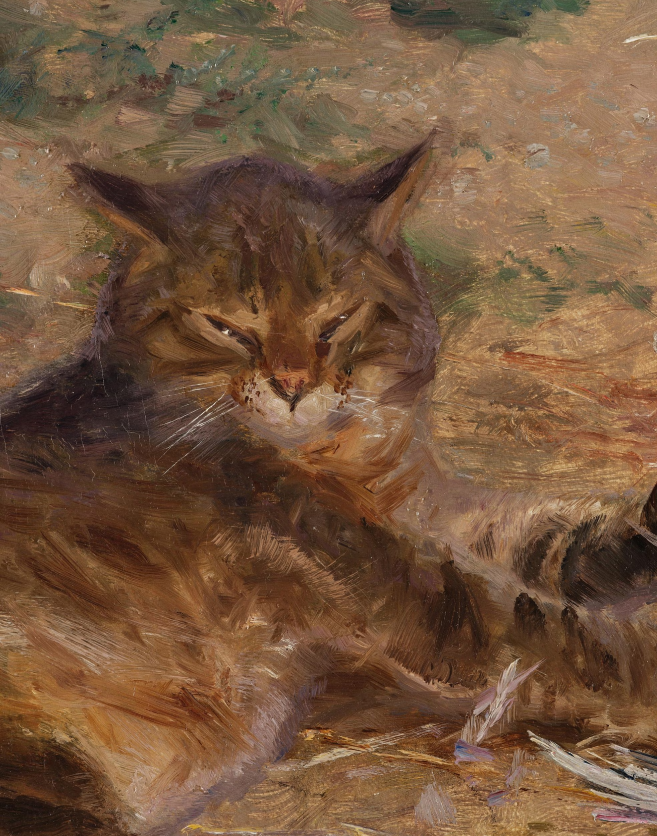
In the painting, the cat emerges both as predator and as a creature taking pleasure in life. It reclines in the summer warmth, yet remains alert and ready to react in an instant. The flowering dandelion, with its fragile seed heads that may at any moment be carried away by the wind, can be interpreted as a symbol of life’s transience. There is no sentimentality here, nothing arranged or artificial — only nature’s own rhythm and its relentless conditions. Through his presence within the motif and his profound understanding of the animal world, Bruno Liljefors succeeded in creating depictions of nature that remain unparalleled in Swedish art to this day.
Bruno Liljefors at Important Spring Sale
Enquiries and Condition Reports