Important Winter Sale presents John Bauer | December 9–11
Princess and Troll
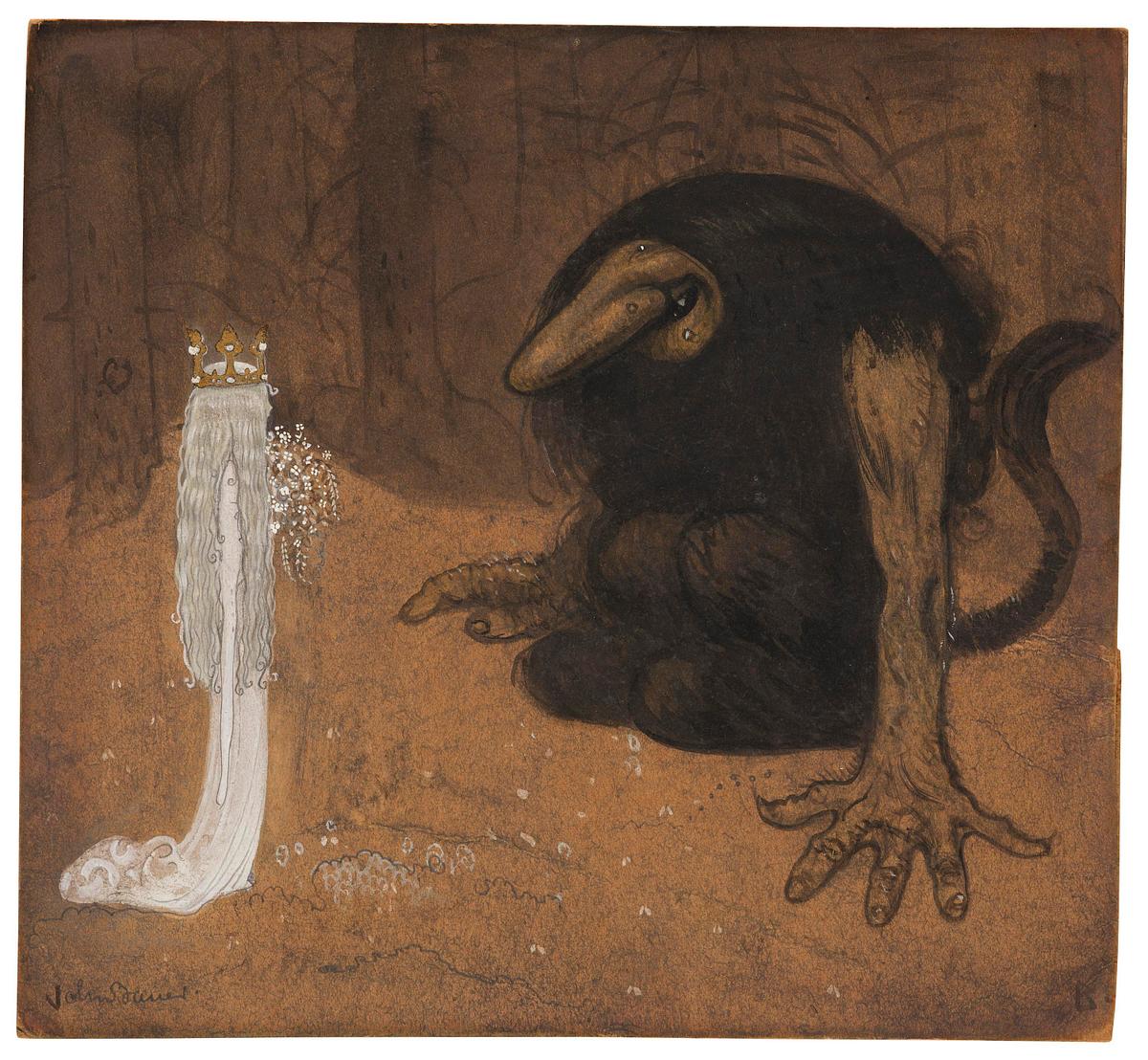
Deep within the Nordic fairytale forest, where spruce and pine trees rise around moss-covered rocks, the imaginative world of John Bauer takes shape.
Here we find both the fair, vulnerable princess and the mysterious creatures of the forest: trolls who can be curious, menacing or almost tender. In ”Prinsessa och troll” these opposing forces come together in an unusually evocative scene.
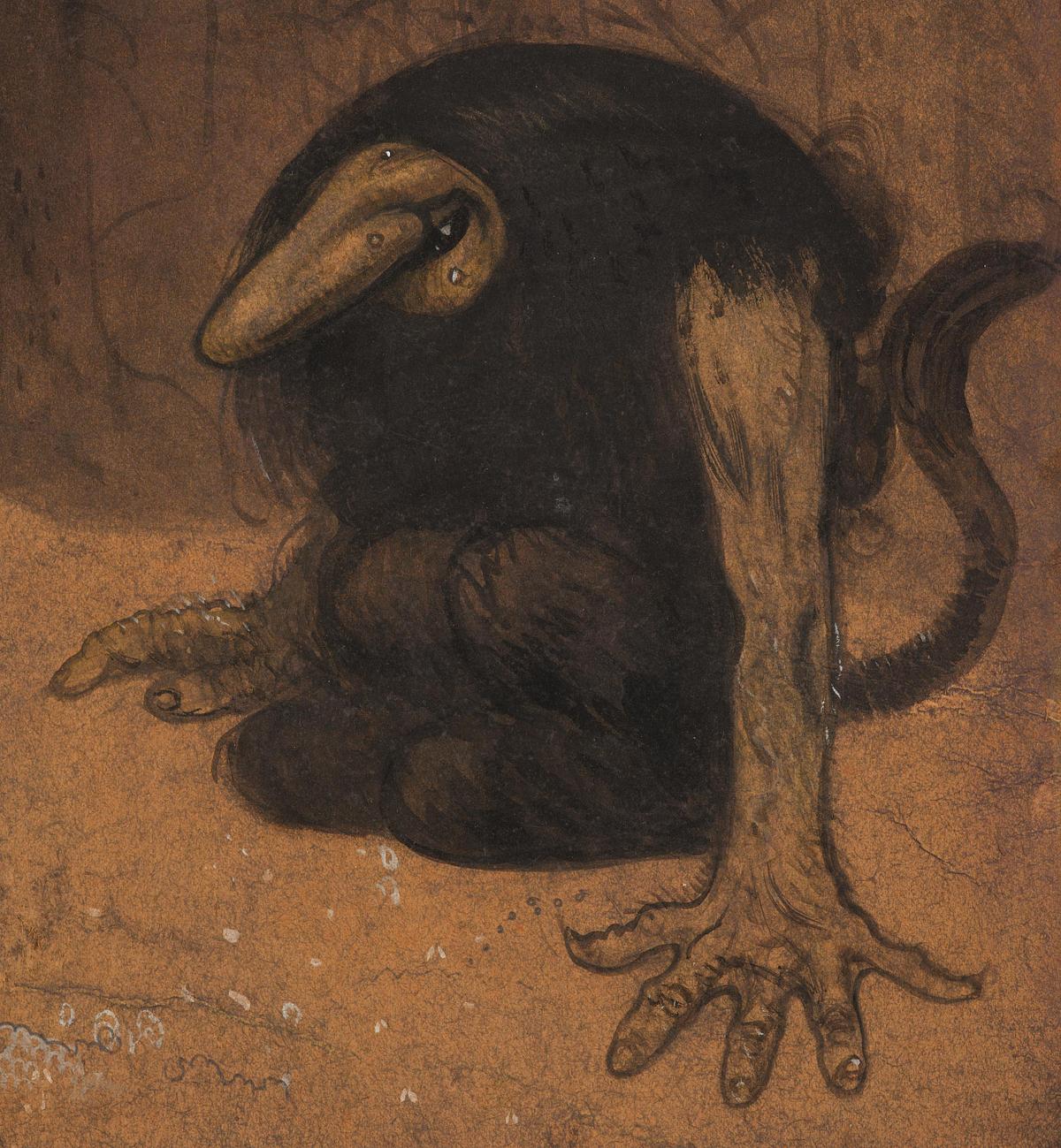
Bauer’s princesses, trolls and fairy-tale creatures are among the motifs that most clearly define his artistic vision. As early as around 1900, fantastical figures began to emerge in his studies of nature. His early trolls seem to have grown out of the rocks and roots of the forest. Over time, they became more angular and grotesque, often with exaggerated features. Yet they never appear as figures detached from their surroundings. They are an integral part of the landscape, as natural a presence as the gnarled tree trunks and dark moss.
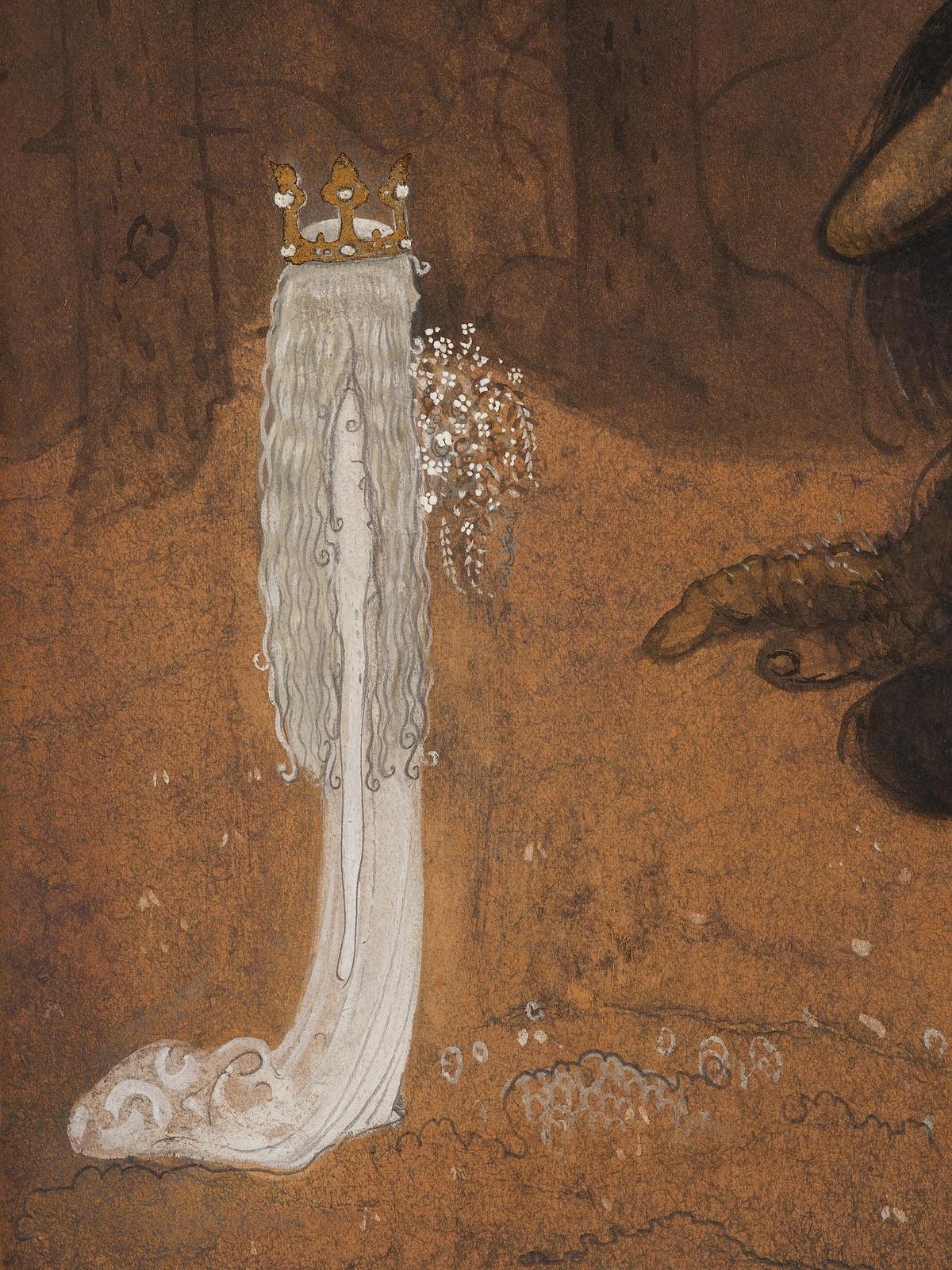
Against the imposing darkness of the forest, the princess emerges as a point of light. In the present painting, she stands before the dark troll, seemingly having paused to talk to him about something. In her hands, she holds a bouquet of flowers. The scene brings together several of Bauer’s recurring contrasts: light and darkness, innocence and experience, hope and apprehension. The troll approaches her not merely with menace, but also with a sense of wonder and curiosity towards this unfamiliar figure.
Weekdays 11 AM – 6 PM
Weekends 11 AM – 4 PM
Few Swedish artists have become as closely associated with the world of fairy tales as John Bauer. His images played a significant role in shaping the Swedish conception of forest creatures at a time when National Romanticism and an interest in ancient Nordic legends were major influences on cultural life. Through his illustrations, the princesses, knights, fairies and trolls of traditional fairy tales acquired a visual identity that remains instantly recognisable to this day.
When Bauer, as a young artist, was commissioned to contribute to the fairy-tale annual "Bland Tomtar och Troll", the first edition of which was published by Åhlén & Åkerlund in 1907, he embarked on the work that would more than anything else establish his reputation. In these illustrations, he combined a gift for storytelling with a profound sensitivity to the moods of nature. The forests of Småland were not merely a backdrop, but the very foundation of his artistic universe. Drawing inspiration from both Old Masters and contemporary artistic styles, he developed an expression that was at once deeply personal and firmly rooted in tradition.
Bauer’s meticulous approach is evident in his carefully constructed compositions. The creative process could begin with very small sketches, which were then gradually refined and developed. In the finished works, every detail is considered, yet the overall effect never loses its fairytale-like lightness. Lines, surfaces and figures work together to create a world that feels both tangible and enchanted.
As far as is known, "Prinsessa och Troll" has not previously been published, although it is partially visible in a photograph taken at an early exhibition, where it hangs alongside several of Bauer’s other much-loved works. It is possible that the image was conceived in connection with a particular fairy tale. The blonde princess wearing a large golden crown is one of Bauer’s recurring figures and bears a resemblance to the princess in the tale Pojken och trollen eller äventyret (The Boy and the Trolls, or the Adventure) by Walter Stenström, published in Bland Tomtar och Troll in 1915. She also recalls the princess in the lithograph from the Troll series entitled Prinsessan och småtrollen (The Princess and the Little Trolls), likewise dating from 1915.
The composition brings together many of the artist’s defining characteristics: the striking contrast between darkness and light, the idiosyncratic troll and the almost luminous princess. The result is a concentrated expression of the imagination and creative spirit that made Bauer’s fairy-tale illustrations so distinctive.
When John Bauer and his family perished in the sinking of a ferry on Lake Vättern in 1918, a unique artistic voice was lost. His work, however, continued to shape the Swedish fairy-tale tradition. With a profound respect for nature, storytelling and the innermost emotions of humanity, he created images that transport the viewer far beyond the everyday world.
"Prinsessa och Troll" is a compelling example: a work in which Bauer’s familiar characters come together, and in which his entire enchanted universe seems to unfold within a single moment.
John Bauer at Important Winter Sale
Enquiries and Condition Reports