Important Winter Sale presents Karel Appel | December 9–11
"Janine"
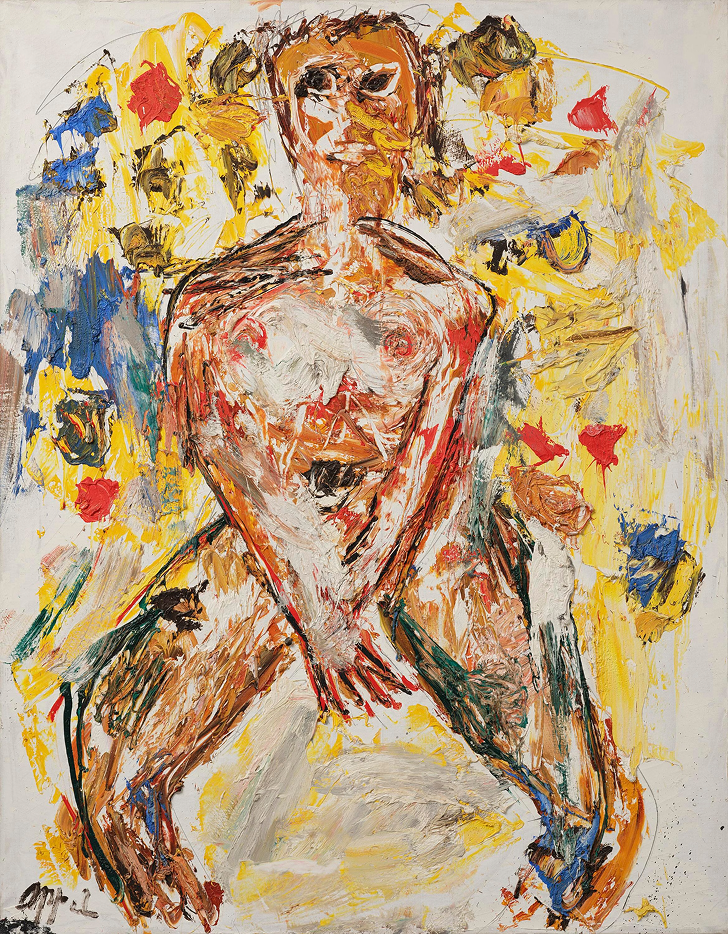
Karel Appel was one of the founders of the CoBrA movement and one of its leading exponents, alongside artists such as Asger Jorn and Constant. The name CoBrA was formed from the initial letters of the artists’ home cities: Copenhagen, Brussels and Amsterdam. Although the movement was active for only three years, from 1948 to 1951, it left a significant mark on the history of European art.
The CoBrA group was openly opposed to both academic tradition and the geometric abstraction that dominated the French art scene at the time. Drawing inspiration from sources including children’s art and outsider art, its artists championed spontaneity, instinct and a spirit of experimentation, challenging the boundaries between figurative and abstract art. Appel’s expressive brushwork, intense colours and intuitive depictions of the human body became defining features of the movement’s visual language.
Appel’s artistic practice, however, extended far beyond the radical visual language of CoBrA and the expressive gesturalism of Action Painting. In the early 1960s, he also returned to more traditional subjects, including portraiture, landscape and the female nude.
The painting “Janine” belongs to “The Nude Series”, an important group of nude studies executed in the early 1960s, in which the artist sometimes used the model’s name as the title. Appel depicts both seated and standing models, often shown frontally and cropped from the knees upwards. The figure appears to emerge from the paint and brushstrokes, from swirling movements and forceful passages of thickly applied pigment. The body is reduced to an expressive composition of head, breasts and parted legs, while the dark, enigmatic face heightens the figure’s unfamiliar and almost aloof presence. What unites these works is their striking immediacy and physical vitality, rather than any attempt at a conventionally erotic representation.
Weekdays 11 AM – 6 PM
Weekends 11 AM – 4 PM
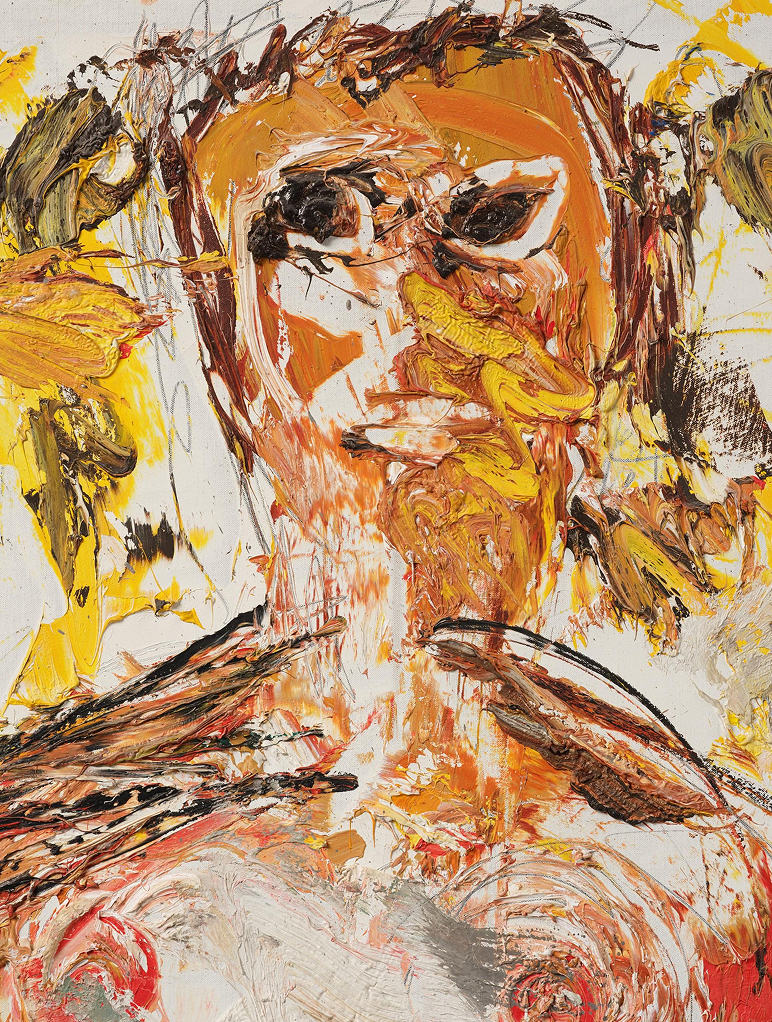
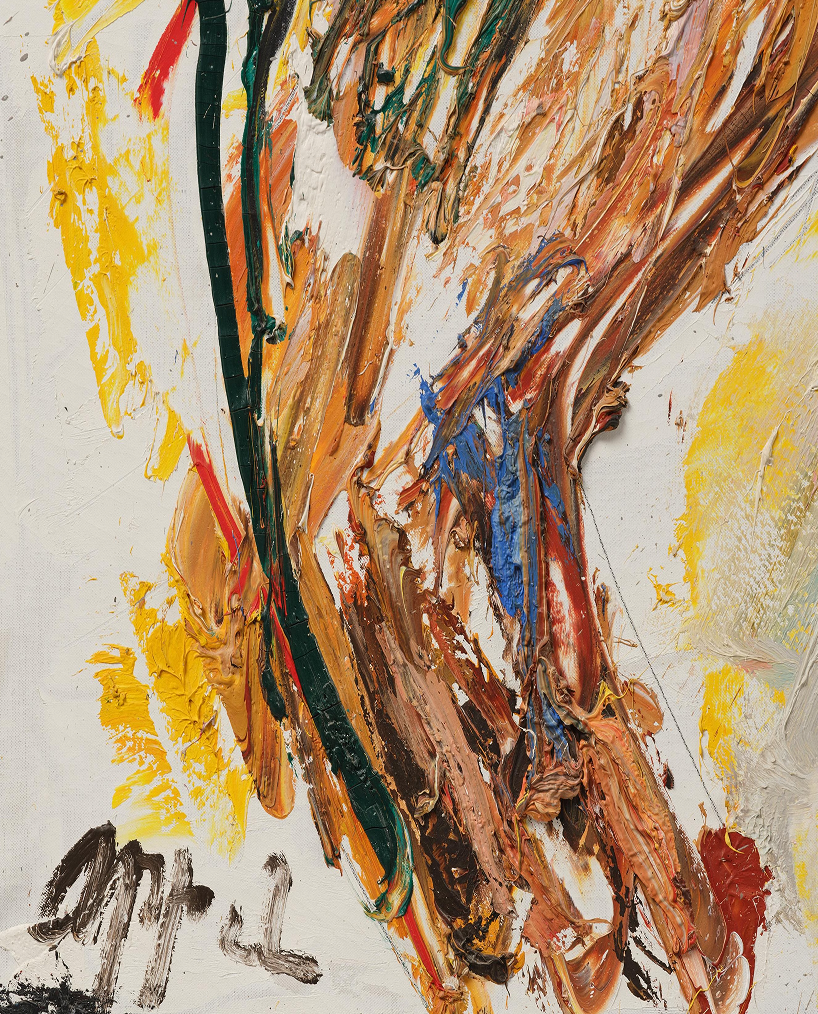
The painting “Janine” has been exhibited at the Martha Jackson Gallery in New York, one of the leading galleries of its time, whose influence was instrumental in establishing Appel’s international reputation.
Martha Jackson was a pioneer of the international art scene and played a central role in promoting and exhibiting Abstract Expressionism in the post-war period. She first exhibited Appel in 1954 and went on to represent him for most of the following fifteen years, until her death in 1969. Their close collaboration played a significant role in advancing Appel’s international recognition and introducing his work to the American art scene.
Appel’s female figures express their femininity with a self-assurance that at times borders on the aggressive. They are neither passive objects for the viewer’s gaze nor do they seek to seduce. Instead, they confront the viewer directly, with a challenging and almost defiant physical presence. The tension between the figurative and the abstract remained central to Karel Appel’s artistic practice throughout his career.
Karel Appel at Important Winter Sale
Enquiries and Condition Reports