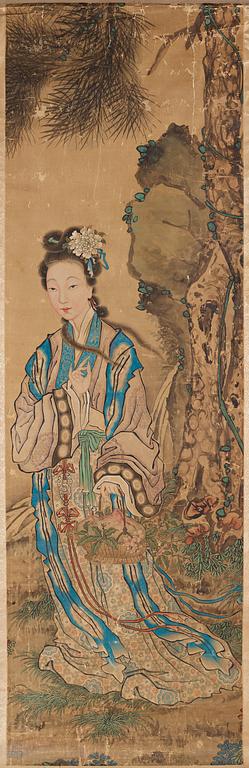
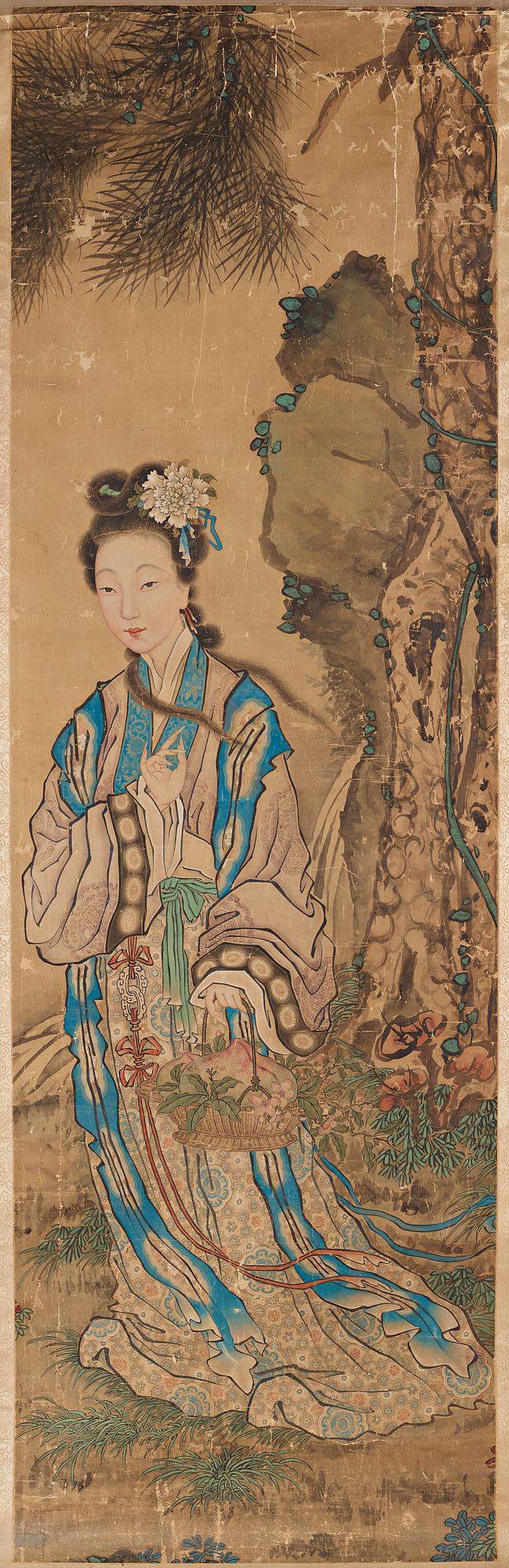
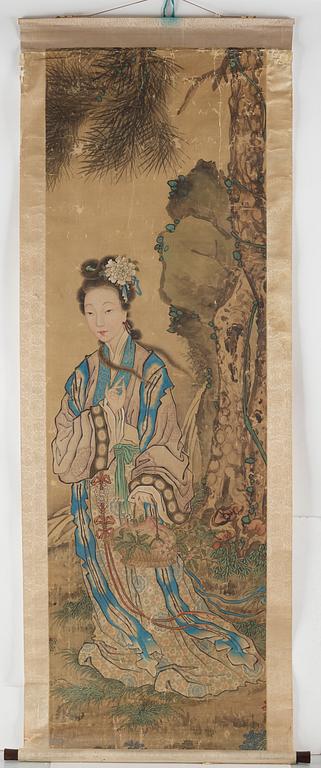
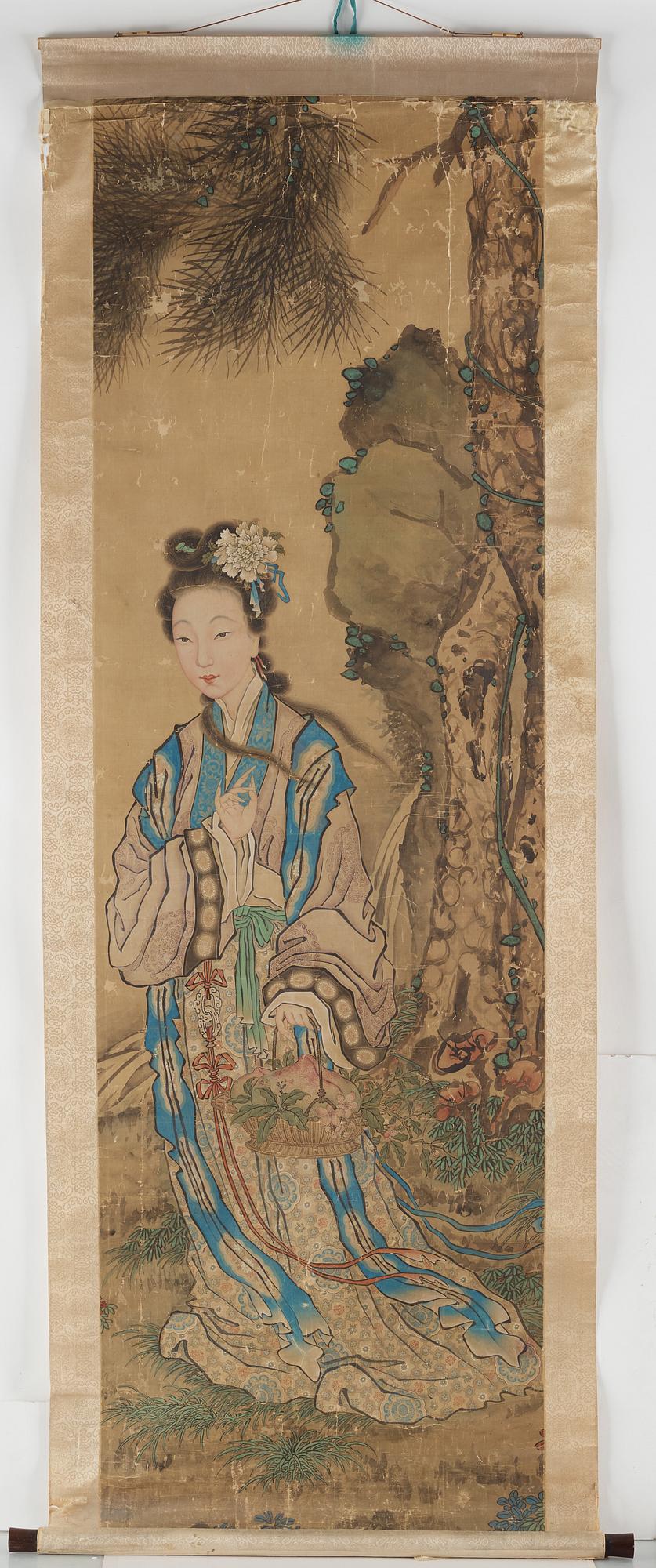
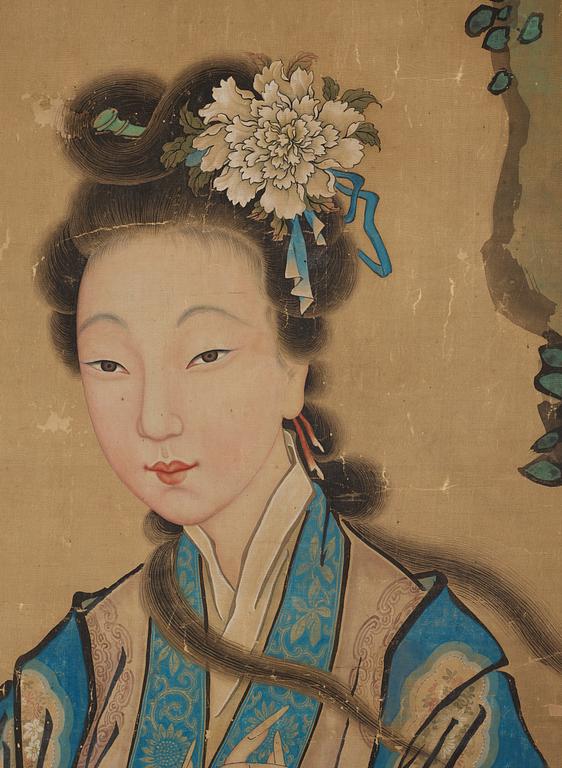
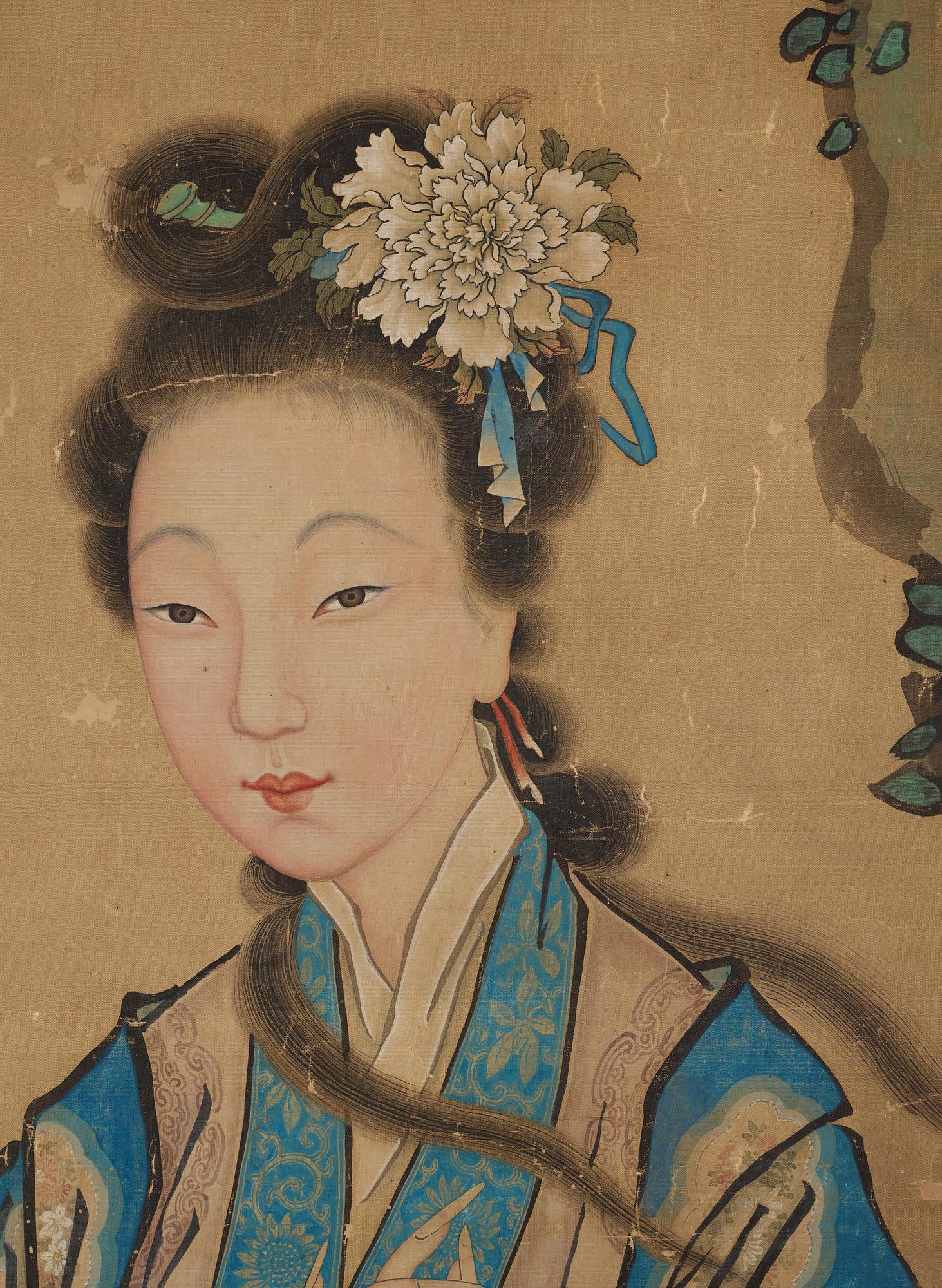
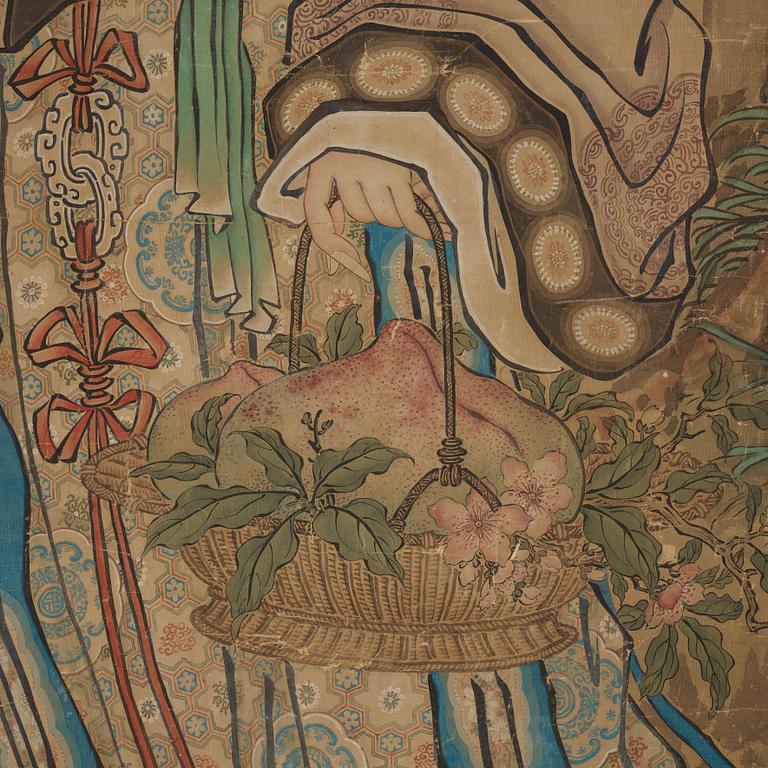
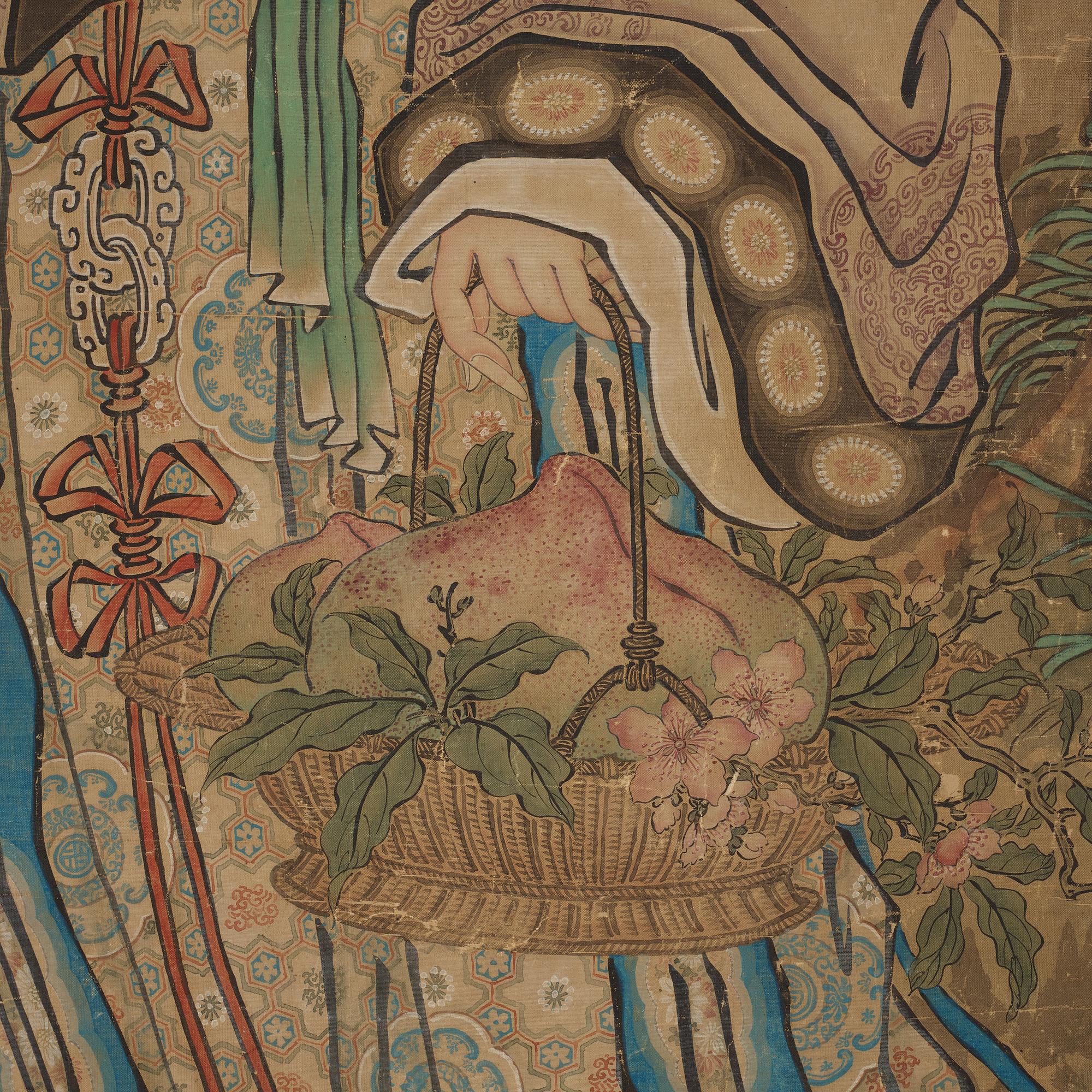
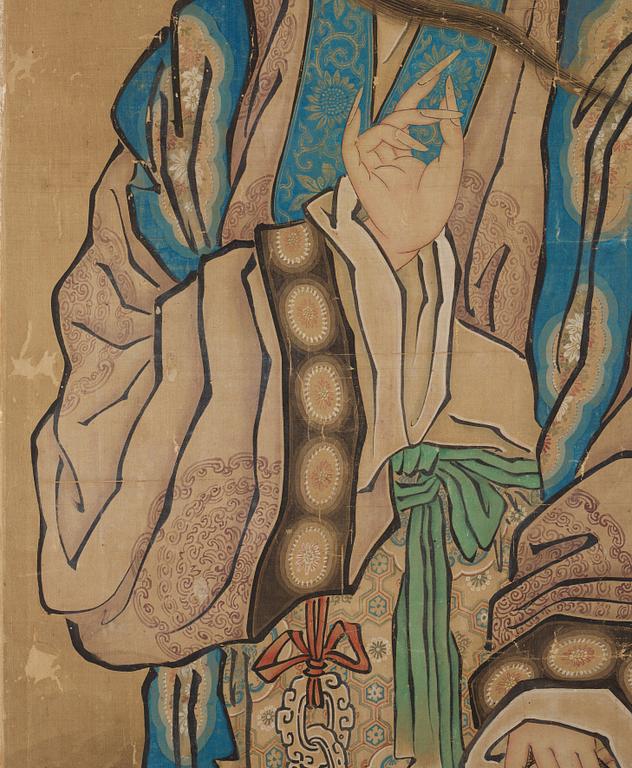
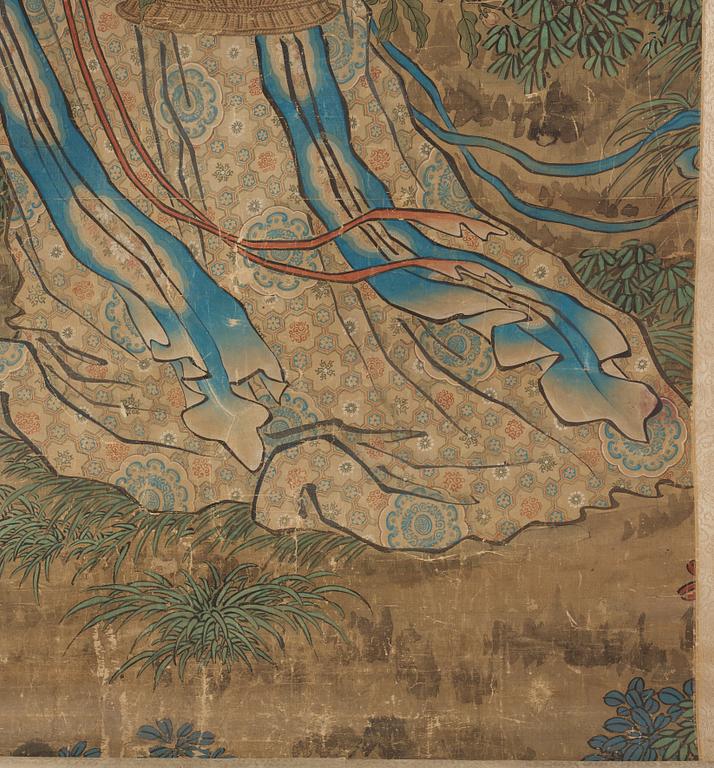
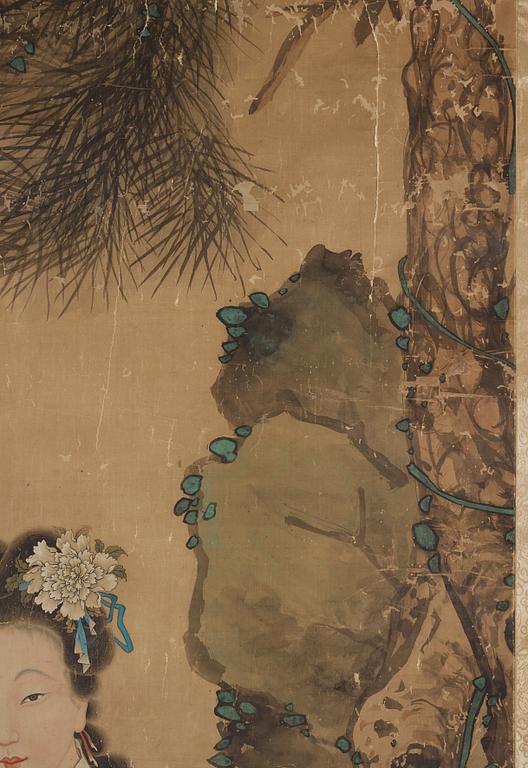
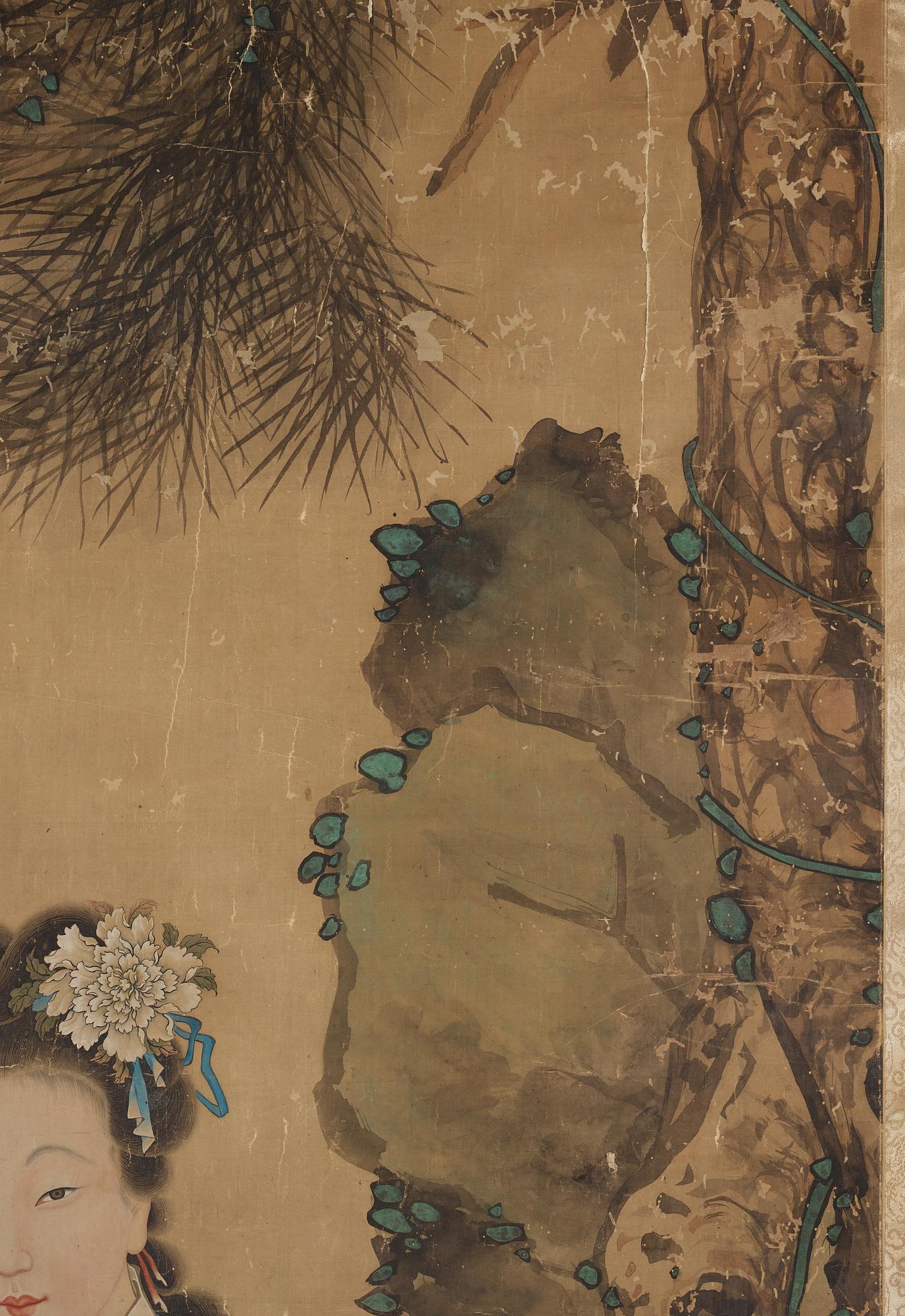
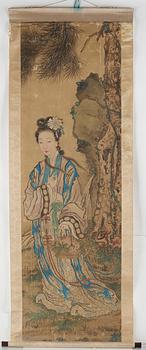
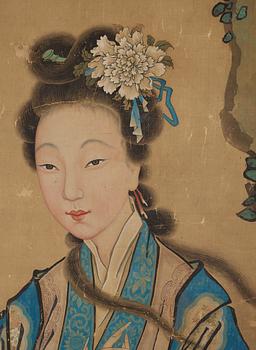
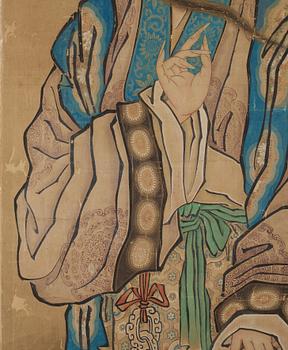
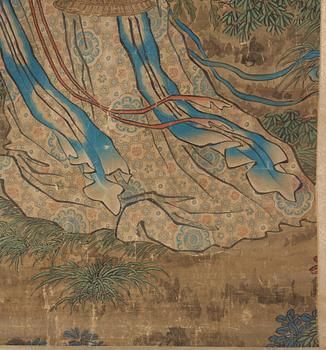
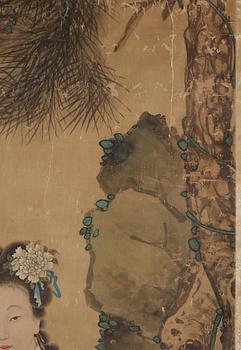
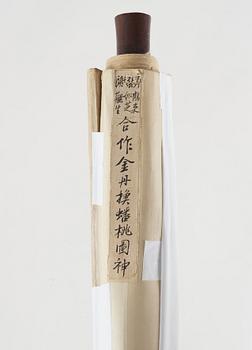
"仙丹换蟠桃图神". Gudinnan byter himmelska persikor mot odödligt elixir. Målningen utförd i ett konstnärssammarbete. Bildmått 212,5x67 cm.
Skador, lagningar.
Proveniens
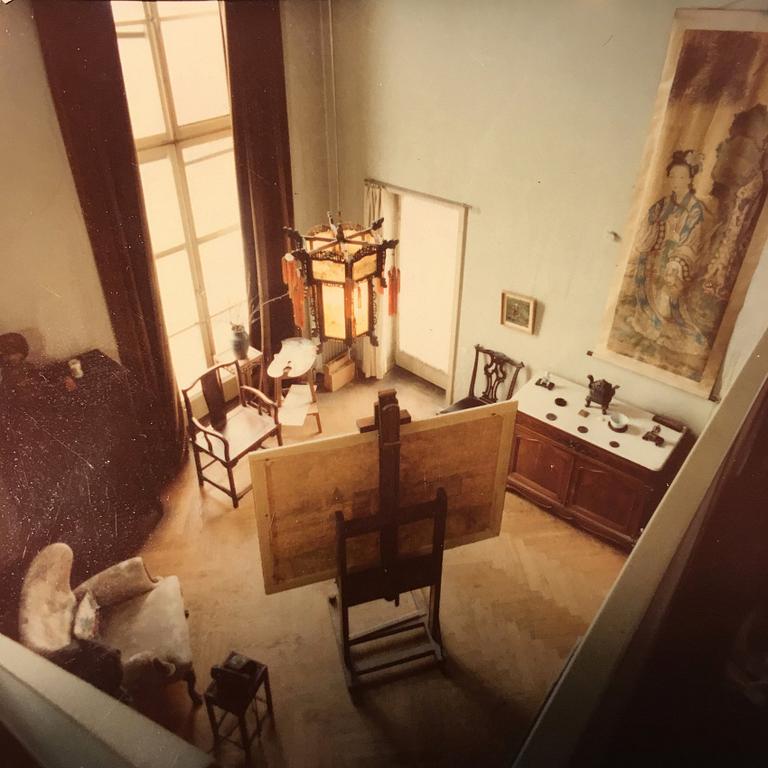
From the collection of the Swedish painter Einar Jolin (1890-1976), thence by descent.
The painting was aquired by Einar Jolin at Sigge Björcks Art Gallery, Stockholm in 1928, this is printed in an article by Eugen Wrethagen at the Academy in Stockholm.
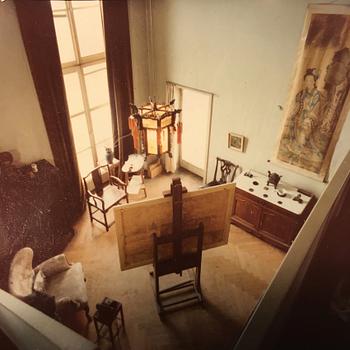
Einar Jolin had only japanese, chinese, indian and persian works of art in his stuido. He said he never tired of them, that they were products of ancient civilisations, that inspired him greatly and brought great calm and harmony.
Utställningar
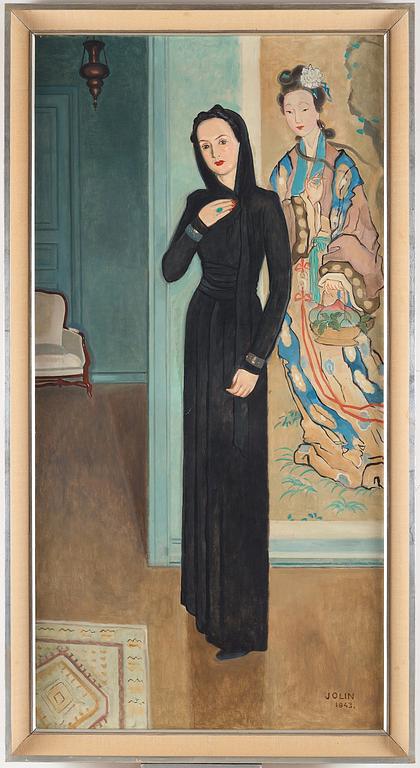
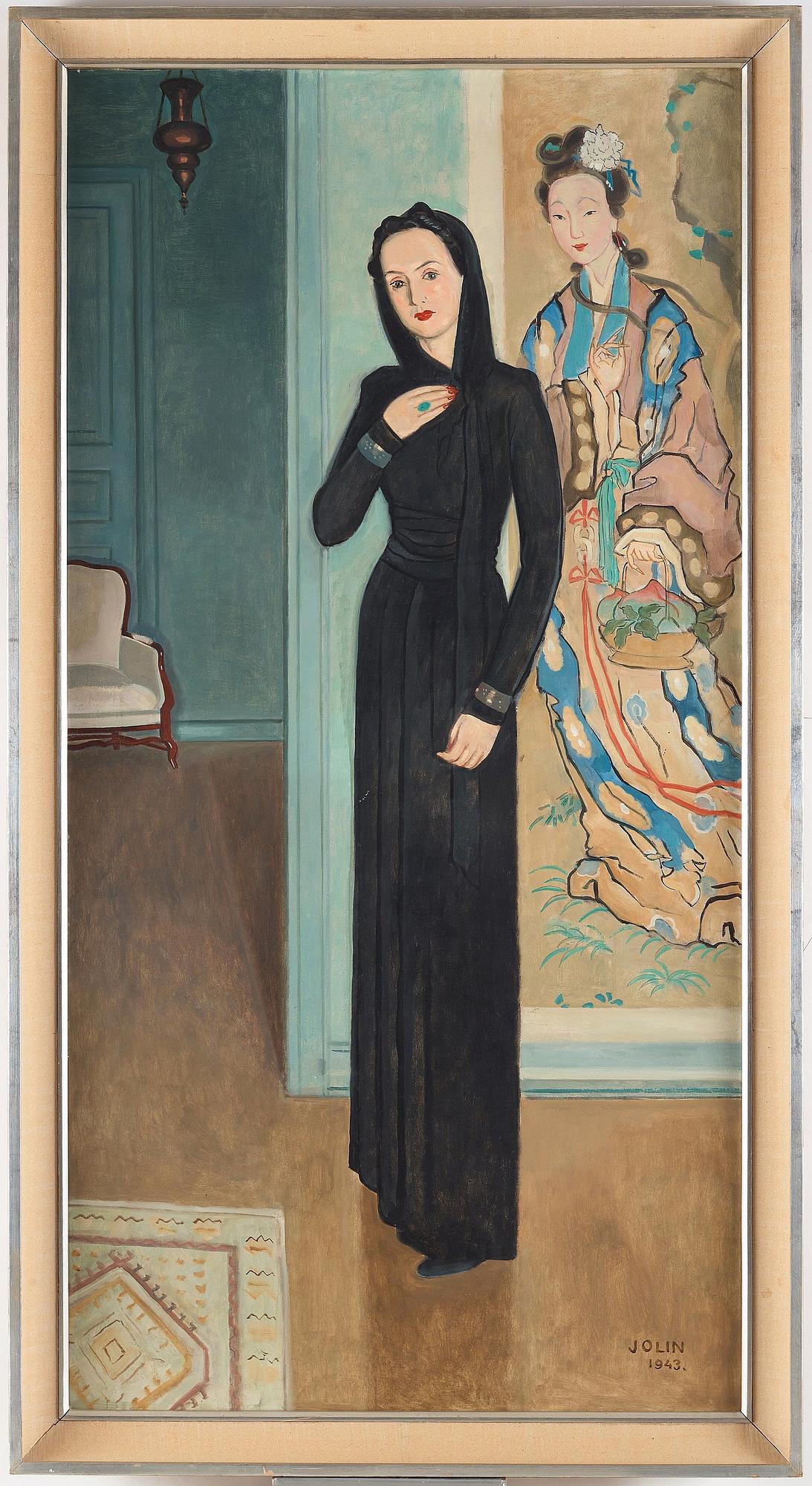
See this painting depicted in Einar Jolins painting Lady in Black, portrait of Clorinda Kisak, the artist's second wife, painted in 1943, sold at Bukowskis sale 601, lot 314.
Litteratur
Palmgren, Nils; Einar Jolin. See the painting Lady in Black, in the background you see this scroll.
Angelini-Jolin, Tatiana; Tatiana om Einar, mina 25 år med Einar Jolin, Askild&Kärnekull, 1979.
Övrig information
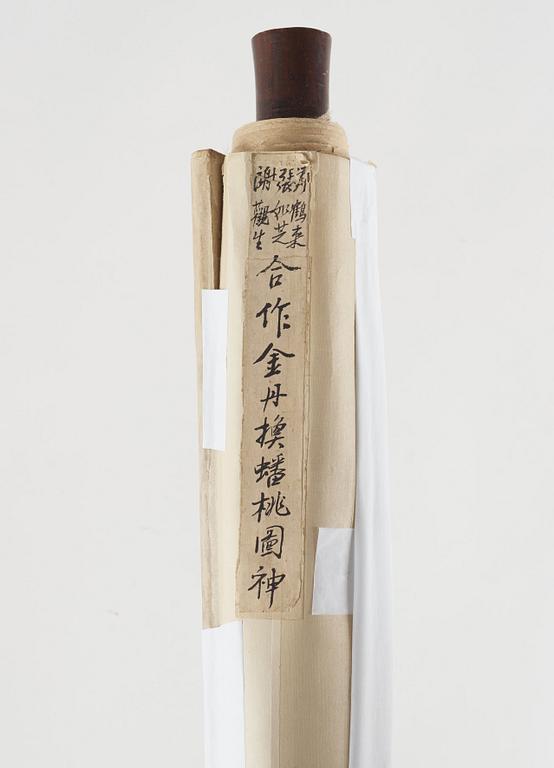
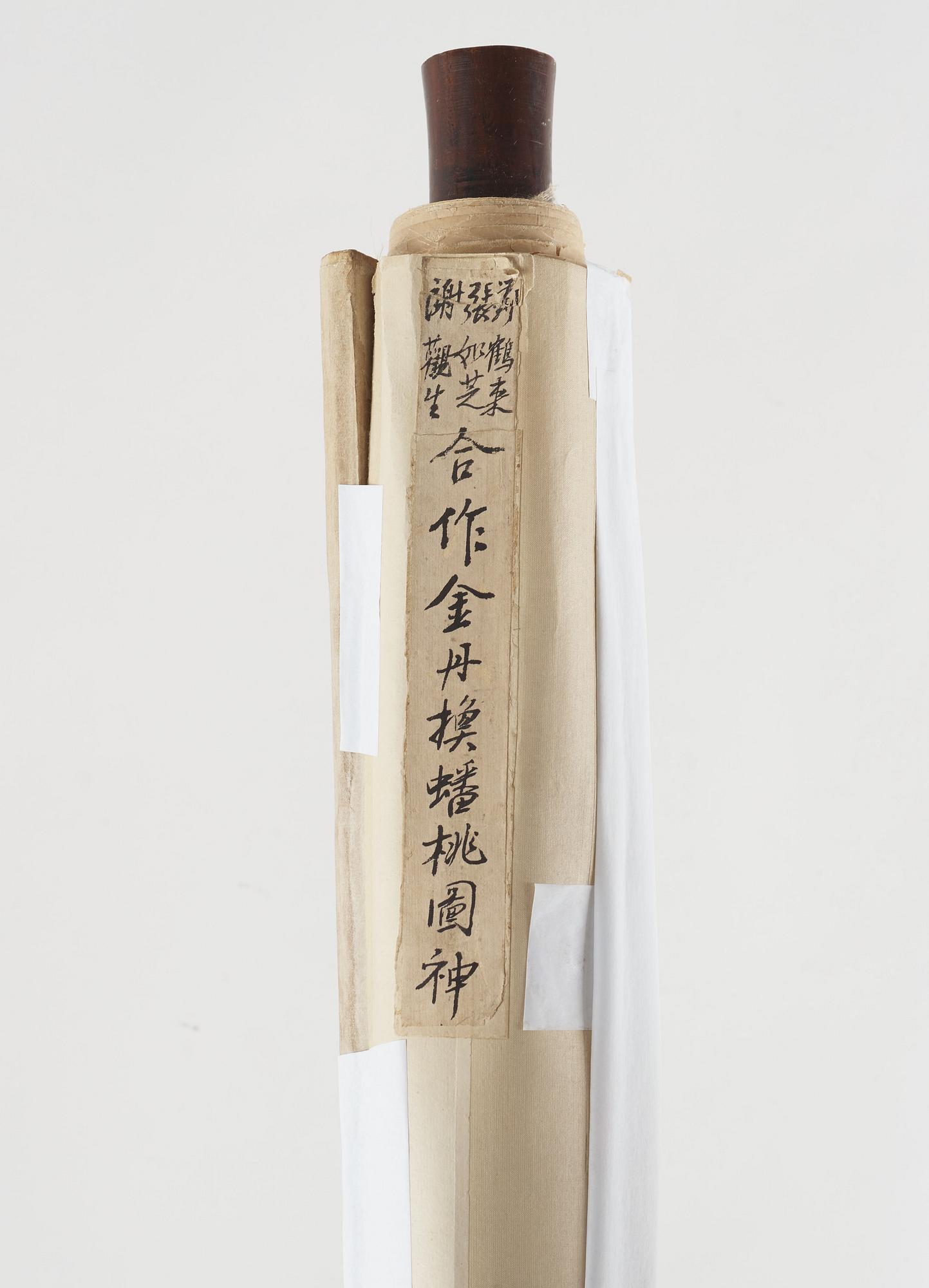
The work is done by collaboration of three artists, two of them could be identified to be active during the turn of century, circa 1800.
These are:
Xie guansheng (after 1760-after 1830)
Zhang Ruzhi (?-1824)
The third artist, presumably 'helai' (hard to identify because the first character is damaged from the tear).





Andra har även tittat på