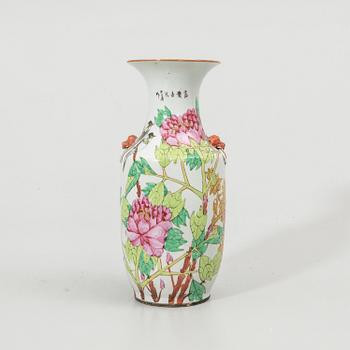
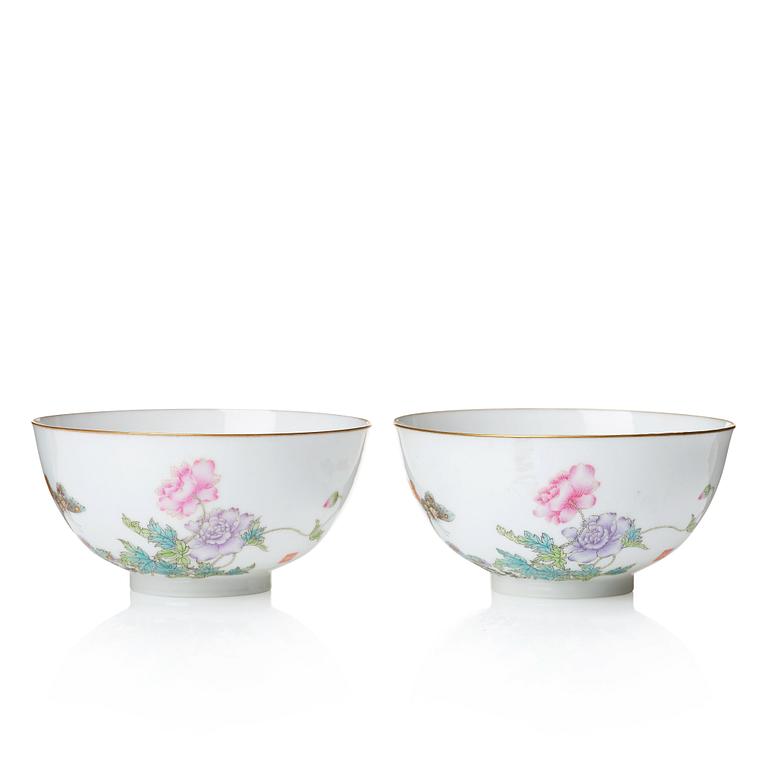
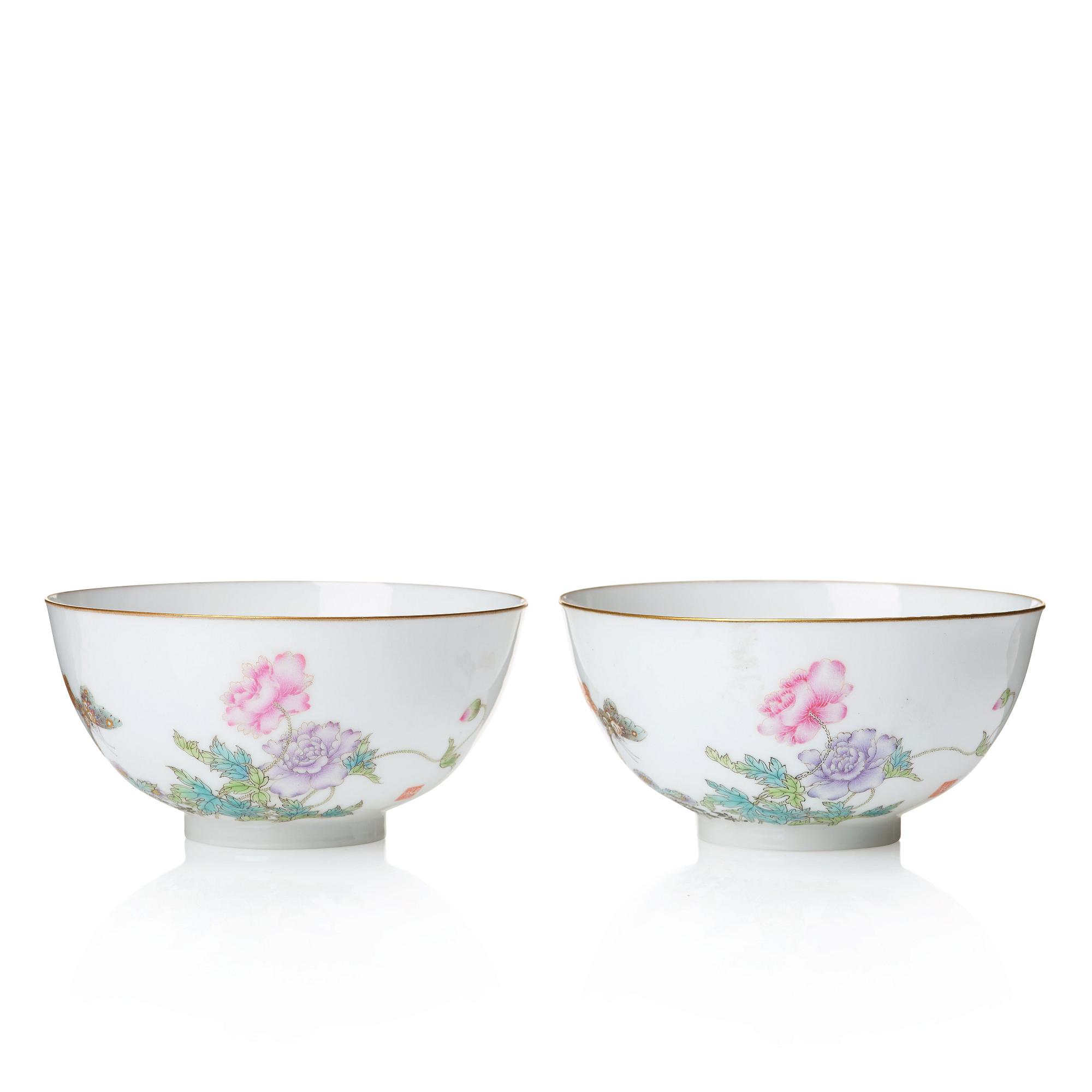
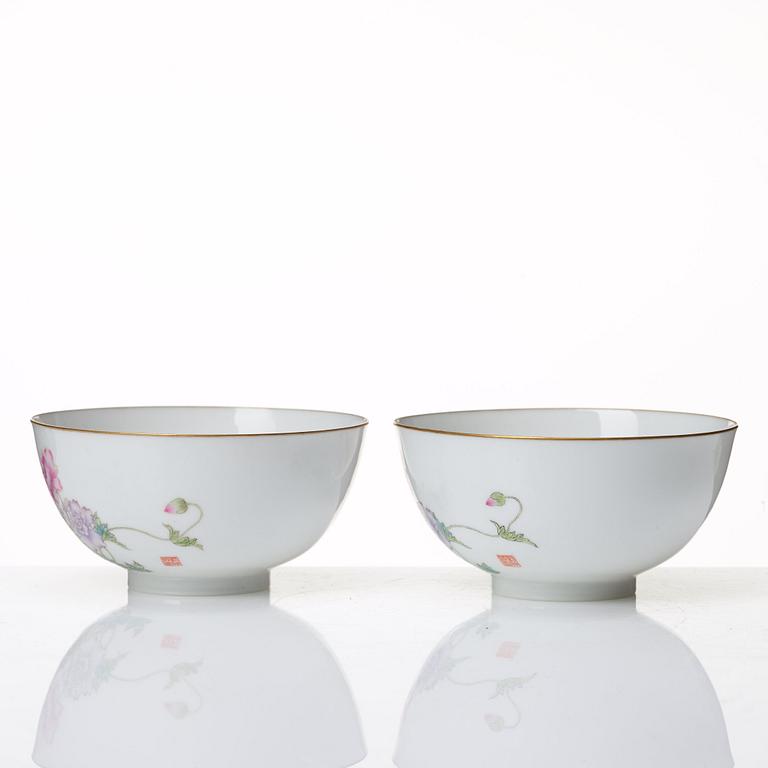
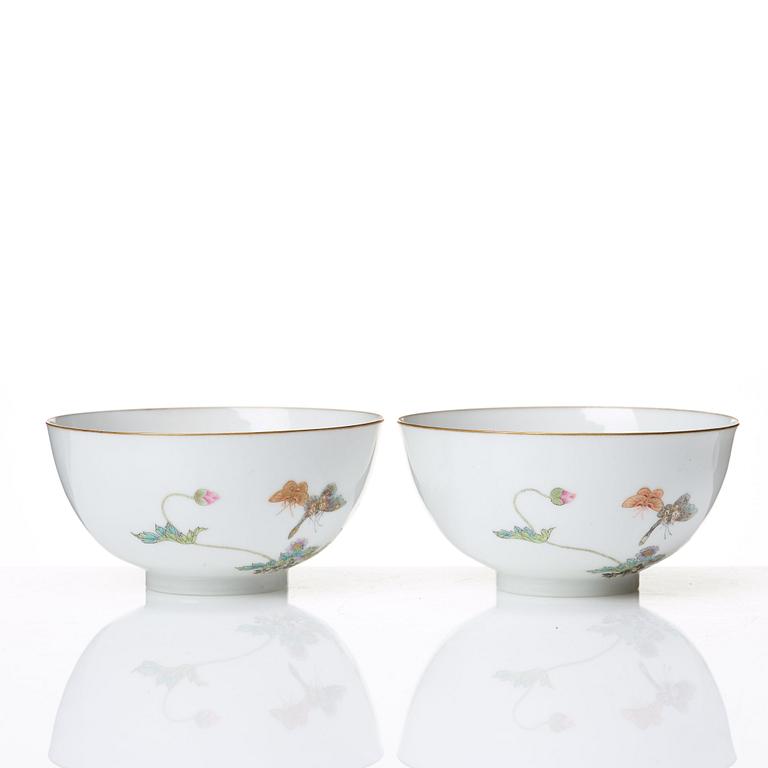
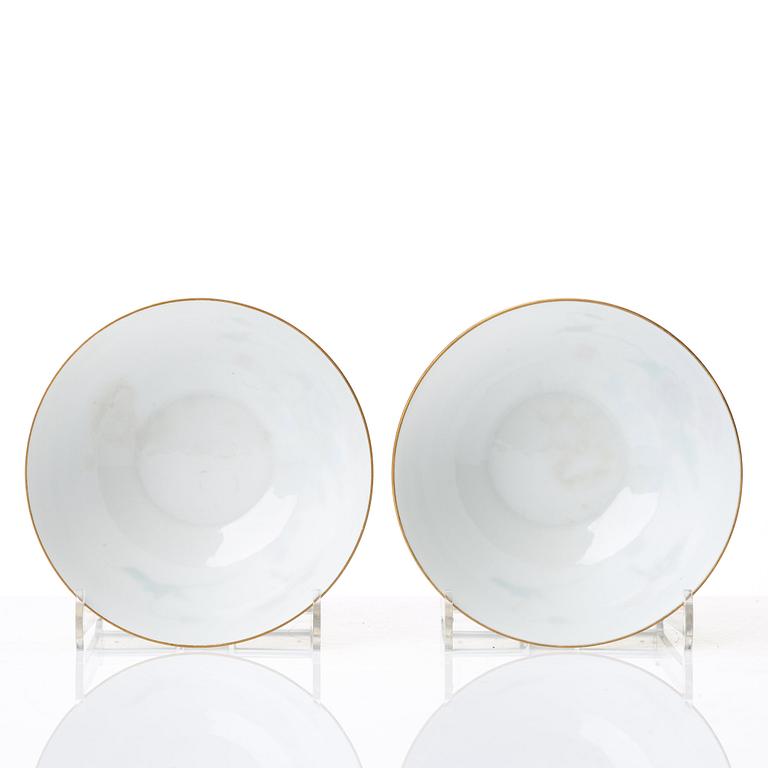
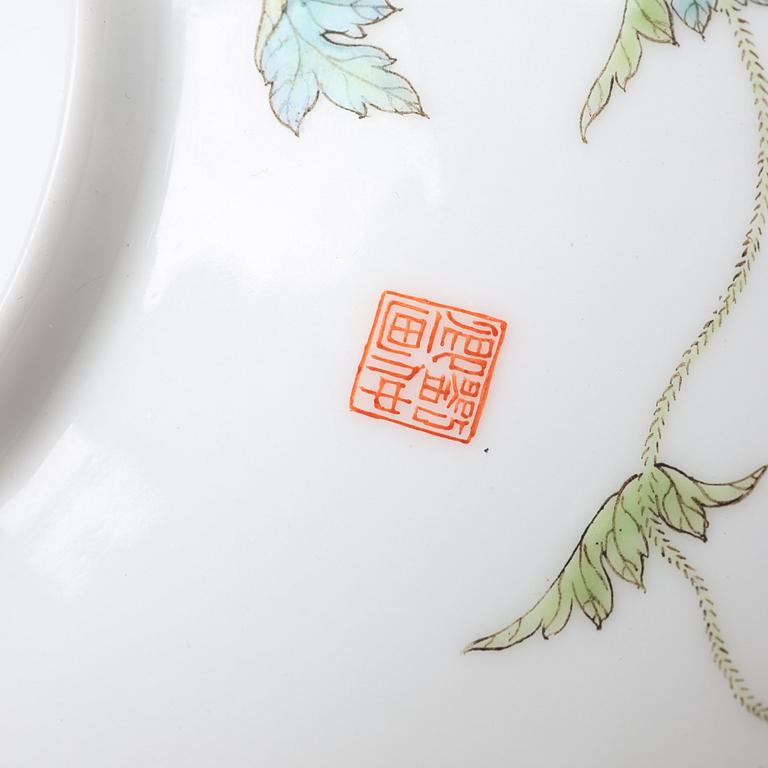
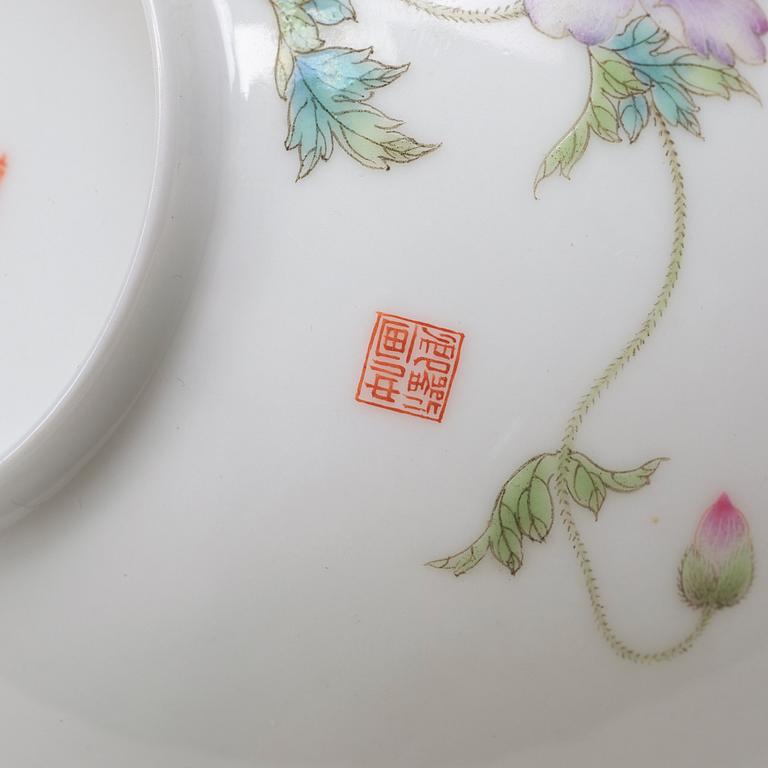
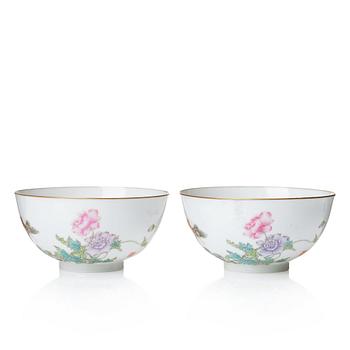
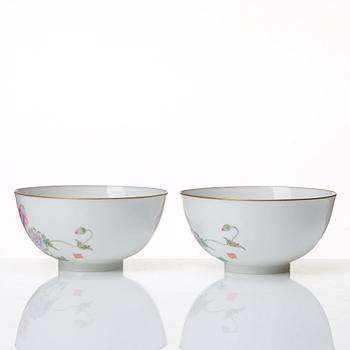
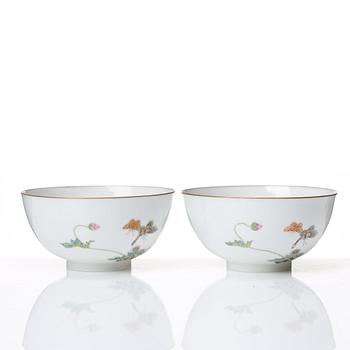
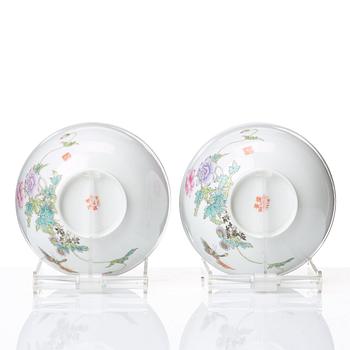
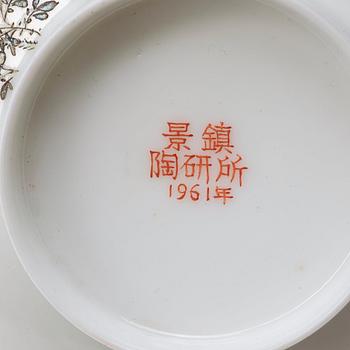
Kopparna är fint gjorda med rundade sidor på rund fotring, utsidan är målad och emaljerad med blommande pioner som växter i en grönskande prakt. Frånsidan med sigillmärke i rött. Märkt i botten med tecknen för Jingzhen Taoyansuo samt med dateringen 1961. Dekor i famille rosefärger, med motiv av blommor. Rött sigill intill blommorna. Diameter 12 cm.
Smärre slitage.
Proveniens
Jingzhen Taoyansuo, 1961.
The finest pottery has been made in Jingdezhen since the 6th Century, the imperial kilns made items for the imperial household as well as for political gifts.
Following the Xinhai Revolution of 1911 manufacture of porcelain for the imperial household ceased. In 1916 Yuan Shikai, acting as the Hongxian Emperor, appointed Guo Baochang to re-establish the imperial depot at Jingdezhen. Guo's workforce were initially set to produce copies of Ru ware, but this approach was abandoned in favour of copying enamelled ware of the 18th century. Production of enamelled and thin-walled "eggshell" ware spiked during 1920s and 1930s. In this piece we see the eggshell technique and an artist that has been inspired by the grace of the 18th Century porcelain painting and choice of motif.
Utställningar
The style can be compared to the items like the falangcai poppy bowls for example, see examples in the Palace Museum of Taipei.
Falangcai (‘foreign colours’) – porcelains painted in the imperial workshops of the Forbidden City in Beijing with enamels partly introduced from the West – are among the rarest and most dazzling ceramic wares of the Qing dynasty (1644-1911). The fine white porcelain, potted and fired in Jingdezhen in Jiangxi province, south of the Yangzi River and then sent up to Beijing, was painted within the confines of the imperial palace, next the Emperors’ living quarters, before being fired once more to affix the enamels. Never before or after can porcelain painters have been exposed to similar pressure as in these tightly circumscribed workshops, where they were to meet the extreme imperial expectations while being subject to immediate scrutiny from the monarch’s eyes. The whole setup was small in scale, not least for the simple reasons of space and inconvenience to ordinary palace life, and here individual artists would create individual works of art, incomparable to the mass production even of fine porcelains for the court undertaken at Jingdezhen. Every piece of porcelain produced in these workshops is unique, quality is unsurpassed and numbers, naturally, are very limited.
Övrig information
Compare V&A FE.25:1-1990
För konditionsrapport kontakta specialist













Andra har även tittat på