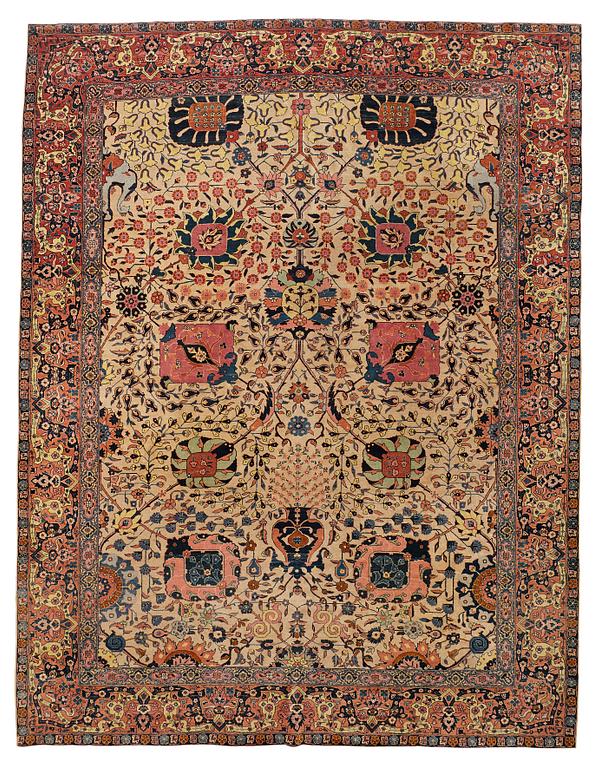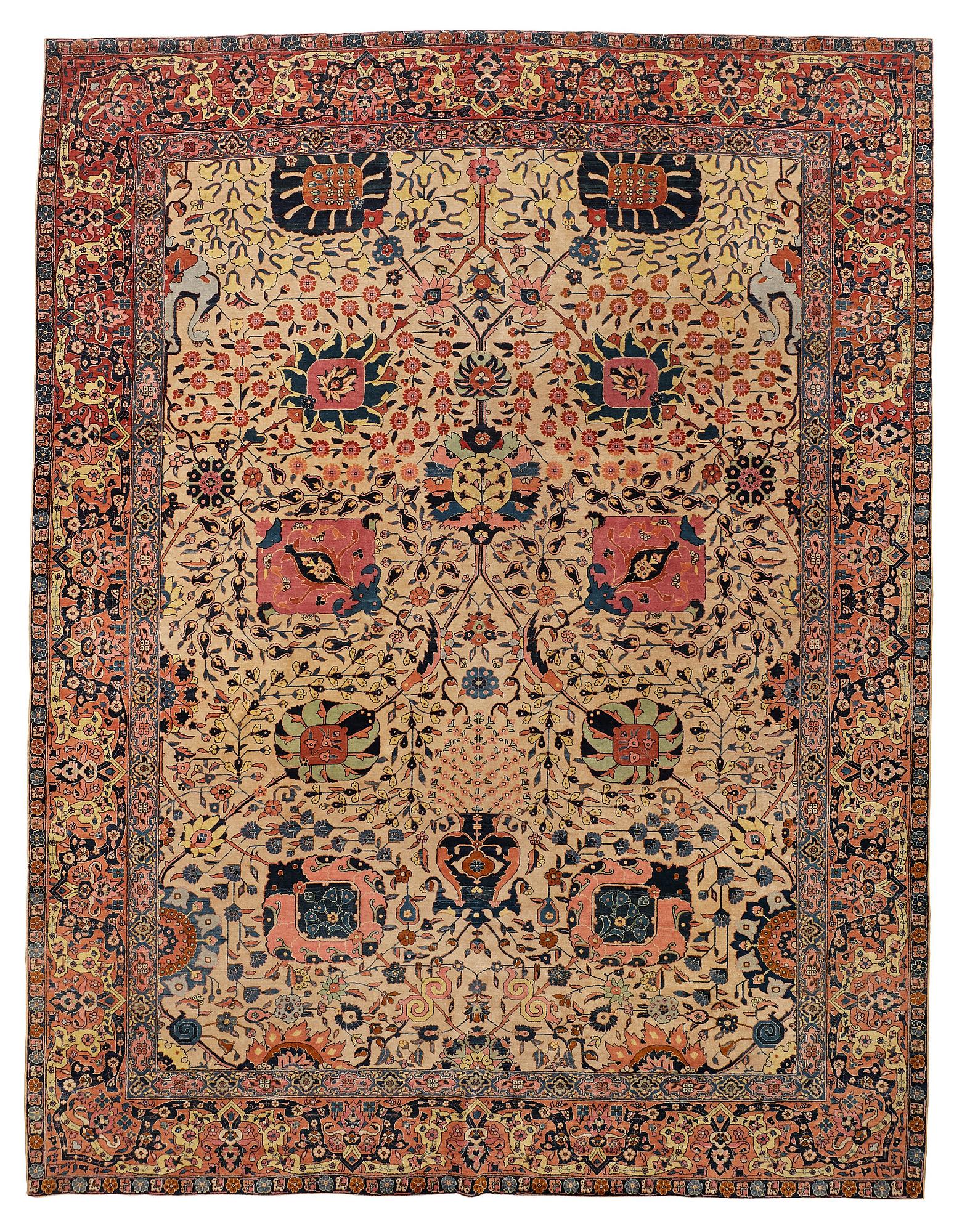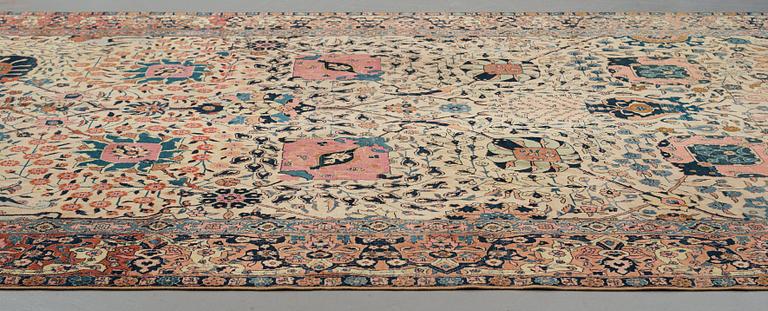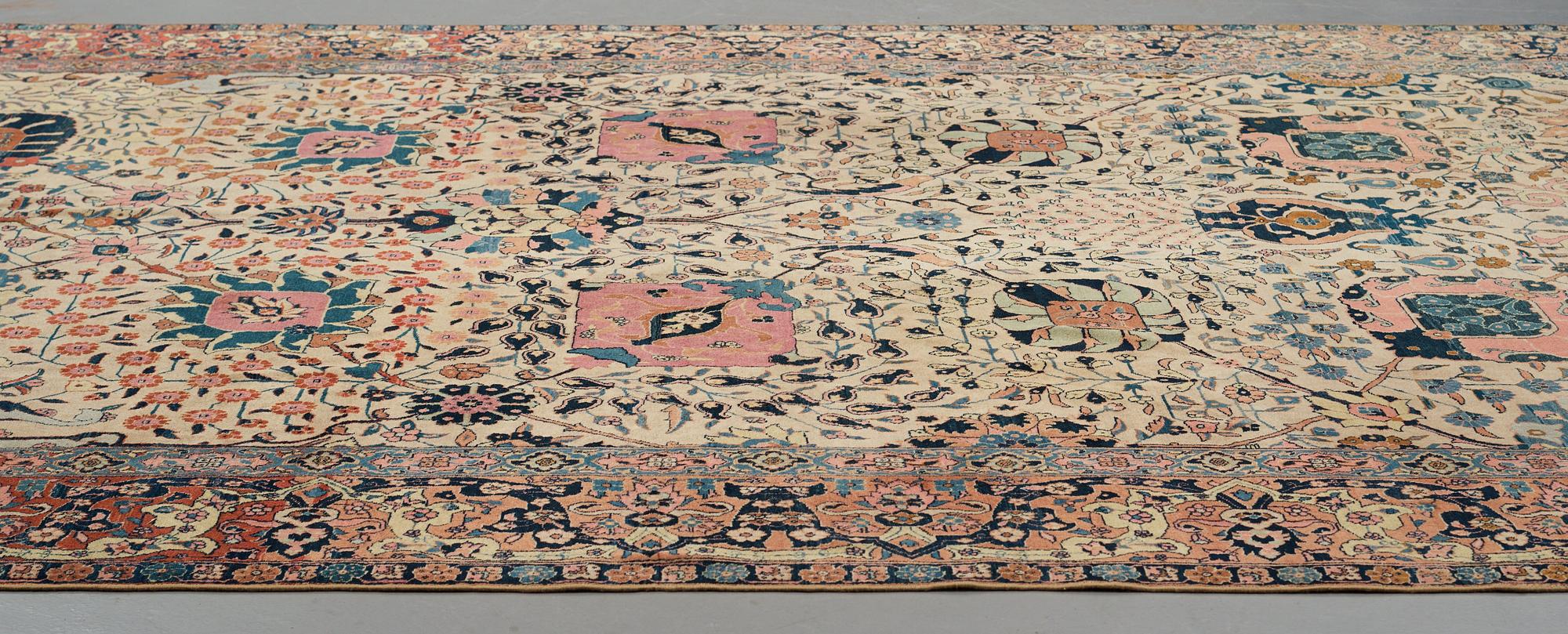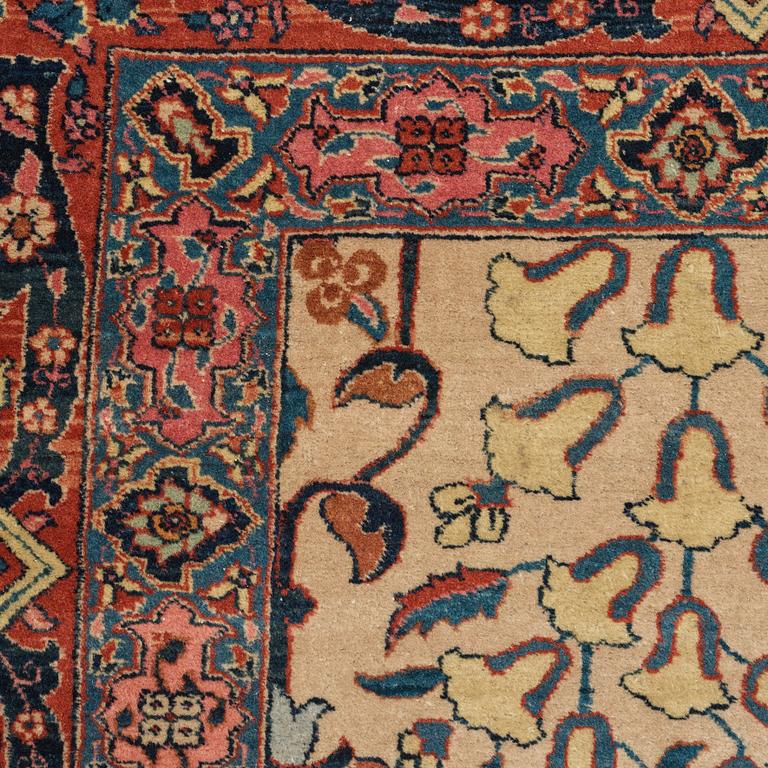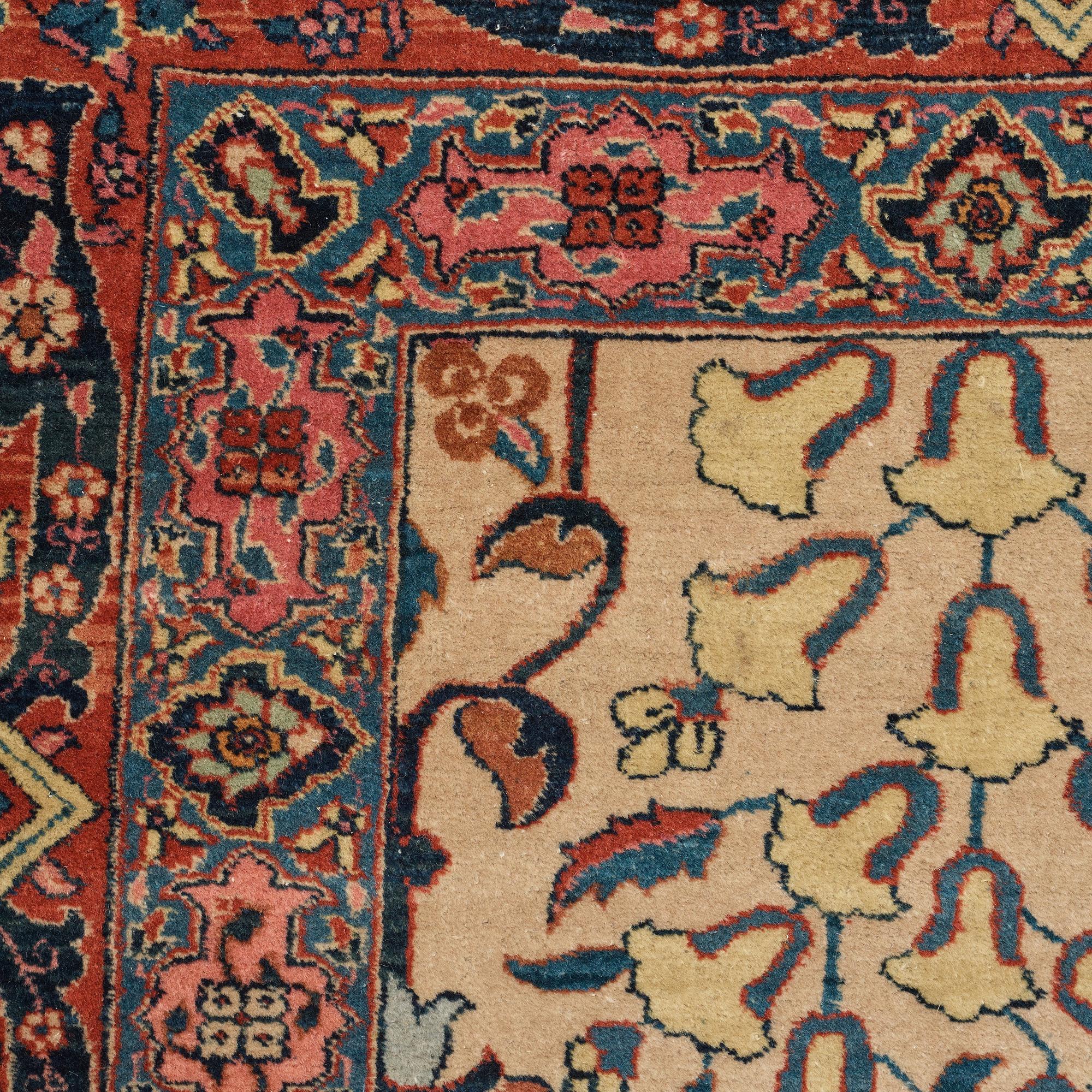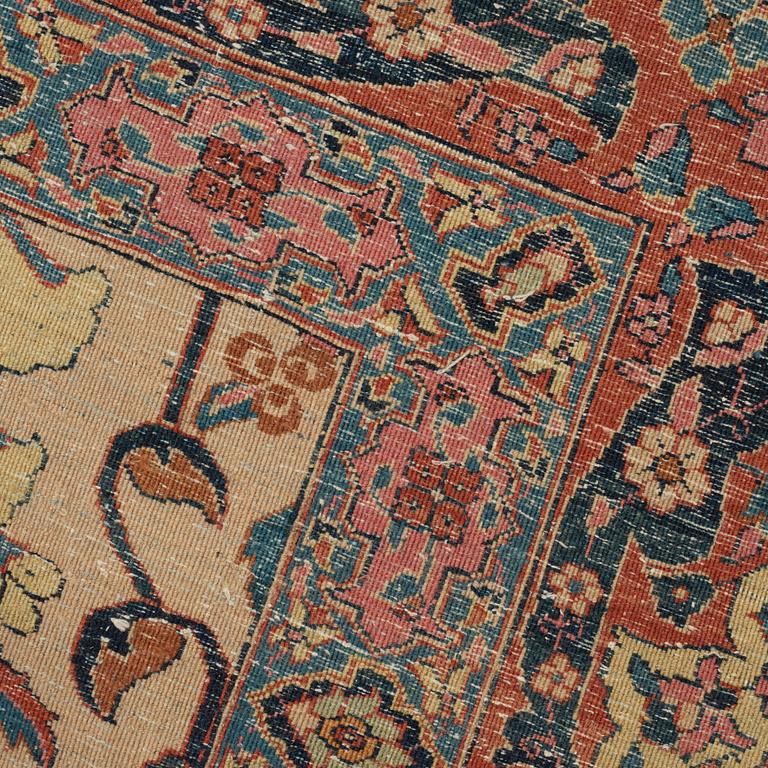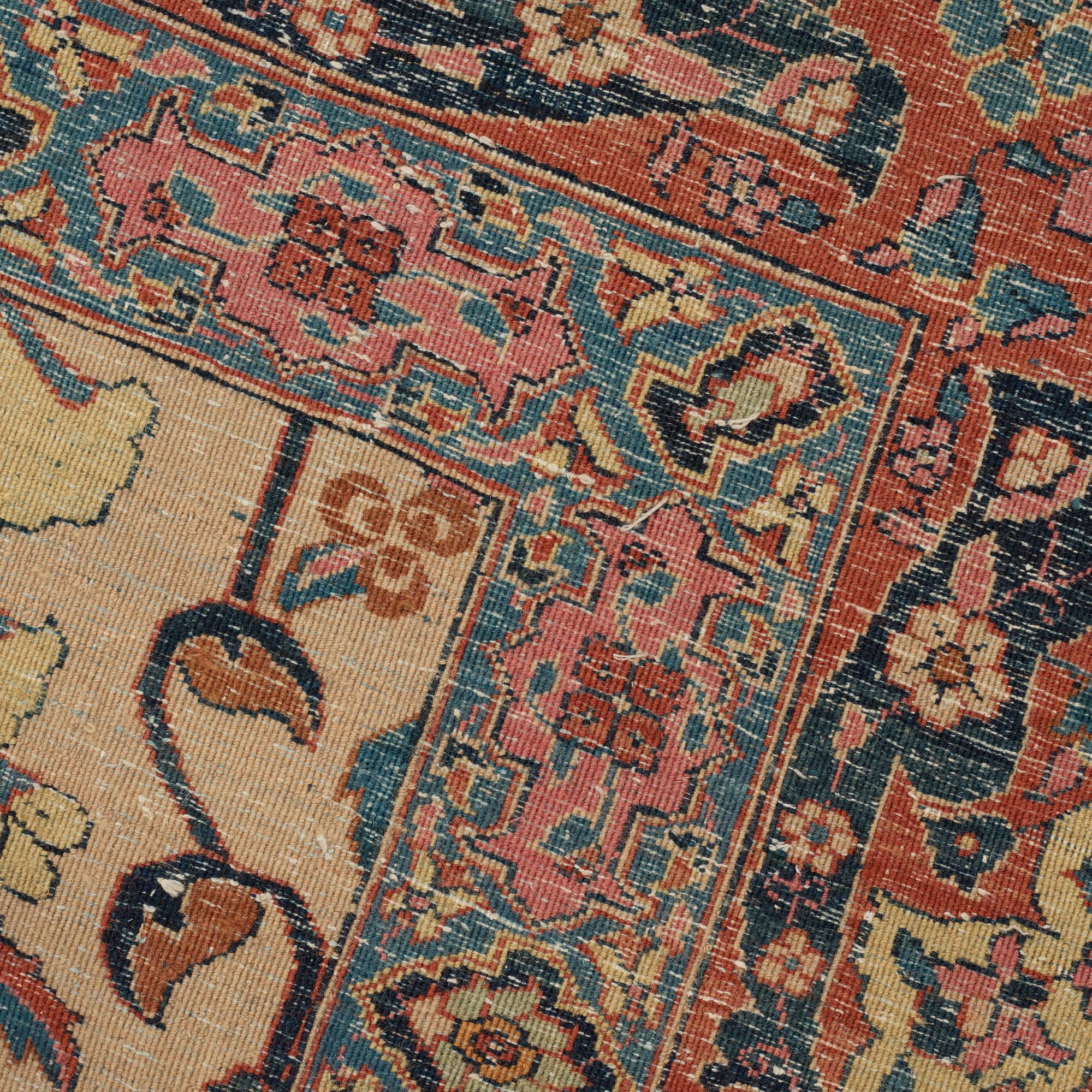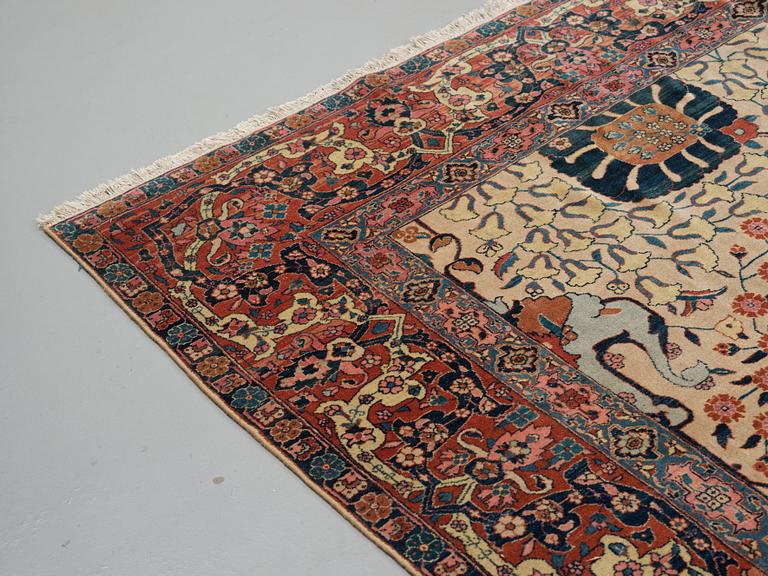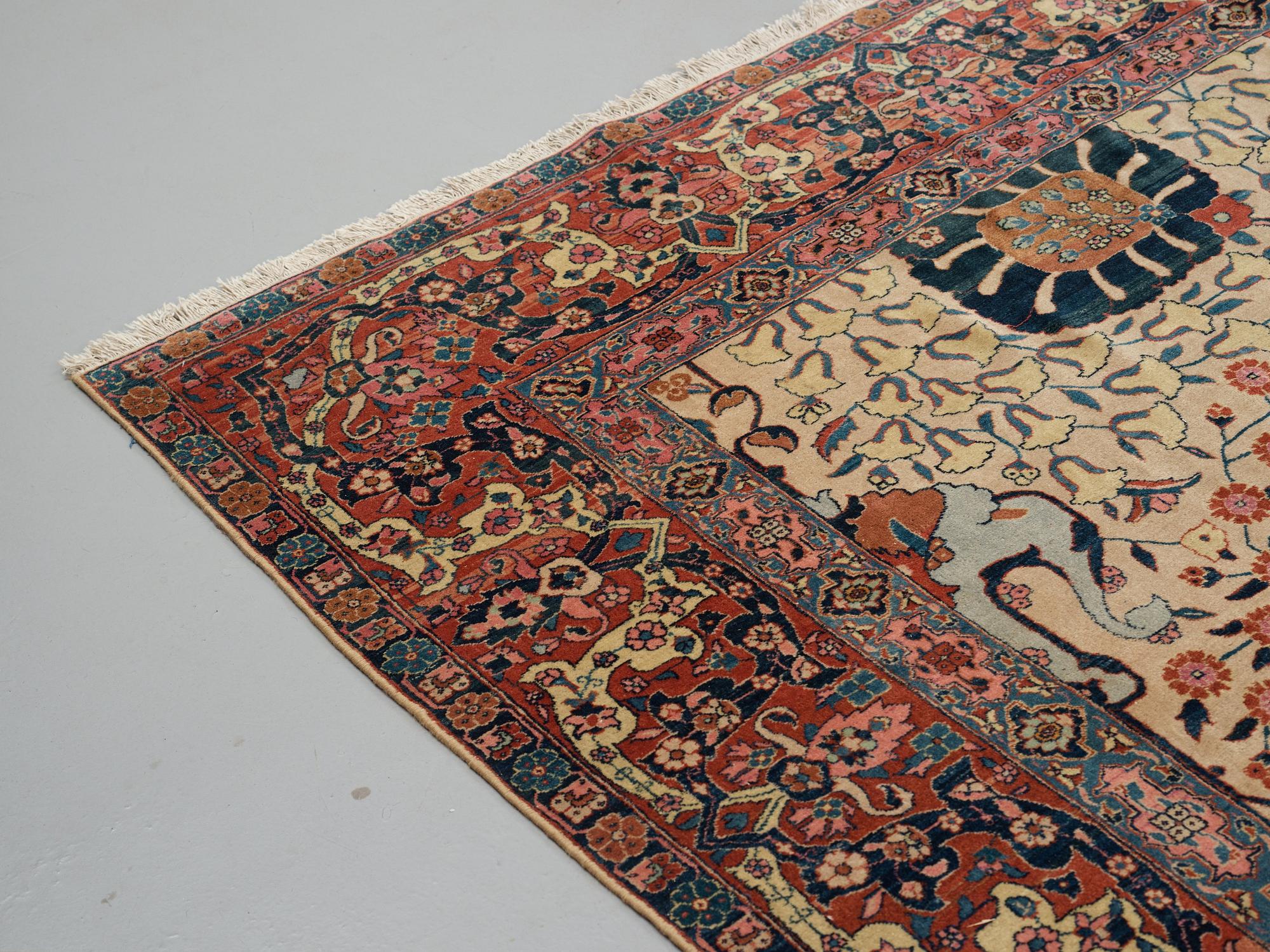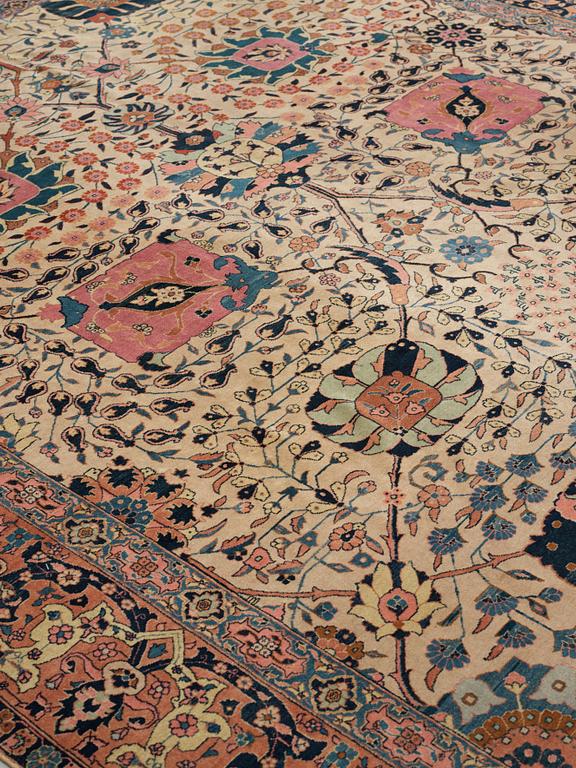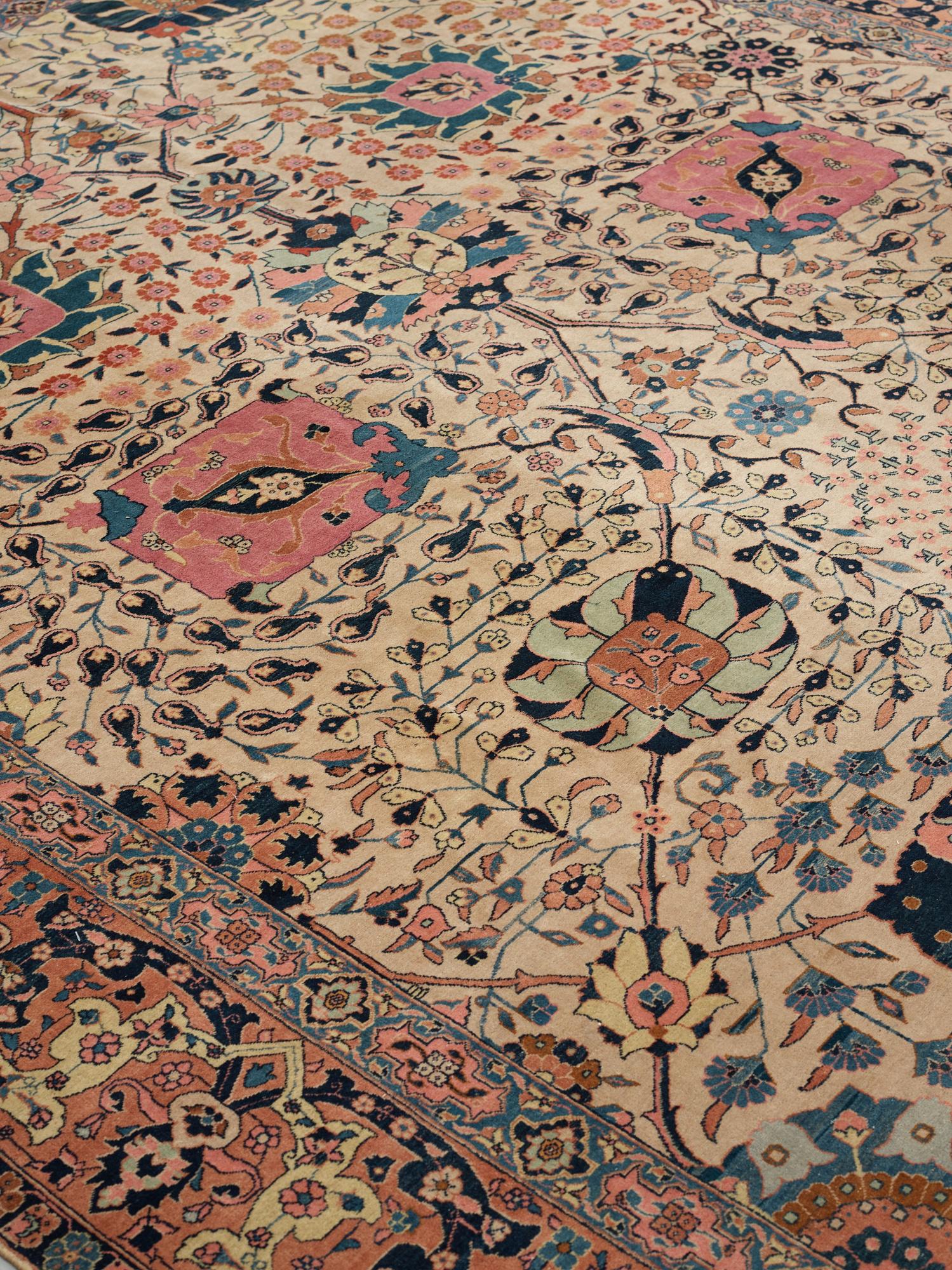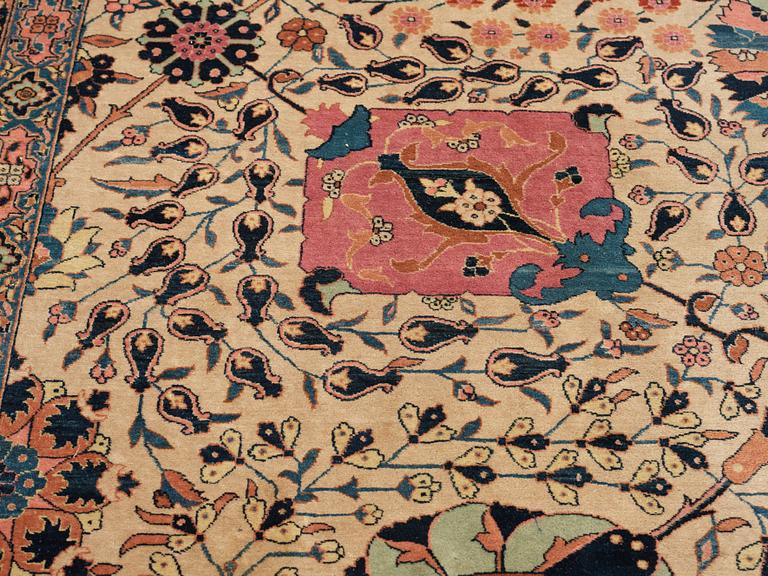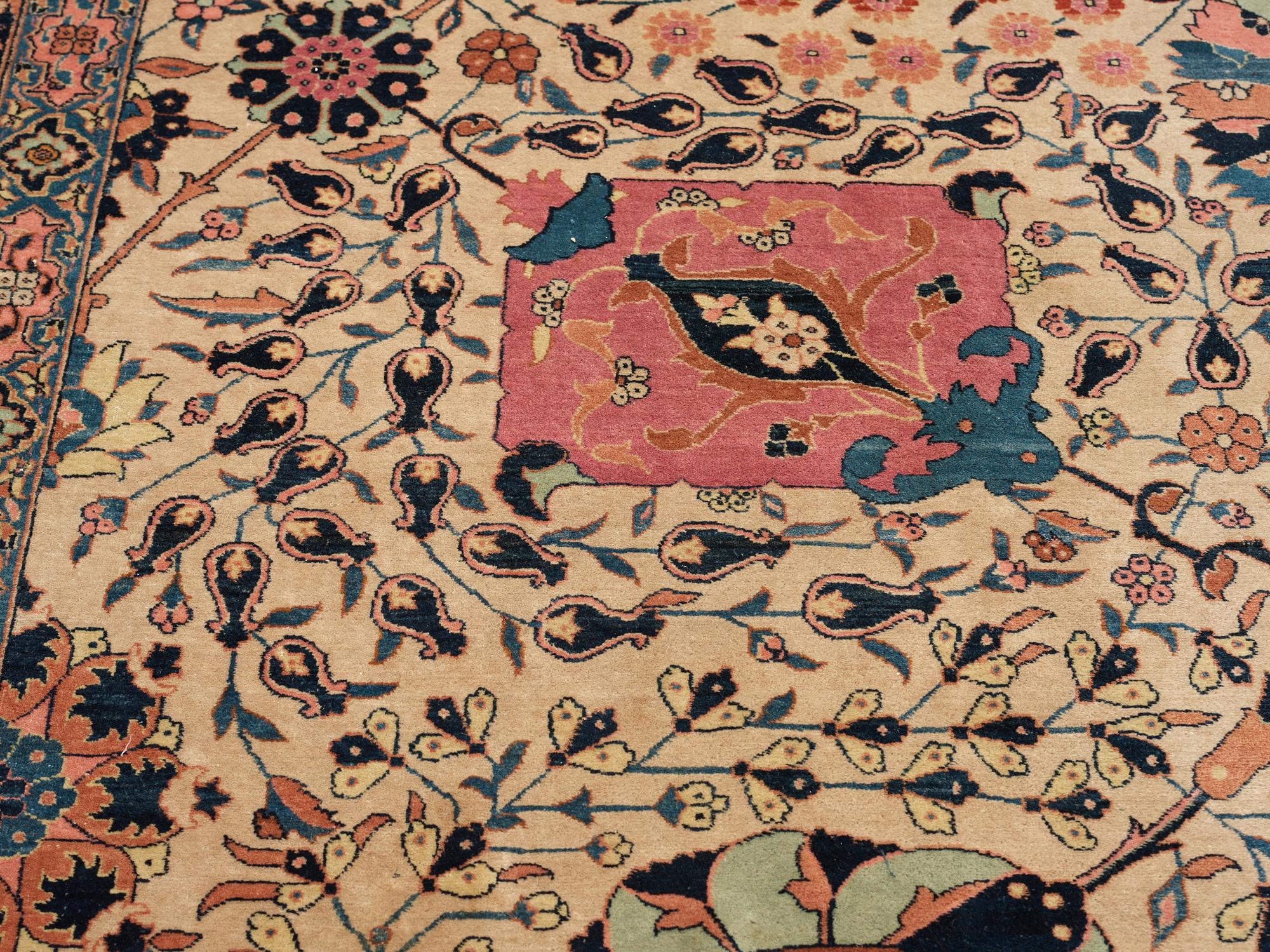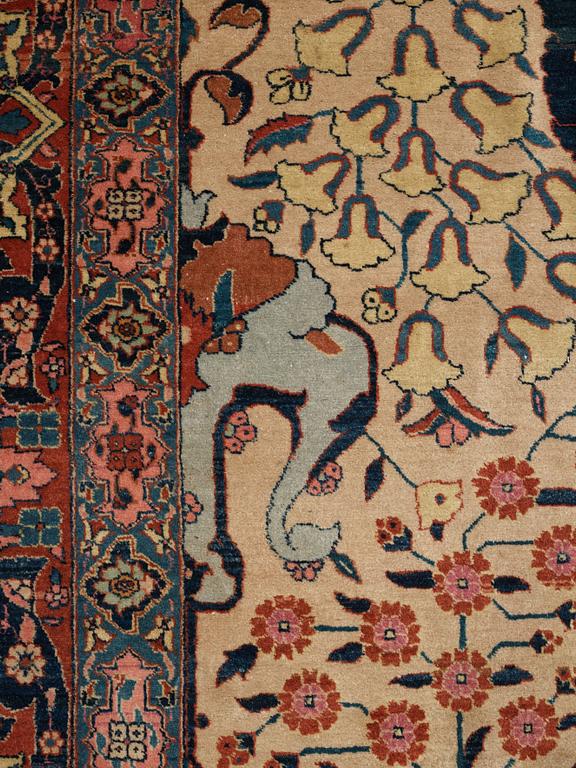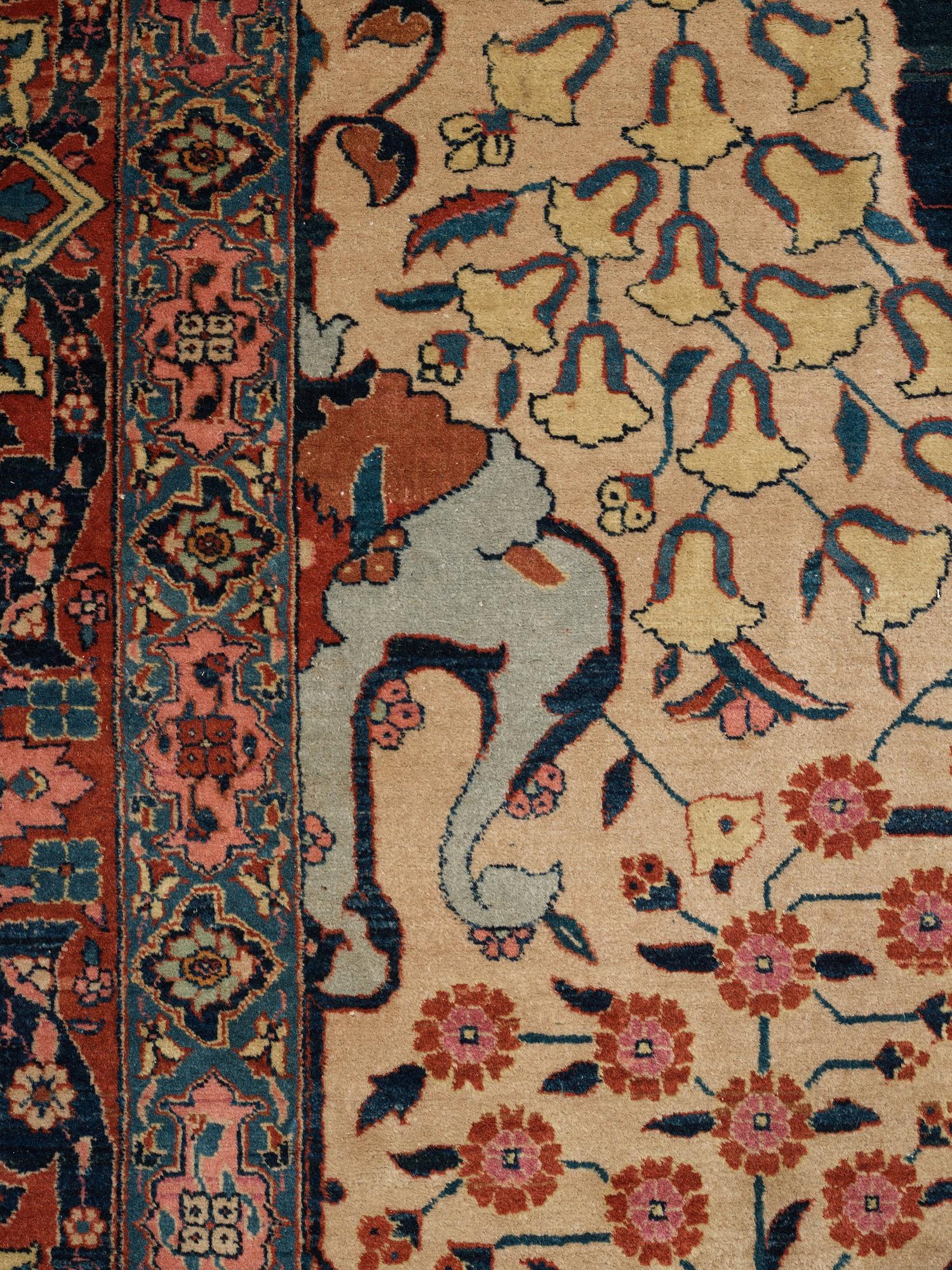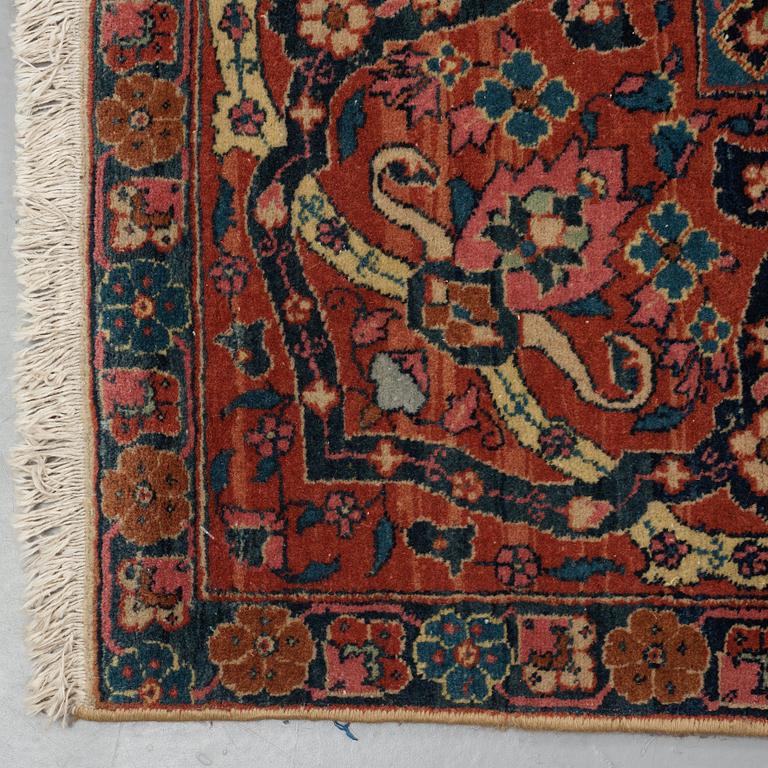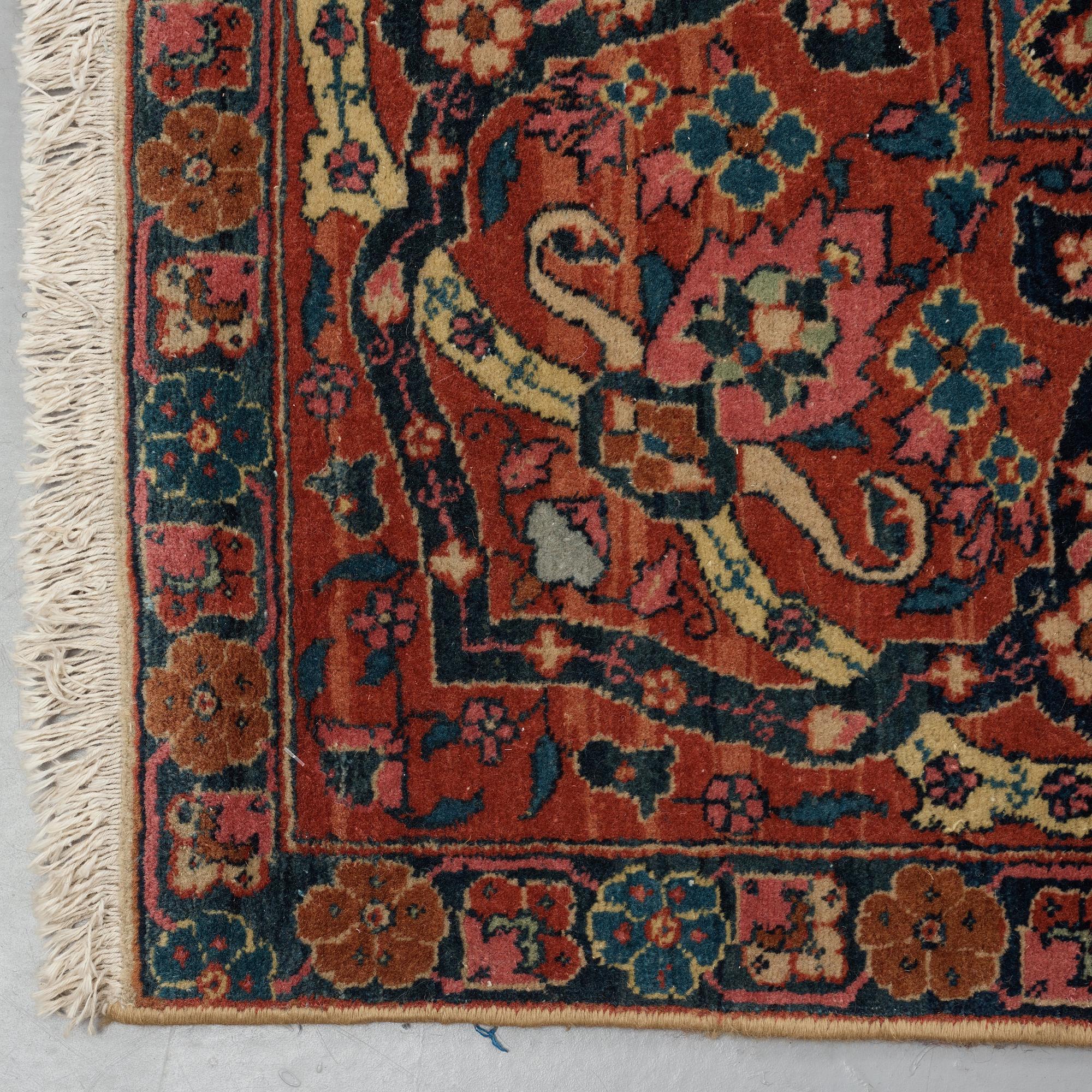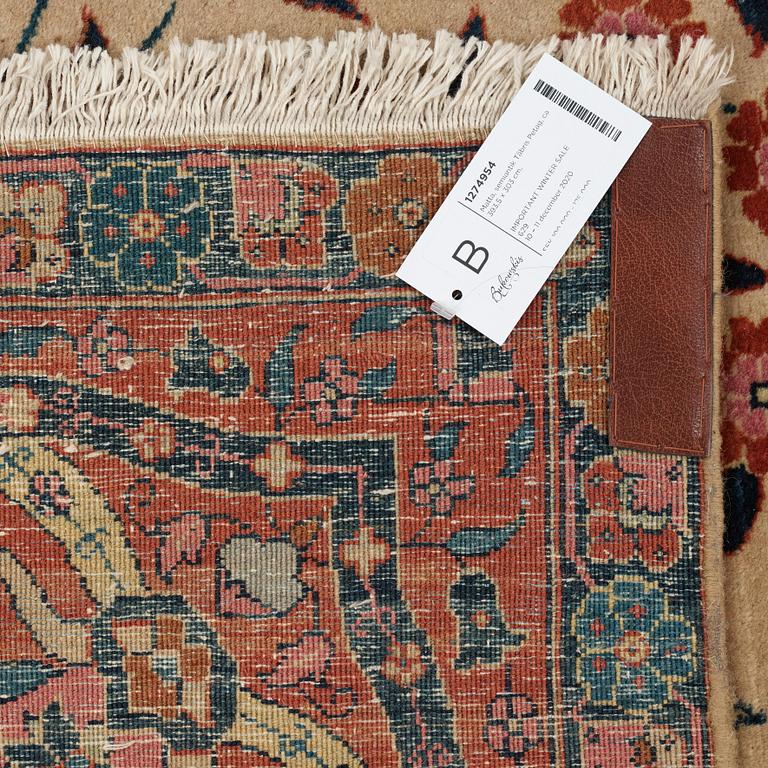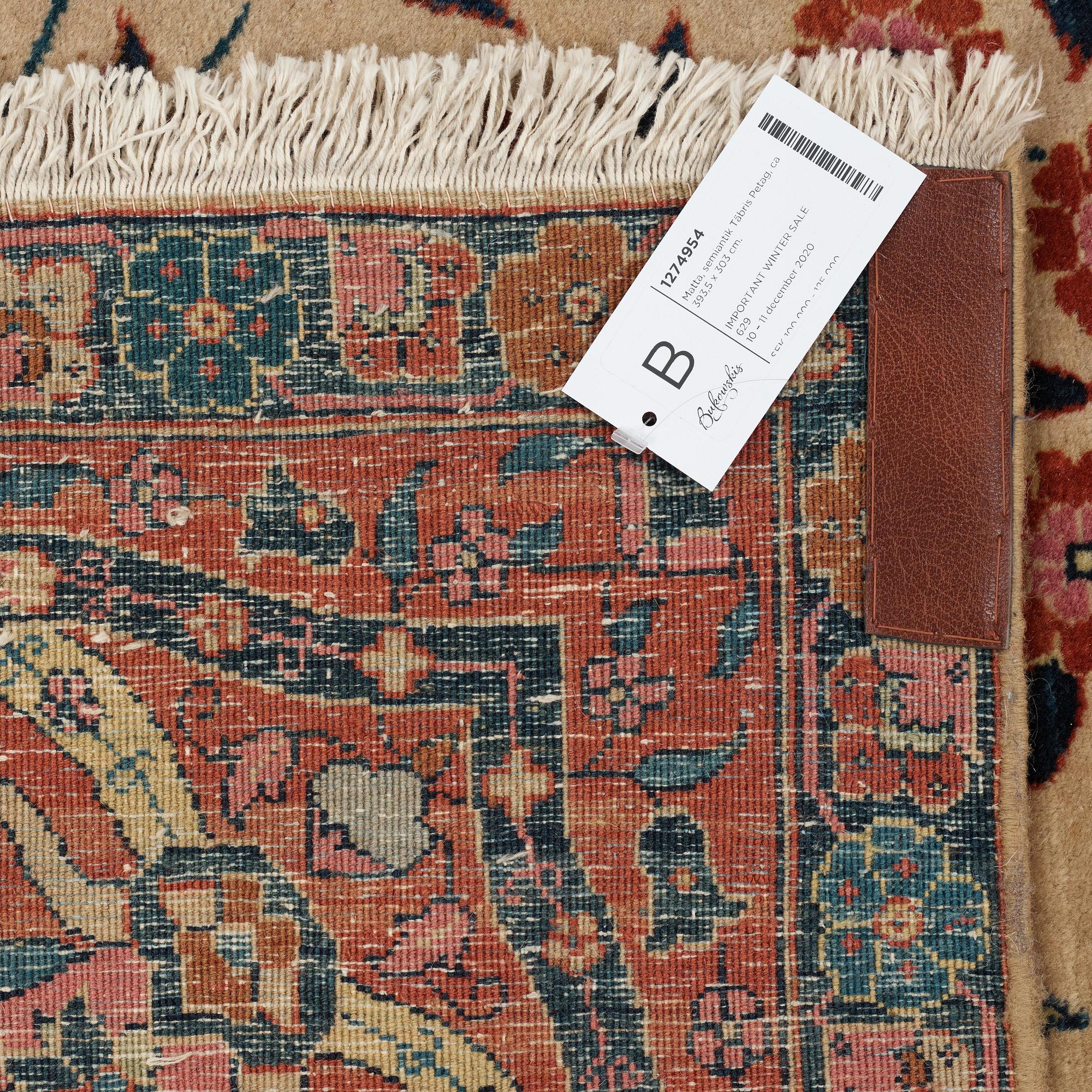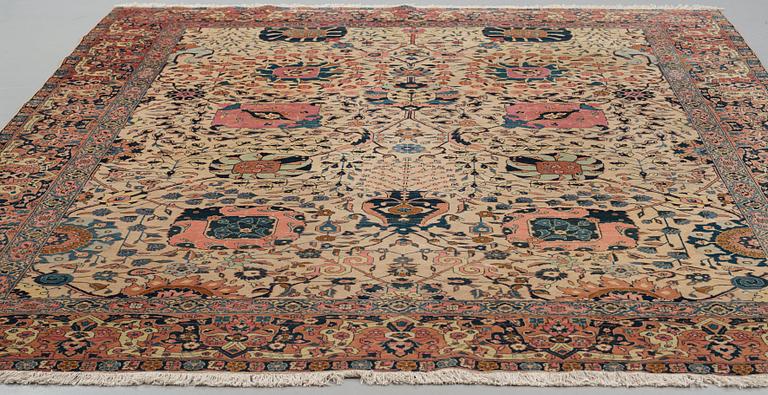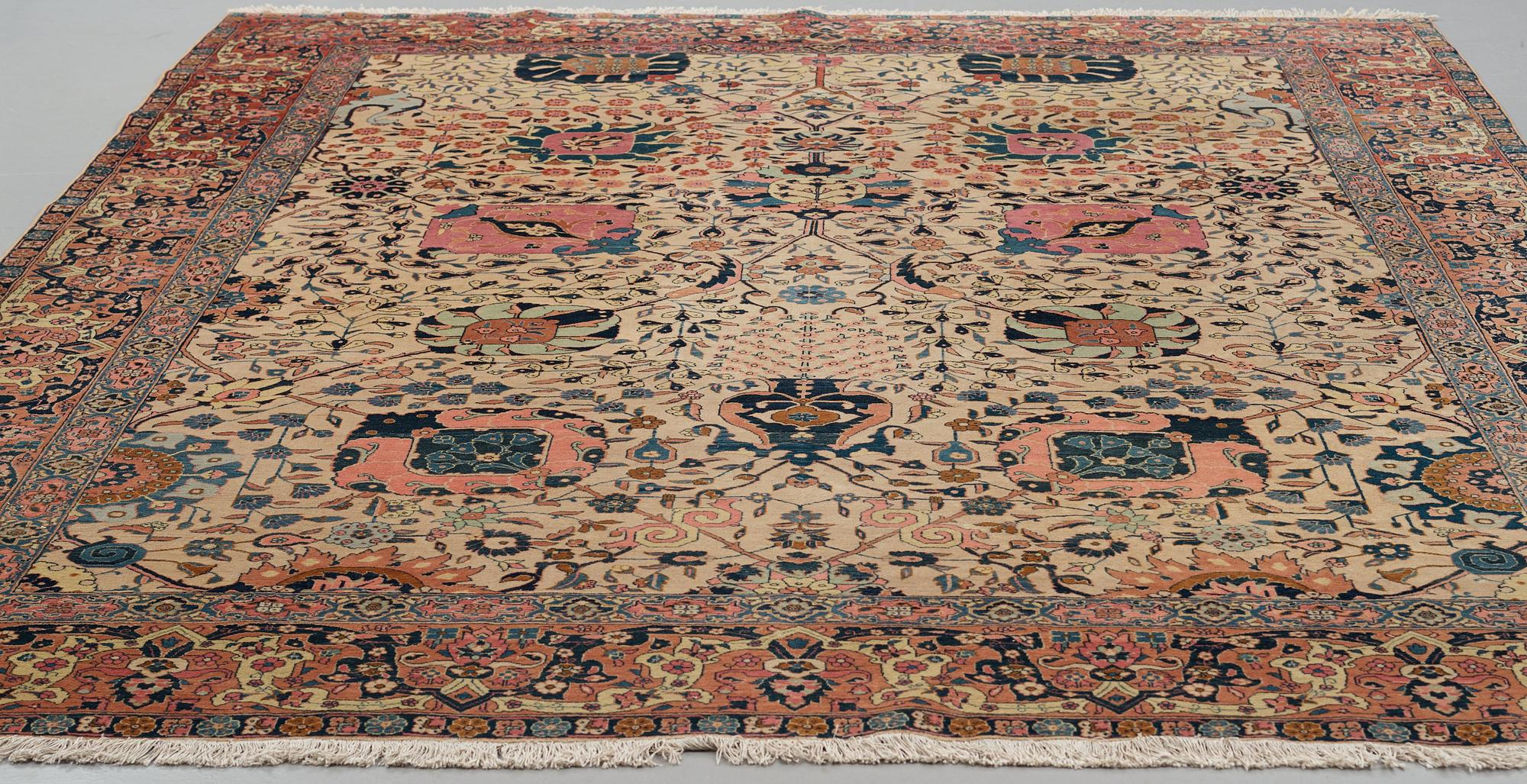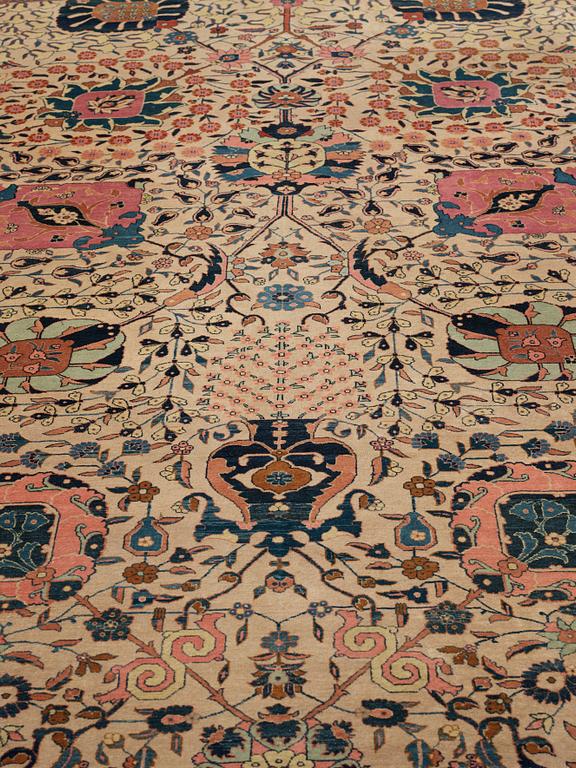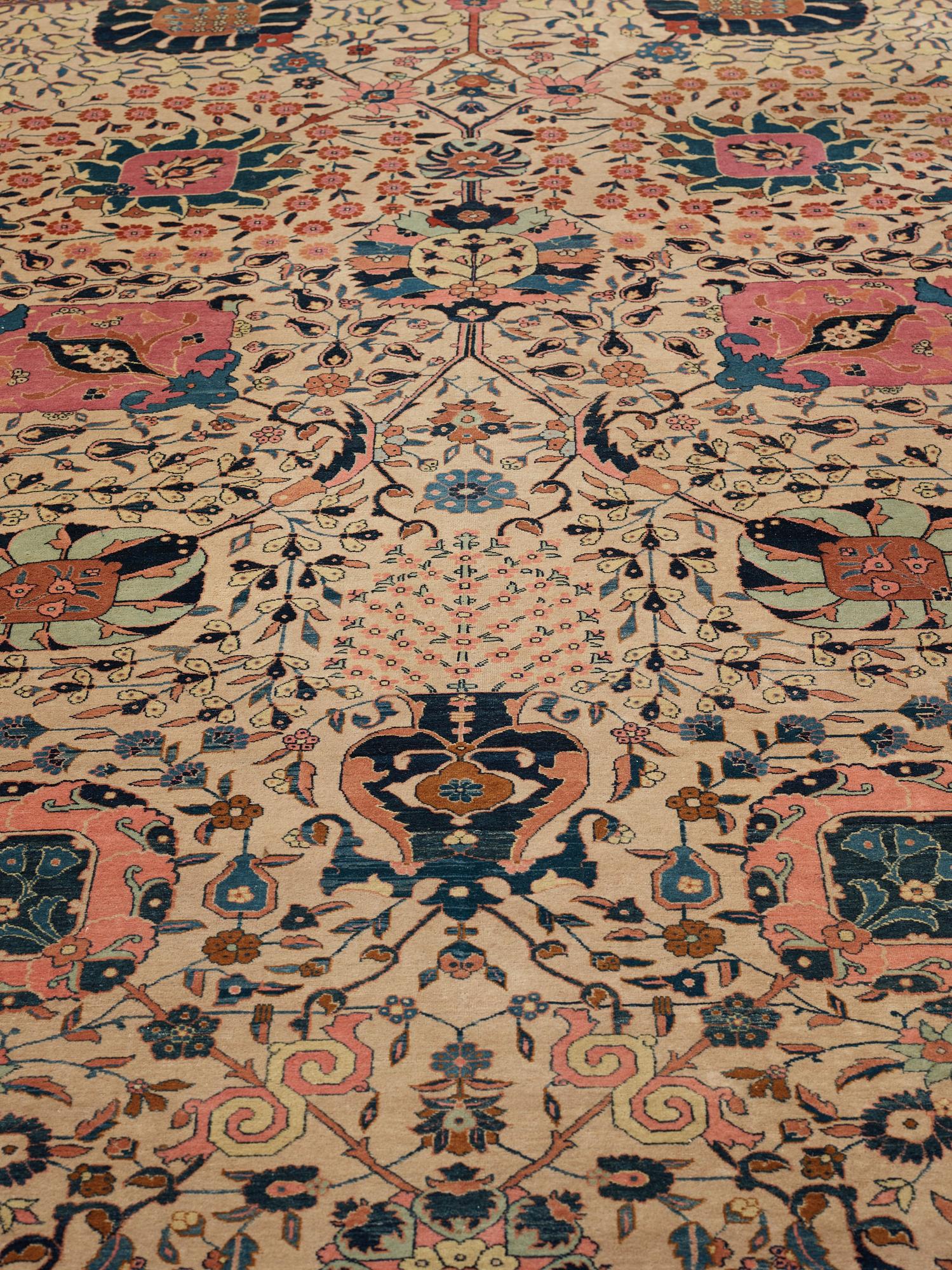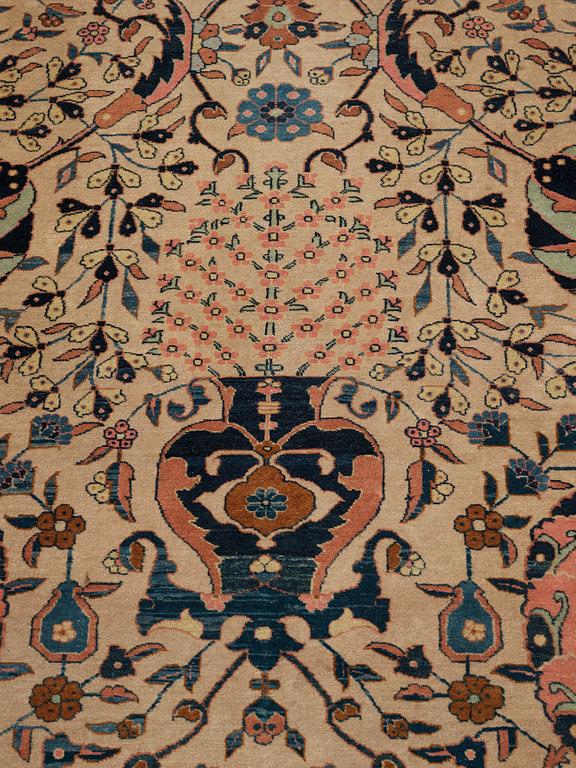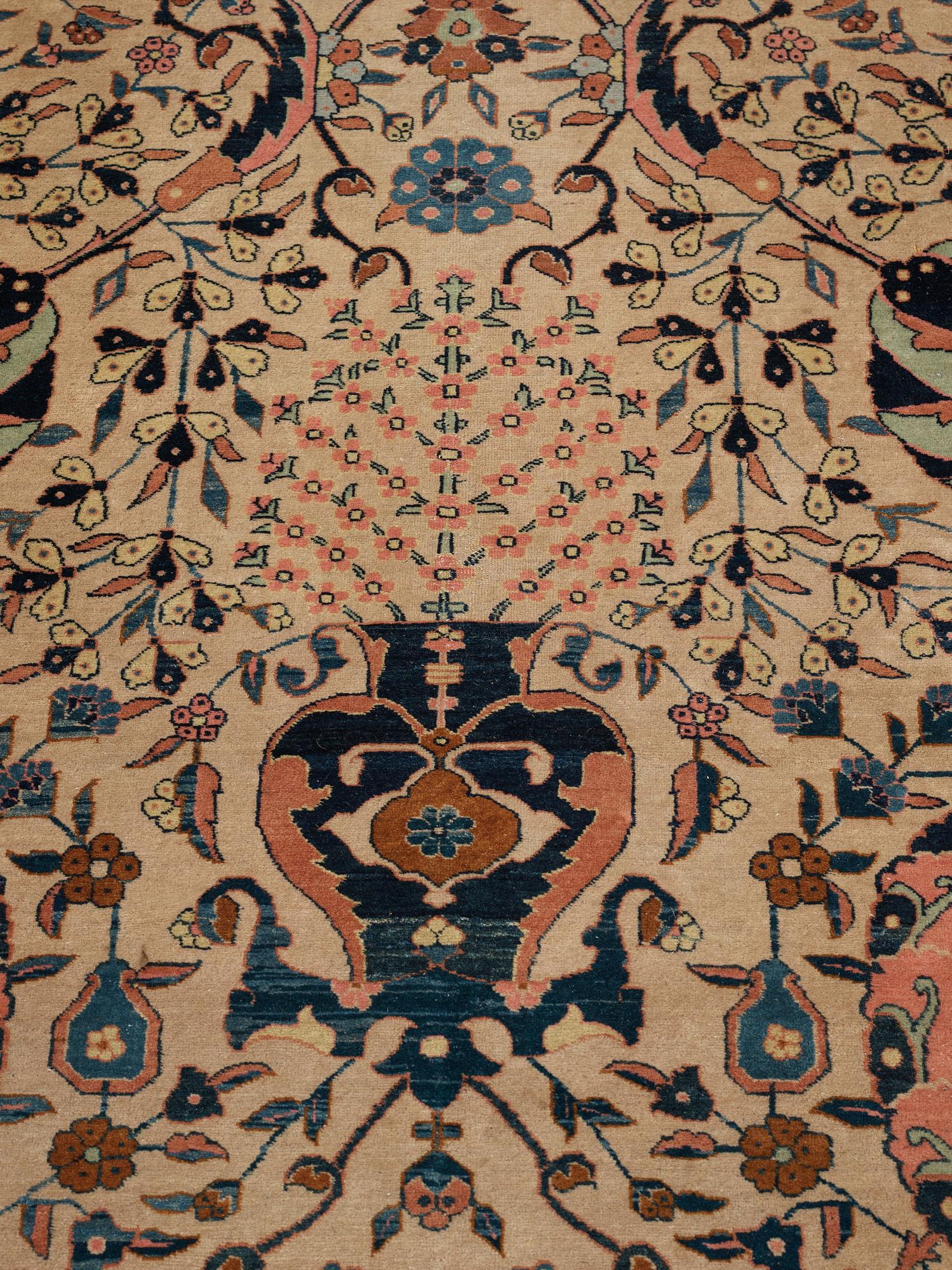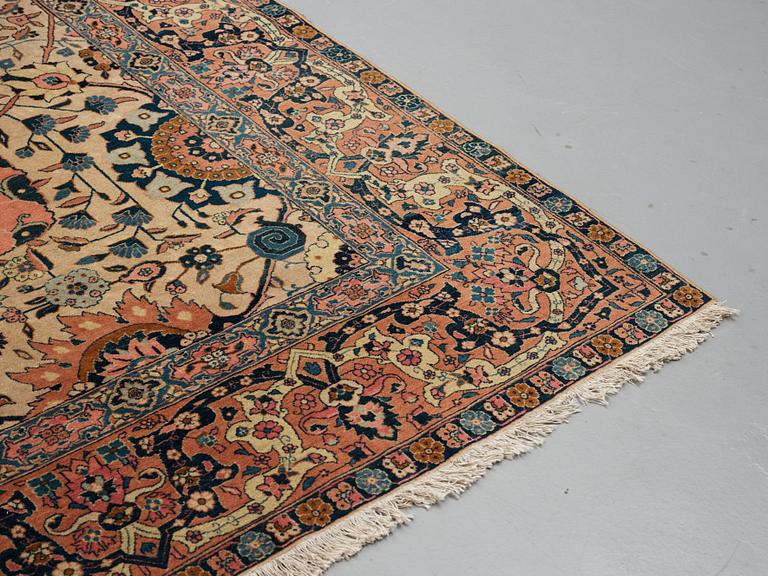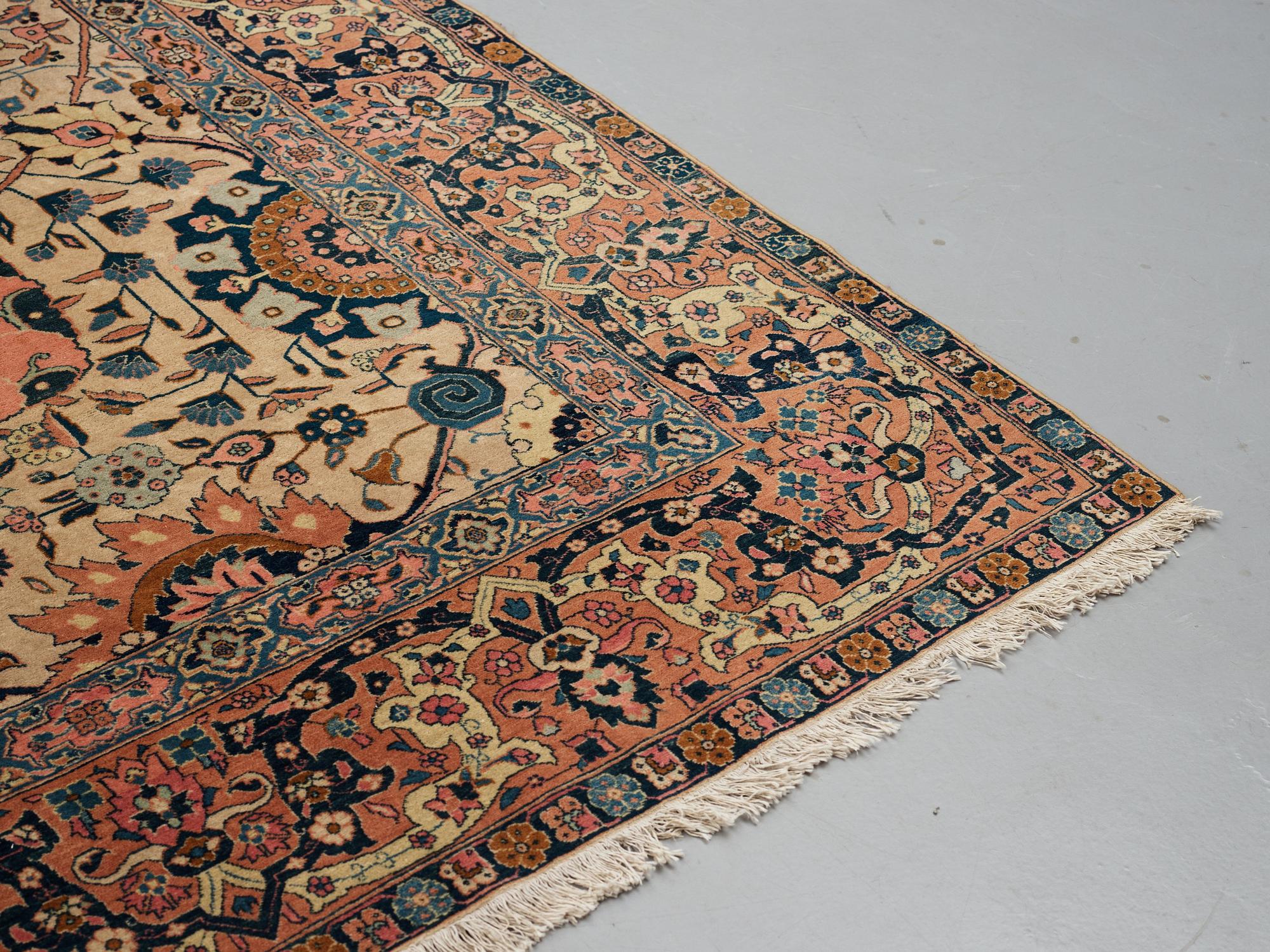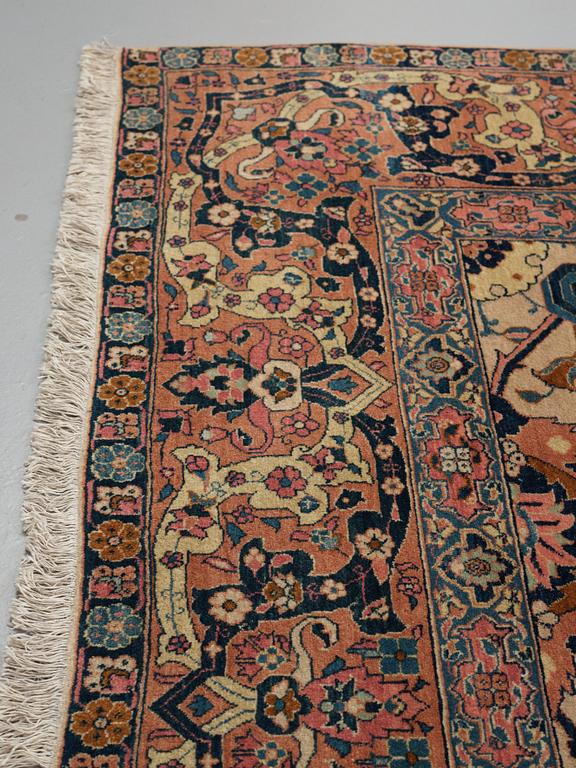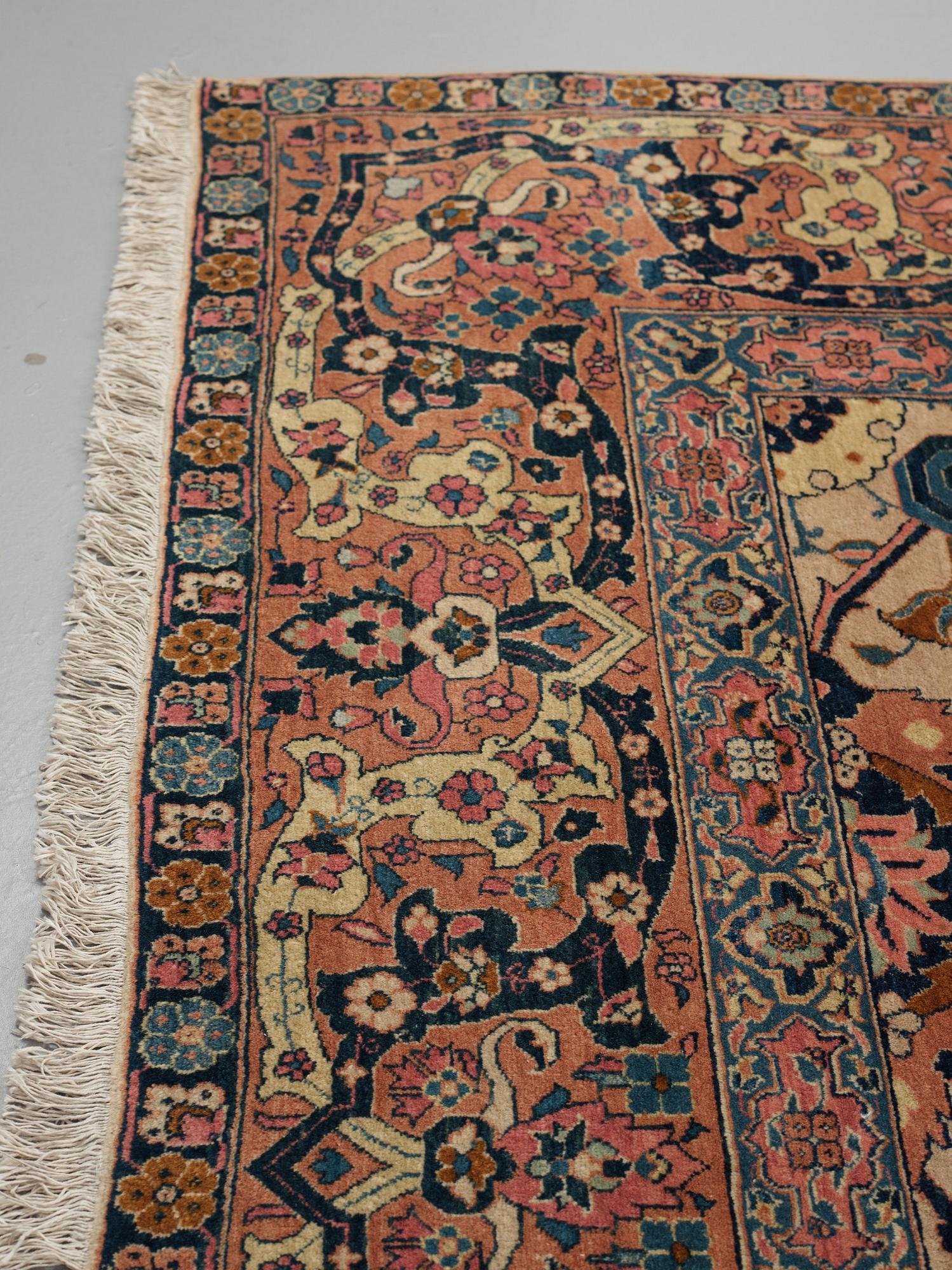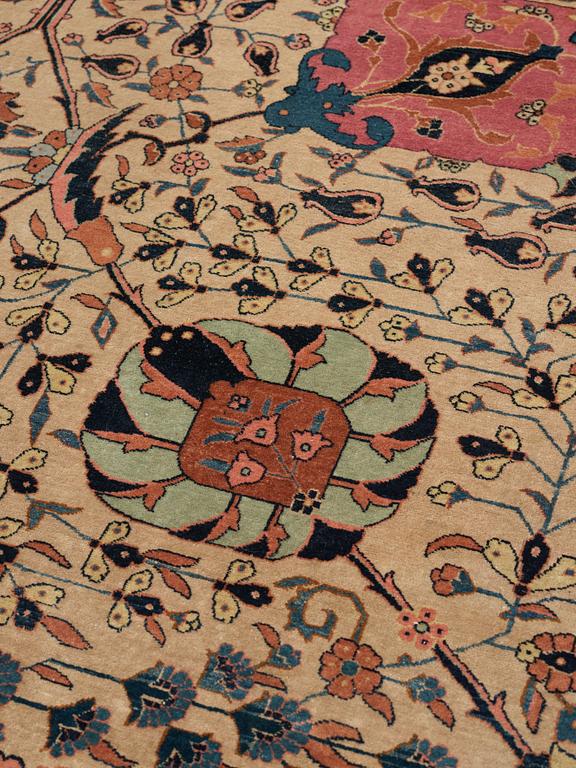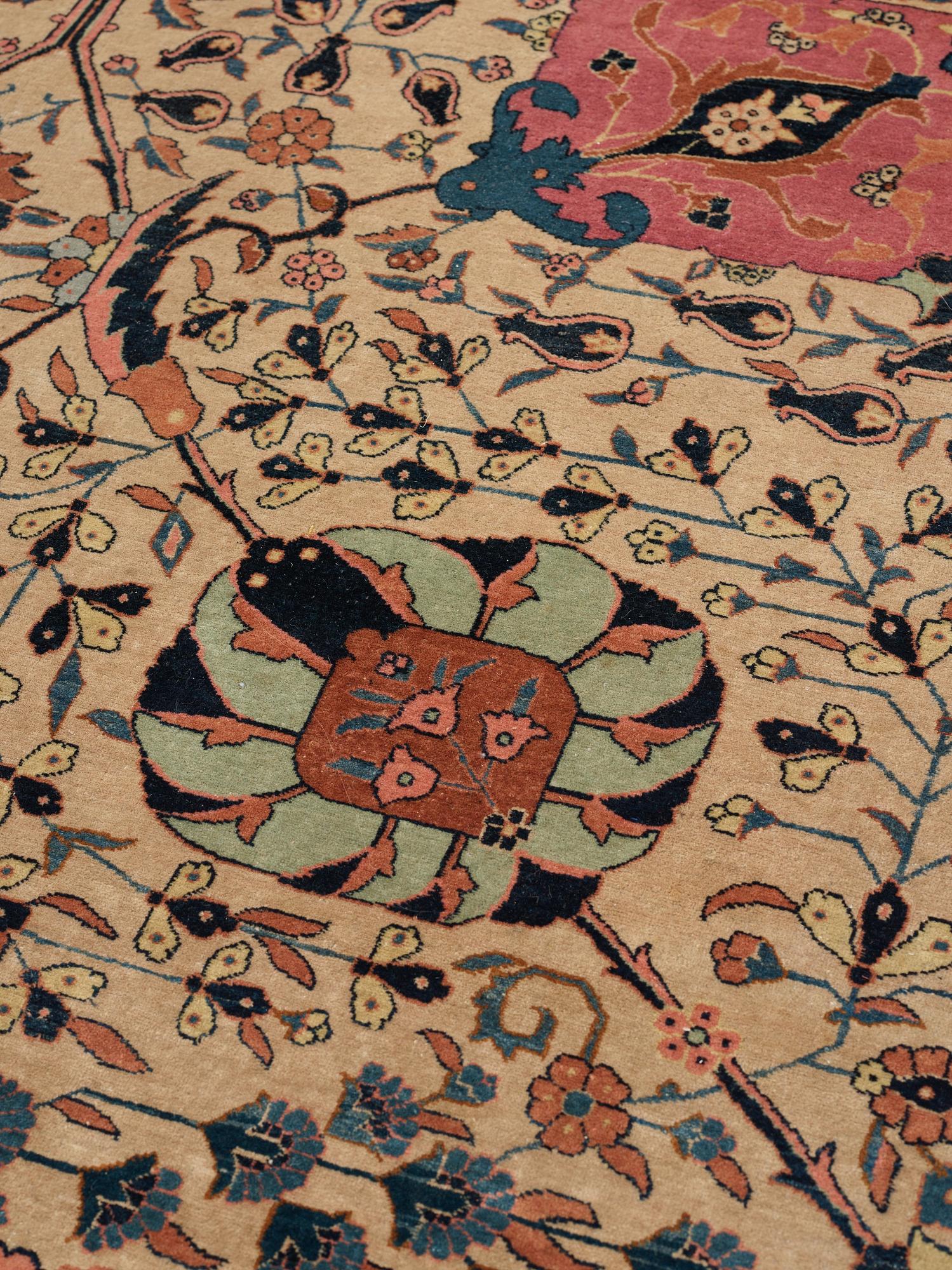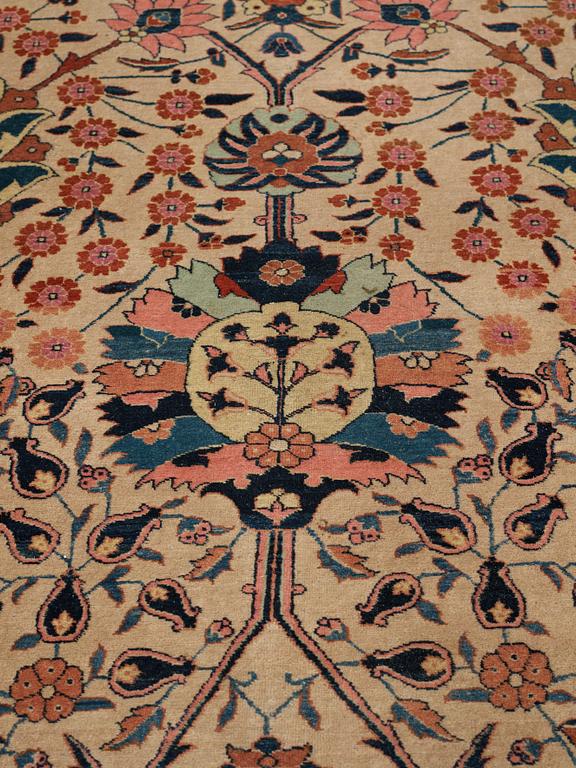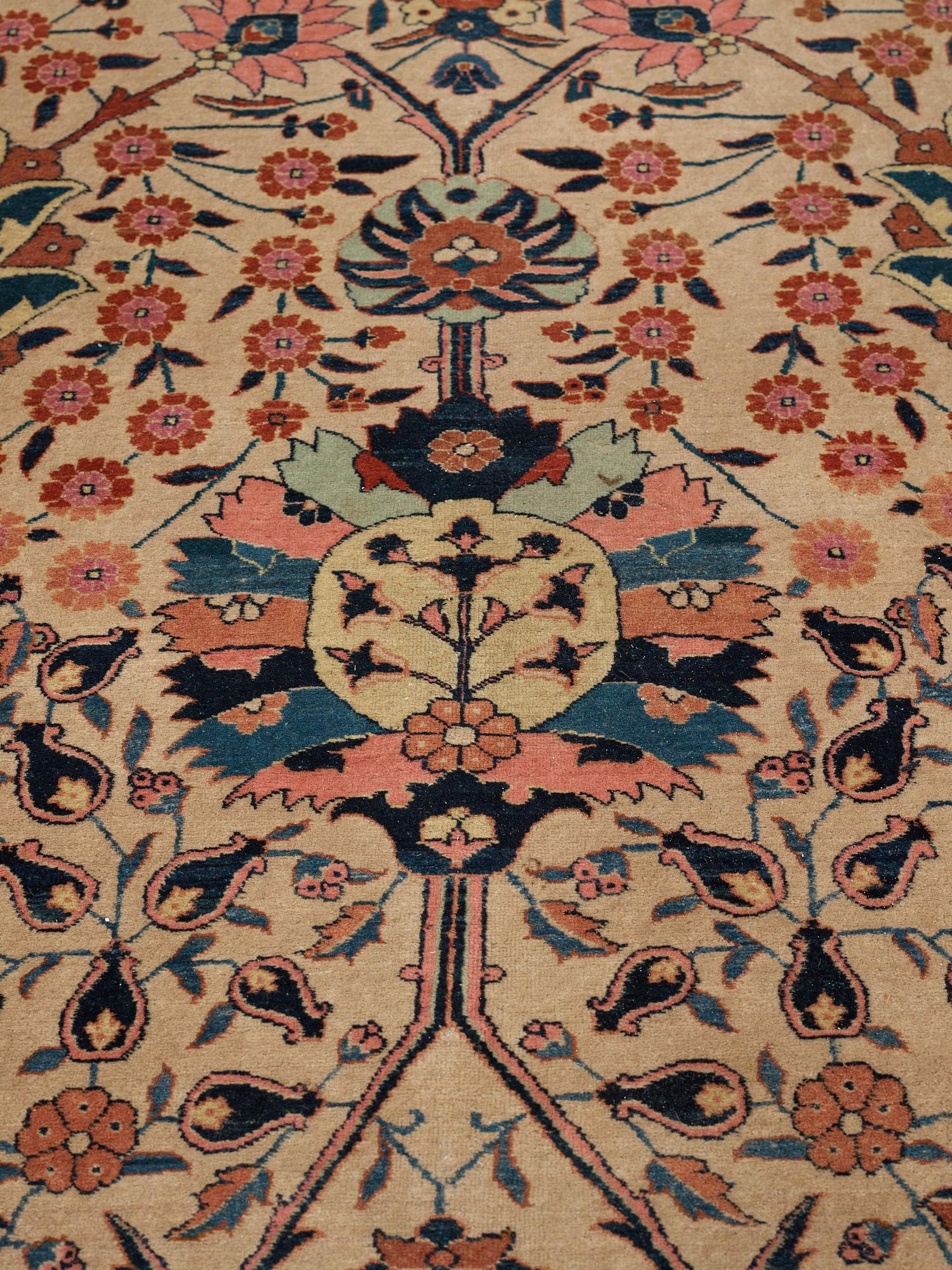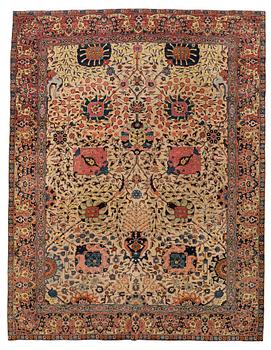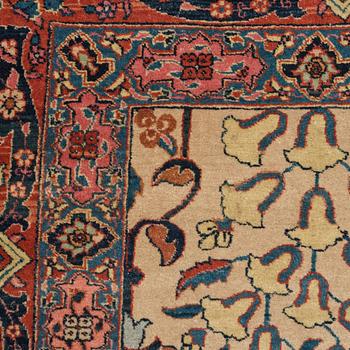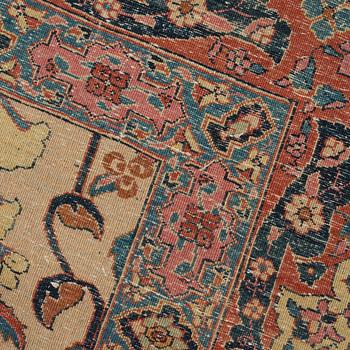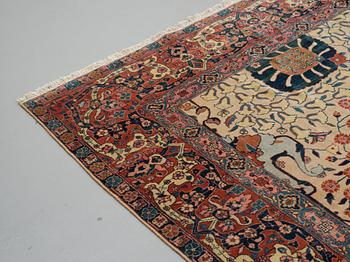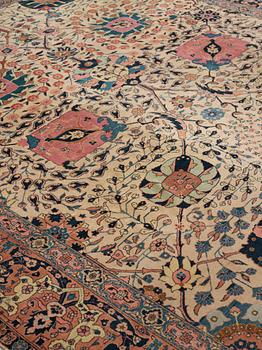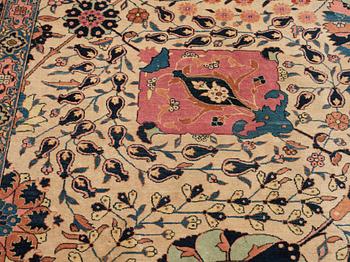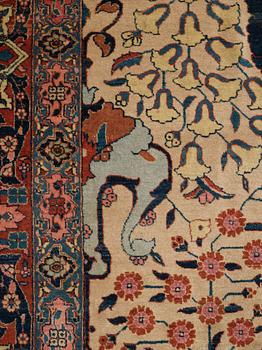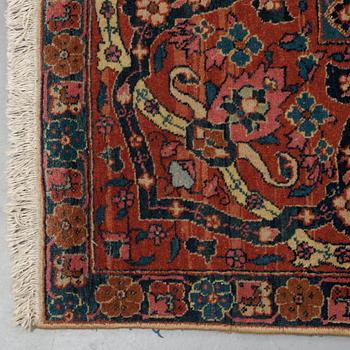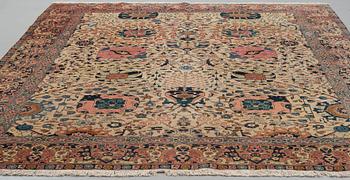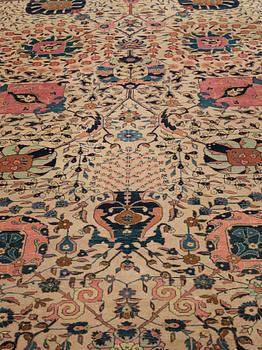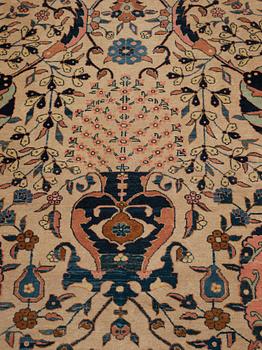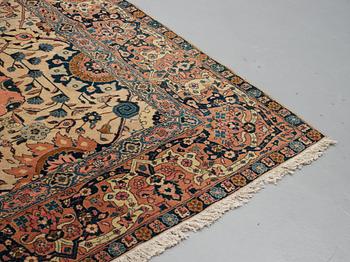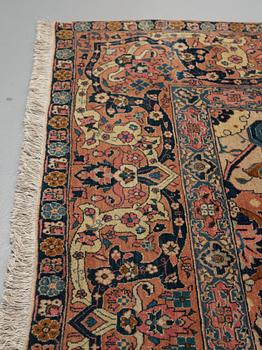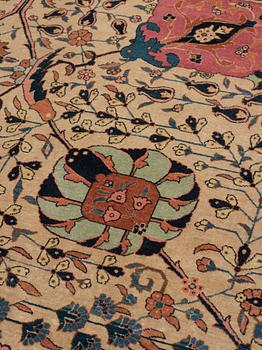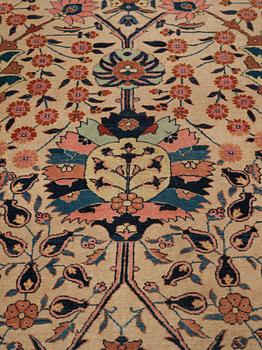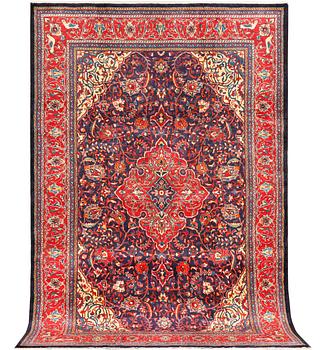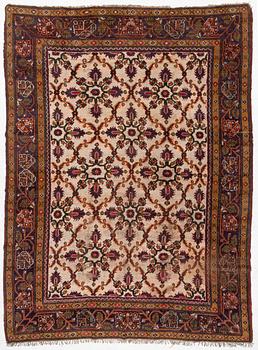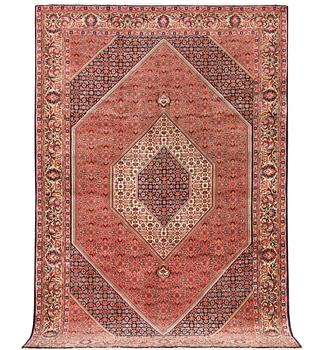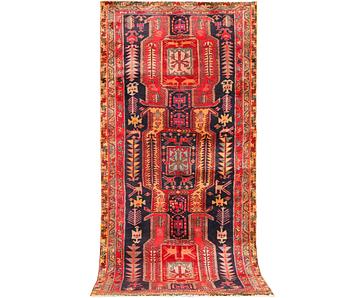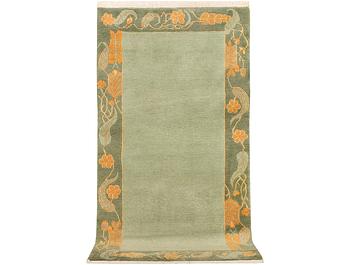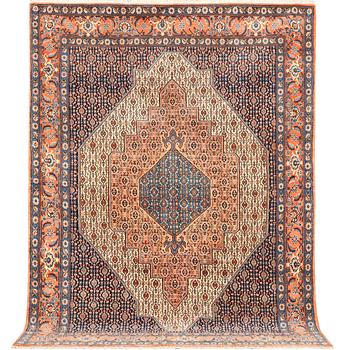
Benvit botten med polykrom blomstervas, blommande grenverk samt stora palmett- och blomslingor. Bred rödmelerad huvudbård med stora blomrankor. Signerad med Petag:s chintamani-märke. (Petag = Persische Teppich AG).
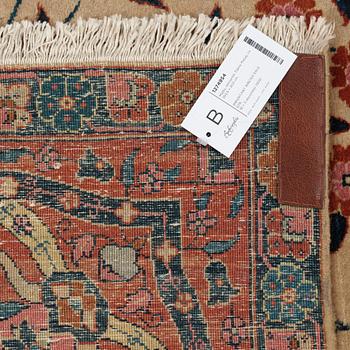
Abrasher. Ställvis något slitage, något smutsig, smärre fläckar, lagningar, veck. Långsidorna med smärre trampveck.
Litteratur
Om Petag i CarpetCollector: The German firm Petag, short for Persische Teppich AG, was founded in Berlin in 1911. Under the inspiring leadership of Heinrich Jacoby a large workshop opened up in Tabriz (North-West Iran). The idea was to fight the decline in quality resulting from high commercialisation in production responding Western demand. The resultat was excellent: thanks to the use of extremely good wool and skilfully made vegetal dyes the company succeeded in reviving old and elegant designs from the 16th and 17th century. The different qualities derived their names from the density of knots: Pertovi, Hamajun, Teimuri, Rustem and Cyrus. The workshop shut down in the forties. The Petag-carpets can easily be recognized by the chintamani-sign that is knotted in each piece.
För konditionsrapport kontakta specialist