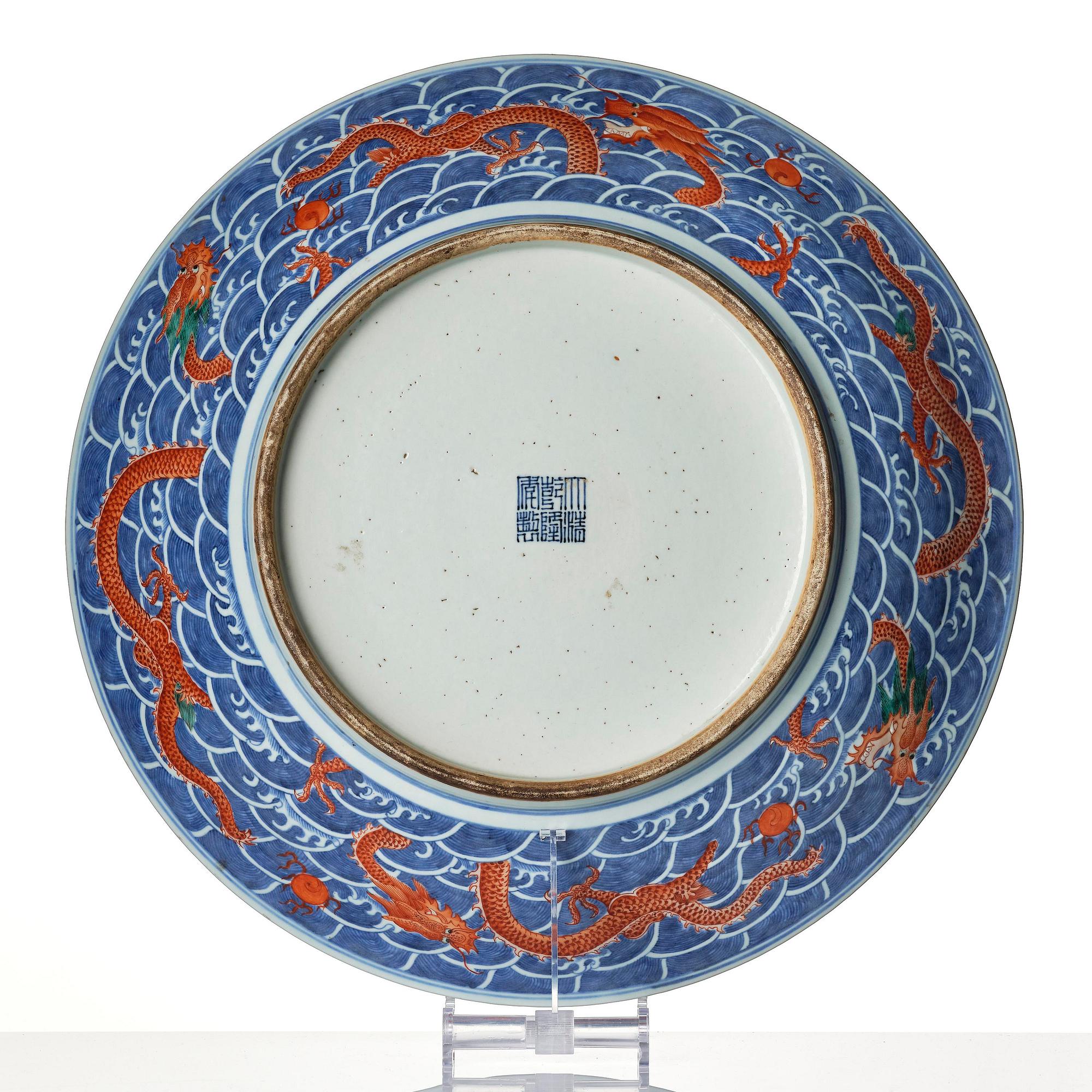
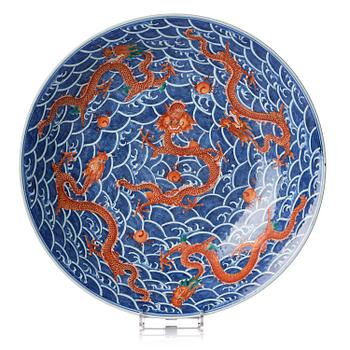
Stort med svagt rundade sidor och något utsvängd mynning, dekor i järnrött och grönt av nio fyrkloade drakar bland vilda vågformationer. Botten vitglaserad med sigillmärke i underglasyrblått. Diameter 51,5 cm.
Proveniens
The Collection of Sven Eric Hugo Raab. Thence by descent.
Litteratur
A legend explains the reasons why there are 9 dragons as opposed to 8 or 10 in Chinese mythology. According to Zhou Yi (one of the oldest of the Chinese classic texts), nine symbolizes yang. Ancient Chinese categorized numbers into yang numbers and yin numbers. Odd numbers signify yang, while even numbers represent yin, and nine is the largest yang number.
Övrig information
Dishes of this magnificent size and formidable decoration were made to impress. Such wares were used at Imperial banquets and on special celebratory occasions, such as the ‘Thousand Elderly Banquet’ held in honour of senior citizens when thousands of invited guests were served a great feast. The Manchu custom of banqueting closely followed the Mongolian and Tibetan tradition of shared communal dining.
För konditionsrapport kontakta specialist




Andra har även tittat på