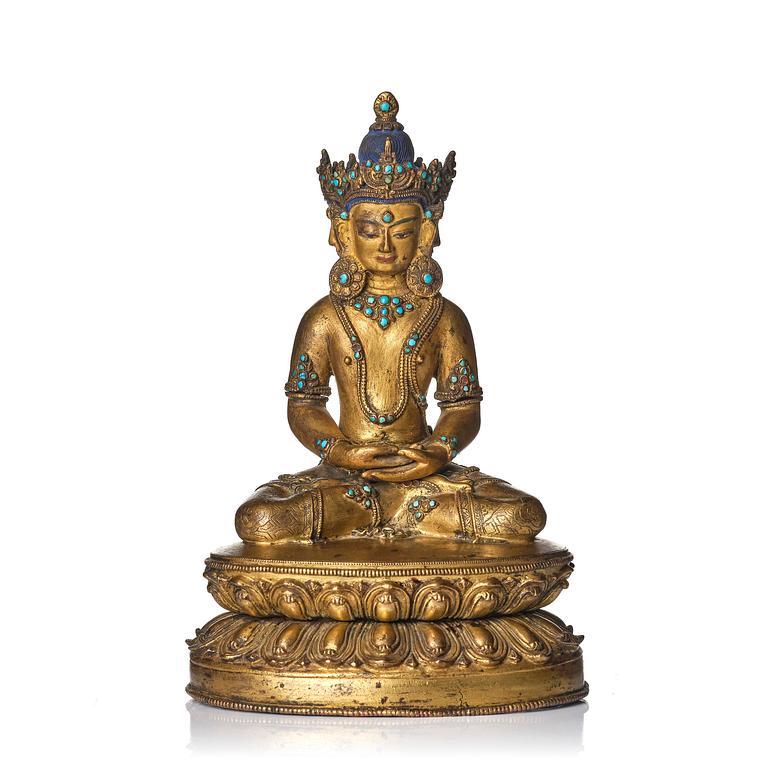
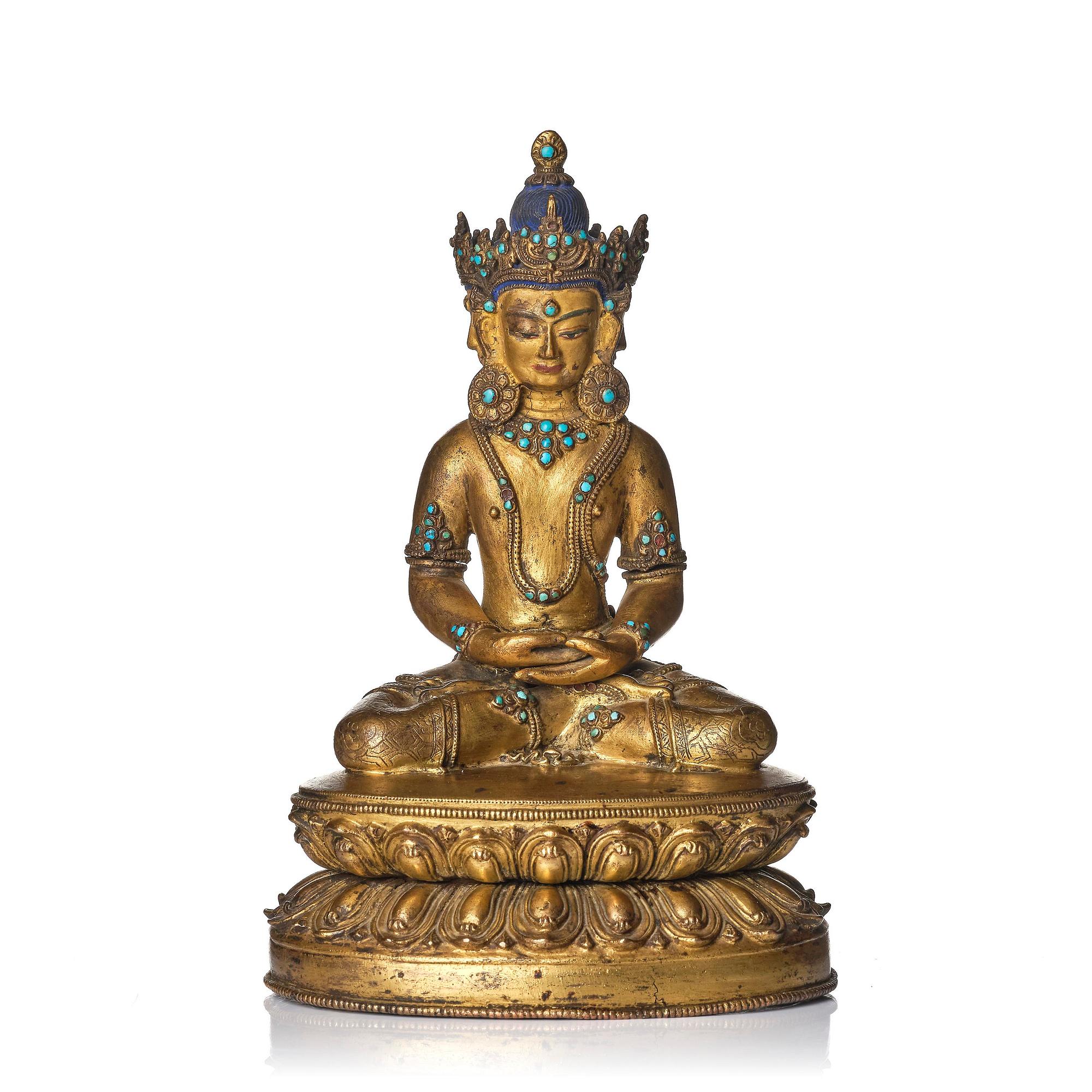
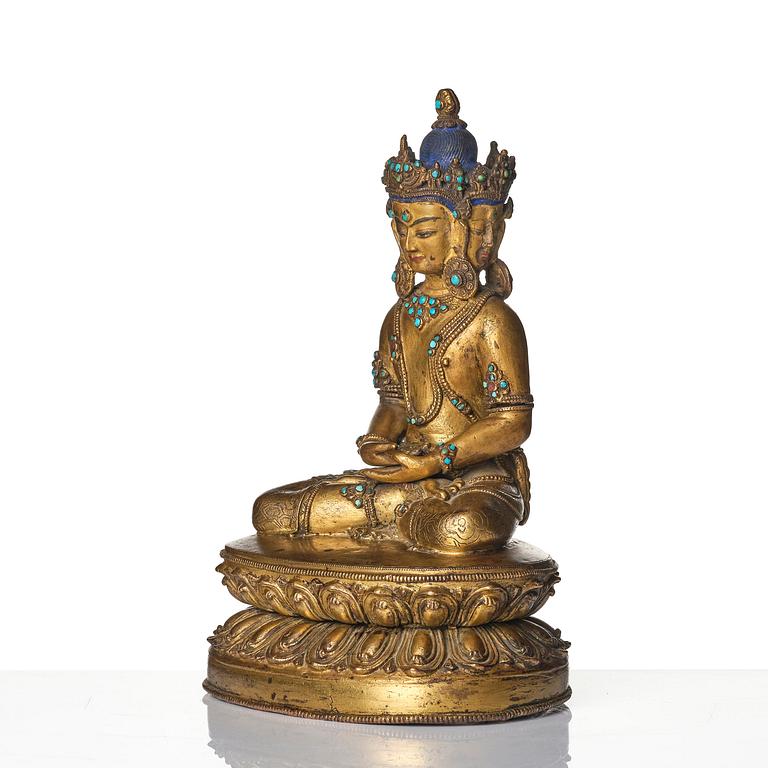
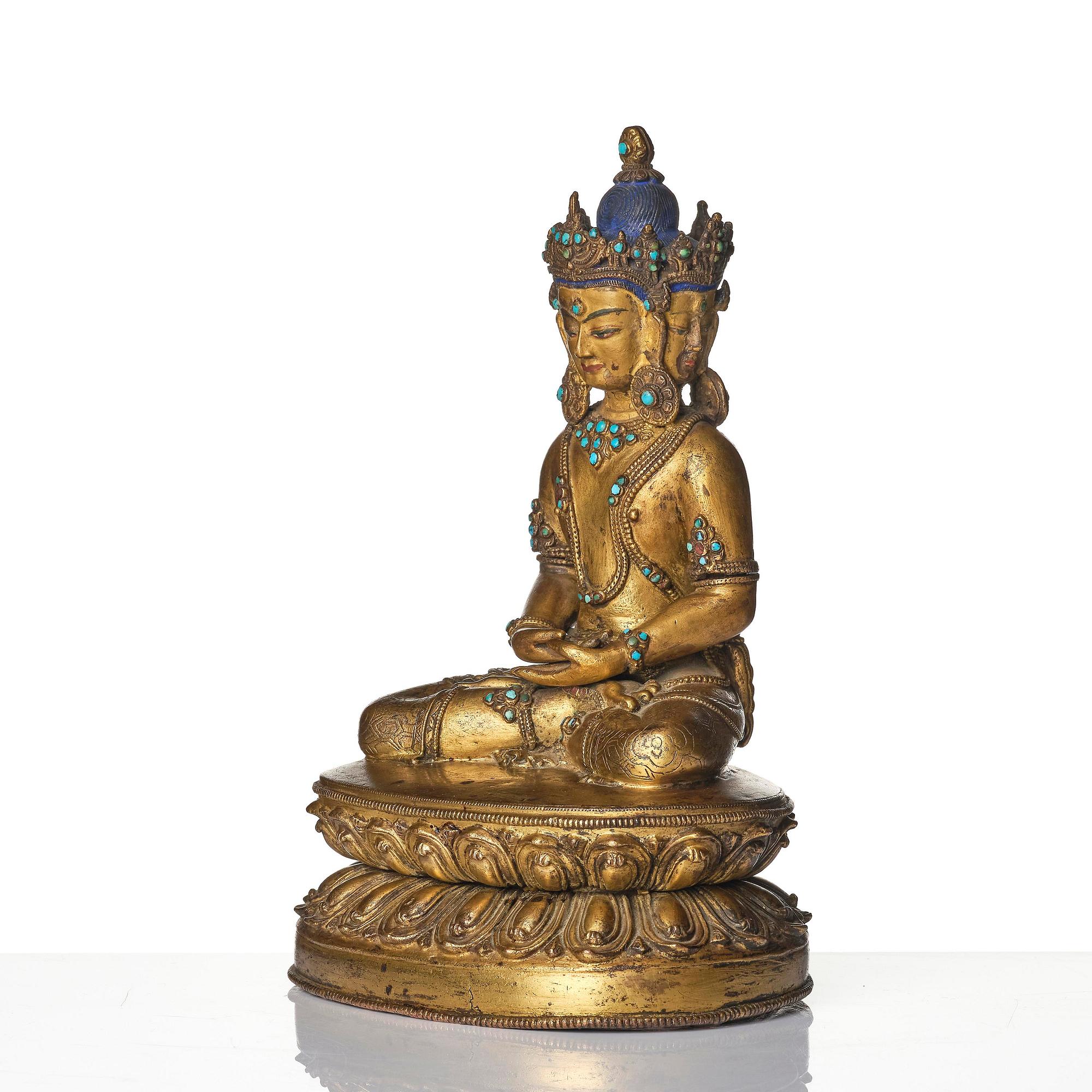
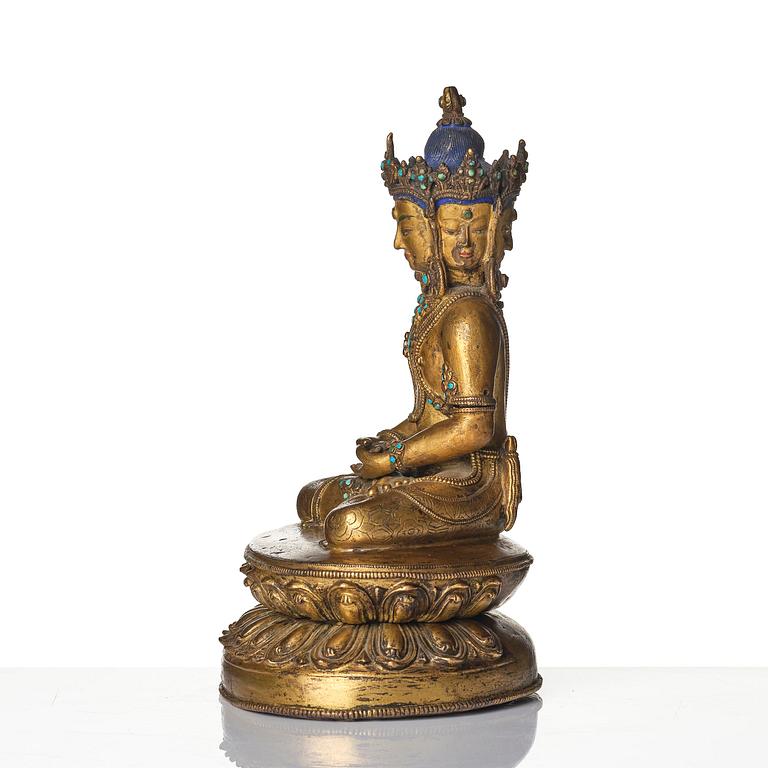
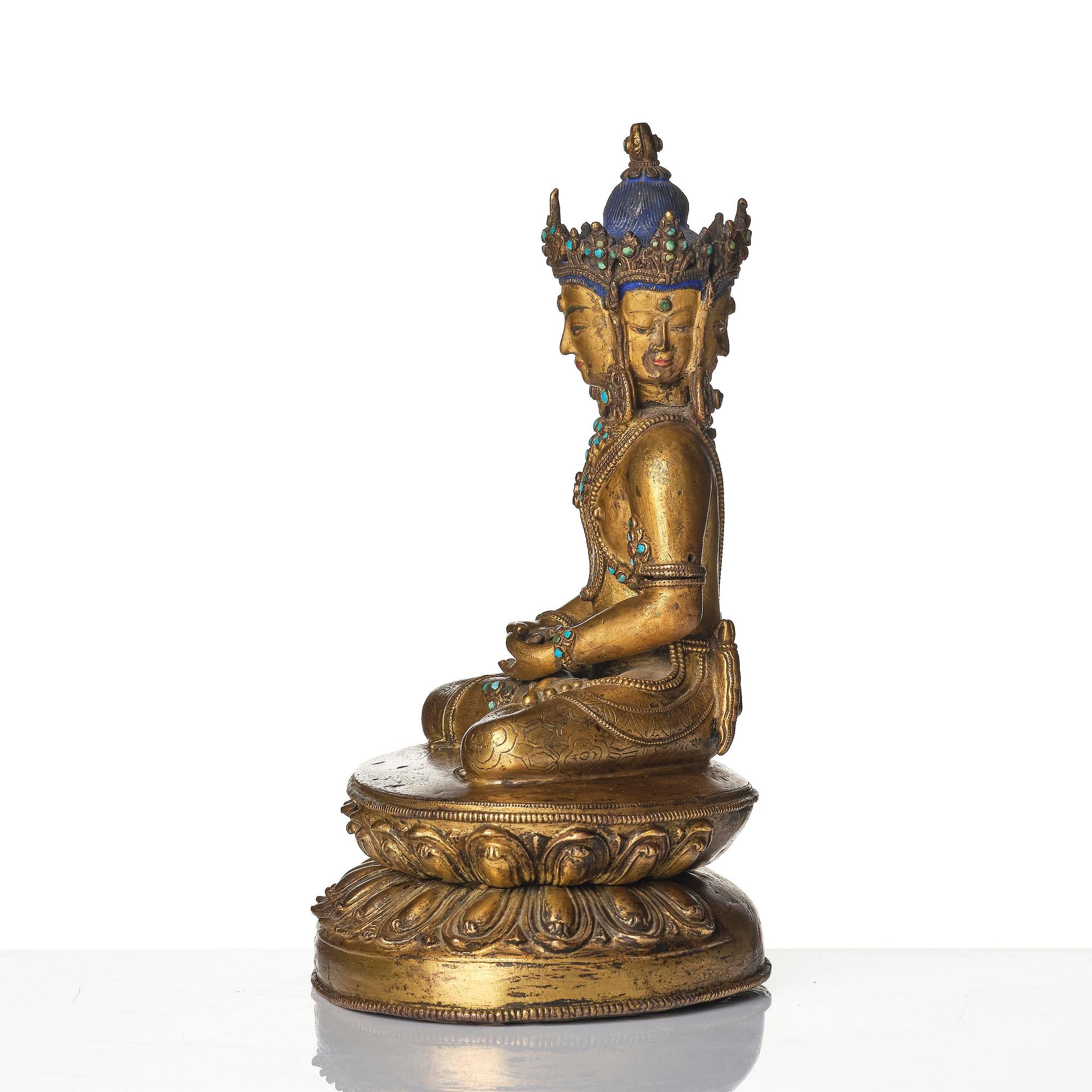
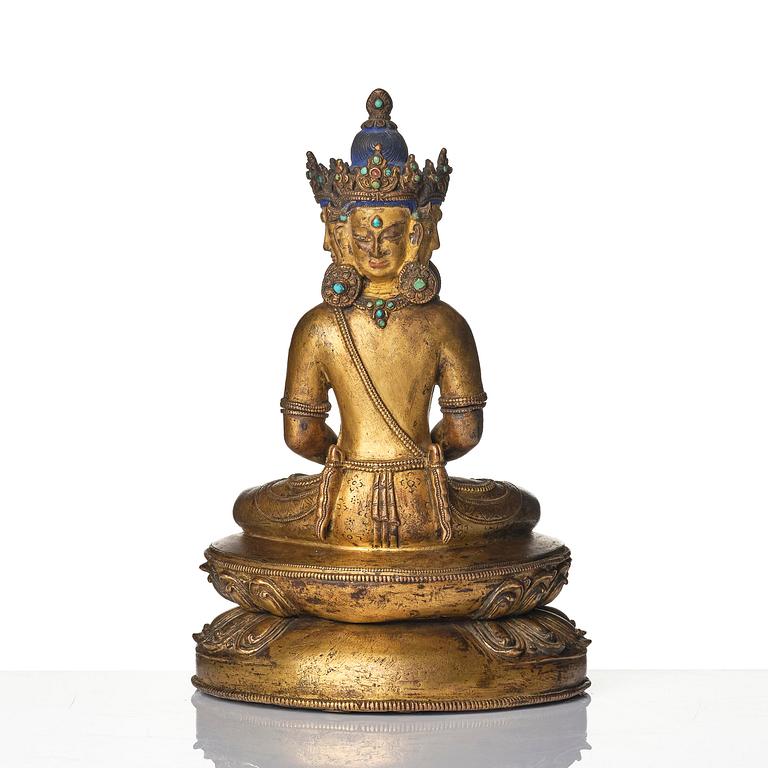
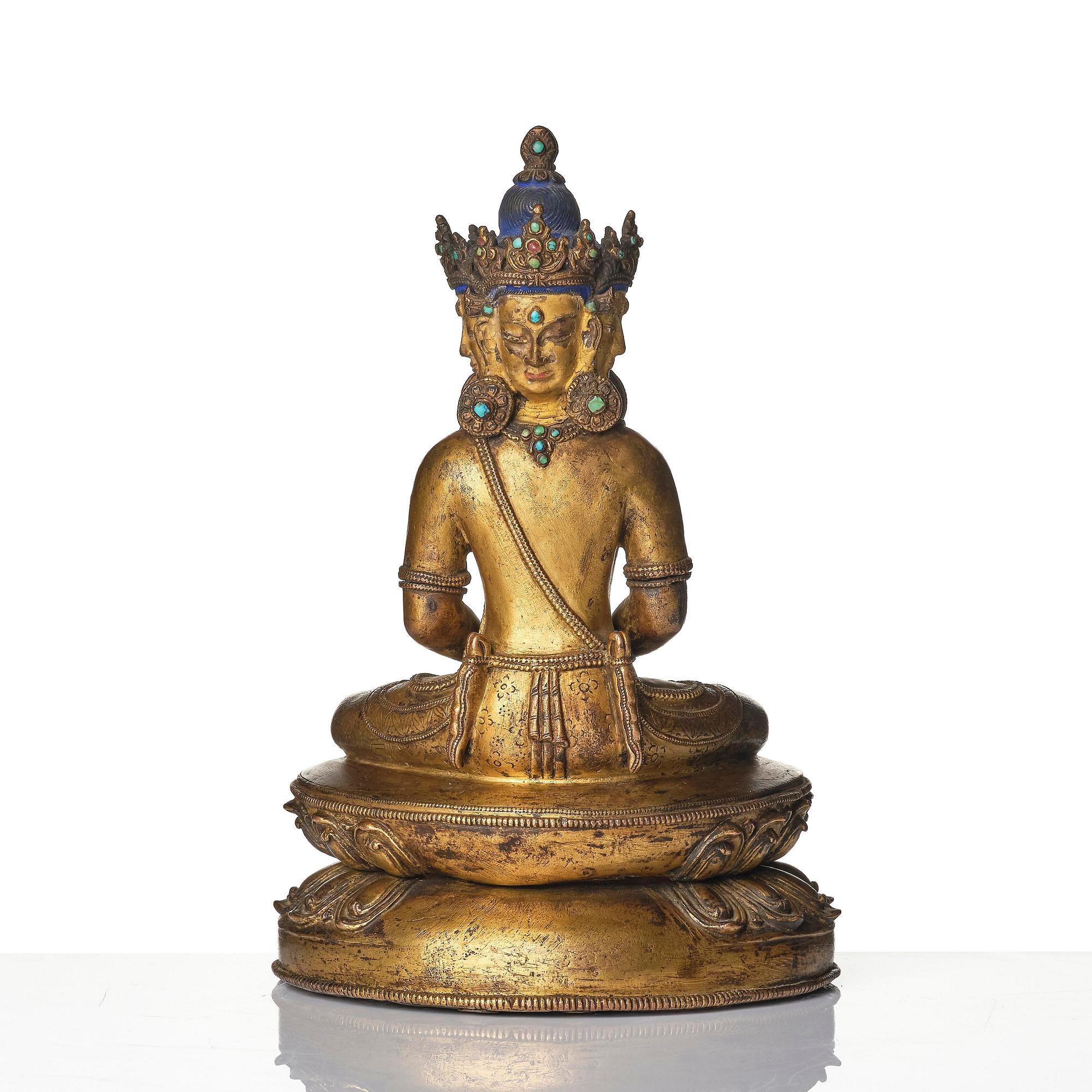
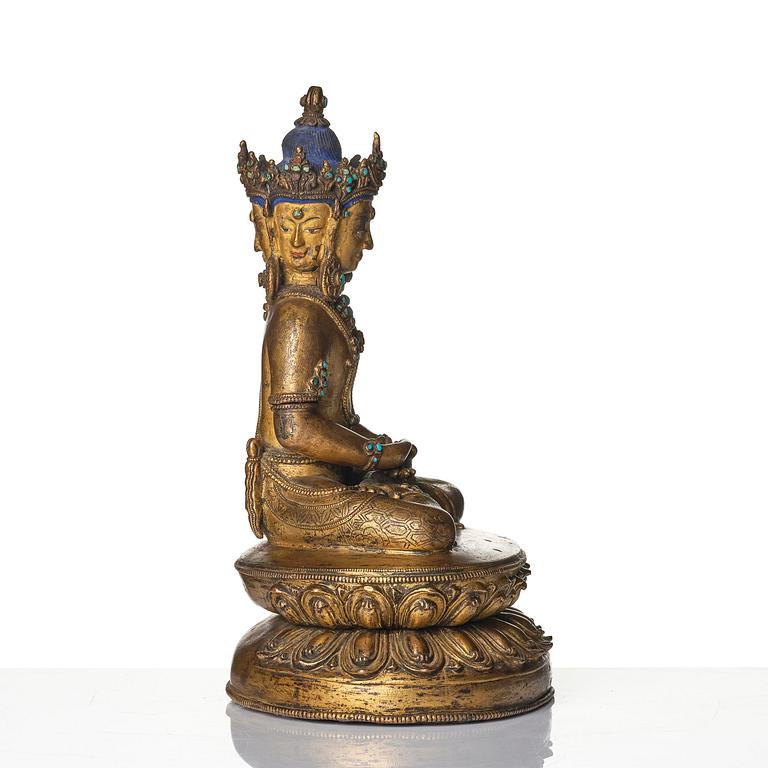
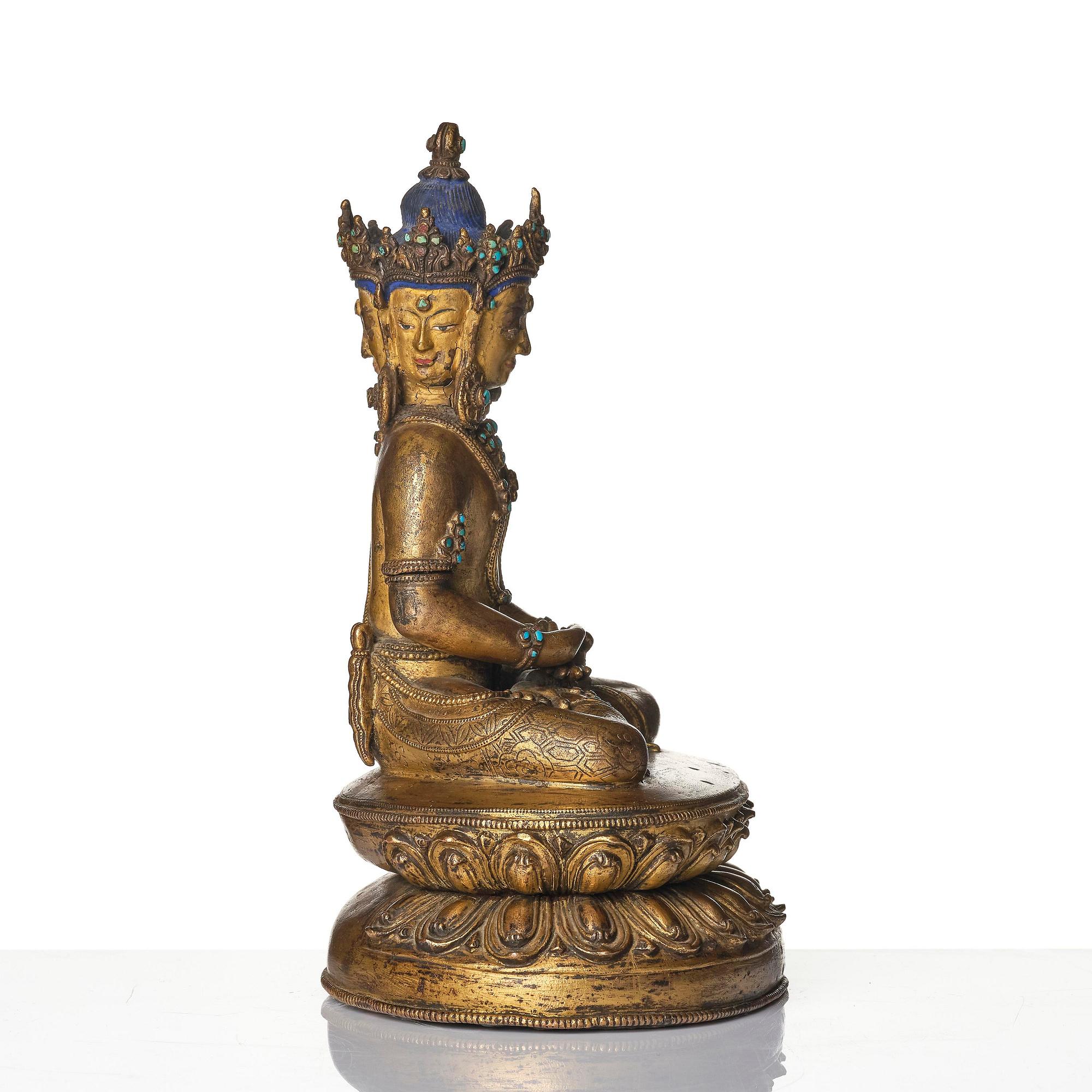
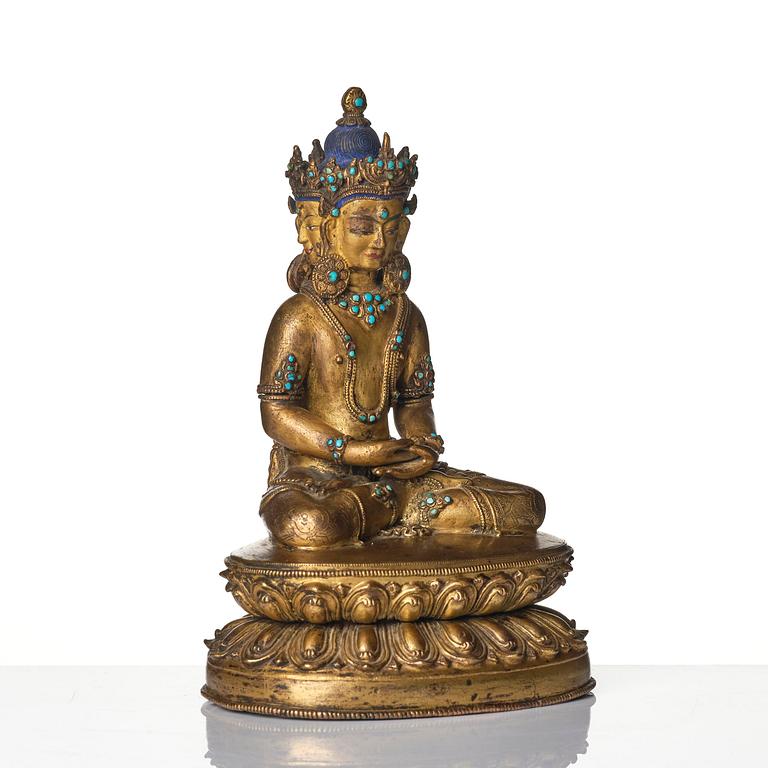
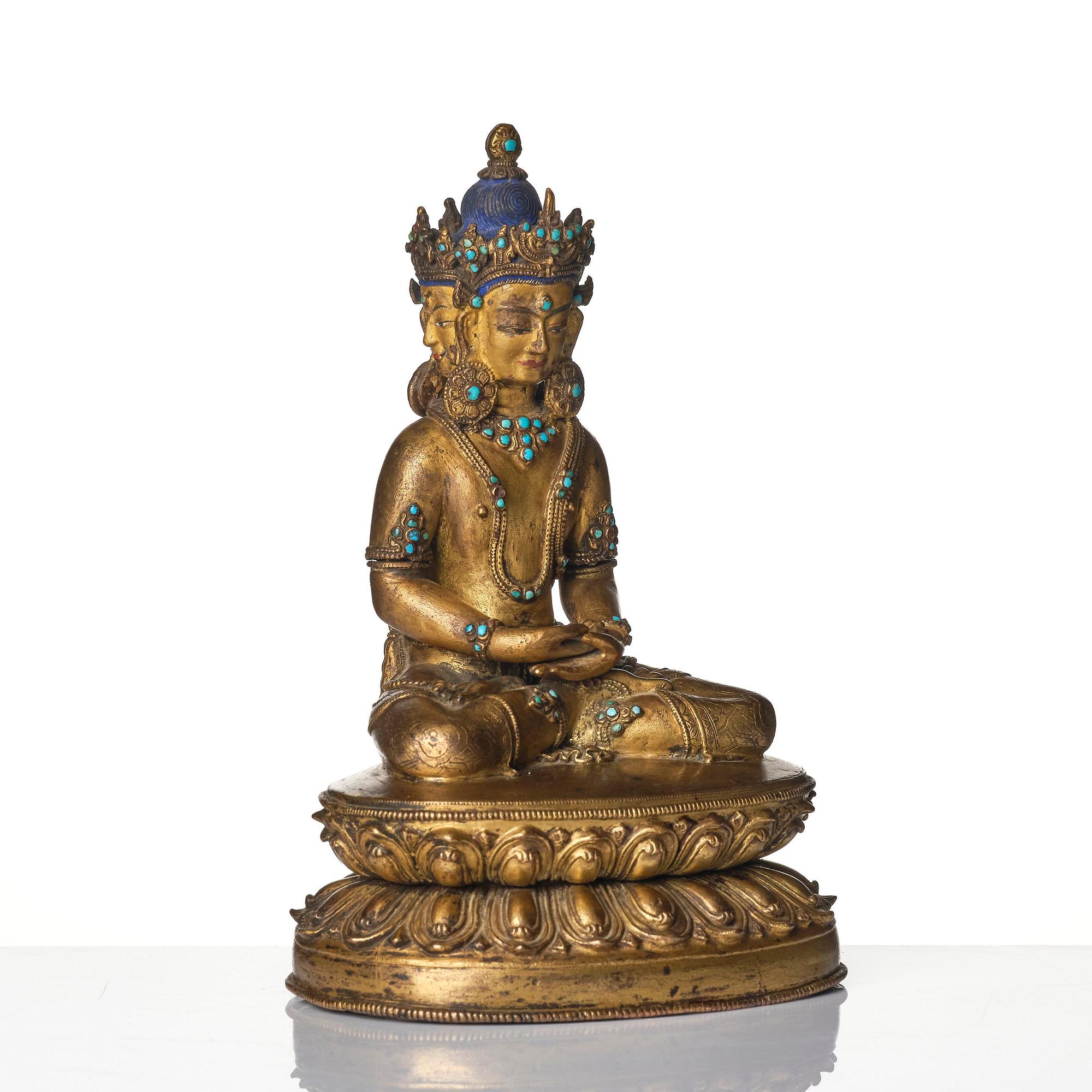
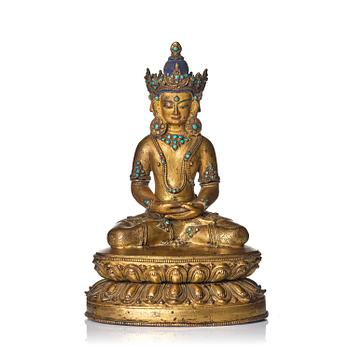
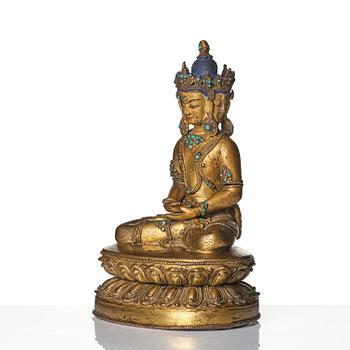
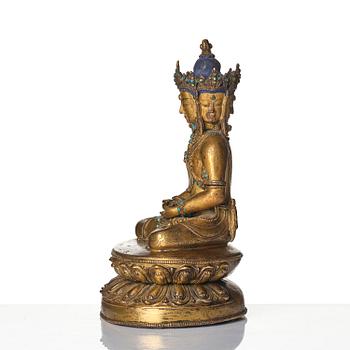
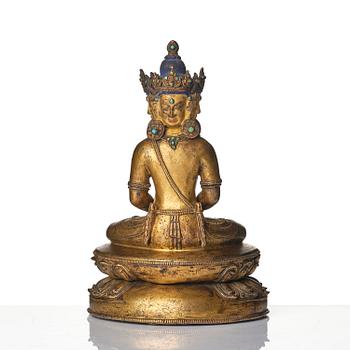
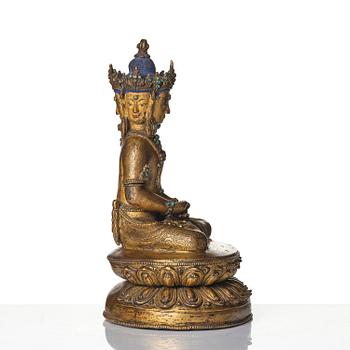
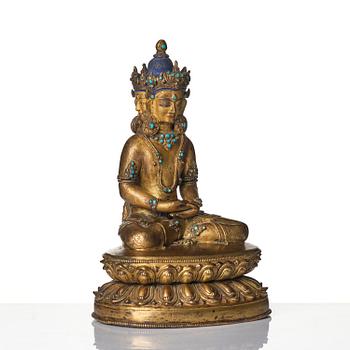
Skulpturen är avbildad/gjuten sittandes i dhyanasana på en dubbel lotustron, händerna vilandes i knät, i en meditativ samadhi mudra som ursprungligen har hållit 'the wheel of Dharma' eller en stående vajra. Huvudet bär fyra ansikten, vardera med ett vilsamt uttryck, långa örsnibbar med stora hängande örhängen, en fortlöpande utsmyckad krona, färgpigment i det uppsatta håret, klädd i en geometriskt mönstrad dräkt (antaravasaka) med dekorerad bård. Behängd med smycken med insatta turkoser. Höjd 23 cm.
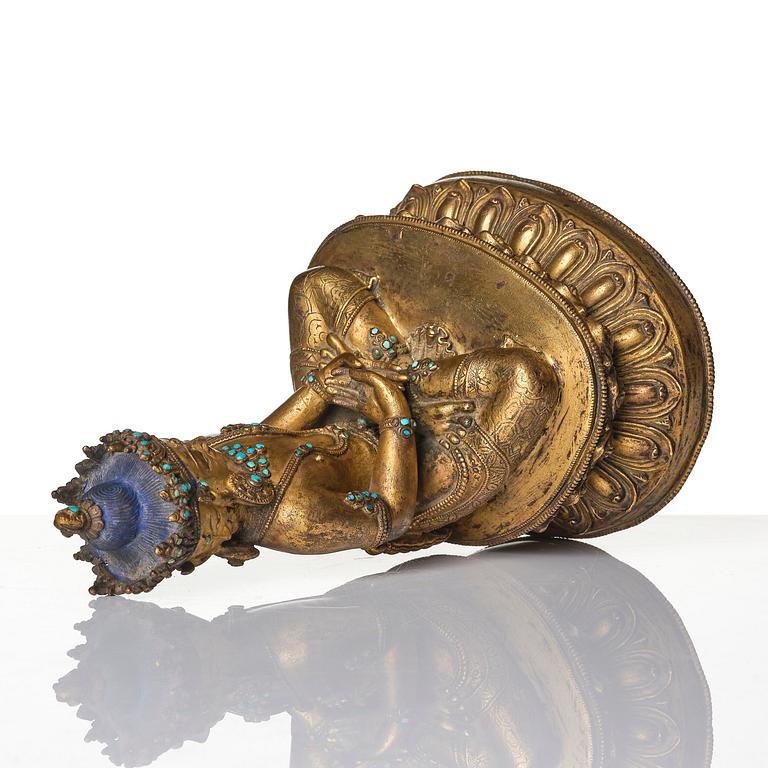
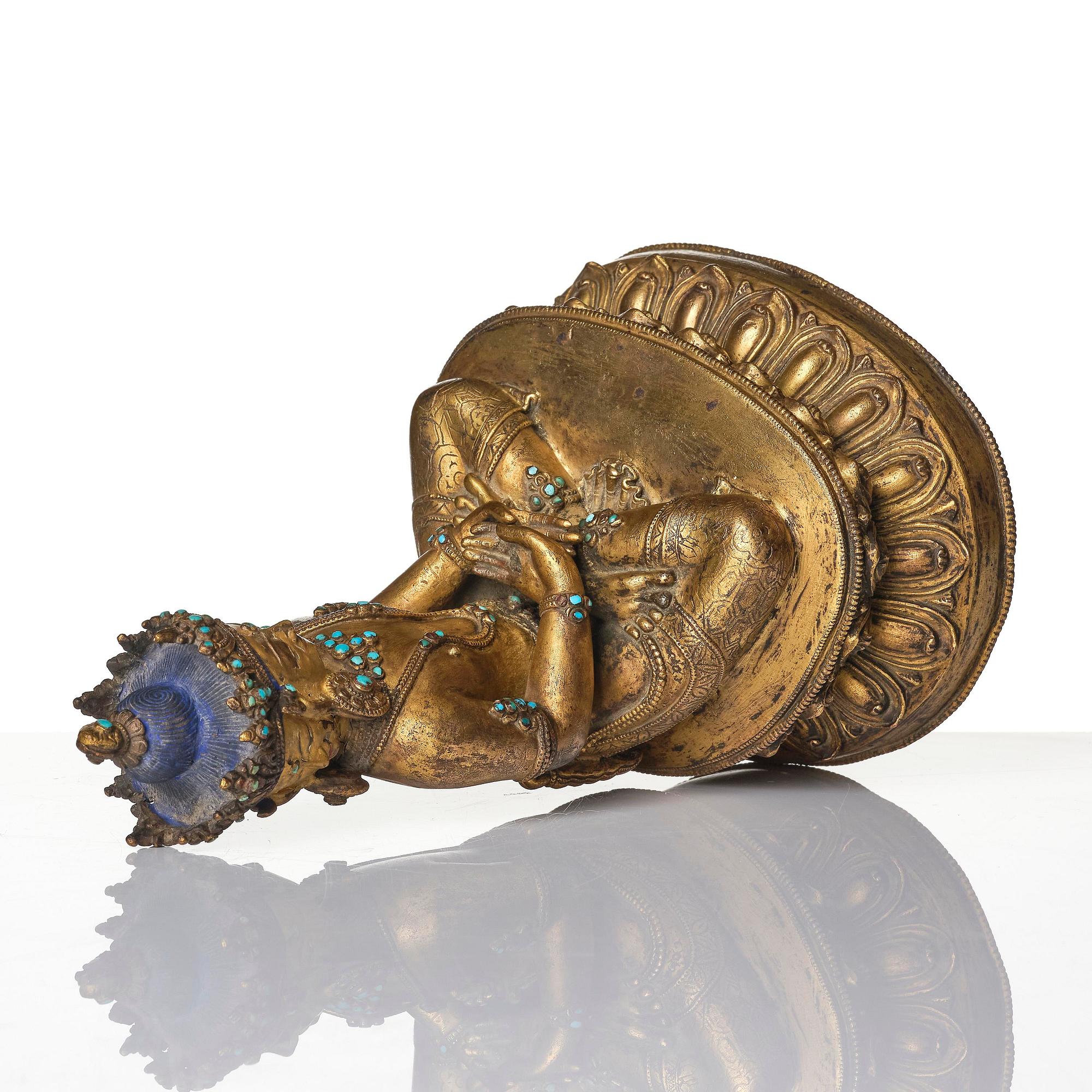
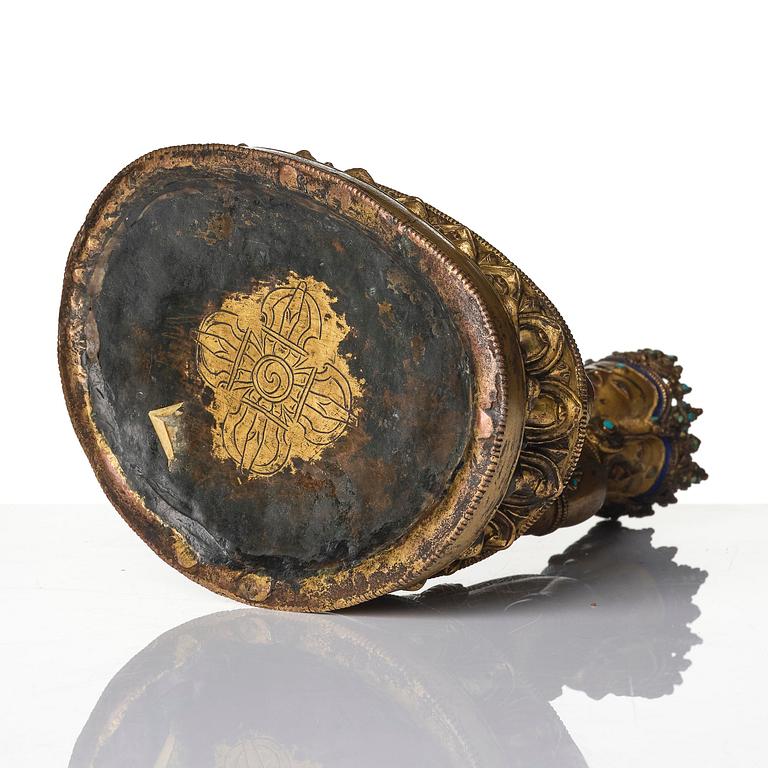
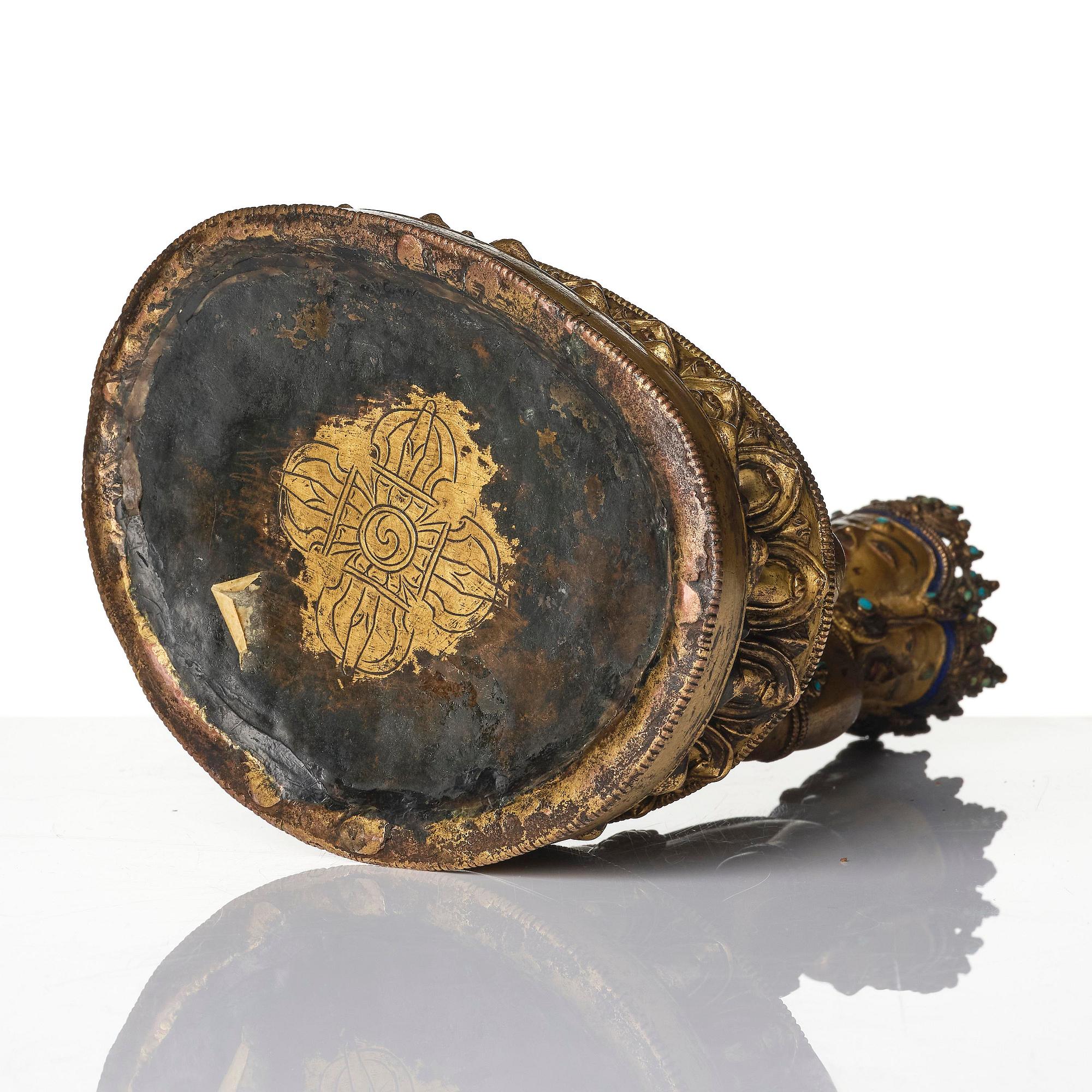
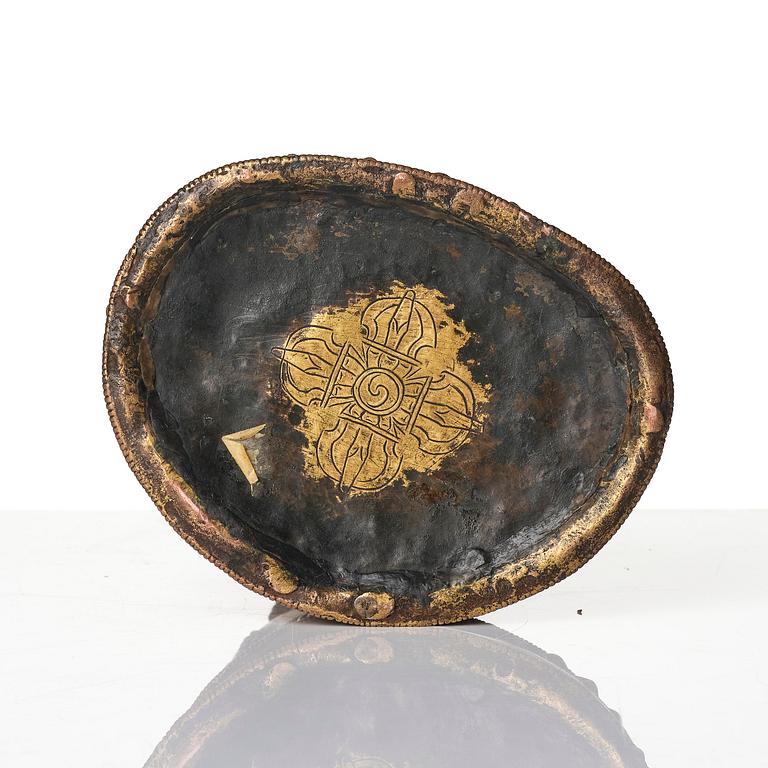
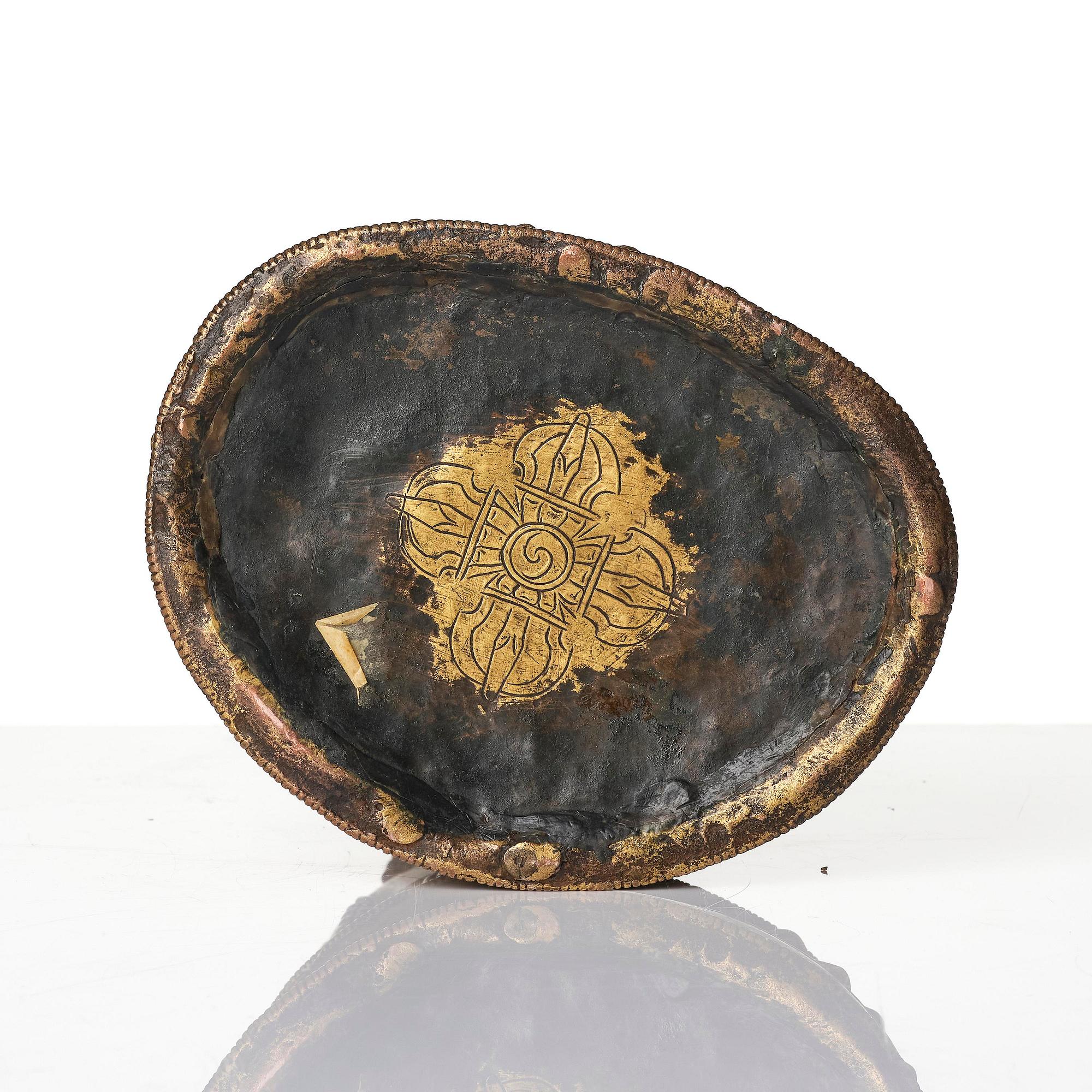
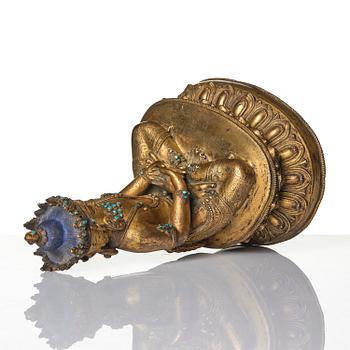
Gjuten i delar. Attribut, hjul saknas.
Proveniens
From the collection of Chef and Restaurant Manager Erik Berlin (1930‑2012), Malmö. Thence by descent within the family.
Utställningar
Compare with a Tibetan sculpture of the same period but smaller; sold at Christie's New York, lot 85, 14 September 2010.
Compare with one at Himalayan Art resources, lot not 2381.
Litteratur
Another example of a four-faced Vairocana is published in Amy Heller, Early Himalayan Art, New Delhi, 2008, pp.124-5, no.40.
Övrig information
Sarvavid Vairocana is the chief deity in the Sarvavid Vairocana Mandala, the root mandala of the Sarvadurgatiparisodhana Tantra. Out of the five ’wisdom’ Buddhas, he is the only one who may have more than one face. Sarvavid Vairocana is recognized by his bodhisattva regalia, his four faces, and The Wheel of Dharma (Dharmachakra), which is lost in the present figure. In this large and finely detailed figure of Vairocana, he is depicted in his four-faced form, alluding to his epithet as the Omniscient Buddha.
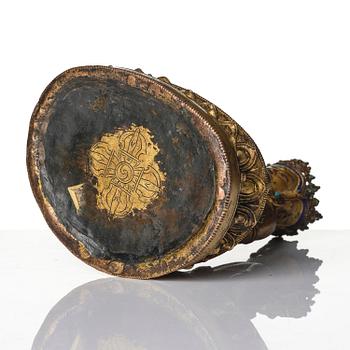
The present figure is cast in parts, with the forearms and lower part of the lotus throne cast in separate parts.
För konditionsrapport kontakta specialist
Andra har även tittat på