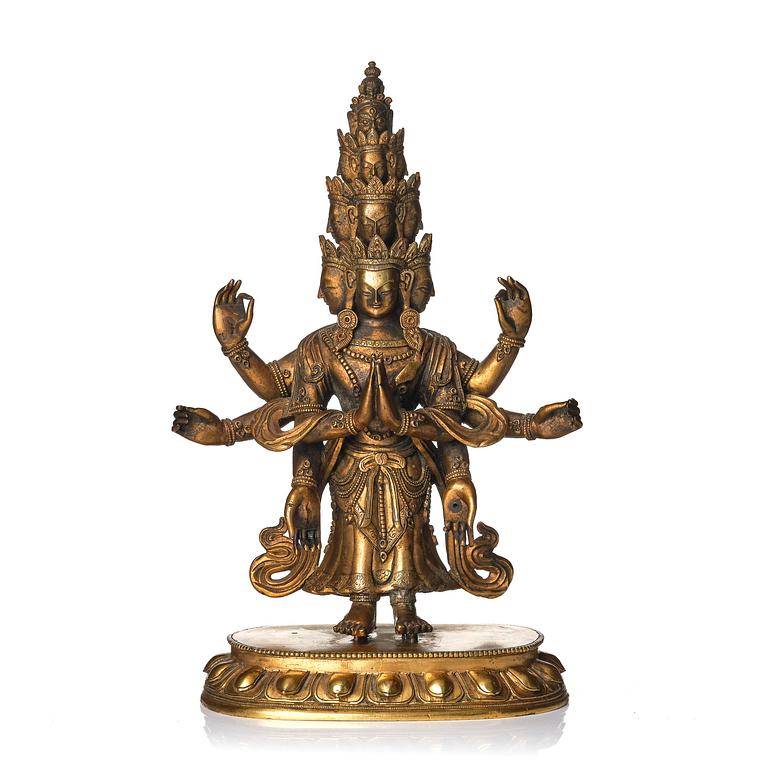
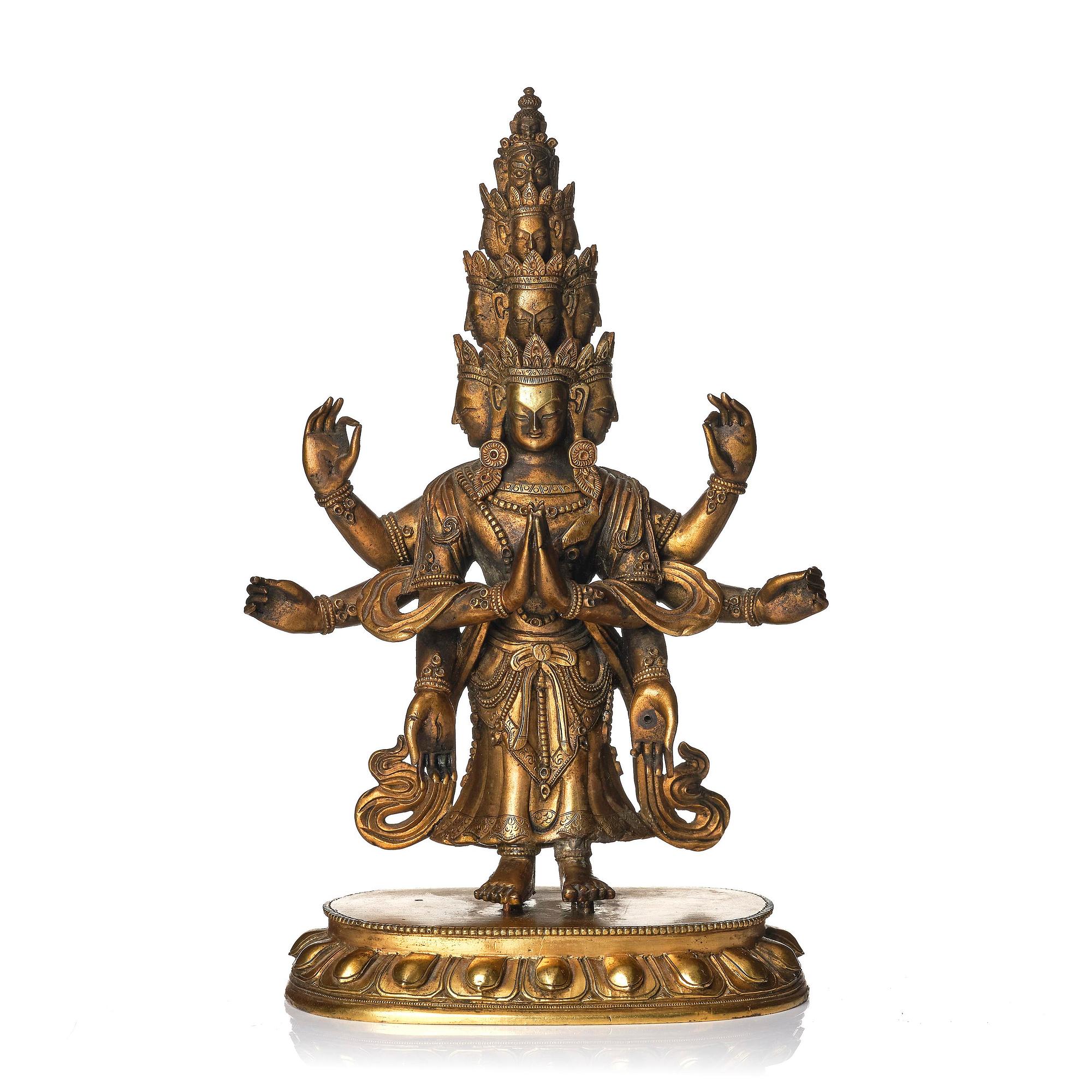
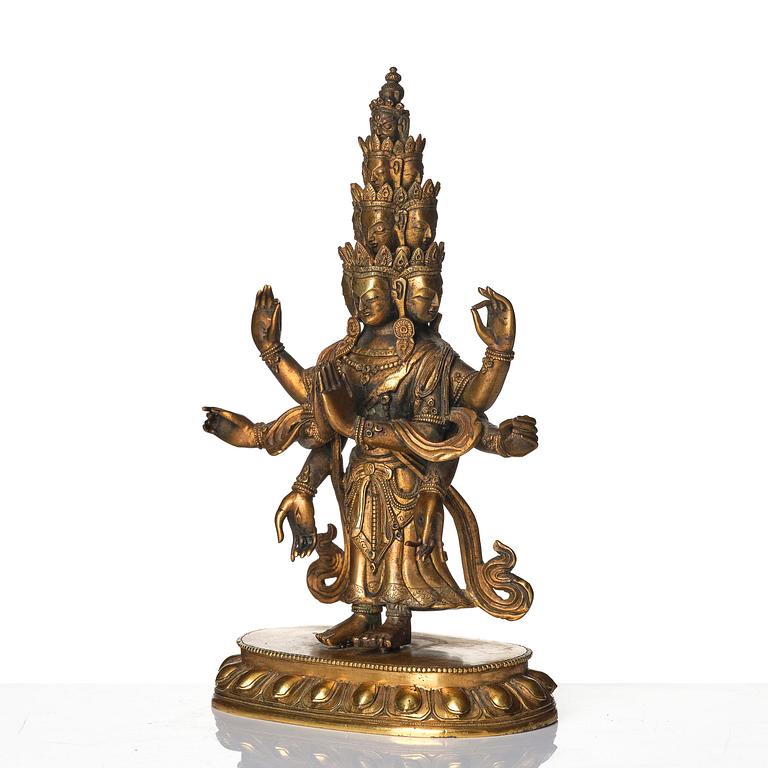
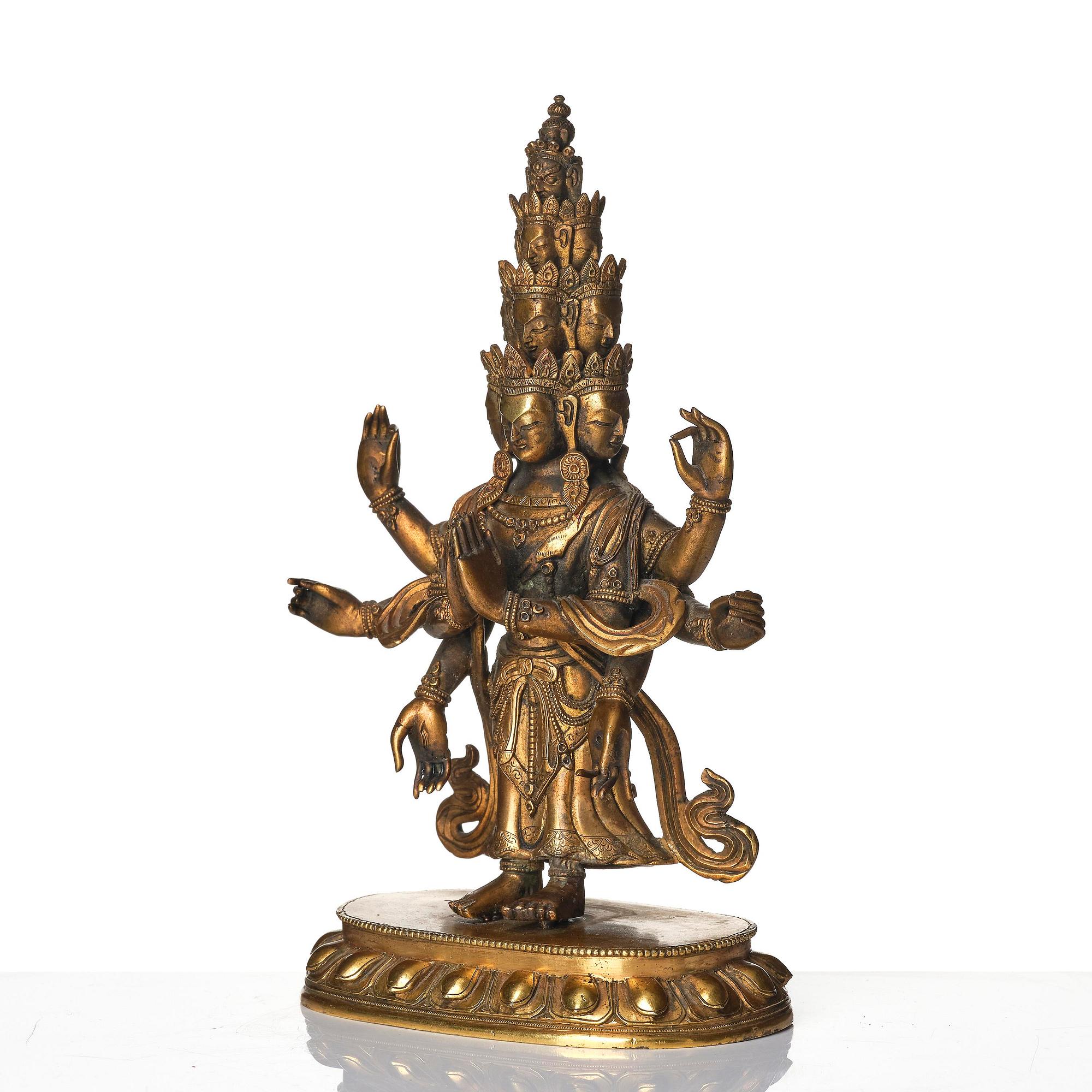
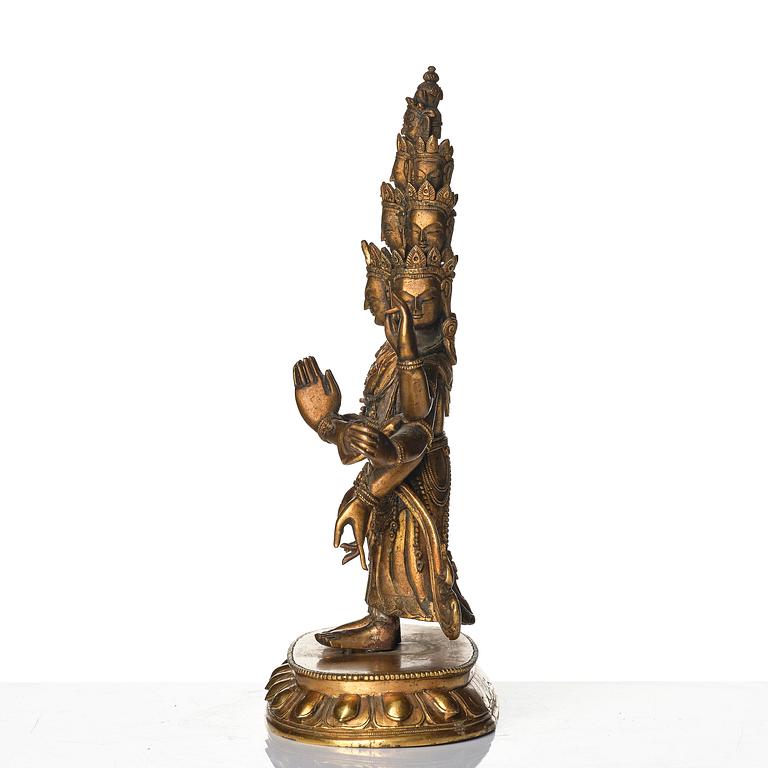
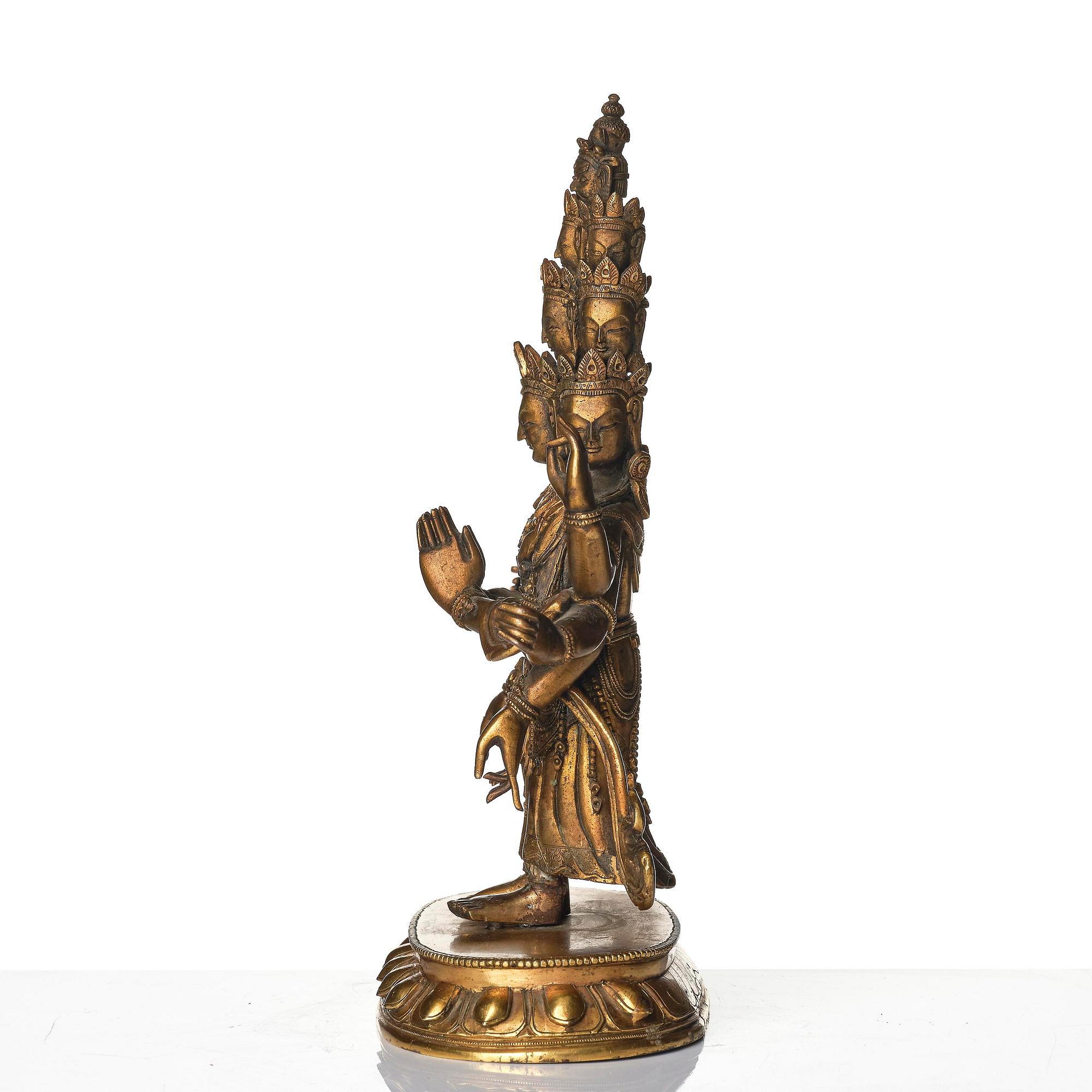
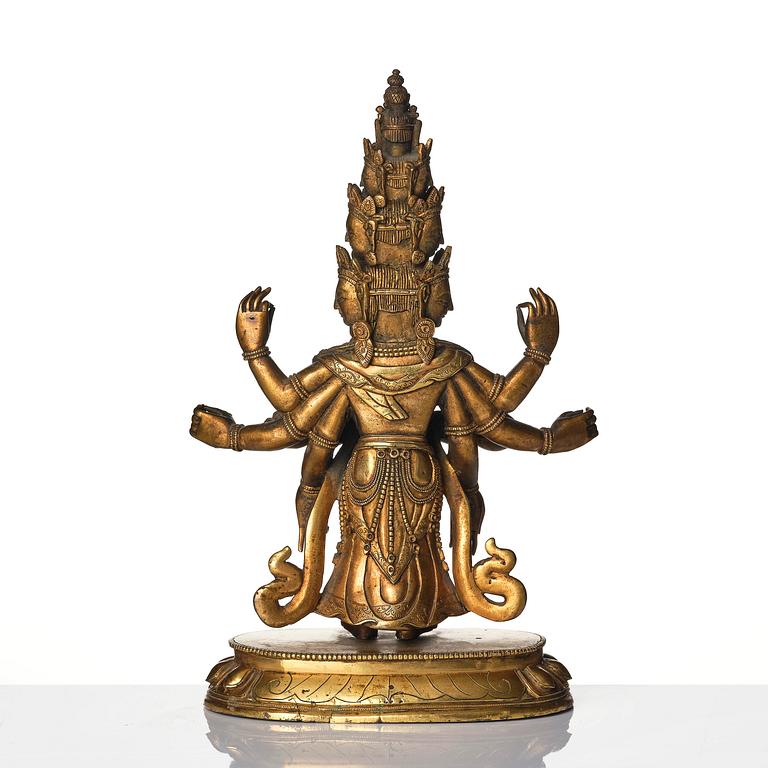
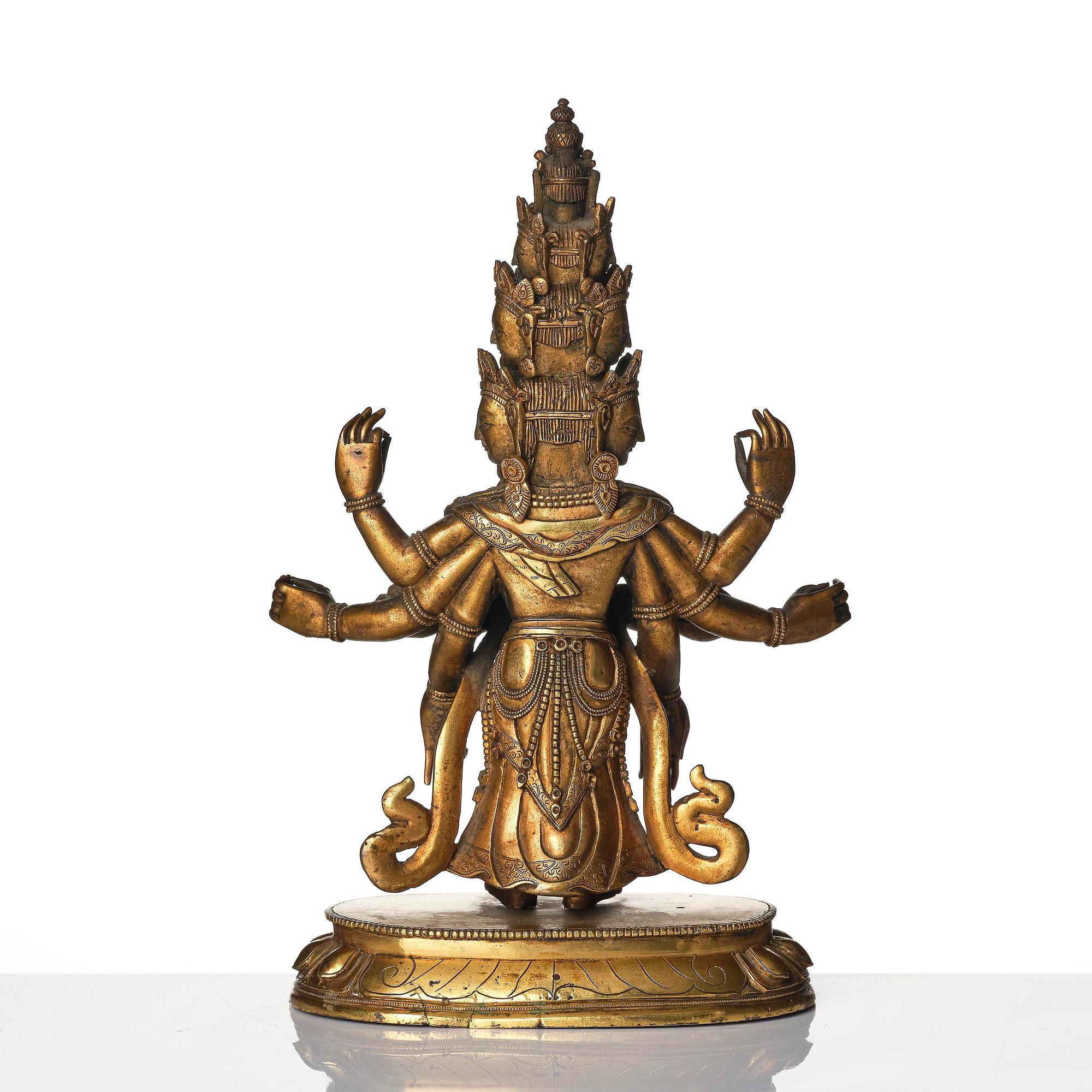
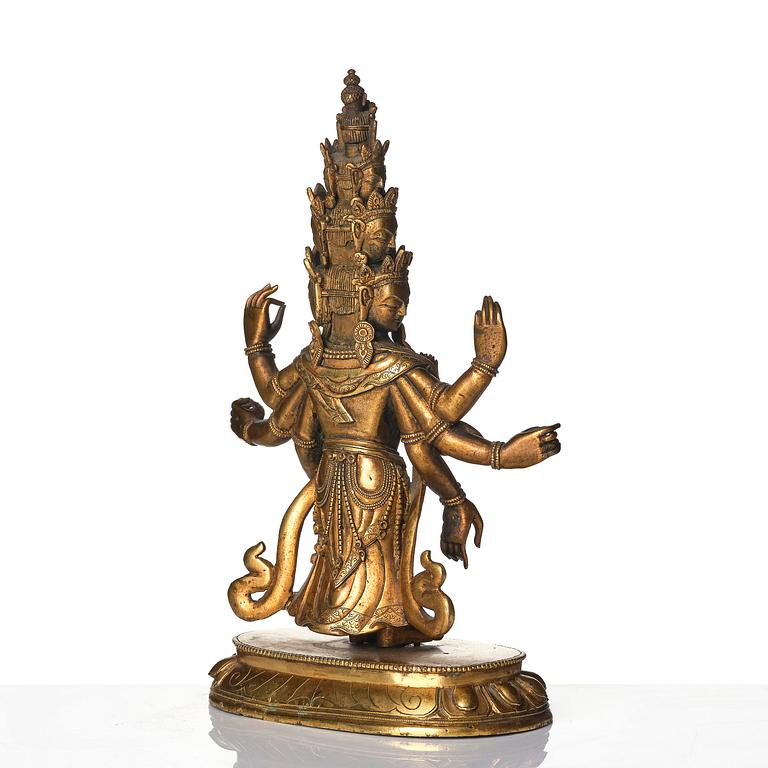
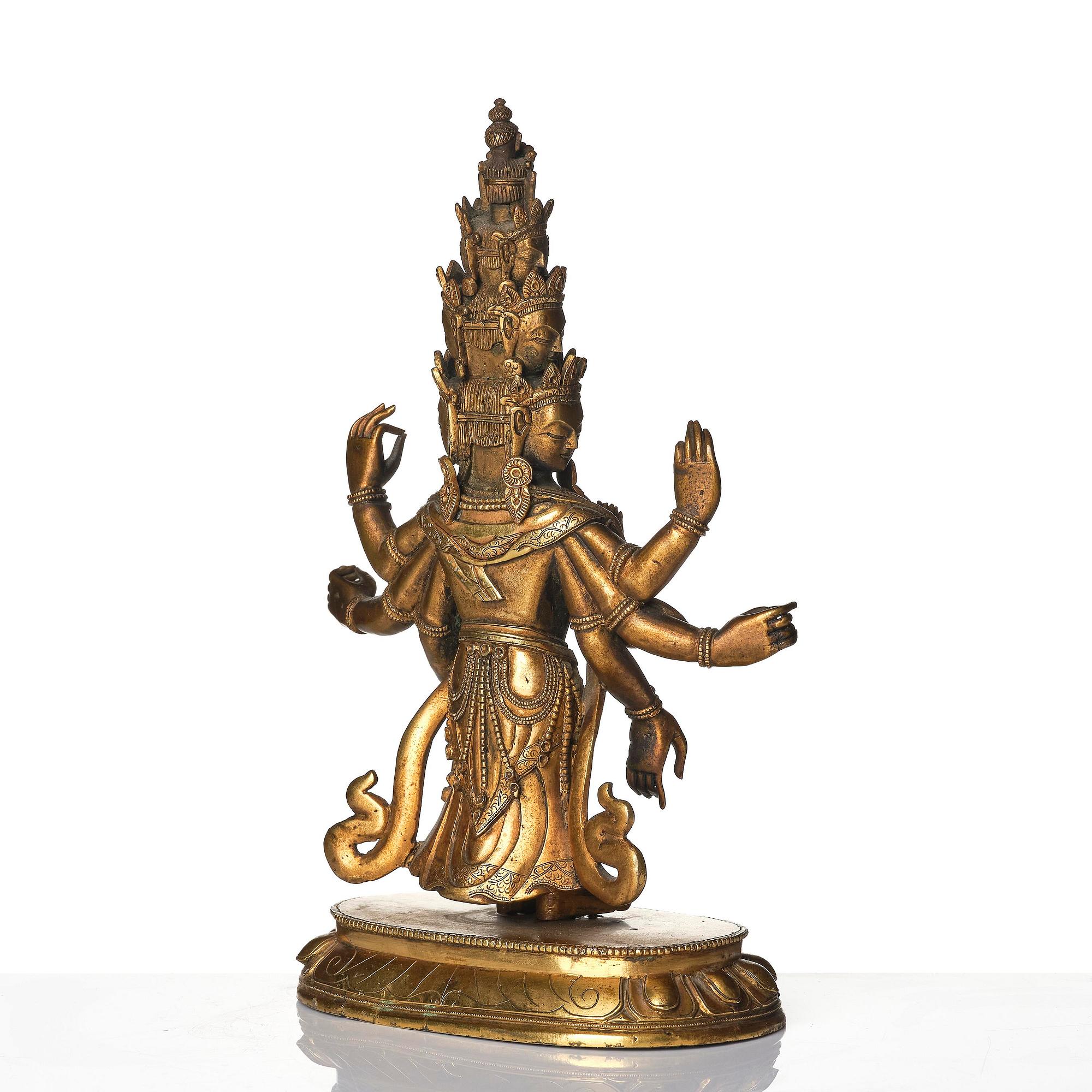
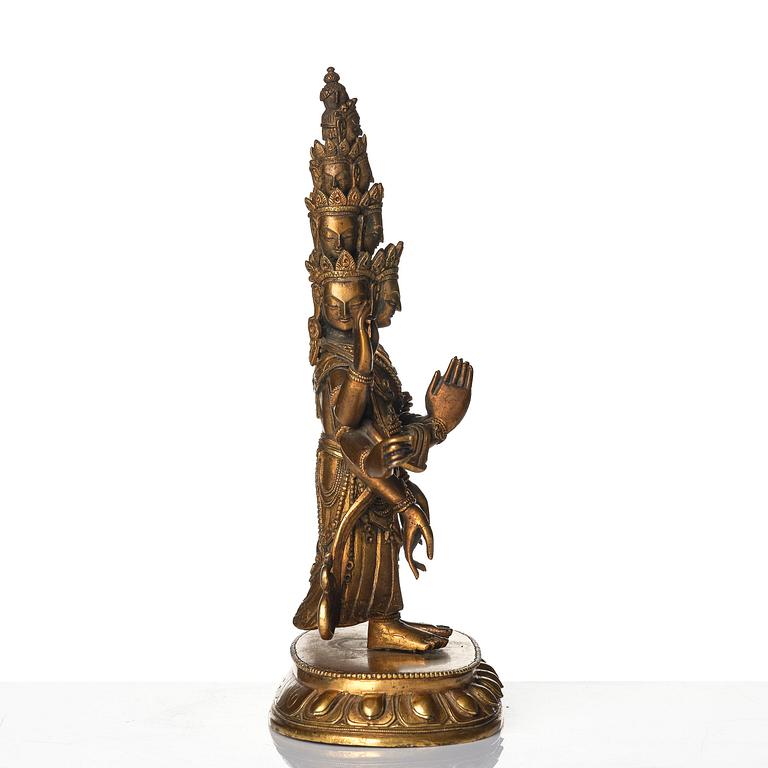
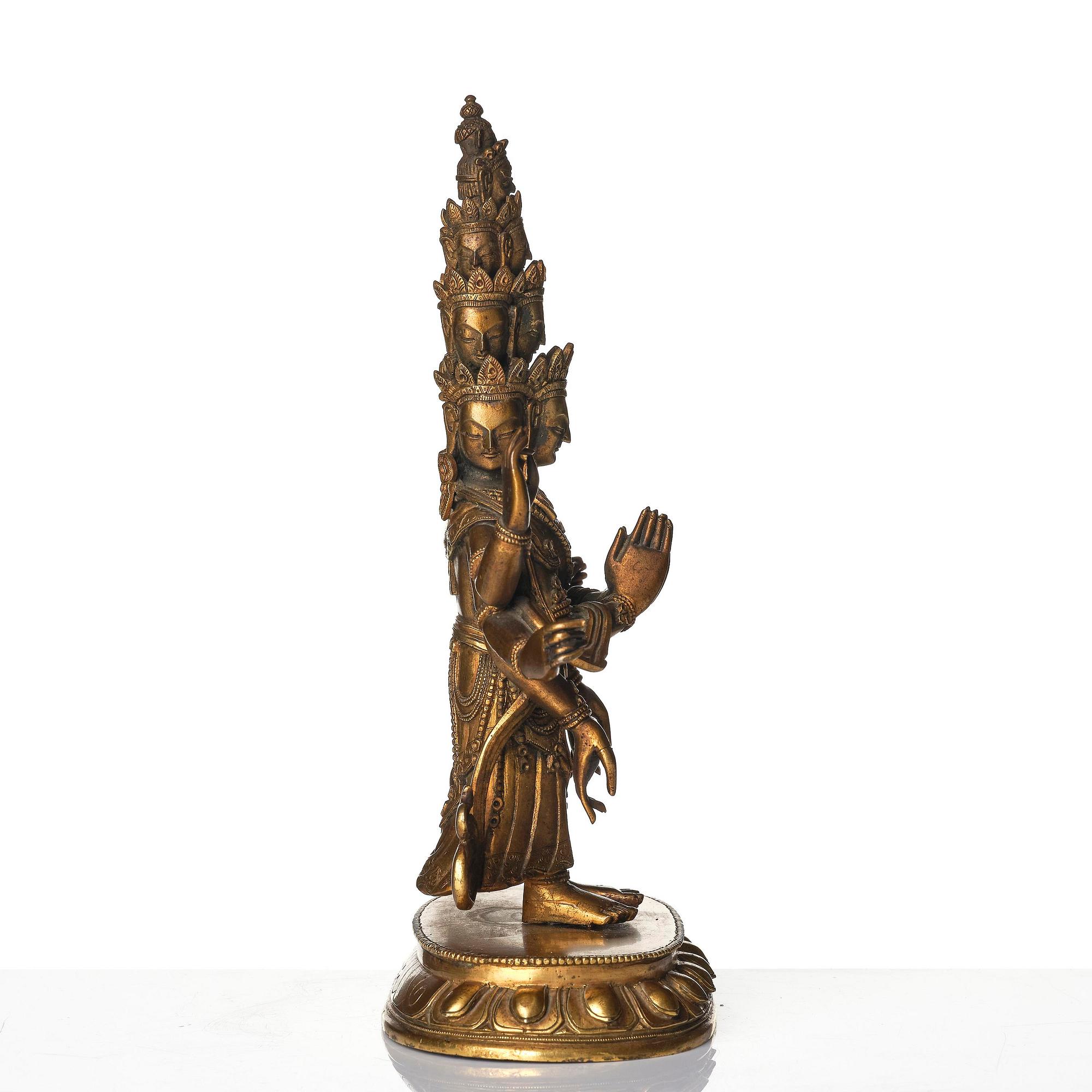
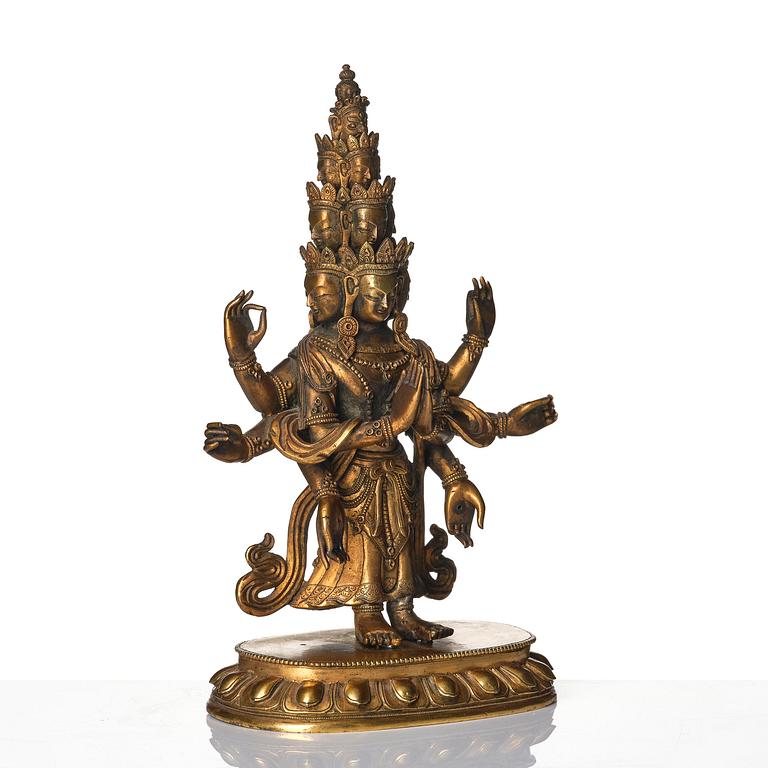
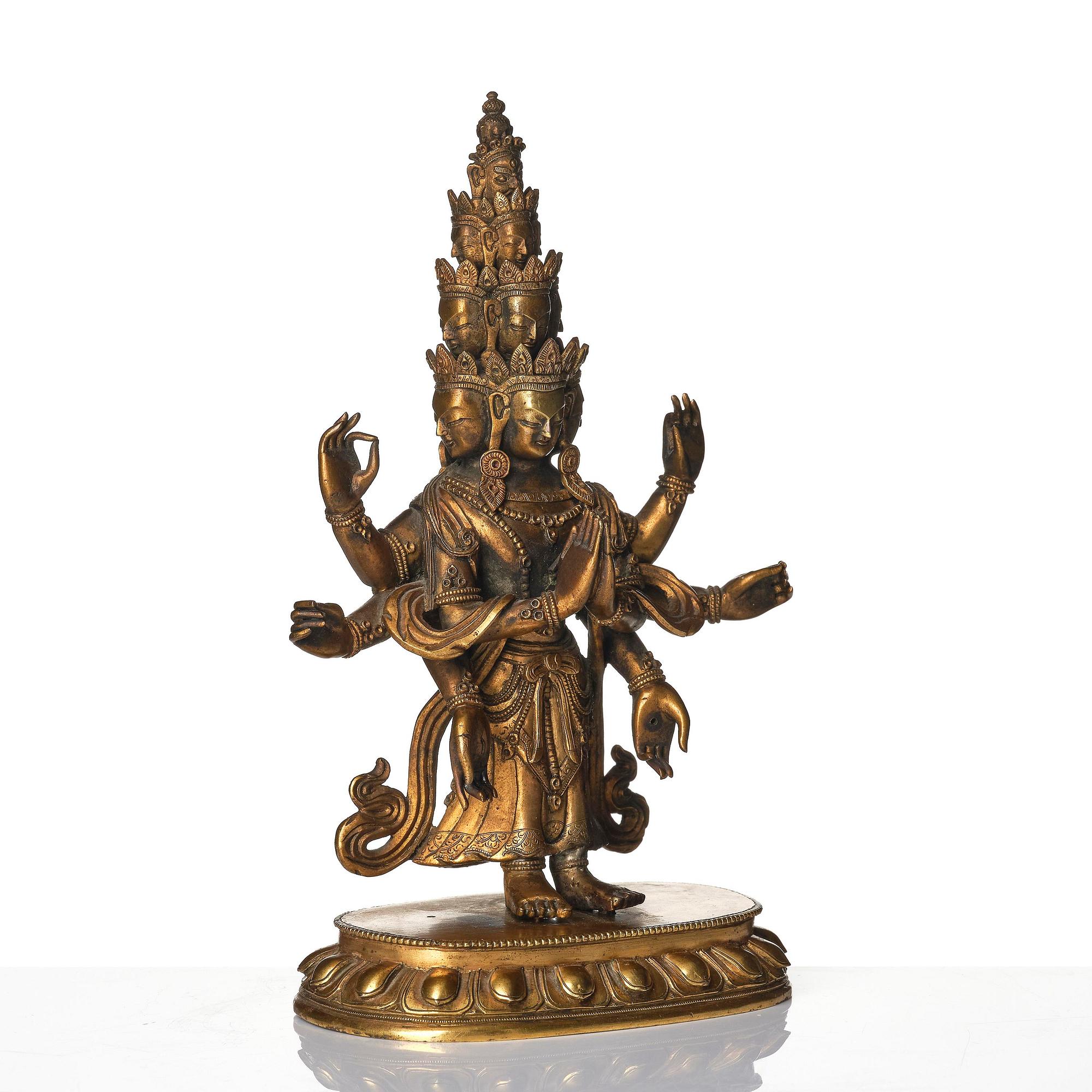
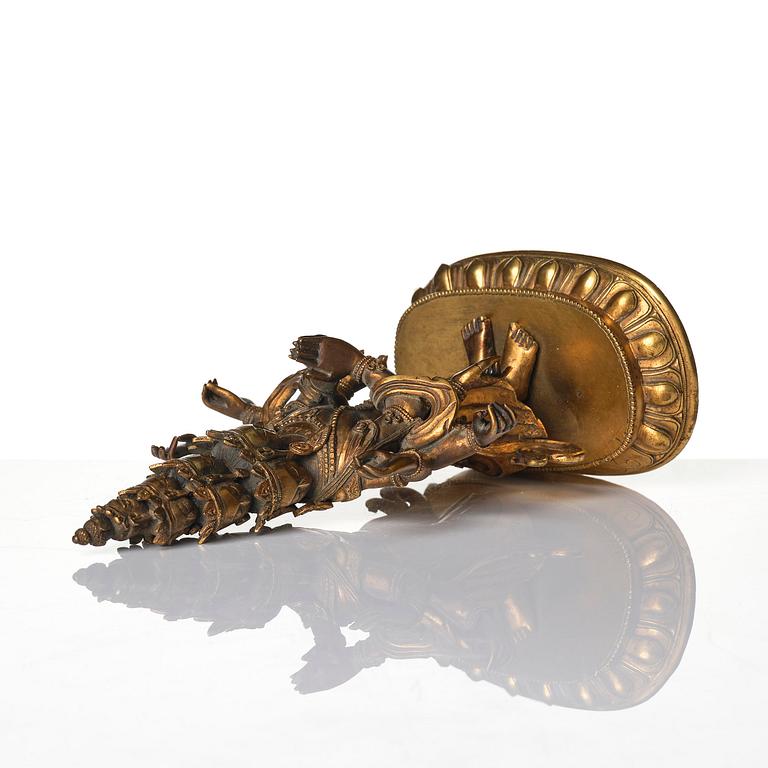
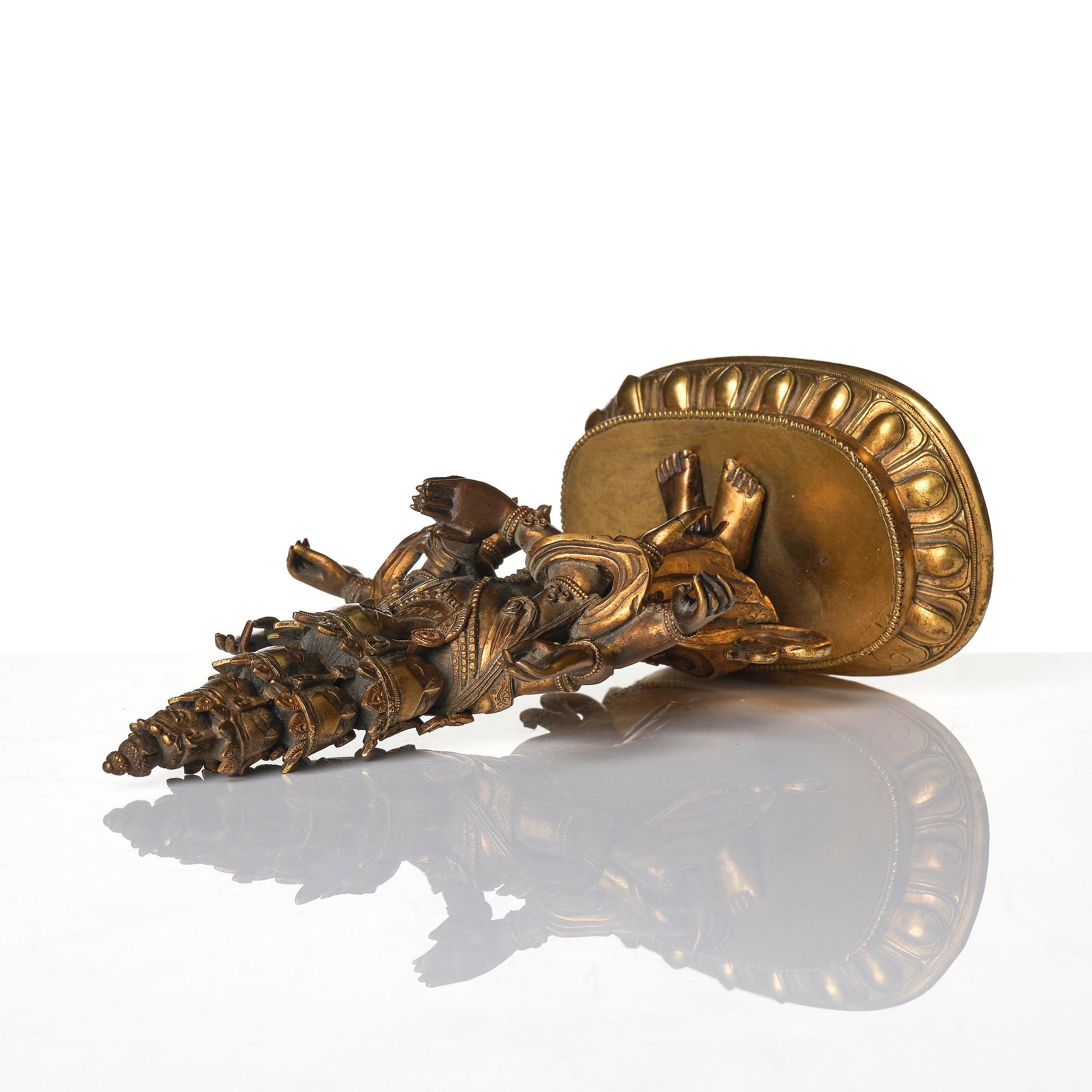
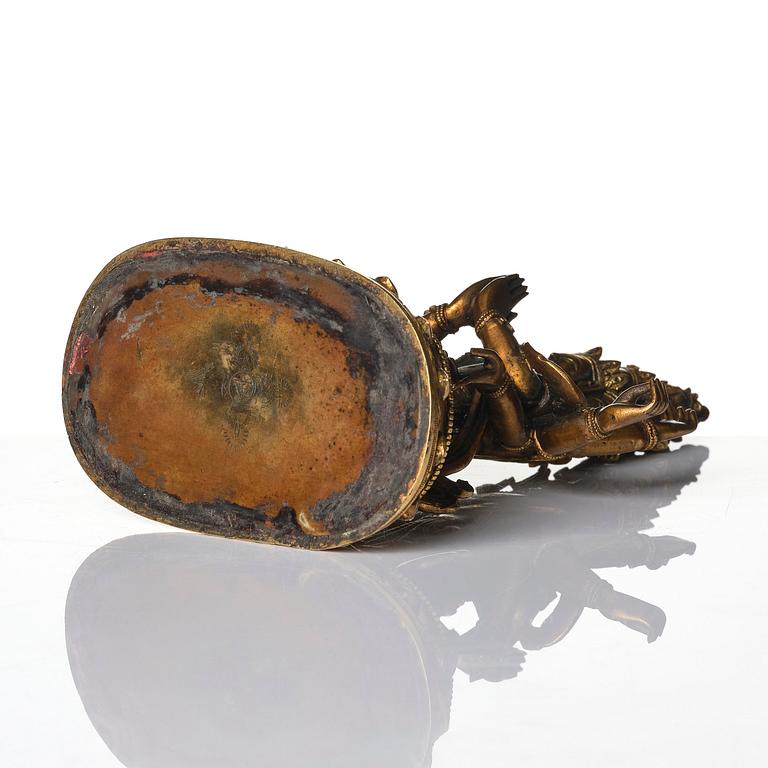
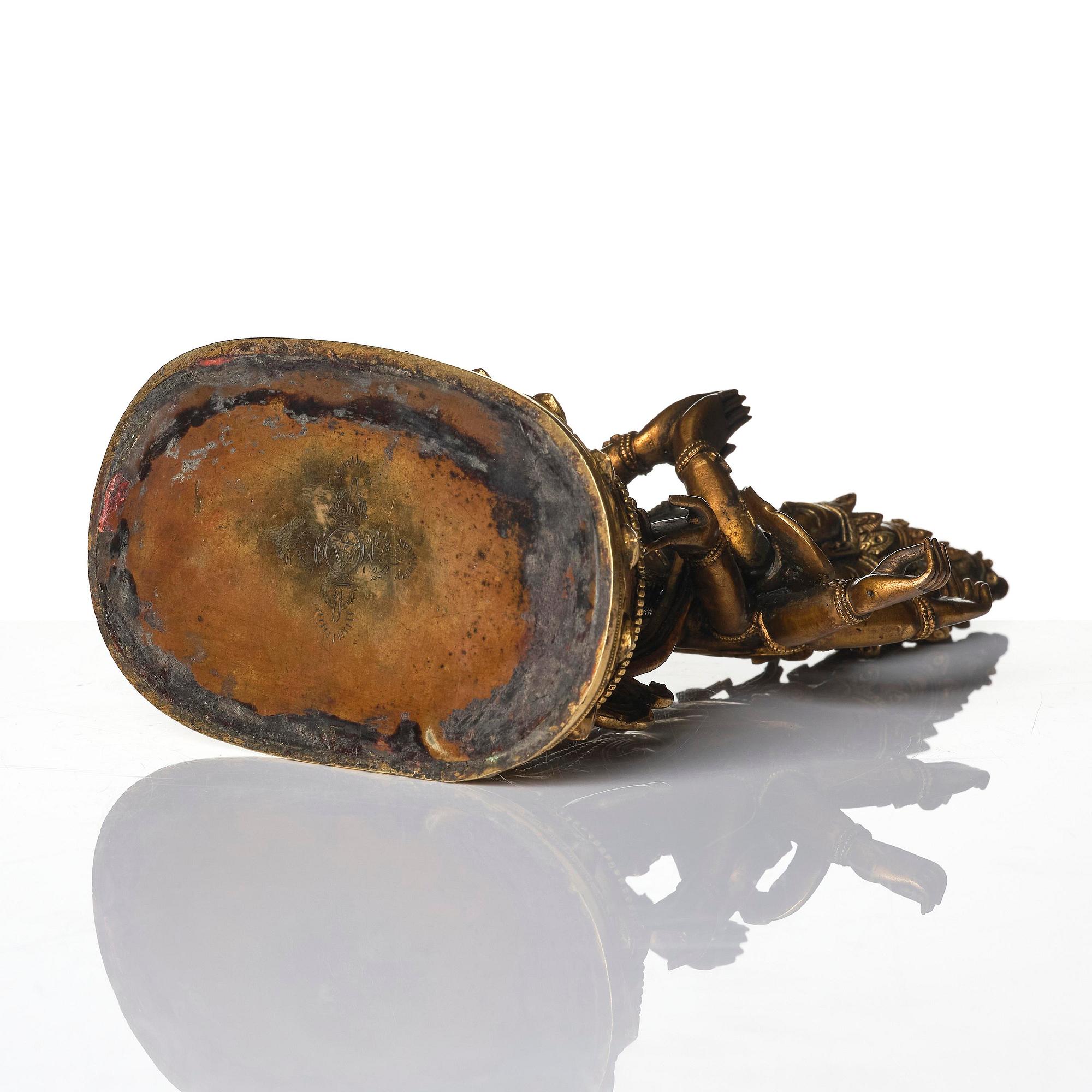
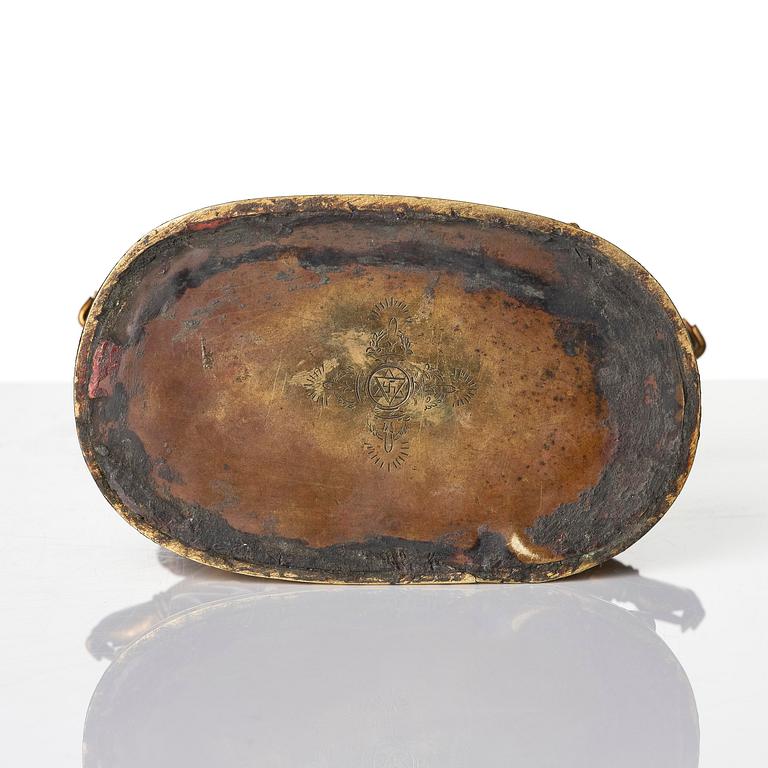
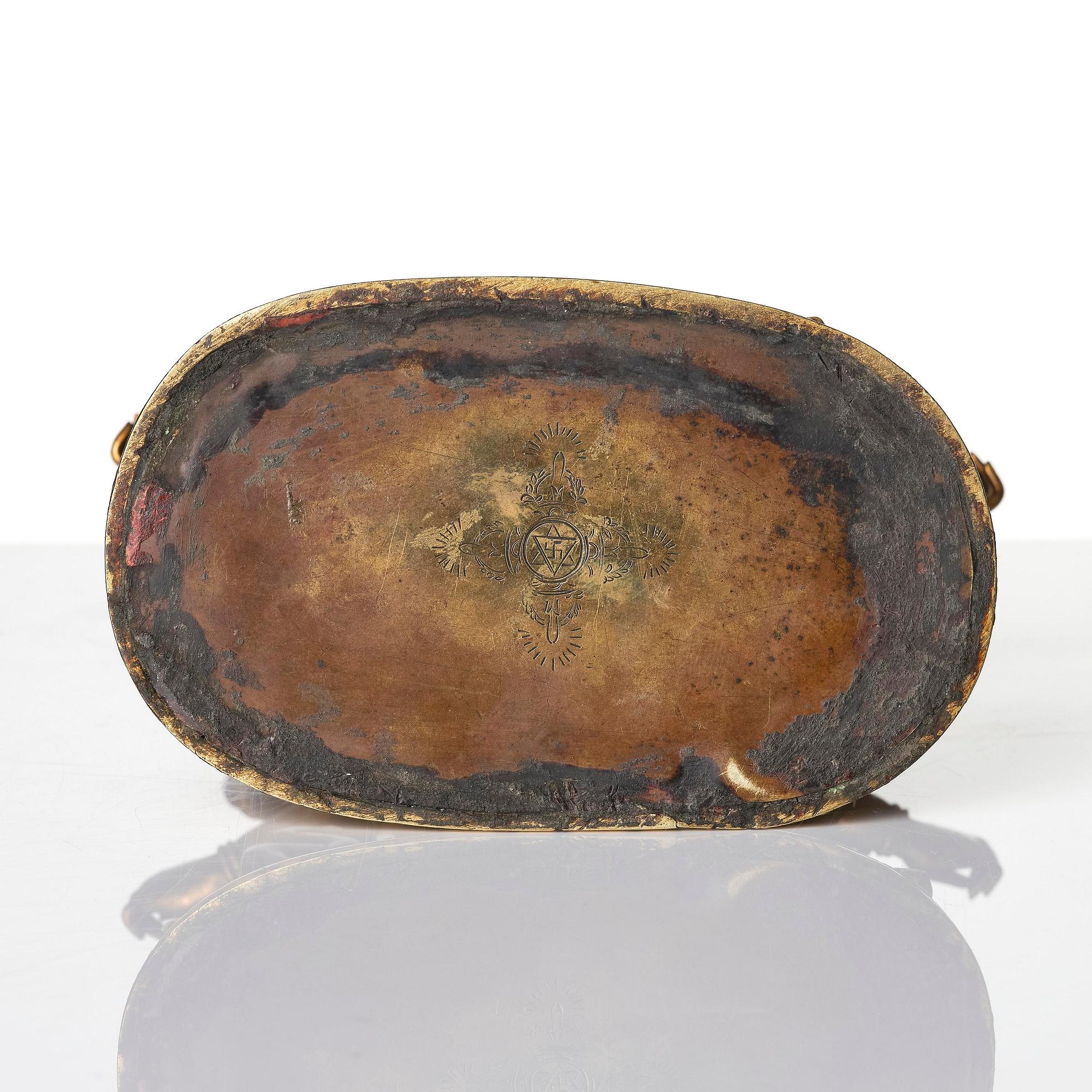
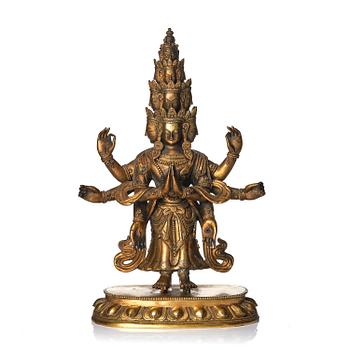
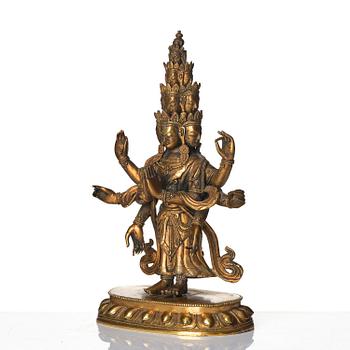
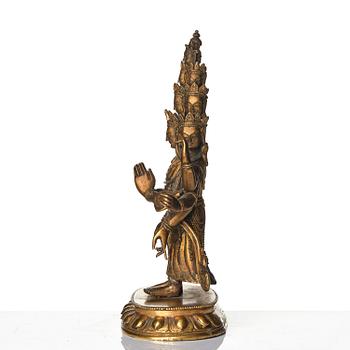
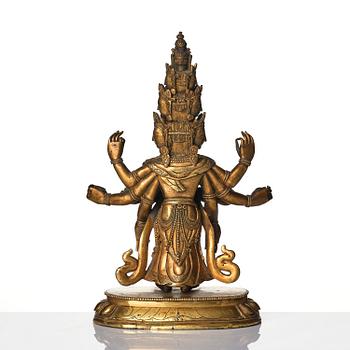
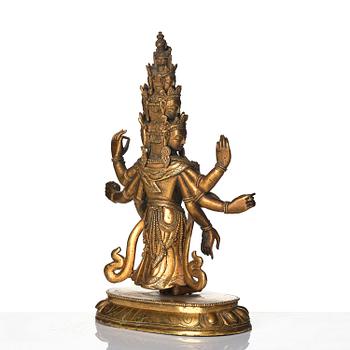
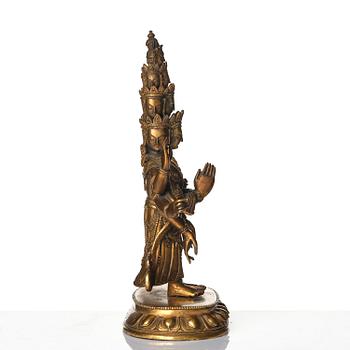
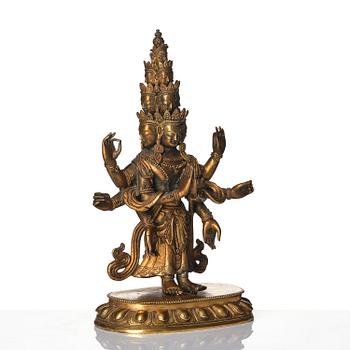
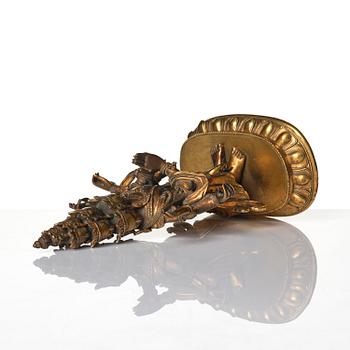
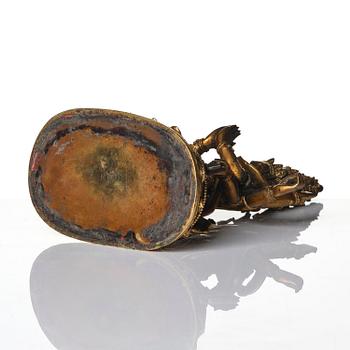
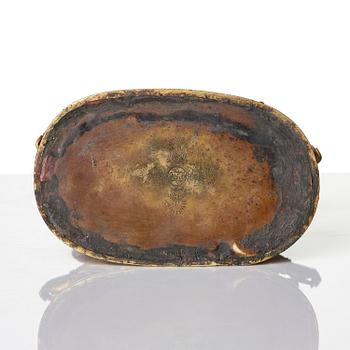
Avbildad stående på en lotustron med pärlkant, i sin åttaarmade, elvahövdade avbild, löstagbar från basen. De främsta händerna i namaskar mudra, de andra sex strålar ut från kroppen i olika positioner, en hand sänkt för att visa det tredje ögat i handen, klädd i en dräkt som är knuten runt midjan, utsmyckad, med sjal, förseglad med en senare bottenplatta med dubbel vajra. Höjd 22 cm Vikt 1305 gram.
Attribut saknas.
Proveniens
From the collection of Chef and Restaurant Manager Erik Berlin (1930‑2012), Malmö. Thence by descent within the family.
Utställningar
Compare with one sold at Christies Live auction 2300, Indian and Southeast Asian Art, lot 250, 23 March 2010.
Övrig information
Avalokiteshvara is one of the most beloved deities in Mahayana Buddhism. In this depiction, the bodhisattva appears in his eleven-headed form. Ten of the heads represent stages on the path to enlightenment, while the eleventh, crowning head is that of Amitabha (or Amitayus), Avalokiteshvara’s spiritual genesis.
There are numerous legends about the origin of this form of Avalokiteshvara. In one version, Avalokiteshvara vowed that he would not enter nirvana until he had first helped all sentient beings enter the Pure Land of Amitayus (Sukhavati). He descended into hell, converted the souls, and led them personally to Sukhavati. Yet, for every soul he saved, another descended into hell to take its place. He was so overwhelmed with this Sisyphean task that he gave up on his vow. Overcome by despair, his head shattered into a thousand pieces. Moved by Avalokiteshvara’s compassion, Amitabha reassembled the fragments into ten heads and placed his own atop them. He encouraged Avalokiteshvara to continue his mission, assuring him there were other ways to save sentient beings. To assist him, Mahakala - the wrathful manifestation of Avalokiteshvara - came into existence to battle negative forces with compassion and remove obstacles to enlightenment. Mahakala’s head is the tenth in the sequence, just below Amitabha’s at the top.
För konditionsrapport kontakta specialist
Andra har även tittat på