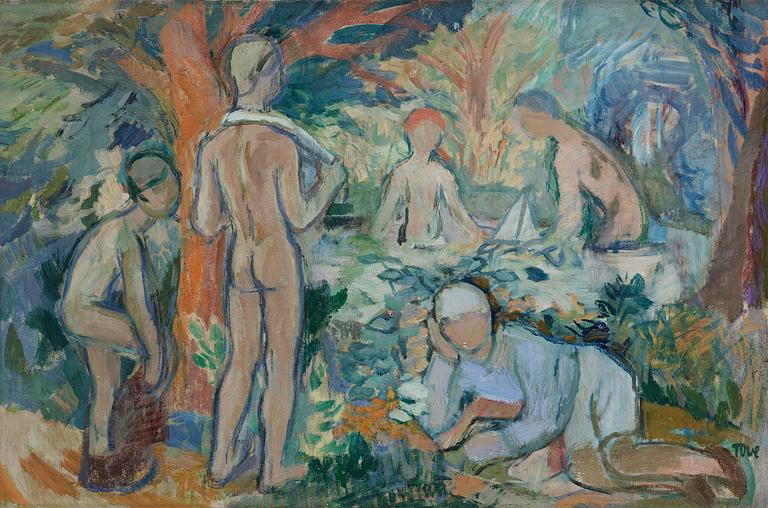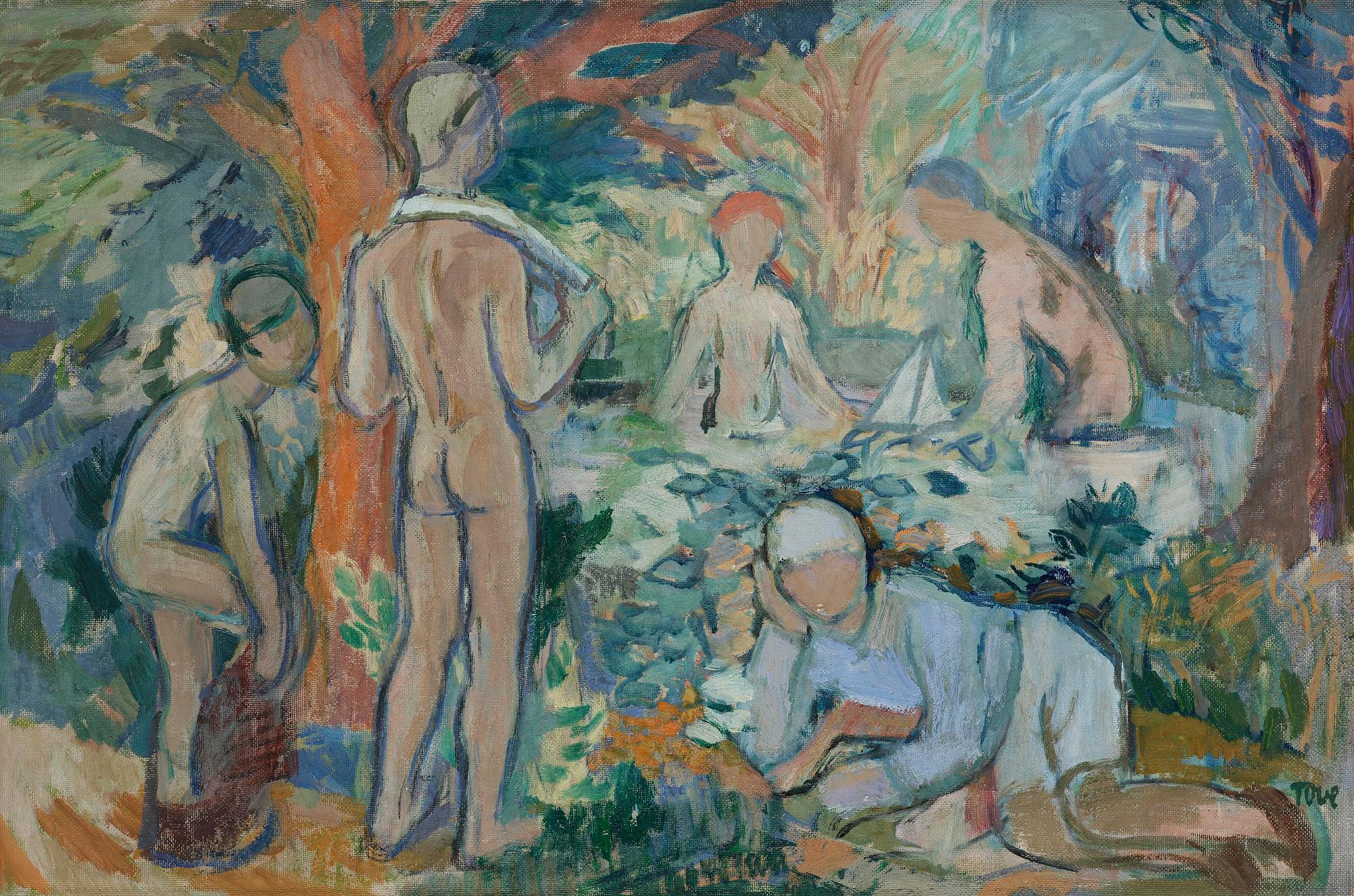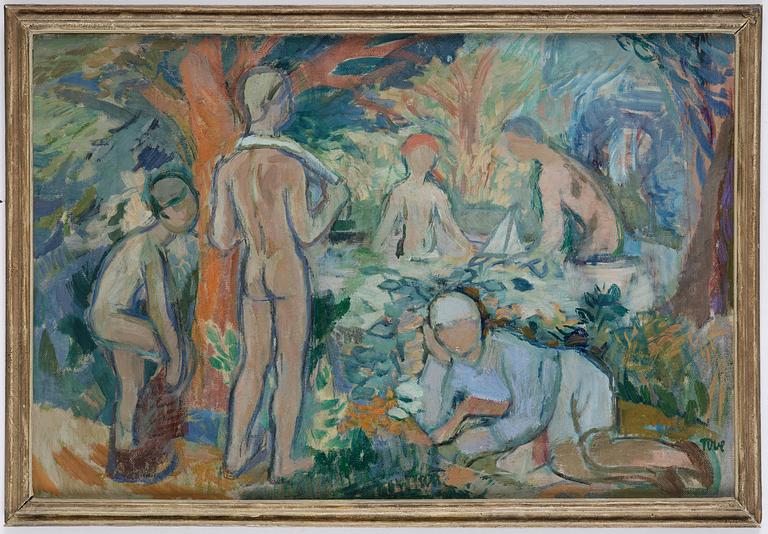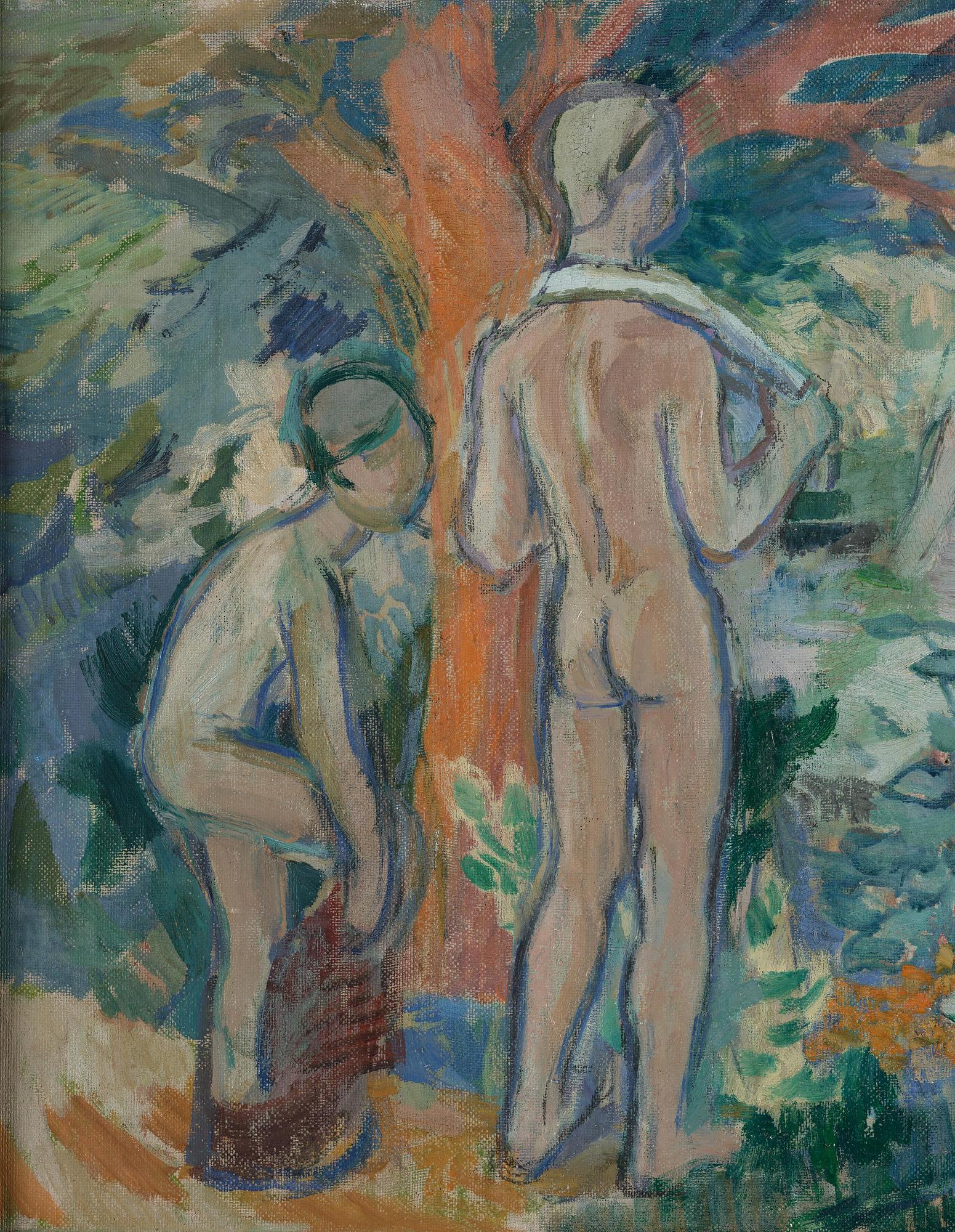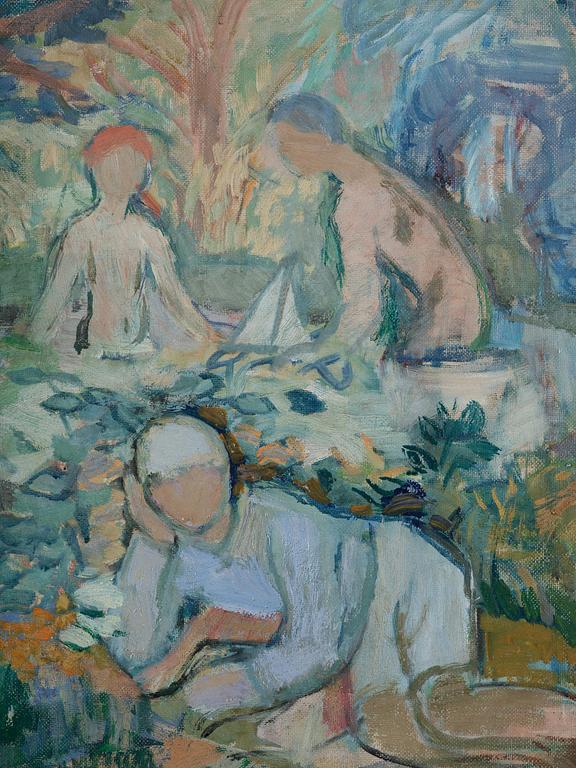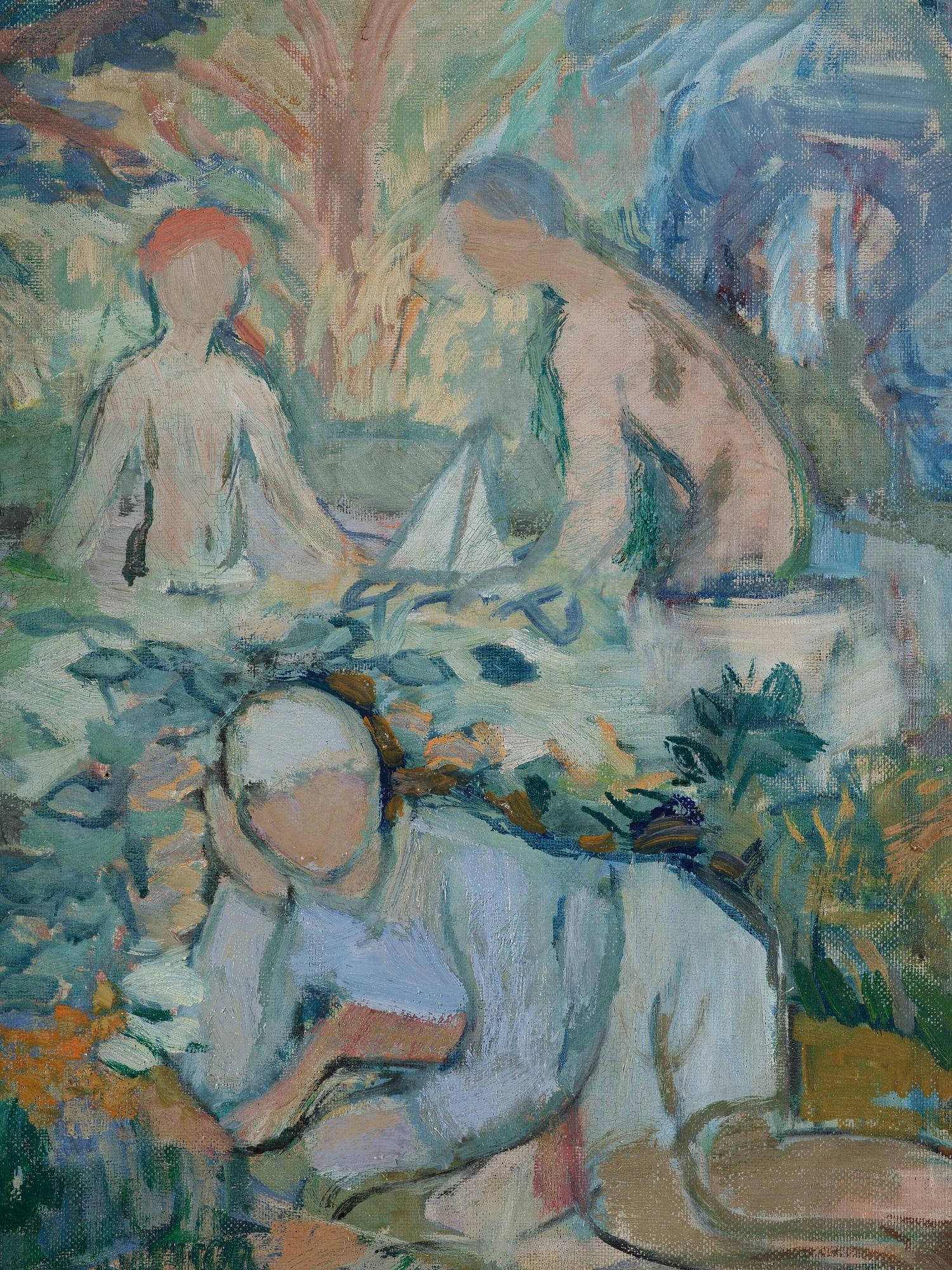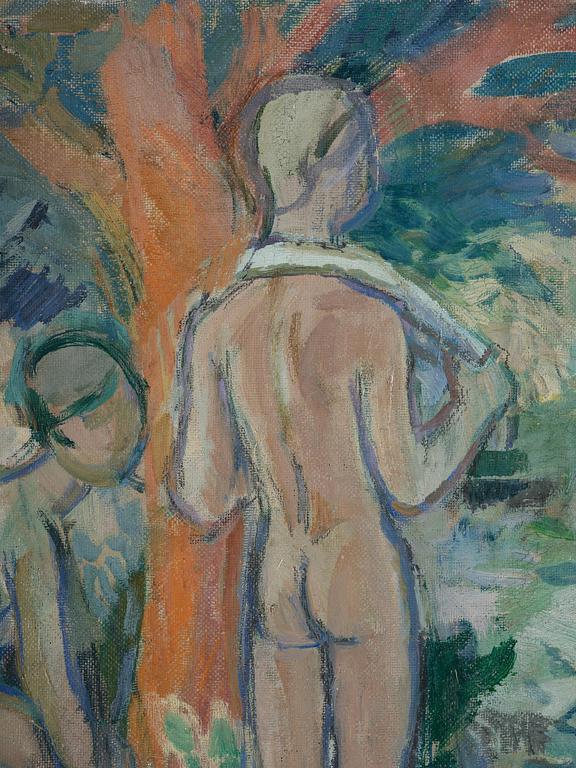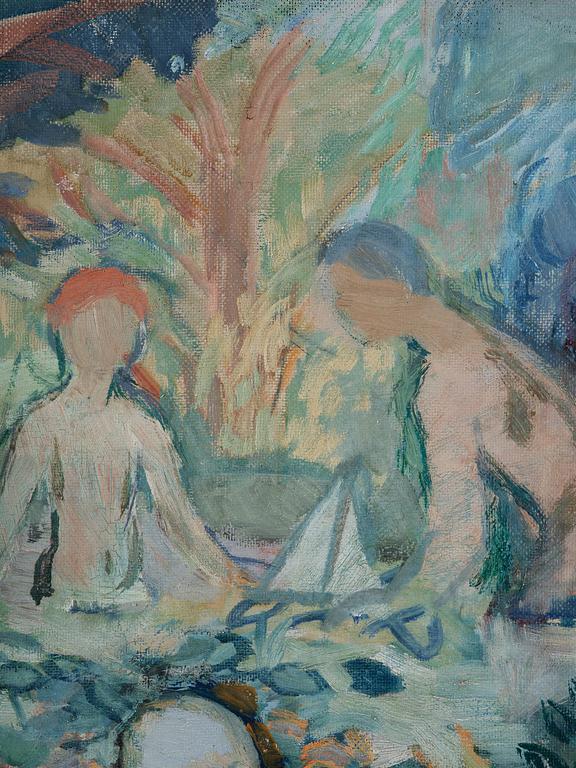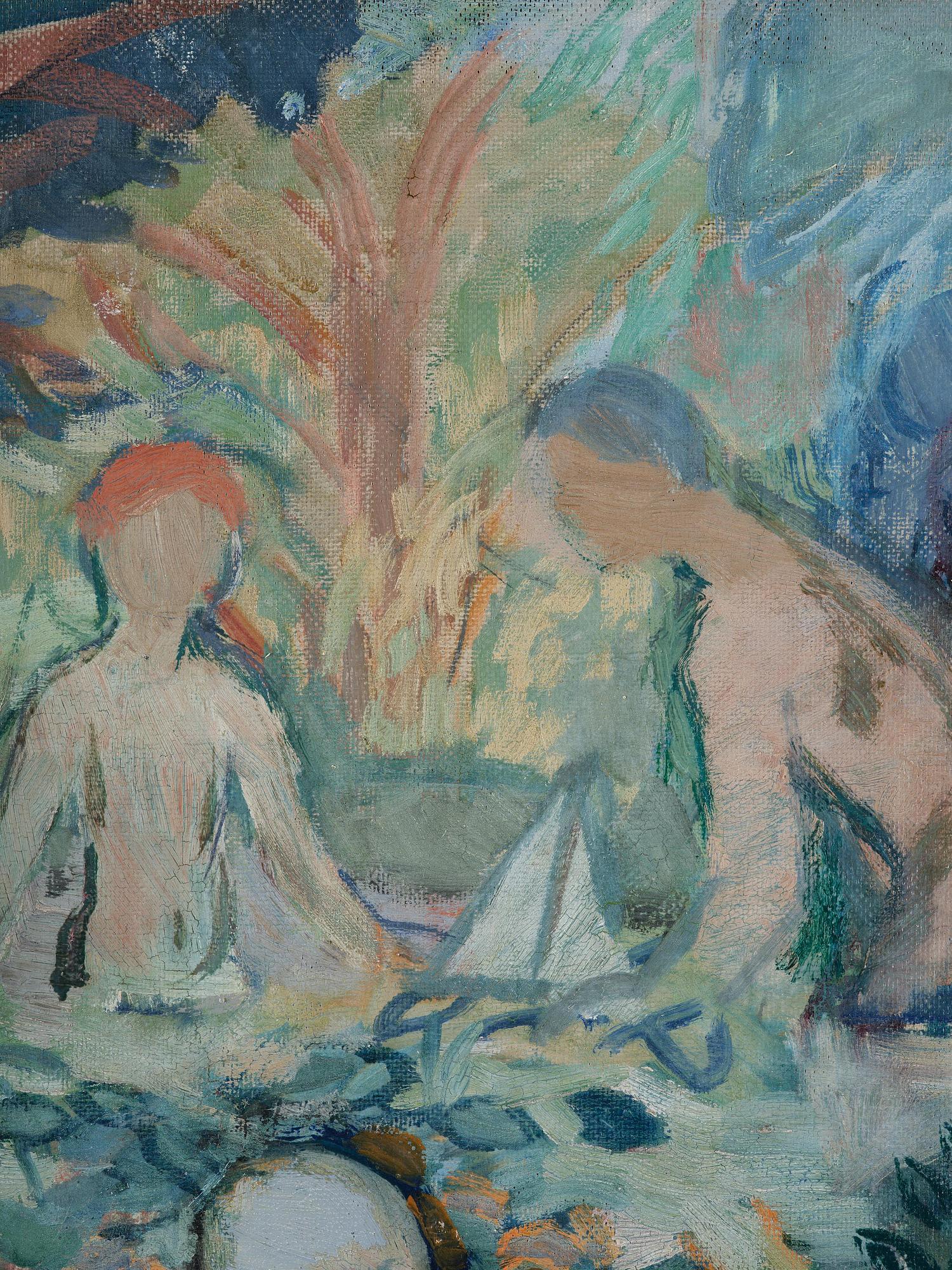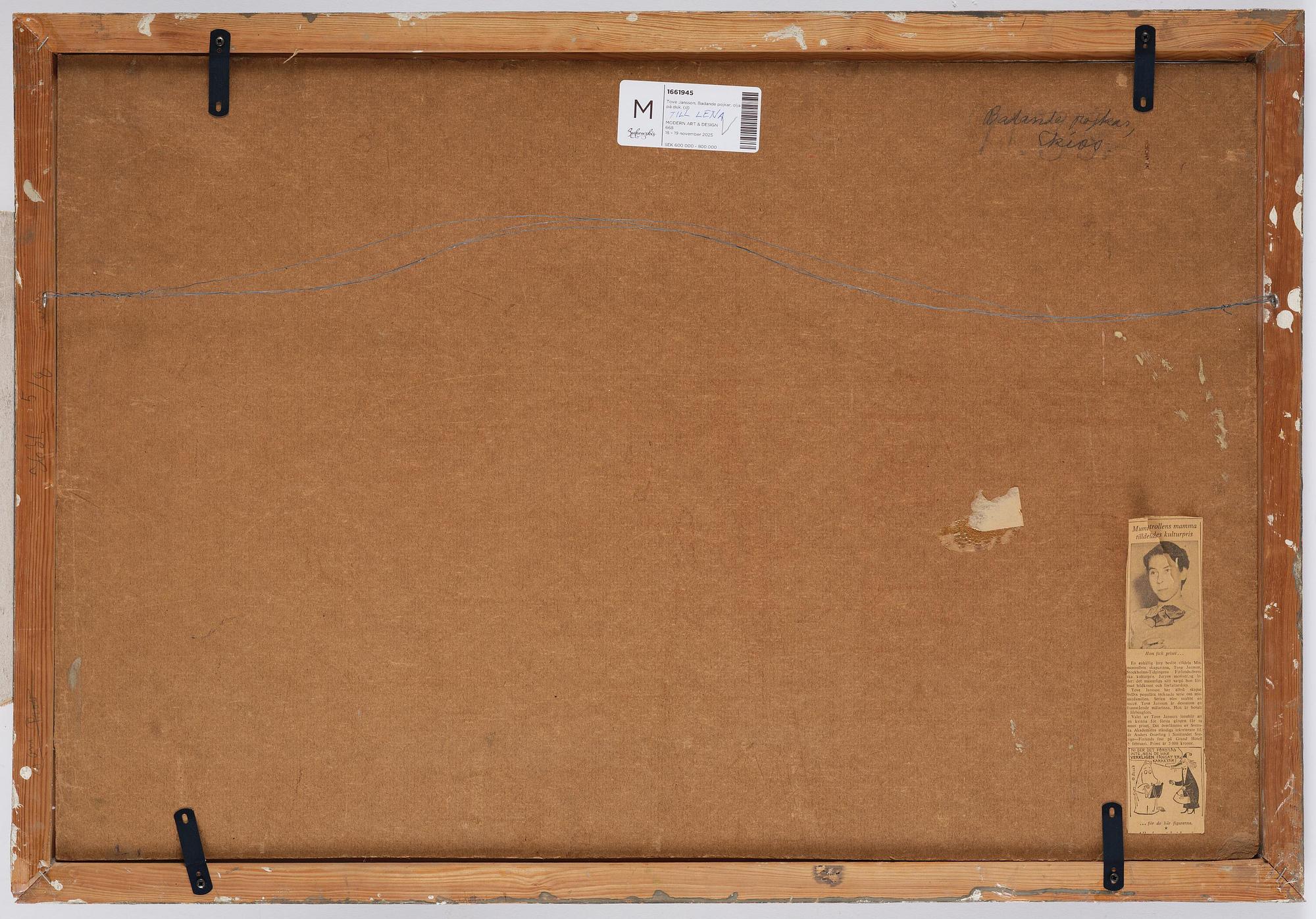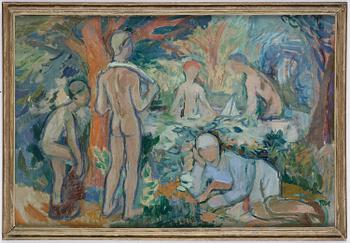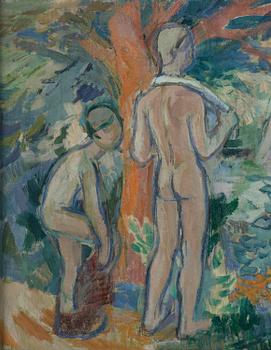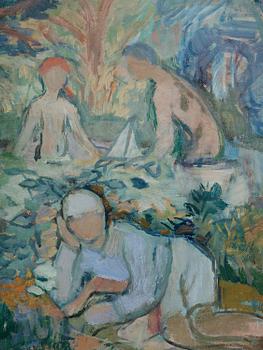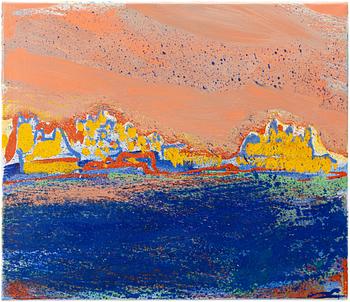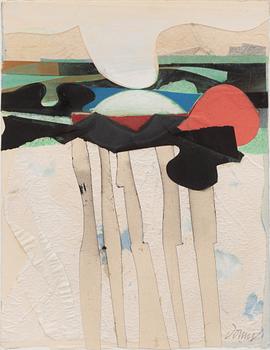
Bathing boys
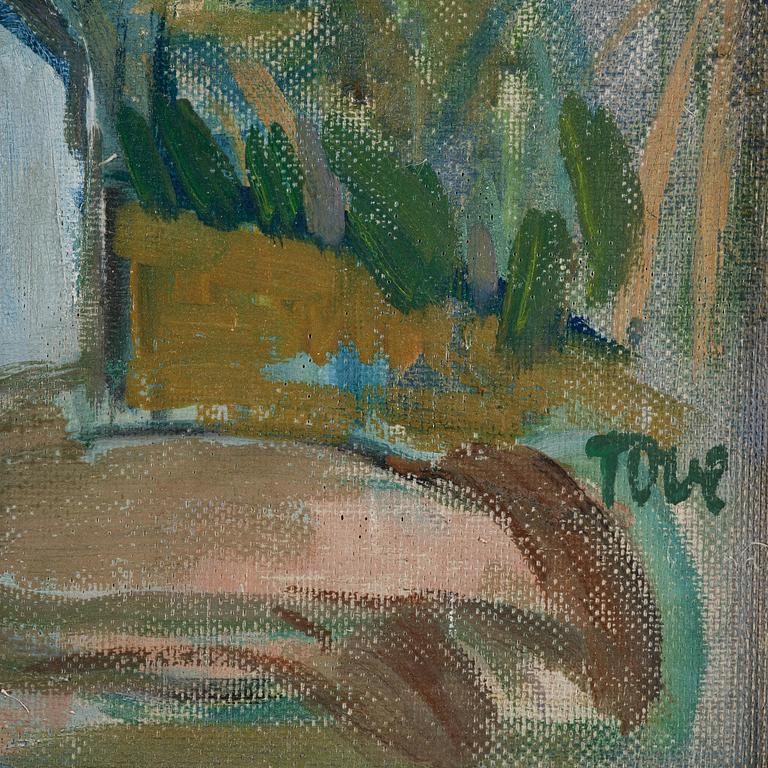
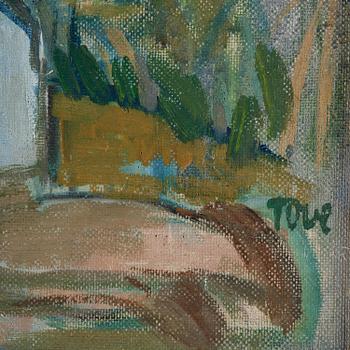
Signed Tove. Panel 50 x 75 cm.
Alkuperä - Provenienssi
Acquired by the owner's parents on their honeymoon in Helsinki in 1949.
Muut tiedot
The transition between the 1930s and 1940s was a time when Tove Jansson found her place and became independent as an artist. In 1933, Tove began her studies at the Finnish Art Society's drawing school in Helsinki, commonly referred to as Ateneum. She would remain there until the spring of 1937, with recurring interruptions in her studies. After four years, she had nonetheless established herself as an artist. During this period, much was happening within the Finnish art world, as it looked outward towards European modernism and organised international exhibitions.
In 1938, she made her first study trip abroad and was inspired by the culture in Germany but especially by the artistic movements in Paris and Brittany. Upon her return, she established her own studio, and her artistic career gained full momentum after her first solo exhibition, held during the war in 1943.
Around the turn of the decade, the Winter War broke out, casting a shadow over Tove's life both as an artist and a private individual. It was difficult to obtain art materials, friends were sent to the front, and the atmosphere was marked by a general uncertainty. Despite the turmoil, the war years were a productive time for Tove, and she established herself on the artistic scene. The narrative voice and beauty are cornerstones of Tove Jansson's oeuvre, and according to Erik Kruskopf, Jansson presented an idyllic, even harmonious image of life during the heavy war years in her art, in which there are hardly any direct references to the war. It is, in other words, hardly surprising that the works appealed to contemporary viewers as they provided a counterbalance to and an escape from the everyday realities of war.
From the very beginning, Tove emerged as a rare bird who fearlessly followed her own path. Before and during the war, she stood for critical satire in the political magazine Garm and bravely protested against Finland's collaboration with Nazi Germany. Even in her private life, Tove's path was unconventional. The status of women, independence, creativity, and equality were particularly important to her, and she questioned ingrained thought patterns and prejudices – not as a loud agitator, but as a quiet revolutionary whose entire existence aligned with her beliefs.
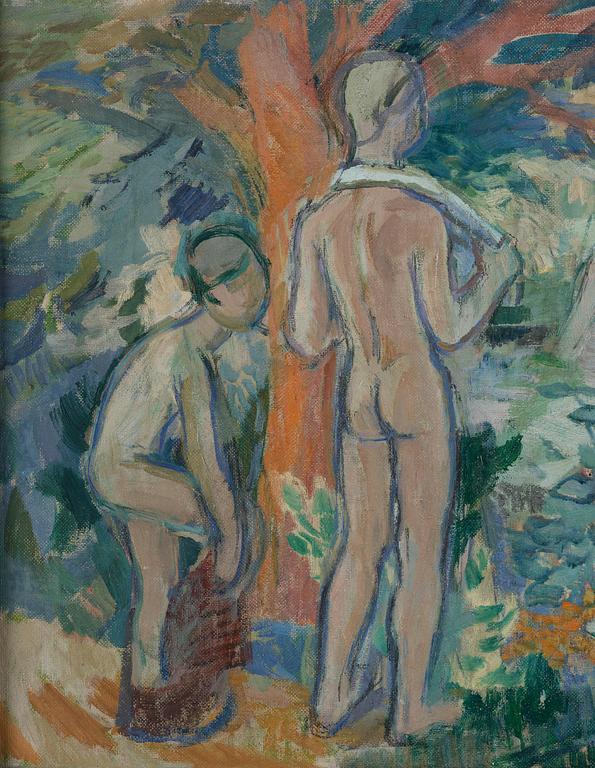
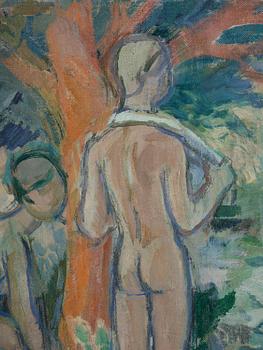
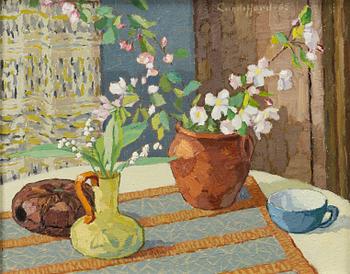
In the auction's painting "Bathing Boys," one can sense the traces of the leading figures of modernism – Matisse and Cézanne – both in the vibrant forms and in the colour palette, where she, with a fantastic sense of values, juxtaposes warm and cool colours against each other. The motif is both contemporary and classical, allowing the viewer to partake in the play of some boys by the water. As often in Jansson's world, both in her paintings and in her illustrations, there is a dualism of light and darkness, both literally and figuratively. "Bathing Boys" was acquired by the seller's parents on their honeymoon in Helsinki in 1949 and has never been on the art market.
Kuuluu jälleenmyyntikorvauksen piiriin
Tietoa ostamisesta
Kuvan käyttöoikeudet
Tämän tietokannan taideteokset ovat tekijänoikeudella suojattuja, eikä niitä saa kopioida ilman oikeudenhaltijoiden lupaa. Teokset kopioidaan tässä tietokannassa Bildupphovsrättin lisenssillä.