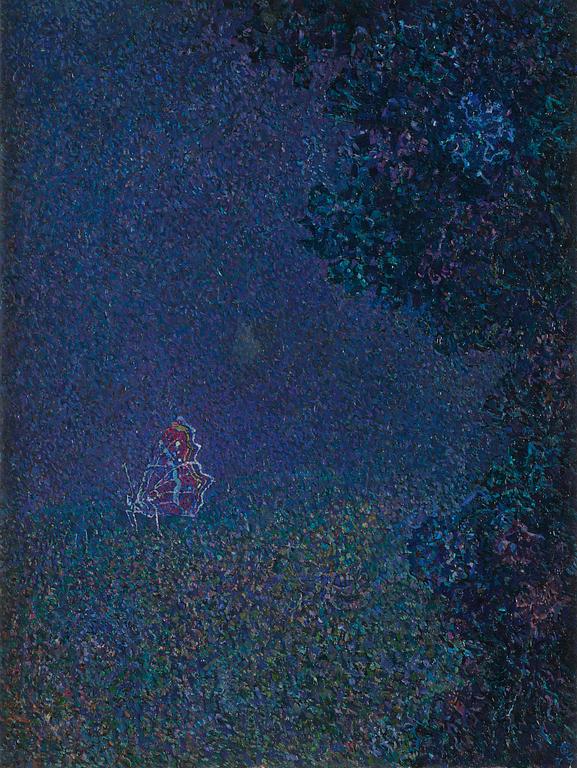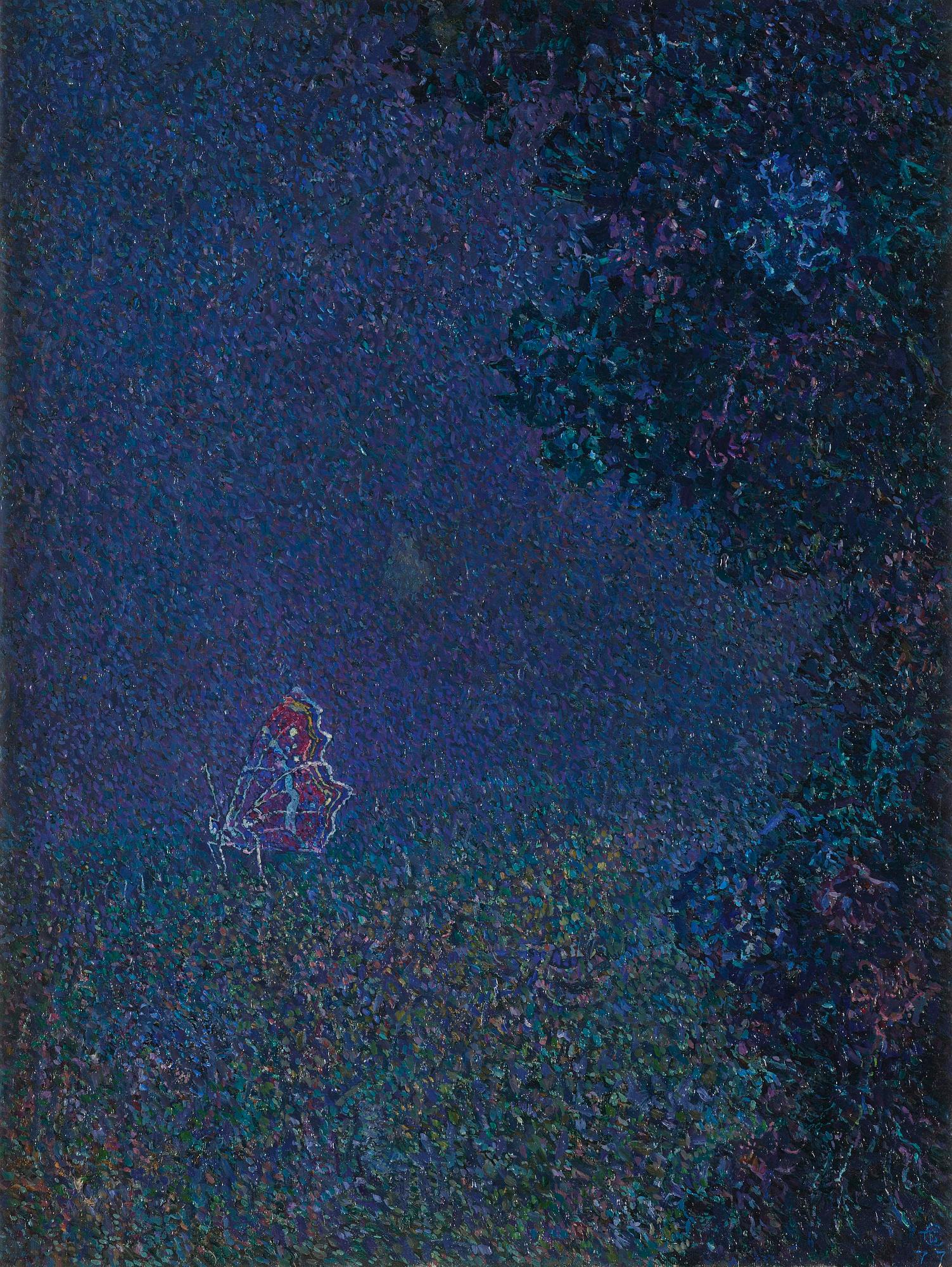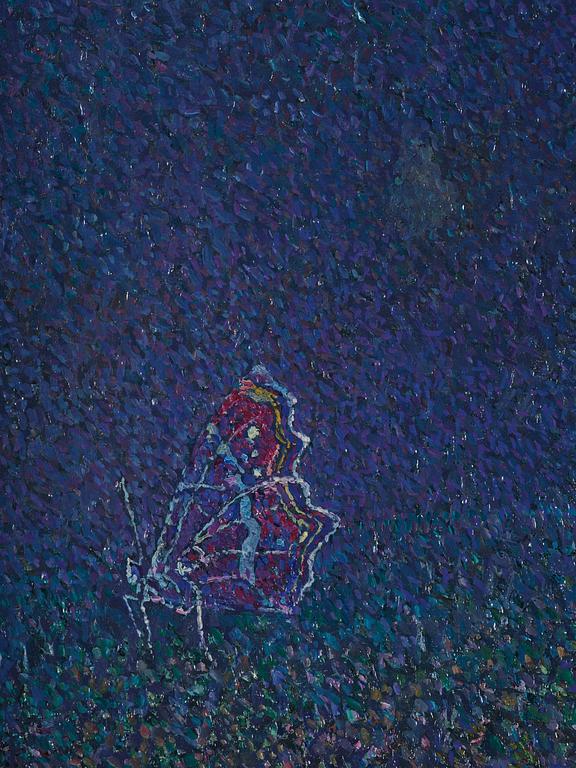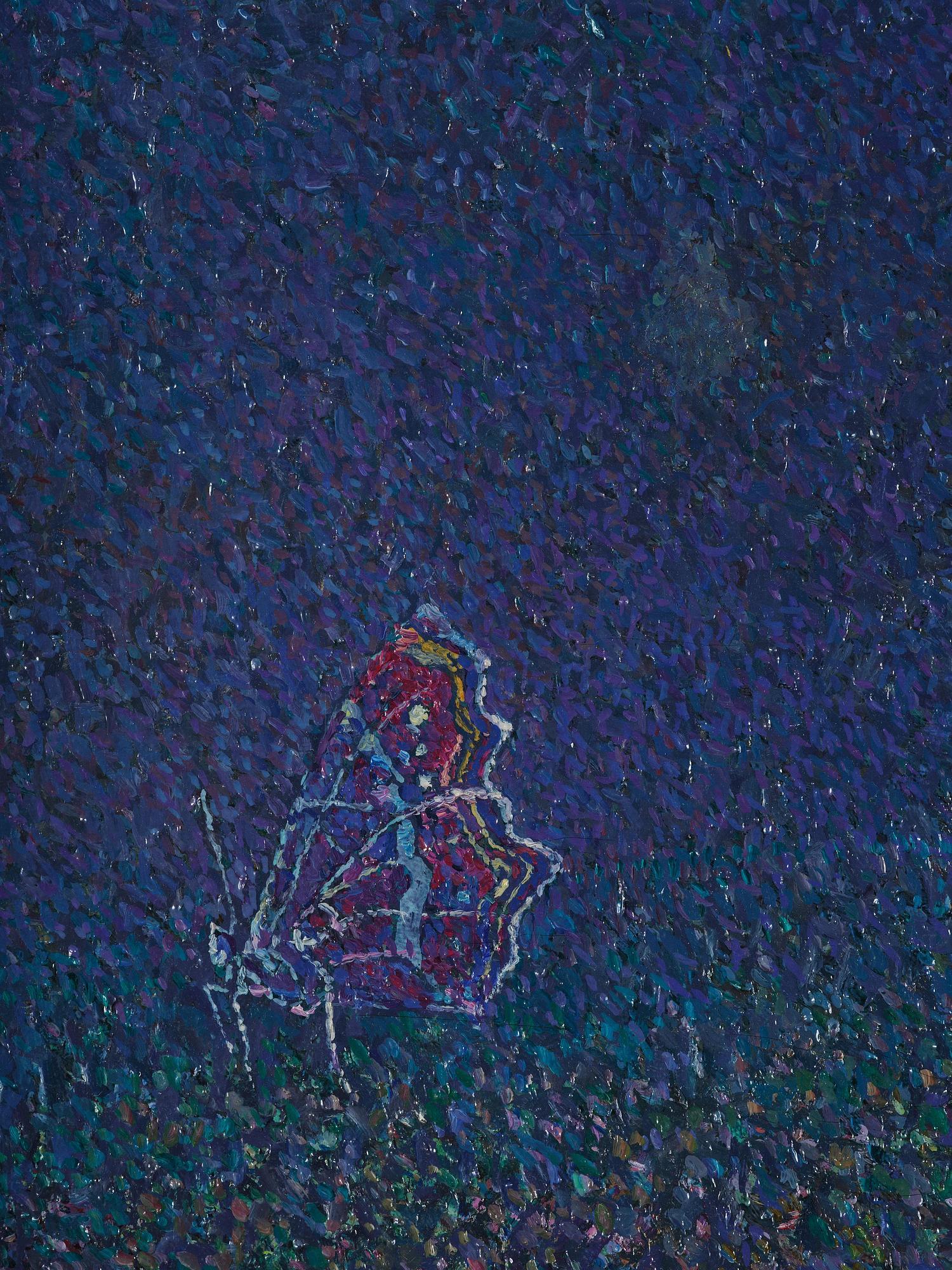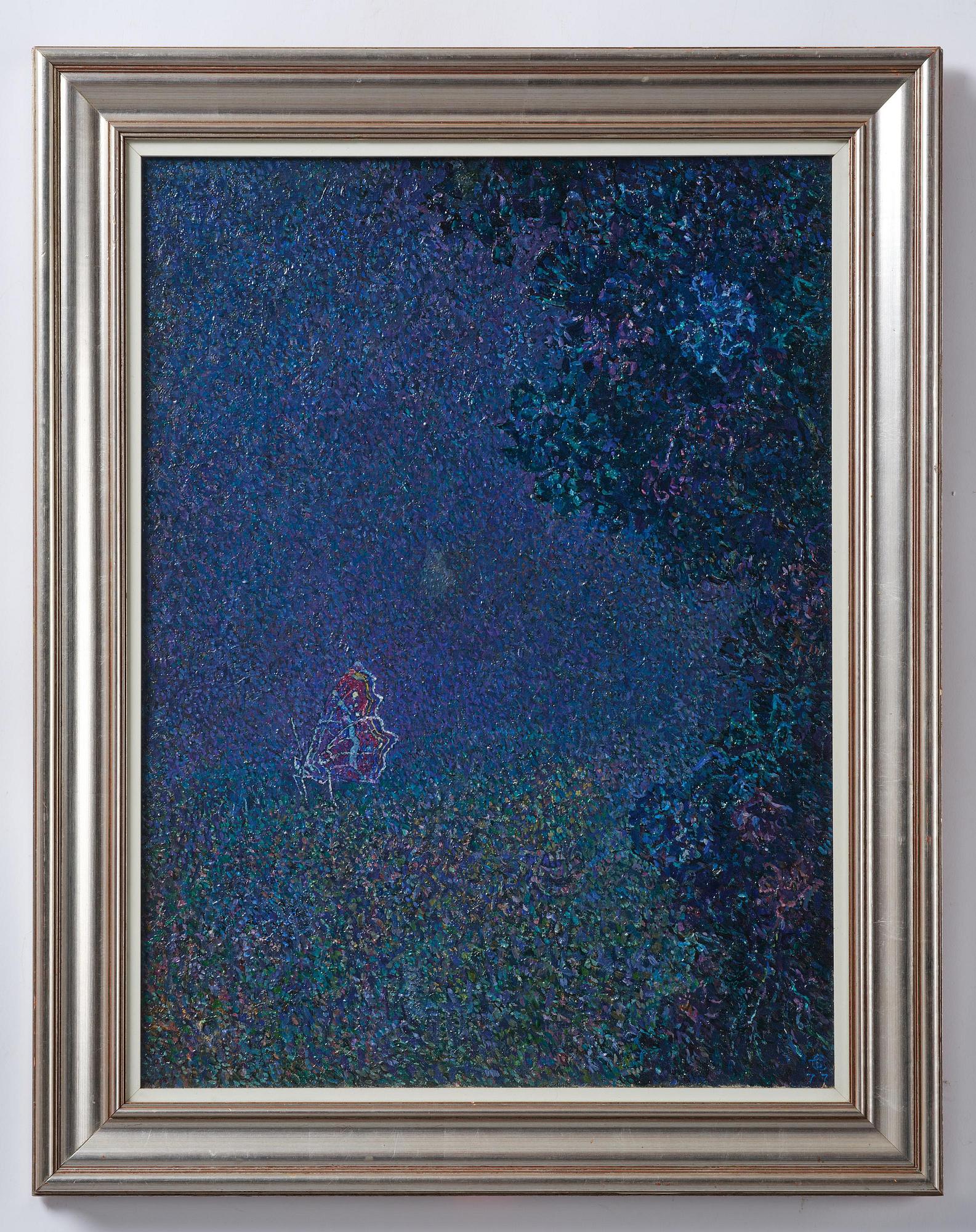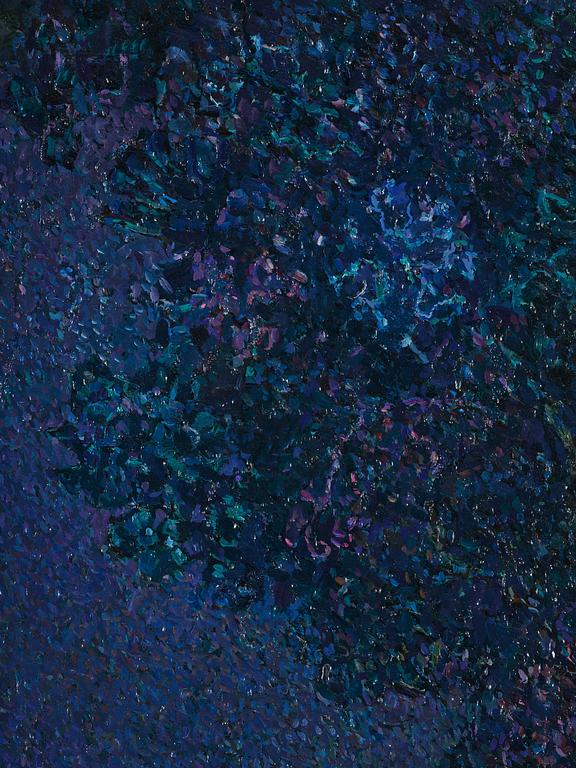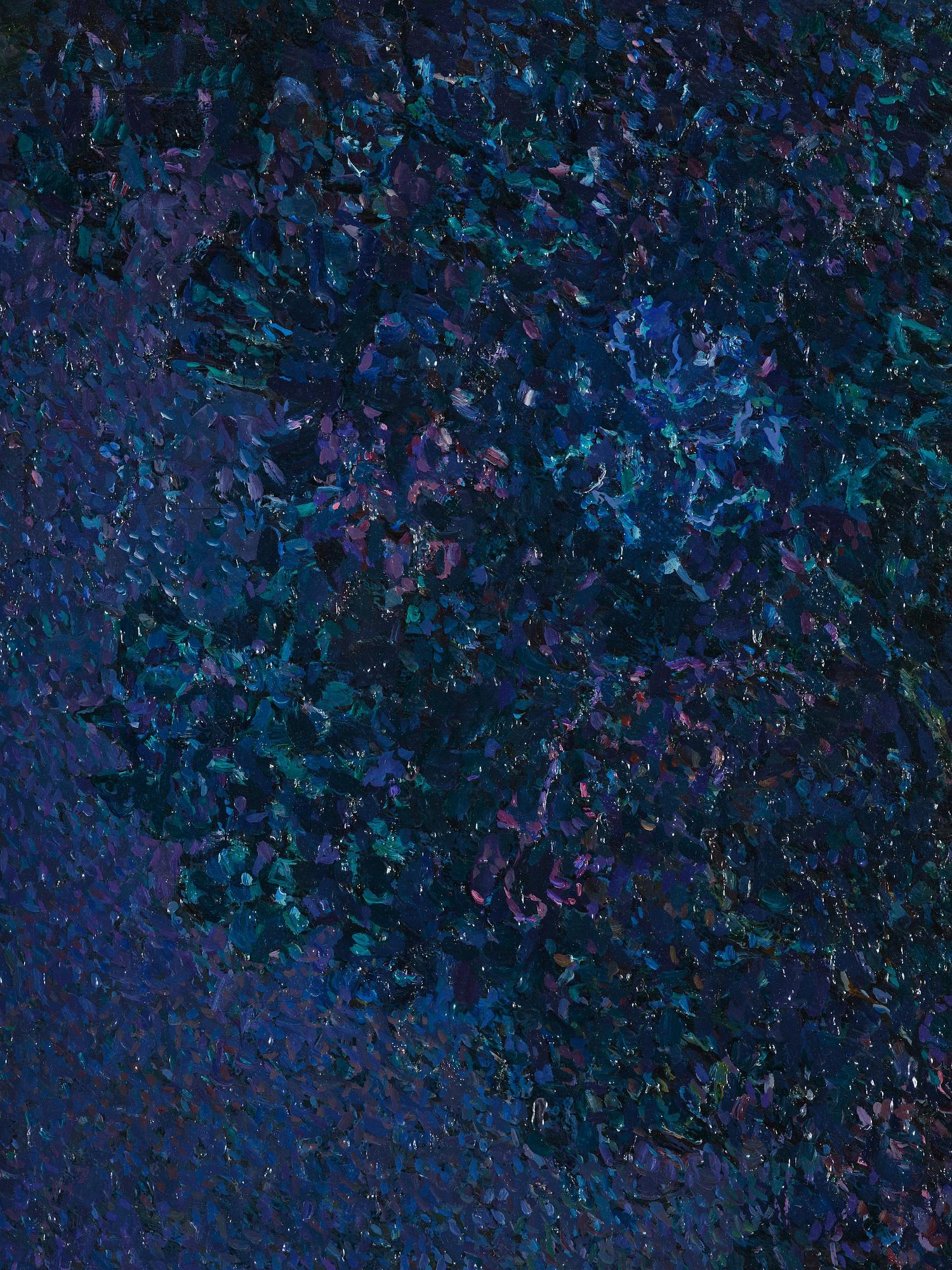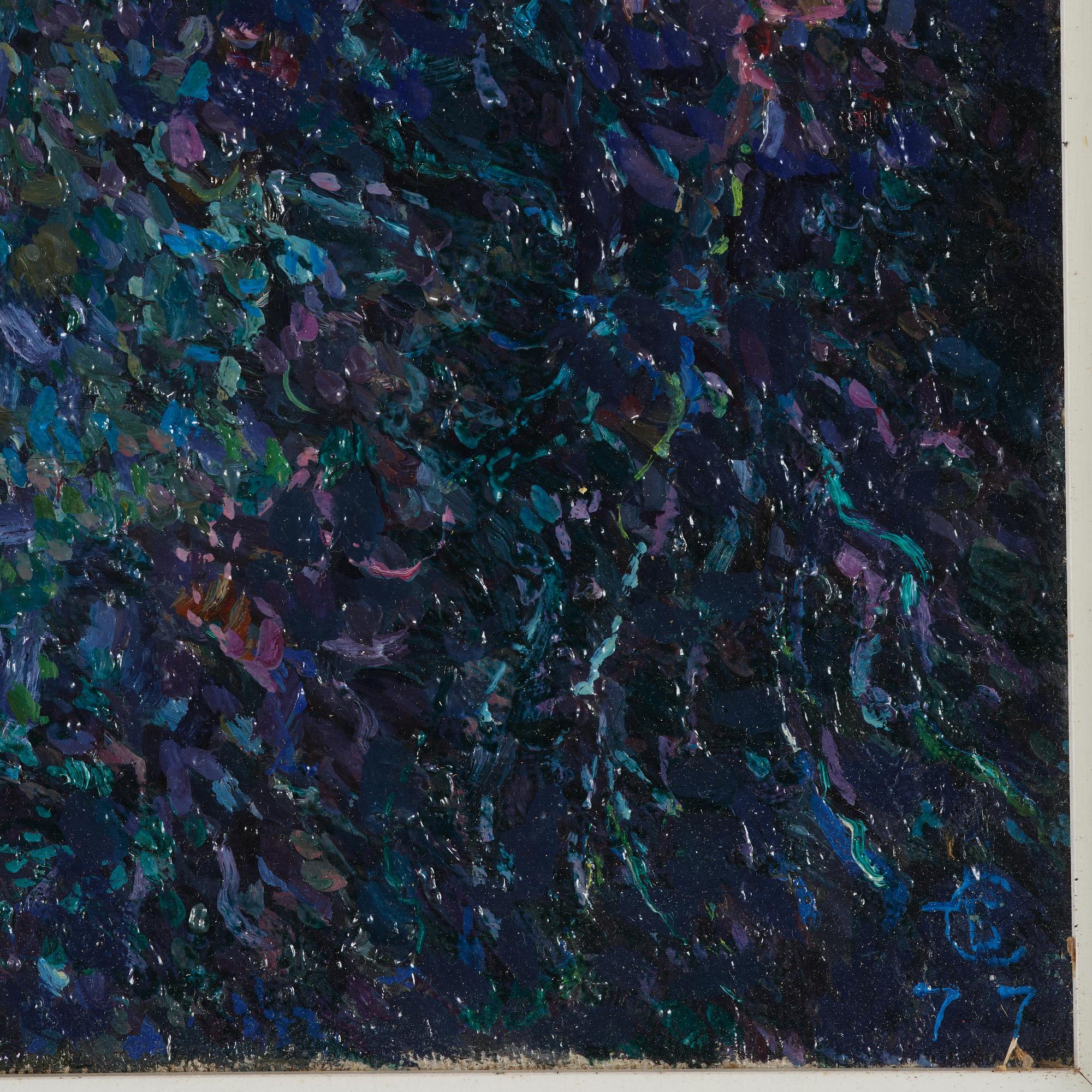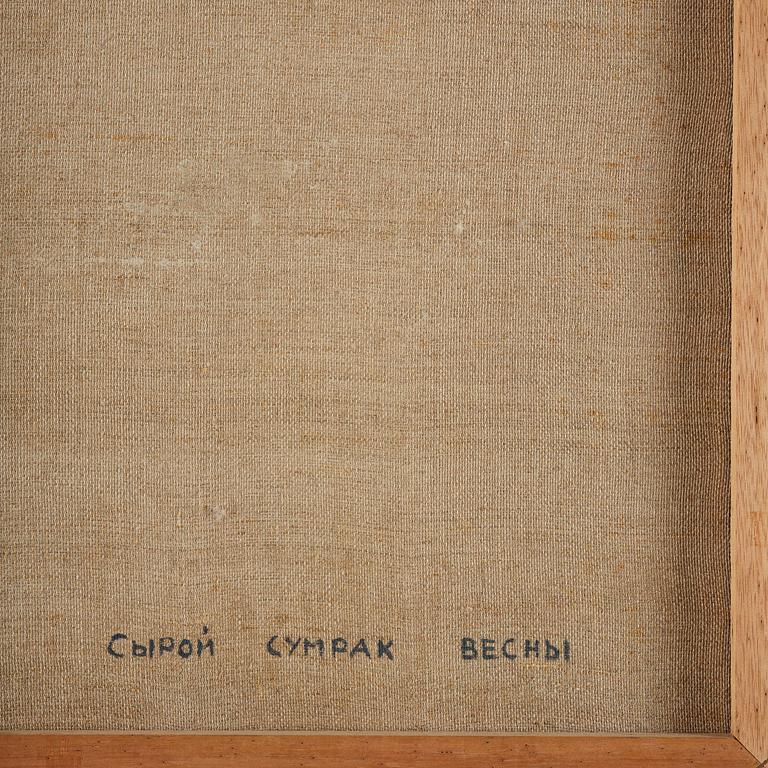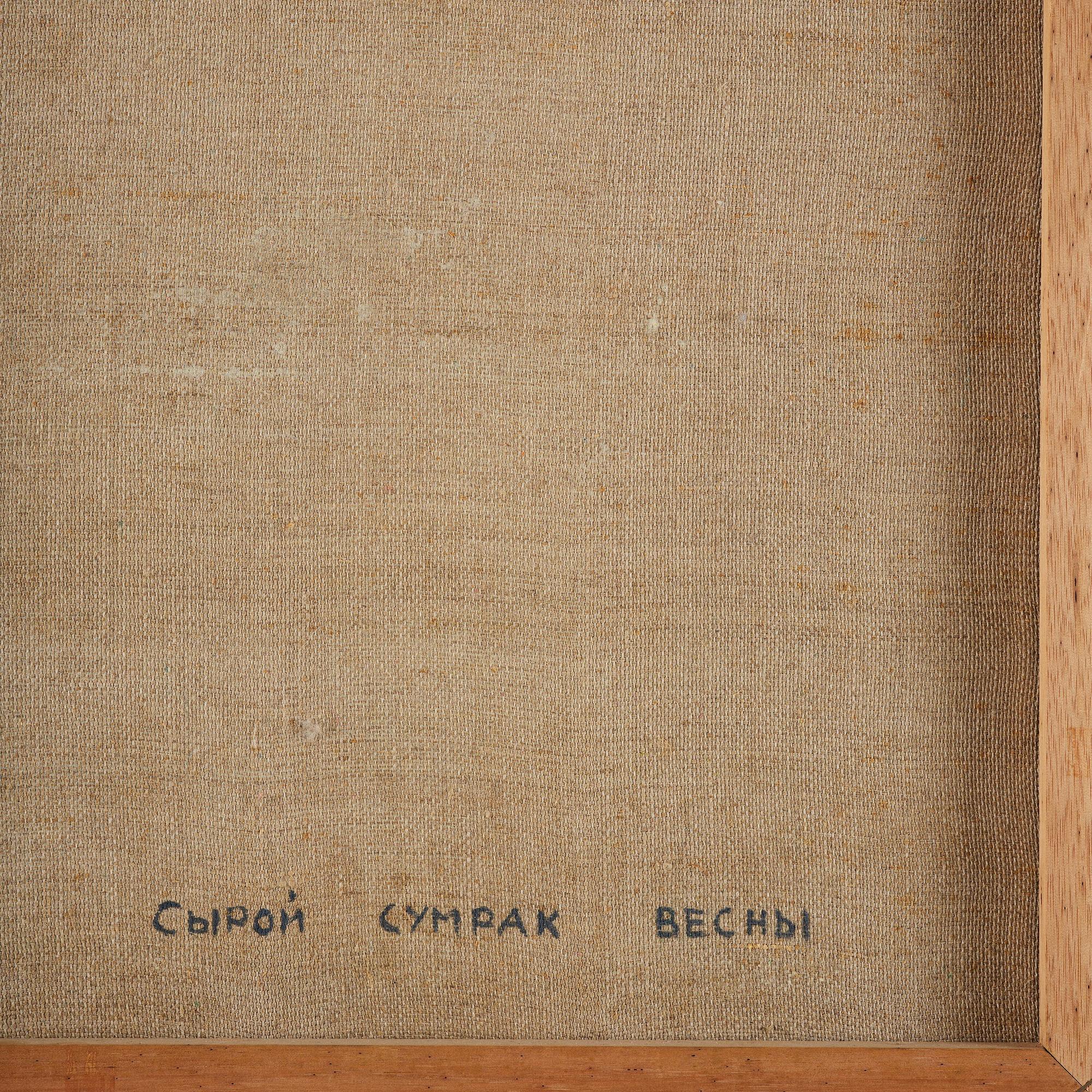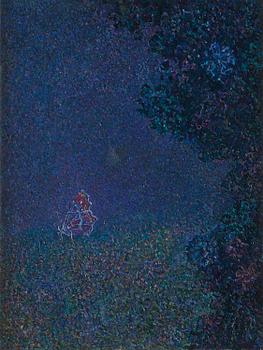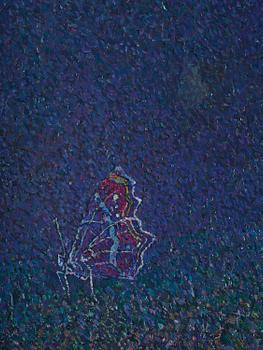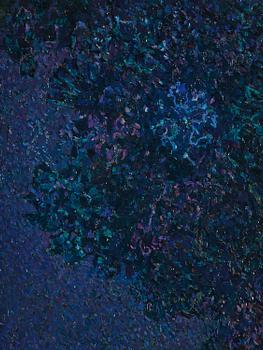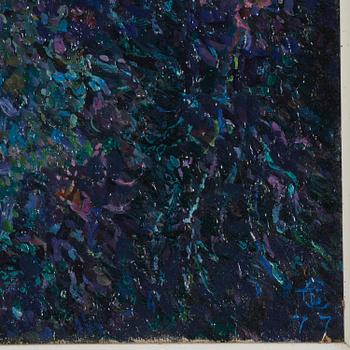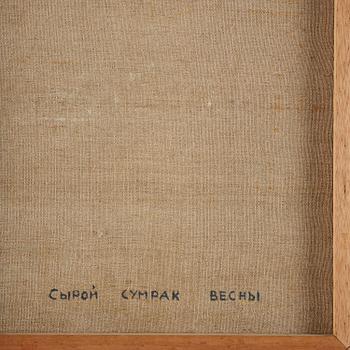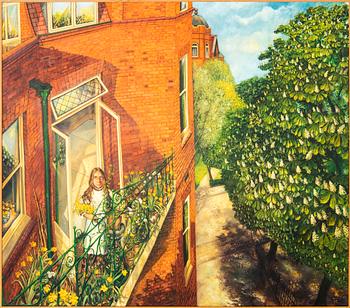
"The twilight of spring"
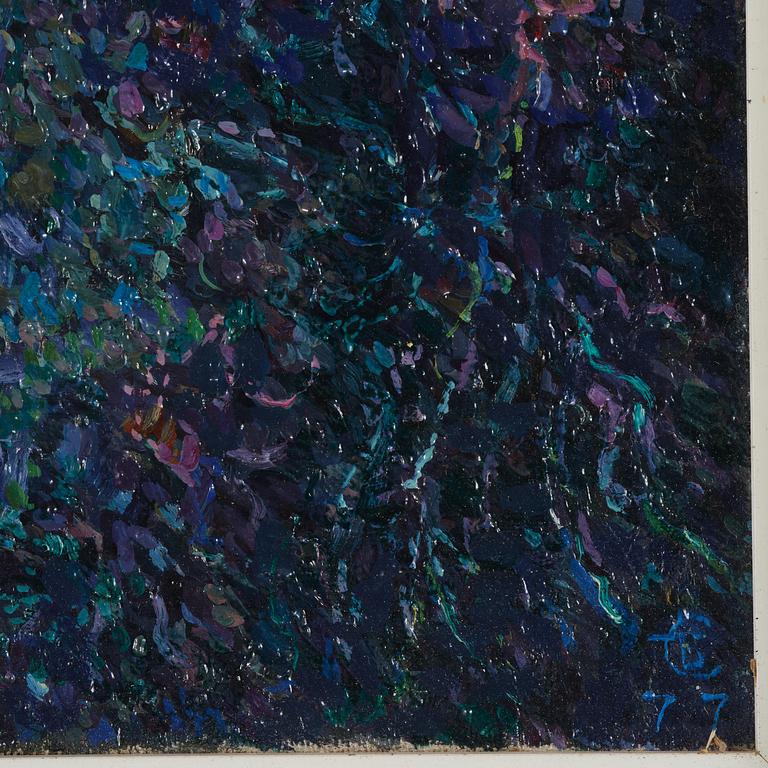
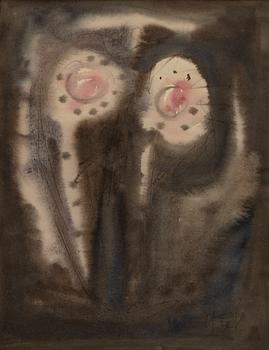
Signed with monogram in Cyrillic and dated '77. Oil on canvas 80 x 60 cm.
Alkuperä - Provenienssi
Private collection. Thereafter by descent to the current owner.
Muut tiedot
Boris Sveschnikoff (1927–1998) was a Russian nonconformist painter. In 1946, while studying at the Moscow Institute of Applied and Decorative Art, he was arrested on charges of anti-Soviet propaganda and sentenced to eight years in labor camps.
Appointed as a watchman in a carpentry workshop, Boris Sveschnikoff began making a series of camp drawings in an adjacent art studio. After serving his sentence, he returned to Moscow in 1954 where he joined a loose grouping of nonconformist artists. He was rehabilitated in 1956 and became a member of the Union of Artists of the USSR in 1958.
Instead of turning to overt political commentary, he distilled his experiences form the labor camps into images marked by quiet resilience and spiritual depth. His compositions often feature stark contrasts, elongated figures, and dreamlike settings—symbolic explorations of suffering, memory, and moral endurance.
Sveschnikoff ’s palette and technique further underscore his independence from official artistic norms. He frequently employed muted, bruised colors, subtle gradations, and precise linework, creating an atmosphere of solemnity and contemplation. This stylistic restraint—far removed from the celebratory brightness favored by state institutions—became a statement in itself: an insistence on the legitimacy of interior life in a society that glorified collective identity over individual truth.
Lisätietoja ja kuntoraportit

Kuuluu jälleenmyyntikorvauksen piiriin
Tietoa ostamisesta
Kuvan käyttöoikeudet
Tämän tietokannan taideteokset ovat tekijänoikeudella suojattuja, eikä niitä saa kopioida ilman oikeudenhaltijoiden lupaa. Teokset kopioidaan tässä tietokannassa Bildupphovsrättin lisenssillä.