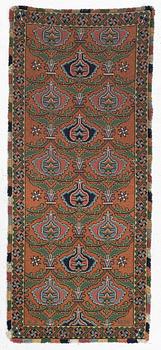
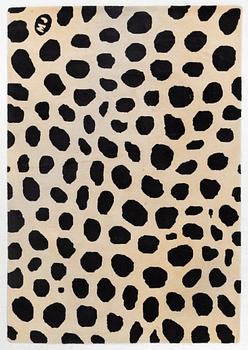
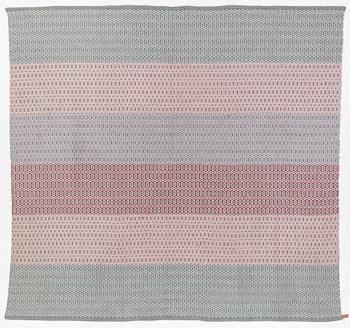
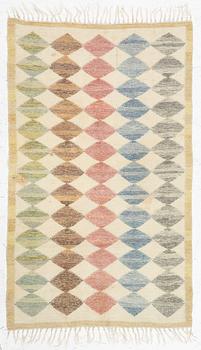
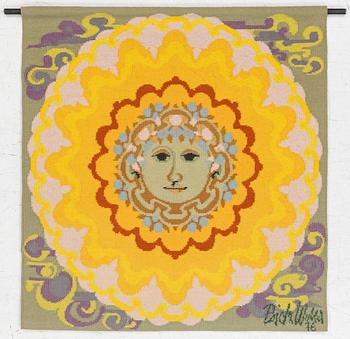
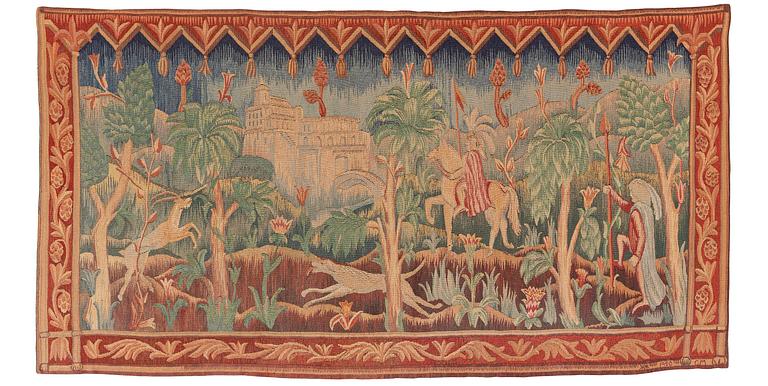
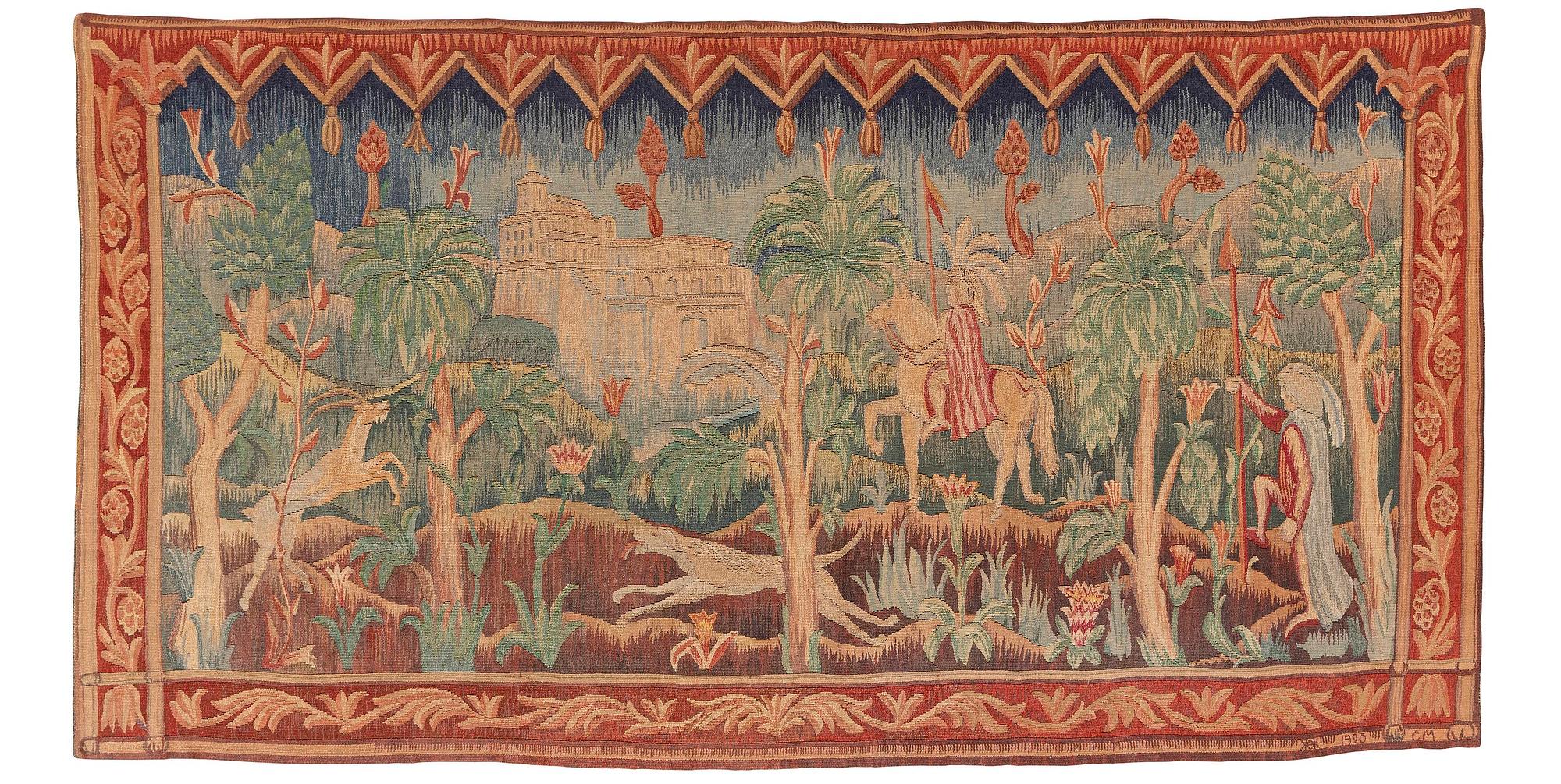
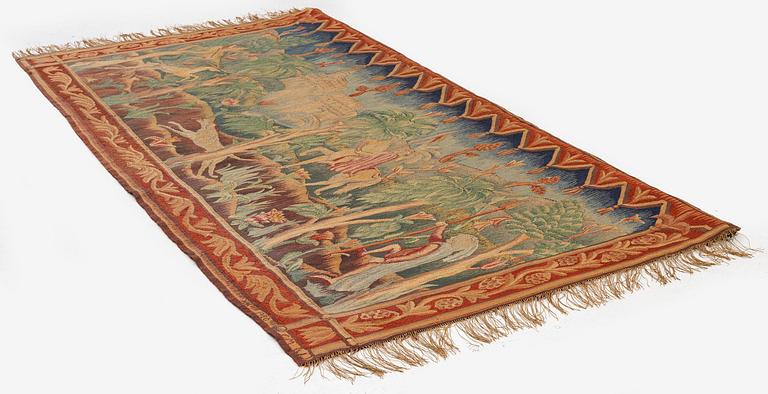
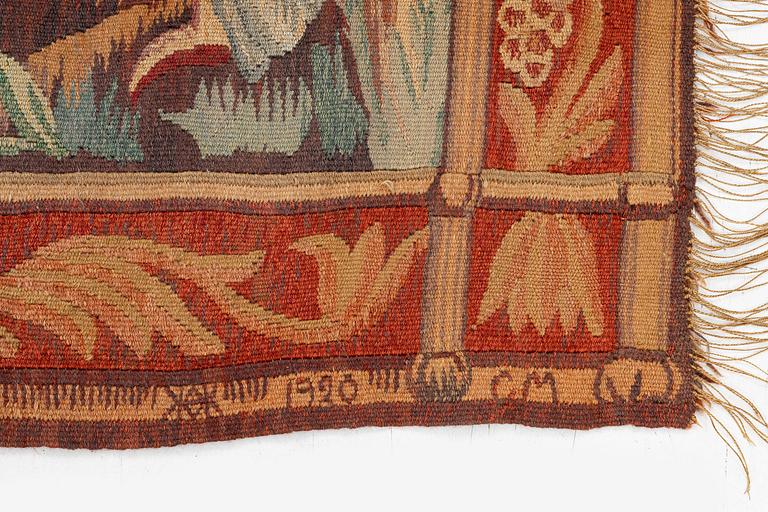
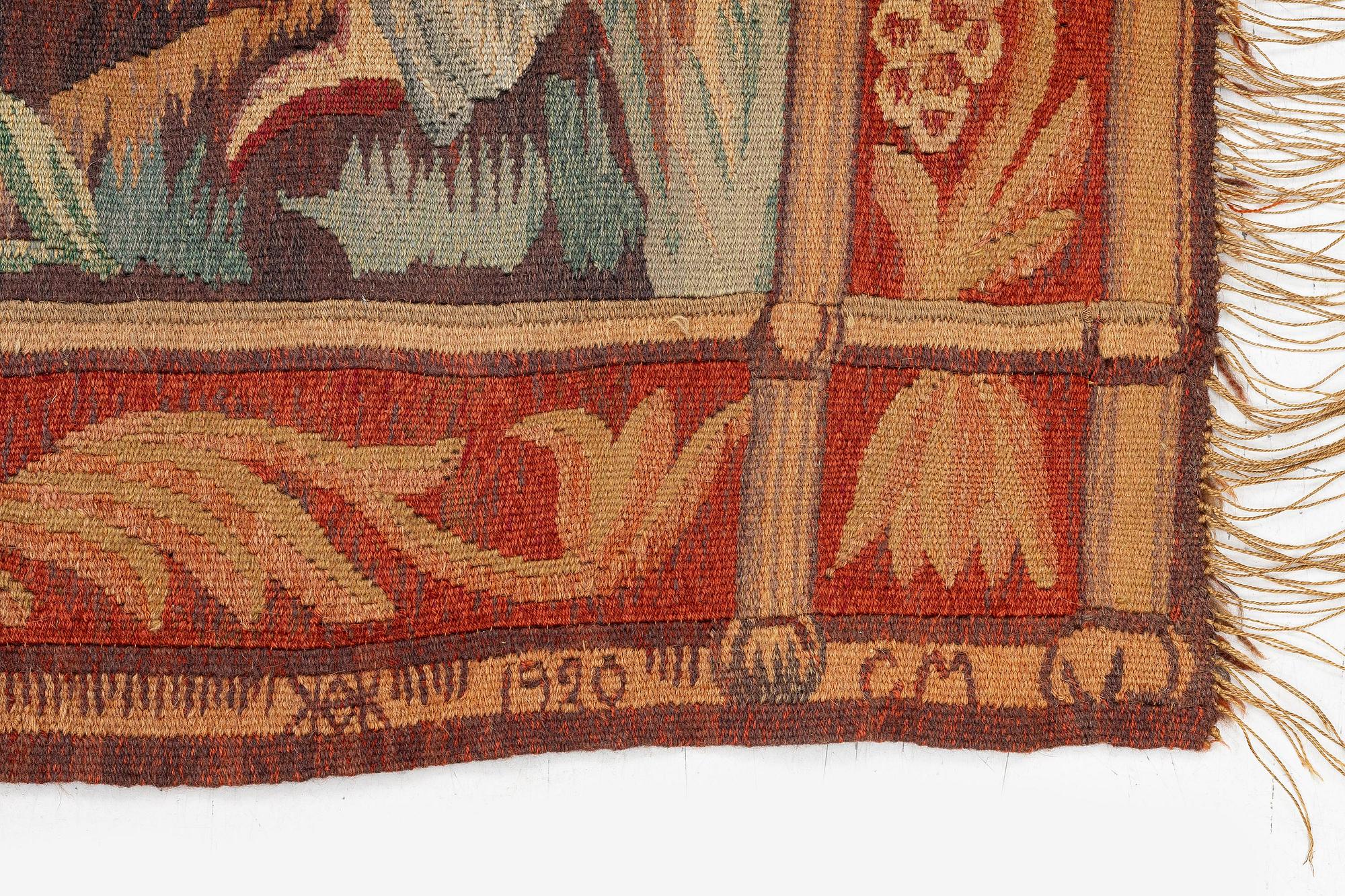
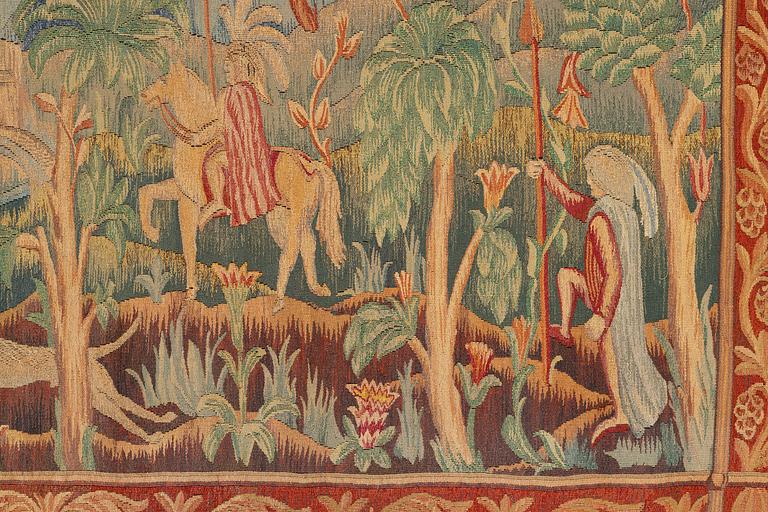
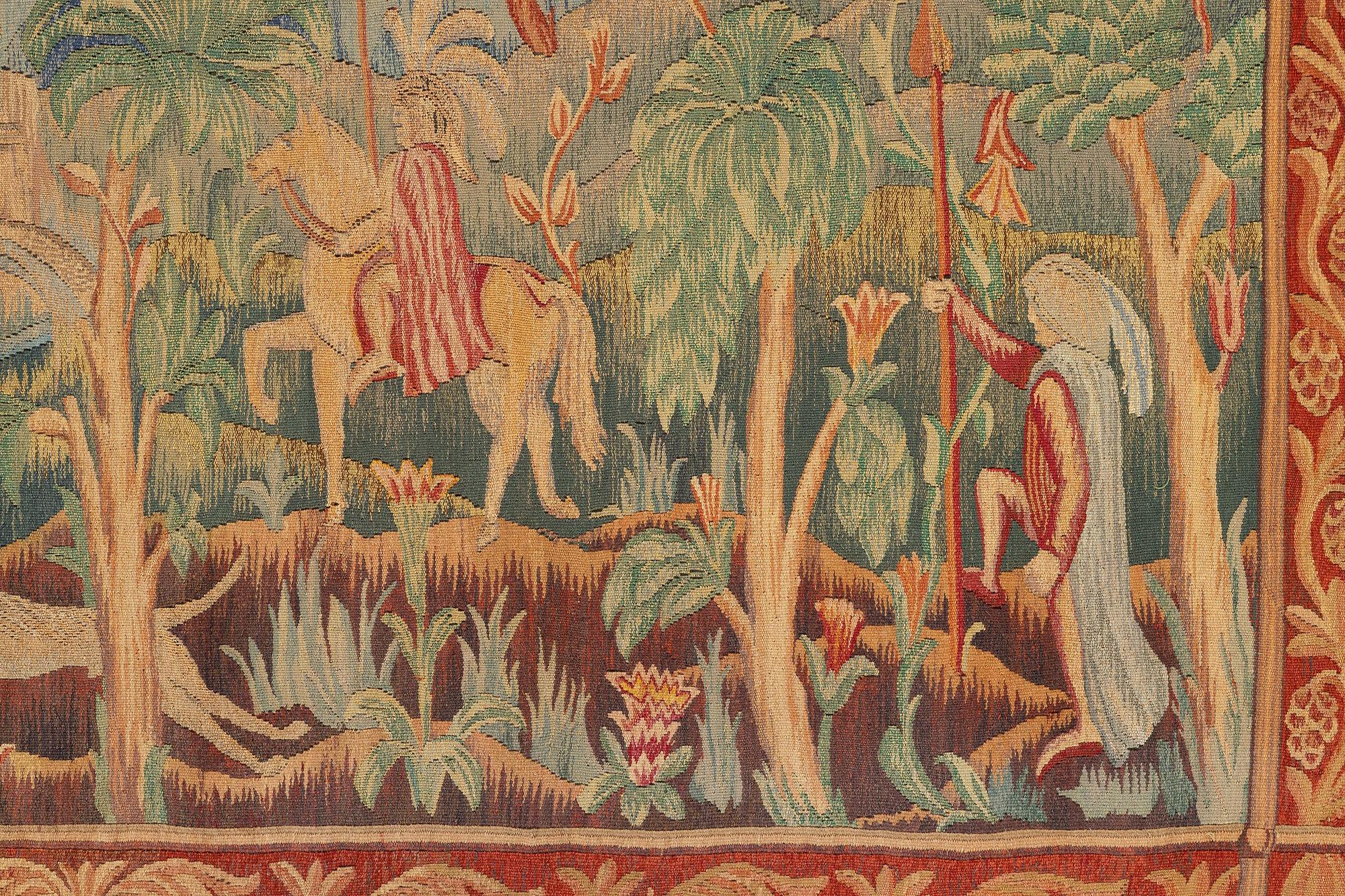
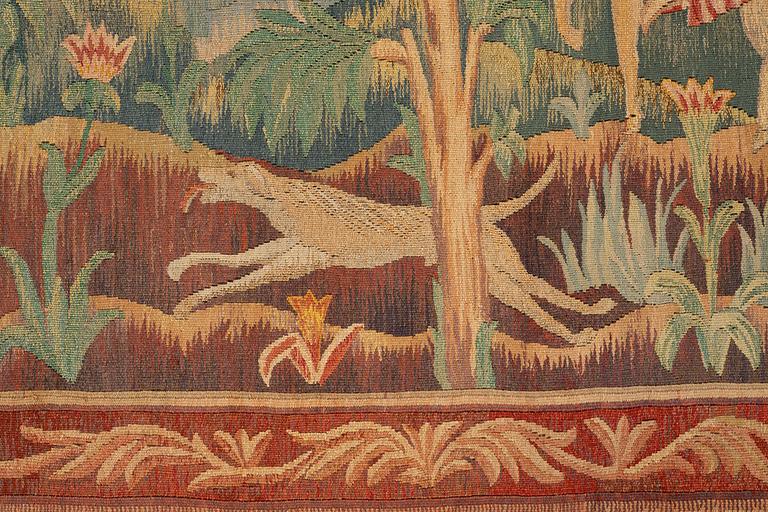
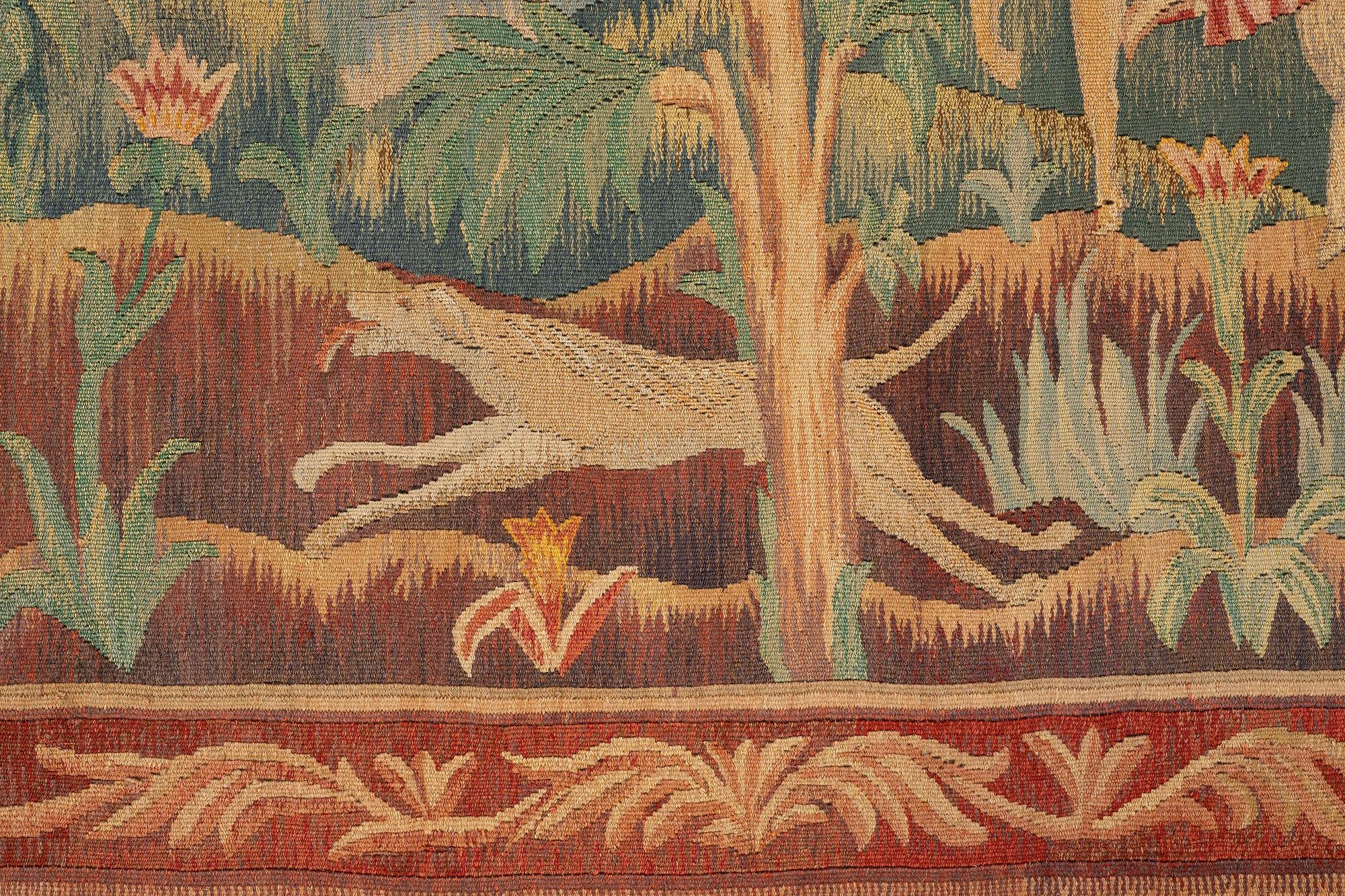
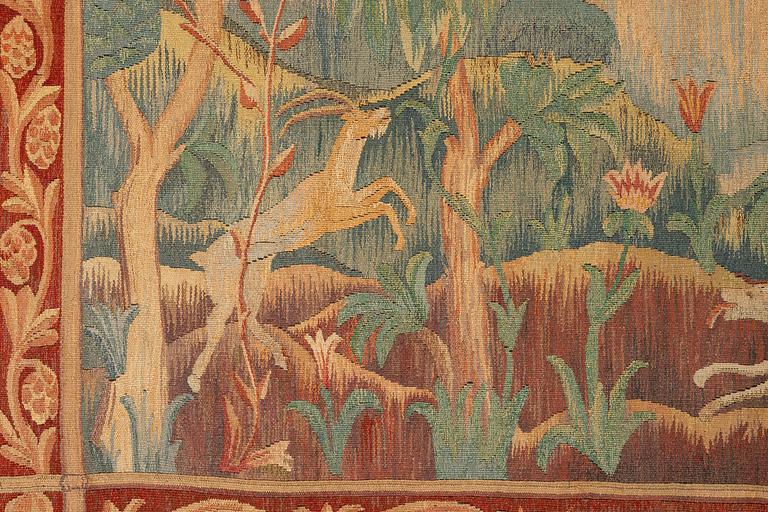
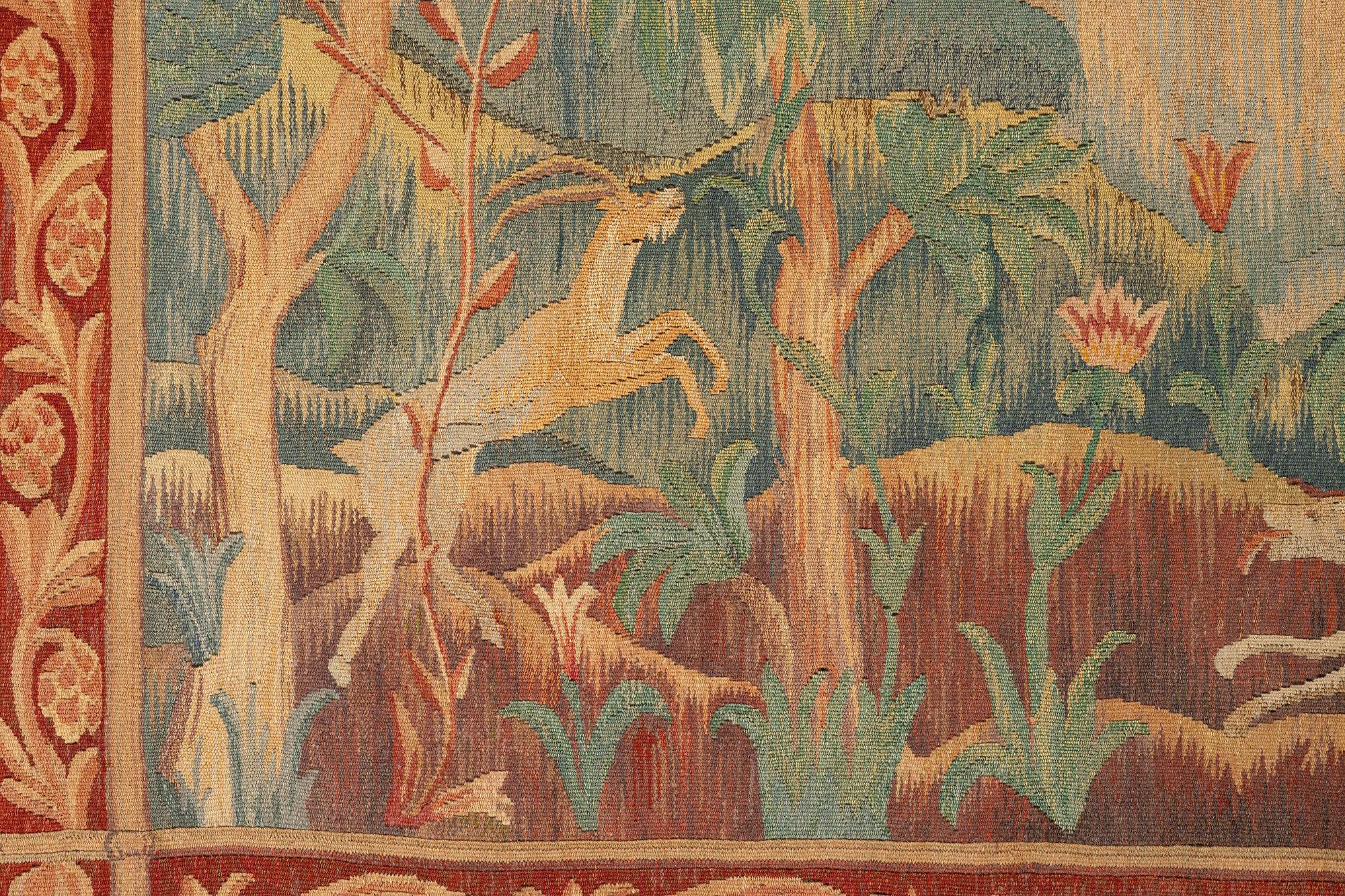
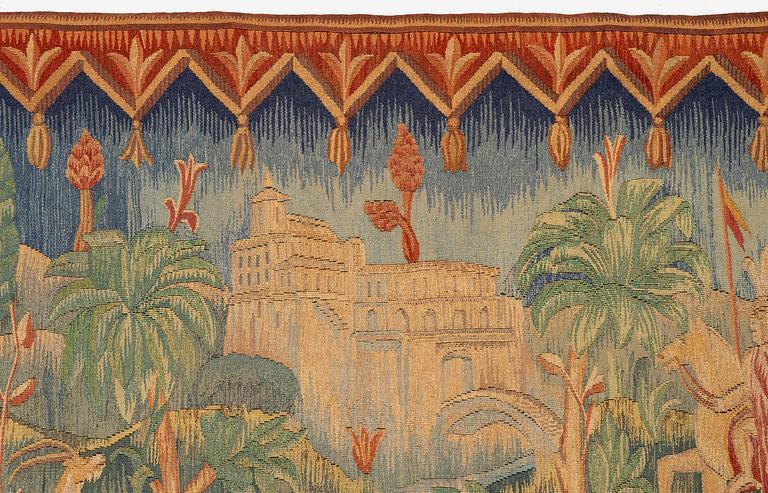
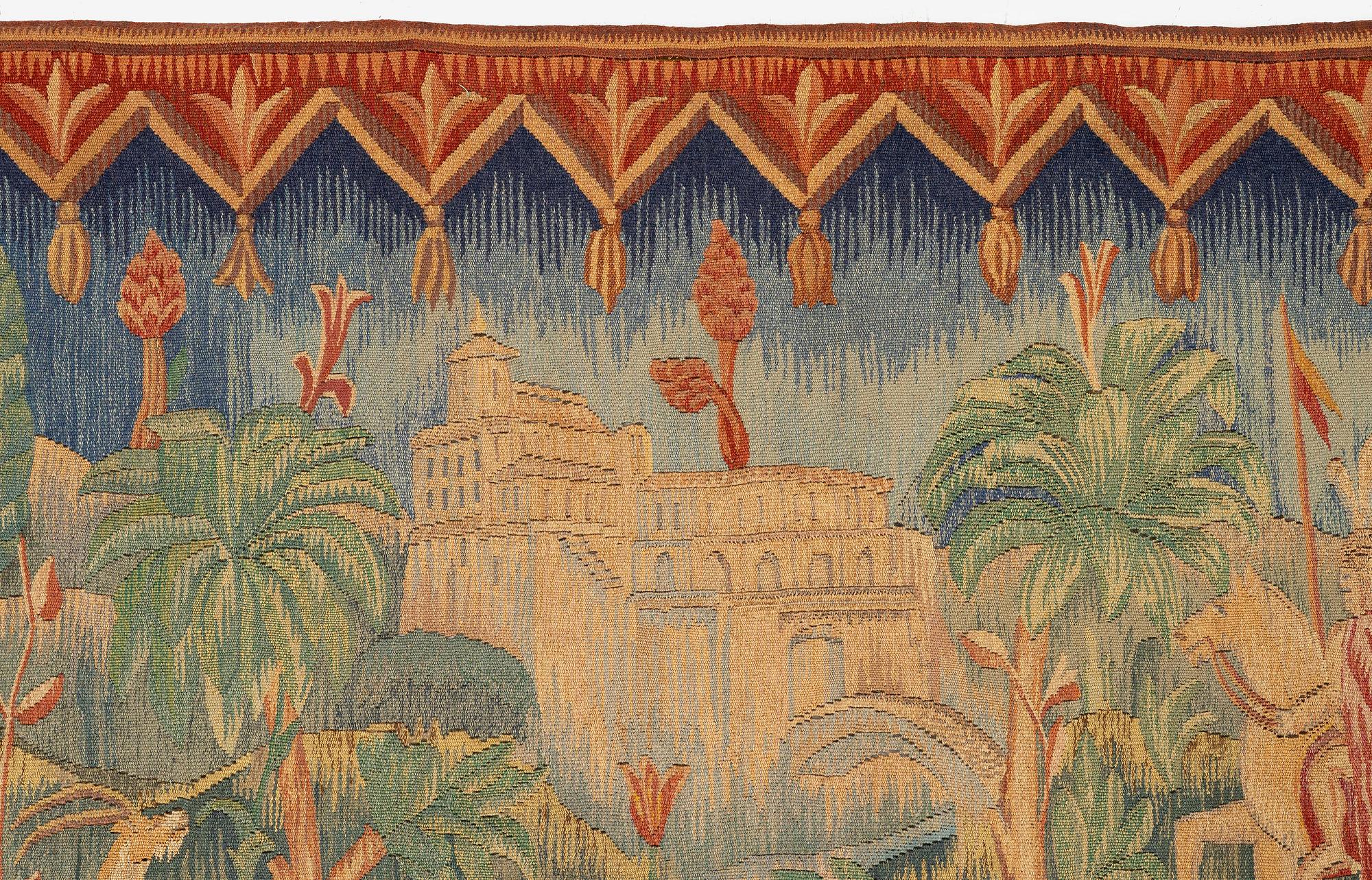
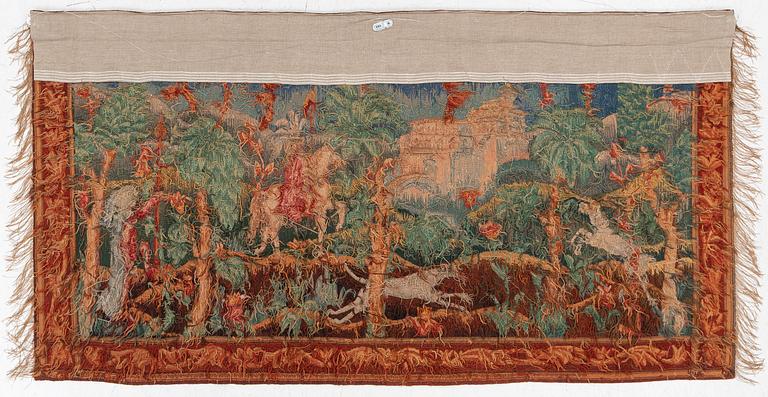
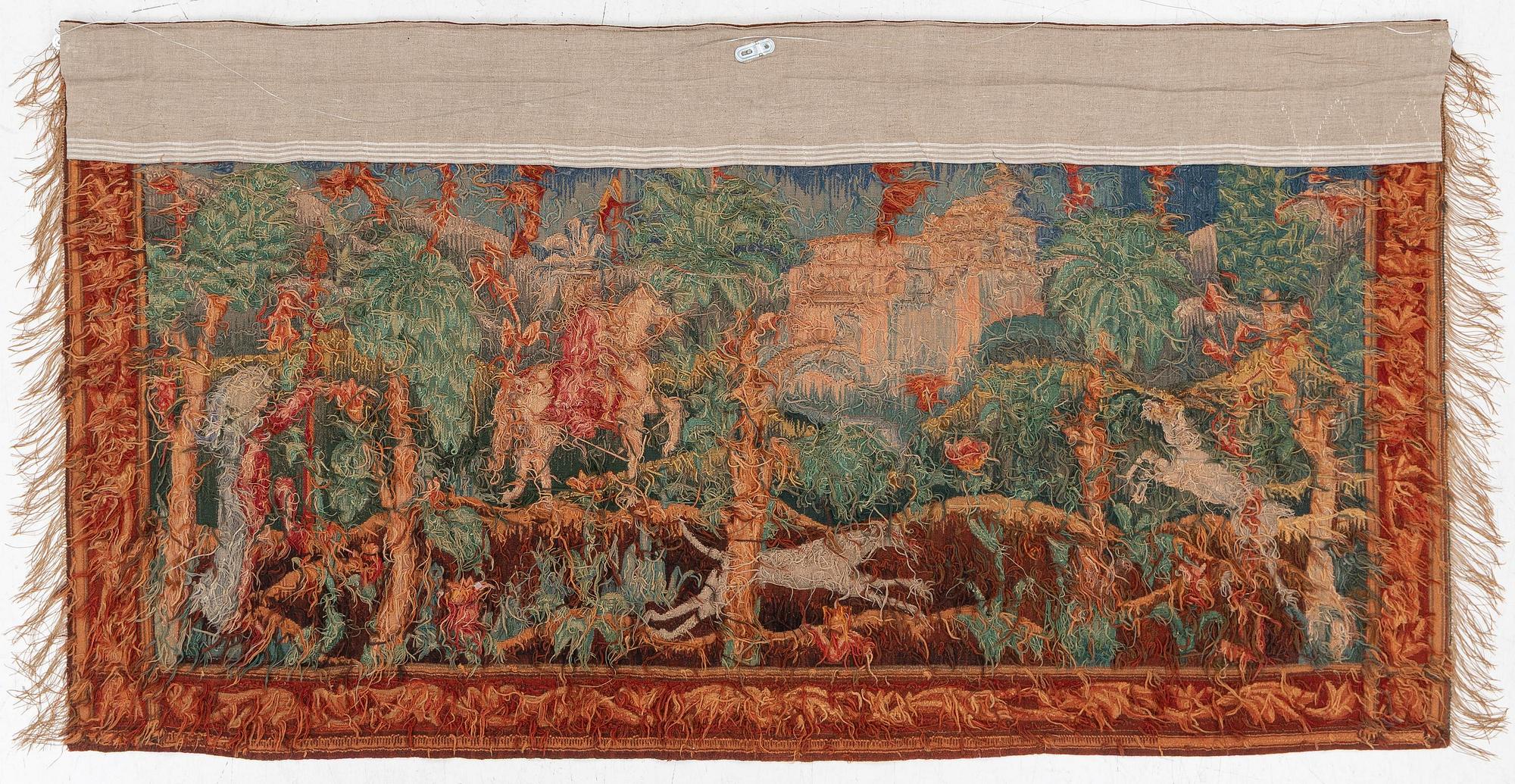
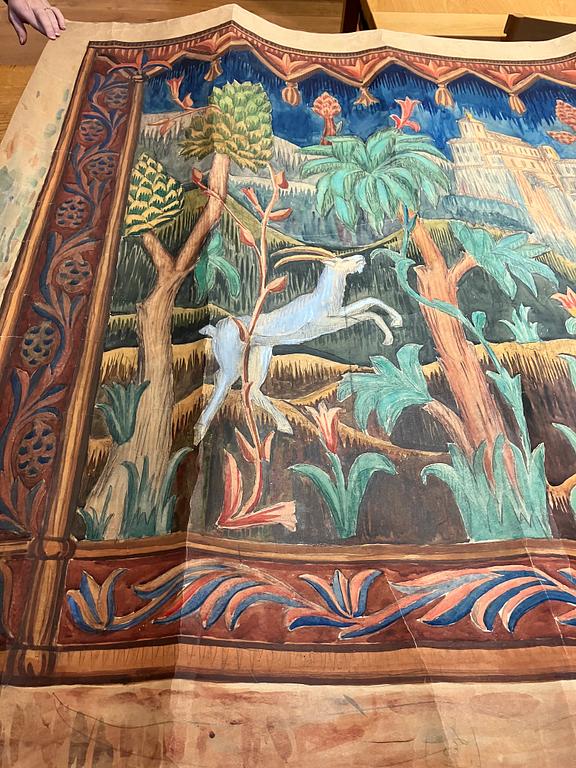
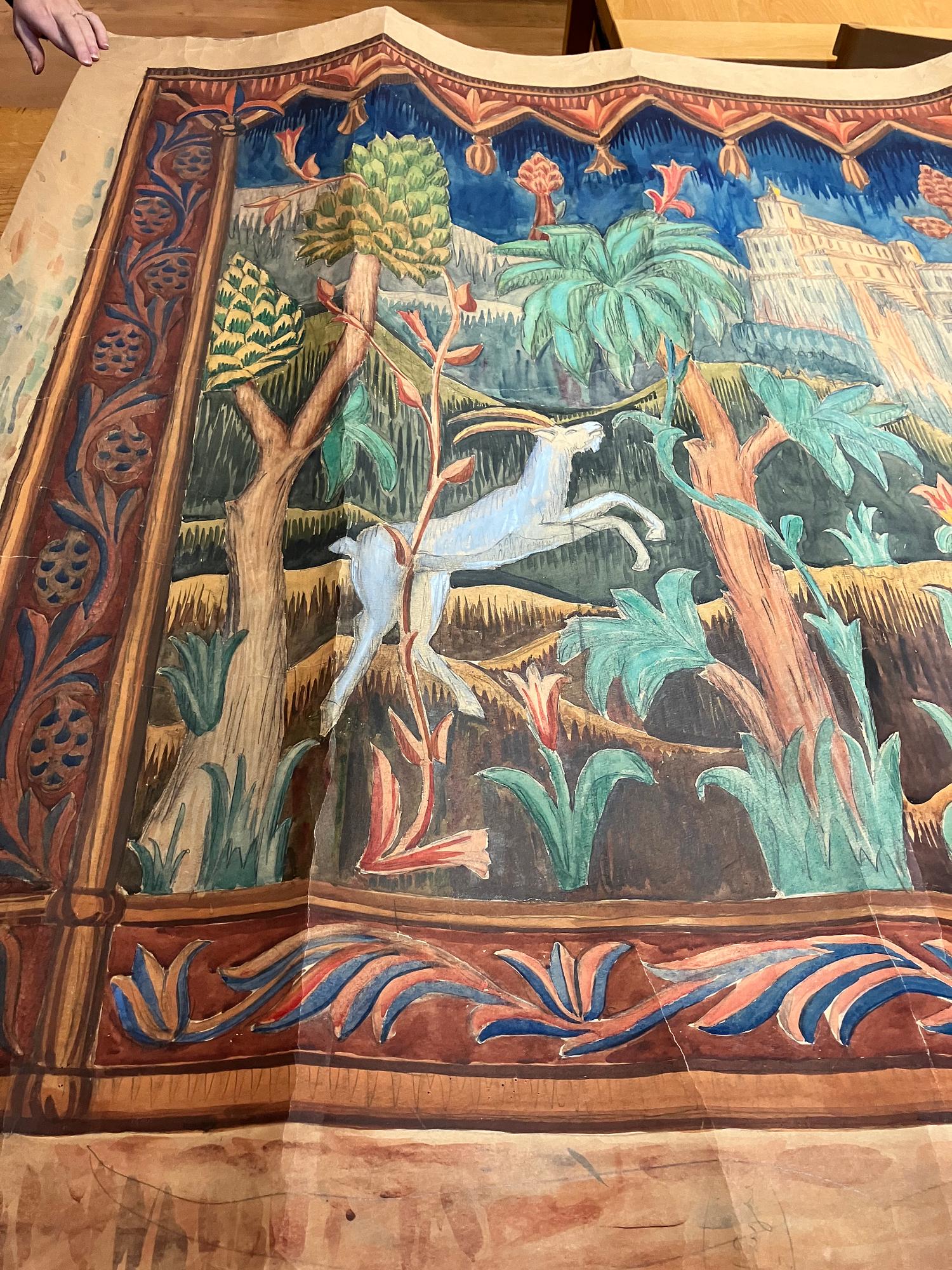
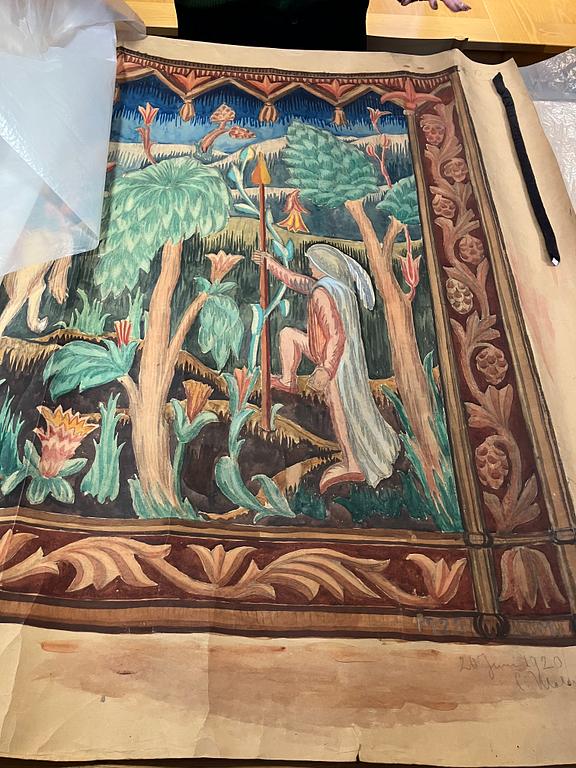
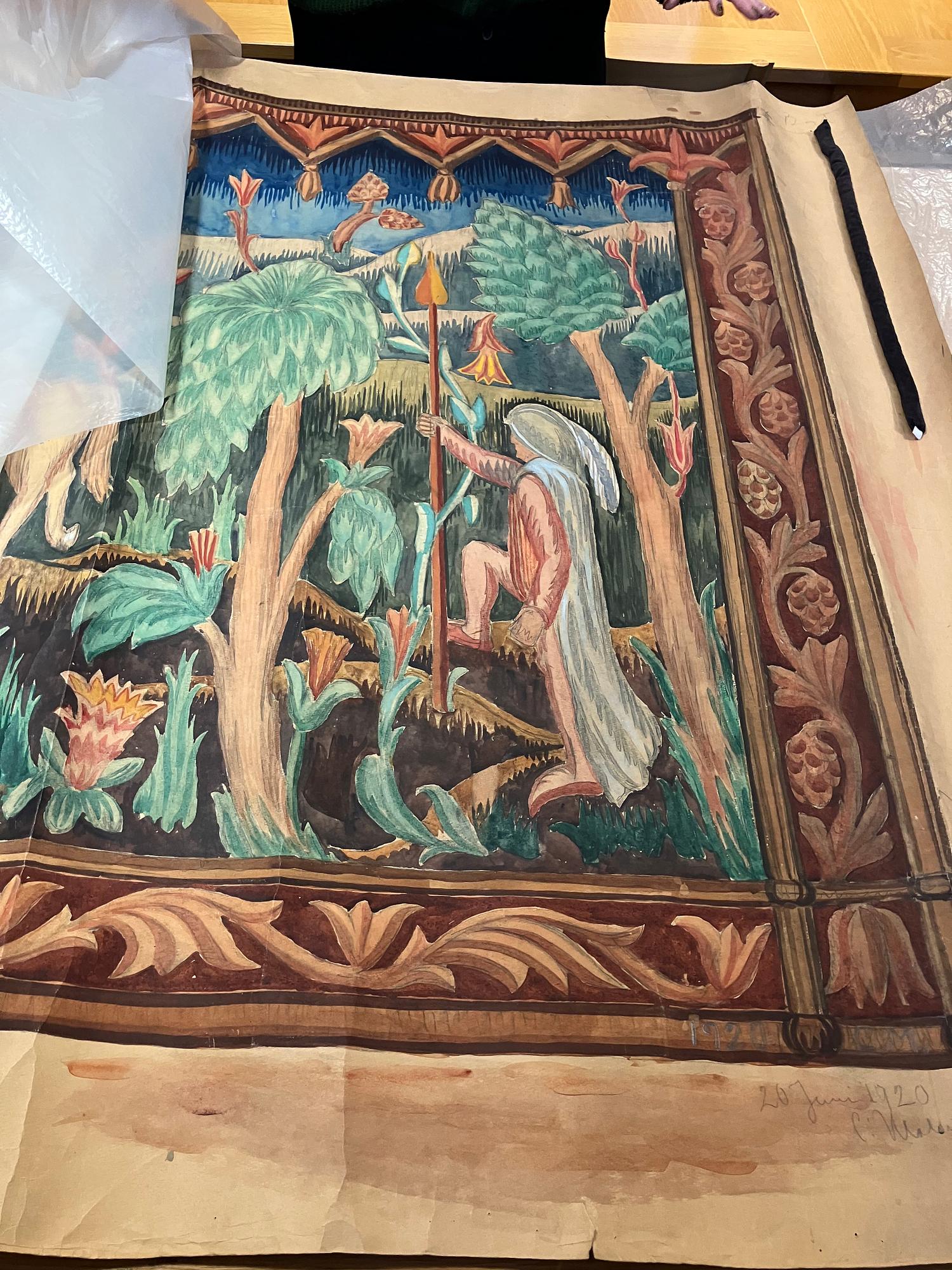
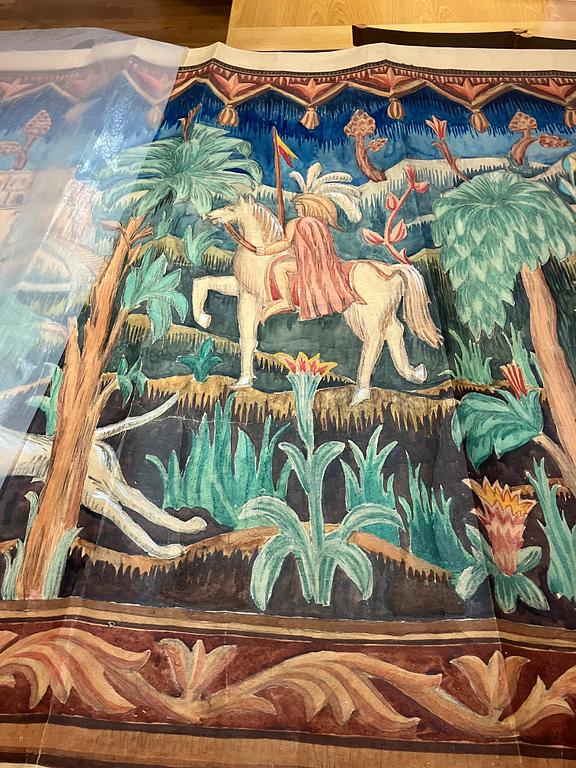
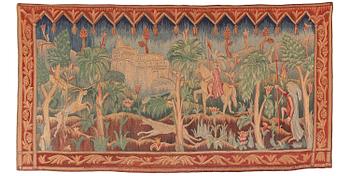
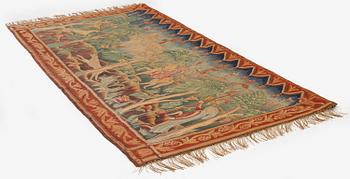
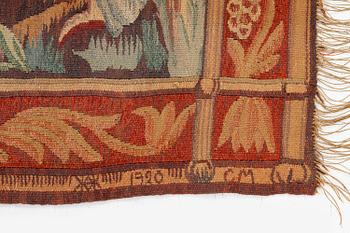
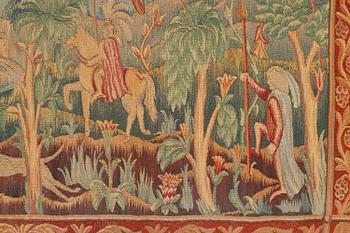
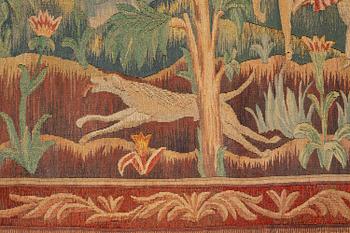
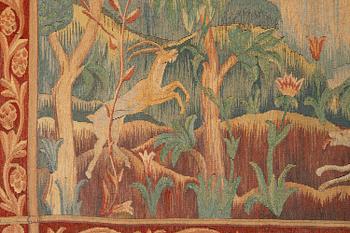
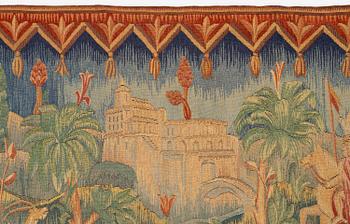
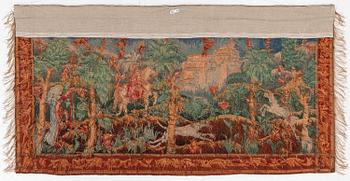
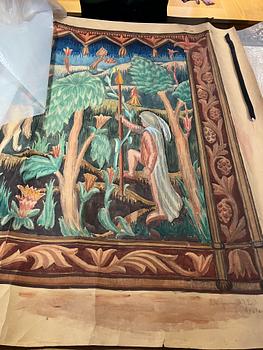
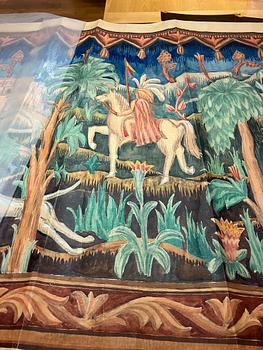
A tapestry, c. 213 x 113 cm, Handarbetets vänner, signed signed CM (V) dated 1920
Designed in 1920.
Alkuperä - Provenienssi
A private Swedish collection.
Näyttelyt
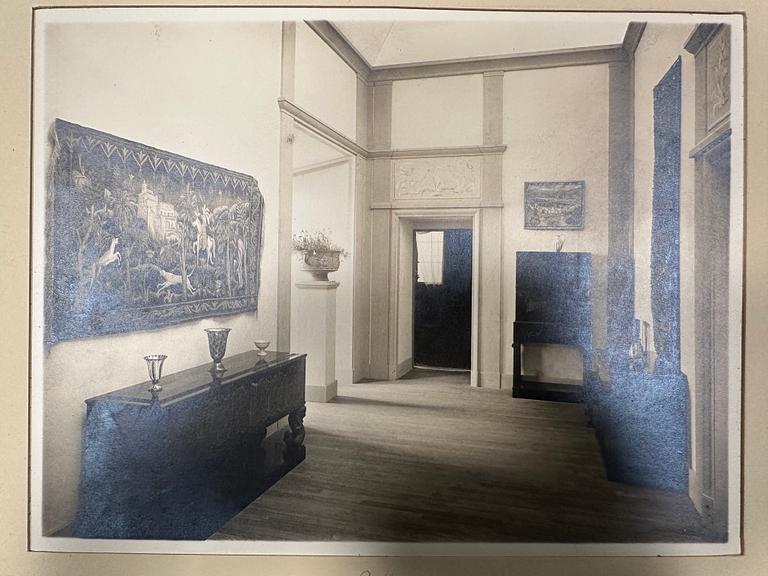
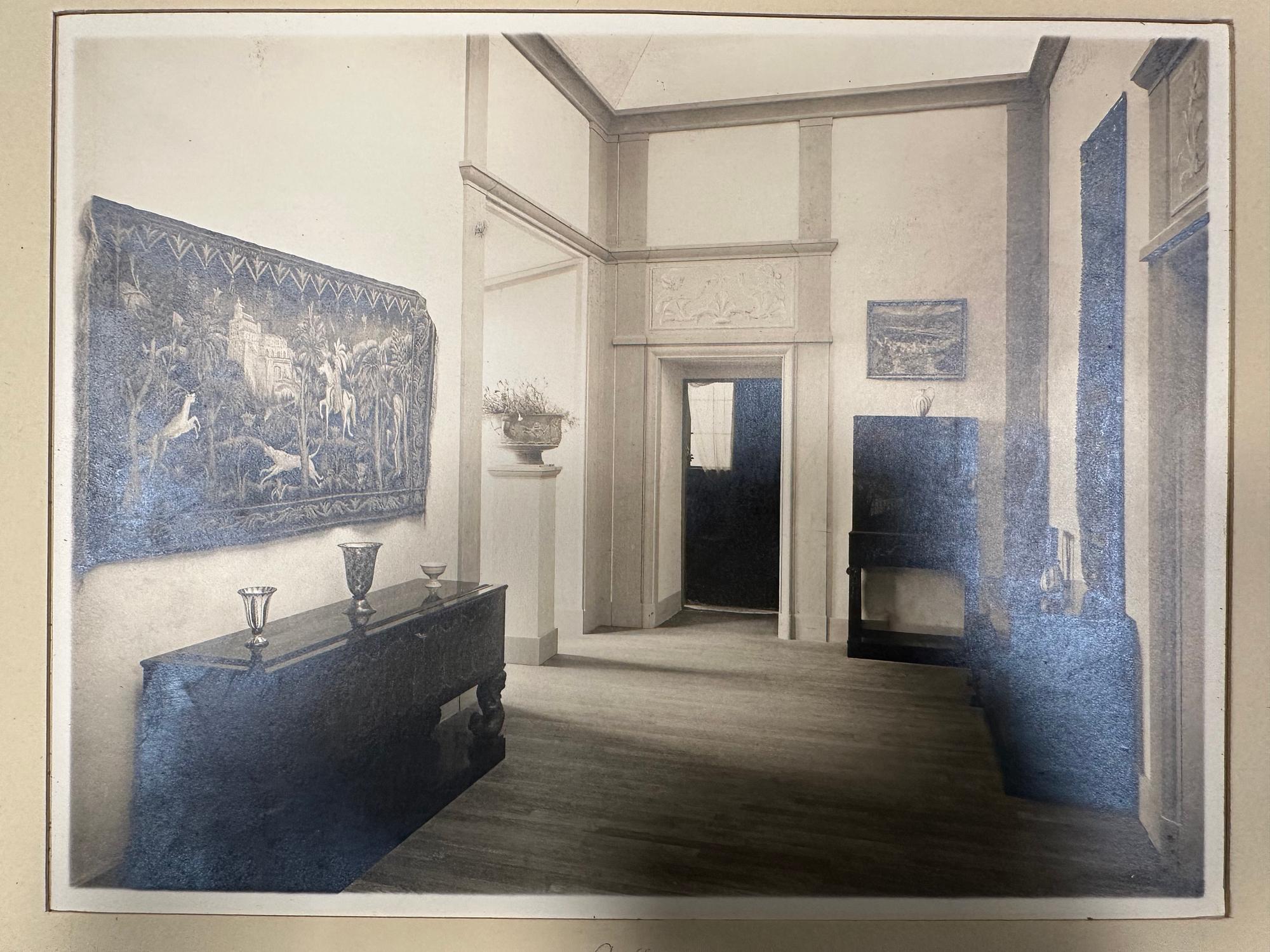
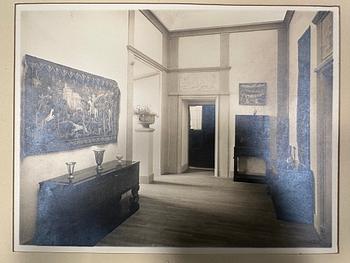
The tapestry was exhibited in section 8, "Gallery" at the Föreningen Verkstadens first exhibition, Liljevalchs, Stockholm, Sweden, September 1920.
Kirjallisuus
Liljevalchs Konsthall, catalogue 25, The Association of the Workshop's first exhibition, 1920, p. 9.
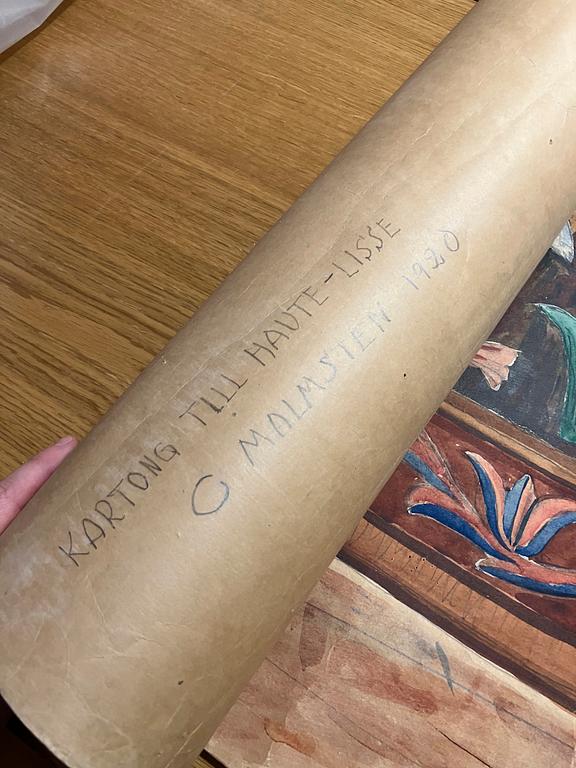
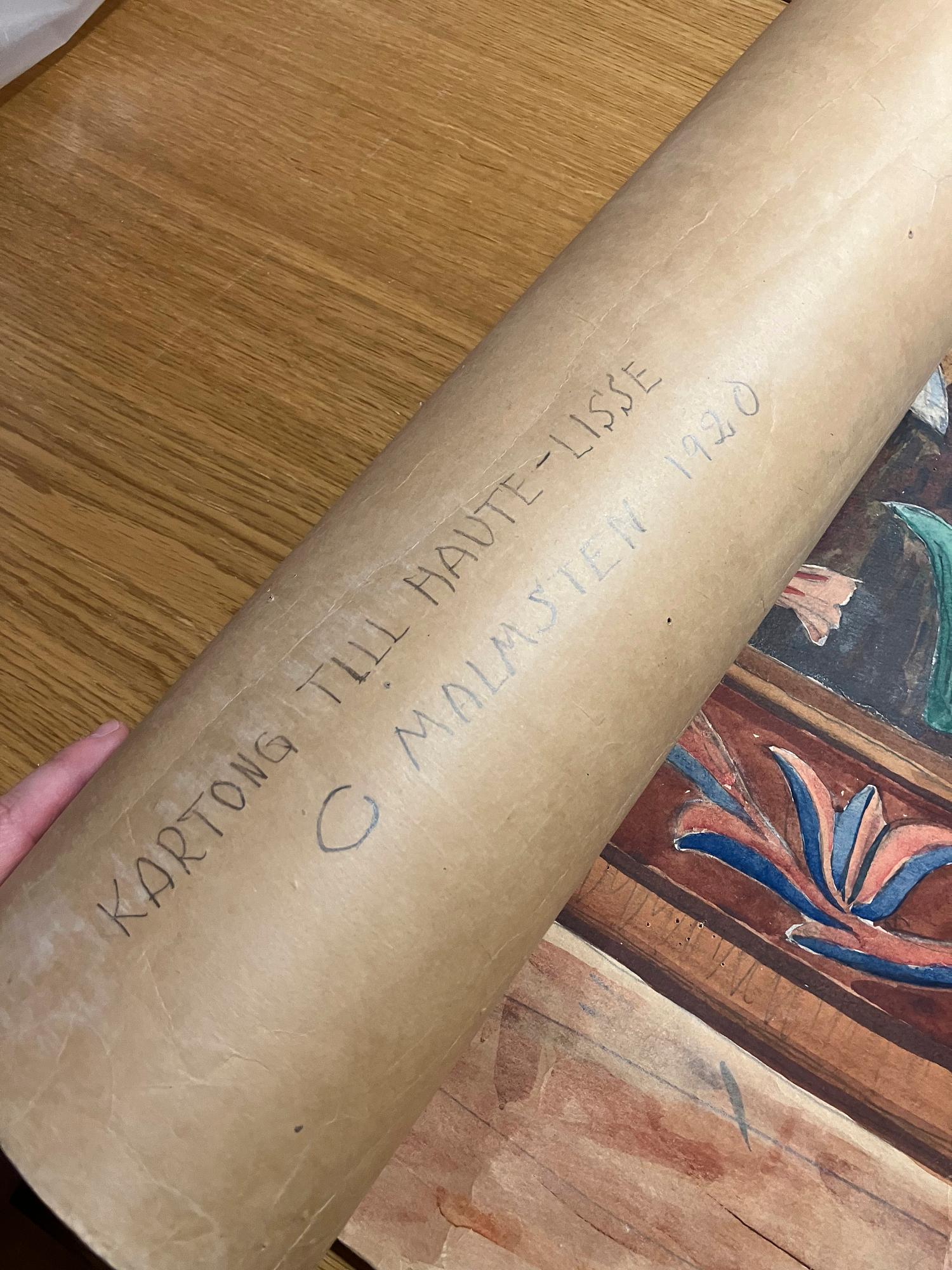
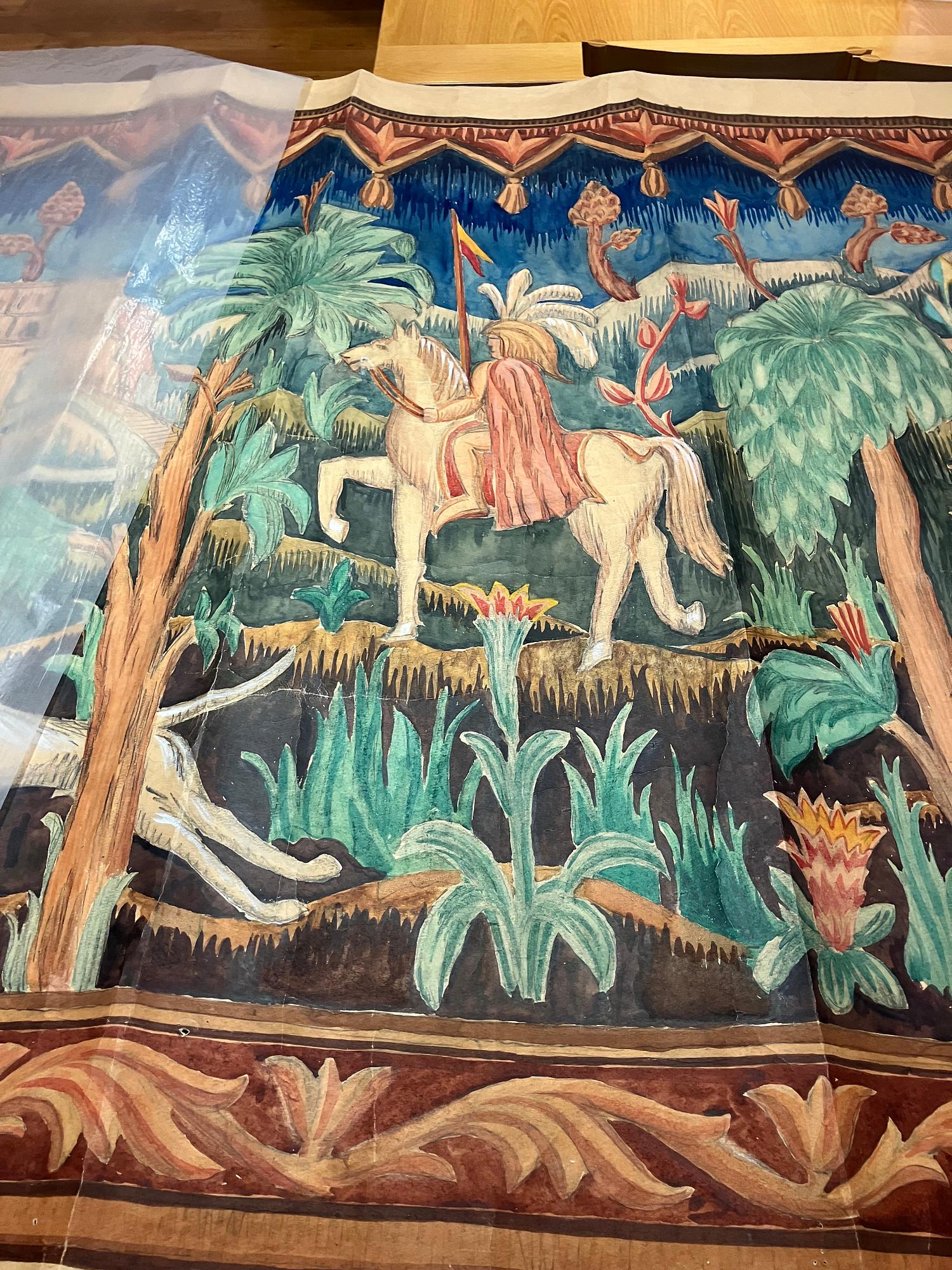
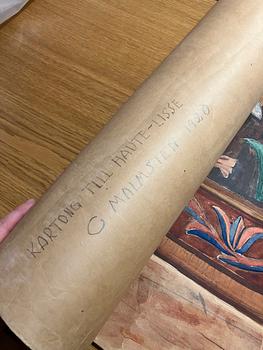
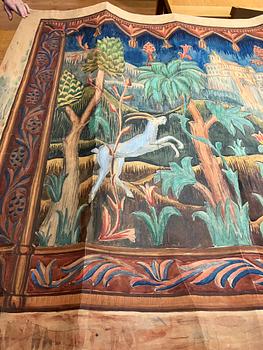
Reference for the cardboard for haute-lisse: Nordic Museum. Archive of Handarbetets vänner, J1D:163, Rolled sketches and working drawings - HV/Licium, undated. Watercolour sketch, "Cardboard for haute-lisse 1920", Carl Malmsten, 1920.
Liljevalchs photo album: Stockholm City Archives. Liljevalchs Konsthall, K1a:21, Photography books, 1920. Liljevalchs Konsthall - Exhibition No. 25 1920.
Muut tiedot
The woven tapestry designed by Carl Malmsten for the first exhibition of Föreningen Verkstaden in 1920 stands as a clear example of his view on craftsmanship and the role of textiles in interior spaces. At a time when industrialization was driving toward mass production, Malmsten instead chose to highlight the handmade, where every detail bore traces of care and a deep understanding of materials.
Föreningen Verkstaden created a platform for this type of work. Here, artists and craftsmen came together with the ambition of uniting function and beauty. Malmsten’s tapestry became part of this whole—not as an isolated decoration, but as an integrated element of the spatial composition.
At the exhibition at Liljevalchs Konsthall in 1920, the tapestry was shown alongside furniture and other works of decorative art. It functioned as a backdrop, but also as an active surface that gave the room rhythm and character. Here, Malmsten’s textile thinking becomes clear: textiles were not merely to adorn, but to create atmosphere and bind together the different elements of a space.
At the same time, other artists were active within the same group, such as Harald Bergsten and Gunnar Asplund. Their work contributed to the overall artistic unity of the exhibition, where different expressions interacted. Asplund’s architectural vision and Bergsten’s decorative sensibility enhanced the environment in which Malmsten’s textiles could fully come into their own.
The tapestry from 1920 can therefore be seen as a manifestation of Malmsten’s ideals. It demonstrates how textiles, craftsmanship, and architecture can interact to create a cohesive experience. Through his work, Malmsten established a textile legacy in which quality, simplicity, and the inherent character of materials comes to focus.
In this woven tapestry, several layers of meaning converge: a historical moment, an artistic idea, and a masterful execution. It becomes not only part of the exhibition, but an expression of a broader movement within Swedish design—one in which Carl Malmsten stood as one of the most influential figures.
Lisää taiteilijasta Carl Malmsten
Carl Malmsten is one of Sweden's most famous furniture designers. Many of his furniture are considered modern design classics, for example, the cane chair "Lilla Åland", the armchair "Farmor", the sofa "Samsas", the cabinet "Herrgården", and the furniture series "Vardag".
Both "Lilla Åland" and "Vardag" adopted the ideals of "beautiful everyday goods" of the 1940s. Their neat shape and frugal design quickly became timeless interior details that we still see in many homes today.
At the beginning of his career, Malmsten interned at various carpentry workshops and studied furniture at Nordiska museet and Skansen. He had his breakthrough in 1916 when he was commissioned to design part of the interior of Stockholm's City Hall.
During his career, Malmsten collaborated with several architects, such as Ragnar Östberg, Ivar Tengbom, and Ferdinand Boberg. He designed furniture for Stockholm's concert hall and Ulriksdal castle. He participated in the now iconic hosing exhibition at Liljevalchs gallery in 1917, where the term "Beautiful everyday goods" was coined.
Lisätietoja ja kuntoraportit

Kuuluu jälleenmyyntikorvauksen piiriin
Tietoa ostamisesta
Kuvan käyttöoikeudet
Tämän tietokannan taideteokset ovat tekijänoikeudella suojattuja, eikä niitä saa kopioida ilman oikeudenhaltijoiden lupaa. Teokset kopioidaan tässä tietokannassa Bildupphovsrättin lisenssillä.




Muiden katsomia kohteita