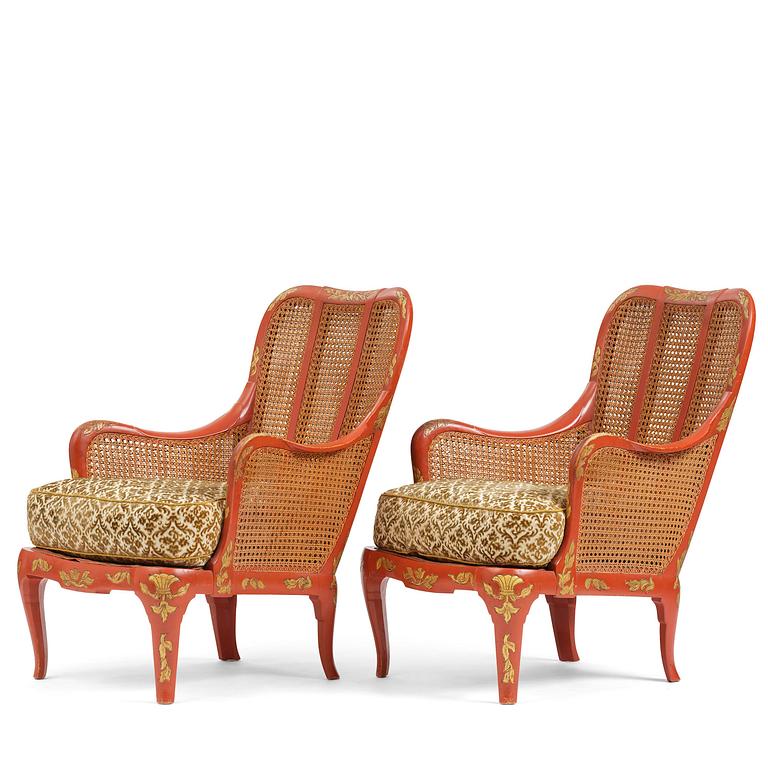
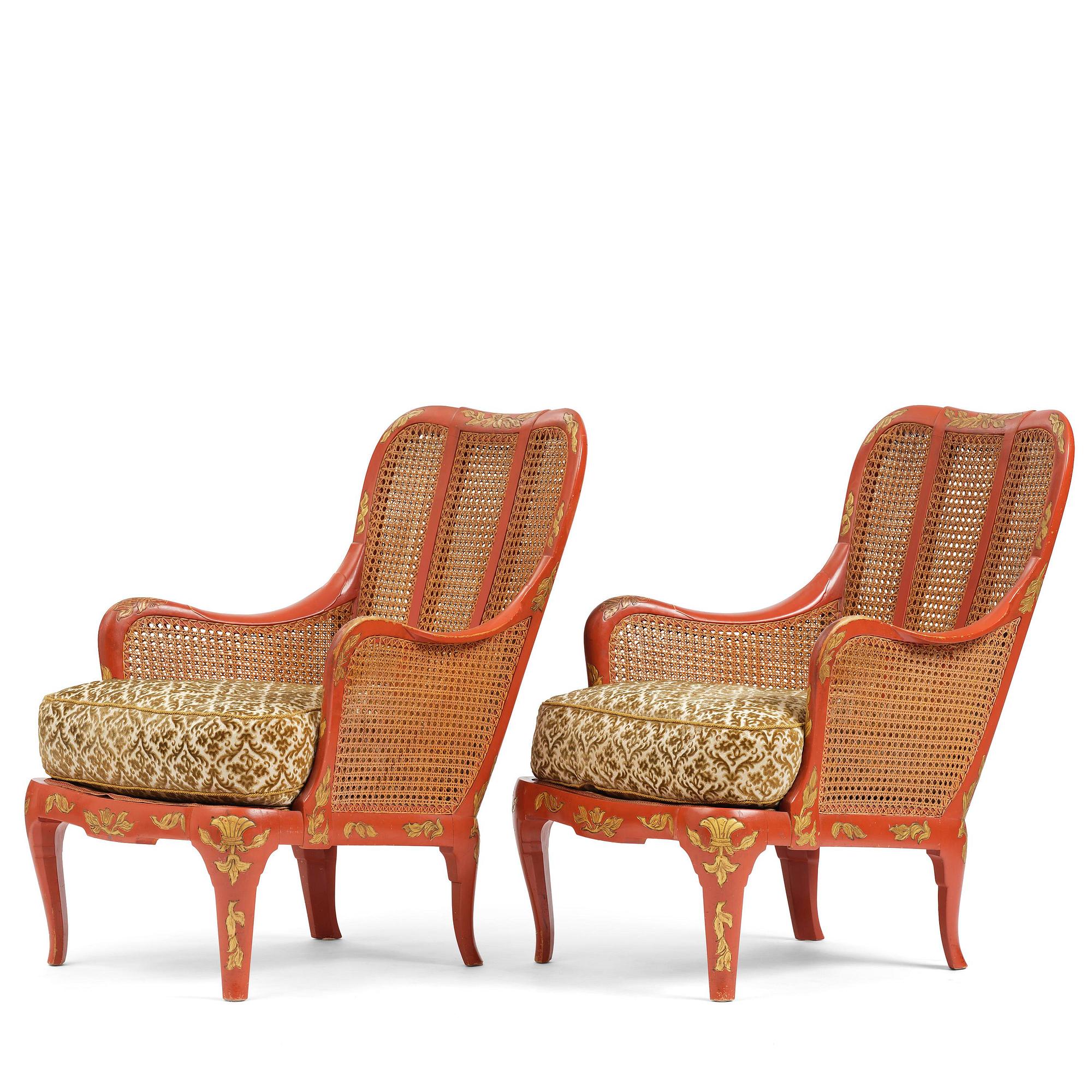
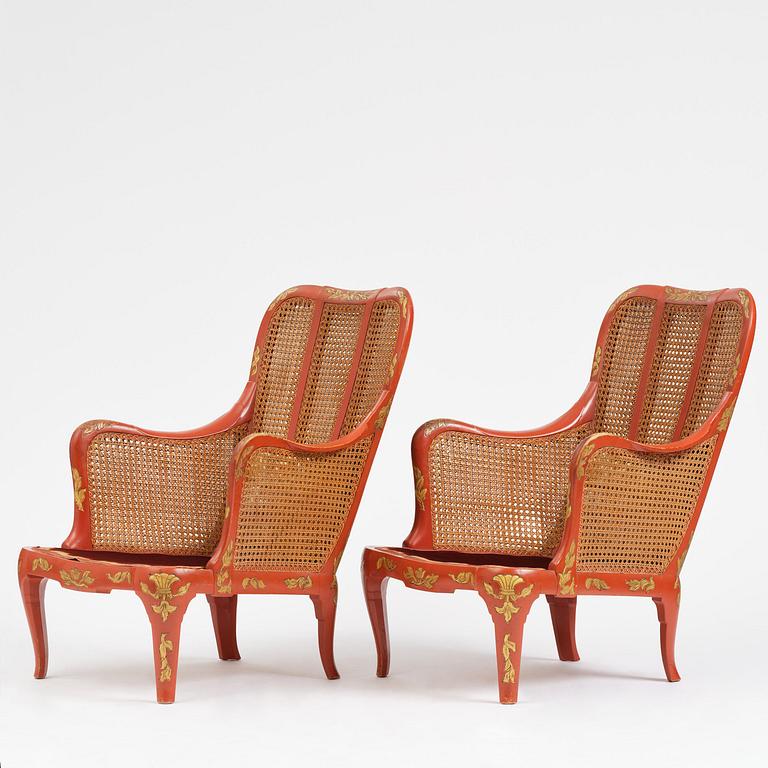
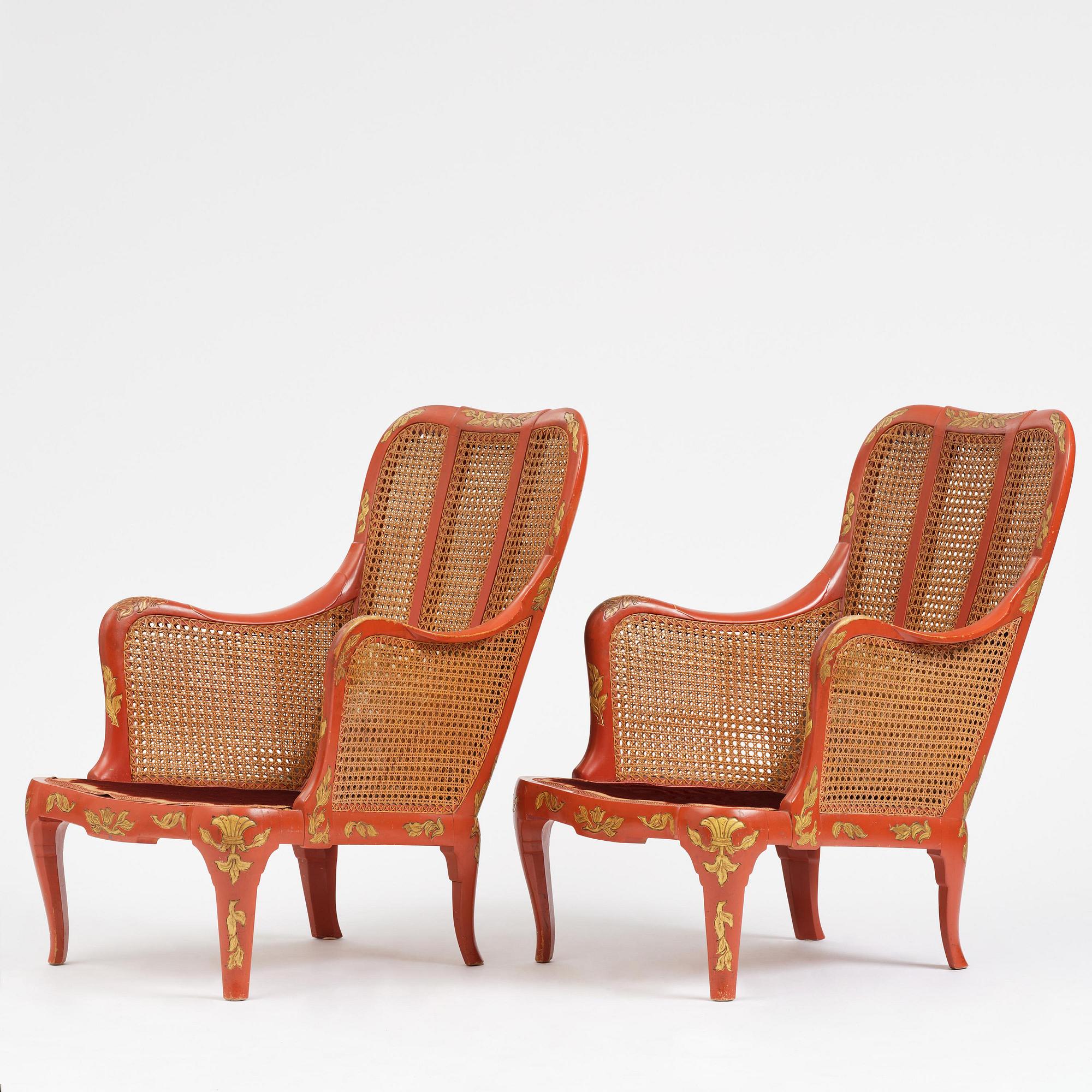
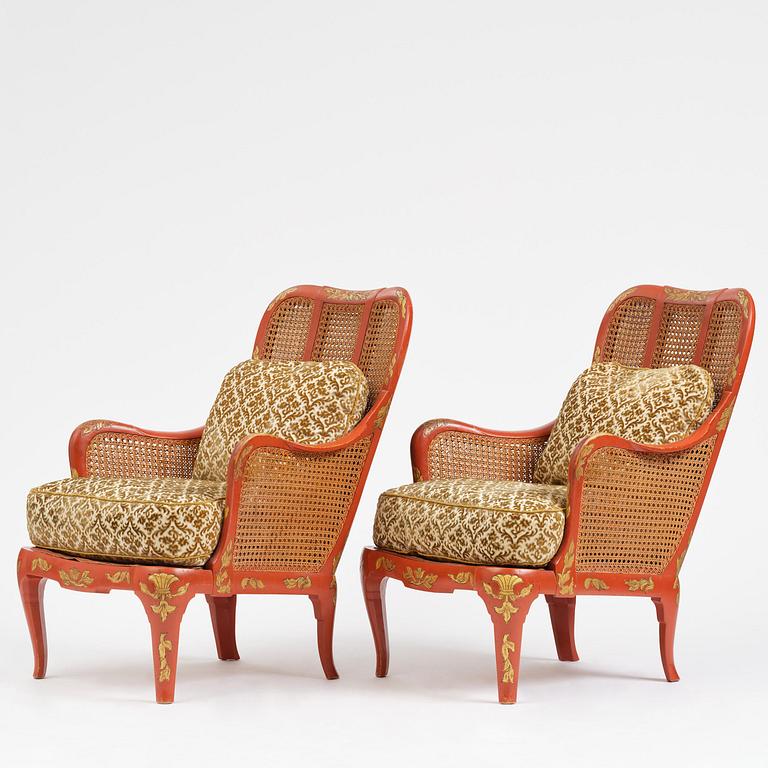
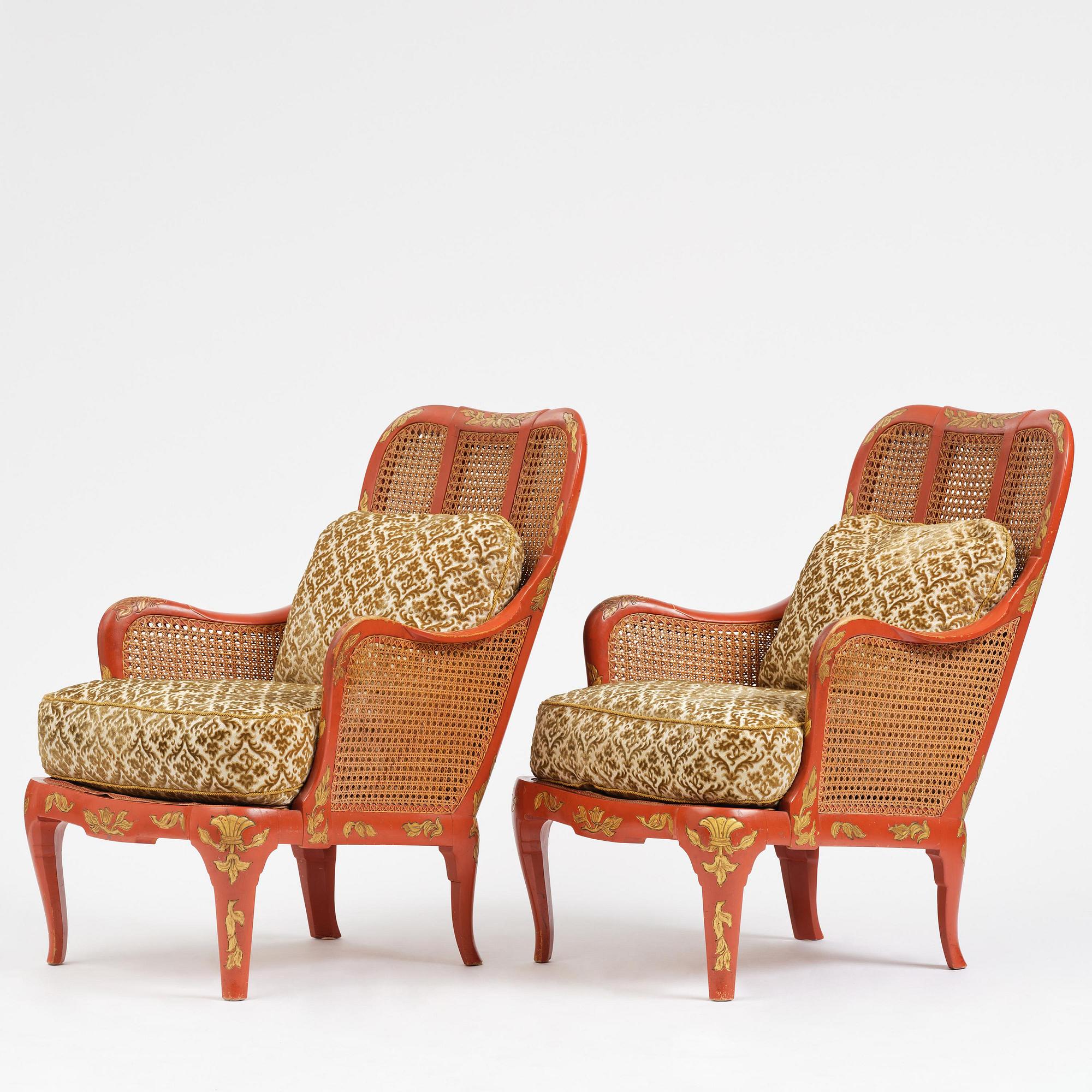
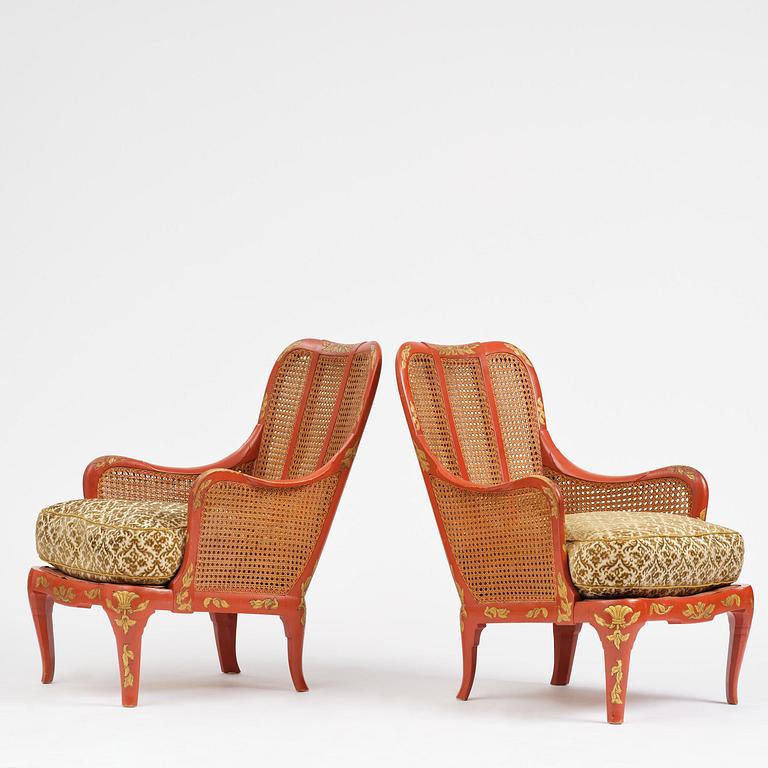
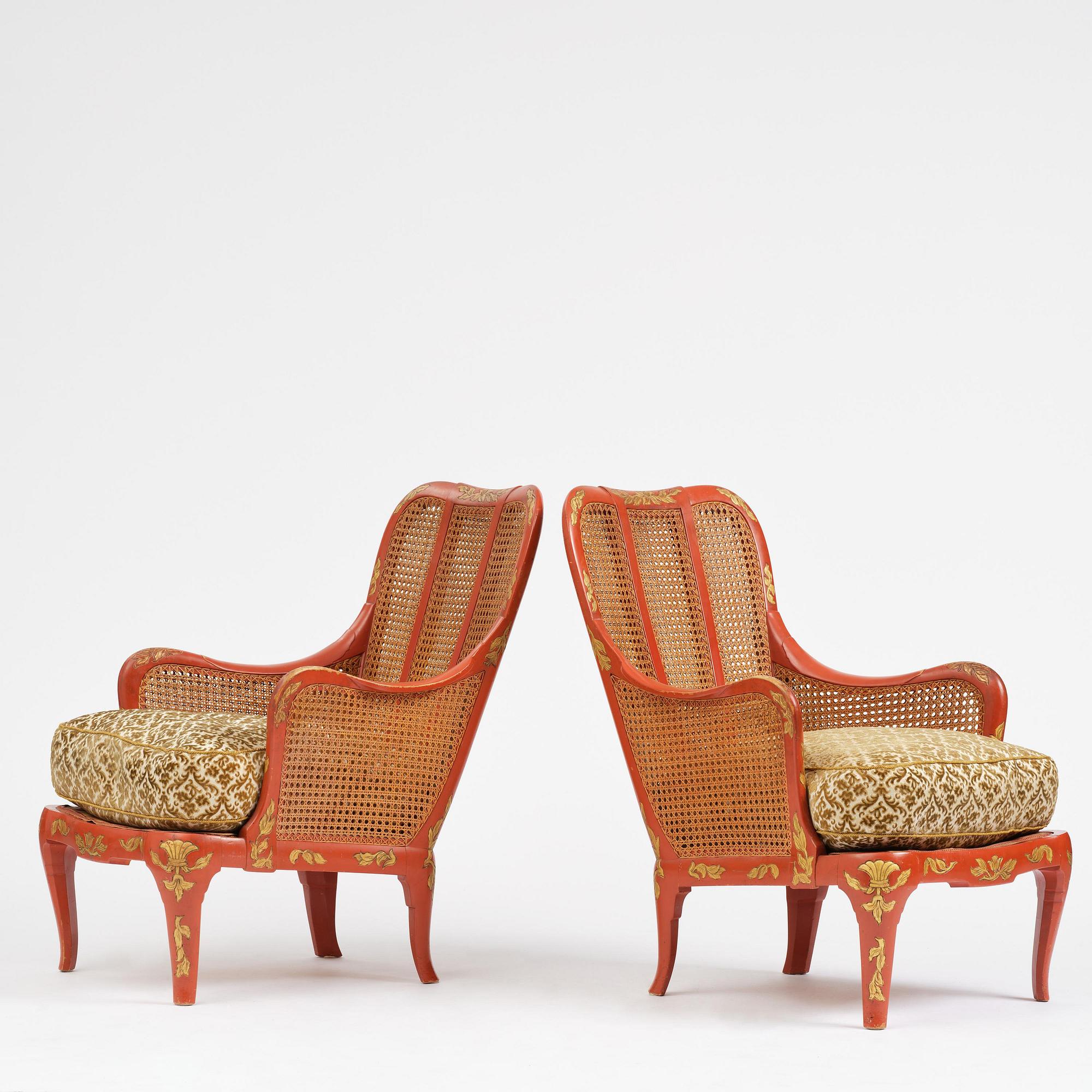
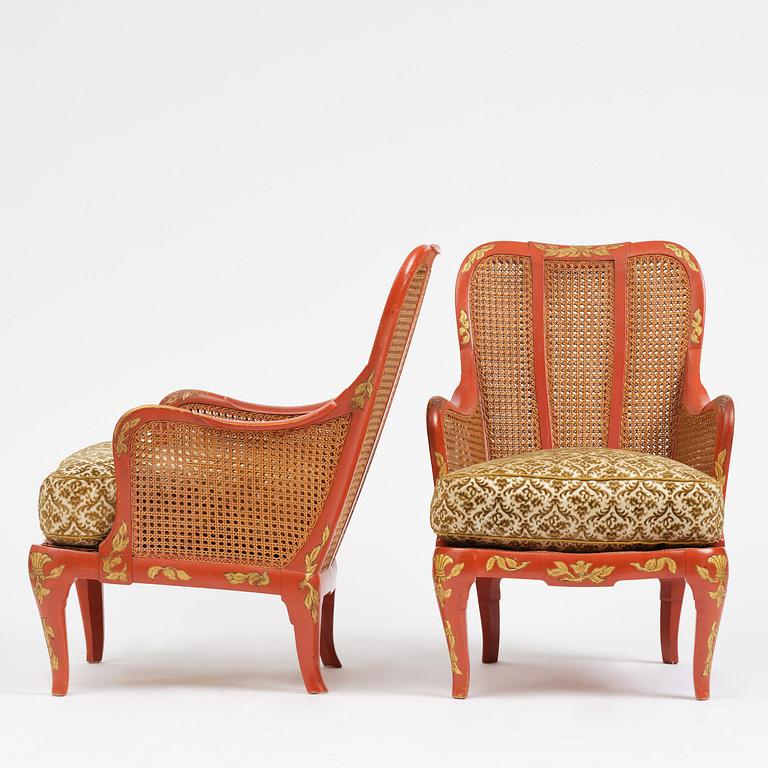
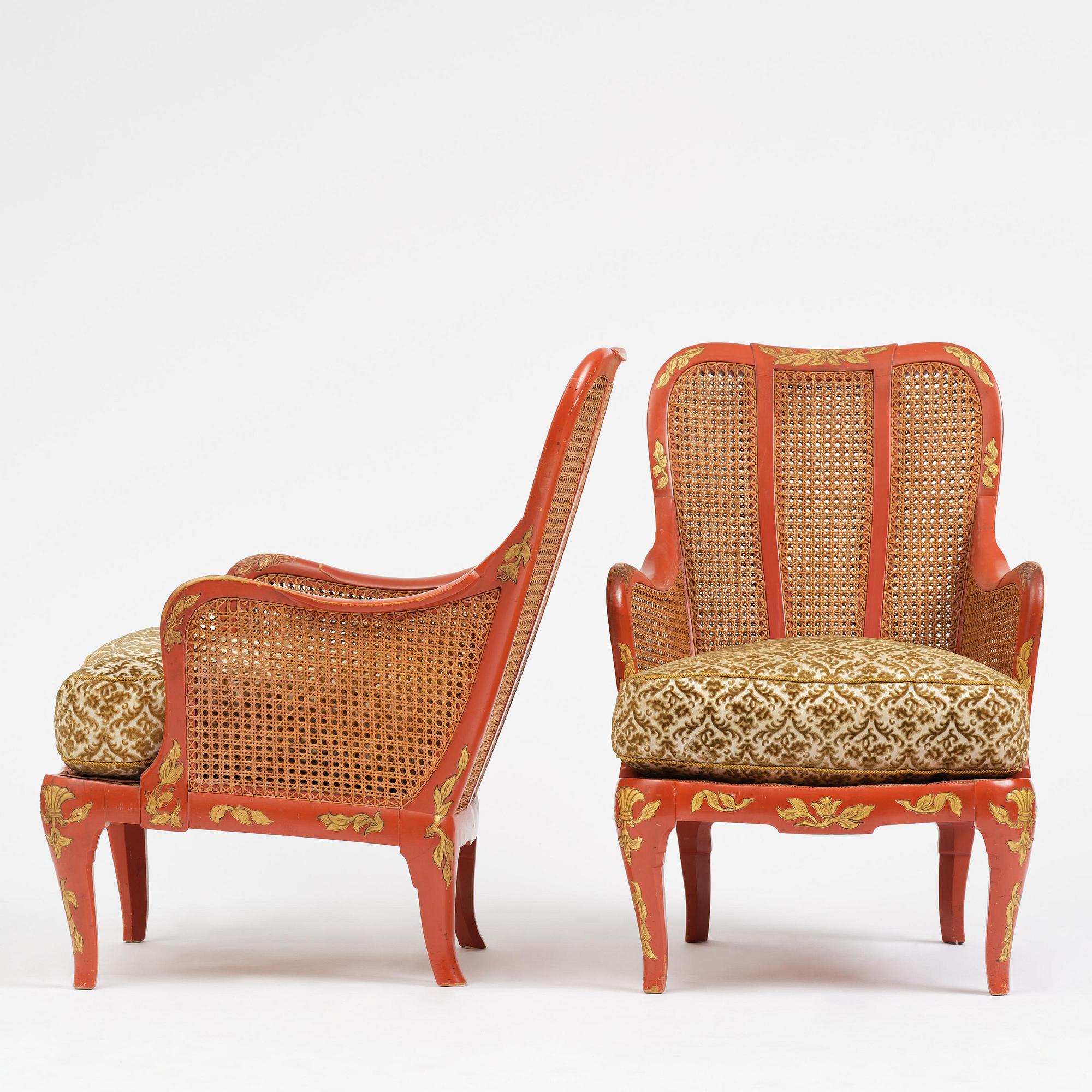
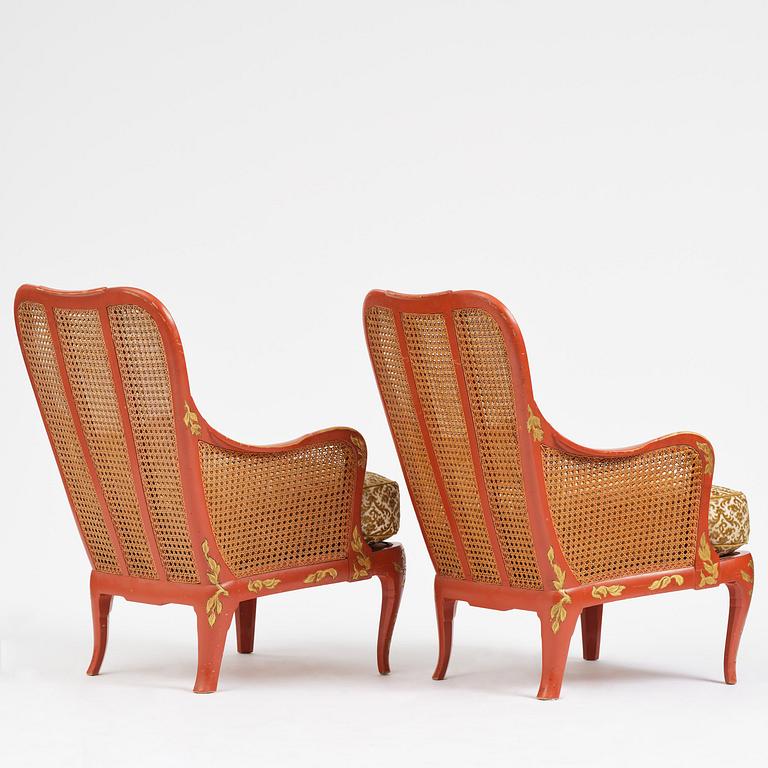
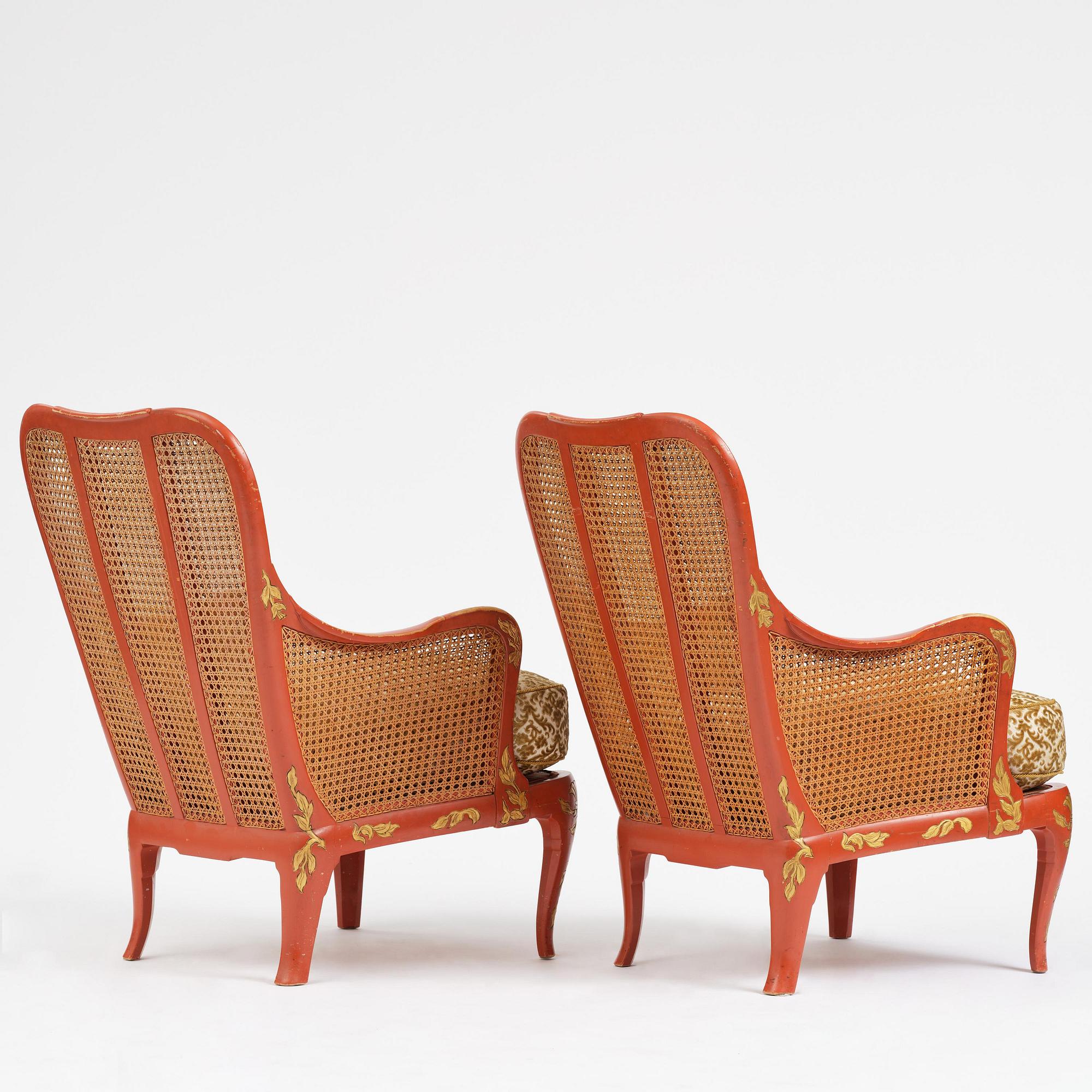
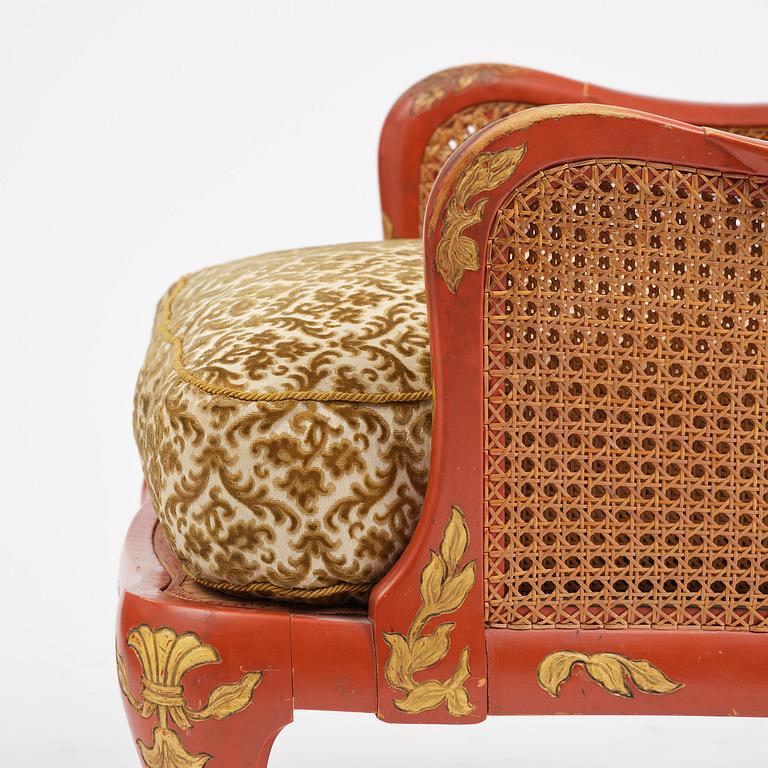
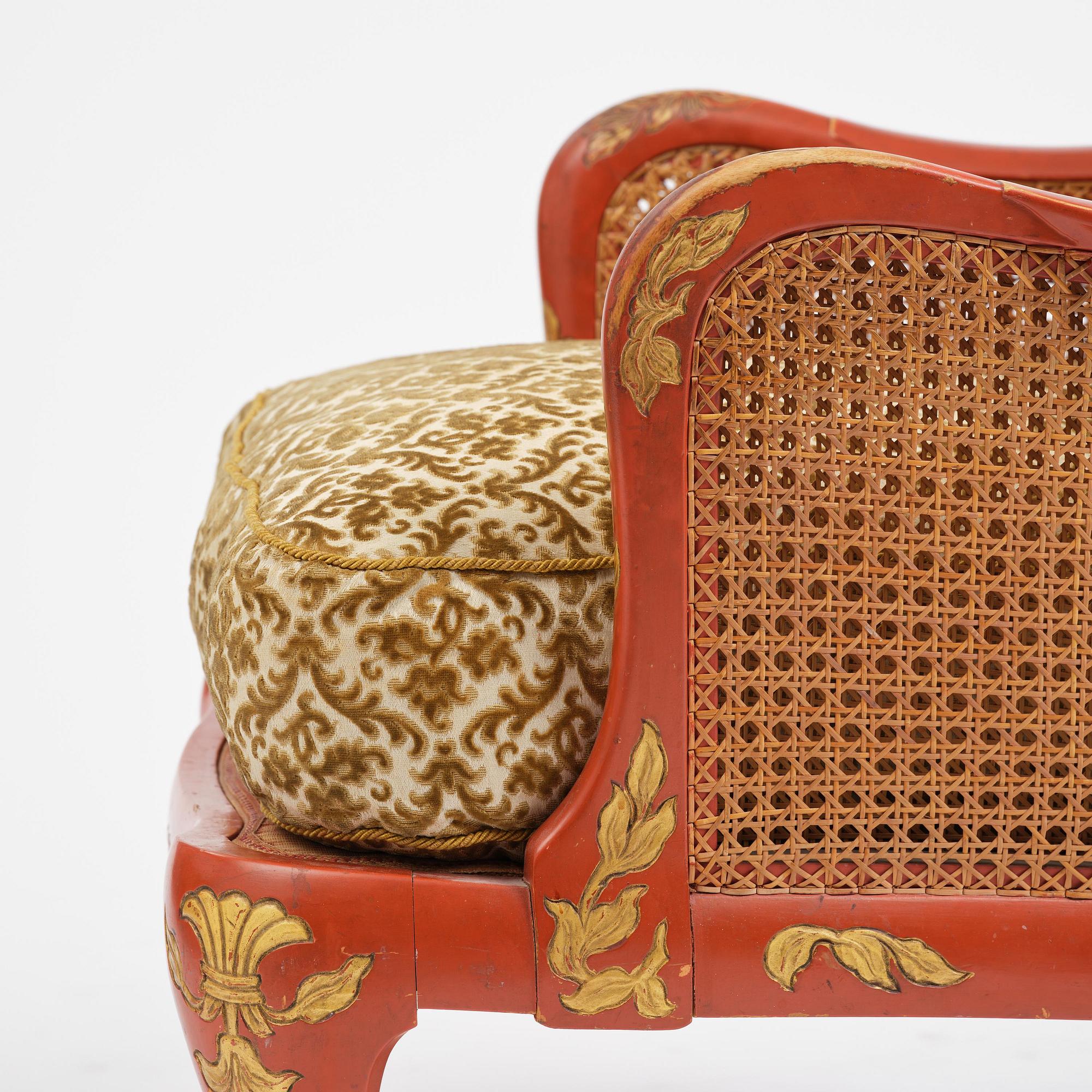
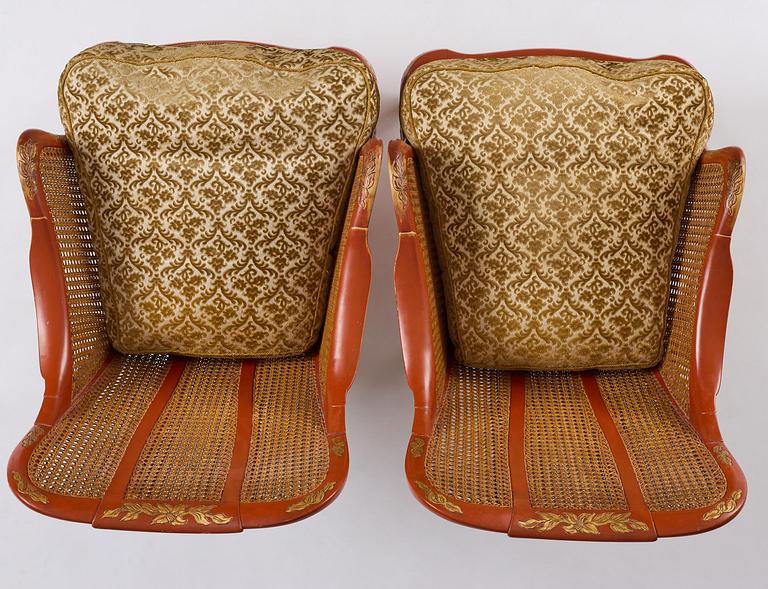
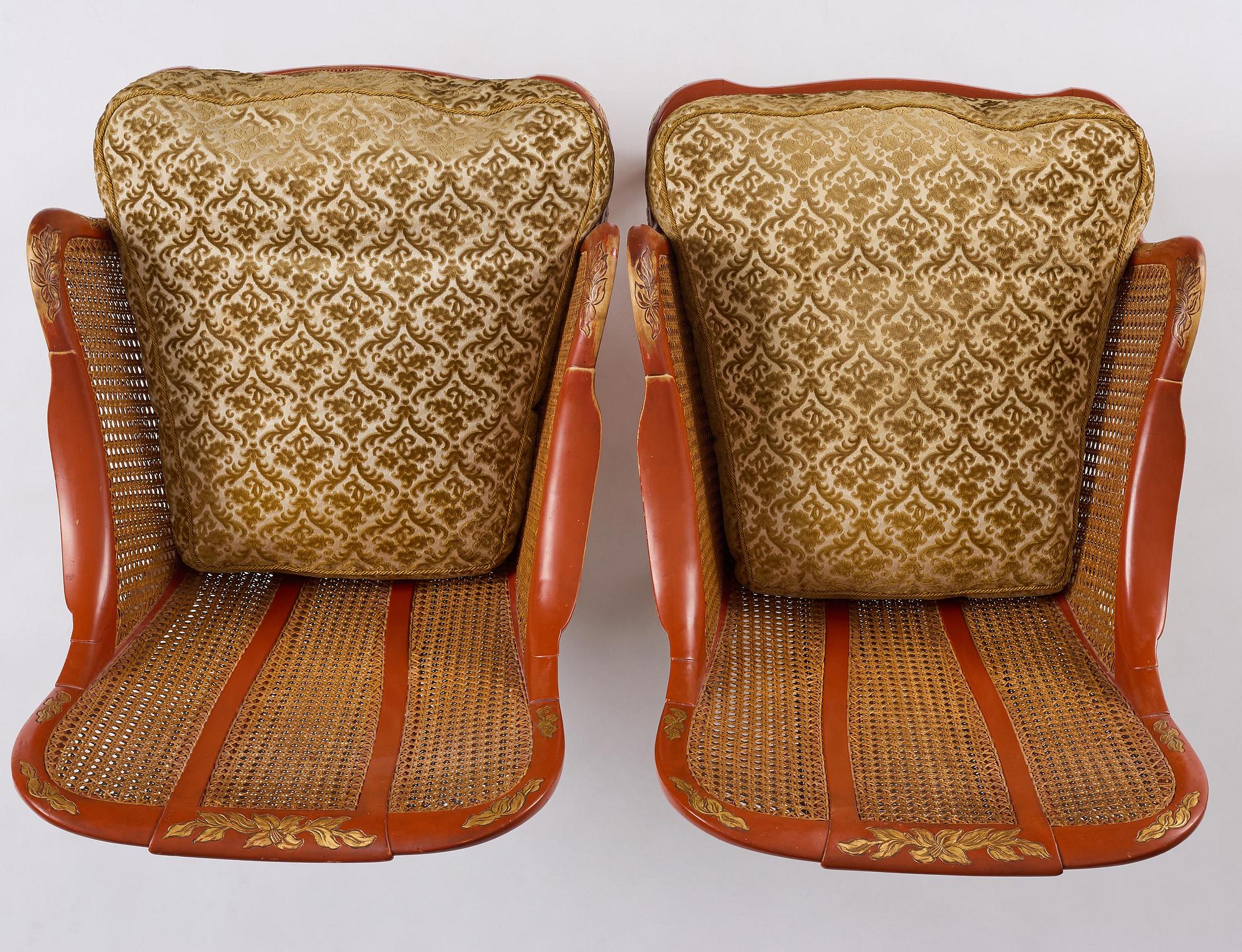
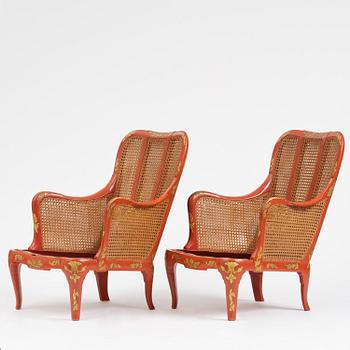
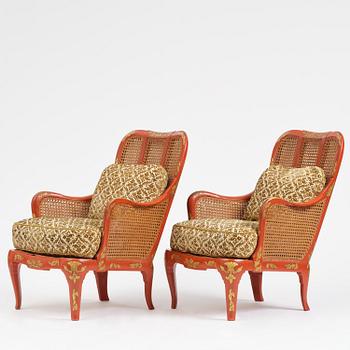
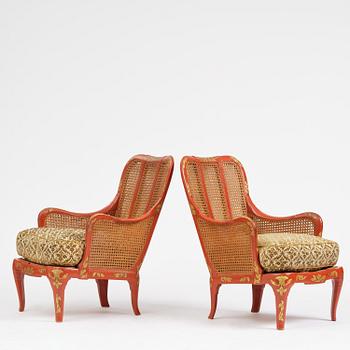
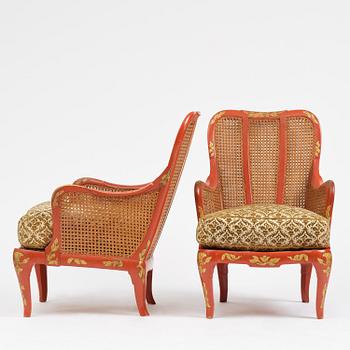
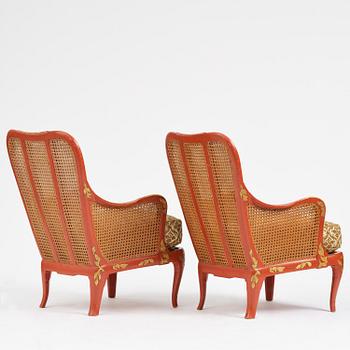
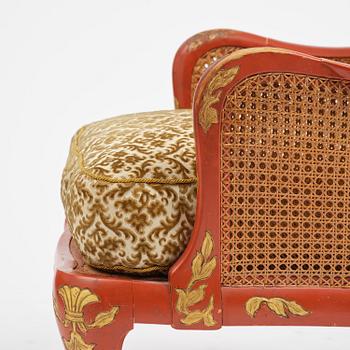
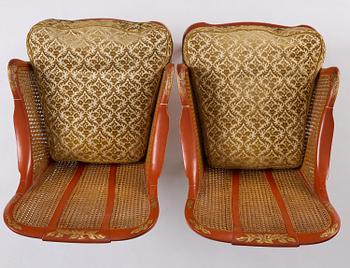
A pair of Swedish Grace armchairs, cabinetmaker Albin Johansson, Stockholm, for Villa Kvikkjokk, 1927-28.
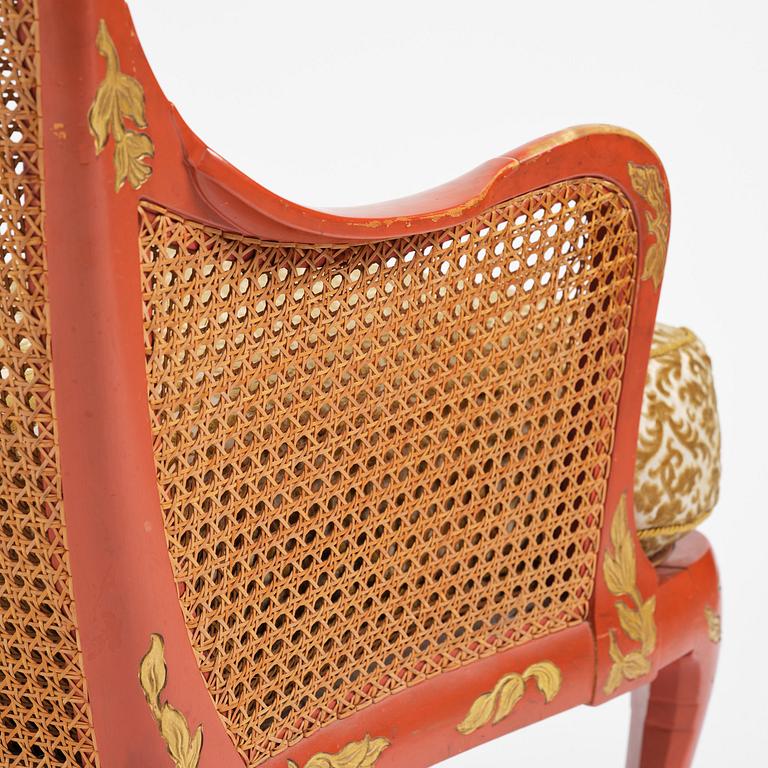
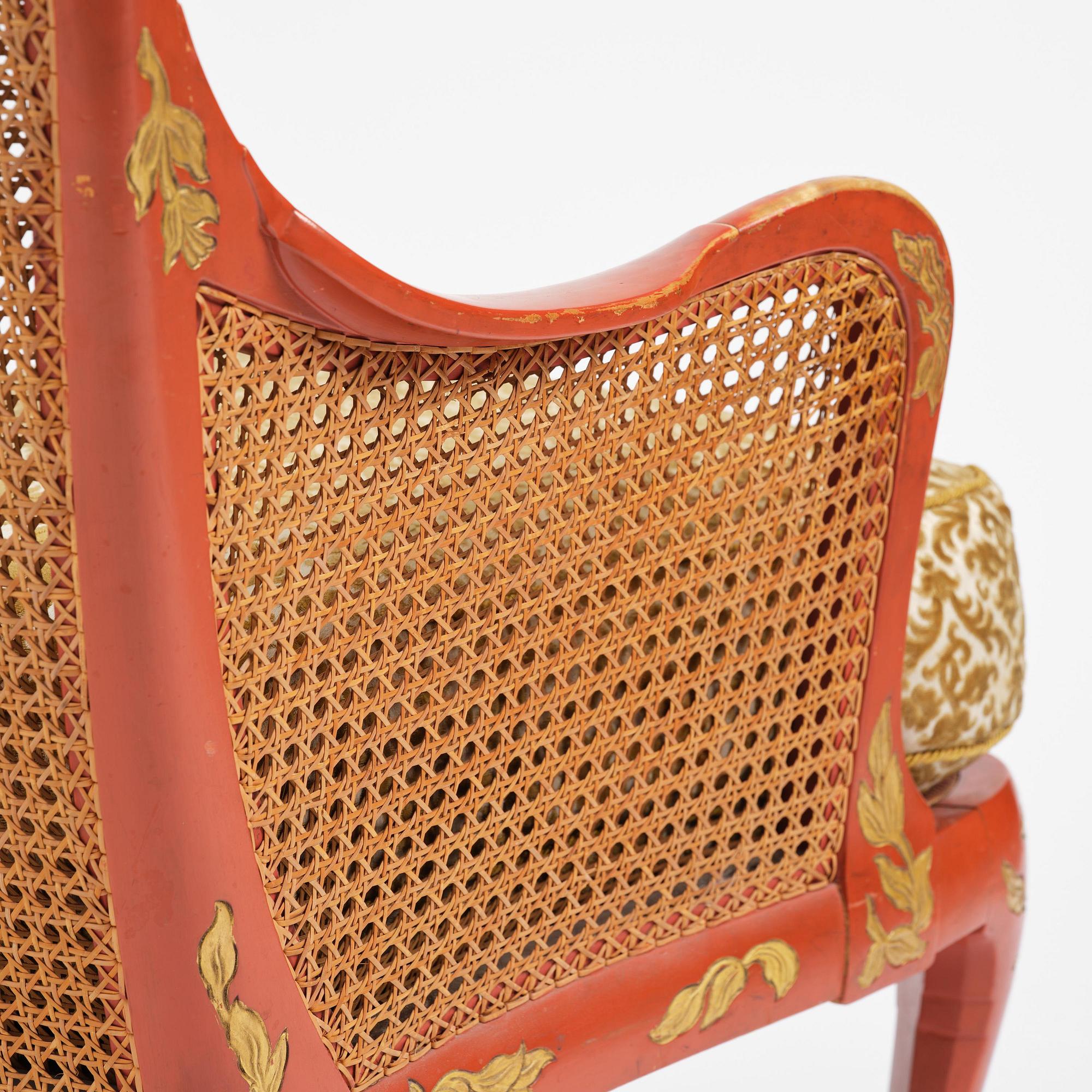
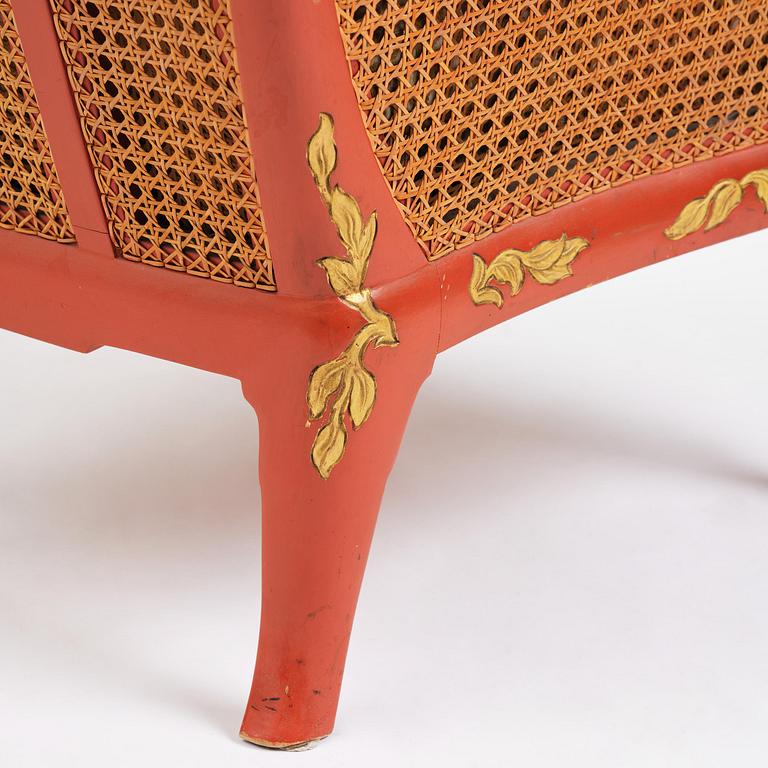
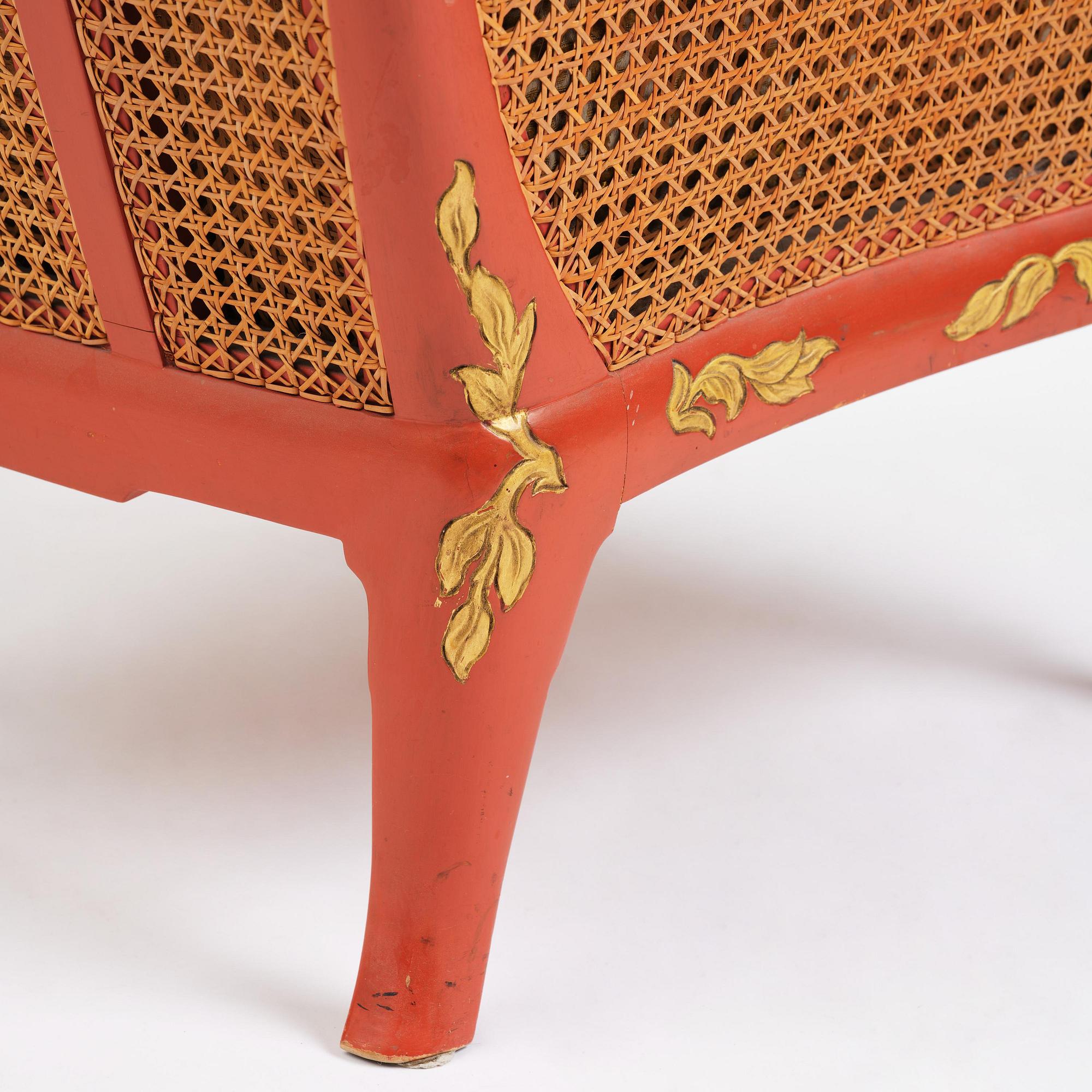
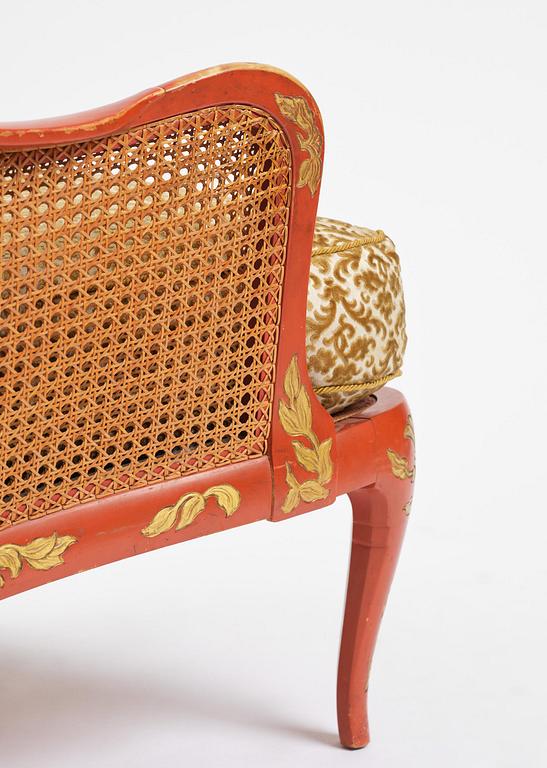
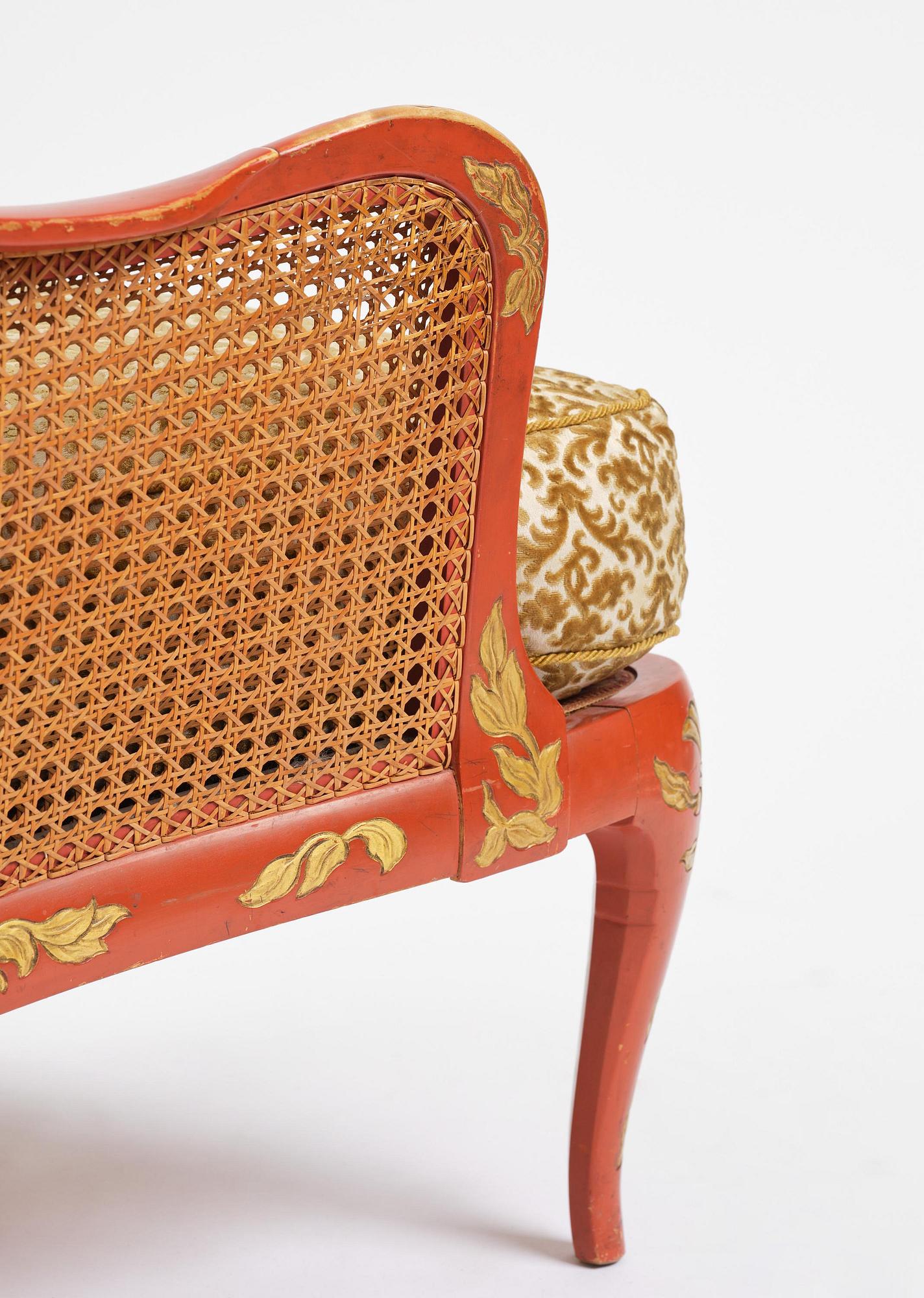
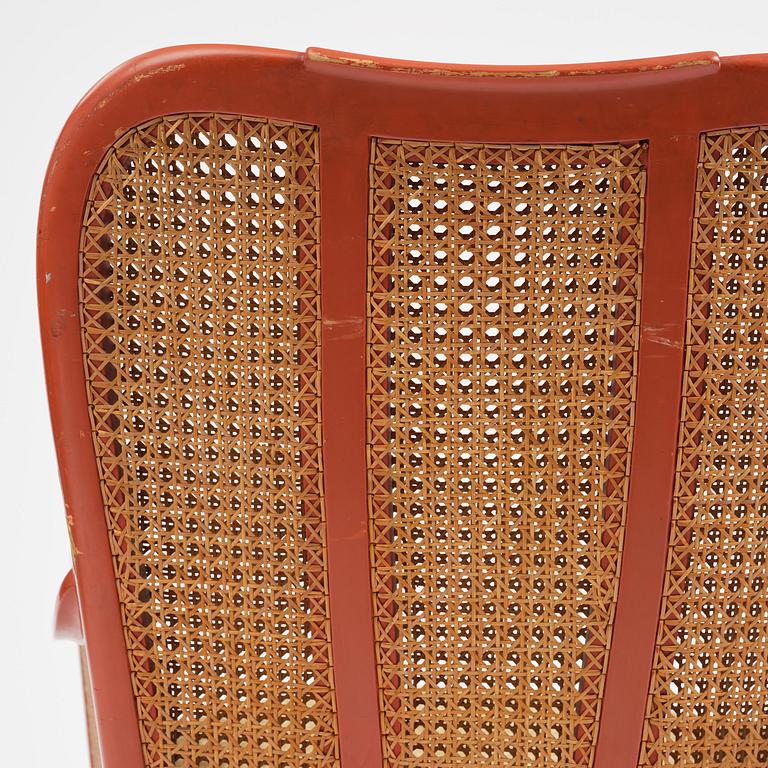
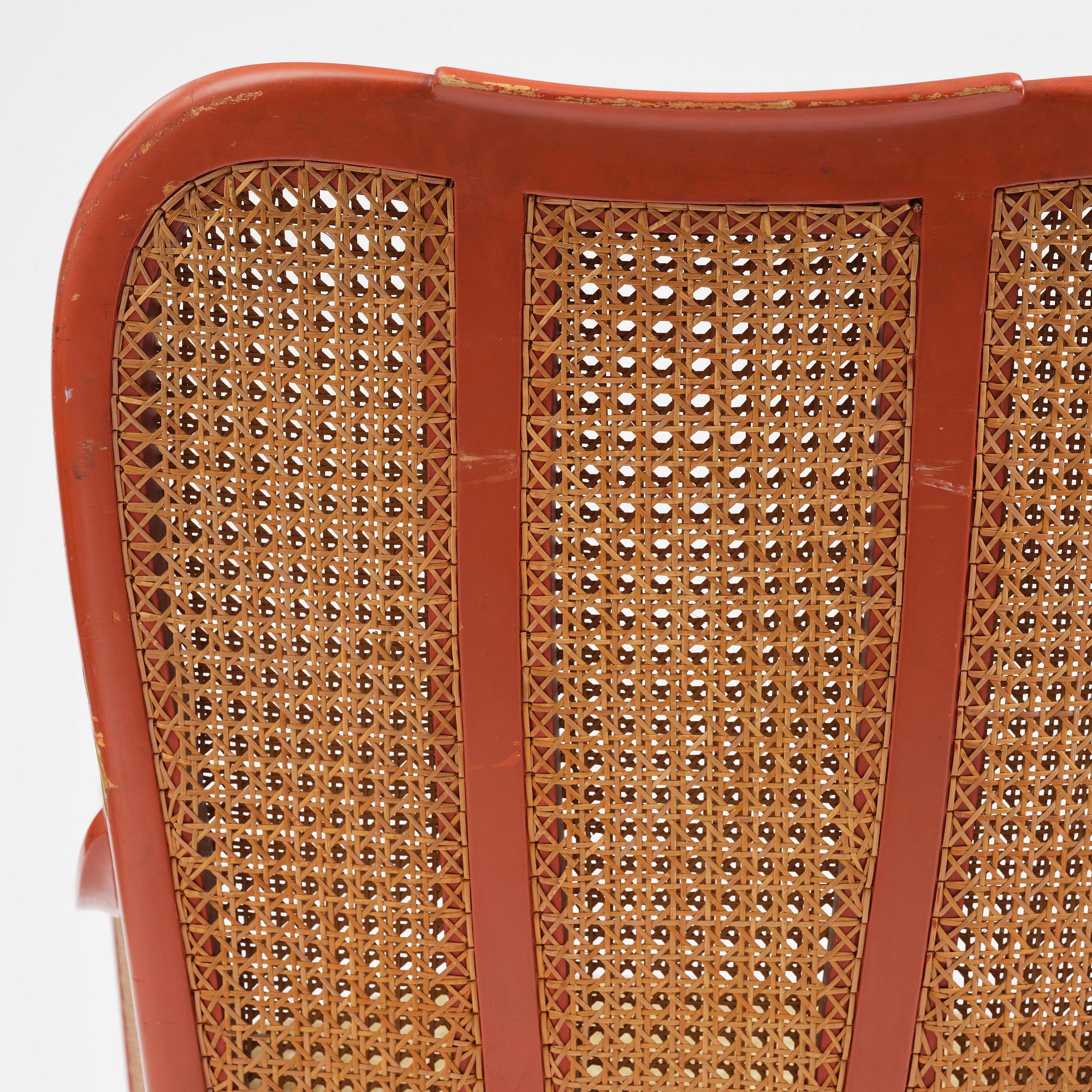
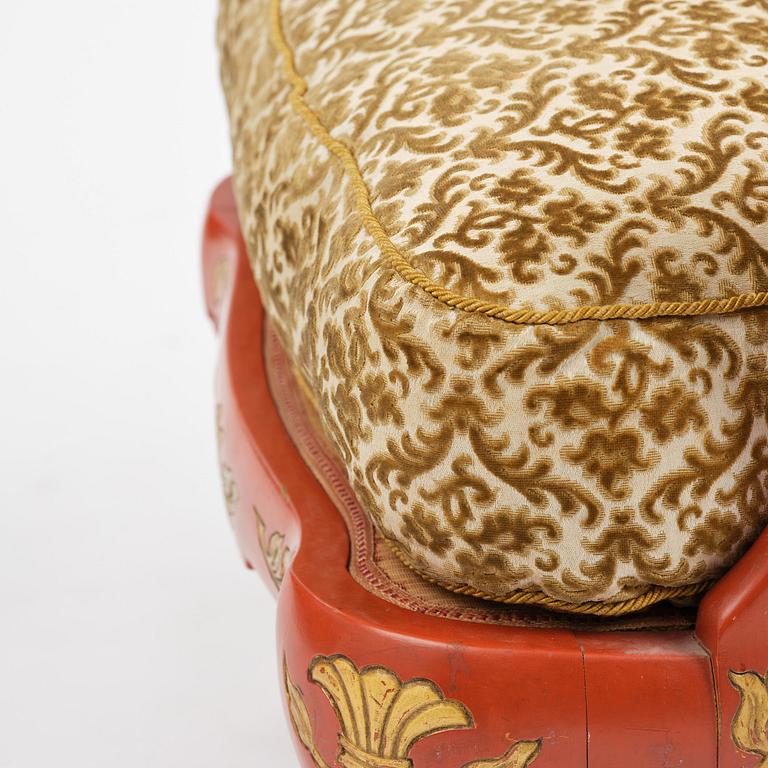
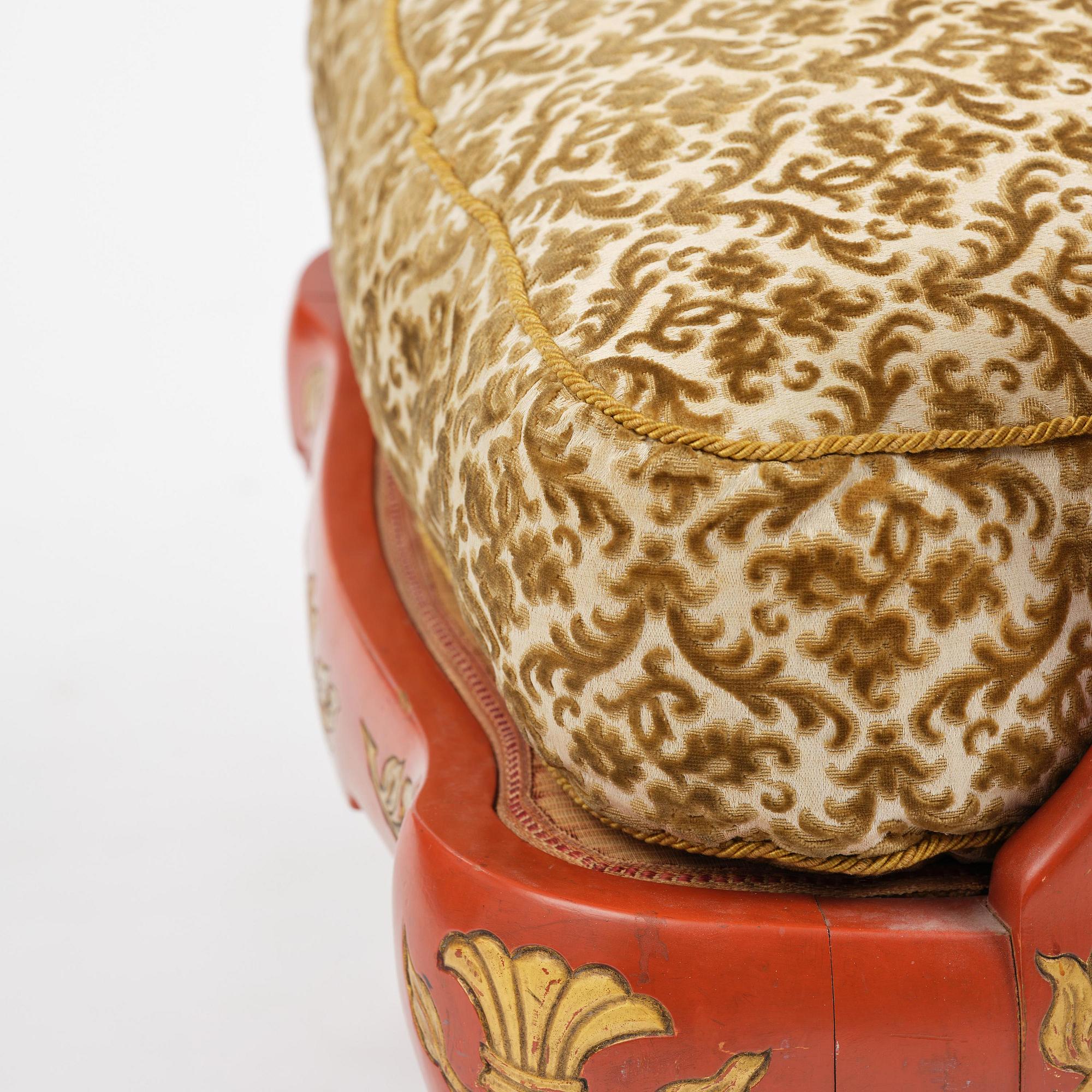
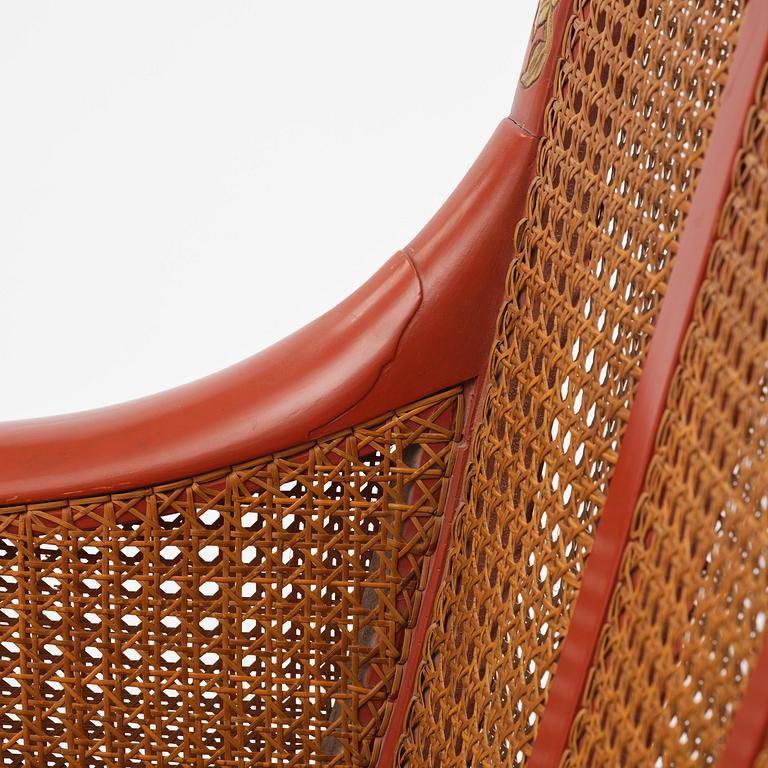
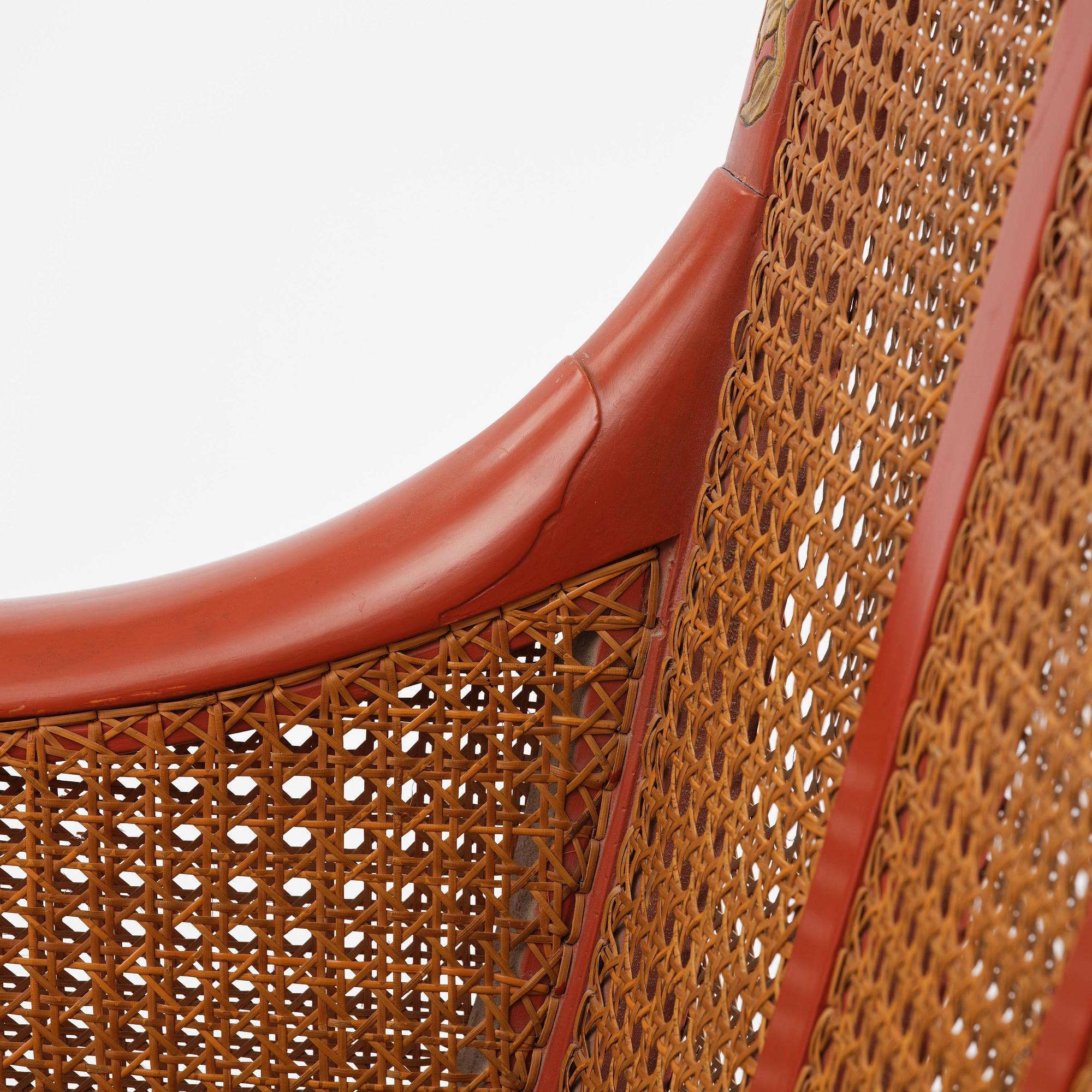
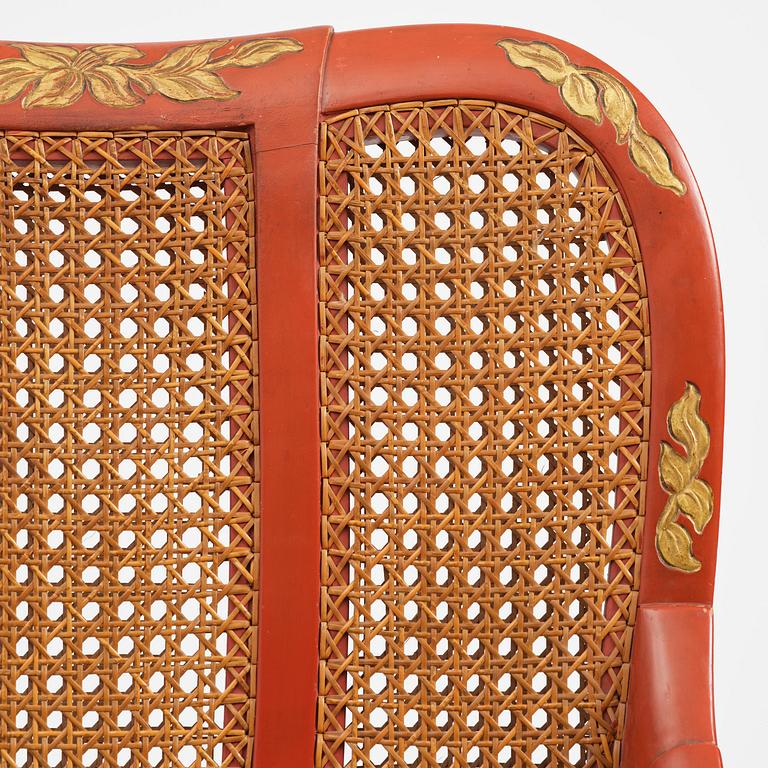
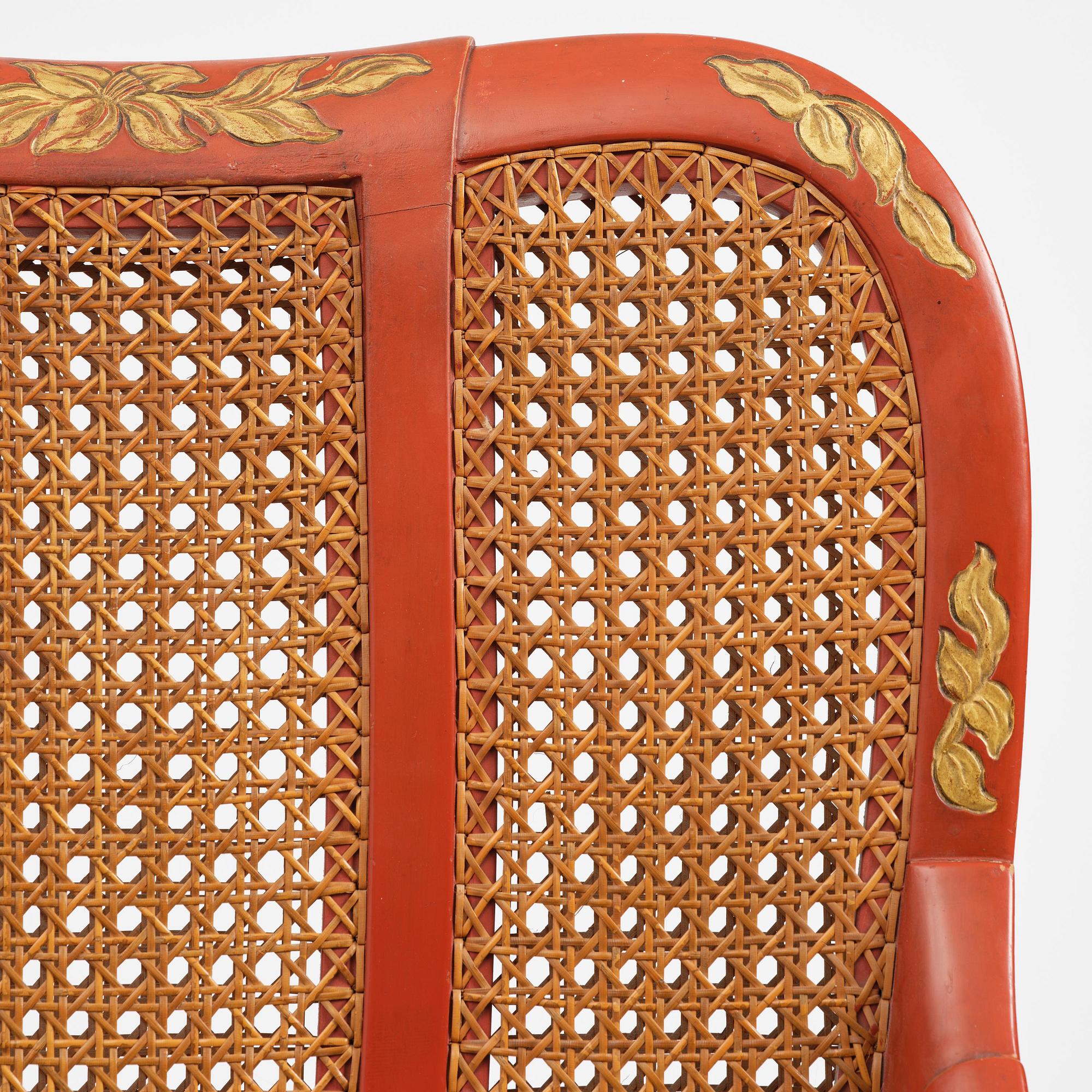
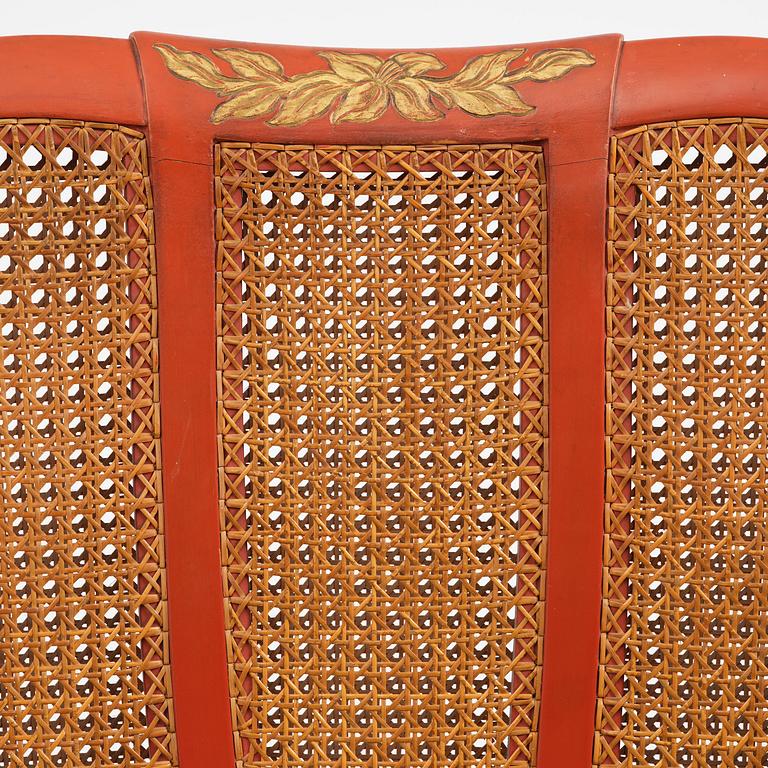
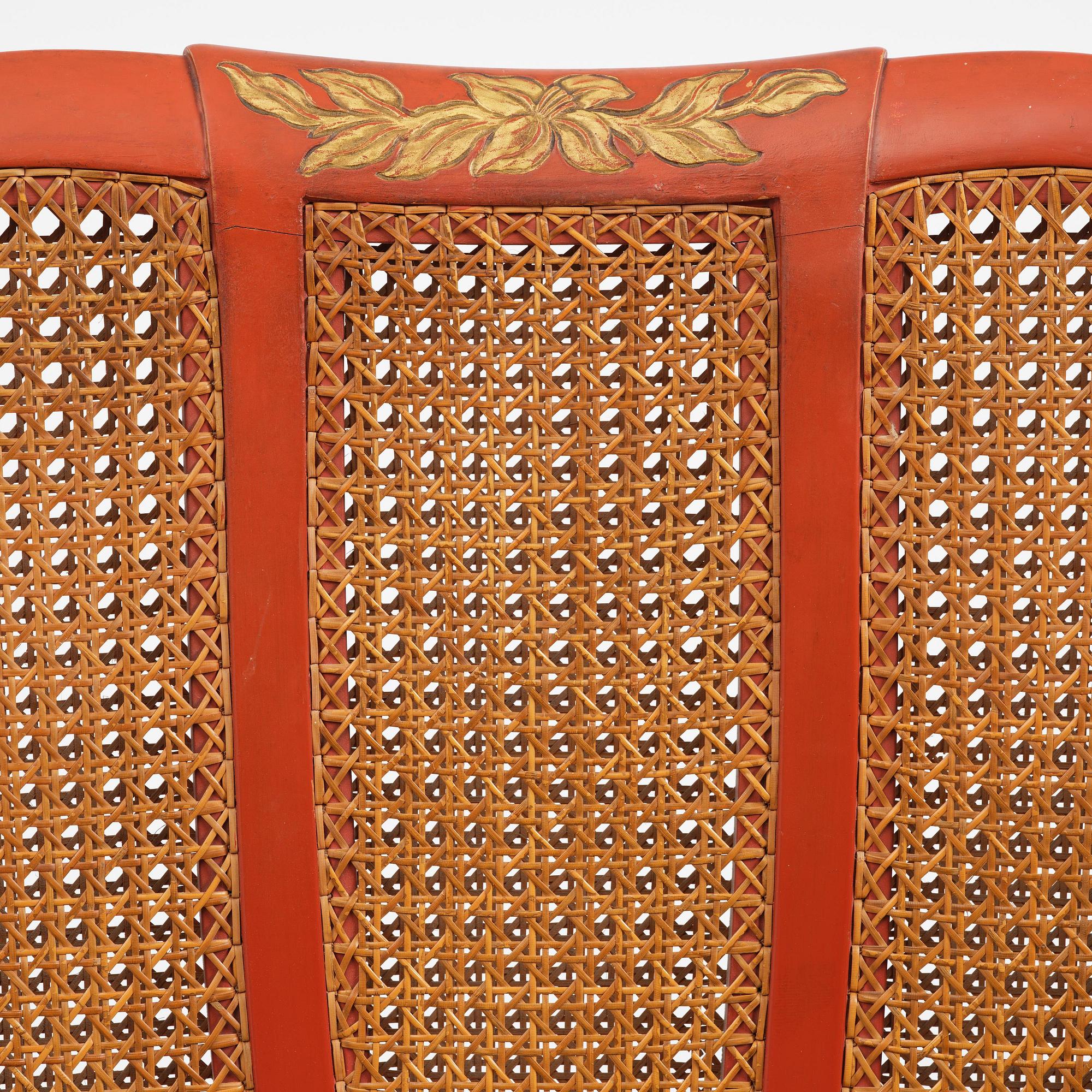
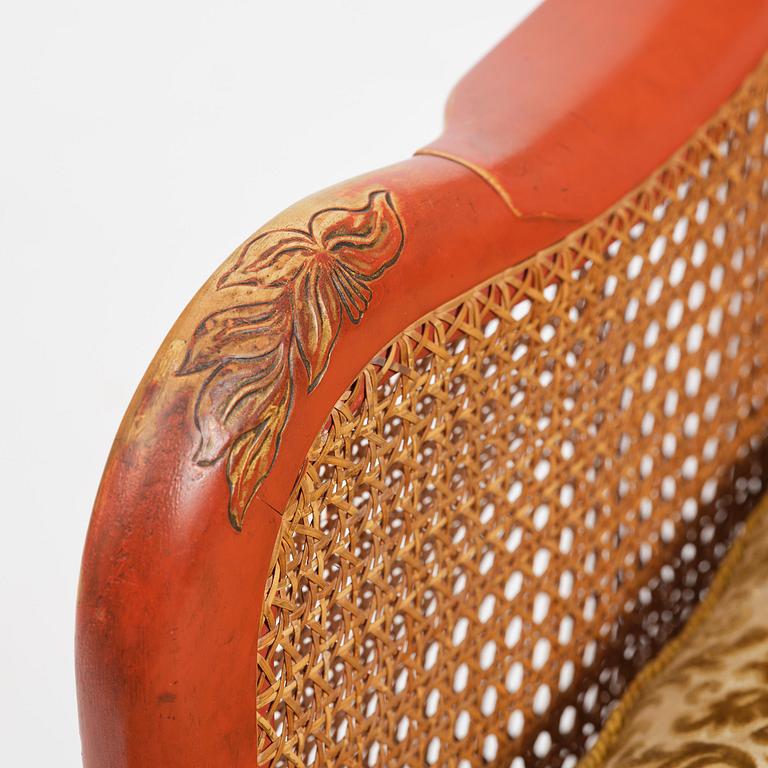
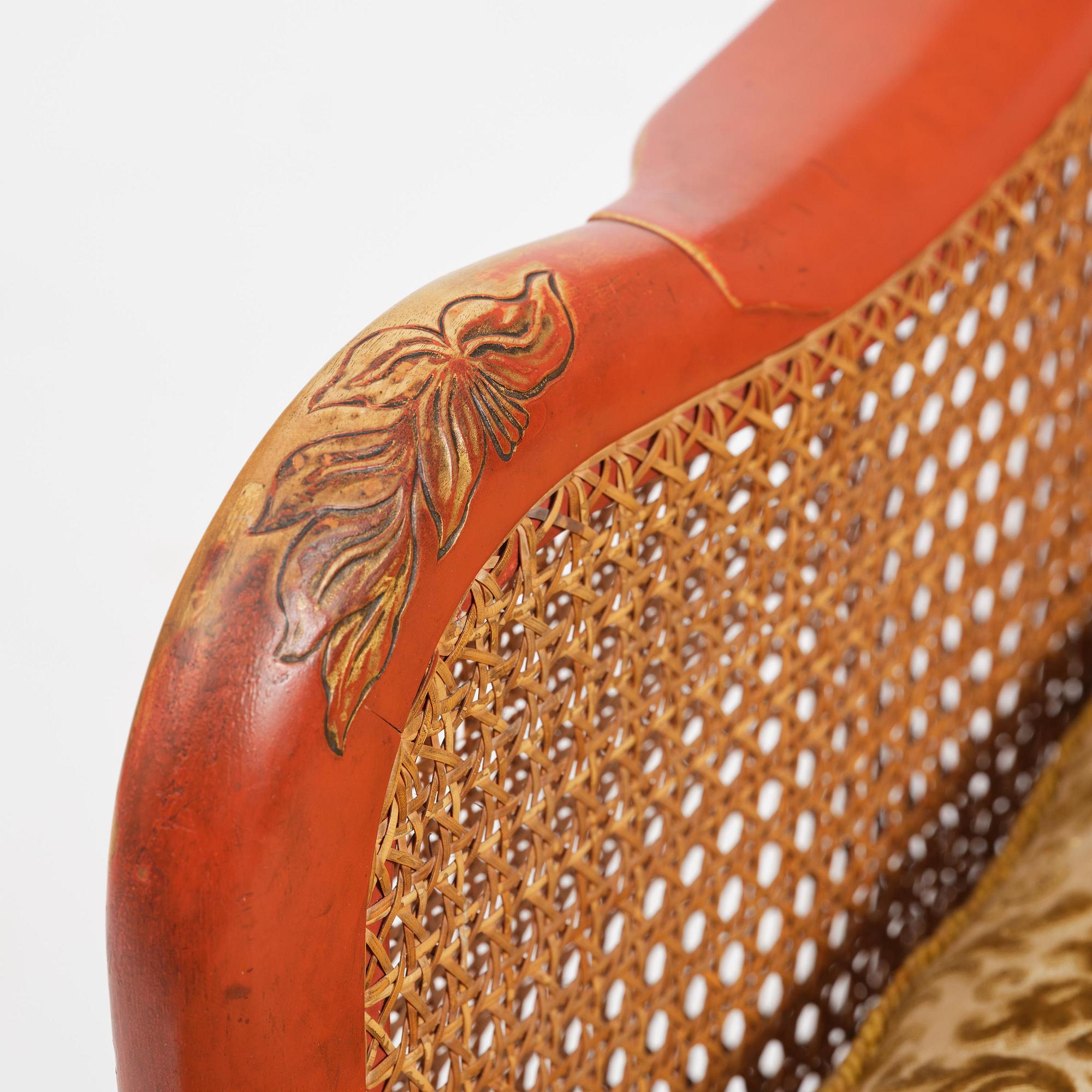
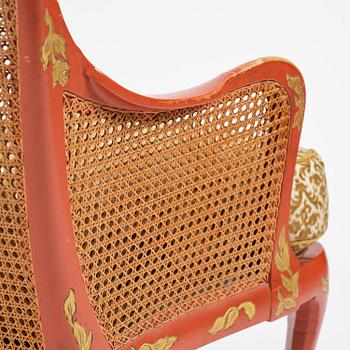
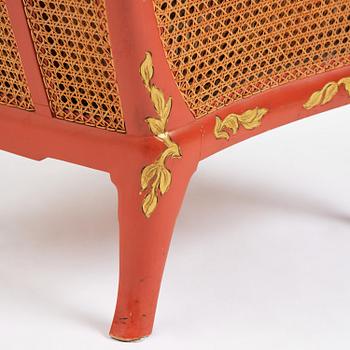
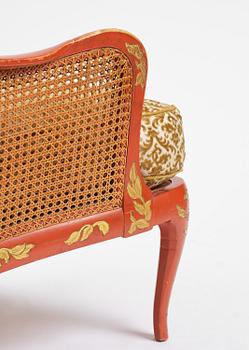
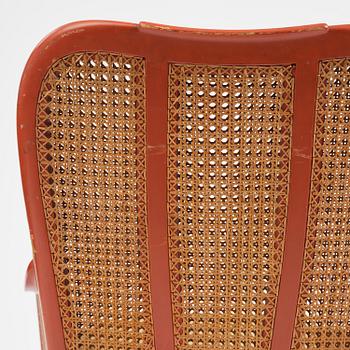
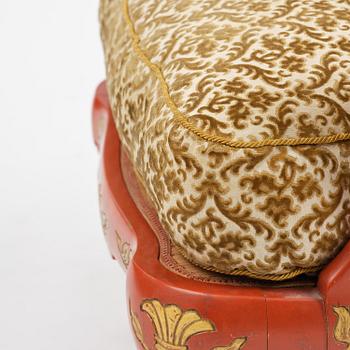
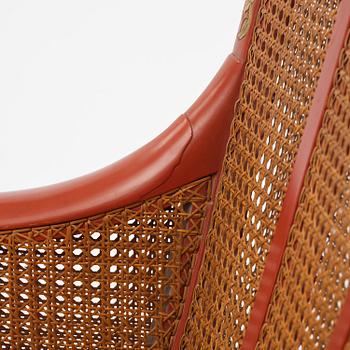
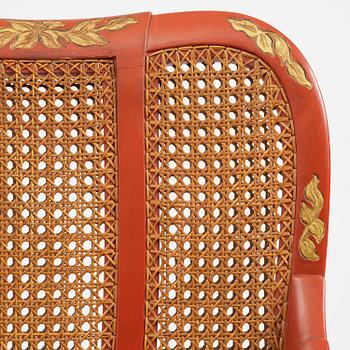
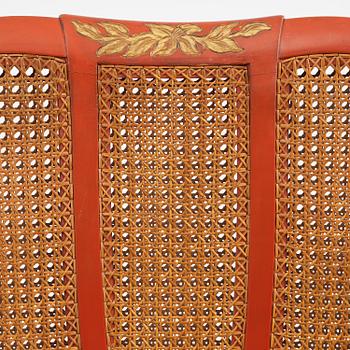
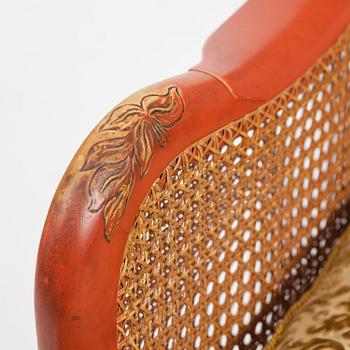
Lacquered in Chinese red with carved gilded, floral decoration, rattan in the backrest, loose, upholstered cushions in the back and in the seat. Height 91 cm, width 63 cm, seat height ca 45 cm.
Normal wear.
Alkuperä - Provenienssi
Industrialist, banker & newspaper owner Torsten Kreuger (1884-1973), Villa Kvikkjokk, Djurgården.
Thence by descent to the present owner.
Muut tiedot
Torsten Kreuger ordered several sets of furniture designed by Carl Malmsten, both for Villa Kvikkjokk and later for Villa Ekudden. The present armchairs were designed and executed in 1927-28 for the hall of Villa Kvikkjokk. The model later reappears in the interior of Örebro Sparbank in 1937.
Lisää taiteilijasta Carl Malmsten
Carl Malmsten is one of Sweden's most famous furniture designers. Many of his furniture are considered modern design classics, for example, the cane chair "Lilla Åland", the armchair "Farmor", the sofa "Samsas", the cabinet "Herrgården", and the furniture series "Vardag".
Both "Lilla Åland" and "Vardag" adopted the ideals of "beautiful everyday goods" of the 1940s. Their neat shape and frugal design quickly became timeless interior details that we still see in many homes today.
At the beginning of his career, Malmsten interned at various carpentry workshops and studied furniture at Nordiska museet and Skansen. He had his breakthrough in 1916 when he was commissioned to design part of the interior of Stockholm's City Hall.
During his career, Malmsten collaborated with several architects, such as Ragnar Östberg, Ivar Tengbom, and Ferdinand Boberg. He designed furniture for Stockholm's concert hall and Ulriksdal castle. He participated in the now iconic hosing exhibition at Liljevalchs gallery in 1917, where the term "Beautiful everyday goods" was coined.
Lisätietoja ja kuntoraportit
Tietoa ostamisesta
Kuvan käyttöoikeudet
Tämän tietokannan taideteokset ovat tekijänoikeudella suojattuja, eikä niitä saa kopioida ilman oikeudenhaltijoiden lupaa. Teokset kopioidaan tässä tietokannassa Bildupphovsrättin lisenssillä.

Muiden katsomia kohteita