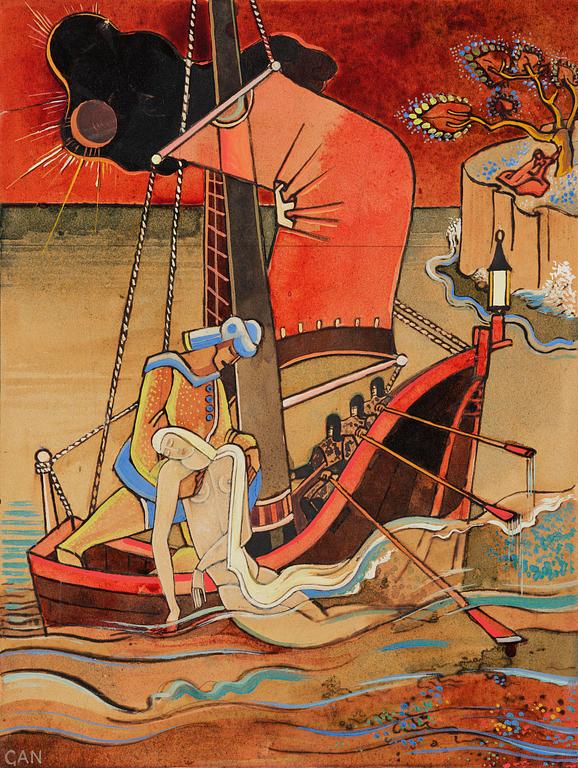
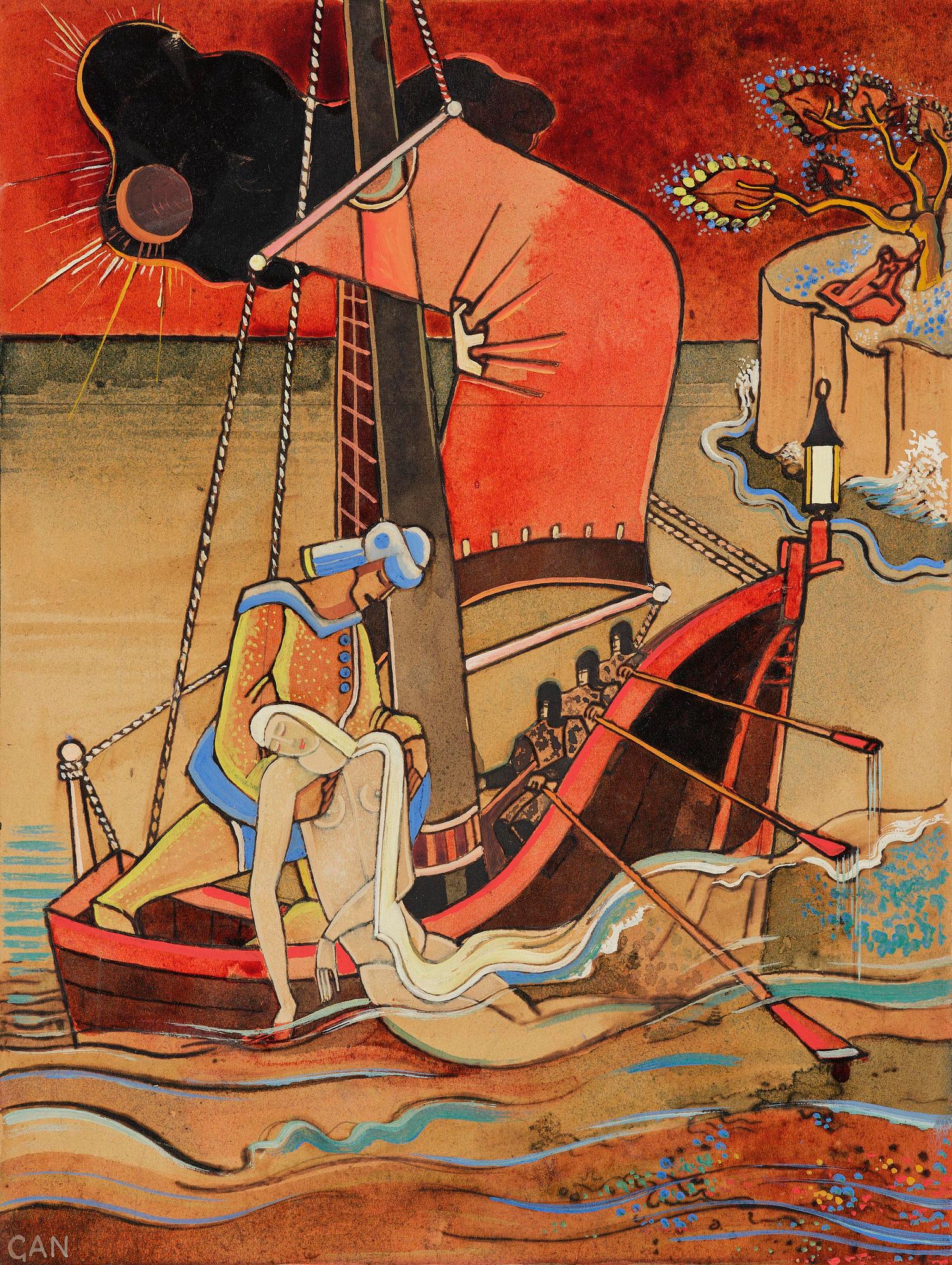
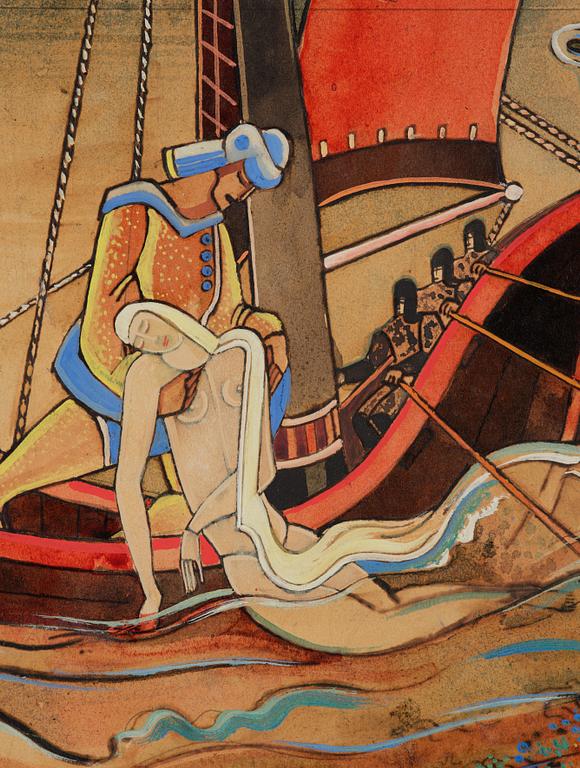
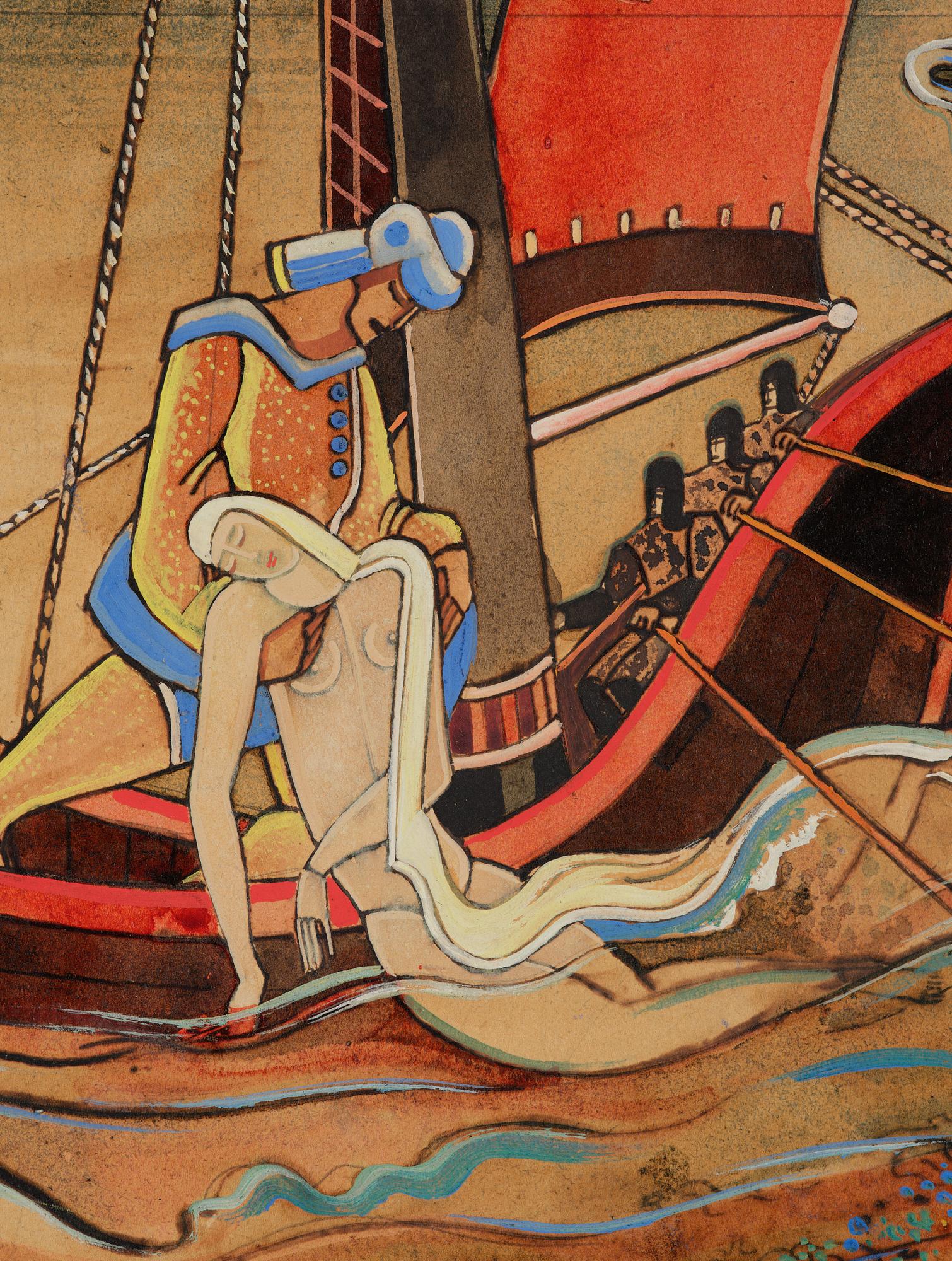
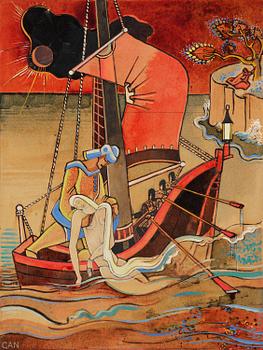
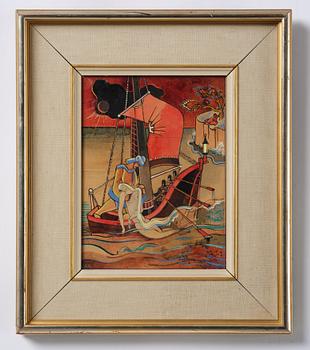
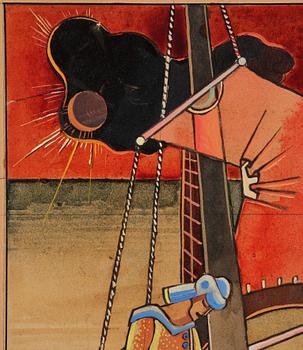
"Folkvisa" (De två systrarna)
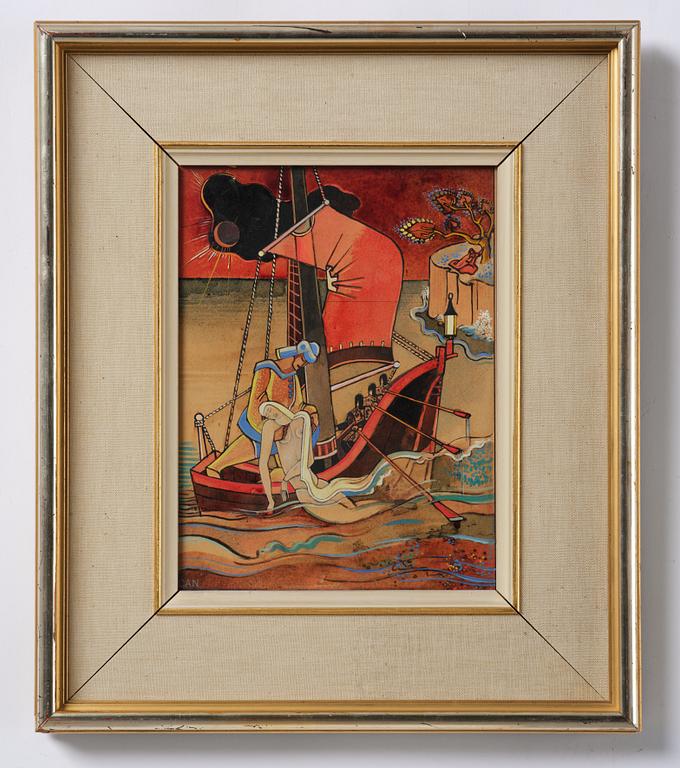
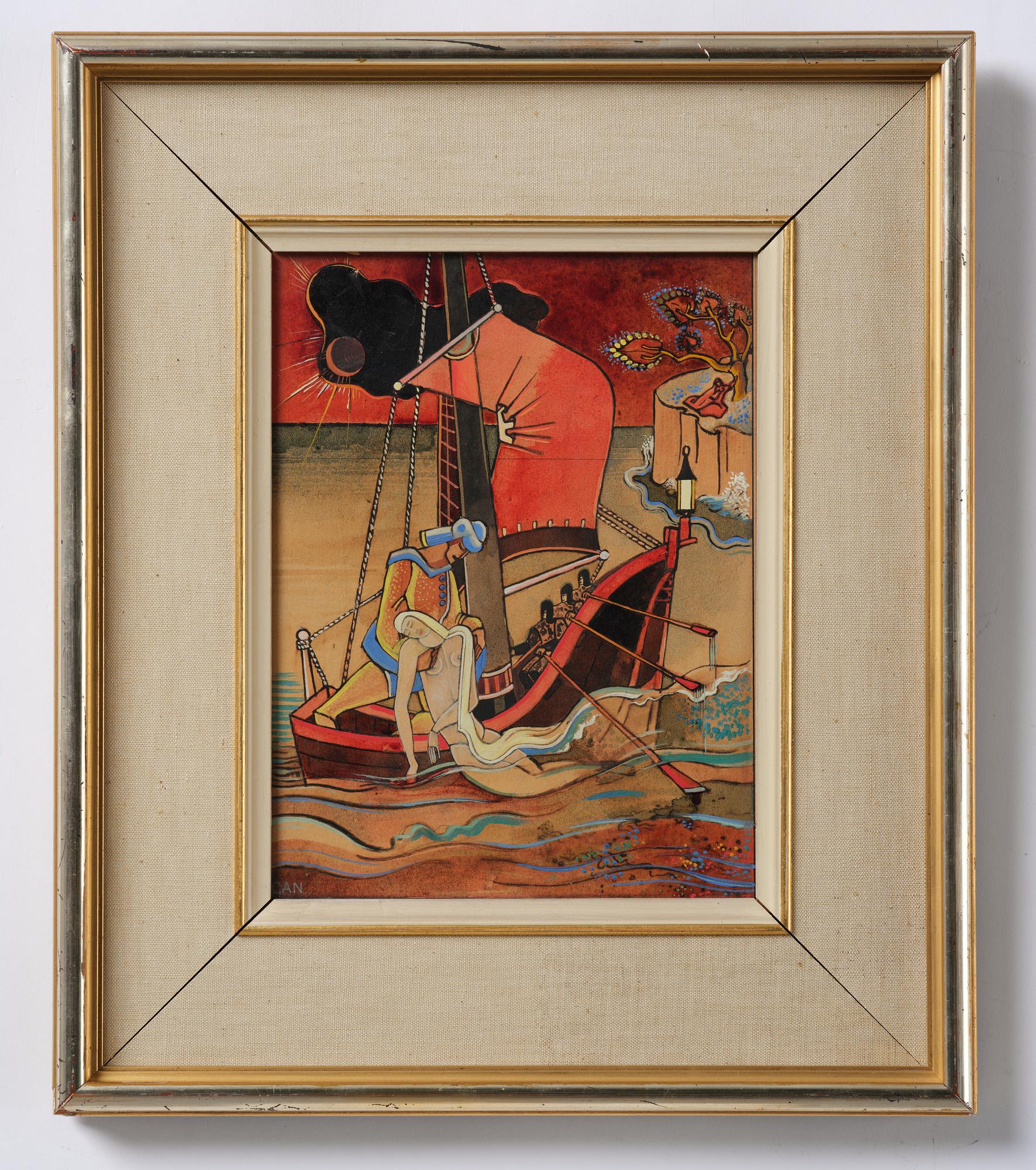
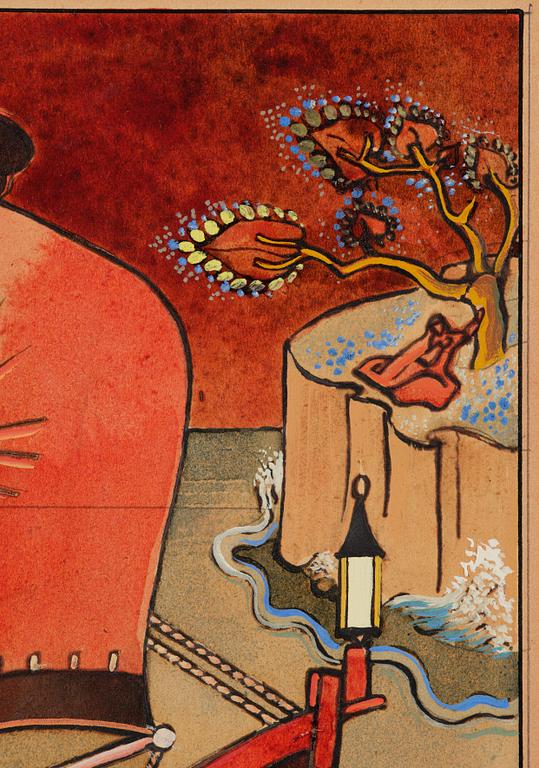
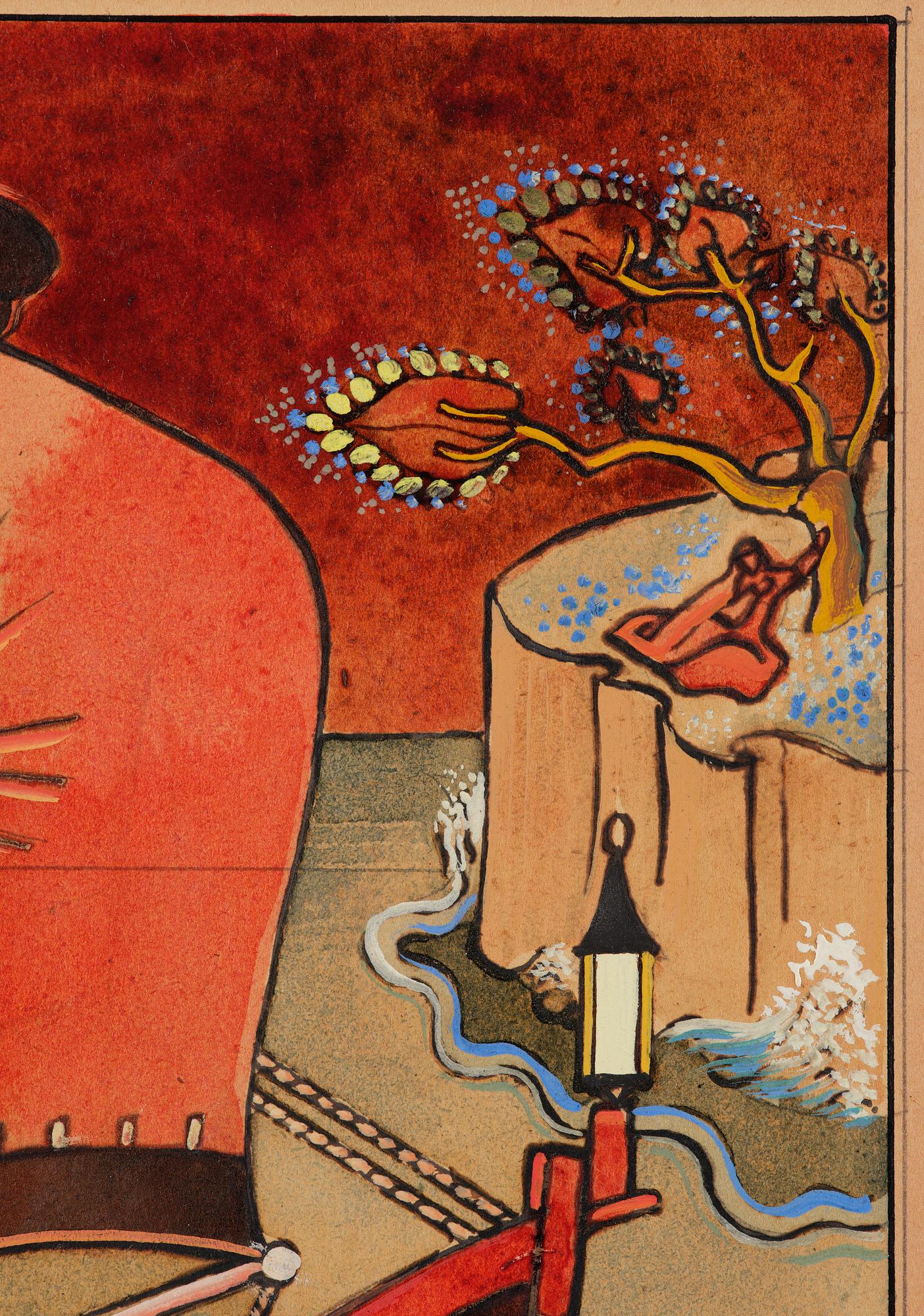
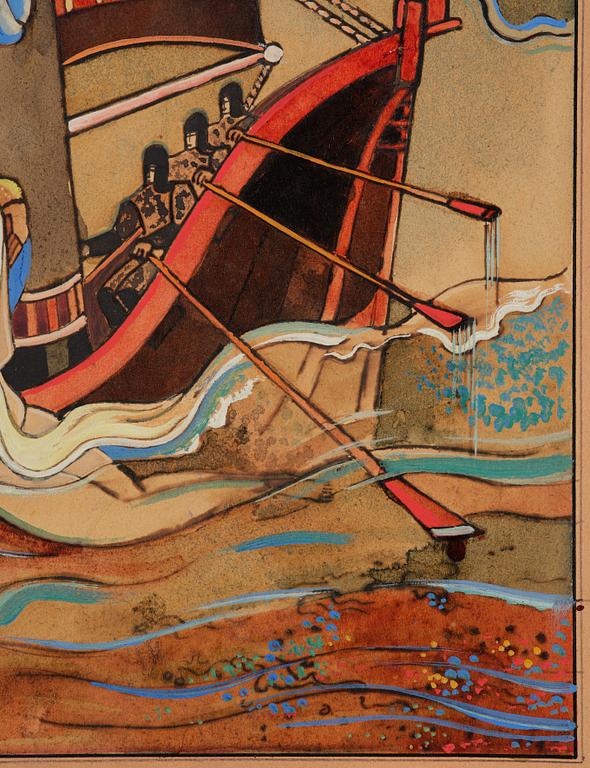
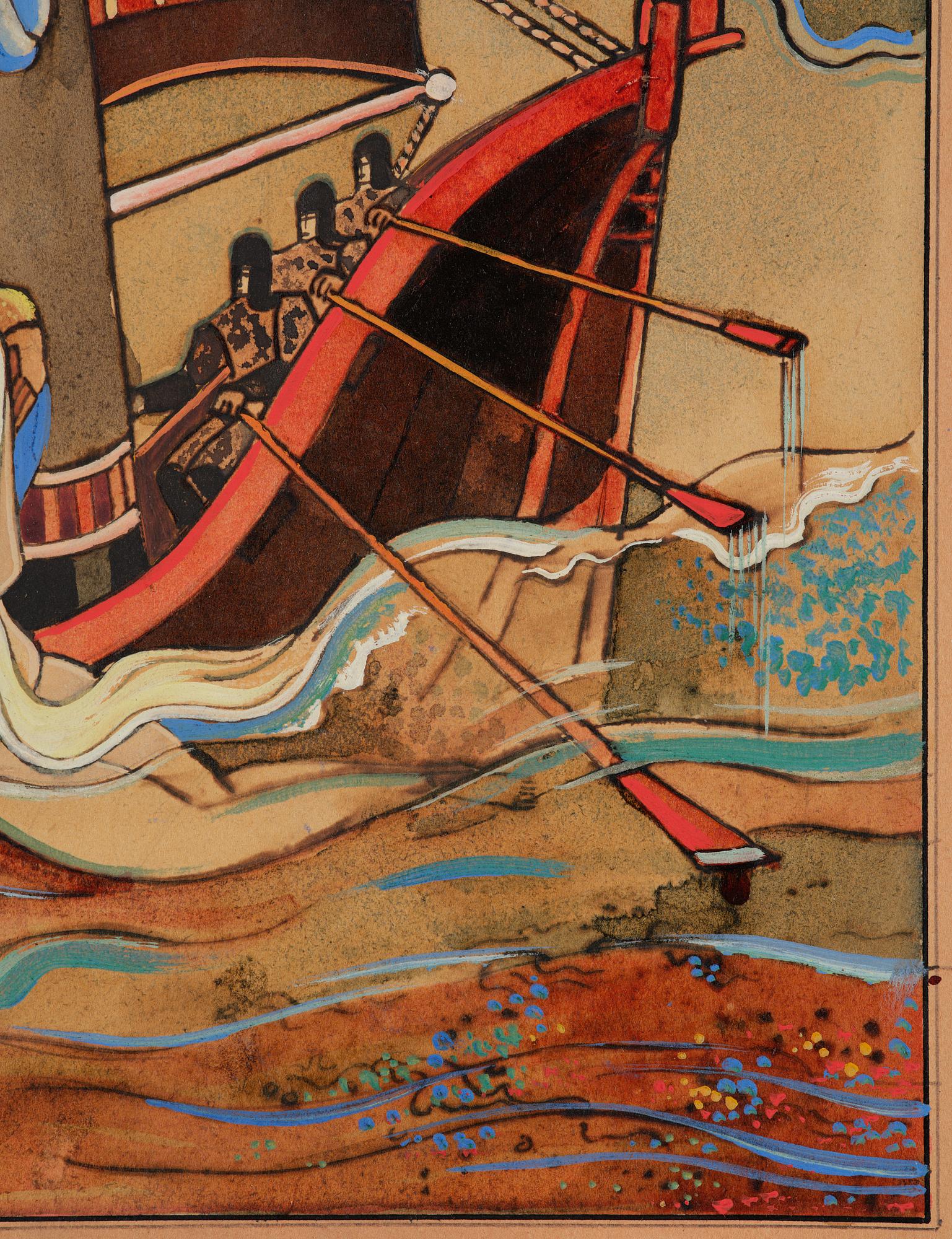
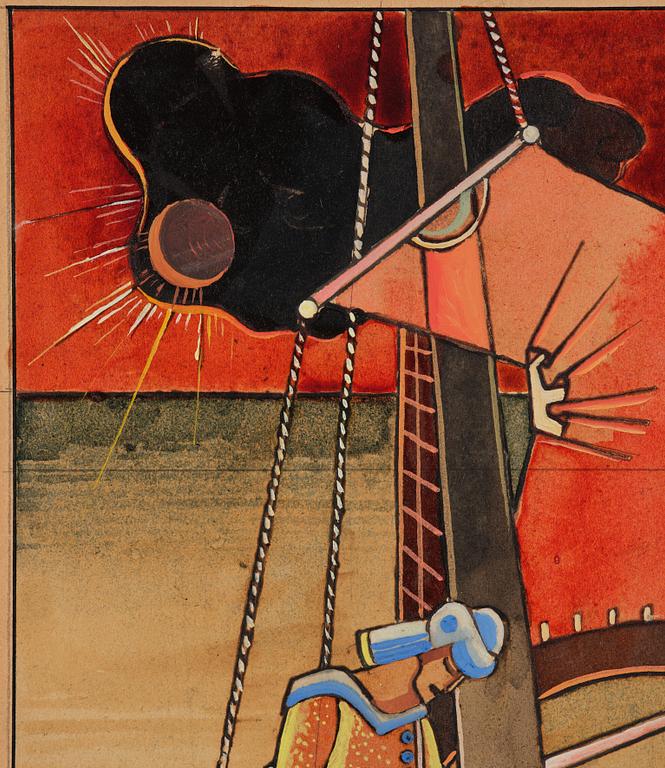
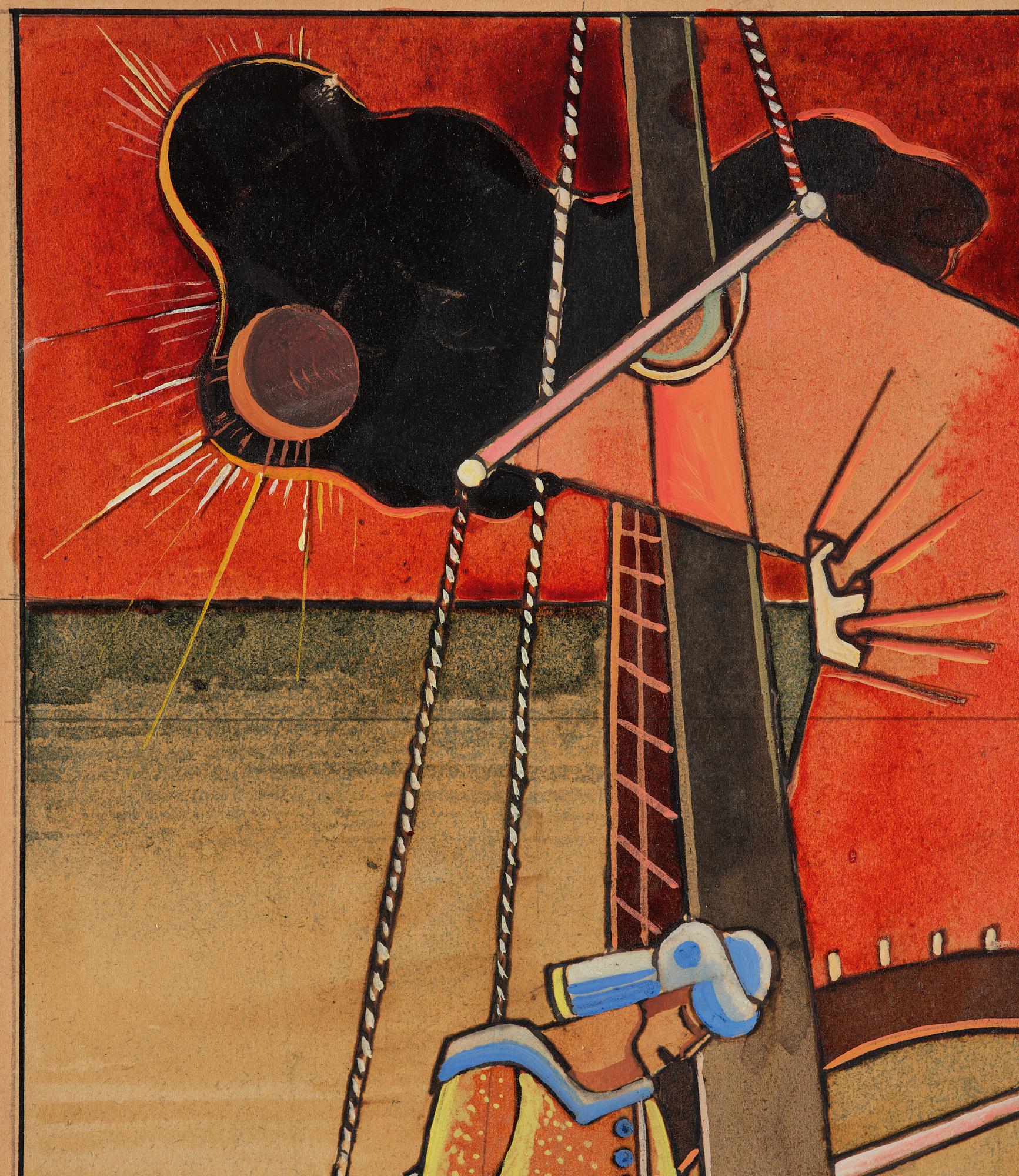
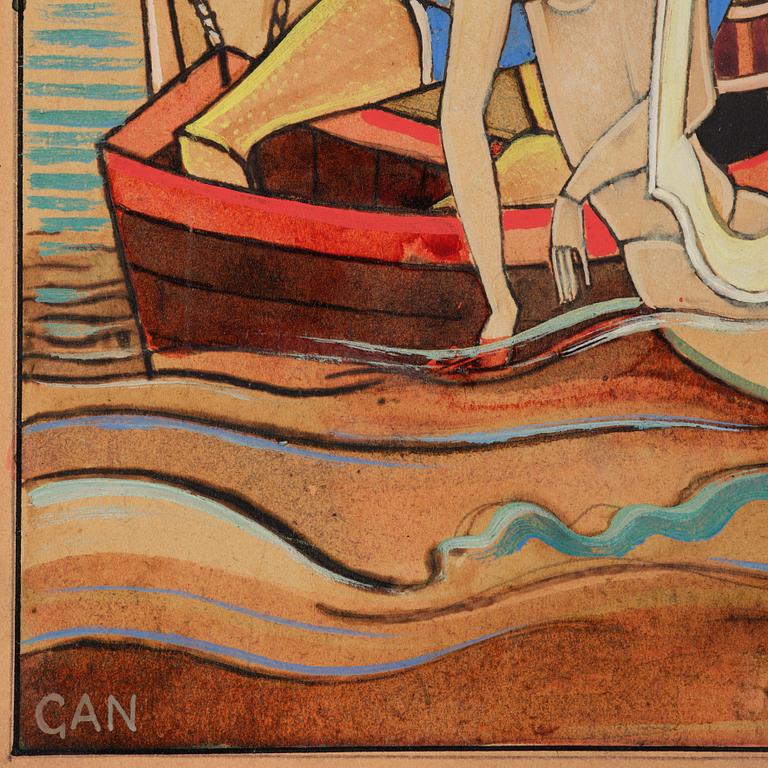
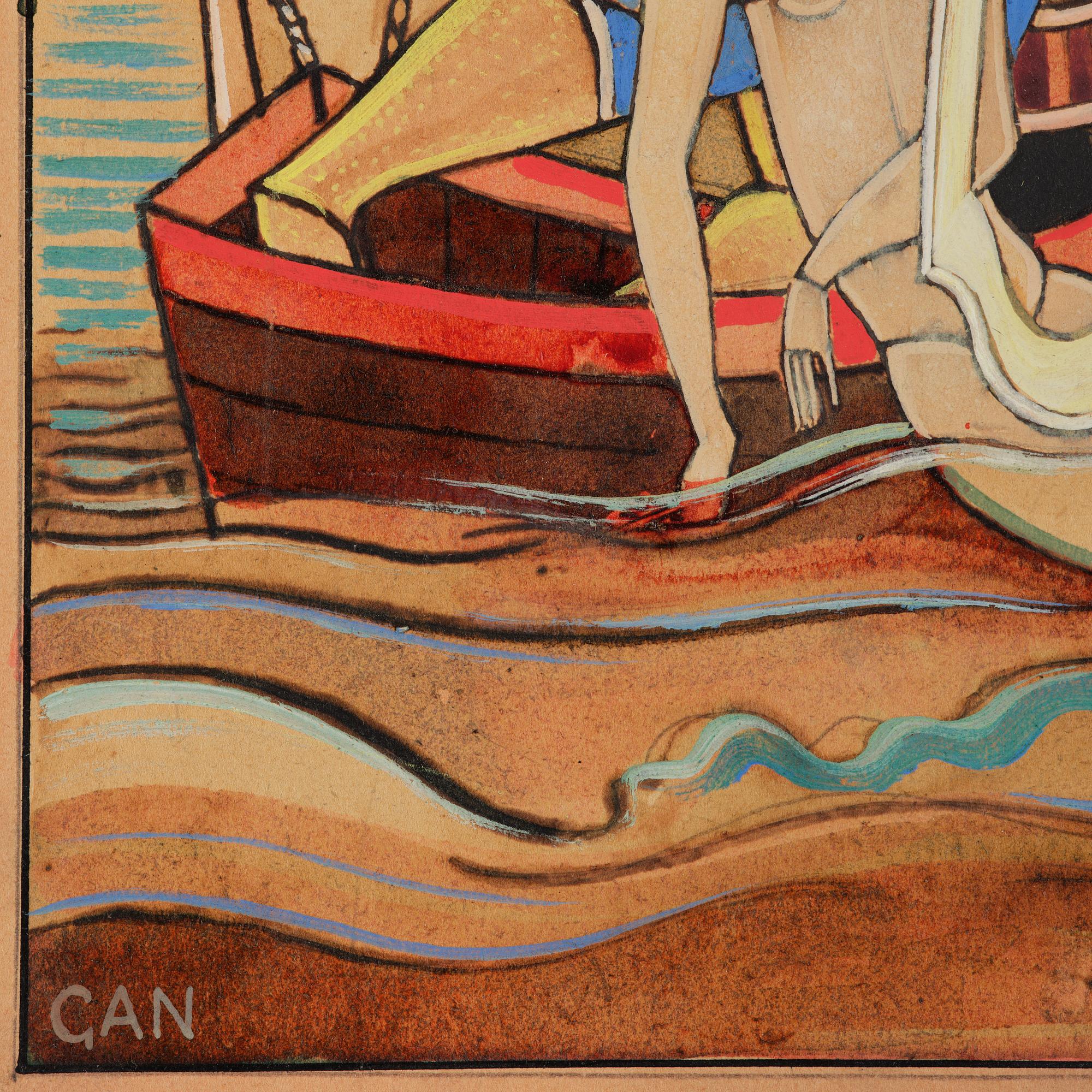
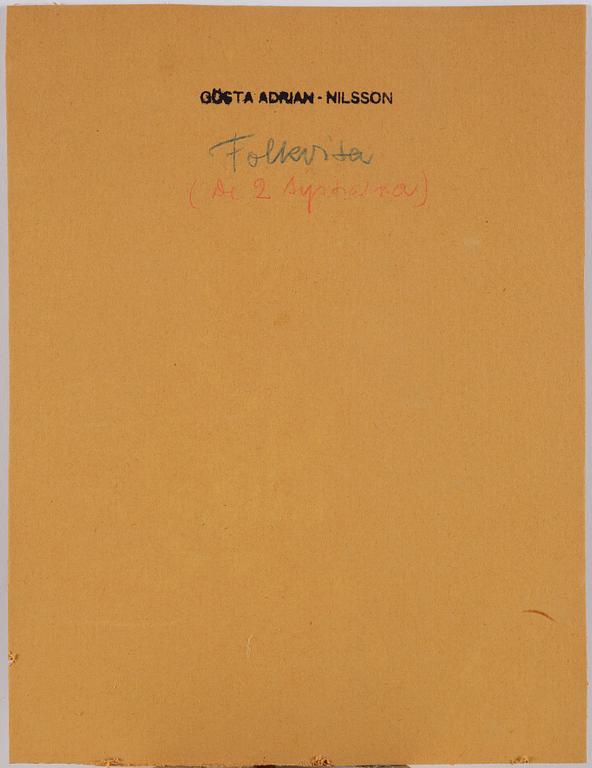
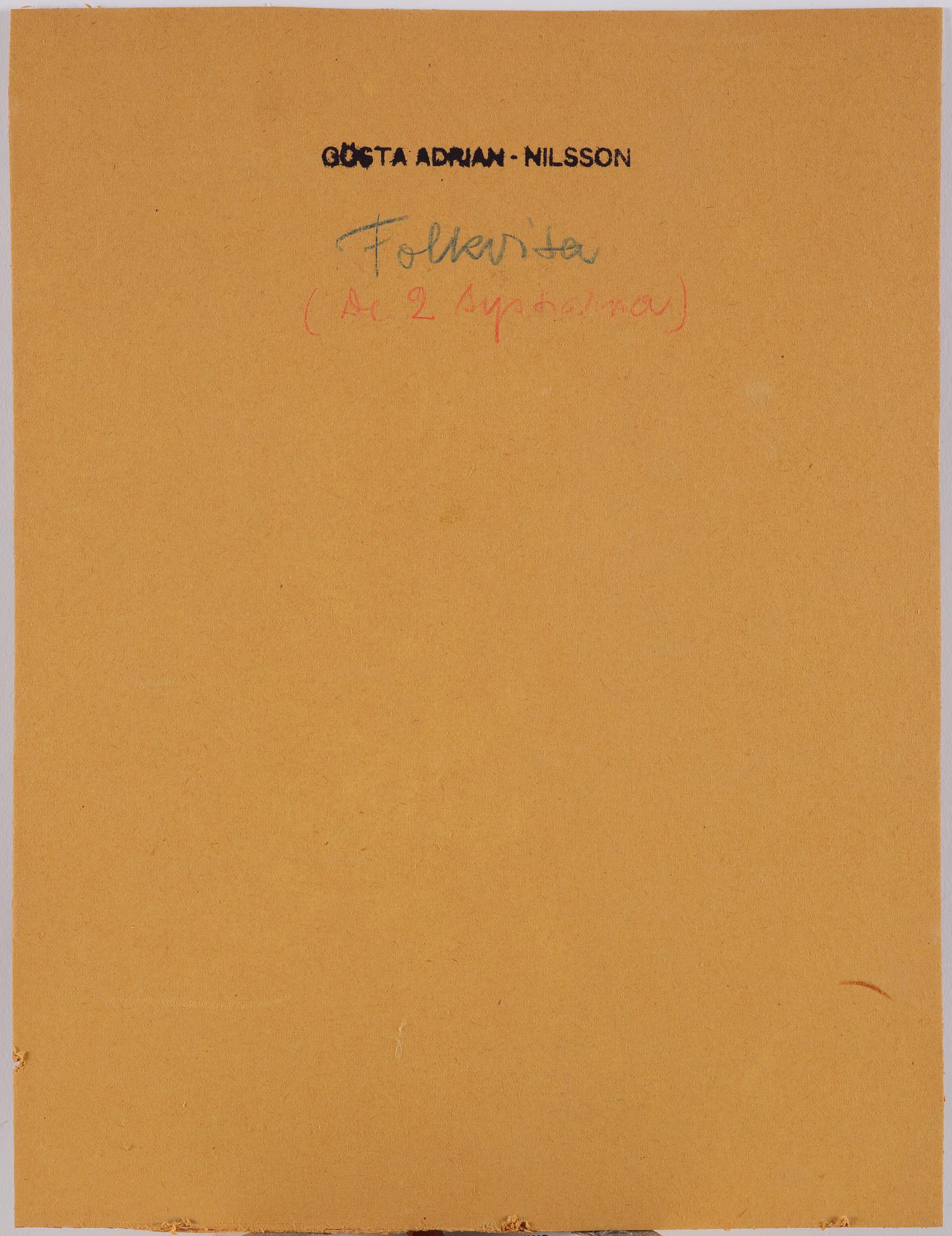
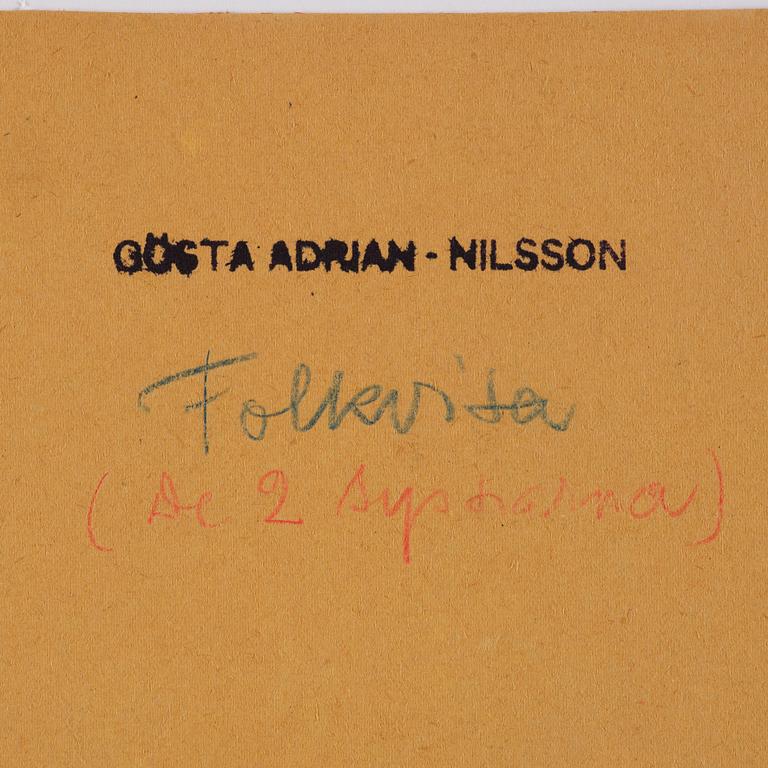
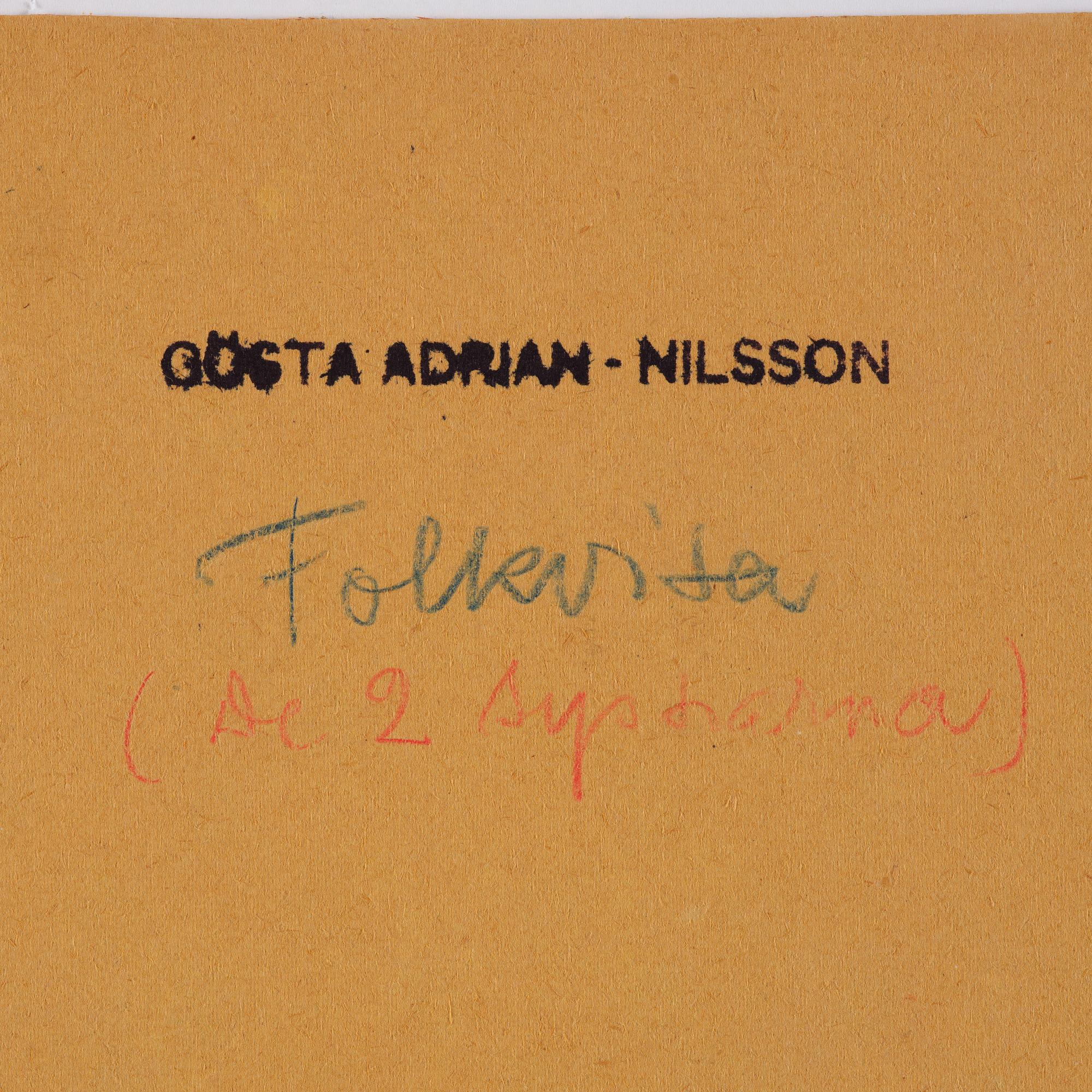
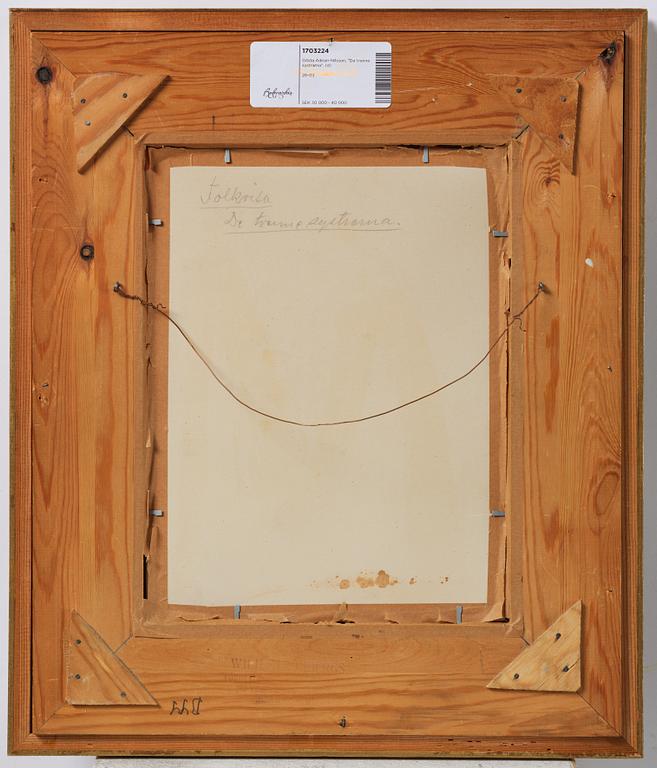
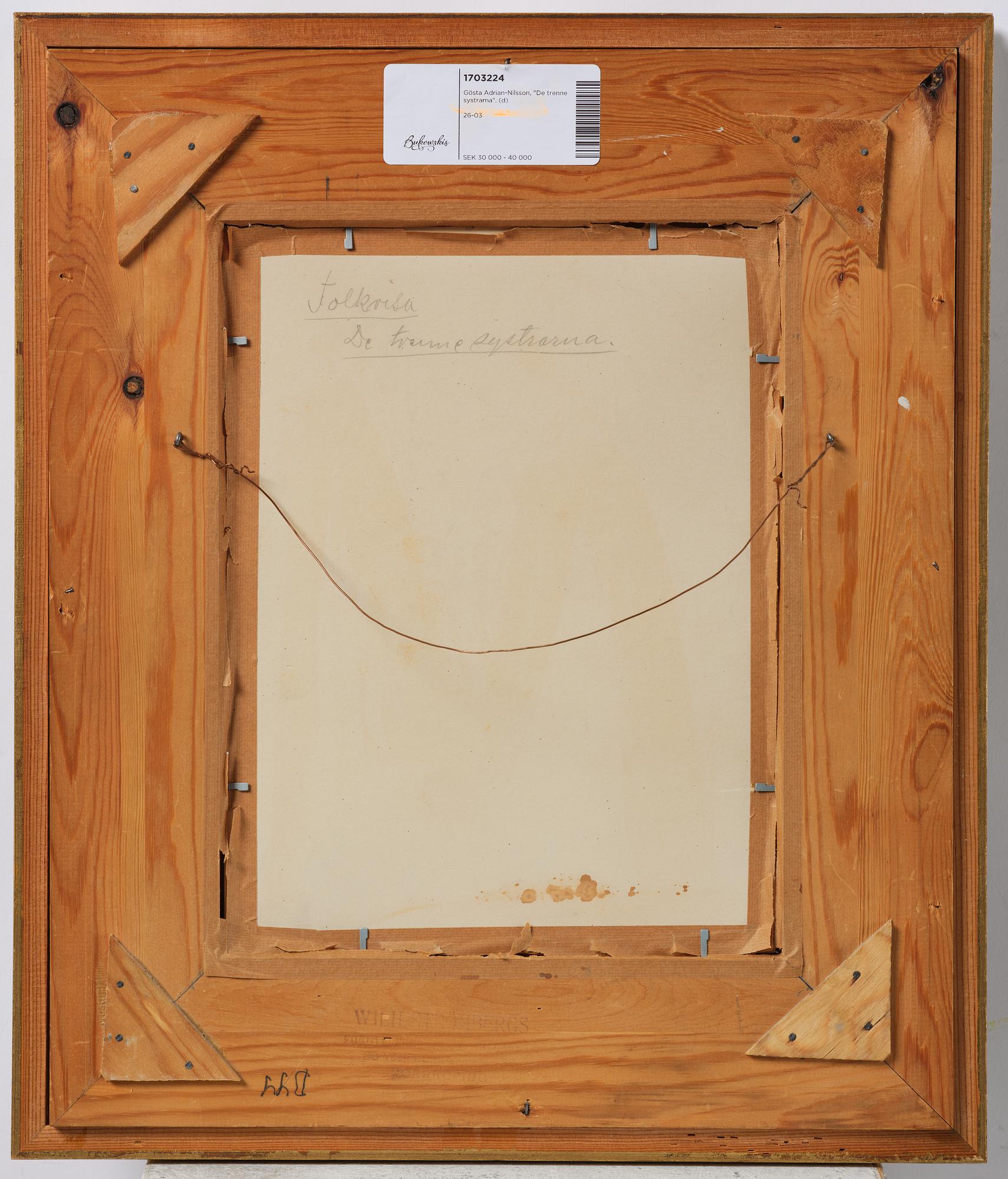
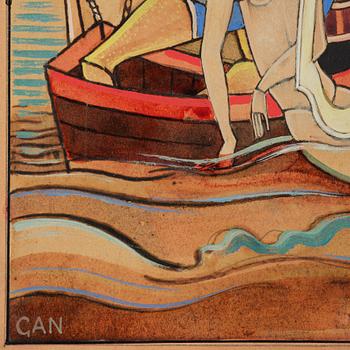
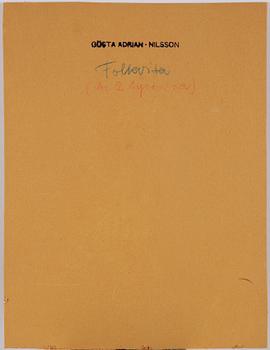
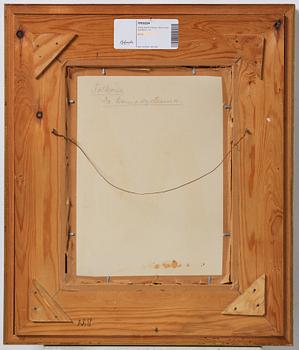
Monogram signed GAN. Gouache and watercolour on paperboard panel 28.5 x 21.5 cm, total dimensions 30 x 23 cm. Inscription in blue and red chalk and stamped Gösta Adrian-Nilsson on the reverse.
Muut tiedot
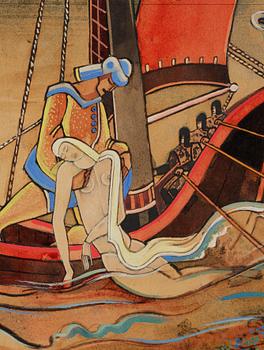
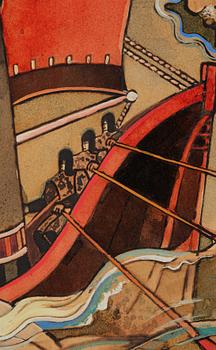
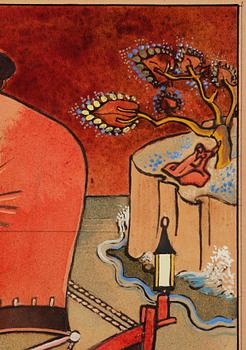
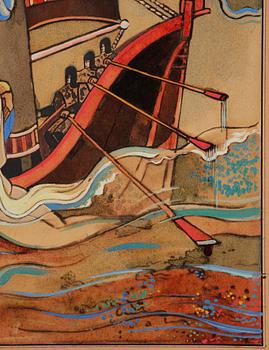
During his last year in Paris, 1924-1925, GAN devoted himself in monastic seclusion to illustrating Geijer’s and Afzelius’s romantic Swedish folk songs, published between 1814 and 1816. GAN then shifted from his strictly personal 20s cubism to a fusion of cubism with the Gothic art that he had been strongly influenced by, among other places, at the Louvre in Paris.
In the following years, GAN applied his “folk song style,” a kind of Gothicising cubism, in various decorative commissions. In 1926, the Folk Songs were exhibited at Gummeson’s art gallery in Stockholm, and the exhibition was a success. Gustaf Näsström, under the pseudonym Thomas Outsider, wrote:
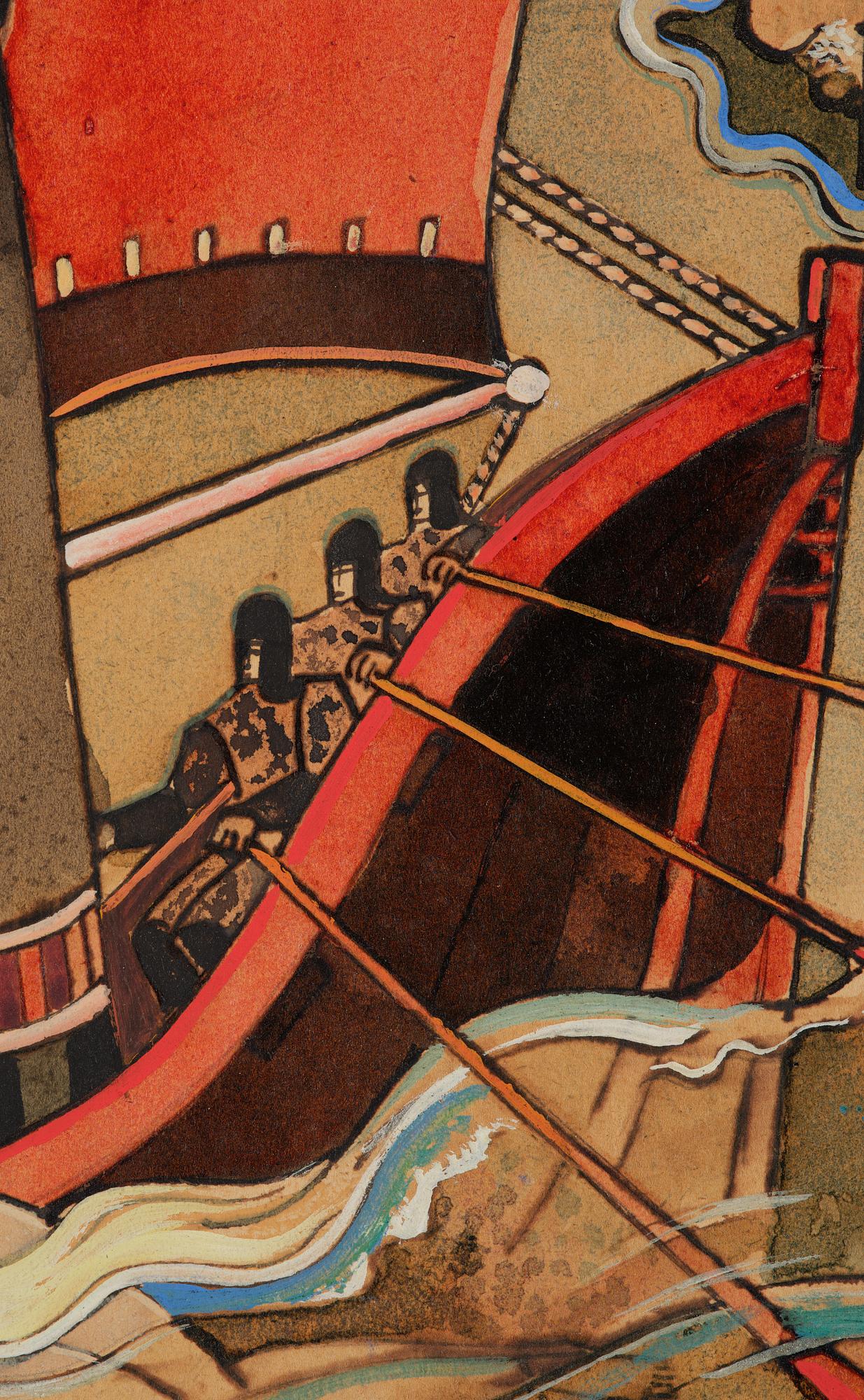
"The text has served as a theme, over which the artist has built variations of the images. If one wishes, he has captured something of the song’s angular and rigid plasticity in his play of lines, but if one does not primarily wish for that, he has provided some real masterpieces of 'applied' cubism. His sources of inspiration have been Persian miniatures, East Asian plastic art, Byzantine painting, and Gothic capital decorations. As the stubborn seeker of style he is in a time devoid of style, he has managed to fuse all these disjecta membra into a surprisingly coherent whole, burning with the clear and exotic enamel-like colours of fairy tales and overflowing with an inexhaustibly rich decorative imagination. To find a counterpart to this art, one must turn to Kandinsky’s early watercolours. Which does not imply anything negative about Adrian-Nilsson."
Lisätietoja ja kuntoraportit

Kuuluu jälleenmyyntikorvauksen piiriin
Tietoa ostamisesta
Kuvan käyttöoikeudet
Tämän tietokannan taideteokset ovat tekijänoikeudella suojattuja, eikä niitä saa kopioida ilman oikeudenhaltijoiden lupaa. Teokset kopioidaan tässä tietokannassa Bildupphovsrättin lisenssillä.
Muiden katsomia kohteita