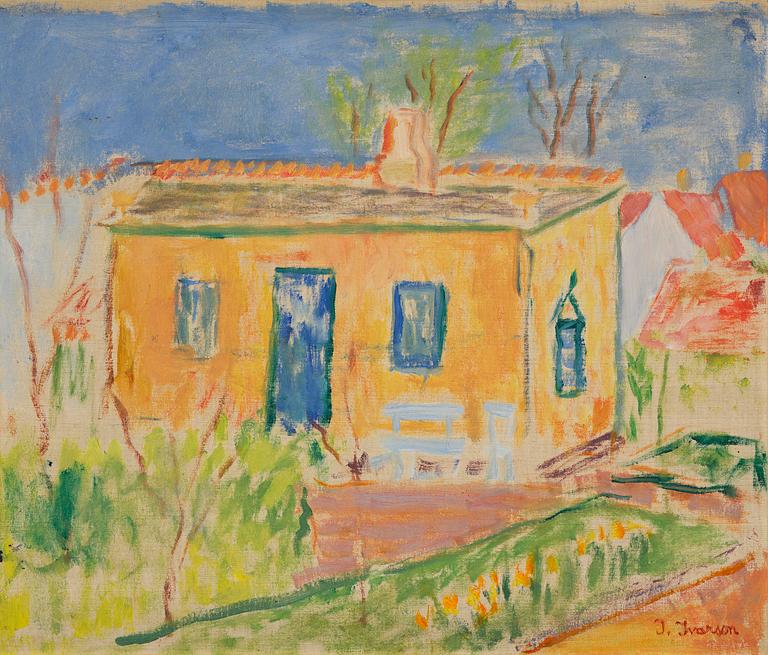
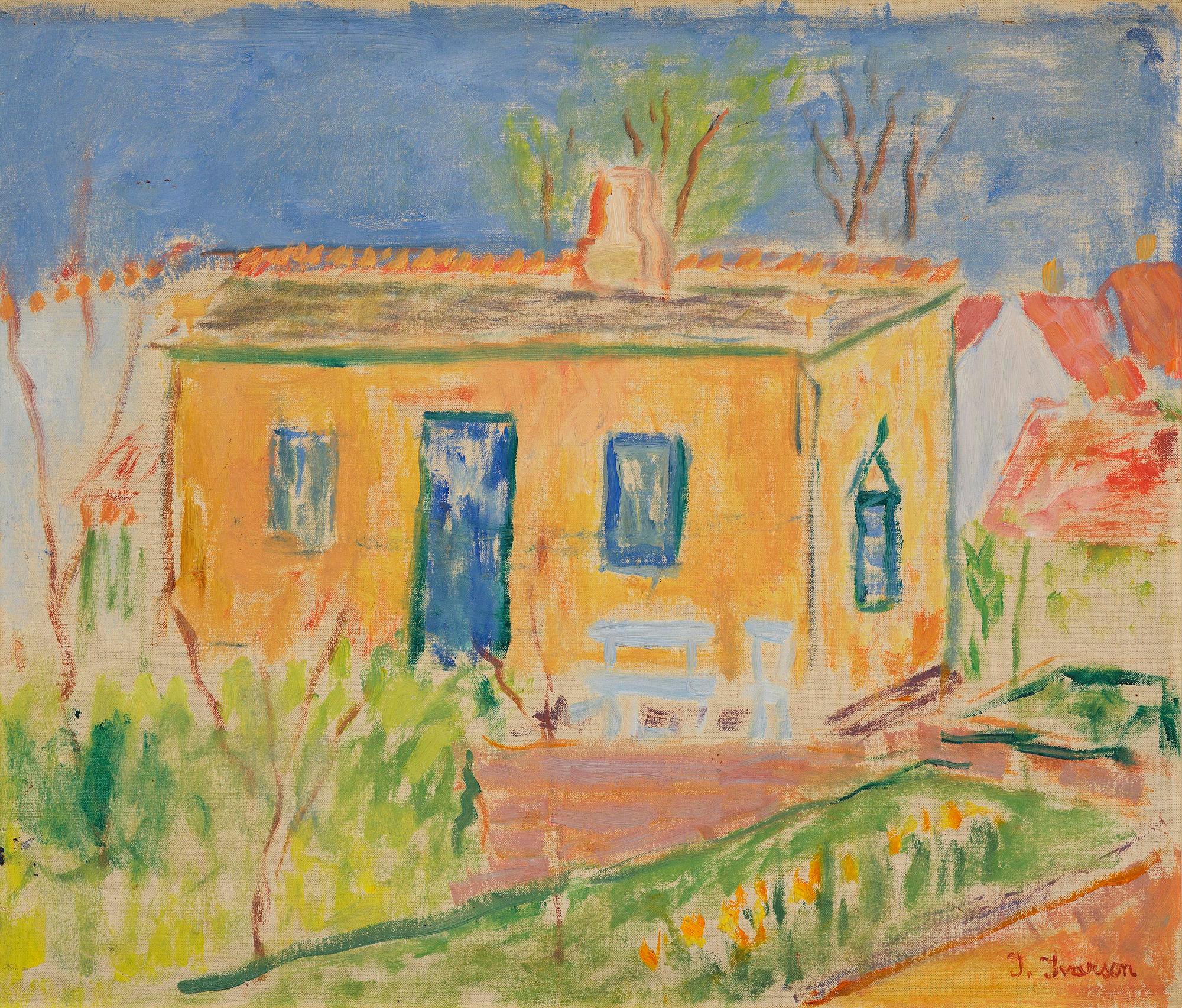
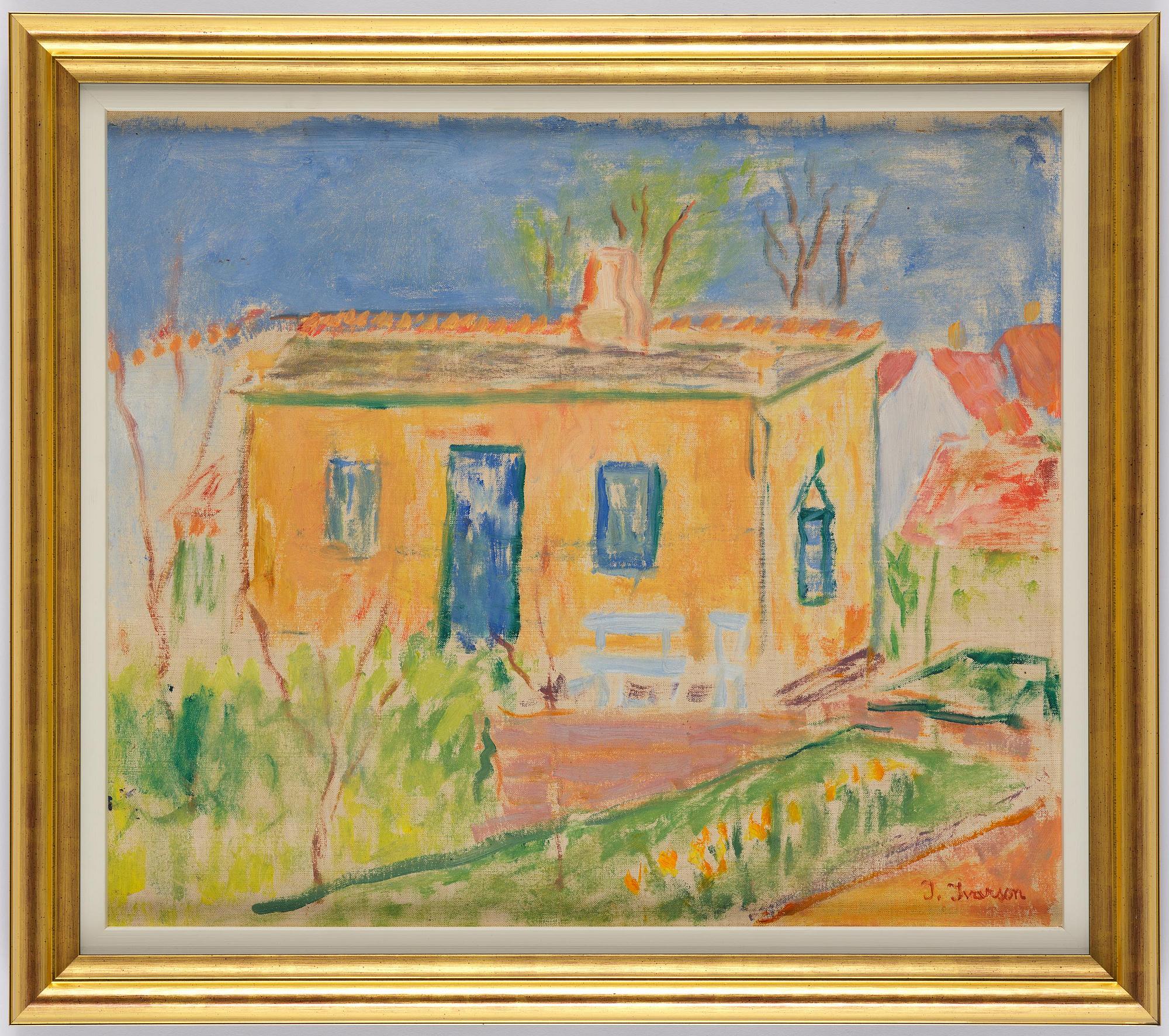
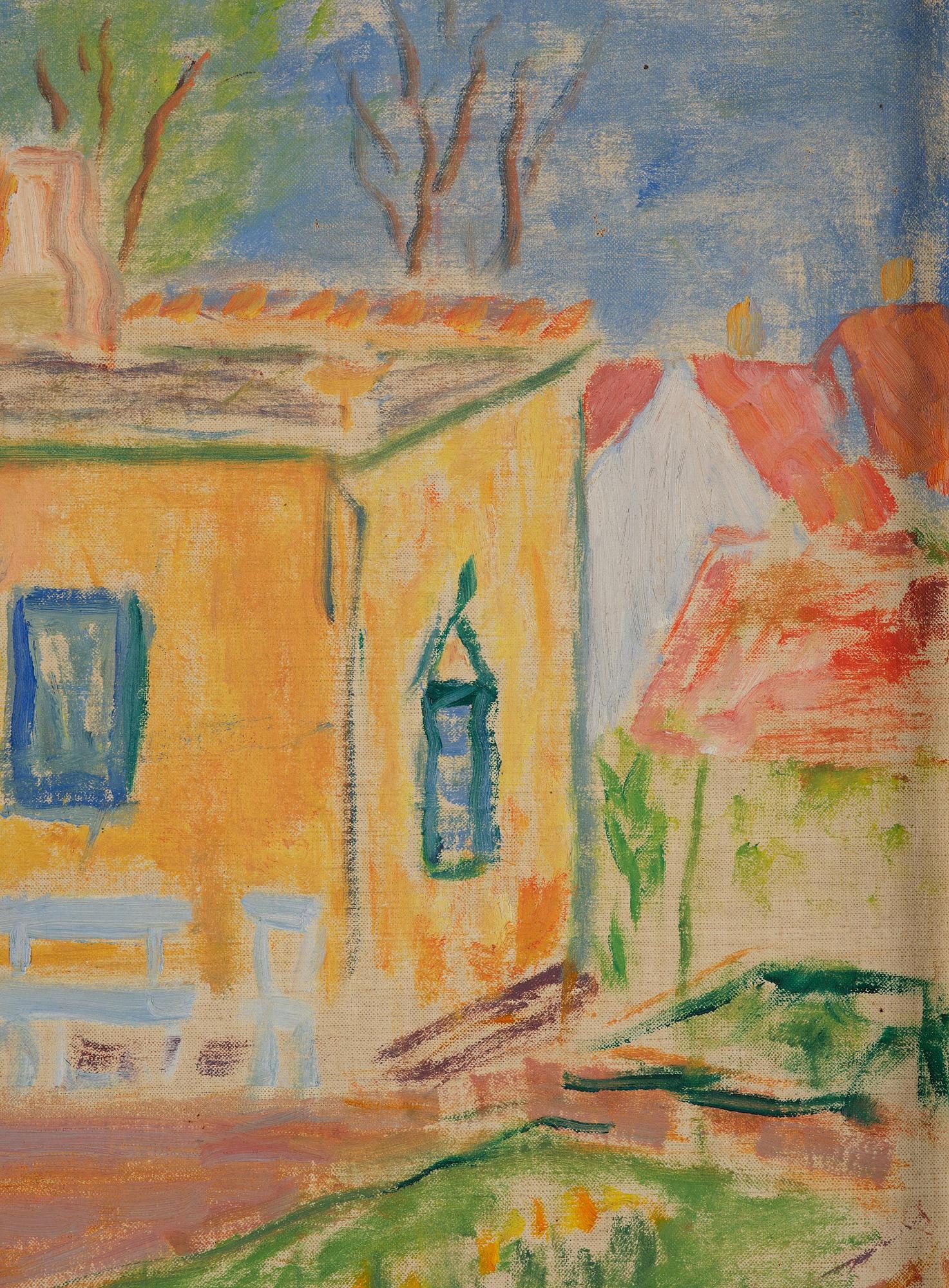
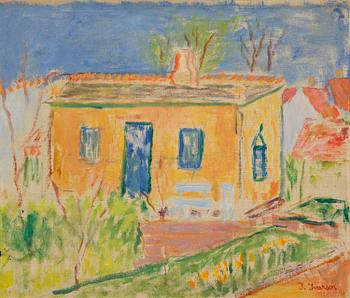
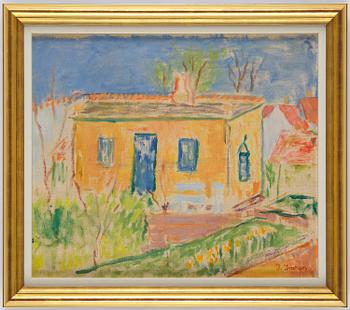
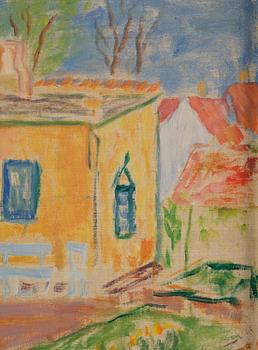
Yellow house in summer landscape
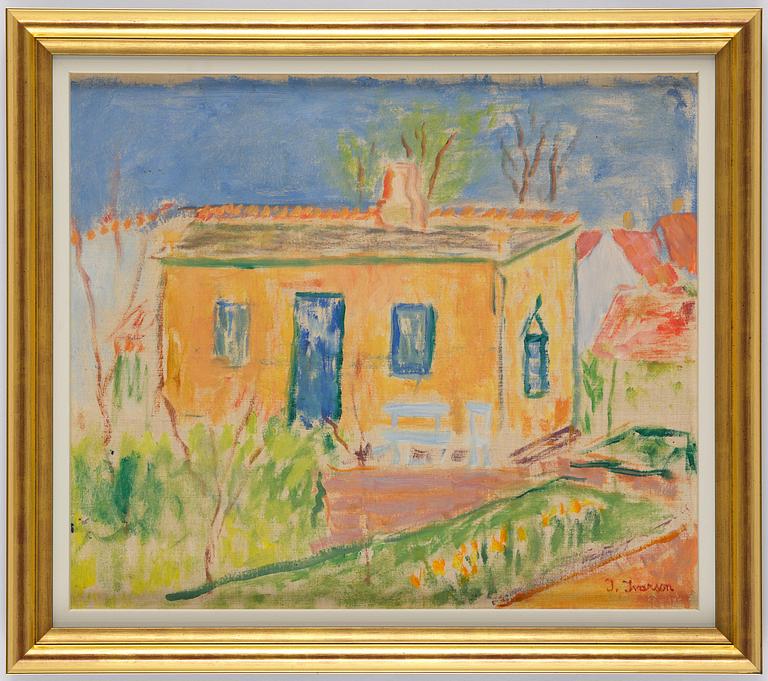
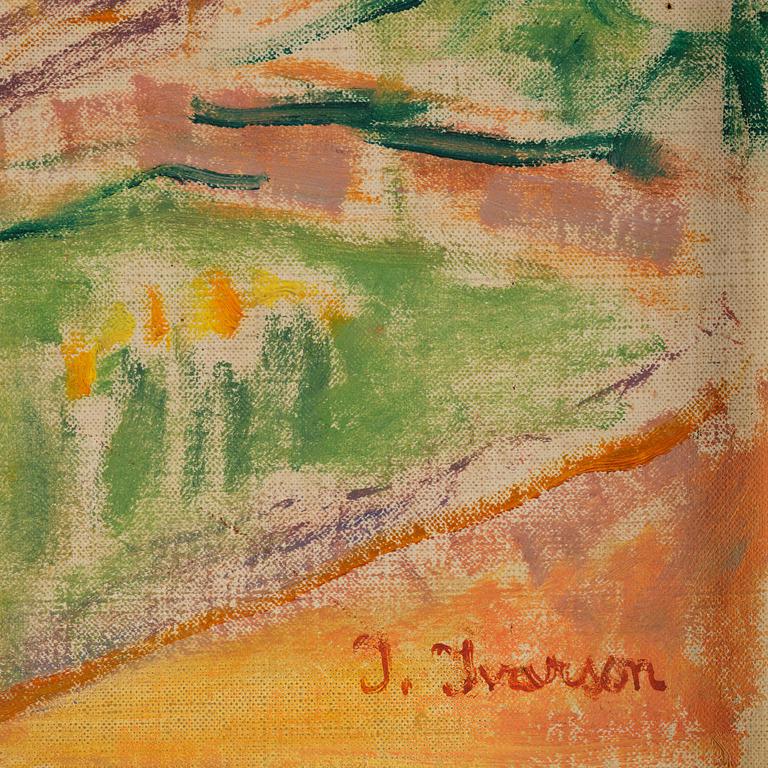
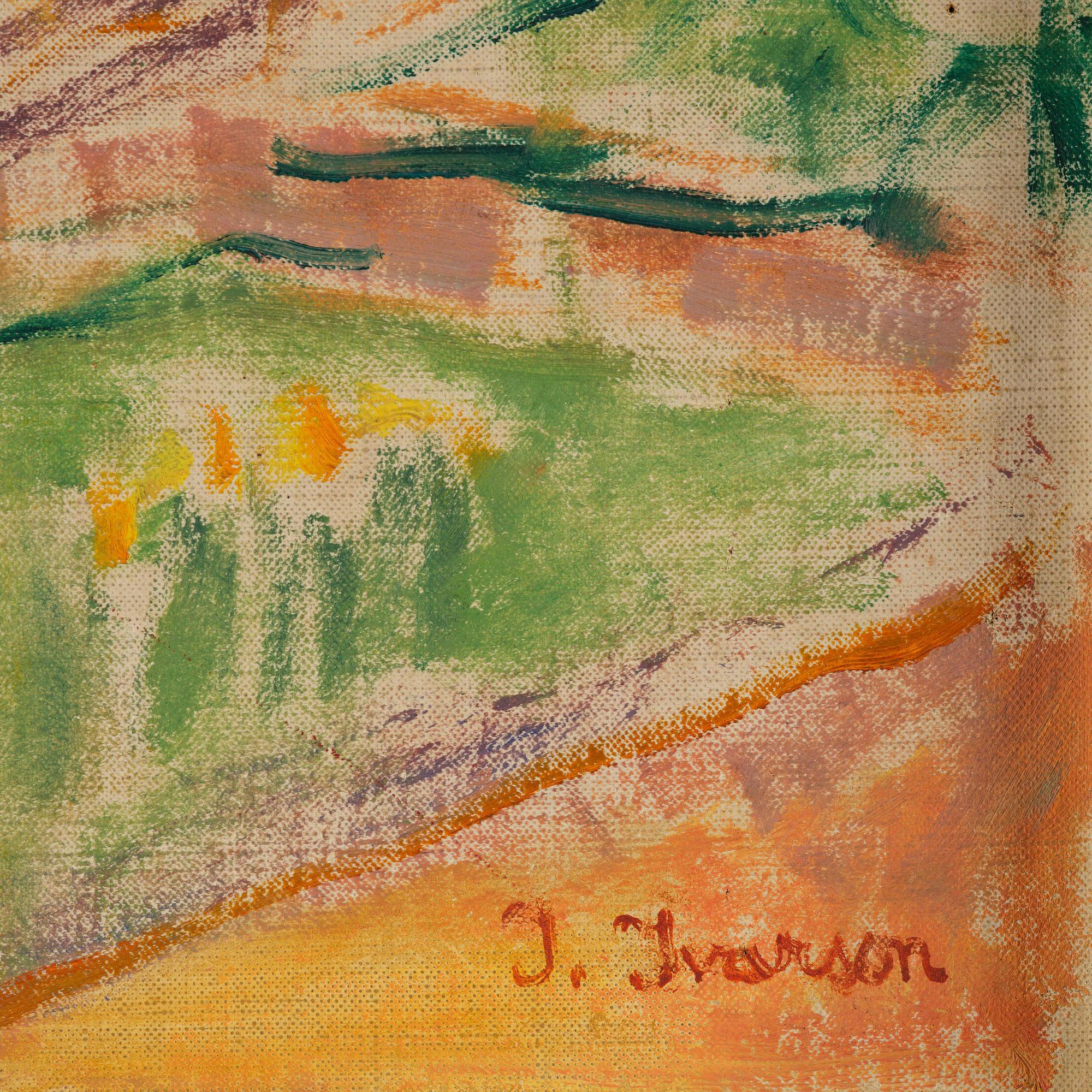
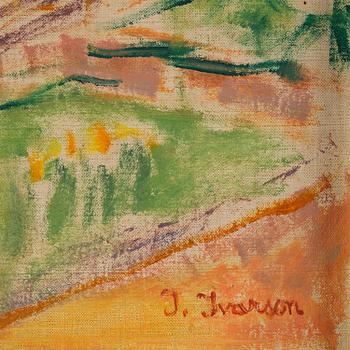
Signed I. Ivarson. Oil on canvas 47.5 x 55.5 cm.
Alkuperä - Provenienssi
The artist's collection.
Thence by descent in the artist's family.
Näyttelyt
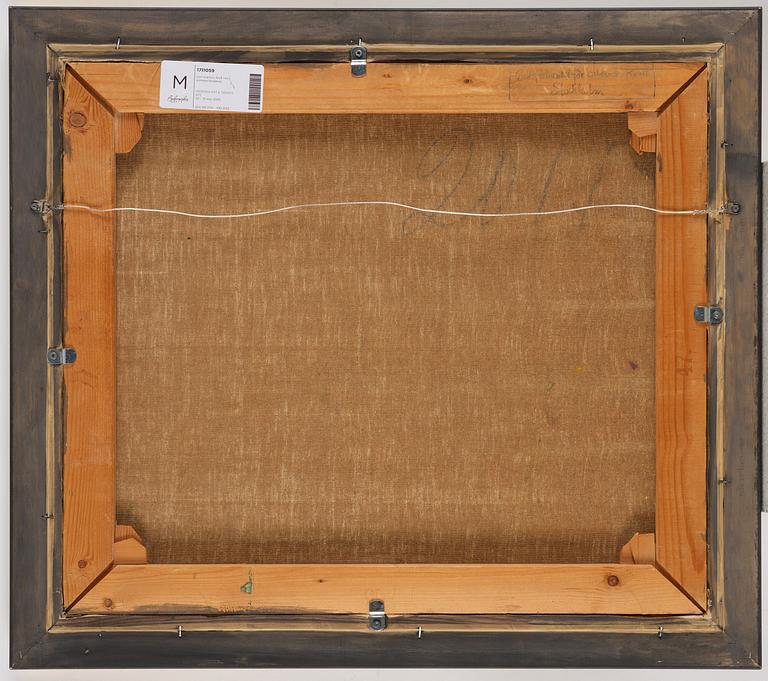
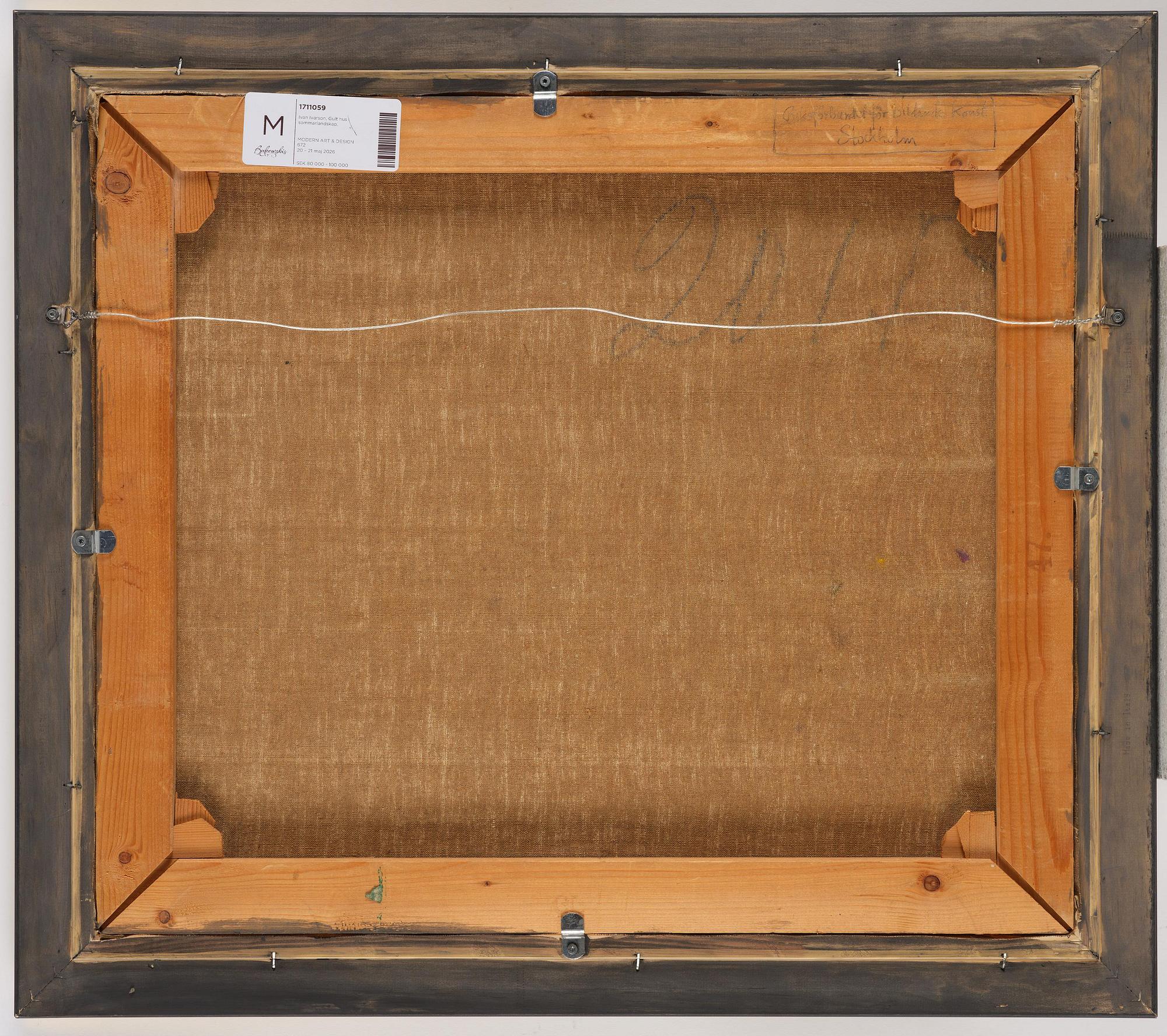
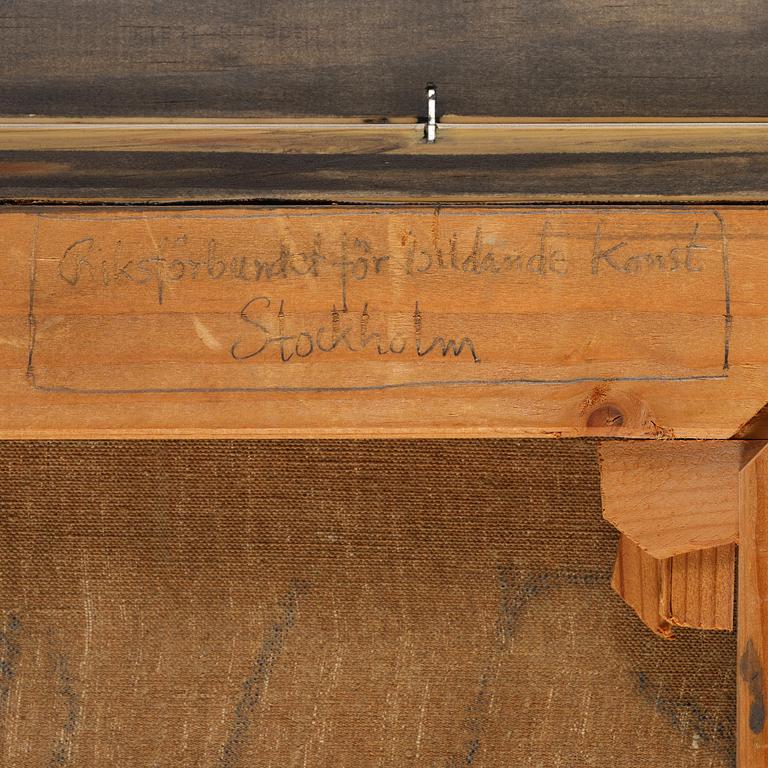
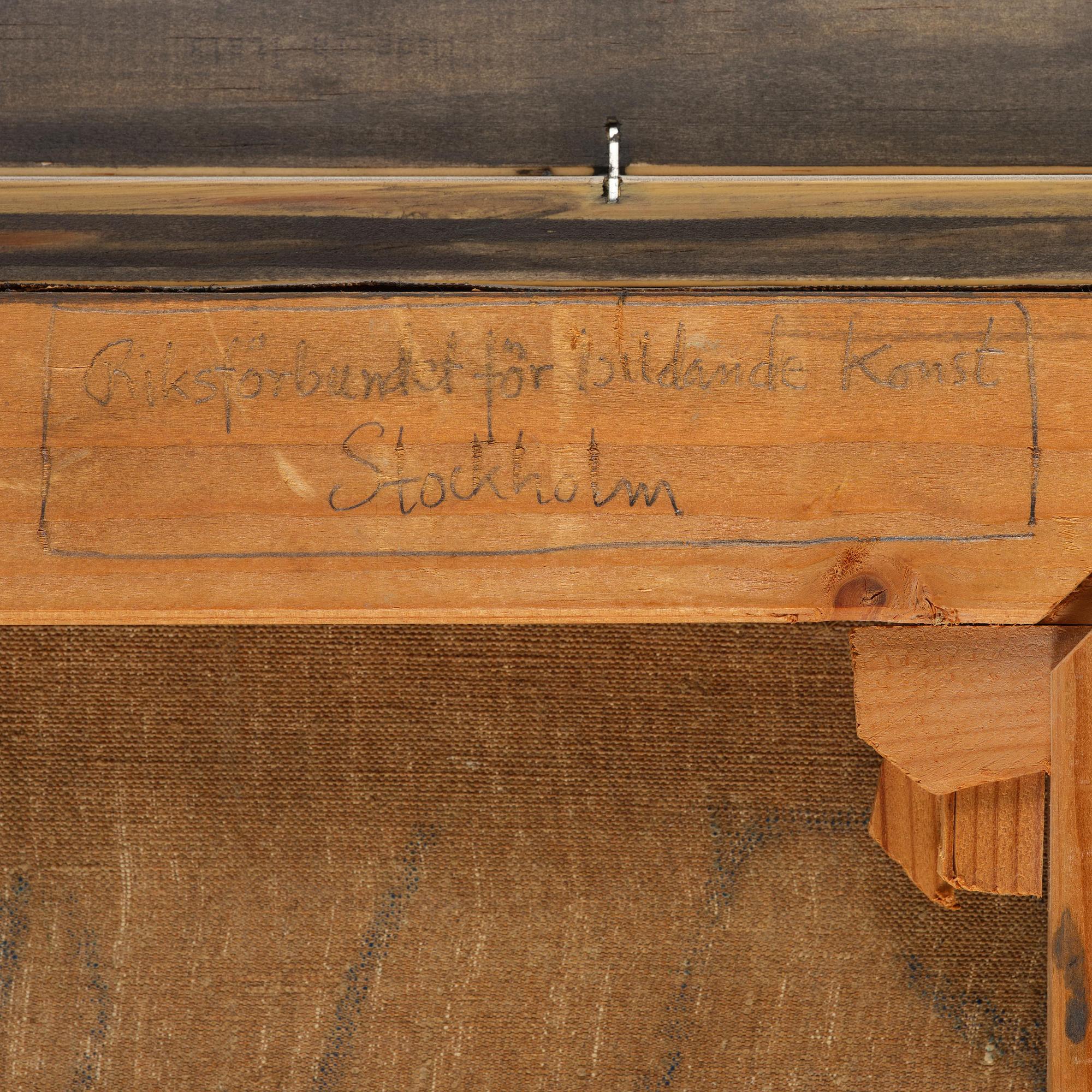
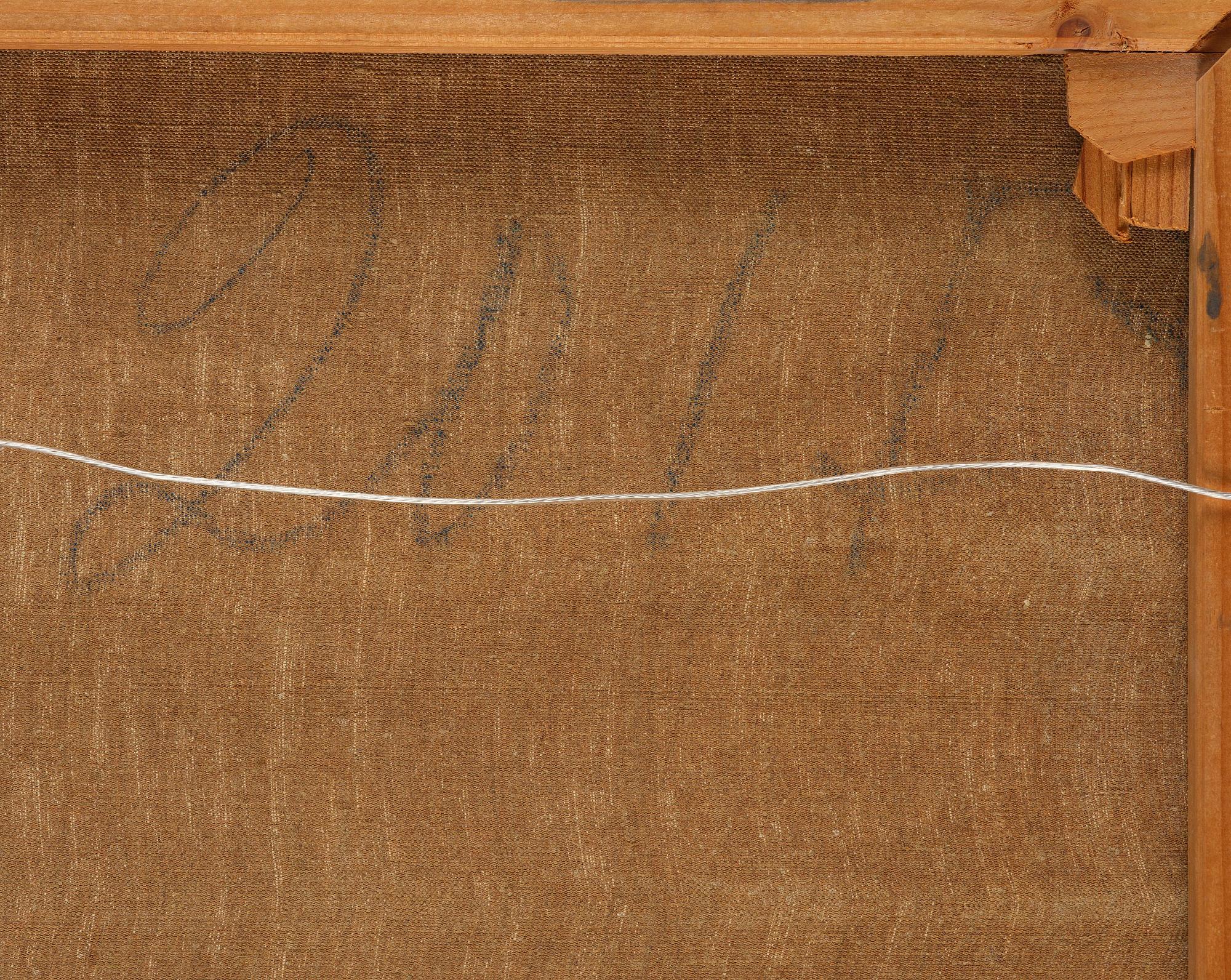
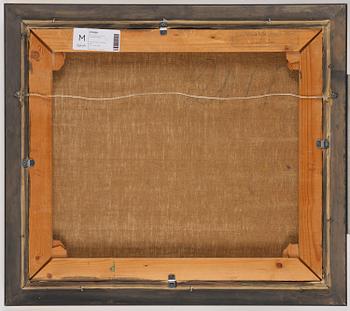
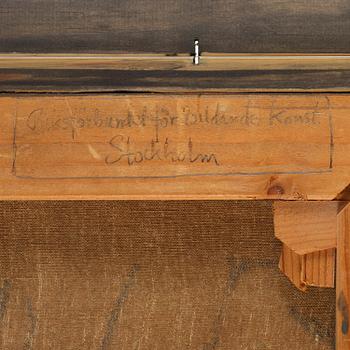
Inscription on the stretcher: "Riksförbundet för bildande konst, Stockholm".
Muut tiedot
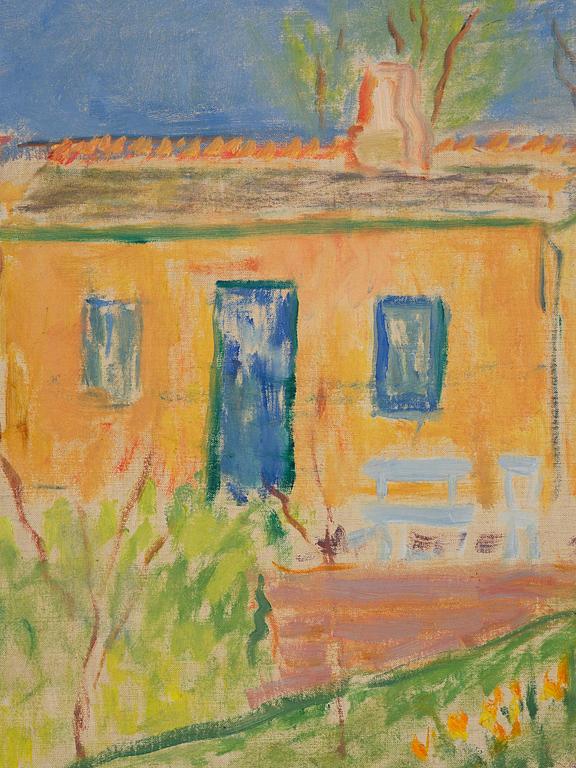
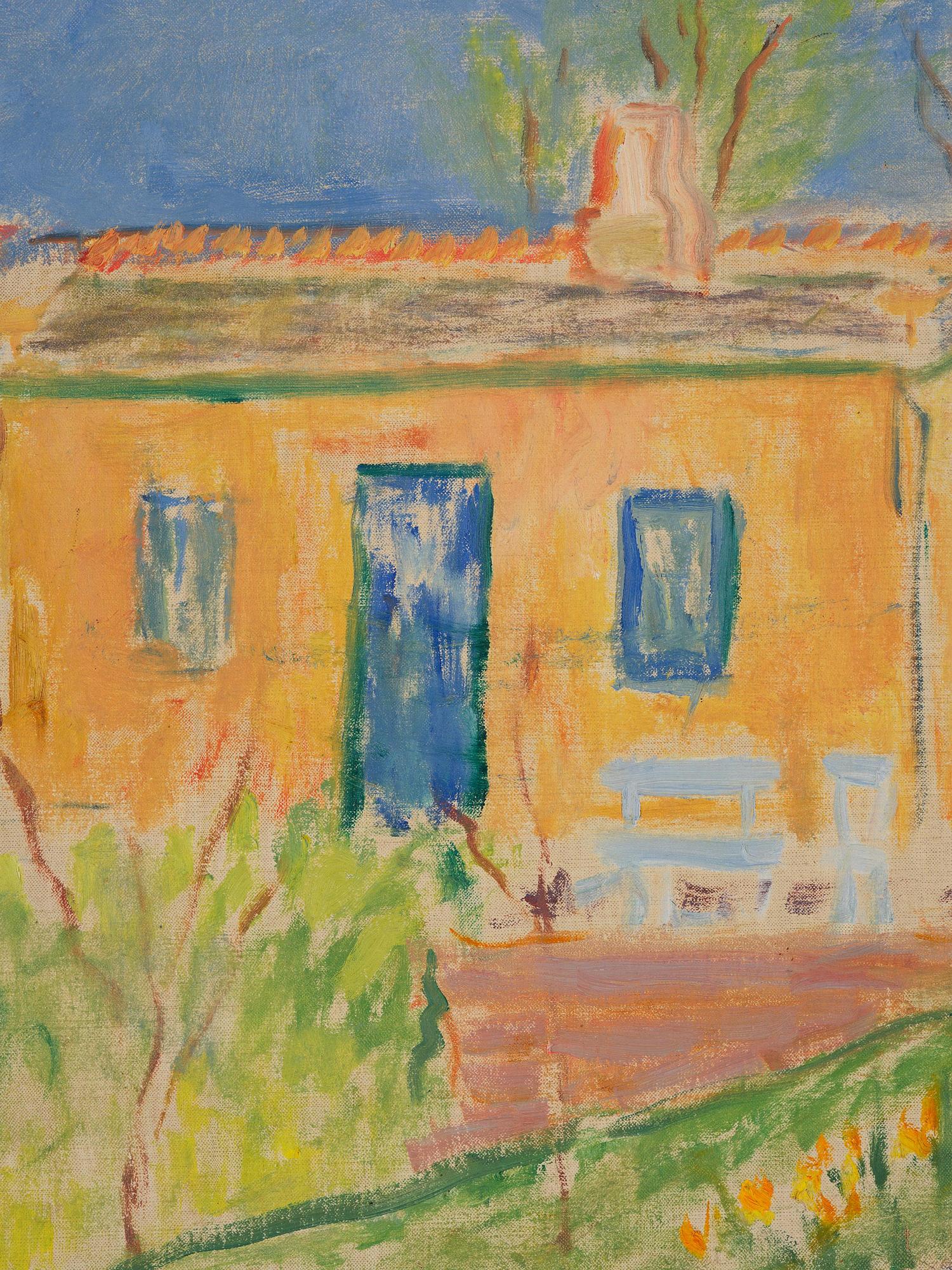
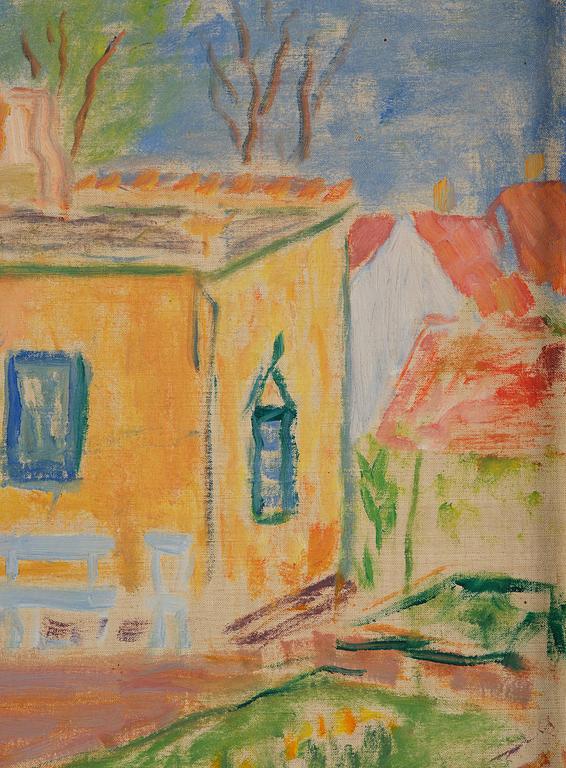
The auction's "The Yellow House" is a brilliant example of Ivan Ivarson's passionate and vibrant style. The painting depicts a simple wooden villa that, in the artist's interpretation, transforms into a shimmering fairy-tale castle. The house portrayed was originally the modest childhood home of the artist's colleague Ragnar Sandberg on Stenungsön, and is rendered by Ivarson as a yellow fairy-tale-like house with a bright blue door, surrounded by delightful greenery.
The work was likely painted during Ivan Ivarson's happy summers on Stenungsön in Bohuslän in the early 1930s. During this period, he often transformed everyday buildings into shimmering facades through his handling of colour. The auction's painting shows clear affinities with the style of the French artist Pierre Bonnard, which is no coincidence as Ivarson was deeply inspired by him during his study trips to France in the 1920s.
The auction's work bears similarities to Pierre Bonnard's painting "Landscape with Yellow House" from 1918. Just as in Bonnard's work, colour here functions as a system of its own that builds up the image, rather than merely filling in outlined contours. Ivarson often aspired to Bonnard's colour-lyrical and colour-shimmering expression, where warm yellow tones and brilliant blue accents create a vibrant atmosphere. Pierre Bonnard was known for painting what was closest to him – the home, the garden, and the views.
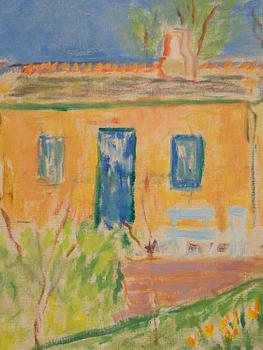
Ivarson is known for his quote about wanting to "eat colour." The affinities with Pierre Bonnard are evident in how he elevates certain colour tones, where, for example, the blue in the door and windows contrasts strongly yet harmoniously against the sunlit yellow facade, a technique reminiscent of Pierre Bonnard's way of allowing colours to interact to create light. The painting has an almost dreamlike quality where the brushstrokes are visible and the forms are not sharply defined, which is a direct inheritance from Bonnard's post-impressionism.
Lisätietoja ja kuntoraportit

Tietoa ostamisesta
Muiden katsomia kohteita