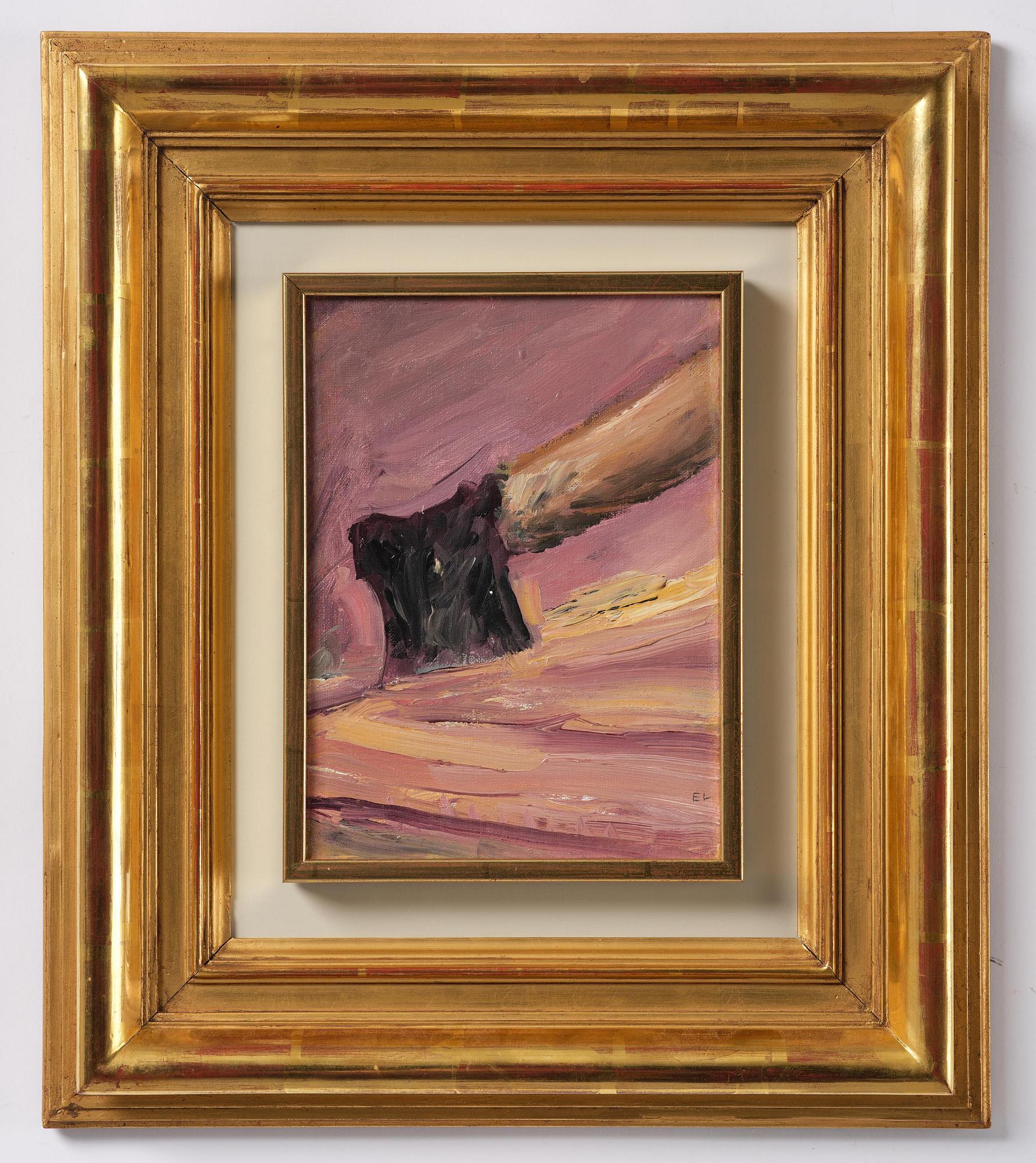
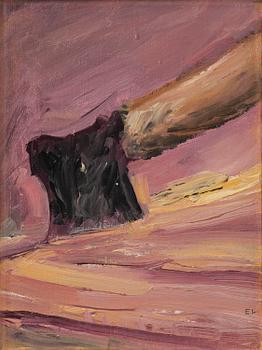
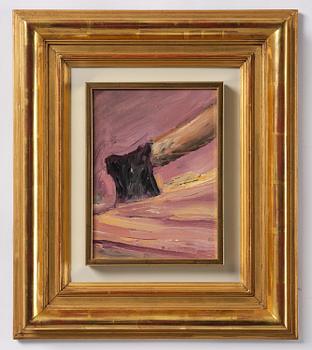
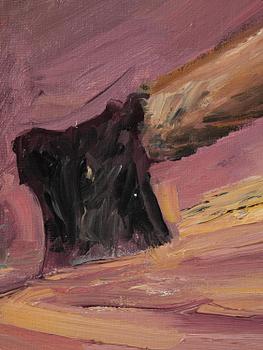
"Yxan"
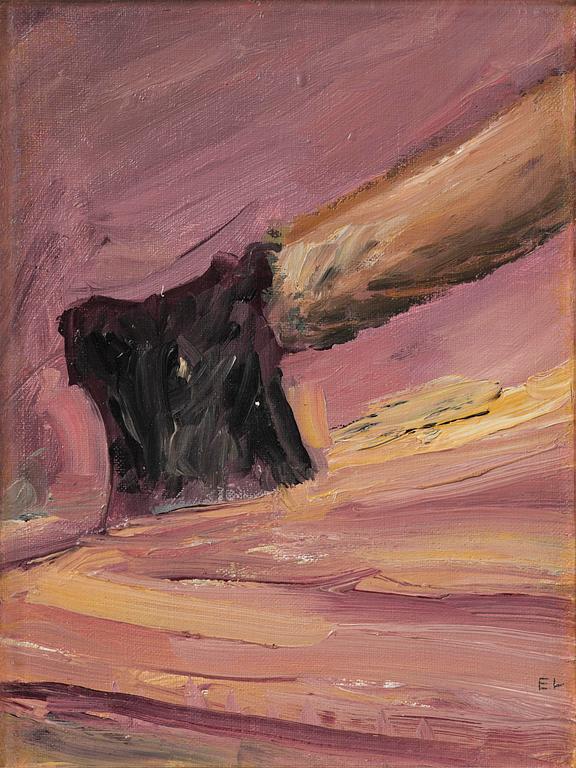
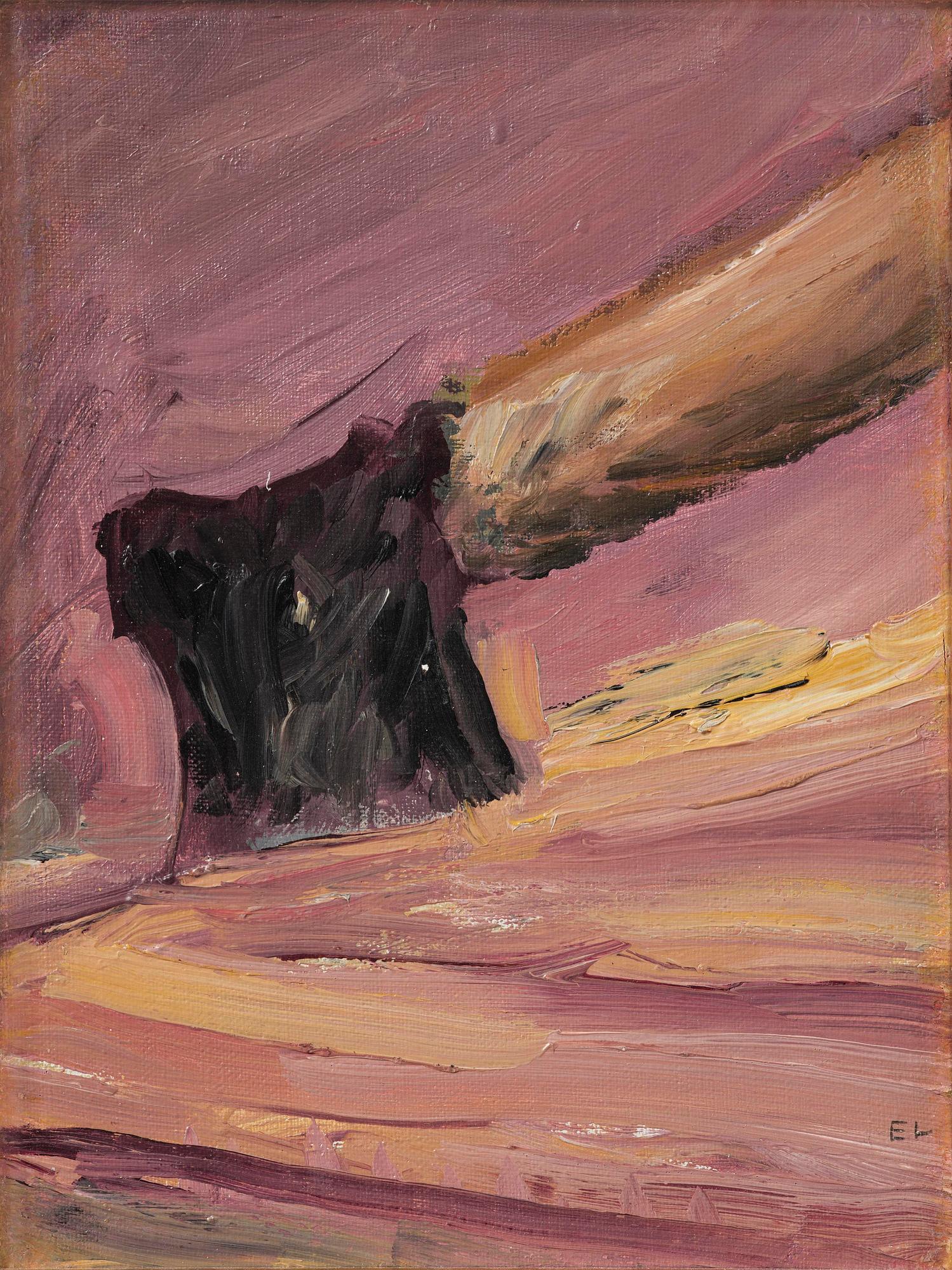
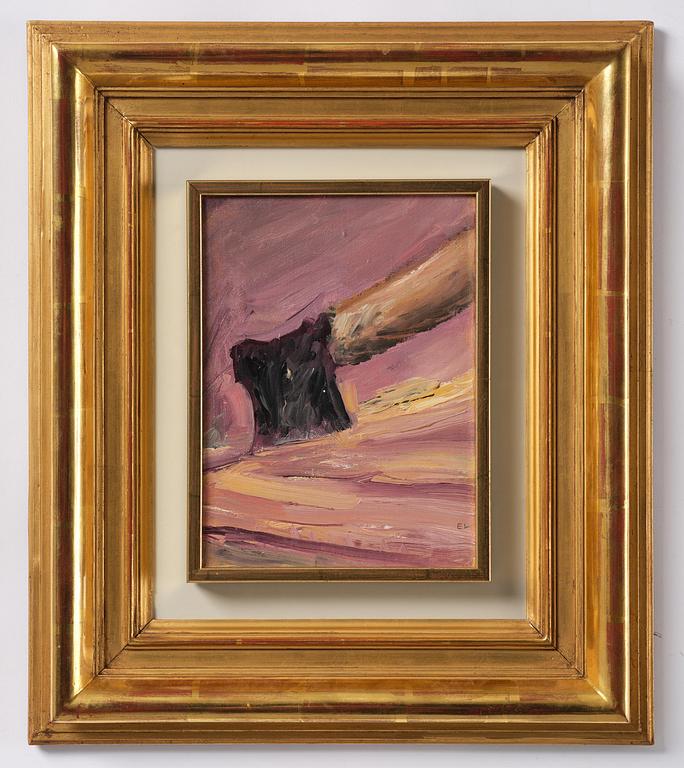
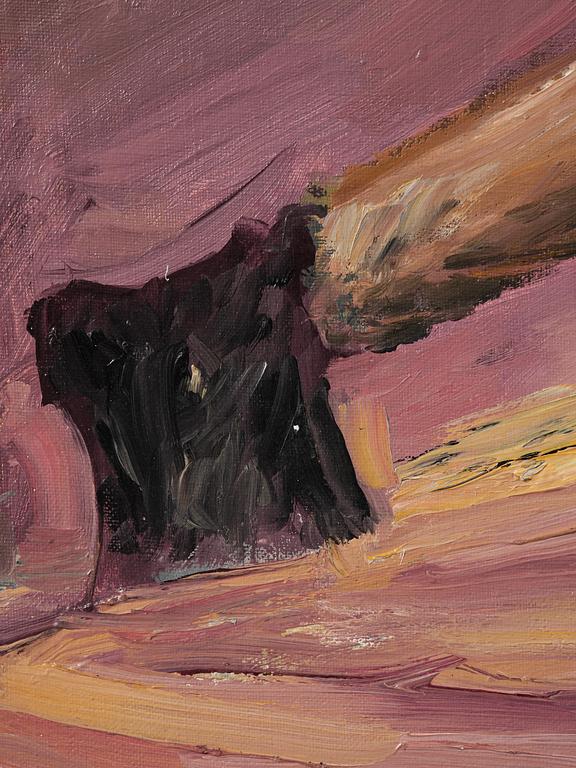
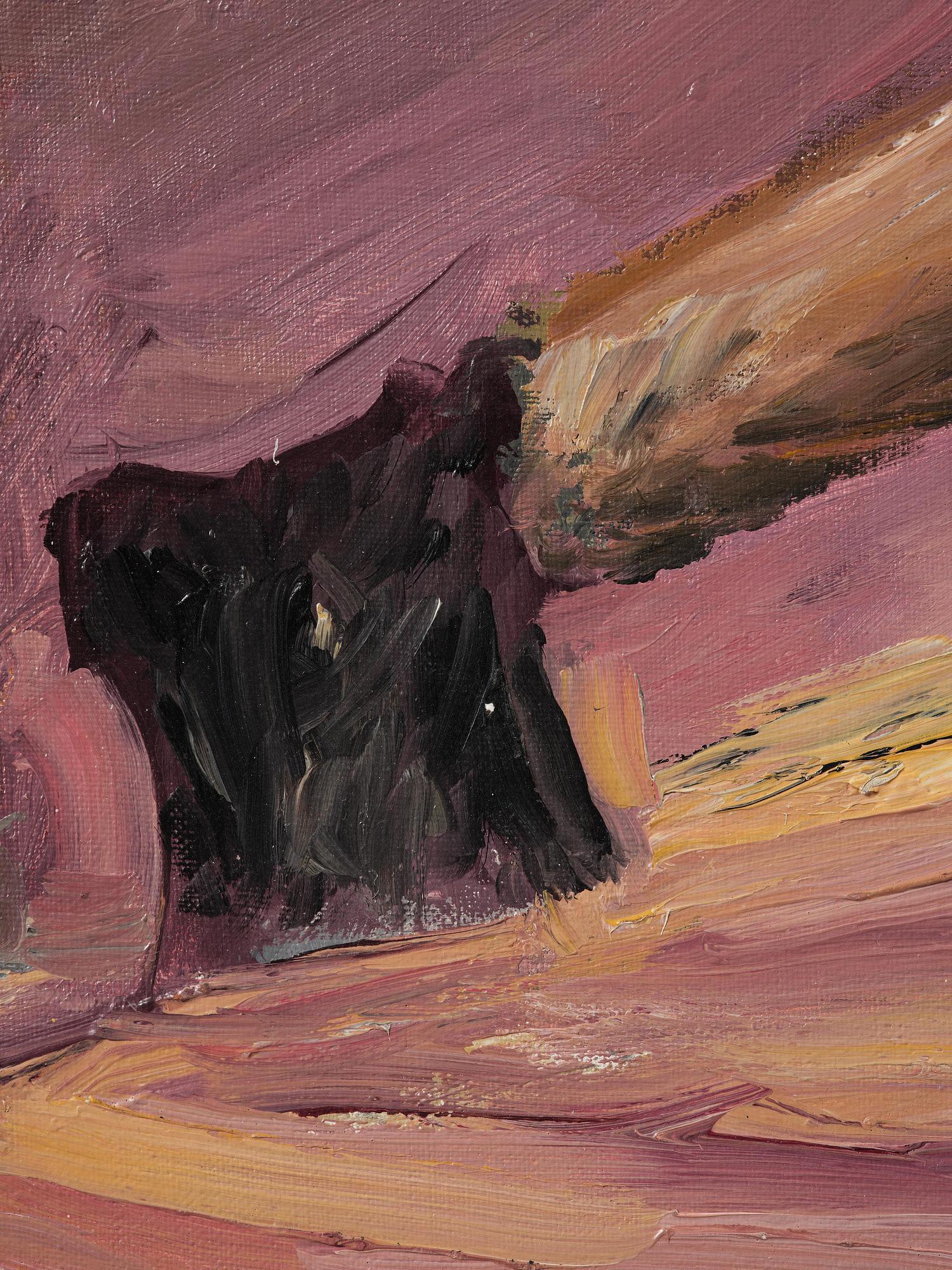
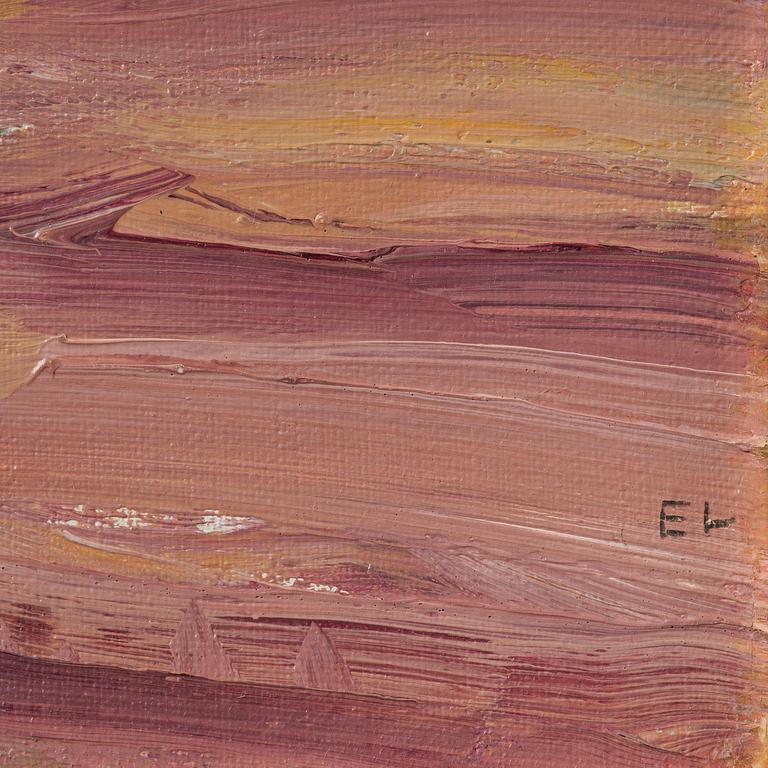
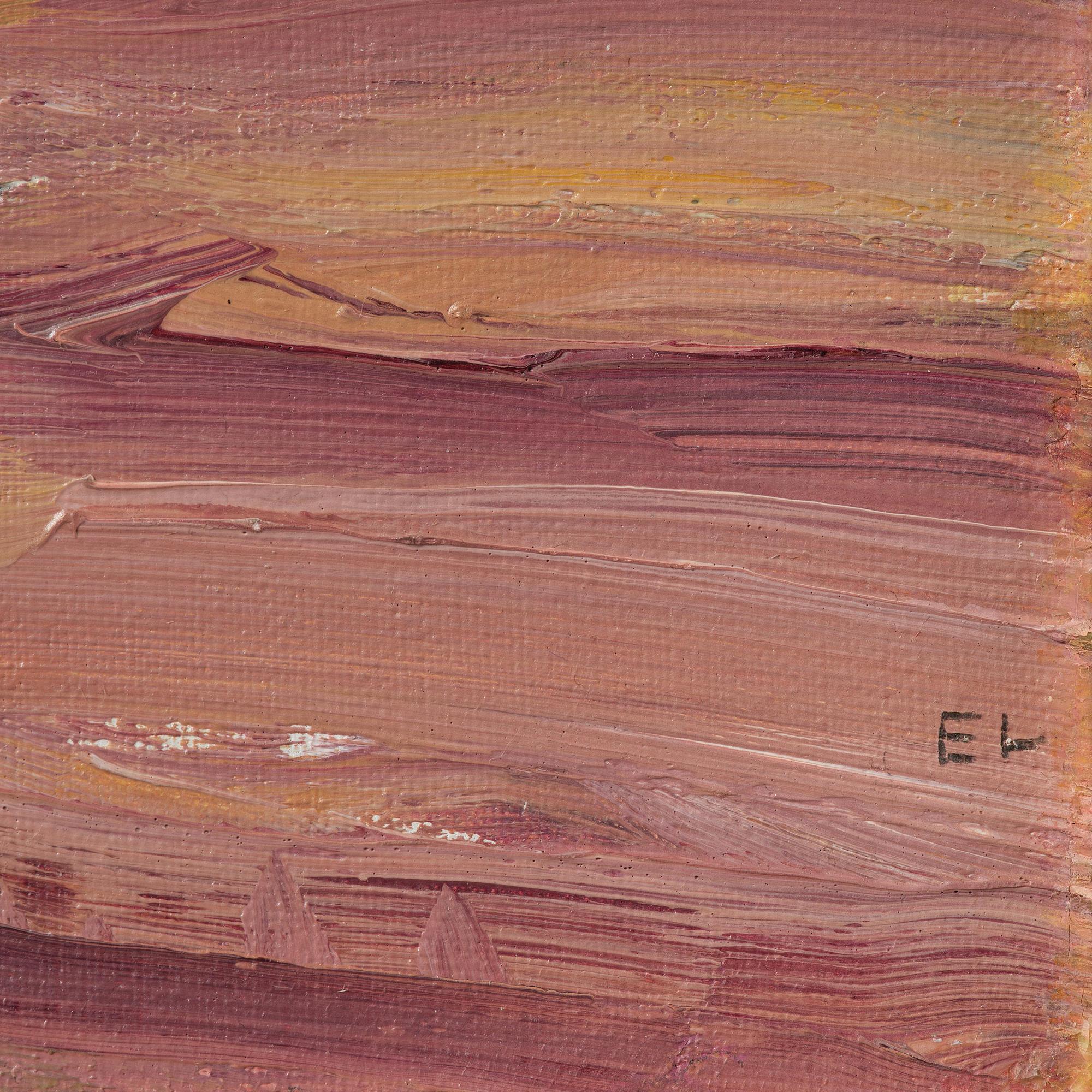
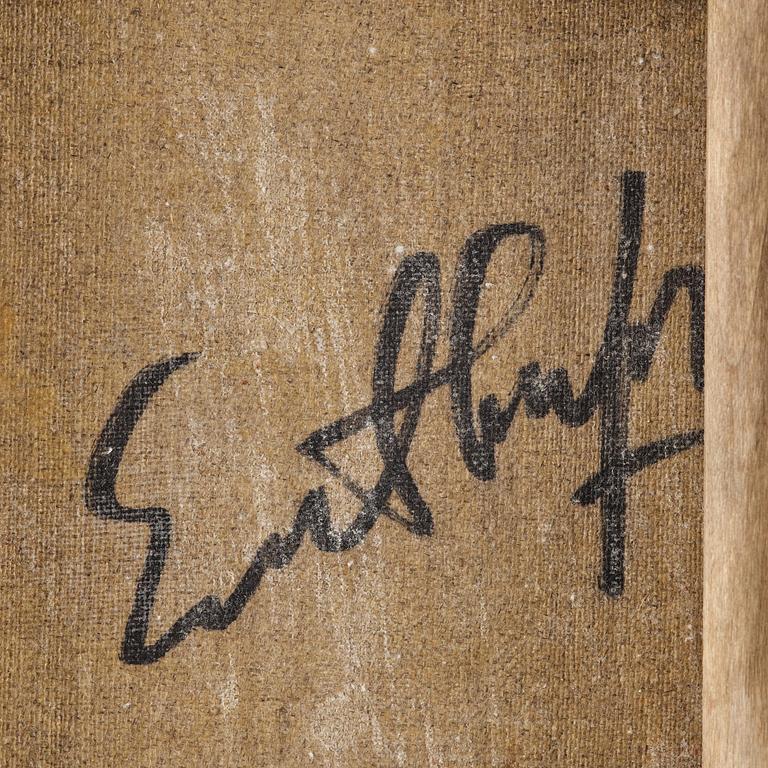
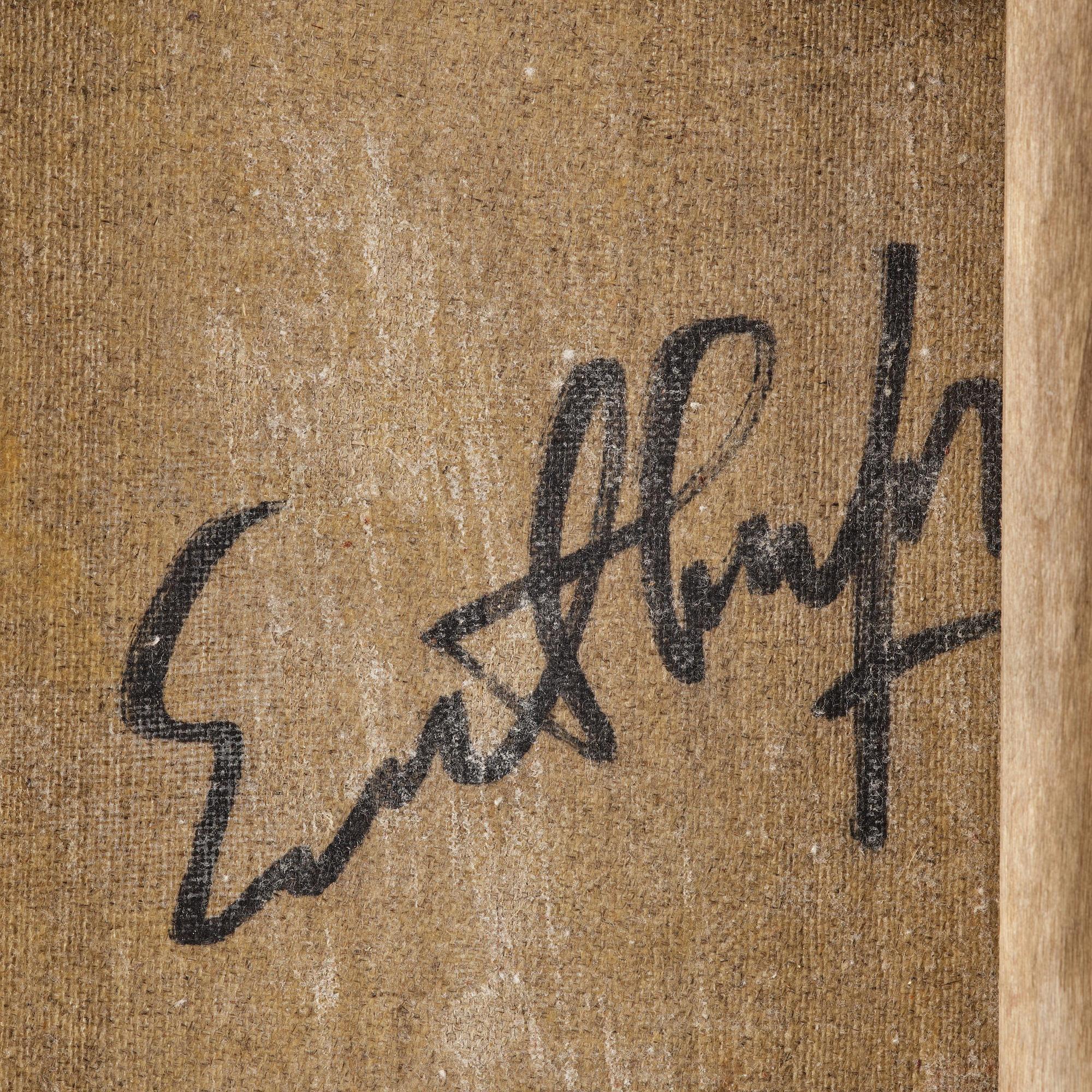
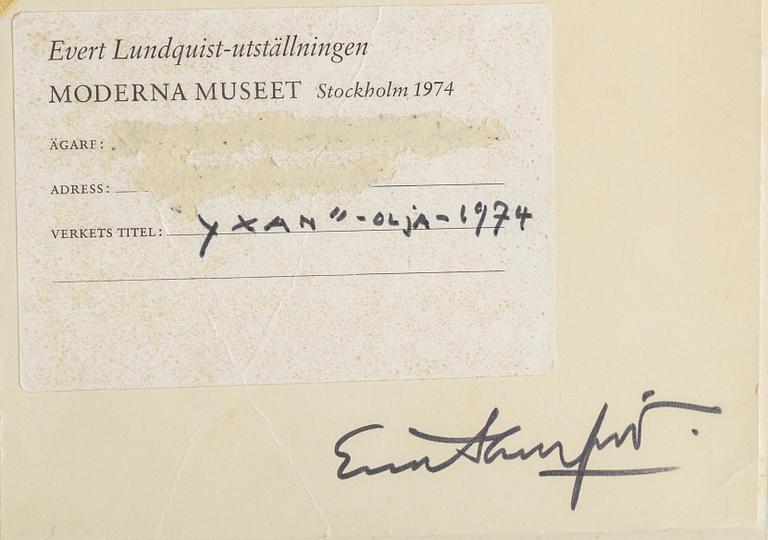
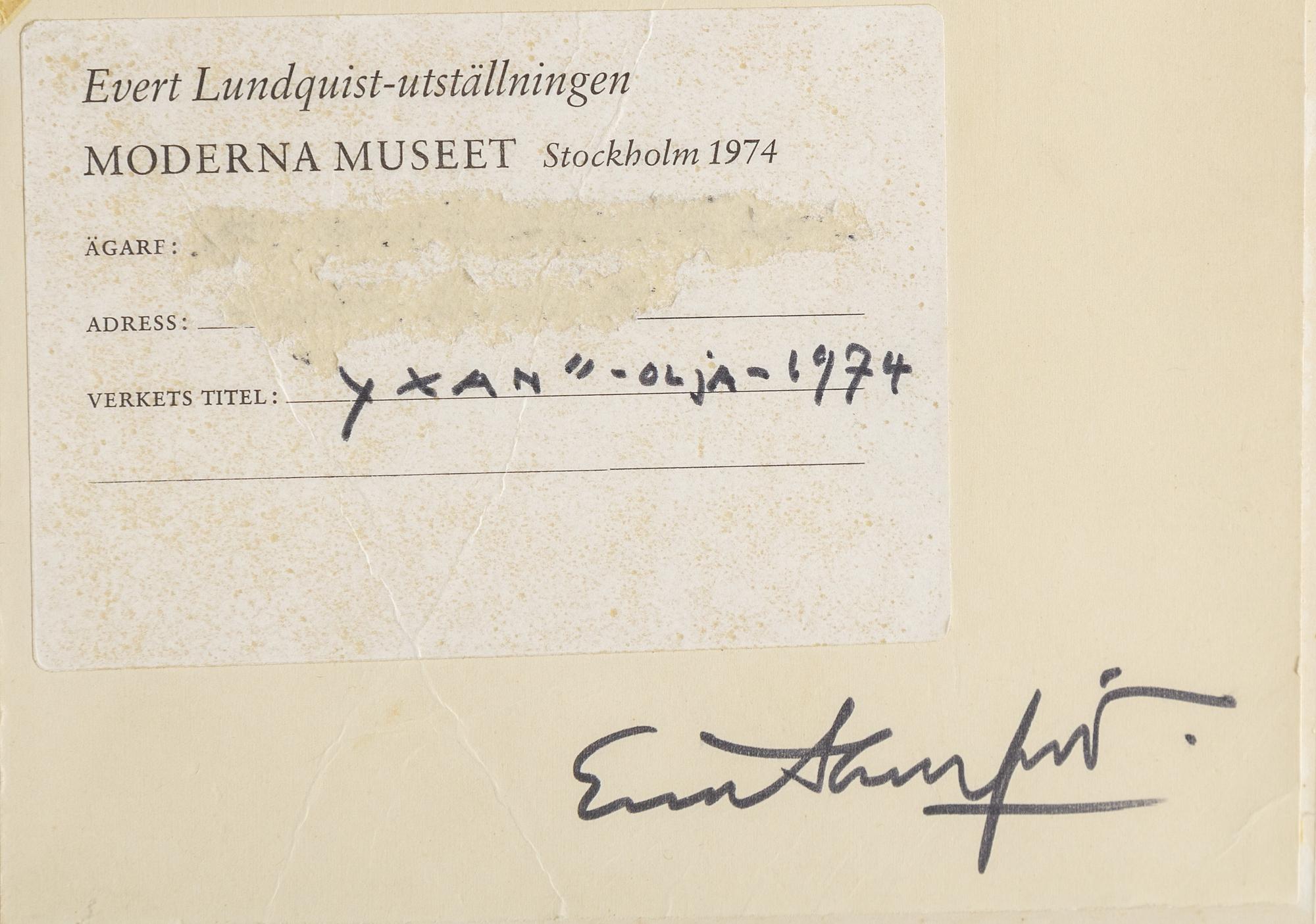
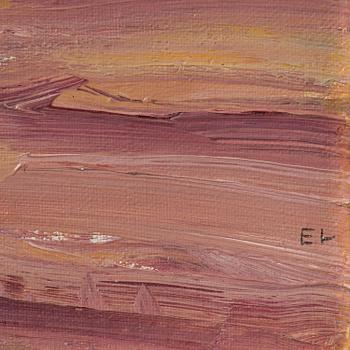
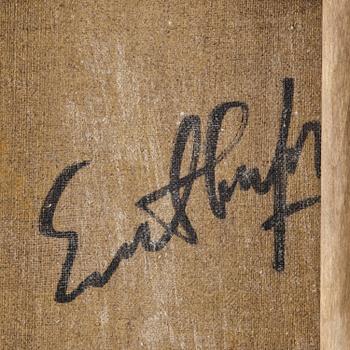
Signed with monogram EL and signed Evert Lundquist on the reverse. Executed in 1974. Oil on canvas 27 x 20 cm.
Näyttelyt
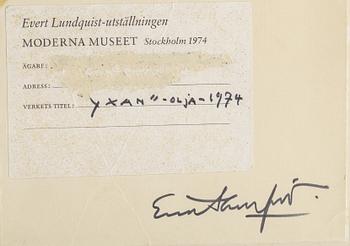
Moderna Museet, Stockholm, "Evert Lundquist-utställningen", 1974.
Kirjallisuus
Moderna Museet, Evert Lundquist, exhibition catalogue no. 121, 1974, cat. no. 212 (Yxan I).
Eugen Wretholm, Evert Lundquist, SAK:s katalog nro LXXXVI, 1977, cf. p. 153.
Ulf Linde, Evert Lundquist - Ur ett målarliv, 1996, jcf. p. 190.
Moderna Museet/Norstedts, Evert Lundquist, exhibition catalogue no 353, 2010, cf. the cover and p. 147 (Yxan).
Muut tiedot
The work presented in this auction; “The Axe” is a sibling painting to another work of the same title from 1974, which is part of the collections at the Statens Museum for Kunst, Copenhagen. The auction painting has, among other exhibitions, been shown at the Moderna Museet in Stockholm. The preparatory work for the painting – executed in charcoal on paper – was donated by Evert Lundquist to the Moderna Museet the same year (inv. no NMH 165/1974).
The move in 1953 from Saltsjö-Duvnäs to Kanton near Drottningholm marks a significant turning point in Lundquist's artistic career. The new environment, characterised by tranquility and proximity to nature, allowed for a deeper observation of nature's processes of change, which in turn influenced his painting. Particularly, the variations of light and its interplay with shadow came to play a central role in his visual world. Concurrently, a deepened interest in everyday objects developed, where items from the domestic sphere – such as spades, ladders, chairs, and axes – were established as recurring motifs. It is within this period that several of the artist's most significant works were created.
In a catalogue published by the Swedish General Art Association (1977), Eugen Wretholm emphasises the following:
“Only after Lundquist moved out to Drottningholm did the affinity with Chardin become apparent in his work. It had been there earlier, in the bourgeois way of life, in a striving to achieve a ‘pure’ painting. But out there in Kanton, the correspondence in the choice of motifs emerged. It became natural for Lundquist to meditate on and paint what was closest at hand, in the studio and outside the house, familiar things that he had learned to cherish. Paintings such as The Axe, The Bread, and The Potato Jar belong to this category.”
This observation can further be related to the interpretation that Olle Granath formulated in connection with an exhibition at the Moderna Museet, originally published in Dagens Nyheter on 11 September 1974:
“Lundquist seeks out nature in the broadest sense of the word. Whether he paints a reclining woman, a man in a field, a jar with brushes, or an axe on a chopping block, they are perceived in a way that thins out the associations to the individual, practical, and rational. Isolated, the motifs appear in a new light, coloured by a sensualism that extends beyond the surface of the motifs and connects them with the surrounding earth and air.”
Lisätietoja ja kuntoraportit

Kuuluu jälleenmyyntikorvauksen piiriin
Tietoa ostamisesta
Kuvan käyttöoikeudet
Tämän tietokannan taideteokset ovat tekijänoikeudella suojattuja, eikä niitä saa kopioida ilman oikeudenhaltijoiden lupaa. Teokset kopioidaan tässä tietokannassa Bildupphovsrättin lisenssillä.
Muiden katsomia kohteita