"Teer"
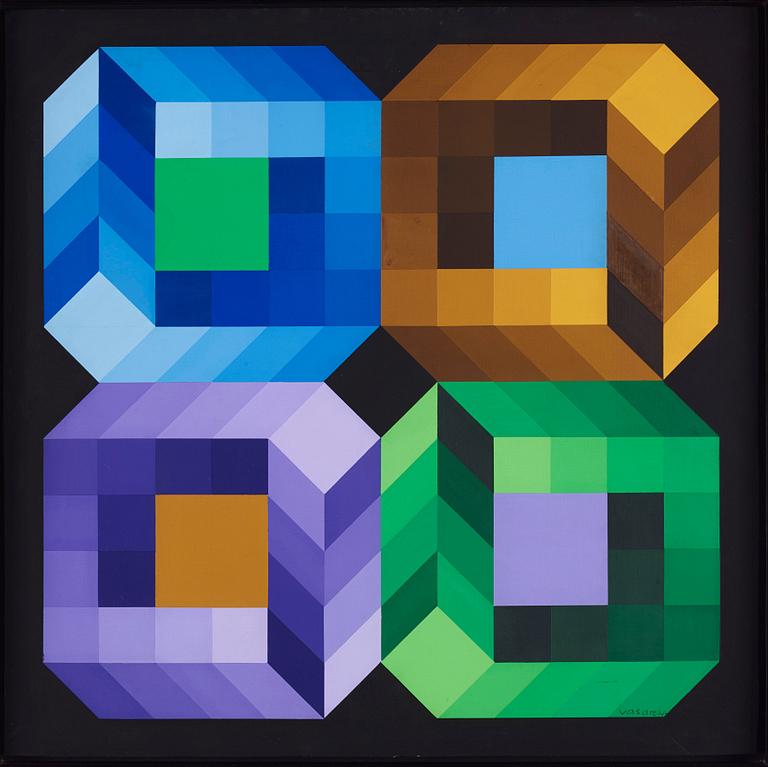
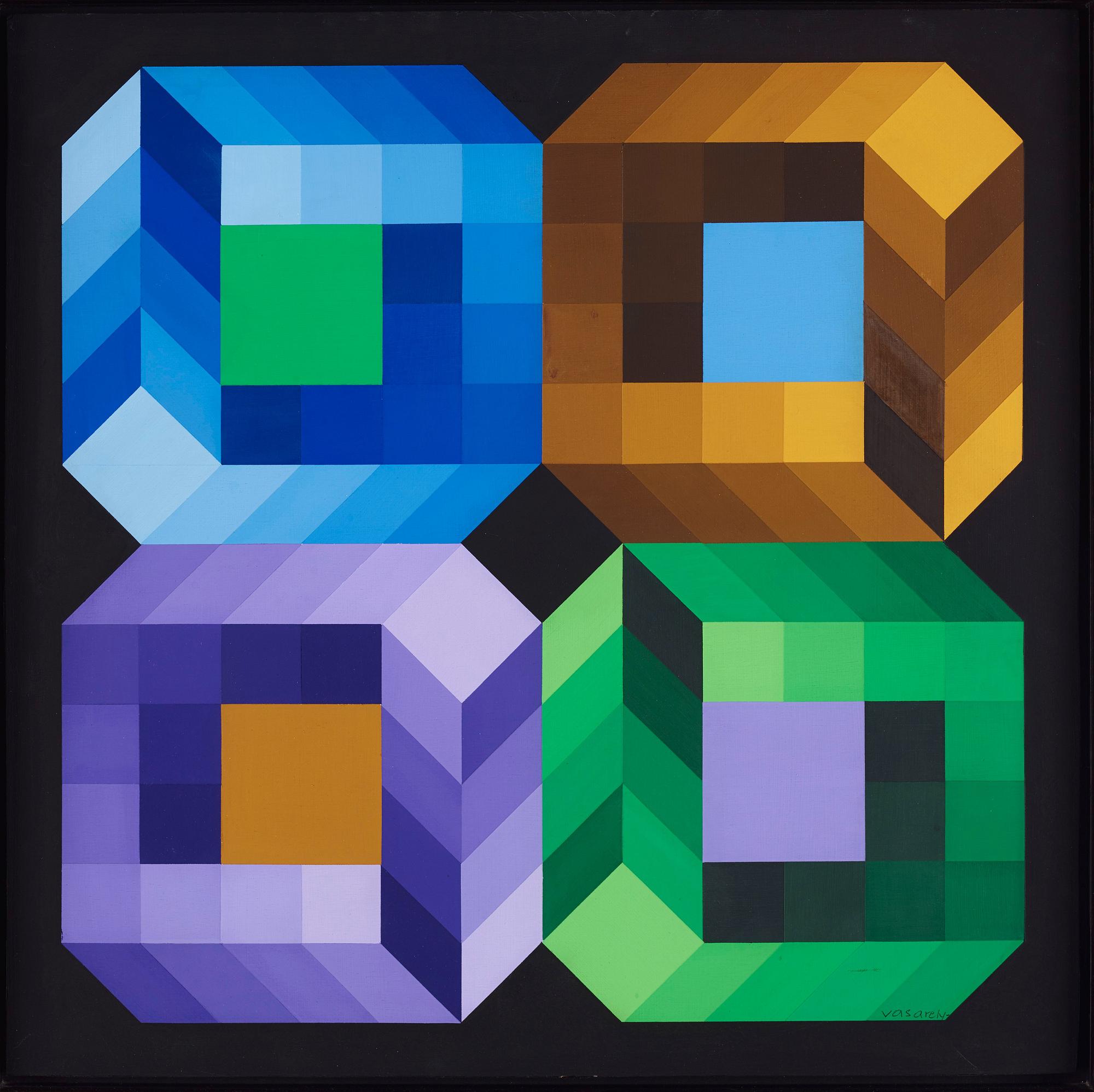
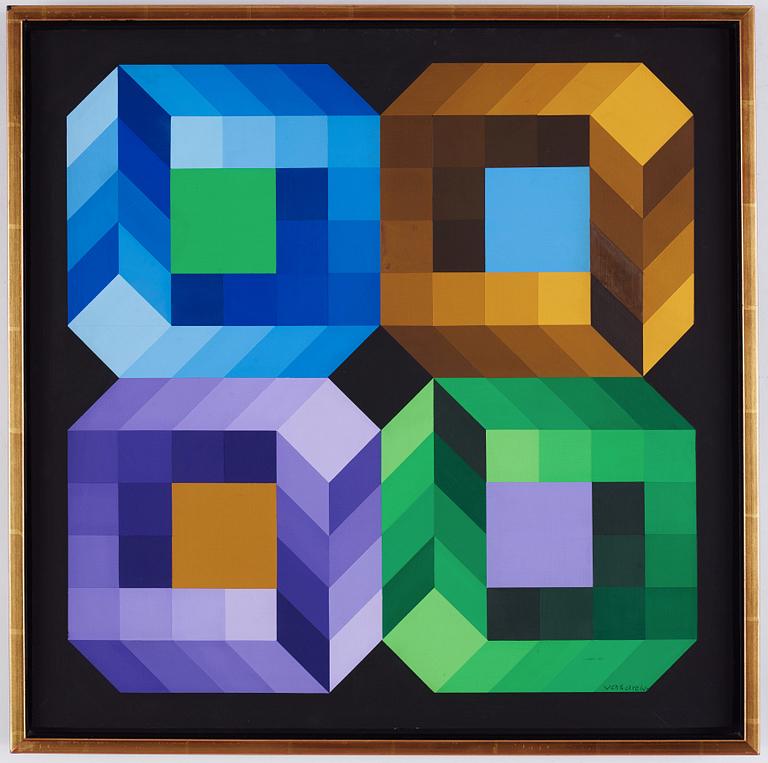
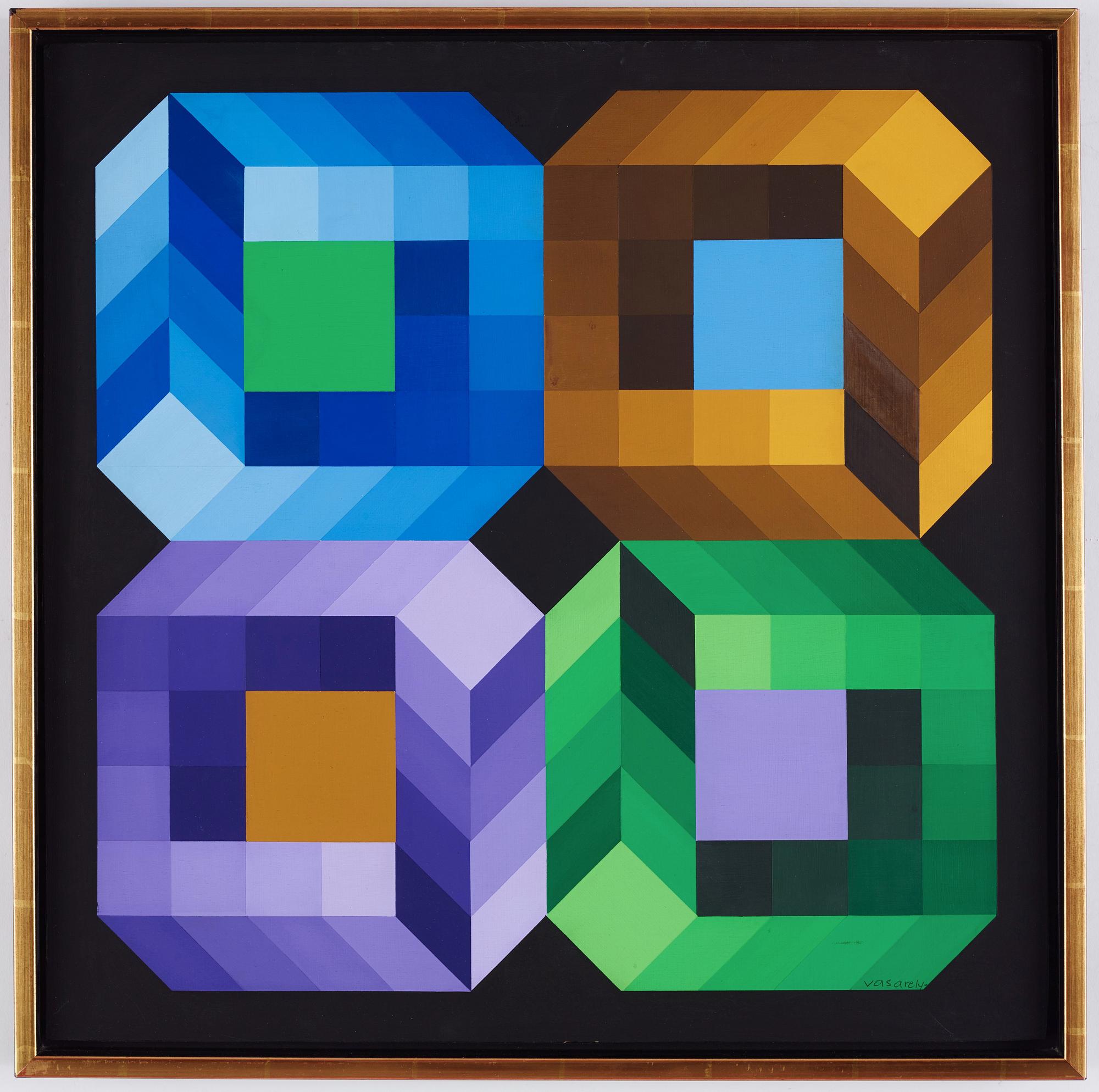
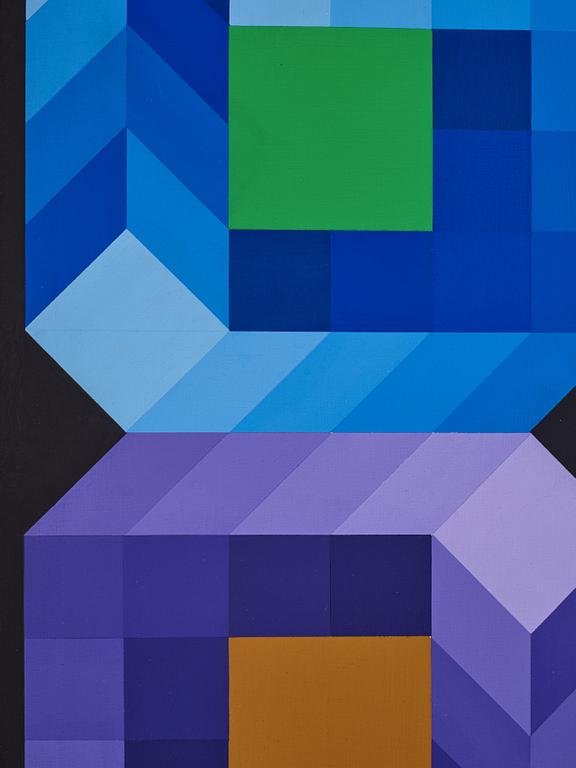
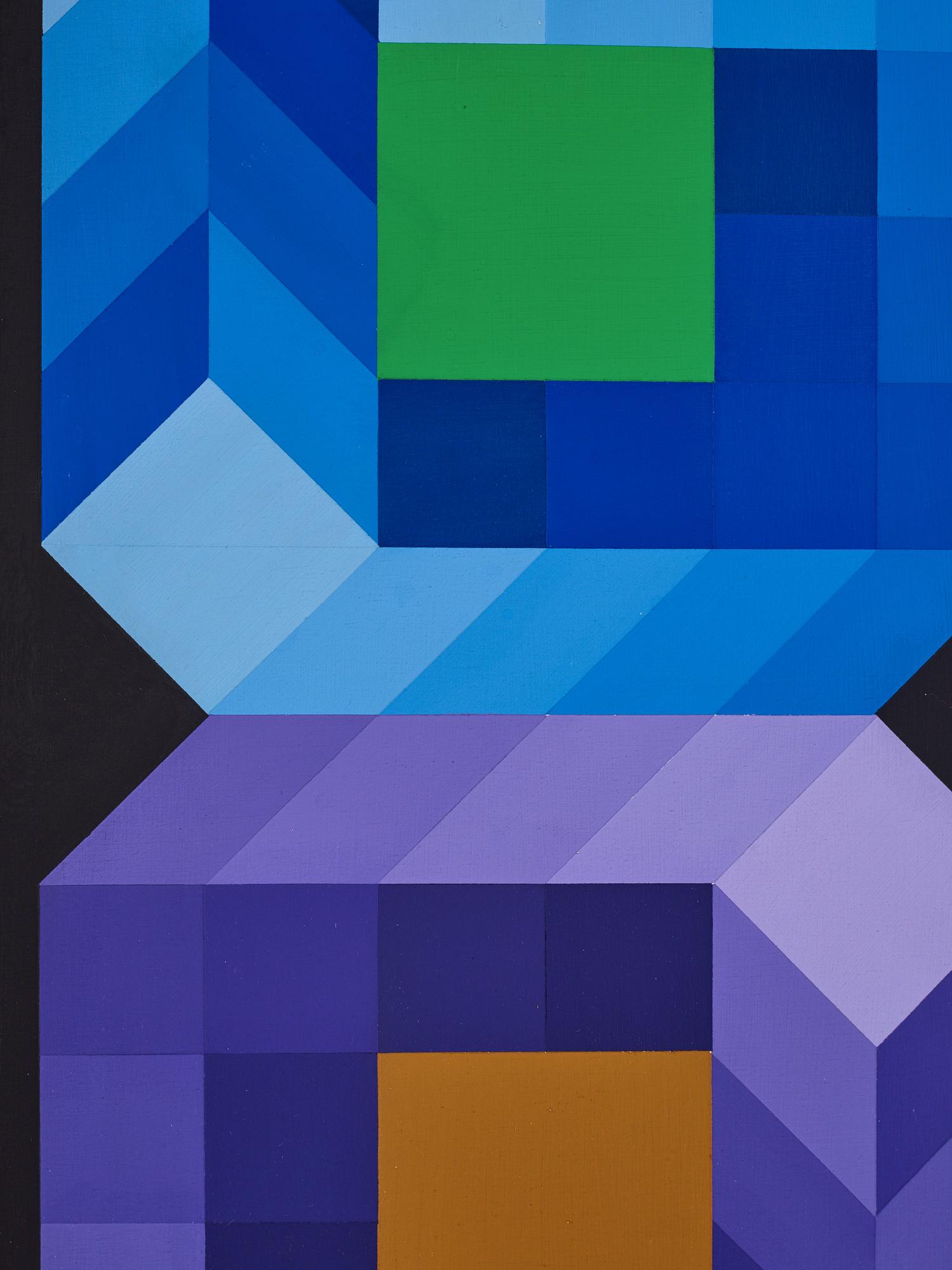
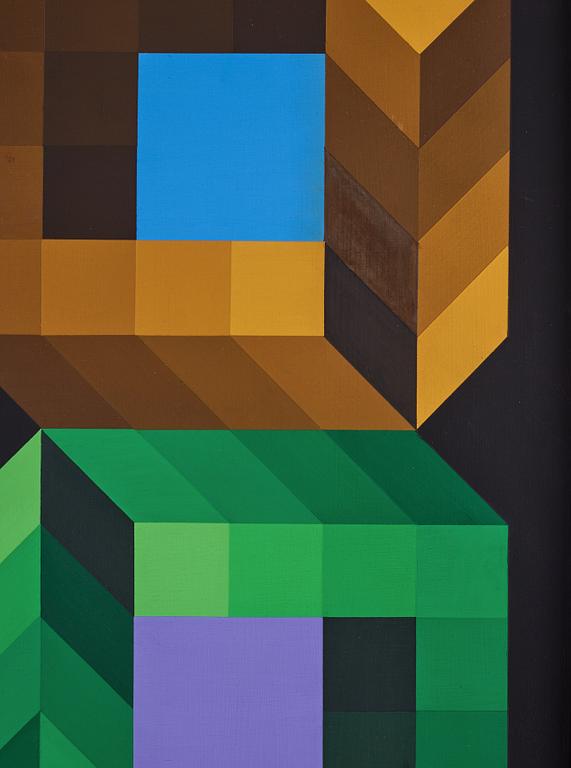
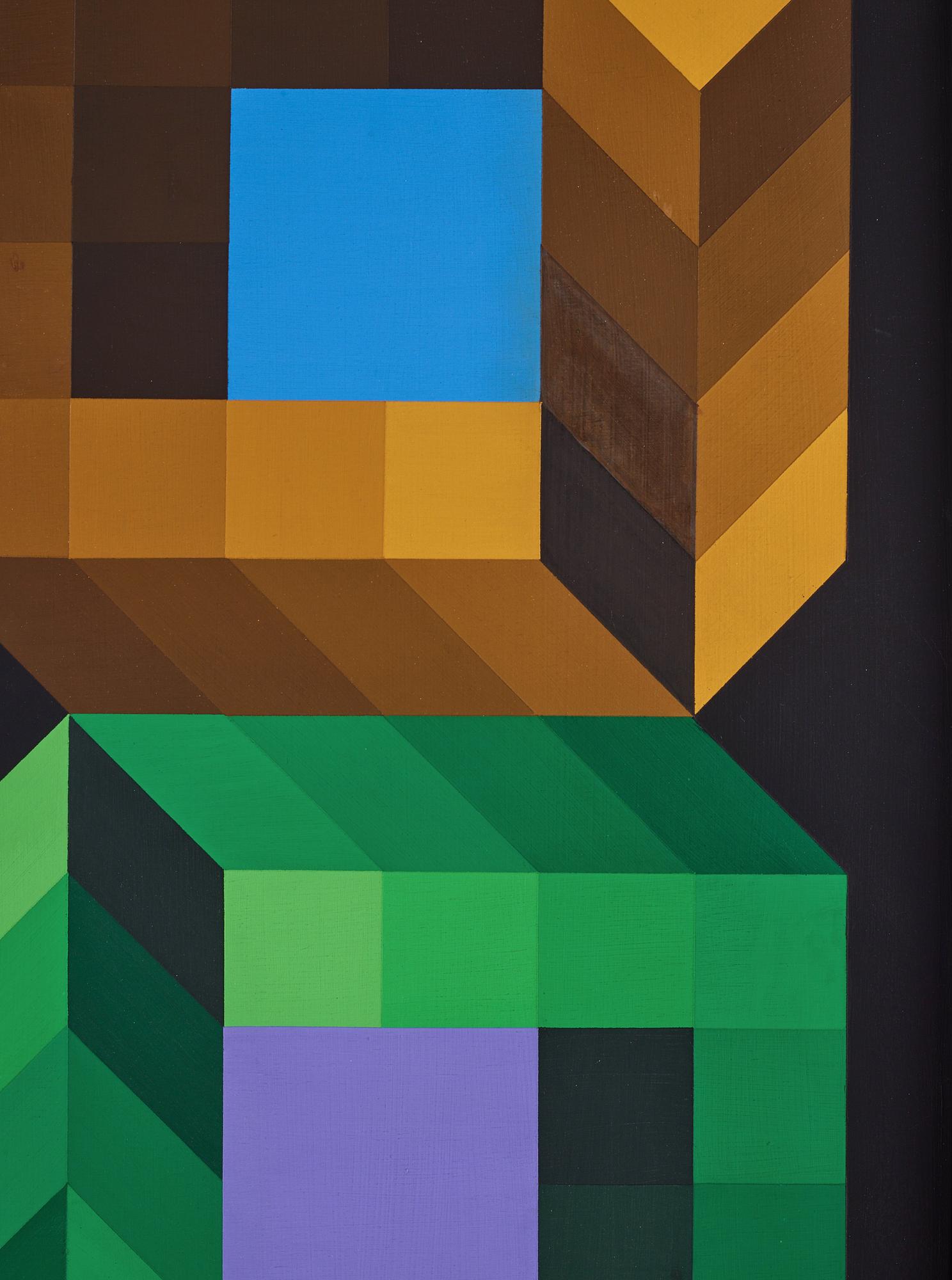
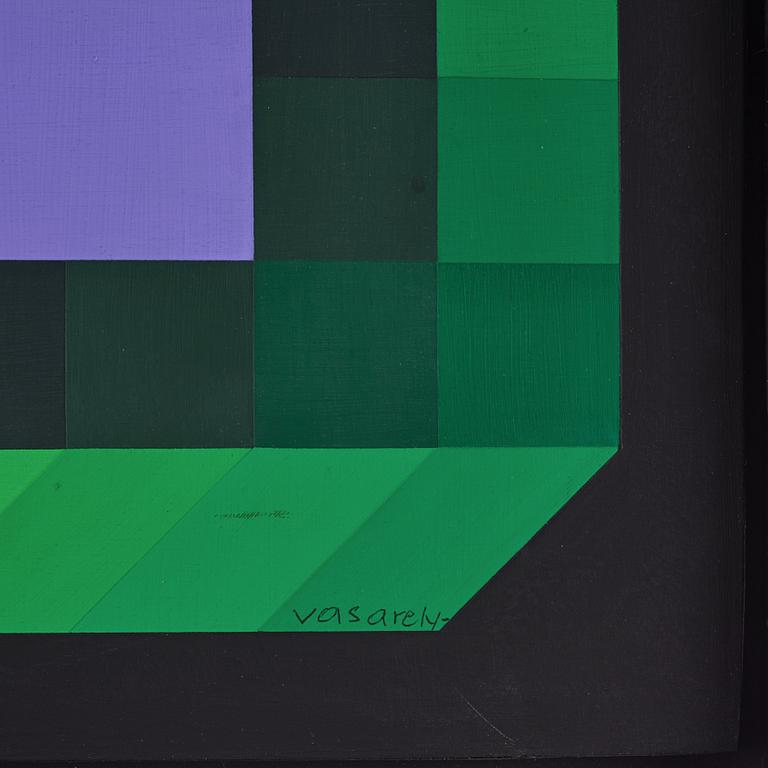
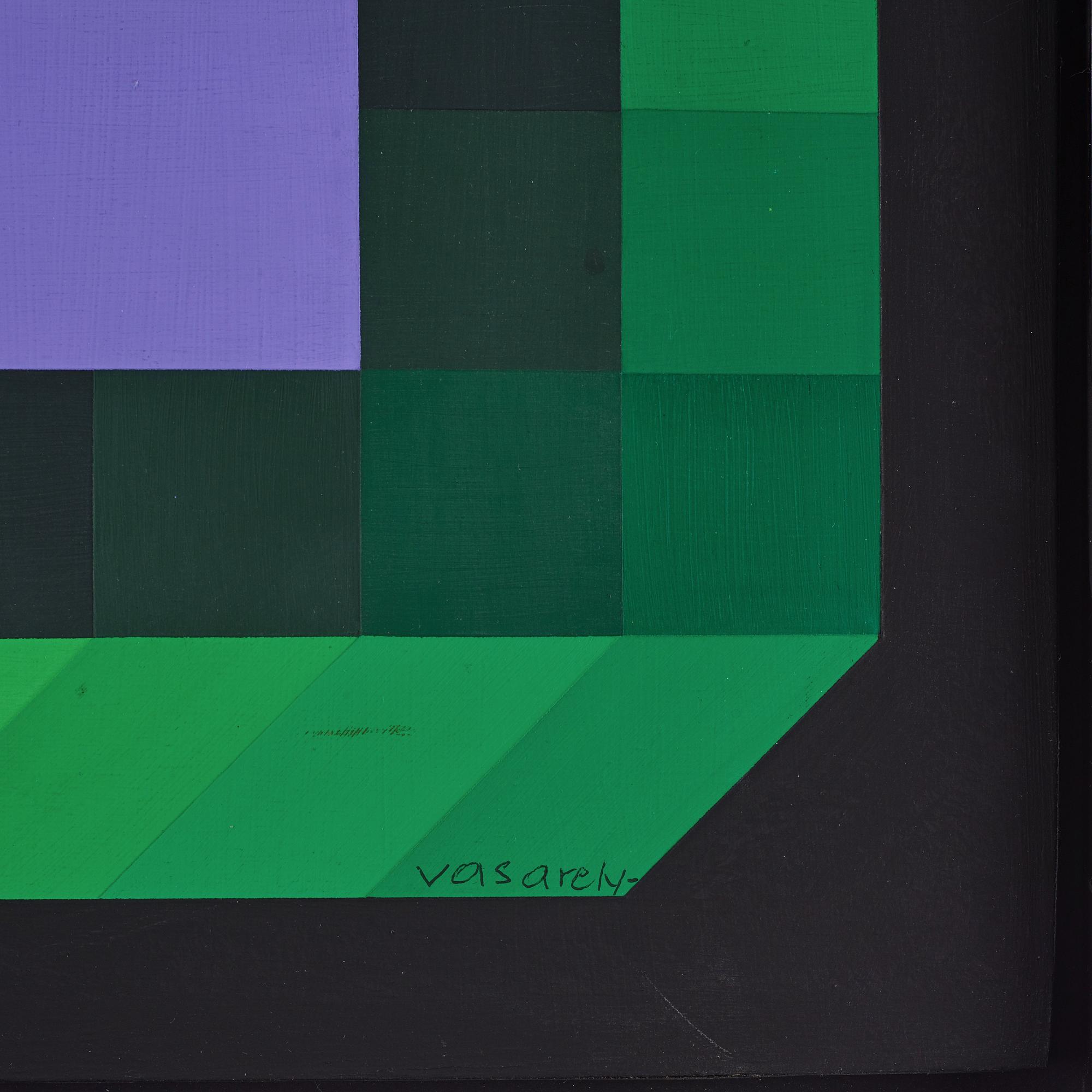
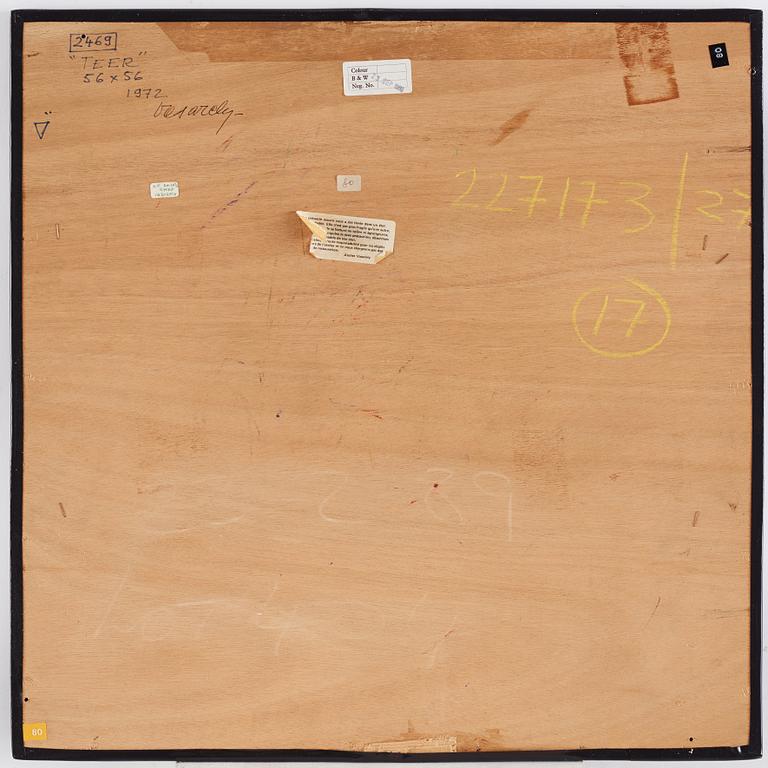
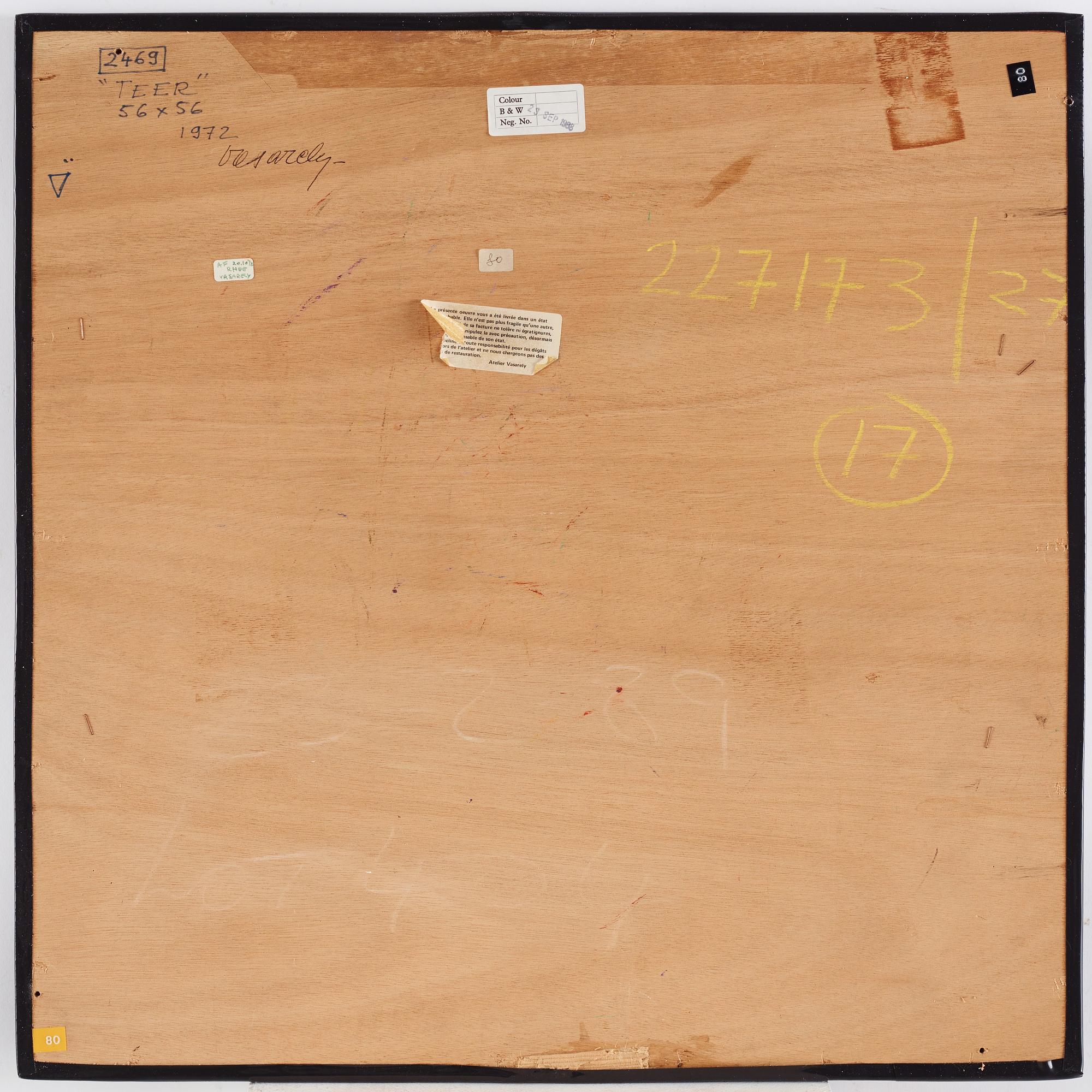
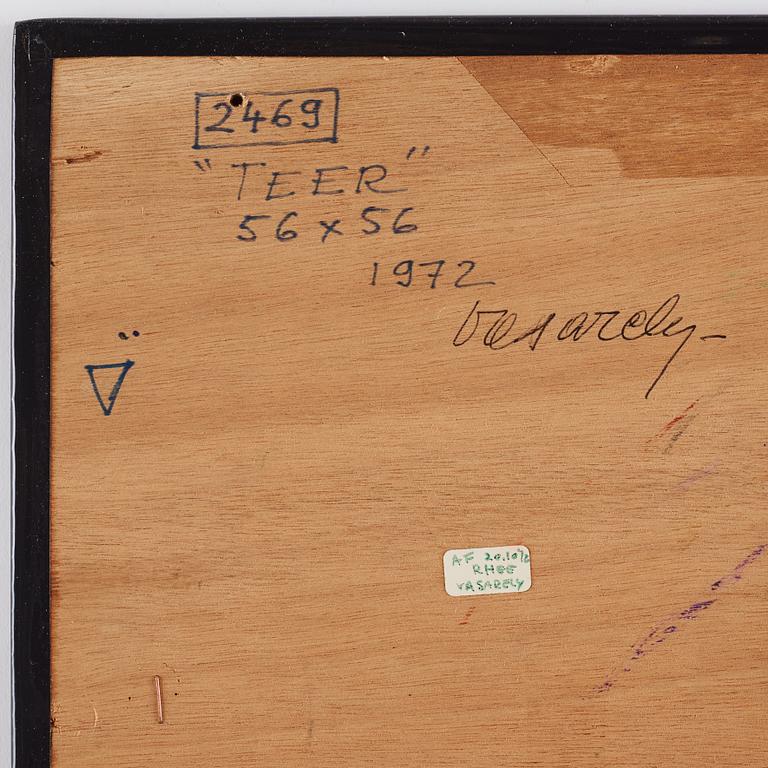
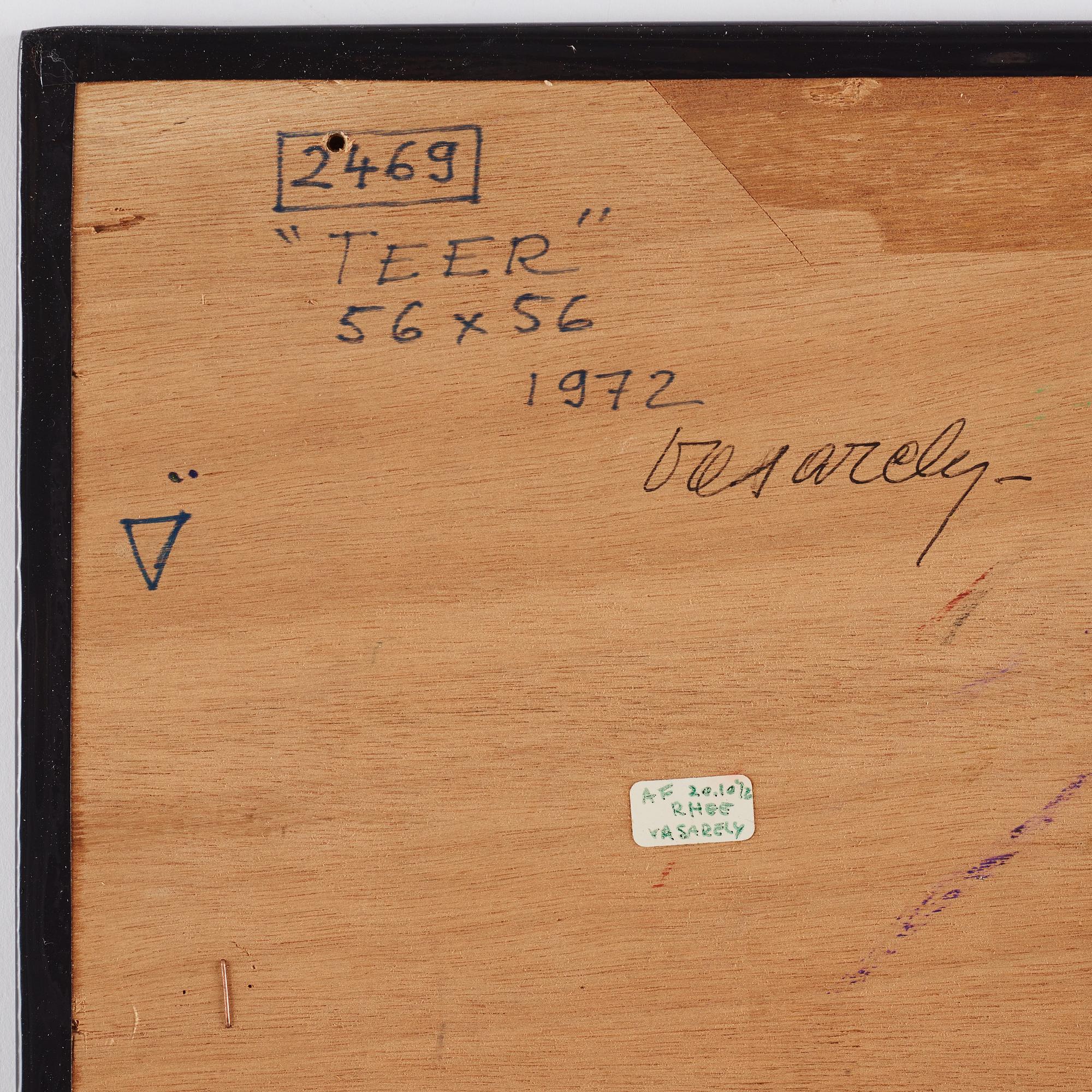
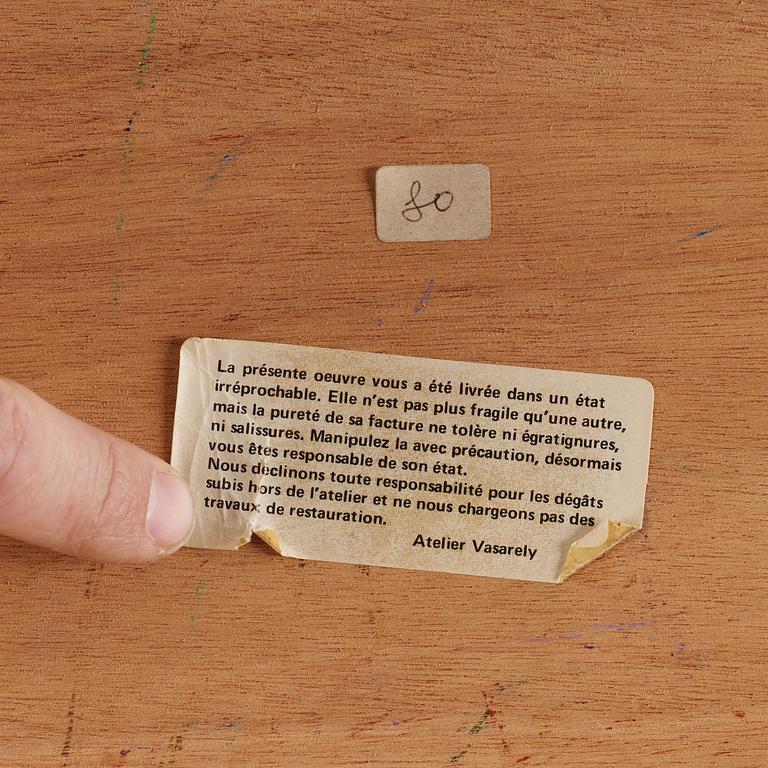
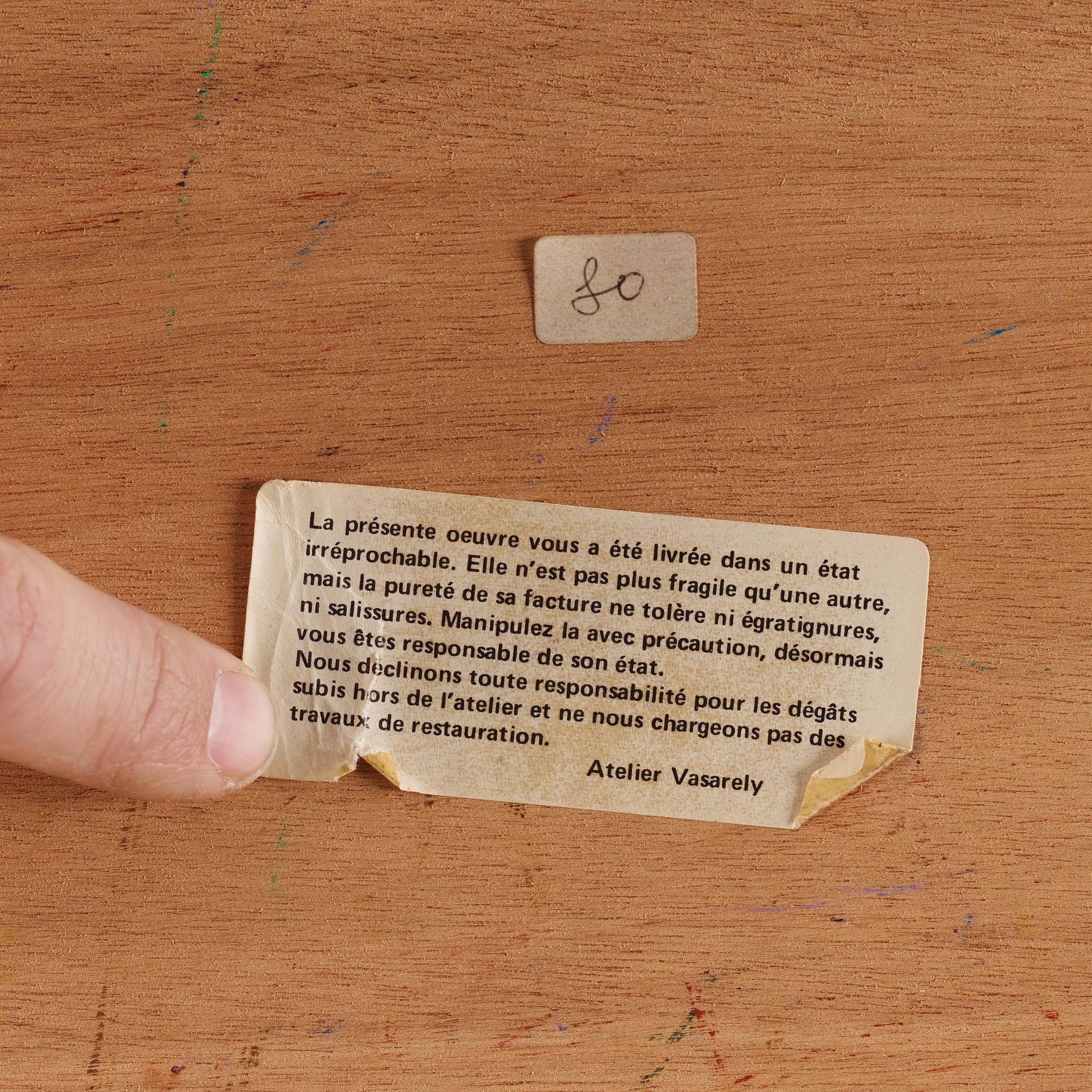
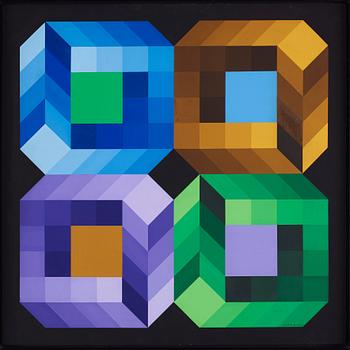
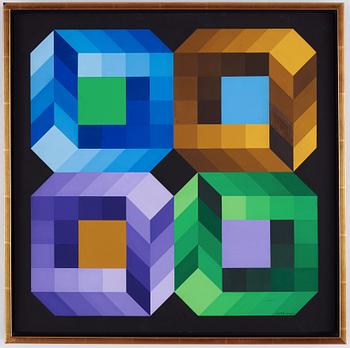
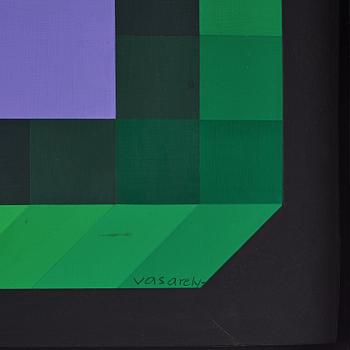
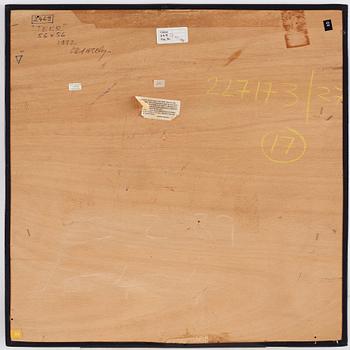
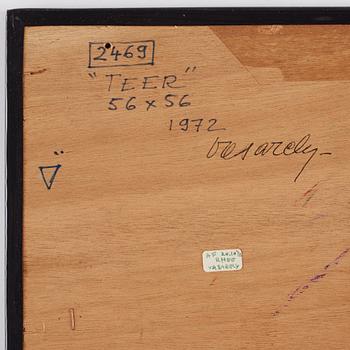
Signed Vasarely and verso signed and dated 1972. Numbered 2469. Acrylic on panel 56 x 56 cm. We thank Pierre Vasarely for the information about this work.
Muut tiedot
Victor Vasarely's artistic practice is today more relevant than ever. The visual effects he created with his painting in the mid-20th century anticipated the aesthetics of today's computer games and digital art. The strong colours, the undulating geometric compositions, as well as his high-contrast paintings are experienced today as timeless.
Vasarely is regarded as one of the most influential artists of the 20th century and is widely considered the father of Op Art. Born in Hungary in 1906 and later active in France, he developed an artistic practice that unites science, perception, and aesthetics. Educated by László Moholy-Nagy, he came into contact with the works of Kandinsky, Gropius, Le Corbusier, and Mondrian, as well as the functionalism of the Bauhaus, which also made a strong impression on him.
Vasarely developed his own form of geometric abstraction that he varied infinitely, thereby creating different optical patterns with kinetic effects. He believed that colour and form were inseparable, and geometric shapes were arranged in fluorescent colours in such a way that the eye perceived a fluctuating movement. Vasarely himself summarised this approach with the words: "Every form is the basis for a colour, every colour is an attribute of a form." In this way, forms from nature were transformed into purely abstract elements in his paintings.
The painting Teer from 1972 is a characteristic example of Vasarely's sense of balance and rhythm, where his visual language has reached a high degree of clarity and precision. During this time, he systematically worked with modular units—often geometric shapes such as squares or rhombuses—organised in rigorous grids. Through subtle variations in colour and form, an illusion of depth, vibration, and movement is created, despite the work's two-dimensional surface. His works challenge the viewer's sense of sight through optical illusions, rhythmic patterns, and a consistent exploration of form and colour.
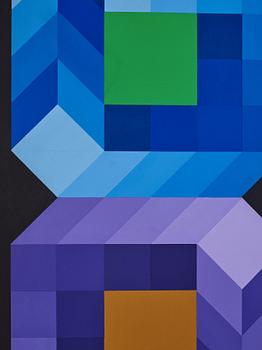
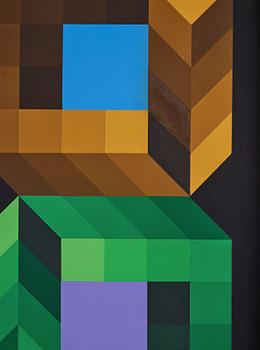
In Teer, a pulsating field emerges where colour shifts and geometric displacements give rise to a dynamic optical effect. Vasarely employs his well-known method of manipulating perspective and volume through colour contrasts rather than traditional modelling. The result is an image that seems to expand and contract in front of the viewer's eyes—a visual experience that changes depending on distance and angle. Teer thus offers not only a representative insight into the central ideas of Op Art but also a timeless visual experience where the viewer becomes an active participant in the work's ever-changing expression. Teer convincingly illustrates Vasarely's lifelong exploration of the mechanisms of seeing and the potential of art to transcend the static picture plane.
Lisätietoja ja kuntoraportit

Kuuluu jälleenmyyntikorvauksen piiriin
Tietoa ostamisesta
Kuvan käyttöoikeudet
Tämän tietokannan taideteokset ovat tekijänoikeudella suojattuja, eikä niitä saa kopioida ilman oikeudenhaltijoiden lupaa. Teokset kopioidaan tässä tietokannassa Bildupphovsrättin lisenssillä.
Muiden katsomia kohteita