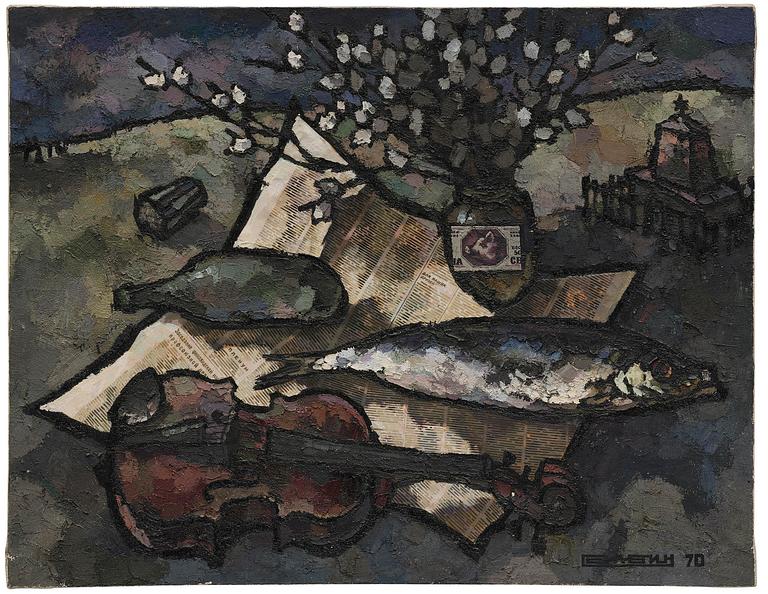
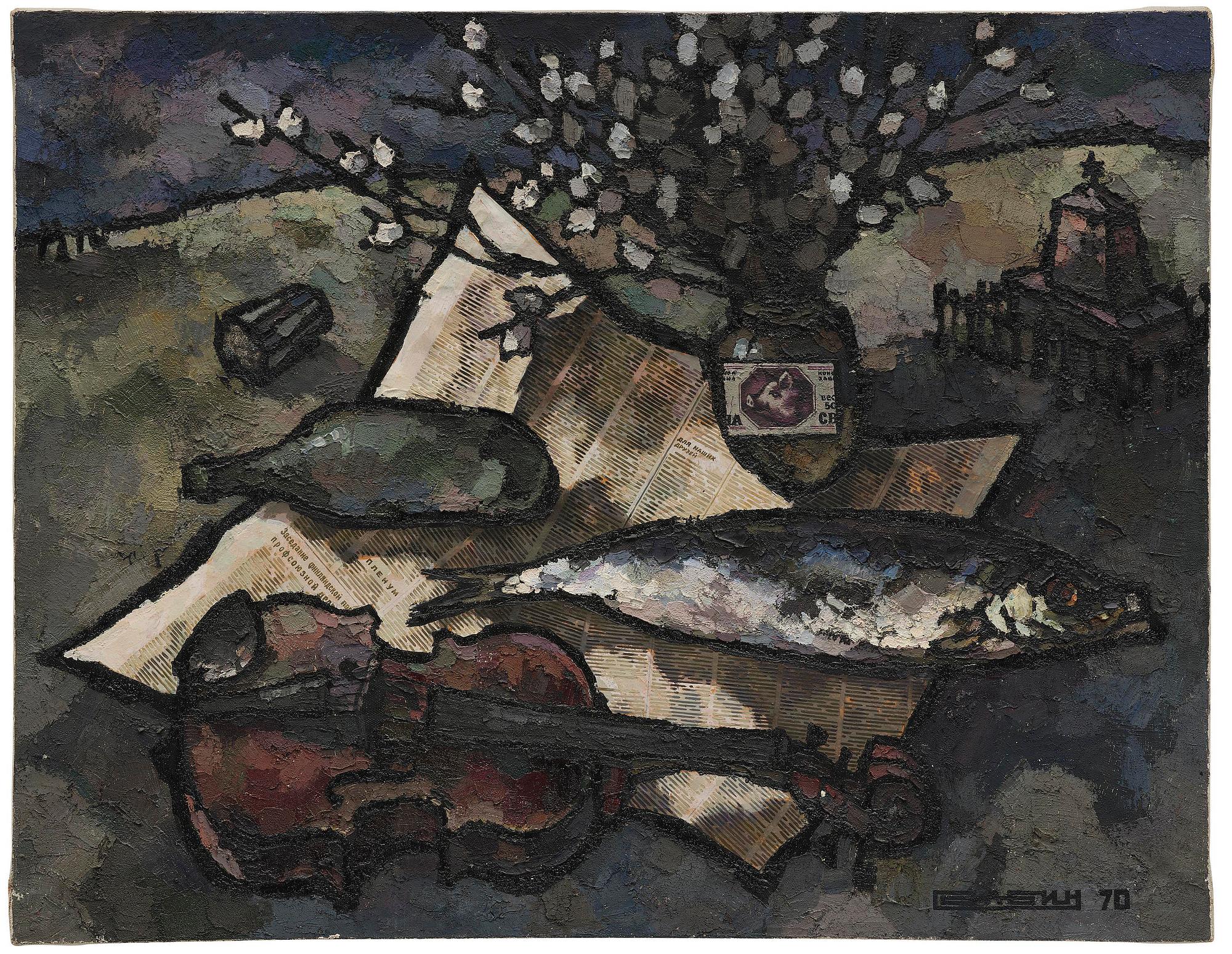
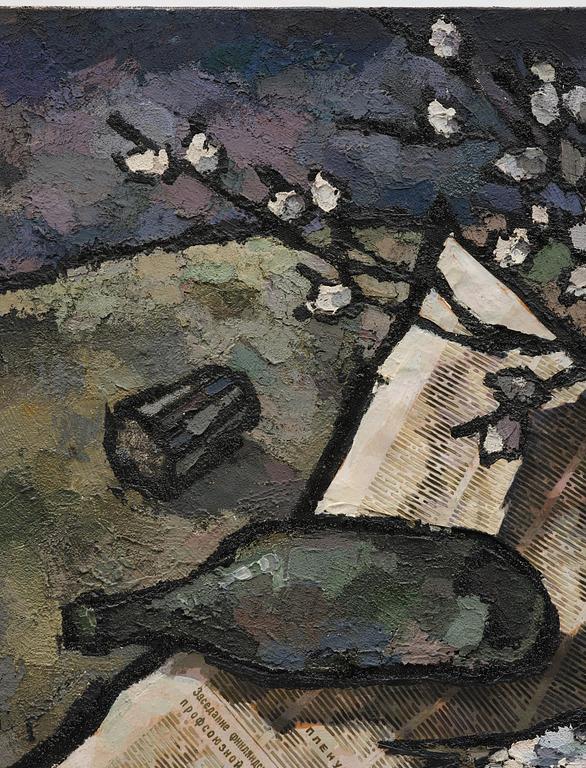
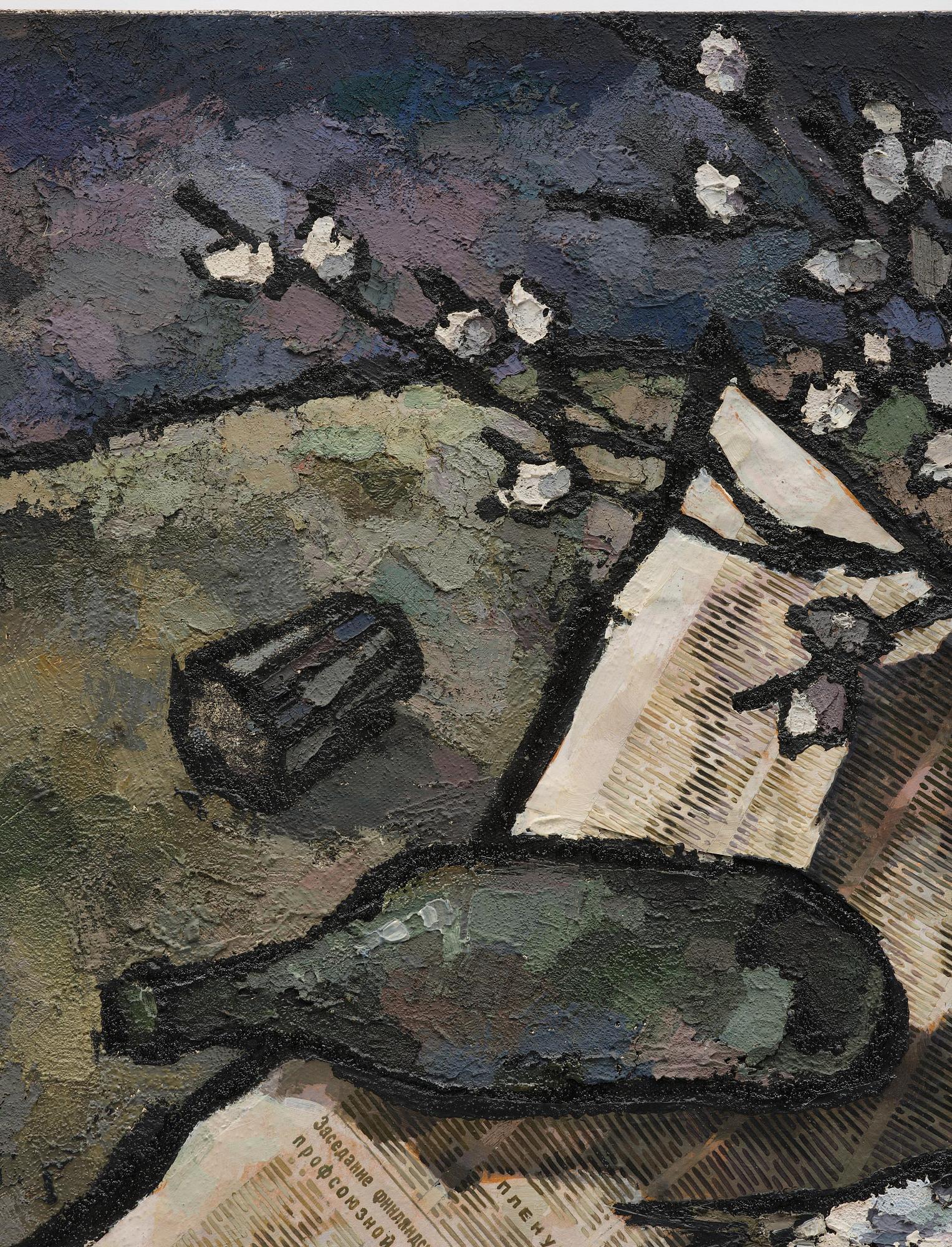
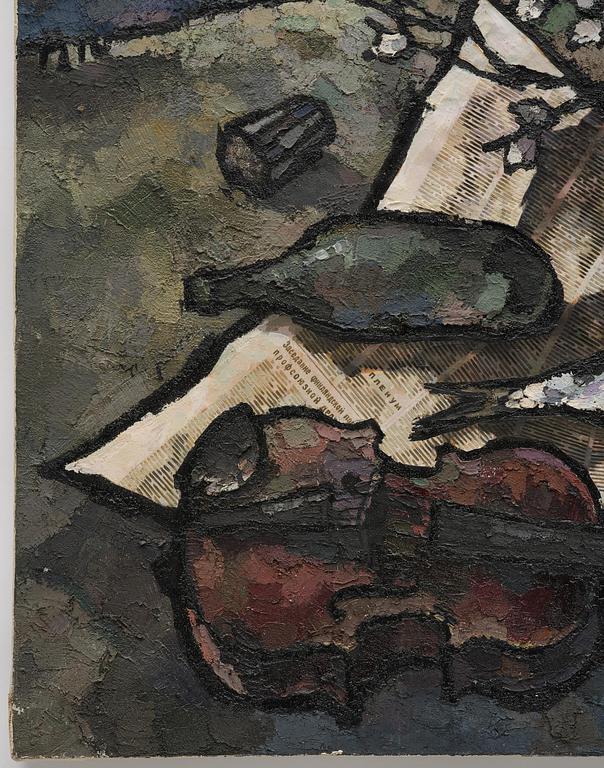
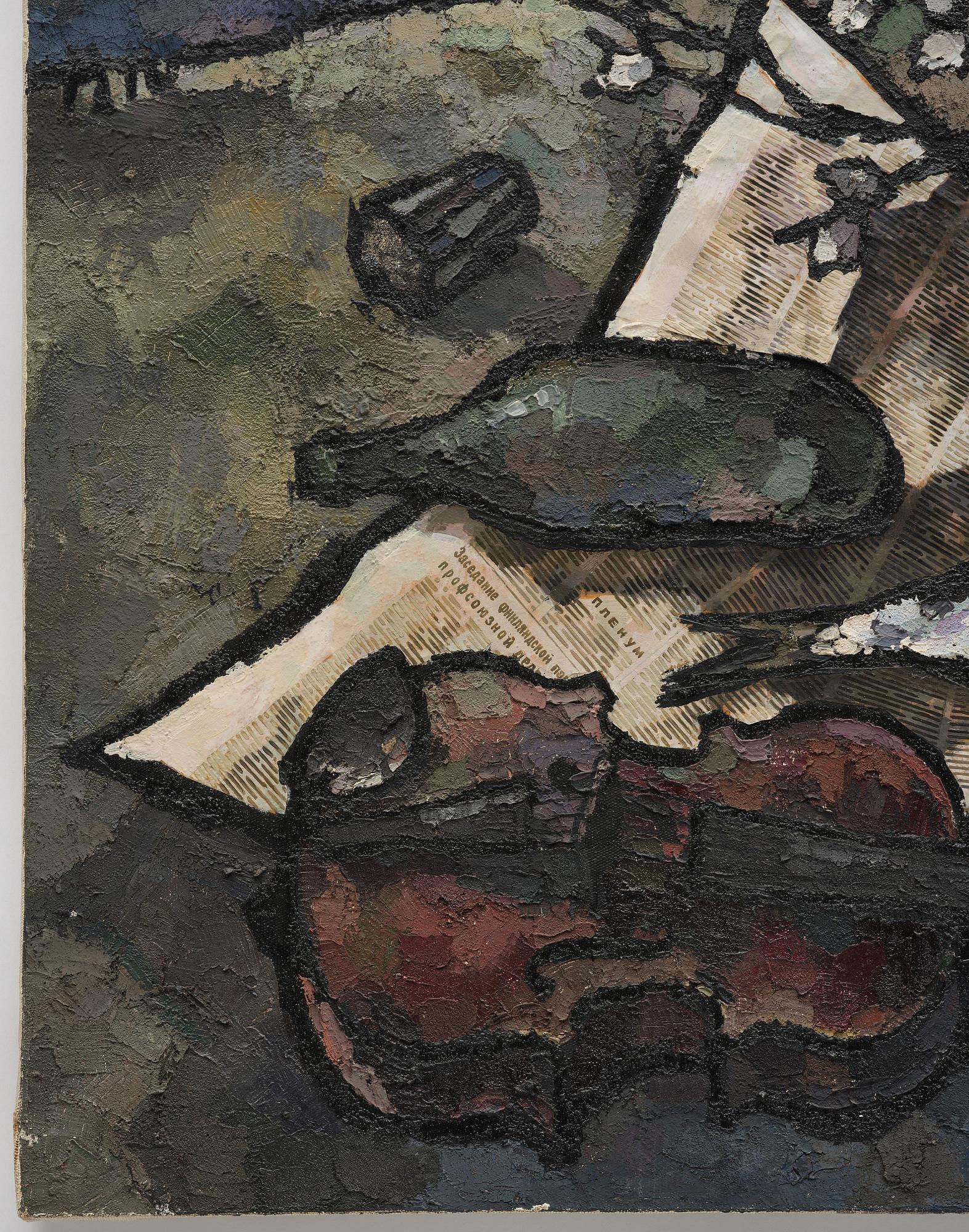
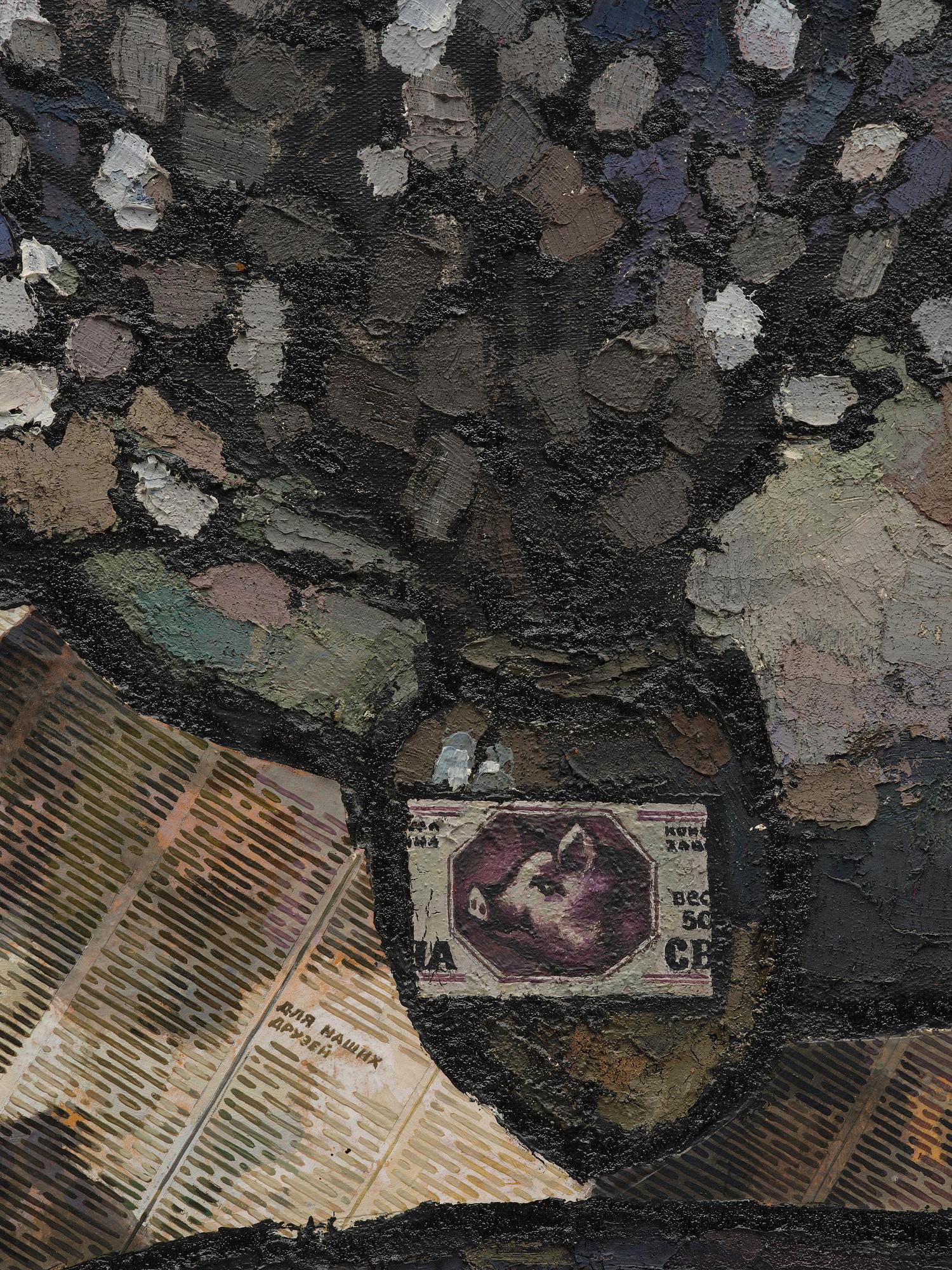
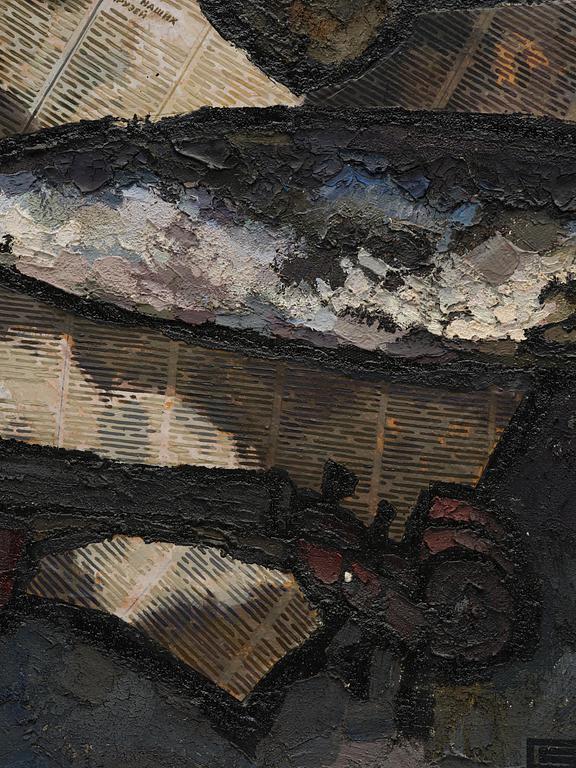
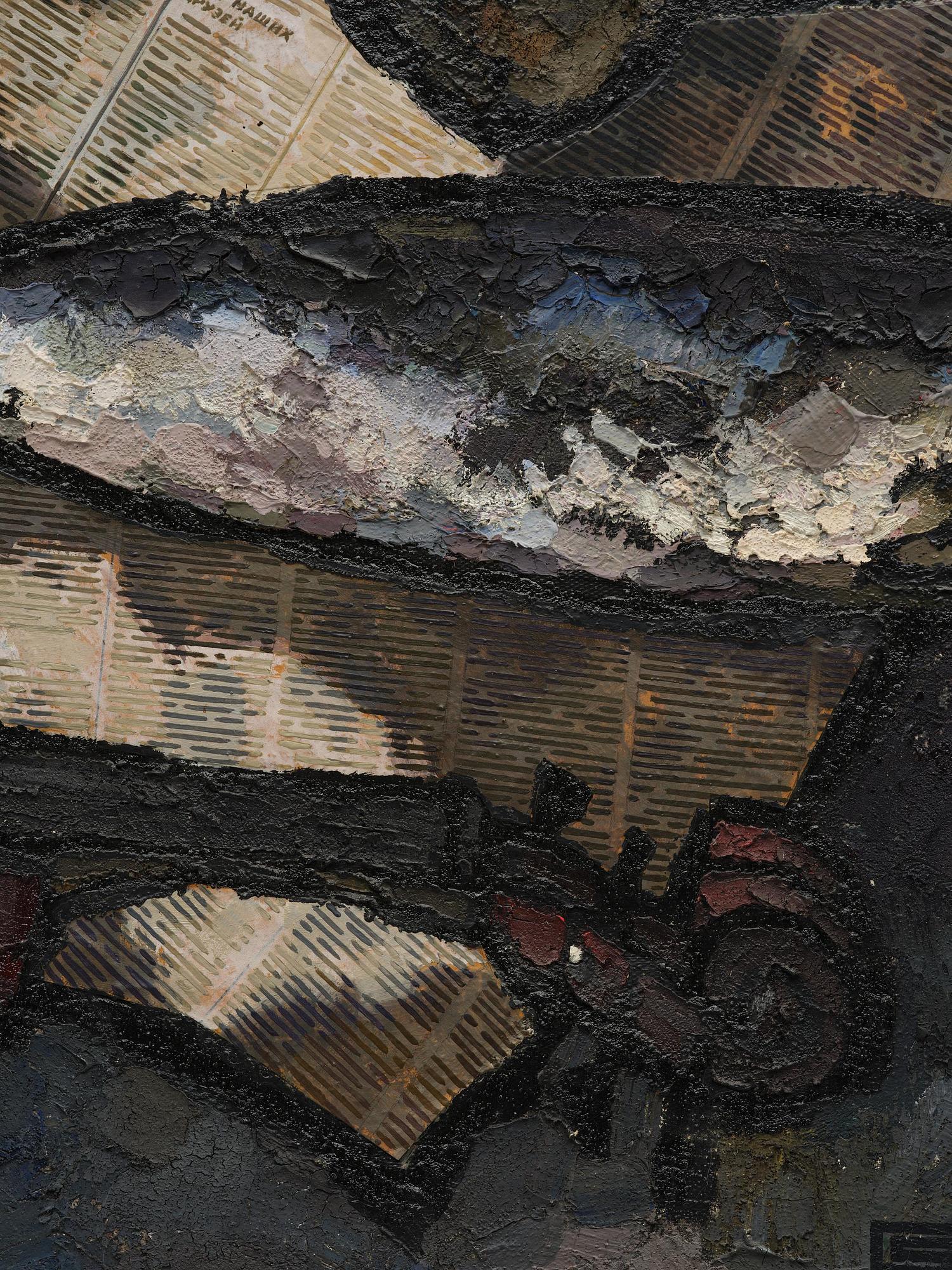
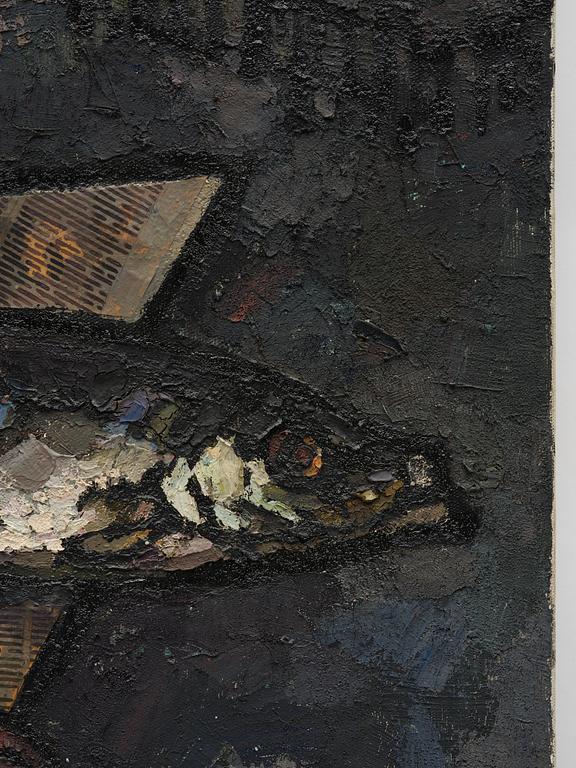
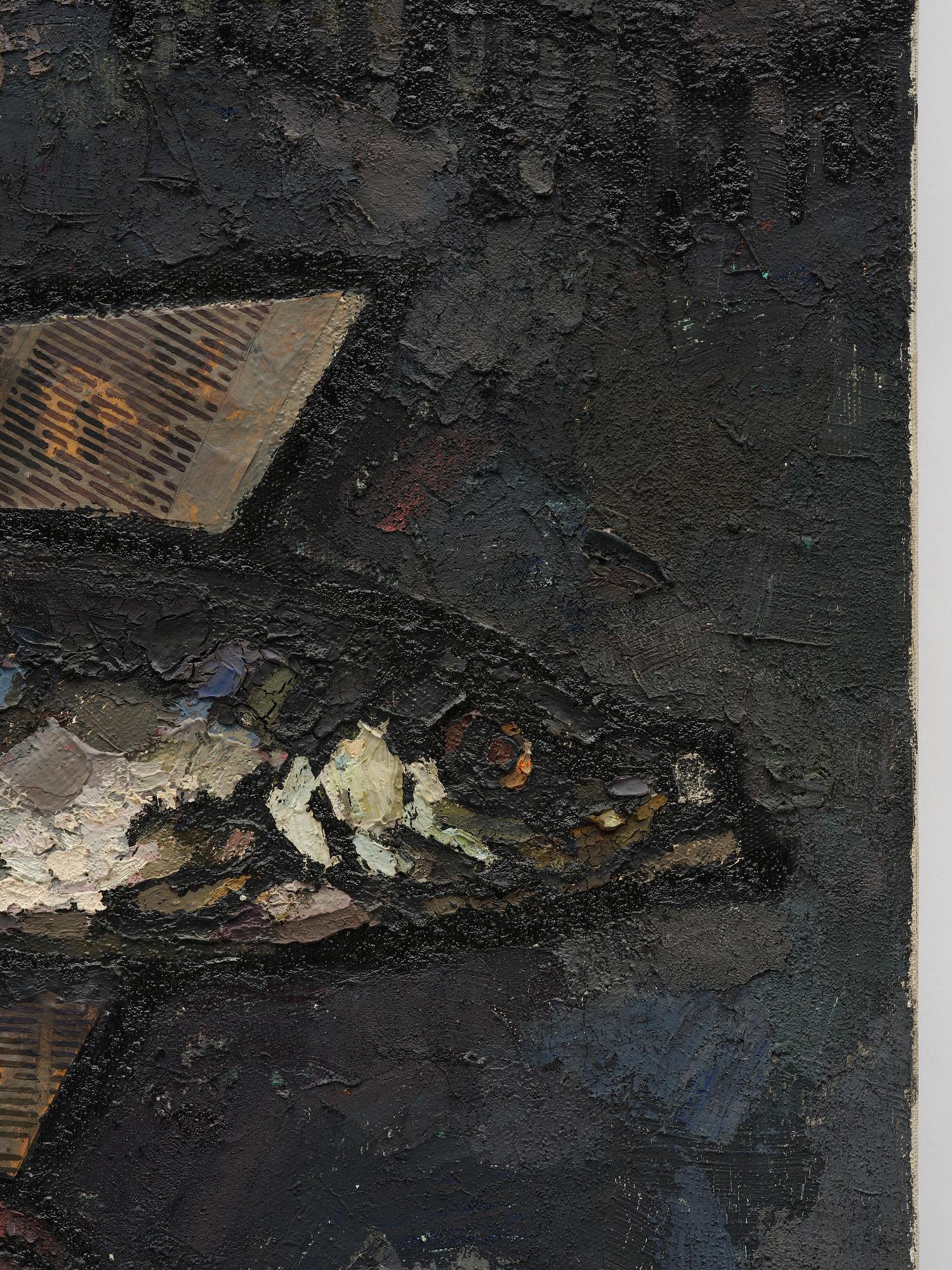
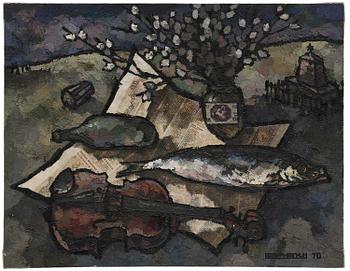
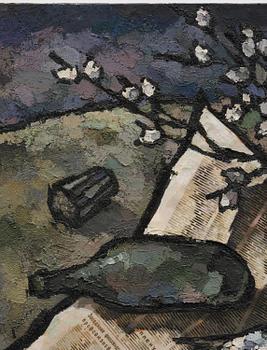
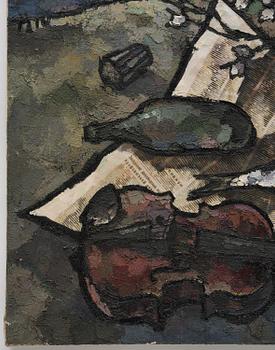
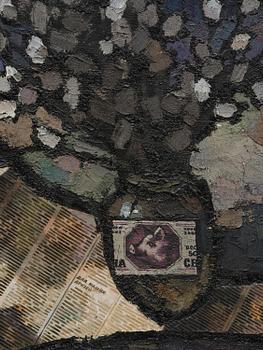
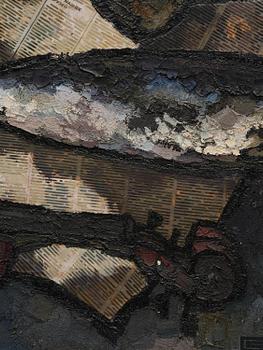
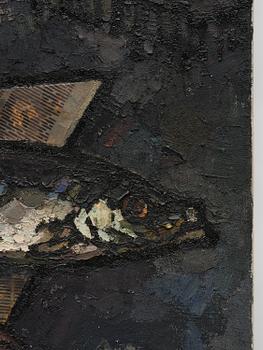
Still life with fish, vodka bottle, banknote and newspaper
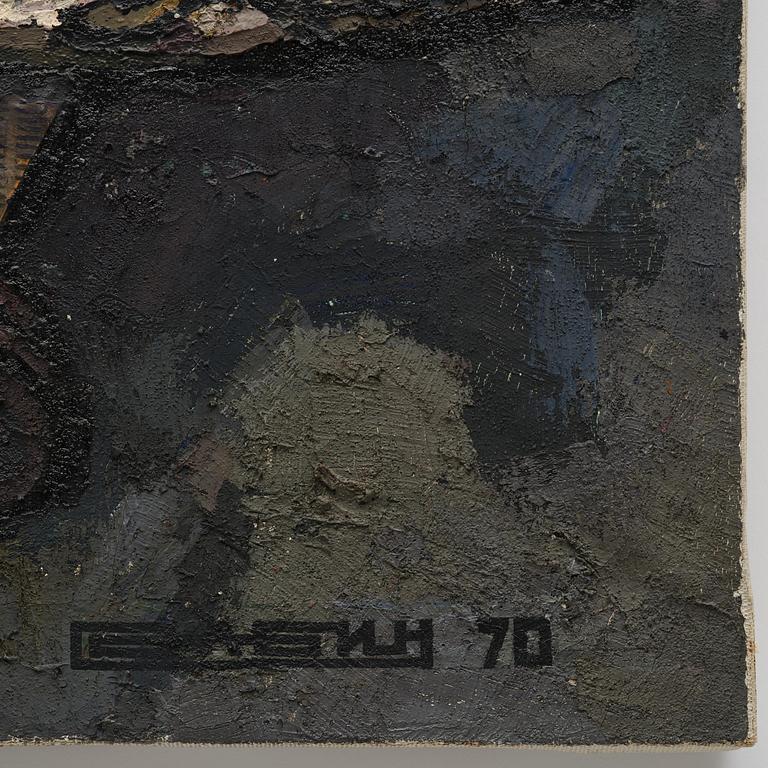
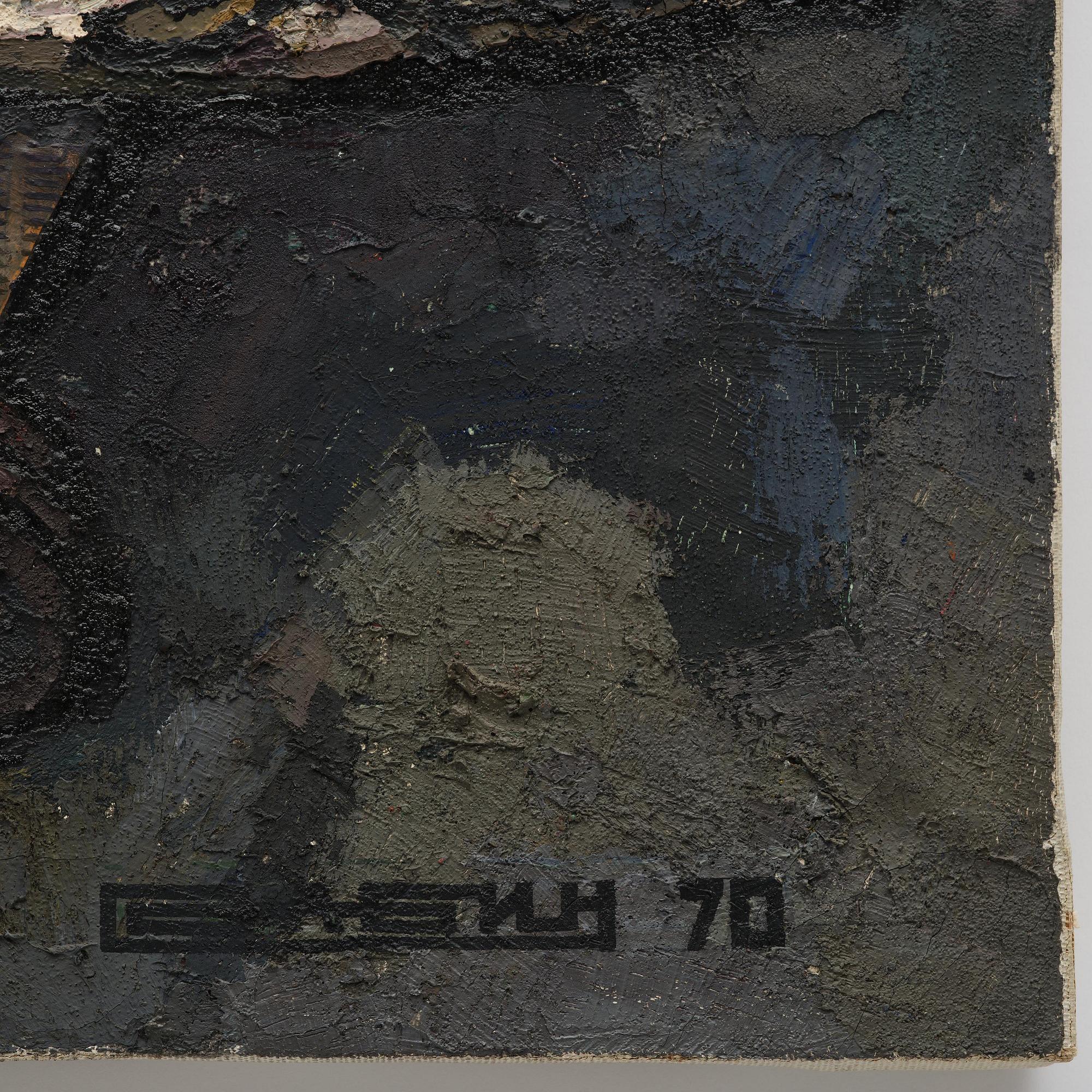
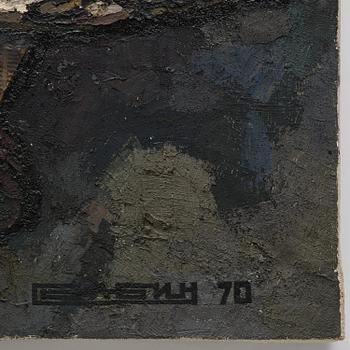
Signed in Cyrillic and dated -70. Oil and collage on canvas 69.5 x 89 cm.
Täydennyslista
Oil and collage on canvas
Alkuperä - Provenienssi
Eva and Hans Andersson Collection, acquired directly from the artist in his home in Moscow in 1970 when the Swedish diplomat Hans Andersson was stationed in Moscow.
Muut tiedot
Oskar Rabin (1928–2018) painted still lifes and landscapes, often imbuing them with wry critiques of Soviet life, but his fame rested as much on his defiance as on his artistic ability. He became a leading voice of nonconformist art in the Soviet Union. Through bleak urban landscapes, cluttered interiors, and symbols of everyday Soviet existence, Rabin conveyed a sense of alienation and quiet resistance. He was also a key organizer of independent exhibitions, most famously associated with the Bulldozer Exhibition, during which authorities violently destroyed artworks in an attempt to suppress artistic freedom. The event became a powerful symbol of resistance against censorship.
Rabin followed in the artistic footsteps of Chaïm Soutine and Marc Chagall, developing a vision of urban life in a style that balanced Expressionism and Realism. Drawing inspiration from everyday surroundings, his works include landscapes—such as the barracks in the Moscow suburb of Lianozovo—as well as still lifes featuring Marlboro cigarette packs, vodka bottles, and herrings wrapped in newspaper. These seemingly ordinary objects carried a quiet but pointed critique of Soviet rule.
One notable work from 1968, Still Life With Fish and Pravda, depicts a glass and a dead fish resting on crumpled pages of Pravda, the official Communist Party newspaper, with a fragment of a headline provocatively visible. In his 1986 memoir Three Lives, Rabin expressed mock indignation that such paintings were considered incompatible with the sanctioned artistic norms of the time. “I was reproached for my still lifes, for vodka bottles, and for a herring sitting on a newspaper,” he wrote. “But haven’t you ever drunk vodka with a herring? At all the feasts, including the official ones, one drinks vodka.”
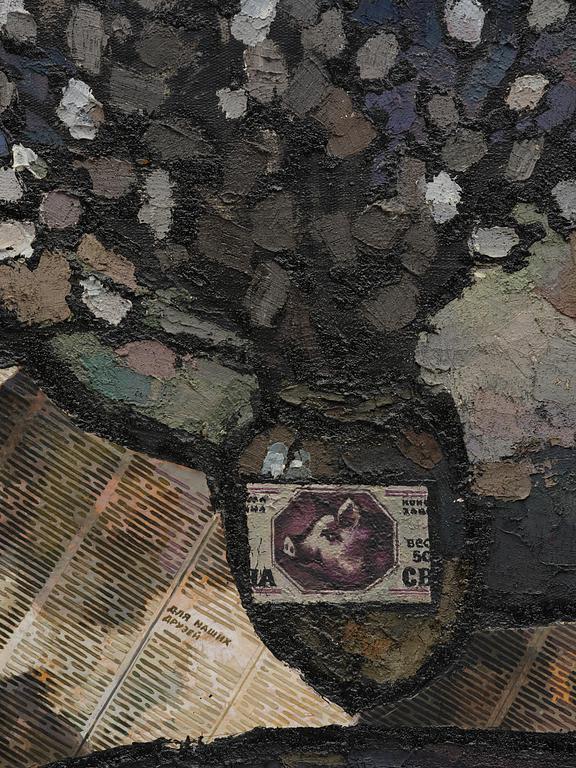
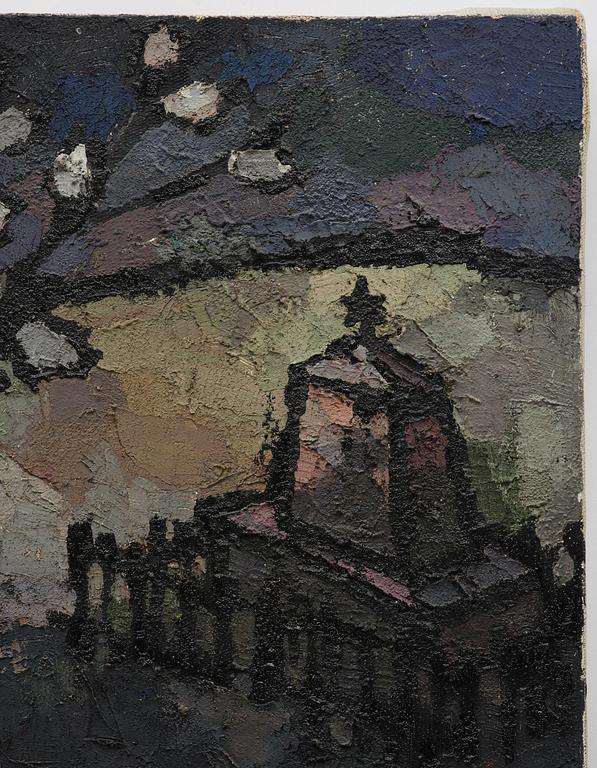
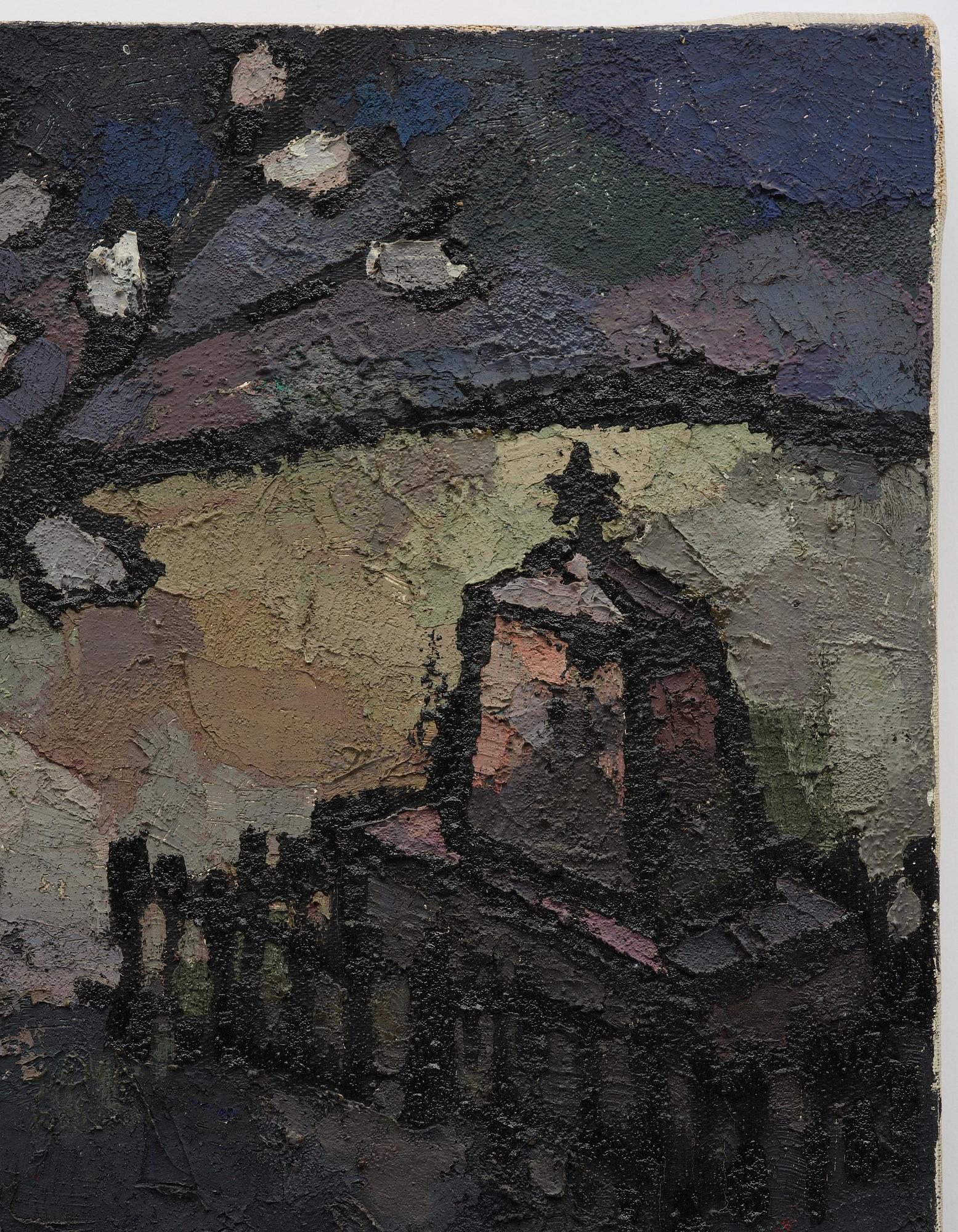
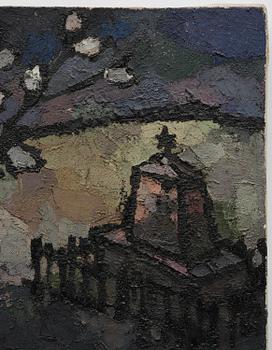
The painting in this auction, created in 1970, is a work imbued with unusually powerful symbols. In addition to the recurring motifs of the fish, the bottle and the newspaper, there is a church in the background and, provocatively enough, it is a pig’s head that adorns the Central Bank’s banknote.
Such elicit works, combined with his outspoken nature, made Rabin a prominent figure among nonconformist artists. His paintings, often expressionistic and decidedly unheroic, stood in stark contrast to the ideals of official Soviet art. In 1978, authorities encouraged him to travel to Paris; while he was there, they stripped him of his Soviet citizenship. Rabin remained in Paris for the rest of his life, even as he later gained recognition in Russia following the collapse of the Soviet Union.
Together with his wife, the artist Valentina Kropivnitskaya, Rabin contributed to a cultural movement that valued personal expression above ideological conformity. Despite censorship, harassment and, ultimately, exile, their legacy lived on as a testament to artistic courage.
In 1990, Mikhail Gorbachev restored Rabin’s citizenship. Since then, his works have been widely exhibited both in Russia and internationally. Today, his paintings are held in numerous museum collections and have been sold at major auction houses, cementing his legacy as a central figure in the history of nonconformist Soviet art.
Lisätietoja ja kuntoraportit
Kuuluu jälleenmyyntikorvauksen piiriin
Tietoa ostamisesta
Kuvan käyttöoikeudet
Tämän tietokannan taideteokset ovat tekijänoikeudella suojattuja, eikä niitä saa kopioida ilman oikeudenhaltijoiden lupaa. Teokset kopioidaan tässä tietokannassa Bildupphovsrättin lisenssillä.
Muiden katsomia kohteita