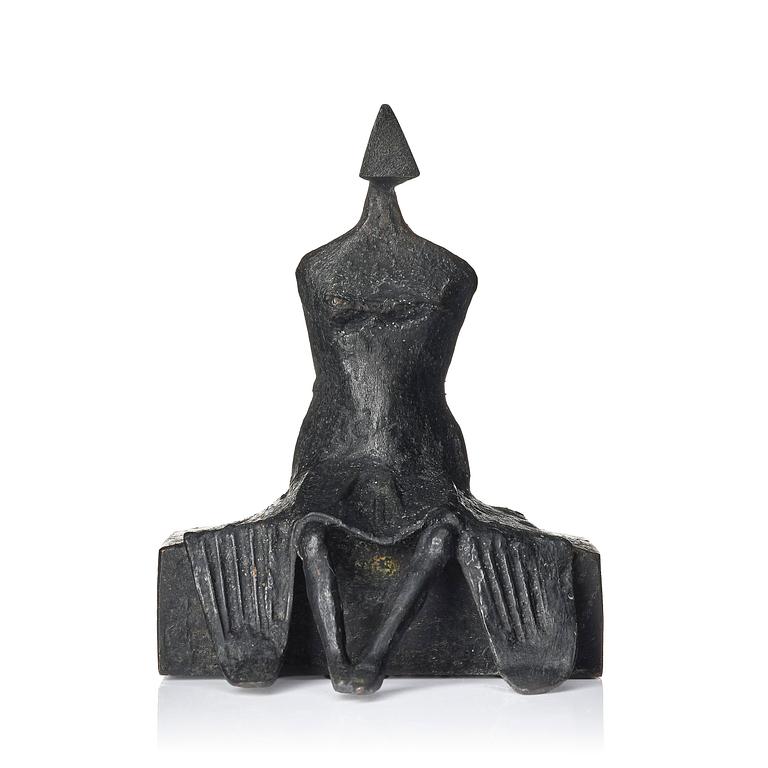
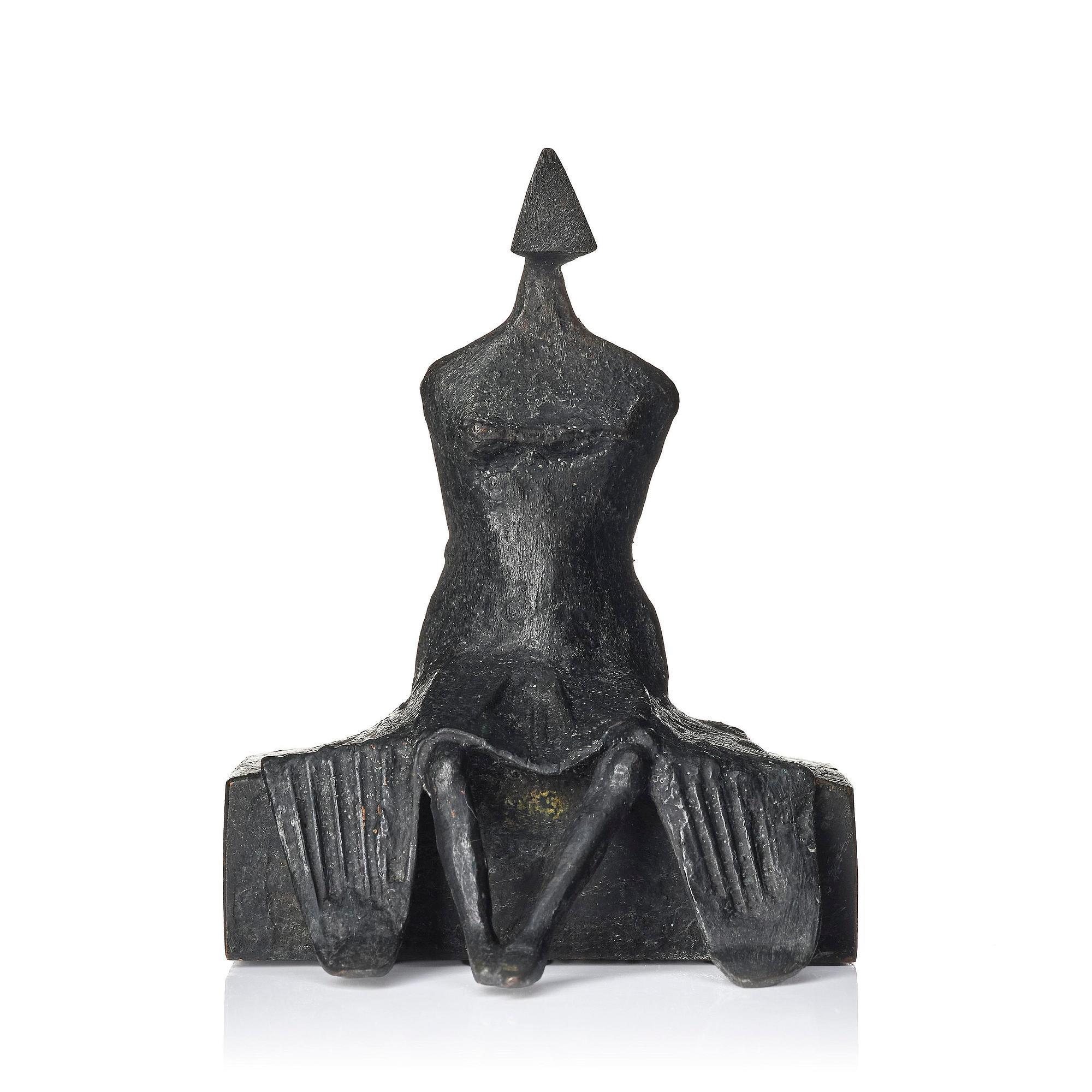
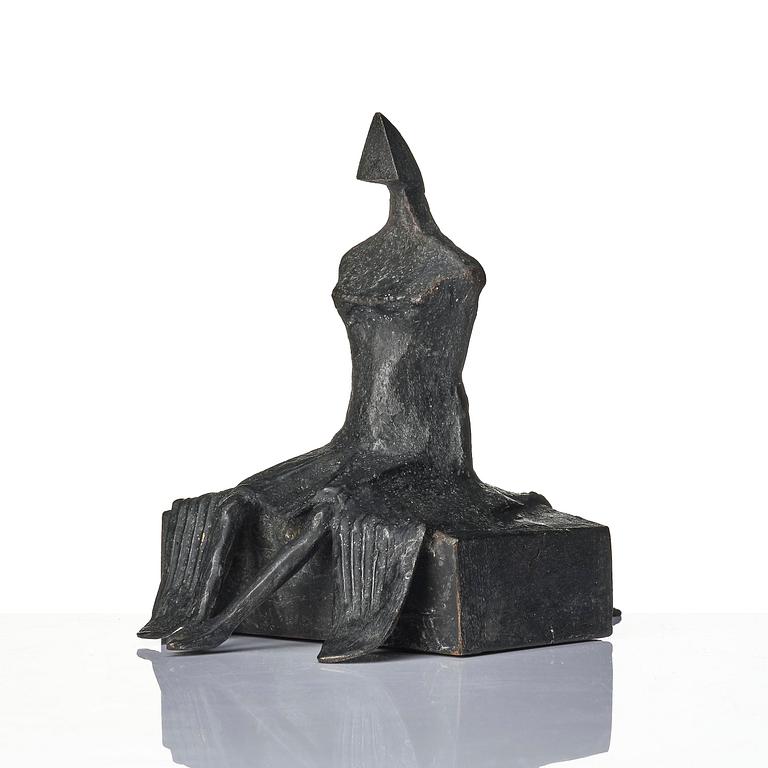
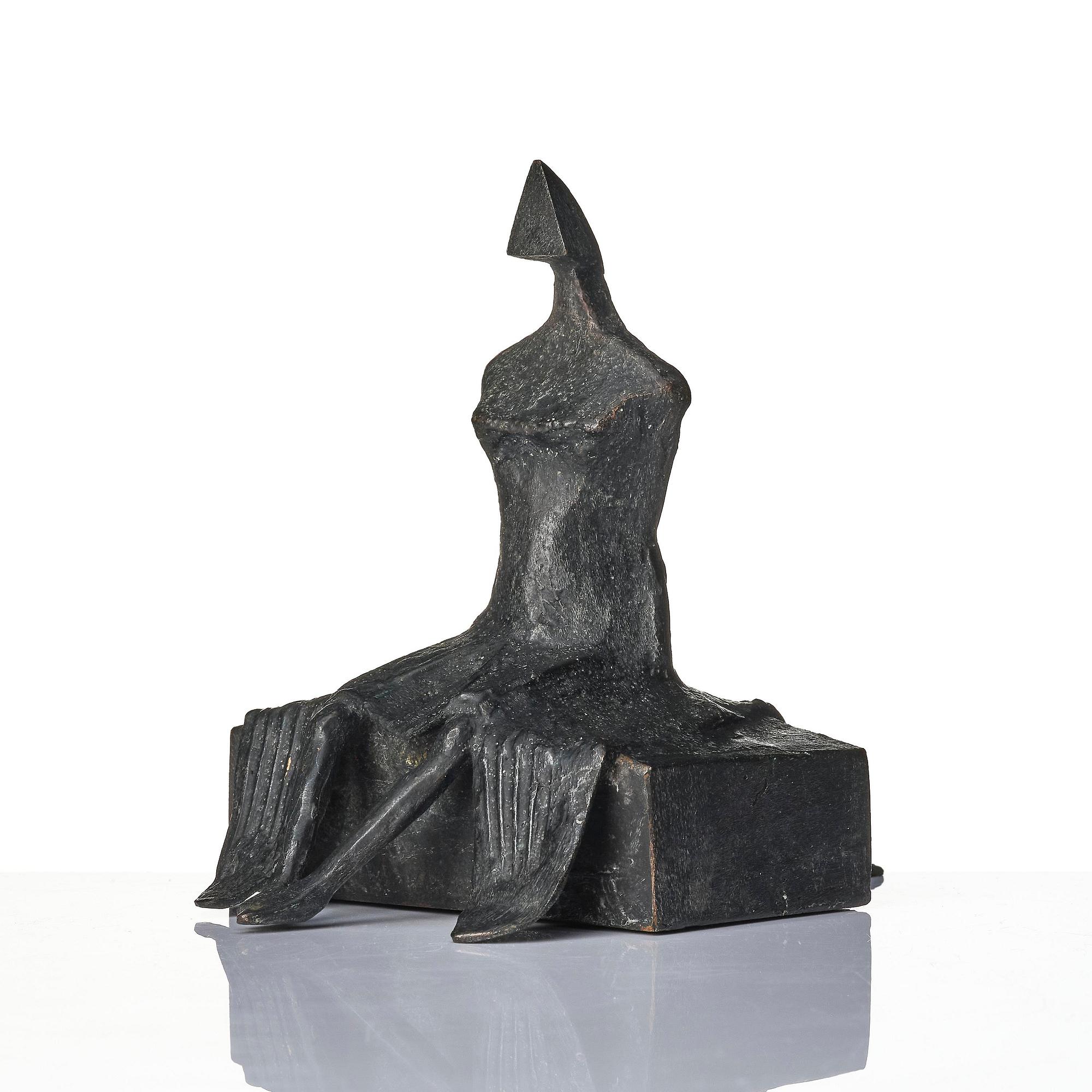
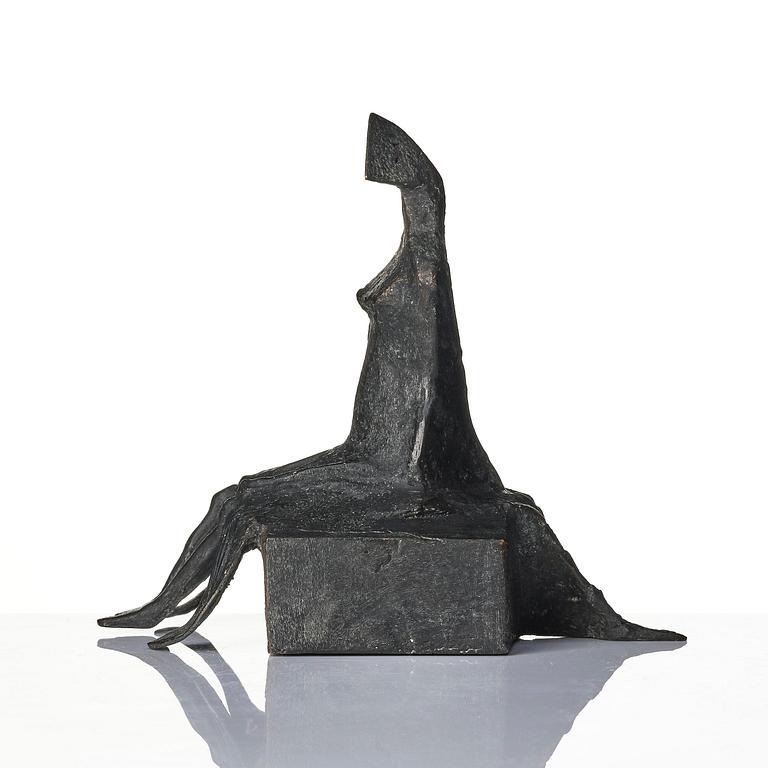
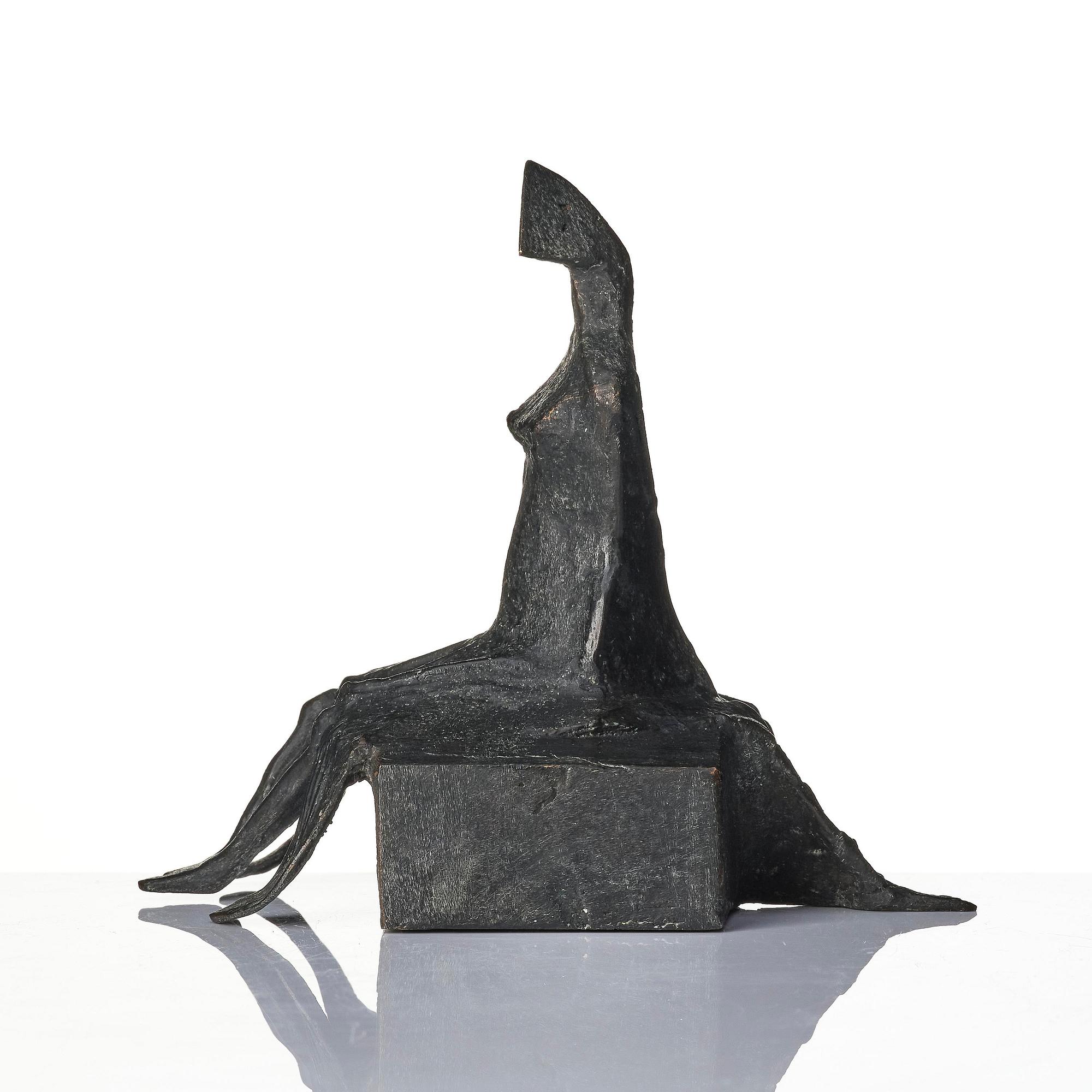
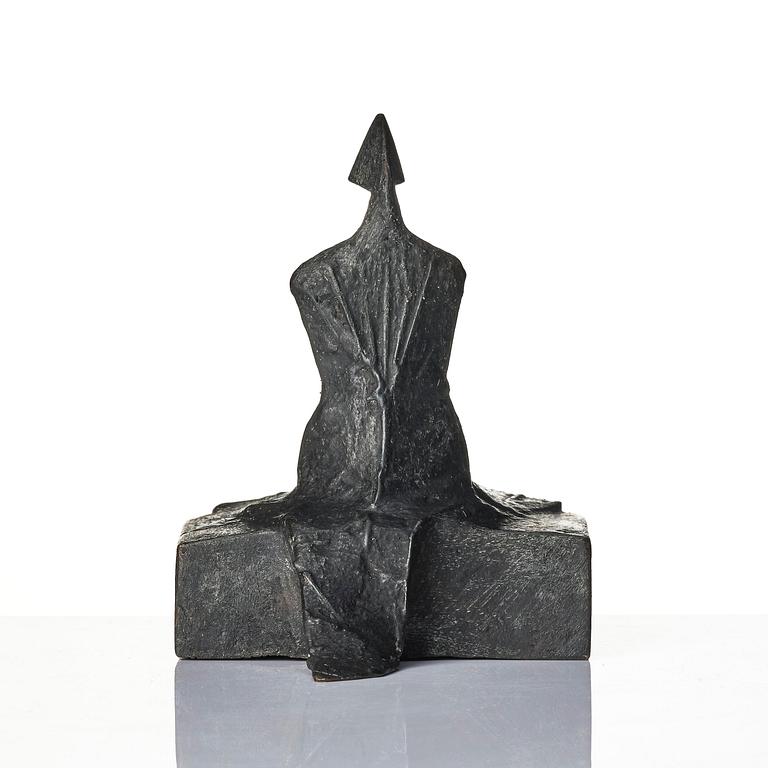
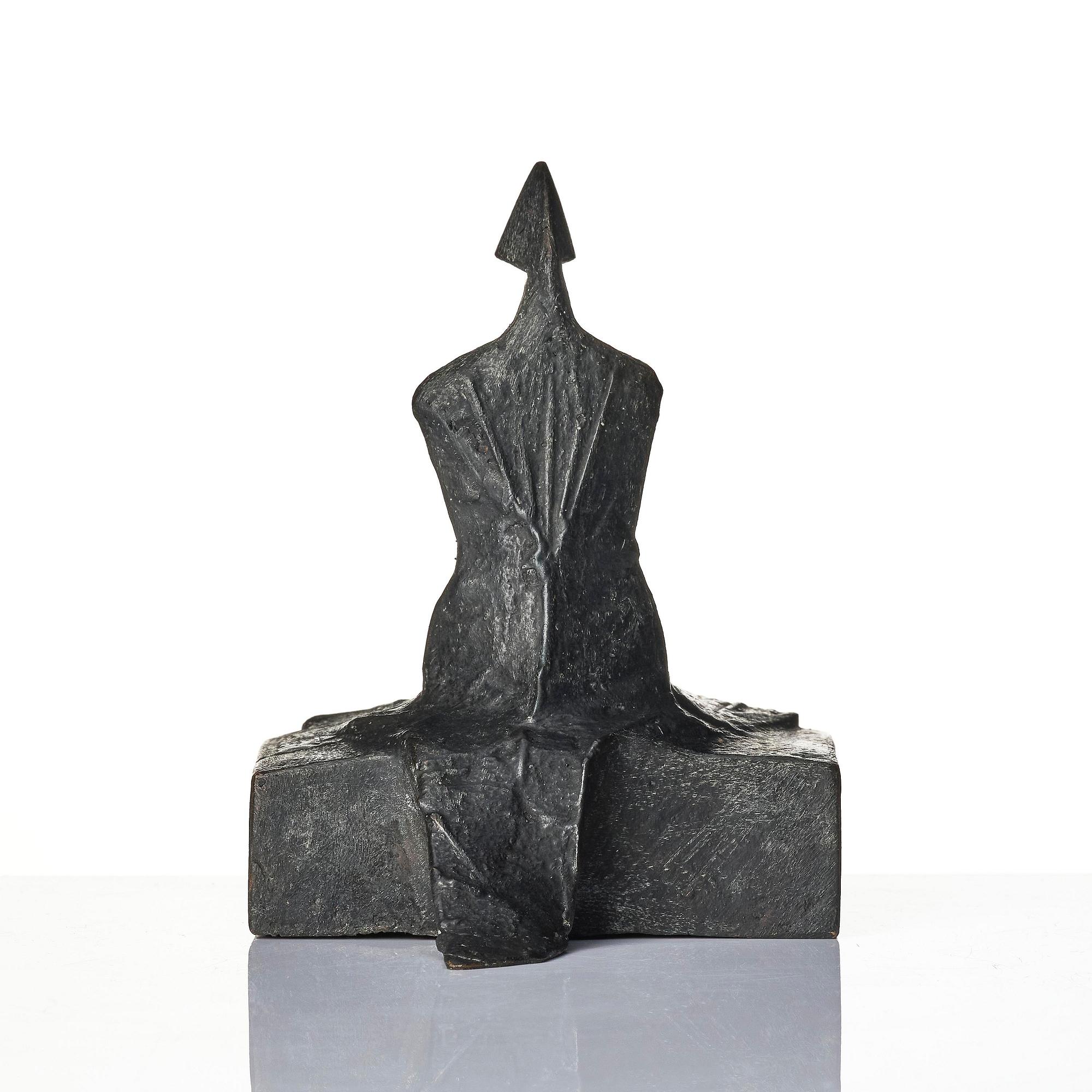
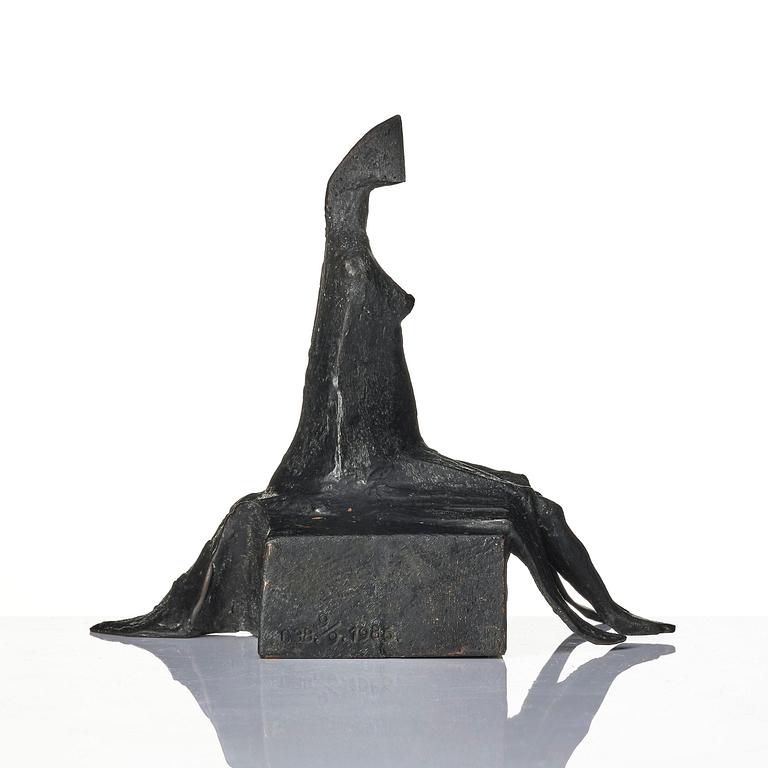
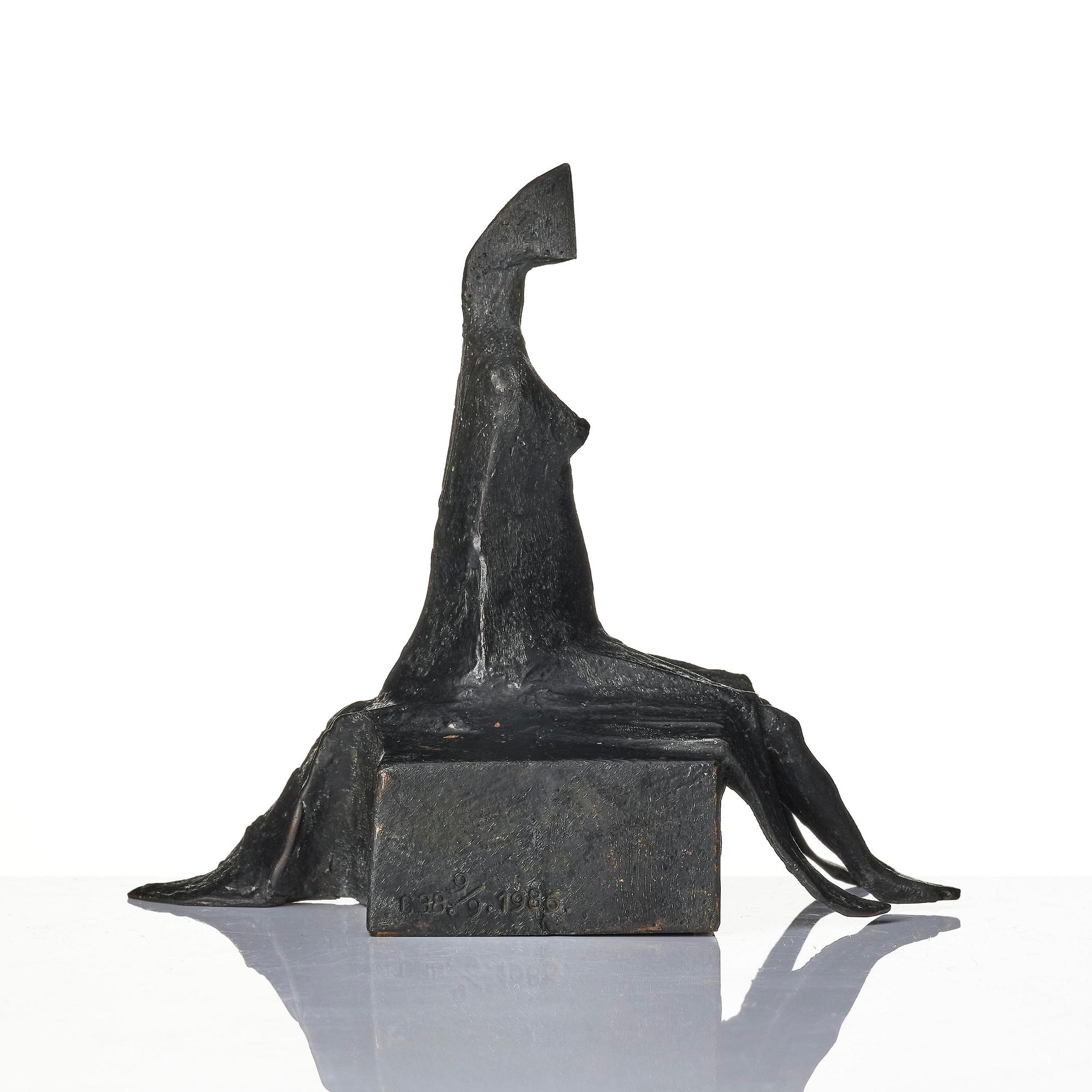
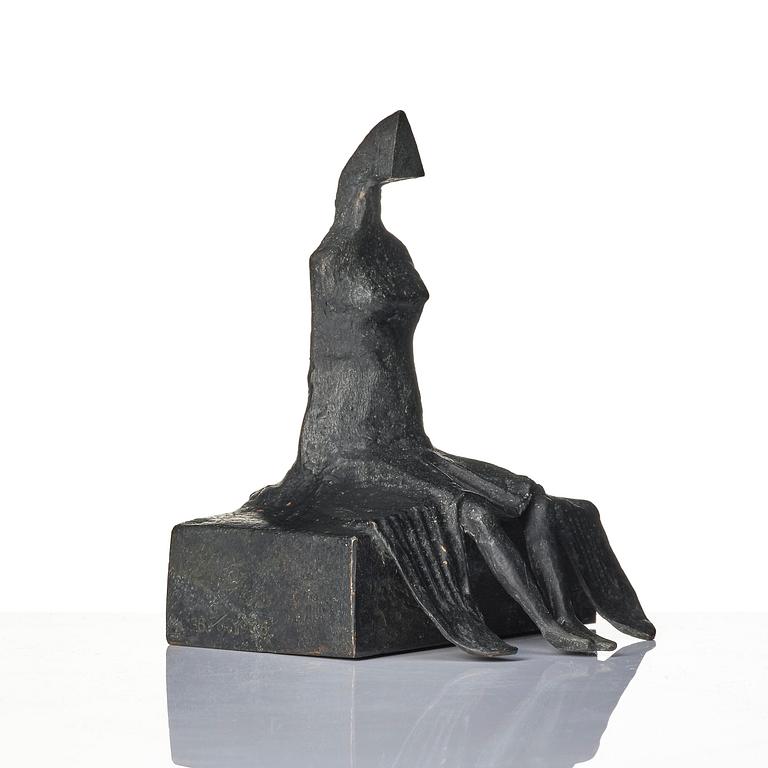
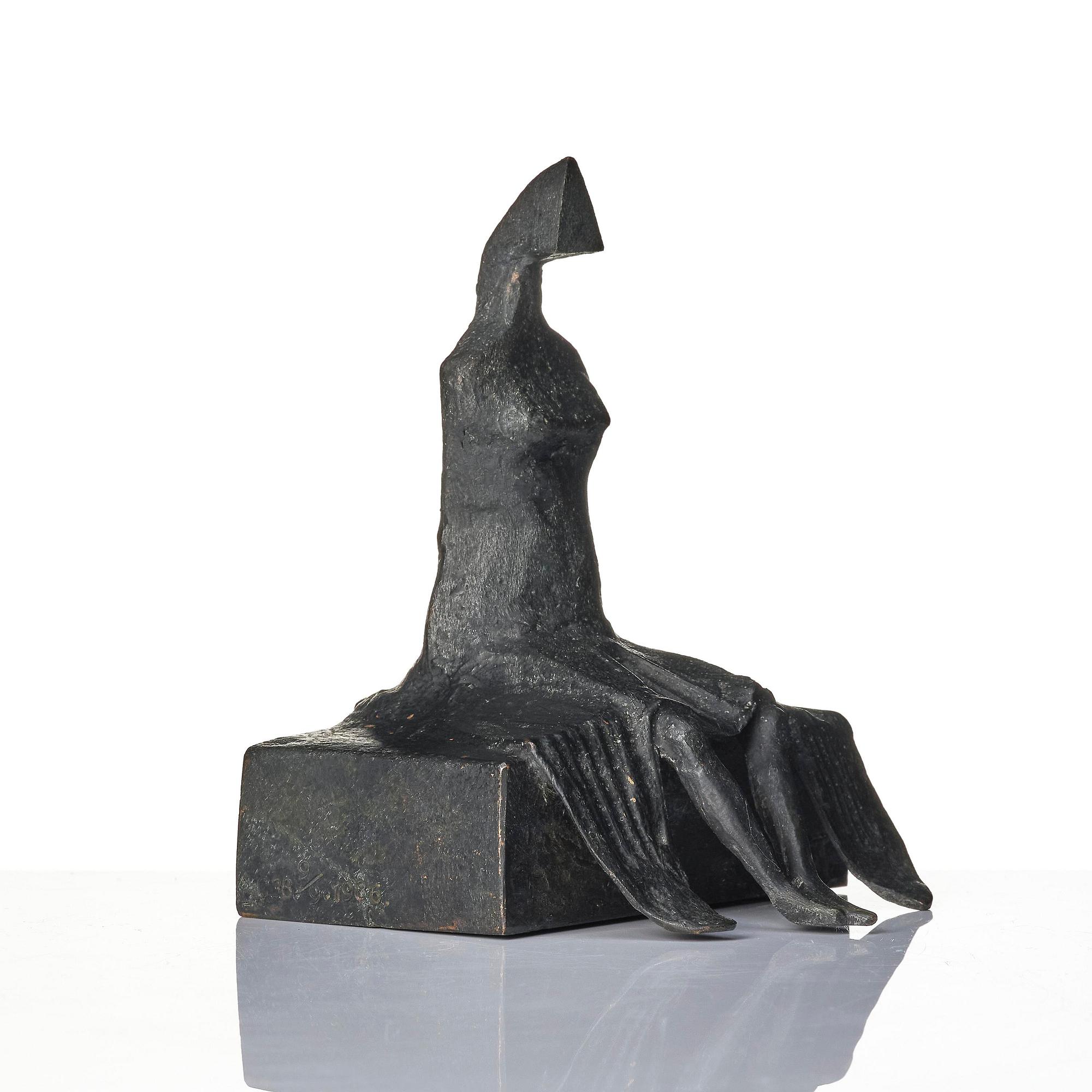
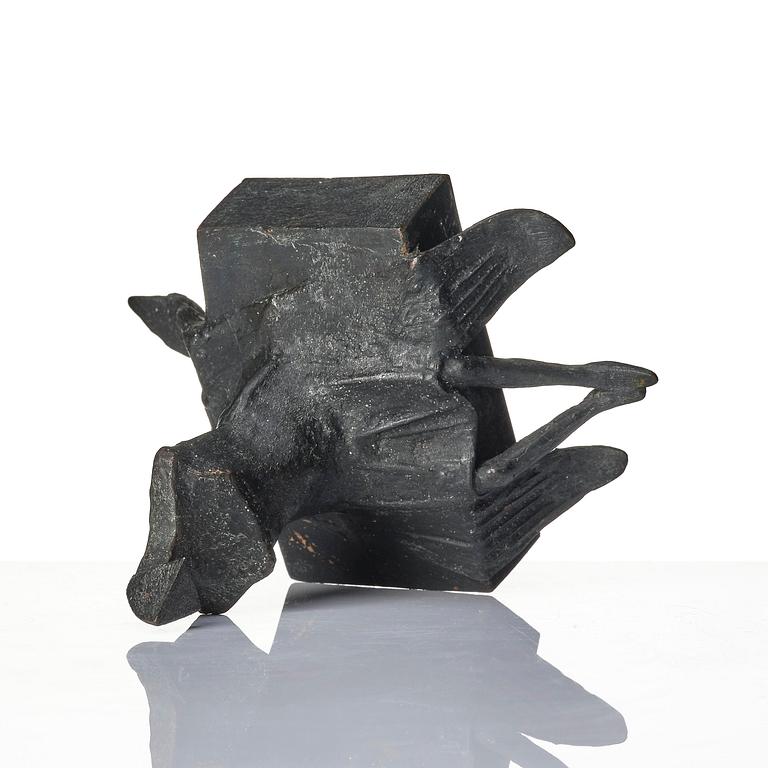
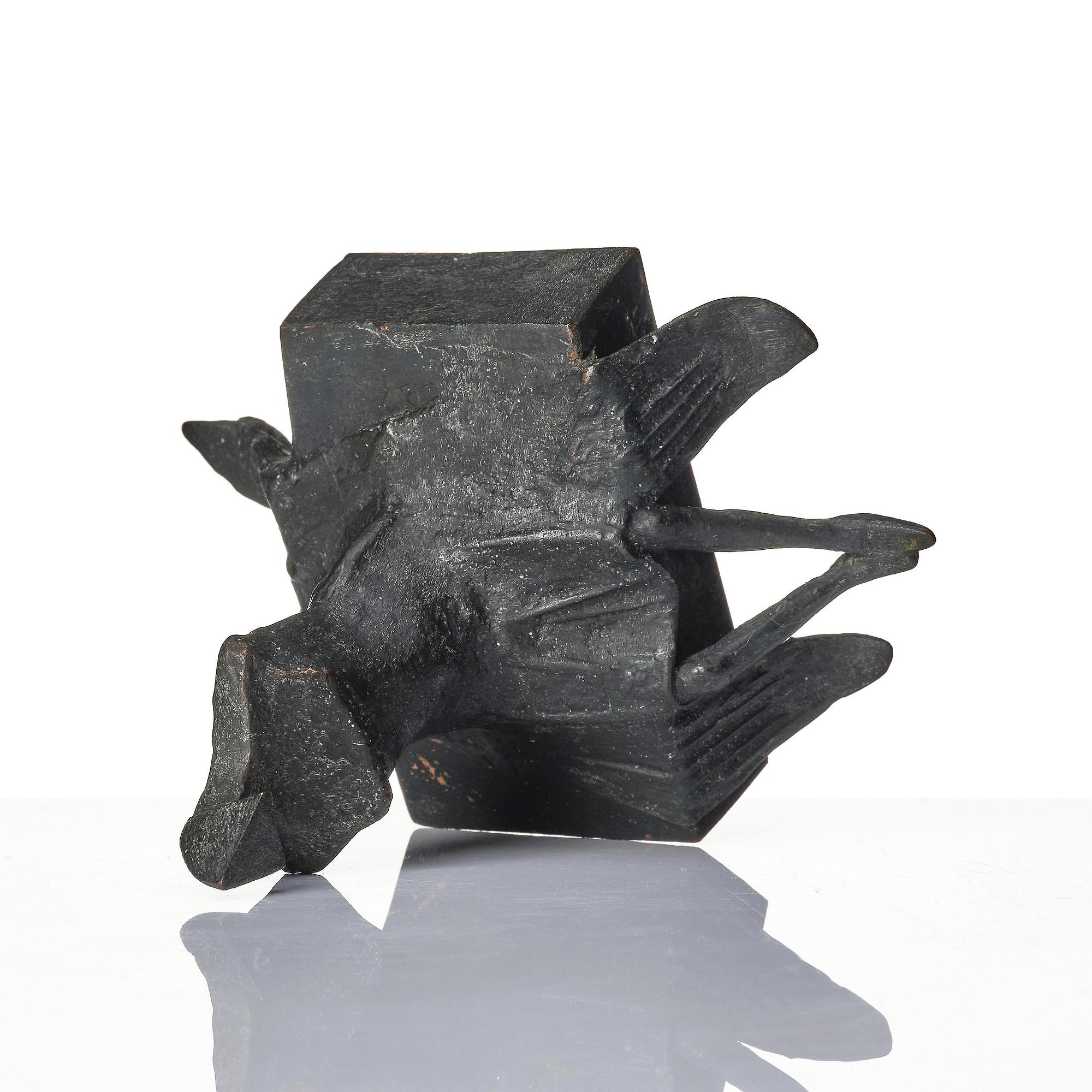
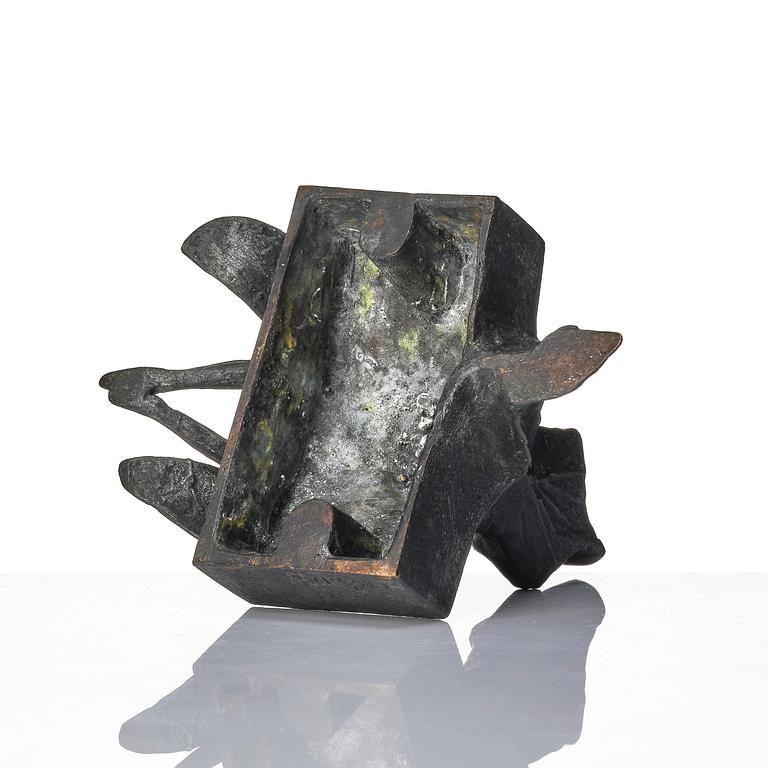
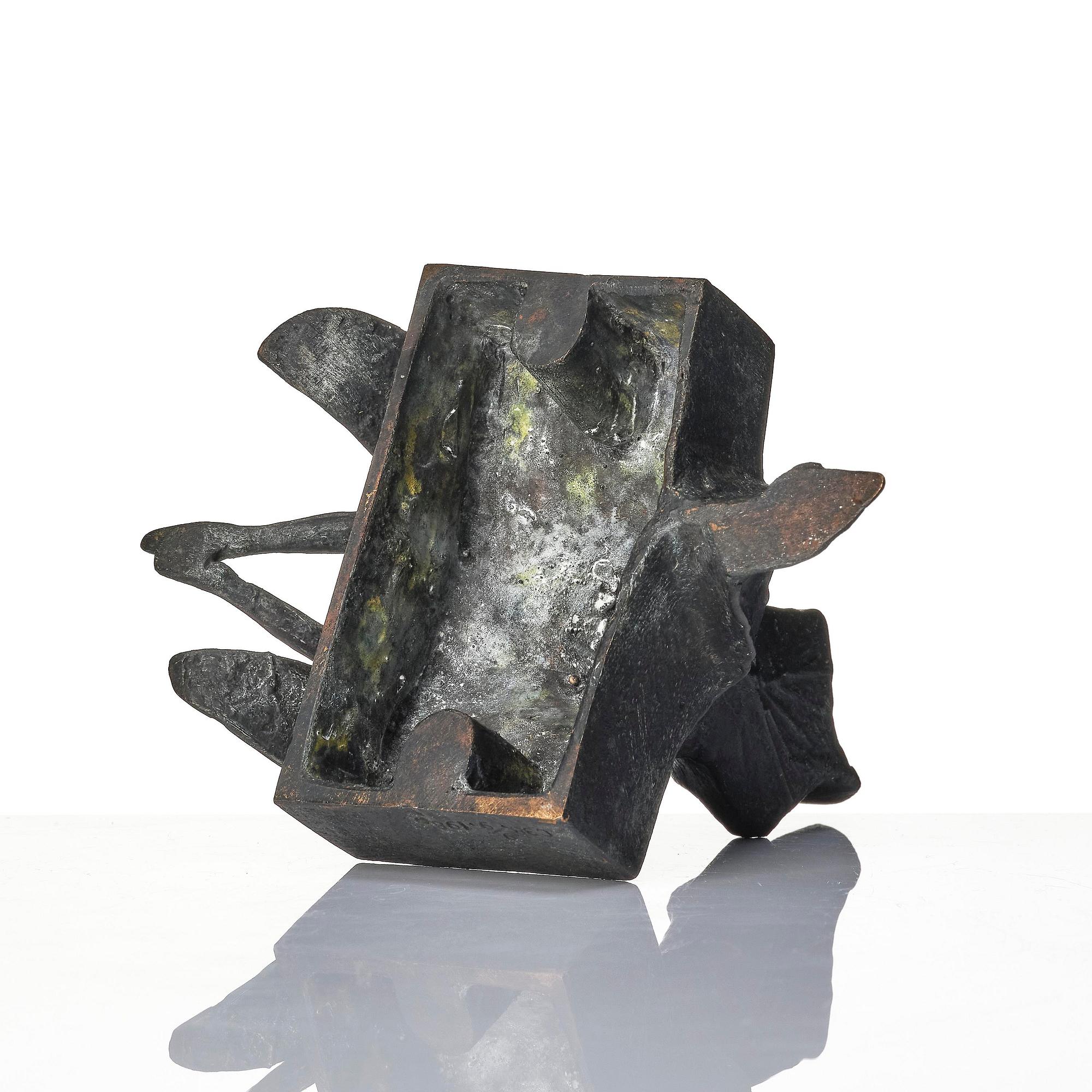
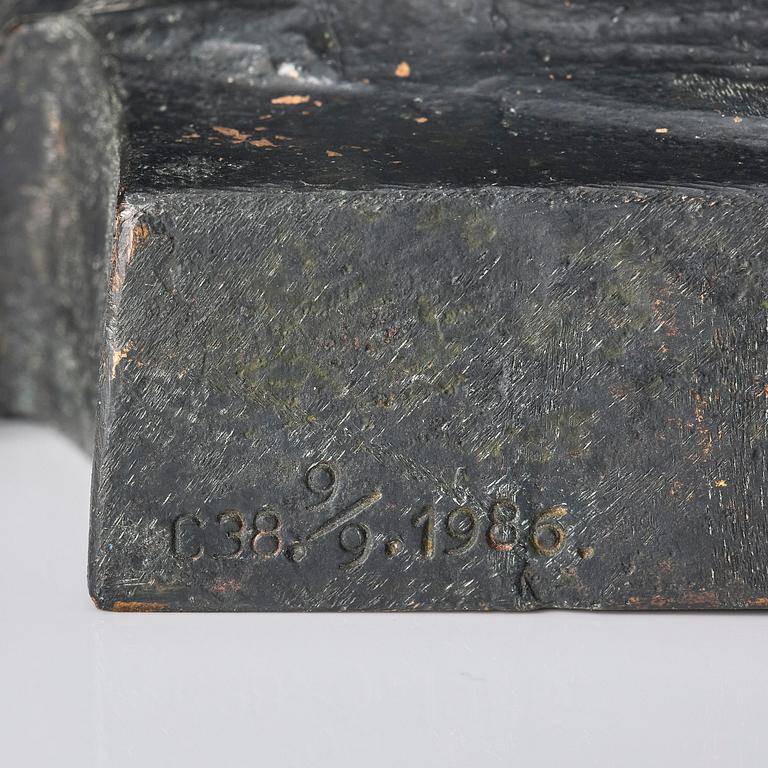
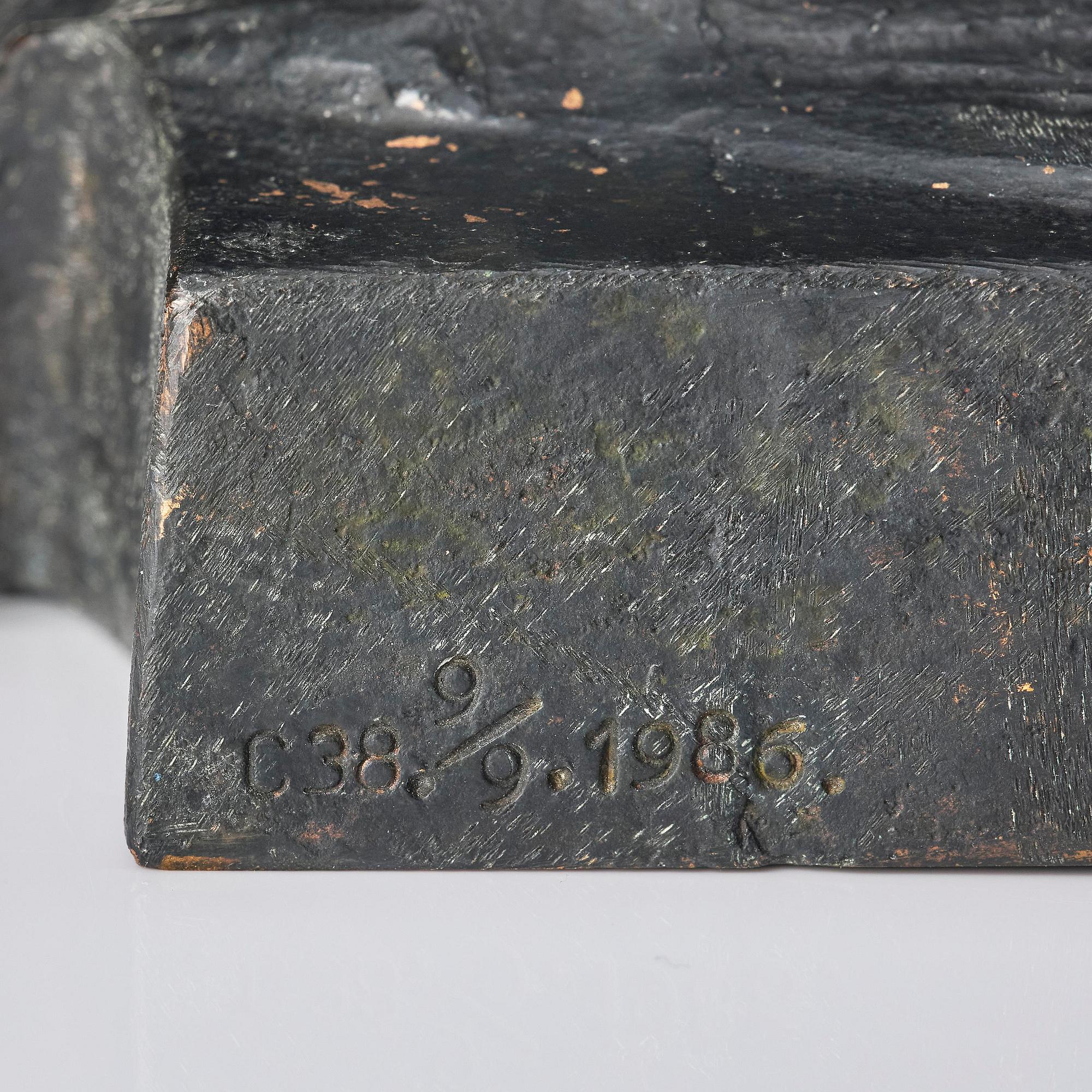
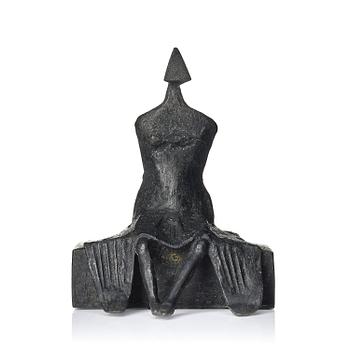
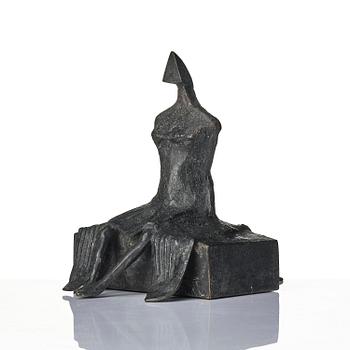
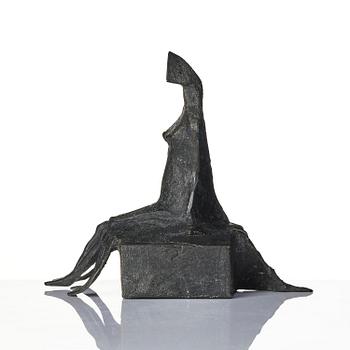
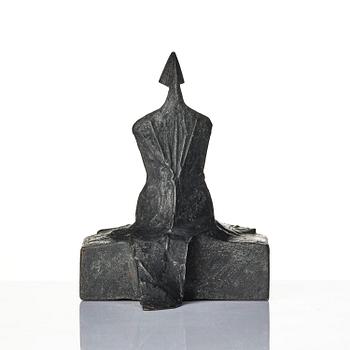
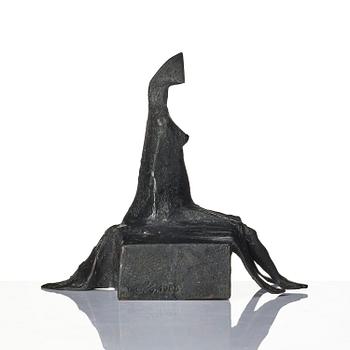
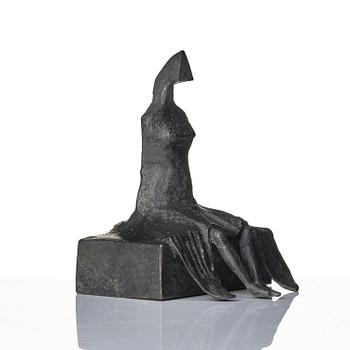
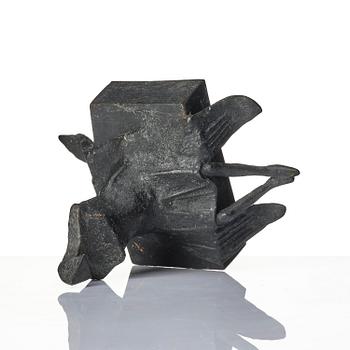
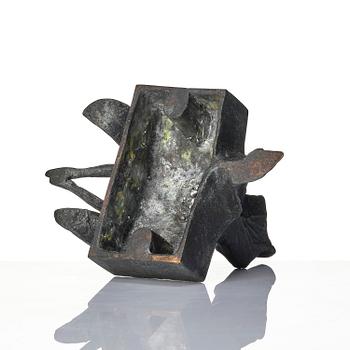
"Maquette VI Sitting Woman"
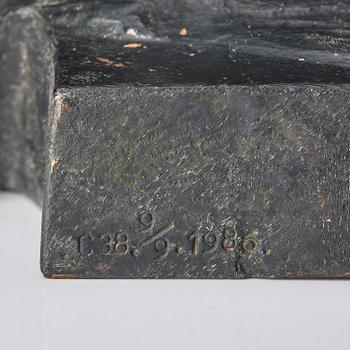
Stamped C38, numbered 9/9 and dated 1986. Bronze, black patina height 14 cm.
Alkuperä - Provenienssi
Fabian Carlsson Gallery, London, acquired in the late 1980s.
Kirjallisuus
Dennis Farr & Eva Chadwick, "Lynn Chadwick Sculpture: With a Complete Illustrated Catalogue 1947-2003", 2014, cat. no. C38, another example illustrated in black and white p. 364.
Muut tiedot
Lynn Chadwick's characteristic figures are instantly recognisable. They possess a unique appeal, and their distinct formal language resembles none other. Majestic strangers, enigmatic, hardly resting – rather vigilant. With their geometrically simplified forms and angularly draped cloaks, they evoke associations and fascination.
Chadwick debuted on the British art scene shortly after the Second World War, alongside a new generation of artists. Europe lay in ruins, the world was in shock after witnessing the horrors of war, genocide, and the effects of the atomic bomb. Chadwick himself served during the war as a pilot in the R.A.F. He had already as a young man harboured a desire to dedicate his life to art. His parents' disapproval led him to compromise on his career path, and he therefore trained in architecture. Before the war, he worked as a draughtsman in an architectural firm. Chadwick had no formal artistic training, and one might discern the strict geometry of architectural drawing in his artistic practice. After the war, he was filled with a longing to create, to achieve something new.
However, it took time before he dared to fully embrace the step of becoming an artist, so he worked for several years successfully as a designer and interior architect. During the late 1940s, Chadwick supported himself by designing, among other things, display stands, furniture, and wallpaper patterns while also working on his art.
It was through the Venice Biennales in 1952 and 1956 that Chadwick gained his international breakthrough, and he has since been regarded as one of the most important artistic voices in British post-war art. The expression in Lynn Chadwick's sculptures is closely linked to his working methods. Essentially self-taught, he invented his own technique. The method has been described as a three-dimensional drawing with metal rods, where Chadwick first bent and shaped the rods into the desired form, which were then welded together. He then filled the parts that were to be solid. For certain sculptures, he used metal plates, which gave the impression of "metal skin." It was not until the late 1950s that he began to cast in bronze. Chadwick placed great importance on the patination of his sculptures and worked extensively with the surface's texture and colour nuances.
The triangle in various forms is the fundamental geometric shape in Chadwick's art, sometimes assembled into rectangles. This shape, positioned vertically or diagonally, rarely horizontally, forms the backbone of the sculptures and creates formal tension. The artist himself believed that the triangle could be seen as the simplest draft of a human or animal figure, and from this form, the body was created. He emphasised that he always started from the human figure in his art.
Lisätietoja ja kuntoraportit
Kuuluu jälleenmyyntikorvauksen piiriin
Tietoa ostamisesta
Kuvan käyttöoikeudet
Tämän tietokannan taideteokset ovat tekijänoikeudella suojattuja, eikä niitä saa kopioida ilman oikeudenhaltijoiden lupaa. Teokset kopioidaan tässä tietokannassa Bildupphovsrättin lisenssillä.