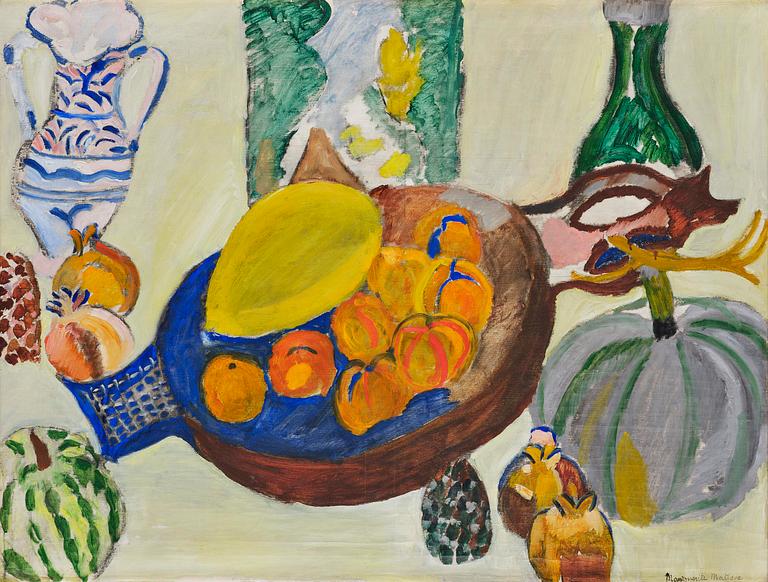
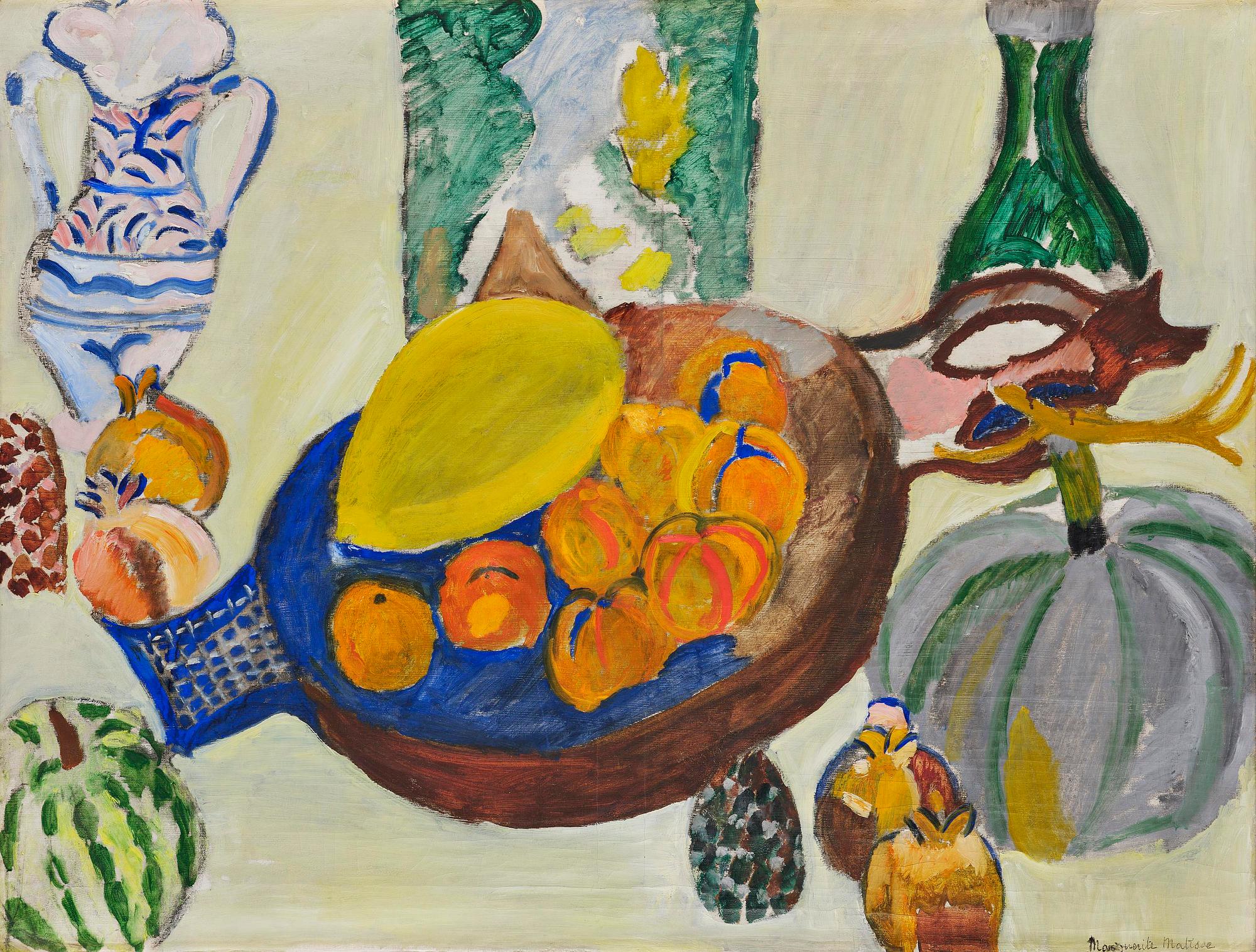
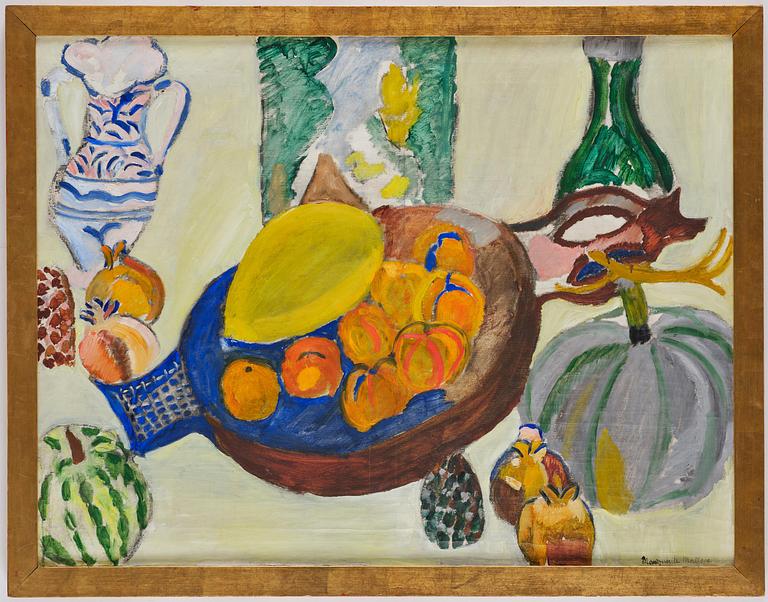
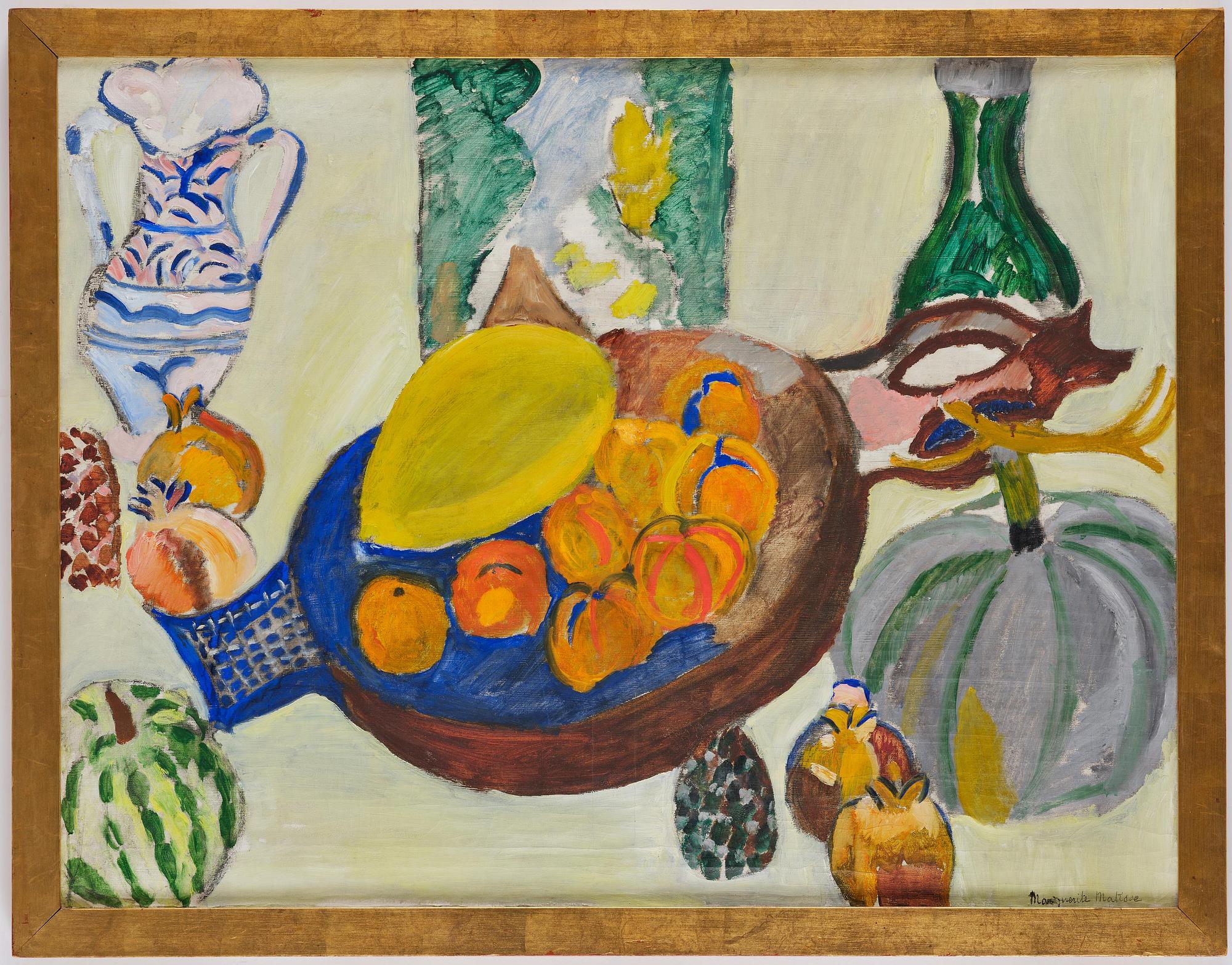
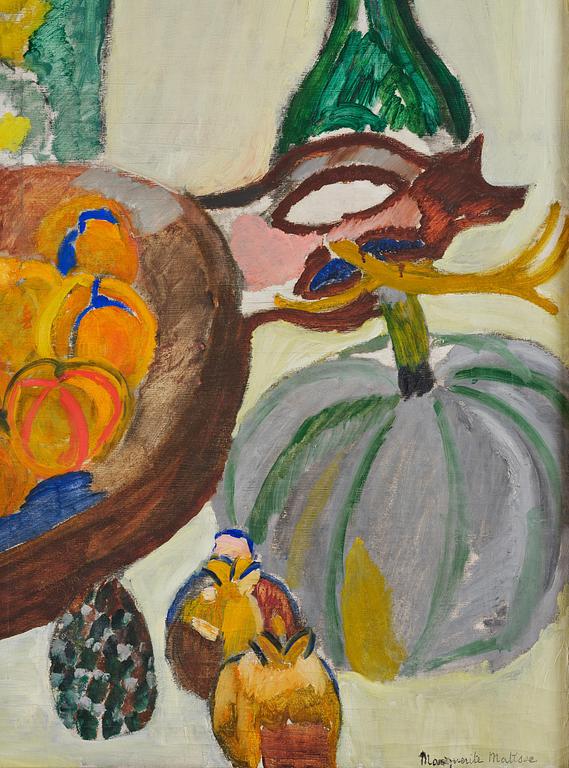
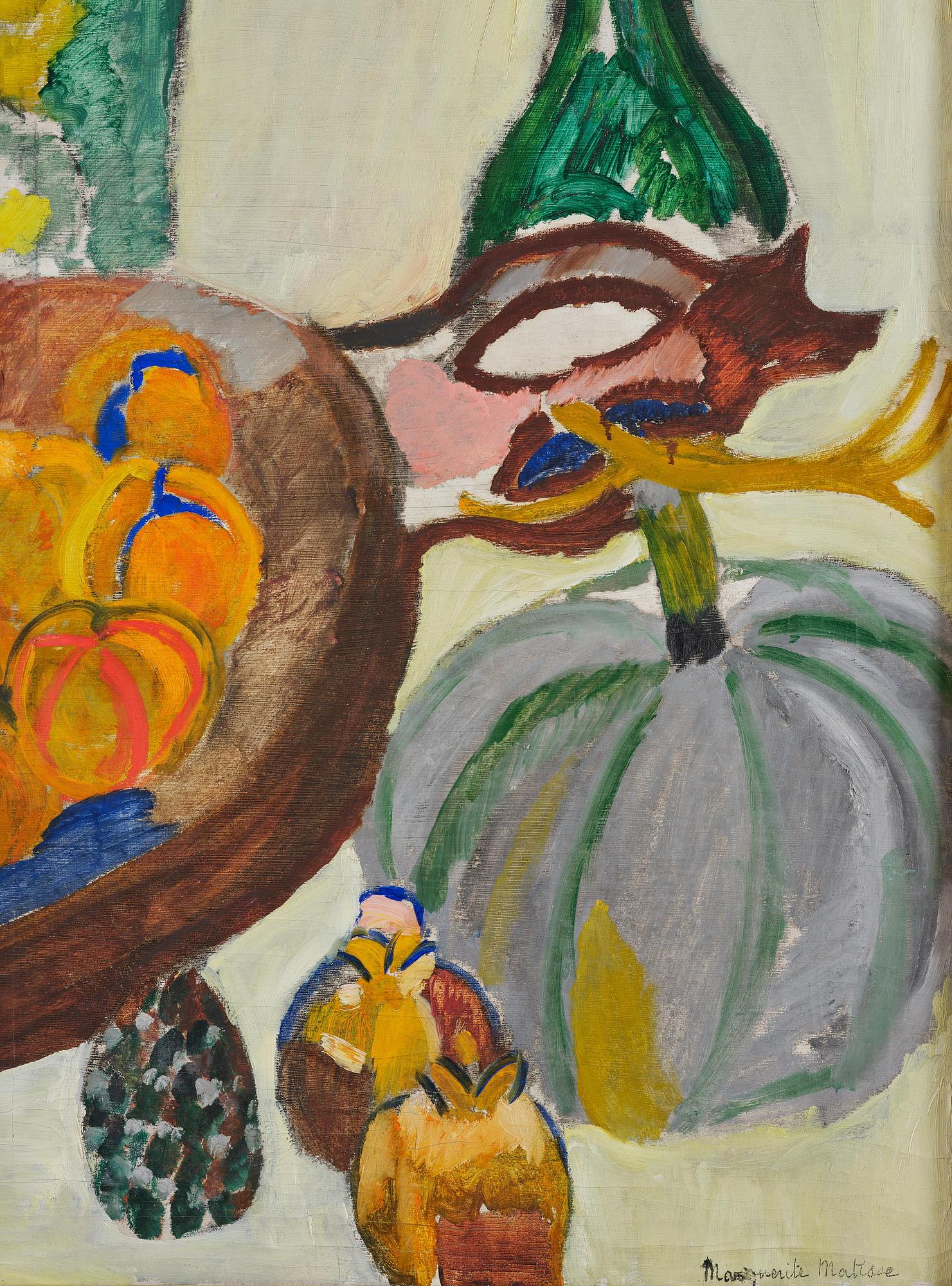
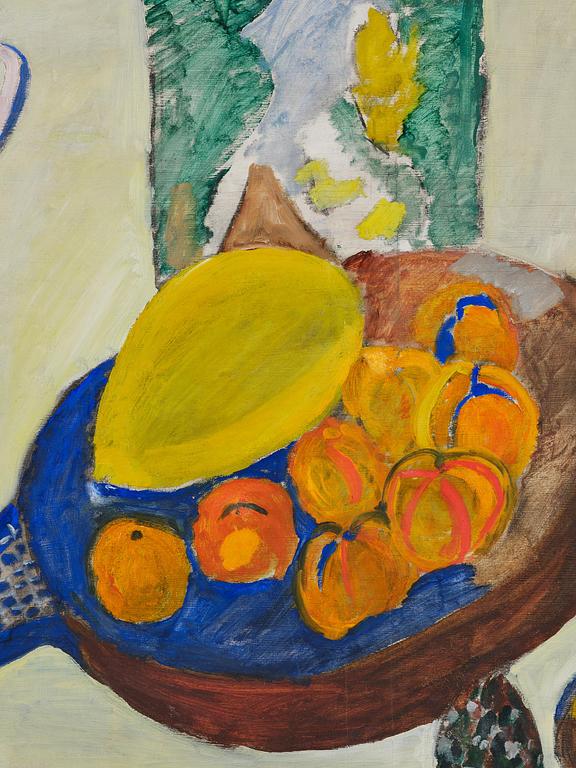
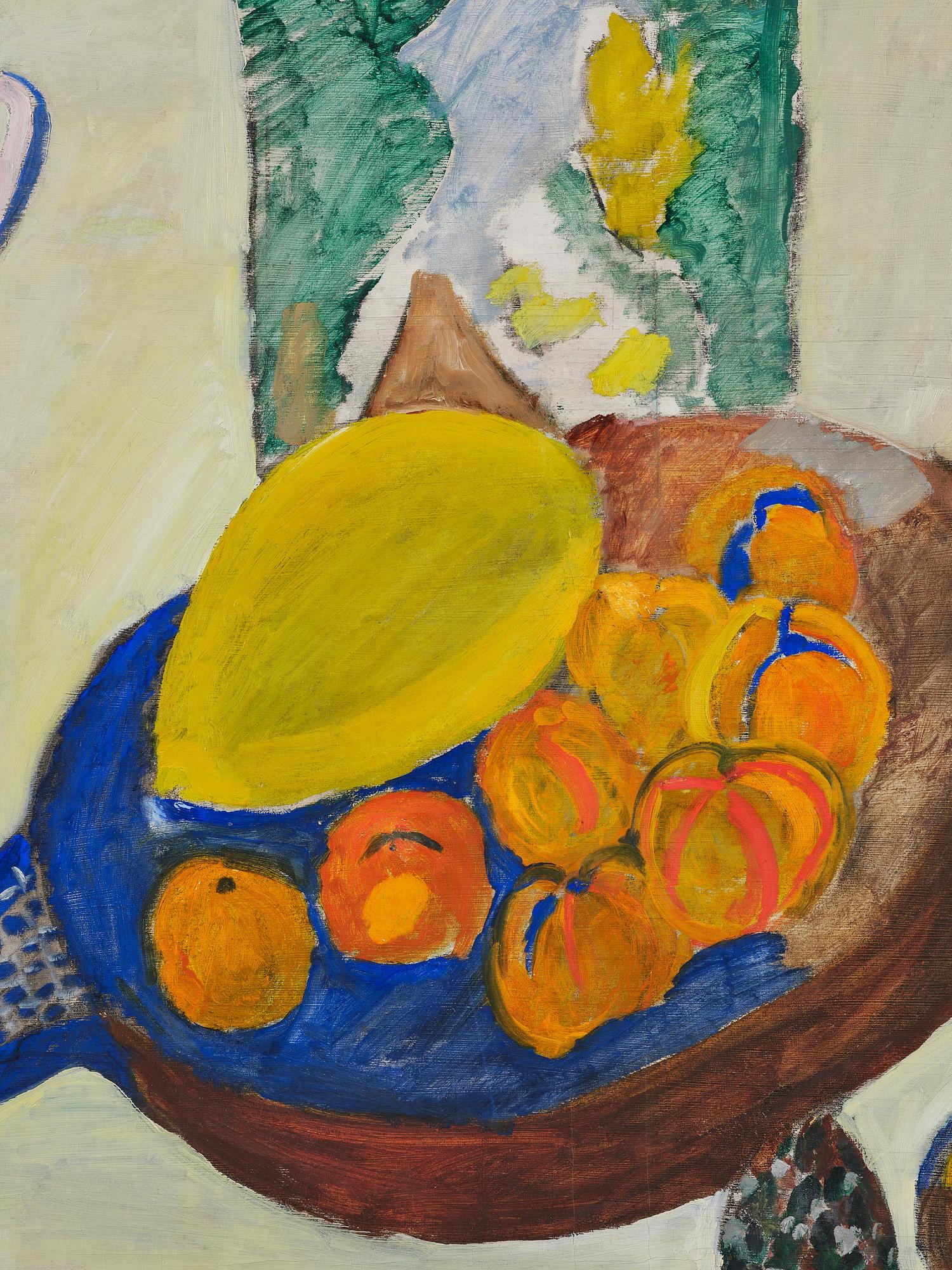
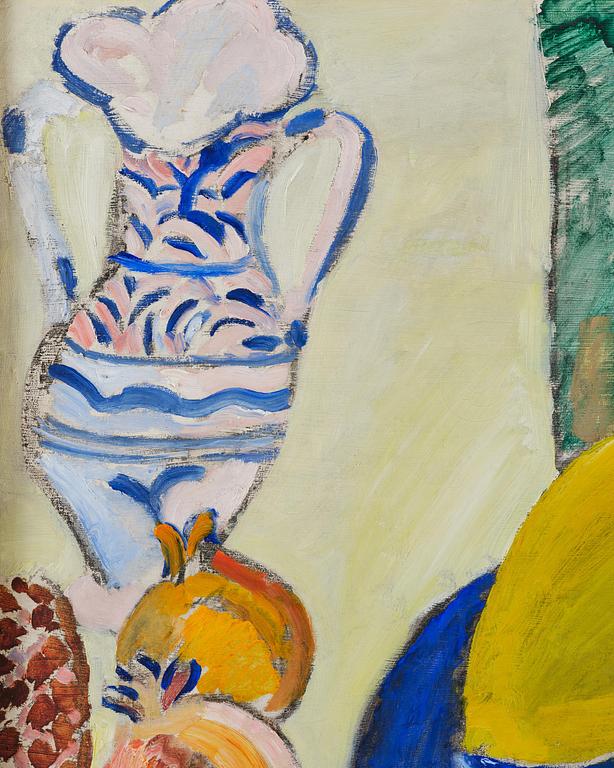
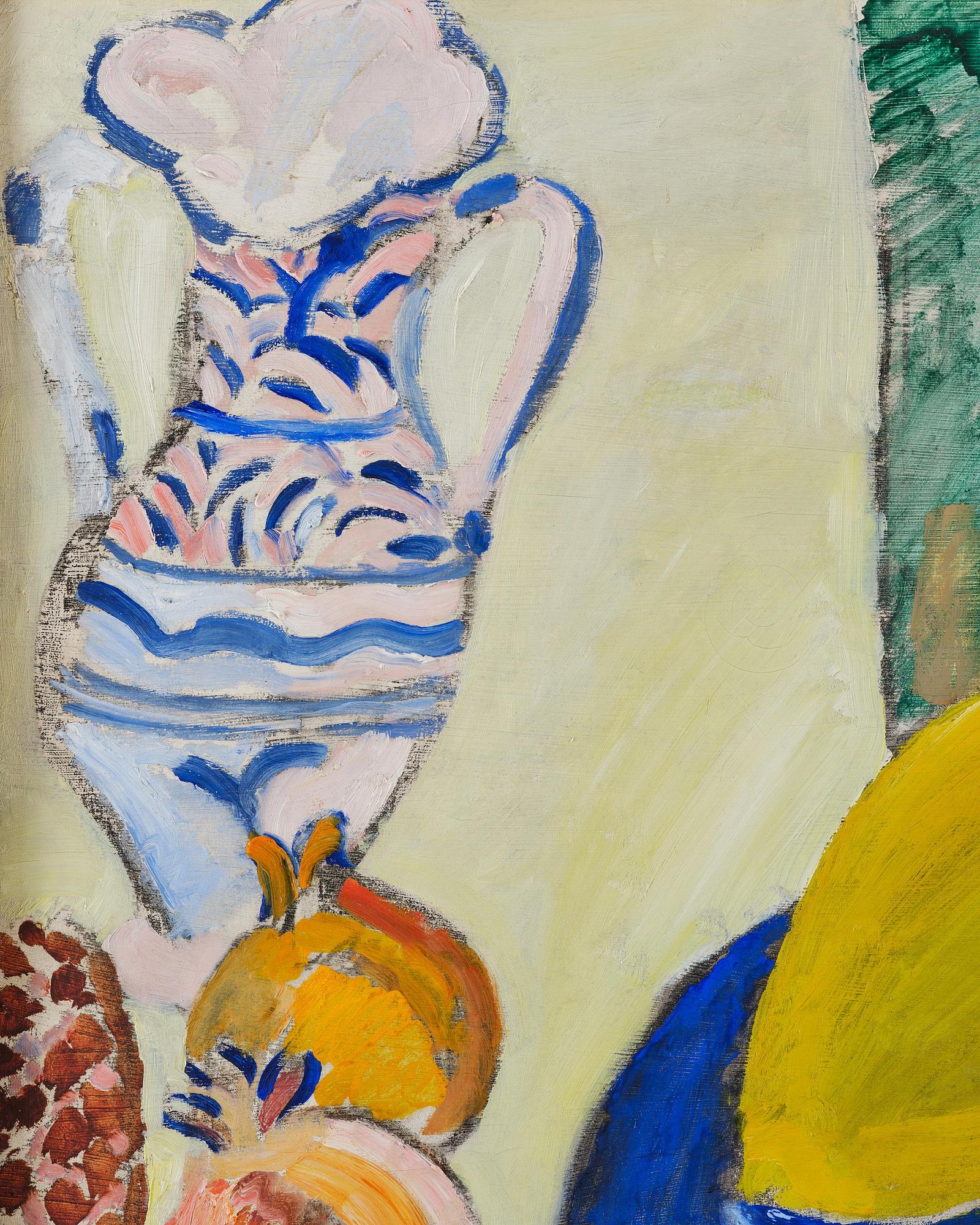
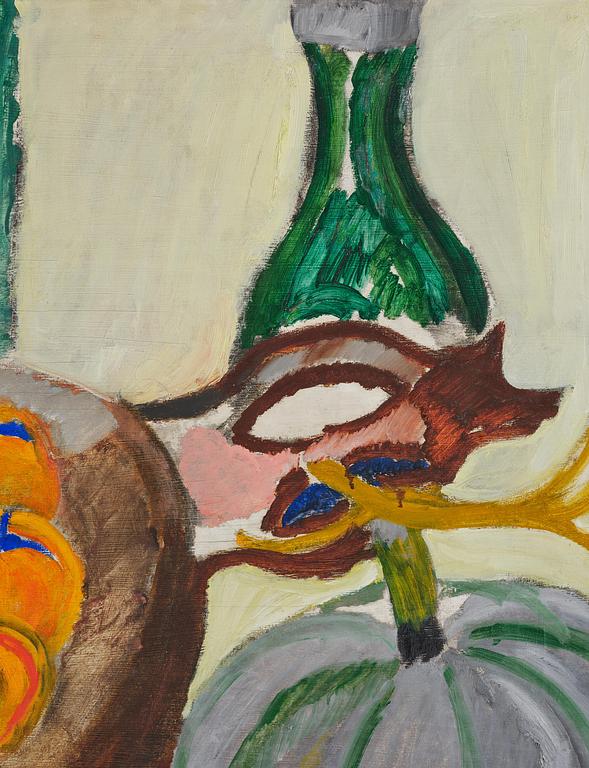
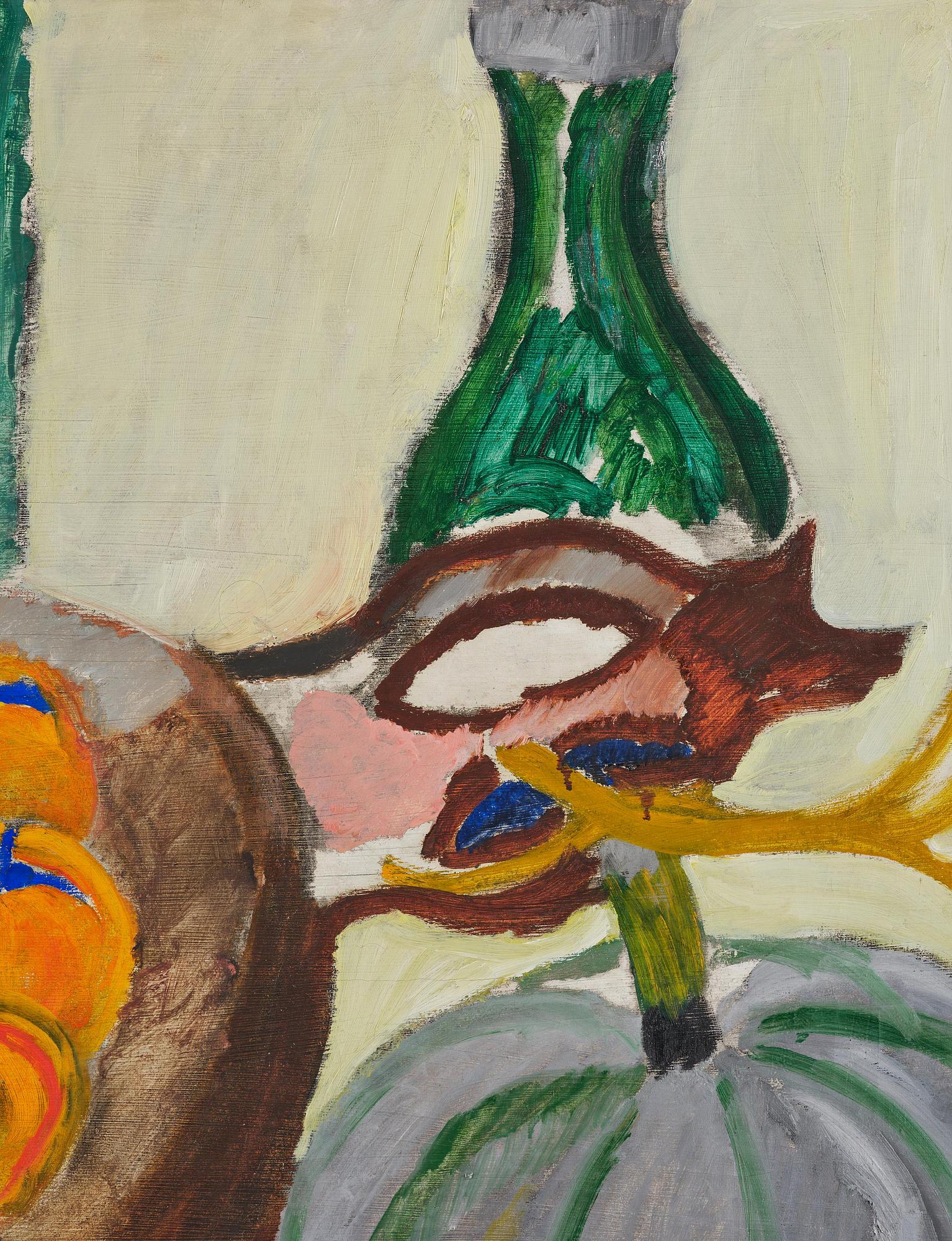
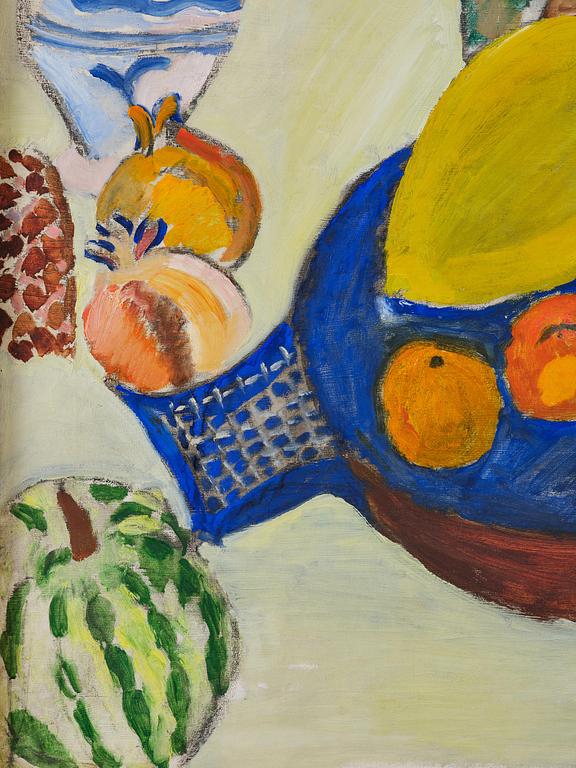
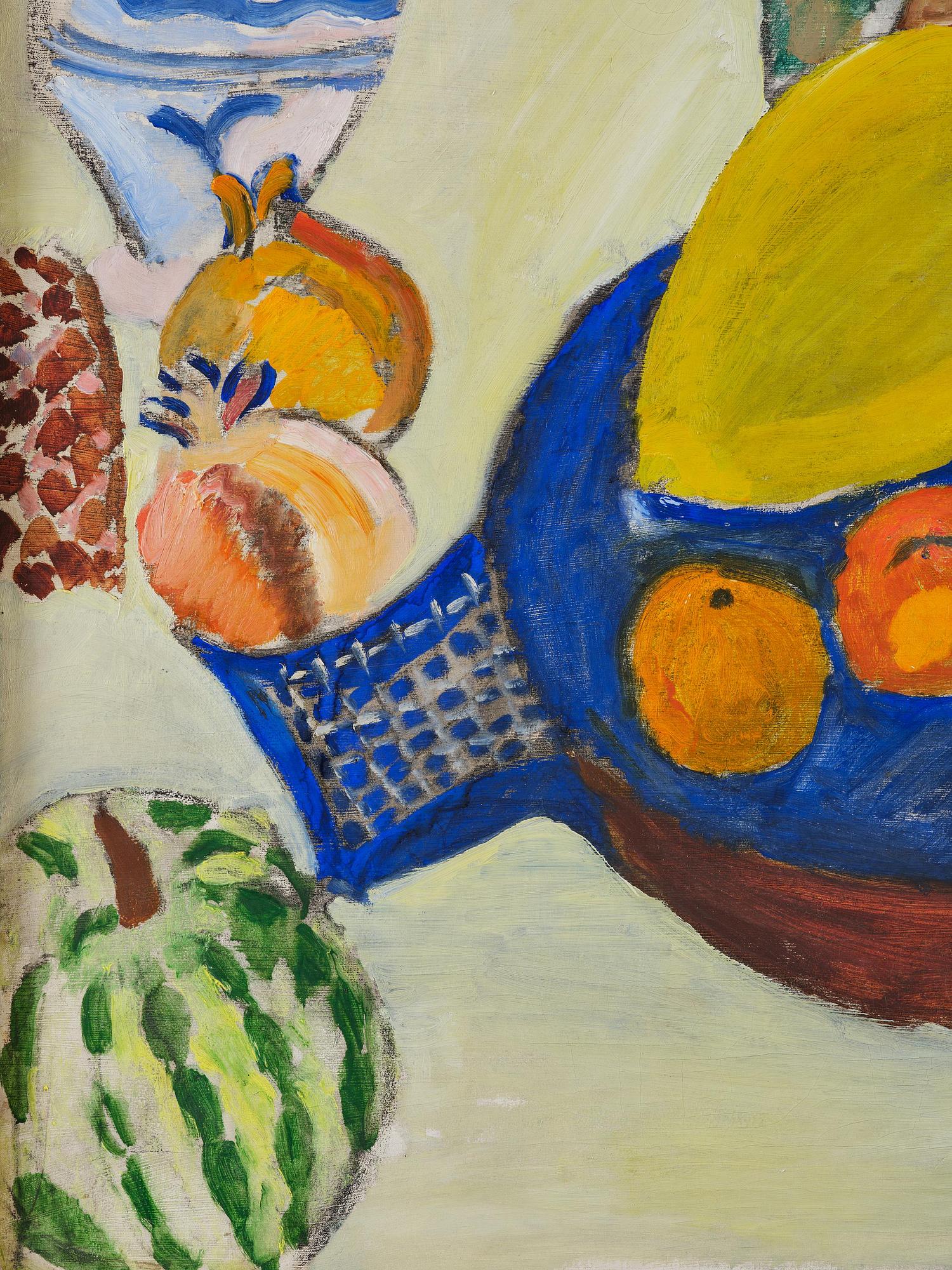
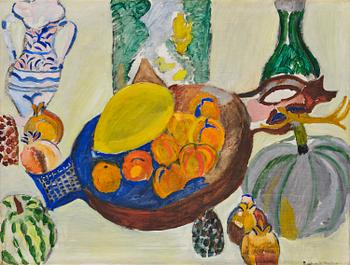
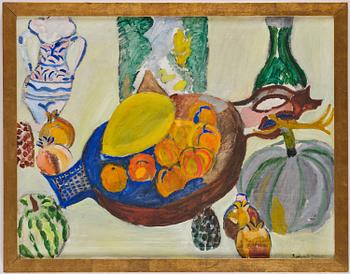
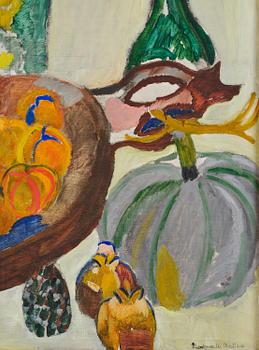
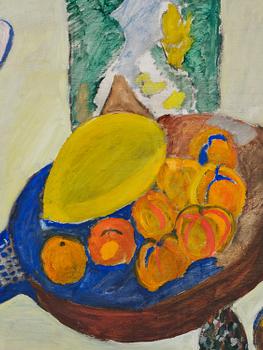
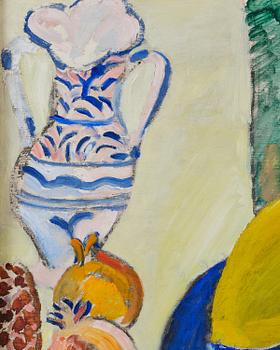
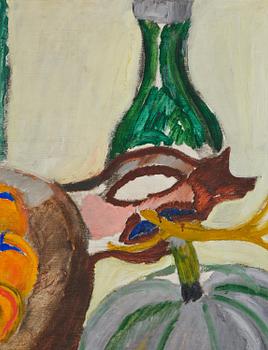
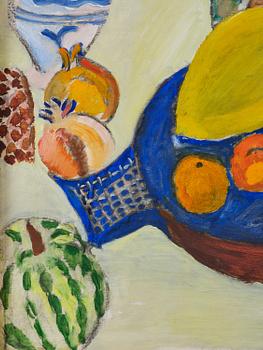
Still life with fruits
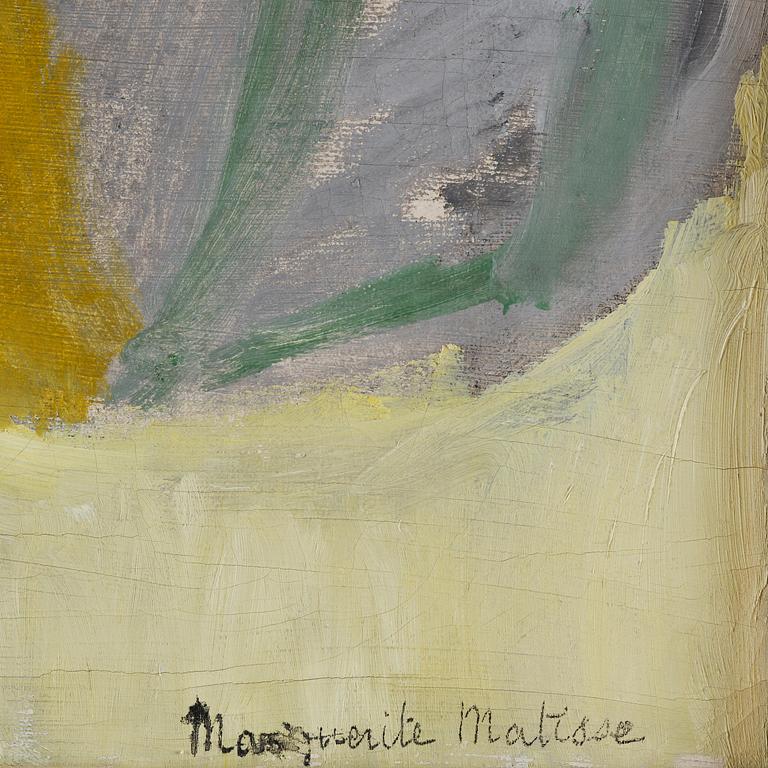
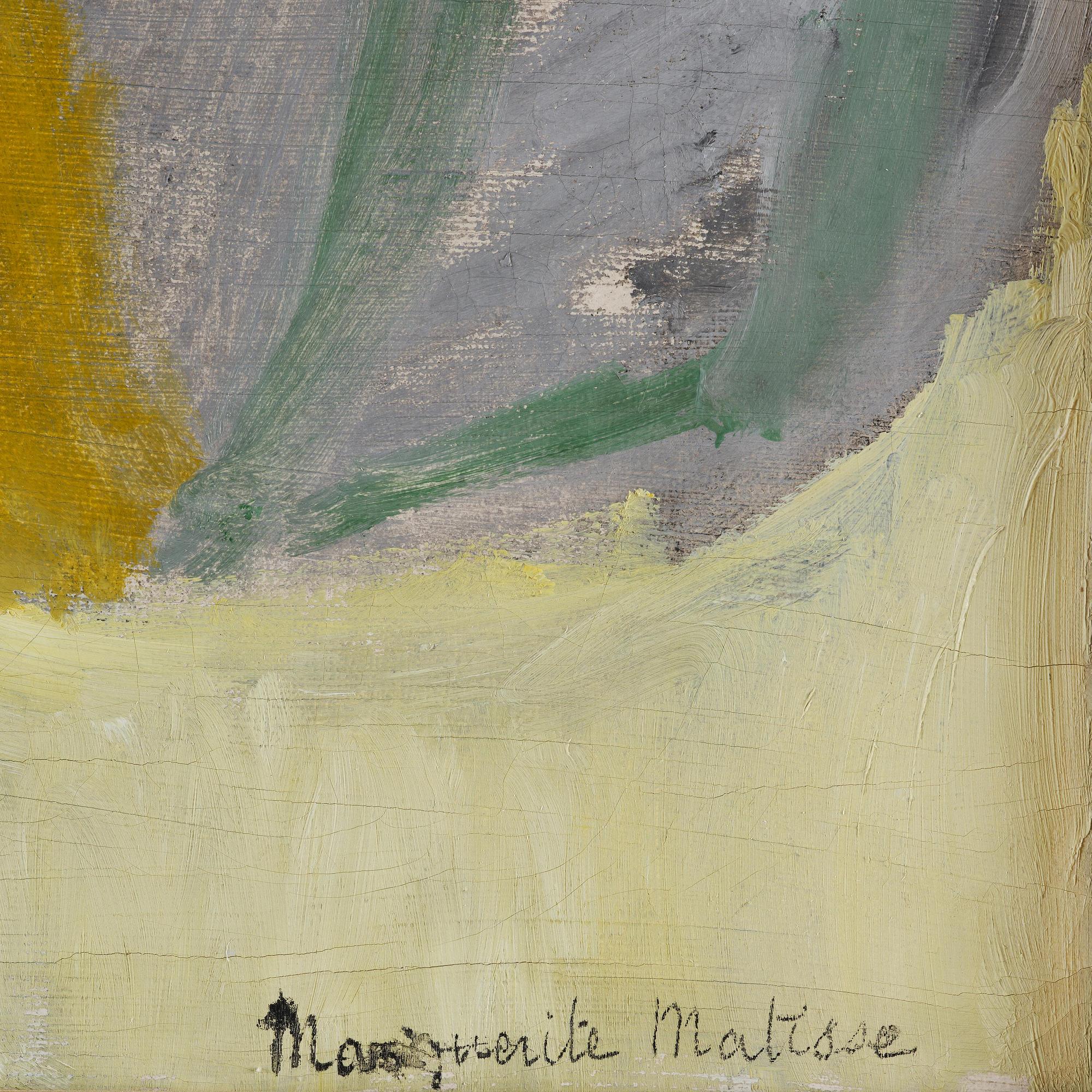
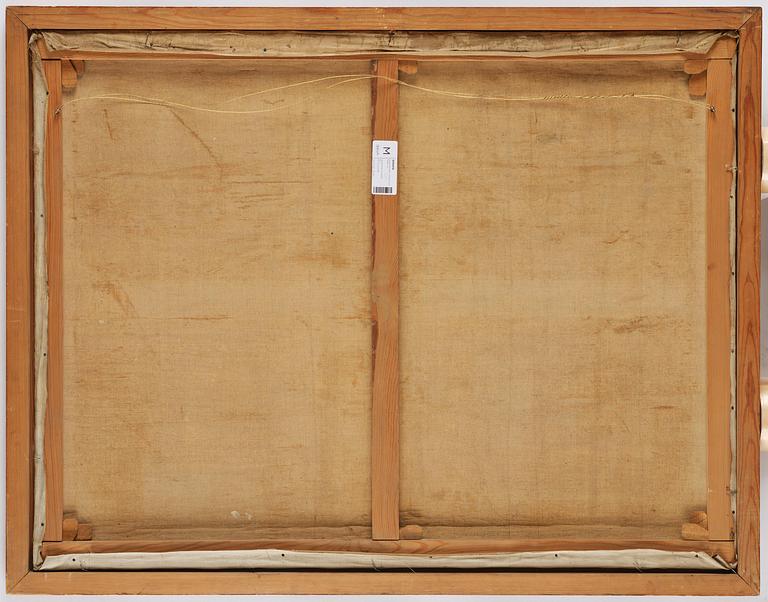
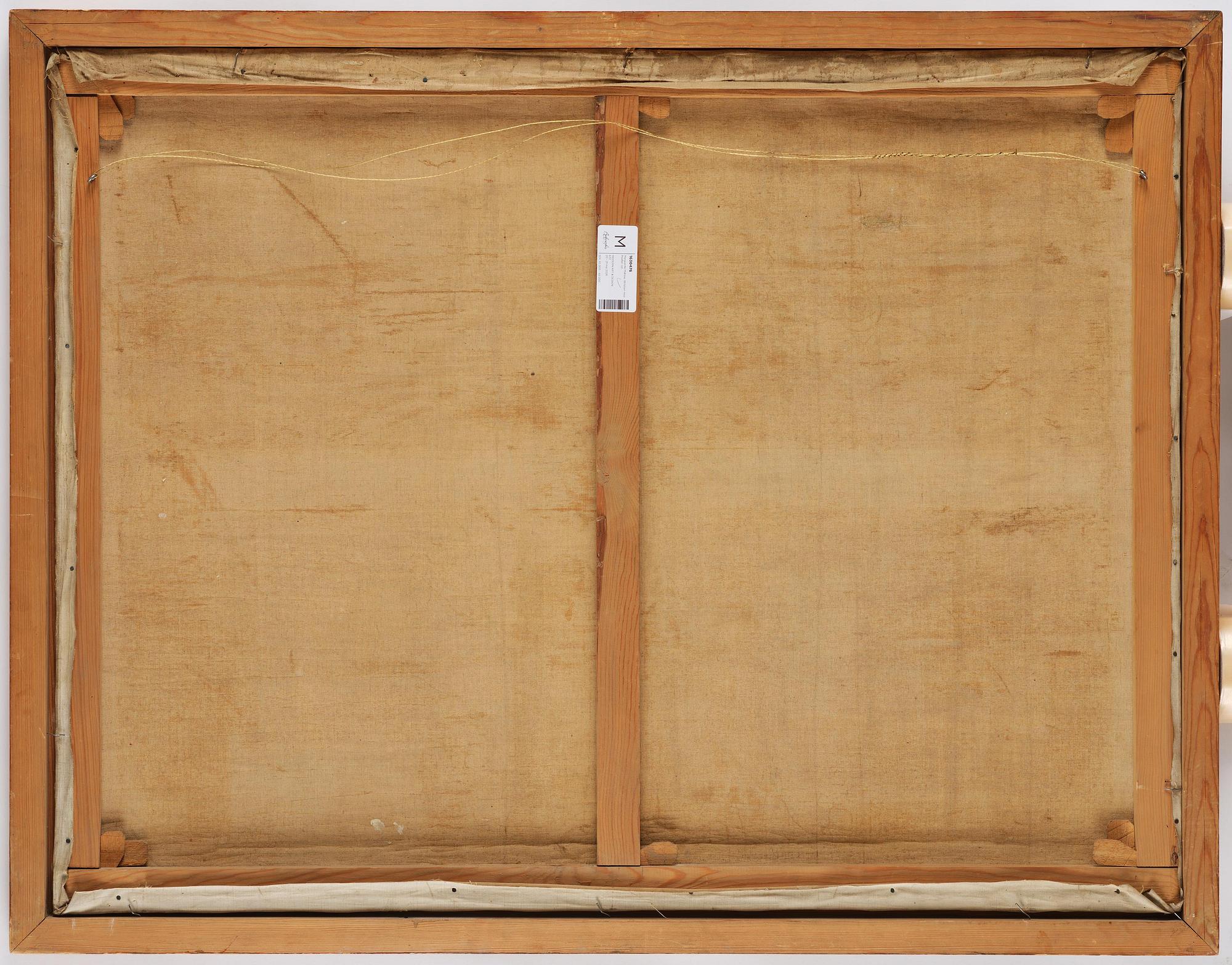
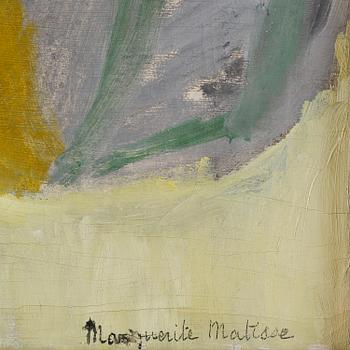
Signed Marguerite Matisse. Oil on canvas 90 x 115 cm.
Alkuperä - Provenienssi
The artist Richard Bergh (1858 - 1919), purchased in 1916 in Paris through the Norwegian art dealer and artist Walther Halvorsen (1887-1972).
Thence by descent to the current owner.
Kirjallisuus
Gunhild Osterman, "Richard Bergh och Nationalmuseum", Nationalmusei Skriftserie nr 4, Lund, 1958, mentioned and illustrated p. 107.
Muut tiedot
Marguerite Matisse-Duthuit (1894–1982), the eldest daughter of Henri Matisse, is primarily remembered as a model and confidante within her father's circle. Her own role as an artist is less explored, but it testifies to her independence in close dialogue with some of modernism's most influential figures. Her life extended far beyond the studio and was marked by both intellectual collaboration and remarkable personal courage, not least during the Second World War.
Born in Paris as the daughter of Matisse and the model Caroline Joblau, Marguerite grew up in a closely-knit family alongside her half-brothers Jean and Pierre. A severe illness in childhood left a scar on her neck, often concealed in portraits. She became her father's most persistent model and at the same time a trusted critic and practical assistant in his artistic endeavours.
During the Second World War, Marguerite actively engaged in the French Resistance, as did several of her family members. She joined underground networks and worked as a courier, a perilous task that was crucial for communication within the resistance movement.
In 1944, she was arrested by the Gestapo in Rennes and subjected to severe torture. She escaped deportation to concentration camps after fleeing during an Allied air raid and was rescued by resistance fighters. The experiences left deep scars, which are also reflected in the portraits her father painted after the war.
After the war, Marguerite dedicated herself to preserving and managing her father's legacy. Married to the art critic Georges Duthuit, she played a central role in cataloguing Matisse's works and remained an important mediator of his artistic practice until her death in 1982.
Marguerite Matisse's vibrant still life included in this auction originally belonged to the Swedish artist Richard Bergh's. He had commissioned his Norwegian colleague Walther Halvorsen to acquire a number of works in Paris. Bergh wrote, "What I otherwise like very much and have always dreamed of having on my own wall is a still life in Matisse's style. Does he not have a student who does such things?" Halvorsen replied, while discussing some other acquisitions, "Do not worry about Fresnaye, I do not count him among the cubists... you will surely be satisfied. I can offer a painting by Mademoiselle Matisse. She is very talented and original, has an almost masculine energy and will surely make her mark among the modernists!"
A few months later, on 6 August 1916, Halvorsen communicated that a box had been sent containing a cubist work by De la Fresnaye, two drawings by Derain, lithographs by Matisse, and the painting by Marguerite Matisse that is now presented in this auction.
Lisätietoja ja kuntoraportit

Kuuluu jälleenmyyntikorvauksen piiriin
Tietoa ostamisesta
Kuvan käyttöoikeudet
Tämän tietokannan taideteokset ovat tekijänoikeudella suojattuja, eikä niitä saa kopioida ilman oikeudenhaltijoiden lupaa. Teokset kopioidaan tässä tietokannassa Bildupphovsrättin lisenssillä.