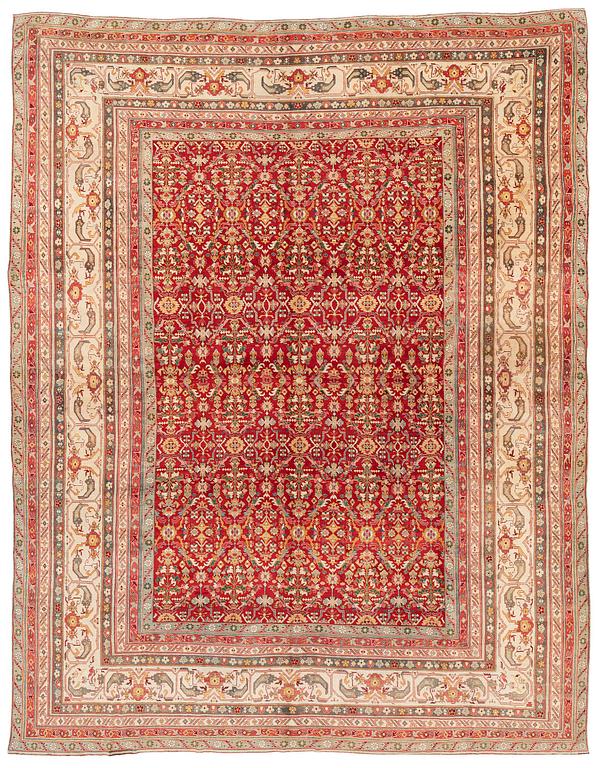
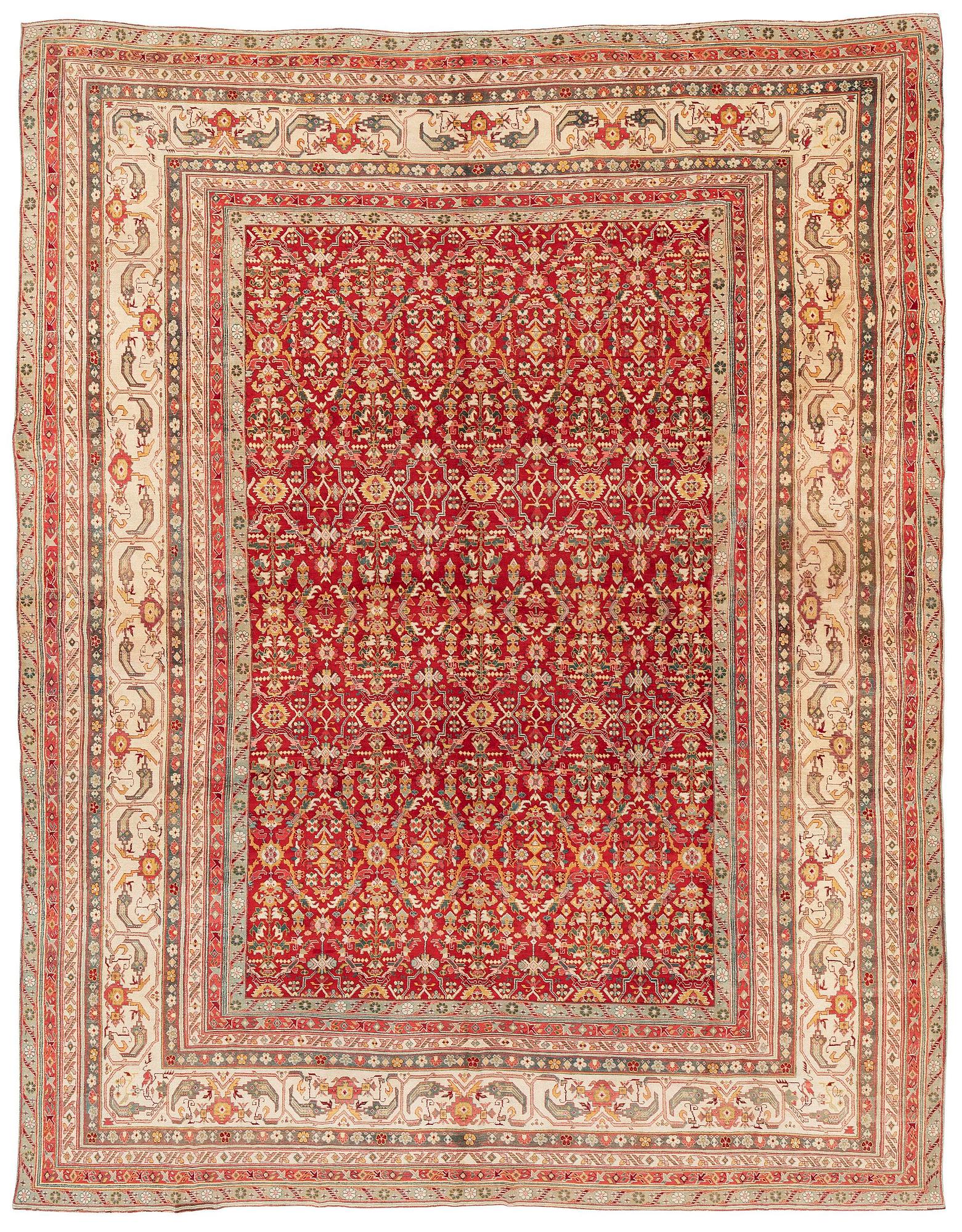
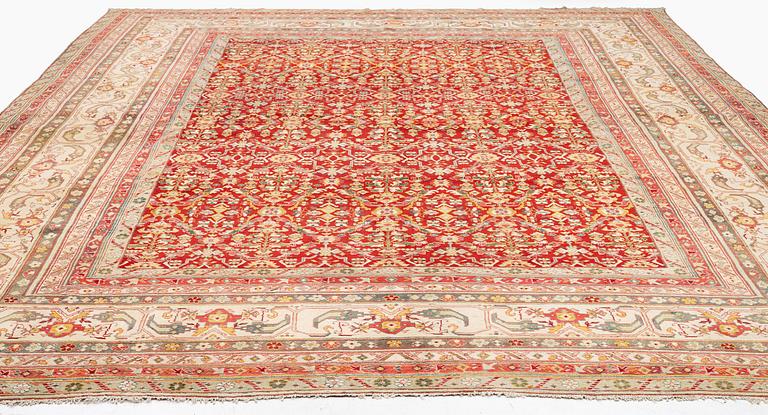
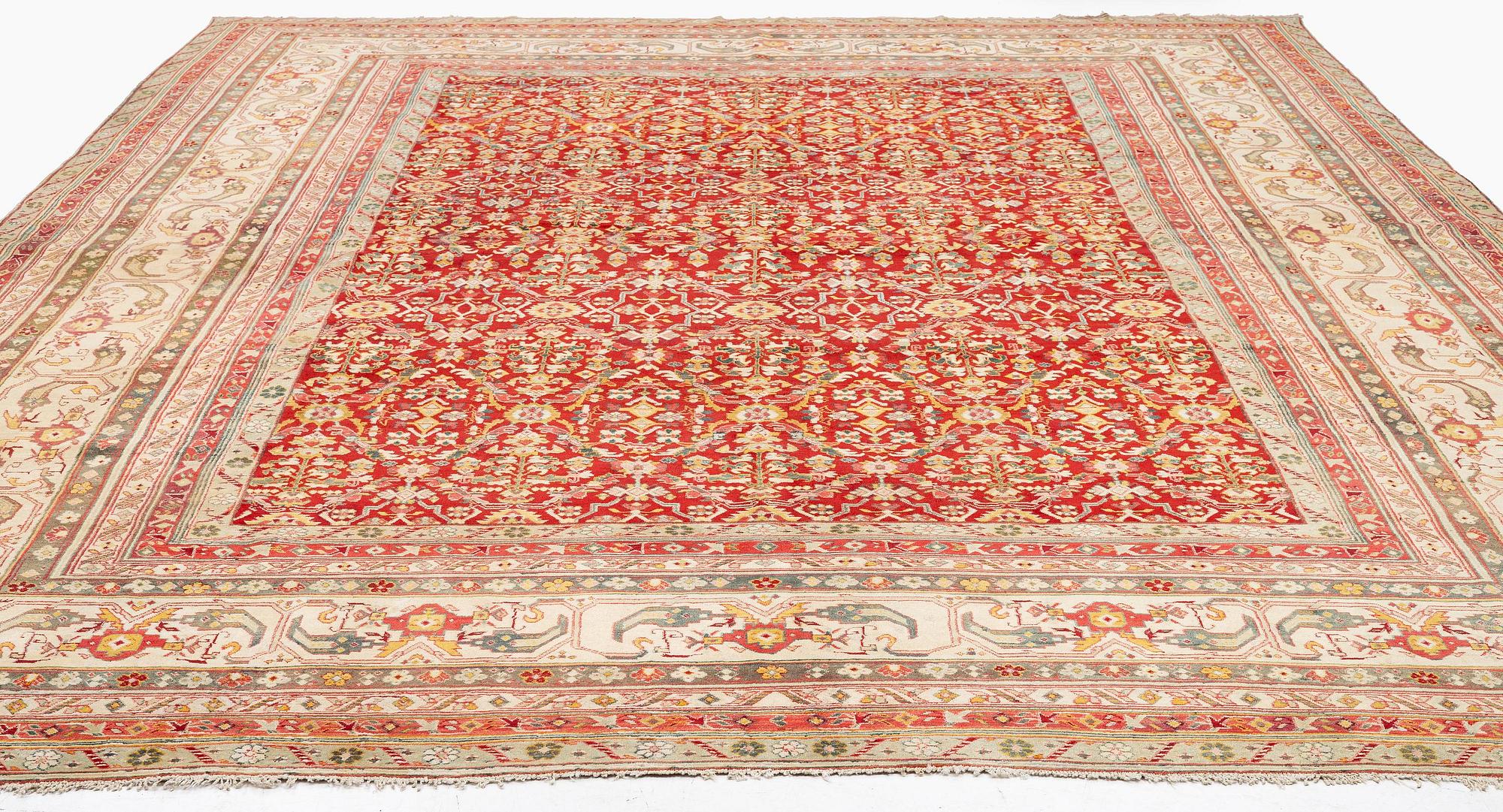
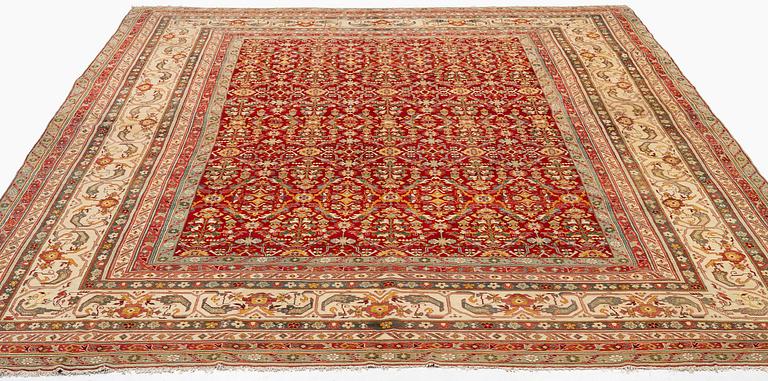
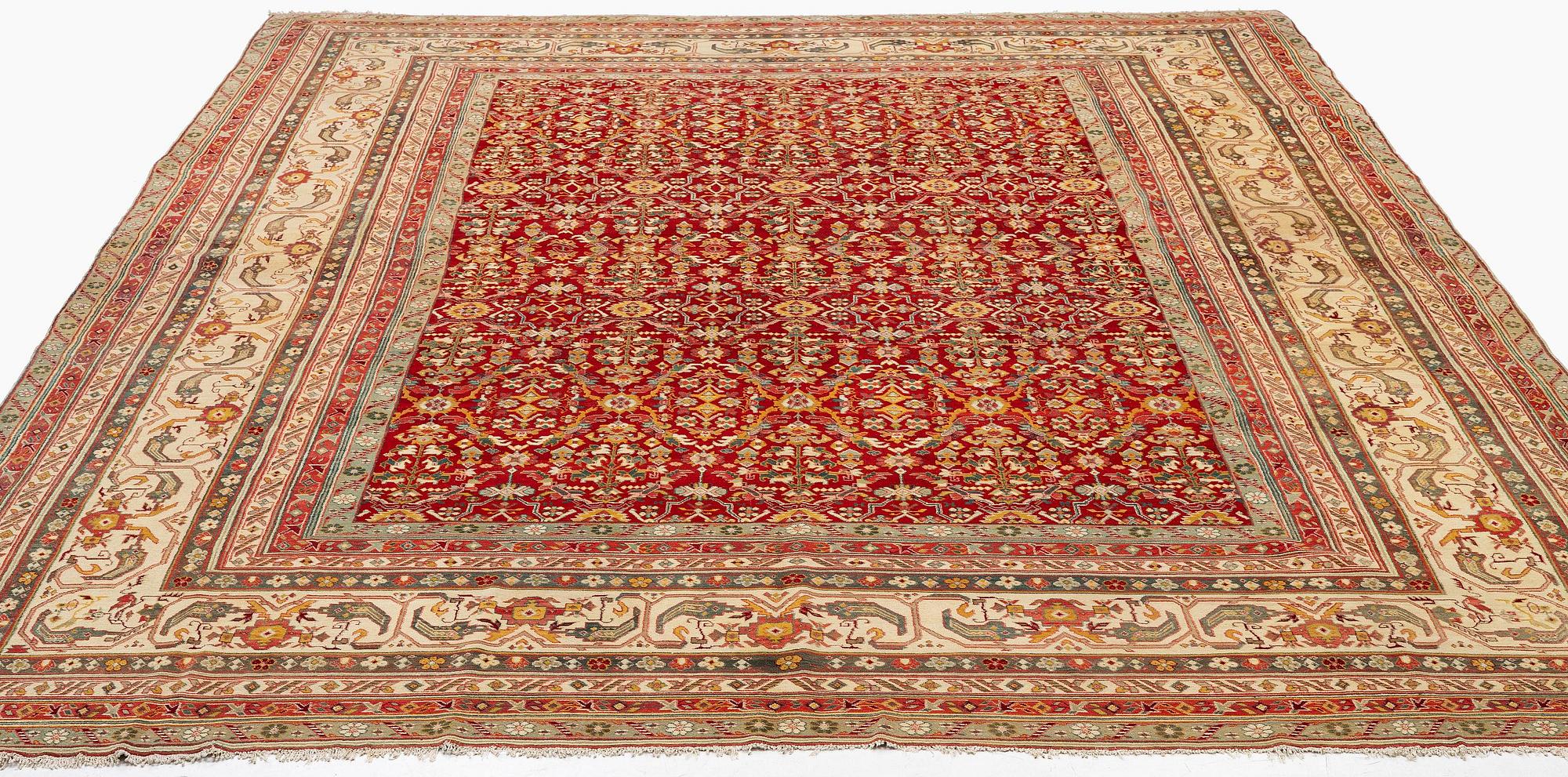
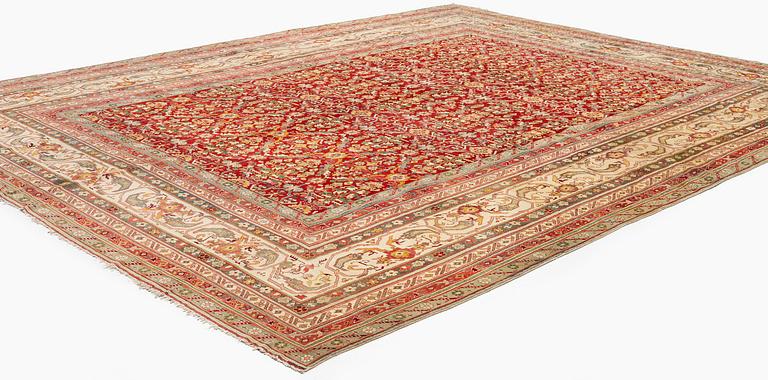
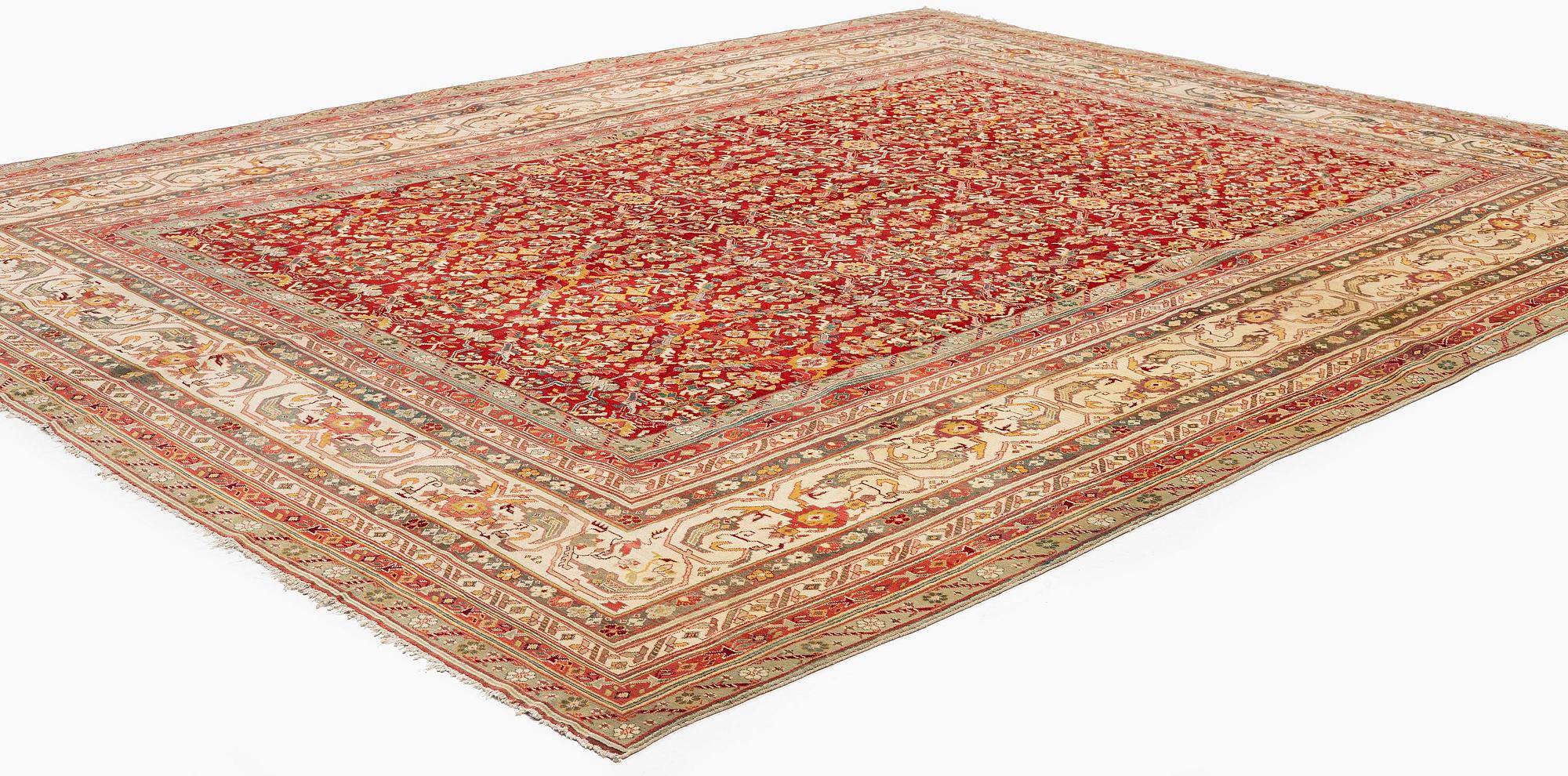
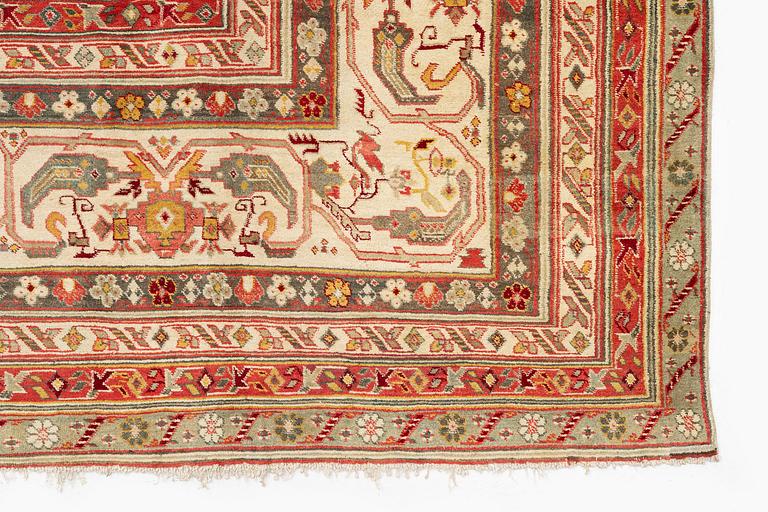
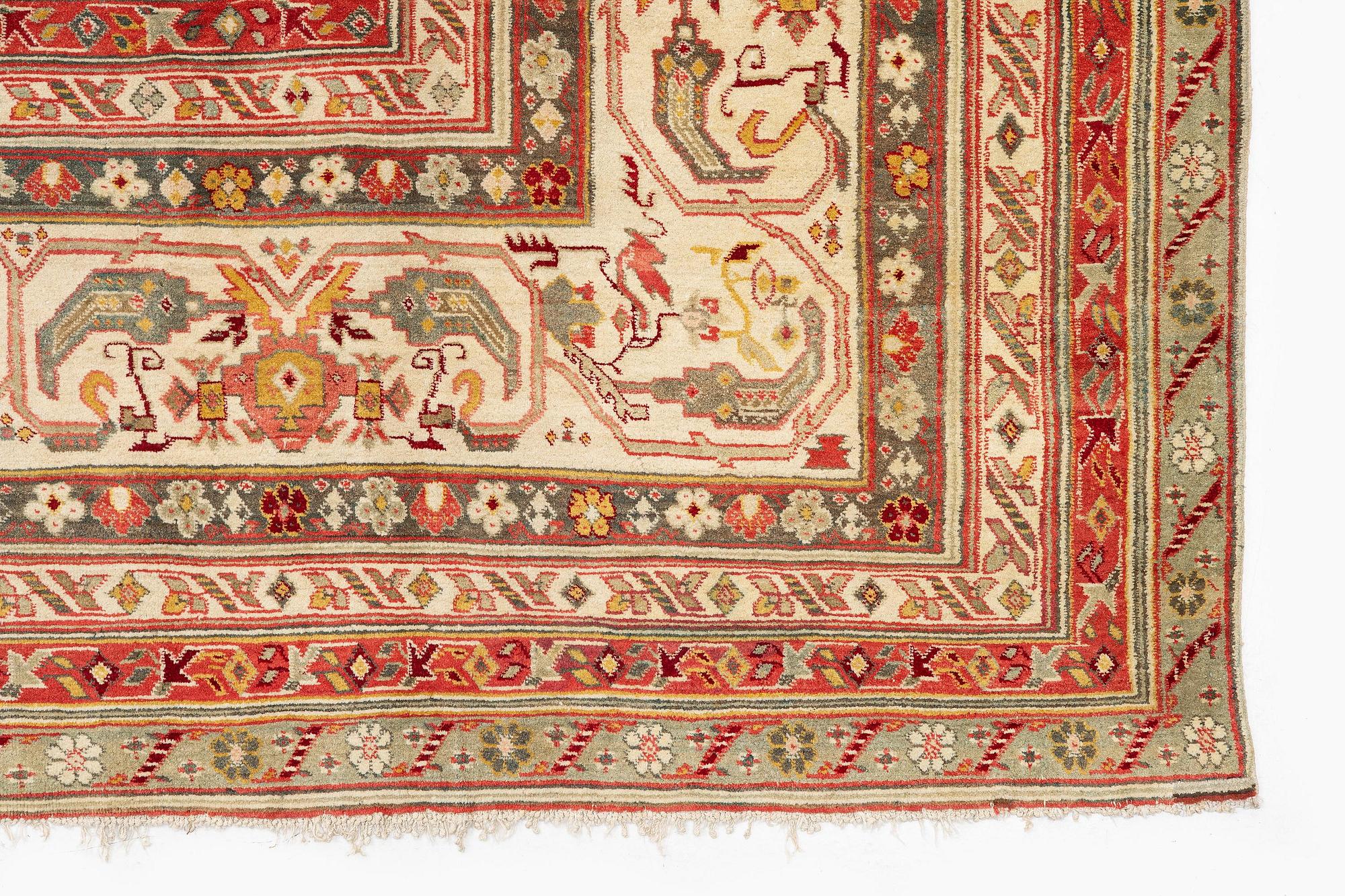
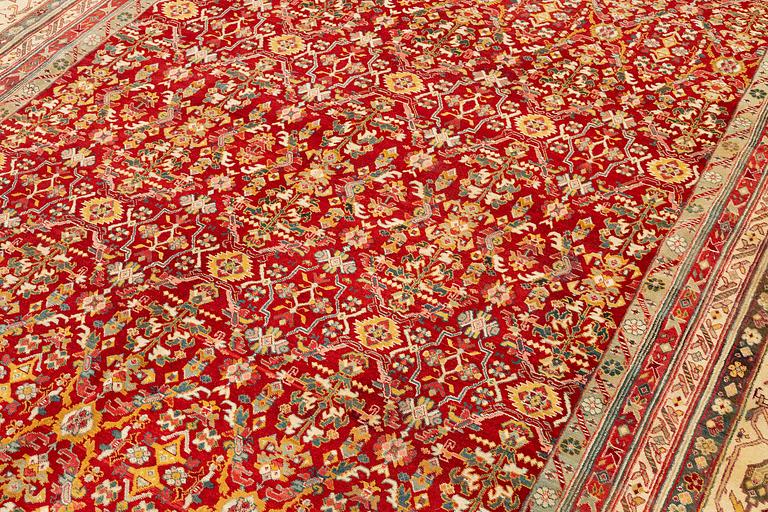
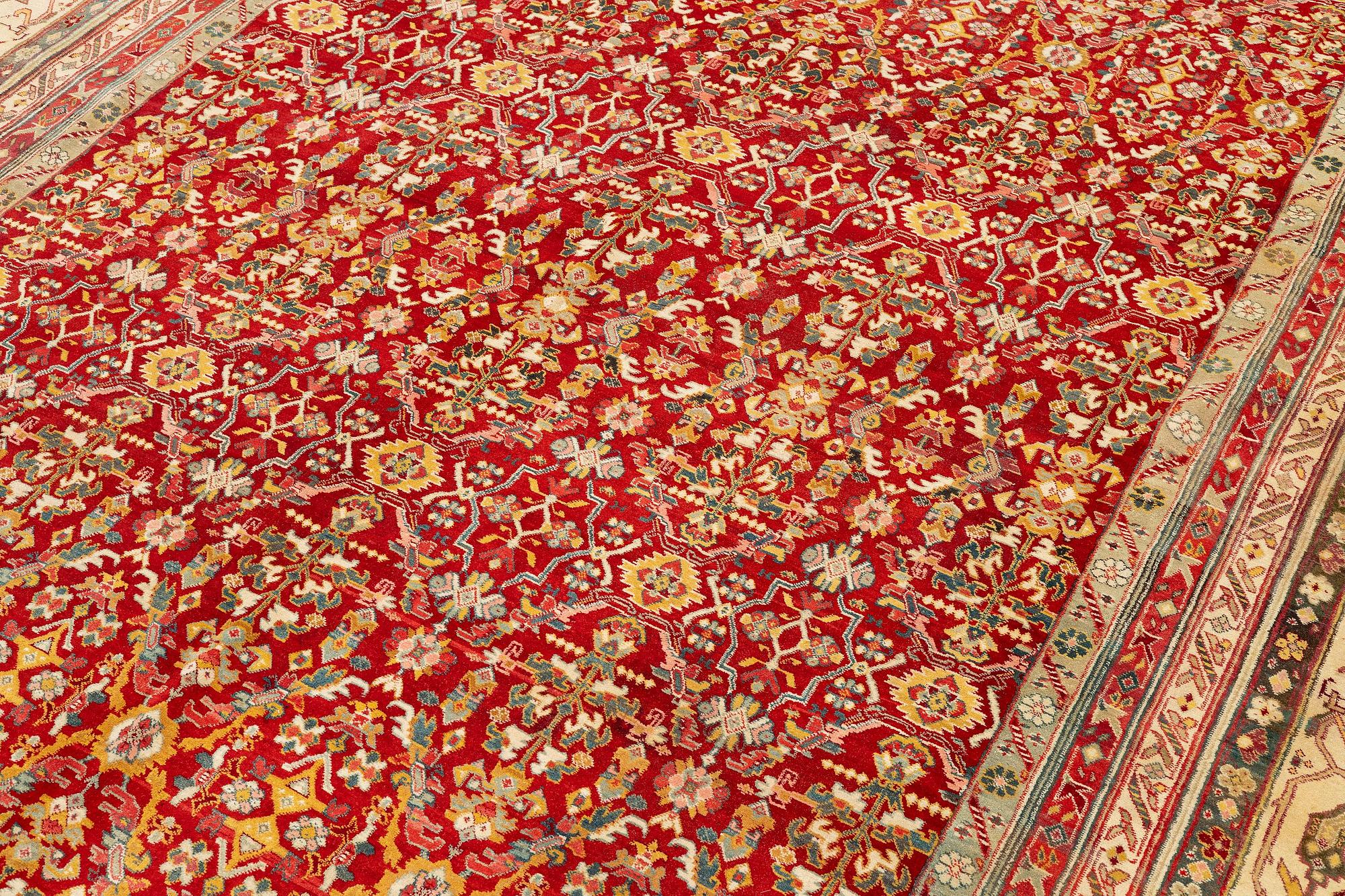
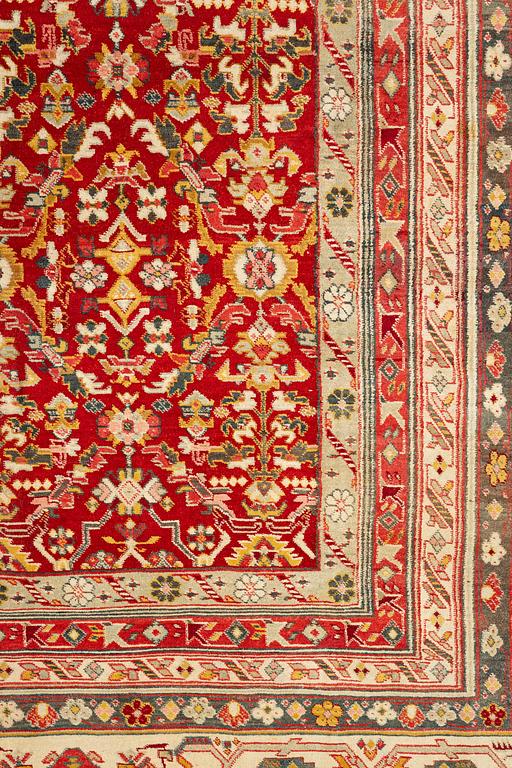
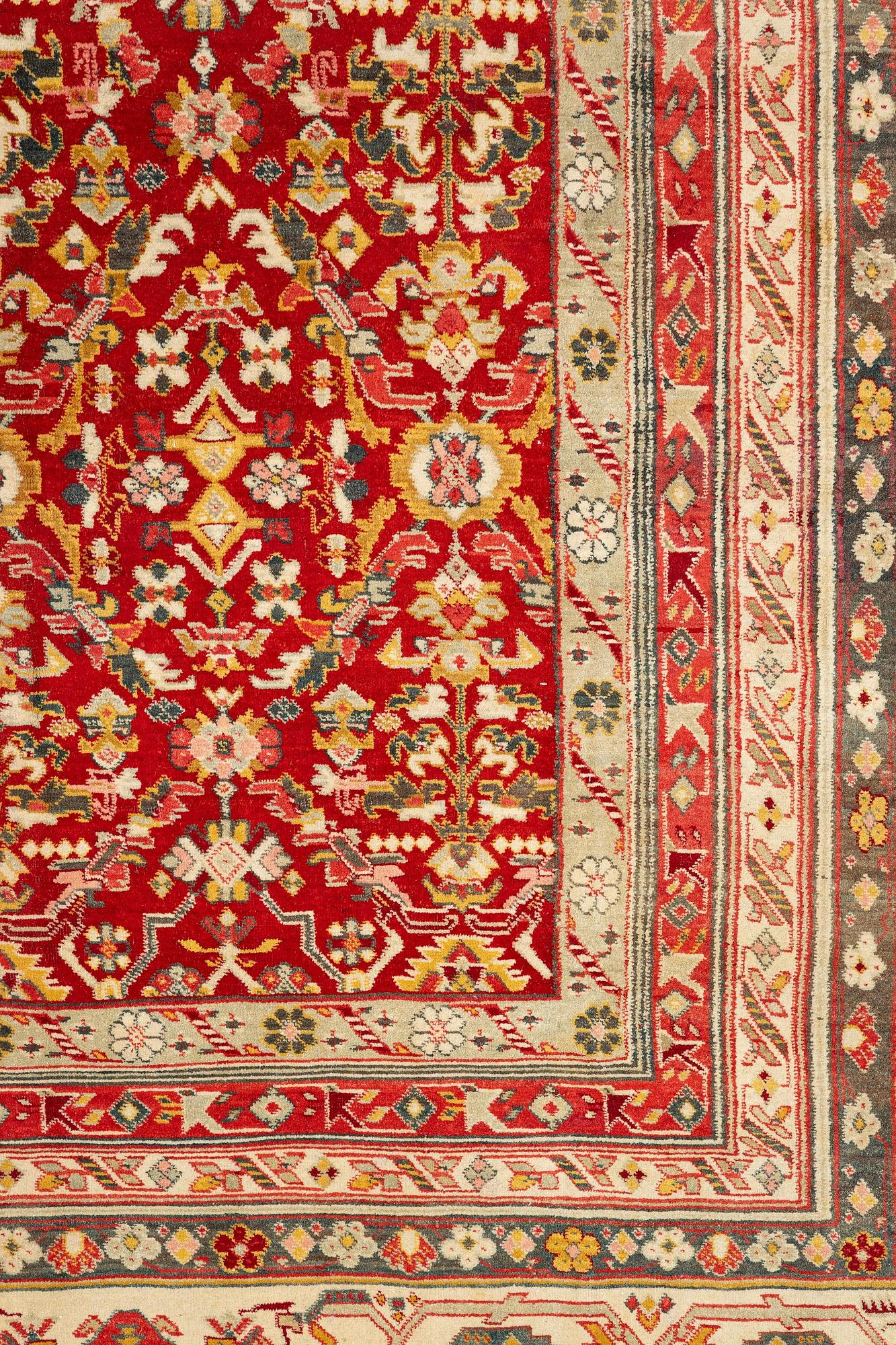
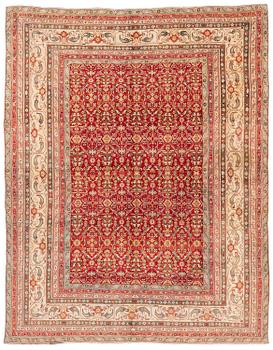
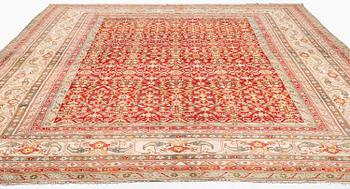
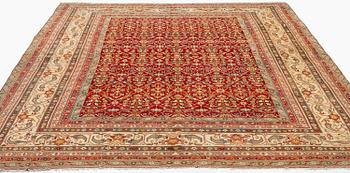
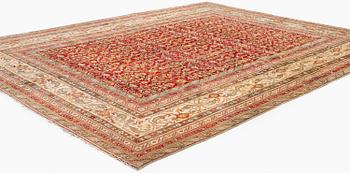
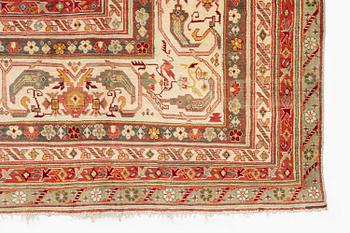
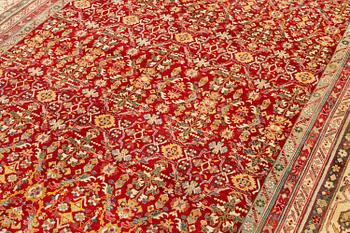
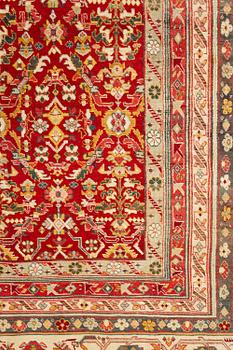
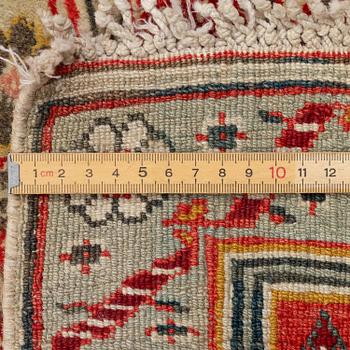
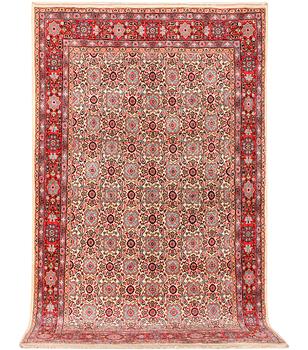
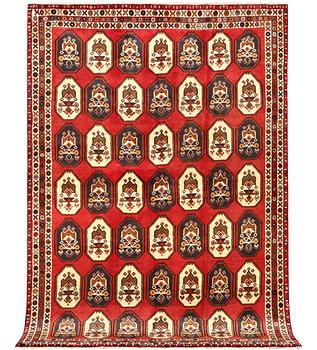
Circa 1880. A red ground with a trellis-like decor with polychrome stylized flowers. An ivory main border with a stylized leaf and flower vine. Several narrow borders.
Alkuperä - Provenienssi
Bukowski Auctions Important Winter Sale 637, Stockholm, lot 287, 8 December 2021.
Muut tiedot
During the 17th century, particularly when Emperor Shah Jahan ruled (1628–1658), the Mughals in India began to place great importance on depicting flowers in a naturalistic manner in their textiles and carpets. On beautiful ruby-red backgrounds, rows of flowers such as lilies, poppies, carnations, tulips, violets, and daffodils were woven—often so detailed that one could recognise the species.
These flower-inspired patterns remained popular for several hundred years. Over time, however, weavers began to take greater artistic liberties, making the flowers less realistic and sometimes difficult to identify.
The carpet described here features a pattern reminiscent of the early Mughal carpets, but instead of a red background, it has a light, ivory-coloured ground. The flowers are smaller and not as easily identifiable.
In the 19th century, it became common to weave similar carpets in the prisons of Agra and Lahore. Many carpets with similar floral patterns were created there, often with slightly altered colours and details.
Lisätietoja ja kuntoraportit

Tietoa ostamisesta