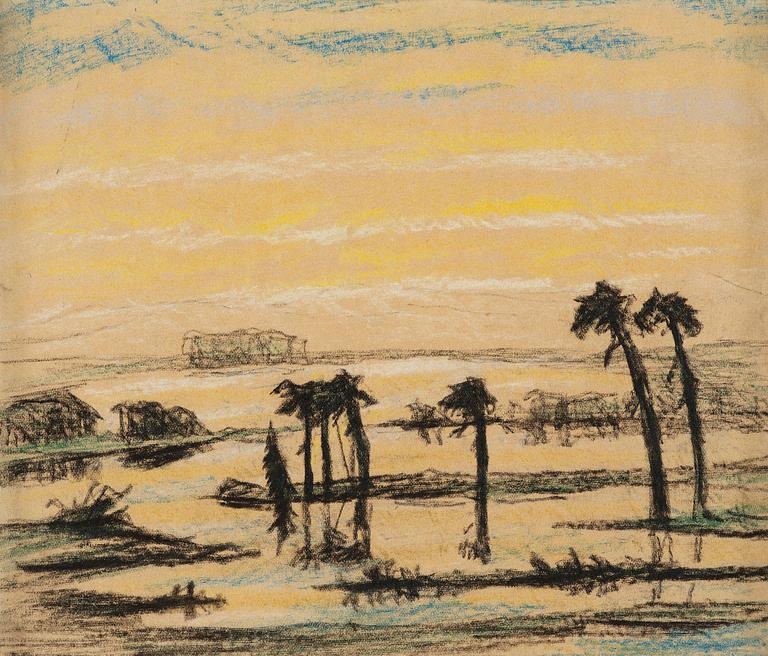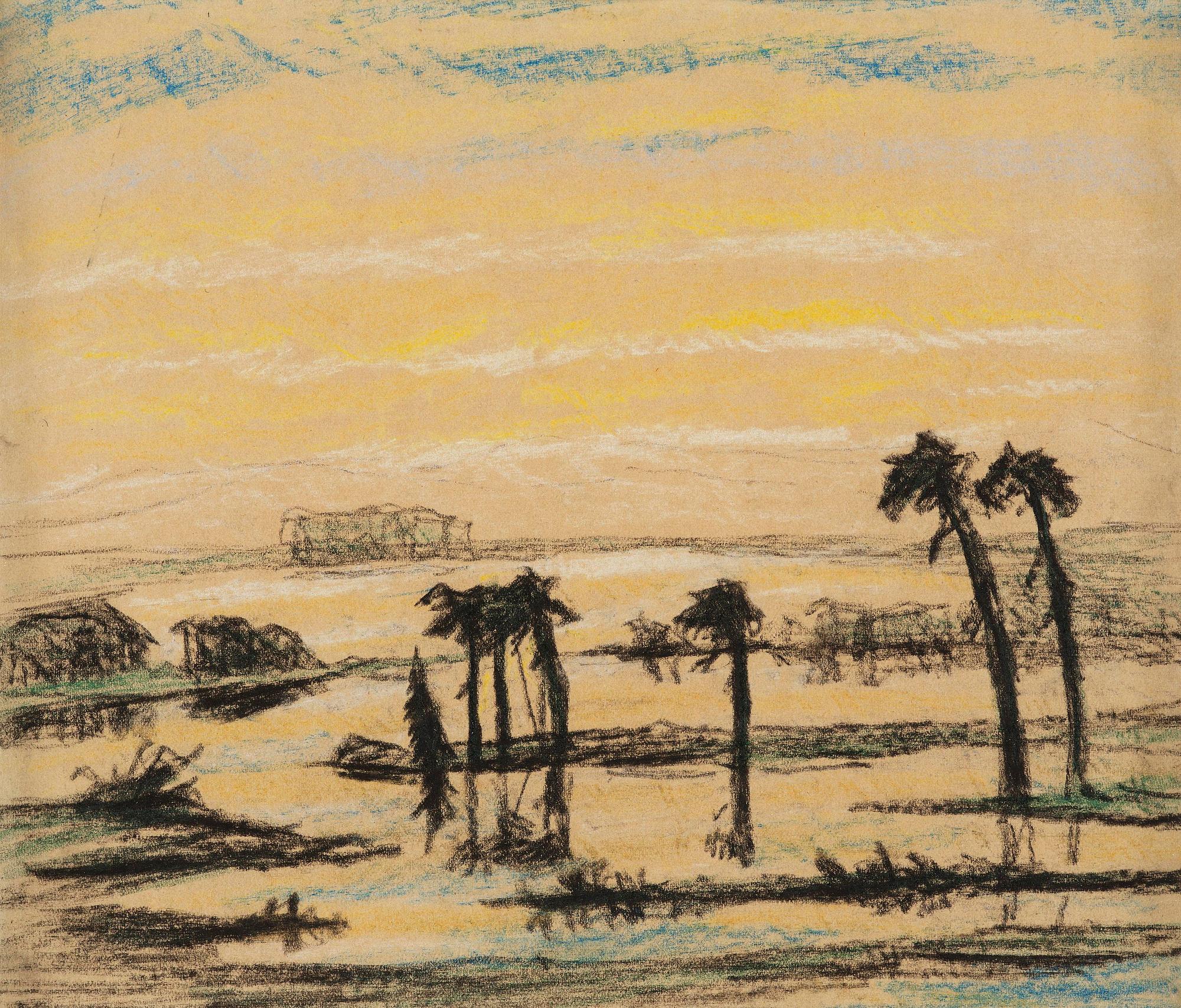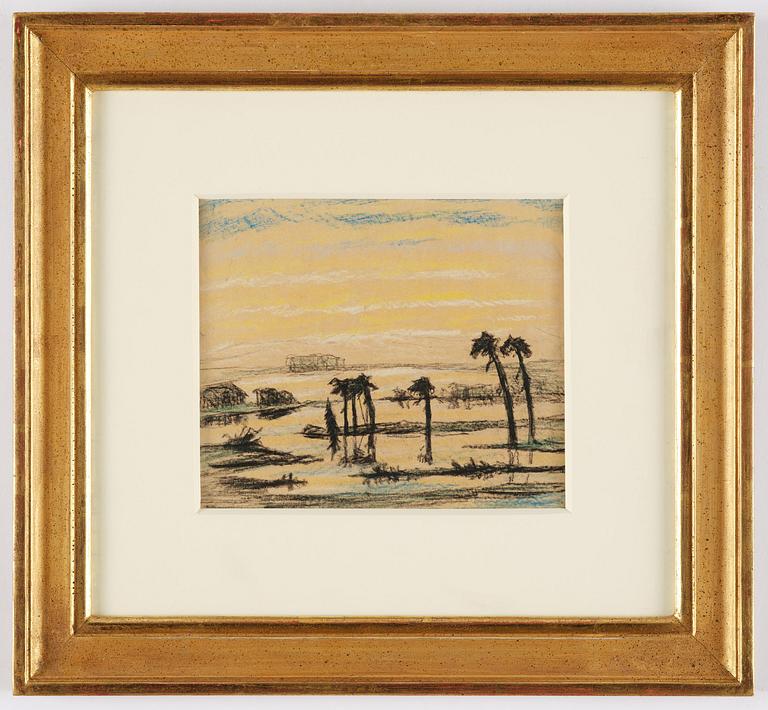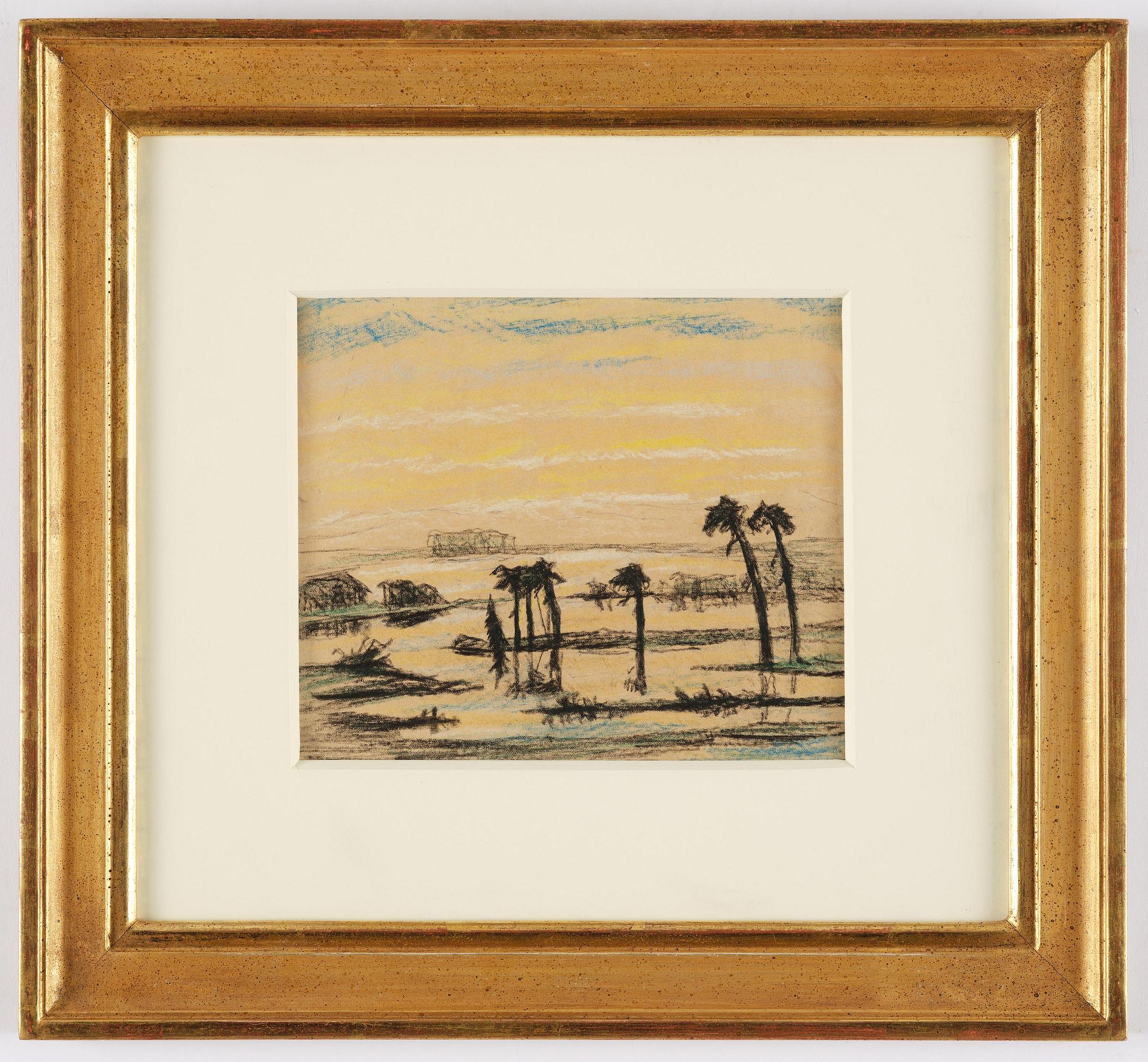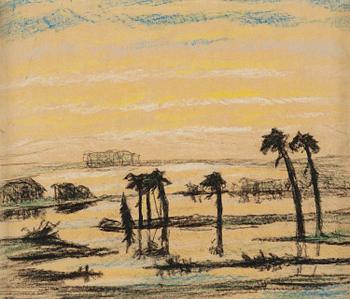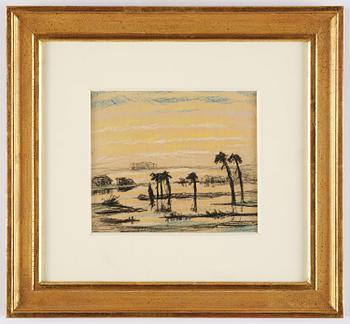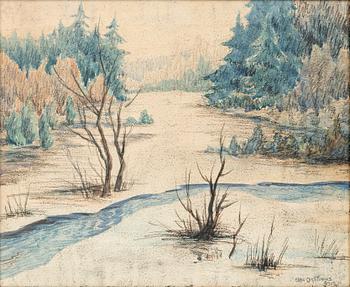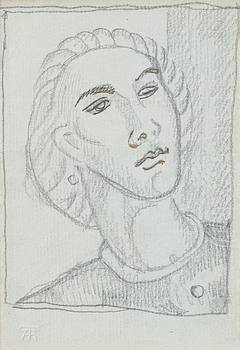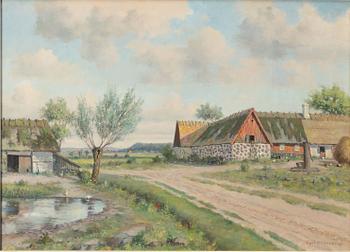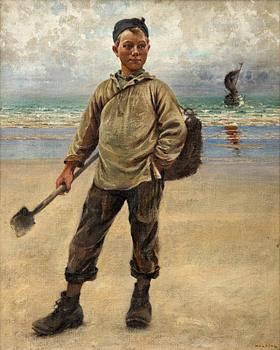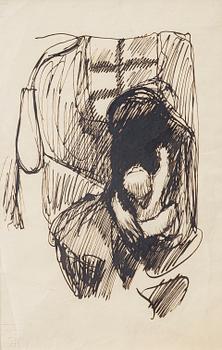
Landscape with palms and a tree
Crayon on paper 17 x 20.5 cm.
Alkuperä - Provenienssi
The collection of Mr. Uno Otterstedt Ph.D., Lund, Sweden.
The collection of Managing director Jackie Neuman, Stockholm.
Näyttelyt
Galleri Färg och Form, Stockholm, "Carl Fredrik Hill (1849-1911). Akvareller, färgkritor och teckningar från sjukdomstiden", April-May 1943, no. 26(?), based on stamp and inscription on the backboard.
Muut tiedot
That Carl Fredrik Hill so often includes palms and other exotic plants and animals in his landscape images has been linked by some art historians to his general interest in the stories of the Bible. Nils Lindhagen sees the first sign of Hill placing the palm, “the special attribute of orientalism,” in a biblical context already in the so-called Flood series (Lindhagen 1976, ill. 85:1). He also writes that “even through its extreme verticality, this tree points upwards” and refers to the fact that the palm can also be interpreted as a sign of resurrection (ibid, p. 227).
“Landskap med palmer och en gran” seems to reflect a completely different and significantly calmer state of mind than the aforementioned sheet in the Flood series, but the two drawings do have one thing in common: next to the exotic palms grows a solitary, slightly leaning spruce. The spruce is a recurring and strongly significant element in Hill's pictorial world. Sophie Allgårdh has interpreted it as an expression of the artist's perceived vulnerability, while Nils Lindhagen has generally spoken of leaning, wind-torn trees as metaphors for Hill's own solitude and struggle against fate. Specifically regarding the spruce, the latter has also written that “The spruce is for Hill, as a Nordic counterpart to the classical oak, the symbol above all for what he values most in nature and thus also for his art.” (Nils Lindhagen, Carl Fredrik Hill. Sjukdomsårens konst, 1976, p. 261).
Lisätietoja ja kuntoraportit

Tietoa ostamisesta