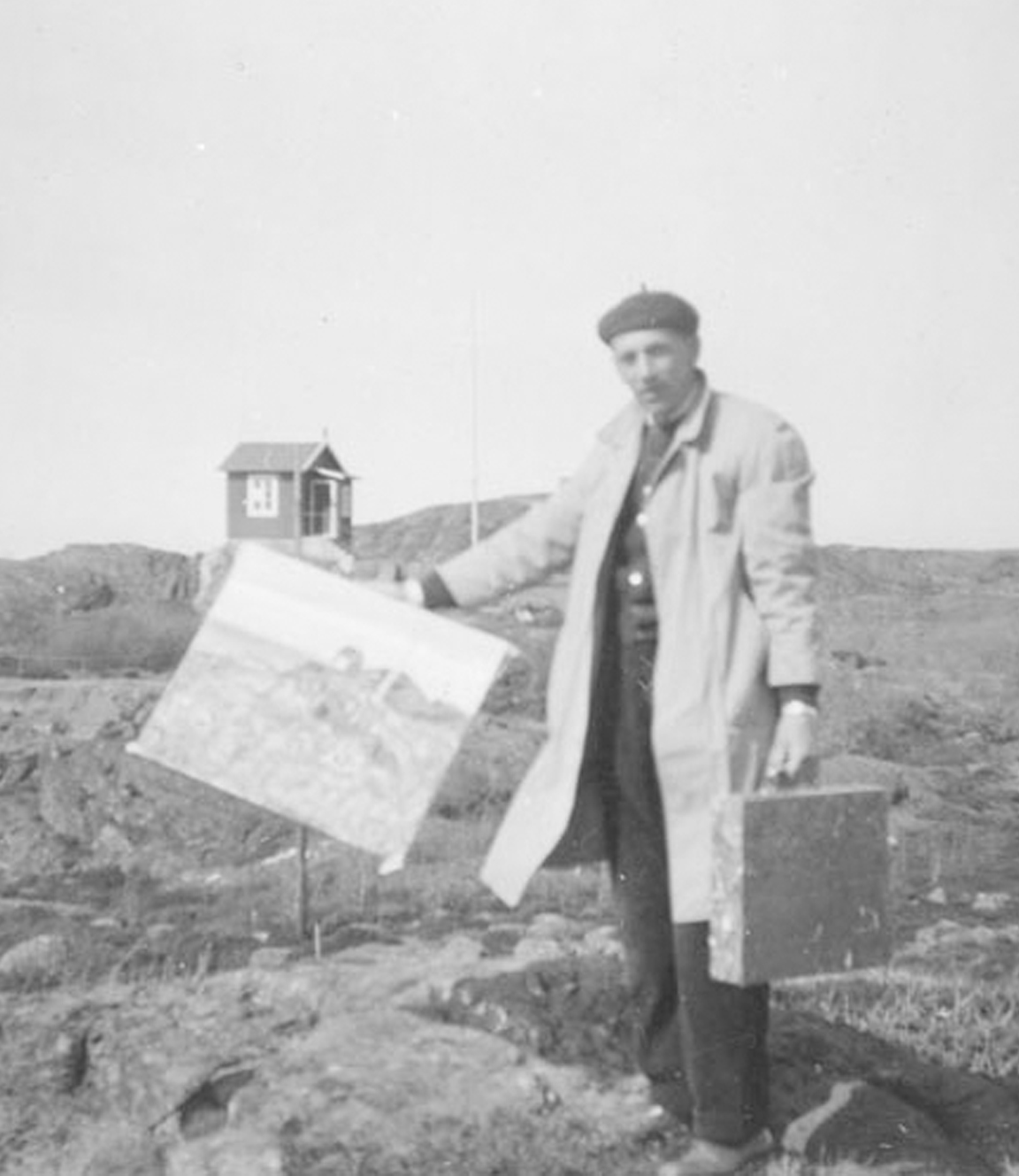
In the spring of 1942, Inge suddenly emerged from his apathetic state, reportedly due to a visit from his nieces and nephews, which triggered an emotional response that led Inge to start drawing and painting again. He painted on anything available, with toilet paper being a favorite material. Staff had to ask relatives to send materials such as paper, pens, and crayons. He produced enormous quantities of work and worked at a hectic pace.
The subjects were very ordinary but displayed a directness and a keen eye for detail. This also provides an interesting insight into "the world of the institutionalized individual." It is noteworthy that people and specific environments are depicted – something scarcely found in his later paintings. His artworks after 1946 rarely feature people; instead, the motif world comprises the sea and nature. From 1946 onwards, Inge began receiving more and longer leaves of absence, often with escorts who accompanied him on painting trips to his cottage on Syd-Koster, which relatives had purchased for him. Now he created large, dynamic, and explosively colorful coastal landscapes, preferably in thickly applied oil paint. In 1960, Inge was discharged for good, having spent nearly 27 years of his life in hospitals.